•  
Illustration - Versailles

Illustration - Versailles

FRANCE. YVELINES (78). VERSAILLES. CASTLE OF VERSAILLES. QUEEN'S APARTMENT. ANTECHAMBER OF THE QUEEN'S NOBLES. WOODWORK AND CEILING PAINTED BY MICHEL II CORNEILLE (CENTER: "MERCURE, ARTS AND SCIENCES") Photo by Jean-François Rollinger/Only Paris/ABACAPRESS.COM

  •  
Illustration Patrimoine

Illustration Patrimoine

FRANCE. YVELINES (78). VERSAILLES. CASTLE OF VERSAILLES. QUEEN'S APARTMENT. ANTECHAMBER OF THE QUEEN'S NOBLES. WOODWORK AND CEILING PAINTED BY MICHEL II CORNEILLE (CENTER: "MERCURE, ARTS AND SCIENCES") Photo by Jean-Francois Rollinger/Only Paris/ABACAPRESS.COM

  •  
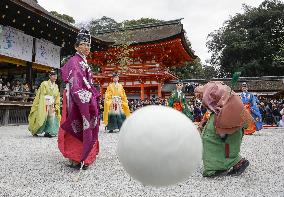
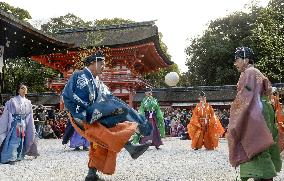
Ancient court football at Kyoto shrine

Ancient court football at Kyoto shrine

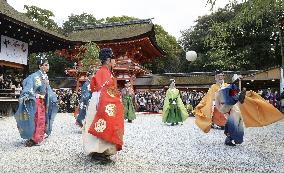
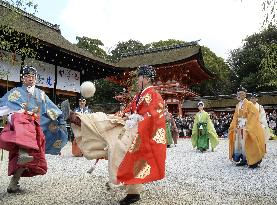
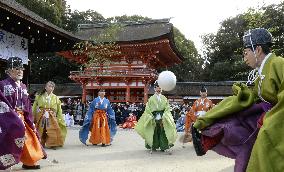
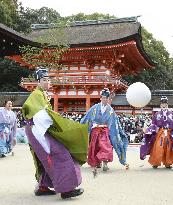
People clad in traditional attire play "kemari," a football game played by nobles in Japan's Heian period, at Shimogamo shrine in Kyoto on Jan. 4, 2025.

  •  
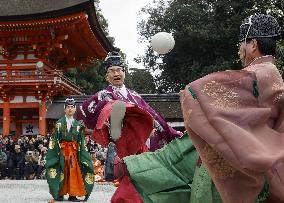
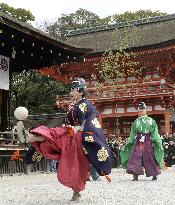
Ancient court football at Kyoto shrine

Ancient court football at Kyoto shrine

People clad in traditional attire play "kemari," a football game played by nobles in Japan's Heian period, at Shimogamo shrine in Kyoto on Jan. 4, 2025.

  •  
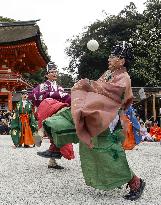
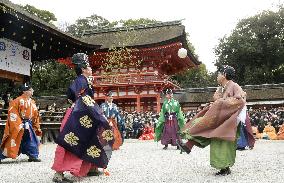
Ancient court football at Kyoto shrine

Ancient court football at Kyoto shrine

People clad in traditional attire play "kemari," a football game played by nobles in Japan's Heian period, at Shimogamo shrine in Kyoto on Jan. 4, 2025.

  •  

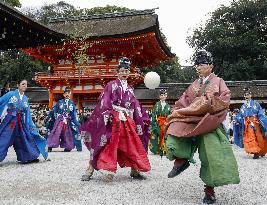
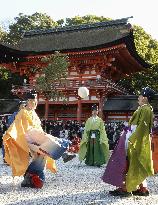
Ancient court football at Kyoto shrine

KYOTO, Japan Kyodo - People clad in traditional attire play "kemari," a football game played by nobles in Japan's Heian period, at Shimogamo shrine in Kyoto on Jan. 4, 2024. (Kyodo)

  •  
Ancient court football at Kyoto shrine

Ancient court football at Kyoto shrine

People clad in traditional attire play "kemari," a football game played by nobles in Japan's Heian period, at Shimogamo shrine in Kyoto on Jan. 4, 2024.

  •  
Ancient court football at Kyoto shrine

Ancient court football at Kyoto shrine

People clad in traditional attire play "kemari," a football game played by nobles in Japan's Heian period, at Shimogamo shrine in Kyoto on Jan. 4, 2024.

  •  
Ancient court football at Kyoto shrine

Ancient court football at Kyoto shrine

People clad in traditional attire play "kemari," a football game played by nobles in Japan's Heian period, at Shimogamo shrine in Kyoto on Jan. 4, 2024.

  •  
Aoi Festival in Kyoto

Aoi Festival in Kyoto

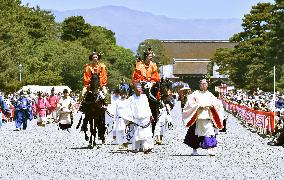
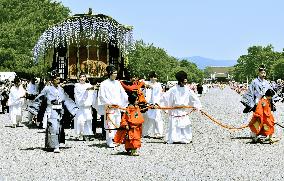
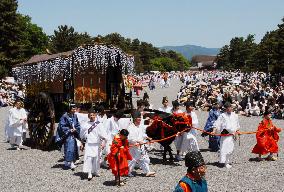
People dressed as nobles of the ancient Heian Era parade in the Kyoto Gyoen National Garden during the Aoi Festival in Kyoto, western Japan, on May 16, 2023.

  •  
Aoi Festival in Kyoto

Aoi Festival in Kyoto

People dressed as nobles of the ancient Heian Era parade in the Kyoto Gyoen National Garden during the Aoi Festival in Kyoto, western Japan, on May 16, 2023.

  •  
Ex-Japanese emperor, empress in Kyoto

Ex-Japanese emperor, empress in Kyoto

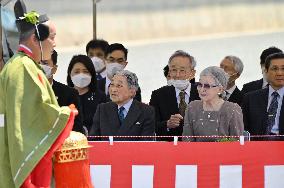
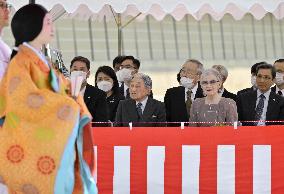
Former Japanese Emperor Akihito (front row, L) and former Empress Michiko (front row, R) watch a parade by people dressed as nobles of the ancient Heian Era during the Aoi Festival in Kyoto, western Japan, on May 16, 2023. (Pool photo)

  •  
Ex-Japanese emperor, empress in Kyoto

Ex-Japanese emperor, empress in Kyoto

Former Japanese Emperor Akihito (front row, 2nd from R) and former Empress Michiko (front row, R) watch a parade by people dressed as nobles of the ancient Heian Era during the Aoi Festival in Kyoto, western Japan, on May 16, 2023. (Pool photo)

  •  
Ancient court football at Kyoto shrine

Ancient court football at Kyoto shrine

People clad in traditional attire play "kemari," a football game played by nobles in Japan's Heian period, at Shimogamo shrine in Kyoto on Jan. 4, 2023.

  •  
Ancient court football at Kyoto shrine

Ancient court football at Kyoto shrine

People clad in traditional attire play "kemari," a football game played by nobles in Japan's Heian period, at Shimogamo shrine in Kyoto on Jan. 4, 2023.

  •  
Ancient court football at Kyoto shrine

Ancient court football at Kyoto shrine

People clad in traditional attire play "kemari," a football game played by nobles in Japan's Heian period, at Shimogamo shrine in Kyoto on Jan. 4, 2023.

  •  
Annual 'Ebisu' festival for business success begins

Annual 'Ebisu' festival for business success begins

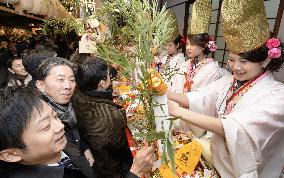
OSAKA, Japan - "Fuku musume," or good luck girls, clad in kimono and donning golden headwear resembling those of ancient Japanese court nobles hand out lucky charms of bamboo branches to visitors at Imamiya Ebisu Shrine in Osaka, western Japan, on Jan. 9, 2015. The "Yoi Ebisu" (Eve of Ebisu) event preludes the main "Toka Ebisu" festival held annually through Jan. 11 during which people pray to Ebisu, the patron deity of commerce, for business success.

  •  
Ancient court-style parade held in Kyoto

Ancient court-style parade held in Kyoto

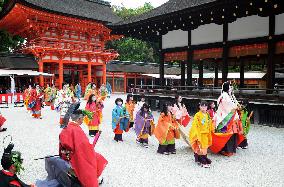
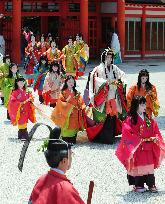
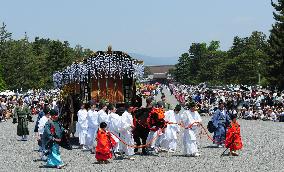
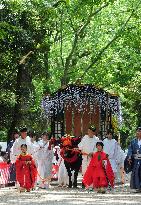
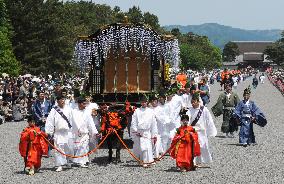
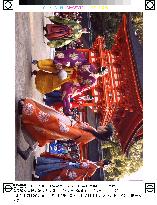
KYOTO, Japan - A procession of people dressed as nobles in ancient court-style attire from the Heian era (794-1192) reaches the Shimogamo Shrine on May 15, 2014, during the Aoi Festival, one of three major festivals in Kyoto, western Japan.

  •  
Ancient court-style parade held in Kyoto

Ancient court-style parade held in Kyoto

KYOTO, Japan - A procession of people dressed as nobles in ancient court-style attire from the Heian era (794-1192) goes through the Shimogamo Shrine on May 15, 2014, during the Aoi Festival, one of three major festivals in Kyoto, western Japan.

  •  
Ancient court-style parade held in Kyoto

Ancient court-style parade held in Kyoto

KYOTO, Japan - A procession of people dressed as nobles in ancient court-style attire from the Heian era (794-1192) departs from the Old Imperial Palace in Kyoto, western Japan, on May 15, 2014, for an 8-kilometer parade during the Aoi Festival, one of three major festivals in the old Japanese capital.

  •  
Aoi festival in Kyoto

Aoi festival in Kyoto

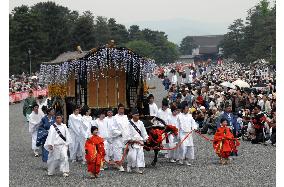
KYOTO, Japan - Men dressed as nobles of the Heian Period (794-1185) move in a procession during the annual Aoi Matsuri, one of the three main festivals in Kyoto, in the western city on May 15, 2013. Some 500 participants walked around 8 kilometers from Kyoto Imperial Palace to Shimogamo and Kamigamo shrines during the festival dating back 1,400 years.

  •  
Aoi festival in Kyoto

Aoi festival in Kyoto

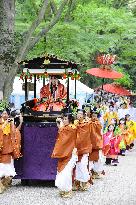
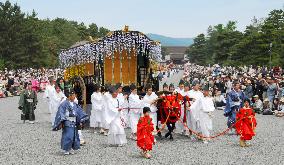
KYOTO, Japan - Men dressed as nobles of the Heian Period (794-1185) move in a procession with a decorated ox cart during the annual Aoi Matsuri, one of the three main festivals in Kyoto, in the western city on May 15, 2013. Some 500 participants walked around 8 kilometers from Kyoto Imperial Palace to Shimogamo and Kamigamo shrines during the festival dating back 1,400 years.

  •  
Aoi festival in Kyoto

Aoi festival in Kyoto

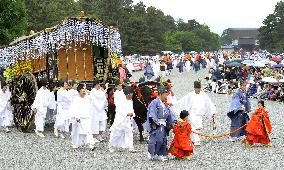
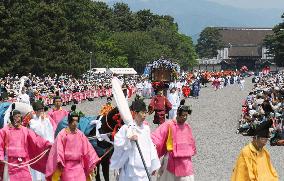
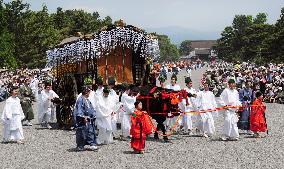
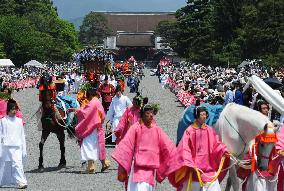
KYOTO, Japan - Participants in the annual Aoi Matsuri, one of the three main festivals of Kyoto, move in a procession in the western Japanese city on May 16, 2012. Some 500 participants, dressed as nobles of the Heian Period (794-1185), walked with decorated ox carts and horses around eight kilometers from Kyoto Imperial Palace to Shimogamo and Kamigamo shrines, during the ancient capital's major festival dating back 1,400 years.

  •  
Aoi festival in Kyoto

Aoi festival in Kyoto

KYOTO, Japan - Participants in the annual Aoi Matsuri, one of the three main festivals of Kyoto, move in a procession in the western Japanese city on May 16, 2012. Some 500 participants, dressed as nobles of the Heian Period (794-1185), walked with decorated ox carts and horses around eight kilometers from Kyoto Imperial Palace to Shimogamo and Kamigamo shrines, during the ancient capital's major festival dating back 1,400 years.

  •  
Aoi festival in Kyoto

Aoi festival in Kyoto

KYOTO, Japan - Participants in the annual Aoi Matsuri, one of the three main festivals of Kyoto, move in a procession in the western Japanese city on May 16, 2012. Some 500 participants, dressed as nobles of the Heian Period (794-1185), walked with decorated ox carts and horses around eight kilometers from Kyoto Imperial Palace to Shimogamo and Kamigamo shrines, during the ancient capital's major festival dating back 1,400 years.

  •  
Aoi festival in Kyoto

Aoi festival in Kyoto

KYOTO, Japan - Participants in the annual Aoi Matsuri, one of the three main festivals of Kyoto, move in a procession in the western Japanese city on May 16, 2012. Some 500 participants, dressed as nobles of the Heian Period (794-1185), walked with decorated ox carts and horses around eight kilometers from Kyoto Imperial Palace to Shimogamo and Kamigamo shrines, during the ancient capital's major festival dating back 1,400 years.

  •  
Aoi Matsuri dating back 1,400 years held in Kyoto

Aoi Matsuri dating back 1,400 years held in Kyoto

KYOTO, Japan - About 500 participants and around 40 horses and cows parade in the Aoi Matsuri (festival), which dates back 1,400 years, in Kyoto on May 15, 2010. The participants, dressed as nobles of the Heian Period (794-1185), walked around eight kilometers from Kyoto Imperial Palace to Shimogamo and Kamigamo shrines, watched by about 26,000 people on the parade route.

  •  
Ancient waterside tanka event in Kyoto

Ancient waterside tanka event in Kyoto

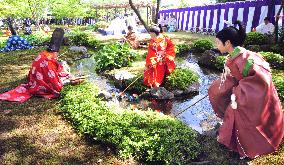
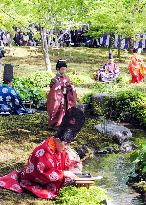
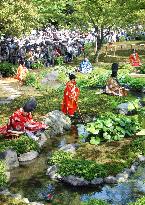
KYOTO, Japan - Performers show tourists the ''kyokusui no en'' ancient waterside pastime near a winding stream at Jonangu shrine in Kyoto on April 29, 2010. The performers dressed as the nobles of the Heian Era, which started in 794, make tanka poems before floating cups of sake reach them.

  •  
Ancient waterside tanka event in Kyoto

Ancient waterside tanka event in Kyoto

KYOTO, Japan - Performers show tourists the ''kyokusui no en'' ancient waterside pastime near a winding stream at Jonangu shrine in Kyoto on April 29, 2010. The performers dressed as the nobles of the Heian Era, which started in 794, make tanka poems before floating cups of sake reach them.

  •  
Aoi Matsuri dating back 1,400 years held in Kyoto

Aoi Matsuri dating back 1,400 years held in Kyoto

KYOTO, Japan - About 500 participants in the Aoi Matsuri (festival), which has a history of 1,400 years, parade through Kyoto on May 15. The participants, dressed like nobles of the Heian Period (794-1185), go about 8 kilometers from the Kyoto Imperial Palace to Shimogamo and Kamigamo shrines.

  •  
Heian-period 'Feast on a winding stream' reenacted in Kyoto

Heian-period 'Feast on a winding stream' reenacted in Kyoto

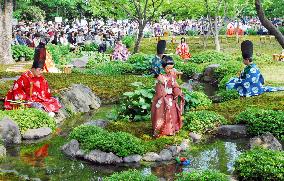
KYOTO, Japan - Watched by a crowd of spectators, the annual ''Kyokusui-no-en,'' a Heian period (AD 794-1185) pastime for nobles, is reenacted in the garden of the Jonan-gu shrine in Kyoto on April 29. Kyokusui-no-en, or feast on a winding stream, was performed by nobles who had to compose a Japanese poem and write it down on a strip of paper before floating cups of sake reached them, or else they had to drink the sake as a penalty.

  •  
Aoi Matsuri dating back 1,400 years held in Kyoto

Aoi Matsuri dating back 1,400 years held in Kyoto

KYOTO, Japan - About 500 participants in the Aoi Matsuri (festival) which has a history of 1,400 years process through Kyoto on May 15. The participants, dressed like nobles of the Heian Period (794-1185), are leaving the Kyoto Imperial Palace.

  •  
Heian-period 'Feast on a winding stream' reenacted in Kyoto

Heian-period 'Feast on a winding stream' reenacted in Kyoto

KYOTO, Japan - Watched by a large crowd of spectators, ''Kyokusui-no-en,'' a Heian period (AD 794-1185) pastime for the nobles, is reenacted in the garden of Jonan-gu shrine in Kyoto on April 29. Kyokusui-no-en, or feast on a winding stream, was performed by Heian nobles who must compose a Japanese poem and write it down on a strip of paper before floating cups of sake reach them, or else they must drink up the sake as penalty.

  •  
Aoi festival dating back 1,400 years held in Kyoto

Aoi festival dating back 1,400 years held in Kyoto

KYOTO, Japan - Some 500 participants in the Aoi Matsuri (festival), which has a history of 1,400 years, process through Kyoto on May 15. The participants, dressed like nobles of the Heian Period (794-1185), were leaving Kyoto Palace (background) on their way to Kami-Gamo Shrine.

  •  
Medieval court game 'kemari' played

Medieval court game 'kemari' played

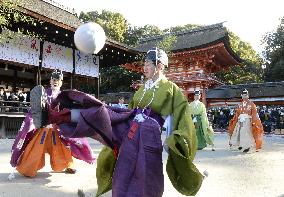
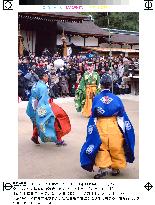
KYOTO, Japan - People in traditional Japanese costumes play ''kemari'' in a reenactment of the traditional ball game at Shimogamo Shrine in Kyoto on Jan. 4. Kemari attained wide popularity among court nobles during the Nara (710-794), Heian (794-1185) and Kamakura (1185-1333) periods. People wearing leather shoes form a circle and kick a deerskin ball about 24 centimeters in diameter, trying to keep it from hitting the ground.

  •  
Aoi festival held in rain

Aoi festival held in rain

KYOTO, Japan - Participants in the annual Aoi Matsuri (festival) process beneath umbrellas in rainy Kyoto on May 15. The participants, dressed like nobles of the Heian Period (794-1185), were leaving Kyoto Palace on their way to Kami-Gamo Shrine.

  •  
Medieval court game 'kemari' played

Medieval court game 'kemari' played

KYOTO, Japan - People in traditional Japanese costumes play ''kemari'' in a reproduction of the traditional ball game at Shimogamo Shrine in Kyoto on Jan. 4. Kemari attained wide popularity among court nobles during the Nara (710-794), Heian (794-1185) and Kamakura (1185-1333) periods. People wearing leather shoes form a circle and kick a deerskin ball about 24 centimeters in diameter trying to keep it from falling to the ground.

  •  
New attire for Kyoto ''Aoi Matsuri'' unveiled

New attire for Kyoto ''Aoi Matsuri'' unveiled

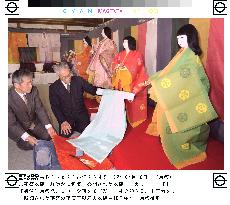
KYOTO, Japan - New attire to be worn by participants in Kyoto's annual ''Aoi Matsuri (festival)'' in May are on display at the Kyoto Imperial Palace on April 19. On May 15, some 500 participants, dressed like nobles in the Heian period (794-1185), take part in a procession that makes its way across the city's Aoi Bridge to Shimo-Gamo Shrine and then to Kami-Gamo Shrine.

  •  
Medieval court game reproduced

Medieval court game reproduced

KYOTO, Japan - Three men play kemari in a reproduction of the traditional ball game at Shimogamo Shrine in Kyoto on Jan. 4. Kemari attained wide popularity among court nobles during the Nara (710-794), Heian (794-1185) and Kamakura (1185-1333) periods. People form a circle and kick a deerskin ball to prevent it from falling to the ground.

  •  
CHINA-TOP CHINESE ARCHAEOLOGICAL FINDS-2021 (CN)

CHINA-TOP CHINESE ARCHAEOLOGICAL FINDS-2021 (CN)

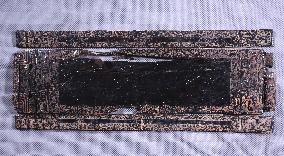
(220319) -- BEIJING, March 19, 2022 (Xinhua) -- Undated file photo shows a relic found at the site of an ancient tomb from the Warring States Period (475-221 BC) belonging to royals in Zhangshu City, east China's Jiangxi Province. The Institute of Archaeology of the Chinese Academy of Social Sciences has announced its list of China's six most important archaeological discoveries of 2021. The list of projects, which was announced in Beijing on Friday, is as follows: the Paleolithic ruin sites in the southwestern province of Sichuan; the Neolithic jade workshop remains in central China's Henan; the legendary Sanxingdui Ruins site in Sichuan; two sites of ancient tombs from the Warring States Period (475-221 BC) belonging to royals in Jiangxi and nobles in Hubei; and the tomb complex of the royal families of Tuyuhun in Gansu. (Xinhua)

  •  
CHINA-TOP CHINESE ARCHAEOLOGICAL FINDS-2021 (CN)

CHINA-TOP CHINESE ARCHAEOLOGICAL FINDS-2021 (CN)

(220319) -- BEIJING, March 19, 2022 (Xinhua) -- Undated file photo shows the Paleolithic ruin sites in Daocheng County, southwest China's Sichuan Province. The Institute of Archaeology of the Chinese Academy of Social Sciences has announced its list of China's six most important archaeological discoveries of 2021. The list of projects, which was announced in Beijing on Friday, is as follows: the Paleolithic ruin sites in the southwestern province of Sichuan; the Neolithic jade workshop remains in central China's Henan; the legendary Sanxingdui Ruins site in Sichuan; two sites of ancient tombs from the Warring States Period (475-221 BC) belonging to royals in Jiangxi and nobles in Hubei; and the tomb complex of the royal families of Tuyuhun in Gansu. (Xinhua)

  •  
CHINA-TOP CHINESE ARCHAEOLOGICAL FINDS-2021 (CN)

CHINA-TOP CHINESE ARCHAEOLOGICAL FINDS-2021 (CN)

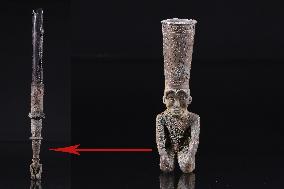
(220319) -- BEIJING, March 19, 2022 (Xinhua) -- Undated file photo shows a relic found at the site of an ancient tomb from the Warring States Period (475-221 BC) belonging to royals in Zhangshu City, east China's Jiangxi Province. The Institute of Archaeology of the Chinese Academy of Social Sciences has announced its list of China's six most important archaeological discoveries of 2021. The list of projects, which was announced in Beijing on Friday, is as follows: the Paleolithic ruin sites in the southwestern province of Sichuan; the Neolithic jade workshop remains in central China's Henan; the legendary Sanxingdui Ruins site in Sichuan; two sites of ancient tombs from the Warring States Period (475-221 BC) belonging to royals in Jiangxi and nobles in Hubei; and the tomb complex of the royal families of Tuyuhun in Gansu. (Xinhua)

  •  
CHINA-TOP CHINESE ARCHAEOLOGICAL FINDS-2021 (CN)

CHINA-TOP CHINESE ARCHAEOLOGICAL FINDS-2021 (CN)

(220319) -- BEIJING, March 19, 2022 (Xinhua) -- Undated file photo shows relics found at the tomb complex of the royal families of Tuyuhun in Wuwei City, northwest China's Gansu Province. The Institute of Archaeology of the Chinese Academy of Social Sciences has announced its list of China's six most important archaeological discoveries of 2021. The list of projects, which was announced in Beijing on Friday, is as follows: the Paleolithic ruin sites in the southwestern province of Sichuan; the Neolithic jade workshop remains in central China's Henan; the legendary Sanxingdui Ruins site in Sichuan; two sites of ancient tombs from the Warring States Period (475-221 BC) belonging to royals in Jiangxi and nobles in Hubei; and the tomb complex of the royal families of Tuyuhun in Gansu. (Xinhua)

  •  
CHINA-TOP CHINESE ARCHAEOLOGICAL FINDS-2021 (CN)

CHINA-TOP CHINESE ARCHAEOLOGICAL FINDS-2021 (CN)

(220319) -- BEIJING, March 19, 2022 (Xinhua) -- Undated file photo shows relics found at the site of an ancient tomb from the Warring States Period (475-221 BC) belonging to nobles in Yunmeng County, central China's Hubei Province. The Institute of Archaeology of the Chinese Academy of Social Sciences has announced its list of China's six most important archaeological discoveries of 2021. The list of projects, which was announced in Beijing on Friday, is as follows: the Paleolithic ruin sites in the southwestern province of Sichuan; the Neolithic jade workshop remains in central China's Henan; the legendary Sanxingdui Ruins site in Sichuan; two sites of ancient tombs from the Warring States Period (475-221 BC) belonging to royals in Jiangxi and nobles in Hubei; and the tomb complex of the royal families of Tuyuhun in Gansu. (Xinhua)

  •  
CHINA-TOP CHINESE ARCHAEOLOGICAL FINDS-2021 (CN)

CHINA-TOP CHINESE ARCHAEOLOGICAL FINDS-2021 (CN)

(220319) -- BEIJING, March 19, 2022 (Xinhua) -- Undated file photo shows relics found at the site of an ancient tomb from the Warring States Period (475-221 BC) belonging to royals in Zhangshu City, east China's Jiangxi Province. The Institute of Archaeology of the Chinese Academy of Social Sciences has announced its list of China's six most important archaeological discoveries of 2021. The list of projects, which was announced in Beijing on Friday, is as follows: the Paleolithic ruin sites in the southwestern province of Sichuan; the Neolithic jade workshop remains in central China's Henan; the legendary Sanxingdui Ruins site in Sichuan; two sites of ancient tombs from the Warring States Period (475-221 BC) belonging to royals in Jiangxi and nobles in Hubei; and the tomb complex of the royal families of Tuyuhun in Gansu. (Xinhua)

  •  
CHINA-TOP CHINESE ARCHAEOLOGICAL FINDS-2021 (CN)

CHINA-TOP CHINESE ARCHAEOLOGICAL FINDS-2021 (CN)

(220319) -- BEIJING, March 19, 2022 (Xinhua) -- Undated file photo shows relics found in different layers of the Paleolithic ruin sites in Daocheng County, southwest China's Sichuan Province. The Institute of Archaeology of the Chinese Academy of Social Sciences has announced its list of China's six most important archaeological discoveries of 2021. The list of projects, which was announced in Beijing on Friday, is as follows: the Paleolithic ruin sites in the southwestern province of Sichuan; the Neolithic jade workshop remains in central China's Henan; the legendary Sanxingdui Ruins site in Sichuan; two sites of ancient tombs from the Warring States Period (475-221 BC) belonging to royals in Jiangxi and nobles in Hubei; and the tomb complex of the royal families of Tuyuhun in Gansu. (Xinhua)

  •  
CHINA-TOP CHINESE ARCHAEOLOGICAL FINDS-2021 (CN)

CHINA-TOP CHINESE ARCHAEOLOGICAL FINDS-2021 (CN)

(220319) -- BEIJING, March 19, 2022 (Xinhua) -- Undated file photo shows a relic found at the site of an ancient tomb from the Warring States Period (475-221 BC) belonging to nobles in Yunmeng County, central China's Hubei Province. The Institute of Archaeology of the Chinese Academy of Social Sciences has announced its list of China's six most important archaeological discoveries of 2021. The list of projects, which was announced in Beijing on Friday, is as follows: the Paleolithic ruin sites in the southwestern province of Sichuan; the Neolithic jade workshop remains in central China's Henan; the legendary Sanxingdui Ruins site in Sichuan; two sites of ancient tombs from the Warring States Period (475-221 BC) belonging to royals in Jiangxi and nobles in Hubei; and the tomb complex of the royal families of Tuyuhun in Gansu. (Xinhua)

  •  
CHINA-TOP CHINESE ARCHAEOLOGICAL FINDS-2021 (CN)

CHINA-TOP CHINESE ARCHAEOLOGICAL FINDS-2021 (CN)

(220319) -- BEIJING, March 19, 2022 (Xinhua) -- Undated file photo shows a relic found at the Paleolithic ruin sites in Daocheng County, southwest China's Sichuan Province. The Institute of Archaeology of the Chinese Academy of Social Sciences has announced its list of China's six most important archaeological discoveries of 2021. The list of projects, which was announced in Beijing on Friday, is as follows: the Paleolithic ruin sites in the southwestern province of Sichuan; the Neolithic jade workshop remains in central China's Henan; the legendary Sanxingdui Ruins site in Sichuan; two sites of ancient tombs from the Warring States Period (475-221 BC) belonging to royals in Jiangxi and nobles in Hubei; and the tomb complex of the royal families of Tuyuhun in Gansu. (Xinhua)

  •  
CHINA-TOP CHINESE ARCHAEOLOGICAL FINDS-2021 (CN)

CHINA-TOP CHINESE ARCHAEOLOGICAL FINDS-2021 (CN)

(220319) -- BEIJING, March 19, 2022 (Xinhua) -- Undated file photo shows a relic found at the Neolithic jade workshop remains in Nanyang City, central China's Henan Province. The Institute of Archaeology of the Chinese Academy of Social Sciences has announced its list of China's six most important archaeological discoveries of 2021. The list of projects, which was announced in Beijing on Friday, is as follows: the Paleolithic ruin sites in the southwestern province of Sichuan; the Neolithic jade workshop remains in central China's Henan; the legendary Sanxingdui Ruins site in Sichuan; two sites of ancient tombs from the Warring States Period (475-221 BC) belonging to royals in Jiangxi and nobles in Hubei; and the tomb complex of the royal families of Tuyuhun in Gansu. (Xinhua)

  •  
CHINA-TOP CHINESE ARCHAEOLOGICAL FINDS-2021 (CN)

CHINA-TOP CHINESE ARCHAEOLOGICAL FINDS-2021 (CN)

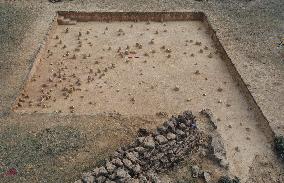
(220319) -- BEIJING, March 19, 2022 (Xinhua) -- Undated file photo shows the Neolithic jade workshop remains in Nanyang City, central China's Henan Province. The Institute of Archaeology of the Chinese Academy of Social Sciences has announced its list of China's six most important archaeological discoveries of 2021. The list of projects, which was announced in Beijing on Friday, is as follows: the Paleolithic ruin sites in the southwestern province of Sichuan; the Neolithic jade workshop remains in central China's Henan; the legendary Sanxingdui Ruins site in Sichuan; two sites of ancient tombs from the Warring States Period (475-221 BC) belonging to royals in Jiangxi and nobles in Hubei; and the tomb complex of the royal families of Tuyuhun in Gansu. (Xinhua)

  • Main
  • Top
  • Editorial
  • Creative
  • About Us
  • About ILG
  • Terms of use
  • Company
  • BEHIND
  • Price List
  • Single Plan
  • Monthly Plan
  • Services
  • Shooting
  • Rights Clearance
  • Support
  • FAQ
  • How To Buy
  • Contact Us
  • Become a Partner

© KYODO NEWS IMAGES INC

All Rights Reserved.

  • Editorial
  • Olympics
  • News
  • Sports
  • Japan
  • Tech
  • Royal
  • Disaster
  • NorthKorea
  • Old Japan
  • SNS
  • Creative
  • Food
  • Japan
  • Landscape
  • Animal
  • Popular
  • #Ukraine
  • #Thailand
  • #coronavirus
  • #N. Korea
  • #China
  • #Russia
  • #Ukraine
  • #Thailand
  • #coronavirus
  • #N. Korea
  • #China
  • #Russia
  • Food
  • Japan
  • Landscape
  • Animal
  • Olympics
  • News
  • Sports
  • Japan
  • Tech
  • Royal
  • Disaster
  • NorthKorea
  • Old Japan
  • SNS