•  
Self-Glimmering Plants Cultivated by Magicpen Bio - China

Self-Glimmering Plants Cultivated by Magicpen Bio - China

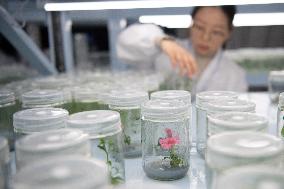
A reseacher checks the growth of seedlings at the laboratory of Magicpen Bio in Hefei, east China's Anhui Province, December 3, 2025. Chinese researchers have successfully cultivated a number of gene-edited plants that steadily glimmer in dark environments. They managed to introduce gene fragments from organisms such as fireflies into plant cells, allowing the latter to glimmer by themselves. Photo by Xinhua/Zhang Duan/ABACAPRESS.COM

  •  
Self-Glimmering Plants Cultivated by Magicpen Bio - China

Self-Glimmering Plants Cultivated by Magicpen Bio - China

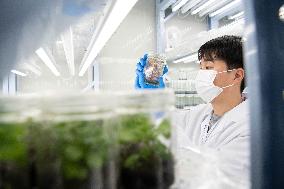
A researcher prepares to transfer a tray of self-glimmering plants into a dark room for observation at the laboratory of Magicpen Bio in Hefei, east China's Anhui Province, December 3, 2025. Chinese researchers have successfully cultivated a number of gene-edited plants that steadily glimmer in dark environments. They managed to introduce gene fragments from organisms such as fireflies into plant cells, allowing the latter to glimmer by themselves. Photo by Xinhua/Zhang Duan/ABACAPRESS.COM

  •  
Self-Glimmering Plants Cultivated by Magicpen Bio - China

Self-Glimmering Plants Cultivated by Magicpen Bio - China

A reseacher checks the growth of seedlings at the laboratory of Magicpen Bio in Hefei, east China's Anhui Province, December 3, 2025. Chinese researchers have successfully cultivated a number of gene-edited plants that steadily glimmer in dark environments. They managed to introduce gene fragments from organisms such as fireflies into plant cells, allowing the latter to glimmer by themselves. Photo by Xinhua/Zhang Duan/ABACAPRESS.COM

  •  
Self-Glimmering Plants Cultivated by Magicpen Bio - China

Self-Glimmering Plants Cultivated by Magicpen Bio - China

A reseacher checks the growth of seedlings at the laboratory of Magicpen Bio in Hefei, east China's Anhui Province, December 3, 2025. Chinese researchers have successfully cultivated a number of gene-edited plants that steadily glimmer in dark environments. They managed to introduce gene fragments from organisms such as fireflies into plant cells, allowing the latter to glimmer by themselves. Photo by Xinhua/Zhang Duan/ABACAPRESS.COM

  •  
Self-Glimmering Plants Cultivated by Magicpen Bio - China

Self-Glimmering Plants Cultivated by Magicpen Bio - China

A reseacher checks the growth of seedlings at the laboratory of Magicpen Bio in Hefei, east China's Anhui Province, December 3, 2025. Chinese researchers have successfully cultivated a number of gene-edited plants that steadily glimmer in dark environments. They managed to introduce gene fragments from organisms such as fireflies into plant cells, allowing the latter to glimmer by themselves. Photo by Xinhua/Zhang Duan/ABACAPRESS.COM

  •  
Self-Glimmering Plants Cultivated by Magicpen Bio - China

Self-Glimmering Plants Cultivated by Magicpen Bio - China

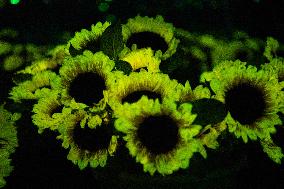
This photo taken on December 3, 2025 shows self-glimmering sunflowers cultivated by Magicpen Bio in Hefei, east China's Anhui Province. Chinese researchers have successfully cultivated a number of gene-edited plants that steadily glimmer in dark environments. They managed to introduce gene fragments from organisms such as fireflies into plant cells, allowing the latter to glimmer by themselves. Photo by Xinhua/Zhang Duan/ABACAPRESS.COM

  •  
Self-Glimmering Plants Cultivated by Magicpen Bio - China

Self-Glimmering Plants Cultivated by Magicpen Bio - China

This undated file photo shows self-glimmering plants cultivated by Magicpen Bio in Hefei, east China's Anhui Province. Chinese researchers have successfully cultivated a number of gene-edited plants that steadily glimmer in dark environments. They managed to introduce gene fragments from organisms such as fireflies into plant cells, allowing the latter to glimmer by themselves. (Magicpen Bio/Handout via Xinhua)

  •  
Self-Glimmering Plants Cultivated by Magicpen Bio - China

Self-Glimmering Plants Cultivated by Magicpen Bio - China

This undated file photo shows self-glimmering plants cultivated by Magicpen Bio in Hefei, east China's Anhui Province. Chinese researchers have successfully cultivated a number of gene-edited plants that steadily glimmer in dark environments. They managed to introduce gene fragments from organisms such as fireflies into plant cells, allowing the latter to glimmer by themselves. (Magicpen Bio/Handout via Xinhua)

  •  
Bioluminescent Plankton Light Up The Galicia Coast - Spain

Bioluminescent Plankton Light Up The Galicia Coast - Spain

A person in the Sea of Ardora on the beach of Carnota, on August 7, 2024, in Carnota, A Coruña, Galicia, Spain. The Sea of Ardora is a natural phenomenon in which the sea water glows with a bluish hue in the darkness of the night. This spectacle is due to bioluminescent microorganisms, specifically the dinoflagellate Noctiluca Scintillans and other species of microalgae, where the organisms emit light as a result of internal chemical reactions, creating the characteristic luminous effect in the water. When there is a high density of microalgae and the water is agitated, this reaction that generates the blue glow occurs, a reaction similar to that which occurs in terrestrial fireflies. Photo by Elena Fernandez/Europa Press/ABACAPRESS.COM

  •  
Bioluminescent Plankton Light Up The Galicia Coast - Spain

Bioluminescent Plankton Light Up The Galicia Coast - Spain

View of the Sea of Ardora on the beach of Carnota, on August 7, 2024, in Carnota, A Coruña, Galicia, Spain. The Sea of Ardora is a natural phenomenon in which the sea water glows with a bluish hue in the darkness of the night. This spectacle is due to bioluminescent microorganisms, specifically the dinoflagellate Noctiluca Scintillans and other species of microalgae, where the organisms emit light as a result of internal chemical reactions, creating the characteristic luminous effect in the water. When there is a high density of microalgae and the water is agitated, this reaction that generates the blue glow occurs, a reaction similar to that which occurs in terrestrial fireflies. Photo by Elena Fernandez/Europa Press/ABACAPRESS.COM

  •  
Bioluminescent Plankton Light Up The Galicia Coast - Spain

Bioluminescent Plankton Light Up The Galicia Coast - Spain

A person in the Sea of Ardora on the beach of Carnota, on August 7, 2024, in Carnota, A Coruña, Galicia, Spain. The Sea of Ardora is a natural phenomenon in which the sea water glows with a bluish hue in the darkness of the night. This spectacle is due to bioluminescent microorganisms, specifically the dinoflagellate Noctiluca Scintillans and other species of microalgae, where the organisms emit light as a result of internal chemical reactions, creating the characteristic luminous effect in the water. When there is a high density of microalgae and the water is agitated, this reaction that generates the blue glow occurs, a reaction similar to that which occurs in terrestrial fireflies. Photo by Elena Fernandez/Europa Press/ABACAPRESS.COM

  •  
Bioluminescent Plankton Light Up The Galicia Coast - Spain

Bioluminescent Plankton Light Up The Galicia Coast - Spain

A person in the Sea of Ardora on the beach of Carnota, on August 7, 2024, in Carnota, A Coruña, Galicia, Spain. The Sea of Ardora is a natural phenomenon in which the sea water glows with a bluish hue in the darkness of the night. This spectacle is due to bioluminescent microorganisms, specifically the dinoflagellate Noctiluca Scintillans and other species of microalgae, where the organisms emit light as a result of internal chemical reactions, creating the characteristic luminous effect in the water. When there is a high density of microalgae and the water is agitated, this reaction that generates the blue glow occurs, a reaction similar to that which occurs in terrestrial fireflies. Photo by Elena Fernandez/Europa Press/ABACAPRESS.COM

  •  
Bioluminescent Plankton Light Up The Galicia Coast - Spain

Bioluminescent Plankton Light Up The Galicia Coast - Spain

View of the Sea of Ardora on the beach of Carnota, on August 7, 2024, in Carnota, A Coruña, Galicia, Spain. The Sea of Ardora is a natural phenomenon in which the sea water glows with a bluish hue in the darkness of the night. This spectacle is due to bioluminescent microorganisms, specifically the dinoflagellate Noctiluca Scintillans and other species of microalgae, where the organisms emit light as a result of internal chemical reactions, creating the characteristic luminous effect in the water. When there is a high density of microalgae and the water is agitated, this reaction that generates the blue glow occurs, a reaction similar to that which occurs in terrestrial fireflies. Photo by Elena Fernandez/Europa Press/ABACAPRESS.COM Photo by Elena Fernandez/Europa Press/ABACAPRESS.COM

  •  
Bioluminescent Plankton Light Up The Galicia Coast - Spain

Bioluminescent Plankton Light Up The Galicia Coast - Spain

View of the Sea of Ardora on the beach of Carnota, on August 7, 2024, in Carnota, A Coruña, Galicia, Spain. The Sea of Ardora is a natural phenomenon in which the sea water glows with a bluish hue in the darkness of the night. This spectacle is due to bioluminescent microorganisms, specifically the dinoflagellate Noctiluca Scintillans and other species of microalgae, where the organisms emit light as a result of internal chemical reactions, creating the characteristic luminous effect in the water. When there is a high density of microalgae and the water is agitated, this reaction that generates the blue glow occurs, a reaction similar to that which occurs in terrestrial fireflies. Photo by Elena Fernandez/Europa Press/ABACAPRESS.COM

  •  
Bioluminescent Plankton Light Up The Galicia Coast - Spain

Bioluminescent Plankton Light Up The Galicia Coast - Spain

A couple in the Sea of Ardora on the beach of Carnota, on August 7, 2024, in Carnota, A Coruña, Galicia, Spain. The Sea of Ardora is a natural phenomenon in which the sea water glows with a bluish hue in the darkness of the night. This spectacle is due to bioluminescent microorganisms, specifically the dinoflagellate Noctiluca Scintillans and other species of microalgae, where the organisms emit light as a result of internal chemical reactions, creating the characteristic luminous effect in the water. When there is a high density of microalgae and the water is agitated, this reaction that generates the blue glow occurs, a reaction similar to that which occurs in terrestrial fireflies. Photo by Elena Fernandez/Europa Press/ABACAPRESS.COM

  •  
Bioluminescent Plankton Light Up The Galicia Coast - Spain

Bioluminescent Plankton Light Up The Galicia Coast - Spain

A person in the Sea of Ardora on the beach of Carnota, on August 7, 2024, in Carnota, A Coruña, Galicia, Spain. The Sea of Ardora is a natural phenomenon in which the sea water glows with a bluish hue in the darkness of the night. This spectacle is due to bioluminescent microorganisms, specifically the dinoflagellate Noctiluca Scintillans and other species of microalgae, where the organisms emit light as a result of internal chemical reactions, creating the characteristic luminous effect in the water. When there is a high density of microalgae and the water is agitated, this reaction that generates the blue glow occurs, a reaction similar to that which occurs in terrestrial fireflies. Photo by Elena Fernandez/Europa Press/ABACAPRESS.COM

  •  
ChineseToday | Chinese expedition team braves river headwaters

ChineseToday | Chinese expedition team braves river headwaters

(240731) -- WUHAN, July 31, 2024 Photo by Xinhua/ABACAPRESS.COM) -- A researcher picks out benthic organisms in northwest China's Qinghai Province, July 24, 2024. Since July 20, a Chinese expedition team has been conducting research on the water resources and ecological environment in the headwater regions of the Yangtze and Lancang rivers. The expedition, comprising around 20 members, carried out scientific investigations into river hydrology, water ecology, soil erosion, glaciers and permafrost in Qinghai Province. Key research projects include estimating the carbon stock of wetlands, assessing the impacts of permafrost thawing on the plateau, and measuring the thickness of permafrost on glaciers. Qinghai is home to the Sanjiangyuan area, which contains the headwaters of China's three major rivers: the Yangtze River, the longest in China; the Yellow River, the second-longest; and the Lancang River, which is known as the Mekong River after it flows out of China. As important parts of the Qinghai-Xizang Plate

  •  
ChineseToday | Chinese expedition team braves river headwaters

ChineseToday | Chinese expedition team braves river headwaters

(240731) -- WUHAN, July 31, 2024 Photo by Xinhua/ABACAPRESS.COM) -- A researcher collects samples of benthic organisms in Nangqian County, northwest China's Qinghai Province, July 21, 2024. Since July 20, a Chinese expedition team has been conducting research on the water resources and ecological environment in the headwater regions of the Yangtze and Lancang rivers. The expedition, comprising around 20 members, carried out scientific investigations into river hydrology, water ecology, soil erosion, glaciers and permafrost in Qinghai Province. Key research projects include estimating the carbon stock of wetlands, assessing the impacts of permafrost thawing on the plateau, and measuring the thickness of permafrost on glaciers. Qinghai is home to the Sanjiangyuan area, which contains the headwaters of China's three major rivers: the Yangtze River, the longest in China; the Yellow River, the second-longest; and the Lancang River, which is known as the Mekong River after it flows out of China. As important parts

  •  
CHINA-HAINAN-SANYA-MARINE RANCH-DEVELOPMENT (CN)

CHINA-HAINAN-SANYA-MARINE RANCH-DEVELOPMENT (CN)

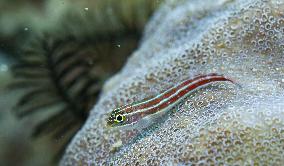
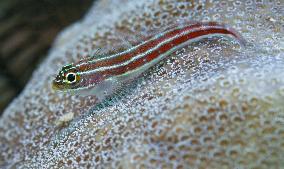
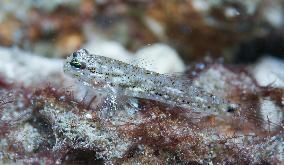
(240521) -- SANYA(HAINAN), May 21, 2024 (Xinhua) -- A tropical striped triplefin is pictured in the Wuzhizhou Island's marine ranch in Sanya, south China's Hainan Province, May 16, 2024. Wuzhizhou Island's marine ranch, China's first tropical marine ranch, has made remarkable strides in marine ecological restoration and fishery resource conservation. Artificial reefs are utilized worldwide to enhance ocean ecology, by creating additional habitats for local aquatic organisms and fish. As of April 2024, the marine ranch has deployed approximately 80,000 cubic meters of artificial reefs and ship-reefs. These efforts have created a thriving marine ecosystem, complete with coral reefs, fish, shrimp and shellfish. Statistics reveal that over 51,000 corals have been successfully transplanted in the waters around Wuzhizhou Island. The area is now home to more than 300 species of coral reef fish, showcasing the rich biodiversity that has been nurtured through these conservation efforts. (Xinhua/Yang Guanyu)

  •  
CHINA-HAINAN-SANYA-MARINE RANCH-DEVELOPMENT (CN)

CHINA-HAINAN-SANYA-MARINE RANCH-DEVELOPMENT (CN)

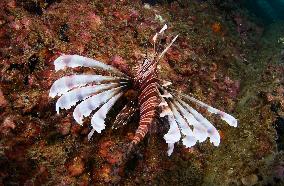
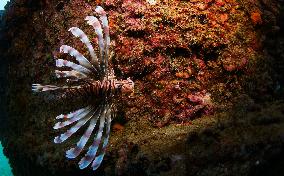
(240521) -- SANYA(HAINAN), May 21, 2024 (Xinhua) -- A lionfish is pictured in the Wuzhizhou Island's marine ranch in Sanya, south China's Hainan Province, May 17, 2024. Wuzhizhou Island's marine ranch, China's first tropical marine ranch, has made remarkable strides in marine ecological restoration and fishery resource conservation. Artificial reefs are utilized worldwide to enhance ocean ecology, by creating additional habitats for local aquatic organisms and fish. As of April 2024, the marine ranch has deployed approximately 80,000 cubic meters of artificial reefs and ship-reefs. These efforts have created a thriving marine ecosystem, complete with coral reefs, fish, shrimp and shellfish. Statistics reveal that over 51,000 corals have been successfully transplanted in the waters around Wuzhizhou Island. The area is now home to more than 300 species of coral reef fish, showcasing the rich biodiversity that has been nurtured through these conservation efforts. (Xinhua/Yang Guanyu)

  •  
CHINA-HAINAN-SANYA-MARINE RANCH-DEVELOPMENT (CN)

CHINA-HAINAN-SANYA-MARINE RANCH-DEVELOPMENT (CN)

(240521) -- SANYA(HAINAN), May 21, 2024 (Xinhua) -- A tropical striped triplefin is pictured in the Wuzhizhou Island's marine ranch in Sanya, south China's Hainan Province, May 16, 2024. Wuzhizhou Island's marine ranch, China's first tropical marine ranch, has made remarkable strides in marine ecological restoration and fishery resource conservation. Artificial reefs are utilized worldwide to enhance ocean ecology, by creating additional habitats for local aquatic organisms and fish. As of April 2024, the marine ranch has deployed approximately 80,000 cubic meters of artificial reefs and ship-reefs. These efforts have created a thriving marine ecosystem, complete with coral reefs, fish, shrimp and shellfish. Statistics reveal that over 51,000 corals have been successfully transplanted in the waters around Wuzhizhou Island. The area is now home to more than 300 species of coral reef fish, showcasing the rich biodiversity that has been nurtured through these conservation efforts. (Xinhua/Yang Guanyu)

  •  
CHINA-HAINAN-SANYA-MARINE RANCH-DEVELOPMENT (CN)

CHINA-HAINAN-SANYA-MARINE RANCH-DEVELOPMENT (CN)

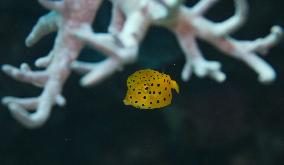
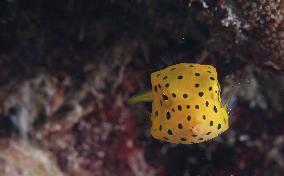
(240521) -- SANYA(HAINAN), May 21, 2024 (Xinhua) -- A yellow boxfish, Ostracion cubicus, is pictured in the Wuzhizhou Island's marine ranch in Sanya, south China's Hainan Province, May 15, 2024. Wuzhizhou Island's marine ranch, China's first tropical marine ranch, has made remarkable strides in marine ecological restoration and fishery resource conservation. Artificial reefs are utilized worldwide to enhance ocean ecology, by creating additional habitats for local aquatic organisms and fish. As of April 2024, the marine ranch has deployed approximately 80,000 cubic meters of artificial reefs and ship-reefs. These efforts have created a thriving marine ecosystem, complete with coral reefs, fish, shrimp and shellfish. Statistics reveal that over 51,000 corals have been successfully transplanted in the waters around Wuzhizhou Island. The area is now home to more than 300 species of coral reef fish, showcasing the rich biodiversity that has been nurtured through these conservation efforts. (Xinhua/Yang Guanyu

  •  
CHINA-HAINAN-SANYA-MARINE RANCH-DEVELOPMENT (CN)

CHINA-HAINAN-SANYA-MARINE RANCH-DEVELOPMENT (CN)

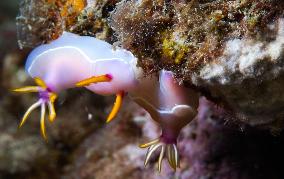
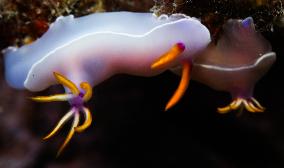
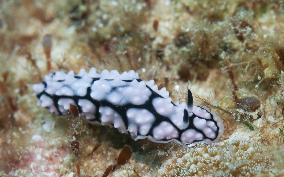
(240521) -- SANYA(HAINAN), May 21, 2024 (Xinhua) -- A sea slug is pictured in the Wuzhizhou Island's marine ranch in Sanya, south China's Hainan Province, May 16, 2024. Wuzhizhou Island's marine ranch, China's first tropical marine ranch, has made remarkable strides in marine ecological restoration and fishery resource conservation. Artificial reefs are utilized worldwide to enhance ocean ecology, by creating additional habitats for local aquatic organisms and fish. As of April 2024, the marine ranch has deployed approximately 80,000 cubic meters of artificial reefs and ship-reefs. These efforts have created a thriving marine ecosystem, complete with coral reefs, fish, shrimp and shellfish. Statistics reveal that over 51,000 corals have been successfully transplanted in the waters around Wuzhizhou Island. The area is now home to more than 300 species of coral reef fish, showcasing the rich biodiversity that has been nurtured through these conservation efforts. (Xinhua/Yang Guanyu)

  •  
CHINA-HAINAN-SANYA-MARINE RANCH-DEVELOPMENT (CN)

CHINA-HAINAN-SANYA-MARINE RANCH-DEVELOPMENT (CN)

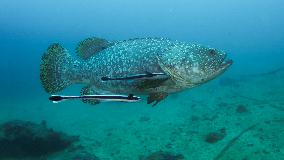
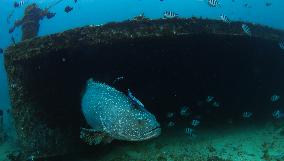
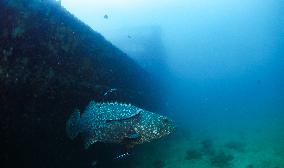
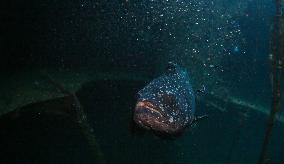
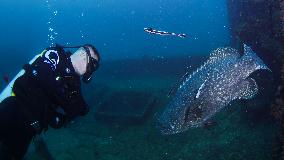
(240521) -- SANYA(HAINAN), May 21, 2024 (Xinhua) -- A grouper is pictured in the Wuzhizhou Island's marine ranch in Sanya, south China's Hainan Province, May 17, 2024. Wuzhizhou Island's marine ranch, China's first tropical marine ranch, has made remarkable strides in marine ecological restoration and fishery resource conservation. Artificial reefs are utilized worldwide to enhance ocean ecology, by creating additional habitats for local aquatic organisms and fish. As of April 2024, the marine ranch has deployed approximately 80,000 cubic meters of artificial reefs and ship-reefs. These efforts have created a thriving marine ecosystem, complete with coral reefs, fish, shrimp and shellfish. Statistics reveal that over 51,000 corals have been successfully transplanted in the waters around Wuzhizhou Island. The area is now home to more than 300 species of coral reef fish, showcasing the rich biodiversity that has been nurtured through these conservation efforts. (Xinhua/Yang Guanyu)

  •  
CHINA-HAINAN-SANYA-MARINE RANCH-DEVELOPMENT (CN)

CHINA-HAINAN-SANYA-MARINE RANCH-DEVELOPMENT (CN)

(240521) -- SANYA(HAINAN), May 21, 2024 (Xinhua) -- A grouper is pictured in the Wuzhizhou Island's marine ranch in Sanya, south China's Hainan Province, May 17, 2024. Wuzhizhou Island's marine ranch, China's first tropical marine ranch, has made remarkable strides in marine ecological restoration and fishery resource conservation. Artificial reefs are utilized worldwide to enhance ocean ecology, by creating additional habitats for local aquatic organisms and fish. As of April 2024, the marine ranch has deployed approximately 80,000 cubic meters of artificial reefs and ship-reefs. These efforts have created a thriving marine ecosystem, complete with coral reefs, fish, shrimp and shellfish. Statistics reveal that over 51,000 corals have been successfully transplanted in the waters around Wuzhizhou Island. The area is now home to more than 300 species of coral reef fish, showcasing the rich biodiversity that has been nurtured through these conservation efforts. (Xinhua/Yang Guanyu)

  •  
CHINA-HAINAN-SANYA-MARINE RANCH-DEVELOPMENT (CN)

CHINA-HAINAN-SANYA-MARINE RANCH-DEVELOPMENT (CN)

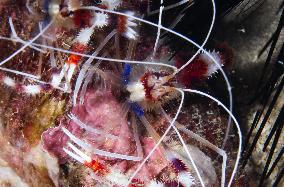
(240521) -- SANYA(HAINAN), May 21, 2024 (Xinhua) -- Blue banded coral shrimps are pictured in the Wuzhizhou Island's marine ranch in Sanya, south China's Hainan Province, May 16, 2024. Wuzhizhou Island's marine ranch, China's first tropical marine ranch, has made remarkable strides in marine ecological restoration and fishery resource conservation. Artificial reefs are utilized worldwide to enhance ocean ecology, by creating additional habitats for local aquatic organisms and fish. As of April 2024, the marine ranch has deployed approximately 80,000 cubic meters of artificial reefs and ship-reefs. These efforts have created a thriving marine ecosystem, complete with coral reefs, fish, shrimp and shellfish. Statistics reveal that over 51,000 corals have been successfully transplanted in the waters around Wuzhizhou Island. The area is now home to more than 300 species of coral reef fish, showcasing the rich biodiversity that has been nurtured through these conservation efforts. (Xinhua/Yang Guanyu)

  •  
CHINA-HAINAN-SANYA-MARINE RANCH-DEVELOPMENT (CN)

CHINA-HAINAN-SANYA-MARINE RANCH-DEVELOPMENT (CN)

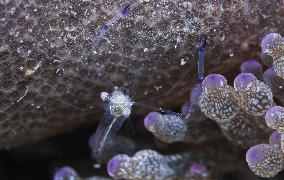
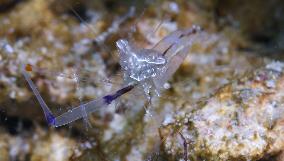
(240521) -- SANYA(HAINAN), May 21, 2024 (Xinhua) -- A Pederson cleaner shrimp is pictured in the Wuzhizhou Island's marine ranch in Sanya, south China's Hainan Province, May 15, 2024. Wuzhizhou Island's marine ranch, China's first tropical marine ranch, has made remarkable strides in marine ecological restoration and fishery resource conservation. Artificial reefs are utilized worldwide to enhance ocean ecology, by creating additional habitats for local aquatic organisms and fish. As of April 2024, the marine ranch has deployed approximately 80,000 cubic meters of artificial reefs and ship-reefs. These efforts have created a thriving marine ecosystem, complete with coral reefs, fish, shrimp and shellfish. Statistics reveal that over 51,000 corals have been successfully transplanted in the waters around Wuzhizhou Island. The area is now home to more than 300 species of coral reef fish, showcasing the rich biodiversity that has been nurtured through these conservation efforts. (Xinhua/Yang Guanyu)

  •  
CHINA-HAINAN-SANYA-MARINE RANCH-DEVELOPMENT (CN)

CHINA-HAINAN-SANYA-MARINE RANCH-DEVELOPMENT (CN)

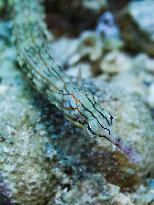
(240521) -- SANYA(HAINAN), May 21, 2024 (Xinhua) -- A messmate pipefish is pictured in the Wuzhizhou Island's marine ranch in Sanya, south China's Hainan Province, May 15, 2024. Wuzhizhou Island's marine ranch, China's first tropical marine ranch, has made remarkable strides in marine ecological restoration and fishery resource conservation. Artificial reefs are utilized worldwide to enhance ocean ecology, by creating additional habitats for local aquatic organisms and fish. As of April 2024, the marine ranch has deployed approximately 80,000 cubic meters of artificial reefs and ship-reefs. These efforts have created a thriving marine ecosystem, complete with coral reefs, fish, shrimp and shellfish. Statistics reveal that over 51,000 corals have been successfully transplanted in the waters around Wuzhizhou Island. The area is now home to more than 300 species of coral reef fish, showcasing the rich biodiversity that has been nurtured through these conservation efforts. (Xinhua/Yang Guanyu)

  •  
CHINA-HAINAN-SANYA-MARINE RANCH-DEVELOPMENT (CN)

CHINA-HAINAN-SANYA-MARINE RANCH-DEVELOPMENT (CN)

(240521) -- SANYA(HAINAN), May 21, 2024 (Xinhua) -- A grouper is pictured in the Wuzhizhou Island's marine ranch in Sanya, south China's Hainan Province, May 17, 2024. Wuzhizhou Island's marine ranch, China's first tropical marine ranch, has made remarkable strides in marine ecological restoration and fishery resource conservation. Artificial reefs are utilized worldwide to enhance ocean ecology, by creating additional habitats for local aquatic organisms and fish. As of April 2024, the marine ranch has deployed approximately 80,000 cubic meters of artificial reefs and ship-reefs. These efforts have created a thriving marine ecosystem, complete with coral reefs, fish, shrimp and shellfish. Statistics reveal that over 51,000 corals have been successfully transplanted in the waters around Wuzhizhou Island. The area is now home to more than 300 species of coral reef fish, showcasing the rich biodiversity that has been nurtured through these conservation efforts. (Xinhua/Yang Guanyu)

  •  
CHINA-HAINAN-SANYA-MARINE RANCH-DEVELOPMENT (CN)

CHINA-HAINAN-SANYA-MARINE RANCH-DEVELOPMENT (CN)

(240521) -- SANYA(HAINAN), May 21, 2024 (Xinhua) -- A Pederson cleaner shrimp is pictured in the Wuzhizhou Island's marine ranch in Sanya, south China's Hainan Province, May 15, 2024. Wuzhizhou Island's marine ranch, China's first tropical marine ranch, has made remarkable strides in marine ecological restoration and fishery resource conservation. Artificial reefs are utilized worldwide to enhance ocean ecology, by creating additional habitats for local aquatic organisms and fish. As of April 2024, the marine ranch has deployed approximately 80,000 cubic meters of artificial reefs and ship-reefs. These efforts have created a thriving marine ecosystem, complete with coral reefs, fish, shrimp and shellfish. Statistics reveal that over 51,000 corals have been successfully transplanted in the waters around Wuzhizhou Island. The area is now home to more than 300 species of coral reef fish, showcasing the rich biodiversity that has been nurtured through these conservation efforts. (Xinhua/Yang Guanyu)

  •  
CHINA-HAINAN-SANYA-MARINE RANCH-DEVELOPMENT (CN)

CHINA-HAINAN-SANYA-MARINE RANCH-DEVELOPMENT (CN)

(240521) -- SANYA(HAINAN), May 21, 2024 (Xinhua) -- A yellow boxfish, Ostracion cubicus, is pictured in the Wuzhizhou Island's marine ranch in Sanya, south China's Hainan Province, May 15, 2024. Wuzhizhou Island's marine ranch, China's first tropical marine ranch, has made remarkable strides in marine ecological restoration and fishery resource conservation. Artificial reefs are utilized worldwide to enhance ocean ecology, by creating additional habitats for local aquatic organisms and fish. As of April 2024, the marine ranch has deployed approximately 80,000 cubic meters of artificial reefs and ship-reefs. These efforts have created a thriving marine ecosystem, complete with coral reefs, fish, shrimp and shellfish. Statistics reveal that over 51,000 corals have been successfully transplanted in the waters around Wuzhizhou Island. The area is now home to more than 300 species of coral reef fish, showcasing the rich biodiversity that has been nurtured through these conservation efforts. (Xinhua/Yang Guanyu

  •  
CHINA-HAINAN-SANYA-MARINE RANCH-DEVELOPMENT (CN)

CHINA-HAINAN-SANYA-MARINE RANCH-DEVELOPMENT (CN)

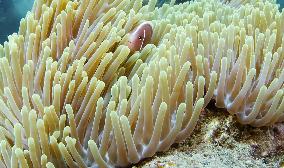
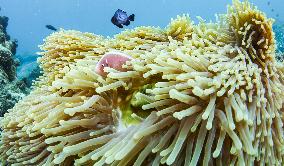
(240521) -- SANYA(HAINAN), May 21, 2024 (Xinhua) -- Sea anemones and a clownfish are pictured in the Wuzhizhou Island's marine ranch in Sanya, south China's Hainan Province, May 17, 2024. Wuzhizhou Island's marine ranch, China's first tropical marine ranch, has made remarkable strides in marine ecological restoration and fishery resource conservation. Artificial reefs are utilized worldwide to enhance ocean ecology, by creating additional habitats for local aquatic organisms and fish. As of April 2024, the marine ranch has deployed approximately 80,000 cubic meters of artificial reefs and ship-reefs. These efforts have created a thriving marine ecosystem, complete with coral reefs, fish, shrimp and shellfish. Statistics reveal that over 51,000 corals have been successfully transplanted in the waters around Wuzhizhou Island. The area is now home to more than 300 species of coral reef fish, showcasing the rich biodiversity that has been nurtured through these conservation efforts. (Xinhua/Yang Guanyu)

  •  
CHINA-HAINAN-SANYA-MARINE RANCH-DEVELOPMENT (CN)

CHINA-HAINAN-SANYA-MARINE RANCH-DEVELOPMENT (CN)

(240521) -- SANYA(HAINAN), May 21, 2024 (Xinhua) -- Sea slugs are pictured in the Wuzhizhou Island's marine ranch in Sanya, south China's Hainan Province, May 16, 2024. Wuzhizhou Island's marine ranch, China's first tropical marine ranch, has made remarkable strides in marine ecological restoration and fishery resource conservation. Artificial reefs are utilized worldwide to enhance ocean ecology, by creating additional habitats for local aquatic organisms and fish. As of April 2024, the marine ranch has deployed approximately 80,000 cubic meters of artificial reefs and ship-reefs. These efforts have created a thriving marine ecosystem, complete with coral reefs, fish, shrimp and shellfish. Statistics reveal that over 51,000 corals have been successfully transplanted in the waters around Wuzhizhou Island. The area is now home to more than 300 species of coral reef fish, showcasing the rich biodiversity that has been nurtured through these conservation efforts. (Xinhua/Yang Guanyu)

  •  
CHINA-HAINAN-SANYA-MARINE RANCH-DEVELOPMENT (CN)

CHINA-HAINAN-SANYA-MARINE RANCH-DEVELOPMENT (CN)

(240521) -- SANYA(HAINAN), May 21, 2024 (Xinhua) -- A lionfish is pictured in the Wuzhizhou Island's marine ranch in Sanya, south China's Hainan Province, May 17, 2024. Wuzhizhou Island's marine ranch, China's first tropical marine ranch, has made remarkable strides in marine ecological restoration and fishery resource conservation. Artificial reefs are utilized worldwide to enhance ocean ecology, by creating additional habitats for local aquatic organisms and fish. As of April 2024, the marine ranch has deployed approximately 80,000 cubic meters of artificial reefs and ship-reefs. These efforts have created a thriving marine ecosystem, complete with coral reefs, fish, shrimp and shellfish. Statistics reveal that over 51,000 corals have been successfully transplanted in the waters around Wuzhizhou Island. The area is now home to more than 300 species of coral reef fish, showcasing the rich biodiversity that has been nurtured through these conservation efforts. (Xinhua/Yang Guanyu)

  •  
CHINA-HAINAN-SANYA-MARINE RANCH-DEVELOPMENT (CN)

CHINA-HAINAN-SANYA-MARINE RANCH-DEVELOPMENT (CN)

(240521) -- SANYA(HAINAN), May 21, 2024 (Xinhua) -- A phyllidiidae is pictured in the Wuzhizhou Island's marine ranch in Sanya, south China's Hainan Province, May 16, 2024. Wuzhizhou Island's marine ranch, China's first tropical marine ranch, has made remarkable strides in marine ecological restoration and fishery resource conservation. Artificial reefs are utilized worldwide to enhance ocean ecology, by creating additional habitats for local aquatic organisms and fish. As of April 2024, the marine ranch has deployed approximately 80,000 cubic meters of artificial reefs and ship-reefs. These efforts have created a thriving marine ecosystem, complete with coral reefs, fish, shrimp and shellfish. Statistics reveal that over 51,000 corals have been successfully transplanted in the waters around Wuzhizhou Island. The area is now home to more than 300 species of coral reef fish, showcasing the rich biodiversity that has been nurtured through these conservation efforts. (Xinhua/Yang Guanyu)

  •  
CHINA-HAINAN-SANYA-MARINE RANCH-DEVELOPMENT (CN)

CHINA-HAINAN-SANYA-MARINE RANCH-DEVELOPMENT (CN)

(240521) -- SANYA(HAINAN), May 21, 2024 (Xinhua) -- A grouper is pictured in the Wuzhizhou Island's marine ranch in Sanya, south China's Hainan Province, May 17, 2024. Wuzhizhou Island's marine ranch, China's first tropical marine ranch, has made remarkable strides in marine ecological restoration and fishery resource conservation. Artificial reefs are utilized worldwide to enhance ocean ecology, by creating additional habitats for local aquatic organisms and fish. As of April 2024, the marine ranch has deployed approximately 80,000 cubic meters of artificial reefs and ship-reefs. These efforts have created a thriving marine ecosystem, complete with coral reefs, fish, shrimp and shellfish. Statistics reveal that over 51,000 corals have been successfully transplanted in the waters around Wuzhizhou Island. The area is now home to more than 300 species of coral reef fish, showcasing the rich biodiversity that has been nurtured through these conservation efforts. (Xinhua/Yang Guanyu)

  •  
CHINA-HAINAN-SANYA-MARINE RANCH-DEVELOPMENT (CN)

CHINA-HAINAN-SANYA-MARINE RANCH-DEVELOPMENT (CN)

(240521) -- SANYA(HAINAN), May 21, 2024 (Xinhua) -- Sea anemones and a clownfish are pictured in the Wuzhizhou Island's marine ranch in Sanya, south China's Hainan Province, May 17, 2024. Wuzhizhou Island's marine ranch, China's first tropical marine ranch, has made remarkable strides in marine ecological restoration and fishery resource conservation. Artificial reefs are utilized worldwide to enhance ocean ecology, by creating additional habitats for local aquatic organisms and fish. As of April 2024, the marine ranch has deployed approximately 80,000 cubic meters of artificial reefs and ship-reefs. These efforts have created a thriving marine ecosystem, complete with coral reefs, fish, shrimp and shellfish. Statistics reveal that over 51,000 corals have been successfully transplanted in the waters around Wuzhizhou Island. The area is now home to more than 300 species of coral reef fish, showcasing the rich biodiversity that has been nurtured through these conservation efforts. (Xinhua/Yang Guanyu)

  •  
CHINA-HAINAN-SANYA-MARINE RANCH-DEVELOPMENT (CN)

CHINA-HAINAN-SANYA-MARINE RANCH-DEVELOPMENT (CN)

(240521) -- SANYA(HAINAN), May 21, 2024 (Xinhua) -- A grouper is pictured in the Wuzhizhou Island's marine ranch in Sanya, south China's Hainan Province, May 17, 2024. Wuzhizhou Island's marine ranch, China's first tropical marine ranch, has made remarkable strides in marine ecological restoration and fishery resource conservation. Artificial reefs are utilized worldwide to enhance ocean ecology, by creating additional habitats for local aquatic organisms and fish. As of April 2024, the marine ranch has deployed approximately 80,000 cubic meters of artificial reefs and ship-reefs. These efforts have created a thriving marine ecosystem, complete with coral reefs, fish, shrimp and shellfish. Statistics reveal that over 51,000 corals have been successfully transplanted in the waters around Wuzhizhou Island. The area is now home to more than 300 species of coral reef fish, showcasing the rich biodiversity that has been nurtured through these conservation efforts. (Xinhua/Yang Guanyu)

  •  
CHINA-HAINAN-SANYA-MARINE RANCH-DEVELOPMENT (CN)

CHINA-HAINAN-SANYA-MARINE RANCH-DEVELOPMENT (CN)

(240521) -- SANYA(HAINAN), May 21, 2024 (Xinhua) -- A goby fish is pictured in the Wuzhizhou Island's marine ranch in Sanya, south China's Hainan Province, May 15, 2024. Wuzhizhou Island's marine ranch, China's first tropical marine ranch, has made remarkable strides in marine ecological restoration and fishery resource conservation. Artificial reefs are utilized worldwide to enhance ocean ecology, by creating additional habitats for local aquatic organisms and fish. As of April 2024, the marine ranch has deployed approximately 80,000 cubic meters of artificial reefs and ship-reefs. These efforts have created a thriving marine ecosystem, complete with coral reefs, fish, shrimp and shellfish. Statistics reveal that over 51,000 corals have been successfully transplanted in the waters around Wuzhizhou Island. The area is now home to more than 300 species of coral reef fish, showcasing the rich biodiversity that has been nurtured through these conservation efforts. (Xinhua/Yang Guanyu)

  •  
Confiscated tropical fish

Confiscated tropical fish

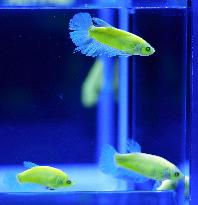
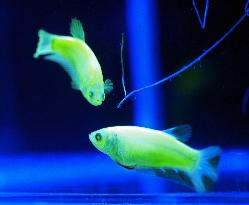
Photo taken in Tokyo on Jan. 17, 2024, shows Siamese fighting fish, commonly known as betta, genetically modified to glow light green. The fish were confiscated by Tokyo police over an alleged violation of the Cartagena law, which regulates the use of genetically modified living organisms.

  •  
Confiscated tropical fish

Confiscated tropical fish

Photo taken in Tokyo on Jan. 17, 2024, shows Siamese fighting fish, commonly known as betta, genetically modified to glow light green. The fish were confiscated by Tokyo police over an alleged violation of the Cartagena law, which regulates the use of genetically modified living organisms.

  •  
Confiscated tropical fish

Confiscated tropical fish

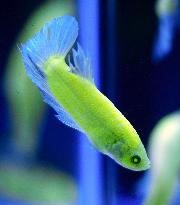
Photo taken in Tokyo on Jan. 17, 2024, shows a Siamese fighting fish, commonly known as betta, genetically modified to glow light green. The fish was confiscated by Tokyo police over an alleged violation of the Cartagena law, which regulates the use of genetically modified living organisms.

  •  
CHINA-TIANJIN-MARITIME MUSEUM-DIGITAL TECHNOLOGY (CN)

CHINA-TIANJIN-MARITIME MUSEUM-DIGITAL TECHNOLOGY (CN)

(230827) -- TIANJIN, Aug. 27, 2023 (Xinhua) -- People interacts with virtual marine organisms at a whale-themed exhibition of National Maritime Museum of China in north China's Tianjin Municipality, Aug. 26, 2023. The National Maritime Museum of China is a national-level, comprehensive marine museum that integrates collections, displays, research, and education in China. This summer, it has applied digital technology such as digital projection and AI interaction to a whale-themed exhibition to provide visitors with an immersive experience. (Xinhua/Sun Fanyue)

  •  

France swelters under record-breaking late summer heat wave

STORY: France swelters under record-breaking late summer heat wave DATELINE: Aug. 26, 2023 LENGTH: 00:02:06 LOCATION: Paris CATEGORY: ENVIRONMENT SHOTLIST: 1. various of street views in France 2. SOUNDBITE (French): MANUEL CARPIO, Local resident STORYLINE: Europe is experiencing a rare and intense heat wave that has lasted for several days, with temperatures reaching 40 degrees Celsius in some parts of France. 19 French departments are on red alert, the highest level of weather warning, as the heat poses a serious threat to health and safety. "When we reach the red level, the whole population must indeed be careful, because we are entering a period when the organisms are exposed to heat, the extension of which must be avoided," underlined Christophe Bechu, Minister for the Ecological Transition and Territorial Cohesion. The authorities have issued various measures to protect the population, such as cancelling outdoor activities, closing poorly ventilated buildings, and banning fireworks and forest acces

  •  
CHINA-CHONGQING-GUANGYANG ISLE-ECOLOGICAL EDUCATION (CN)

CHINA-CHONGQING-GUANGYANG ISLE-ECOLOGICAL EDUCATION (CN)

(230704) -- CHONGQING, July 4, 2023 (Xinhua) -- Children learn to identify aquatic organisms during an ecological education tour on Guangyang Isle in southwest China's Chongqing, July 3, 2023. Located at the most extensive green island in the upper reaches of the Yangtze River, Guangyang Isle, covering around 10 square km, has a vegetation coverage rate of over 90 percent, and 594 species of plants and 452 species of animals have been recorded. But its ecological system and biodiversity were severely damaged due to a number of aggressive real estate projects that had lasted for years. In 2017, the commercial activities were stopped and the local government began to restore the ecological system of the island, which sits in the Three Gorges Reservoir area. Guangyang Isle is now an "ecological classroom" where residents and tourists can get in touch with nature and gain insights into China's ecological civilization progress. (Xinhua/Tang Yi)

  •  
CANADA-VANCOUVER-EDUCATION-SCIENCE RENDEZVOUS

CANADA-VANCOUVER-EDUCATION-SCIENCE RENDEZVOUS

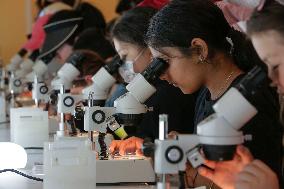
(230514) -- VANCOUVER, May 14, 2023 (Xinhua) -- Children watch the pond water organisms through a microscope during the Science Rendezvous event at the University of British Columbia in Vancouver, British Columbia, Canada, on May 13, 2023. (Photo by Liang Sen/Xinhua)

  •  

WWF calls for global treaty to protect high seas

STORY: WWF calls for global treaty to protect high seas DATELINE: Feb. 15, 2023 LENGTH: 00:01:41 LOCATION: GENEVA, Switzerland CATEGORY: ENVIRONMENT SHOTLIST: 1. various of sea and marine organisms 2. STANDUP (English): MARTINA FUCHS, Xinhua reporter 3. various of sea and marine organisms 4. SOUNDBITE (English): JESSICA BATTLE, WWF's senior global ocean governance and policy expert 5. various of sea and marine organisms STORYLINE: STANDUP (English): MARTINA FUCHS, Xinhua reporter "World Wide Fund for Nature (WWF) International is calling for a coordinated global action plan to better protect the oceans and urging policymakers to 'roll up their sleeves' in a bid to finalize a long-awaited High Seas Treaty this March. The ocean covers 70 percent of the surface of the Earth, is the planet's largest biosphere, and is home to up to 80 percent of all life in the world. I spoke to the WWF about the key issues at stake and China's role." SOUNDBITE (English): JESSICA BATTLE, WWF's senior global ocean governance an

  •  
Artificial objects found in deep-sea organisms

Artificial objects found in deep-sea organisms

TOKYO, Japan - What seems to be a piece of cardboard, found in a giant isopod's excrement, is shown at the Toba Aquarium in Toba, Mie Prefecture, central Japan, on Aug. 11, 2014. This finding raises concerns that man-made waste is contaminating the abyssal floor, a habitat of giant isopods.

  •  
Artificial objects found in deep-sea organisms

Artificial objects found in deep-sea organisms

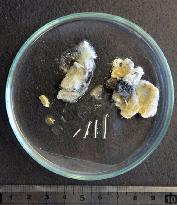
TOKYO, Japan - Rubber bands and what seem to be chemical fibers, found in the stomach of a deceased giant isopod, are shown at the Toba Aquarium in Toba, Mie Prefecture, central Japan, on Aug. 11, 2014. The findings raise concerns that man-made waste is contaminating the abyssal floor, a habitat of giant isopods.

  •  
Japan, Russia jointly develop seaweed-using products

Japan, Russia jointly develop seaweed-using products

VLADIVOSTOK, Russia - Japanese and Russian researchers concerned with a joint kelp project sample various food products containing marine organisms and drift weed, among other things, at Russia's Far Eastern Federal University in Vladivostok in this file photo taken in June 2014.

  • Main
  • Top
  • Editorial
  • Creative
  • About Us
  • About ILG
  • Terms of use
  • Company
  • BEHIND
  • Price List
  • Single Plan
  • Monthly Plan
  • Services
  • Shooting
  • Rights Clearance
  • Support
  • FAQ
  • How To Buy
  • Contact Us
  • Become a Partner

© KYODO NEWS IMAGES INC

All Rights Reserved.

  • Editorial
  • Olympics
  • News
  • Sports
  • Japan
  • Tech
  • Royal
  • Disaster
  • NorthKorea
  • Old Japan
  • SNS
  • Creative
  • Food
  • Japan
  • Landscape
  • Animal
  • Popular
  • #Ukraine
  • #Russia
  • #coronavirus
  • #N. Korea
  • #Thailand
  • #China
  • #Ukraine
  • #Russia
  • #coronavirus
  • #N. Korea
  • #Thailand
  • #China
  • Food
  • Japan
  • Landscape
  • Animal
  • Olympics
  • News
  • Sports
  • Japan
  • Tech
  • Royal
  • Disaster
  • NorthKorea
  • Old Japan
  • SNS