•  
Two Japanese scientists receive Nobel prize

Two Japanese scientists receive Nobel prize

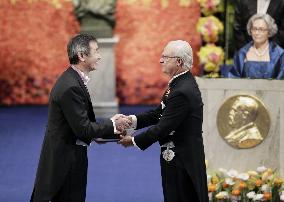
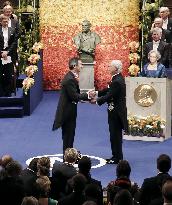
Takaaki Kajita of Japan receives a medal and diploma for his Nobel Prize in Physics from Swedish King Carl XVI Gustaf at the award ceremony in Stockholm on Dec. 10, 2015. Kajita has discovered neutrino oscillations demonstrating that neutrinos have mass. (Pool photo by Kyodo News)(Kyodo) ==Kyodo

  •  
Two Japanese scientists receive Nobel prize

Two Japanese scientists receive Nobel prize

Takaaki Kajita of Japan receives a medal and diploma for his Nobel Prize in Physics from Swedish King Carl XVI Gustaf at the award ceremony in Stockholm on Dec. 10, 2015. Kajita has discovered neutrino oscillations demonstrating that neutrinos have mass. (Pool photo by Kyodo News)(Kyodo) ==Kyodo

  •  
Super-Kamiokande neutrino observatory in Japan

Super-Kamiokande neutrino observatory in Japan

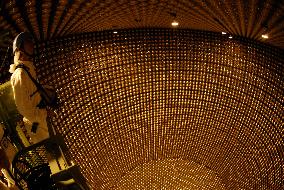
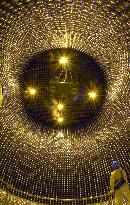
File photo taken in April 2006 shows the Super-Kamiokande neutrino observatory 1,000 meters underground in Gifu Prefecture, central Japan. University of Tokyo professor Takaaki Kajita won the 2015 Nobel Prize in Physics along with Canada's Arthur McDonald for their discovery of neutrino oscillations demonstrating that neutrinos have mass. (Kyodo) ==Kyodo

  •  
Super-Kamiokande neutrino observatory in Japan

Super-Kamiokande neutrino observatory in Japan

File photo taken in April 2006 shows the Super-Kamiokande neutrino observatory 1,000 meters underground in the central Japan prefecture of Gifu. Takaaki Kajita, a professor at the University of Tokyo, won the 2015 Nobel Prize in Physics along with Canada's Arthur McDonald for their discovery of neutrino oscillations demonstrating that neutrinos have mass. (Kyodo) ==Kyodo

  •  
Kajita donates neutrino detector

Kajita donates neutrino detector

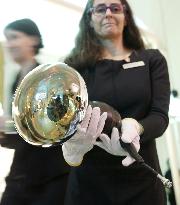
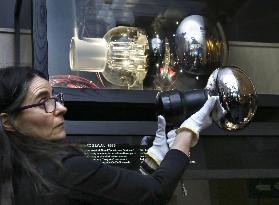
Photo taken Dec. 6, 2015, shows a neutrino detector donated by Takaaki Kajita, the Japanese scientist jointly awarded the Nobel Prize in physics for the discovery of neutrino oscillations, to the Nobel Museum in Stockholm. The same detectors are installed at the Super-Kamiokande neutrino observatory in Japan. (Kyodo) ==Kyodo

  •  
Kajita donates neutrino detector

Kajita donates neutrino detector

Photo taken Dec. 6, 2015, shows a neutrino detector (front) donated by Takaaki Kajita, the Japanese scientist jointly awarded the Nobel Prize in physics for the discovery of neutrino oscillations, to the Nobel Museum in Stockholm. The same detectors are installed at the Super-Kamiokande neutrino observatory in Japan. The detector seen in the back was donated by another Japanese Nobel laureate and Kajita's teacher, Masatoshi Koshiba, in 2002. (Kyodo) ==Kyodo

  •  
Nobel laureate Kajita arrives in Stockholm

Nobel laureate Kajita arrives in Stockholm

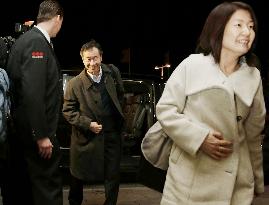
Takaaki Kajita (C), the Japanese scientist jointly awarded this year's Nobel Prize in physics for the discovery of neutrino oscillations, and his wife Michiko (R) arrive at a hotel in Stockholm on Dec. 4, 2015, to attend the award ceremony. "I hope we will be able to enjoy," Kajita said. (Kyodo) ==Kyodo

  •  
Nobel laureate Kajita leaves for Stockholm

Nobel laureate Kajita leaves for Stockholm

Takaaki Kajita (L), the Japanese scientist jointly awarded this year's Nobel Prize in physics for the discovery of neutrino oscillations, attends a press conference with his wife Michiko at Haneda airport in Tokyo on Dec. 4, 2015, before leaving for Stockholm to attend the award ceremony. "I hope to enjoy upcoming events with my fellow researchers," Kajita said. (Kyodo) ==Kyodo

  •  
Japan's Kajita shares Nobel Prize in Physics with Canada's McDonald

Japan's Kajita shares Nobel Prize in Physics with Canada's McDonald

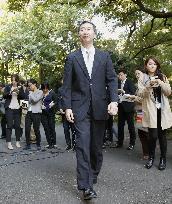
Japanese scientist Takaaki Kajita arrives at the University of Tokyo on Oct. 7, 2015, a day after he received the Nobel Prize in Physics along with Canada's Arthur McDonald for their discovery of neutrino oscillations demonstrating that neutrinos have mass. (Kyodo) ==Kyodo

  •  
Japan's Kajita shares Nobel Prize in Physics with Canada's McDonald

Japan's Kajita shares Nobel Prize in Physics with Canada's McDonald

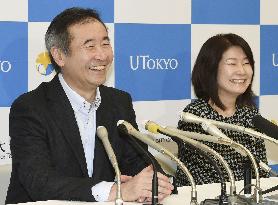
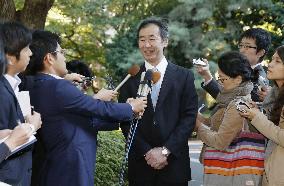
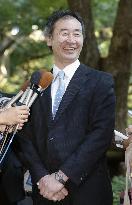
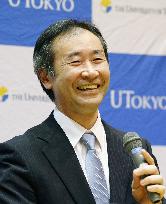
Japanese scientist Takaaki Kajita meets with reporters at the University of Tokyo on Oct. 7, 2015, a day after he received the Nobel Prize in Physics along with Canada's Arthur McDonald for their discovery of neutrino oscillations demonstrating that neutrinos have mass. (Kyodo) ==Kyodo

  •  
Japan's Kajita shares Nobel Prize in Physics with Canada's McDonald

Japan's Kajita shares Nobel Prize in Physics with Canada's McDonald

Japanese scientist Takaaki Kajita meets with reporters at the University of Tokyo on Oct. 7, 2015, a day after he received the Nobel Prize in Physics along with Canada's Arthur McDonald for their discovery of neutrino oscillations demonstrating that neutrinos have mass. (Kyodo) ==Kyodo

  •  
Japan's Kajita shares Nobel Prize in Physics with Canada's McDonald

Japan's Kajita shares Nobel Prize in Physics with Canada's McDonald

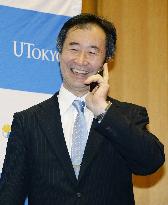
Japanese scientist Takaaki Kajita, 56, a professor at the University of Tokyo and director of the university's Institute for Cosmic Ray Research, talks with Prime Minister Shinzo Abe by phone during a press conference in Tokyo on Oct. 6, 2015, as he shared the Nobel Prize in Physics with Canada's Arthur McDonald for their discovery of neutrino oscillations. (Kyodo) ==Kyodo

  •  
Japan's Kajita shares Nobel Prize in Physics with Canada's McDonald

Japan's Kajita shares Nobel Prize in Physics with Canada's McDonald

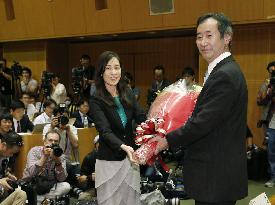
Japanese scientist Takaaki Kajita (R) receives flowers during a press conference on Oct. 6, 2015, at the University of Tokyo, as he won the Nobel Prize in Physics along with Canada's Arthur McDonald for their discovery of neutrino oscillations demonstrating that neutrinos have mass. (Kyodo) ==Kyodo

  •  
Japan's Kajita shares Nobel Prize in Physics with Canada's McDonald

Japan's Kajita shares Nobel Prize in Physics with Canada's McDonald

Japanese scientist Takaaki Kajita meets with reporters at the University of Tokyo on Oct. 7, 2015, a day after he received the Nobel Prize in Physics along with Canada's Arthur McDonald for their discovery of neutrino oscillations demonstrating that neutrinos have mass. (Kyodo) ==Kyodo

  •  
Canada's Arthur McDonald shares Nobel Prize in Physics

Canada's Arthur McDonald shares Nobel Prize in Physics

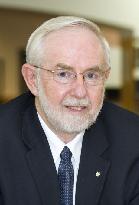
Photo taken in May 2008 shows Canadian scientist Arthur McDonald, a faculty member at Queen's University in Canada. McDonald won the Nobel Prize in Physics along with Japanese scientist Takaaki Kajita on Oct. 6, 2015, for the discovery of neutrino oscillations, the Royal Swedish Academy said. (Kyodo) ==Kyodo

  •  
Japan's Kajita shares Nobel Prize in Physics with Canada's McDonald

Japan's Kajita shares Nobel Prize in Physics with Canada's McDonald

Japanese scientist Takaaki Kajita, 56, a professor at the University of Tokyo and director of the university's Institute for Cosmic Ray Research, attends a press conference in Tokyo on Oct. 6, 2015, as he shared the Nobel Prize in Physics with Canada's Arthur McDonald for their discovery of neutrino oscillations. (Kyodo) ==Kyodo

  •  
Japanese scientist Kajita shares Nobel Prize in Physics

Japanese scientist Kajita shares Nobel Prize in Physics

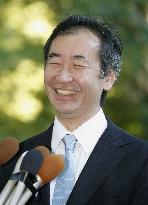
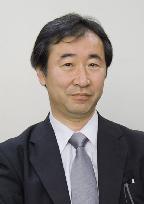
File photo taken in April 2010 shows Japanese scientist Takaaki Kajita. Kajita won the Nobel Prize in Physics along with Canadian scientist Arthur McDonald on Oct. 6, 2015, for the discovery of neutrino oscillations, the Royal Swedish Academy said. (Kyodo) ==Kyodo

  •  
High school students study about Super-Kamiokande

High school students study about Super-Kamiokande

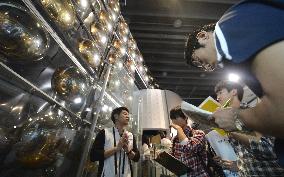
High school students take notes in front of a model of Nobel Physics Prize winner Takaaki Kajita's Super-Kamiokande detector at the National Museum of Emerging Science and Innovation (Miraikan) in Tokyo on Oct. 10, 2015. Kajita won the prize for the discovery of neutrino oscillations. (Kyodo) ==Kyodo

  •  
High school students look at Super-Kamiokande model

High school students look at Super-Kamiokande model

High school students observe a model of the Super-Kamiokande neutrino detector at the National Museum of Emerging Science and Innovation (Miraikan) in Tokyo on Oct. 10, 2015, after Japanese scientist Takaaki Kajita won the 2015 Nobel Prize in Physics for the discovery of neutrino oscillations. (Kyodo) ==Kyodo

  •  
Expert explains work at facility linked to Nobel physics prize

Expert explains work at facility linked to Nobel physics prize

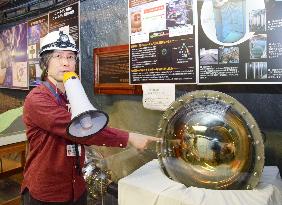
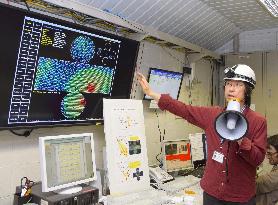
Yoshinari Hayato, associate professor at the University of Tokyo's Institute for Cosmic Ray Research, shows one of the photomultiplier tubes at Super-Kamiokande, the world's largest underground neutrino detector facility, in Hida, Gifu Prefecture, central Japan, on Oct. 9, 2015. The detector was instrumental in research by Japanese scientist Takaaki Kajita, who was named a co-recipient of the Nobel Prize in Physics on Oct. 6 "for the discovery of neutrino oscillations, which shows that neutrinos have mass." (Kyodo) ==Kyodo

  •  
Expert explains work at facility linked to Nobel physics prize

Expert explains work at facility linked to Nobel physics prize

Yoshinari Hayato, associate professor at the University of Tokyo's Institute for Cosmic Ray Research, explains work in the control room at Super-Kamiokande, the world's largest underground neutrino detector facility, in Hida, Gifu Prefecture, central Japan, on Oct. 9, 2015. The detector was instrumental in research by Japanese scientist Takaaki Kajita, who was named a co-recipient of the Nobel Prize in Physics on Oct. 6 "for the discovery of neutrino oscillations, which shows that neutrinos have mass." (Kyodo) ==Kyodo

  •  
Head of Nobel prize-linked Hamamatsu Photonics meets press

Head of Nobel prize-linked Hamamatsu Photonics meets press

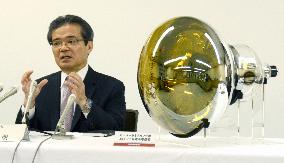
Akira Hiruma, president of Hamamatsu Photonics K.K., speaks to reporters in Hamamatsu, Shizuoka Prefecture, central Japan, on Oct. 7, 2015, after the selection of Japanese scientist Takaaki Kajita as a joint winner of the 2015 Nobel Prize in Physics along with Arthur McDonald of Canada. On his left is a sample of photomultipliers produced by the company for use in studies on neutrino oscillations by Kajita and his fellow researchers. (Kyodo) ==Kyodo

  •  
Japan's Kajita shares Nobel Prize in Physics with Canada's McDonald

Japan's Kajita shares Nobel Prize in Physics with Canada's McDonald

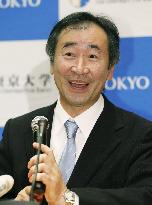
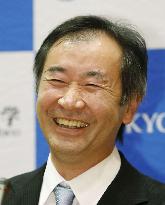
Japanese scientist Takaaki Kajita, 56, a professor at the University of Tokyo and director of the university's Institute for Cosmic Ray Research, attends a press conference in Tokyo on Oct. 6, 2015, as he shared the Nobel Prize in Physics with Canada's Arthur McDonald for their discovery of neutrino oscillations. (Kyodo) ==Kyodo

  •  
Japan's Kajita shares Nobel Prize in Physics with Canada's McDonald

Japan's Kajita shares Nobel Prize in Physics with Canada's McDonald

Japanese scientist Takaaki Kajita, 56, a professor at the University of Tokyo and director of the university's Institute for Cosmic Ray Research, attends a press conference in Tokyo on Oct. 6, 2015, as he shared the Nobel Prize in Physics with Canada's Arthur McDonald for their discovery of neutrino oscillations. (Kyodo) ==Kyodo

  •  
Researchers find new way to predict end of metal life cycle

Researchers find new way to predict end of metal life cycle

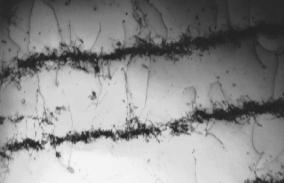
OSAKA, Japan - Researchers at Osaka University said March 2 they have discovered how to predict the end of the life cycle of metal, paving the way for technology which may prevent accidents resulting from metal fatigue. Prof. Masahiko Hirao said his team has discovered that metal becomes more likely to absorb oscillations shortly before it nears the end of its life cycle. A microscopic photo shows the surface of a metal bar which is in a state to absorb high-frequency oscillations.

  • Main
  • Top
  • Editorial
  • Creative
  • About Us
  • About ILG
  • Terms of use
  • Company
  • BEHIND
  • Price List
  • Single Plan
  • Monthly Plan
  • Services
  • Shooting
  • Rights Clearance
  • Support
  • FAQ
  • How To Buy
  • Contact Us
  • Become a Partner

© KYODO NEWS IMAGES INC

All Rights Reserved.

  • Editorial
  • Olympics
  • News
  • Sports
  • Japan
  • Tech
  • Royal
  • Disaster
  • NorthKorea
  • Old Japan
  • SNS
  • Creative
  • Food
  • Japan
  • Landscape
  • Animal
  • Popular
  • #Ukraine
  • #China
  • #coronavirus
  • #N. Korea
  • #Russia
  • #Thailand
  • #Ukraine
  • #China
  • #coronavirus
  • #N. Korea
  • #Russia
  • #Thailand
  • Food
  • Japan
  • Landscape
  • Animal
  • Olympics
  • News
  • Sports
  • Japan
  • Tech
  • Royal
  • Disaster
  • NorthKorea
  • Old Japan
  • SNS