•  

Pastures in north China begin grazing moratorium for grass rejuvenation

STORY: Pastures in north China begin grazing moratorium for grass rejuvenation SHOOTING TIME: April 3, 2024 DATELINE: April 4, 2024 LENGTH: 00:00:57 LOCATION: HOHHOT, China CATEGORY: ENVIRONMENT SHOTLIST: 1. various of grassland in Inner Mongolia STORYLINE: Cattle and sheep have been confined to sheds starting Monday in major grasslands in north China's Inner Mongolia Autonomous Region, as the pastures undergo a 45-day grazing moratorium aimed at revitalizing grass productivity. According to the regional forestry and grassland bureau, a total grazing area of 970 million mu (64.67 million hectares) is subjected to the grazing moratorium this spring. The Xilin Gol grasslands became the first area in Inner Mongolia to implement the spring grazing moratorium in 2018, which was extended to the whole of Inner Mongolia this year. Earlier this year, the regional government rolled out a pilot plan to address the problem of grassland overgrazing. This initiative employs precision methods tailored to treat var

  •  

Herders move to summer pastures in N China's Inner Mongolia

STORY: Herders move to summer pastures in N China's Inner Mongolia DATELINE: June 20, 2023 LENGTH: 00:01:41 LOCATION: HOHHOT, China CATEGORY: SOCIETY SHOTLIST: 1. various of Ar Horqin grassland and livestock 2. various of herders 3. SOUNDBITE 1 (Chinese): ERDUN BARTEL, Herdsman 4. various of Ar Horqin grassland 5. SOUNDBITE 2 (Chinese): ERDUN BARTEL, Herdsman 6. various of Ar Horqin grassland STORYLINE: A spectacular nomadic migration is taking place on the Ar Horqin grassland in north China's Inner Mongolia Autonomous Region. In order to protect the grassland from overgrazing, herders here take their livestock to summer pastures in mid-June every year. This year, a total of 2,063 households of herders and about 146,100 livestock join in the long journey which takes three days to reach the summer pasture, about 60 km away from the winter pasture. Erdun Bartel is one of them. SOUNDBITE 1 (Chinese): ERDUN BARTEL, Herdsman "I'm 51 years old. I used to go to summer pasture with my parents every year when I

  •  

Endangered Mongolian Saiga antelopes' population increases to nearly 14,000

STORY: Endangered Mongolian Saiga antelopes' population increases to nearly 14,000 DATELINE: Dec, 17, 2022 LENGTH: 00:01:12 LOCATION: Ulan Bator CATEGORY: ENVIRONMENT SHOTLIST: 1. various of Mongolian Saiga antelopes STORYLINE: The number of Mongolian Saiga antelopes, a critically endangered species, has increased to almost 14,000, local media reported on Friday. An annual census conducted in November showed that the population of Mongolian Saiga antelopes has increased to at least 13,925, said the media, citing a report by the World Wide Fund for Nature-Mongolia. Although the Mongolian Saiga population has grown substantially, this is not a source of relief, the media said, adding that there are still many serious threats such as droughts, overgrazing, and infectious diseases that could have devastating effects on the vulnerable Mongolian Saiga population. Xinhua News Agency correspondents reporting from Ulan Bator. (XHTV)

  •  
BOTSWANA-MOLEPOLOLE-INDIGENOUS TREES -LIVESTOCK FODDER

BOTSWANA-MOLEPOLOLE-INDIGENOUS TREES -LIVESTOCK FODDER

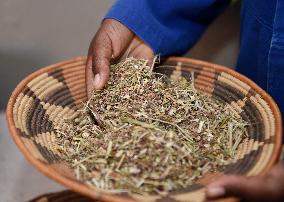
(221017) -- MOLEPOLOLE (BOTSWANA), Oct. 17, 2022 (Xinhua) -- Tlotlo Phuduhudu, founder of Healthy Delights company, shows some of the livestock feeds produced using indigenous trees, plant by-products, and crop residue in Molepolole, Botswana, on Sept. 20, 2022. Livestock farmers in Botswana are often blamed for preventing the regeneration of trees and thereby contributing to the degradation of hill slopes, rangelands, and riparian areas due to overgrazing. However, 26-year-old Tlotlo Phuduhudu from the Molepolole village, some 60km west of Gaborone, the capital of Botswana, is slowly but surely changing such a trend through her indigenous trees fodder. (Photo by Tshekiso Tebalo/Xinhua) TO GO WITH Feature: Botswanan entrepreneur turns to indigenous trees for livestock fodder

  •  
BOTSWANA-MOLEPOLOLE-INDIGENOUS TREES -LIVESTOCK FODDER

BOTSWANA-MOLEPOLOLE-INDIGENOUS TREES -LIVESTOCK FODDER

(221017) -- MOLEPOLOLE (BOTSWANA), Oct. 17, 2022 (Xinhua) -- Photo taken on Sept. 20, 2022 shows livestock feeds made from indigenous trees, plant by-products, and crop residue in Molepolole, Botswana. Livestock farmers in Botswana are often blamed for preventing the regeneration of trees and thereby contributing to the degradation of hill slopes, rangelands, and riparian areas due to overgrazing. However, 26-year-old Tlotlo Phuduhudu from the Molepolole village, some 60km west of Gaborone, the capital of Botswana, is slowly but surely changing such a trend through her indigenous trees fodder. (Photo by Tshekiso Tebalo/Xinhua) TO GO WITH Feature: Botswanan entrepreneur turns to indigenous trees for livestock fodder

  • Main
  • Top
  • Editorial
  • Creative
  • About Us
  • About ILG
  • Terms of use
  • Company
  • BEHIND
  • Price List
  • Single Plan
  • Monthly Plan
  • Services
  • Shooting
  • Rights Clearance
  • Support
  • FAQ
  • How To Buy
  • Contact Us
  • Become a Partner

© KYODO NEWS IMAGES INC

All Rights Reserved.

  • Editorial
  • Olympics
  • News
  • Sports
  • Japan
  • Tech
  • Royal
  • Disaster
  • NorthKorea
  • Old Japan
  • SNS
  • Creative
  • Food
  • Japan
  • Landscape
  • Animal
  • Popular
  • #Ukraine
  • #China
  • #coronavirus
  • #N. Korea
  • #Thailand
  • #Russia
  • #Ukraine
  • #China
  • #coronavirus
  • #N. Korea
  • #Thailand
  • #Russia
  • Food
  • Japan
  • Landscape
  • Animal
  • Olympics
  • News
  • Sports
  • Japan
  • Tech
  • Royal
  • Disaster
  • NorthKorea
  • Old Japan
  • SNS