•  
Japanese Veteran Visits China To Apologize - Harbin

Japanese Veteran Visits China To Apologize - Harbin

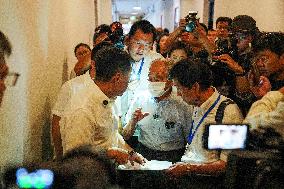
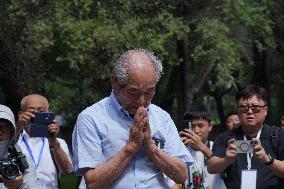
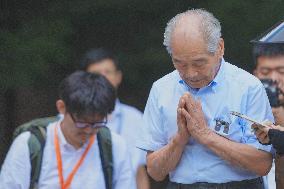
Hideo Shimizu (C) identifies the crimes of the Japanese germ-warfare at the former site of Unit 731 in Harbin, northeast China's Heilongjiang Province, August 13, 2024. Shimizu, a former member of Unit 731, the notorious Japanese germ-warfare detachment during World War II, identified the crimes of the Japanese army on Tuesday at the site where he served 79 years ago in China. Shimizu, 94, was among the last batch of Unit 731 Youth Corps members sent by Japan to Harbin, China, where he spent more than four months witnessing the war crimes committed by the unit, including the cultivation of pathogens, human dissections and human experiments. He fled China with the retreating Japanese forces on August 14, 1945. This visit is Shimizu's first return to Chinese soil in 79 years. Photo by Wang Jianwei/Xinhua/ABACAPRESS.COM

  •  
Japanese Veteran Visits China To Apologize - Harbin

Japanese Veteran Visits China To Apologize - Harbin

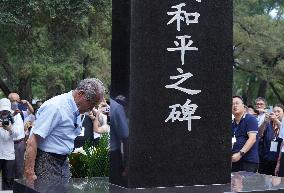
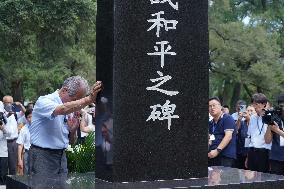
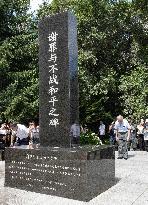
Hideo Shimizu (L) offers apology in front of an apology and anti-war monument at the former site of Unit 731 in Harbin, northeast China's Heilongjiang Province, August 13, 2024. Shimizu, a former member of Unit 731, the notorious Japanese germ-warfare detachment during World War II, identified the crimes of the Japanese army on Tuesday at the site where he served 79 years ago in China. Shimizu, 94, was among the last batch of Unit 731 Youth Corps members sent by Japan to Harbin, China, where he spent more than four months witnessing the war crimes committed by the unit, including the cultivation of pathogens, human dissections and human experiments. He fled China with the retreating Japanese forces on August 14, 1945. This visit is Shimizu's first return to Chinese soil in 79 years. Photo by Wang Song/Xinhua/ABACAPRESS.COM

  •  
Japanese Veteran Visits China To Apologize - Harbin

Japanese Veteran Visits China To Apologize - Harbin

Hideo Shimizu (C) identifies the crimes of the Japanese germ-warfare at the former site of Unit 731 in Harbin, northeast China's Heilongjiang Province, August 13, 2024. Shimizu, a former member of Unit 731, the notorious Japanese germ-warfare detachment during World War II, identified the crimes of the Japanese army on Tuesday at the site where he served 79 years ago in China. Shimizu, 94, was among the last batch of Unit 731 Youth Corps members sent by Japan to Harbin, China, where he spent more than four months witnessing the war crimes committed by the unit, including the cultivation of pathogens, human dissections and human experiments. He fled China with the retreating Japanese forces on August 14, 1945. This visit is Shimizu's first return to Chinese soil in 79 years. Photo by Wang Jianwei/Xinhua/ABACAPRESS.COM

  •  
Japanese Veteran Visits China To Apologize - Harbin

Japanese Veteran Visits China To Apologize - Harbin

Hideo Shimizu identifies the crimes of the Japanese germ-warfare at the former site of Unit 731 in Harbin, northeast China's Heilongjiang Province, August 13, 2024. Shimizu, a former member of Unit 731, the notorious Japanese germ-warfare detachment during World War II, identified the crimes of the Japanese army on Tuesday at the site where he served 79 years ago in China. Shimizu, 94, was among the last batch of Unit 731 Youth Corps members sent by Japan to Harbin, China, where he spent more than four months witnessing the war crimes committed by the unit, including the cultivation of pathogens, human dissections and human experiments. He fled China with the retreating Japanese forces on August 14, 1945. This visit is Shimizu's first return to Chinese soil in 79 years. Photo by Wang Song/Xinhua/ABACAPRESS.COM

  •  
Japanese Veteran Visits China To Apologize - Harbin

Japanese Veteran Visits China To Apologize - Harbin

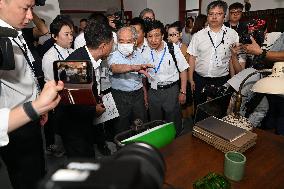
Hideo Shimizu (C) identifies the crimes of the Japanese germ-warfare at the former site of Unit 731 in Harbin, northeast China's Heilongjiang Province, August 13, 2024. Shimizu, a former member of Unit 731, the notorious Japanese germ-warfare detachment during World War II, identified the crimes of the Japanese army on Tuesday at the site where he served 79 years ago in China. Shimizu, 94, was among the last batch of Unit 731 Youth Corps members sent by Japan to Harbin, China, where he spent more than four months witnessing the war crimes committed by the unit, including the cultivation of pathogens, human dissections and human experiments. He fled China with the retreating Japanese forces on August 14, 1945. This visit is Shimizu's first return to Chinese soil in 79 years. Photo by Xie Jianfei/Xinhua/ABACAPRESS.COM

  •  
Japanese Veteran Visits China To Apologize - Harbin

Japanese Veteran Visits China To Apologize - Harbin

Hideo Shimizu offers apology in front of an apology and anti-war monument at the former site of Unit 731 in Harbin, northeast China's Heilongjiang Province, August 13, 2024. Shimizu, a former member of Unit 731, the notorious Japanese germ-warfare detachment during World War II, identified the crimes of the Japanese army on Tuesday at the site where he served 79 years ago in China. Shimizu, 94, was among the last batch of Unit 731 Youth Corps members sent by Japan to Harbin, China, where he spent more than four months witnessing the war crimes committed by the unit, including the cultivation of pathogens, human dissections and human experiments. He fled China with the retreating Japanese forces on August 14, 1945. This visit is Shimizu's first return to Chinese soil in 79 years. Photo by Wang Song/Xinhua/ABACAPRESS.COM

  •  
Japanese Veteran Visits China To Apologize - Harbin

Japanese Veteran Visits China To Apologize - Harbin

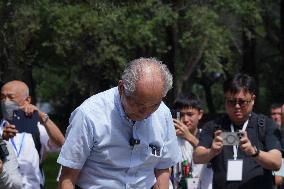
Hideo Shimizu offers apology in front of an apology and anti-war monument at the former site of Unit 731 in Harbin, northeast China's Heilongjiang Province, August 13, 2024. Shimizu, a former member of Unit 731, the notorious Japanese germ-warfare detachment during World War II, identified the crimes of the Japanese army on Tuesday at the site where he served 79 years ago in China. Shimizu, 94, was among the last batch of Unit 731 Youth Corps members sent by Japan to Harbin, China, where he spent more than four months witnessing the war crimes committed by the unit, including the cultivation of pathogens, human dissections and human experiments. He fled China with the retreating Japanese forces on August 14, 1945. This visit is Shimizu's first return to Chinese soil in 79 years. Photo by Wang Song/Xinhua/ABACAPRESS.COM

  •  
Japanese Veteran Visits China To Apologize - Harbin

Japanese Veteran Visits China To Apologize - Harbin

Hideo Shimizu (2nd R) takes pictures at the former site of Unit 731 in Harbin, northeast China's Heilongjiang Province, August 13, 2024. Shimizu, a former member of Unit 731, the notorious Japanese germ-warfare detachment during World War II, identified the crimes of the Japanese army on Tuesday at the site where he served 79 years ago in China. Shimizu, 94, was among the last batch of Unit 731 Youth Corps members sent by Japan to Harbin, China, where he spent more than four months witnessing the war crimes committed by the unit, including the cultivation of pathogens, human dissections and human experiments. He fled China with the retreating Japanese forces on August 14, 1945. This visit is Shimizu's first return to Chinese soil in 79 years. Photo by Xie Jianfei/Xinhua/ABACAPRESS.COM

  •  
Japanese Veteran Visits China To Apologize - Harbin

Japanese Veteran Visits China To Apologize - Harbin

Hideo Shimizu offers apology in front of an apology and anti-war monument at the former site of Unit 731 in Harbin, northeast China's Heilongjiang Province, August 13, 2024. Shimizu, a former member of Unit 731, the notorious Japanese germ-warfare detachment during World War II, identified the crimes of the Japanese army on Tuesday at the site where he served 79 years ago in China. Shimizu, 94, was among the last batch of Unit 731 Youth Corps members sent by Japan to Harbin, China, where he spent more than four months witnessing the war crimes committed by the unit, including the cultivation of pathogens, human dissections and human experiments. He fled China with the retreating Japanese forces on August 14, 1945. This visit is Shimizu's first return to Chinese soil in 79 years. Photo by Wang Jianwei/Xinhua/ABACAPRESS.COM

  •  
Japanese Veteran Visits China To Apologize - Harbin

Japanese Veteran Visits China To Apologize - Harbin

Hideo Shimizu offers apology in front of an apology and anti-war monument at the former site of Unit 731 in Harbin, northeast China's Heilongjiang Province, August 13, 2024. Shimizu, a former member of Unit 731, the notorious Japanese germ-warfare detachment during World War II, identified the crimes of the Japanese army on Tuesday at the site where he served 79 years ago in China. Shimizu, 94, was among the last batch of Unit 731 Youth Corps members sent by Japan to Harbin, China, where he spent more than four months witnessing the war crimes committed by the unit, including the cultivation of pathogens, human dissections and human experiments. He fled China with the retreating Japanese forces on August 14, 1945. This visit is Shimizu's first return to Chinese soil in 79 years. Photo by Xie Jianfei/Xinhua/ABACAPRESS.COM

  •  
Japanese Veteran Visits China To Apologize - Harbin

Japanese Veteran Visits China To Apologize - Harbin

Hideo Shimizu offers apology in front of an apology and anti-war monument at the former site of Unit 731 in Harbin, northeast China's Heilongjiang Province, August 13, 2024. Shimizu, a former member of Unit 731, the notorious Japanese germ-warfare detachment during World War II, identified the crimes of the Japanese army on Tuesday at the site where he served 79 years ago in China. Shimizu, 94, was among the last batch of Unit 731 Youth Corps members sent by Japan to Harbin, China, where he spent more than four months witnessing the war crimes committed by the unit, including the cultivation of pathogens, human dissections and human experiments. He fled China with the retreating Japanese forces on August 14, 1945. This visit is Shimizu's first return to Chinese soil in 79 years. Photo by Wang Song/Xinhua/ABACAPRESS.COM

  •  
Japanese Veteran Visits China To Apologize - Harbin

Japanese Veteran Visits China To Apologize - Harbin

Hideo Shimizu (2nd L, front) puts his palms together as he identifies the crimes of the Japanese germ-warfare at the former site of Unit 731 in Harbin, northeast China's Heilongjiang Province, August 13, 2024. Shimizu, a former member of Unit 731, the notorious Japanese germ-warfare detachment during World War II, identified the crimes of the Japanese army on Tuesday at the site where he served 79 years ago in China. Shimizu, 94, was among the last batch of Unit 731 Youth Corps members sent by Japan to Harbin, China, where he spent more than four months witnessing the war crimes committed by the unit, including the cultivation of pathogens, human dissections and human experiments. He fled China with the retreating Japanese forces on August 14, 1945. This visit is Shimizu's first return to Chinese soil in 79 years. Photo by Xie Jianfei/Xinhua/ABACAPRESS.COM

  •  
Japanese Veteran Visits China To Apologize - Harbin

Japanese Veteran Visits China To Apologize - Harbin

Hideo Shimizu offers apology in front of an apology and anti-war monument at the former site of Unit 731 in Harbin, northeast China's Heilongjiang Province, August 13, 2024. Shimizu, a former member of Unit 731, the notorious Japanese germ-warfare detachment during World War II, identified the crimes of the Japanese army on Tuesday at the site where he served 79 years ago in China. Shimizu, 94, was among the last batch of Unit 731 Youth Corps members sent by Japan to Harbin, China, where he spent more than four months witnessing the war crimes committed by the unit, including the cultivation of pathogens, human dissections and human experiments. He fled China with the retreating Japanese forces on August 14, 1945. This visit is Shimizu's first return to Chinese soil in 79 years. Photo by Wang Jianwei/Xinhua/ABACAPRESS.COM

  •  

China sees decline in acute respiratory illnesses

STORY: China sees decline in acute respiratory illnesses SHOOTING TIME: Dec. 24, 2023 DATELINE: Dec. 24, 2023 LENGTH: 00:00:48 LOCATION: Beijing CATEGORY: HEALTH SHOTLIST: 1. SOUNDBITE (Chinese): PENG ZHIBIN, Official from the Chinese Center for Disease Control and Prevention STORYLINE: China has seen a decline in acute respiratory illnesses, a trend that is expected to continue in the coming week, a health official said on Sunday. SOUNDBITE(Chinese): PENG ZHIBIN, Official from the Chinese Center for Disease Control and Prevention "According to monitoring data from Dec. 11th to 17th, cases of acute respiratory diseases in China have been declining. Generally, the recent surge in respiratory illnesses is mainly due to the influenza virus, with additional cases caused by other pathogens. Flu reaches a high level but shows a declining trend. Activities of mycoplasma pneumonia, adenoviruses, and respiratory syncytial viruses fluctuate, while novel coronavirus activity is at its lowest level in 2023. Experts p

  •  
Hospital Pathogens Detection

Hospital Pathogens Detection

SHANGHAI, CHINA - DECEMBER 16, 2023 - A citizen checks his mobile phone for a test report of respiratory pathogens (throat swab test) in Shanghai, China, December 16, 2023.

  •  
Hospital Pathogens Detection

Hospital Pathogens Detection

SHANGHAI, CHINA - DECEMBER 16, 2023 - A citizen checks his mobile phone for a test report of respiratory pathogens (throat swab test) in Shanghai, China, December 16, 2023.

  •  
Hospital Pathogens Detection

Hospital Pathogens Detection

SHANGHAI, CHINA - DECEMBER 16, 2023 - A citizen checks his mobile phone for a test report of respiratory pathogens (throat swab test) in Shanghai, China, December 16, 2023.

  •  
Hospital Pathogens Detection

Hospital Pathogens Detection

SHANGHAI, CHINA - DECEMBER 16, 2023 - A citizen checks his mobile phone for a test report of respiratory pathogens (throat swab test) in Shanghai, China, December 16, 2023.

  •  

China takes action to combat rise of acute respiratory infections

STORY: China takes action to combat rise of acute respiratory infections SHOOTING TIME: Earlier footage DATELINE: Nov. 30, 2023 LENGTH: 00:01:00 LOCATION: Beijing CATEGORY: HEALTH SHOTLIST: 1. various of hospitals and patients in China STORYLINE: China is taking measures to address the recent increase in acute respiratory infections caused by different respiratory pathogens as the country enters the winter season. Officials have said that the recent respiratory infectious diseases are mainly due to the influenza virus, with additional cases caused by rhinoviruses, mycoplasma pneumonia, respiratory syncytial viruses, and adenoviruses. The National Health Commission has instructed localities to ensure the implementation of classified diagnosis and treatment and make public information about medical facilities with pediatric services and fever clinics to help patients find the nearest hospital to them. China has also promoted online diagnosis and treatment to meet the needs of patients, leveraging internet

  •  
King Felipe At VI Camino Real Award - Madrid

King Felipe At VI Camino Real Award - Madrid

King Felipe VI (right), with the winner of the VI Edition of the 'Galardón Camino Real', virologist Ana Fernández-Sesma (2l), and the rector of the UAH, José Vicente Saz (1l) at the Auditorium of the University of Alcalá, on July 13, 2023, in Alcalá de Henares, Madrid (Spain). The Camino Real Award is given by the Franklin Institute of the University of Alcalá to recognize the professional work of Spaniards who, in an outstanding and exemplary manner, project and enhance the 'positive' image of Spain in the United States. Ana Fernández-Sesma is director of the Department of Microbiology at the Icahn School of Medicine at Mount Sinai Hospital in New York and is a world reference for studies related to pathogens that cause infectious diseases. Photo by Alberto Ortega/Europa Press/ABACAPRESS.COM

  •  
King Felipe At VI Camino Real Award - Madrid

King Felipe At VI Camino Real Award - Madrid

Virologist Ana Fernández-Sesma during the ceremony in which she receives the VI Edition of the 'Galardón Camino Real', at the Paraninfo of the University of Alcalá, on July 13, 2023, in Alcalá de Henares, Madrid (Spain). The Camino Real Award is given by the Franklin Institute of the University of Alcalá to recognize the professional work of Spaniards who, in an outstanding and exemplary manner, project and enhance the 'positive' image of Spain in the United States. Ana Fernández-Sesma is director of the Department of Microbiology at the Icahn School of Medicine at Mount Sinai Hospital in New York and is a world reference for studies related to pathogens that cause infectious diseases. Photo by Alberto Ortega/Europa Press/ABACAPRESS.COM

  •  
King Felipe At VI Camino Real Award - Madrid

King Felipe At VI Camino Real Award - Madrid

(L-R) The rector of the UAH, José Vicente Saz, the King of Spain Felipe VI and the Minister of Health, José Miñones, during the presentation of the VI Edition of the 'Galardón Camino Real', at the Paraninfo of the University of Alcalá, on July 13, 2023, in Alcalá de Henares, Madrid (Spain). The Camino Real Award is given by the Franklin Institute of the University of Alcalá to recognize the professional work of Spaniards who, in an outstanding and exemplary manner, project and enhance the 'positive' image of Spain in the United States. Ana Fernández-Sesma is director of the Department of Microbiology at the Icahn School of Medicine at Mount Sinai Hospital in New York and is a world leader in the study of pathogens that cause infectious diseases. Photo by Alberto Ortega/Europa Press/ABACAPRESS.COM

  •  
King Felipe At VI Camino Real Award - Madrid

King Felipe At VI Camino Real Award - Madrid

Virologist Ana Fernández-Sesma during the ceremony in which she receives the VI Edition of the 'Galardón Camino Real', at the Paraninfo of the University of Alcalá, on July 13, 2023, in Alcalá de Henares, Madrid (Spain). The Camino Real Award is given by the Franklin Institute of the University of Alcalá to recognize the professional work of Spaniards who, in an outstanding and exemplary manner, project and enhance the 'positive' image of Spain in the United States. Ana Fernández-Sesma is director of the Department of Microbiology at the Icahn School of Medicine at Mount Sinai Hospital in New York and is a world reference for studies related to pathogens that cause infectious diseases. Photo by Alberto Ortega/Europa Press/ABACAPRESS.COM

  •  
King Felipe At VI Camino Real Award - Madrid

King Felipe At VI Camino Real Award - Madrid

The director of the Instituto Franklin-UAH, José Antonio Gurpegui (1r), the mayoress of Alcalá de Henares, Judith Piquet Flores (2l), the Minister of Health, José Miñones (4r), the King of Spain Felipe VI (3l), the awarded virologist Ana Fernández-Sesma (2r), the rector of the UAH, José Vicente Saz (1l) and the president of the board of H2B2, Antonio Vázquez Romero (3r) during the presentation of the VI Edition of the 'Galardón Camino Real', at the Paraninfo of the University of Alcalá, on July 13, 2023, in Alcalá de Henares, Madrid (Spain). The Camino Real Award is given by the Franklin Institute of the University of Alcalá to recognize the professional work of Spaniards who, in an outstanding and exemplary manner, project and enhance the 'positive' image of Spain in the United States. Ana Fernández-Sesma is director of the Department of Microbiology at the Icahn School of Medicine at Mount Sinai Hospital in New York and is a world leader in the study of pathogens that cause infectious diseases. Photo by Alb

  •  
King Felipe At VI Camino Real Award - Madrid

King Felipe At VI Camino Real Award - Madrid

King Felipe VI during the presentation of the VI Edition of the 'Galardón Camino Real', at the Paraninfo of the University of Alcalá, on July 13, 2023, in Alcalá de Henares, Madrid (Spain). The Camino Real Award is given by the Franklin Institute of the University of Alcalá to recognize the professional work of Spaniards who, in an outstanding and exemplary manner, project and enhance the 'positive' image of Spain in the United States. Ana Fernández-Sesma is director of the Department of Microbiology at the Icahn School of Medicine at Mount Sinai Hospital in New York and is a world reference for studies related to pathogens that cause infectious diseases. Photo by Alberto Ortega/Europa Press/ABACAPRESS.COM

  •  
King Felipe At VI Camino Real Award - Madrid

King Felipe At VI Camino Real Award - Madrid

The rector of the UAH, José Vicente Saz (r), the King of Spain Felipe VI (c) and the Minister of Health, José Miñones (l), during the presentation of the VI Edition of the 'Camino Real Award', at the Auditorium of the University of Alcalá, on July 13, 2023, in Alcalá de Henares, Madrid (Spain). The Camino Real Award is given by the Franklin Institute of the University of Alcalá to recognize the professional work of Spaniards who, in an outstanding and exemplary manner, project and enhance the 'positive' image of Spain in the United States. Ana Fernández-Sesma is director of the Department of Microbiology at the Icahn School of Medicine at Mount Sinai Hospital in New York and is a world leader in the study of pathogens that cause infectious diseases. Photo by Alberto Ortega/Europa Press/ABACAPRESS.COM

  •  

Africa sees 63-pct jump in diseases spread from animals to people in last decade: WHO

STORY: Africa sees 63-pct jump in diseases spread from animals to people in last decade: WHO DATELINE: July 15, 2022 LENGTH: 00:00:33 LOCATION: Brazzaville CATEGORY: HEALTH SHOTLIST: 1. SOUNDBITE 1 (English): MATSHIDISO MOETI, WHO Regional Director for Africa 2. SOUNDBITE 2 (English): MATSHIDISO MOETI, WHO Regional Director for Africa 3. SOUNDBITE 3 (English): MATSHIDISO MOETI, WHO Regional Director for Africa STORYLINE: Africa is facing a growing risk of outbreaks caused by zoonotic pathogens, such as the monkeypox virus which originated in animals and then switched species and infected humans, the World Health Organization (WHO) warned Thursday, noting a 63-percent increase in the number of zoonotic outbreaks in the region from 2012 to 2022 compared to the period from 2001 to 2011. According to the statement by the WHO regional office for Africa, citing a new WHO study, the African region has reported 1,843 substantiated public health events since 2001, 30 percent of which were zoonotic disease outbr

  •  

U.S. spends big on military biological research in Ukraine: Russian military

STORY: U.S. spends big on military biological research in Ukraine: Russian military DATELINE: April 16, 2022 LENGTH: 00:00:43 LOCATION: Moscow CATEGORY: POLITICS SHOTLIST: 1. various of footage released by the Russian Defense Ministry STORYLINE: The Russian military said Thursday Washington has spent more than 350 million U.S. dollars "in recent years alone" on projects of the Science and Technology Center in Ukraine (STCU), including on military biological programs. Igor Kirillov, chief of the Radiation, Chemical and Biological Defense Forces of the Russian Armed Forces, said the STCU distributed grants for research in the interests of the Pentagon, including in the field of biological weapons. He said from 2014 to 2022, the STCU implemented more than 500 research projects in some post-Soviet countries. Many of them were aimed at studying potential agents of biological weapons and pathogens of economically significant infections. Xinhua News Agency correspondents reporting from Moscow. (XHTV)

  •  

U.S.-funded labs around Russia work to create bio-weapons: Kremlin

STORY: U.S.-funded labs around Russia work to create bio-weapons: Kremlin DATELINE: April 3, 2022 LENGTH: 00:00:50 LOCATION: Moscow CATEGORY: POLITICS SHOTLIST: 1. STANDUP (English): MENG JING, Xinhua correspondent STORYLINE: STANDUP (English): MENG JING, Xinhua correspondent "Kremlin spokesperson Dmitry Peskov said Saturday that Moscow has information that an array of biological laboratories that are engaged in developing bio-weapons have been founded around Russia. Peskov said in an interview with Belarus-24 TV channel that "within the framework of a program funded by the Pentagon, a whole network of biolabs have been created around Russia and Belarus, which not only deal with extremely dangerous pathogens, microbes, viruses, but also work on projects to invent new types of biological weapons." During Russia's special military operation in Ukraine, the dangerous biological activities of the United States had been revealed, according to Irina Yarovaya, deputy chairperson of the State Duma or the l

  •  

Russia says Pentagon directly involved in bioweapon development in Ukraine

STORY: Russia says Pentagon directly involved in bioweapon development in Ukraine DATELINE: March 25, 2022 LENGTH: 0:00:52 LOCATION: Moscow CATEGORY: POLITICS SHOTLIST: 1 various of the Russian Defense Ministry 2 various of the Pentagon 3 various of the national flag of the United States 4 various of the Ukrainians fleeing Ukraine STORYLINE: The Russian Defense Ministry said Thursday that the U.S. Department of Defense was directly involved in developing biological weapon components in Ukraine. According to the ministry's spokesman Igor Konashenkov, documents received from Ukrainian employees working at the laboratories were studied by Russian experts and have shown that Ukrainian biological projects were directly developed and approved by the Pentagon. One of these projects aimed to carry out molecular analysis of particularly dangerous infections endemic in Ukraine and involved sampling pathogens from old animal burial sites to obtain new anthrax strains. The document unveiled that a pharmaceuti

  •  

GLOBALink | U.S. should fully clarify biological military activities in Ukraine: experts

The U.S. should fully clarify biological military activities in Ukraine, experts said in regards to Russia's claim on U.S.-funded biolabs in Ukraine conducting research on the transmission of deadly pathogens. Produced by Xinhua Global Service

  •  

Kiev destroyed deadly samples from U.S.-funded biowarfare labs: Russia

STORY: Kiev destroyed deadly samples from U.S.-funded biowarfare labs: Russia DATELINE: March 9, 2022 LENGTH: 00:00:56 LOCATION: Moscow CATEGORY: POLITICS/MILITARY SHOTLIST: 1. STANDUP (English): CHEN QIANG, Xinhua correspondent STORYLINE: STANDUP (English): CHEN QIANG, Xinhua correspondent "The Russian Foreign Ministry confirmed on Tuesday that authorities in Kiev destroyed dangerous pathogens of deadly diseases stored in U.S.-funded laboratories in the country. According to a statement made by Russian Foreign Ministry Spokesperson Maria Zakharova, the ministry received documentation from employees at Ukrainian biological laboratories, confirming the urgent destruction of dangerous pathogens such as plague, anthrax, tularemia, cholera and other deadly diseases on Feb. 24. She added that these laboratories were funded by the U.S. Department of Defense and were part of a biological weapons program. According to the foreign ministry, the pathogens were immediately destroyed to hide evidence pointing to t

  •  

China urges U.S. to release details of bio-labs in Ukraine: FM spokesperson

STORY: China urges U.S. to release details of bio-labs in Ukraine: FM spokesperson DATELINE: March 8, 2022 LENGTH: 00:03:11 LOCATION: Beijing CATEGORY: POLITICS SHOTLIST: 1. SOUNDBITE (Chinese/English interpretation): ZHAO LIJIAN, Chinese Foreign Ministry spokesperson STORYLINE: SOUNDBITE (Chinese/English interpretation): ZHAO LIJIAN, Chinese Foreign Ministry spokesperson "Recently, the U.S. biological labs in Ukraine have indeed attracted much attention. According to reports, in these facilities, a large quantity of dangerous viruses are stored. Russia has found during its military operations that the U.S. uses these facilities to conduct military plans. According to data released by the U.S., it has 26 labs and other facilities in Ukraine, over which the U.S. Department of Defense has absolute control. All dangerous pathogens in Ukraine must be stored in these labs, and all research activities are led by the U.S. side. Without U.S. approval, no information shall be released to the public. Under the curre

  •  
2020 Nobel chemistry prize winner

2020 Nobel chemistry prize winner

File photo in April 2017 shows Emmanuelle Charpentier giving an interview in Tokyo. The director of the Max Planck Unit for the Science of Pathogens in Berlin won the 2020 Nobel Prize in chemistry with Jennifer Doudna for discovering a revolutionary genome editing technique.

  • Main
  • Top
  • Editorial
  • Creative
  • About Us
  • About ILG
  • Terms of use
  • Company
  • BEHIND
  • Price List
  • Single Plan
  • Monthly Plan
  • Services
  • Shooting
  • Rights Clearance
  • Support
  • FAQ
  • How To Buy
  • Contact Us
  • Become a Partner

© KYODO NEWS IMAGES INC

All Rights Reserved.

  • Editorial
  • Olympics
  • News
  • Sports
  • Japan
  • Tech
  • Royal
  • Disaster
  • NorthKorea
  • Old Japan
  • SNS
  • Creative
  • Food
  • Japan
  • Landscape
  • Animal
  • Popular
  • #Ukraine
  • #Thailand
  • #coronavirus
  • #N. Korea
  • #China
  • #Russia
  • #Ukraine
  • #Thailand
  • #coronavirus
  • #N. Korea
  • #China
  • #Russia
  • Food
  • Japan
  • Landscape
  • Animal
  • Olympics
  • News
  • Sports
  • Japan
  • Tech
  • Royal
  • Disaster
  • NorthKorea
  • Old Japan
  • SNS