•  
Historical Site Persepolis Takht-e Jamshid - Iran

Historical Site Persepolis Takht-e Jamshid - Iran

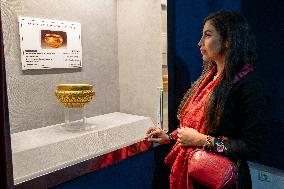
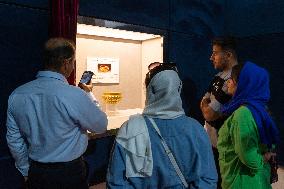
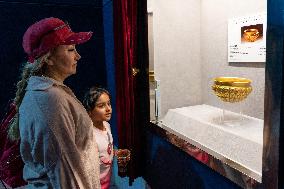
A woman takes a selfie next to the Golden Cup of  Xerxes, the king of the Persian Achaemenid Empire, put on display in the museum in the ruins of Persepolis or Takht-e Jamshid, a UNESCO World Heritage site near Shiraz, Iran, on May 18, 2024. Founded by Darius I in 518 B.C., Persepolis was the capital of the Achaemenid Empire. It was built on an immense half-artificial, half-natural terrace, where the king of kings created an impressive palace complex inspired by Mesopotamian models. Takht-e Jamshid in Persian and 'Persepolis' in Greek, this site has earned global recognition. The columns, column heads, inscriptions, reliefs, palaces, and gates in the Persepolis area are among the world's most celebrated works of civilization. As the Persepolis area is known, the' Land of Persia' draws tourists worldwide to Shiraz every year. a Photo by Moe/Middle East Images/ABACAPRESS.COM

  •  
Historical Site Persepolis Takht-e Jamshid - Iran

Historical Site Persepolis Takht-e Jamshid - Iran

A woman looks at the Golden Cup of  Xerxes, the king of the Persian Achaemenid Empire, put on display in the museum in the ruins of Persepolis or Takht-e Jamshid, a UNESCO World Heritage site near Shiraz, Iran, on May 18, 2024. Founded by Darius I in 518 B.C., Persepolis was the capital of the Achaemenid Empire. It was built on an immense half-artificial, half-natural terrace, where the king of kings created an impressive palace complex inspired by Mesopotamian models. Takht-e Jamshid in Persian and 'Persepolis' in Greek, this site has earned global recognition. The columns, column heads, inscriptions, reliefs, palaces, and gates in the Persepolis area are among the world's most celebrated works of civilization. As the Persepolis area is known, the' Land of Persia' draws tourists worldwide to Shiraz every year. Photo by Moe/Middle East Images/ABACAPRESS.COM

  •  
Historical Site Persepolis Takht-e Jamshid - Iran

Historical Site Persepolis Takht-e Jamshid - Iran

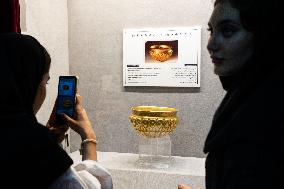
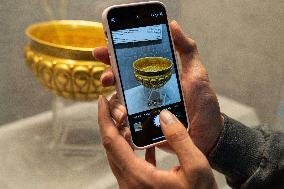
A visitor takes a photo of the Golden Cup of  Xerxes, the king of the Persian Achaemenid Empire, put on display in the museum in the ruins of Persepolis or Takht-e Jamshid, a UNESCO World Heritage site near Shiraz, Iran, on May 18, 2024. Founded by Darius I in 518 B.C., Persepolis was the capital of the Achaemenid Empire. It was built on an immense half-artificial, half-natural terrace, where the king of kings created an impressive palace complex inspired by Mesopotamian models. Takht-e Jamshid in Persian and 'Persepolis' in Greek, this site has earned global recognition. The columns, column heads, inscriptions, reliefs, palaces, and gates in the Persepolis area are among the world's most celebrated works of civilization. As the Persepolis area is known, the' Land of Persia' draws tourists worldwide to Shiraz every year. Photo by Moe/Middle East Images/ABACAPRESS.COM

  •  
Historical Site Persepolis Takht-e Jamshid - Iran

Historical Site Persepolis Takht-e Jamshid - Iran

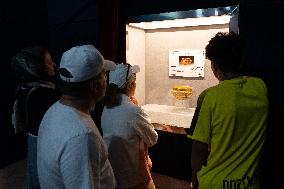
Visitors look at the Golden Cup of  Xerxes, the king of the Persian Achaemenid Empire, put on display in the museum in the ruins of Persepolis or Takht-e Jamshid, a UNESCO World Heritage site near Shiraz, Iran, on May 18, 2024. Founded by Darius I in 518 B.C., Persepolis was the capital of the Achaemenid Empire. It was built on an immense half-artificial, half-natural terrace, where the king of kings created an impressive palace complex inspired by Mesopotamian models. Takht-e Jamshid in Persian and 'Persepolis' in Greek, this site has earned global recognition. The columns, column heads, inscriptions, reliefs, palaces, and gates in the Persepolis area are among the world's most celebrated works of civilization. As the Persepolis area is known, the' Land of Persia' draws tourists worldwide to Shiraz every year. Photo by Moe/Middle East Images/ABACAPRESS.COM

  •  
Historical Site Persepolis Takht-e Jamshid - Iran

Historical Site Persepolis Takht-e Jamshid - Iran

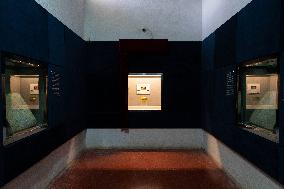
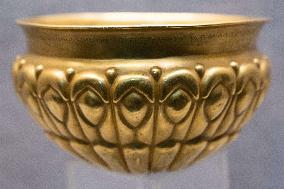
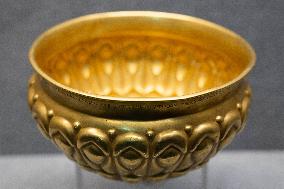
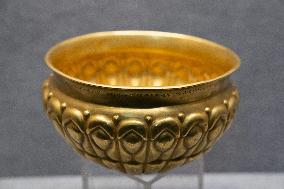
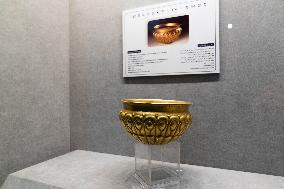
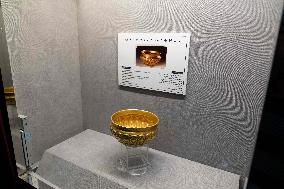
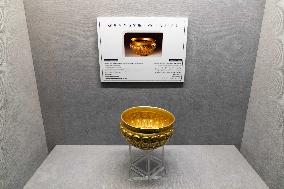
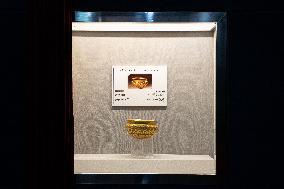
View of the Golden Cup of  Xerxes, the king of the Persian Achaemenid Empire, put on display in the museum in the ruins of Persepolis or Takht-e Jamshid, a UNESCO World Heritage site near Shiraz, Iran, on May 18, 2024. Founded by Darius I in 518 B.C., Persepolis was the capital of the Achaemenid Empire. It was built on an immense half-artificial, half-natural terrace, where the king of kings created an impressive palace complex inspired by Mesopotamian models. Takht-e Jamshid in Persian and 'Persepolis' in Greek, this site has earned global recognition. The columns, column heads, inscriptions, reliefs, palaces, and gates in the Persepolis area are among the world's most celebrated works of civilization. As the Persepolis area is known, the' Land of Persia' draws tourists worldwide to Shiraz every year. Photo by Moe/Middle East Images/ABACAPRESS.COM

  •  
Historical Site Persepolis Takht-e Jamshid - Iran

Historical Site Persepolis Takht-e Jamshid - Iran

A visitor takes a photo of the Golden Cup of  Xerxes, the king of the Persian Achaemenid Empire, put on display in the museum in the ruins of Persepolis or Takht-e Jamshid, a UNESCO World Heritage site near Shiraz, Iran, on May 18, 2024. Founded by Darius I in 518 B.C., Persepolis was the capital of the Achaemenid Empire. It was built on an immense half-artificial, half-natural terrace, where the king of kings created an impressive palace complex inspired by Mesopotamian models. Takht-e Jamshid in Persian and 'Persepolis' in Greek, this site has earned global recognition. The columns, column heads, inscriptions, reliefs, palaces, and gates in the Persepolis area are among the world's most celebrated works of civilization. As the Persepolis area is known, the' Land of Persia' draws tourists worldwide to Shiraz every year. Photo by Moe/Middle East Images/ABACAPRESS.COM

  •  
Historical Site Persepolis Takht-e Jamshid - Iran

Historical Site Persepolis Takht-e Jamshid - Iran

Visitors take a photo of the Golden Cup of  Xerxes, the king of the Persian Achaemenid Empire, put on display in the museum in the ruins of Persepolis or Takht-e Jamshid, a UNESCO World Heritage site near Shiraz, Iran, on May 18, 2024. Founded by Darius I in 518 B.C., Persepolis was the capital of the Achaemenid Empire. It was built on an immense half-artificial, half-natural terrace, where the king of kings created an impressive palace complex inspired by Mesopotamian models. Takht-e Jamshid in Persian and 'Persepolis' in Greek, this site has earned global recognition. The columns, column heads, inscriptions, reliefs, palaces, and gates in the Persepolis area are among the world's most celebrated works of civilization. As the Persepolis area is known, the' Land of Persia' draws tourists worldwide to Shiraz every year. Photo by Moe/Middle East Images/ABACAPRESS.COM

  •  
Historical Site Persepolis Takht-e Jamshid - Iran

Historical Site Persepolis Takht-e Jamshid - Iran

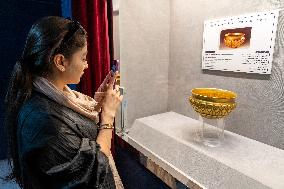
A woman takes a photo of the Golden Cup of  Xerxes, the king of the Persian Achaemenid Empire, put on display in the museum in the ruins of Persepolis or Takht-e Jamshid, a UNESCO World Heritage site near Shiraz, Iran, on May 18, 2024. Founded by Darius I in 518 B.C., Persepolis was the capital of the Achaemenid Empire. It was built on an immense half-artificial, half-natural terrace, where the king of kings created an impressive palace complex inspired by Mesopotamian models. Takht-e Jamshid in Persian and 'Persepolis' in Greek, this site has earned global recognition. The columns, column heads, inscriptions, reliefs, palaces, and gates in the Persepolis area are among the world's most celebrated works of civilization. As the Persepolis area is known, the' Land of Persia' draws tourists worldwide to Shiraz every year. Photo by Moe/Middle East Images/ABACAPRESS.COM

  •  
Historical Site Persepolis Takht-e Jamshid - Iran

Historical Site Persepolis Takht-e Jamshid - Iran

Visitors look at the Golden Cup of  Xerxes, the king of the Persian Achaemenid Empire, put on display in the museum in the ruins of Persepolis or Takht-e Jamshid, a UNESCO World Heritage site near Shiraz, Iran, on May 18, 2024. Founded by Darius I in 518 B.C., Persepolis was the capital of the Achaemenid Empire. It was built on an immense half-artificial, half-natural terrace, where the king of kings created an impressive palace complex inspired by Mesopotamian models. Takht-e Jamshid in Persian and 'Persepolis' in Greek, this site has earned global recognition. The columns, column heads, inscriptions, reliefs, palaces, and gates in the Persepolis area are among the world's most celebrated works of civilization. As the Persepolis area is known, the' Land of Persia' draws tourists worldwide to Shiraz every year. Photo by Moe/Middle East Images/ABACAPRESS.COM

  •  
Historical Site Persepolis Takht-e Jamshid - Iran

Historical Site Persepolis Takht-e Jamshid - Iran

View of the Golden Cup of  Xerxes, the king of the Persian Achaemenid Empire, put on display in the museum in the ruins of Persepolis or Takht-e Jamshid, a UNESCO World Heritage site near Shiraz, Iran, on May 18, 2024. Founded by Darius I in 518 B.C., Persepolis was the capital of the Achaemenid Empire. It was built on an immense half-artificial, half-natural terrace, where the king of kings created an impressive palace complex inspired by Mesopotamian models. Takht-e Jamshid in Persian and 'Persepolis' in Greek, this site has earned global recognition. The columns, column heads, inscriptions, reliefs, palaces, and gates in the Persepolis area are among the world's most celebrated works of civilization. As the Persepolis area is known, the' Land of Persia' draws tourists worldwide to Shiraz every year. Photo by Moe/Middle East Images/ABACAPRESS.COM

  •  
Historical Site Persepolis Takht-e Jamshid - Iran

Historical Site Persepolis Takht-e Jamshid - Iran

Visitors look at the Golden Cup of  Xerxes, the king of the Persian Achaemenid Empire, put on display in the museum in the ruins of Persepolis or Takht-e Jamshid, a UNESCO World Heritage site near Shiraz, Iran, on May 18, 2024. Founded by Darius I in 518 B.C., Persepolis was the capital of the Achaemenid Empire. It was built on an immense half-artificial, half-natural terrace, where the king of kings created an impressive palace complex inspired by Mesopotamian models. Takht-e Jamshid in Persian and 'Persepolis' in Greek, this site has earned global recognition. The columns, column heads, inscriptions, reliefs, palaces, and gates in the Persepolis area are among the world's most celebrated works of civilization. As the Persepolis area is known, the' Land of Persia' draws tourists worldwide to Shiraz every year. Photo by Moe/Middle East Images/ABACAPRESS.COM

  •  
Historical Site Persepolis Takht-e Jamshid - Iran

Historical Site Persepolis Takht-e Jamshid - Iran

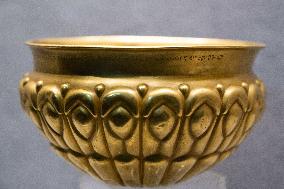
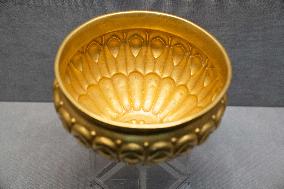
View of the Golden Cup of  Xerxes, the king of the Persian Achaemenid Empire, put on display in the museum in the ruins of Persepolis or Takht-e Jamshid, a UNESCO World Heritage site near Shiraz, Iran, on May 18, 2024. Founded by Darius I in 518 B.C., Persepolis was the capital of the Achaemenid Empire. It was built on an immense half-artificial, half-natural terrace, where the king of kings created an impressive palace complex inspired by Mesopotamian models. Takht-e Jamshid in Persian and 'Persepolis' in Greek, this site has earned global recognition. The columns, column heads, inscriptions, reliefs, palaces, and gates in the Persepolis area are among the world's most celebrated works of civilization. As the Persepolis area is known, the' Land of Persia' draws tourists worldwide to Shiraz every year. Photo by Moe/Middle East Images/ABACAPRESS.COM

  •  
Historical Site Persepolis Takht-e Jamshid - Iran

Historical Site Persepolis Takht-e Jamshid - Iran

View of the Golden Cup of  Xerxes, the king of the Persian Achaemenid Empire, put on display in the museum in the ruins of Persepolis or Takht-e Jamshid, a UNESCO World Heritage site near Shiraz, Iran, on May 18, 2024. Founded by Darius I in 518 B.C., Persepolis was the capital of the Achaemenid Empire. It was built on an immense half-artificial, half-natural terrace, where the king of kings created an impressive palace complex inspired by Mesopotamian models. Takht-e Jamshid in Persian and 'Persepolis' in Greek, this site has earned global recognition. The columns, column heads, inscriptions, reliefs, palaces, and gates in the Persepolis area are among the world's most celebrated works of civilization. As the Persepolis area is known, the' Land of Persia' draws tourists worldwide to Shiraz every year. Photo by Moe/Middle East Images/ABACAPRESS.COM

  •  
Historical Site Persepolis Takht-e Jamshid - Iran

Historical Site Persepolis Takht-e Jamshid - Iran

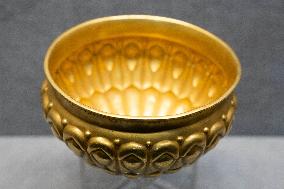
View of the Golden Cup of  Xerxes, the king of the Persian Achaemenid Empire, put on display in the museum in the ruins of Persepolis or Takht-e Jamshid, a UNESCO World Heritage site near Shiraz, Iran, on May 18, 2024. Founded by Darius I in 518 B.C., Persepolis was the capital of the Achaemenid Empire. It was built on an immense half-artificial, half-natural terrace, where the king of kings created an impressive palace complex inspired by Mesopotamian models. Takht-e Jamshid in Persian and 'Persepolis' in Greek, this site has earned global recognition. The columns, column heads, inscriptions, reliefs, palaces, and gates in the Persepolis area are among the world's most celebrated works of civilization. As the Persepolis area is known, the' Land of Persia' draws tourists worldwide to Shiraz every year. Photo by Moe/Middle East Images/ABACAPRESS.COM

  •  
Historical Site Persepolis Takht-e Jamshid - Iran

Historical Site Persepolis Takht-e Jamshid - Iran

View of the Golden Cup of  Xerxes, the king of the Persian Achaemenid Empire, put on display in the museum in the ruins of Persepolis or Takht-e Jamshid, a UNESCO World Heritage site near Shiraz, Iran, on May 18, 2024. Founded by Darius I in 518 B.C., Persepolis was the capital of the Achaemenid Empire. It was built on an immense half-artificial, half-natural terrace, where the king of kings created an impressive palace complex inspired by Mesopotamian models. Takht-e Jamshid in Persian and 'Persepolis' in Greek, this site has earned global recognition. The columns, column heads, inscriptions, reliefs, palaces, and gates in the Persepolis area are among the world's most celebrated works of civilization. As the Persepolis area is known, the' Land of Persia' draws tourists worldwide to Shiraz every year. Photo by Moe/Middle East Images/ABACAPRESS.COM

  •  
Historical Site Persepolis Takht-e Jamshid - Iran

Historical Site Persepolis Takht-e Jamshid - Iran

View of the Golden Cup of  Xerxes, the king of the Persian Achaemenid Empire, put on display in the museum in the ruins of Persepolis or Takht-e Jamshid, a UNESCO World Heritage site near Shiraz, Iran, on May 18, 2024. Founded by Darius I in 518 B.C., Persepolis was the capital of the Achaemenid Empire. It was built on an immense half-artificial, half-natural terrace, where the king of kings created an impressive palace complex inspired by Mesopotamian models. Takht-e Jamshid in Persian and 'Persepolis' in Greek, this site has earned global recognition. The columns, column heads, inscriptions, reliefs, palaces, and gates in the Persepolis area are among the world's most celebrated works of civilization. As the Persepolis area is known, the' Land of Persia' draws tourists worldwide to Shiraz every year. Photo by Moe/Middle East Images/ABACAPRESS.COM

  •  
Historical Site Persepolis Takht-e Jamshid - Iran

Historical Site Persepolis Takht-e Jamshid - Iran

View of the Golden Cup of  Xerxes, the king of the Persian Achaemenid Empire, put on display in the museum in the ruins of Persepolis or Takht-e Jamshid, a UNESCO World Heritage site near Shiraz, Iran, on May 18, 2024. Founded by Darius I in 518 B.C., Persepolis was the capital of the Achaemenid Empire. It was built on an immense half-artificial, half-natural terrace, where the king of kings created an impressive palace complex inspired by Mesopotamian models. Takht-e Jamshid in Persian and 'Persepolis' in Greek, this site has earned global recognition. The columns, column heads, inscriptions, reliefs, palaces, and gates in the Persepolis area are among the world's most celebrated works of civilization. As the Persepolis area is known, the' Land of Persia' draws tourists worldwide to Shiraz every year. Photo by Moe/Middle East Images/ABACAPRESS.COM

  •  
Historical Site Persepolis Takht-e Jamshid - Iran

Historical Site Persepolis Takht-e Jamshid - Iran

View of the Golden Cup of  Xerxes, the king of the Persian Achaemenid Empire, put on display in the museum in the ruins of Persepolis or Takht-e Jamshid, a UNESCO World Heritage site near Shiraz, Iran, on May 18, 2024. Founded by Darius I in 518 B.C., Persepolis was the capital of the Achaemenid Empire. It was built on an immense half-artificial, half-natural terrace, where the king of kings created an impressive palace complex inspired by Mesopotamian models. Takht-e Jamshid in Persian and 'Persepolis' in Greek, this site has earned global recognition. The columns, column heads, inscriptions, reliefs, palaces, and gates in the Persepolis area are among the world's most celebrated works of civilization. As the Persepolis area is known, the' Land of Persia' draws tourists worldwide to Shiraz every year. Photo by Moe/Middle East Images/ABACAPRESS.COM

  •  
Historical Site Persepolis Takht-e Jamshid - Iran

Historical Site Persepolis Takht-e Jamshid - Iran

View of the Golden Cup of  Xerxes, the king of the Persian Achaemenid Empire, put on display in the museum in the ruins of Persepolis or Takht-e Jamshid, a UNESCO World Heritage site near Shiraz, Iran, on May 18, 2024. Founded by Darius I in 518 B.C., Persepolis was the capital of the Achaemenid Empire. It was built on an immense half-artificial, half-natural terrace, where the king of kings created an impressive palace complex inspired by Mesopotamian models. Takht-e Jamshid in Persian and 'Persepolis' in Greek, this site has earned global recognition. The columns, column heads, inscriptions, reliefs, palaces, and gates in the Persepolis area are among the world's most celebrated works of civilization. As the Persepolis area is known, the' Land of Persia' draws tourists worldwide to Shiraz every year. Photo by Moe/Middle East Images/ABACAPRESS.COM

  •  
Historical Site Persepolis Takht-e Jamshid - Iran

Historical Site Persepolis Takht-e Jamshid - Iran

View of the Golden Cup of  Xerxes, the king of the Persian Achaemenid Empire, put on display in the museum in the ruins of Persepolis or Takht-e Jamshid, a UNESCO World Heritage site near Shiraz, Iran, on May 18, 2024. Founded by Darius I in 518 B.C., Persepolis was the capital of the Achaemenid Empire. It was built on an immense half-artificial, half-natural terrace, where the king of kings created an impressive palace complex inspired by Mesopotamian models. Takht-e Jamshid in Persian and 'Persepolis' in Greek, this site has earned global recognition. The columns, column heads, inscriptions, reliefs, palaces, and gates in the Persepolis area are among the world's most celebrated works of civilization. As the Persepolis area is known, the' Land of Persia' draws tourists worldwide to Shiraz every year. Photo by Moe/Middle East Images/ABACAPRESS.COM

  •  
Historical Site Persepolis Takht-e Jamshid - Iran

Historical Site Persepolis Takht-e Jamshid - Iran

View of the Golden Cup of  Xerxes, the king of the Persian Achaemenid Empire, put on display in the museum in the ruins of Persepolis or Takht-e Jamshid, a UNESCO World Heritage site near Shiraz, Iran, on May 18, 2024. Founded by Darius I in 518 B.C., Persepolis was the capital of the Achaemenid Empire. It was built on an immense half-artificial, half-natural terrace, where the king of kings created an impressive palace complex inspired by Mesopotamian models. Takht-e Jamshid in Persian and 'Persepolis' in Greek, this site has earned global recognition. The columns, column heads, inscriptions, reliefs, palaces, and gates in the Persepolis area are among the world's most celebrated works of civilization. As the Persepolis area is known, the' Land of Persia' draws tourists worldwide to Shiraz every year. Photo by Moe/Middle East Images/ABACAPRESS.COM

  •  
Historical Site Persepolis Takht-e Jamshid - Iran

Historical Site Persepolis Takht-e Jamshid - Iran

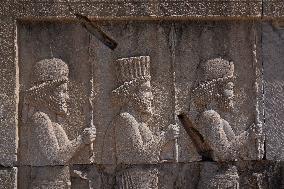
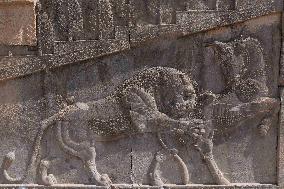
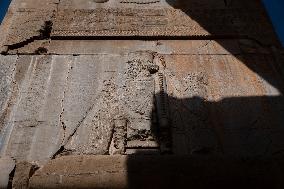
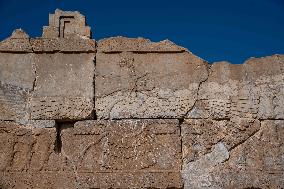
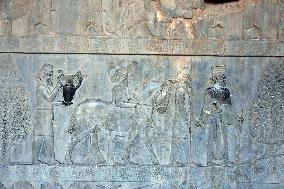
View of Bas-relief depicting Persian guards in the ruins of Persepolis or Takht-e Jamshid, a UNESCO World Heritage site near Shiraz, Iran, on May 18, 2024. Founded by Darius I in 518 B.C., Persepolis was the capital of the Achaemenid Empire. It was built on an immense half-artificial, half-natural terrace, where the king of kings created an impressive palace complex inspired by Mesopotamian models. Takht-e Jamshid in Persian and 'Persepolis' in Greek, this site has earned global recognition. The columns, column heads, inscriptions, reliefs, palaces, and gates that remain in the Persepolis area are among the world's most celebrated works of civilization. As the Persepolis area is known, the' Land of Persia' draws tourists worldwide to Shiraz every year. Photo by Moe/Middle East Images/ABACAPRESS.COM

  •  
Historical Site Persepolis Takht-e Jamshid - Iran

Historical Site Persepolis Takht-e Jamshid - Iran

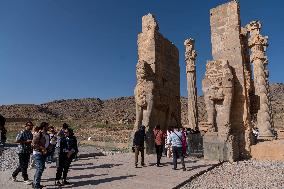
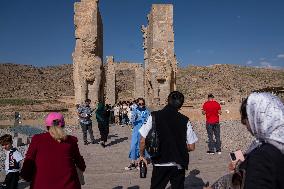
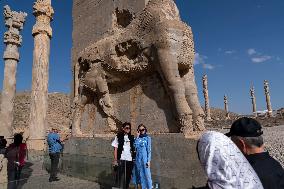
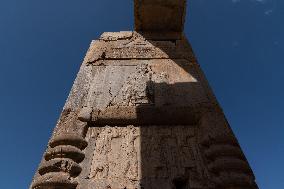
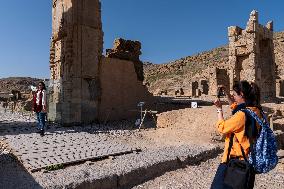
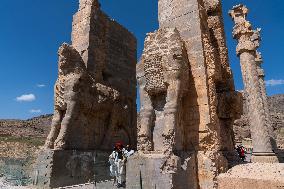
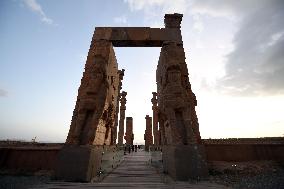
Visitors walk by the Gate of All Nations in the ruins of Persepolis or Takht-e Jamshid, a UNESCO World Heritage site near Shiraz, Iran, on May 18, 2024. Founded by Darius I in 518 B.C., Persepolis was the capital of the Achaemenid Empire. It was built on an immense half-artificial, half-natural terrace, where the king of kings created an impressive palace complex inspired by Mesopotamian models. Takht-e Jamshid in Persian and 'Persepolis' in Greek, this site has earned global recognition. The columns, column heads, inscriptions, reliefs, palaces, and gates that remain in the Persepolis area are among the world's most celebrated works of civilization. As the Persepolis area is known, the' Land of Persia' draws tourists worldwide to Shiraz every year. Photo by Moe/Middle East Images/ABACAPRESS.COM

  •  
Historical Site Persepolis Takht-e Jamshid - Iran

Historical Site Persepolis Takht-e Jamshid - Iran

Visitors walk by the Gate of All Nations in the ruins of Persepolis or Takht-e Jamshid, a UNESCO World Heritage site near Shiraz, Iran, on May 18, 2024. Founded by Darius I in 518 B.C., Persepolis was the capital of the Achaemenid Empire. It was built on an immense half-artificial, half-natural terrace, where the king of kings created an impressive palace complex inspired by Mesopotamian models. Takht-e Jamshid in Persian and 'Persepolis' in Greek, this site has earned global recognition. The columns, column heads, inscriptions, reliefs, palaces, and gates that remain in the Persepolis area are among the world's most celebrated works of civilization. As the Persepolis area is known, the' Land of Persia' draws tourists worldwide to Shiraz every year. Photo by Moe/Middle East Images/ABACAPRESS.COM

  •  
Historical Site Persepolis Takht-e Jamshid - Iran

Historical Site Persepolis Takht-e Jamshid - Iran

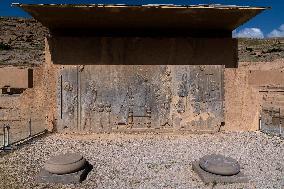
View of Bas-relief in the ruins of Persepolis or Takht-e Jamshid, a UNESCO World Heritage site near Shiraz, Iran, on May 18, 2024. Founded by Darius I in 518 B.C., Persepolis was the capital of the Achaemenid Empire. It was built on an immense half-artificial, half-natural terrace, where the king of kings created an impressive palace complex inspired by Mesopotamian models. Takht-e Jamshid in Persian and 'Persepolis' in Greek, this site has earned global recognition. The columns, column heads, inscriptions, reliefs, palaces, and gates that remain in the Persepolis area are among the world's most celebrated works of civilization. As the Persepolis area is known, the' Land of Persia' draws tourists worldwide to Shiraz every year. Photo by Moe/Middle East Images/ABACAPRESS.COM

  •  
Historical Site Persepolis Takht-e Jamshid - Iran

Historical Site Persepolis Takht-e Jamshid - Iran

Visitors stand for a photo by the Gate of All Nations in the ruins of Persepolis or Takht-e Jamshid, a UNESCO World Heritage site near Shiraz, Iran, on May 18, 2024. Founded by Darius I in 518 B.C., Persepolis was the capital of the Achaemenid Empire. It was built on an immense half-artificial, half-natural terrace, where the king of kings created an impressive palace complex inspired by Mesopotamian models. Takht-e Jamshid in Persian and 'Persepolis' in Greek, this site has earned global recognition. The columns, column heads, inscriptions, reliefs, palaces, and gates that remain in the Persepolis area are among the world's most celebrated works of civilization. As the Persepolis area is known, the' Land of Persia' draws tourists worldwide to Shiraz every year. Photo by Moe/Middle East Images/ABACAPRESS.COM

  •  
Historical Site Persepolis Takht-e Jamshid - Iran

Historical Site Persepolis Takht-e Jamshid - Iran

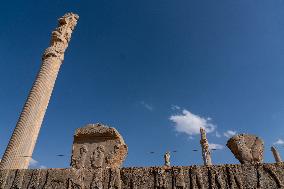
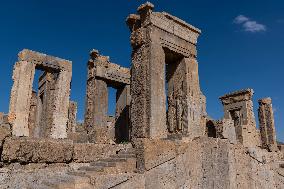
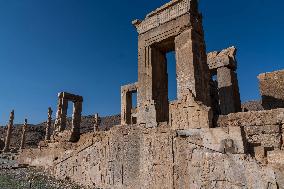
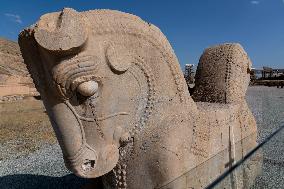
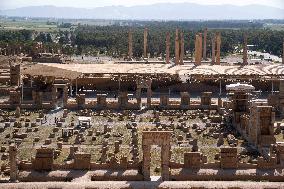
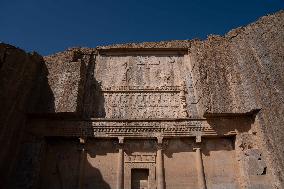
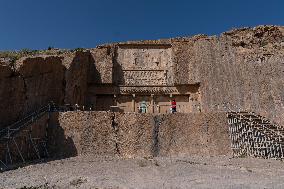
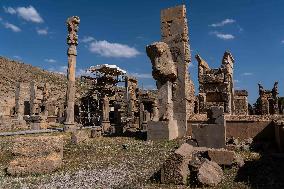
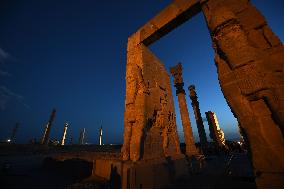
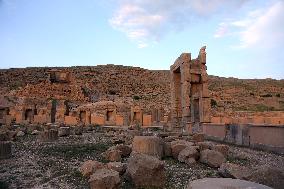
View of the Persepolis or Takht-e Jamshid ruins, a UNESCO World Heritage site near Shiraz, Iran, on May 18, 2024. Founded by Darius I in 518 B.C., Persepolis was the capital of the Achaemenid Empire. It was built on an immense half-artificial, half-natural terrace, where the king of kings created an impressive palace complex inspired by Mesopotamian models. Takht-e Jamshid in Persian and 'Persepolis' in Greek, this site has earned global recognition. The columns, column heads, inscriptions, reliefs, palaces, and gates in the Persepolis area are among the world's most celebrated works of civilization. As the Persepolis area is known, the' Land of Persia' draws tourists worldwide to Shiraz every year. Photo by Moe/Middle East Images/ABACAPRESS.COM

  •  
Historical Site Persepolis Takht-e Jamshid - Iran

Historical Site Persepolis Takht-e Jamshid - Iran

View of the Persepolis or Takht-e Jamshid ruins, a UNESCO World Heritage site near Shiraz, Iran, on May 18, 2024. Founded by Darius I in 518 B.C., Persepolis was the capital of the Achaemenid Empire. It was built on an immense half-artificial, half-natural terrace, where the king of kings created an impressive palace complex inspired by Mesopotamian models. Takht-e Jamshid in Persian and 'Persepolis' in Greek, this site has earned global recognition. The columns, column heads, inscriptions, reliefs, palaces, and gates in the Persepolis area are among the world's most celebrated works of civilization. As the Persepolis area is known, the' Land of Persia' draws tourists worldwide to Shiraz every year. Photo by Moe/Middle East Images/ABACAPRESS.COM

  •  
Historical Site Persepolis Takht-e Jamshid - Iran

Historical Site Persepolis Takht-e Jamshid - Iran

View of the Persepolis or Takht-e Jamshid ruins, a UNESCO World Heritage site near Shiraz, Iran, on May 18, 2024. Founded by Darius I in 518 B.C., Persepolis was the capital of the Achaemenid Empire. It was built on an immense half-artificial, half-natural terrace, where the king of kings created an impressive palace complex inspired by Mesopotamian models. Takht-e Jamshid in Persian and 'Persepolis' in Greek, this site has earned global recognition. The columns, column heads, inscriptions, reliefs, palaces, and gates in the Persepolis area are among the world's most celebrated works of civilization. As the Persepolis area is known, the' Land of Persia' draws tourists worldwide to Shiraz every year. Photo by Moe/Middle East Images/ABACAPRESS.COM

  •  
Historical Site Persepolis Takht-e Jamshid - Iran

Historical Site Persepolis Takht-e Jamshid - Iran

View of the Persepolis or Takht-e Jamshid ruins, a UNESCO World Heritage site near Shiraz, Iran, on May 18, 2024. Founded by Darius I in 518 B.C., Persepolis was the capital of the Achaemenid Empire. It was built on an immense half-artificial, half-natural terrace, where the king of kings created an impressive palace complex inspired by Mesopotamian models. Takht-e Jamshid in Persian and 'Persepolis' in Greek, this site has earned global recognition. The columns, column heads, inscriptions, reliefs, palaces, and gates in the Persepolis area are among the world's most celebrated works of civilization. As the Persepolis area is known, the' Land of Persia' draws tourists worldwide to Shiraz every year. Photo by Moe/Middle East Images/ABACAPRESS.COM

  •  
Historical Site Persepolis Takht-e Jamshid - Iran

Historical Site Persepolis Takht-e Jamshid - Iran

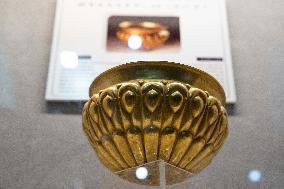
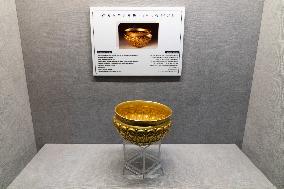
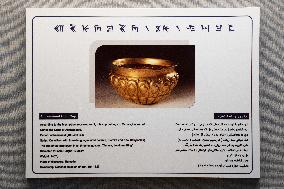
View of the description of the Golden Cup of  Xerxes, the king of the Persian Achaemenid Empire, put on display in the museum in the ruins of Persepolis or Takht-e Jamshid, a UNESCO World Heritage site near Shiraz, Iran, on May 18, 2024. Founded by Darius I in 518 B.C., Persepolis was the capital of the Achaemenid Empire. It was built on an immense half-artificial, half-natural terrace, where the king of kings created an impressive palace complex inspired by Mesopotamian models. Takht-e Jamshid in Persian and 'Persepolis' in Greek, this site has earned global recognition. The columns, column heads, inscriptions, reliefs, palaces, and gates in the Persepolis area are among the world's most celebrated works of civilization. As the Persepolis area is known, the' Land of Persia' draws tourists worldwide to Shiraz every year. Photo by Moe/Middle East Images/ABACAPRESS.COM

  •  
Historical Site Persepolis Takht-e Jamshid - Iran

Historical Site Persepolis Takht-e Jamshid - Iran

View of the Persepolis or Takht-e Jamshid ruins, a UNESCO World Heritage site near Shiraz, Iran, on May 18, 2024. Founded by Darius I in 518 B.C., Persepolis was the capital of the Achaemenid Empire. It was built on an immense half-artificial, half-natural terrace, where the king of kings created an impressive palace complex inspired by Mesopotamian models. Takht-e Jamshid in Persian and 'Persepolis' in Greek, this site has earned global recognition. The columns, column heads, inscriptions, reliefs, palaces, and gates in the Persepolis area are among the world's most celebrated works of civilization. As the Persepolis area is known, the' Land of Persia' draws tourists worldwide to Shiraz every year. Photo by Moe/Middle East Images/ABACAPRESS.COM

  •  
Historical Site Persepolis Takht-e Jamshid - Iran

Historical Site Persepolis Takht-e Jamshid - Iran

View of the Persepolis or Takht-e Jamshid ruins, a UNESCO World Heritage site near Shiraz, Iran, on May 18, 2024. Founded by Darius I in 518 B.C., Persepolis was the capital of the Achaemenid Empire. It was built on an immense half-artificial, half-natural terrace, where the king of kings created an impressive palace complex inspired by Mesopotamian models. Takht-e Jamshid in Persian and 'Persepolis' in Greek, this site has earned global recognition. The columns, column heads, inscriptions, reliefs, palaces, and gates in the Persepolis area are among the world's most celebrated works of civilization. As the Persepolis area is known, the' Land of Persia' draws tourists worldwide to Shiraz every year. Photo by Moe/Middle East Images/ABACAPRESS.COM

  •  
Historical Site Persepolis Takht-e Jamshid - Iran

Historical Site Persepolis Takht-e Jamshid - Iran

View of the Persepolis or Takht-e Jamshid ruins, a UNESCO World Heritage site near Shiraz, Iran, on May 18, 2024. Founded by Darius I in 518 B.C., Persepolis was the capital of the Achaemenid Empire. It was built on an immense half-artificial, half-natural terrace, where the king of kings created an impressive palace complex inspired by Mesopotamian models. Takht-e Jamshid in Persian and 'Persepolis' in Greek, this site has earned global recognition. The columns, column heads, inscriptions, reliefs, palaces, and gates in the Persepolis area are among the world's most celebrated works of civilization. As the Persepolis area is known, the' Land of Persia' draws tourists worldwide to Shiraz every year. Photo by Moe/Middle East Images/ABACAPRESS.COM

  •  
Historical Site Persepolis Takht-e Jamshid - Iran

Historical Site Persepolis Takht-e Jamshid - Iran

View of the Golden Cup of  Xerxes, the king of the Persian Achaemenid Empire, put on display in the museum in the ruins of Persepolis or Takht-e Jamshid, a UNESCO World Heritage site near Shiraz, Iran, on May 18, 2024. Founded by Darius I in 518 B.C., Persepolis was the capital of the Achaemenid Empire. It was built on an immense half-artificial, half-natural terrace, where the king of kings created an impressive palace complex inspired by Mesopotamian models. Takht-e Jamshid in Persian and 'Persepolis' in Greek, this site has earned global recognition. The columns, column heads, inscriptions, reliefs, palaces, and gates in the Persepolis area are among the world's most celebrated works of civilization. As the Persepolis area is known, the' Land of Persia' draws tourists worldwide to Shiraz every year. Photo by Moe/Middle East Images/ABACAPRESS.COM

  •  
Historical Site Persepolis Takht-e Jamshid - Iran

Historical Site Persepolis Takht-e Jamshid - Iran

Visitors walk by the Gate of All Nations in the ruins of Persepolis or Takht-e Jamshid, a UNESCO World Heritage site near Shiraz, Iran, on May 18, 2024. Founded by Darius I in 518 B.C., Persepolis was the capital of the Achaemenid Empire. It was built on an immense half-artificial, half-natural terrace, where the king of kings created an impressive palace complex inspired by Mesopotamian models. Takht-e Jamshid in Persian and 'Persepolis' in Greek, this site has earned global recognition. The columns, column heads, inscriptions, reliefs, palaces, and gates that remain in the Persepolis area are among the world's most celebrated works of civilization. As the Persepolis area is known, the' Land of Persia' draws tourists worldwide to Shiraz every year. Photo by Moe/Middle East Images/ABACAPRESS.COM

  •  
Historical Site Persepolis Takht-e Jamshid - Iran

Historical Site Persepolis Takht-e Jamshid - Iran

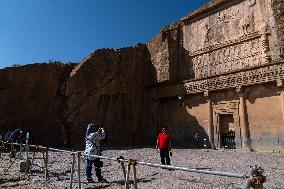
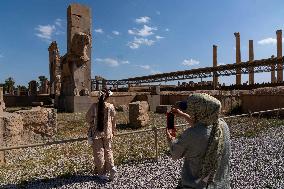
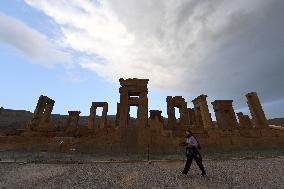
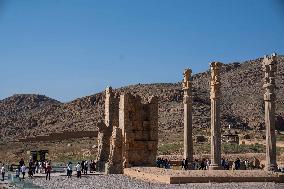
Visitors take a photo in the Persepolis or Takht-e Jamshid ruins, a UNESCO World Heritage site near Shiraz, Iran, on May 18, 2024. Founded by Darius I in 518 B.C., Persepolis was the capital of the Achaemenid Empire. It was built on an immense half-artificial, half-natural terrace, where the king of kings created an impressive palace complex inspired by Mesopotamian models. Takht-e Jamshid in Persian and 'Persepolis' in Greek, this site has earned global recognition. The columns, column heads, inscriptions, reliefs, palaces, and gates in the Persepolis area are among the world's most celebrated works of civilization. As the Persepolis area is known, the' Land of Persia' draws tourists worldwide to Shiraz every year. Photo by Moe/Middle East Images/ABACAPRESS.COM

  •  
Historical Site Persepolis Takht-e Jamshid - Iran

Historical Site Persepolis Takht-e Jamshid - Iran

Visitors take a photo in the Persepolis or Takht-e Jamshid ruins, a UNESCO World Heritage site near Shiraz, Iran, on May 18, 2024. Founded by Darius I in 518 B.C., Persepolis was the capital of the Achaemenid Empire. It was built on an immense half-artificial, half-natural terrace, where the king of kings created an impressive palace complex inspired by Mesopotamian models. Takht-e Jamshid in Persian and 'Persepolis' in Greek, this site has earned global recognition. The columns, column heads, inscriptions, reliefs, palaces, and gates in the Persepolis area are among the world's most celebrated works of civilization. As the Persepolis area is known, the' Land of Persia' draws tourists worldwide to Shiraz every year. Photo by Moe/Middle East Images/ABACAPRESS.COM

  •  
Historical Site Persepolis Takht-e Jamshid - Iran

Historical Site Persepolis Takht-e Jamshid - Iran

View of the Persepolis or Takht-e Jamshid ruins, a UNESCO World Heritage site near Shiraz, Iran, on May 18, 2024. Founded by Darius I in 518 B.C., Persepolis was the capital of the Achaemenid Empire. It was built on an immense half-artificial, half-natural terrace, where the king of kings created an impressive palace complex inspired by Mesopotamian models. Takht-e Jamshid in Persian and 'Persepolis' in Greek, this site has earned global recognition. The columns, column heads, inscriptions, reliefs, palaces, and gates in the Persepolis area are among the world's most celebrated works of civilization. As the Persepolis area is known, the' Land of Persia' draws tourists worldwide to Shiraz every year. Photo by Moe/Middle East Images/ABACAPRESS.COM

  •  
Historical Site Persepolis Takht-e Jamshid - Iran

Historical Site Persepolis Takht-e Jamshid - Iran

View of the Persepolis or Takht-e Jamshid ruins, a UNESCO World Heritage site near Shiraz, Iran, on May 18, 2024. Founded by Darius I in 518 B.C., Persepolis was the capital of the Achaemenid Empire. It was built on an immense half-artificial, half-natural terrace, where the king of kings created an impressive palace complex inspired by Mesopotamian models. Takht-e Jamshid in Persian and 'Persepolis' in Greek, this site has earned global recognition. The columns, column heads, inscriptions, reliefs, palaces, and gates in the Persepolis area are among the world's most celebrated works of civilization. As the Persepolis area is known, the' Land of Persia' draws tourists worldwide to Shiraz every year. Photo by Moe/Middle East Images/ABACAPRESS.COM

  •  
Historical Site Persepolis Takht-e Jamshid - Iran

Historical Site Persepolis Takht-e Jamshid - Iran

View of the Persepolis or Takht-e Jamshid ruins, a UNESCO World Heritage site near Shiraz, Iran, on May 18, 2024. Founded by Darius I in 518 B.C., Persepolis was the capital of the Achaemenid Empire. It was built on an immense half-artificial, half-natural terrace, where the king of kings created an impressive palace complex inspired by Mesopotamian models. Takht-e Jamshid in Persian and 'Persepolis' in Greek, this site has earned global recognition. The columns, column heads, inscriptions, reliefs, palaces, and gates in the Persepolis area are among the world's most celebrated works of civilization. As the Persepolis area is known, the' Land of Persia' draws tourists worldwide to Shiraz every year. Photo by Moe/Middle East Images/ABACAPRESS.COM

  •  
Historical Site Persepolis Takht-e Jamshid - Iran

Historical Site Persepolis Takht-e Jamshid - Iran

Visitors take a photo in the Persepolis or Takht-e Jamshid ruins, a UNESCO World Heritage site near Shiraz, Iran, on May 18, 2024. Founded by Darius I in 518 B.C., Persepolis was the capital of the Achaemenid Empire. It was built on an immense half-artificial, half-natural terrace, where the king of kings created an impressive palace complex inspired by Mesopotamian models. Takht-e Jamshid in Persian and 'Persepolis' in Greek, this site has earned global recognition. The columns, column heads, inscriptions, reliefs, palaces, and gates in the Persepolis area are among the world's most celebrated works of civilization. As the Persepolis area is known, the' Land of Persia' draws tourists worldwide to Shiraz every year. Photo by Moe/Middle East Images/ABACAPRESS.COM

  •  
Historical Site Persepolis Takht-e Jamshid - Iran

Historical Site Persepolis Takht-e Jamshid - Iran

View of the Persepolis or Takht-e Jamshid ruins, a UNESCO World Heritage site near Shiraz, Iran, on May 18, 2024. Founded by Darius I in 518 B.C., Persepolis was the capital of the Achaemenid Empire. It was built on an immense half-artificial, half-natural terrace, where the king of kings created an impressive palace complex inspired by Mesopotamian models. Takht-e Jamshid in Persian and 'Persepolis' in Greek, this site has earned global recognition. The columns, column heads, inscriptions, reliefs, palaces, and gates in the Persepolis area are among the world's most celebrated works of civilization. As the Persepolis area is known, the' Land of Persia' draws tourists worldwide to Shiraz every year. Photo by Moe/Middle East Images/ABACAPRESS.COM

  •  
Historical Site Persepolis Takht-e Jamshid - Iran

Historical Site Persepolis Takht-e Jamshid - Iran

View of the Persepolis or Takht-e Jamshid ruins, a UNESCO World Heritage site near Shiraz, Iran, on May 18, 2024. Founded by Darius I in 518 B.C., Persepolis was the capital of the Achaemenid Empire. It was built on an immense half-artificial, half-natural terrace, where the king of kings created an impressive palace complex inspired by Mesopotamian models. Takht-e Jamshid in Persian and 'Persepolis' in Greek, this site has earned global recognition. The columns, column heads, inscriptions, reliefs, palaces, and gates in the Persepolis area are among the world's most celebrated works of civilization. As the Persepolis area is known, the' Land of Persia' draws tourists worldwide to Shiraz every year. Photo by Moe/Middle East Images/ABACAPRESS.COM

  •  
Historical Site Persepolis Takht-e Jamshid - Iran

Historical Site Persepolis Takht-e Jamshid - Iran

Visitors walk by the Gate of All Nations in the ruins of Persepolis or Takht-e Jamshid, a UNESCO World Heritage site near Shiraz, Iran, on May 18, 2024. Founded by Darius I in 518 B.C., Persepolis was the capital of the Achaemenid Empire. It was built on an immense half-artificial, half-natural terrace, where the king of kings created an impressive palace complex inspired by Mesopotamian models. Takht-e Jamshid in Persian and 'Persepolis' in Greek, this site has earned global recognition. The columns, column heads, inscriptions, reliefs, palaces, and gates that remain in the Persepolis area are among the world's most celebrated works of civilization. As the Persepolis area is known, the' Land of Persia' draws tourists worldwide to Shiraz every year. Photo by Moe/Middle East Images/ABACAPRESS.COM

  •  
IRAN-SHIRAZ-WORLD HERITAGE-PERSEPOLIS

IRAN-SHIRAZ-WORLD HERITAGE-PERSEPOLIS

(240515) -- TEHRAN, May 15, 2024 (Xinhua) -- A tourist visits the ruins of Persepolis near the city of Shiraz in southern Iran, May 7, 2024. Persepolis, a UNESCO world heritage site, was the capital of the Achaemenid Empire of Persia (550-330 BC). The importance and quality of the monumental ruins make it a unique archaeological site. (Xinhua/Shadati)

  •  
IRAN-SHIRAZ-WORLD HERITAGE-PERSEPOLIS

IRAN-SHIRAZ-WORLD HERITAGE-PERSEPOLIS

(240515) -- TEHRAN, May 15, 2024 (Xinhua) -- This photo taken on May 7, 2024 shows a view of the ruins of Persepolis near the city of Shiraz in southern Iran. Persepolis, a UNESCO world heritage site, was the capital of the Achaemenid Empire of Persia (550-330 BC). The importance and quality of the monumental ruins make it a unique archaeological site. (Xinhua/Shadati)

  •  
IRAN-SHIRAZ-WORLD HERITAGE-PERSEPOLIS

IRAN-SHIRAZ-WORLD HERITAGE-PERSEPOLIS

(240515) -- TEHRAN, May 15, 2024 (Xinhua) -- This photo taken on May 7, 2024 shows a stone carving in the ruins of Persepolis near the city of Shiraz in southern Iran. Persepolis, a UNESCO world heritage site, was the capital of the Achaemenid Empire of Persia (550-330 BC). The importance and quality of the monumental ruins make it a unique archaeological site. (Xinhua/Shadati)

  •  
IRAN-SHIRAZ-WORLD HERITAGE-PERSEPOLIS

IRAN-SHIRAZ-WORLD HERITAGE-PERSEPOLIS

(240515) -- TEHRAN, May 15, 2024 (Xinhua) -- This photo taken on May 7, 2024 shows a view of the ruins of Persepolis near the city of Shiraz in southern Iran. Persepolis, a UNESCO world heritage site, was the capital of the Achaemenid Empire of Persia (550-330 BC). The importance and quality of the monumental ruins make it a unique archaeological site. (Xinhua/Shadati)

  •  
IRAN-SHIRAZ-WORLD HERITAGE-PERSEPOLIS

IRAN-SHIRAZ-WORLD HERITAGE-PERSEPOLIS

(240515) -- TEHRAN, May 15, 2024 (Xinhua) -- This photo taken on May 7, 2024 shows a view of the ruins of Persepolis near the city of Shiraz in southern Iran. Persepolis, a UNESCO world heritage site, was the capital of the Achaemenid Empire of Persia (550-330 BC). The importance and quality of the monumental ruins make it a unique archaeological site. (Xinhua/Shadati)

  • Main
  • Top
  • Editorial
  • Creative
  • About Us
  • About ILG
  • Terms of use
  • Company
  • BEHIND
  • Price List
  • Single Plan
  • Monthly Plan
  • Services
  • Shooting
  • Rights Clearance
  • Support
  • FAQ
  • How To Buy
  • Contact Us
  • Become a Partner

© KYODO NEWS IMAGES INC

All Rights Reserved.

  • Editorial
  • Olympics
  • News
  • Sports
  • Japan
  • Tech
  • Royal
  • Disaster
  • NorthKorea
  • Old Japan
  • SNS
  • Creative
  • Food
  • Japan
  • Landscape
  • Animal
  • Popular
  • #Ukraine
  • #China
  • #coronavirus
  • #N. Korea
  • #Russia
  • #Thailand
  • #Ukraine
  • #China
  • #coronavirus
  • #N. Korea
  • #Russia
  • #Thailand
  • Food
  • Japan
  • Landscape
  • Animal
  • Olympics
  • News
  • Sports
  • Japan
  • Tech
  • Royal
  • Disaster
  • NorthKorea
  • Old Japan
  • SNS