•  
Subsidence in Neyshabur Iran

Subsidence in Neyshabur Iran

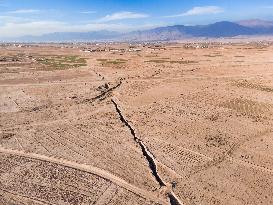
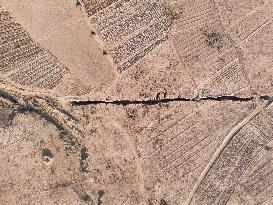
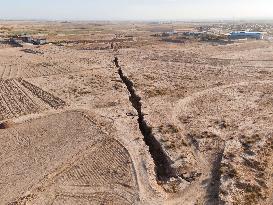
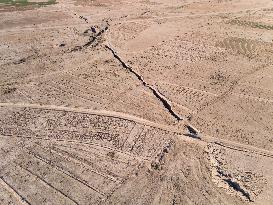
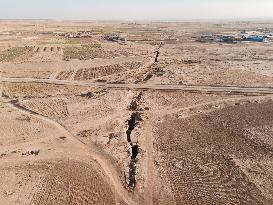
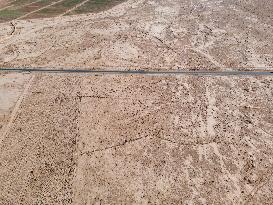
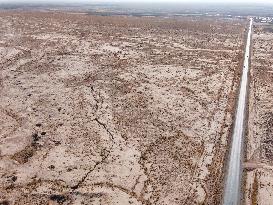
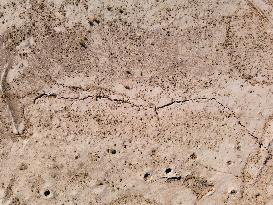
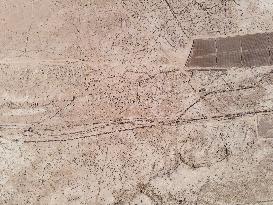
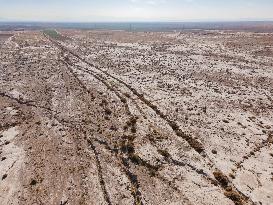
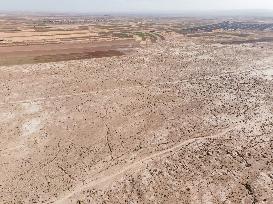
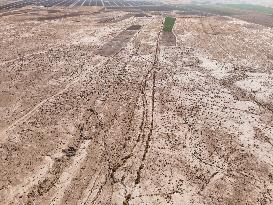
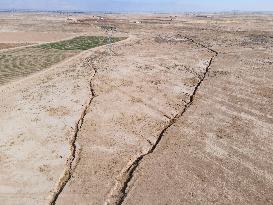
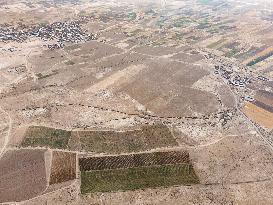
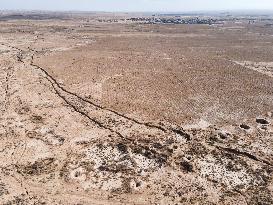
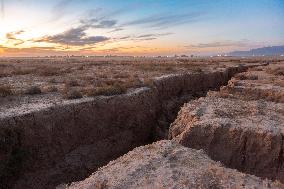
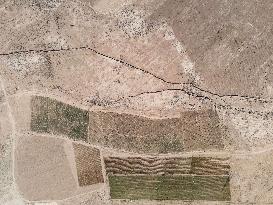
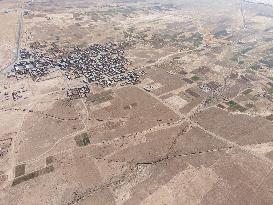
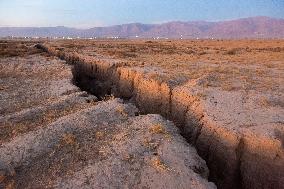
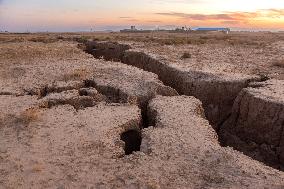
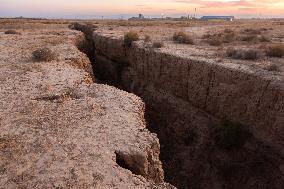
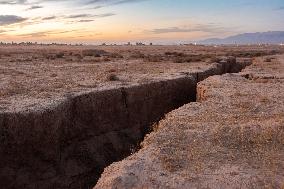
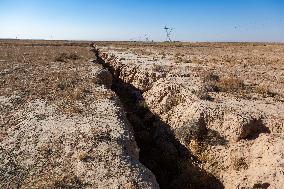
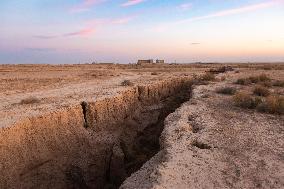
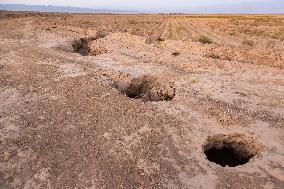
An aerial view shows wide subsidence cracks and circular sinkholes cutting across fields on the outskirts of Neyshabur, Iran, on November 14, 2025. Experts say excessive groundwater extraction has turned Neyshabur into one of Iran’s most critical subsidence hotspots. The subsidence now poses a threat to agriculture and key infrastructure, including the Tehran-Mashhad railroad and major energy pipelines. Photo by Morteza Aminoroayayi/Middle East Images/ABACAPRESS.COM

  •  
Subsidence in Neyshabur Iran

Subsidence in Neyshabur Iran

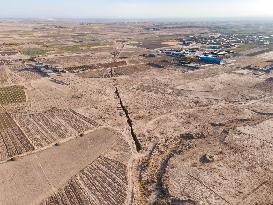
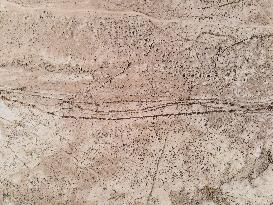
An aerial view shows a wide subsidence crack cutting across fields on the outskirts of Neyshabur, Iran, on November 14, 2025. Experts say excessive groundwater extraction has turned Neyshabur into one of Iran’s most critical subsidence hotspots. The subsidence now poses a threat to agriculture and key infrastructure, including the Tehran-Mashhad railroad and major energy pipelines. Photo by Morteza Aminoroayayi/Middle East Images/ABACAPRESS.COM

  •  
Subsidence in Neyshabur Iran

Subsidence in Neyshabur Iran

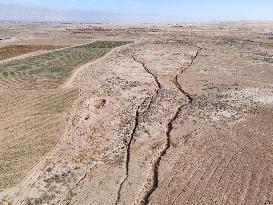
An aerial view shows wide subsidence cracks and circular sinkholes cutting across fields on the outskirts of Neyshabur, Iran, on November 14, 2025. Experts say excessive groundwater extraction has turned Neyshabur into one of Iran’s most critical subsidence hotspots. The subsidence now poses a threat to agriculture and key infrastructure, including the Tehran-Mashhad railroad and major energy pipelines. Photo by Morteza Aminoroayayi/Middle East Images/ABACAPRESS.COM

  •  
Subsidence in Neyshabur Iran

Subsidence in Neyshabur Iran

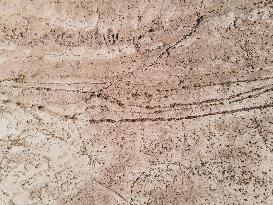
An aerial view shows wide subsidence cracks and circular sinkholes cutting across fields on the outskirts of Neyshabur, Iran, on November 14, 2025. Experts say excessive groundwater extraction has turned Neyshabur into one of Iran’s most critical subsidence hotspots. The subsidence now poses a threat to agriculture and key infrastructure, including the Tehran-Mashhad railroad and major energy pipelines. Photo by Morteza Aminoroayayi/Middle East Images/ABACAPRESS.COM

  •  
Subsidence in Neyshabur Iran

Subsidence in Neyshabur Iran

An aerial view shows wide subsidence cracks and circular sinkholes cutting across fields on the outskirts of Neyshabur, Iran, on November 14, 2025. Experts say excessive groundwater extraction has turned Neyshabur into one of Iran’s most critical subsidence hotspots. The subsidence now poses a threat to agriculture and key infrastructure, including the Tehran-Mashhad railroad and major energy pipelines. Photo by Morteza Aminoroayayi/Middle East Images/ABACAPRESS.COM

  •  
Subsidence in Neyshabur Iran

Subsidence in Neyshabur Iran

An aerial view shows wide subsidence cracks and circular sinkholes cutting across fields on the outskirts of Neyshabur, Iran, on November 14, 2025. Experts say excessive groundwater extraction has turned Neyshabur into one of Iran’s most critical subsidence hotspots. The subsidence now poses a threat to agriculture and key infrastructure, including the Tehran-Mashhad railroad and major energy pipelines. Photo by Morteza Aminoroayayi/Middle East Images/ABACAPRESS.COM

  •  
Subsidence in Neyshabur Iran

Subsidence in Neyshabur Iran

An aerial view shows a large subsidence crack and circular sinkholes cutting across the ground on the outskirts of Neyshabur, Iran, on November 14, 2025. Experts say excessive groundwater extraction has turned Neyshabur into one of Iran’s most critical subsidence hotspots. The subsidence now poses a threat to agriculture and key infrastructure, including the Tehran-Mashhad railroad and major energy pipelines. Photo by Morteza Aminoroayayi/Middle East Images/ABACAPRESS.COM

  •  
Subsidence in Neyshabur Iran

Subsidence in Neyshabur Iran

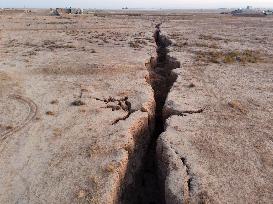
A view shows a large subsidence crack in the ground on the outskirts of Neyshabur, Iran, on November 14, 2025. Experts say excessive groundwater extraction has turned Neyshabur into one of Iran’s most critical subsidence hotspots. The subsidence now poses a threat to agriculture and key infrastructure, including the Tehran-Mashhad railroad and major energy pipelines. Photo by Morteza Aminoroayayi/Middle East Images/ABACAPRESS.COM

  •  
Subsidence in Neyshabur Iran

Subsidence in Neyshabur Iran

An aerial view shows subsidence cracks and circular sinkholes cutting across the ground near a road on the outskirts of Neyshabur, Iran, on November 14, 2025. Experts say excessive groundwater extraction has turned Neyshabur into one of Iran’s most critical subsidence hotspots. The subsidence now poses a threat to agriculture and key infrastructure, including the Tehran-Mashhad railroad and major energy pipelines. Photo by Morteza Aminoroayayi/Middle East Images/ABACAPRESS.COM

  •  
Subsidence in Neyshabur Iran

Subsidence in Neyshabur Iran

An aerial view shows subsidence cracks and circular sinkholes cutting across the ground near a road on the outskirts of Neyshabur, Iran, on November 14, 2025. Experts say excessive groundwater extraction has turned Neyshabur into one of Iran’s most critical subsidence hotspots. The subsidence now poses a threat to agriculture and key infrastructure, including the Tehran-Mashhad railroad and major energy pipelines. Photo by Morteza Aminoroayayi/Middle East Images/ABACAPRESS.COM

  •  
Subsidence in Neyshabur Iran

Subsidence in Neyshabur Iran

An aerial view shows a large subsidence crack and circular sinkholes cutting across the ground on the outskirts of Neyshabur, Iran, on November 14, 2025. Experts say excessive groundwater extraction has turned Neyshabur into one of Iran’s most critical subsidence hotspots. The subsidence now poses a threat to agriculture and key infrastructure, including the Tehran-Mashhad railroad and major energy pipelines. Photo by Morteza Aminoroayayi/Middle East Images/ABACAPRESS.COM

  •  
Subsidence in Neyshabur Iran

Subsidence in Neyshabur Iran

An aerial view shows subsidence cracks and circular sinkholes cutting across the ground on the outskirts of Neyshabur, Iran, on November 14, 2025. Experts say excessive groundwater extraction has turned Neyshabur into one of Iran’s most critical subsidence hotspots. The subsidence now poses a threat to agriculture and key infrastructure, including the Tehran-Mashhad railroad and major energy pipelines. Photo by Morteza Aminoroayayi/Middle East Images/ABACAPRESS.COM

  •  
Subsidence in Neyshabur Iran

Subsidence in Neyshabur Iran

An aerial view shows subsidence cracks and circular sinkholes cutting across the ground on the outskirts of Neyshabur, Iran, on November 14, 2025. Experts say excessive groundwater extraction has turned Neyshabur into one of Iran’s most critical subsidence hotspots. The subsidence now poses a threat to agriculture and key infrastructure, including the Tehran-Mashhad railroad and major energy pipelines. Photo by Morteza Aminoroayayi/Middle East Images/ABACAPRESS.COM

  •  
Subsidence in Neyshabur Iran

Subsidence in Neyshabur Iran

An aerial view shows subsidence cracks and circular sinkholes cutting across the ground on the outskirts of Neyshabur, Iran, on November 14, 2025. Experts say excessive groundwater extraction has turned Neyshabur into one of Iran’s most critical subsidence hotspots. The subsidence now poses a threat to agriculture and key infrastructure, including the Tehran-Mashhad railroad and major energy pipelines. Photo by Morteza Aminoroayayi/Middle East Images/ABACAPRESS.COM

  •  
Subsidence in Neyshabur Iran

Subsidence in Neyshabur Iran

An aerial view shows wide subsidence cracks and circular sinkholes cutting across fields on the outskirts of Neyshabur, Iran, on November 14, 2025. Experts say excessive groundwater extraction has turned Neyshabur into one of Iran’s most critical subsidence hotspots. The subsidence now poses a threat to agriculture and key infrastructure, including the Tehran-Mashhad railroad and major energy pipelines. Photo by Morteza Aminoroayayi/Middle East Images/ABACAPRESS.COM

  •  
Subsidence in Neyshabur Iran

Subsidence in Neyshabur Iran

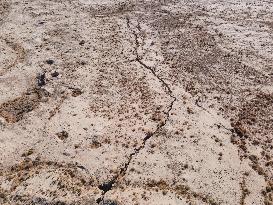
An aerial view shows subsidence cracks cutting across the ground on the outskirts of Neyshabur, Iran, on November 14, 2025. Experts say excessive groundwater extraction has turned Neyshabur into one of Iran’s most critical subsidence hotspots. The subsidence now poses a threat to agriculture and key infrastructure, including the Tehran-Mashhad railroad and major energy pipelines. Photo by Morteza Aminoroayayi/Middle East Images/ABACAPRESS.COM

  •  
Subsidence in Neyshabur Iran

Subsidence in Neyshabur Iran

An aerial view shows subsidence cracks and circular sinkholes cutting across the ground near farmlands on the outskirts of Neyshabur, Iran, on November 14, 2025. Experts say excessive groundwater extraction has turned Neyshabur into one of Iran’s most critical subsidence hotspots. The subsidence now poses a threat to agriculture and key infrastructure, including the Tehran-Mashhad railroad and major energy pipelines. Photo by Morteza Aminoroayayi/Middle East Images/ABACAPRESS.COM

  •  
Subsidence in Neyshabur Iran

Subsidence in Neyshabur Iran

An aerial view shows subsidence cracks and circular sinkholes cutting across fields on the outskirts of Neyshabur, Iran, on November 14, 2025. Experts say excessive groundwater extraction has turned Neyshabur into one of Iran’s most critical subsidence hotspots. The subsidence now poses a threat to agriculture and key infrastructure, including the Tehran-Mashhad railroad and major energy pipelines. Photo by Morteza Aminoroayayi/Middle East Images/ABACAPRESS.COM

  •  
Subsidence in Neyshabur Iran

Subsidence in Neyshabur Iran

An aerial view shows wide subsidence cracks and circular sinkholes cutting across fields on the outskirts of Neyshabur, Iran, on November 14, 2025. Experts say excessive groundwater extraction has turned Neyshabur into one of Iran’s most critical subsidence hotspots. The subsidence now poses a threat to agriculture and key infrastructure, including the Tehran-Mashhad railroad and major energy pipelines. Photo by Morteza Aminoroayayi/Middle East Images/ABACAPRESS.COM

  •  
Subsidence in Neyshabur Iran

Subsidence in Neyshabur Iran

An aerial view shows wide subsidence cracks and circular sinkholes cutting across fields on the outskirts of Neyshabur, Iran, on November 14, 2025. Experts say excessive groundwater extraction has turned Neyshabur into one of Iran’s most critical subsidence hotspots. The subsidence now poses a threat to agriculture and key infrastructure, including the Tehran-Mashhad railroad and major energy pipelines. Photo by Morteza Aminoroayayi/Middle East Images/ABACAPRESS.COM

  •  
Subsidence in Neyshabur Iran

Subsidence in Neyshabur Iran

An aerial view shows wide subsidence cracks and circular sinkholes cutting across fields on the outskirts of Neyshabur, Iran, on November 14, 2025. Experts say excessive groundwater extraction has turned Neyshabur into one of Iran’s most critical subsidence hotspots. The subsidence now poses a threat to agriculture and key infrastructure, including the Tehran-Mashhad railroad and major energy pipelines. Photo by Morteza Aminoroayayi/Middle East Images/ABACAPRESS.COM

  •  
Subsidence in Neyshabur Iran

Subsidence in Neyshabur Iran

A view shows a large subsidence crack in the ground on the outskirts of Neyshabur, Iran, on November 14, 2025. Experts say excessive groundwater extraction has turned Neyshabur into one of Iran’s most critical subsidence hotspots. The subsidence now poses a threat to agriculture and key infrastructure, including the Tehran-Mashhad railroad and major energy pipelines. Photo by Morteza Aminoroayayi/Middle East Images/ABACAPRESS.COM

  •  
Subsidence in Neyshabur Iran

Subsidence in Neyshabur Iran

An aerial view shows wide subsidence cracks and circular sinkholes cutting across fields on the outskirts of Neyshabur, Iran, on November 14, 2025. Experts say excessive groundwater extraction has turned Neyshabur into one of Iran’s most critical subsidence hotspots. The subsidence now poses a threat to agriculture and key infrastructure, including the Tehran-Mashhad railroad and major energy pipelines. Photo by Morteza Aminoroayayi/Middle East Images/ABACAPRESS.COM

  •  
Subsidence in Neyshabur Iran

Subsidence in Neyshabur Iran

An aerial view shows wide subsidence cracks and circular sinkholes cutting across fields on the outskirts of Neyshabur, Iran, on November 14, 2025. Experts say excessive groundwater extraction has turned Neyshabur into one of Iran’s most critical subsidence hotspots. The subsidence now poses a threat to agriculture and key infrastructure, including the Tehran-Mashhad railroad and major energy pipelines. Photo by Morteza Aminoroayayi/Middle East Images/ABACAPRESS.COM

  •  
Subsidence in Neyshabur Iran

Subsidence in Neyshabur Iran

A view shows a large subsidence crack in the ground on the outskirts of Neyshabur, Iran, on November 14, 2025. Experts say excessive groundwater extraction has turned Neyshabur into one of Iran’s most critical subsidence hotspots. The subsidence now poses a threat to agriculture and key infrastructure, including the Tehran-Mashhad railroad and major energy pipelines. Photo by Morteza Aminoroayayi/Middle East Images/ABACAPRESS.COM

  •  
Subsidence in Neyshabur Iran

Subsidence in Neyshabur Iran

A view shows a large subsidence crack in the ground on the outskirts of Neyshabur, Iran, on November 14, 2025. Experts say excessive groundwater extraction has turned Neyshabur into one of Iran’s most critical subsidence hotspots. The subsidence now poses a threat to agriculture and key infrastructure, including the Tehran-Mashhad railroad and major energy pipelines. Photo by Morteza Aminoroayayi/Middle East Images/ABACAPRESS.COM

  •  
Subsidence in Neyshabur Iran

Subsidence in Neyshabur Iran

A view shows a large subsidence crack in the ground on the outskirts of Neyshabur, Iran, on November 14, 2025. Experts say excessive groundwater extraction has turned Neyshabur into one of Iran’s most critical subsidence hotspots. The subsidence now poses a threat to agriculture and key infrastructure, including the Tehran-Mashhad railroad and major energy pipelines. Photo by Morteza Aminoroayayi/Middle East Images/ABACAPRESS.COM

  •  
Subsidence in Neyshabur Iran

Subsidence in Neyshabur Iran

A view shows a large subsidence crack in the ground on the outskirts of Neyshabur, Iran, on November 14, 2025. Experts say excessive groundwater extraction has turned Neyshabur into one of Iran’s most critical subsidence hotspots. The subsidence now poses a threat to agriculture and key infrastructure, including the Tehran-Mashhad railroad and major energy pipelines. Photo by Morteza Aminoroayayi/Middle East Images/ABACAPRESS.COM

  •  
Subsidence in Neyshabur Iran

Subsidence in Neyshabur Iran

A view shows a wide subsidence crack in the ground on the outskirts of Neyshabur, Iran, on November 13, 2025. Experts say excessive groundwater extraction has turned Neyshabur into one of Iran’s most critical subsidence hotspots. The subsidence now poses a threat to agriculture and key infrastructure, including the Tehran-Mashhad railroad and major energy pipelines. Photo by Morteza Aminoroayayi/Middle East Images/ABACAPRESS.COM

  •  
Subsidence in Neyshabur Iran

Subsidence in Neyshabur Iran

A view shows a large subsidence crack in the ground on the outskirts of Neyshabur, Iran, on November 14, 2025. Experts say excessive groundwater extraction has turned Neyshabur into one of Iran’s most critical subsidence hotspots. The subsidence now poses a threat to agriculture and key infrastructure, including the Tehran-Mashhad railroad and major energy pipelines. Photo by Morteza Aminoroayayi/Middle East Images/ABACAPRESS.COM

  •  
Subsidence in Neyshabur Iran

Subsidence in Neyshabur Iran

A view shows circular sinkholes and subsidence cracks on the ground on the outskirts of Neyshabur, Iran, on November 10, 2025. Experts say excessive groundwater extraction has turned Neyshabur into one of Iran’s most critical subsidence hotspots. The subsidence now poses a threat to agriculture and key infrastructure, including the Tehran-Mashhad railroad and major energy pipelines. Photo by Morteza Aminoroayayi/Middle East Images/ABACAPRESS.COM

  •  
Urca Oil and Gas Production Field Development - Brazil

Urca Oil and Gas Production Field Development - Brazil

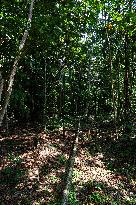
This photo taken on Oct. 17, 2025 shows pipelines stretching through the tropical rainforest at the Urucu Oil and Gas Production Field in the state of Amazonas, Brazil. The Urucu Oil and Gas Production Field, located in the heart of Brazil's Amazonas state, is one of the country's most important onshore oil and gas production bases. Surrounded by pristine rainforest, it has operated steadily since its start-up in 1988, supplying oil and natural gas that support energy needs across northern Brazil. According to its operator Petrobras, the field has preserved about 98 percent of its area as native forest, carries out rainwater recycling, waste recovery, and reforestation programs and plants more than 1.5 million native trees. Photo by Wang Tiancong/Xinhua/ABACAPRESS.COM

  •  
Taklimakan Desert Control Afforestation - China

Taklimakan Desert Control Afforestation - China

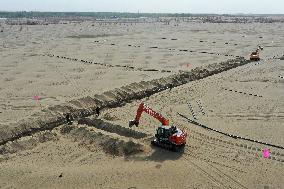
An aerial drone photo taken on April 8, 2025 shows staff members embedding water pipelines in Minfeng County of Hotan Prefecture, northwest China's Xinjiang Uygur Autonomous Region. The Taklimakan Desert in northwest China's Xinjiang Uygur Autonomous Region covers 337,600 square kilometers and its circumference measures 3,046 kilometers, making it the largest desert in China and the second-largest drifting desert in the world. Thanks to decades-long sand prevention and control efforts, the Taklimakan Desert was completely encircled with a sand-blocking green belt on Nov. 28, 2024. In 2025, Xinjiang aims to afforest a land area of about 796,000 hectares, including 562,666 hectares for frontline control in the Taklimakan Desert. These afforestations form a part of the Three-North Shelterbelt Forest Program, the world's largest afforestation program, which tackles desertification in northwest, north and northeast China. Meanwhile, Xinjiang will further widen the sand-blocking green belt and enhance desert-lockin

  •  
Destruction in residential area in Dnipro after Russian drone attack

Destruction in residential area in Dnipro after Russian drone attack

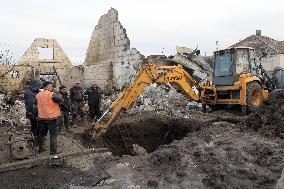
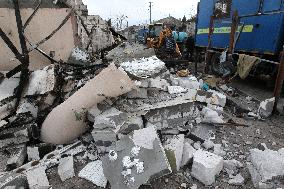
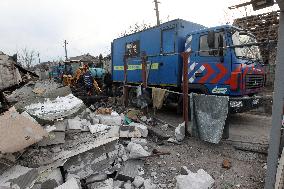
Municipal workers repair water supply pipelines damaged by the March 28 Russian drone strike in a residential area in Dnipro, Ukraine, on March 29, 2025. (Photo by Mykola Miakshykov/Ukrinform)

  •  
Destruction in residential area in Dnipro after Russian drone attack

Destruction in residential area in Dnipro after Russian drone attack

Municipal workers repair water supply pipelines damaged by the March 28 Russian drone strike in a residential area in Dnipro, Ukraine, on March 29, 2025. (Photo by Mykola Miakshykov/Ukrinform)

  •  
Destruction in residential area in Dnipro after Russian drone attack

Destruction in residential area in Dnipro after Russian drone attack

Municipal workers repair water supply pipelines damaged by the March 28 Russian drone strike in a residential area in Dnipro, Ukraine, on March 29, 2025. (Photo by Mykola Miakshykov/Ukrinform)

  •  
Destruction in residential area in Dnipro after Russian drone attack

Destruction in residential area in Dnipro after Russian drone attack

Municipal workers repair water supply pipelines damaged by the March 28 Russian drone strike in a residential area in Dnipro, Ukraine, on March 29, 2025. (Photo by Mykola Miakshykov/Ukrinform)

  •  
Destruction in residential area in Dnipro after Russian drone attack

Destruction in residential area in Dnipro after Russian drone attack

Municipal workers repair water supply pipelines damaged by the March 28 Russian drone strike in a residential area in Dnipro, Ukraine, on March 29, 2025. (Photo by Mykola Miakshykov/Ukrinform)

  •  
Israeli Airstrikes - Syria

Israeli Airstrikes - Syria

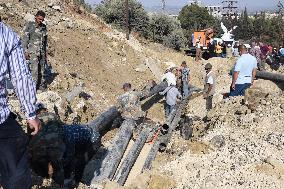
People repair pipelines damaged by Israeli airstrikes in Masyaf, Hama province, central Syria, Sept. 9, 2024. Israeli airstrikes killed 18 people in central Syria overnight, Syria's health minister said on Monday. Photo by Monsef Memari/Xinhua/ABACAPRESS.COM

  •  
BOTSWANA-ELEPHANT-PIPELINE-DAMAGE

BOTSWANA-ELEPHANT-PIPELINE-DAMAGE

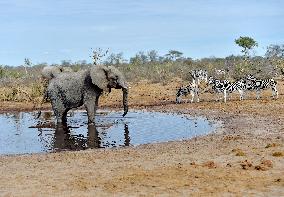
(240712) -- GABORONE, July 12, 2024 Photo by Xinhua/ABACAPRESS.COM) -- Elephants and zebras drink water at a damaged manhole pipeline near Phuduhudu village along the A3 highway in northwest Botswana on June 28, 2024. Botswana has spent 2.61 million pula (about 193,000 U.S. dollars) on repairing water pipelines damaged by elephants over the past five years, the country's water authority revealed Friday. (Photo by Tshekiso Tebalo/Xinhua/ABACAPRESS.COM

  •  
BOTSWANA-ELEPHANT-PIPELINE-DAMAGE

BOTSWANA-ELEPHANT-PIPELINE-DAMAGE

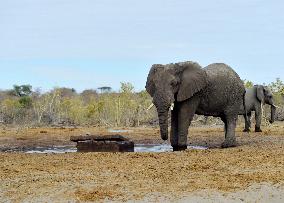
(240712) -- GABORONE, July 12, 2024 Photo by Xinhua/ABACAPRESS.COM) -- Elephants drink water at a damaged manhole pipeline near Phuduhudu village along the A3 highway in northwest Botswana on June 28, 2024. Botswana has spent 2.61 million pula (about 193,000 U.S. dollars) on repairing water pipelines damaged by elephants over the past five years, the country's water authority revealed Friday. (Photo by Tshekiso Tebalo/Xinhua/ABACAPRESS.COM

  •  

Data center in China's Hunan utilizes cold lake water for cooling

STORY: Data center in China's Hunan utilizes cold lake water for cooling SHOOTING TIME: recent DATELINE: June 27, 2024 LENGTH: 00:00:57 LOCATION: CHANGSHA, China CATEGORY: TECHNOLOGY SHOTLIST: 1. various of the Dongjiang Lake 2. various of the Dongjiang Lake big data center 3. SOUNDBITE 1 (Chinese): LEI JIANJUN, Chairman of Hunan Cloudnest Information Technology Co., Ltd. 4. SOUNDBITE 2 (Chinese): LIU MOPING, Deputy director of the local environmental protection bureau STORYLINE: In Zixing City, China's Hunan Province, the Dongjiang Lake big data center hosts over 36,000 servers from the country's top information platforms. To maintain optimal temperatures and prevent malfunctions, the servers are cooled using cold water from Dongjiang Lake, located a few kilometers away. SOUNDBITE 1 (Chinese): LEI JIANJUN, Chairman of Hunan Cloudnest Information Technology Co., Ltd. "After pumping up the lake water, we use plate heat exchangers and pipelines to bring the cold air carried by the pumped cold water to coo

  •  

Qatar offshore oil, gas project under construction by Chinese company

STORY: Qatar offshore oil, gas project under construction by Chinese company SHOOTING TIME: June 26, 2024 DATELINE: June 26, 2024 LENGTH: 00:00:57 LOCATION: TIANJIN/QINGDAO, China CATEGORY: ECONOMY SHOTLIST: 1. various of the project STORYLINE: The Qatar ISND 5-2 project, undertaken by China's Offshore Oil Engineering Co., Ltd. (COOEC), commenced construction at a manufacturing base in Qingdao, east China's Shandong Province on Wednesday. The project includes the design, procurement, construction, transportation, installation, commissioning, and modification of on-duty platform facilities for three jacket platforms weighing approximately 1,300 tonnes each, nine sub-sea pipelines, five umbilical cables, four sub-sea modules, and the transportation of equipment and materials to the project site. This marks a new milestone in China's offshore EPC (engineering, procurement and construction) capabilities and has significant implications for high-quality oil and gas cooperation under the Belt and Road Initiat

  •  
CHINA-JIANGSU-LIANYUNGANG-HEQI NO. 1 PROJECT-OPERATION (CN)

CHINA-JIANGSU-LIANYUNGANG-HEQI NO. 1 PROJECT-OPERATION (CN)

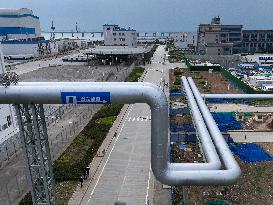
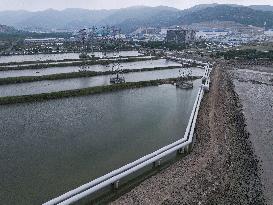
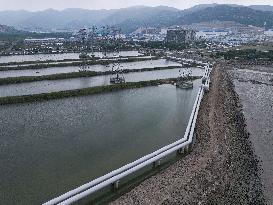
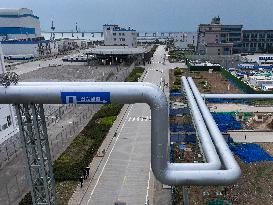
(240619) -- NANJING, June 19, 2024 Photo by Xinhua/ABACAPRESS.COM) -- A drone photo taken on June 19, 2024 shows Heqi No. 1 project's pipelines in the Tianwan Nuclear Power Station in Lianyungang City, east China's Jiangsu Province. China has successfully completed a project aimed at transporting steam generated by a nuclear power station to a petrochemical base. The project is designed to help reduce carbon emissions and explore collaborative energy utilization in nuclear and traditional industries. TO GO WITH "China Focus: China explores applications of nuclear energy in reducing carbon emissions in petrochemical industry" Photo by Xinhua/ABACAPRESS.COM/Li Bo)

  •  
CHINA-JIANGSU-LIANYUNGANG-HEQI NO. 1 PROJECT-OPERATION (CN)

CHINA-JIANGSU-LIANYUNGANG-HEQI NO. 1 PROJECT-OPERATION (CN)

(240619) -- NANJING, June 19, 2024 Photo by Xinhua/ABACAPRESS.COM) -- A drone photo taken on June 19, 2024 shows Heqi No. 1 project's pipelines in the Tianwan Nuclear Power Station in Lianyungang City, east China's Jiangsu Province. China has successfully completed a project aimed at transporting steam generated by a nuclear power station to a petrochemical base. The project is designed to help reduce carbon emissions and explore collaborative energy utilization in nuclear and traditional industries. TO GO WITH "China Focus: China explores applications of nuclear energy in reducing carbon emissions in petrochemical industry" Photo by Xinhua/ABACAPRESS.COM/Li Bo)

  •  
CHINA-JIANGSU-LIANYUNGANG-HEQI NO. 1 PROJECT-OPERATION (CN)

CHINA-JIANGSU-LIANYUNGANG-HEQI NO. 1 PROJECT-OPERATION (CN)

(240619) -- NANJING, June 19, 2024 (Xinhua) -- A drone photo taken on June 19, 2024 shows Heqi No. 1 project's pipelines in the Tianwan Nuclear Power Station in Lianyungang City, east China's Jiangsu Province. China has successfully completed a project aimed at transporting steam generated by a nuclear power station to a petrochemical base. The project is designed to help reduce carbon emissions and explore collaborative energy utilization in nuclear and traditional industries. TO GO WITH "China Focus: China explores applications of nuclear energy in reducing carbon emissions in petrochemical industry" (Xinhua/Li Bo)

  •  
CHINA-JIANGSU-LIANYUNGANG-HEQI NO. 1 PROJECT-OPERATION (CN)

CHINA-JIANGSU-LIANYUNGANG-HEQI NO. 1 PROJECT-OPERATION (CN)

(240619) -- NANJING, June 19, 2024 (Xinhua) -- A drone photo taken on June 19, 2024 shows Heqi No. 1 project's pipelines in the Tianwan Nuclear Power Station in Lianyungang City, east China's Jiangsu Province. China has successfully completed a project aimed at transporting steam generated by a nuclear power station to a petrochemical base. The project is designed to help reduce carbon emissions and explore collaborative energy utilization in nuclear and traditional industries. TO GO WITH "China Focus: China explores applications of nuclear energy in reducing carbon emissions in petrochemical industry" (Xinhua/Li Bo)

  •  

Optimized irrigation methods aid spring farming in China's Jilin

STORY: Optimized irrigation methods aid spring farming in China's Jilin SHOOTING TIME: Recent footage DATELINE: May 14, 2024 LENGTH: 0:01:27 LOCATION: CHANGCHUN, China CATEGORY: AGRICULTURE SHOTLIST: 1. various of the farmland 2. SOUNDBITE (Chinese): CHEN YONGXIANG, Deputy Party chief of Liushui Village STORYLINE: Located on the Songnen Plain covered with fertile black soil, Changling County in northeast China's Jilin Province is dubbed one of the major grain-producing counties in China. More advanced and optimized irrigation and cultivation methods, such as fertigation and dense planting, have been applied to assist spring farming and increase grain output. In Liushui Village, Changling County, shallow-buried drip irrigation pipelines were installed to ensure a sufficient supply of water and fertilizer for crops. SOUNDBITE (Chinese): CHEN YONGXIANG, Deputy Party chief of Liushui Village "In the past, we sprayed the fertilizer directly in the fields. However, the fertilizer might evaporate as the seedli

  •  

Sweden closes Nord Stream gas pipeline investigation without result

STORY: Sweden closes Nord Stream gas pipeline investigation without result SHOOTING TIME: File DATELINE: Feb. 8, 2024 LENGTH: 00:02:43 LOCATION: Stockholm CATEGORY: POLITICS SHOTLIST: 1. press release of Swedish Prosecution Authority (courtesy of the Swedish prosecution authority) 2. various of the leak of Nord Stream pipelines (courtesy of the Swedish Coast Guard) 3. various of the Sweden Parliament House 4. various of a power plant in Stockholm 5. various of a harbor in Stockholm 6. various of the traffic flow in Stockholm STORYLINE: The Swedish Prosecution Authority announced on Wednesday that its investigation into the Nord Stream gas pipeline explosions is closed, with no culprit found. "The investigation into gross sabotage against the gas pipelines Nord Stream 1 and 2 is closed," the Swedish Public Prosecution Authority announced in a press release, adding that "the conclusion of the investigation is that Swedish jurisdiction does not apply." "A large number of ship movements have been analyzed ..

  •  
Cnooc "Deep Sea One" Completed

Cnooc "Deep Sea One" Completed

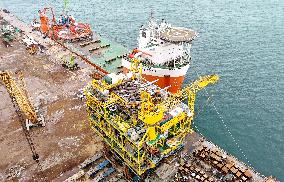
QINGDAO, CHINA - FEBRUARY 1, 2024 - The land construction of the integrated treatment platform of the second phase of the Deep-sea One project is completed in the West Coast New Area of Qingdao, in Qingdao, Shandong province, China, February 1, 2024. According to reports, the platform applies 7 megawatt gas turbine generator sets and other sets of domestic equipment with completely independent intellectual property rights, equipped with the largest domestic offshore platform slug flow catcher designed by CNOOC, which is used to eliminate the risk of liquid level fluctuations and blockage of oil and gas mixed transport pipelines, and ensure the reliable operation of oil and gas treatment equipment. The deep-sea No. 1 ultra-deep water gas field, which was put into operation in June 2021, has proven geological reserves of over 100 billion cubic meters, with a maximum water depth of more than 1,500 meters and a maximum well depth of more than 4,000 meters, making it the deepest and most difficult offshore ultra-d

  • Main
  • Top
  • Editorial
  • Creative
  • About Us
  • About ILG
  • Terms of use
  • Company
  • BEHIND
  • Price List
  • Single Plan
  • Monthly Plan
  • Services
  • Shooting
  • Rights Clearance
  • Support
  • FAQ
  • How To Buy
  • Contact Us
  • Become a Partner

© KYODO NEWS IMAGES INC

All Rights Reserved.

  • Editorial
  • Olympics
  • News
  • Sports
  • Japan
  • Tech
  • Royal
  • Disaster
  • NorthKorea
  • Old Japan
  • SNS
  • Creative
  • Food
  • Japan
  • Landscape
  • Animal
  • Popular
  • #Ukraine
  • #Russia
  • #coronavirus
  • #N. Korea
  • #Thailand
  • #China
  • #Ukraine
  • #Russia
  • #coronavirus
  • #N. Korea
  • #Thailand
  • #China
  • Food
  • Japan
  • Landscape
  • Animal
  • Olympics
  • News
  • Sports
  • Japan
  • Tech
  • Royal
  • Disaster
  • NorthKorea
  • Old Japan
  • SNS