•  
Pope Leo XIV Meets Participants in the ‘Living Nativity’ - Vatican

Pope Leo XIV Meets Participants in the ‘Living Nativity’ - Vatican

Pope Leo XIV welcomes about 1,000 participants in the ‘Living Nativity’ at the Vatican on December 13, 2025. After their meeting with the Pope, the group processed to the Basilica of St. Mary Major in downtown Rome and celebrated Holy Mass. The Basilica of St. Mary Major is also known as the ‘Bethlehem of the West’ as the Holy Crib is preserved there. Photo by (EV) Simone Risoluti/ Vatican Media/ ABACAPRESS.COM

  •  
Pope Leo XIV Meets Participants in the ‘Living Nativity’ - Vatican

Pope Leo XIV Meets Participants in the ‘Living Nativity’ - Vatican

Pope Leo XIV welcomes about 1,000 participants in the ‘Living Nativity’ at the Vatican on December 13, 2025. After their meeting with the Pope, the group processed to the Basilica of St. Mary Major in downtown Rome and celebrated Holy Mass. The Basilica of St. Mary Major is also known as the ‘Bethlehem of the West’ as the Holy Crib is preserved there. Photo by (EV) Simone Risoluti/ Vatican Media/ ABACAPRESS.COM

  •  
Pope Leo XIV Meets Participants in the ‘Living Nativity’ - Vatican

Pope Leo XIV Meets Participants in the ‘Living Nativity’ - Vatican

Pope Leo XIV welcomes about 1,000 participants in the ‘Living Nativity’ at the Vatican on December 13, 2025. After their meeting with the Pope, the group processed to the Basilica of St. Mary Major in downtown Rome and celebrated Holy Mass. The Basilica of St. Mary Major is also known as the ‘Bethlehem of the West’ as the Holy Crib is preserved there. Photo by (EV) Simone Risoluti/ Vatican Media/ ABACAPRESS.COM

  •  
Pope Leo XIV Meets Participants in the ‘Living Nativity’ - Vatican

Pope Leo XIV Meets Participants in the ‘Living Nativity’ - Vatican

Pope Leo XIV welcomes about 1,000 participants in the ‘Living Nativity’ at the Vatican on December 13, 2025. After their meeting with the Pope, the group processed to the Basilica of St. Mary Major in downtown Rome and celebrated Holy Mass. The Basilica of St. Mary Major is also known as the ‘Bethlehem of the West’ as the Holy Crib is preserved there. Photo by (EV) Simone Risoluti/ Vatican Media/ ABACAPRESS.COM

  •  
Pope Leo XIV Meets Participants in the ‘Living Nativity’ - Vatican

Pope Leo XIV Meets Participants in the ‘Living Nativity’ - Vatican

Pope Leo XIV welcomes about 1,000 participants in the ‘Living Nativity’ at the Vatican on December 13, 2025. Right: Edgard Ivan Rimaycuna Inga, Pope’s private secretary. After their meeting with the Pope, the group processed to the Basilica of St. Mary Major in downtown Rome and celebrated Holy Mass. The Basilica of St. Mary Major is also known as the ‘Bethlehem of the West’ as the Holy Crib is preserved there. Photo by (EV) Matteo Pernaselci/ Vatican Media/ ABACAPRESS.COM

  •  
Pope Leo XIV Meets Participants in the ‘Living Nativity’ - Vatican

Pope Leo XIV Meets Participants in the ‘Living Nativity’ - Vatican

Pope Leo XIV welcomes about 1,000 participants in the ‘Living Nativity’ at the Vatican on December 13, 2025. After their meeting with the Pope, the group processed to the Basilica of St. Mary Major in downtown Rome and celebrated Holy Mass. The Basilica of St. Mary Major is also known as the ‘Bethlehem of the West’ as the Holy Crib is preserved there. Photo by (EV) Simone Risoluti/ Vatican Media/ ABACAPRESS.COM

  •  
Drinking Water Crisis in Bangladesh

Drinking Water Crisis in Bangladesh

An aged locals showing the Rain water he preserved from drinking in the Bakalia area of Chattogram city. Most local tube-wells are saline or iron-contaminated, For drinking water, people rely on limited rainwater and private motor pumps. on November 6, 2025 in Chattogram, Bangladesh. Photo by Md Rafayat Haque Khan/ Eyepix Group/ABACAPRESS.COM

  •  
Heicheng ruins in Inner Mongolia

Heicheng ruins in Inner Mongolia

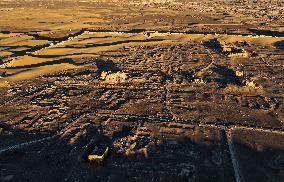
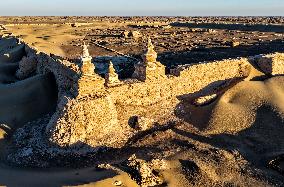
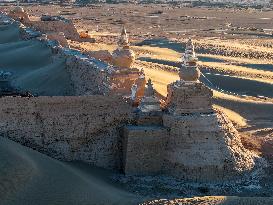
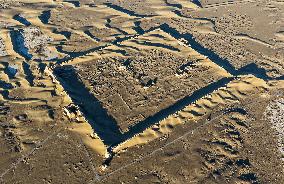
An aerial drone photo taken on Oct. 29, 2025 shows a view of the Heicheng ruins in Ejina Banner of Alxa League, north China's Inner Mongolia Autonomous Region. The Heicheng ruins, built in the ninth century, was the largest and best preserved ancient city on the Silk Road. Photo by Lian Zhen/Xinhua/ABACAPRESS.COM

  •  
Heicheng ruins in Inner Mongolia

Heicheng ruins in Inner Mongolia

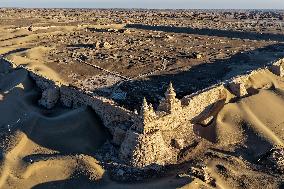
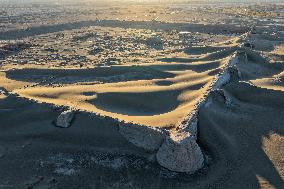
An aerial drone photo taken on Oct. 29, 2025 shows a view of the Heicheng ruins in Ejina Banner of Alxa League, north China's Inner Mongolia Autonomous Region. The Heicheng ruins, built in the ninth century, was the largest and best preserved ancient city on the Silk Road. Photo by Lian Zhen/Xinhua/ABACAPRESS.COM

  •  
Heicheng ruins in Inner Mongolia

Heicheng ruins in Inner Mongolia

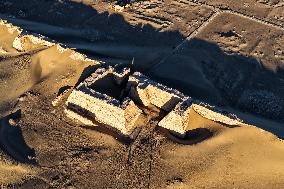
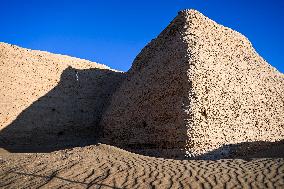
An aerial drone photo taken on Oct. 29, 2025 shows a view of the Heicheng ruins in Ejina Banner of Alxa League, north China's Inner Mongolia Autonomous Region. The Heicheng ruins, built in the ninth century, was the largest and best preserved ancient city on the Silk Road. Photo by Lian Zhen/Xinhua/ABACAPRESS.COM

  •  
Heicheng ruins in Inner Mongolia

Heicheng ruins in Inner Mongolia

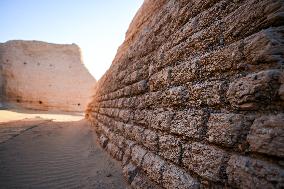
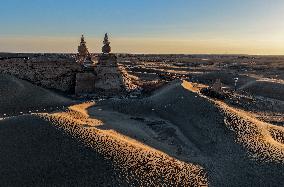
An aerial drone photo taken on Oct. 29, 2025 shows a view of the Heicheng ruins in Ejina Banner of Alxa League, north China's Inner Mongolia Autonomous Region. The Heicheng ruins, built in the ninth century, was the largest and best preserved ancient city on the Silk Road. Photo by Lian Zhen/Xinhua/ABACAPRESS.COM

  •  
Heicheng ruins in Inner Mongolia

Heicheng ruins in Inner Mongolia

An aerial drone photo taken on Oct. 29, 2025 shows a view of the Heicheng ruins in Ejina Banner of Alxa League, north China's Inner Mongolia Autonomous Region. The Heicheng ruins, built in the ninth century, was the largest and best preserved ancient city on the Silk Road. Photo by Lian Zhen/Xinhua/ABACAPRESS.COM

  •  
Heicheng ruins in Inner Mongolia

Heicheng ruins in Inner Mongolia

An aerial drone photo taken on Oct. 29, 2025 shows a view of the Heicheng ruins in Ejina Banner of Alxa League, north China's Inner Mongolia Autonomous Region. The Heicheng ruins, built in the ninth century, was the largest and best preserved ancient city on the Silk Road. Photo by Lian Zhen/Xinhua/ABACAPRESS.COM

  •  
Heicheng ruins in Inner Mongolia

Heicheng ruins in Inner Mongolia

An aerial drone photo taken on Oct. 29, 2025 shows a view of the Heicheng ruins in Ejina Banner of Alxa League, north China's Inner Mongolia Autonomous Region. The Heicheng ruins, built in the ninth century, was the largest and best preserved ancient city on the Silk Road. Photo by Lian Zhen/Xinhua/ABACAPRESS.COM

  •  
Heicheng ruins in Inner Mongolia

Heicheng ruins in Inner Mongolia

An aerial drone photo taken on Oct. 29, 2025 shows a view of the Heicheng ruins in Ejina Banner of Alxa League, north China's Inner Mongolia Autonomous Region. The Heicheng ruins, built in the ninth century, was the largest and best preserved ancient city on the Silk Road. Photo by Lian Zhen/Xinhua/ABACAPRESS.COM

  •  
Heicheng ruins in Inner Mongolia

Heicheng ruins in Inner Mongolia

An aerial drone photo taken on Oct. 29, 2025 shows a view of the Heicheng ruins in Ejina Banner of Alxa League, north China's Inner Mongolia Autonomous Region. The Heicheng ruins, built in the ninth century, was the largest and best preserved ancient city on the Silk Road. Photo by Lian Zhen/Xinhua/ABACAPRESS.COM

  •  
Heicheng ruins in Inner Mongolia

Heicheng ruins in Inner Mongolia

An aerial drone photo taken on Oct. 29, 2025 shows a view of the Heicheng ruins in Ejina Banner of Alxa League, north China's Inner Mongolia Autonomous Region. The Heicheng ruins, built in the ninth century, was the largest and best preserved ancient city on the Silk Road. Photo by Lian Zhen/Xinhua/ABACAPRESS.COM

  •  
Urca Oil and Gas Production Field Development - Brazil

Urca Oil and Gas Production Field Development - Brazil

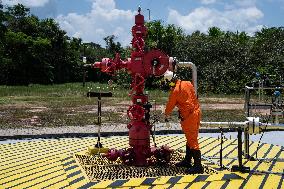
A worker operates an oil well at the Urucu Oil and Gas Production Field in the state of Amazonas, Brazil, on Oct. 16, 2025. The Urucu Oil and Gas Production Field, located in the heart of Brazil's Amazonas state, is one of the country's most important onshore oil and gas production bases. Surrounded by pristine rainforest, it has operated steadily since its start-up in 1988, supplying oil and natural gas that support energy needs across northern Brazil. According to its operator Petrobras, the field has preserved about 98 percent of its area as native forest, carries out rainwater recycling, waste recovery, and reforestation programs and plants more than 1.5 million native trees. Photo by Wang Tiancong/Xinhua/ABACAPRESS.COM

  •  
Urca Oil and Gas Production Field Development - Brazil

Urca Oil and Gas Production Field Development - Brazil

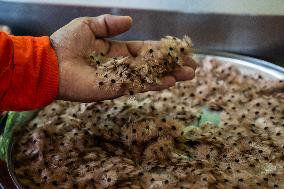
A worker checks the growth of seedlings at the ecological nursery of the Urucu Oil and Gas Production Field in the state of Amazonas, Brazil, on Oct. 17, 2025. The Urucu Oil and Gas Production Field, located in the heart of Brazil's Amazonas state, is one of the country's most important onshore oil and gas production bases. Surrounded by pristine rainforest, it has operated steadily since its start-up in 1988, supplying oil and natural gas that support energy needs across northern Brazil. According to its operator Petrobras, the field has preserved about 98 percent of its area as native forest, carries out rainwater recycling, waste recovery, and reforestation programs and plants more than 1.5 million native trees. Photo by Wang Tiancong/Xinhua/ABACAPRESS.COM

  •  
Urca Oil and Gas Production Field Development - Brazil

Urca Oil and Gas Production Field Development - Brazil

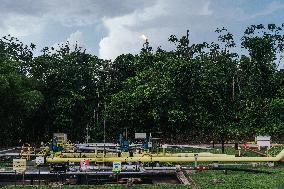
This photo taken on Oct. 17, 2025 shows pipelines stretching through the tropical rainforest at the Urucu Oil and Gas Production Field in the state of Amazonas, Brazil. The Urucu Oil and Gas Production Field, located in the heart of Brazil's Amazonas state, is one of the country's most important onshore oil and gas production bases. Surrounded by pristine rainforest, it has operated steadily since its start-up in 1988, supplying oil and natural gas that support energy needs across northern Brazil. According to its operator Petrobras, the field has preserved about 98 percent of its area as native forest, carries out rainwater recycling, waste recovery, and reforestation programs and plants more than 1.5 million native trees. Photo by Wang Tiancong/Xinhua/ABACAPRESS.COM

  •  
Urca Oil and Gas Production Field Development - Brazil

Urca Oil and Gas Production Field Development - Brazil

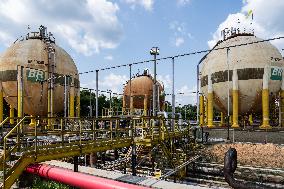
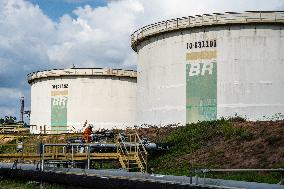
This photo taken on Oct. 16, 2025 shows liquefied petroleum gas storage tanks standing in the production area of the Urucu Oil and Gas Production Field in the state of Amazonas, Brazil. The Urucu Oil and Gas Production Field, located in the heart of Brazil's Amazonas state, is one of the country's most important onshore oil and gas production bases. Surrounded by pristine rainforest, it has operated steadily since its start-up in 1988, supplying oil and natural gas that support energy needs across northern Brazil. According to its operator Petrobras, the field has preserved about 98 percent of its area as native forest, carries out rainwater recycling, waste recovery, and reforestation programs and plants more than 1.5 million native trees. Photo by Wang Tiancong/Xinhua/ABACAPRESS.COM

  •  
Urca Oil and Gas Production Field Development - Brazil

Urca Oil and Gas Production Field Development - Brazil

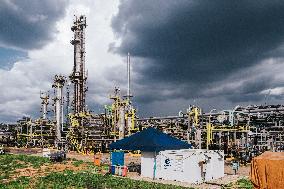
This photo taken on Oct. 16, 2025 shows the production facilities of the Urucu Oil and Gas Production Field in the state of Amazonas, Brazil. The Urucu Oil and Gas Production Field, located in the heart of Brazil's Amazonas state, is one of the country's most important onshore oil and gas production bases. Surrounded by pristine rainforest, it has operated steadily since its start-up in 1988, supplying oil and natural gas that support energy needs across northern Brazil. According to its operator Petrobras, the field has preserved about 98 percent of its area as native forest, carries out rainwater recycling, waste recovery, and reforestation programs and plants more than 1.5 million native trees. Photo by Wang Tiancong/Xinhua/ABACAPRESS.COM

  •  
Urca Oil and Gas Production Field Development - Brazil

Urca Oil and Gas Production Field Development - Brazil

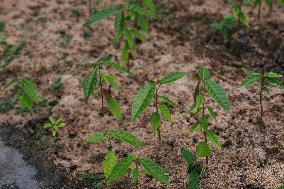
This photo taken on Oct. 17, 2025 shows artificially cultivated tropical rainforest plants in an ecological nursery at the Urucu Oil and Gas Production Field in the state of Amazonas, Brazil. The Urucu Oil and Gas Production Field, located in the heart of Brazil's Amazonas state, is one of the country's most important onshore oil and gas production bases. Surrounded by pristine rainforest, it has operated steadily since its start-up in 1988, supplying oil and natural gas that support energy needs across northern Brazil. According to its operator Petrobras, the field has preserved about 98 percent of its area as native forest, carries out rainwater recycling, waste recovery, and reforestation programs and plants more than 1.5 million native trees. Photo by Wang Tiancong/Xinhua/ABACAPRESS.COM

  •  
Urca Oil and Gas Production Field Development - Brazil

Urca Oil and Gas Production Field Development - Brazil

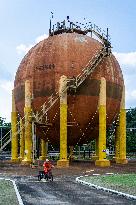
This photo taken on Oct. 16, 2025 shows a worker riding past liquefied petroleum gas storage tanks at the Urucu Oil and Gas Production Field in the state of Amazonas, Brazil. The Urucu Oil and Gas Production Field, located in the heart of Brazil's Amazonas state, is one of the country's most important onshore oil and gas production bases. Surrounded by pristine rainforest, it has operated steadily since its start-up in 1988, supplying oil and natural gas that support energy needs across northern Brazil. According to its operator Petrobras, the field has preserved about 98 percent of its area as native forest, carries out rainwater recycling, waste recovery, and reforestation programs and plants more than 1.5 million native trees. Photo by Wang Tiancong/Xinhua/ABACAPRESS.COM

  •  
Urca Oil and Gas Production Field Development - Brazil

Urca Oil and Gas Production Field Development - Brazil

This photo taken on Oct. 16, 2025 shows the production facilities of the Urucu Oil and Gas Production Field in the state of Amazonas, Brazil. The Urucu Oil and Gas Production Field, located in the heart of Brazil's Amazonas state, is one of the country's most important onshore oil and gas production bases. Surrounded by pristine rainforest, it has operated steadily since its start-up in 1988, supplying oil and natural gas that support energy needs across northern Brazil. According to its operator Petrobras, the field has preserved about 98 percent of its area as native forest, carries out rainwater recycling, waste recovery, and reforestation programs and plants more than 1.5 million native trees. Photo by Wang Tiancong/Xinhua/ABACAPRESS.COM

  •  
Urca Oil and Gas Production Field Development - Brazil

Urca Oil and Gas Production Field Development - Brazil

A worker examines seeds used for cultivating tropical rainforest vegetation at the Urucu Oil and Gas Production Field in the state of Amazonas, Brazil, Oct. 17, 2025. The Urucu Oil and Gas Production Field, located in the heart of Brazil's Amazonas state, is one of the country's most important onshore oil and gas production bases. Surrounded by pristine rainforest, it has operated steadily since its start-up in 1988, supplying oil and natural gas that support energy needs across northern Brazil. According to its operator Petrobras, the field has preserved about 98 percent of its area as native forest, carries out rainwater recycling, waste recovery, and reforestation programs and plants more than 1.5 million native trees. Photo by Wang Tiancong/Xinhua/ABACAPRESS.COM

  •  
Urca Oil and Gas Production Field Development - Brazil

Urca Oil and Gas Production Field Development - Brazil

A worker conducts a routine inspection at the Urucu Oil and Gas Production Field in the state of Amazonas, Brazil, on Oct. 16, 2025. The Urucu Oil and Gas Production Field, located in the heart of Brazil's Amazonas state, is one of the country's most important onshore oil and gas production bases. Surrounded by pristine rainforest, it has operated steadily since its start-up in 1988, supplying oil and natural gas that support energy needs across northern Brazil. According to its operator Petrobras, the field has preserved about 98 percent of its area as native forest, carries out rainwater recycling, waste recovery, and reforestation programs and plants more than 1.5 million native trees. Photo by Wang Tiancong/Xinhua/ABACAPRESS.COM

  •  
Urca Oil and Gas Production Field Development - Brazil

Urca Oil and Gas Production Field Development - Brazil

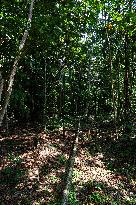
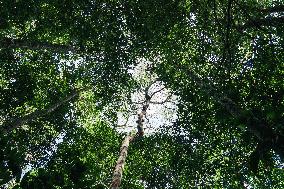
This photo taken on Oct. 17, 2025 shows tropical rainforest vegetation near the Urucu Oil and Gas Production Field, in the state of Amazonas, Brazil. The Urucu Oil and Gas Production Field, located in the heart of Brazil's Amazonas state, is one of the country's most important onshore oil and gas production bases. Surrounded by pristine rainforest, it has operated steadily since its start-up in 1988, supplying oil and natural gas that support energy needs across northern Brazil. According to its operator Petrobras, the field has preserved about 98 percent of its area as native forest, carries out rainwater recycling, waste recovery, and reforestation programs and plants more than 1.5 million native trees. Photo by Wang Tiancong/Xinhua/ABACAPRESS.COM

  •  
Plants Have Covered the City Walls with A Green Coat - China

Plants Have Covered the City Walls with A Green Coat - China

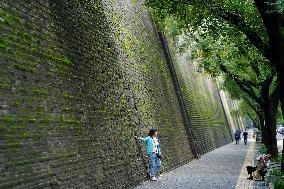
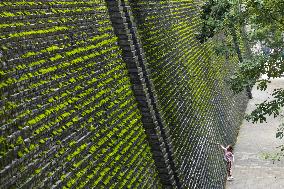
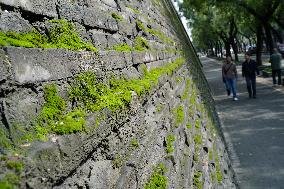
A woman poses for a photo with the city wall in the background in Xi'an, northwest China's Shaanxi Province, October 13, 2025. After the continuous autumn rain, moss and other plants have covered the city wall with a green coat, attracting people to watch and take photos. The 13.74-kilometer-long ancient city wall that surrounds Xi'an is one of the longest and best-preserved of its kind in China. Photo by Xinhua/Shao Rui/ABACAPRESS.COM

  •  
Plants Have Covered the City Walls with A Green Coat - China

Plants Have Covered the City Walls with A Green Coat - China

A woman poses for a photo with the city wall in the background in Xi'an, northwest China's Shaanxi Province, October 13, 2025. After the continuous autumn rain, moss and other plants have covered the city wall with a green coat, attracting people to watch and take photos. The 13.74-kilometer-long ancient city wall that surrounds Xi'an is one of the longest and best-preserved of its kind in China. Photo by Xinhua/Shao Rui/ABACAPRESS.COM

  •  
Plants Have Covered the City Walls with A Green Coat - China

Plants Have Covered the City Walls with A Green Coat - China

A woman poses for a photo with the city wall in the background in Xi'an, northwest China's Shaanxi Province, October 13, 2025. After the continuous autumn rain, moss and other plants have covered the city wall with a green coat, attracting people to watch and take photos. The 13.74-kilometer-long ancient city wall that surrounds Xi'an is one of the longest and best-preserved of its kind in China. Photo by Xinhua/Shao Rui/ABACAPRESS.COM

  •  
Plants Have Covered the City Walls with A Green Coat - China

Plants Have Covered the City Walls with A Green Coat - China

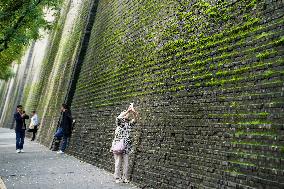
People take photos of the city wall in Xi'an, northwest China's Shaanxi Province, October 13, 2025. After the continuous autumn rain, moss and other plants have covered the city wall with a green coat, attracting people to watch and take photos. The 13.74-kilometer-long ancient city wall that surrounds Xi'an is one of the longest and best-preserved of its kind in China. Photo by Xinhua/Shao Rui/ABACAPRESS.COM

  •  
Plants Have Covered the City Walls with A Green Coat - China

Plants Have Covered the City Walls with A Green Coat - China

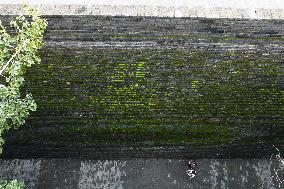
An aerial drone photo taken on October 13, 2025 shows people walking along the city wall in Xi'an, northwest China's Shaanxi Province. After the continuous autumn rain, moss and other plants have covered the city wall with a green coat, attracting people to watch and take photos. The 13.74-kilometer-long ancient city wall that surrounds Xi'an is one of the longest and best-preserved of its kind in China. Photo by Xinhua/Shao Rui/ABACAPRESS.COM

  •  
Plants Have Covered the City Walls with A Green Coat - China

Plants Have Covered the City Walls with A Green Coat - China

A man takes a photo of the moss on the city wall in Xi'an, northwest China's Shaanxi Province, October 13, 2025. After the continuous autumn rain, moss and other plants have covered the city wall with a green coat, attracting people to watch and take photos. The 13.74-kilometer-long ancient city wall that surrounds Xi'an is one of the longest and best-preserved of its kind in China. Photo by Xinhua/Shao Rui/ABACAPRESS.COM

  •  
Plants Have Covered the City Walls with A Green Coat - China

Plants Have Covered the City Walls with A Green Coat - China

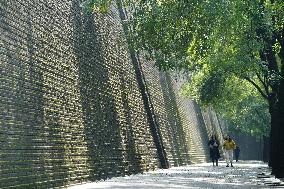
People walk along the city wall in Xi'an, northwest China's Shaanxi Province, October 13, 2025. After the continuous autumn rain, moss and other plants have covered the city wall with a green coat, attracting people to watch and take photos. The 13.74-kilometer-long ancient city wall that surrounds Xi'an is one of the longest and best-preserved of its kind in China. Photo by Xinhua/Shao Rui/ABACAPRESS.COM

  •  
Plants Have Covered the City Walls with A Green Coat - China

Plants Have Covered the City Walls with A Green Coat - China

A drone photo taken on October 13, 2025 shows a girl viewing the city wall in Xi'an, northwest China's Shaanxi Province. After the continuous autumn rain, moss and other plants have covered the city wall with a green coat, attracting people to watch and take photos. The 13.74-kilometer-long ancient city wall that surrounds Xi'an is one of the longest and best-preserved of its kind in China. Photo by Xinhua/Shao Rui/ABACAPRESS.COM

  •  
Plants Have Covered the City Walls with A Green Coat - China

Plants Have Covered the City Walls with A Green Coat - China

People walk along the city wall in Xi'an, northwest China's Shaanxi Province, October 13, 2025. After the continuous autumn rain, moss and other plants have covered the city wall with a green coat, attracting people to watch and take photos. The 13.74-kilometer-long ancient city wall that surrounds Xi'an is one of the longest and best-preserved of its kind in China. Photo by Xinhua/Shao Rui/ABACAPRESS.COM

  •  
Tuna Fishing in Barbate - Cadiz

Tuna Fishing in Barbate - Cadiz

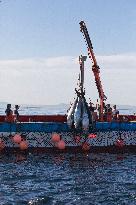
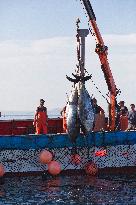
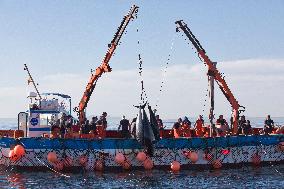
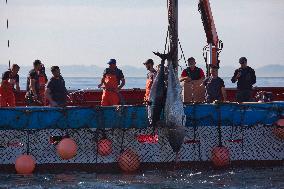
Several fishermen during the 'levantá' of tuna in the vicinity of Barbate, on May 27, 2025, in Barbate, Cadiz, Andalusia (Spain). The 'levantá' of Barbate is the culminating and most spectacular moment of traditional bluefin tuna fishing in the almadraba, an ancient art practiced every spring off the coast of Barbate (Cadiz). It consists of slowly raising the codend net, where the tuna have been trapped during their migration towards the Mediterranean, causing the large fish to emerge to the surface amidst flapping and foam, while the fishermen select and catch the largest specimens. Today, the technique has evolved: the divers sacrifice the tuna one by one with "luparas" (special poles), and the final lifting is done with cranes, although the ritual and collective nature of the process is preserved. Photo by Juanma Jiménez/Europa Press/ABACAPRESS.COM

  •  
Tuna Fishing in Barbate - Cadiz

Tuna Fishing in Barbate - Cadiz

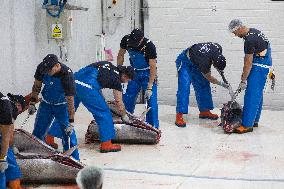
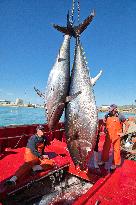
A man cuts up a tuna during the 'levantá' of tuna in the vicinity of Barbate, on May 27, 2025, in Barbate, Cadiz, Andalusia (Spain). The 'levantá' of Barbate is the culminating and most spectacular moment of the traditional fishing of bluefin tuna in the almadraba, an ancient art that is practiced every spring off the coast of Barbate (Cadiz). It consists of slowly raising the codend net, where the tuna have been trapped during their migration towards the Mediterranean, causing the large fish to emerge to the surface amidst flapping and foam, while the fishermen select and catch the largest specimens. Today, the technique has evolved: the divers sacrifice the tuna one by one with "luparas" (special poles), and the final lifting is done with cranes, although the ritual and collective nature of the process is preserved. Photo by Juanma Jiménez/Europa Press/ABACAPRESS.COM

  •  
Tuna Fishing in Barbate - Cadiz

Tuna Fishing in Barbate - Cadiz

Several fishermen during the 'levantá' of tuna in the vicinity of Barbate, on May 27, 2025, in Barbate, Cadiz, Andalusia (Spain). The 'levantá' of Barbate is the culminating and most spectacular moment of traditional bluefin tuna fishing in the almadraba, an ancient art practiced every spring off the coast of Barbate (Cadiz). It consists of slowly raising the codend net, where the tuna have been trapped during their migration towards the Mediterranean, causing the large fish to emerge to the surface amidst flapping and foam, while the fishermen select and catch the largest specimens. Today, the technique has evolved: the divers sacrifice the tuna one by one with "luparas" (special poles), and the final lifting is done with cranes, although the ritual and collective nature of the process is preserved. Photo by Juanma Jiménez/Europa Press/ABACAPRESS.COM

  •  
Tuna Fishing in Barbate - Cadiz

Tuna Fishing in Barbate - Cadiz

A man cuts up a tuna during the 'levantá' of tuna in the vicinity of Barbate, on May 27, 2025, in Barbate, Cadiz, Andalusia (Spain). The 'levantá' of Barbate is the culminating and most spectacular moment of the traditional fishing of bluefin tuna in the almadraba, an ancient art that is practiced every spring off the coast of Barbate (Cadiz). It consists of slowly raising the codend net, where the tuna have been trapped during their migration towards the Mediterranean, causing the large fish to emerge to the surface amidst flapping and foam, while the fishermen select and catch the largest specimens. Today, the technique has evolved: the divers sacrifice the tuna one by one with "luparas" (special poles), and the final lifting is done with cranes, although the ritual and collective nature of the process is preserved. Photo by Juanma Jiménez/Europa Press/ABACAPRESS.COM

  •  
Tuna Fishing in Barbate - Cadiz

Tuna Fishing in Barbate - Cadiz

Several fishermen during the 'levantá' of tuna in the vicinity of Barbate, on May 27, 2025, in Barbate, Cadiz, Andalusia (Spain). The 'levantá' of Barbate is the culminating and most spectacular moment of traditional bluefin tuna fishing in the almadraba, an ancient art practiced every spring off the coast of Barbate (Cadiz). It consists of slowly raising the codend net, where the tuna have been trapped during their migration towards the Mediterranean, causing the large fish to emerge to the surface amidst flapping and foam, while the fishermen select and catch the largest specimens. Today, the technique has evolved: the divers sacrifice the tuna one by one with "luparas" (special poles), and the final lifting is done with cranes, although the ritual and collective nature of the process is preserved. Photo by Juanma Jiménez/Europa Press/ABACAPRESS.COM

  •  
Tuna Fishing in Barbate - Cadiz

Tuna Fishing in Barbate - Cadiz

Several fishermen during the 'levantá' of tuna in the vicinity of Barbate, on May 27, 2025, in Barbate, Cadiz, Andalusia (Spain). The 'levantá' of Barbate is the culminating and most spectacular moment of traditional bluefin tuna fishing in the almadraba, an ancient art practiced every spring off the coast of Barbate (Cadiz). It consists of slowly raising the codend net, where the tuna have been trapped during their migration towards the Mediterranean, causing the large fish to emerge to the surface amidst flapping and foam, while the fishermen select and catch the largest specimens. Today, the technique has evolved: the divers sacrifice the tuna one by one with "luparas" (special poles), and the final lifting is done with cranes, although the ritual and collective nature of the process is preserved. Photo by Juanma Jiménez/Europa Press/ABACAPRESS.COM

  •  
Tuna Fishing in Barbate - Cadiz

Tuna Fishing in Barbate - Cadiz

Several fishermen during the 'levantá' of tuna in the vicinity of Barbate, on May 27, 2025, in Barbate, Cadiz, Andalusia (Spain). The 'levantá' of Barbate is the culminating and most spectacular moment of traditional bluefin tuna fishing in the almadraba, an ancient art practiced every spring off the coast of Barbate (Cadiz). It consists of slowly raising the codend net, where the tuna have been trapped during their migration towards the Mediterranean, causing the large fish to emerge to the surface amidst flapping and foam, while the fishermen select and catch the largest specimens. Today, the technique has evolved: the divers sacrifice the tuna one by one with "luparas" (special poles), and the final lifting is done with cranes, although the ritual and collective nature of the process is preserved. Photo by Juanma Jiménez/Europa Press/ABACAPRESS.COM

  •  
Tuna Fishing in Barbate - Cadiz

Tuna Fishing in Barbate - Cadiz

Several fishermen during the 'levantá' of tuna in the vicinity of Barbate, on May 27, 2025, in Barbate, Cadiz, Andalusia (Spain). The 'levantá' of Barbate is the culminating and most spectacular moment of traditional bluefin tuna fishing in the almadraba, an ancient art practiced every spring off the coast of Barbate (Cadiz). It consists of slowly raising the codend net, where the tuna have been trapped during their migration towards the Mediterranean, causing the large fish to emerge to the surface amidst flapping and foam, while the fishermen select and catch the largest specimens. Today, the technique has evolved: the divers sacrifice the tuna one by one with "luparas" (special poles), and the final lifting is done with cranes, although the ritual and collective nature of the process is preserved. Photo by Juanma Jiménez/Europa Press/ABACAPRESS.COM

  •  
Illustration - Cathar Castles

Illustration - Cathar Castles

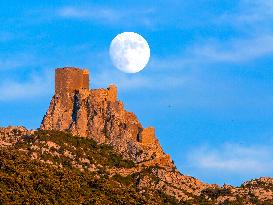
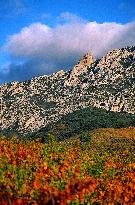
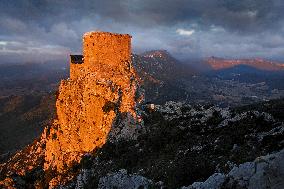
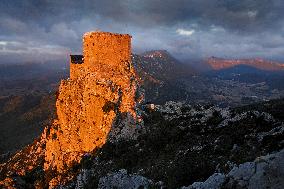
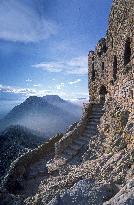
FRANCE. AUDE (11) CUCUGNAN.THE CASTLE OF QUERIBUS. RISING TO OVER 700 METRES ABOVE SEA LEVEL ON THE SOUTHERN CREST OF THE CORBIERES, THE CASTLE OF QUERIBUS IS THE BEST-PRESERVED OF THE CATHAR FORTRESSES. Photo by Paul Palau/Only France/ABACAPRESS.COM

  •  
Illustration - Cathar Castles

Illustration - Cathar Castles

FRANCE. AUDE (11) CUCUGNAN.THE CASTLE OF QUERIBUS. RISING TO OVER 700 METRES ABOVE SEA LEVEL ON THE SOUTHERN CREST OF THE CORBIERES, THE CASTLE OF QUERIBUS IS THE BEST-PRESERVED OF THE CATHAR FORTRESSES. Photo by Paul Palau/Only France/ABACAPRESS.COM

  •  
Illustration - Cathar Castles

Illustration - Cathar Castles

FRANCE. AUDE (11) CUCUGNAN.THE CASTLE OF QUERIBUS. RISING TO OVER 700 METRES ABOVE SEA LEVEL ON THE SOUTHERN CREST OF THE CORBIERES, THE CASTLE OF QUERIBUS IS THE BEST-PRESERVED OF THE CATHAR FORTRESSES. Photo by Paul Palau/Only France/ABACAPRESS.COM

  •  
Illustration - Cathar Castles

Illustration - Cathar Castles

FRANCE. AUDE (11) CUCUGNAN.THE CASTLE OF QUERIBUS. RISING TO OVER 700 METRES ABOVE SEA LEVEL ON THE SOUTHERN CREST OF THE CORBIERES, THE CASTLE OF QUERIBUS IS THE BEST-PRESERVED OF THE CATHAR FORTRESSES. Photo by Paul Palau/Only France/ABACAPRESS.COM

  •  
Illustration - Cathar Castles

Illustration - Cathar Castles

FRANCE. AUDE (11) CUCUGNAN.THE CASTLE OF QUERIBUS. RISING TO OVER 700 METRES ABOVE SEA LEVEL ON THE SOUTHERN CREST OF THE CORBIERES, THE CASTLE OF QUERIBUS IS THE BEST-PRESERVED OF THE CATHAR FORTRESSES. Photo by Paul Palau/Only France/ABACAPRESS.COM

  • Main
  • Top
  • Editorial
  • Creative
  • About Us
  • About ILG
  • Terms of use
  • Company
  • BEHIND
  • Price List
  • Single Plan
  • Monthly Plan
  • Services
  • Shooting
  • Rights Clearance
  • Support
  • FAQ
  • How To Buy
  • Contact Us
  • Become a Partner

© KYODO NEWS IMAGES INC

All Rights Reserved.

  • Editorial
  • Olympics
  • News
  • Sports
  • Japan
  • Tech
  • Royal
  • Disaster
  • NorthKorea
  • Old Japan
  • SNS
  • Creative
  • Food
  • Japan
  • Landscape
  • Animal
  • Popular
  • #Ukraine
  • #Thailand
  • #coronavirus
  • #N. Korea
  • #China
  • #Russia
  • #Ukraine
  • #Thailand
  • #coronavirus
  • #N. Korea
  • #China
  • #Russia
  • Food
  • Japan
  • Landscape
  • Animal
  • Olympics
  • News
  • Sports
  • Japan
  • Tech
  • Royal
  • Disaster
  • NorthKorea
  • Old Japan
  • SNS