•  
Production of Paper Mache Christmas Ornaments - India

Production of Paper Mache Christmas Ornaments - India

On December 18,2025 papier-mâché artists in Srinagar ,Jammu and Kashmir create Christmas decorations as the holiday season approaches. However, the industry faces fresh hurdles after the US increases import duties. Artisans fear that the higher tariffs will decrease demand for their products, particularly Christmas ornaments, which make up a large part of exports. Kashmir’s papier-mâché items are sent to markets in the US, Europe, Australia, and the UAE. Exporters warn that these higher costs could harm both sales and the livelihoods of local artisans.(Photo by Danish Showkat/Eyepix group)

  •  
HIECO 2025 AI Innovation Conference

HIECO 2025 AI Innovation Conference

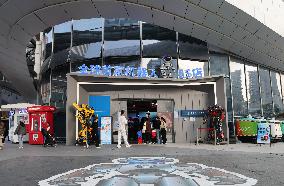
A viewer watches server manufacturers' products at the HIECO 2025 AI Innovation Conference in Suzhou, Jiangsu Province, China on December 17, 2025.

  •  
HIECO 2025 AI Innovation Conference

HIECO 2025 AI Innovation Conference

A viewer is experiencing IoT thermal sensing products at the HIECO 2025 AI Innovation Conference in Suzhou, Jiangsu Province, China on December 17, 2025.

  •  
HIECO 2025 AI Innovation Conference

HIECO 2025 AI Innovation Conference

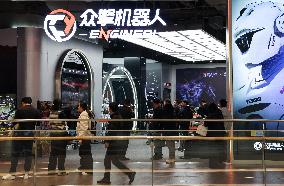
Audiences are watching computing engine products at the HIECO 2025 AI Innovation Conference in Suzhou, Jiangsu Province, China on December 17, 2025.

  •  
HIECO 2025 AI Innovation Conference

HIECO 2025 AI Innovation Conference

Audiences are watching the products of high-voltage DC distribution units at the HIECO 2025 AI Innovation Conference in Suzhou, Jiangsu Province, China on December 17, 2025.

  •  
HIECO 2025 AI Innovation Conference

HIECO 2025 AI Innovation Conference

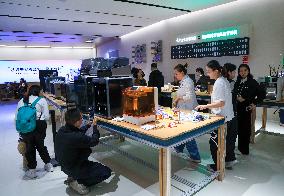
Audiences are watching AI server products at the HIECO 2025 AI Innovation Conference in Suzhou, Jiangsu Province, China on December 17, 2025.

  •  
HIECO 2025 AI Innovation Conference

HIECO 2025 AI Innovation Conference

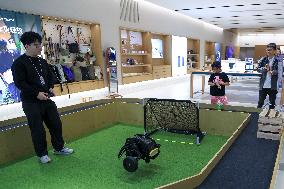
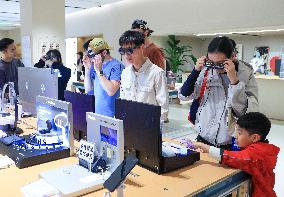
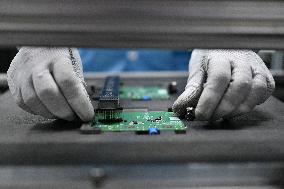
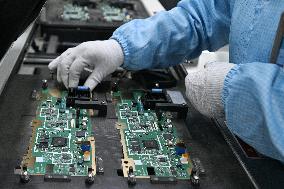
A viewer is testing embedded products from server vendors at the HIECO 2025 AI Innovation Conference in Suzhou, Jiangsu Province, China on December 17, 2025.

  •  
HIECO 2025 AI Innovation Conference

HIECO 2025 AI Innovation Conference

A viewer is testing embedded products from server vendors at the HIECO 2025 AI Innovation Conference in Suzhou, Jiangsu Province, China on December 17, 2025.

  •  
HIECO 2025 AI Innovation Conference

HIECO 2025 AI Innovation Conference

Audiences are watching computing engine products at the HIECO 2025 AI Innovation Conference in Suzhou, Jiangsu Province, China on December 17, 2025.

  •  
China Manufacturing Industry

China Manufacturing Industry

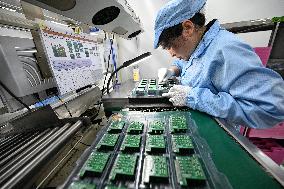
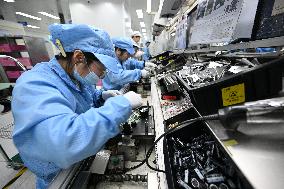
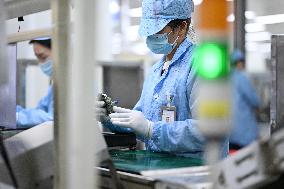
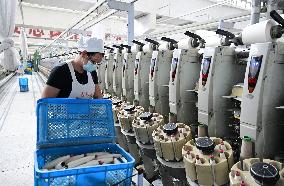
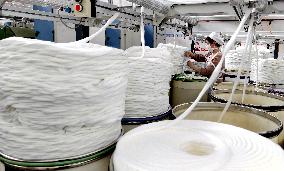
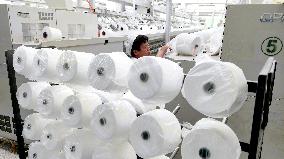
A worker is processing tablecloth products in the workshop in Zouping City, Shandong Province, China on December 16, 2025.

  •  
China Manufacturing Industry

China Manufacturing Industry

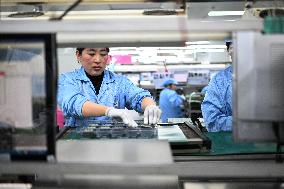
A worker is processing curtain products for export in the workshop in Zouping City, Shandong Province, China on December 16, 2025.

  •  
China Manufacturing Industry

China Manufacturing Industry

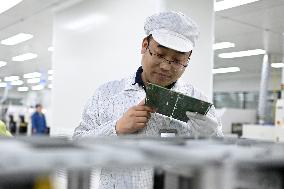
A worker is processing tablecloth products in the workshop in Zouping City, Shandong Province, China on December 16, 2025.

  •  
China Manufacturing Industry

China Manufacturing Industry

A worker is processing tablecloth products in the workshop in Zouping City, Shandong Province, China on December 16, 2025.

  •  
Steel Export License

Steel Export License

YICHANG, CHINA - DECEMBER 13, 2025 - Steel products piled up in the steel market in Yichang, Hubei, China on December 13, 2025.

  •  
Steel Export License

Steel Export License

YICHANG, CHINA - DECEMBER 13, 2025 - Steel products piled up in the steel market in Yichang, Hubei, China on December 13, 2025.

  •  
Steel Export License

Steel Export License

YICHANG, CHINA - DECEMBER 13, 2025 - Workers stack steel products in the steel market, Yichang, Hubei, China, on December 13, 2025.

  •  
Steel Export License

Steel Export License

YICHANG, CHINA - DECEMBER 13, 2025 - Workers stack steel products in the steel market, Yichang, Hubei, China, on December 13, 2025.

  •  
Steel Export License

Steel Export License

YICHANG, CHINA - DECEMBER 13, 2025 - Workers stack steel products in the steel market, Yichang, Hubei, China, on December 13, 2025.

  •  
Steel Export License

Steel Export License

YICHANG, CHINA - DECEMBER 13, 2025 - Steel products piled up in the steel market in Yichang, Hubei, China on December 13, 2025.

  •  
China-Europe Freight Trains

China-Europe Freight Trains

A drone photo taken on December 9, 2025 shows a China-Europe freight train preparing to depart from the Tongjiang north railway station in Tongjiang, northeast China's Heilongjiang Province. As a China-Europe freight train composed of 60 carriages and loaded with home appliances and digital products departed from the Manzhouli railway port in north China's Inner Mongolia Autonomous Region, the "eastern corridor" of the China-Europe freight train network this year has witnessed 5,166 trains operating on its railway lines. The "eastern corridor" consists of three railway ports including Manzhouli, Suifenhe and Tongjiang. Currently, the categories of goods transported by the trains have increased to more than 1,000 types. The number of operating routes has expanded to 27, linking over 60 Chinese cities with 14 European countries. (Photo by Wu Yunan/Xinhua/ABACAPRESS.COM

  •  
China-Europe Freight Trains

China-Europe Freight Trains

A drone photo taken on December 10, 2025 shows a crane working at Suifenhe railway station in Suifenhe, northeast China's Heilongjiang Province. As a China-Europe freight train composed of 60 carriages and loaded with home appliances and digital products departed from the Manzhouli railway port in north China's Inner Mongolia Autonomous Region, the "eastern corridor" of the China-Europe freight train network this year has witnessed 5,166 trains operating on its railway lines. The "eastern corridor" consists of three railway ports including Manzhouli, Suifenhe and Tongjiang. Currently, the categories of goods transported by the trains have increased to more than 1,000 types. The number of operating routes has expanded to 27, linking over 60 Chinese cities with 14 European countries. (Photo by Qu Yiwei/Xinhua/ABACAPRESS.COM

  •  
China-Europe Freight Trains

China-Europe Freight Trains

A drone photo taken on December 10, 2025 shows cranes working at Suifenhe railway station in Suifenhe, northeast China's Heilongjiang Province. As a China-Europe freight train composed of 60 carriages and loaded with home appliances and digital products departed from the Manzhouli railway port in north China's Inner Mongolia Autonomous Region, the "eastern corridor" of the China-Europe freight train network this year has witnessed 5,166 trains operating on its railway lines. The "eastern corridor" consists of three railway ports including Manzhouli, Suifenhe and Tongjiang. Currently, the categories of goods transported by the trains have increased to more than 1,000 types. The number of operating routes has expanded to 27, linking over 60 Chinese cities with 14 European countries. (Photo by Qu Yiwei/Xinhua/ABACAPRESS.COM

  •  
China-Europe Freight Trains

China-Europe Freight Trains

A drone photo taken on December 8, 2025 shows cranes working at the transshipment yard of Tongjiang north railway station in Tongjiang, northeast China's Heilongjiang Province. As a China-Europe freight train composed of 60 carriages and loaded with home appliances and digital products departed from the Manzhouli railway port in north China's Inner Mongolia Autonomous Region, the "eastern corridor" of the China-Europe freight train network this year has witnessed 5,166 trains operating on its railway lines. The "eastern corridor" consists of three railway ports including Manzhouli, Suifenhe and Tongjiang. Currently, the categories of goods transported by the trains have increased to more than 1,000 types. The number of operating routes has expanded to 27, linking over 60 Chinese cities with 14 European countries. (Photo by Wu Yunan/Xinhua/ABACAPRESS.COM

  •  
China-Europe Freight Trains

China-Europe Freight Trains

A drone photo taken on December 10, 2025 shows China-Europe freight trains preparing to depart from the Manzhouli railway station in Manzhouli, north China's Inner Mongolia Autonomous Region. As a China-Europe freight train composed of 60 carriages and loaded with home appliances and digital products departed from the Manzhouli railway port in north China's Inner Mongolia Autonomous Region, the "eastern corridor" of the China-Europe freight train network this year has witnessed 5,166 trains operating on its railway lines. The "eastern corridor" consists of three railway ports including Manzhouli, Suifenhe and Tongjiang. Currently, the categories of goods transported by the trains have increased to more than 1,000 types. The number of operating routes has expanded to 27, linking over 60 Chinese cities with 14 European countries. (Photo by Huang Xu/Xinhua/ABACAPRESS.COM

  •  
China-Europe Freight Trains

China-Europe Freight Trains

A drone photo taken on December 10, 2025 shows China-Europe freight trains preparing to depart from the Manzhouli railway station in Manzhouli, north China's Inner Mongolia Autonomous Region. As a China-Europe freight train composed of 60 carriages and loaded with home appliances and digital products departed from the Manzhouli railway port in north China's Inner Mongolia Autonomous Region, the "eastern corridor" of the China-Europe freight train network this year has witnessed 5,166 trains operating on its railway lines. The "eastern corridor" consists of three railway ports including Manzhouli, Suifenhe and Tongjiang. Currently, the categories of goods transported by the trains have increased to more than 1,000 types. The number of operating routes has expanded to 27, linking over 60 Chinese cities with 14 European countries. (Photo by Huang Xu/Xinhua/ABACAPRESS.COM

  •  
China-Europe Freight Trains

China-Europe Freight Trains

A drone photo taken on December 10, 2025 shows China-Europe freight trains preparing to depart from the Manzhouli railway station in Manzhouli, north China's Inner Mongolia Autonomous Region. As a China-Europe freight train composed of 60 carriages and loaded with home appliances and digital products departed from the Manzhouli railway port in north China's Inner Mongolia Autonomous Region, the "eastern corridor" of the China-Europe freight train network this year has witnessed 5,166 trains operating on its railway lines. The "eastern corridor" consists of three railway ports including Manzhouli, Suifenhe and Tongjiang. Currently, the categories of goods transported by the trains have increased to more than 1,000 types. The number of operating routes has expanded to 27, linking over 60 Chinese cities with 14 European countries. (Photo by Huang Xu/Xinhua/ABACAPRESS.COM

  •  
China-Europe Freight Trains

China-Europe Freight Trains

A drone photo taken on December 9, 2025 shows a China-Europe freight train departing from the transshipment yard of Tongjiang north railway station in Tongjiang, northeast China's Heilongjiang Province. As a China-Europe freight train composed of 60 carriages and loaded with home appliances and digital products departed from the Manzhouli railway port in north China's Inner Mongolia Autonomous Region, the "eastern corridor" of the China-Europe freight train network this year has witnessed 5,166 trains operating on its railway lines. The "eastern corridor" consists of three railway ports including Manzhouli, Suifenhe and Tongjiang. Currently, the categories of goods transported by the trains have increased to more than 1,000 types. The number of operating routes has expanded to 27, linking over 60 Chinese cities with 14 European countries. (Photo by Wu Yunan/Xinhua/ABACAPRESS.COM

  •  
China-Europe Freight Trains

China-Europe Freight Trains

A drone photo taken on December 3, 2025 shows a China-Europe freight train departing from the Manzhouli railway station for European countries in Manzhouli, north China's Inner Mongolia Autonomous Region. As a China-Europe freight train composed of 60 carriages and loaded with home appliances and digital products departed from the Manzhouli railway port in north China's Inner Mongolia Autonomous Region, the "eastern corridor" of the China-Europe freight train network this year has witnessed 5,166 trains operating on its railway lines. The "eastern corridor" consists of three railway ports including Manzhouli, Suifenhe and Tongjiang. Currently, the categories of goods transported by the trains have increased to more than 1,000 types. The number of operating routes has expanded to 27, linking over 60 Chinese cities with 14 European countries. (Photo by Huang Xu/Xinhua/ABACAPRESS.COM

  •  
Glass Intelligent Manufacturing

Glass Intelligent Manufacturing

A worker is inspecting glass products at Jiangsu Kaisheng New Materials Company in Suqian, Jiangsu Province, China on December 10, 2025.

  •  
Glass Intelligent Manufacturing

Glass Intelligent Manufacturing

A worker is monitoring the production of glass products at Jiangsu Kaisheng New Materials Company in Suqian City, Jiangsu Province, China on December 10, 2025.

  •  
Plastic Recycling Facility in Chattogram - Bangladesh

Plastic Recycling Facility in Chattogram - Bangladesh

Workers collect and sort discarded plastic bottles at a recycling facility in Chattogram. These plastic wastes are later processed and transformed into new products, underscoring both the environmental burden of plastic pollution and the vital role of recycling in the economy. on December 9, 2025 in Chittagong, Bangladesh. Photo by Md Rafayat Haque Khan/Eyepix/ABACAPRESS.COM

  •  
Plastic Recycling Facility in Chattogram - Bangladesh

Plastic Recycling Facility in Chattogram - Bangladesh

Discarded plastic bottles at a recycling facility in Chattogram. These plastic wastes are later processed and transformed into new products, underscoring both the environmental burden of plastic pollution and the vital role of recycling in the economy. on December 9, 2025 in Chittagong, Bangladesh. Photo by Md Rafayat Haque Khan/Eyepix/ABACAPRESS.COM

  •  
Plastic Recycling Facility in Chattogram - Bangladesh

Plastic Recycling Facility in Chattogram - Bangladesh

Workers collect and sort discarded plastic bottles at a recycling facility in Chattogram. These plastic wastes are later processed and transformed into new products, underscoring both the environmental burden of plastic pollution and the vital role of recycling in the economy. on December 9, 2025 in Chittagong, Bangladesh. Photo by Md Rafayat Haque Khan/Eyepix/ABACAPRESS.COM

  •  
Plastic Recycling Facility in Chattogram - Bangladesh

Plastic Recycling Facility in Chattogram - Bangladesh

Workers collect and sort discarded plastic bottles at a recycling facility in Chattogram. These plastic wastes are later processed and transformed into new products, underscoring both the environmental burden of plastic pollution and the vital role of recycling in the economy. on December 9, 2025 in Chittagong, Bangladesh. Photo by Md Rafayat Haque Khan/Eyepix/ABACAPRESS.COM

  •  
Plastic Recycling Facility in Chattogram - Bangladesh

Plastic Recycling Facility in Chattogram - Bangladesh

Workers collect and sort discarded plastic bottles at a recycling facility in Chattogram. These plastic wastes are later processed and transformed into new products, underscoring both the environmental burden of plastic pollution and the vital role of recycling in the economy. on December 9, 2025 in Chittagong, Bangladesh. Photo by Md Rafayat Haque Khan/Eyepix/ABACAPRESS.COM

  •  
FANUC New FANUC Robot Products and Technologies Presentation

FANUC New FANUC Robot Products and Technologies Presentation

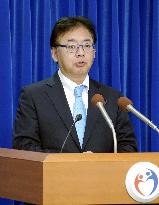
FANUC Announces New Products and Technologies for FANUC Robots. Photo shows President and CEO Kenji Yamaguchi.=December 1,2025,Tokyo

  •  
FANUC New FANUC Robot Products and Technologies Presentation

FANUC New FANUC Robot Products and Technologies Presentation

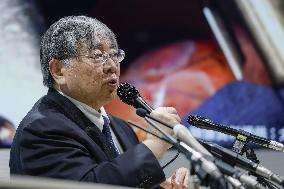
FANUC Announces New Products and Technologies for FANUC Robots. Photo shows, from right, President and CEO Kenji Yamaguchi and Managing Executive Officer Kenichiro Abe, Head of the Robotics R&D Division.=December 1,2025,Tokyo

  •  
FANUC New FANUC Robot Products and Technologies Presentation

FANUC New FANUC Robot Products and Technologies Presentation

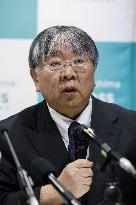
FANUC Announces New Products and Technologies for FANUC Robots. Photo shows Kenichiro Abe, Managing Executive Officer and Head of the Robotics R&D Division.=December 1,2025,Tokyo

  •  
Cluj-Napoca in Romania

Cluj-Napoca in Romania

Handout photo dated on October 17, 2025 shows Cluj-Napoca in Romania. On 17 October 2025, one of the Copernicus Sentinel-2 satellites acquired this image of Cluj-Napoca, a major urban centre in north-western Romania. Surrounded by rolling hills and agricultural land, the city is noted for its dynamic growth and strategic role in regional development. Cluj-Napoca also received the label of the EU Mission for Climate-Neutral and Smart Cities in 2023. Cluj-Napoca is currently one of ten pilot cities selected for the Horizon Europe CLMS-Cities project, which combines satellite-based products from the Copernicus Land Monitoring Service (CLMS) with additional environmental and urban data to improve modelling of urban-scale CO₂ emissions. These integrated datasets help local authorities in tracking changes and designing more effective climate strategies, thereby supporting the development of data-driven urban policies aligned with the European Green Deal. Photo by European Union, Copernicus Sentinel-2 imagery via AB

  •  
Tie-Dye Technique Of Bai Ethnic Group - Chin

Tie-Dye Technique Of Bai Ethnic Group - Chin

Duan Yuan, an inheritor of the tie-dye technique of Bai ethnic group, makes tie-dye designs in a dyehouse in Zhoucheng Village of Dali Bai Autonomous Prefecture, southwest China's Yunnan Province, November 21, 2025. Known as the hometown of the tie-dye technique of Bai ethnic group, Zhoucheng Village hosts over 200 households engaging in tie-dye businesses, with the number of employees exceeding 4,000. As a traditional folk technique of the Bai ethnic group, tie-dye boasts a history spanning over a thousand years and was included in the first batch of China's national intangible cultural heritage list in 2006. Tying and dyeing are the core steps in the process of making indigo tie-dye products. Artisans use needles and threads to create various patterns on the fabric, which are then dyed with plant-based dyes, resulting in blue backgrounds adorned with vivid white patterns. Photo by Hu Chao/Xinhua/ABACAPRESS.COM

  •  
Tie-Dye Technique Of Bai Ethnic Group - Chin

Tie-Dye Technique Of Bai Ethnic Group - Chin

Duan Yinmei, an inheritor of the tie-dye technique of Bai ethnic group, creates knots on fabrics in a dyehouse in Zhoucheng Village of Dali Bai Autonomous Prefecture, southwest China's Yunnan Province, November 21, 2025. Known as the hometown of the tie-dye technique of Bai ethnic group, Zhoucheng Village hosts over 200 households engaging in tie-dye businesses, with the number of employees exceeding 4,000. As a traditional folk technique of the Bai ethnic group, tie-dye boasts a history spanning over a thousand years and was included in the first batch of China's national intangible cultural heritage list in 2006. Tying and dyeing are the core steps in the process of making indigo tie-dye products. Artisans use needles and threads to create various patterns on the fabric, which are then dyed with plant-based dyes, resulting in blue backgrounds adorned with vivid white patterns. Photo by Hu Chao/Xinhua/ABACAPRESS.COM

  •  
Tie-Dye Technique Of Bai Ethnic Group - Chin

Tie-Dye Technique Of Bai Ethnic Group - Chin

A woman experiences the tie-dye technique of Bai ethnic group in a dyehouse in Zhoucheng Village of Dali Bai Autonomous Prefecture, southwest China's Yunnan Province, November 21, 2025. Known as the hometown of the tie-dye technique of Bai ethnic group, Zhoucheng Village hosts over 200 households engaging in tie-dye businesses, with the number of employees exceeding 4,000. As a traditional folk technique of the Bai ethnic group, tie-dye boasts a history spanning over a thousand years and was included in the first batch of China's national intangible cultural heritage list in 2006. Tying and dyeing are the core steps in the process of making indigo tie-dye products. Artisans use needles and threads to create various patterns on the fabric, which are then dyed with plant-based dyes, resulting in blue backgrounds adorned with vivid white patterns. Photo by Hu Chao/Xinhua/ABACAPRESS.COM

  •  
Tie-Dye Technique Of Bai Ethnic Group - Chin

Tie-Dye Technique Of Bai Ethnic Group - Chin

Duan Yinmei, an inheritor of the tie-dye technique of Bai ethnic group, dyes patterns on fabrics in a dyehouse in Zhoucheng Village of Dali Bai Autonomous Prefecture, southwest China's Yunnan Province, November 21, 2025. Known as the hometown of the tie-dye technique of Bai ethnic group, Zhoucheng Village hosts over 200 households engaging in tie-dye businesses, with the number of employees exceeding 4,000. As a traditional folk technique of the Bai ethnic group, tie-dye boasts a history spanning over a thousand years and was included in the first batch of China's national intangible cultural heritage list in 2006. Tying and dyeing are the core steps in the process of making indigo tie-dye products. Artisans use needles and threads to create various patterns on the fabric, which are then dyed with plant-based dyes, resulting in blue backgrounds adorned with vivid white patterns. Photo by Hu Chao/Xinhua/ABACAPRESS.COM

  •  
Tie-Dye Technique Of Bai Ethnic Group - Chin

Tie-Dye Technique Of Bai Ethnic Group - Chin

Duan Yuan, an inheritor of the tie-dye technique of Bai ethnic group, rinses dyed fabrics in a dyehouse in Zhoucheng Village of Dali Bai Autonomous Prefecture, southwest China's Yunnan Province, November 21, 2025. Known as the hometown of the tie-dye technique of Bai ethnic group, Zhoucheng Village hosts over 200 households engaging in tie-dye businesses, with the number of employees exceeding 4,000. As a traditional folk technique of the Bai ethnic group, tie-dye boasts a history spanning over a thousand years and was included in the first batch of China's national intangible cultural heritage list in 2006. Tying and dyeing are the core steps in the process of making indigo tie-dye products. Artisans use needles and threads to create various patterns on the fabric, which are then dyed with plant-based dyes, resulting in blue backgrounds adorned with vivid white patterns. Photo by Hu Chao/Xinhua/ABACAPRESS.COM

  •  
Tie-Dye Technique Of Bai Ethnic Group - Chin

Tie-Dye Technique Of Bai Ethnic Group - Chin

Duan Yinmei (L), an inheritor of the tie-dye technique of Bai ethnic group, and handicraftsman Duan Lilan dry tie-dye fabrics in a dyehouse in Zhoucheng Village of Dali Bai Autonomous Prefecture, southwest China's Yunnan Province, November 21, 2025. Known as the hometown of the tie-dye technique of Bai ethnic group, Zhoucheng Village hosts over 200 households engaging in tie-dye businesses, with the number of employees exceeding 4,000. As a traditional folk technique of the Bai ethnic group, tie-dye boasts a history spanning over a thousand years and was included in the first batch of China's national intangible cultural heritage list in 2006. Tying and dyeing are the core steps in the process of making indigo tie-dye products. Artisans use needles and threads to create various patterns on the fabric, which are then dyed with plant-based dyes, resulting in blue backgrounds adorned with vivid white patterns. Photo by Hu Chao/Xinhua/ABACAPRESS.COM

  •  
Tie-Dye Technique Of Bai Ethnic Group - Chin

Tie-Dye Technique Of Bai Ethnic Group - Chin

An aerial drone photo shows a scene at a dyehouse in Zhoucheng Village of Dali Bai Autonomous Prefecture, southwest China's Yunnan Province, November 21, 2025. Known as the hometown of the tie-dye technique of Bai ethnic group, Zhoucheng Village hosts over 200 households engaging in tie-dye businesses, with the number of employees exceeding 4,000. As a traditional folk technique of the Bai ethnic group, tie-dye boasts a history spanning over a thousand years and was included in the first batch of China's national intangible cultural heritage list in 2006. Tying and dyeing are the core steps in the process of making indigo tie-dye products. Artisans use needles and threads to create various patterns on the fabric, which are then dyed with plant-based dyes, resulting in blue backgrounds adorned with vivid white patterns. Photo by Hu Chao/Xinhua/ABACAPRESS.COM

  •  
Tie-Dye Technique Of Bai Ethnic Group - Chin

Tie-Dye Technique Of Bai Ethnic Group - Chin

Duan Yinmei (L), an inheritor of the tie-dye technique of Bai ethnic group, and handicraftsman Duan Lilan untie knots on fabrics in a dyehouse in Zhoucheng Village of Dali Bai Autonomous Prefecture, southwest China's Yunnan Province, November 21, 2025. Known as the hometown of the tie-dye technique of Bai ethnic group, Zhoucheng Village hosts over 200 households engaging in tie-dye businesses, with the number of employees exceeding 4,000. As a traditional folk technique of the Bai ethnic group, tie-dye boasts a history spanning over a thousand years and was included in the first batch of China's national intangible cultural heritage list in 2006. Tying and dyeing are the core steps in the process of making indigo tie-dye products. Artisans use needles and threads to create various patterns on the fabric, which are then dyed with plant-based dyes, resulting in blue backgrounds adorned with vivid white patterns. Photo by Hu Chao/Xinhua/ABACAPRESS.COM

  •  
Tie-Dye Technique Of Bai Ethnic Group - Chin

Tie-Dye Technique Of Bai Ethnic Group - Chin

Duan Yinmei (L), an inheritor of the tie-dye technique of Bai ethnic group, and handicraftsman Duan Lilan untie knots on fabrics in a dyehouse in Zhoucheng Village of Dali Bai Autonomous Prefecture, southwest China's Yunnan Province, November 21, 2025. Known as the hometown of the tie-dye technique of Bai ethnic group, Zhoucheng Village hosts over 200 households engaging in tie-dye businesses, with the number of employees exceeding 4,000. As a traditional folk technique of the Bai ethnic group, tie-dye boasts a history spanning over a thousand years and was included in the first batch of China's national intangible cultural heritage list in 2006. Tying and dyeing are the core steps in the process of making indigo tie-dye products. Artisans use needles and threads to create various patterns on the fabric, which are then dyed with plant-based dyes, resulting in blue backgrounds adorned with vivid white patterns. Photo by Hu Chao/Xinhua/ABACAPRESS.COM

  •  
Tie-Dye Technique Of Bai Ethnic Group - Chin

Tie-Dye Technique Of Bai Ethnic Group - Chin

Duan Yuan (L), an inheritor of the tie-dye technique of Bai ethnic group, dyes fabrics in a dyehouse in Zhoucheng Village of Dali Bai Autonomous Prefecture, southwest China's Yunnan Province, November 21, 2025. Known as the hometown of the tie-dye technique of Bai ethnic group, Zhoucheng Village hosts over 200 households engaging in tie-dye businesses, with the number of employees exceeding 4,000. As a traditional folk technique of the Bai ethnic group, tie-dye boasts a history spanning over a thousand years and was included in the first batch of China's national intangible cultural heritage list in 2006. Tying and dyeing are the core steps in the process of making indigo tie-dye products. Artisans use needles and threads to create various patterns on the fabric, which are then dyed with plant-based dyes, resulting in blue backgrounds adorned with vivid white patterns. Photo by Hu Chao/Xinhua/ABACAPRESS.COM

  •  
Tie-Dye Technique Of Bai Ethnic Group - Chin

Tie-Dye Technique Of Bai Ethnic Group - Chin

Duan Yuan, an inheritor of the tie-dye technique of Bai ethnic group, makes tie-dye designs in a dyehouse in Zhoucheng Village of Dali Bai Autonomous Prefecture, southwest China's Yunnan Province, November 21, 2025. Known as the hometown of the tie-dye technique of Bai ethnic group, Zhoucheng Village hosts over 200 households engaging in tie-dye businesses, with the number of employees exceeding 4,000. As a traditional folk technique of the Bai ethnic group, tie-dye boasts a history spanning over a thousand years and was included in the first batch of China's national intangible cultural heritage list in 2006. Tying and dyeing are the core steps in the process of making indigo tie-dye products. Artisans use needles and threads to create various patterns on the fabric, which are then dyed with plant-based dyes, resulting in blue backgrounds adorned with vivid white patterns. Photo by Hu Chao/Xinhua/ABACAPRESS.COM

  • Main
  • Top
  • Editorial
  • Creative
  • About Us
  • About ILG
  • Terms of use
  • Company
  • BEHIND
  • Price List
  • Single Plan
  • Monthly Plan
  • Services
  • Shooting
  • Rights Clearance
  • Support
  • FAQ
  • How To Buy
  • Contact Us
  • Become a Partner

© KYODO NEWS IMAGES INC

All Rights Reserved.

  • Editorial
  • Olympics
  • News
  • Sports
  • Japan
  • Tech
  • Royal
  • Disaster
  • NorthKorea
  • Old Japan
  • SNS
  • Creative
  • Food
  • Japan
  • Landscape
  • Animal
  • Popular
  • #Ukraine
  • #Russia
  • #coronavirus
  • #N. Korea
  • #Thailand
  • #China
  • #Ukraine
  • #Russia
  • #coronavirus
  • #N. Korea
  • #Thailand
  • #China
  • Food
  • Japan
  • Landscape
  • Animal
  • Olympics
  • News
  • Sports
  • Japan
  • Tech
  • Royal
  • Disaster
  • NorthKorea
  • Old Japan
  • SNS