•  

Japan's nuclear wastewater dumping threatens human health, global ecosystem

STORY: Japan's nuclear wastewater dumping threatens human health, global ecosystem DATELINE: Aug. 26, 2023 LENGTH: 00:01:56 LOCATION: Beijing CATEGORY: ENVIRONMENT SHOTLIST: 1. various of the nuclear power plant 2. SOUNDBITE 1 (English): DAVID COPPLESTONE, Professor in environmental radioactivity at the University of Stirling in the United Kingdom 3. SOUNDBITE 2 (English): ZAFAR ULLAH KORESHI, Dean of Graduate Studies, Air University, Pakistan 4. SOUNDBITE 3 (English): Prof. TIMOTHY MOUSSEAU, Department of Biological Sciences at University of South Carolina STORYLINE: Japan has started releasing nuclear-contaminated wastewater from the crippled Fukushima Daiichi Nuclear Power Plant into the Pacific Ocean disregarding public concerns and strong opposition from both home and abroad. Observers say Japan's move is highly irresponsible, and may pose long-term threats to human health and the marine environment. SOUNDBITE 1 (English): DAVID COPPLESTONE, Professor in environmental radioactivity at the University

  •  

Japanese public gathers to oppose contaminated wastewater discharge plan

STORY: Japanese public gathers to oppose contaminated wastewater discharge plan DATELINE: April 14, 2023 LENGTH: 00:01:12 LOCATION: Tokyo CATEGORY: ENVIRONMENT SHOTLIST: 1. various of Japanese against nuclear-contaminated wastewater discharge plan 2. various of the protest STORYLINE: Japanese residents on Thursday held a rally in Tokyo to protest against the Japanese government's plan to discharge nuclear-contaminated water into the sea. Carrying signs such as "Do not let nuclear-tainted water pollute the sea" and "Do not spill poison into the sea," about 120 protestors of all ages rallied in front of the House of Representatives, or the lower house of the Diet. The contaminated water must first be stored to minimize radioactivity before the world works out how to deal with it, said Toshihiro Inoue, the organizer of the rally. If the nuclear-contaminated water is allowed to be discharged into the sea, arbitrary discharges would take place whenever nuclear contamination occurs in the future, he said. Ig

  •  
Japanese survey ship joins Japan-S. Korea radioactivity survey

Japanese survey ship joins Japan-S. Korea radioactivity survey

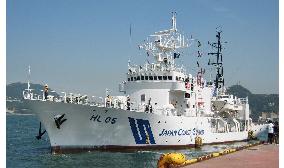
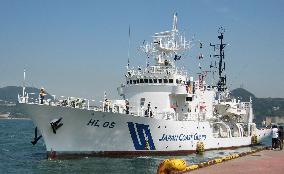
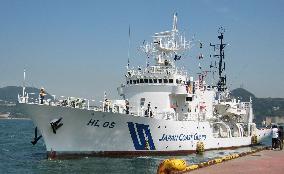
KITAKYUSHU, Japan - The Japan Coast Guard survey ship Kaiyo heads out to sea from Moji port in Kitakyushu, Fukuoka Prefecture on Sept. 11 to take part in a joint Japan-South Korea radioactivity survey mission in the southwestern region of the Sea of Japan, including waters close to the disputed Takeshima island, or Dokdo in Korean. The mission, which will last until Sept. 18, is intended to study possible impact of radioactive wastes dumped by the former Soviet Union and Russia.

  •  
New 'Iwakimaru' device to measure seafloor radioactivity

New 'Iwakimaru' device to measure seafloor radioactivity

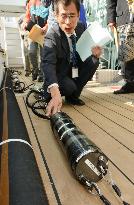
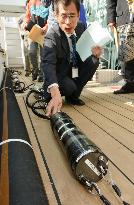
IWAKI, Japan - A device that is capable of measuring radioactivity of substances on the seafloor is photographed in Iwaki, Fukushima Prefecture, northeastern Japan, on Oct. 17, 2014. The device is installed in a new version of the fisheries research vessel "Iwakimaru." The previous "Iwakimaru" was sunk by the 2011 tsunami.

  •  
1955 U.N. confab on atomic energy

1955 U.N. confab on atomic energy

TOKYO, Japan - File photo shows the Japanese government delegation leaving Tokyo's Haneda airport on Aug. 5, 1955, for a U.N. conference on atomic energy in Geneva. U.S. documents show the Japanese government, facing U.S. pressure, moved to block presentations by Japanese scientists at the conference about the effects of radioactivity.

  •  
Fukushima seafood traded on Tokyo's Tsukiji market

Fukushima seafood traded on Tokyo's Tsukiji market

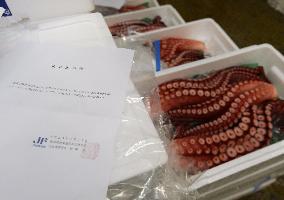
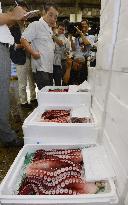
TOKYO, Japan - Photo shows boxed octopus caught off the coast of Fukushima Prefecture, each accompanied with a certificate saying the seafood is clear of radioactivity, at Tokyo's Tsukiji fish market, in the early hours of Aug. 2, 2012. Seafood from Fukushima was traded for the first time at the world's largest fish market the same day, following last year's nuclear disaster at the Fukushima Daiichi power plant.

  •  
Fukushima seafood traded on Tokyo's Tsukiji market

Fukushima seafood traded on Tokyo's Tsukiji market

TOKYO, Japan - Photo shows boxed octopus caught off the coast of Fukushima Prefecture, each accompanied with a certificate saying the seafood is clear of radioactivity, at Tokyo's Tsukiji fish market, in the early hours of Aug. 2, 2012. Seafood from Fukushima was traded for the first time at the world's largest fish market the same day, following last year's nuclear disaster at the Fukushima Daiichi power plant.

  •  
Nuclear agency compared radioactive material to "agitated wife"

Nuclear agency compared radioactive material to "agitated wife"

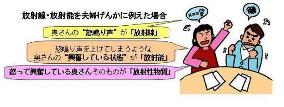
TOKYO, Japan - Photo shows an illustration the Japan Atomic Energy Agency used on its website of a woman raising her fist and screaming at her husband next to her. The captions next to the image say the wife's scream can be compared to radiation, her agitated state to radioactivity, and the wife herself to radioactive material. The agency removed the page from its website on June 4, 2012, after it triggered an outpouring of criticism as a gross form of discrimination against women.

  •  
Survey in Fukushima rice field

Survey in Fukushima rice field

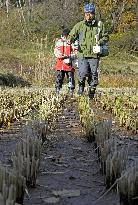
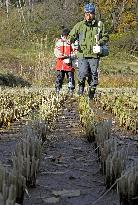
FUKUSHIMA, Japan - Prof. Yasuyuki Muramatsu (front) of Gakushuin University, an expert on radiochemistry, measures radioactivity levels in a rice field in the city of Fukushima, northeastern Japan, on Dec. 5, 2011. Excessive levels of radioactive cesium have been found in rice harvested in the area in the aftermath of the nuclear disaster at the Fukushima Daiichi power plant.

  •  
Bikini Island

Bikini Island

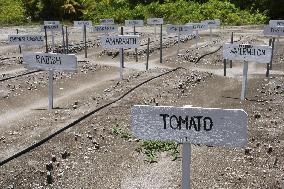
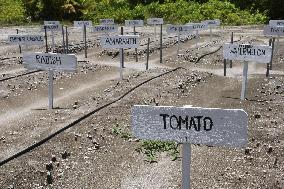
BIKINI ISLAND, Marshall Islands - Photo shows a vegetable farm dotted with a number of plates reading ''Tomato'' and ''Radish'' among other names on Bikini Island in the Pacific on Aug. 27, 2011. There was little sprouting above ground, however, as the crops had been sent to a nuclear research institute in California for research on residual radioactivity.

  •  
Gov't bans mushroom shipments near nuclear plant

Gov't bans mushroom shipments near nuclear plant

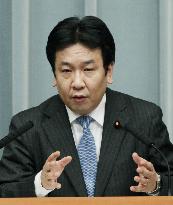
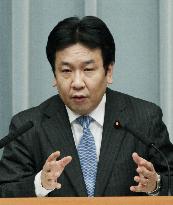
TOKYO, Japan - Chief Cabinet Secretary Yukio Edano speaks in a press conference at the prime minister's office in Tokyo on April 13, 2011. Edano said the government on the same day banned shipments of shiitake mushrooms grown outdoors in five cities, eight towns and three villages near the crippled Fukushima Daiichi nuclear power plant in Fukushima Prefecture, citing high levels of radioactivity.

  •  
Japan, U.S. forces coordinate on disaster relief

Japan, U.S. forces coordinate on disaster relief

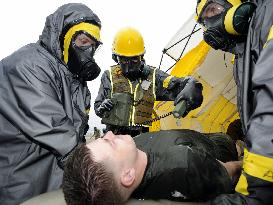
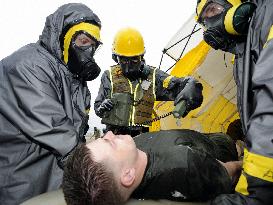
TOKYO, Japan - Members of the U.S. Marine Corps' Chemical Biological Incident Response Force measure radioactivity levels on an ''injured'' person after decontamination work during a joint exercise with the Japan Ground Self-Defense Force's Central Nuclear Biological Chemical Weapon Defense Unit at Yokota Air Base in Tokyo on April 9, 2011.

  •  
Fukushima Pref. to check radiation levels in fish

Fukushima Pref. to check radiation levels in fish

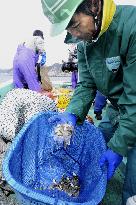
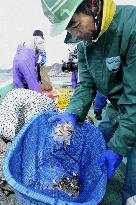
IWAKI, Japan - Fishery industry personnel collect a sample of young sand lance off Shioyasaki Lighthouse in Iwaki, Fukushima Prefecture, to check radioactivity levels on April 7, 2011. High levels of radioactive iodine-131 were detected in young sand lance caught off neighboring Ibaraki Prefecture after the March 11 earthquake and tsunami damaged the Fukushima Daiichi nuclear power plant.

  •  
Japan nuke plant woes

Japan nuke plant woes

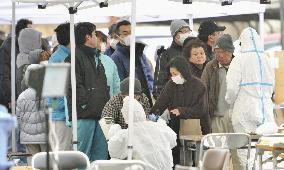
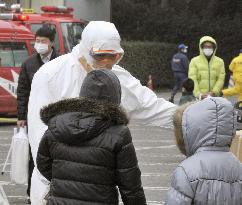
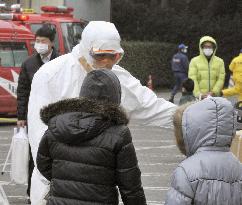
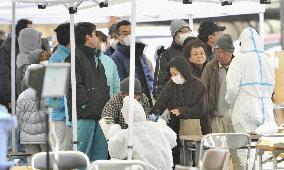
KORIYAMA, Japan - Local residents evacuating from areas near quake-hit Fukushima No.1 nuclear power plant are given radioactivity screenings in Koriyama, Fukushima Prefecture, on March 15, 2011.

  •  
Japan nuke plant woes

Japan nuke plant woes

KORIYAMA, Japan - Local residents evacuating from areas near quake-hit Fukushima No.1 nuclear power plant are given radioactivity screenings in Koriyama, Fukushima Prefecture, on March 15, 2011.

  •  
(1)Hamaoka nuke power plant catches fire but blaze put out

(1)Hamaoka nuke power plant catches fire but blaze put out

HAMAOKA, Japan - Firefighters check the roof of a turbine building at the No. 2 reactor of Chubu Electric Power Co.'s Hamaoka nuclear power plant in Shizuoka Prefecture which caught fire on Feb. 21. The blaze was quickly extinguished and there were no leaks of radioactivity, the Shizuoka prefectural government said.

  •  
(2)Narita airport holds terror drill

(2)Narita airport holds terror drill

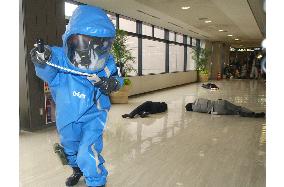
NARITA, Japan - a Chiba prefectural policeman in biohazard suit, tries to detect radioactivity during the first terror drill against nuclear, biological and chemical weapons at Narita airport near Tokyo.

  •  
Monazite owners ditch plan to store mineral in Chiba

Monazite owners ditch plan to store mineral in Chiba

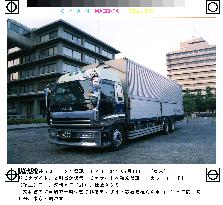
TOKYO, Japan - A trailer truck carrying 13.1 tons of monazite, a mineral containing low levels of radioactivity, is parked at the yard of the the Ministry of Education, Culture, Sports, Science and Technology on July 11 after the cargo owners were forced to give up unloading in Shiba Prefecture in the face of stiff opposition from local authorities.

  •  
Experts try to identify radioactive substance from Philippines

Experts try to identify radioactive substance from Philippines

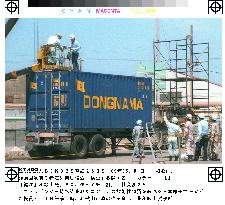
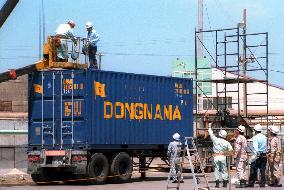
WAKAYAMA, Japan - Japan Atomic Energy Research Institute experts try to identify the source of radioactivity coming from within a sealed container imported from the Philippines at a Sumitomo Metal Industries Ltd. steelworks in Wakayama, Wakayama Prefecture on May 1. When the container was trucked April 28 to the steelworks in Wakayama, south of Osaka, a radiation detector at the gate alerted staff to the presence of radioactive material inside.

  •  
Tokaimura residents measure radiation nearby uranium plant

Tokaimura residents measure radiation nearby uranium plant

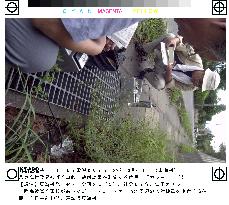
TOKAIMURA, Japan - Residents of Tokaimura, Ibaraki Prefecture use radioactivity detectors to measure the levels of radiation at a street gutter on Oct. 3, a day after the government lifted an off-limits order within 350 meters of the site of Japan's worst nuclear accident. Most residents had returned home by Oct. 3 morning from a local community center where they took refugee following the accident.

  •  
50-cm drone with camera found on roof of Japanese prime minister's office

50-cm drone with camera found on roof of Japanese prime minister's office

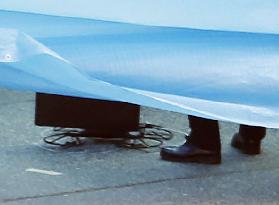
Photo taken April 22, 2015, shows a four-propeller drone about 50 centimeters long on the roof of the Japanese prime minister's office in Tokyo. The drone equipped with a miniature camera and carrying a flare and 10-centimeter plastic bottle, apparently fell onto the roof from the sky. An investigative source said low-level radiation was detected from the drone, which bore a radioactivity symbol. (Kyodo) ==Kyodo

  •  
Opening of Kawauchi village reconstruction support base

Opening of Kawauchi village reconstruction support base

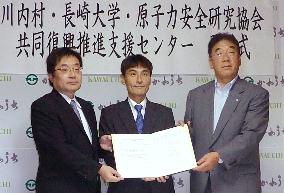
Nagasaki University professor Noboru Takamura (C) holds a document on the establishment of a reconstruction promotion support center in the village of Kawauchi in Fukushima Prefecture, Japan, on July 9, 2015, together with Yuko Endo (R), village mayor, during an opening ceremony. The facilities' activities will include radioactivity measurement and health consultations for residents. (Kyodo) ==Kyodo

  •  
Keidanren chief inspects rice radioactivity test facility in Fukushima

Keidanren chief inspects rice radioactivity test facility in Fukushima

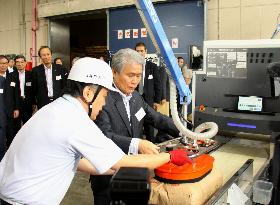
Japan Business Federation (Keidanren) Chairman Sadayuki Sakakibara inspects a facility for detecting and measuring radioactivity in unpolished rice in Koriyama, Fukushima Prefecture, northeastern Japan, on July 9, 2015. He emphasized the need to let consumers know that such steady efforts continue in order to counter unfounded rumors of possible radioactive contamination. (Kyodo) ==Kyodo

  •  
530 residents sue state over delisting of radioactivity hotspots

530 residents sue state over delisting of radioactivity hotspots

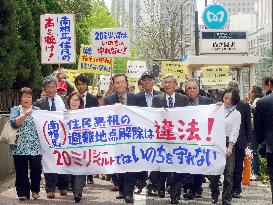
Lawyers defending plaintiffs who are residents of a city near the crisis-hit Fukushima Daiichi nuclear plant walk to the Tokyo District Court with banners on April 17, 2015, before filing a lawsuit calling on the central government to revoke its decision to remove their areas from a list of radioactivity hotspots. (Kyodo) ==Kyodo

  •  
Fishing ban lifted in nuclear crisis-hit Fukushima town

Fishing ban lifted in nuclear crisis-hit Fukushima town

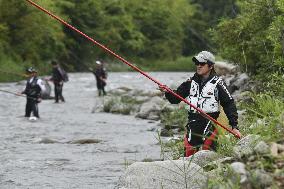
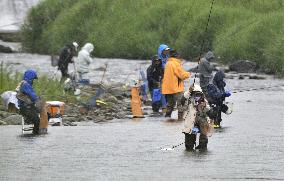
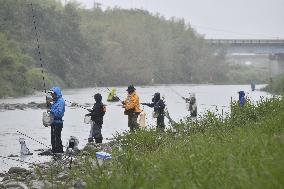
Photo taken on July 4, 2021, shows anglers fishing "ayu" sweetfish at a river in Naraha, a Fukushima Prefecture town affected by the March 2011 nuclear crisis, as a fishing ban at the river was lifted the same day with radioactivity down to safe levels.

  •  
Fishing ban lifted in nuclear crisis-hit Fukushima town

Fishing ban lifted in nuclear crisis-hit Fukushima town

Photo taken on July 4, 2021, shows anglers fishing "ayu" sweetfish at a river in Naraha, a Fukushima Prefecture town affected by the March 2011 nuclear crisis, as a fishing ban at the river was lifted the same day with radioactivity down to safe levels.

  •  
Fishing ban lifted in nuclear crisis-hit Fukushima town

Fishing ban lifted in nuclear crisis-hit Fukushima town

Photo taken on July 4, 2021, shows anglers fishing "ayu" sweetfish at a river in Naraha, a Fukushima Prefecture town affected by the March 2011 nuclear crisis, as a fishing ban at the river was lifted the same day with radioactivity down to safe levels.

  •  
Japanese survey ship joins Japan-S. Korea radioactivity survey

Japanese survey ship joins Japan-S. Korea radioactivity survey

KITAKYUSHU, Japan - The Japan Coast Guard survey ship Kaiyo heads out to sea from Moji port in Kitakyushu, Fukuoka Prefecture on Sept. 11 to take part in a joint Japan-South Korea radioactivity survey mission in the southwestern region of the Sea of Japan, including waters close to the disputed Takeshima island, or Dokdo in Korean. The mission, which will last until Sept. 18, is intended to study possible impact of radioactive wastes dumped by the former Soviet Union and Russia. (Kyodo)

  •  
Japanese survey ship joins Japan-S. Korea radioactivity survey

Japanese survey ship joins Japan-S. Korea radioactivity survey

KITAKYUSHU, Japan - The Japan Coast Guard survey ship Kaiyo heads out to sea from Moji port in Kitakyushu, Fukuoka Prefecture on Sept. 11 to take part in a joint Japan-South Korea radioactivity survey mission in the southwestern region of the Sea of Japan, including waters close to the disputed Takeshima island, or Dokdo in Korean. The mission, which will last until Sept. 18, is intended to study possible impact of radioactive wastes dumped by the former Soviet Union and Russia. (Kyodo)

  •  
Bikini Island

Bikini Island

BIKINI ISLAND, Marshall Islands - Photo shows a vegetable farm dotted with a number of plates reading ''Tomato'' and ''Radish'' among other names on Bikini Island in the Pacific on Aug. 27, 2011. There was little sprouting above ground, however, as the crops had been sent to a nuclear research institute in California for research on residual radioactivity. (Kyodo)

  •  
Radioactivity measuring station in Fukushima

Radioactivity measuring station in Fukushima

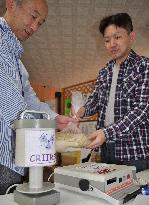
FUKUSHIMA, Japan - Takenori Chiba (R), a resident of Fukushima Prefecture, hands a bag of shredded potatoes to a staff member at the Citizens' Radioactivity Measuring Station in the city of Fukushima on Aug. 1, 2011. Chiba came to the station as he was concerned about whether the vegetable was safe from radiation contamination in the wake of the crisis at the Fukushima Daiichi nuclear plant. (Kyodo)

  •  
Fukushima Pref. to check radiation levels in fish

Fukushima Pref. to check radiation levels in fish

IWAKI, Japan - Fishery industry personnel collect a sample of young sand lance off Shioyasaki Lighthouse in Iwaki, Fukushima Prefecture, to check radioactivity levels on April 7, 2011. High levels of radioactive iodine-131 were detected in young sand lance caught off neighboring Ibaraki Prefecture after the March 11 earthquake and tsunami damaged the Fukushima Daiichi nuclear power plant. (Kyodo)

  •  
SDF measures radiation in Fukushima Pref.

SDF measures radiation in Fukushima Pref.

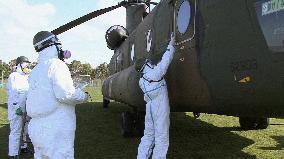
TOKYO, Japan - Members of Japan's Self-Defense Forces measure radioactivity levels on a helicopter at the J-village soccer training facility in Fukushima Prefecture, about 20 kilometers from the crippled Fukushima Daiichi nuclear power plant, on April 12, 2011. The Defense Ministry has disclosed video footage capturing activities of the SDF members at the facility. (Photo courtesy of the SDF)(Kyodo)

  •  
Gov't bans mushroom shipments near nuclear plant

Gov't bans mushroom shipments near nuclear plant

TOKYO, Japan - Chief Cabinet Secretary Yukio Edano speaks in a press conference at the prime minister's office in Tokyo on April 13, 2011. Edano said the government on the same day banned shipments of shiitake mushrooms grown outdoors in five cities, eight towns and three villages near the crippled Fukushima Daiichi nuclear power plant in Fukushima Prefecture, citing high levels of radioactivity. (Kyodo)

  •  
Japan, U.S. forces coordinate on disaster relief

Japan, U.S. forces coordinate on disaster relief

TOKYO, Japan - Members of the U.S. Marine Corps' Chemical Biological Incident Response Force measure radioactivity levels on an ''injured'' person after decontamination work during a joint exercise with the Japan Ground Self-Defense Force's Central Nuclear Biological Chemical Weapon Defense Unit at Yokota Air Base in Tokyo on April 9, 2011. (Kyodo)

  •  
Japan nuke plant woes

Japan nuke plant woes

KORIYAMA, Japan - Local residents evacuating from areas near quake-hit Fukushima No.1 nuclear power plant are given radioactivity screenings in Koriyama, Fukushima Prefecture, on March 15, 2011. (Kyodo)

  •  
Japan nuke plant woes

Japan nuke plant woes

KORIYAMA, Japan - Local residents evacuating from areas near quake-hit Fukushima No.1 nuclear power plant are given radioactivity screenings in Koriyama, Fukushima Prefecture, on March 15, 2011. (Kyodo)

  •  
New 'Iwakimaru' device to measure seafloor radioactivity

New 'Iwakimaru' device to measure seafloor radioactivity

IWAKI, Japan - A device that is capable of measuring radioactivity of substances on the seafloor is photographed in Iwaki, Fukushima Prefecture, northeastern Japan, on Oct. 17, 2014. The device is installed in a new version of the fisheries research vessel "Iwakimaru." The previous "Iwakimaru" was sunk by the 2011 tsunami. (Kyodo)

  •  
Survey in Fukushima rice field

Survey in Fukushima rice field

FUKUSHIMA, Japan - Prof. Yasuyuki Muramatsu (front) of Gakushuin University, an expert on radiochemistry, measures radioactivity levels in a rice field in the city of Fukushima, northeastern Japan, on Dec. 5, 2011. Excessive levels of radioactive cesium have been found in rice harvested in the area in the aftermath of the nuclear disaster at the Fukushima Daiichi power plant. (Kyodo)

  •  
(2)Narita airport holds terror drill

(2)Narita airport holds terror drill

NARITA, Japan - a Chiba prefectural policeman in biohazard suit, tries to detect radioactivity during the first terror drill against nuclear, biological and chemical weapons at Narita airport near Tokyo. (Kyodo)

  •  
(2)Hamaoka nuke power plant catches fire but blaze put out

(2)Hamaoka nuke power plant catches fire but blaze put out

HAMAOKA, Japan - Photo shows the the roof of a turbine building at the No. 2 reactor of Chubu Electric Power Co.'s Hamaoka nuclear power plant in Shizuoka Prefecture which caught fire on Feb. 21. The blaze was quickly extinguished and there were no leaks of radioactivity, the Shizuoka prefectural government said. (Kyodo)

  •  
(1)Hamaoka nuke power plant catches fire but blaze put out

(1)Hamaoka nuke power plant catches fire but blaze put out

HAMAOKA, Japan - Firefighters check the roof of a turbine building at the No. 2 reactor of Chubu Electric Power Co.'s Hamaoka nuclear power plant in Shizuoka Prefecture which caught fire on Feb. 21. The blaze was quickly extinguished and there were no leaks of radioactivity, the Shizuoka prefectural government said. (Kyodo)

  •  
Experts try to identify radioactive substance from Philippines

Experts try to identify radioactive substance from Philippines

WAKAYAMA, Japan - Japan Atomic Energy Research Institute experts try to identify the source of radioactivity coming from within a sealed container imported from the Philippines at a Sumitomo Metal Industries Ltd. steelworks in Wakayama, Wakayama Prefecture on May 1. When the container was trucked April 28 to the steelworks in Wakayama, south of Osaka, a radiation detector at the gate alerted staff to the presence of radioactive material inside.

  • Main
  • Top
  • Editorial
  • Creative
  • About Us
  • About ILG
  • Terms of use
  • Company
  • BEHIND
  • Price List
  • Single Plan
  • Monthly Plan
  • Services
  • Shooting
  • Rights Clearance
  • Support
  • FAQ
  • How To Buy
  • Contact Us
  • Become a Partner

© KYODO NEWS IMAGES INC

All Rights Reserved.

  • Editorial
  • Olympics
  • News
  • Sports
  • Japan
  • Tech
  • Royal
  • Disaster
  • NorthKorea
  • Old Japan
  • SNS
  • Creative
  • Food
  • Japan
  • Landscape
  • Animal
  • Popular
  • #Ukraine
  • #China
  • #coronavirus
  • #N. Korea
  • #Thailand
  • #Russia
  • #Ukraine
  • #China
  • #coronavirus
  • #N. Korea
  • #Thailand
  • #Russia
  • Food
  • Japan
  • Landscape
  • Animal
  • Olympics
  • News
  • Sports
  • Japan
  • Tech
  • Royal
  • Disaster
  • NorthKorea
  • Old Japan
  • SNS