•  
Visit to the works of the Galindo Storm Tank - Barakaldo

Visit to the works of the Galindo Storm Tank - Barakaldo

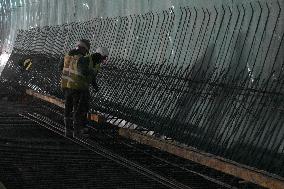
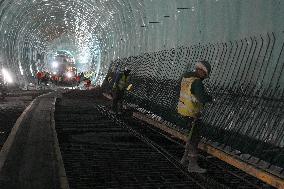
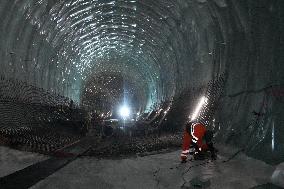
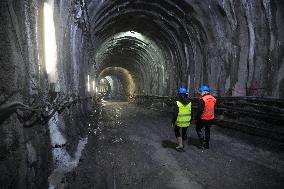
Several people work during a visit to the construction site of the Galindo Storm Tank, December 5, 2025, in Barakaldo, Biscay, Basque Country, Spain. The subway hydraulic infrastructure is designed to store excess rainwater to prevent untreated wastewater from reaching rivers, reducing flooding and improving water quality. The project has an investment of more than 46 million euros and is scheduled for completion by the end of 2027. Photo by H.Bilbao / Europa Press/ABACAPRESS.COM

  •  
Visit to the works of the Galindo Storm Tank - Barakaldo

Visit to the works of the Galindo Storm Tank - Barakaldo

Several people work during a visit to the construction site of the Galindo Storm Tank, December 5, 2025, in Barakaldo, Biscay, Basque Country, Spain. The subway hydraulic infrastructure is designed to store excess rainwater to prevent untreated wastewater from reaching rivers, reducing flooding and improving water quality. The project has an investment of more than 46 million euros and is scheduled for completion by the end of 2027. Photo by H.Bilbao / Europa Press/ABACAPRESS.COM

  •  
Visit to the works of the Galindo Storm Tank - Barakaldo

Visit to the works of the Galindo Storm Tank - Barakaldo

Several people work during a visit to the construction site of the Galindo Storm Tank, December 5, 2025, in Barakaldo, Biscay, Basque Country, Spain. The subway hydraulic infrastructure is designed to store excess rainwater to prevent untreated wastewater from reaching rivers, reducing flooding and improving water quality. The project has an investment of more than 46 million euros and is scheduled for completion by the end of 2027. Photo by H.Bilbao / Europa Press/ABACAPRESS.COM

  •  
Visit to the works of the Galindo Storm Tank - Barakaldo

Visit to the works of the Galindo Storm Tank - Barakaldo

Several people work during a visit to the construction site of the Galindo Storm Tank, December 5, 2025, in Barakaldo, Biscay, Basque Country, Spain. The subway hydraulic infrastructure is designed to store excess rainwater to prevent untreated wastewater from reaching rivers, reducing flooding and improving water quality. The project has an investment of more than 46 million euros and is scheduled for completion by the end of 2027. Photo by H.Bilbao / Europa Press/ABACAPRESS.COM

  •  
Visit to the works of the Galindo Storm Tank - Barakaldo

Visit to the works of the Galindo Storm Tank - Barakaldo

Several people work during a visit to the construction site of the Galindo Storm Tank, December 5, 2025, in Barakaldo, Biscay, Basque Country, Spain. The subway hydraulic infrastructure is designed to store excess rainwater to prevent untreated wastewater from reaching rivers, reducing flooding and improving water quality. The project has an investment of more than 46 million euros and is scheduled for completion by the end of 2027. Photo by H.Bilbao / Europa Press/ABACAPRESS.COM

  •  
Visit to the works of the Galindo Storm Tank - Barakaldo

Visit to the works of the Galindo Storm Tank - Barakaldo

Several people work during a visit to the construction site of the Galindo Storm Tank, December 5, 2025, in Barakaldo, Biscay, Basque Country, Spain. The subway hydraulic infrastructure is designed to store excess rainwater to prevent untreated wastewater from reaching rivers, reducing flooding and improving water quality. The project has an investment of more than 46 million euros and is scheduled for completion by the end of 2027. Photo by H.Bilbao / Europa Press/ABACAPRESS.COM

  •  
Visit to the works of the Galindo Storm Tank - Barakaldo

Visit to the works of the Galindo Storm Tank - Barakaldo

Several people work during a visit to the construction site of the Galindo Storm Tank, December 5, 2025, in Barakaldo, Biscay, Basque Country, Spain. The subway hydraulic infrastructure is designed to store excess rainwater to prevent untreated wastewater from reaching rivers, reducing flooding and improving water quality. The project has an investment of more than 46 million euros and is scheduled for completion by the end of 2027. Photo by H.Bilbao / Europa Press/ABACAPRESS.COM

  •  
Visit to the works of the Galindo Storm Tank - Barakaldo

Visit to the works of the Galindo Storm Tank - Barakaldo

Several people work during a visit to the construction site of the Galindo Storm Tank, December 5, 2025, in Barakaldo, Biscay, Basque Country, Spain. The subway hydraulic infrastructure is designed to store excess rainwater to prevent untreated wastewater from reaching rivers, reducing flooding and improving water quality. The project has an investment of more than 46 million euros and is scheduled for completion by the end of 2027. Photo by H.Bilbao / Europa Press/ABACAPRESS.COM

  •  
Visit to the works of the Galindo Storm Tank - Barakaldo

Visit to the works of the Galindo Storm Tank - Barakaldo

Several people work during a visit to the construction site of the Galindo Storm Tank, December 5, 2025, in Barakaldo, Biscay, Basque Country, Spain. The subway hydraulic infrastructure is designed to store excess rainwater to prevent untreated wastewater from reaching rivers, reducing flooding and improving water quality. The project has an investment of more than 46 million euros and is scheduled for completion by the end of 2027. Photo by H.Bilbao / Europa Press/ABACAPRESS.COM

  •  
Visit to the works of the Galindo Storm Tank - Barakaldo

Visit to the works of the Galindo Storm Tank - Barakaldo

Several people work during a visit to the construction site of the Galindo Storm Tank, December 5, 2025, in Barakaldo, Biscay, Basque Country, Spain. The subway hydraulic infrastructure is designed to store excess rainwater to prevent untreated wastewater from reaching rivers, reducing flooding and improving water quality. The project has an investment of more than 46 million euros and is scheduled for completion by the end of 2027. Photo by H.Bilbao / Europa Press/ABACAPRESS.COM

  •  
Visit to the works of the Galindo Storm Tank - Barakaldo

Visit to the works of the Galindo Storm Tank - Barakaldo

Several people work during a visit to the construction site of the Galindo Storm Tank, December 5, 2025, in Barakaldo, Biscay, Basque Country, Spain. The subway hydraulic infrastructure is designed to store excess rainwater to prevent untreated wastewater from reaching rivers, reducing flooding and improving water quality. The project has an investment of more than 46 million euros and is scheduled for completion by the end of 2027. Photo by H.Bilbao / Europa Press/ABACAPRESS.COM

  •  
Visit to the works of the Galindo Storm Tank - Barakaldo

Visit to the works of the Galindo Storm Tank - Barakaldo

Several people work during a visit to the construction site of the Galindo Storm Tank, December 5, 2025, in Barakaldo, Biscay, Basque Country, Spain. The subway hydraulic infrastructure is designed to store excess rainwater to prevent untreated wastewater from reaching rivers, reducing flooding and improving water quality. The project has an investment of more than 46 million euros and is scheduled for completion by the end of 2027. Photo by H.Bilbao / Europa Press/ABACAPRESS.COM

  •  
Visit to the works of the Galindo Storm Tank - Barakaldo

Visit to the works of the Galindo Storm Tank - Barakaldo

Several people work during a visit to the construction site of the Galindo Storm Tank, December 5, 2025, in Barakaldo, Biscay, Basque Country, Spain. The subway hydraulic infrastructure is designed to store excess rainwater to prevent untreated wastewater from reaching rivers, reducing flooding and improving water quality. The project has an investment of more than 46 million euros and is scheduled for completion by the end of 2027. Photo by H.Bilbao / Europa Press/ABACAPRESS.COM

  •  
Visit to the works of the Galindo Storm Tank - Barakaldo

Visit to the works of the Galindo Storm Tank - Barakaldo

Several people work during a visit to the construction site of the Galindo Storm Tank, December 5, 2025, in Barakaldo, Biscay, Basque Country, Spain. The subway hydraulic infrastructure is designed to store excess rainwater to prevent untreated wastewater from reaching rivers, reducing flooding and improving water quality. The project has an investment of more than 46 million euros and is scheduled for completion by the end of 2027. Photo by H.Bilbao / Europa Press/ABACAPRESS.COM

  •  
Visit to the works of the Galindo Storm Tank - Barakaldo

Visit to the works of the Galindo Storm Tank - Barakaldo

Several people work during a visit to the construction site of the Galindo Storm Tank, December 5, 2025, in Barakaldo, Biscay, Basque Country, Spain. The subway hydraulic infrastructure is designed to store excess rainwater to prevent untreated wastewater from reaching rivers, reducing flooding and improving water quality. The project has an investment of more than 46 million euros and is scheduled for completion by the end of 2027. Photo by H.Bilbao / Europa Press/ABACAPRESS.COM

  •  
Visit to the works of the Galindo Storm Tank - Barakaldo

Visit to the works of the Galindo Storm Tank - Barakaldo

Several people work during a visit to the construction site of the Galindo Storm Tank, December 5, 2025, in Barakaldo, Biscay, Basque Country, Spain. The subway hydraulic infrastructure is designed to store excess rainwater to prevent untreated wastewater from reaching rivers, reducing flooding and improving water quality. The project has an investment of more than 46 million euros and is scheduled for completion by the end of 2027. Photo by H.Bilbao / Europa Press/ABACAPRESS.COM

  •  
Visit to the works of the Galindo Storm Tank - Barakaldo

Visit to the works of the Galindo Storm Tank - Barakaldo

Several people work during a visit to the construction site of the Galindo Storm Tank, December 5, 2025, in Barakaldo, Biscay, Basque Country, Spain. The subway hydraulic infrastructure is designed to store excess rainwater to prevent untreated wastewater from reaching rivers, reducing flooding and improving water quality. The project has an investment of more than 46 million euros and is scheduled for completion by the end of 2027. Photo by H.Bilbao / Europa Press/ABACAPRESS.COM

  •  
Weather Conditions Exacerbate Difficulties in Camps - Khan Yunis

Weather Conditions Exacerbate Difficulties in Camps - Khan Yunis

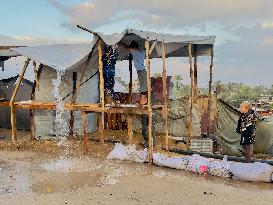
Two boys push up a sagging plastic sheet to drain rainwater from the roof of a makeshift shelter as children stand nearby in Al-Mawasi, Khan Yunis, Gaza Strip, on November 16, 2025. Weather conditions have intensified the hardships in the overcrowded camp, where residents rely on improvised structures for survival. Photo by Abdolrahman Rashad/Middle East Images/ABACAPRESS.COM

  •  
Weather Conditions Exacerbate Difficulties in Camps - Khan Yunis

Weather Conditions Exacerbate Difficulties in Camps - Khan Yunis

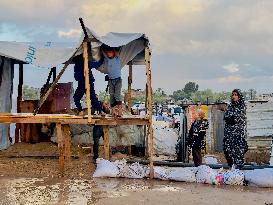
Two boys push up a sagging plastic sheet to drain rainwater from the roof of a makeshift shelter as a woman and a child stand nearby in Al-Mawasi, Khan Yunis, Gaza Strip, on November 16, 2025. Weather conditions have intensified the hardships in the overcrowded camp, where residents rely on improvised structures for survival. Photo by Abdolrahman Rashad/Middle East Images/ABACAPRESS.COM

  •  
Drinking Water Crisis in Bangladesh

Drinking Water Crisis in Bangladesh

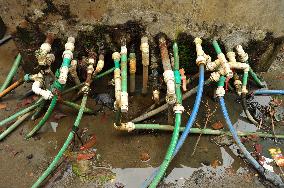
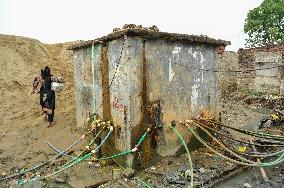
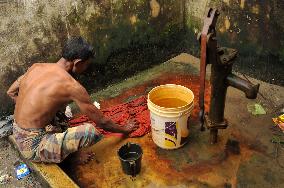
Deep tube-well pipe lines in Bakalia area. Most local tube-wells are saline or iron-contaminated, For drinking water, people rely on limited rainwater and private motor pumps. on November 6, 2025 in Chattogram, Bangladesh. Photo by Md Rafayat Haque Khan/ Eyepix Group/ABACAPRESS.COM

  •  
Drinking Water Crisis in Bangladesh

Drinking Water Crisis in Bangladesh

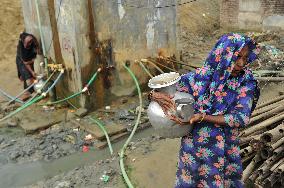
A woman collects water from a deep tube-well in Bakalia area. Most local tube-wells are saline or iron-contaminated, For drinking water, people rely on limited rainwater and private motor pumps. on November 6, 2025 in Chattogram, Bangladesh. Photo by Md Rafayat Haque Khan/ Eyepix Group/ABACAPRESS.COM

  •  
Drinking Water Crisis in Bangladesh

Drinking Water Crisis in Bangladesh

A woman collects water from a deep tube-well in Bakalia area. Most local tube-wells are saline or iron-contaminated, For drinking water, people rely on limited rainwater and private motor pumps. on November 6, 2025 in Chattogram, Bangladesh. Photo by Md Rafayat Haque Khan/ Eyepix Group/ABACAPRESS.COM

  •  
Drinking Water Crisis in Bangladesh

Drinking Water Crisis in Bangladesh

A woman collects water from a deep tube-well in Bakalia area. Most local tube-wells are saline or iron-contaminated, For drinking water, people rely on limited rainwater and private motor pumps. on November 6, 2025 in Chattogram, Bangladesh. Photo by Md Rafayat Haque Khan/ Eyepix Group/ABACAPRESS.COM

  •  
Drinking Water Crisis in Bangladesh

Drinking Water Crisis in Bangladesh

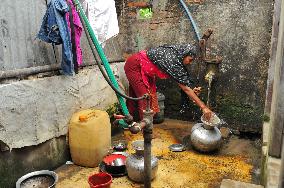
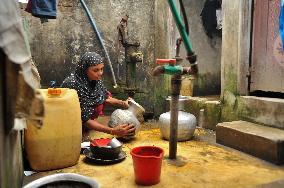
A woman washes household crockeries using water from a tube well in Bakalia.. Most local tube-wells are saline or iron-contaminated, For drinking water, people rely on limited rainwater and private motor pumps. on November 6, 2025 in Chattogram, Bangladesh. Photo by Md Rafayat Haque Khan/ Eyepix Group/ABACAPRESS.COM

  •  
Drinking Water Crisis in Bangladesh

Drinking Water Crisis in Bangladesh

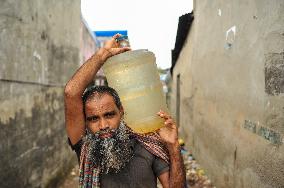
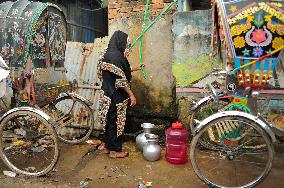
A man carry a large pot collect water from a deep tube-well in Bakalia area. Most local tube-wells are saline or iron-contaminated, For drinking water, people rely on limited rainwater and private motor pumps. on November 6, 2025 in Chattogram, Bangladesh. Photo by Md Rafayat Haque Khan/ Eyepix Group/ABACAPRESS.COM

  •  
Drinking Water Crisis in Bangladesh

Drinking Water Crisis in Bangladesh

A man is washing cloths in the beside a tube-well in Bakalia area. Most local tube-wells are saline or iron-contaminated, For drinking water, people rely on limited rainwater and private motor pumps. on November 6, 2025 in Chattogram, Bangladesh. Photo by Md Rafayat Haque Khan/ Eyepix Group/ABACAPRESS.COM

  •  
Drinking Water Crisis in Bangladesh

Drinking Water Crisis in Bangladesh

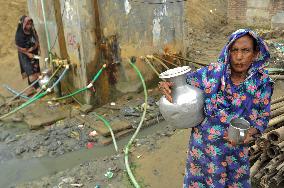
A woman is waiting to collect water for drinking in Bakalia area. Most local tube-wells are saline or iron-contaminated, For drinking water, people rely on limited rainwater and private motor pumps. on November 6, 2025 in Chattogram, Bangladesh. Photo by Md Rafayat Haque Khan/ Eyepix Group/ABACAPRESS.COM

  •  
Drinking Water Crisis in Bangladesh

Drinking Water Crisis in Bangladesh

A woman washes household crockeries using water from a tube well in Bakalia.. Most local tube-wells are saline or iron-contaminated, For drinking water, people rely on limited rainwater and private motor pumps. on November 6, 2025 in Chattogram, Bangladesh. Photo by Md Rafayat Haque Khan/ Eyepix Group/ABACAPRESS.COM

  •  
Drinking Water Crisis in Bangladesh

Drinking Water Crisis in Bangladesh

An aged locals showing the Rain water he preserved from drinking in the Bakalia area of Chattogram city. Most local tube-wells are saline or iron-contaminated, For drinking water, people rely on limited rainwater and private motor pumps. on November 6, 2025 in Chattogram, Bangladesh. Photo by Md Rafayat Haque Khan/ Eyepix Group/ABACAPRESS.COM

  •  
Drinking Water Crisis in Bangladesh

Drinking Water Crisis in Bangladesh

A dealer shop is refilling the water container for sale in the locals of Bakalia area of Chattogram city. Most local tube-wells are saline or iron-contaminated, For drinking water, people rely on limited rainwater and private motor pumps. on November 6, 2025 in Chattogram, Bangladesh. Photo by Md Rafayat Haque Khan/ Eyepix Group/ABACAPRESS.COM

  •  
Urca Oil and Gas Production Field Development - Brazil

Urca Oil and Gas Production Field Development - Brazil

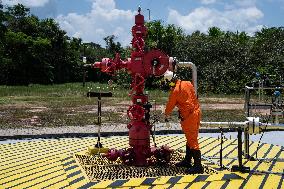
A worker operates an oil well at the Urucu Oil and Gas Production Field in the state of Amazonas, Brazil, on Oct. 16, 2025. The Urucu Oil and Gas Production Field, located in the heart of Brazil's Amazonas state, is one of the country's most important onshore oil and gas production bases. Surrounded by pristine rainforest, it has operated steadily since its start-up in 1988, supplying oil and natural gas that support energy needs across northern Brazil. According to its operator Petrobras, the field has preserved about 98 percent of its area as native forest, carries out rainwater recycling, waste recovery, and reforestation programs and plants more than 1.5 million native trees. Photo by Wang Tiancong/Xinhua/ABACAPRESS.COM

  •  
Urca Oil and Gas Production Field Development - Brazil

Urca Oil and Gas Production Field Development - Brazil

A worker checks the growth of seedlings at the ecological nursery of the Urucu Oil and Gas Production Field in the state of Amazonas, Brazil, on Oct. 17, 2025. The Urucu Oil and Gas Production Field, located in the heart of Brazil's Amazonas state, is one of the country's most important onshore oil and gas production bases. Surrounded by pristine rainforest, it has operated steadily since its start-up in 1988, supplying oil and natural gas that support energy needs across northern Brazil. According to its operator Petrobras, the field has preserved about 98 percent of its area as native forest, carries out rainwater recycling, waste recovery, and reforestation programs and plants more than 1.5 million native trees. Photo by Wang Tiancong/Xinhua/ABACAPRESS.COM

  •  
Urca Oil and Gas Production Field Development - Brazil

Urca Oil and Gas Production Field Development - Brazil

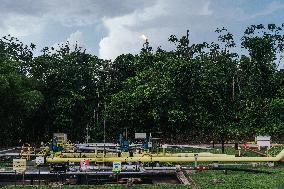
This photo taken on Oct. 17, 2025 shows pipelines stretching through the tropical rainforest at the Urucu Oil and Gas Production Field in the state of Amazonas, Brazil. The Urucu Oil and Gas Production Field, located in the heart of Brazil's Amazonas state, is one of the country's most important onshore oil and gas production bases. Surrounded by pristine rainforest, it has operated steadily since its start-up in 1988, supplying oil and natural gas that support energy needs across northern Brazil. According to its operator Petrobras, the field has preserved about 98 percent of its area as native forest, carries out rainwater recycling, waste recovery, and reforestation programs and plants more than 1.5 million native trees. Photo by Wang Tiancong/Xinhua/ABACAPRESS.COM

  •  
Urca Oil and Gas Production Field Development - Brazil

Urca Oil and Gas Production Field Development - Brazil

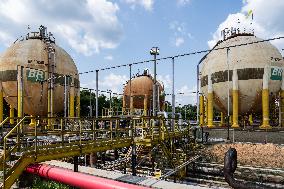
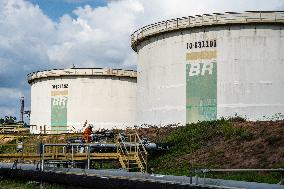
This photo taken on Oct. 16, 2025 shows liquefied petroleum gas storage tanks standing in the production area of the Urucu Oil and Gas Production Field in the state of Amazonas, Brazil. The Urucu Oil and Gas Production Field, located in the heart of Brazil's Amazonas state, is one of the country's most important onshore oil and gas production bases. Surrounded by pristine rainforest, it has operated steadily since its start-up in 1988, supplying oil and natural gas that support energy needs across northern Brazil. According to its operator Petrobras, the field has preserved about 98 percent of its area as native forest, carries out rainwater recycling, waste recovery, and reforestation programs and plants more than 1.5 million native trees. Photo by Wang Tiancong/Xinhua/ABACAPRESS.COM

  •  
Urca Oil and Gas Production Field Development - Brazil

Urca Oil and Gas Production Field Development - Brazil

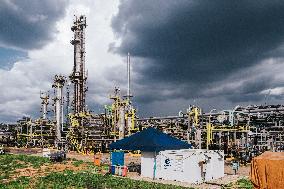
This photo taken on Oct. 16, 2025 shows the production facilities of the Urucu Oil and Gas Production Field in the state of Amazonas, Brazil. The Urucu Oil and Gas Production Field, located in the heart of Brazil's Amazonas state, is one of the country's most important onshore oil and gas production bases. Surrounded by pristine rainforest, it has operated steadily since its start-up in 1988, supplying oil and natural gas that support energy needs across northern Brazil. According to its operator Petrobras, the field has preserved about 98 percent of its area as native forest, carries out rainwater recycling, waste recovery, and reforestation programs and plants more than 1.5 million native trees. Photo by Wang Tiancong/Xinhua/ABACAPRESS.COM

  •  
Urca Oil and Gas Production Field Development - Brazil

Urca Oil and Gas Production Field Development - Brazil

This photo taken on Oct. 17, 2025 shows artificially cultivated tropical rainforest plants in an ecological nursery at the Urucu Oil and Gas Production Field in the state of Amazonas, Brazil. The Urucu Oil and Gas Production Field, located in the heart of Brazil's Amazonas state, is one of the country's most important onshore oil and gas production bases. Surrounded by pristine rainforest, it has operated steadily since its start-up in 1988, supplying oil and natural gas that support energy needs across northern Brazil. According to its operator Petrobras, the field has preserved about 98 percent of its area as native forest, carries out rainwater recycling, waste recovery, and reforestation programs and plants more than 1.5 million native trees. Photo by Wang Tiancong/Xinhua/ABACAPRESS.COM

  •  
Urca Oil and Gas Production Field Development - Brazil

Urca Oil and Gas Production Field Development - Brazil

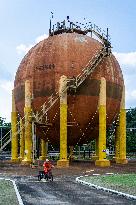
This photo taken on Oct. 16, 2025 shows a worker riding past liquefied petroleum gas storage tanks at the Urucu Oil and Gas Production Field in the state of Amazonas, Brazil. The Urucu Oil and Gas Production Field, located in the heart of Brazil's Amazonas state, is one of the country's most important onshore oil and gas production bases. Surrounded by pristine rainforest, it has operated steadily since its start-up in 1988, supplying oil and natural gas that support energy needs across northern Brazil. According to its operator Petrobras, the field has preserved about 98 percent of its area as native forest, carries out rainwater recycling, waste recovery, and reforestation programs and plants more than 1.5 million native trees. Photo by Wang Tiancong/Xinhua/ABACAPRESS.COM

  •  
Urca Oil and Gas Production Field Development - Brazil

Urca Oil and Gas Production Field Development - Brazil

This photo taken on Oct. 16, 2025 shows the production facilities of the Urucu Oil and Gas Production Field in the state of Amazonas, Brazil. The Urucu Oil and Gas Production Field, located in the heart of Brazil's Amazonas state, is one of the country's most important onshore oil and gas production bases. Surrounded by pristine rainforest, it has operated steadily since its start-up in 1988, supplying oil and natural gas that support energy needs across northern Brazil. According to its operator Petrobras, the field has preserved about 98 percent of its area as native forest, carries out rainwater recycling, waste recovery, and reforestation programs and plants more than 1.5 million native trees. Photo by Wang Tiancong/Xinhua/ABACAPRESS.COM

  •  
Urca Oil and Gas Production Field Development - Brazil

Urca Oil and Gas Production Field Development - Brazil

A worker examines seeds used for cultivating tropical rainforest vegetation at the Urucu Oil and Gas Production Field in the state of Amazonas, Brazil, Oct. 17, 2025. The Urucu Oil and Gas Production Field, located in the heart of Brazil's Amazonas state, is one of the country's most important onshore oil and gas production bases. Surrounded by pristine rainforest, it has operated steadily since its start-up in 1988, supplying oil and natural gas that support energy needs across northern Brazil. According to its operator Petrobras, the field has preserved about 98 percent of its area as native forest, carries out rainwater recycling, waste recovery, and reforestation programs and plants more than 1.5 million native trees. Photo by Wang Tiancong/Xinhua/ABACAPRESS.COM

  •  
Urca Oil and Gas Production Field Development - Brazil

Urca Oil and Gas Production Field Development - Brazil

A worker conducts a routine inspection at the Urucu Oil and Gas Production Field in the state of Amazonas, Brazil, on Oct. 16, 2025. The Urucu Oil and Gas Production Field, located in the heart of Brazil's Amazonas state, is one of the country's most important onshore oil and gas production bases. Surrounded by pristine rainforest, it has operated steadily since its start-up in 1988, supplying oil and natural gas that support energy needs across northern Brazil. According to its operator Petrobras, the field has preserved about 98 percent of its area as native forest, carries out rainwater recycling, waste recovery, and reforestation programs and plants more than 1.5 million native trees. Photo by Wang Tiancong/Xinhua/ABACAPRESS.COM

  •  
Urca Oil and Gas Production Field Development - Brazil

Urca Oil and Gas Production Field Development - Brazil

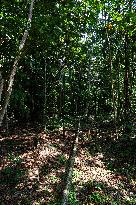
This photo taken on Oct. 17, 2025 shows tropical rainforest vegetation near the Urucu Oil and Gas Production Field, in the state of Amazonas, Brazil. The Urucu Oil and Gas Production Field, located in the heart of Brazil's Amazonas state, is one of the country's most important onshore oil and gas production bases. Surrounded by pristine rainforest, it has operated steadily since its start-up in 1988, supplying oil and natural gas that support energy needs across northern Brazil. According to its operator Petrobras, the field has preserved about 98 percent of its area as native forest, carries out rainwater recycling, waste recovery, and reforestation programs and plants more than 1.5 million native trees. Photo by Wang Tiancong/Xinhua/ABACAPRESS.COM

  •  

Japan: Heavy Rain, Flooding Hit Sea of Japan Coast, Prompting Weather Alerts

A storm system moved through a wide area along the Sea of Japan coast on Tuesday, August 12, prompting weather alerts for heavy rain, flooding and mudslides, and causing travel disruptions. This video shows a large amount of rainwater flowing down a cliff in Izumo City, Shimane Prefecture.

  •  

US: NYC Subway Stations Flooded as Storms Hit Northeast 2

Strong storms moved through the Northeast on Thursday, July 31, bringing heavy rain and causing flash flooding and travel disruptions across New York and New Jersey. In New York City, rainwater flowed into subway stations, forcing passengers to walk through floodwaters.

  •  

US: NYC Subway Stations Flooded as Storms Hit Northeast

Strong storms moved through the Northeast on Thursday, July 31, bringing heavy rain and causing flash flooding and travel disruptions across New York and New Jersey. In New York City, rainwater flowed into subway stations, forcing passengers to walk through floodwaters.

  •  
Illustration - French Riviera

Illustration - French Riviera

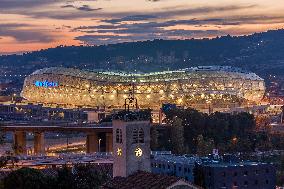
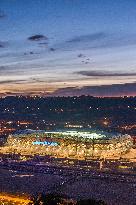
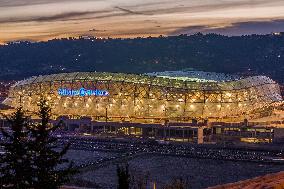
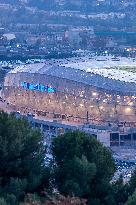
FRANCE. ALPES-MARITIMES (06) NICE, STADE ALLIANZ RIVIERA, LOCATED IN THE SAINT-ISIDORE DISTRICT. THIS ULTRA-MODERN 35,000-SEAT STADIUM (45,000 IN CONCERT CONFIGURATION) WAS FINANCED BY A PUBLIC-PRIVATE PARTNERSHIP (PPP). IT COST ?243.5 MILLION. THE STADIUM IS DESIGNED TO BE ENVIRONMENTALLY FRIENDLY, WITH 7,500 SQUARE METRES OF PHOTOVOLTAIC PANELS, RAINWATER RECOVERY AND A NATURAL VENTILATION SYSTEM. INAUGURATED: 22 SEPTEMBER 2013 Photo by Robert Palomba/Only France/ABACAPRESS.COM

  •  
Illustration - French Riviera

Illustration - French Riviera

FRANCE. ALPES-MARITIMES (06) NICE, STADE ALLIANZ RIVIERA, LOCATED IN THE SAINT-ISIDORE DISTRICT. THIS ULTRA-MODERN 35,000-SEAT STADIUM (45,000 IN CONCERT CONFIGURATION) WAS FINANCED BY A PUBLIC-PRIVATE PARTNERSHIP (PPP). IT COST ?243.5 MILLION. THE STADIUM IS DESIGNED TO BE ENVIRONMENTALLY FRIENDLY, WITH 7,500 SQUARE METRES OF PHOTOVOLTAIC PANELS, RAINWATER RECOVERY AND A NATURAL VENTILATION SYSTEM. INAUGURATED: 22 SEPTEMBER 2013 Photo by Robert Palomba/Only France/ABACAPRESS.COM

  •  
Illustration - French Riviera

Illustration - French Riviera

FRANCE. ALPES-MARITIMES (06) NICE, STADE ALLIANZ RIVIERA, LOCATED IN THE SAINT-ISIDORE DISTRICT. THIS ULTRA-MODERN 35,000-SEAT STADIUM (45,000 IN CONCERT CONFIGURATION) WAS FINANCED BY A PUBLIC-PRIVATE PARTNERSHIP (PPP). IT COST ?243.5 MILLION. THE STADIUM IS DESIGNED TO BE ENVIRONMENTALLY FRIENDLY, WITH 7,500 SQUARE METRES OF PHOTOVOLTAIC PANELS, RAINWATER RECOVERY AND A NATURAL VENTILATION SYSTEM. INAUGURATED: 22 SEPTEMBER 2013 Photo by Robert Palomba/Only France/ABACAPRESS.COM

  •  
Illustration - French Riviera

Illustration - French Riviera

FRANCE. ALPES-MARITIMES (06) NICE, STADE ALLIANZ RIVIERA, LOCATED IN THE SAINT-ISIDORE DISTRICT. THIS ULTRA-MODERN 35,000-SEAT STADIUM (45,000 IN CONCERT CONFIGURATION) WAS FINANCED BY A PUBLIC-PRIVATE PARTNERSHIP (PPP). IT COST ?243.5 MILLION. THE STADIUM IS DESIGNED TO BE ENVIRONMENTALLY FRIENDLY, WITH 7,500 SQUARE METRES OF PHOTOVOLTAIC PANELS, RAINWATER RECOVERY AND A NATURAL VENTILATION SYSTEM. INAUGURATED: 22 SEPTEMBER 2013 Photo by Robert Palomba/Only France/ABACAPRESS.COM

  •  
Illustration - French Riviera

Illustration - French Riviera

FRANCE. ALPES-MARITIMES (06) NICE, STADE ALLIANZ RIVIERA, LOCATED IN THE SAINT-ISIDORE DISTRICT. THIS ULTRA-MODERN 35,000-SEAT STADIUM (45,000 IN CONCERT CONFIGURATION) WAS FINANCED BY A PUBLIC-PRIVATE PARTNERSHIP (PPP). IT COST ?243.5 MILLION. THE STADIUM IS DESIGNED TO BE ENVIRONMENTALLY FRIENDLY, WITH 7,500 SQUARE METRES OF PHOTOVOLTAIC PANELS, RAINWATER RECOVERY AND A NATURAL VENTILATION SYSTEM. INAUGURATED: 22 SEPTEMBER 2013 Photo by Robert Palomba/Only France/ABACAPRESS.COM

  •  
Illustration - French Riviera

Illustration - French Riviera

FRANCE. ALPES-MARITIMES (06) NICE, STADE ALLIANZ RIVIERA, LOCATED IN THE SAINT-ISIDORE DISTRICT. THIS ULTRA-MODERN 35,000-SEAT STADIUM (45,000 IN CONCERT CONFIGURATION) WAS FINANCED BY A PUBLIC-PRIVATE PARTNERSHIP (PPP). IT COST ?243.5 MILLION. THE STADIUM IS DESIGNED TO BE ENVIRONMENTALLY FRIENDLY, WITH 7,500 SQUARE METRES OF PHOTOVOLTAIC PANELS, RAINWATER RECOVERY AND A NATURAL VENTILATION SYSTEM. INAUGURATED: 22 SEPTEMBER 2013 Photo by Robert Palomba/Only France/ABACAPRESS.COM

  • Main
  • Top
  • Editorial
  • Creative
  • About Us
  • About ILG
  • Terms of use
  • Company
  • BEHIND
  • Price List
  • Single Plan
  • Monthly Plan
  • Services
  • Shooting
  • Rights Clearance
  • Support
  • FAQ
  • How To Buy
  • Contact Us
  • Become a Partner

© KYODO NEWS IMAGES INC

All Rights Reserved.

  • Editorial
  • Olympics
  • News
  • Sports
  • Japan
  • Tech
  • Royal
  • Disaster
  • NorthKorea
  • Old Japan
  • SNS

  • Creative
  • Food
  • Japan
  • Landscape
  • Animal
  • Popular
  • #Ukraine
  • #Russia
  • #coronavirus
  • #N. Korea
  • #China
  • #Thailand
  • #Ukraine
  • #Russia
  • #coronavirus
  • #N. Korea
  • #China
  • #Thailand
  • Food
  • Japan
  • Landscape
  • Animal
  • Olympics
  • News
  • Sports
  • Japan
  • Tech
  • Royal
  • Disaster
  • NorthKorea
  • Old Japan
  • SNS