•  
#CHINA-HUBEI-ENSHI-NIGHT ECONOMY (CN)

#CHINA-HUBEI-ENSHI-NIGHT ECONOMY (CN)

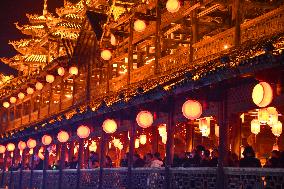
(230130) -- ENSHI, Jan. 30, 2023 (Xinhua) -- People visit the Fengyu bridge at a scenic spot in Xuan'en County, central China's Hubei Province, Jan. 28, 2023. Xuan'en County has built footpaths, fountains and snack booths along the Gongshui River to boost nighttime economy. (Photo by Wang Jun/Xinhua)

  •  
Snow in Chichibu

Snow in Chichibu

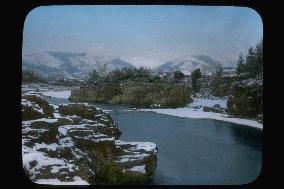
This is a winter scene near Arakawa River, flowing through Nagatoro in the Chichibu region of Saitama Prefecture. A place of great scenic beauty, Nagatoro is famous for its river boat rides. Many tourists visit this location even today. A bridge is visible in the centre.==Date:unknown, Place:Nikko, Photo:unknown, (Credit:Nagasaki University Library/Kyodo News Images) [Cabinet Number98‐47‐0]

  •  
Kintai-kyo Bridge

Kintai-kyo Bridge

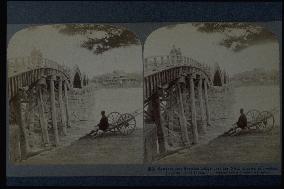
This is one of many stereographs taken during the Taisho Period (1912-1925). This photograph shows a side view of the famous Kintai Bridge from downstream. The photograph is entitled The Extraordinary Five-Arch Bridge over Nishiki River in Iwakuni.==Date:1904, Place:Iwakuni, Photo:Underwood, (Credit:Nagasaki University Library/Kyodo News Images) [Cabinet Number97‐7‐0]

  •  
Kintai-kyo Bridge

Kintai-kyo Bridge

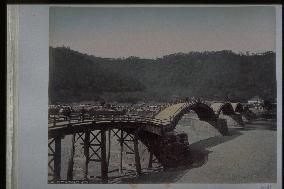
This hand-tinted photo was taken around 1887 and shows the bridge from upstream. A wooden bridge with four footings, it is a three-part continuous-span beam bridge with an additional beam bridge at each end. Kintai Bridge is famous for its advanced bridge-building technology.==Date:unknown, Place:Iwakuni, Photo:unknown, (Credit:Nagasaki University Library/Kyodo News Images) [Cabinet Number93‐39‐0]

  •  
Autumn tints of Takinogawa, Oji

Autumn tints of Takinogawa, Oji

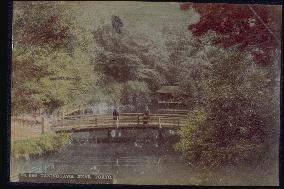
This seems to be Otonashi River (Shakujii River near Kongoji, the autumn colours temple. A bridge with a romantic atmosphere is said to have spanned a bend in the river. There was a bridge with a pleasant atmosphere. The deity Benzaiten was enshrined in a hollow in the rock near the bridge. A teahouse once stood on the hill. The river merges into Sumida River (formerly Arakawa), which flows northeast. Taken in the mid-Meiji Period.==Date:unknown, Place:Tokyo, Photo:unknown, (Credit:Nagasaki University Library/Kyodo News Images) [Cabinet Number88‐35‐0]

  •  
The Togetsukyo Bridge,Arashiyama

The Togetsukyo Bridge,Arashiyama

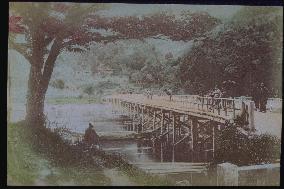
Togetsu Bridge at Arashiyama is viewed from the northern end, facing south. Horinji Temple is visible on the hillside. A sign at the northern end of the bridge informs people that cows and horses are not allowed to cross the bridge. A teahouse with hanging lanterns stands under a cherry tree. A maruko boat is docked nearby. The bridge was destroyed by a flood in 1892. The stone bridge to the right, Kinmonkyo, was later moved to Kurumazaki Shrine. Taken by Tamamura Kozaburo.==Date:unknown, Place:Kyoto, Photo:unknown, (Credit:Nagasaki University Library/Kyodo News Images) [Cabinet Number88‐6‐0]

  •  
Kintai-kyo Bridge

Kintai-kyo Bridge

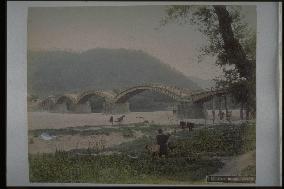
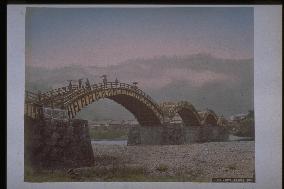
This hand-tinted photograph was taken around 1887 and shows Kintai Bridge from downstream. A wooden bridge with four footings, it is a three-part continuous-span beam bridge with an additional beam bridge at each end. Kintai Bridge is famous for its advanced bridge-building technology.==Date:unknown, Place:Iwakuni, Photo:unknown, (Credit:Nagasaki University Library/Kyodo News Images) [Cabinet Number87‐49‐0]

  •  
The Togetsukyo Bridge,Arashiyama

The Togetsukyo Bridge,Arashiyama

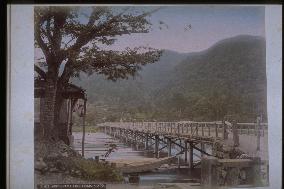
Distant view of Togetsu Bridge at Arashiyama, taken facing west from the northern shore of Katsura River. A promenade was built beside the pine trees. A small house, possibly a teahouse, is visible. People are standing on the bridge. Togetsu Bridge was destroyed by a flood in 1892.==Date:unknown, Place:Kyoto, Photo:unknown, (Credit:Nagasaki University Library/Kyodo News Images) [Cabinet Number87‐39‐0]

  •  
Autumn tints of Takinogawa, Oji

Autumn tints of Takinogawa, Oji

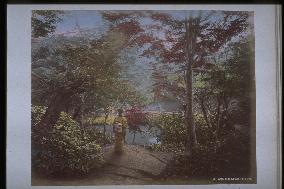
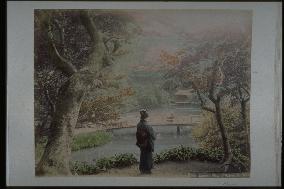
The slow-flowing Shakujii River originates from Sanpoji Pond, Shakujii Pond, and Fujimi Pond, then becomes a rapid stream in the Oji area. It is said that the river roared like a waterfall. Hence, the name of the river became Takinogawa ( Waterfall River). Takinogawa became famous for its autumn colours after the 8th Shogun, Tokugawa Yoshimune, had them planted in this area in 1721. A woman stands in the foreground, enjoying the scenery.==Date:unknown, Place:Tokyo, Photo:Kajima Seibei, (Credit:Nagasaki University Library/Kyodo News Images) [Cabinet Number87‐12‐0]

  •  
Autumn tints of Takinogawa, Oji

Autumn tints of Takinogawa, Oji

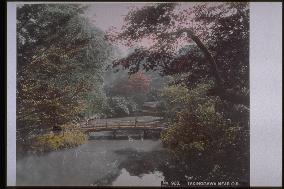
This bridge appears many times in photographs of Takinogawa taken during the Meiji Period. The former Takinogawa Village was located west of Mt. Asuka. The groves of maple trees where people enjoyed the autumn colours centered around Kongoji, which was also called the autumn colours temple (present-day Takinogawa 3-chome, Kita Ward). People enjoyed the cherry blossoms at Mt. Asuka in spring and the colourful leaves of Takinogawa in autumn. Mid-Meiji Period.==Date:unknown, Place:Tokyo, Photo:unknown, (Credit:Nagasaki University Library/Kyodo News Images) [Cabinet Number85‐13‐0]

  •  
The Togetsukyo Bridge,Arashiyama

The Togetsukyo Bridge,Arashiyama

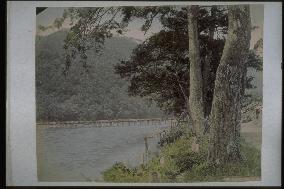
Distant view of Togetsu Bridge at Arashiyama, taken facing west from the northern shore of Katsura River. Three maruko boats are docked nearby, and pine trees are visible in the foreground. Houses are visible on the other side of the river. Togetsu Bridge was destroyed by a flood in 1892.==Date:unknown, Place:Kyoto, Photo:A. Farsari, (Credit:Nagasaki University Library/Kyodo News Images) [Cabinet Number82‐16‐0]

  •  
Autumn tints of Takinogawa, Oji

Autumn tints of Takinogawa, Oji

Autumn tints of Takinogawa, Oji==Date:unknown, Place:Tokyo, Photo:A. Farsari, (Credit:Nagasaki University Library/Kyodo News Images)

  •  
Kintai-kyo Bridge

Kintai-kyo Bridge

Kintai Bridge was built in 1673 by Kikkawa Hiroyoshi, the third lord of Iwakuni Domain. It is said that Kodama Kurohemon designed the bridge. The bridge is a five-arched wooden structure. The bridge has been repaired about ten times in the past. Mid-Meiji Period. Hand-tinted.==Date:unknown, Place:Iwakuni, Photo:A. Farsari, (Credit:Nagasaki University Library/Kyodo News Images) [Cabinet Number81‐29‐0]

  •  
Autumn tints of Takinogawa, Oji

Autumn tints of Takinogawa, Oji

The 8th Shogun, Tokugawa Yoshimune, visited this area in 1720-21 and was pleased to find that the Oji Gongen Shrine and the name of the Otonashi River originated in his home province, Kishu. As a result he ordered the planting of Yoshino cherry trees at Mt. Asuka and maple trees along Takinogawa to provide autumn colours. Consequently, the Oji area became a popular tourist spot for people from Edo. Taken in the mid-Meiji Period.==Date:unknown, Place:Tokyo, Photo:unknown, (Credit:Nagasaki University Library/Kyodo News Images) [Cabinet Number80‐34‐0]

  •  
Tenjin-bashi Bridge

Tenjin-bashi Bridge

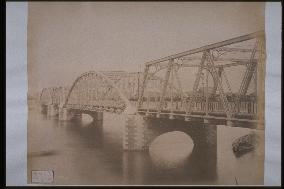
Tenjin Bridge is one of the three great bridges of Naniwa together with Tenma Bridge and Naniwa Bridge. The longest of the three, Tenjin Bridge was destroyed in the great flood of the Yodo River in 1885 and replaced three years later with an iron bridge.==Date:unknown, Place:Osaka, Photo:unknown, (Credit:Nagasaki University Library/Kyodo News Images) [Cabinet Number57‐13‐0]

  •  
Autumn tints of Takinogawa, Oji

Autumn tints of Takinogawa, Oji

The photographs of Takinogawa taken during the Meiji Period capture the beauty of the autumn colours. However, after World War II, the development of the residential areas changed the area upstream. The river banks were covered with concrete and the river started to smell due to waste water from houses. The local people launched a movement to protect the river, and finally the government built the Otonashi River Shinsui (Water Friendly) Park in 1985. Spring water is mixed with the natural flow and filtered. Thus, clean water is circulated in certain areas. Depicting the area under present-day Otonashi Bridge, this photograph was taken by Kusakabe Kinbei between 1877 and 1887 (second decade of the Meiji Period).==Date:unknown, Place:Tokyo, Photo:Kusakabe Kinbei, (Credit:Nagasaki University Library/Kyodo News Images) [Cabinet Number53‐32‐0]

  •  
The Togetsukyo Bridge,Arashiyama

The Togetsukyo Bridge,Arashiyama

Togetsu Bridge at Arashiyama is viewed from the northern end, facing south. Horinji Temple is visible on the hillside. Kimono-clad women look toward the camera from the bridge. A man is fishing under the cherry tree. The bridge was destroyed by a flood in 1892. The stone bridge in the foreground is Kinmonkyo, which was later moved to Kurumazaki Shrine. Taken by Tamamura Kozaburo.==Date:unknown, Place:Kyoto, Photo:Tamamura Kozaburo, (Credit:Nagasaki University Library/Kyodo News Images) [Cabinet Number48‐113‐0]

  •  
Autumn tints of Takinogawa, Oji

Autumn tints of Takinogawa, Oji

Oji Station is built over Shakujii River. In this area the river is called Otonashi River. The reason for this name is as follows. Toyoshima Gonnokami Kiyomitsu, a medieval feudal lord, hailed from Kishu (present-day Wakayama Prefecture) and thus established a shrine to Jakuichi Ouji Gongen (Kumano Gongen) that later became Oji Gongen. Consequently, this area was called Oji, and the river was named after the Otonashi River of Kishu. Upstream on the Otonashi River, Takinogawa Village gained fame for its autumn colours. Taken in the mid-Meiji Period.==Date:unknown, Place:Tokyo, Photo:Tamamura Kozaburo, (Credit:Nagasaki University Library/Kyodo News Images) [Cabinet Number48‐59‐0]

  •  
Hozu River

Hozu River

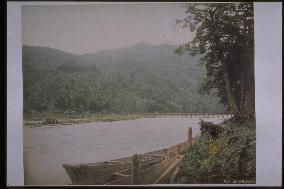
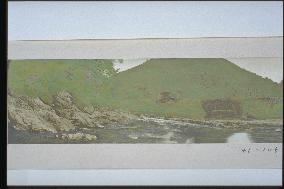
View looking downstream from a boat on Hozu River. The river turns sharply to the left at this spot, indicating that it is near Uketa Shrine. Hozu Gorge, also called Arashi Gorge, is a 13km stretch from around Hozu Bridge in Kameoka to Togetsu Bridge at Arashiyama. This is a scenic point where rapids and unusual rock formations can be enjoyed. Tributaries such as Kiyotaki River flow into the V-shaped gorge at an altitude of 400 meters. River.==Date:unknown, Place:Kyoto, Photo:unknown, (Credit:Nagasaki University Library/Kyodo News Images) [Cabinet Number46‐105‐0]

  •  
Hozu River

Hozu River

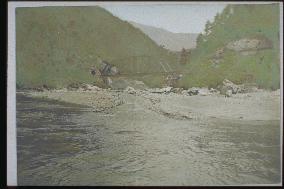
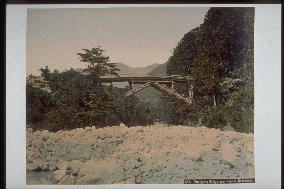
The iron bridge of Kyoto Railway Company is seen from a boat going down Hozu River. Hozu Gorge, also called Arashi Gorge, is a 13km stretch from around Hozu Bridge in Kameoka to Togetsu Bridge in Arashiyama. This is a scenic point where rapids and unusual rock formations can be enjoyed. Tributaries such as Kiyotaki River flow into the V-shaped gorge at an altitude of 400 meters. This photograph was taken sometime after August 1899, when the Kyoto Railway Company line between Saga and Sonobe opened.==Date:unknown, Place:Kyoto, Photo:unknown, (Credit:Nagasaki University Library/Kyodo News Images) [Cabinet Number46‐107‐0]

  •  
Hozu River

Hozu River

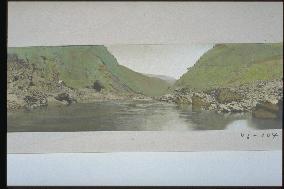
View looking downstream from a boat on Hozu River. The river flows straight at this spot, indicating that it is a little downstream from Uketa Shrine. Hozu Gorge, also called Arashi Gorge, is a 13km stretch from around Hozu Bridge in Kameoka to Togetsu Bridge at Arashiyama. This is a scenic point where rapids and unusual rock formations can be enjoyed. Tributaries such as Kiyotaki River flow into the V-shaped gorge at an altitude of 400 meters.==Date:unknown, Place:Kyoto, Photo:unknown, (Credit:Nagasaki University Library/Kyodo News Images) [Cabinet Number46‐104‐0]

  •  
Autumn tints of Takinogawa, Oji

Autumn tints of Takinogawa, Oji

The red leaves of the Takino River was famous since the Edo era, and many novelists and calligraphers visited the site. The name Takino River originates from the alias of the Shakujii River, and that is the river running in the center.==Date:unknown, Place:Tokyo, Photo:Kusakabe Kinbei, (Credit:Nagasaki University Library/Kyodo News Images) [Cabinet Number40‐7‐0]

  •  
Nezame-no-toko

Nezame-no-toko

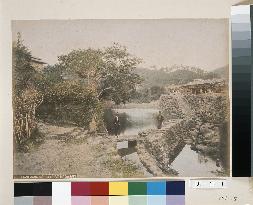
The bridge over the Nameri River near the Nezame no toko, which is a scenic spot which can also be seen in the left corner of the photo numbered 38-6. This bridge was appraised as the length 15 ken, without bridge stakes, the wonderful arch in Kiso junreiki . The bridge is presently rebuilt as the Eikyu Bridge.==Date:unknown, Place:Nagano, Photo:Kusakabe Kinbei, (Credit:Nagasaki University Library/Kyodo News Images) [Cabinet Number38‐7‐0]

  •  
Autumn tints of Takinogawa, Oji

Autumn tints of Takinogawa, Oji

The red leaves of Takino River. Visitors climbing along the river arrive at a place called the red leaves temple or Kongoji of Takino River.==Date:unknown, Place:Tokyo, Photo:Tamamura Kozaburo, (Credit:Nagasaki University Library/Kyodo News Images) [Cabinet Number31‐78‐0]

  •  
Autumn tints of Takinogawa, Oji

Autumn tints of Takinogawa, Oji

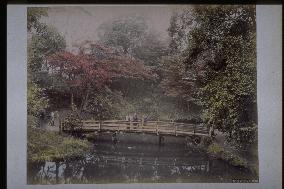
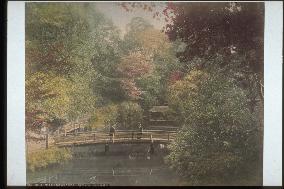
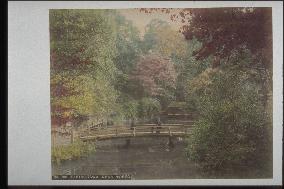
Below the cliffs of Oji Shrine, Takinogawa is famous for the red leaves along the Shakujii River. It was popular as a pleasure spot from the early days. At the centre of the bridge two women can be seen enjoying the view.==Date:unknown, Place:Tokyo, Photo:Tamamura Kozaburo, (Credit:Nagasaki University Library/Kyodo News Images) [Cabinet Number25‐65‐0]

  •  
Mt. Fuji seen from Numakawa,Tagonoura

Mt. Fuji seen from Numakawa,Tagonoura

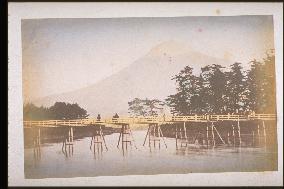
A pine grove and Mt.Fuji is used for the background of a wooden bridge built over the Numa River. There was beautiful white sand and green pine trees on the beach at Tagonoura, a scenic spot where Mt.Fuji casts a reflection over Suruga Bay.==Date:unknown, Place:Shizuoka, Photo:unknown, (Credit:Nagasaki University Library/Kyodo News Images) [Cabinet Number16‐29‐0]

  •  
Autumn tints of Takinogawa, Oji

Autumn tints of Takinogawa, Oji

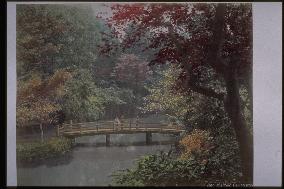
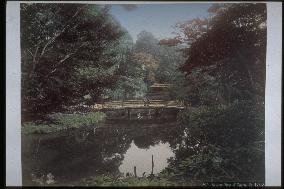
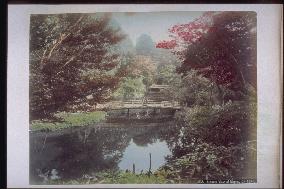
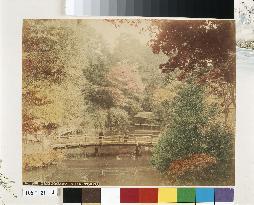
In contrast to the cherry blossoms of Asukayama, Takino River was famous during the Meiji era for the leaves turning red in the autumn. It is a downstream on the Shakujii River. Two women stand on the bridge, and the building in the rear may be for looking at the red leaves. Trees aglow in autumn clours cast their shadow over the surface of the river from the right and the left.==Date:unknown, Place:Tokyo, Photo:Tamamura Kozaburo, (Credit:Nagasaki University Library/Kyodo News Images) [Cabinet Number11‐4‐0]

  •  
Sakurababa Weir of Nakashima River

Sakurababa Weir of Nakashima River

This is a scene of the Sakurababa and Irabayashi neighbourhoods near the fork of Nakashima River and Narutaki River (present-day Nakanohashi bridge). This scenery was given the poetic name Sakuraba Seiran (cherry blossom storm) and was known as one of the eight best scenes of Nagasaki. The area beyond the building on the right, known as Nakagawa Carlsbad, was famous for its cherry blossoms and baths prepared with the same mineral ingredients as those in Carlsbad (present-day Czech Republic).==Date:unknown, Place:Nagasaki, Photo:unknown, (Credit:Nagasaki University Library/Kyodo News Images) [Cabinet Number109‐18‐0]

  •  
Autumn tints of Takinogawa, Oji

Autumn tints of Takinogawa, Oji

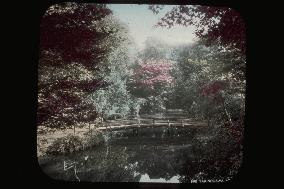
Autumn tints of Takinogawa, Oji==Date:unknown, Place:Tokyo, Photo:Tamamura Kozaburo, (Credit:Nagasaki University Library/Kyodo News Images)

  • Main
  • Top
  • Editorial
  • Creative
  • About Us
  • About ILG
  • Terms of use
  • Company
  • BEHIND
  • Price List
  • Single Plan
  • Monthly Plan
  • Services
  • Shooting
  • Rights Clearance
  • Support
  • FAQ
  • How To Buy
  • Contact Us
  • Become a Partner

© KYODO NEWS IMAGES INC

All Rights Reserved.

  • Editorial
  • Olympics
  • News
  • Sports
  • Japan
  • Tech
  • Royal
  • Disaster
  • NorthKorea
  • Old Japan
  • SNS
  • Creative
  • Food
  • Japan
  • Landscape
  • Animal
  • Popular
  • #Ukraine
  • #China
  • #coronavirus
  • #N. Korea
  • #Thailand
  • #Russia
  • #Ukraine
  • #China
  • #coronavirus
  • #N. Korea
  • #Thailand
  • #Russia
  • Food
  • Japan
  • Landscape
  • Animal
  • Olympics
  • News
  • Sports
  • Japan
  • Tech
  • Royal
  • Disaster
  • NorthKorea
  • Old Japan
  • SNS