•  
Pir Shalyar Celebration in Kurdistan Iran

Pir Shalyar Celebration in Kurdistan Iran

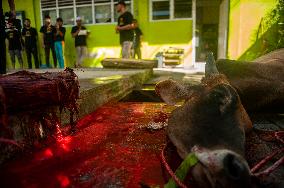
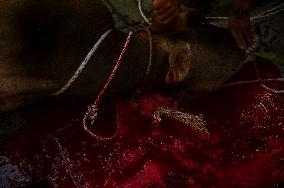
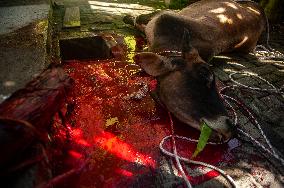
(EDITOR'S NOTE: Graphic Content) An Iranian man is reflected in a pool of blood from a sacrificial calf during the Pir Shalyar festival in Uraman Takht, Kurdistan Province, Iran, on January 29, 2025. The festival of Pir Shalyar is a traditional ceremony that celebrates the marriage, likely mythical, of Pir Shalyar to the Bukharan princess. The celebration takes place in three stages on non-consecutive days. Photo by Barbod Khorshidi/Middle East Images/ABACAPRESS.COM

  •  
Sacrifices During Eid al-Adha Celebrations in Medan

Sacrifices During Eid al-Adha Celebrations in Medan

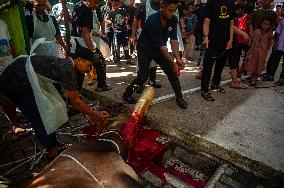
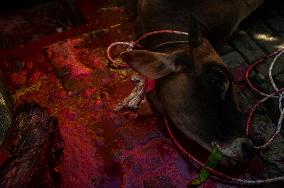
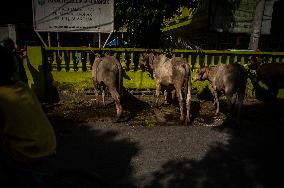
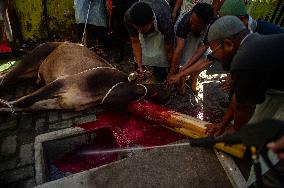
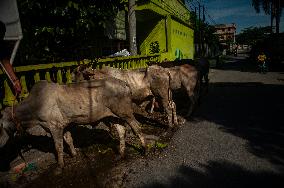
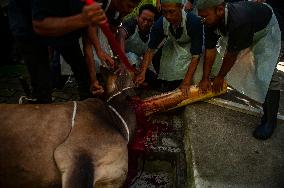
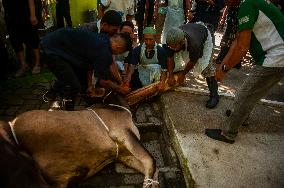
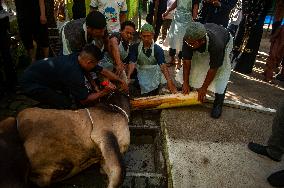
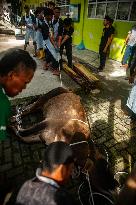
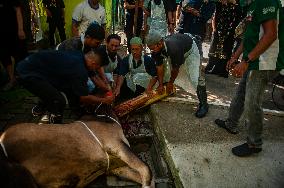
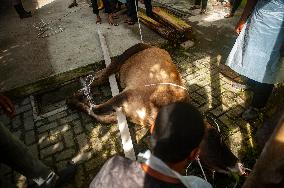
Graphic Content - Muslims are seen slaughtering sacrificial animals after carrying out prayers of Eid al-Adha 1446 Hijri in Medan, North Sumatra, Indonesia on June 06, 2025. Eid al-Adha is the holiest of the two major Muslim holidays celebrated annually. It marks the yearly Muslim pilgrimage (Hajj) to visit Mecca, the most sacred place in Islam. Muslims slaughter a sacrificial animal and split the meat into three parts, one for the family, one for friends and relatives, and one for the poor and needy.

  •  
Sacrifices During Eid al-Adha Celebrations in Medan

Sacrifices During Eid al-Adha Celebrations in Medan

Graphic Content - Muslims are seen slaughtering sacrificial animals after carrying out prayers of Eid al-Adha 1446 Hijri in Medan, North Sumatra, Indonesia on June 06, 2025. Eid al-Adha is the holiest of the two major Muslim holidays celebrated annually. It marks the yearly Muslim pilgrimage (Hajj) to visit Mecca, the most sacred place in Islam. Muslims slaughter a sacrificial animal and split the meat into three parts, one for the family, one for friends and relatives, and one for the poor and needy.

  •  
Sacrifices During Eid al-Adha Celebrations in Medan

Sacrifices During Eid al-Adha Celebrations in Medan

Graphic Content - Muslims are seen slaughtering sacrificial animals after carrying out prayers of Eid al-Adha 1446 Hijri in Medan, North Sumatra, Indonesia on June 06, 2025. Eid al-Adha is the holiest of the two major Muslim holidays celebrated annually. It marks the yearly Muslim pilgrimage (Hajj) to visit Mecca, the most sacred place in Islam. Muslims slaughter a sacrificial animal and split the meat into three parts, one for the family, one for friends and relatives, and one for the poor and needy.

  •  
Sacrifices During Eid al-Adha Celebrations in Medan

Sacrifices During Eid al-Adha Celebrations in Medan

Graphic Content - Muslims are seen slaughtering sacrificial animals after carrying out prayers of Eid al-Adha 1446 Hijri in Medan, North Sumatra, Indonesia on June 06, 2025. Eid al-Adha is the holiest of the two major Muslim holidays celebrated annually. It marks the yearly Muslim pilgrimage (Hajj) to visit Mecca, the most sacred place in Islam. Muslims slaughter a sacrificial animal and split the meat into three parts, one for the family, one for friends and relatives, and one for the poor and needy.

  •  
Sacrifices During Eid al-Adha Celebrations in Medan

Sacrifices During Eid al-Adha Celebrations in Medan

Graphic Content - Muslims are seen slaughtering sacrificial animals after carrying out prayers of Eid al-Adha 1446 Hijri in Medan, North Sumatra, Indonesia on June 06, 2025. Eid al-Adha is the holiest of the two major Muslim holidays celebrated annually. It marks the yearly Muslim pilgrimage (Hajj) to visit Mecca, the most sacred place in Islam. Muslims slaughter a sacrificial animal and split the meat into three parts, one for the family, one for friends and relatives, and one for the poor and needy.

  •  
Sacrifices During Eid al-Adha Celebrations in Medan

Sacrifices During Eid al-Adha Celebrations in Medan

Graphic Content - Muslims are seen slaughtering sacrificial animals after carrying out prayers of Eid al-Adha 1446 Hijri in Medan, North Sumatra, Indonesia on June 06, 2025. Eid al-Adha is the holiest of the two major Muslim holidays celebrated annually. It marks the yearly Muslim pilgrimage (Hajj) to visit Mecca, the most sacred place in Islam. Muslims slaughter a sacrificial animal and split the meat into three parts, one for the family, one for friends and relatives, and one for the poor and needy.

  •  
Sacrifices During Eid al-Adha Celebrations in Medan

Sacrifices During Eid al-Adha Celebrations in Medan

Graphic Content - Muslims are seen slaughtering sacrificial animals after carrying out prayers of Eid al-Adha 1446 Hijri in Medan, North Sumatra, Indonesia on June 06, 2025. Eid al-Adha is the holiest of the two major Muslim holidays celebrated annually. It marks the yearly Muslim pilgrimage (Hajj) to visit Mecca, the most sacred place in Islam. Muslims slaughter a sacrificial animal and split the meat into three parts, one for the family, one for friends and relatives, and one for the poor and needy.

  •  
Sacrifices During Eid al-Adha Celebrations in Medan

Sacrifices During Eid al-Adha Celebrations in Medan

Graphic Content - Muslims are seen slaughtering sacrificial animals after carrying out prayers of Eid al-Adha 1446 Hijri in Medan, North Sumatra, Indonesia on June 06, 2025. Eid al-Adha is the holiest of the two major Muslim holidays celebrated annually. It marks the yearly Muslim pilgrimage (Hajj) to visit Mecca, the most sacred place in Islam. Muslims slaughter a sacrificial animal and split the meat into three parts, one for the family, one for friends and relatives, and one for the poor and needy.

  •  
Sacrifices During Eid al-Adha Celebrations in Medan

Sacrifices During Eid al-Adha Celebrations in Medan

Graphic Content - Muslims are seen slaughtering sacrificial animals after carrying out prayers of Eid al-Adha 1446 Hijri in Medan, North Sumatra, Indonesia on June 06, 2025. Eid al-Adha is the holiest of the two major Muslim holidays celebrated annually. It marks the yearly Muslim pilgrimage (Hajj) to visit Mecca, the most sacred place in Islam. Muslims slaughter a sacrificial animal and split the meat into three parts, one for the family, one for friends and relatives, and one for the poor and needy.

  •  
Sacrifices During Eid al-Adha Celebrations in Medan

Sacrifices During Eid al-Adha Celebrations in Medan

Graphic Content - Muslims are seen slaughtering sacrificial animals after carrying out prayers of Eid al-Adha 1446 Hijri in Medan, North Sumatra, Indonesia on June 06, 2025. Eid al-Adha is the holiest of the two major Muslim holidays celebrated annually. It marks the yearly Muslim pilgrimage (Hajj) to visit Mecca, the most sacred place in Islam. Muslims slaughter a sacrificial animal and split the meat into three parts, one for the family, one for friends and relatives, and one for the poor and needy.

  •  
Sacrifices During Eid al-Adha Celebrations in Medan

Sacrifices During Eid al-Adha Celebrations in Medan

Graphic Content - Muslims are seen slaughtering sacrificial animals after carrying out prayers of Eid al-Adha 1446 Hijri in Medan, North Sumatra, Indonesia on June 06, 2025. Eid al-Adha is the holiest of the two major Muslim holidays celebrated annually. It marks the yearly Muslim pilgrimage (Hajj) to visit Mecca, the most sacred place in Islam. Muslims slaughter a sacrificial animal and split the meat into three parts, one for the family, one for friends and relatives, and one for the poor and needy.

  •  
Sacrifices During Eid al-Adha Celebrations in Medan

Sacrifices During Eid al-Adha Celebrations in Medan

Graphic Content - Muslims are seen slaughtering sacrificial animals after carrying out prayers of Eid al-Adha 1446 Hijri in Medan, North Sumatra, Indonesia on June 06, 2025. Eid al-Adha is the holiest of the two major Muslim holidays celebrated annually. It marks the yearly Muslim pilgrimage (Hajj) to visit Mecca, the most sacred place in Islam. Muslims slaughter a sacrificial animal and split the meat into three parts, one for the family, one for friends and relatives, and one for the poor and needy.

  •  
Sacrifices During Eid al-Adha Celebrations in Medan

Sacrifices During Eid al-Adha Celebrations in Medan

Graphic Content - Muslims are seen slaughtering sacrificial animals after carrying out prayers of Eid al-Adha 1446 Hijri in Medan, North Sumatra, Indonesia on June 06, 2025. Eid al-Adha is the holiest of the two major Muslim holidays celebrated annually. It marks the yearly Muslim pilgrimage (Hajj) to visit Mecca, the most sacred place in Islam. Muslims slaughter a sacrificial animal and split the meat into three parts, one for the family, one for friends and relatives, and one for the poor and needy.

  •  
Sacrifices During Eid al-Adha Celebrations in Medan

Sacrifices During Eid al-Adha Celebrations in Medan

Graphic Content - Muslims are seen slaughtering sacrificial animals after carrying out prayers of Eid al-Adha 1446 Hijri in Medan, North Sumatra, Indonesia on June 06, 2025. Eid al-Adha is the holiest of the two major Muslim holidays celebrated annually. It marks the yearly Muslim pilgrimage (Hajj) to visit Mecca, the most sacred place in Islam. Muslims slaughter a sacrificial animal and split the meat into three parts, one for the family, one for friends and relatives, and one for the poor and needy.

  •  
Eid al-Adha 1446 H Mubarak - Indonesia

Eid al-Adha 1446 H Mubarak - Indonesia

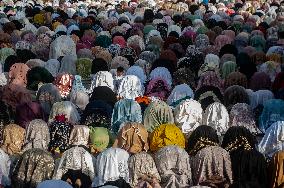
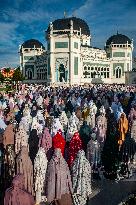
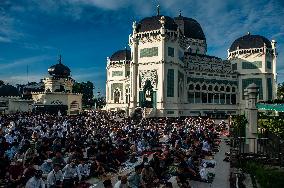
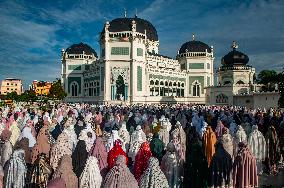
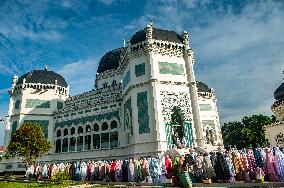
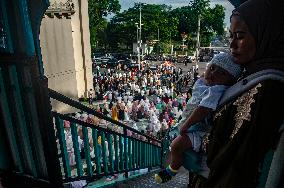
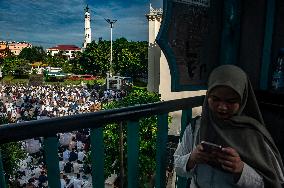
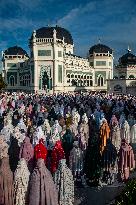
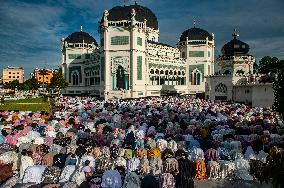
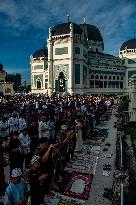
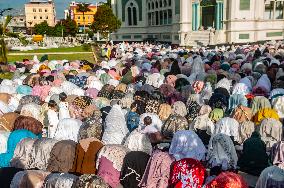
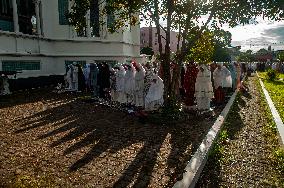
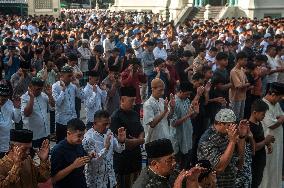
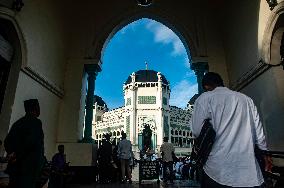
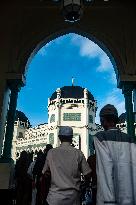
Thousands of Muslims are seen attending Eid al-Adha 1446 Hijri morning prayers at the Al-Mashun Grand Mosque in Medan, North Sumatra, Indonesia on June 06, 2025. Eid al-Adha is the holiest of the two major Muslim holidays celebrated annually. It marks the yearly Muslim pilgrimage (Hajj) to visit Mecca, the most sacred place in Islam. Muslims slaughter a sacrificial animal and split the meat into three parts, one for the family, one for friends and relatives, and one for the poor and needy. Photo by Aditya Sutanta/ABACAPRESS.COM

  •  
Eid al-Adha 1446 H Mubarak - Indonesia

Eid al-Adha 1446 H Mubarak - Indonesia

Thousands of Muslims are seen attending Eid al-Adha 1446 Hijri morning prayers at the Al-Mashun Grand Mosque in Medan, North Sumatra, Indonesia on June 06, 2025. Eid al-Adha is the holiest of the two major Muslim holidays celebrated annually. It marks the yearly Muslim pilgrimage (Hajj) to visit Mecca, the most sacred place in Islam. Muslims slaughter a sacrificial animal and split the meat into three parts, one for the family, one for friends and relatives, and one for the poor and needy. Photo by Aditya Sutanta/ABACAPRESS.COM

  •  
Eid al-Adha 1446 H Mubarak - Indonesia

Eid al-Adha 1446 H Mubarak - Indonesia

Thousands of Muslims are seen attending Eid al-Adha 1446 Hijri morning prayers at the Al-Mashun Grand Mosque in Medan, North Sumatra, Indonesia on June 06, 2025. Eid al-Adha is the holiest of the two major Muslim holidays celebrated annually. It marks the yearly Muslim pilgrimage (Hajj) to visit Mecca, the most sacred place in Islam. Muslims slaughter a sacrificial animal and split the meat into three parts, one for the family, one for friends and relatives, and one for the poor and needy. Photo by Aditya Sutanta/ABACAPRESS.COM

  •  
Eid al-Adha 1446 H Mubarak - Indonesia

Eid al-Adha 1446 H Mubarak - Indonesia

Thousands of Muslims are seen attending Eid al-Adha 1446 Hijri morning prayers at the Al-Mashun Grand Mosque in Medan, North Sumatra, Indonesia on June 06, 2025. Eid al-Adha is the holiest of the two major Muslim holidays celebrated annually. It marks the yearly Muslim pilgrimage (Hajj) to visit Mecca, the most sacred place in Islam. Muslims slaughter a sacrificial animal and split the meat into three parts, one for the family, one for friends and relatives, and one for the poor and needy. Photo by Aditya Sutanta/ABACAPRESS.COM

  •  
Eid al-Adha 1446 H Mubarak - Indonesia

Eid al-Adha 1446 H Mubarak - Indonesia

Thousands of Muslims are seen attending Eid al-Adha 1446 Hijri morning prayers at the Al-Mashun Grand Mosque in Medan, North Sumatra, Indonesia on June 06, 2025. Eid al-Adha is the holiest of the two major Muslim holidays celebrated annually. It marks the yearly Muslim pilgrimage (Hajj) to visit Mecca, the most sacred place in Islam. Muslims slaughter a sacrificial animal and split the meat into three parts, one for the family, one for friends and relatives, and one for the poor and needy. Photo by Aditya Sutanta/ABACAPRESS.COM

  •  
Eid al-Adha 1446 H Mubarak - Indonesia

Eid al-Adha 1446 H Mubarak - Indonesia

Thousands of Muslims are seen attending Eid al-Adha 1446 Hijri morning prayers at the Al-Mashun Grand Mosque in Medan, North Sumatra, Indonesia on June 06, 2025. Eid al-Adha is the holiest of the two major Muslim holidays celebrated annually. It marks the yearly Muslim pilgrimage (Hajj) to visit Mecca, the most sacred place in Islam. Muslims slaughter a sacrificial animal and split the meat into three parts, one for the family, one for friends and relatives, and one for the poor and needy. Photo by Aditya Sutanta/ABACAPRESS.COM

  •  
Eid al-Adha 1446 H Mubarak - Indonesia

Eid al-Adha 1446 H Mubarak - Indonesia

Thousands of Muslims are seen attending Eid al-Adha 1446 Hijri morning prayers at the Al-Mashun Grand Mosque in Medan, North Sumatra, Indonesia on June 06, 2025. Eid al-Adha is the holiest of the two major Muslim holidays celebrated annually. It marks the yearly Muslim pilgrimage (Hajj) to visit Mecca, the most sacred place in Islam. Muslims slaughter a sacrificial animal and split the meat into three parts, one for the family, one for friends and relatives, and one for the poor and needy. Photo by Aditya Sutanta/ABACAPRESS.COM

  •  
Eid al-Adha 1446 H Mubarak - Indonesia

Eid al-Adha 1446 H Mubarak - Indonesia

Thousands of Muslims are seen attending Eid al-Adha 1446 Hijri morning prayers at the Al-Mashun Grand Mosque in Medan, North Sumatra, Indonesia on June 06, 2025. Eid al-Adha is the holiest of the two major Muslim holidays celebrated annually. It marks the yearly Muslim pilgrimage (Hajj) to visit Mecca, the most sacred place in Islam. Muslims slaughter a sacrificial animal and split the meat into three parts, one for the family, one for friends and relatives, and one for the poor and needy. Photo by Aditya Sutanta/ABACAPRESS.COM

  •  
Eid al-Adha 1446 H Mubarak - Indonesia

Eid al-Adha 1446 H Mubarak - Indonesia

Thousands of Muslims are seen attending Eid al-Adha 1446 Hijri morning prayers at the Al-Mashun Grand Mosque in Medan, North Sumatra, Indonesia on June 06, 2025. Eid al-Adha is the holiest of the two major Muslim holidays celebrated annually. It marks the yearly Muslim pilgrimage (Hajj) to visit Mecca, the most sacred place in Islam. Muslims slaughter a sacrificial animal and split the meat into three parts, one for the family, one for friends and relatives, and one for the poor and needy. Photo by Aditya Sutanta/ABACAPRESS.COM

  •  
Eid al-Adha 1446 H Mubarak - Indonesia

Eid al-Adha 1446 H Mubarak - Indonesia

Thousands of Muslims are seen attending Eid al-Adha 1446 Hijri morning prayers at the Al-Mashun Grand Mosque in Medan, North Sumatra, Indonesia on June 06, 2025. Eid al-Adha is the holiest of the two major Muslim holidays celebrated annually. It marks the yearly Muslim pilgrimage (Hajj) to visit Mecca, the most sacred place in Islam. Muslims slaughter a sacrificial animal and split the meat into three parts, one for the family, one for friends and relatives, and one for the poor and needy. Photo by Aditya Sutanta/ABACAPRESS.COM

  •  
Eid al-Adha 1446 H Mubarak - Indonesia

Eid al-Adha 1446 H Mubarak - Indonesia

Thousands of Muslims are seen attending Eid al-Adha 1446 Hijri morning prayers at the Al-Mashun Grand Mosque in Medan, North Sumatra, Indonesia on June 06, 2025. Eid al-Adha is the holiest of the two major Muslim holidays celebrated annually. It marks the yearly Muslim pilgrimage (Hajj) to visit Mecca, the most sacred place in Islam. Muslims slaughter a sacrificial animal and split the meat into three parts, one for the family, one for friends and relatives, and one for the poor and needy. Photo by Aditya Sutanta/ABACAPRESS.COM

  •  
Eid al-Adha 1446 H Mubarak - Indonesia

Eid al-Adha 1446 H Mubarak - Indonesia

Thousands of Muslims are seen attending Eid al-Adha 1446 Hijri morning prayers at the Al-Mashun Grand Mosque in Medan, North Sumatra, Indonesia on June 06, 2025. Eid al-Adha is the holiest of the two major Muslim holidays celebrated annually. It marks the yearly Muslim pilgrimage (Hajj) to visit Mecca, the most sacred place in Islam. Muslims slaughter a sacrificial animal and split the meat into three parts, one for the family, one for friends and relatives, and one for the poor and needy. Photo by Aditya Sutanta/ABACAPRESS.COM

  •  
Eid al-Adha 1446 H Mubarak - Indonesia

Eid al-Adha 1446 H Mubarak - Indonesia

Thousands of Muslims are seen attending Eid al-Adha 1446 Hijri morning prayers at the Al-Mashun Grand Mosque in Medan, North Sumatra, Indonesia on June 06, 2025. Eid al-Adha is the holiest of the two major Muslim holidays celebrated annually. It marks the yearly Muslim pilgrimage (Hajj) to visit Mecca, the most sacred place in Islam. Muslims slaughter a sacrificial animal and split the meat into three parts, one for the family, one for friends and relatives, and one for the poor and needy. Photo by Aditya Sutanta/ABACAPRESS.COM

  •  
Eid al-Adha 1446 H Mubarak - Indonesia

Eid al-Adha 1446 H Mubarak - Indonesia

Thousands of Muslims are seen attending Eid al-Adha 1446 Hijri morning prayers at the Al-Mashun Grand Mosque in Medan, North Sumatra, Indonesia on June 06, 2025. Eid al-Adha is the holiest of the two major Muslim holidays celebrated annually. It marks the yearly Muslim pilgrimage (Hajj) to visit Mecca, the most sacred place in Islam. Muslims slaughter a sacrificial animal and split the meat into three parts, one for the family, one for friends and relatives, and one for the poor and needy. Photo by Aditya Sutanta/ABACAPRESS.COM

  •  
Eid al-Adha 1446 H Mubarak - Indonesia

Eid al-Adha 1446 H Mubarak - Indonesia

Thousands of Muslims are seen attending Eid al-Adha 1446 Hijri morning prayers at the Al-Mashun Grand Mosque in Medan, North Sumatra, Indonesia on June 06, 2025. Eid al-Adha is the holiest of the two major Muslim holidays celebrated annually. It marks the yearly Muslim pilgrimage (Hajj) to visit Mecca, the most sacred place in Islam. Muslims slaughter a sacrificial animal and split the meat into three parts, one for the family, one for friends and relatives, and one for the poor and needy. Photo by Aditya Sutanta/ABACAPRESS.COM

  •  
Shehuo Parade - China

Shehuo Parade - China

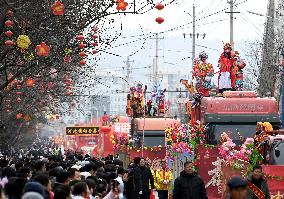
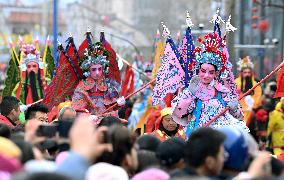
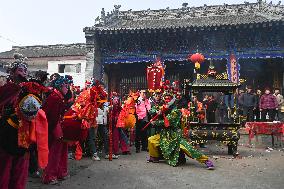
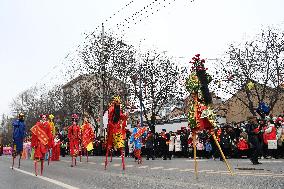
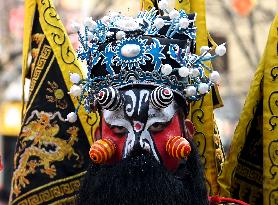
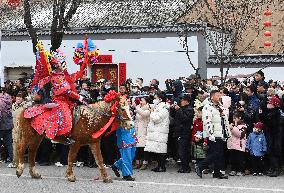
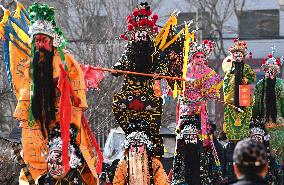
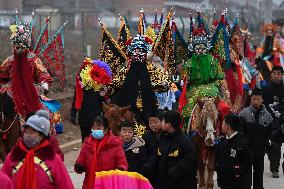
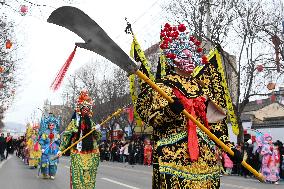
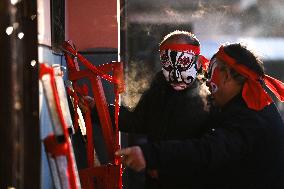
Performers attend a Shehuo parade celebrating the Lantern Festival in Longxian County of Baoji City, northwest China's Shaanxi Province, February 12, 2025. Longxian County, referred to as Long Zhou in the old days, is well-known for the local Shehuo parade featuring authentic and inclusive performance and simple yet exquisite facial make-up. The Shehuo parade, a time-honored performance enjoying widespread popularity in rural areas across China, originated from ancient sacrificial activities to pray for a good harvest about 2,000 years ago. Later on, as dancing and singing performances were absorbed into the parade, it gradually evolved into a folk custom staged during the Spring Festival and Lantern Festival, believed to remove bad luck and bring a fresh start in the new year. The Shehuo folk performance in Baoji made it onto the list of China's national intangible cultural heritage in 2006. And the local Shehuo performance in Longxian County has continued to glow with vitality in inheritance and innovation

  •  
Shehuo Parade - China

Shehuo Parade - China

Performers attend a Shehuo parade celebrating the Lantern Festival in Longxian County of Baoji City, northwest China's Shaanxi Province, February 12, 2025. Longxian County, referred to as Long Zhou in the old days, is well-known for the local Shehuo parade featuring authentic and inclusive performance and simple yet exquisite facial make-up. The Shehuo parade, a time-honored performance enjoying widespread popularity in rural areas across China, originated from ancient sacrificial activities to pray for a good harvest about 2,000 years ago. Later on, as dancing and singing performances were absorbed into the parade, it gradually evolved into a folk custom staged during the Spring Festival and Lantern Festival, believed to remove bad luck and bring a fresh start in the new year. The Shehuo folk performance in Baoji made it onto the list of China's national intangible cultural heritage in 2006. And the local Shehuo performance in Longxian County has continued to glow with vitality in inheritance and innovation

  •  
Shehuo Parade - China

Shehuo Parade - China

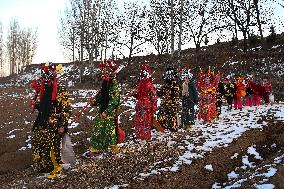
Performers attend a Shehuo parade in Sanliying Village in Longxian County of Baoji City, northwest China's Shaanxi Province, February 9, 2025. Longxian County, referred to as Long Zhou in the old days, is well-known for the local Shehuo parade featuring authentic and inclusive performance and simple yet exquisite facial make-up. The Shehuo parade, a time-honored performance enjoying widespread popularity in rural areas across China, originated from ancient sacrificial activities to pray for a good harvest about 2,000 years ago. Later on, as dancing and singing performances were absorbed into the parade, it gradually evolved into a folk custom staged during the Spring Festival and Lantern Festival, believed to remove bad luck and bring a fresh start in the new year. The Shehuo folk performance in Baoji made it onto the list of China's national intangible cultural heritage in 2006. And the local Shehuo performance in Longxian County has continued to glow with vitality in inheritance and innovation in recent yea

  •  
Shehuo Parade - China

Shehuo Parade - China

Performers attend a Shehuo parade celebrating the Lantern Festival in Longxian County of Baoji City, northwest China's Shaanxi Province, February 12, 2025. Longxian County, referred to as Long Zhou in the old days, is well-known for the local Shehuo parade featuring authentic and inclusive performance and simple yet exquisite facial make-up. The Shehuo parade, a time-honored performance enjoying widespread popularity in rural areas across China, originated from ancient sacrificial activities to pray for a good harvest about 2,000 years ago. Later on, as dancing and singing performances were absorbed into the parade, it gradually evolved into a folk custom staged during the Spring Festival and Lantern Festival, believed to remove bad luck and bring a fresh start in the new year. The Shehuo folk performance in Baoji made it onto the list of China's national intangible cultural heritage in 2006. And the local Shehuo performance in Longxian County has continued to glow with vitality in inheritance and innovation

  •  
Shehuo Parade - China

Shehuo Parade - China

A performer attends a Shehuo parade in Longxian County of Baoji City, northwest China's Shaanxi Province, February 9, 2025. Longxian County, referred to as Long Zhou in the old days, is well-known for the local Shehuo parade featuring authentic and inclusive performance and simple yet exquisite facial make-up. The Shehuo parade, a time-honored performance enjoying widespread popularity in rural areas across China, originated from ancient sacrificial activities to pray for a good harvest about 2,000 years ago. Later on, as dancing and singing performances were absorbed into the parade, it gradually evolved into a folk custom staged during the Spring Festival and Lantern Festival, believed to remove bad luck and bring a fresh start in the new year. The Shehuo folk performance in Baoji made it onto the list of China's national intangible cultural heritage in 2006. And the local Shehuo performance in Longxian County has continued to glow with vitality in inheritance and innovation in recent years. Photo by Xinhua

  •  
Shehuo Parade - China

Shehuo Parade - China

Performers select props for a Shehuo parade in Beiguan Village of Longxian County, Baoji City, northwest China's Shaanxi Province, February 10, 2025. Longxian County, referred to as Long Zhou in the old days, is well-known for the local Shehuo parade featuring authentic and inclusive performance and simple yet exquisite facial make-up. The Shehuo parade, a time-honored performance enjoying widespread popularity in rural areas across China, originated from ancient sacrificial activities to pray for a good harvest about 2,000 years ago. Later on, as dancing and singing performances were absorbed into the parade, it gradually evolved into a folk custom staged during the Spring Festival and Lantern Festival, believed to remove bad luck and bring a fresh start in the new year. The Shehuo folk performance in Baoji made it onto the list of China's national intangible cultural heritage in 2006. And the local Shehuo performance in Longxian County has continued to glow with vitality in inheritance and innovation in rec

  •  
Shehuo Parade - China

Shehuo Parade - China

People watch a Shehuo parade celebrating the Lantern Festival in Longxian County of Baoji City, northwest China's Shaanxi Province, February 12, 2025. Longxian County, referred to as Long Zhou in the old days, is well-known for the local Shehuo parade featuring authentic and inclusive performance and simple yet exquisite facial make-up. The Shehuo parade, a time-honored performance enjoying widespread popularity in rural areas across China, originated from ancient sacrificial activities to pray for a good harvest about 2,000 years ago. Later on, as dancing and singing performances were absorbed into the parade, it gradually evolved into a folk custom staged during the Spring Festival and Lantern Festival, believed to remove bad luck and bring a fresh start in the new year. The Shehuo folk performance in Baoji made it onto the list of China's national intangible cultural heritage in 2006. And the local Shehuo performance in Longxian County has continued to glow with vitality in inheritance and innovation in re

  •  
Shehuo Parade - China

Shehuo Parade - China

Performers attend a Shehuo parade in Longxian County of Baoji City, northwest China's Shaanxi Province, February 9, 2025. Longxian County, referred to as Long Zhou in the old days, is well-known for the local Shehuo parade featuring authentic and inclusive performance and simple yet exquisite facial make-up. The Shehuo parade, a time-honored performance enjoying widespread popularity in rural areas across China, originated from ancient sacrificial activities to pray for a good harvest about 2,000 years ago. Later on, as dancing and singing performances were absorbed into the parade, it gradually evolved into a folk custom staged during the Spring Festival and Lantern Festival, believed to remove bad luck and bring a fresh start in the new year. The Shehuo folk performance in Baoji made it onto the list of China's national intangible cultural heritage in 2006. And the local Shehuo performance in Longxian County has continued to glow with vitality in inheritance and innovation in recent years. Photo by Xinhua/Z

  •  
Shehuo Parade - China

Shehuo Parade - China

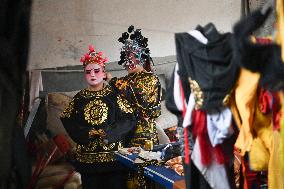
Performers rehearse a Shehuo parade in Longxian County of Baoji City, northwest China's Shaanxi Province, February 10, 2025. Longxian County, referred to as Long Zhou in the old days, is well-known for the local Shehuo parade featuring authentic and inclusive performance and simple yet exquisite facial make-up. The Shehuo parade, a time-honored performance enjoying widespread popularity in rural areas across China, originated from ancient sacrificial activities to pray for a good harvest about 2,000 years ago. Later on, as dancing and singing performances were absorbed into the parade, it gradually evolved into a folk custom staged during the Spring Festival and Lantern Festival, believed to remove bad luck and bring a fresh start in the new year. The Shehuo folk performance in Baoji made it onto the list of China's national intangible cultural heritage in 2006. And the local Shehuo performance in Longxian County has continued to glow with vitality in inheritance and innovation in recent years. Photo by Xinhu

  •  
Shehuo Parade - China

Shehuo Parade - China

Performers attend a Shehuo parade in Longxian County of Baoji City, northwest China's Shaanxi Province, February 11, 2025. Longxian County, referred to as Long Zhou in the old days, is well-known for the local Shehuo parade featuring authentic and inclusive performance and simple yet exquisite facial make-up. The Shehuo parade, a time-honored performance enjoying widespread popularity in rural areas across China, originated from ancient sacrificial activities to pray for a good harvest about 2,000 years ago. Later on, as dancing and singing performances were absorbed into the parade, it gradually evolved into a folk custom staged during the Spring Festival and Lantern Festival, believed to remove bad luck and bring a fresh start in the new year. The Shehuo folk performance in Baoji made it onto the list of China's national intangible cultural heritage in 2006. And the local Shehuo performance in Longxian County has continued to glow with vitality in inheritance and innovation in recent years. Photo by Xinhua/

  •  
Shehuo Parade - China

Shehuo Parade - China

Performers attend a Shehuo parade celebrating the Lantern Festival in Longxian County of Baoji City, northwest China's Shaanxi Province, February 12, 2025. Longxian County, referred to as Long Zhou in the old days, is well-known for the local Shehuo parade featuring authentic and inclusive performance and simple yet exquisite facial make-up. The Shehuo parade, a time-honored performance enjoying widespread popularity in rural areas across China, originated from ancient sacrificial activities to pray for a good harvest about 2,000 years ago. Later on, as dancing and singing performances were absorbed into the parade, it gradually evolved into a folk custom staged during the Spring Festival and Lantern Festival, believed to remove bad luck and bring a fresh start in the new year. The Shehuo folk performance in Baoji made it onto the list of China's national intangible cultural heritage in 2006. And the local Shehuo performance in Longxian County has continued to glow with vitality in inheritance and innovation

  •  
Shehuo Parade - China

Shehuo Parade - China

A young performer helps his teammate arrange costumes in Liuqu Village of Longxian County, Baoji City, northwest China's Shaanxi Province, February 9, 2025. Longxian County, referred to as Long Zhou in the old days, is well-known for the local Shehuo parade featuring authentic and inclusive performance and simple yet exquisite facial make-up. The Shehuo parade, a time-honored performance enjoying widespread popularity in rural areas across China, originated from ancient sacrificial activities to pray for a good harvest about 2,000 years ago. Later on, as dancing and singing performances were absorbed into the parade, it gradually evolved into a folk custom staged during the Spring Festival and Lantern Festival, believed to remove bad luck and bring a fresh start in the new year. The Shehuo folk performance in Baoji made it onto the list of China's national intangible cultural heritage in 2006. And the local Shehuo performance in Longxian County has continued to glow with vitality in inheritance and innovation

  •  
Ueno Tenjin Festival

Ueno Tenjin Festival

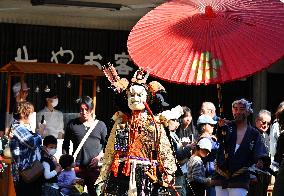
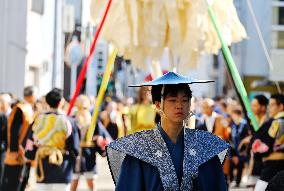
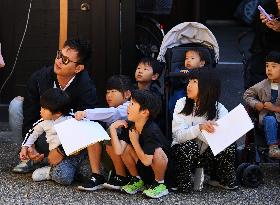
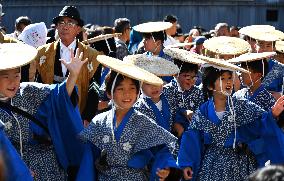
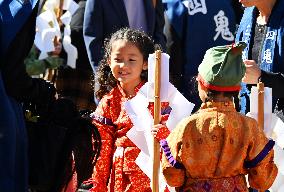
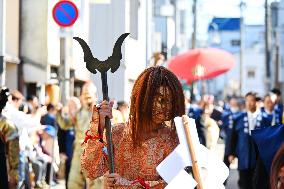
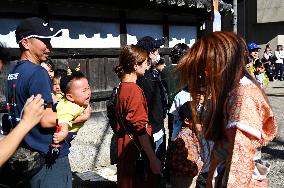
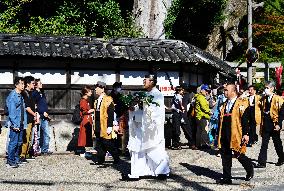
IGA, JAPAN - OCTOBER 15, 2024 - The scene of the "Ueno Tenjin Festival" in Ueno Higashimachi, Iga City, Mie Prefecture, Japan, October 20, 2024. Local people held traditional sacrificial activities such as float tour and ghost procession.

  •  
Ueno Tenjin Festival

Ueno Tenjin Festival

IGA, JAPAN - OCTOBER 15, 2024 - The scene of the "Ueno Tenjin Festival" in Ueno Higashimachi, Iga City, Mie Prefecture, Japan, October 20, 2024. Local people held traditional sacrificial activities such as float tour and ghost procession.

  •  
Ueno Tenjin Festival

Ueno Tenjin Festival

IGA, JAPAN - OCTOBER 15, 2024 - The scene of the "Ueno Tenjin Festival" in Ueno Higashimachi, Iga City, Mie Prefecture, Japan, October 20, 2024. Local people held traditional sacrificial activities such as float tour and ghost procession.

  •  
Ueno Tenjin Festival

Ueno Tenjin Festival

IGA, JAPAN - OCTOBER 15, 2024 - The scene of the "Ueno Tenjin Festival" in Ueno Higashimachi, Iga City, Mie Prefecture, Japan, October 20, 2024. Local people held traditional sacrificial activities such as float tour and ghost procession.

  •  
Ueno Tenjin Festival

Ueno Tenjin Festival

IGA, JAPAN - OCTOBER 15, 2024 - The scene of the "Ueno Tenjin Festival" in Ueno Higashimachi, Iga City, Mie Prefecture, Japan, October 20, 2024. Local people held traditional sacrificial activities such as float tour and ghost procession.

  •  
Ueno Tenjin Festival

Ueno Tenjin Festival

IGA, JAPAN - OCTOBER 15, 2024 - The scene of the "Ueno Tenjin Festival" in Ueno Higashimachi, Iga City, Mie Prefecture, Japan, October 20, 2024. Local people held traditional sacrificial activities such as float tour and ghost procession.

  •  
Ueno Tenjin Festival

Ueno Tenjin Festival

IGA, JAPAN - OCTOBER 15, 2024 - The scene of the "Ueno Tenjin Festival" in Ueno Higashimachi, Iga City, Mie Prefecture, Japan, October 20, 2024. Local people held traditional sacrificial activities such as float tour and ghost procession.

  •  
Ueno Tenjin Festival

Ueno Tenjin Festival

IGA, JAPAN - OCTOBER 15, 2024 - The scene of the "Ueno Tenjin Festival" in Ueno Higashimachi, Iga City, Mie Prefecture, Japan, October 20, 2024. Local people held traditional sacrificial activities such as float tour and ghost procession.

  • Main
  • Top
  • Editorial
  • Creative
  • About Us
  • About ILG
  • Terms of use
  • Company
  • BEHIND
  • Price List
  • Single Plan
  • Monthly Plan
  • Services
  • Shooting
  • Rights Clearance
  • Support
  • FAQ
  • How To Buy
  • Contact Us
  • Become a Partner

© KYODO NEWS IMAGES INC

All Rights Reserved.

  • Editorial
  • Olympics
  • News
  • Sports
  • Japan
  • Tech
  • Royal
  • Disaster
  • NorthKorea
  • Old Japan
  • SNS
  • Creative
  • Food
  • Japan
  • Landscape
  • Animal
  • Popular
  • #Ukraine
  • #Russia
  • #coronavirus
  • #N. Korea
  • #Thailand
  • #China
  • #Ukraine
  • #Russia
  • #coronavirus
  • #N. Korea
  • #Thailand
  • #China
  • Food
  • Japan
  • Landscape
  • Animal
  • Olympics
  • News
  • Sports
  • Japan
  • Tech
  • Royal
  • Disaster
  • NorthKorea
  • Old Japan
  • SNS