•  
Settlement Growth in the Nile Delta - Egypt

Settlement Growth in the Nile Delta - Egypt

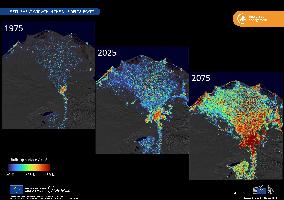
Handout Photomontage shows Settlement Growth in the Nile Delta. The United Nations’ World Urbanisation Prospects 2025 was published on 17 November 2025. Drawing on data from the Joint Research Centre’s Global Human Settlement Layer (GHSL), developed under the Copernicus Emergency Management Service (CEMS), the report tracks changes in population distribution across more than 12,000 urban settlements. It highlights a global shift in settlement patterns, with the majority of the world’s population now living in urban areas. This image, created with GHSL data, focuses on the Nile Delta in Egypt, one of the world’s most densely populated regions. By comparing estimates of built-up surface at three points in time, it shows how the extent of urban development has changed between 1975 and 2025, along with projections for 2075. Using satellite data and national census inputs, GHSL provides a broad range of data on human settlements worldwide, including estimates of built-up surfaces per square kilometre and, at even

  •  
Satellite View of flooding in northern Sumatra, Indonesia

Satellite View of flooding in northern Sumatra, Indonesia

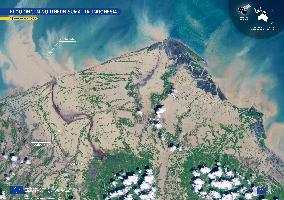
Handout photo datetd on November 29, 2025 shows satellite view of Flooding in northern Sumatra. Cyclone Senyar formed during the night of 25-26 November 2025 in the Strait of Malacca, an area in which tropical cyclones had not been recorded for decades. The day after its formation, Senyar hit Indonesia, where it made landfall, causing flooding, landslides and more than 400 casualties in the north of the island of Sumatra. This image, acquired by one of the Copernicus Sentinel-2 satellites on 29 November 2025, shows extensive inundation across Aceh province, with towns such as Lhoksukon and Panton Labu surrounded by floodwaters. Sediment-laden plumes discharged into the sea along the northern coast indicate substantial river outflow, caused by the heavy upstream rainfall. Photo by European Union, Copernicus Sentinel-2 imagery via ABACAPRESS.COM

  •  
Huelva Estuary in Spain

Huelva Estuary in Spain

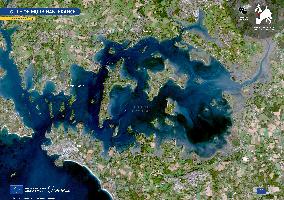
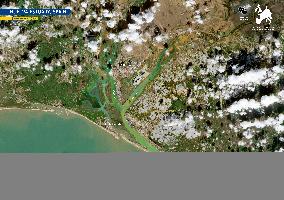
Handout photo dated on November 16, 2025 shows Huelva Estuary in Spain. On 16 November 2025, one of the Copernicus Sentinel-2 satellites acquired this image of the Huelva estuary in south-western Spain, where the Tinto and Odiel rivers converge before flowing into the Atlantic Ocean. Recent rainfall has increased surface runoff and sediment transport, strengthening the contrasting outflow from the two rivers. The image shows distinct colour variations produced by differences in water chemistry and suspended materials. As these waters mix with tidal currents, they create gradual transitions and clearly defined plumes, highlighting the estuary’s dynamic behaviour. Copernicus Sentinel satellite data enables continuous monitoring of river plumes, estuarine dynamics, and land-sea interactions. This information is important for assessing the environmental impact of sediment transport, supporting water quality monitoring, and informing coastal zone management in fragile ecosystems. Photo by European Union, Copernicu

  •  
Cluj-Napoca in Romania

Cluj-Napoca in Romania

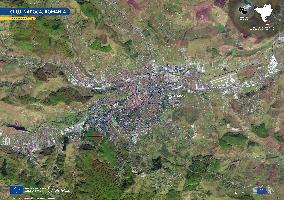
Handout photo dated on October 17, 2025 shows Cluj-Napoca in Romania. On 17 October 2025, one of the Copernicus Sentinel-2 satellites acquired this image of Cluj-Napoca, a major urban centre in north-western Romania. Surrounded by rolling hills and agricultural land, the city is noted for its dynamic growth and strategic role in regional development. Cluj-Napoca also received the label of the EU Mission for Climate-Neutral and Smart Cities in 2023. Cluj-Napoca is currently one of ten pilot cities selected for the Horizon Europe CLMS-Cities project, which combines satellite-based products from the Copernicus Land Monitoring Service (CLMS) with additional environmental and urban data to improve modelling of urban-scale CO₂ emissions. These integrated datasets help local authorities in tracking changes and designing more effective climate strategies, thereby supporting the development of data-driven urban policies aligned with the European Green Deal. Photo by European Union, Copernicus Sentinel-2 imagery via AB

  •  
Snow Blanketed North East Scotland - UK

Snow Blanketed North East Scotland - UK

Handout photo dated on November 18, 2025 shows on 18 November 2025, the first major winter weather event of the 2025-26 season took place across parts of the United Kingdom, including north-east Scotland. Heavy snowfall blanketed large areas of the region, leading to travel disruption, the isolation of several rural communities, and the closure of numerous schools. Emergency services were deployed to assist residents affected by road blockages and power outages, while local authorities issued weather warnings and urged the public to avoid non-essential travel. This false-colour image, acquired by one of the Copernicus Sentinel-2 satellites, shows widespread snow-cover across Aberdeenshire and the surrounding upland areas, with the city of Aberdeen visible along the coast. Data from Copernicus Sentinel-2, which provides high spatial resolution and multispectral observations, supports continuous monitoring of snow extent and surface conditions. North East Scotland, UK on November 18, 2025. Photo by European Uni

  •  
First images From Copernicus Sentinel-5A

First images From Copernicus Sentinel-5A

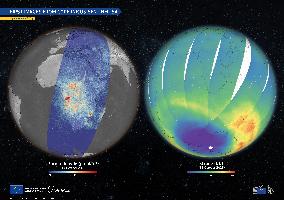
Handout photo dated October 13, 2025 shows Copernicus Sentinel-5A has delivered its first images after its launch on 13 August 2025, marking a significant milestone in the monitoring of air quality from space. The Sentinel-5 mission provides observations of key air pollutants, essential climate variables, and stratospheric ozone, which is the protective layer shielding life on Earth from harmful ultraviolet radiation. This visualisation, created with Sentinel-5A data acquired on 13 October 2025, shows atmospheric concentrations of two trace gases: ozone (O₃) and formaldehyde (HCHO). The image on the left presents the formaldehyde vertical column density. Elevated concentrations along the northwestern coast of Angola are linked to emissions from wildfires, while increased levels over the Central African Republic stem from a combination of fire activity and biogenic emissions. The image on the right shows a global map of ozone. The hole in stratospheric ozone above Antarctica is clearly visible, with column den

  •  
First Images acquired by Sentinel-1D

First Images acquired by Sentinel-1D

Handout photo dated on November 7, 2025 shows following its launch on 4 November 2025, Copernicus Sentinel-1D has delivered its first images. Among these is this radar image acquired on 7 November 2025, showing northern Germany. The false colour visualisation of the image highlights different types of land cover such as cultivated fields, water bodies, and urban areas, including the cities of Bremen, Bremerhaven, Oldenburg, and Meldorf. The Elbe and Weser rivers flowing into the North Sea are visible in deep blue tones, along with the Wadden Sea. Bremen, Germany on November 7, 2025. Photo by European Union, Copernicus Sentinel-1 imagery via ABACAPRESS.COM

  •  
Satellite Views of Hayli Gubbi Volcano Eruption

Satellite Views of Hayli Gubbi Volcano Eruption

Handout photo dated on November 23, 2025 shows The Day Atmosphere Air Pollution Dust & Haze Volcanoes. On 23 November 2025, the Hayli Gubbi volcano in Ethiopia, located approximately 800 kilometres north-east of Addis Ababa, erupted for the first time in nearly 12,000 years. As a result of the eruption, a large sulfur dioxide (SO₂) plume was emitted into the atmosphere. This image, derived from data acquired by the Copernicus Sentinel-5P satellite on 24 November, shows the plume extending for approximately 3,700 kilometres from Ethiopia to the Arabian Sea. The atmospheric monitoring capabilities of Copernicus Sentinel-5P support the detection and tracking of volcanic gas emissions, which are important for aviation safety, air quality assessments, and climate monitoring. Photo by European Union, Copernicus Sentinel-5P imagery via ABACAPRESS.COM

  •  
Shijian-30A, Shijian-30B, and Shijian-30C Satellite Launch - China

Shijian-30A, Shijian-30B, and Shijian-30C Satellite Launch - China

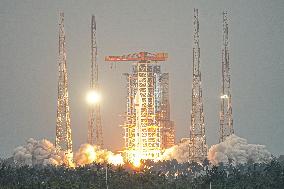
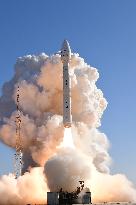
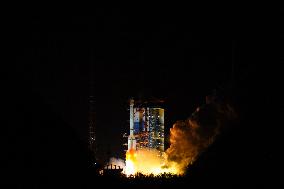
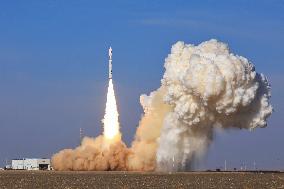
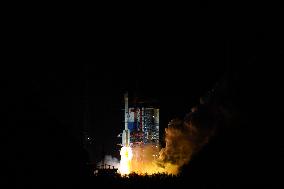
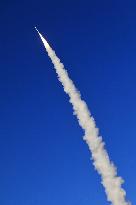
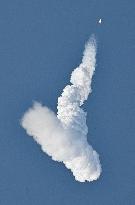
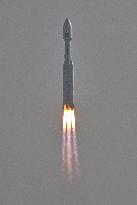
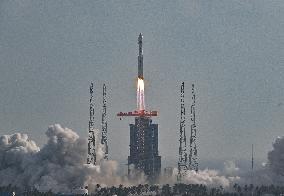
A Long March-2C carrier rocket carrying three new satellites blasts off from the Jiuquan Satellite Launch Center in northwest China, on Nov. 19, 2025. The rocket blasted off at 12:01 p.m. (Beijing Time) and sent the Shijian-30A, Shijian-30B, and Shijian-30C into the preset orbits. These satellites will be mainly used for space environment exploration and related technology verification. (Photo by Wang Jiangbo/Xinhua/ABACAPRESS.COM)

  •  
Shijian-30A, Shijian-30B, and Shijian-30C Satellite Launch - China

Shijian-30A, Shijian-30B, and Shijian-30C Satellite Launch - China

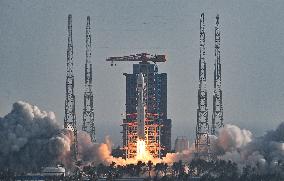
A Long March-2C carrier rocket carrying three new satellites blasts off from the Jiuquan Satellite Launch Center in northwest China, on Nov. 19, 2025. The rocket blasted off at 12:01 p.m. (Beijing Time) and sent the Shijian-30A, Shijian-30B, and Shijian-30C into the preset orbits. These satellites will be mainly used for space environment exploration and related technology verification. (Photo by Sun Haiying/Xinhua/ABACAPRESS.COM)

  •  
Shijian-30A, Shijian-30B, and Shijian-30C Satellite Launch - China

Shijian-30A, Shijian-30B, and Shijian-30C Satellite Launch - China

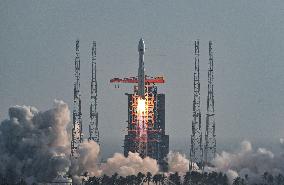
A Long March-2C carrier rocket carrying three new satellites blasts off from the Jiuquan Satellite Launch Center in northwest China, on Nov. 19, 2025. The rocket blasted off at 12:01 p.m. (Beijing Time) and sent the Shijian-30A, Shijian-30B, and Shijian-30C into the preset orbits. These satellites will be mainly used for space environment exploration and related technology verification. (Photo by Wang Jiangbo/Xinhua/ABACAPRESS.COM)

  •  
Shijian-30A, Shijian-30B, and Shijian-30C Satellite Launch - China

Shijian-30A, Shijian-30B, and Shijian-30C Satellite Launch - China

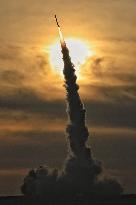
A Long March-2C carrier rocket carrying three new satellites blasts off from the Jiuquan Satellite Launch Center in northwest China, on Nov. 19, 2025. The rocket blasted off at 12:01 p.m. (Beijing Time) and sent the Shijian-30A, Shijian-30B, and Shijian-30C into the preset orbits. These satellites will be mainly used for space environment exploration and related technology verification. (Photo by Wang Jiangbo/Xinhua/ABACAPRESS.COM)

  •  
Shijian-30A, Shijian-30B, and Shijian-30C Satellite Launch - China

Shijian-30A, Shijian-30B, and Shijian-30C Satellite Launch - China

A Long March-2C carrier rocket carrying three new satellites blasts off from the Jiuquan Satellite Launch Center in northwest China, on Nov. 19, 2025. The rocket blasted off at 12:01 p.m. (Beijing Time) and sent the Shijian-30A, Shijian-30B, and Shijian-30C into the preset orbits. These satellites will be mainly used for space environment exploration and related technology verification. (Photo by Wang Jiangbo/Xinhua/ABACAPRESS.COM)

  •  
Shijian-30A, Shijian-30B, and Shijian-30C Satellite Launch - China

Shijian-30A, Shijian-30B, and Shijian-30C Satellite Launch - China

A Long March-2C carrier rocket carrying three new satellites blasts off from the Jiuquan Satellite Launch Center in northwest China, on Nov. 19, 2025. The rocket blasted off at 12:01 p.m. (Beijing Time) and sent the Shijian-30A, Shijian-30B, and Shijian-30C into the preset orbits. These satellites will be mainly used for space environment exploration and related technology verification. (Photo by Wang Heng/Xinhua/ABACAPRESS.COM)

  •  
Satellite Views of Disastrous Flooding in The Philippines

Satellite Views of Disastrous Flooding in The Philippines

Handout photo dated on November 12, 2025 shows Following the landfall of Typhoon Fung-wong on 9 November 2025, northern regions of the Philippines were affected by extensive flooding, with the Cagayan Valley among the worst hit areas. The typhoon brought intense rainfall, causing the Cagayan River to overflow its banks, submerging agricultural land, infrastructure, and urban areas, including the city of Tuguegarao. Several communities in the province of Cagayan were displaced, and damage to crops and transport infrastructure was reported across the region. This false colour image, acquired by one of the Copernicus Sentinel-2 satellites on 12 November 2025, shows the flooded areas along the Cagayan River. In this composite, vegetation appears in red, while water bodies and flooded areas are shown in shades of light blue and green. Additionally, sediment plumes can be seen at the river’s mouth near Aparri, where the river enters the Pacific Ocean. Photo by European Union, Copernicus Sentinel-2 imagery via ABACA

  •  
October 2025, the Third Warmest October on Record

October 2025, the Third Warmest October on Record

Handout photo dated on 2025 shows The Copernicus Climate Change Service (C3S) has published its latest monthly Climate Bulletin, which focuses on key climate trends in October 2025. The bulletin reports that October 2025 was the third-warmest October globally, with an average surface air temperature of 15.14°C, 0.70°C above the 1991-2020 average for the month. This data visualisation, produced using C3S data, illustrates the surface air temperature anomalies across part of the Northern Hemisphere in October 2025. Warmer-than-average temperatures have been observed over much of northern and western Europe, where the average temperature was 10.19°C, 0.60°C above the average for the month. The Arctic Ocean northeast of Svalbard and the Canadian Arctic Archipelago have also been particularly affected, with surface air temperature anomalies reaching up to 8 °C above average. Photo by European Union, Copernicus Climate Change Service Data via ABACAPRESS.COM

  •  
First Snowfall of The Season Over the Pyrenees

First Snowfall of The Season Over the Pyrenees

Handout photo dated on November 9, 2025 shows The Pyrenees are an important ecological corridor stretching between France and Spain, connecting Atlantic and Mediterranean ecosystems across a rugged mountain landscape. The mountain range supports high-altitude grasslands, ancient forests, and glacial valleys, providing habitat for endemic species. The arrival of snow marks the beginning of the alpine winter and plays a key role in regional water storage. This image, acquired by one of the Copernicus Sentinel-3 satellites on 9 November 2025, shows fresh snowfall above 1,900 metres, while lower elevations remain in shades of green and brown. This snowfall followed an Atlantic front, which brought up to 12 cm of snow and more than 40 l/m² of rain to parts of Spain. Photo by European Union, Copernicus Sentinel-3 imagery via ABACAPRESS.COM

  •  
Satellite View of Hurricane Melissa

Satellite View of Hurricane Melissa

Handout photo dated on October 28, 2025 shows Hurricane Melissa, the most powerful storm to hit Jamaica in history, made landfall on the island with devastating force. With sustained winds reaching 298 km/h and a central pressure of 892 hPa, Melissa already ranks among the most intense hurricanes ever observed in the Atlantic basin. On that day, at 15:55 UTC, one of the Copernicus Sentinel-2 satellites captured a vivid view of hurricane Melissa's eye just a few hours before it made landfall on the southern coast of Jamaica. Jamaica on October 28, 2025. Photo by European Union, Copernicus Sentinel-2 imagery via ABACAPRESS.COM

  •  

China: Jielong-3 Rocket Launches From Offshore Platform in Shandong

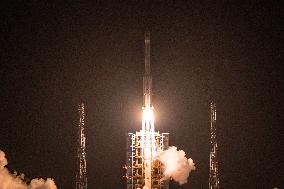
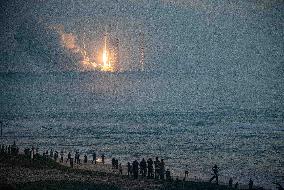
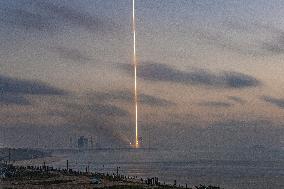
On August 8, 2025, in Rizhao, Shandong, a video captured the breathtaking moment a massive rocket soared into the sky off the coast. The footage showed the Jielong-3 carrier rocket igniting and lifting off from an offshore platform, marking China’s successful “one rocket, eleven satellites” sea launch.

  •  
Commercial Aerospace Satellites Launch - Chin

Commercial Aerospace Satellites Launch - Chin

The Lijian-1 Y8 carrier rocket with three satellites blasts off from a commercial aerospace innovation pilot zone in northwest China, Oct. 19, 2025. China on Sunday launched the Lijian-1 Y8 carrier rocket with three satellites onboard. The rocket blasted off at 11:33 a.m. (Beijing Time) from a commercial aerospace innovation pilot zone in northwest China and successfully sent the satellites into the planned orbit. The three satellites are Pakistan remote-sensing satellite (PRSS-2), AIRSAT 03 and 04 satellites. Photo by Wang Jiangbo/Xinhua/ABACAPRESS.COM

  •  
Commercial Aerospace Satellites Launch - Chin

Commercial Aerospace Satellites Launch - Chin

The Lijian-1 Y8 carrier rocket with three satellites blasts off from a commercial aerospace innovation pilot zone in northwest China, Oct. 19, 2025. China on Sunday launched the Lijian-1 Y8 carrier rocket with three satellites onboard. The rocket blasted off at 11:33 a.m. (Beijing Time) from a commercial aerospace innovation pilot zone in northwest China and successfully sent the satellites into the planned orbit. The three satellites are Pakistan remote-sensing satellite (PRSS-2), AIRSAT 03 and 04 satellites. Photo by Li Yunxi/Xinhua/ABACAPRESS.COM

  •  
Commercial Aerospace Satellites Launch - Chin

Commercial Aerospace Satellites Launch - Chin

The Lijian-1 Y8 carrier rocket with three satellites blasts off from a commercial aerospace innovation pilot zone in northwest China, Oct. 19, 2025. China on Sunday launched the Lijian-1 Y8 carrier rocket with three satellites onboard. The rocket blasted off at 11:33 a.m. (Beijing Time) from a commercial aerospace innovation pilot zone in northwest China and successfully sent the satellites into the planned orbit. The three satellites are Pakistan remote-sensing satellite (PRSS-2), AIRSAT 03 and 04 satellites. Photo by Wang Jiangbo/Xinhua/ABACAPRESS.COM

  •  
Commercial Aerospace Satellites Launch - Chin

Commercial Aerospace Satellites Launch - Chin

The Lijian-1 Y8 carrier rocket with three satellites blasts off from a commercial aerospace innovation pilot zone in northwest China, Oct. 19, 2025. China on Sunday launched the Lijian-1 Y8 carrier rocket with three satellites onboard. The rocket blasted off at 11:33 a.m. (Beijing Time) from a commercial aerospace innovation pilot zone in northwest China and successfully sent the satellites into the planned orbit. The three satellites are Pakistan remote-sensing satellite (PRSS-2), AIRSAT 03 and 04 satellites. Photo by Wang Jiangbo/Xinhua/ABACAPRESS.COM

  •  
Commercial Aerospace Satellites Launch - Chin

Commercial Aerospace Satellites Launch - Chin

The Lijian-1 Y8 carrier rocket with three satellites blasts off from a commercial aerospace innovation pilot zone in northwest China, Oct. 19, 2025. China on Sunday launched the Lijian-1 Y8 carrier rocket with three satellites onboard. The rocket blasted off at 11:33 a.m. (Beijing Time) from a commercial aerospace innovation pilot zone in northwest China and successfully sent the satellites into the planned orbit. The three satellites are Pakistan remote-sensing satellite (PRSS-2), AIRSAT 03 and 04 satellites. Photo by Wang Jiangbo/Xinhua/ABACAPRESS.COM

  •  
Commercial Aerospace Satellites Launch - Chin

Commercial Aerospace Satellites Launch - Chin

The Lijian-1 Y8 carrier rocket with three satellites blasts off from a commercial aerospace innovation pilot zone in northwest China, Oct. 19, 2025. China on Sunday launched the Lijian-1 Y8 carrier rocket with three satellites onboard. The rocket blasted off at 11:33 a.m. (Beijing Time) from a commercial aerospace innovation pilot zone in northwest China and successfully sent the satellites into the planned orbit. The three satellites are Pakistan remote-sensing satellite (PRSS-2), AIRSAT 03 and 04 satellites. Photo by Li Yunxi/Xinhua/ABACAPRESS.COM

  •  
Commercial Aerospace Satellites Launch - Chin

Commercial Aerospace Satellites Launch - Chin

The Lijian-1 Y8 carrier rocket with three satellites blasts off from a commercial aerospace innovation pilot zone in northwest China, Oct. 19, 2025. China on Sunday launched the Lijian-1 Y8 carrier rocket with three satellites onboard. The rocket blasted off at 11:33 a.m. (Beijing Time) from a commercial aerospace innovation pilot zone in northwest China and successfully sent the satellites into the planned orbit. The three satellites are Pakistan remote-sensing satellite (PRSS-2), AIRSAT 03 and 04 satellites. Photo by Li Yunxi/Xinhua/ABACAPRESS.COM

  •  
Commercial Aerospace Satellites Launch - Chin

Commercial Aerospace Satellites Launch - Chin

The Lijian-1 Y8 carrier rocket with three satellites blasts off from a commercial aerospace innovation pilot zone in northwest China, Oct. 19, 2025. China on Sunday launched the Lijian-1 Y8 carrier rocket with three satellites onboard. The rocket blasted off at 11:33 a.m. (Beijing Time) from a commercial aerospace innovation pilot zone in northwest China and successfully sent the satellites into the planned orbit. The three satellites are Pakistan remote-sensing satellite (PRSS-2), AIRSAT 03 and 04 satellites. Photo by Li Yunxi/Xinhua/ABACAPRESS.COM

  •  
Haiyang Satellites Launch - China

Haiyang Satellites Launch - China

A Gravity-1 carrier rocket carrying a wide-field satellite and two experimental satellites blasts off from waters off the coast of Haiyang, east China's Shandong Province, on October 11, 2025. The rocket blasted off at 10:20 a.m. (Beijing Time), placing three satellites into their designated orbits. The Taiyuan Satellite Launch Center conducted the offshore mission. The Gravity-1 carrier rocket made its debut flight in January 2024. Photo by Guo Jinqi/Xinhua/ABACAPRESS.COM

  •  
Haiyang Satellites Launch - China

Haiyang Satellites Launch - China

A Gravity-1 carrier rocket carrying a wide-field satellite and two experimental satellites blasts off from waters off the coast of Haiyang, east China's Shandong Province, on October 11, 2025. The rocket blasted off at 10:20 a.m. (Beijing Time), placing three satellites into their designated orbits. The Taiyuan Satellite Launch Center conducted the offshore mission. The Gravity-1 carrier rocket made its debut flight in January 2024. Photo by Guo Jinqi/Xinhua/ABACAPRESS.COM

  •  
Haiyang Satellites Launch - China

Haiyang Satellites Launch - China

A Gravity-1 carrier rocket carrying a wide-field satellite and two experimental satellites blasts off from waters off the coast of Haiyang, east China's Shandong Province, on October 11, 2025. The rocket blasted off at 10:20 a.m. (Beijing Time), placing three satellites into their designated orbits. The Taiyuan Satellite Launch Center conducted the offshore mission. The Gravity-1 carrier rocket made its debut flight in January 2024. Photo by Guo Jinqi/Xinhua/ABACAPRESS.COM

  •  
Xichang Test Satellites Launch - China

Xichang Test Satellites Launch - China

A Long March-2D carrier rocket carrying test satellites, Shiyan-30 01 and 02, blasts off from the Xichang Satellite Launch Center in southwest China's Sichuan Province, on September 29, 2025. The two test satellites were launched at 11:00 a.m. (Beijing Time) and entered their preset orbits successfully. The satellites will be mainly used for experimental verification of Earth observation technologies. Photo by Yang Xi/Xinhua/ABACAPRESS.COM

  •  
Xichang Test Satellites Launch - China

Xichang Test Satellites Launch - China

A Long March-2D carrier rocket carrying test satellites, Shiyan-30 01 and 02, blasts off from the Xichang Satellite Launch Center in southwest China's Sichuan Province, on September 29, 2025. The two test satellites were launched at 11:00 a.m. (Beijing Time) and entered their preset orbits successfully. The satellites will be mainly used for experimental verification of Earth observation technologies. Photo by Yang Xi/Xinhua/ABACAPRESS.COM

  •  
Xichang Test Satellites Launch - China

Xichang Test Satellites Launch - China

A Long March-2D carrier rocket carrying test satellites, Shiyan-30 01 and 02, blasts off from the Xichang Satellite Launch Center in southwest China's Sichuan Province, on September 29, 2025. The two test satellites were launched at 11:00 a.m. (Beijing Time) and entered their preset orbits successfully. The satellites will be mainly used for experimental verification of Earth observation technologies. Photo by Yang Xi/Xinhua/ABACAPRESS.COM

  •  
Commercial Space Tianlong 3 Test Run - Yantai

Commercial Space Tianlong 3 Test Run - Yantai

This aerial drone photo taken on Sept. 15, 2025, shows a first-stage propulsion system test for the Tianlong-3 liquid carrier rocket conducted on an offshore launch pad at the Haiyang Oriental Aerospace Port in east China's Shandong Province. A first-stage propulsion system test for the Tianlong-3 large liquid-propellant carrier rocket was successfully held here on Monday. Independent development of the Tianlong-3 rocket began in March 2022 by Chinese commercial aerospace company Space Pioneer. The rocket is 72 meters in length with a takeoff mass of 600 tonnes. Its first stage is equipped with nine "Tianhuo-12" engines operating in parallel. The rocket has a low-Earth orbit carrying capacity of 17-22 tonnes, and a sun-synchronous orbit capacity of 10-17 tonnes. It is able to launch 36 satellites in a single mission and supports large-scale cargo transport for China's space station, as well as medium- and high-orbit satellite launches. Photo by Xinhua/ABACAPRESS.COM

  •  
Satellite views of Uluru - Australia

Satellite views of Uluru - Australia

Handout photo dated August 14, 2025, shows Uluru, also known as Ayers Rock, is a massive sedimentary rock formation located in the heart of Australia’s Northern Territory. Rising 348 metres above the surrounding plain, Uluru is not only a striking natural landmark but also holds deep spiritual significance for the Anangu people. Estimated to be over 500 million years old, this UNESCO World Heritage Site hosts diverse vertebrate fauna and threatened species. This Copernicus Sentinel-2 image, acquired on 14 August 2025, shows Uluru from above. Buildings of the Mutitjulu Aboriginal community are visible to the east of Uluru. Photo by European Union, Copernicus Sentinel-2 imagery via ABACAPRESS.COM

  •  
Satellite View of Severe wildfires in Spain and Portugal

Satellite View of Severe wildfires in Spain and Portugal

Handout photo dated on August 16, 2025 shows Massive wildfires are spreading in north-west and western Spain, forcing the evacuation of thousands of residents. By 17 August 2025, Spain had already recorded its highest annual total of estimated fire emissions in the 23-year Copernicus Atmosphere Monitoring Service (CAMS) dataset. This Copernicus Sentinel-2 image acquired on 16 August 2025 shows dense smoke plumes rising from active fires near the city of Ourense, located in the autonomous community of Galicia, northwestern Spain. Portugal has also been severely affected by the fires, with northern and central regions hit the hardest. According to CAMS data, the country’s estimated emissions have nearly reached the highest annual totals of 2003 and 2005. To support national authorities, the Copernicus Emergency Management Service (CEMS) has been activated to provide emergency mapping services. Further information is available here. Spain, Portugal. Photo by European Union, Copernicus Sentinel-2 imagery via ABAC

  •  

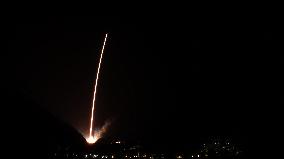
US: United Launch Alliance Launches Vulcan Rocket from Cape Canaveral Space Force Station

United Launch Alliance successfully launched its first operational Vulcan rocket from the Cape Canaveral Space Force Station in Florida on Tuesday, August 12, at 8:56 p.m. EDT. The rocket carried two military satellites into space as part of its first flight for the U.S. Space Force. This video shows the dim light as the rocket flew over Ontario, Canada.

  •  
Handong Satellites Launch - China

Handong Satellites Launch - China

A Smart Dragon-3 (SD-3) rocket carrying the Geely-04 constellation of satellites lifts off from sea near the city of Rizhao, in east China's Shandong Province, August 9, 2025. The rocket blasted off at 12:31 a.m. (Beijing Time), sending the Geely-04 constellation of satellites into planned orbit. The Taiyuan Satellite Launch Center conducted the offshore launch mission. by Guo Jinqi/Xinhua/ABACAPRESS.COM

  •  
Handong Satellites Launch - China

Handong Satellites Launch - China

A Smart Dragon-3 (SD-3) rocket carrying the Geely-04 constellation of satellites lifts off from sea near the city of Rizhao, in east China's Shandong Province, August 9, 2025. The rocket blasted off at 12:31 a.m. (Beijing Time), sending the Geely-04 constellation of satellites into planned orbit. The Taiyuan Satellite Launch Center conducted the offshore launch mission. by Guo Jinqi/Xinhua/ABACAPRESS.COM

  •  
Handong Satellites Launch - China

Handong Satellites Launch - China

A Smart Dragon-3 (SD-3) rocket carrying the Geely-04 constellation of satellites lifts off from sea near the city of Rizhao, in east China's Shandong Province, August 9, 2025. The rocket blasted off at 12:31 a.m. (Beijing Time), sending the Geely-04 constellation of satellites into planned orbit. The Taiyuan Satellite Launch Center conducted the offshore launch mission. by Guo Jinqi/Xinhua/ABACAPRESS.COM

  •  
Handong Satellites Launch - China

Handong Satellites Launch - China

A Smart Dragon-3 (SD-3) rocket carrying the Geely-04 constellation of satellites lifts off from sea near the city of Rizhao, in east China's Shandong Province, August 9, 2025. The rocket blasted off at 12:31 a.m. (Beijing Time), sending the Geely-04 constellation of satellites into planned orbit. The Taiyuan Satellite Launch Center conducted the offshore launch mission. by Guo Jinqi/Xinhua/ABACAPRESS.COM

  •  
Handong Satellites Launch - China

Handong Satellites Launch - China

A Smart Dragon-3 (SD-3) rocket carrying the Geely-04 constellation of satellites lifts off from sea near the city of Rizhao, in east China's Shandong Province, August 9, 2025. The rocket blasted off at 12:31 a.m. (Beijing Time), sending the Geely-04 constellation of satellites into planned orbit. The Taiyuan Satellite Launch Center conducted the offshore launch mission. by Guo Jinqi/Xinhua/ABACAPRESS.COM

  •  
Canada Wildfires Impact North America's Air Quality

Canada Wildfires Impact North America's Air Quality

Handout photo dated on August 3, 2025, shows Canada is currently facing an intense fire season, with hundreds of active wildfires across Saskatchewan, Alberta, and Manitoba, prompting the evacuation of thousands of residents. Smoke from these fires has severely degraded air quality both locally and across borders, including the United States. This false colour image, acquired by one of the Copernicus Sentinel-3 satellites on 3 August 2025, shows the smoke cloud from the wildfires engulfing skies over Canada and the US. According to the Copernicus Atmosphere Monitoring Service (CAMS), June and July 2025 saw severe wildfire activity in Canada, with daily total wildfire intensity and emissions consistently above the 2003-2024 average throughout the summer. August 3, 2025. Photo by European Union, Copernicus Sentinel-3 imagery via ABACAPRESS.COM

  •  
Satellite views of Iona National Park - Angola

Satellite views of Iona National Park - Angola

Handout photo dated on July 3, 2025 shows Situated in the south-western corner of Angola, the Iona National Park marks the northernmost reach of the Namib Desert, believed to be the oldest desert on Earth. Spanning 15,150 km², Iona forms part of one of the world’s largest transfrontier conservation areas, linking with the Skeleton Coast National Park and the Namib Partial Reserve to cover nearly 50,000 km². Public initiatives to restore the Iona National Park are underway, focusing on conservation, community engagement, and species reintroduction. These activities are transforming the park into a model of sustainable coexistence between people and nature. Photo by European Union, Copernicus Sentinel-2 imagery via ABACAPRESS.COM

  •  
Satellite views of Mount Bromo - Indonesia

Satellite views of Mount Bromo - Indonesia

Handout photo dated on July 18, 2025 shows Mount Bromo, located in the Area Gunung Bromo, Podokoyo, Pasuruan in East Java, Indonesia, is a prominent active volcano and a popular tourist destination within the Bromo Tengger Semeru National Park. Rising to 2,329 metres, it is famous for its captivating sunrise views and its vast surrounding sea of volcanic sand. The volcano is part of the Tengger caldera, one of the most visited volcanic regions in Indonesia. Mount Bromo is visible in this Copernicus Sentinel-2 image from 18 July 2025. Photo by European Union, Copernicus Sentinel-2 imagery via ABACAPRESS.COM

  •  
Satellite View Wildfires in Portugal

Satellite View Wildfires in Portugal

Handout photo dated on July 29, 2025 shows Satellite View Wildfires in Portugal. As of 29 July 2025, Portugal is impacted by major wildfires in the north and centre of the country, with more than 2,000 firefighters mobilised to battle the flames. The most affected areas are Arouca (Aveiro District), Ponte da Barca (Viana do Castelo District), and Penamacor (Castelo Branco District). The village of Fornos de Carvão, in the Arouca municipality, was evacuated overnight. This image, acquired by one of the Copernicus Sentinel-3 satellites on 29 July, shows the large smoke cloud generated by the wildfires in the Arouca area, along with a second plume of smoke rising from the Ponte de Barca wildfires. Photo by European Union, Copernicus Sentinel-3 imagery via ABACAPRESS.COM

  •  
Albania Affected by Devastating Wildfires - Albania

Albania Affected by Devastating Wildfires - Albania

Handout photo dated July 21, 2025 shows in mid-July 2025, the Albanian Ministry of Defence reported 18 wildfire outbreaks across multiple municipalities. The blazes have threatened residential areas and environmentally protected zones. The Lura National Park in Dibër municipality in north-eastern Albania was among the areas most affected by the fires, with reports of burnt forested areas near the park’s “Lake of Flowers”. This Copernicus Sentinel-2 image from 21 July 2025 shows an active fire burning in the Lura National Park. Photo by European Union, Copernicus Sentinel-2 imagery via ABACAPRESS.COM

  •  
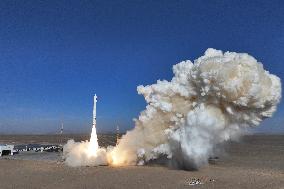
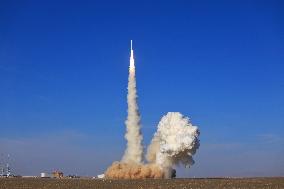
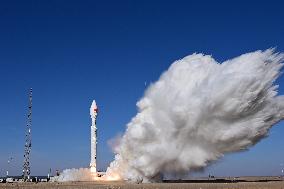
China successfully launched the new group of low Earth orbit satellites

China successfully launched the new group of low Earth orbit satellites

A modified Long March-6 carrier rocket carrying a group of low Earth orbit satellites blasts off from the Taiyuan Satellite Launch Center in north China's Shanxi Province on July 27, 2025. China successfully launched the new group of low Earth orbit satellites on Sunday. The satellite group, the fifth of its kind that will constitute an internet constellation, lifted off at 6:03 p.m. (Beijing Time) aboard a modified Long March-6 carrier rocket. The satellites entered the preset orbit successfully. The launch marked the 585th mission of the Long March series carrier rockets. Photo by Wang Yapeng/Xinhua/ABACAPRESS.COM

  •  
China successfully launched the new group of low Earth orbit satellites

China successfully launched the new group of low Earth orbit satellites

A modified Long March-6 carrier rocket carrying a group of low Earth orbit satellites blasts off from the Taiyuan Satellite Launch Center in north China's Shanxi Province on July 27, 2025. China successfully launched the new group of low Earth orbit satellites on Sunday. The satellite group, the fifth of its kind that will constitute an internet constellation, lifted off at 6:03 p.m. (Beijing Time) aboard a modified Long March-6 carrier rocket. The satellites entered the preset orbit successfully. The launch marked the 585th mission of the Long March series carrier rockets. Photo by Wang Yapeng/Xinhua/ABACAPRESS.COM

  •  
China successfully launched the new group of low Earth orbit satellites

China successfully launched the new group of low Earth orbit satellites

A modified Long March-6 carrier rocket carrying a group of low Earth orbit satellites blasts off from the Taiyuan Satellite Launch Center in north China's Shanxi Province on July 27, 2025. China successfully launched the new group of low Earth orbit satellites on Sunday. The satellite group, the fifth of its kind that will constitute an internet constellation, lifted off at 6:03 p.m. (Beijing Time) aboard a modified Long March-6 carrier rocket. The satellites entered the preset orbit successfully. The launch marked the 585th mission of the Long March series carrier rockets. Photo by Wang Yapeng/Xinhua/ABACAPRESS.COM

  • Main
  • Top
  • Editorial
  • Creative
  • About Us
  • About ILG
  • Terms of use
  • Company
  • BEHIND
  • Price List
  • Single Plan
  • Monthly Plan
  • Services
  • Shooting
  • Rights Clearance
  • Support
  • FAQ
  • How To Buy
  • Contact Us
  • Become a Partner

© KYODO NEWS IMAGES INC

All Rights Reserved.

  • Editorial
  • Olympics
  • News
  • Sports
  • Japan
  • Tech
  • Royal
  • Disaster
  • NorthKorea
  • Old Japan
  • SNS
  • Creative
  • Food
  • Japan
  • Landscape
  • Animal
  • Popular
  • #Ukraine
  • #Russia
  • #coronavirus
  • #N. Korea
  • #China
  • #Thailand
  • #Ukraine
  • #Russia
  • #coronavirus
  • #N. Korea
  • #China
  • #Thailand
  • Food
  • Japan
  • Landscape
  • Animal
  • Olympics
  • News
  • Sports
  • Japan
  • Tech
  • Royal
  • Disaster
  • NorthKorea
  • Old Japan
  • SNS