•  
Star Explosion Reveals New Space Ingredients

Star Explosion Reveals New Space Ingredients

Handout - Scientists have spotted chlorine and potassium hiding inside the remains of a blown-up star for the first time. Using Japan’s XRISM space telescope, they found these elements inside the giant cloud of debris left behind by the supernova called Cassiopeia A. The explosion happened about 11,000 light-years from Earth, but it is still giving up new secrets today. The find shows how stars don’t just light up the sky, they also make many of the elements that help build planets and life. Even long after a star explodes, it can still teach us something new about the universe. This discovery was published in a scientific paper on December 4 this year, and the image was released on January 28, 2024, using data from NASA’s Chandra telescope along with Hubble, Webb and Spitzer. Photo by Image credit: X-ray: NASA/CXC/SAO; Optical: NASA/ESA/STScI; IR: NASA/ESA/CSA/STScI/Milisavljevic et al., NASA/JPL/CalTech; Image Processing: NASA/CXC/SAO/J. Schmidt and K. Arcand via ABACAPRESS.COM

  •  
Tengchong Scientists Forum Opening - Yunnan

Tengchong Scientists Forum Opening - Yunnan

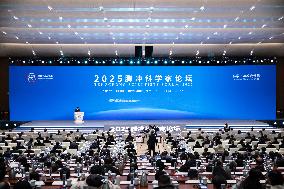
This photo shows the opening ceremony of Tengchong Scientists Forum 2025 in Tengchong City, southwest China's Yunnan Province, Dec. 6, 2025. The forum, attracting more than 120 academicians and over 70 presidents of well-known universities from home and abroad, opened here on Saturday. Photo by Wang Anhaowei /Xinhua/ABACAPRESS.COM

  •  
Tengchong Scientists Forum Opening - Yunnan

Tengchong Scientists Forum Opening - Yunnan

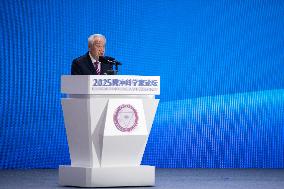
Gu Binglin, forum chair and an academician of the Chinese Academy of Sciences, speaks at the opening ceremony of Tengchong Scientists Forum 2025 in Tengchong City, southwest China's Yunnan Province, Dec. 6, 2025. The forum, attracting more than 120 academicians and over 70 presidents of well-known universities from home and abroad, opened here on Saturday. Photo by Wang Anhaowei /Xinhua/ABACAPRESS.COM

  •  
Tengchong Scientists Forum Opening - Yunnan

Tengchong Scientists Forum Opening - Yunnan

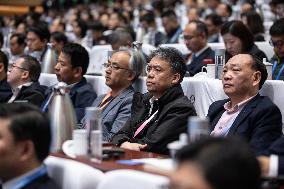
Guests attend the opening ceremony of Tengchong Scientists Forum 2025 in Tengchong City, southwest China's Yunnan Province, Dec. 6, 2025. The forum, attracting more than 120 academicians and over 70 presidents of well-known universities from home and abroad, opened here on Saturday. Photo by Wang Anhaowei /Xinhua/ABACAPRESS.COM

  •  
Tengchong Scientists Forum Opening - Yunnan

Tengchong Scientists Forum Opening - Yunnan

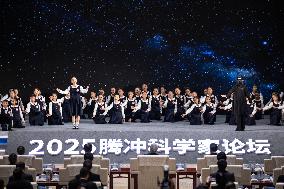
Students perform at the opening ceremony of Tengchong Scientists Forum 2025 in Tengchong City, southwest China's Yunnan Province, Dec. 6, 2025. The forum, attracting more than 120 academicians and over 70 presidents of well-known universities from home and abroad, opened here on Saturday. Photo by Wang Anhaowei /Xinhua/ABACAPRESS.COM

  •  
Robot Chemist - China

Robot Chemist - China

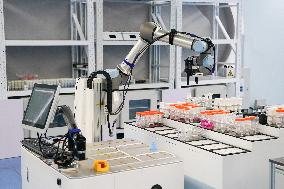
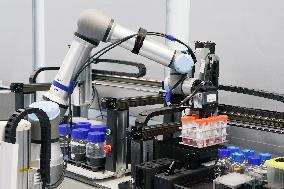
Robot Xiaolai performs an experiment at the state key laboratory of precision and intelligent chemistry of the University of Science and Technology of China (USTC) in Hefei, east China's Anhui Province, November 24, 2025. Traditional chemical research has long relied on continuous trial and error by scientists. With the development of artificial intelligence and robotic automation technologies, it has become possible to design experiments and issue instructions through intelligent platforms, using robots to replace human labor in experiential operations, which enhances experimental efficiency and precision. In 2021, after eight years of dedicated effort by a research team from USTC, Xiaolai, the first-generation "robot chemist," was successfully developed. After several years of iterations, the second-generation dual-armed humanoid robot Xiaolin has been put into operation, capable of performing more complex tasks. It has evolved from a substitute of human labor to a "research partner." According to Zhu Zhuoy

  •  
Robot Chemist - China

Robot Chemist - China

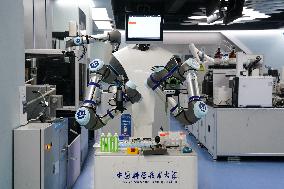
Robot Xiaolin is pictured at the state key laboratory of precision and intelligent chemistry of the University of Science and Technology of China (USTC) in Hefei, east China's Anhui Province, November 24, 2025. Traditional chemical research has long relied on continuous trial and error by scientists. With the development of artificial intelligence and robotic automation technologies, it has become possible to design experiments and issue instructions through intelligent platforms, using robots to replace human labor in experiential operations, which enhances experimental efficiency and precision. In 2021, after eight years of dedicated effort by a research team from USTC, Xiaolai, the first-generation "robot chemist," was successfully developed. After several years of iterations, the second-generation dual-armed humanoid robot Xiaolin has been put into operation, capable of performing more complex tasks. It has evolved from a substitute of human labor to a "research partner." According to Zhu Zhuoying, a prof

  •  
Robot Chemist - China

Robot Chemist - China

Robot Xiaolin is pictured at the state key laboratory of precision and intelligent chemistry of the University of Science and Technology of China (USTC) in Hefei, east China's Anhui Province, November 24, 2025. Traditional chemical research has long relied on continuous trial and error by scientists. With the development of artificial intelligence and robotic automation technologies, it has become possible to design experiments and issue instructions through intelligent platforms, using robots to replace human labor in experiential operations, which enhances experimental efficiency and precision. In 2021, after eight years of dedicated effort by a research team from USTC, Xiaolai, the first-generation "robot chemist," was successfully developed. After several years of iterations, the second-generation dual-armed humanoid robot Xiaolin has been put into operation, capable of performing more complex tasks. It has evolved from a substitute of human labor to a "research partner." According to Zhu Zhuoying, a prof

  •  
Robot Chemist - China

Robot Chemist - China

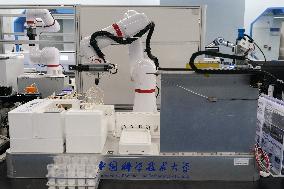
Robot Xiaolai performs an experiment at the state key laboratory of precision and intelligent chemistry of the University of Science and Technology of China (USTC) in Hefei, east China's Anhui Province, November 24, 2025. Traditional chemical research has long relied on continuous trial and error by scientists. With the development of artificial intelligence and robotic automation technologies, it has become possible to design experiments and issue instructions through intelligent platforms, using robots to replace human labor in experiential operations, which enhances experimental efficiency and precision. In 2021, after eight years of dedicated effort by a research team from USTC, Xiaolai, the first-generation "robot chemist," was successfully developed. After several years of iterations, the second-generation dual-armed humanoid robot Xiaolin has been put into operation, capable of performing more complex tasks. It has evolved from a substitute of human labor to a "research partner." According to Zhu Zhuoy

  •  
Robot Chemist - China

Robot Chemist - China

Robot Xiaolai performs an experiment at the state key laboratory of precision and intelligent chemistry of the University of Science and Technology of China (USTC) in Hefei, east China's Anhui Province, November 24, 2025. Traditional chemical research has long relied on continuous trial and error by scientists. With the development of artificial intelligence and robotic automation technologies, it has become possible to design experiments and issue instructions through intelligent platforms, using robots to replace human labor in experiential operations, which enhances experimental efficiency and precision. In 2021, after eight years of dedicated effort by a research team from USTC, Xiaolai, the first-generation "robot chemist," was successfully developed. After several years of iterations, the second-generation dual-armed humanoid robot Xiaolin has been put into operation, capable of performing more complex tasks. It has evolved from a substitute of human labor to a "research partner." According to Zhu Zhuoy

  •  
Robot Chemist - China

Robot Chemist - China

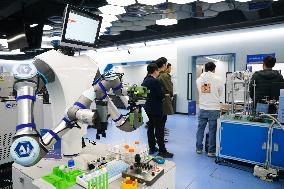
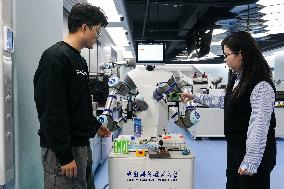
Professor Zhu Zhuoying (R) and doctoral student Guo Lulu have a discussion in front of Robot Xiaolin at the state key laboratory of precision and intelligent chemistry of the University of Science and Technology of China (USTC) in Hefei, east China's Anhui Province, November 24, 2025. Traditional chemical research has long relied on continuous trial and error by scientists. With the development of artificial intelligence and robotic automation technologies, it has become possible to design experiments and issue instructions through intelligent platforms, using robots to replace human labor in experiential operations, which enhances experimental efficiency and precision. In 2021, after eight years of dedicated effort by a research team from USTC, Xiaolai, the first-generation "robot chemist," was successfully developed. After several years of iterations, the second-generation dual-armed humanoid robot Xiaolin has been put into operation, capable of performing more complex tasks. It has evolved from a substitut

  •  
Southern Europe and The Northwestern Mediterranean Coast from The ISS

Southern Europe and The Northwestern Mediterranean Coast from The ISS

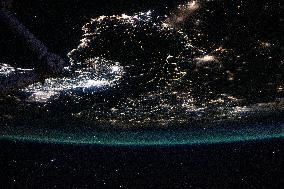
Handout - JAXA (Japan Aerospace Exploration Agency) astronaut Kimiya Yui captured this photo of southern Europe and the northwestern Mediterranean coast from the International Space Station as it orbited 261 miles above Earth on August 30, 2025. At left, the Po Valley urban corridor in Italy shines with the metropolitan areas of Milan and Turin and their surrounding suburbs. Crew members aboard the orbital lab have produced hundreds of thousands of images of the land, oceans, and atmosphere of Earth, and even of the Moon through Crew Earth Observations. Their photographs of Earth record how the planet changes over time due to human activity and natural events. This allows scientists to monitor disasters and direct response on the ground and study a number of phenomena, from the movement of glaciers to urban wildlife. Photo by JAXA/Kimiya Yui/NASA via ABACAPRESS.COM

  •  
Mark Caulfield and Douglas F. Easton Receiving "Lombardy is Research" Award - Milan

Mark Caulfield and Douglas F. Easton Receiving "Lombardy is Research" Award - Milan

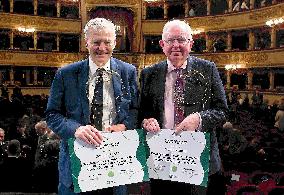
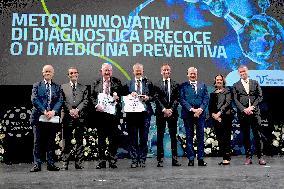
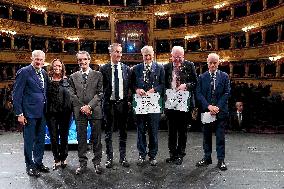
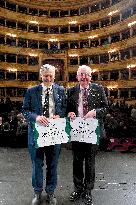
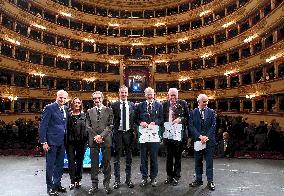
Mark Caulfield and Douglas F. Easton during the Awarding Ceremony, on November 8, 2025, in Milan, Italy. The Lombardy Region’s 2025 International “Lombardy is Research” Award, dedicated this year to the theme “Innovative methods of early diagnosis or preventive medicine”, has been jointly awarded to British professors Mark Caulfield and Douglas F. Easton, pioneers in the field of genomic medicine. The award was granted to the two scientists for their “groundbreaking research that has led to the identification of genes associated with increased susceptibility to various diseases, particularly cancer and cardiovascular disease. This work has had a profound impact on early diagnosis, prevention, and precision medicine.” Photo by Maurizio Maule/Fotogramma/ABACAPRESS.COM

  •  
Mark Caulfield and Douglas F. Easton Receiving "Lombardy is Research" Award - Milan

Mark Caulfield and Douglas F. Easton Receiving "Lombardy is Research" Award - Milan

Mark Caulfield and Douglas F. Easton during the Awarding Ceremony, on November 8, 2025, in Milan, Italy. The Lombardy Region’s 2025 International “Lombardy is Research” Award, dedicated this year to the theme “Innovative methods of early diagnosis or preventive medicine”, has been jointly awarded to British professors Mark Caulfield and Douglas F. Easton, pioneers in the field of genomic medicine. The award was granted to the two scientists for their “groundbreaking research that has led to the identification of genes associated with increased susceptibility to various diseases, particularly cancer and cardiovascular disease. This work has had a profound impact on early diagnosis, prevention, and precision medicine.” Photo by Maurizio Maule/Fotogramma/ABACAPRESS.COM

  •  
Mark Caulfield and Douglas F. Easton Receiving "Lombardy is Research" Award - Milan

Mark Caulfield and Douglas F. Easton Receiving "Lombardy is Research" Award - Milan

Mark Caulfield and Douglas F. Easton during the Awarding Ceremony, on November 8, 2025, in Milan, Italy. The Lombardy Region’s 2025 International “Lombardy is Research” Award, dedicated this year to the theme “Innovative methods of early diagnosis or preventive medicine”, has been jointly awarded to British professors Mark Caulfield and Douglas F. Easton, pioneers in the field of genomic medicine. The award was granted to the two scientists for their “groundbreaking research that has led to the identification of genes associated with increased susceptibility to various diseases, particularly cancer and cardiovascular disease. This work has had a profound impact on early diagnosis, prevention, and precision medicine.” Photo by Maurizio Maule/Fotogramma/ABACAPRESS.COM

  •  
Mark Caulfield and Douglas F. Easton Receiving "Lombardy is Research" Award - Milan

Mark Caulfield and Douglas F. Easton Receiving "Lombardy is Research" Award - Milan

Mark Caulfield and Douglas F. Easton during the Awarding Ceremony, on November 8, 2025, in Milan, Italy. The Lombardy Region’s 2025 International “Lombardy is Research” Award, dedicated this year to the theme “Innovative methods of early diagnosis or preventive medicine”, has been jointly awarded to British professors Mark Caulfield and Douglas F. Easton, pioneers in the field of genomic medicine. The award was granted to the two scientists for their “groundbreaking research that has led to the identification of genes associated with increased susceptibility to various diseases, particularly cancer and cardiovascular disease. This work has had a profound impact on early diagnosis, prevention, and precision medicine.” Photo by Maurizio Maule/Fotogramma/ABACAPRESS.COM

  •  
Mark Caulfield and Douglas F. Easton Receiving "Lombardy is Research" Award - Milan

Mark Caulfield and Douglas F. Easton Receiving "Lombardy is Research" Award - Milan

Mark Caulfield and Douglas F. Easton during the Awarding Ceremony, on November 8, 2025, in Milan, Italy. The Lombardy Region’s 2025 International “Lombardy is Research” Award, dedicated this year to the theme “Innovative methods of early diagnosis or preventive medicine”, has been jointly awarded to British professors Mark Caulfield and Douglas F. Easton, pioneers in the field of genomic medicine. The award was granted to the two scientists for their “groundbreaking research that has led to the identification of genes associated with increased susceptibility to various diseases, particularly cancer and cardiovascular disease. This work has had a profound impact on early diagnosis, prevention, and precision medicine.” Photo by Maurizio Maule/Fotogramma/ABACAPRESS.COM

  •  
Nobel Prize winners Sakaguchi and Kitagawa

Nobel Prize winners Sakaguchi and Kitagawa

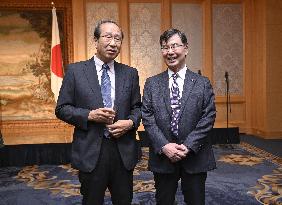
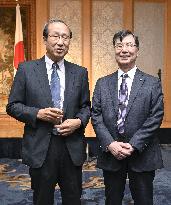
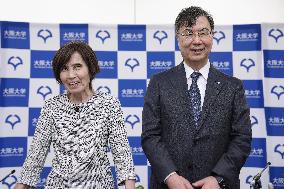
Japanese scientists, Susumu Kitagawa and Shimon Sakaguchi, winners of the 2025 Nobel Prize in chemistry and in physiology or medicine, respectively, attend a reception for visiting Swedish Crown Princess Victoria at a hotel in Tokyo on Oct. 13, 2025.

  •  
Nobel Prize winners Sakaguchi and Kitagawa

Nobel Prize winners Sakaguchi and Kitagawa

Japanese scientists, Susumu Kitagawa and Shimon Sakaguchi, winners of the 2025 Nobel Prize in chemistry and in physiology or medicine, respectively, attend a reception for visiting Swedish Crown Princess Victoria at a hotel in Tokyo on Oct. 13, 2025.

  •  
Nobel Prize winners Sakaguchi and Kitagawa

Nobel Prize winners Sakaguchi and Kitagawa

Japanese scientists, Susumu Kitagawa and Shimon Sakaguchi, winners of the 2025 Nobel Prize in chemistry and in physiology or medicine, respectively, attend a reception for visiting Swedish Crown Princess Victoria at a hotel in Tokyo on Oct. 13, 2025.

  •  
Nobel Prize winners Sakaguchi and Kitagawa

Nobel Prize winners Sakaguchi and Kitagawa

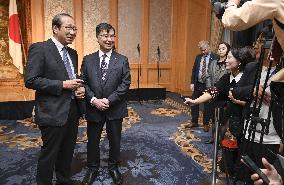
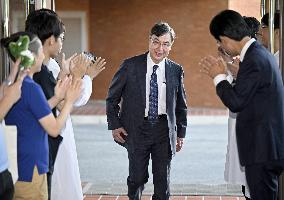
Japanese scientists, Susumu Kitagawa and Shimon Sakaguchi, winners of the 2025 Nobel Prize in chemistry and in physiology or medicine, respectively, speak with the press as they attend a reception for visiting Swedish Crown Princess Victoria at a hotel in Tokyo on Oct. 13, 2025.

  •  
Nobel Prize in medicine winner Sakaguchi

Nobel Prize in medicine winner Sakaguchi

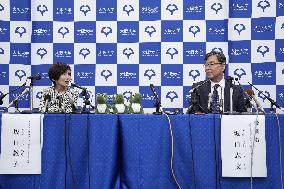
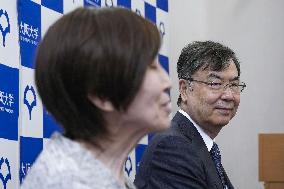
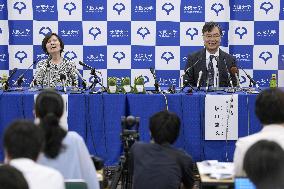
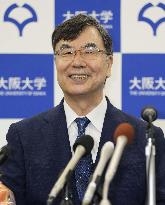
Shimon Sakaguchi, a distinguished professor at Osaka University, alongside his wife, Noriko, attends a press conference in Suita, Osaka Prefecture, western Japan, on Oct. 7, 2025, a day after being named the winner of the Nobel Prize in Physiology or Medicine, along with two American scientists, for "groundbreaking" discoveries on how the immune system is kept in check.

  •  
Nobel Prize in medicine winner Sakaguchi

Nobel Prize in medicine winner Sakaguchi

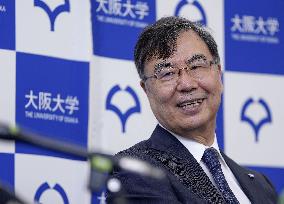
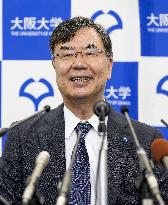
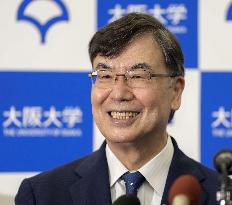
Shimon Sakaguchi, a distinguished professor at Osaka University, smiles at a press conference in Suita, Osaka Prefecture, western Japan, on Oct. 7, 2025, a day after being named the winner of the Nobel Prize in Physiology or Medicine, along with two American scientists, for "groundbreaking" discoveries on how the immune system is kept in check.

  •  
Nobel Prize in medicine winner Sakaguchi

Nobel Prize in medicine winner Sakaguchi

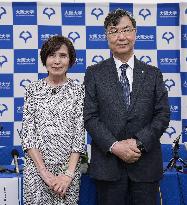
Shimon Sakaguchi, a distinguished professor at Osaka University, alongside his wife, Noriko, pose for photos in Suita, Osaka Prefecture, western Japan, on Oct. 7, 2025, a day after being named the winner of the Nobel Prize in Physiology or Medicine, along with two American scientists, for "groundbreaking" discoveries on how the immune system is kept in check.

  •  
Nobel Prize in medicine winner Sakaguchi

Nobel Prize in medicine winner Sakaguchi

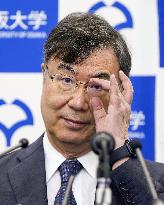
Shimon Sakaguchi, a distinguished professor at Osaka University, attends a press conference in Suita, Osaka Prefecture, western Japan, on Oct. 7, 2025, a day after being named the winner of the Nobel Prize in Physiology or Medicine, along with two American scientists, for "groundbreaking" discoveries on how the immune system is kept in check.

  •  

[Breaking News]Nobel Prize in medicine winner Sakaguchi

SUITA, Japan, Oct. 7 Kyodo - Shimon Sakaguchi, a distinguished professor at Osaka University, attends a press conference in Suita, Osaka Prefecture, western Japan, on Oct. 7, 2025, a day after being named the winner of the Nobel Prize in Physiology or Medicine with two American scientists for their "groundbreaking" discoveries on how the immune system is kept in check. (Kyodo)

  •  

Nobel Prize in medicine winner Sakaguchi

TOKYO, Japan, Oct. 7 Kyodo - Shimon Sakaguchi, a distinguished professor at Osaka University, attends a press conference in Suita, Osaka Prefecture in western Japan, on Oct. 6, 2025, after the Nobel Assembly at the Karolinska Institute announced that he won this year's Nobel Prize in Physiology or Medicine jointly with U.S. scientists Mary E. Brunkow and Fred Ramsdell, for their "groundbreaking" discoveries on how the immune system is kept in check. (Kyodo)

  •  
Nobel Prize in medicine winner Sakaguchi

Nobel Prize in medicine winner Sakaguchi

Shimon Sakaguchi, a distinguished professor at Osaka University, alongside his wife, Noriko, attends a press conference in Suita, Osaka Prefecture, western Japan, on Oct. 7, 2025, a day after being named the winner of the Nobel Prize in Physiology or Medicine, along with two American scientists, for "groundbreaking" discoveries on how the immune system is kept in check.

  •  
Nobel Prize in medicine winner Sakaguchi

Nobel Prize in medicine winner Sakaguchi

Shimon Sakaguchi, a distinguished professor at Osaka University, alongside his wife, Noriko, attends a press conference in Suita, Osaka Prefecture, western Japan, on Oct. 7, 2025, a day after being named the winner of the Nobel Prize in Physiology or Medicine, along with two American scientists, for "groundbreaking" discoveries on how the immune system is kept in check.

  •  
Nobel Prize in medicine winner Sakaguchi

Nobel Prize in medicine winner Sakaguchi

Shimon Sakaguchi, a distinguished professor at Osaka University, alongside his wife, Noriko, pose for photos in Suita, Osaka Prefecture, western Japan, on Oct. 7, 2025, a day after being named the winner of the Nobel Prize in Physiology or Medicine, along with two American scientists, for "groundbreaking" discoveries on how the immune system is kept in check.

  •  
Nobel Prize in medicine winner Sakaguchi

Nobel Prize in medicine winner Sakaguchi

Shimon Sakaguchi, a distinguished professor at Osaka University, alongside his wife, Noriko, attends a press conference in Suita, Osaka Prefecture, western Japan, on Oct. 7, 2025, a day after being named the winner of the Nobel Prize in Physiology or Medicine, along with two American scientists, for "groundbreaking" discoveries on how the immune system is kept in check.

  •  
Nobel Prize in medicine winner Sakaguchi

Nobel Prize in medicine winner Sakaguchi

Shimon Sakaguchi, a distinguished professor at Osaka University, poses alongside his wife Noriko for photos in Suita, Osaka Prefecture, western Japan, on Oct. 7, 2025, after being named the winner of the Nobel Prize in Physiology or Medicine with two American scientists the previous night for their "groundbreaking" discoveries on how the immune system is kept in check.

  •  
Nobel Prize in medicine winner Sakaguchi

Nobel Prize in medicine winner Sakaguchi

Shimon Sakaguchi, a distinguished professor at Osaka University, attends a press conference in Suita, Osaka Prefecture, western Japan, on Oct. 7, 2025, a day after being named the winner of the Nobel Prize in Physiology or Medicine with two American scientists for their "groundbreaking" discoveries on how the immune system is kept in check.

  •  
Nobel Prize in medicine winner Sakaguchi

Nobel Prize in medicine winner Sakaguchi

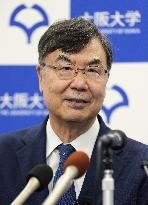
Shimon Sakaguchi, a distinguished professor at Osaka University, attends a press conference in Suita, Osaka Prefecture in western Japan, on Oct. 6, 2025, after the Nobel Assembly at the Karolinska Institute announced that he won this year's Nobel Prize in Physiology or Medicine jointly with U.S. scientists Mary E. Brunkow and Fred Ramsdell, for their "groundbreaking" discoveries on how the immune system is kept in check.

  •  
Nobel Prize in medicine winner Sakaguchi

Nobel Prize in medicine winner Sakaguchi

Shimon Sakaguchi, a distinguished professor at Osaka University, attends a press conference in Suita, Osaka Prefecture in western Japan, on Oct. 6, 2025, after the Nobel Assembly at the Karolinska Institute announced that he won this year's Nobel Prize in Physiology or Medicine jointly with U.S. scientists Mary E. Brunkow and Fred Ramsdell, for their "groundbreaking" discoveries on how the immune system is kept in check.

  •  
Nobel Prize in medicine winner Sakaguchi

Nobel Prize in medicine winner Sakaguchi

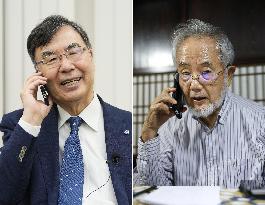
Combined photo shows Shimon Sakaguchi (L), a distinguished professor at Osaka University, in Osaka in western Japan, and Yoshinori Ohsumi, who won the Nobel Prize in physiology or medicine in 2016, in Oiso, Kanagawa Prefecture, near Tokyo, speaking on the phone after Sakaguchi was named the winner of the Nobel Prize in Physiology or Medicine with two American scientists the previous night for their "groundbreaking" discoveries on how the immune system is kept in check, on Oct. 6, 2025.

  •  
Nobel Prize in medicine winner Sakaguchi

Nobel Prize in medicine winner Sakaguchi

Shimon Sakaguchi, a distinguished professor at Osaka University, speaks during a press conference in Suita, Osaka Prefecture in western Japan, on Oct. 6, 2025, after the Nobel Assembly at the Karolinska Institute announced that he won this year's Nobel Prize in Physiology or Medicine jointly with U.S. scientists Mary E. Brunkow and Fred Ramsdell, for their "groundbreaking" discoveries on how the immune system is kept in check.

  •  
Nobel Prize in medicine winner Sakaguchi

Nobel Prize in medicine winner Sakaguchi

Shimon Sakaguchi, a distinguished professor at Osaka University, speaks during a press conference in Suita, Osaka Prefecture in western Japan, on Oct. 6, 2025, after the Nobel Assembly at the Karolinska Institute announced that he won this year's Nobel Prize in Physiology or Medicine jointly with U.S. scientists Mary E. Brunkow and Fred Ramsdell, for their "groundbreaking" discoveries on how the immune system is kept in check.

  •  
Nobel Prize in medicine winner Sakaguchi

Nobel Prize in medicine winner Sakaguchi

Shimon Sakaguchi, a distinguished professor at Osaka University, speaks during a press conference in Suita, Osaka Prefecture in western Japan, on Oct. 6, 2025, after the Nobel Assembly at the Karolinska Institute announced that he won this year's Nobel Prize in Physiology or Medicine jointly with U.S. scientists Mary E. Brunkow and Fred Ramsdell, for their "groundbreaking" discoveries on how the immune system is kept in check.

  •  
Nobel Prize in medicine winner Sakaguchi

Nobel Prize in medicine winner Sakaguchi

Shimon Sakaguchi, a distinguished professor at Osaka University, speaks during a press conference in Suita, Osaka Prefecture in western Japan, on Oct. 6, 2025, after the Nobel Assembly at the Karolinska Institute announced that he won this year's Nobel Prize in Physiology or Medicine jointly with U.S. scientists Mary E. Brunkow and Fred Ramsdell, for their "groundbreaking" discoveries on how the immune system is kept in check.

  •  
2025 Nobel laureate in medicine Sakaguchi

2025 Nobel laureate in medicine Sakaguchi

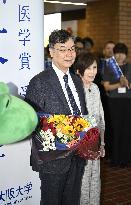
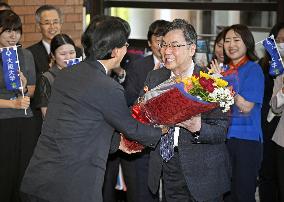
Shimon Sakaguchi, a distinguished professor at Osaka University, receives a bouquet in Suita, Osaka Prefecture, on Oct. 7, 2025, after being named the winner of the Nobel Prize in Physiology or Medicine with two American scientists the previous night for their "groundbreaking" discoveries on how the immune system is kept in check.

  •  
2025 Nobel laureate in medicine Sakaguchi

2025 Nobel laureate in medicine Sakaguchi

Shimon Sakaguchi, a distinguished professor at Osaka University, receives a bouquet in Suita, Osaka Prefecture, on Oct. 7, 2025, after being named the winner of the Nobel Prize in Physiology or Medicine with two American scientists the previous night for their "groundbreaking" discoveries on how the immune system is kept in check.

  •  
2025 Nobel laureate in medicine Sakaguchi

2025 Nobel laureate in medicine Sakaguchi

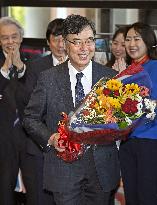
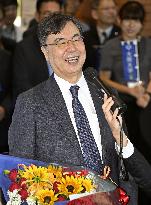
Shimon Sakaguchi, a distinguished professor at Osaka University, smiles holding a bouquet in Suita, Osaka Prefecture, on Oct. 7, 2025, after being named the winner of the Nobel Prize in Physiology or Medicine with two American scientists the previous night for their "groundbreaking" discoveries on how the immune system is kept in check.

  •  
2025 Nobel laureate in medicine Sakaguchi

2025 Nobel laureate in medicine Sakaguchi

Shimon Sakaguchi, a distinguished professor at Osaka University, is applauded in Suita, Osaka Prefecture, on Oct. 7, 2025, after being named the winner of the Nobel Prize in Physiology or Medicine with two American scientists the previous night for their "groundbreaking" discoveries on how the immune system is kept in check.

  •  
2025 Nobel laureate in medicine Sakaguchi

2025 Nobel laureate in medicine Sakaguchi

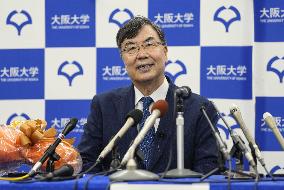
Shimon Sakaguchi, a distinguished professor at Osaka University, speaks to reporters with a bouquet in Suita, Osaka Prefecture, on Oct. 7, 2025, after being named the winner of the Nobel Prize in Physiology or Medicine with two American scientists the previous night for their "groundbreaking" discoveries on how the immune system is kept in check.

  •  
Illustration - A Teenage Girl On Her Cell Phone

Illustration - A Teenage Girl On Her Cell Phone

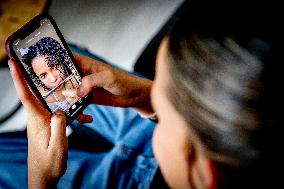
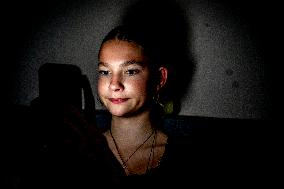
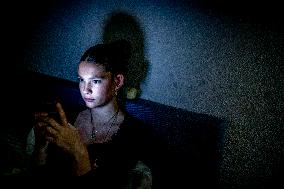
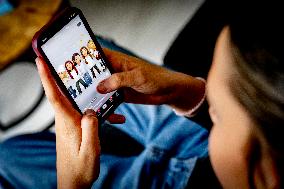
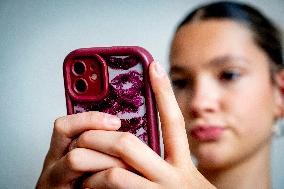
Illustration - A teenage girl on her mobile phone. Maastricht University study found that 70% of young people under 21 are addicted to their mobile phones. More than 1,400 doctors, scientists, and experts are calling on politicians to establish age limits for smartphone and social media use, on October 5, 2025. Photo by Robin Utrecht/BACAPRESS.COM

  •  
Illustration - A Teenage Girl On Her Cell Phone

Illustration - A Teenage Girl On Her Cell Phone

Illustration - A teenage girl on her mobile phone. Maastricht University study found that 70% of young people under 21 are addicted to their mobile phones. More than 1,400 doctors, scientists, and experts are calling on politicians to establish age limits for smartphone and social media use, on October 5, 2025. Photo by Robin Utrecht/BACAPRESS.COM

  •  
Illustration - A Teenage Girl On Her Cell Phone

Illustration - A Teenage Girl On Her Cell Phone

Illustration - A teenage girl on her mobile phone. Maastricht University study found that 70% of young people under 21 are addicted to their mobile phones. More than 1,400 doctors, scientists, and experts are calling on politicians to establish age limits for smartphone and social media use, on October 5, 2025. Photo by Robin Utrecht/BACAPRESS.COM

  •  
Illustration - A Teenage Girl On Her Cell Phone

Illustration - A Teenage Girl On Her Cell Phone

Illustration - A teenage girl on her mobile phone. Maastricht University study found that 70% of young people under 21 are addicted to their mobile phones. More than 1,400 doctors, scientists, and experts are calling on politicians to establish age limits for smartphone and social media use, on October 5, 2025. Photo by Robin Utrecht/BACAPRESS.COM

  •  
Illustration - A Teenage Girl On Her Cell Phone

Illustration - A Teenage Girl On Her Cell Phone

Illustration - A teenage girl on her mobile phone. Maastricht University study found that 70% of young people under 21 are addicted to their mobile phones. More than 1,400 doctors, scientists, and experts are calling on politicians to establish age limits for smartphone and social media use, on October 5, 2025. Photo by Robin Utrecht/BACAPRESS.COM

  • Main
  • Top
  • Editorial
  • Creative
  • About Us
  • About ILG
  • Terms of use
  • Company
  • BEHIND
  • Price List
  • Single Plan
  • Monthly Plan
  • Services
  • Shooting
  • Rights Clearance
  • Support
  • FAQ
  • How To Buy
  • Contact Us
  • Become a Partner

© KYODO NEWS IMAGES INC

All Rights Reserved.

  • Editorial
  • Olympics
  • News
  • Sports
  • Japan
  • Tech
  • Royal
  • Disaster
  • NorthKorea
  • Old Japan
  • SNS
  • Creative
  • Food
  • Japan
  • Landscape
  • Animal
  • Popular
  • #Ukraine
  • #Thailand
  • #coronavirus
  • #N. Korea
  • #China
  • #Russia
  • #Ukraine
  • #Thailand
  • #coronavirus
  • #N. Korea
  • #China
  • #Russia
  • Food
  • Japan
  • Landscape
  • Animal
  • Olympics
  • News
  • Sports
  • Japan
  • Tech
  • Royal
  • Disaster
  • NorthKorea
  • Old Japan
  • SNS