•  
XINHUA PHOTOS OF THE DAY

XINHUA PHOTOS OF THE DAY

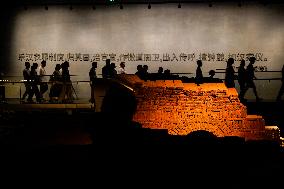
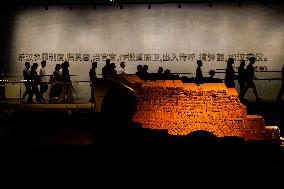
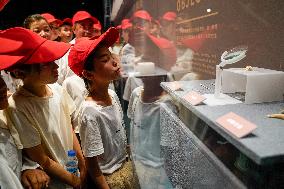
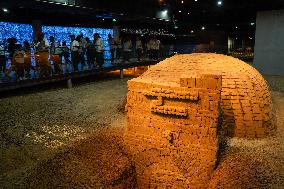
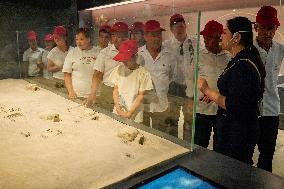
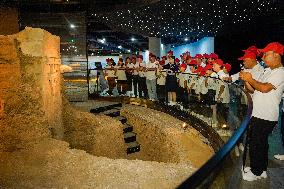
(240716) -- BEIJING, July 16, 2024 Photo by Xinhua/ABACAPRESS.COM) -- People visit the Wei and Jin Dynasties Ancient Tombs Site Museum in Kuqa City, northwest China's Xinjiang Uygur Autonomous Region, July 15, 2024. An underground museum of the Wei and Jin dynasties (220-420) ancient tombs opened on Monday in Kuqa County, an area that previously belonged to the ancient Qiuci State. The Qiuci State, which commenced in the second century BC and existed for more than 1,000 years, was one of the 36 states in the Western Regions, a term used in the Han Dynasty (206 BC-220 AD) for areas west of the Yumen Pass, including present Xinjiang and parts of Central Asia. This in-situ museum with an exhibition space of 5,000 square meters was built to protect 15 brick tomb chambers discovered in 2007 during the construction of the Youyi Road underground pass. The discovery was one of China's top ten new archaeological discoveries that year. The tomb complex was built in consistence with the Han Dynasty style brick-chambered

  •  
Wei And Jin Dynasties Ancient Tombs Site Museum - Kuqa City

Wei And Jin Dynasties Ancient Tombs Site Museum - Kuqa City

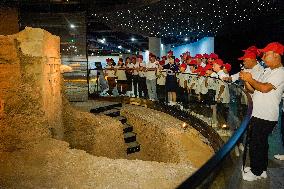
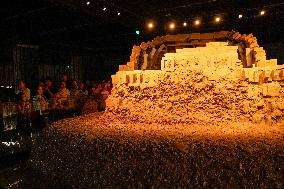
This photo taken on July 15, 2024. An underground museum of the Wei and Jin dynasties (220-420) ancient tombs opened on Monday in Kuqa County, an area that previously belonged to the ancient Qiuci State. The Qiuci State, which commenced in the second century BC and existed for more than 1,000 years, was one of the 36 states in the Western Regions, a term used in the Han Dynasty (206 BC-220 AD) for areas west of the Yumen Pass, including present Xinjiang and parts of Central Asia. This in-situ museum with an exhibition space of 5,000 square meters was built to protect 15 brick tomb chambers discovered in 2007 during the construction of the Youyi Road underground pass. The discovery was one of China's top ten new archaeological discoveries that year. The tomb complex was built in consistence with the Han Dynasty style brick-chambered tombs found in the central China region and along the Hexi Corridor, stretching over a distance of nearly 1,000 kilometers in northwest China's Gansu Province, which is home to fiv

  •  
Wei And Jin Dynasties Ancient Tombs Site Museum - Kuqa City

Wei And Jin Dynasties Ancient Tombs Site Museum - Kuqa City

Visitors wear VR sets for exhibitions at the Wei and Jin Dynasties Ancient Tombs Site Museum in Kuqa City, northwest China's Xinjiang Uygur Autonomous Region, July 15, 2024. An underground museum of the Wei and Jin dynasties (220-420) ancient tombs opened on Monday in Kuqa County, an area that previously belonged to the ancient Qiuci State. The Qiuci State, which commenced in the second century BC and existed for more than 1,000 years, was one of the 36 states in the Western Regions, a term used in the Han Dynasty (206 BC-220 AD) for areas west of the Yumen Pass, including present Xinjiang and parts of Central Asia. This in-situ museum with an exhibition space of 5,000 square meters was built to protect 15 brick tomb chambers discovered in 2007 during the construction of the Youyi Road underground pass. The discovery was one of China's top ten new archaeological discoveries that year. The tomb complex was built in consistence with the Han Dynasty style brick-chambered tombs found in the central China region a

  •  
Wei And Jin Dynasties Ancient Tombs Site Museum - Kuqa City

Wei And Jin Dynasties Ancient Tombs Site Museum - Kuqa City

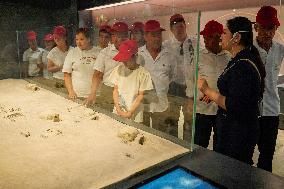
People visit the Wei and Jin Dynasties Ancient Tombs Site Museum in Kuqa City, northwest China's Xinjiang Uygur Autonomous Region, July 15, 2024. An underground museum of the Wei and Jin dynasties (220-420) ancient tombs opened on Monday in Kuqa County, an area that previously belonged to the ancient Qiuci State. The Qiuci State, which commenced in the second century BC and existed for more than 1,000 years, was one of the 36 states in the Western Regions, a term used in the Han Dynasty (206 BC-220 AD) for areas west of the Yumen Pass, including present Xinjiang and parts of Central Asia. This in-situ museum with an exhibition space of 5,000 square meters was built to protect 15 brick tomb chambers discovered in 2007 during the construction of the Youyi Road underground pass. The discovery was one of China's top ten new archaeological discoveries that year. The tomb complex was built in consistence with the Han Dynasty style brick-chambered tombs found in the central China region and along the Hexi Corridor,

  •  
Wei And Jin Dynasties Ancient Tombs Site Museum - Kuqa City

Wei And Jin Dynasties Ancient Tombs Site Museum - Kuqa City

This photo taken on July 15, 2024. An underground museum of the Wei and Jin dynasties (220-420) ancient tombs opened on Monday in Kuqa County, an area that previously belonged to the ancient Qiuci State. The Qiuci State, which commenced in the second century BC and existed for more than 1,000 years, was one of the 36 states in the Western Regions, a term used in the Han Dynasty (206 BC-220 AD) for areas west of the Yumen Pass, including present Xinjiang and parts of Central Asia. This in-situ museum with an exhibition space of 5,000 square meters was built to protect 15 brick tomb chambers discovered in 2007 during the construction of the Youyi Road underground pass. The discovery was one of China's top ten new archaeological discoveries that year. The tomb complex was built in consistence with the Han Dynasty style brick-chambered tombs found in the central China region and along the Hexi Corridor, stretching over a distance of nearly 1,000 kilometers in northwest China's Gansu Province, which is home to fiv

  •  
Wei And Jin Dynasties Ancient Tombs Site Museum - Kuqa City

Wei And Jin Dynasties Ancient Tombs Site Museum - Kuqa City

People visit the Wei and Jin Dynasties Ancient Tombs Site Museum in Kuqa City, northwest China's Xinjiang Uygur Autonomous Region, July 15, 2024. An underground museum of the Wei and Jin dynasties (220-420) ancient tombs opened on Monday in Kuqa County, an area that previously belonged to the ancient Qiuci State. The Qiuci State, which commenced in the second century BC and existed for more than 1,000 years, was one of the 36 states in the Western Regions, a term used in the Han Dynasty (206 BC-220 AD) for areas west of the Yumen Pass, including present Xinjiang and parts of Central Asia. This in-situ museum with an exhibition space of 5,000 square meters was built to protect 15 brick tomb chambers discovered in 2007 during the construction of the Youyi Road underground pass. The discovery was one of China's top ten new archaeological discoveries that year. The tomb complex was built in consistence with the Han Dynasty style brick-chambered tombs found in the central China region and along the Hexi Corridor,

  •  
Wei And Jin Dynasties Ancient Tombs Site Museum - Kuqa City

Wei And Jin Dynasties Ancient Tombs Site Museum - Kuqa City

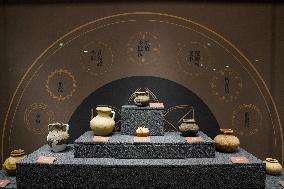
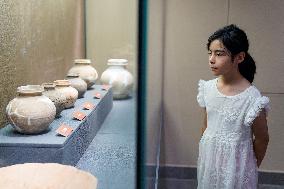
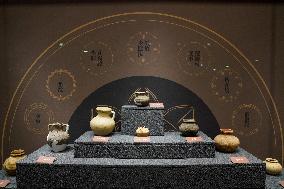
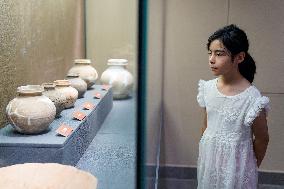
Potteries are exhibited at the Wei and Jin Dynasties Ancient Tombs Site Museum in Kuqa City, northwest China's Xinjiang Uygur Autonomous Region, July 15, 2024. An underground museum of the Wei and Jin dynasties (220-420) ancient tombs opened on Monday in Kuqa County, an area that previously belonged to the ancient Qiuci State. The Qiuci State, which commenced in the second century BC and existed for more than 1,000 years, was one of the 36 states in the Western Regions, a term used in the Han Dynasty (206 BC-220 AD) for areas west of the Yumen Pass, including present Xinjiang and parts of Central Asia. This in-situ museum with an exhibition space of 5,000 square meters was built to protect 15 brick tomb chambers discovered in 2007 during the construction of the Youyi Road underground pass. The discovery was one of China's top ten new archaeological discoveries that year. The tomb complex was built in consistence with the Han Dynasty style brick-chambered tombs found in the central China region and along the H

  •  
Wei And Jin Dynasties Ancient Tombs Site Museum - Kuqa City

Wei And Jin Dynasties Ancient Tombs Site Museum - Kuqa City

People visit the Wei and Jin Dynasties Ancient Tombs Site Museum in Kuqa City, northwest China's Xinjiang Uygur Autonomous Region, July 15, 2024. An underground museum of the Wei and Jin dynasties (220-420) ancient tombs opened on Monday in Kuqa County, an area that previously belonged to the ancient Qiuci State. The Qiuci State, which commenced in the second century BC and existed for more than 1,000 years, was one of the 36 states in the Western Regions, a term used in the Han Dynasty (206 BC-220 AD) for areas west of the Yumen Pass, including present Xinjiang and parts of Central Asia. This in-situ museum with an exhibition space of 5,000 square meters was built to protect 15 brick tomb chambers discovered in 2007 during the construction of the Youyi Road underground pass. The discovery was one of China's top ten new archaeological discoveries that year. The tomb complex was built in consistence with the Han Dynasty style brick-chambered tombs found in the central China region and along the Hexi Corridor,

  •  
Wei And Jin Dynasties Ancient Tombs Site Museum - Kuqa City

Wei And Jin Dynasties Ancient Tombs Site Museum - Kuqa City

This photo taken on July 15, 2024. An underground museum of the Wei and Jin dynasties (220-420) ancient tombs opened on Monday in Kuqa County, an area that previously belonged to the ancient Qiuci State. The Qiuci State, which commenced in the second century BC and existed for more than 1,000 years, was one of the 36 states in the Western Regions, a term used in the Han Dynasty (206 BC-220 AD) for areas west of the Yumen Pass, including present Xinjiang and parts of Central Asia. This in-situ museum with an exhibition space of 5,000 square meters was built to protect 15 brick tomb chambers discovered in 2007 during the construction of the Youyi Road underground pass. The discovery was one of China's top ten new archaeological discoveries that year. The tomb complex was built in consistence with the Han Dynasty style brick-chambered tombs found in the central China region and along the Hexi Corridor, stretching over a distance of nearly 1,000 kilometers in northwest China's Gansu Province, which is home to fiv

  •  
Wei And Jin Dynasties Ancient Tombs Site Museum - Kuqa City

Wei And Jin Dynasties Ancient Tombs Site Museum - Kuqa City

People visit the Wei and Jin Dynasties Ancient Tombs Site Museum in Kuqa City, northwest China's Xinjiang Uygur Autonomous Region, July 15, 2024. An underground museum of the Wei and Jin dynasties (220-420) ancient tombs opened on Monday in Kuqa County, an area that previously belonged to the ancient Qiuci State. The Qiuci State, which commenced in the second century BC and existed for more than 1,000 years, was one of the 36 states in the Western Regions, a term used in the Han Dynasty (206 BC-220 AD) for areas west of the Yumen Pass, including present Xinjiang and parts of Central Asia. This in-situ museum with an exhibition space of 5,000 square meters was built to protect 15 brick tomb chambers discovered in 2007 during the construction of the Youyi Road underground pass. The discovery was one of China's top ten new archaeological discoveries that year. The tomb complex was built in consistence with the Han Dynasty style brick-chambered tombs found in the central China region and along the Hexi Corridor,

  •  
Wei And Jin Dynasties Ancient Tombs Site Museum - Kuqa City

Wei And Jin Dynasties Ancient Tombs Site Museum - Kuqa City

People visit the Wei and Jin Dynasties Ancient Tombs Site Museum in Kuqa City, northwest China's Xinjiang Uygur Autonomous Region, July 15, 2024. An underground museum of the Wei and Jin dynasties (220-420) ancient tombs opened on Monday in Kuqa County, an area that previously belonged to the ancient Qiuci State. The Qiuci State, which commenced in the second century BC and existed for more than 1,000 years, was one of the 36 states in the Western Regions, a term used in the Han Dynasty (206 BC-220 AD) for areas west of the Yumen Pass, including present Xinjiang and parts of Central Asia. This in-situ museum with an exhibition space of 5,000 square meters was built to protect 15 brick tomb chambers discovered in 2007 during the construction of the Youyi Road underground pass. The discovery was one of China's top ten new archaeological discoveries that year. The tomb complex was built in consistence with the Han Dynasty style brick-chambered tombs found in the central China region and along the Hexi Corridor,

  •  
Wei And Jin Dynasties Ancient Tombs Site Museum - Kuqa City

Wei And Jin Dynasties Ancient Tombs Site Museum - Kuqa City

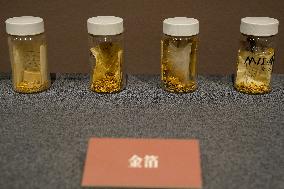
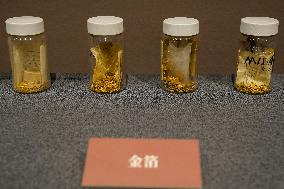
Gold foils are exhibited at the Wei and Jin Dynasties Ancient Tombs Site Museum in Kuqa City, northwest China's Xinjiang Uygur Autonomous Region, July 15, 2024. An underground museum of the Wei and Jin dynasties (220-420) ancient tombs opened on Monday in Kuqa County, an area that previously belonged to the ancient Qiuci State. The Qiuci State, which commenced in the second century BC and existed for more than 1,000 years, was one of the 36 states in the Western Regions, a term used in the Han Dynasty (206 BC-220 AD) for areas west of the Yumen Pass, including present Xinjiang and parts of Central Asia. This in-situ museum with an exhibition space of 5,000 square meters was built to protect 15 brick tomb chambers discovered in 2007 during the construction of the Youyi Road underground pass. The discovery was one of China's top ten new archaeological discoveries that year. The tomb complex was built in consistence with the Han Dynasty style brick-chambered tombs found in the central China region and along the

  •  
Wei And Jin Dynasties Ancient Tombs Site Museum - Kuqa City

Wei And Jin Dynasties Ancient Tombs Site Museum - Kuqa City

People visit the Wei and Jin Dynasties Ancient Tombs Site Museum in Kuqa City, northwest China's Xinjiang Uygur Autonomous Region, July 15, 2024. An underground museum of the Wei and Jin dynasties (220-420) ancient tombs opened on Monday in Kuqa County, an area that previously belonged to the ancient Qiuci State. The Qiuci State, which commenced in the second century BC and existed for more than 1,000 years, was one of the 36 states in the Western Regions, a term used in the Han Dynasty (206 BC-220 AD) for areas west of the Yumen Pass, including present Xinjiang and parts of Central Asia. This in-situ museum with an exhibition space of 5,000 square meters was built to protect 15 brick tomb chambers discovered in 2007 during the construction of the Youyi Road underground pass. The discovery was one of China's top ten new archaeological discoveries that year. The tomb complex was built in consistence with the Han Dynasty style brick-chambered tombs found in the central China region and along the Hexi Corridor,

  •  
Wei And Jin Dynasties Ancient Tombs Site Museum - Kuqa City

Wei And Jin Dynasties Ancient Tombs Site Museum - Kuqa City

People visit the Wei and Jin Dynasties Ancient Tombs Site Museum in Kuqa City, northwest China's Xinjiang Uygur Autonomous Region, July 15, 2024. An underground museum of the Wei and Jin dynasties (220-420) ancient tombs opened on Monday in Kuqa County, an area that previously belonged to the ancient Qiuci State. The Qiuci State, which commenced in the second century BC and existed for more than 1,000 years, was one of the 36 states in the Western Regions, a term used in the Han Dynasty (206 BC-220 AD) for areas west of the Yumen Pass, including present Xinjiang and parts of Central Asia. This in-situ museum with an exhibition space of 5,000 square meters was built to protect 15 brick tomb chambers discovered in 2007 during the construction of the Youyi Road underground pass. The discovery was one of China's top ten new archaeological discoveries that year. The tomb complex was built in consistence with the Han Dynasty style brick-chambered tombs found in the central China region and along the Hexi Corridor,

  •  
Wei And Jin Dynasties Ancient Tombs Site Museum - Kuqa City

Wei And Jin Dynasties Ancient Tombs Site Museum - Kuqa City

A visitor views exhibits at the Wei and Jin Dynasties Ancient Tombs Site Museum in Kuqa City, northwest China's Xinjiang Uygur Autonomous Region, July 15, 2024. An underground museum of the Wei and Jin dynasties (220-420) ancient tombs opened on Monday in Kuqa County, an area that previously belonged to the ancient Qiuci State. The Qiuci State, which commenced in the second century BC and existed for more than 1,000 years, was one of the 36 states in the Western Regions, a term used in the Han Dynasty (206 BC-220 AD) for areas west of the Yumen Pass, including present Xinjiang and parts of Central Asia. This in-situ museum with an exhibition space of 5,000 square meters was built to protect 15 brick tomb chambers discovered in 2007 during the construction of the Youyi Road underground pass. The discovery was one of China's top ten new archaeological discoveries that year. The tomb complex was built in consistence with the Han Dynasty style brick-chambered tombs found in the central China region and along the

  •  
Wei And Jin Dynasties Ancient Tombs Site Museum - Kuqa City

Wei And Jin Dynasties Ancient Tombs Site Museum - Kuqa City

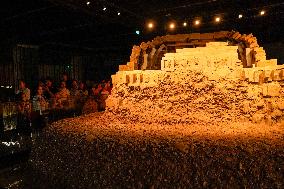
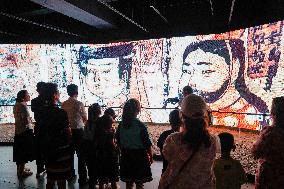
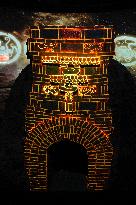
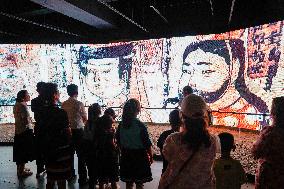
Exhibits powered by digital technologies are pictured at the Wei and Jin Dynasties Ancient Tombs Site Museum in Kuqa City, northwest China's Xinjiang Uygur Autonomous Region, July 15, 2024. An underground museum of the Wei and Jin dynasties (220-420) ancient tombs opened on Monday in Kuqa County, an area that previously belonged to the ancient Qiuci State. The Qiuci State, which commenced in the second century BC and existed for more than 1,000 years, was one of the 36 states in the Western Regions, a term used in the Han Dynasty (206 BC-220 AD) for areas west of the Yumen Pass, including present Xinjiang and parts of Central Asia. This in-situ museum with an exhibition space of 5,000 square meters was built to protect 15 brick tomb chambers discovered in 2007 during the construction of the Youyi Road underground pass. The discovery was one of China's top ten new archaeological discoveries that year. The tomb complex was built in consistence with the Han Dynasty style brick-chambered tombs found in the centra

  •  
CHINA-XINJIANG-KUQA-TOMBS SITE MUSEUM-OPEN (CN)

CHINA-XINJIANG-KUQA-TOMBS SITE MUSEUM-OPEN (CN)

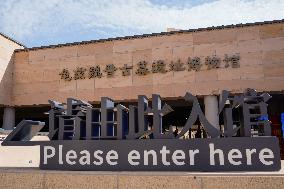
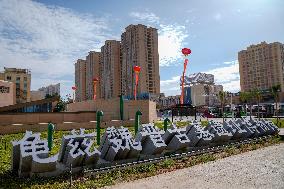
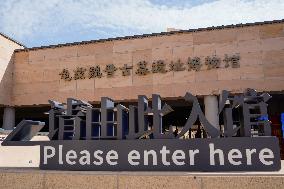
(240715) -- KUQA, July 15, 2024 Photo by Xinhua/ABACAPRESS.COM) -- This photo taken on July 15, 2024 shows an exterior view of the Wei and Jin Dynasties Ancient Tombs Site Museum in Kuqa City, northwest China's Xinjiang Uygur Autonomous Region. An underground museum of the Wei and Jin dynasties (220-420) ancient tombs opened on Monday in Kuqa County, an area that previously belonged to the ancient Qiuci State. The Qiuci State, which commenced in the second century BC and existed for more than 1,000 years, was one of the 36 states in the Western Regions, a term used in the Han Dynasty (206 BC-220 AD) for areas west of the Yumen Pass, including present Xinjiang and parts of Central Asia. This in-situ museum with an exhibition space of 5,000 square meters was built to protect 15 brick tomb chambers discovered in 2007 during the construction of the Youyi Road underground pass. The discovery was one of China's top ten new archaeological discoveries that year. The tomb complex was built in consistence with the Han

  •  
CHINA-XINJIANG-KUQA-TOMBS SITE MUSEUM-OPEN (CN)

CHINA-XINJIANG-KUQA-TOMBS SITE MUSEUM-OPEN (CN)

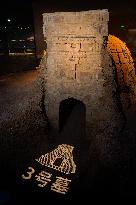
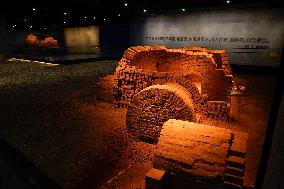
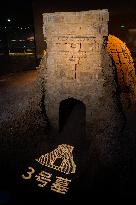
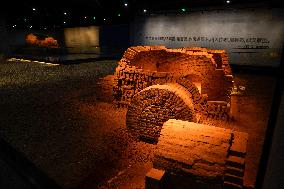
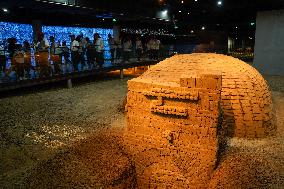
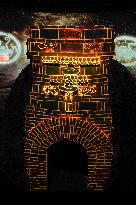
(240715) -- KUQA, July 15, 2024 Photo by Xinhua/ABACAPRESS.COM) -- This photo taken on July 15, 2024 shows a tomb exhibited at the Wei and Jin Dynasties Ancient Tombs Site Museum in Kuqa City, northwest China's Xinjiang Uygur Autonomous Region. An underground museum of the Wei and Jin dynasties (220-420) ancient tombs opened on Monday in Kuqa County, an area that previously belonged to the ancient Qiuci State. The Qiuci State, which commenced in the second century BC and existed for more than 1,000 years, was one of the 36 states in the Western Regions, a term used in the Han Dynasty (206 BC-220 AD) for areas west of the Yumen Pass, including present Xinjiang and parts of Central Asia. This in-situ museum with an exhibition space of 5,000 square meters was built to protect 15 brick tomb chambers discovered in 2007 during the construction of the Youyi Road underground pass. The discovery was one of China's top ten new archaeological discoveries that year. The tomb complex was built in consistence with the Han

  •  
CHINA-XINJIANG-KUQA-TOMBS SITE MUSEUM-OPEN (CN)

CHINA-XINJIANG-KUQA-TOMBS SITE MUSEUM-OPEN (CN)

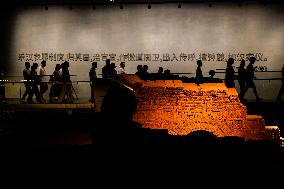
(240715) -- KUQA, July 15, 2024 Photo by Xinhua/ABACAPRESS.COM) -- People visit the Wei and Jin Dynasties Ancient Tombs Site Museum in Kuqa City, northwest China's Xinjiang Uygur Autonomous Region, July 15, 2024. An underground museum of the Wei and Jin dynasties (220-420) ancient tombs opened on Monday in Kuqa County, an area that previously belonged to the ancient Qiuci State. The Qiuci State, which commenced in the second century BC and existed for more than 1,000 years, was one of the 36 states in the Western Regions, a term used in the Han Dynasty (206 BC-220 AD) for areas west of the Yumen Pass, including present Xinjiang and parts of Central Asia. This in-situ museum with an exhibition space of 5,000 square meters was built to protect 15 brick tomb chambers discovered in 2007 during the construction of the Youyi Road underground pass. The discovery was one of China's top ten new archaeological discoveries that year. The tomb complex was built in consistence with the Han Dynasty style brick-chambered to

  •  
CHINA-XINJIANG-KUQA-TOMBS SITE MUSEUM-OPEN (CN)

CHINA-XINJIANG-KUQA-TOMBS SITE MUSEUM-OPEN (CN)

(240715) -- KUQA, July 15, 2024 Photo by Xinhua/ABACAPRESS.COM) -- People visit the Wei and Jin Dynasties Ancient Tombs Site Museum in Kuqa City, northwest China's Xinjiang Uygur Autonomous Region, July 15, 2024. An underground museum of the Wei and Jin dynasties (220-420) ancient tombs opened on Monday in Kuqa County, an area that previously belonged to the ancient Qiuci State. The Qiuci State, which commenced in the second century BC and existed for more than 1,000 years, was one of the 36 states in the Western Regions, a term used in the Han Dynasty (206 BC-220 AD) for areas west of the Yumen Pass, including present Xinjiang and parts of Central Asia. This in-situ museum with an exhibition space of 5,000 square meters was built to protect 15 brick tomb chambers discovered in 2007 during the construction of the Youyi Road underground pass. The discovery was one of China's top ten new archaeological discoveries that year. The tomb complex was built in consistence with the Han Dynasty style brick-chambered to

  •  
CHINA-XINJIANG-KUQA-TOMBS SITE MUSEUM-OPEN (CN)

CHINA-XINJIANG-KUQA-TOMBS SITE MUSEUM-OPEN (CN)

(240715) -- KUQA, July 15, 2024 Photo by Xinhua/ABACAPRESS.COM) -- This photo taken on July 15, 2024 shows an exterior view of the Wei and Jin Dynasties Ancient Tombs Site Museum in Kuqa City, northwest China's Xinjiang Uygur Autonomous Region. An underground museum of the Wei and Jin dynasties (220-420) ancient tombs opened on Monday in Kuqa County, an area that previously belonged to the ancient Qiuci State. The Qiuci State, which commenced in the second century BC and existed for more than 1,000 years, was one of the 36 states in the Western Regions, a term used in the Han Dynasty (206 BC-220 AD) for areas west of the Yumen Pass, including present Xinjiang and parts of Central Asia. This in-situ museum with an exhibition space of 5,000 square meters was built to protect 15 brick tomb chambers discovered in 2007 during the construction of the Youyi Road underground pass. The discovery was one of China's top ten new archaeological discoveries that year. The tomb complex was built in consistence with the Han

  •  
CHINA-XINJIANG-KUQA-TOMBS SITE MUSEUM-OPEN (CN)

CHINA-XINJIANG-KUQA-TOMBS SITE MUSEUM-OPEN (CN)

(240715) -- KUQA, July 15, 2024 Photo by Xinhua/ABACAPRESS.COM) -- People visit the Wei and Jin Dynasties Ancient Tombs Site Museum in Kuqa City, northwest China's Xinjiang Uygur Autonomous Region, July 15, 2024. An underground museum of the Wei and Jin dynasties (220-420) ancient tombs opened on Monday in Kuqa County, an area that previously belonged to the ancient Qiuci State. The Qiuci State, which commenced in the second century BC and existed for more than 1,000 years, was one of the 36 states in the Western Regions, a term used in the Han Dynasty (206 BC-220 AD) for areas west of the Yumen Pass, including present Xinjiang and parts of Central Asia. This in-situ museum with an exhibition space of 5,000 square meters was built to protect 15 brick tomb chambers discovered in 2007 during the construction of the Youyi Road underground pass. The discovery was one of China's top ten new archaeological discoveries that year. The tomb complex was built in consistence with the Han Dynasty style brick-chambered to

  •  
CHINA-XINJIANG-KUQA-TOMBS SITE MUSEUM-OPEN (CN)

CHINA-XINJIANG-KUQA-TOMBS SITE MUSEUM-OPEN (CN)

(240715) -- KUQA, July 15, 2024 Photo by Xinhua/ABACAPRESS.COM) -- Potteries are exhibited at the Wei and Jin Dynasties Ancient Tombs Site Museum in Kuqa City, northwest China's Xinjiang Uygur Autonomous Region, July 15, 2024. An underground museum of the Wei and Jin dynasties (220-420) ancient tombs opened on Monday in Kuqa County, an area that previously belonged to the ancient Qiuci State. The Qiuci State, which commenced in the second century BC and existed for more than 1,000 years, was one of the 36 states in the Western Regions, a term used in the Han Dynasty (206 BC-220 AD) for areas west of the Yumen Pass, including present Xinjiang and parts of Central Asia. This in-situ museum with an exhibition space of 5,000 square meters was built to protect 15 brick tomb chambers discovered in 2007 during the construction of the Youyi Road underground pass. The discovery was one of China's top ten new archaeological discoveries that year. The tomb complex was built in consistence with the Han Dynasty style bric

  •  
CHINA-XINJIANG-KUQA-TOMBS SITE MUSEUM-OPEN (CN)

CHINA-XINJIANG-KUQA-TOMBS SITE MUSEUM-OPEN (CN)

(240715) -- KUQA, July 15, 2024 Photo by Xinhua/ABACAPRESS.COM) -- This photo taken on July 15, 2024 shows an interior view of the Wei and Jin Dynasties Ancient Tombs Site Museum in Kuqa City, northwest China's Xinjiang Uygur Autonomous Region. An underground museum of the Wei and Jin dynasties (220-420) ancient tombs opened on Monday in Kuqa County, an area that previously belonged to the ancient Qiuci State. The Qiuci State, which commenced in the second century BC and existed for more than 1,000 years, was one of the 36 states in the Western Regions, a term used in the Han Dynasty (206 BC-220 AD) for areas west of the Yumen Pass, including present Xinjiang and parts of Central Asia. This in-situ museum with an exhibition space of 5,000 square meters was built to protect 15 brick tomb chambers discovered in 2007 during the construction of the Youyi Road underground pass. The discovery was one of China's top ten new archaeological discoveries that year. The tomb complex was built in consistence with the Han

  •  
CHINA-XINJIANG-KUQA-TOMBS SITE MUSEUM-OPEN (CN)

CHINA-XINJIANG-KUQA-TOMBS SITE MUSEUM-OPEN (CN)

(240715) -- KUQA, July 15, 2024 Photo by Xinhua/ABACAPRESS.COM) -- People visit the Wei and Jin Dynasties Ancient Tombs Site Museum in Kuqa City, northwest China's Xinjiang Uygur Autonomous Region, July 15, 2024. An underground museum of the Wei and Jin dynasties (220-420) ancient tombs opened on Monday in Kuqa County, an area that previously belonged to the ancient Qiuci State. The Qiuci State, which commenced in the second century BC and existed for more than 1,000 years, was one of the 36 states in the Western Regions, a term used in the Han Dynasty (206 BC-220 AD) for areas west of the Yumen Pass, including present Xinjiang and parts of Central Asia. This in-situ museum with an exhibition space of 5,000 square meters was built to protect 15 brick tomb chambers discovered in 2007 during the construction of the Youyi Road underground pass. The discovery was one of China's top ten new archaeological discoveries that year. The tomb complex was built in consistence with the Han Dynasty style brick-chambered to

  •  
CHINA-XINJIANG-KUQA-TOMBS SITE MUSEUM-OPEN (CN)

CHINA-XINJIANG-KUQA-TOMBS SITE MUSEUM-OPEN (CN)

(240715) -- KUQA, July 15, 2024 Photo by Xinhua/ABACAPRESS.COM) -- People visit the Wei and Jin Dynasties Ancient Tombs Site Museum in Kuqa City, northwest China's Xinjiang Uygur Autonomous Region, July 15, 2024. An underground museum of the Wei and Jin dynasties (220-420) ancient tombs opened on Monday in Kuqa County, an area that previously belonged to the ancient Qiuci State. The Qiuci State, which commenced in the second century BC and existed for more than 1,000 years, was one of the 36 states in the Western Regions, a term used in the Han Dynasty (206 BC-220 AD) for areas west of the Yumen Pass, including present Xinjiang and parts of Central Asia. This in-situ museum with an exhibition space of 5,000 square meters was built to protect 15 brick tomb chambers discovered in 2007 during the construction of the Youyi Road underground pass. The discovery was one of China's top ten new archaeological discoveries that year. The tomb complex was built in consistence with the Han Dynasty style brick-chambered to

  •  
CHINA-XINJIANG-KUQA-TOMBS SITE MUSEUM-OPEN (CN)

CHINA-XINJIANG-KUQA-TOMBS SITE MUSEUM-OPEN (CN)

(240715) -- KUQA, July 15, 2024 Photo by Xinhua/ABACAPRESS.COM) -- Visitors wear VR sets for exhibitions at the Wei and Jin Dynasties Ancient Tombs Site Museum in Kuqa City, northwest China's Xinjiang Uygur Autonomous Region, July 15, 2024. An underground museum of the Wei and Jin dynasties (220-420) ancient tombs opened on Monday in Kuqa County, an area that previously belonged to the ancient Qiuci State. The Qiuci State, which commenced in the second century BC and existed for more than 1,000 years, was one of the 36 states in the Western Regions, a term used in the Han Dynasty (206 BC-220 AD) for areas west of the Yumen Pass, including present Xinjiang and parts of Central Asia. This in-situ museum with an exhibition space of 5,000 square meters was built to protect 15 brick tomb chambers discovered in 2007 during the construction of the Youyi Road underground pass. The discovery was one of China's top ten new archaeological discoveries that year. The tomb complex was built in consistence with the Han Dyna

  •  
CHINA-XINJIANG-KUQA-TOMBS SITE MUSEUM-OPEN (CN)

CHINA-XINJIANG-KUQA-TOMBS SITE MUSEUM-OPEN (CN)

(240715) -- KUQA, July 15, 2024 Photo by Xinhua/ABACAPRESS.COM) -- Gold foils are exhibited at the Wei and Jin Dynasties Ancient Tombs Site Museum in Kuqa City, northwest China's Xinjiang Uygur Autonomous Region, July 15, 2024. An underground museum of the Wei and Jin dynasties (220-420) ancient tombs opened on Monday in Kuqa County, an area that previously belonged to the ancient Qiuci State. The Qiuci State, which commenced in the second century BC and existed for more than 1,000 years, was one of the 36 states in the Western Regions, a term used in the Han Dynasty (206 BC-220 AD) for areas west of the Yumen Pass, including present Xinjiang and parts of Central Asia. This in-situ museum with an exhibition space of 5,000 square meters was built to protect 15 brick tomb chambers discovered in 2007 during the construction of the Youyi Road underground pass. The discovery was one of China's top ten new archaeological discoveries that year. The tomb complex was built in consistence with the Han Dynasty style bri

  •  
CHINA-XINJIANG-KUQA-TOMBS SITE MUSEUM-OPEN (CN)

CHINA-XINJIANG-KUQA-TOMBS SITE MUSEUM-OPEN (CN)

(240715) -- KUQA, July 15, 2024 Photo by Xinhua/ABACAPRESS.COM) -- People visit the Wei and Jin Dynasties Ancient Tombs Site Museum in Kuqa City, northwest China's Xinjiang Uygur Autonomous Region, July 15, 2024. An underground museum of the Wei and Jin dynasties (220-420) ancient tombs opened on Monday in Kuqa County, an area that previously belonged to the ancient Qiuci State. The Qiuci State, which commenced in the second century BC and existed for more than 1,000 years, was one of the 36 states in the Western Regions, a term used in the Han Dynasty (206 BC-220 AD) for areas west of the Yumen Pass, including present Xinjiang and parts of Central Asia. This in-situ museum with an exhibition space of 5,000 square meters was built to protect 15 brick tomb chambers discovered in 2007 during the construction of the Youyi Road underground pass. The discovery was one of China's top ten new archaeological discoveries that year. The tomb complex was built in consistence with the Han Dynasty style brick-chambered to

  •  
CHINA-XINJIANG-KUQA-TOMBS SITE MUSEUM-OPEN (CN)

CHINA-XINJIANG-KUQA-TOMBS SITE MUSEUM-OPEN (CN)

(240715) -- KUQA, July 15, 2024 Photo by Xinhua/ABACAPRESS.COM) -- People visit the Wei and Jin Dynasties Ancient Tombs Site Museum in Kuqa City, northwest China's Xinjiang Uygur Autonomous Region, July 15, 2024. An underground museum of the Wei and Jin dynasties (220-420) ancient tombs opened on Monday in Kuqa County, an area that previously belonged to the ancient Qiuci State. The Qiuci State, which commenced in the second century BC and existed for more than 1,000 years, was one of the 36 states in the Western Regions, a term used in the Han Dynasty (206 BC-220 AD) for areas west of the Yumen Pass, including present Xinjiang and parts of Central Asia. This in-situ museum with an exhibition space of 5,000 square meters was built to protect 15 brick tomb chambers discovered in 2007 during the construction of the Youyi Road underground pass. The discovery was one of China's top ten new archaeological discoveries that year. The tomb complex was built in consistence with the Han Dynasty style brick-chambered to

  •  
CHINA-XINJIANG-KUQA-TOMBS SITE MUSEUM-OPEN (CN)

CHINA-XINJIANG-KUQA-TOMBS SITE MUSEUM-OPEN (CN)

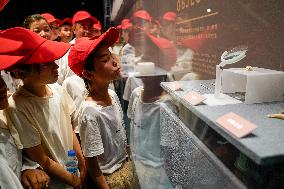
(240715) -- KUQA, July 15, 2024 Photo by Xinhua/ABACAPRESS.COM) -- A visitor views exhibits at the Wei and Jin Dynasties Ancient Tombs Site Museum in Kuqa City, northwest China's Xinjiang Uygur Autonomous Region, July 15, 2024. An underground museum of the Wei and Jin dynasties (220-420) ancient tombs opened on Monday in Kuqa County, an area that previously belonged to the ancient Qiuci State. The Qiuci State, which commenced in the second century BC and existed for more than 1,000 years, was one of the 36 states in the Western Regions, a term used in the Han Dynasty (206 BC-220 AD) for areas west of the Yumen Pass, including present Xinjiang and parts of Central Asia. This in-situ museum with an exhibition space of 5,000 square meters was built to protect 15 brick tomb chambers discovered in 2007 during the construction of the Youyi Road underground pass. The discovery was one of China's top ten new archaeological discoveries that year. The tomb complex was built in consistence with the Han Dynasty style bri

  •  
CHINA-XINJIANG-KUQA-TOMBS SITE MUSEUM-OPEN (CN)

CHINA-XINJIANG-KUQA-TOMBS SITE MUSEUM-OPEN (CN)

(240715) -- KUQA, July 15, 2024 Photo by Xinhua/ABACAPRESS.COM) -- Exhibits powered by digital technologies are pictured at the Wei and Jin Dynasties Ancient Tombs Site Museum in Kuqa City, northwest China's Xinjiang Uygur Autonomous Region, July 15, 2024. An underground museum of the Wei and Jin dynasties (220-420) ancient tombs opened on Monday in Kuqa County, an area that previously belonged to the ancient Qiuci State. The Qiuci State, which commenced in the second century BC and existed for more than 1,000 years, was one of the 36 states in the Western Regions, a term used in the Han Dynasty (206 BC-220 AD) for areas west of the Yumen Pass, including present Xinjiang and parts of Central Asia. This in-situ museum with an exhibition space of 5,000 square meters was built to protect 15 brick tomb chambers discovered in 2007 during the construction of the Youyi Road underground pass. The discovery was one of China's top ten new archaeological discoveries that year. The tomb complex was built in consistence w

  •  
ITALY-ROME-BATHS OF CARACALLA-POOL

ITALY-ROME-BATHS OF CARACALLA-POOL

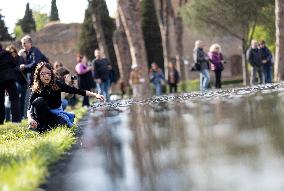
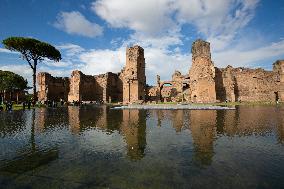
(240426) -- ROME, April 26, 2024 (Xinhua) -- A girl plays with water at the newly built pool of the Baths of Caracalla in Rome, Italy, April 25, 2024. Rome's Baths of Caracalla, built in the second century, has recently unveiled a pool whose waters reflect the ruins of the ancient bath complex. The pool has a stage over the water for hosting classical music concerts or theatre and dance performances. (Xinhua/Li Jing)

  •  
ITALY-ROME-BATHS OF CARACALLA-POOL

ITALY-ROME-BATHS OF CARACALLA-POOL

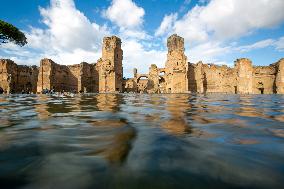
(240426) -- ROME, April 26, 2024 (Xinhua) -- A bird flies over the newly built pool of the Baths of Caracalla in Rome, Italy, April 25, 2024. Rome's Baths of Caracalla, built in the second century, has recently unveiled a pool whose waters reflect the ruins of the ancient bath complex. The pool has a stage over the water for hosting classical music concerts or theatre and dance performances. (Xinhua/Li Jing)

  •  
ITALY-ROME-BATHS OF CARACALLA-POOL

ITALY-ROME-BATHS OF CARACALLA-POOL

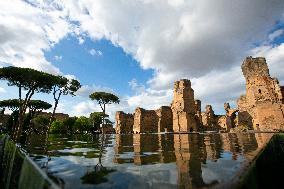
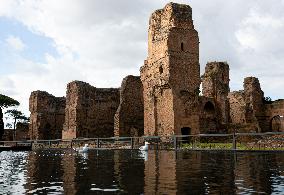
(240426) -- ROME, April 26, 2024 (Xinhua) -- This photo taken on April 25, 2024 shows the newly built pool of the Baths of Caracalla in Rome, Italy. Rome's Baths of Caracalla, built in the second century, has recently unveiled a pool whose waters reflect the ruins of the ancient bath complex. The pool has a stage over the water for hosting classical music concerts or theatre and dance performances. (Xinhua/Li Jing)

  •  
ITALY-ROME-BATHS OF CARACALLA-POOL

ITALY-ROME-BATHS OF CARACALLA-POOL

(240426) -- ROME, April 26, 2024 (Xinhua) -- Birds take a rest on the newly built pool of the Baths of Caracalla in Rome, Italy, April 25, 2024. Rome's Baths of Caracalla, built in the second century, has recently unveiled a pool whose waters reflect the ruins of the ancient bath complex. The pool has a stage over the water for hosting classical music concerts or theatre and dance performances. (Xinhua/Han Xiao)

  •  
ITALY-ROME-BATHS OF CARACALLA-POOL

ITALY-ROME-BATHS OF CARACALLA-POOL

(240426) -- ROME, April 26, 2024 (Xinhua) -- This photo taken on April 25, 2024 shows the newly built pool of the Baths of Caracalla in Rome, Italy. Rome's Baths of Caracalla, built in the second century, has recently unveiled a pool whose waters reflect the ruins of the ancient bath complex. The pool has a stage over the water for hosting classical music concerts or theatre and dance performances. (Xinhua/Li Jing)

  •  
ITALY-ROME-BATHS OF CARACALLA-POOL

ITALY-ROME-BATHS OF CARACALLA-POOL

(240426) -- ROME, April 26, 2024 (Xinhua) -- This photo taken on April 25, 2024 shows the newly built pool of the Baths of Caracalla in Rome, Italy. Rome's Baths of Caracalla, built in the second century, has recently unveiled a pool whose waters reflect the ruins of the ancient bath complex. The pool has a stage over the water for hosting classical music concerts or theatre and dance performances. (Xinhua/Li Jing)

  •  

Türkiye to open 2,000-year-old Roman theater for tourism

STORY: Türkiye to open 2,000-year-old Roman theater for tourism DATELINE: July 14, 2023 LENGTH: 00:01:05 LOCATION: ISTANBUL, Turkey CATEGORY: CULTURE SHOTLIST: 1. various of the ancient theater STORYLINE: A 2,000-year-old ancient theater in northwestern Türkiye is scheduled to open for tourism by the end of 2023, semi-official Anadolu Agency reported Thursday. The theater, which has a capacity of 10,000 people, was built in the second century during the reign of Roman Emperor Trajan in modern-day Iznik district of Bursa Province for gladiatorial fights and religious purposes. The theater was damaged in several earthquakes in the past. Archaeological excavations at the theater have been sponsored by the Bursa municipality since 2015, Anadolu said. Aygun Ekin Meric, an assistant professor of archaeology at Izmir's Dokuz Eylul University, said the ancient theater was one of the rare structures built on a flat area and raised with vaults, without revealing the size of an area the theater covers.

  •  

Jews light bonfire to celebrate holiday of Lag BaOmer

STORY: Jews light bonfire to celebrate holiday of Lag BaOmer DATELINE: May 9, 2023 LENGTH: 0:03:40 LOCATION: Jerusalem CATEGORY: CULTURE SHOTLIST: 1 various of Jews lighting bonfires and dancing STORYLINE: Ultra-Orthodox Jews in Israel lighted bonfires during a Lag BaOmer celebration in the West Bank city of Modi'in Illit on Monday. Lag BaOmer, also known as Lag B'Omer, is a Jewish festival celebrated on the 33rd day of the Counting of the Omer, which occurs on the 18th day of the Hebrew month of Iyar. This day marks the hillula (celebration, interpreted by some as anniversary of death) of Rabbi Shimon bar Yochai, a Mishnaic sage and leading disciple of Rabbi Akiva in the second century. There are several well-known customs and practices on Lag BaOmer, including the lighting of bonfires, pilgrimage to the tomb of bar Yochai in the northern Israeli town of Meron, and various customs at the tomb itself. Xinhua News Agency correspondents reporting from Jerusalem. (XHTV)

  •  
Stone-coffin grave from Yayoi period found in Nagasaki Pref.

Stone-coffin grave from Yayoi period found in Nagasaki Pref.

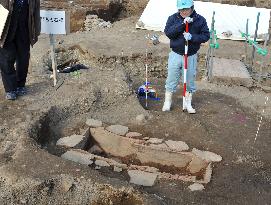
NAGASAKI, Japan - The Nagasaki prefectural board of education shows on Feb. 4, 2014 a stone-coffin grave from around the second century during the latter Yayoi period that was found in Omura, Nagasaki Prefecture. The box-shaped coffin, discovered at the Takematsu ruins in the southwestern Japan city, has traces of being colored with red pigment.

  •  
(2)Ise remains may have been part of sacred circle

(2)Ise remains may have been part of sacred circle

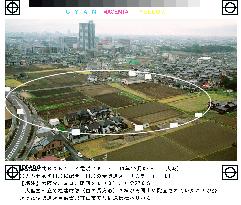
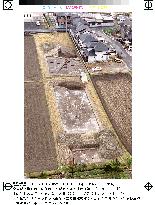
OTSU, Japan - White dots on the circle indicate where traces of second-century buildings have been unearthed at the Ise remains in Moriyama, Shiga Prefecture. City education board officials said Dec. 6 that the enclosure about 100 meters in diameter is believed to have been used for the performance of sacred rites.

  •  
(1)Ise remains may have been part of sacred circle

(1)Ise remains may have been part of sacred circle

OTSU, Japan - An aerial photo taken Dec. 6 shows a segment of the Ise remains at Moriyama, Shiga Prefecture, where traces of two large buildings dating from the middle of the second century have been found. City education board officials said the buildings may have been part of an area used for sacred rites.

  •  

Jews celebrate mystical holiday of Lag BaOmer

STORY: Jews celebrate mystical holiday of Lag BaOmer DATELINE: May 19, 2022 LENGTH: 0:01:58 LOCATION: Jerusalem CATEGORY: CULTURE SHOTLIST: 1. various of people celebrating Lag BaOmer in Israel STORYLINE: As the sun came down on Wednesday, Jewish communities around the world gathered in backyards, streets and even cemeteries in celebration of Jewish mystical holiday of Lag BaOmer, which began in the evening of Wednesday until sundown on Thursday. Lag BaOmer, also known as Lag B'Omer, is a Jewish festival celebrated on the 33rd day of the Counting of the Omer, which occurs on the 18th day of the Hebrew month of Iyar. This day marks the hillula (celebration, interpreted by some as anniversary of death) of Rabbi Shimon bar Yochai, a Mishnaic sage and leading disciple of Rabbi Akiva in the second century, and the day on which he revealed the deepest secrets of kabbalah in the form of the Zohar (Book of Splendor), a landmark text of Jewish mysticism. There are several well-known customs and practices on Lag

  •  
Celtic stone head of Msecke Zehrovice

Celtic stone head of Msecke Zehrovice

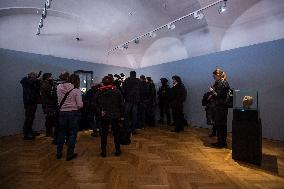
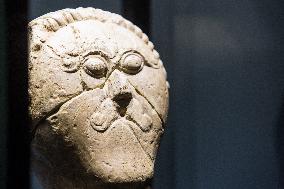
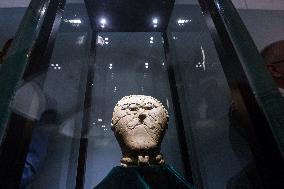
Celtic stone head of Msecke Zehrovice from the period between the second half of the third century until the first half of the second century BC is seen during an installation for an exhibition in Olomouc, Czech Republic, on February 10, 2020. Stone head was lent to the Regional Museum in Olomouc for an exhibition. In the left show-case is the original head, in the right show-case is a copy. (CTK Photo/Jaroslav Svoboda)

  •  
Celtic stone head of Msecke Zehrovice

Celtic stone head of Msecke Zehrovice

Celtic stone head of Msecke Zehrovice from the period between the second half of the third century until the first half of the second century BC is seen during an installation for an exhibition in Olomouc, Czech Republic, on February 10, 2020. Stone head was lent to the Regional Museum in Olomouc for an exhibition. (CTK Photo/Jaroslav Svoboda)

  •  
Celtic stone head of Msecke Zehrovice

Celtic stone head of Msecke Zehrovice

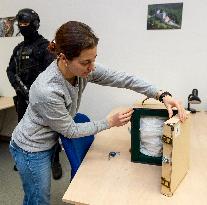
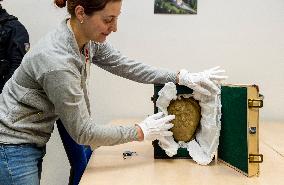
Celtic stone head of Msecke Zehrovice from the period between the second half of the third century until the first half of the second century BC is seen during a preparations to the strict secure transport from Terezin to Olomouc, Czech Republic, on February 10, 2020. Stone head was lent to the Regional Museum in Olomouc for an exhibition. On the photo is seen restorer Romana Kozakova. (CTK Photo/Ondrej Hajek)

  •  
Celtic stone head of Msecke Zehrovice

Celtic stone head of Msecke Zehrovice

Celtic stone head of Msecke Zehrovice from the period between the second half of the third century until the first half of the second century BC is seen during a preparations to the strict secure transport from Terezin to Olomouc, Czech Republic, on February 10, 2020. Stone head was lent to the Regional Museum in Olomouc for an exhibition. On the photo is seen restorer Romana Kozakova. (CTK Photo/Ondrej Hajek)

  •  
Celtic stone head of Msecke Zehrovice

Celtic stone head of Msecke Zehrovice

Celtic stone head of Msecke Zehrovice from the period between the second half of the third century until the first half of the second century BC is seen during an installation for an exhibition in Olomouc, Czech Republic, on February 10, 2020. Stone head was lent to the Regional Museum in Olomouc for an exhibition. (CTK Photo/Jaroslav Svoboda)

  •  
Celtic stone head of Msecke Zehrovice

Celtic stone head of Msecke Zehrovice

Celtic stone head of Msecke Zehrovice from the period between the second half of the third century until the first half of the second century BC is seen during an installation for an exhibition in Olomouc, Czech Republic, on February 10, 2020. Stone head was lent to the Regional Museum in Olomouc for an exhibition. On the right side is seen director of the museum Bretislav Holasek. (CTK Photo/Jaroslav Svoboda)

  • Main
  • Top
  • Editorial
  • Creative
  • About Us
  • About ILG
  • Terms of use
  • Company
  • BEHIND
  • Price List
  • Single Plan
  • Monthly Plan
  • Services
  • Shooting
  • Rights Clearance
  • Support
  • FAQ
  • How To Buy
  • Contact Us
  • Become a Partner

© KYODO NEWS IMAGES INC

All Rights Reserved.

  • Editorial
  • Olympics
  • News
  • Sports
  • Japan
  • Tech
  • Royal
  • Disaster
  • NorthKorea
  • Old Japan
  • SNS
  • Creative
  • Food
  • Japan
  • Landscape
  • Animal
  • Popular
  • #Ukraine
  • #Thailand
  • #coronavirus
  • #N. Korea
  • #Russia
  • #China
  • #Ukraine
  • #Thailand
  • #coronavirus
  • #N. Korea
  • #Russia
  • #China
  • Food
  • Japan
  • Landscape
  • Animal
  • Olympics
  • News
  • Sports
  • Japan
  • Tech
  • Royal
  • Disaster
  • NorthKorea
  • Old Japan
  • SNS