•  
Illustration - Thales France

Illustration - Thales France

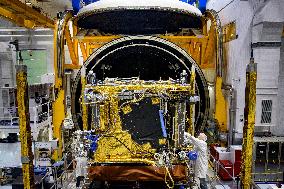
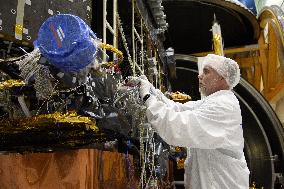
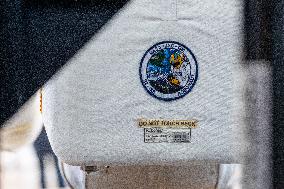
FRANCE. ALPES MARITIMES (06) CANNES. ONCE IN ORBIT IN SPACE, THE SATELLITE WILL BE IN AN ATMOSPHERE-FREE ENVIRONMENT AND WILL BE SUBJECT TO THERMAL STRESSES (SPACE COLD AND SOLAR RADIATION). IN ORDER TO VERIFY THAT THE SATELLITE'S EQUIPMENT CAN FUNCTION IN THIS ENVIRONMENT, THERMAL TESTS ARE BEING CONDUCTED BY PLACING THE SATELLITE IN A THERMAL VACUUM CHAMBER. THIS CHAMBER, CALLED ESPACE 500, IS A HORIZONTAL CYLINDRICAL CHAMBER, 8 M LONG AND 7.5 M IN DIAMETER, OR APPROXIMATELY 500 M3. THIS CHAMBER CONSISTS OF AN EXTERNAL ENVELOPE AND A DOUBLE WALL COVERING THE ENTIRE INTERIOR SURFACE, ALLOWING A COLD LIQUID TO CIRCULATE TO SIMULATE THE COLD OF SPACE. BEFORE BEING PLACED IN THE THERMAL CHAMBER, THE SATELLITE IS EQUIPPED WITH 1,500 MEASURING SENSORS TO MONITOR THE TEMPERATURE OF ITS EQUIPMENT AND STRUCTURES. Photo by Christophe Lepetit/Only France/ABACAPRESS.COM

  •  
Illustration - Thales France

Illustration - Thales France

FRANCE. ALPES MARITIMES (06) CANNES. ONCE IN ORBIT IN SPACE, THE SATELLITE WILL BE IN AN ATMOSPHERE-FREE ENVIRONMENT AND WILL BE SUBJECT TO THERMAL STRESSES (SPACE COLD AND SOLAR RADIATION). IN ORDER TO VERIFY THAT THE SATELLITE'S EQUIPMENT CAN FUNCTION IN THIS ENVIRONMENT, THERMAL TESTS ARE BEING CONDUCTED BY PLACING THE SATELLITE IN A THERMAL VACUUM CHAMBER. THIS CHAMBER, CALLED ESPACE 500, IS A HORIZONTAL CYLINDRICAL CHAMBER, 8 M LONG AND 7.5 M IN DIAMETER, OR APPROXIMATELY 500 M3. THIS CHAMBER CONSISTS OF AN EXTERNAL ENVELOPE AND A DOUBLE WALL COVERING THE ENTIRE INTERIOR SURFACE, ALLOWING A COLD LIQUID TO CIRCULATE TO SIMULATE THE COLD OF SPACE. BEFORE BEING PLACED IN THE THERMAL CHAMBER, THE SATELLITE IS EQUIPPED WITH 1,500 MEASURING SENSORS TO MONITOR THE TEMPERATURE OF ITS EQUIPMENT AND STRUCTURES. Photo by Christophe Lepetit/Only France/ABACAPRESS.COM

  •  
Illustration - Thales France

Illustration - Thales France

FRANCE. ALPES MARITIMES (06) CANNES. ONCE IN ORBIT IN SPACE, THE SATELLITE WILL BE IN AN ATMOSPHERE-FREE ENVIRONMENT AND WILL BE SUBJECT TO THERMAL STRESSES (SPACE COLD AND SOLAR RADIATION). IN ORDER TO VERIFY THAT THE SATELLITE'S EQUIPMENT CAN FUNCTION IN THIS ENVIRONMENT, THERMAL TESTS ARE BEING CONDUCTED BY PLACING THE SATELLITE IN A THERMAL VACUUM CHAMBER. THIS CHAMBER, CALLED ESPACE 500, IS A HORIZONTAL CYLINDRICAL CHAMBER, 8 M LONG AND 7.5 M IN DIAMETER, OR APPROXIMATELY 500 M3. THIS CHAMBER CONSISTS OF AN EXTERNAL ENVELOPE AND A DOUBLE WALL COVERING THE ENTIRE INTERIOR SURFACE, ALLOWING A COLD LIQUID TO CIRCULATE TO SIMULATE THE COLD OF SPACE. BEFORE BEING PLACED IN THE THERMAL CHAMBER, THE SATELLITE IS EQUIPPED WITH 1,500 MEASURING SENSORS TO MONITOR THE TEMPERATURE OF ITS EQUIPMENT AND STRUCTURES. Photo by Christophe Lepetit/Only France/ABACAPRESS.COM

  •  
The INCLUSION 。、 Conference on the Bund in Shanghai

The INCLUSION 。、 Conference on the Bund in Shanghai

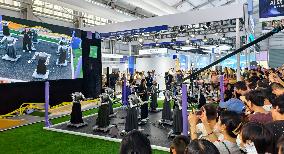
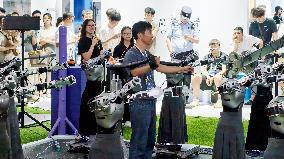
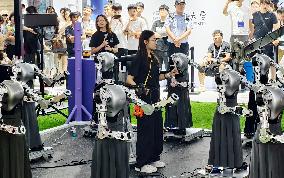
Tourists visit the Perception Technology Performance Show at INCLUSION 。、 Conference on the Bund - the scene of humans controlling robots to move synchronously in a science fiction film has been achieved in the real world through high-precision multidimensional tactile sensors. Shanghai, China on September 13, 2025.

  •  
The INCLUSION 。、 Conference on the Bund in Shanghai

The INCLUSION 。、 Conference on the Bund in Shanghai

Tourists visit the Perception Technology Performance Show at INCLUSION 。、 Conference on the Bund - the scene of humans controlling robots to move synchronously in a science fiction film has been achieved in the real world through high-precision multidimensional tactile sensors. Shanghai, China on September 13, 2025.

  •  
The INCLUSION 。、 Conference on the Bund in Shanghai

The INCLUSION 。、 Conference on the Bund in Shanghai

Tourists visit the Perception Technology Performance Show at INCLUSION 。、 Conference on the Bund - the scene of humans controlling robots to move synchronously in a science fiction film has been achieved in the real world through high-precision multidimensional tactile sensors. Shanghai, China on September 13, 2025.

  •  
The INCLUSION 。、 Conference on the Bund in Shanghai

The INCLUSION 。、 Conference on the Bund in Shanghai

Tourists visit the Perception Technology Performance Show at INCLUSION 。、 Conference on the Bund - the scene of humans controlling robots to move synchronously in a science fiction film has been achieved in the real world through high-precision multidimensional tactile sensors. Shanghai, China on September 13, 2025.

  •  
China EV Industry Chain

China EV Industry Chain

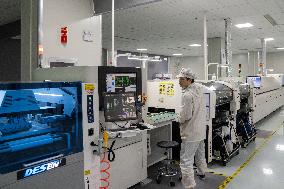
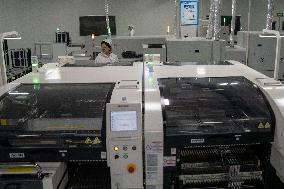
HEFEI, CHINA - AUGUST 13, 2025 - Workers are manufacturing radar sensors in the production workshop of an electronic enterprise in Hefei City, Anhui Province, China on August 13, 2025.

  •  
China EV Industry Chain

China EV Industry Chain

HEFEI, CHINA - AUGUST 13, 2025 - Workers are manufacturing radar sensors in the production workshop of an electronic enterprise in Hefei City, Anhui Province, China on August 13, 2025.

  •  
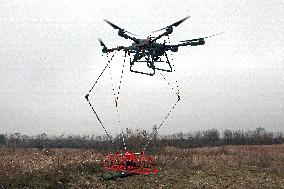
Presentation of MinesEye demining system in Kyiv region

Presentation of MinesEye demining system in Kyiv region

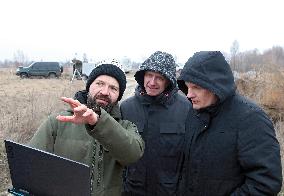
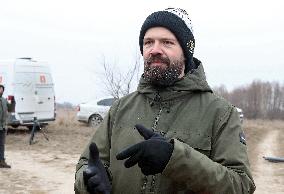
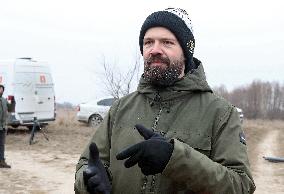
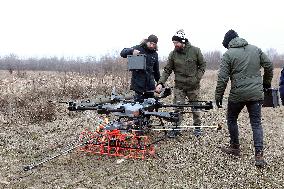
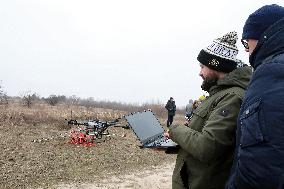
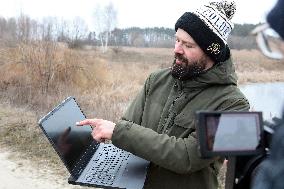
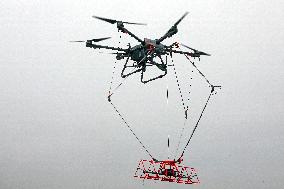
DEMYDIV, UKRAINE - FEBRUARY 11, 2025 - Postup Foundation founder Vladyslav Kozak (L) shows the results of scanning by the MinesEye UAV-based magnetic survey system which consists of a drone, a magnetometer and other sensors used for the remote detection of mines and explosive objects that contaminate the territories after hostilities, Demydiv village, Kyiv region, northern Ukraine. (Photo by Volodymyr Tarasov/Ukrinform)

  •  
Presentation of MinesEye demining system in Kyiv region

Presentation of MinesEye demining system in Kyiv region

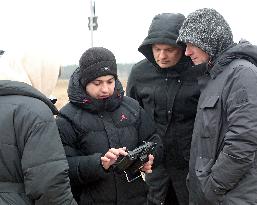
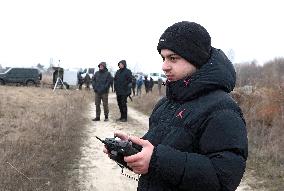
DEMYDIV, UKRAINE - FEBRUARY 11, 2025 - A pilot shows a remote controller during the demonstration of the MinesEye UAV-based magnetic survey system which consists of a drone, a magnetometer and other sensors used for the remote detection of mines and explosive objects that contaminate the territories after hostilities, Demydiv village, Kyiv region, northern Ukraine. (Photo by Volodymyr Tarasov/Ukrinform)

  •  
Presentation of MinesEye demining system in Kyiv region

Presentation of MinesEye demining system in Kyiv region

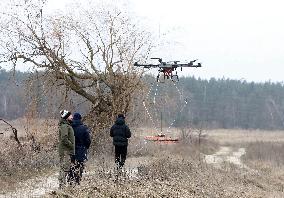
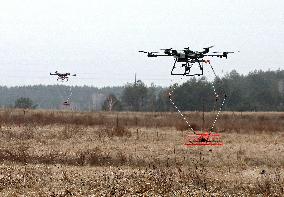
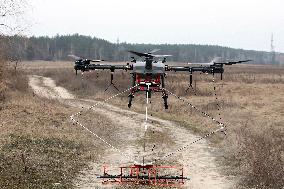
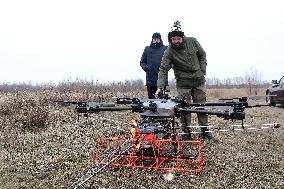
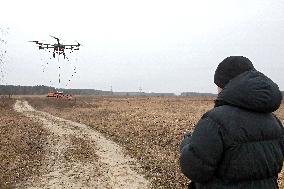
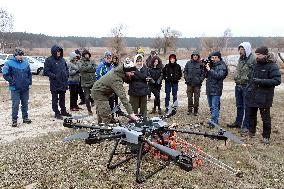
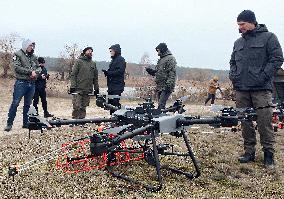
DEMYDIV, UKRAINE - FEBRUARY 11, 2025 - A demonstration of the MinesEye UAV-based magnetic survey system which consists of a drone, a magnetometer and other sensors used for the remote detection of mines and explosive objects that contaminate the territories after hostilities is underway in Demydiv village, Kyiv region, northern Ukraine. (Photo by Volodymyr Tarasov/Ukrinform)

  •  
Presentation of MinesEye demining system in Kyiv region

Presentation of MinesEye demining system in Kyiv region

DEMYDIV, UKRAINE - FEBRUARY 11, 2025 - Postup Foundation founder Vladyslav Kozak (L) shows the results of scanning by the MinesEye UAV-based magnetic survey system which consists of a drone, a magnetometer and other sensors used for the remote detection of mines and explosive objects that contaminate the territories after hostilities, Demydiv village, Kyiv region, northern Ukraine. (Photo by Volodymyr Tarasov/Ukrinform)

  •  
Presentation of MinesEye demining system in Kyiv region

Presentation of MinesEye demining system in Kyiv region

DEMYDIV, UKRAINE - FEBRUARY 11, 2025 - A demonstration of the MinesEye UAV-based magnetic survey system which consists of a drone, a magnetometer and other sensors used for the remote detection of mines and explosive objects that contaminate the territories after hostilities is underway in Demydiv village, Kyiv region, northern Ukraine. (Photo by Volodymyr Tarasov/Ukrinform)

  •  
Presentation of MinesEye demining system in Kyiv region

Presentation of MinesEye demining system in Kyiv region

DEMYDIV, UKRAINE - FEBRUARY 11, 2025 - Postup Foundation founder Vladyslav Kozak attends the demonstration of the MinesEye UAV-based magnetic survey system which consists of a drone, a magnetometer and other sensors used for the remote detection of mines and explosive objects that contaminate the territories after hostilities, Demydiv village, Kyiv region, northern Ukraine. (Photo by Volodymyr Tarasov/Ukrinform)

  •  
Presentation of MinesEye demining system in Kyiv region

Presentation of MinesEye demining system in Kyiv region

DEMYDIV, UKRAINE - FEBRUARY 11, 2025 - Postup Foundation founder Vladyslav Kozak attends the demonstration of the MinesEye UAV-based magnetic survey system which consists of a drone, a magnetometer and other sensors used for the remote detection of mines and explosive objects that contaminate the territories after hostilities, Demydiv village, Kyiv region, northern Ukraine. (Photo by Volodymyr Tarasov/Ukrinform)

  •  
Presentation of MinesEye demining system in Kyiv region

Presentation of MinesEye demining system in Kyiv region

DEMYDIV, UKRAINE - FEBRUARY 11, 2025 - A demonstration of the MinesEye UAV-based magnetic survey system which consists of a drone, a magnetometer and other sensors used for the remote detection of mines and explosive objects that contaminate the territories after hostilities is underway in Demydiv village, Kyiv region, northern Ukraine. (Photo by Volodymyr Tarasov/Ukrinform)

  •  
Presentation of MinesEye demining system in Kyiv region

Presentation of MinesEye demining system in Kyiv region

DEMYDIV, UKRAINE - FEBRUARY 11, 2025 - A demonstration of the MinesEye UAV-based magnetic survey system which consists of a drone, a magnetometer and other sensors used for the remote detection of mines and explosive objects that contaminate the territories after hostilities is underway in Demydiv village, Kyiv region, northern Ukraine. (Photo by Volodymyr Tarasov/Ukrinform)

  •  
Presentation of MinesEye demining system in Kyiv region

Presentation of MinesEye demining system in Kyiv region

DEMYDIV, UKRAINE - FEBRUARY 11, 2025 - Postup Foundation founder Vladyslav Kozak (C) attends the demonstration of the MinesEye UAV-based magnetic survey system which consists of a drone, a magnetometer and other sensors used for the remote detection of mines and explosive objects that contaminate the territories after hostilities, Demydiv village, Kyiv region, northern Ukraine. (Photo by Volodymyr Tarasov/Ukrinform)

  •  
Presentation of MinesEye demining system in Kyiv region

Presentation of MinesEye demining system in Kyiv region

DEMYDIV, UKRAINE - FEBRUARY 11, 2025 - Postup Foundation founder Vladyslav Kozak (R) attends the demonstration of the MinesEye UAV-based magnetic survey system which consists of a drone, a magnetometer and other sensors used for the remote detection of mines and explosive objects that contaminate the territories after hostilities, Demydiv village, Kyiv region, northern Ukraine. (Photo by Volodymyr Tarasov/Ukrinform)

  •  
Presentation of MinesEye demining system in Kyiv region

Presentation of MinesEye demining system in Kyiv region

DEMYDIV, UKRAINE - FEBRUARY 11, 2025 - Postup Foundation founder Vladyslav Kozak (L) shows the results of scanning by the MinesEye UAV-based magnetic survey system which consists of a drone, a magnetometer and other sensors used for the remote detection of mines and explosive objects that contaminate the territories after hostilities, Demydiv village, Kyiv region, northern Ukraine. (Photo by Volodymyr Tarasov/Ukrinform)

  •  
Presentation of MinesEye demining system in Kyiv region

Presentation of MinesEye demining system in Kyiv region

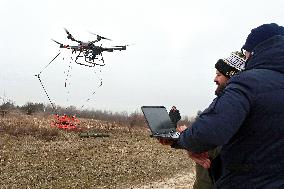
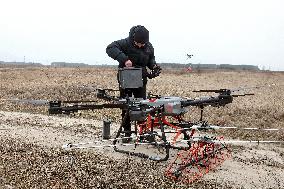
DEMYDIV, UKRAINE - FEBRUARY 11, 2025 - A pilot controls the MinesEye UAV-based magnetic survey system which consists of a drone, a magnetometer and other sensors used for the remote detection of mines and explosive objects that contaminate the territories after hostilities during a demonstration in Demydiv village, Kyiv region, northern Ukraine. (Photo by Volodymyr Tarasov/Ukrinform)

  •  
Presentation of MinesEye demining system in Kyiv region

Presentation of MinesEye demining system in Kyiv region

DEMYDIV, UKRAINE - FEBRUARY 11, 2025 - A pilot controls the MinesEye UAV-based magnetic survey system which consists of a drone, a magnetometer and other sensors used for the remote detection of mines and explosive objects that contaminate the territories after hostilities during a demonstration in Demydiv village, Kyiv region, northern Ukraine. (Photo by Volodymyr Tarasov/Ukrinform)

  •  
Presentation of MinesEye demining system in Kyiv region

Presentation of MinesEye demining system in Kyiv region

DEMYDIV, UKRAINE - FEBRUARY 11, 2025 - Postup Foundation founder Vladyslav Kozak (C) attends the demonstration of the MinesEye UAV-based magnetic survey system which consists of a drone, a magnetometer and other sensors used for the remote detection of mines and explosive objects that contaminate the territories after hostilities, Demydiv village, Kyiv region, northern Ukraine. (Photo by Volodymyr Tarasov/Ukrinform)

  •  
Presentation of MinesEye demining system in Kyiv region

Presentation of MinesEye demining system in Kyiv region

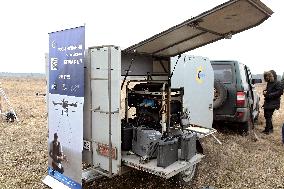
DEMYDIV, UKRAINE - FEBRUARY 11, 2025 - Electric batteries are being charged by a petrol generator during a demonstration of the MinesEye UAV-based magnetic survey system which consists of a drone, a magnetometer and other sensors used for the remote detection of mines and explosive objects that contaminate the territories after hostilities, Demydiv village, Kyiv region, northern Ukraine. (Photo by Volodymyr Tarasov/Ukrinform)

  •  
Presentation of MinesEye demining system in Kyiv region

Presentation of MinesEye demining system in Kyiv region

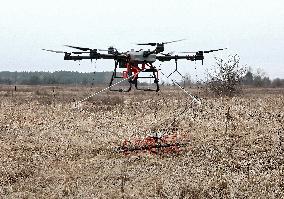
DEMYDIV, UKRAINE - FEBRUARY 11, 2025 - A demonstration of the MinesEye UAV-based magnetic survey system which consists of a drone, a magnetometer and other sensors used for the remote detection of mines and explosive objects that contaminate the territories after hostilities is underway in Demydiv village, Kyiv region, northern Ukraine. (Photo by Volodymyr Tarasov/Ukrinform)

  •  
Presentation of MinesEye demining system in Kyiv region

Presentation of MinesEye demining system in Kyiv region

DEMYDIV, UKRAINE - FEBRUARY 11, 2025 - Postup Foundation founder Vladyslav Kozak shows the results of scanning by the MinesEye UAV-based magnetic survey system which consists of a drone, a magnetometer and other sensors used for the remote detection of mines and explosive objects that contaminate the territories after hostilities, Demydiv village, Kyiv region, northern Ukraine. (Photo by Volodymyr Tarasov/Ukrinform)

  •  
Presentation of MinesEye demining system in Kyiv region

Presentation of MinesEye demining system in Kyiv region

DEMYDIV, UKRAINE - FEBRUARY 11, 2025 - A demonstration of the MinesEye UAV-based magnetic survey system which consists of a drone, a magnetometer and other sensors used for the remote detection of mines and explosive objects that contaminate the territories after hostilities is underway in Demydiv village, Kyiv region, northern Ukraine. (Photo by Volodymyr Tarasov/Ukrinform)

  •  
Presentation of MinesEye demining system in Kyiv region

Presentation of MinesEye demining system in Kyiv region

DEMYDIV, UKRAINE - FEBRUARY 11, 2025 - A demonstration of the MinesEye UAV-based magnetic survey system which consists of a drone, a magnetometer and other sensors used for the remote detection of mines and explosive objects that contaminate the territories after hostilities is underway in Demydiv village, Kyiv region, northern Ukraine. (Photo by Volodymyr Tarasov/Ukrinform)

  •  
Presentation of MinesEye demining system in Kyiv region

Presentation of MinesEye demining system in Kyiv region

DEMYDIV, UKRAINE - FEBRUARY 11, 2025 - A demonstration of the MinesEye UAV-based magnetic survey system which consists of a drone, a magnetometer and other sensors used for the remote detection of mines and explosive objects that contaminate the territories after hostilities is underway in Demydiv village, Kyiv region, northern Ukraine. (Photo by Volodymyr Tarasov/Ukrinform)

  •  
Liquid Filling At Neutrino Observatory - China

Liquid Filling At Neutrino Observatory - China

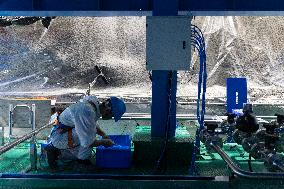
A researcher adjusts displacement sensors at the top of the central detector of the Jiangmen Underground Neutrino Observatory (JUNO) in Jiangmen, south China's Guangdong Province, December 17, 2024. The liquid filling of the central detector of JUNO started on Wednesday. As one of the world's most powerful experiments to uncover neutrino mystery, JUNO is expected to operate for at least 30 years. Photo by Jin Liwang/Xinhua/ABACAPRESS.COM

  •  
Robonaut 2 on display at NASM - USA

Robonaut 2 on display at NASM - USA

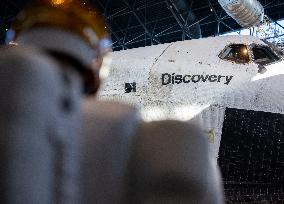
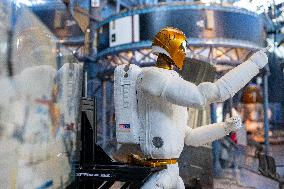
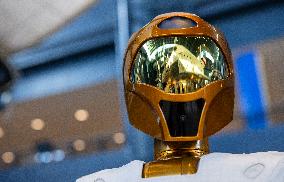
Handout Photo - Robonaut 2 is seen at the Smithsonian National Air and Space Museum’s Steve F. Udvar-Hazy Center Thursday, Oct. 24, 2024, in Chantilly, Va. Robonaut 2, the first humanoid robot to fly to space, is displayed publicly for the first time near the space shuttle Discovery. Robonaut 2, often called “R2”, was originally sent to the International Space Station (ISS) by NASA in 2011. Developed in a unique partnership between NASA’s Johnson Space Center (JSC) in Houston, General Motors, and Oceaneering, R2 represents cutting-edge advancements in humanoid robotics. The robot is designed to assist astronauts with tasks that require both dexterity and precision, improving efficiency and safety for crew members aboard the ISS. The humanoid robot showcases numerous component technologies, including advanced vision systems, sophisticated image recognition capabilities, integrated sensors, and tendon hands with dexterous, lifelike motion. R2’s intricate control algorithms enable it to handle tools, operate in

  •  
Robonaut 2 on display at NASM - USA

Robonaut 2 on display at NASM - USA

Handout Photo - Robonaut 2 is seen at the Smithsonian National Air and Space Museum’s Steve F. Udvar-Hazy Center Thursday, Oct. 24, 2024, in Chantilly, Va. Robonaut 2, the first humanoid robot to fly to space, is displayed publicly for the first time near the space shuttle Discovery. Robonaut 2, often called “R2”, was originally sent to the International Space Station (ISS) by NASA in 2011. Developed in a unique partnership between NASA’s Johnson Space Center (JSC) in Houston, General Motors, and Oceaneering, R2 represents cutting-edge advancements in humanoid robotics. The robot is designed to assist astronauts with tasks that require both dexterity and precision, improving efficiency and safety for crew members aboard the ISS. The humanoid robot showcases numerous component technologies, including advanced vision systems, sophisticated image recognition capabilities, integrated sensors, and tendon hands with dexterous, lifelike motion. R2’s intricate control algorithms enable it to handle tools, operate in

  •  
Robonaut 2 on display at NASM - USA

Robonaut 2 on display at NASM - USA

Handout Photo - Robonaut 2 is seen at the Smithsonian National Air and Space Museum’s Steve F. Udvar-Hazy Center Thursday, Oct. 24, 2024, in Chantilly, Va. Robonaut 2, the first humanoid robot to fly to space, is displayed publicly for the first time near the space shuttle Discovery. Robonaut 2, often called “R2”, was originally sent to the International Space Station (ISS) by NASA in 2011. Developed in a unique partnership between NASA’s Johnson Space Center (JSC) in Houston, General Motors, and Oceaneering, R2 represents cutting-edge advancements in humanoid robotics. The robot is designed to assist astronauts with tasks that require both dexterity and precision, improving efficiency and safety for crew members aboard the ISS. The humanoid robot showcases numerous component technologies, including advanced vision systems, sophisticated image recognition capabilities, integrated sensors, and tendon hands with dexterous, lifelike motion. R2’s intricate control algorithms enable it to handle tools, operate in

  •  
Robonaut 2 on display at NASM - USA

Robonaut 2 on display at NASM - USA

Handout Photo - Robonaut 2 is seen at the Smithsonian National Air and Space Museum’s Steve F. Udvar-Hazy Center Thursday, Oct. 24, 2024, in Chantilly, Va. Robonaut 2, the first humanoid robot to fly to space, is displayed publicly for the first time near the space shuttle Discovery. Robonaut 2, often called “R2”, was originally sent to the International Space Station (ISS) by NASA in 2011. Developed in a unique partnership between NASA’s Johnson Space Center (JSC) in Houston, General Motors, and Oceaneering, R2 represents cutting-edge advancements in humanoid robotics. The robot is designed to assist astronauts with tasks that require both dexterity and precision, improving efficiency and safety for crew members aboard the ISS. The humanoid robot showcases numerous component technologies, including advanced vision systems, sophisticated image recognition capabilities, integrated sensors, and tendon hands with dexterous, lifelike motion. R2’s intricate control algorithms enable it to handle tools, operate in

  •  
VR taekwondo

VR taekwondo

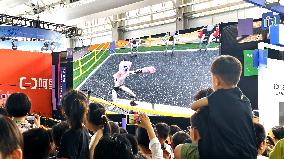
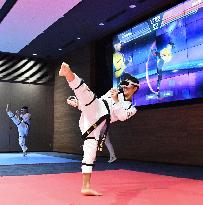
Japanese taekwondo players compete against each other on Sept. 16, 2024, through their avatars projected on a screen during a qualifier for the inaugural World Taekwondo Virtual Championships to be held in Singapore in mid-November. Virtual taekwondo enables people of all ages, weight class and gender to compete against one another without physical contact as players wear VR headsets and five motion-tracking sensors while using their bodies as a game controller.

  •  
VR taekwondo

VR taekwondo

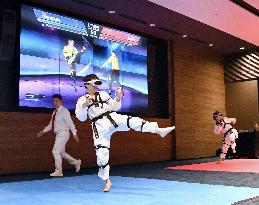
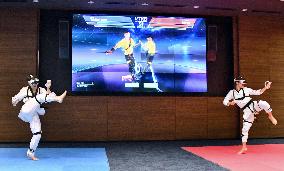
Japanese taekwondo players compete against each other in Tokyo on Sept. 16, 2024, through their avatars projected on a screen during a qualifier for the inaugural World Taekwondo Virtual Championships to be held in Singapore in mid-November. Virtual taekwondo enables people of all ages, weight class and gender to compete against one another without physical contact as players wear VR headsets and five motion-tracking sensors while using their bodies as a game controller.

  •  
VR taekwondo

VR taekwondo

Japanese taekwondo players compete against each other on Sept. 16, 2024, through their avatars projected on a screen during a qualifier in Tokyo for the inaugural World Taekwondo Virtual Championships to be held in Singapore in mid-November. Virtual taekwondo enables people of all ages, weight class and gender to compete against one another without physical contact as players wear VR headsets and five motion-tracking sensors while using their bodies as a game controller.

  •  
10th China (Shanghai) International Technology Fair

10th China (Shanghai) International Technology Fair

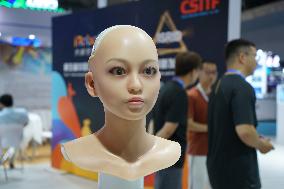
SHANGHAI, CHINA - JUNE 12, 2024 - Visitors visit a facial expression learning robot with interactive sensors inside its eyes at The 10th China (Shanghai) International Technology Fair in Shanghai, China, June 12, 2024.

  •  
Intelligent Aquaculture Robot

Intelligent Aquaculture Robot

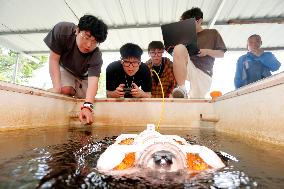
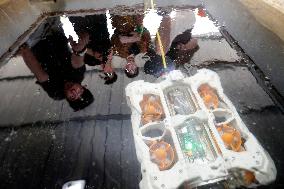
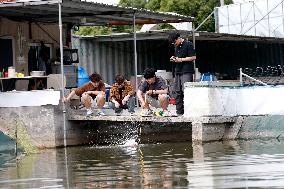
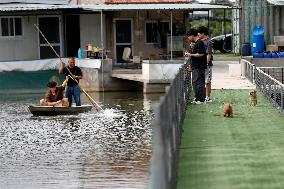
YIXING, CHINA - JUNE 2, 2024 - Members of the intelligent team of Nantong Institute of Technology put the "Qichuang Intelligent Aquaculture robot" into a pool for a silent test at the aquaculture base in Xinexin Village, Yixing city, Jiangsu province, China, June 2, 2024. Yin Jiangang, an aquaculture farmer in Gengxin Village, Yangxiang Town, Yixing City, Jiangsu province, uses an "intelligent aquaculture robot" developed by a team from Nantong Institute of Technology to feed drinks to his fish and crabs. The robot has a modular design and is equipped with image acquisition equipment, lighting system, safety sensors, pressure sensors, humidity and temperature sensors, attitude sensors and inertial navigation modules. Mainly through the pH detection, ammonia nitrogen content detection and other instruments, can effectively improve the efficiency of water quality detection; And the robot can feed intelligently in different water depths and heights, improving the quality and efficiency for the development of mod

  •  
Intelligent Aquaculture Robot

Intelligent Aquaculture Robot

YIXING, CHINA - JUNE 2, 2024 - Members of the intelligent team of Nantong Institute of Technology put the "Qichuang Intelligent Aquaculture robot" into a pool for a silent test at the aquaculture base in Xinexin Village, Yixing city, Jiangsu province, China, June 2, 2024. Yin Jiangang, an aquaculture farmer in Gengxin Village, Yangxiang Town, Yixing City, Jiangsu province, uses an "intelligent aquaculture robot" developed by a team from Nantong Institute of Technology to feed drinks to his fish and crabs. The robot has a modular design and is equipped with image acquisition equipment, lighting system, safety sensors, pressure sensors, humidity and temperature sensors, attitude sensors and inertial navigation modules. Mainly through the pH detection, ammonia nitrogen content detection and other instruments, can effectively improve the efficiency of water quality detection; And the robot can feed intelligently in different water depths and heights, improving the quality and efficiency for the development of mod

  •  
Intelligent Aquaculture Robot

Intelligent Aquaculture Robot

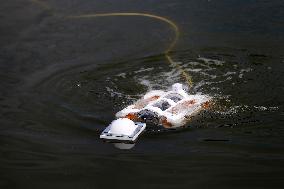
YIXING, CHINA - JUNE 2, 2024 - An intelligent team member of Nantong Institute of Technology controls an "intelligent aquaculture robot" to arrive at the feeding point at the aquaculture base in Xinexin Village, Yixing city, Jiangsu province, China, June 2, 2024. Yin Jiangang, an aquaculture farmer in Gengxin Village, Yangxiang Town, Yixing City, Jiangsu province, uses an "intelligent aquaculture robot" developed by a team from Nantong Institute of Technology to feed drinks to his fish and crabs. The robot has a modular design and is equipped with image acquisition equipment, lighting system, safety sensors, pressure sensors, humidity and temperature sensors, attitude sensors and inertial navigation modules. Mainly through the pH detection, ammonia nitrogen content detection and other instruments, can effectively improve the efficiency of water quality detection; And the robot can feed intelligently in different water depths and heights, improving the quality and efficiency for the development of modern agric

  •  
Intelligent Aquaculture Robot

Intelligent Aquaculture Robot

YIXING, CHINA - JUNE 2, 2024 - An intelligent team member of Nantong Institute of Technology controls an "intelligent aquaculture robot" to arrive at the feeding point at the aquaculture base in Xinexin Village, Yixing city, Jiangsu province, China, June 2, 2024. Yin Jiangang, an aquaculture farmer in Gengxin Village, Yangxiang Town, Yixing City, Jiangsu province, uses an "intelligent aquaculture robot" developed by a team from Nantong Institute of Technology to feed drinks to his fish and crabs. The robot has a modular design and is equipped with image acquisition equipment, lighting system, safety sensors, pressure sensors, humidity and temperature sensors, attitude sensors and inertial navigation modules. Mainly through the pH detection, ammonia nitrogen content detection and other instruments, can effectively improve the efficiency of water quality detection; And the robot can feed intelligently in different water depths and heights, improving the quality and efficiency for the development of modern agric

  •  
Intelligent Aquaculture Robot

Intelligent Aquaculture Robot

YIXING, CHINA - JUNE 2, 2024 - Members of the Creative Intelligence team of Nantong Institute of Technology test an "intelligent aquaculture robot" at the aquaculture base of Innovation Village in Yixing, Jiangsu province, China, June 2, 2024. Yin Jiangang, an aquaculture farmer in Gengxin Village, Yangxiang Town, Yixing City, Jiangsu province, uses an "intelligent aquaculture robot" developed by a team from Nantong Institute of Technology to feed drinks to his fish and crabs. The robot has a modular design and is equipped with image acquisition equipment, lighting system, safety sensors, pressure sensors, humidity and temperature sensors, attitude sensors and inertial navigation modules. Mainly through the pH detection, ammonia nitrogen content detection and other instruments, can effectively improve the efficiency of water quality detection; And the robot can feed intelligently in different water depths and heights, improving the quality and efficiency for the development of modern agriculture.

  •  
Intelligent Aquaculture Robot

Intelligent Aquaculture Robot

YIXING, CHINA - JUNE 2, 2024 - Members of the intelligent team of Nantong Institute of Technology put the "Qichuang Intelligent Aquaculture robot" into the water for a deep-water test at the aquaculture base of Innovation Village in Yixing city, Jiangsu province, China, June 2, 2024. Yin Jiangang, an aquaculture farmer in Gengxin Village, Yangxiang Town, Yixing City, Jiangsu province, uses an "intelligent aquaculture robot" developed by a team from Nantong Institute of Technology to feed drinks to his fish and crabs. The robot has a modular design and is equipped with image acquisition equipment, lighting system, safety sensors, pressure sensors, humidity and temperature sensors, attitude sensors and inertial navigation modules. Mainly through the pH detection, ammonia nitrogen content detection and other instruments, can effectively improve the efficiency of water quality detection; And the robot can feed intelligently in different water depths and heights, improving the quality and efficiency for the develo

  •  
Intelligent Aquaculture Robot

Intelligent Aquaculture Robot

YIXING, CHINA - JUNE 2, 2024 - Members of the intelligent team of Nantong Institute of Technology put the "Qichuang Intelligent Aquaculture robot" into the water for a deep-water test at the aquaculture base of Innovation Village in Yixing city, Jiangsu province, China, June 2, 2024. Yin Jiangang, an aquaculture farmer in Gengxin Village, Yangxiang Town, Yixing City, Jiangsu province, uses an "intelligent aquaculture robot" developed by a team from Nantong Institute of Technology to feed drinks to his fish and crabs. The robot has a modular design and is equipped with image acquisition equipment, lighting system, safety sensors, pressure sensors, humidity and temperature sensors, attitude sensors and inertial navigation modules. Mainly through the pH detection, ammonia nitrogen content detection and other instruments, can effectively improve the efficiency of water quality detection; And the robot can feed intelligently in different water depths and heights, improving the quality and efficiency for the develo

  •  
Intelligent Aquaculture Robot

Intelligent Aquaculture Robot

YIXING, CHINA - JUNE 2, 2024 - Members of the intelligent team of Nantong Institute of Technology put the "Qichuang Intelligent Aquaculture robot" into the water for a deep-water test at the aquaculture base of Innovation Village in Yixing city, Jiangsu province, China, June 2, 2024. Yin Jiangang, an aquaculture farmer in Gengxin Village, Yangxiang Town, Yixing City, Jiangsu province, uses an "intelligent aquaculture robot" developed by a team from Nantong Institute of Technology to feed drinks to his fish and crabs. The robot has a modular design and is equipped with image acquisition equipment, lighting system, safety sensors, pressure sensors, humidity and temperature sensors, attitude sensors and inertial navigation modules. Mainly through the pH detection, ammonia nitrogen content detection and other instruments, can effectively improve the efficiency of water quality detection; And the robot can feed intelligently in different water depths and heights, improving the quality and efficiency for the develo

  •  
Intelligent Aquaculture Robot

Intelligent Aquaculture Robot

YIXING, CHINA - JUNE 2, 2024 - Members of the Creative Intelligence team of Nantong Institute of Technology test an "intelligent aquaculture robot" at the aquaculture base of Innovation Village in Yixing, Jiangsu province, China, June 2, 2024. Yin Jiangang, an aquaculture farmer in Gengxin Village, Yangxiang Town, Yixing City, Jiangsu province, uses an "intelligent aquaculture robot" developed by a team from Nantong Institute of Technology to feed drinks to his fish and crabs. The robot has a modular design and is equipped with image acquisition equipment, lighting system, safety sensors, pressure sensors, humidity and temperature sensors, attitude sensors and inertial navigation modules. Mainly through the pH detection, ammonia nitrogen content detection and other instruments, can effectively improve the efficiency of water quality detection; And the robot can feed intelligently in different water depths and heights, improving the quality and efficiency for the development of modern agriculture.

  •  
Intelligent Aquaculture Robot

Intelligent Aquaculture Robot

YIXING, CHINA - JUNE 2, 2024 - Members of the intelligent team of Nantong Institute of Technology put the "Qichuang Intelligent Aquaculture robot" into the water for a deep-water test at the aquaculture base of Innovation Village in Yixing city, Jiangsu province, China, June 2, 2024. Yin Jiangang, an aquaculture farmer in Gengxin Village, Yangxiang Town, Yixing City, Jiangsu province, uses an "intelligent aquaculture robot" developed by a team from Nantong Institute of Technology to feed drinks to his fish and crabs. The robot has a modular design and is equipped with image acquisition equipment, lighting system, safety sensors, pressure sensors, humidity and temperature sensors, attitude sensors and inertial navigation modules. Mainly through the pH detection, ammonia nitrogen content detection and other instruments, can effectively improve the efficiency of water quality detection; And the robot can feed intelligently in different water depths and heights, improving the quality and efficiency for the develo

  •  
Intelligent Aquaculture Robot

Intelligent Aquaculture Robot

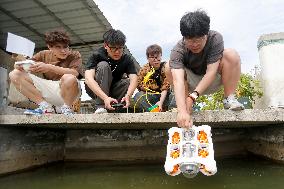
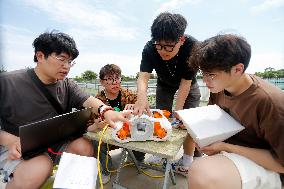
YIXING, CHINA - JUNE 2, 2024 - Members of the Creative Intelligence team of Nantong Institute of Technology test an "intelligent aquaculture robot" at the aquaculture base of Innovation Village in Yixing, Jiangsu province, China, June 2, 2024. Yin Jiangang, an aquaculture farmer in Gengxin Village, Yangxiang Town, Yixing City, Jiangsu province, uses an "intelligent aquaculture robot" developed by a team from Nantong Institute of Technology to feed drinks to his fish and crabs. The robot has a modular design and is equipped with image acquisition equipment, lighting system, safety sensors, pressure sensors, humidity and temperature sensors, attitude sensors and inertial navigation modules. Mainly through the pH detection, ammonia nitrogen content detection and other instruments, can effectively improve the efficiency of water quality detection; And the robot can feed intelligently in different water depths and heights, improving the quality and efficiency for the development of modern agriculture.

  • Main
  • Top
  • Editorial
  • Creative
  • About Us
  • About ILG
  • Terms of use
  • Company
  • BEHIND
  • Price List
  • Single Plan
  • Monthly Plan
  • Services
  • Shooting
  • Rights Clearance
  • Support
  • FAQ
  • How To Buy
  • Contact Us
  • Become a Partner

© KYODO NEWS IMAGES INC

All Rights Reserved.

  • Editorial
  • Olympics
  • News
  • Sports
  • Japan
  • Tech
  • Royal
  • Disaster
  • NorthKorea
  • Old Japan
  • SNS
  • Creative
  • Food
  • Japan
  • Landscape
  • Animal
  • Popular
  • #Ukraine
  • #Russia
  • #coronavirus
  • #N. Korea
  • #China
  • #Thailand
  • #Ukraine
  • #Russia
  • #coronavirus
  • #N. Korea
  • #China
  • #Thailand
  • Food
  • Japan
  • Landscape
  • Animal
  • Olympics
  • News
  • Sports
  • Japan
  • Tech
  • Royal
  • Disaster
  • NorthKorea
  • Old Japan
  • SNS