•  
Tarim Desert Highway - China

Tarim Desert Highway - China

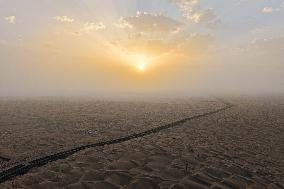
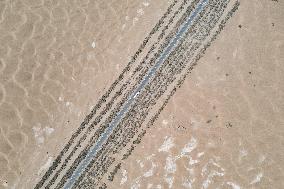
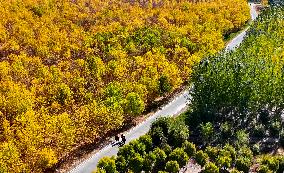
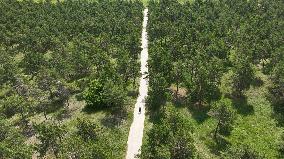
An aerial drone photo taken on July 18, 2025 shows the Tarim Desert Highway traversing through the Taklimakan Desert and the shelterbelt planted along it in northwest China's Xinjiang Uygur Autonomous Region. The 522-km highway runs across the Taklimakan Desert, the world's second-largest shifting sand desert. Photo by Zhang Keren/Xinhua/ABACAPRESS.COM

  •  
Tarim Desert Highway - China

Tarim Desert Highway - China

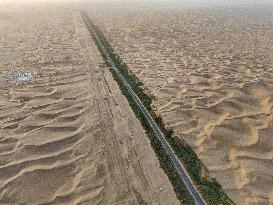
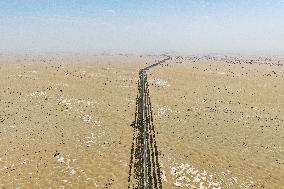
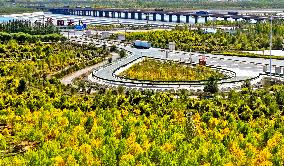
An aerial drone photo taken on July 18, 2025 shows the Tarim Desert Highway traversing through the Taklimakan Desert and the shelterbelt planted along it in northwest China's Xinjiang Uygur Autonomous Region. The 522-km highway runs across the Taklimakan Desert, the world's second-largest shifting sand desert. Photo by Hu Huhu/Xinhua/ABACAPRESS.COM

  •  
Tarim Desert Highway - China

Tarim Desert Highway - China

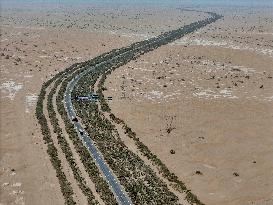
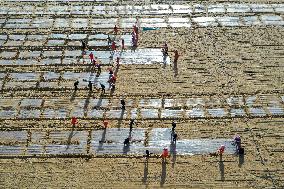
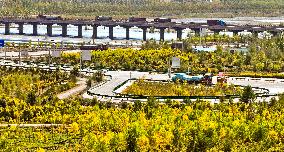
An aerial drone photo taken on July 18, 2025 shows the Tarim Desert Highway traversing through the Taklimakan Desert and the shelterbelt planted along it in northwest China's Xinjiang Uygur Autonomous Region. The 522-km highway runs across the Taklimakan Desert, the world's second-largest shifting sand desert. Photo by Hu Huhu/Xinhua/ABACAPRESS.COM

  •  
Tarim Desert Highway - China

Tarim Desert Highway - China

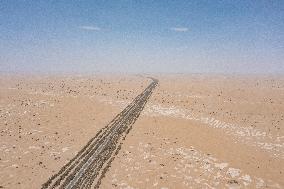
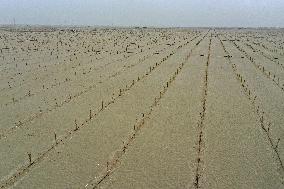
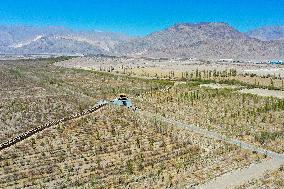
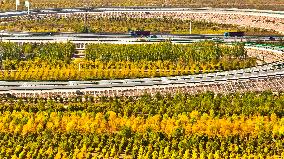
An aerial drone photo taken on July 18, 2025 shows a section of the Tarim Desert Highway and the shelterbelt planted along it in northwest China's Xinjiang Uygur Autonomous Region. The 522-km highway runs across the Taklimakan Desert, the world's second-largest shifting sand desert. Photo by Meng Tao/Xinhua/ABACAPRESS.COM

  •  
Tarim Desert Highway - China

Tarim Desert Highway - China

An aerial drone photo taken on July 18, 2025 shows a section of the Tarim Desert Highway and the shelterbelt planted along it in northwest China's Xinjiang Uygur Autonomous Region. The 522-km highway runs across the Taklimakan Desert, the world's second-largest shifting sand desert. Photo by Meng Tao/Xinhua/ABACAPRESS.COM

  •  
Tarim Desert Highway - China

Tarim Desert Highway - China

An aerial drone photo taken on July 18, 2025 shows the Tarim Desert Highway traversing through the Taklimakan Desert and the shelterbelt planted along it in northwest China's Xinjiang Uygur Autonomous Region. The 522-km highway runs across the Taklimakan Desert, the world's second-largest shifting sand desert. Photo by Zhang Keren/Xinhua/ABACAPRESS.COM

  •  
Taklimakan Desert Control Afforestation - China

Taklimakan Desert Control Afforestation - China

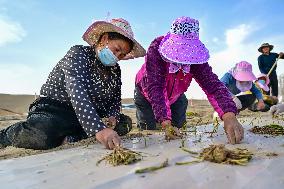
An aerial drone photo taken on April 8, 2025 shows people planting coix at a sand industry experimental base in Yutian County of Hotan Prefecture, northwest China's Xinjiang Uygur Autonomous Region. The Taklimakan Desert in northwest China's Xinjiang Uygur Autonomous Region covers 337,600 square kilometers and its circumference measures 3,046 kilometers, making it the largest desert in China and the second-largest drifting desert in the world. Thanks to decades-long sand prevention and control efforts, the Taklimakan Desert was completely encircled with a sand-blocking green belt on Nov. 28, 2024. In 2025, Xinjiang aims to afforest a land area of about 796,000 hectares, including 562,666 hectares for frontline control in the Taklimakan Desert. These afforestations form a part of the Three-North Shelterbelt Forest Program, the world's largest afforestation program, which tackles desertification in northwest, north and northeast China. Meanwhile, Xinjiang will further widen the sand-blocking green belt and enha

  •  
Taklimakan Desert Control Afforestation - China

Taklimakan Desert Control Afforestation - China

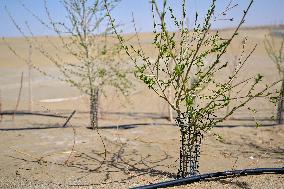
An aerial drone photo taken on April 7, 2025 shows oleaster saplings in Hotan County of Hotan Prefecture, northwest China's Xinjiang Uygur Autonomous Region. The Taklimakan Desert in northwest China's Xinjiang Uygur Autonomous Region covers 337,600 square kilometers and its circumference measures 3,046 kilometers, making it the largest desert in China and the second-largest drifting desert in the world. Thanks to decades-long sand prevention and control efforts, the Taklimakan Desert was completely encircled with a sand-blocking green belt on Nov. 28, 2024. In 2025, Xinjiang aims to afforest a land area of about 796,000 hectares, including 562,666 hectares for frontline control in the Taklimakan Desert. These afforestations form a part of the Three-North Shelterbelt Forest Program, the world's largest afforestation program, which tackles desertification in northwest, north and northeast China. Meanwhile, Xinjiang will further widen the sand-blocking green belt and enhance desert-locking efforts to achieve sus

  •  
Taklimakan Desert Control Afforestation - China

Taklimakan Desert Control Afforestation - China

Staff members plant onions in sandy land at a sand-control experimental station in Minfeng County of Hotan Prefecture, northwest China's Xinjiang Uygur Autonomous Region on April 8, 2025. The Taklimakan Desert in northwest China's Xinjiang Uygur Autonomous Region covers 337,600 square kilometers and its circumference measures 3,046 kilometers, making it the largest desert in China and the second-largest drifting desert in the world. Thanks to decades-long sand prevention and control efforts, the Taklimakan Desert was completely encircled with a sand-blocking green belt on Nov. 28, 2024. In 2025, Xinjiang aims to afforest a land area of about 796,000 hectares, including 562,666 hectares for frontline control in the Taklimakan Desert. These afforestations form a part of the Three-North Shelterbelt Forest Program, the world's largest afforestation program, which tackles desertification in northwest, north and northeast China. Meanwhile, Xinjiang will further widen the sand-blocking green belt and enhance desert-

  •  
Taklimakan Desert Control Afforestation - China

Taklimakan Desert Control Afforestation - China

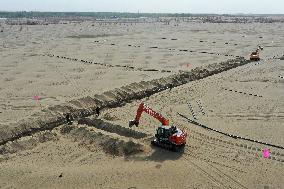
An aerial drone photo taken on April 8, 2025 shows staff members embedding water pipelines in Minfeng County of Hotan Prefecture, northwest China's Xinjiang Uygur Autonomous Region. The Taklimakan Desert in northwest China's Xinjiang Uygur Autonomous Region covers 337,600 square kilometers and its circumference measures 3,046 kilometers, making it the largest desert in China and the second-largest drifting desert in the world. Thanks to decades-long sand prevention and control efforts, the Taklimakan Desert was completely encircled with a sand-blocking green belt on Nov. 28, 2024. In 2025, Xinjiang aims to afforest a land area of about 796,000 hectares, including 562,666 hectares for frontline control in the Taklimakan Desert. These afforestations form a part of the Three-North Shelterbelt Forest Program, the world's largest afforestation program, which tackles desertification in northwest, north and northeast China. Meanwhile, Xinjiang will further widen the sand-blocking green belt and enhance desert-lockin

  •  
Taklimakan Desert Control Afforestation - China

Taklimakan Desert Control Afforestation - China

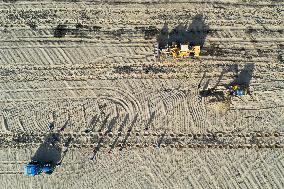
An aerial drone photo taken on April 9, 2025 shows staff members planting seedlings at a sand-control base in Qiemo County, the Mongolian Autonomous Prefecture of Bayingolin, northwest China's Xinjiang Uygur Autonomous Region. The Taklimakan Desert in northwest China's Xinjiang Uygur Autonomous Region covers 337,600 square kilometers and its circumference measures 3,046 kilometers, making it the largest desert in China and the second-largest drifting desert in the world. Thanks to decades-long sand prevention and control efforts, the Taklimakan Desert was completely encircled with a sand-blocking green belt on Nov. 28, 2024. In 2025, Xinjiang aims to afforest a land area of about 796,000 hectares, including 562,666 hectares for frontline control in the Taklimakan Desert. These afforestations form a part of the Three-North Shelterbelt Forest Program, the world's largest afforestation program, which tackles desertification in northwest, north and northeast China. Meanwhile, Xinjiang will further widen the sand-

  •  
Taklimakan Desert Control Afforestation - China

Taklimakan Desert Control Afforestation - China

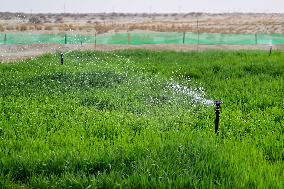
This photo taken on April 13, 2025 shows a wheat field irrigated by desalinated water in Xayar County, Aksu Prefecture, northwest China's Xinjiang Uygur Autonomous Region. The Taklimakan Desert in northwest China's Xinjiang Uygur Autonomous Region covers 337,600 square kilometers and its circumference measures 3,046 kilometers, making it the largest desert in China and the second-largest drifting desert in the world. Thanks to decades-long sand prevention and control efforts, the Taklimakan Desert was completely encircled with a sand-blocking green belt on Nov. 28, 2024. In 2025, Xinjiang aims to afforest a land area of about 796,000 hectares, including 562,666 hectares for frontline control in the Taklimakan Desert. These afforestations form a part of the Three-North Shelterbelt Forest Program, the world's largest afforestation program, which tackles desertification in northwest, north and northeast China. Meanwhile, Xinjiang will further widen the sand-blocking green belt and enhance desert-locking efforts

  •  
Taklimakan Desert Control Afforestation - China

Taklimakan Desert Control Afforestation - China

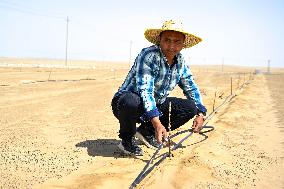
A villager arranges a drip irrigation pipe at a desert-control model zone in Yutian County of Hotan Prefecture, northwest China's Xinjiang Uygur Autonomous Region, April 8, 2025. The Taklimakan Desert in northwest China's Xinjiang Uygur Autonomous Region covers 337,600 square kilometers and its circumference measures 3,046 kilometers, making it the largest desert in China and the second-largest drifting desert in the world. Thanks to decades-long sand prevention and control efforts, the Taklimakan Desert was completely encircled with a sand-blocking green belt on Nov. 28, 2024. In 2025, Xinjiang aims to afforest a land area of about 796,000 hectares, including 562,666 hectares for frontline control in the Taklimakan Desert. These afforestations form a part of the Three-North Shelterbelt Forest Program, the world's largest afforestation program, which tackles desertification in northwest, north and northeast China. Meanwhile, Xinjiang will further widen the sand-blocking green belt and enhance desert-locking e

  •  
Taklimakan Desert Control Afforestation - China

Taklimakan Desert Control Afforestation - China

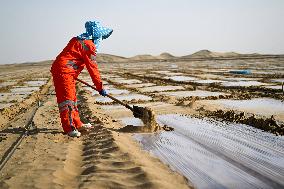
A villager plants coix at a sand industry experimental base in Yutian County of Hotan Prefecture, northwest China's Xinjiang Uygur Autonomous Region on April 8, 2025. The Taklimakan Desert in northwest China's Xinjiang Uygur Autonomous Region covers 337,600 square kilometers and its circumference measures 3,046 kilometers, making it the largest desert in China and the second-largest drifting desert in the world. Thanks to decades-long sand prevention and control efforts, the Taklimakan Desert was completely encircled with a sand-blocking green belt on Nov. 28, 2024. In 2025, Xinjiang aims to afforest a land area of about 796,000 hectares, including 562,666 hectares for frontline control in the Taklimakan Desert. These afforestations form a part of the Three-North Shelterbelt Forest Program, the world's largest afforestation program, which tackles desertification in northwest, north and northeast China. Meanwhile, Xinjiang will further widen the sand-blocking green belt and enhance desert-locking efforts to ac

  •  
Taklimakan Desert Control Afforestation - China

Taklimakan Desert Control Afforestation - China

Protective nets are attached to seedlings to prevent animals from eating them at a sand-control base in Qiemo County, the Mongolian Autonomous Prefecture of Bayingolin, northwest China's Xinjiang Uygur Autonomous Region, April 9, 2025. The Taklimakan Desert in northwest China's Xinjiang Uygur Autonomous Region covers 337,600 square kilometers and its circumference measures 3,046 kilometers, making it the largest desert in China and the second-largest drifting desert in the world. Thanks to decades-long sand prevention and control efforts, the Taklimakan Desert was completely encircled with a sand-blocking green belt on Nov. 28, 2024. In 2025, Xinjiang aims to afforest a land area of about 796,000 hectares, including 562,666 hectares for frontline control in the Taklimakan Desert. These afforestations form a part of the Three-North Shelterbelt Forest Program, the world's largest afforestation program, which tackles desertification in northwest, north and northeast China. Meanwhile, Xinjiang will further widen

  •  
Taklimakan Desert Control Afforestation - China

Taklimakan Desert Control Afforestation - China

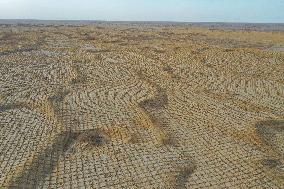
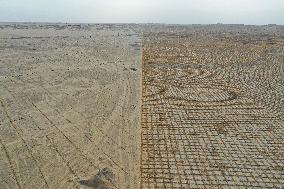
An aerial drone photo taken on April 8, 2025 shows checkerboard sand barriers in Minfeng County of Hotan Prefecture, northwest China's Xinjiang Uygur Autonomous Region. The Taklimakan Desert in northwest China's Xinjiang Uygur Autonomous Region covers 337,600 square kilometers and its circumference measures 3,046 kilometers, making it the largest desert in China and the second-largest drifting desert in the world. Thanks to decades-long sand prevention and control efforts, the Taklimakan Desert was completely encircled with a sand-blocking green belt on Nov. 28, 2024. In 2025, Xinjiang aims to afforest a land area of about 796,000 hectares, including 562,666 hectares for frontline control in the Taklimakan Desert. These afforestations form a part of the Three-North Shelterbelt Forest Program, the world's largest afforestation program, which tackles desertification in northwest, north and northeast China. Meanwhile, Xinjiang will further widen the sand-blocking green belt and enhance desert-locking efforts to

  •  
Taklimakan Desert Control Afforestation - China

Taklimakan Desert Control Afforestation - China

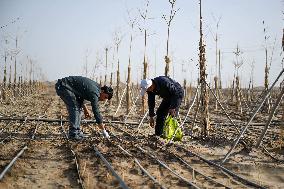
People arrange drip irrigation pipes at a sand-control experimental base in Yutian County of Hotan Prefecture, northwest China's Xinjiang Uygur Autonomous Region, April 8, 2025. The Taklimakan Desert in northwest China's Xinjiang Uygur Autonomous Region covers 337,600 square kilometers and its circumference measures 3,046 kilometers, making it the largest desert in China and the second-largest drifting desert in the world. Thanks to decades-long sand prevention and control efforts, the Taklimakan Desert was completely encircled with a sand-blocking green belt on Nov. 28, 2024. In 2025, Xinjiang aims to afforest a land area of about 796,000 hectares, including 562,666 hectares for frontline control in the Taklimakan Desert. These afforestations form a part of the Three-North Shelterbelt Forest Program, the world's largest afforestation program, which tackles desertification in northwest, north and northeast China. Meanwhile, Xinjiang will further widen the sand-blocking green belt and enhance desert-locking ef

  •  
Taklimakan Desert Control Afforestation - China

Taklimakan Desert Control Afforestation - China

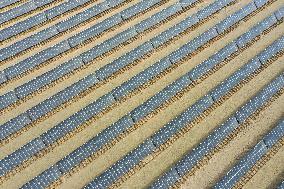
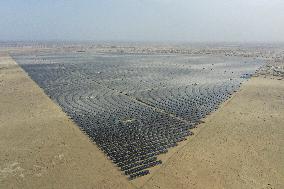
An aerial drone photo taken on April 13, 2025 shows a photovoltaic power project in Xayar County, Aksu Prefecture, northwest China's Xinjiang Uygur Autonomous Region. The Taklimakan Desert in northwest China's Xinjiang Uygur Autonomous Region covers 337,600 square kilometers and its circumference measures 3,046 kilometers, making it the largest desert in China and the second-largest drifting desert in the world. Thanks to decades-long sand prevention and control efforts, the Taklimakan Desert was completely encircled with a sand-blocking green belt on Nov. 28, 2024. In 2025, Xinjiang aims to afforest a land area of about 796,000 hectares, including 562,666 hectares for frontline control in the Taklimakan Desert. These afforestations form a part of the Three-North Shelterbelt Forest Program, the world's largest afforestation program, which tackles desertification in northwest, north and northeast China. Meanwhile, Xinjiang will further widen the sand-blocking green belt and enhance desert-locking efforts to ac

  •  
Taklimakan Desert Control Afforestation - China

Taklimakan Desert Control Afforestation - China

An aerial drone photo taken on April 8, 2025 shows checkerboard sand barriers at a sand-control zone in Minfeng County of Hotan Prefecture, northwest China's Xinjiang Uygur Autonomous Region. The Taklimakan Desert in northwest China's Xinjiang Uygur Autonomous Region covers 337,600 square kilometers and its circumference measures 3,046 kilometers, making it the largest desert in China and the second-largest drifting desert in the world. Thanks to decades-long sand prevention and control efforts, the Taklimakan Desert was completely encircled with a sand-blocking green belt on Nov. 28, 2024. In 2025, Xinjiang aims to afforest a land area of about 796,000 hectares, including 562,666 hectares for frontline control in the Taklimakan Desert. These afforestations form a part of the Three-North Shelterbelt Forest Program, the world's largest afforestation program, which tackles desertification in northwest, north and northeast China. Meanwhile, Xinjiang will further widen the sand-blocking green belt and enhance des

  •  
Taklimakan Desert Control Afforestation - China

Taklimakan Desert Control Afforestation - China

An aerial drone photo taken on April 11, 2025 shows a forest park in Hejing County, the Mongolian Autonomous Prefecture of Bayingolin, northwest China's Xinjiang Uygur Autonomous Region. The Taklimakan Desert in northwest China's Xinjiang Uygur Autonomous Region covers 337,600 square kilometers and its circumference measures 3,046 kilometers, making it the largest desert in China and the second-largest drifting desert in the world. Thanks to decades-long sand prevention and control efforts, the Taklimakan Desert was completely encircled with a sand-blocking green belt on Nov. 28, 2024. In 2025, Xinjiang aims to afforest a land area of about 796,000 hectares, including 562,666 hectares for frontline control in the Taklimakan Desert. These afforestations form a part of the Three-North Shelterbelt Forest Program, the world's largest afforestation program, which tackles desertification in northwest, north and northeast China. Meanwhile, Xinjiang will further widen the sand-blocking green belt and enhance desert-l

  •  
Taklimakan Desert Control Afforestation - China

Taklimakan Desert Control Afforestation - China

An aerial drone photo taken on April 13, 2025 shows a photovoltaic power project in Xayar County, Aksu Prefecture, northwest China's Xinjiang Uygur Autonomous Region. The Taklimakan Desert in northwest China's Xinjiang Uygur Autonomous Region covers 337,600 square kilometers and its circumference measures 3,046 kilometers, making it the largest desert in China and the second-largest drifting desert in the world. Thanks to decades-long sand prevention and control efforts, the Taklimakan Desert was completely encircled with a sand-blocking green belt on Nov. 28, 2024. In 2025, Xinjiang aims to afforest a land area of about 796,000 hectares, including 562,666 hectares for frontline control in the Taklimakan Desert. These afforestations form a part of the Three-North Shelterbelt Forest Program, the world's largest afforestation program, which tackles desertification in northwest, north and northeast China. Meanwhile, Xinjiang will further widen the sand-blocking green belt and enhance desert-locking efforts to ac

  •  
Taklimakan Desert Control Afforestation - China

Taklimakan Desert Control Afforestation - China

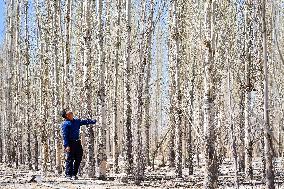
Fu Guoxi checks the trees at a green belt built by his father Fu Zhizhou in Hejing County, the Mongolian Autonomous Prefecture of Bayingolin, northwest China's Xinjiang Uygur Autonomous Region, April 11, 2025. Over the past four decades, Fu Zhizhou had planted more than 800,000 trees and his son Fu Guoxi took over the cause after his father passed away in 2024. The Taklimakan Desert in northwest China's Xinjiang Uygur Autonomous Region covers 337,600 square kilometers and its circumference measures 3,046 kilometers, making it the largest desert in China and the second-largest drifting desert in the world. Thanks to decades-long sand prevention and control efforts, the Taklimakan Desert was completely encircled with a sand-blocking green belt on Nov. 28, 2024. In 2025, Xinjiang aims to afforest a land area of about 796,000 hectares, including 562,666 hectares for frontline control in the Taklimakan Desert. These afforestations form a part of the Three-North Shelterbelt Forest Program, the world's largest affor

  •  
Taklimakan Desert Control Afforestation - China

Taklimakan Desert Control Afforestation - China

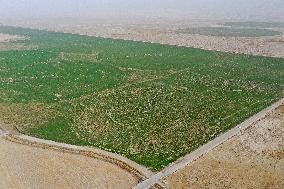
An aerial drone photo taken on April 12, 2025 shows a grassland in Baicheng County, Aksu Prefecture, northwest China's Xinjiang Uygur Autonomous Region. The Taklimakan Desert in northwest China's Xinjiang Uygur Autonomous Region covers 337,600 square kilometers and its circumference measures 3,046 kilometers, making it the largest desert in China and the second-largest drifting desert in the world. Thanks to decades-long sand prevention and control efforts, the Taklimakan Desert was completely encircled with a sand-blocking green belt on Nov. 28, 2024. In 2025, Xinjiang aims to afforest a land area of about 796,000 hectares, including 562,666 hectares for frontline control in the Taklimakan Desert. These afforestations form a part of the Three-North Shelterbelt Forest Program, the world's largest afforestation program, which tackles desertification in northwest, north and northeast China. Meanwhile, Xinjiang will further widen the sand-blocking green belt and enhance desert-locking efforts to achieve sustaina

  •  
An Ecological Shelterbelt Along The Heihe River in Zhangye

An Ecological Shelterbelt Along The Heihe River in Zhangye

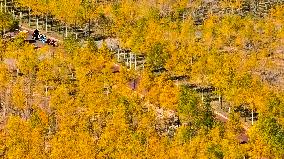
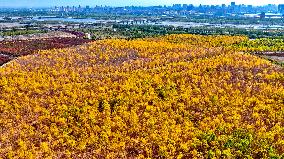
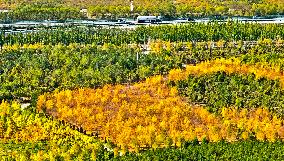
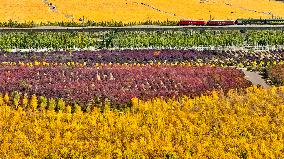
ZHANGYE, CHINA - OCTOBER 6, 2024 - Ecological shelterbelts along the banks of the Heihe River in Zhangye city, Gansu province, China, Oct 6, 2024.

  •  
An Ecological Shelterbelt Along The Heihe River in Zhangye

An Ecological Shelterbelt Along The Heihe River in Zhangye

ZHANGYE, CHINA - OCTOBER 6, 2024 - Ecological shelterbelts along the banks of the Heihe River in Zhangye city, Gansu province, China, Oct 6, 2024.

  •  
An Ecological Shelterbelt Along The Heihe River in Zhangye

An Ecological Shelterbelt Along The Heihe River in Zhangye

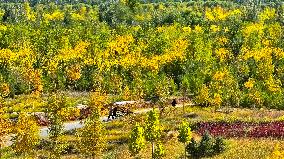
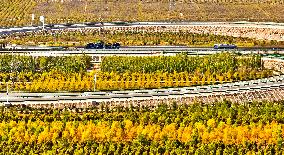
ZHANGYE, CHINA - OCTOBER 6, 2024 - Trucks run on a highway along ecological shelterbelts along the Heihe River in Zhangye city, Northwest China's Gansu province, Oct 6, 2024. On both sides of the train, golden poplar, red leaf maple trees and farmers are drying seed corn constitute the autumn scenery.

  •  
An Ecological Shelterbelt Along The Heihe River in Zhangye

An Ecological Shelterbelt Along The Heihe River in Zhangye

ZHANGYE, CHINA - OCTOBER 6, 2024 - Trucks run on a highway along ecological shelterbelts along the Heihe River in Zhangye city, Northwest China's Gansu province, Oct 6, 2024. On both sides of the train, golden poplar, red leaf maple trees and farmers are drying seed corn constitute the autumn scenery.

  •  
An Ecological Shelterbelt Along The Heihe River in Zhangye

An Ecological Shelterbelt Along The Heihe River in Zhangye

ZHANGYE, CHINA - OCTOBER 6, 2024 - Trucks run on a highway along ecological shelterbelts along the Heihe River in Zhangye city, Northwest China's Gansu province, Oct 6, 2024. On both sides of the train, golden poplar, red leaf maple trees and farmers are drying seed corn constitute the autumn scenery.

  •  
An Ecological Shelterbelt Along The Heihe River in Zhangye

An Ecological Shelterbelt Along The Heihe River in Zhangye

ZHANGYE, CHINA - OCTOBER 6, 2024 - Ecological shelterbelts along the banks of the Heihe River in Zhangye city, Gansu province, China, Oct 6, 2024.

  •  
An Ecological Shelterbelt Along The Heihe River in Zhangye

An Ecological Shelterbelt Along The Heihe River in Zhangye

ZHANGYE, CHINA - OCTOBER 6, 2024 - Ecological shelterbelts along the banks of the Heihe River in Zhangye city, Gansu province, China, Oct 6, 2024.

  •  
An Ecological Shelterbelt Along The Heihe River in Zhangye

An Ecological Shelterbelt Along The Heihe River in Zhangye

ZHANGYE, CHINA - OCTOBER 6, 2024 - Ecological shelterbelts along the banks of the Heihe River in Zhangye city, Gansu province, China, Oct 6, 2024.

  •  
An Ecological Shelterbelt Along The Heihe River in Zhangye

An Ecological Shelterbelt Along The Heihe River in Zhangye

ZHANGYE, CHINA - OCTOBER 6, 2024 - Trucks run on a highway along ecological shelterbelts along the Heihe River in Zhangye city, Northwest China's Gansu province, Oct 6, 2024. On both sides of the train, golden poplar, red leaf maple trees and farmers are drying seed corn constitute the autumn scenery.

  •  
An Ecological Shelterbelt Along The Heihe River in Zhangye

An Ecological Shelterbelt Along The Heihe River in Zhangye

ZHANGYE, CHINA - OCTOBER 6, 2024 - A train runs over a viaduct in an ecological shelterbelt along the Heihe River in Zhangye city, Northwest China's Gansu province, Oct 6, 2024. On both sides of the train, golden poplar, red leaf maple trees and farmers are drying seed corn constitute the autumn scenery.

  •  

From surviving to thriving amidst sands, Chinese city fortifies "green Great Wall"

STORY: From surviving to thriving amidst sands, Chinese city fortifies "green Great Wall" SHOOTING TIME: June 15, 2024/ File DATELINE: June 16, 2024 LENGTH: 00:02:34 LOCATION: YINCHUAN, China CATEGORY: ENVIRONMENT SHOTLIST: 1. various of the Shapotou scenic spot 2. various of Zhongwei City 3. SOUNDBITE 1 (Chinese): TANG XIMING, Senior engineer, state-owned forestry farm in Zhongwei 4. various of the Three-North Shelterbelt Forest Program 5. SOUNDBITE 2 (Chinese): LIU BING, National Forestry and Grassland Administration 6. various of the Three-North Shelterbelt Forest Program 7. SOUNDBITE 3 (English): RICHARD DJURIST NGENZI, Tanzanian student in Ningxia STORYLINE: Shapotou scenic spot Zhongwei City, NW China's Ningxia Marching along the southern edge of the Tengger Desert in northwest China, the group of students may find it hard to imagine how the desert presented a life-or-death crisis only decades ago. Such transformation has been achieved through China's recipe for sand control -- straw checkerboards

  •  

Innovation fortifies China's "green Great Wall" against desertification

STORY: Innovation fortifies China's "green Great Wall" against desertification SHOOTING TIME: Recent footage DATELINE: June 5, 2024 LENGTH: 00:02:46 LOCATION: HOHHOT, China CATEGORY: ENVIRONMENT SHOTLIST: 1. various of Horqin sandy land in north China's Inner Mongolia Autonomous Region 2. SOUNDBITE 1 (Chinese): CHOGTU, Head of forestry station in Horqin Left Wing Rear Banner, Inner Mongolia Autonomous Region 3. various of Horqin sandy land in north China's Inner Mongolia Autonomous Region 4. SOUNDBITE 2 (Chinese): JIANG LONGWEN, Sand control official with Dengkou County, Inner Mongolia Autonomous Region STORYLINE: Horqin sandy land in north China's Inner Mongolia Autonomous Region is the largest of its kind in China. It is a key battlefield of China's ambitious Three-North Shelterbelt Forest Program (TSFP), which aims to mitigate desertification. In Horqin Left Wing Rear Banner in eastern Inner Mongolia, workers have been racing against time to build neat rows of square-shaped sand barriers in the des

  •  
ChineseToday | A ranger guards forest for 37 years in NE China's Liaoning

ChineseToday | A ranger guards forest for 37 years in NE China's Liaoning

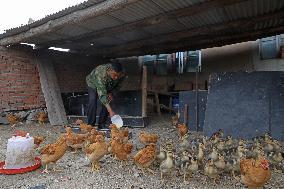
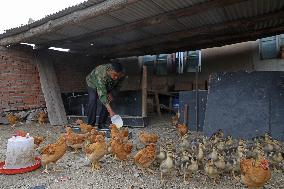
(240602) -- ZHANGWU, June 2, 2024 Photo by Xinhua/ABACAPRESS.COM) -- Li Dongkui feeds chicken at home in Zhangwu County, northeast China's Liaoning Province, May 30, 2024. Li Dongkui is a forest ranger at Zhanggutai Forest Farm in Zhangwu County. The forest farm is located on the southern edge of the Horqin Sandy Land and is part of the Three-North Shelterbelt Forest Program. In 1987, after retiring from the military, Li began working at the forest farm as a ranger. The most profound childhood memory Li has of his hometown is the fierce sandstorms. He knew that only by advancing sand control could this situation be fundamentally changed. However, the challenges Li faced were far beyond his imagination. In the beginning, the conditions on the forest farm were extremely harsh, far from populated areas, with no water or electricity, and the land was covered with sand dunes. The forest there had no roads and was rugged, so the forest farm equipped Li with a horse. To better patrol the forest, Li moved his home in

  •  
ChineseToday | A ranger guards forest for 37 years in NE China's Liaoning

ChineseToday | A ranger guards forest for 37 years in NE China's Liaoning

(240602) -- ZHANGWU, June 2, 2024 Photo by Xinhua/ABACAPRESS.COM) -- Li Dongkui drinks water under a tree in Zhangwu County, northeast China's Liaoning Province, May 31, 2024. Li Dongkui is a forest ranger at Zhanggutai Forest Farm in Zhangwu County. The forest farm is located on the southern edge of the Horqin Sandy Land and is part of the Three-North Shelterbelt Forest Program. In 1987, after retiring from the military, Li began working at the forest farm as a ranger. The most profound childhood memory Li has of his hometown is the fierce sandstorms. He knew that only by advancing sand control could this situation be fundamentally changed. However, the challenges Li faced were far beyond his imagination. In the beginning, the conditions on the forest farm were extremely harsh, far from populated areas, with no water or electricity, and the land was covered with sand dunes. The forest there had no roads and was rugged, so the forest farm equipped Li with a horse. To better patrol the forest, Li moved his hom

  •  
ChineseToday | A ranger guards forest for 37 years in NE China's Liaoning

ChineseToday | A ranger guards forest for 37 years in NE China's Liaoning

(240602) -- ZHANGWU, June 2, 2024 Photo by Xinhua/ABACAPRESS.COM) -- An aerial drone photo shows Li Dongkui partroling the forest in Zhangwu County, northeast China's Liaoning Province, May 31, 2024. Li Dongkui is a forest ranger at Zhanggutai Forest Farm in Zhangwu County. The forest farm is located on the southern edge of the Horqin Sandy Land and is part of the Three-North Shelterbelt Forest Program. In 1987, after retiring from the military, Li began working at the forest farm as a ranger. The most profound childhood memory Li has of his hometown is the fierce sandstorms. He knew that only by advancing sand control could this situation be fundamentally changed. However, the challenges Li faced were far beyond his imagination. In the beginning, the conditions on the forest farm were extremely harsh, far from populated areas, with no water or electricity, and the land was covered with sand dunes. The forest there had no roads and was rugged, so the forest farm equipped Li with a horse. To better patrol the

  •  
ChineseToday | A ranger guards forest for 37 years in NE China's Liaoning

ChineseToday | A ranger guards forest for 37 years in NE China's Liaoning

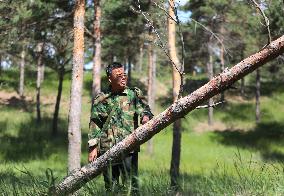
(240602) -- ZHANGWU, June 2, 2024 Photo by Xinhua/ABACAPRESS.COM) -- Li Dongkui checks a fallen pine tree in Zhangwu County, northeast China's Liaoning Province, May 31, 2024. Li Dongkui is a forest ranger at Zhanggutai Forest Farm in Zhangwu County. The forest farm is located on the southern edge of the Horqin Sandy Land and is part of the Three-North Shelterbelt Forest Program. In 1987, after retiring from the military, Li began working at the forest farm as a ranger. The most profound childhood memory Li has of his hometown is the fierce sandstorms. He knew that only by advancing sand control could this situation be fundamentally changed. However, the challenges Li faced were far beyond his imagination. In the beginning, the conditions on the forest farm were extremely harsh, far from populated areas, with no water or electricity, and the land was covered with sand dunes. The forest there had no roads and was rugged, so the forest farm equipped Li with a horse. To better patrol the forest, Li moved his hom

  •  
ChineseToday | A ranger guards forest for 37 years in NE China's Liaoning

ChineseToday | A ranger guards forest for 37 years in NE China's Liaoning

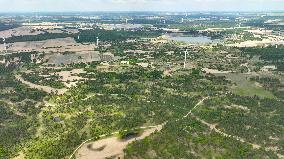
(240602) -- ZHANGWU, June 2, 2024 Photo by Xinhua/ABACAPRESS.COM) -- An aerial drone photo taken on May 31, 2024 shows Zhanggutai Forest Farm in Zhangwu County, northeast China's Liaoning Province. Li Dongkui is a forest ranger at Zhanggutai Forest Farm in Zhangwu County. The forest farm is located on the southern edge of the Horqin Sandy Land and is part of the Three-North Shelterbelt Forest Program. In 1987, after retiring from the military, Li began working at the forest farm as a ranger. The most profound childhood memory Li has of his hometown is the fierce sandstorms. He knew that only by advancing sand control could this situation be fundamentally changed. However, the challenges Li faced were far beyond his imagination. In the beginning, the conditions on the forest farm were extremely harsh, far from populated areas, with no water or electricity, and the land was covered with sand dunes. The forest there had no roads and was rugged, so the forest farm equipped Li with a horse. To better patrol the fo

  •  
ChineseToday | A ranger guards forest for 37 years in NE China's Liaoning

ChineseToday | A ranger guards forest for 37 years in NE China's Liaoning

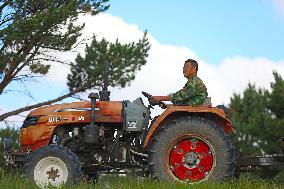
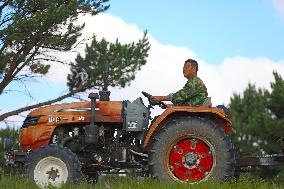
(240602) -- ZHANGWU, June 2, 2024 Photo by Xinhua/ABACAPRESS.COM) -- Li Dongkui drives a tractor and patrols the forest in Zhangwu County, northeast China's Liaoning Province, May 31, 2024. Li Dongkui is a forest ranger at Zhanggutai Forest Farm in Zhangwu County. The forest farm is located on the southern edge of the Horqin Sandy Land and is part of the Three-North Shelterbelt Forest Program. In 1987, after retiring from the military, Li began working at the forest farm as a ranger. The most profound childhood memory Li has of his hometown is the fierce sandstorms. He knew that only by advancing sand control could this situation be fundamentally changed. However, the challenges Li faced were far beyond his imagination. In the beginning, the conditions on the forest farm were extremely harsh, far from populated areas, with no water or electricity, and the land was covered with sand dunes. The forest there had no roads and was rugged, so the forest farm equipped Li with a horse. To better patrol the forest, Li

  •  
ChineseToday | A ranger guards forest for 37 years in NE China's Liaoning

ChineseToday | A ranger guards forest for 37 years in NE China's Liaoning

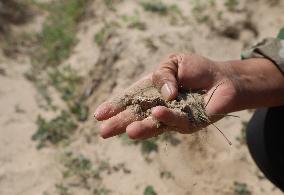
(240602) -- ZHANGWU, June 2, 2024 Photo by Xinhua/ABACAPRESS.COM) -- Li Dongkui checks the growth of weeds on sandy land in Zhangwu County, northeast China's Liaoning Province, May 31, 2024. Li Dongkui is a forest ranger at Zhanggutai Forest Farm in Zhangwu County. The forest farm is located on the southern edge of the Horqin Sandy Land and is part of the Three-North Shelterbelt Forest Program. In 1987, after retiring from the military, Li began working at the forest farm as a ranger. The most profound childhood memory Li has of his hometown is the fierce sandstorms. He knew that only by advancing sand control could this situation be fundamentally changed. However, the challenges Li faced were far beyond his imagination. In the beginning, the conditions on the forest farm were extremely harsh, far from populated areas, with no water or electricity, and the land was covered with sand dunes. The forest there had no roads and was rugged, so the forest farm equipped Li with a horse. To better patrol the forest, L

  •  
ChineseToday | A ranger guards forest for 37 years in NE China's Liaoning

ChineseToday | A ranger guards forest for 37 years in NE China's Liaoning

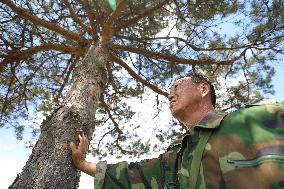
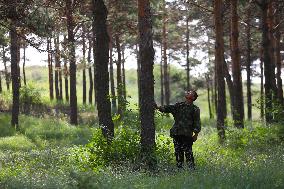
(240602) -- ZHANGWU, June 2, 2024 Photo by Xinhua/ABACAPRESS.COM) -- Li Dongkui checks the growth of pine trees in Zhangwu County, northeast China's Liaoning Province, May 31, 2024. Li Dongkui is a forest ranger at Zhanggutai Forest Farm in Zhangwu County. The forest farm is located on the southern edge of the Horqin Sandy Land and is part of the Three-North Shelterbelt Forest Program. In 1987, after retiring from the military, Li began working at the forest farm as a ranger. The most profound childhood memory Li has of his hometown is the fierce sandstorms. He knew that only by advancing sand control could this situation be fundamentally changed. However, the challenges Li faced were far beyond his imagination. In the beginning, the conditions on the forest farm were extremely harsh, far from populated areas, with no water or electricity, and the land was covered with sand dunes. The forest there had no roads and was rugged, so the forest farm equipped Li with a horse. To better patrol the forest, Li moved h

  •  
ChineseToday | A ranger guards forest for 37 years in NE China's Liaoning

ChineseToday | A ranger guards forest for 37 years in NE China's Liaoning

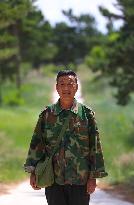
(240602) -- ZHANGWU, June 2, 2024 Photo by Xinhua/ABACAPRESS.COM) -- This photo taken on May 31, 2024 shows a portrait of Li Dongkui. Li Dongkui is a forest ranger at Zhanggutai Forest Farm in Zhangwu County. The forest farm is located on the southern edge of the Horqin Sandy Land and is part of the Three-North Shelterbelt Forest Program. In 1987, after retiring from the military, Li began working at the forest farm as a ranger. The most profound childhood memory Li has of his hometown is the fierce sandstorms. He knew that only by advancing sand control could this situation be fundamentally changed. However, the challenges Li faced were far beyond his imagination. In the beginning, the conditions on the forest farm were extremely harsh, far from populated areas, with no water or electricity, and the land was covered with sand dunes. The forest there had no roads and was rugged, so the forest farm equipped Li with a horse. To better patrol the forest, Li moved his home into the mountains. During the high-risk

  •  
ChineseToday | A ranger guards forest for 37 years in NE China's Liaoning

ChineseToday | A ranger guards forest for 37 years in NE China's Liaoning

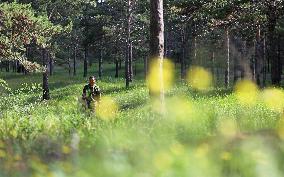
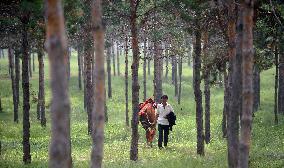
(240602) -- ZHANGWU, June 2, 2024 Photo by Xinhua/ABACAPRESS.COM) -- Li Dongkui partrols the forest in Zhangwu County, northeast China's Liaoning Province, May 31, 2024. Li Dongkui is a forest ranger at Zhanggutai Forest Farm in Zhangwu County. The forest farm is located on the southern edge of the Horqin Sandy Land and is part of the Three-North Shelterbelt Forest Program. In 1987, after retiring from the military, Li began working at the forest farm as a ranger. The most profound childhood memory Li has of his hometown is the fierce sandstorms. He knew that only by advancing sand control could this situation be fundamentally changed. However, the challenges Li faced were far beyond his imagination. In the beginning, the conditions on the forest farm were extremely harsh, far from populated areas, with no water or electricity, and the land was covered with sand dunes. The forest there had no roads and was rugged, so the forest farm equipped Li with a horse. To better patrol the forest, Li moved his home into

  •  
ChineseToday | A ranger guards forest for 37 years in NE China's Liaoning

ChineseToday | A ranger guards forest for 37 years in NE China's Liaoning

(240602) -- ZHANGWU, June 2, 2024 Photo by Xinhua/ABACAPRESS.COM) -- Li Dongkui cooks at home in Zhangwu County, northeast China's Liaoning Province, Aug. 3, 2013. Li Dongkui is a forest ranger at Zhanggutai Forest Farm in Zhangwu County. The forest farm is located on the southern edge of the Horqin Sandy Land and is part of the Three-North Shelterbelt Forest Program. In 1987, after retiring from the military, Li began working at the forest farm as a ranger. The most profound childhood memory Li has of his hometown is the fierce sandstorms. He knew that only by advancing sand control could this situation be fundamentally changed. However, the challenges Li faced were far beyond his imagination. In the beginning, the conditions on the forest farm were extremely harsh, far from populated areas, with no water or electricity, and the land was covered with sand dunes. The forest there had no roads and was rugged, so the forest farm equipped Li with a horse. To better patrol the forest, Li moved his home into the m

  •  
ChineseToday | A ranger guards forest for 37 years in NE China's Liaoning

ChineseToday | A ranger guards forest for 37 years in NE China's Liaoning

(240602) -- ZHANGWU, June 2, 2024 Photo by Xinhua/ABACAPRESS.COM) -- Li Dongkui checks the growth of pine trees in Zhangwu County, northeast China's Liaoning Province, May 31, 2024. Li Dongkui is a forest ranger at Zhanggutai Forest Farm in Zhangwu County. The forest farm is located on the southern edge of the Horqin Sandy Land and is part of the Three-North Shelterbelt Forest Program. In 1987, after retiring from the military, Li began working at the forest farm as a ranger. The most profound childhood memory Li has of his hometown is the fierce sandstorms. He knew that only by advancing sand control could this situation be fundamentally changed. However, the challenges Li faced were far beyond his imagination. In the beginning, the conditions on the forest farm were extremely harsh, far from populated areas, with no water or electricity, and the land was covered with sand dunes. The forest there had no roads and was rugged, so the forest farm equipped Li with a horse. To better patrol the forest, Li moved h

  •  
ChineseToday | A ranger guards forest for 37 years in NE China's Liaoning

ChineseToday | A ranger guards forest for 37 years in NE China's Liaoning

(240602) -- ZHANGWU, June 2, 2024 Photo by Xinhua/ABACAPRESS.COM) -- Li Dongkui walks in the forest in Zhangwu County, northeast China's Liaoning Province, Aug. 3, 2013. Li Dongkui is a forest ranger at Zhanggutai Forest Farm in Zhangwu County. The forest farm is located on the southern edge of the Horqin Sandy Land and is part of the Three-North Shelterbelt Forest Program. In 1987, after retiring from the military, Li began working at the forest farm as a ranger. The most profound childhood memory Li has of his hometown is the fierce sandstorms. He knew that only by advancing sand control could this situation be fundamentally changed. However, the challenges Li faced were far beyond his imagination. In the beginning, the conditions on the forest farm were extremely harsh, far from populated areas, with no water or electricity, and the land was covered with sand dunes. The forest there had no roads and was rugged, so the forest farm equipped Li with a horse. To better patrol the forest, Li moved his home into

  •  
ChineseToday | A ranger guards forest for 37 years in NE China's Liaoning

ChineseToday | A ranger guards forest for 37 years in NE China's Liaoning

(240602) -- ZHANGWU, June 2, 2024 (Xinhua) -- Li Dongkui feeds chicken at home in Zhangwu County, northeast China's Liaoning Province, May 30, 2024. Li Dongkui is a forest ranger at Zhanggutai Forest Farm in Zhangwu County. The forest farm is located on the southern edge of the Horqin Sandy Land and is part of the Three-North Shelterbelt Forest Program. In 1987, after retiring from the military, Li began working at the forest farm as a ranger. The most profound childhood memory Li has of his hometown is the fierce sandstorms. He knew that only by advancing sand control could this situation be fundamentally changed. However, the challenges Li faced were far beyond his imagination. In the beginning, the conditions on the forest farm were extremely harsh, far from populated areas, with no water or electricity, and the land was covered with sand dunes. The forest there had no roads and was rugged, so the forest farm equipped Li with a horse. To better patrol the forest, Li moved his home into the mounta

  •  
ChineseToday | A ranger guards forest for 37 years in NE China's Liaoning

ChineseToday | A ranger guards forest for 37 years in NE China's Liaoning

(240602) -- ZHANGWU, June 2, 2024 (Xinhua) -- Li Dongkui drives a tractor and patrols the forest in Zhangwu County, northeast China's Liaoning Province, May 31, 2024. Li Dongkui is a forest ranger at Zhanggutai Forest Farm in Zhangwu County. The forest farm is located on the southern edge of the Horqin Sandy Land and is part of the Three-North Shelterbelt Forest Program. In 1987, after retiring from the military, Li began working at the forest farm as a ranger. The most profound childhood memory Li has of his hometown is the fierce sandstorms. He knew that only by advancing sand control could this situation be fundamentally changed. However, the challenges Li faced were far beyond his imagination. In the beginning, the conditions on the forest farm were extremely harsh, far from populated areas, with no water or electricity, and the land was covered with sand dunes. The forest there had no roads and was rugged, so the forest farm equipped Li with a horse. To better patrol the forest, Li moved his ho

  • Main
  • Top
  • Editorial
  • Creative
  • About Us
  • About ILG
  • Terms of use
  • Company
  • BEHIND
  • Price List
  • Single Plan
  • Monthly Plan
  • Services
  • Shooting
  • Rights Clearance
  • Support
  • FAQ
  • How To Buy
  • Contact Us
  • Become a Partner

© KYODO NEWS IMAGES INC

All Rights Reserved.

  • Editorial
  • Olympics
  • News
  • Sports
  • Japan
  • Tech
  • Royal
  • Disaster
  • NorthKorea
  • Old Japan
  • SNS
  • Creative
  • Food
  • Japan
  • Landscape
  • Animal
  • Popular
  • #Ukraine
  • #Thailand
  • #coronavirus
  • #N. Korea
  • #China
  • #Russia
  • #Ukraine
  • #Thailand
  • #coronavirus
  • #N. Korea
  • #China
  • #Russia
  • Food
  • Japan
  • Landscape
  • Animal
  • Olympics
  • News
  • Sports
  • Japan
  • Tech
  • Royal
  • Disaster
  • NorthKorea
  • Old Japan
  • SNS