•  

World Exposition in Osaka

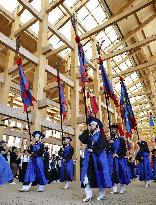
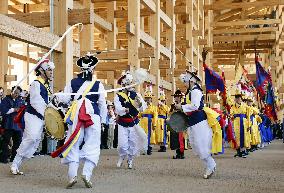
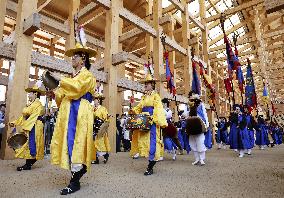
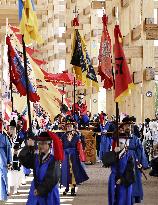
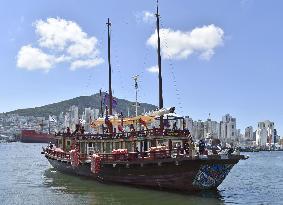
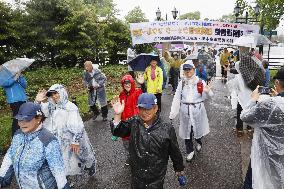
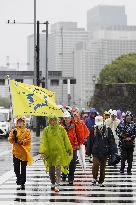
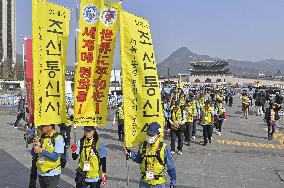
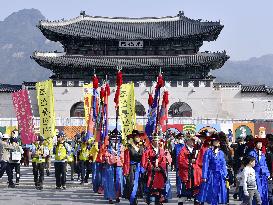
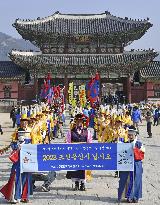
OSAKA, Japan, May 14 Kyodo - A parade replicating a diplomatic mission from the Joseon dynasty on the Korean Peninsula to Japan's Tokugawa shogunate during the Edo period (17th-19th century) is held at the World Exposition in Osaka on May 13, 2025, marking the event's South Korean day. (Kyodo)

  •  
World Exposition in Osaka

World Exposition in Osaka

A parade replicating a diplomatic mission from the Joseon dynasty on the Korean Peninsula to Japan's Tokugawa shogunate during the Edo period (17th-19th century) is held at the World Exposition in Osaka on May 13, 2025, marking the event's South Korean day.

  •  
World Exposition in Osaka

World Exposition in Osaka

A parade replicating a diplomatic mission from the Joseon dynasty on the Korean Peninsula to Japan's Tokugawa shogunate during the Edo period (17th-19th century) is held at the World Exposition in Osaka on May 13, 2025, marking the event's South Korean day.

  •  
World Exposition in Osaka

World Exposition in Osaka

A parade replicating a diplomatic mission from the Joseon dynasty on the Korean Peninsula to Japan's Tokugawa shogunate during the Edo period (17th-19th century) is held at the World Exposition in Osaka on May 13, 2025, marking the event's South Korean day.

  •  
World Exposition in Osaka

World Exposition in Osaka

A parade replicating a diplomatic mission from the Joseon dynasty on the Korean Peninsula to Japan's Tokugawa shogunate during the Edo period (17th-19th century) is held at the World Exposition in Osaka on May 13, 2025, marking the event's South Korean day.

  •  
Historical ship replica sails from Busan to Japan

Historical ship replica sails from Busan to Japan

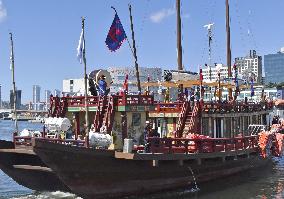
A replica of a wooden ship that carried a diplomatic mission from the Joseon dynasty on the Korean Peninsula to Japan's Tokugawa shogunate during the Edo period (17-19 century) departs a port in the southern South Korean city of Busan for Tsushima, Nagasaki Prefecture in southwestern Japan on Aug. 1, 2023. The ship reproduced in 2018 traces the sea route the Korean emissaries took in the old days.

  •  
Historical ship replica sails from Busan to Japan

Historical ship replica sails from Busan to Japan

A replica of a wooden ship that carried a diplomatic mission from the Joseon dynasty on the Korean Peninsula to Japan's Tokugawa shogunate during the Edo period (17-19 century) departs a port in the southern South Korean city of Busan for Tsushima, Nagasaki Prefecture in southwestern Japan on Aug. 1, 2023. The ship reproduced in 2018 traces the sea route the Korean emissaries took in the old days.

  •  
Seoul-Tokyo parade to promote bilateral cultural exchange

Seoul-Tokyo parade to promote bilateral cultural exchange

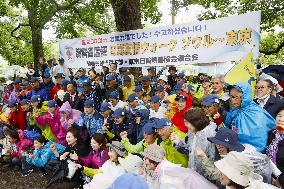
Japanese and South Korean people participating in a parade replicating a diplomatic mission from the Joseon dynasty on the Korean Peninsula to Japan's Tokugawa shogunate during the Edo period pose for a photo after arriving in Tokyo's Hibiya Park on May 23, 2023, after departing Seoul on April 1 for the over 1,000-kilometer journey. The biennial event that began in 2007 to deepen friendly ties between the two countries on a nongovernmental basis resumed after a three-year hiatus due to the COVID-19 pandemic.

  •  
Seoul-Tokyo parade to promote bilateral cultural exchange

Seoul-Tokyo parade to promote bilateral cultural exchange

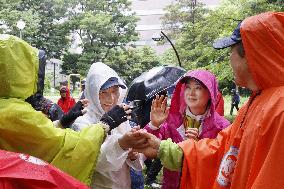
Japanese and South Korean people participating in a parade replicating a diplomatic mission from the Joseon dynasty on the Korean Peninsula to Japan's Tokugawa shogunate during the Edo period celebrate after arriving in Tokyo's Hibiya Park on May 23, 2023, after departing Seoul on April 1 for the over 1,000-kilometer journey. The biennial event that began in 2007 to deepen friendly ties between the two countries on a nongovernmental basis resumed after a three-year hiatus due to the COVID-19 pandemic.

  •  
Seoul-Tokyo parade to promote bilateral cultural exchange

Seoul-Tokyo parade to promote bilateral cultural exchange

Japanese and South Korean people participating in a parade replicating a diplomatic mission from the Joseon dynasty on the Korean Peninsula to Japan's Tokugawa shogunate during the Edo period arrive in Tokyo's Hibiya Park on May 23, 2023, after departing Seoul on April 1 for the over 1,000-kilometer journey. The biennial event that began in 2007 to deepen friendly ties between the two countries on a nongovernmental basis resumed after a three-year hiatus due to the COVID-19 pandemic.

  •  
Seoul-Tokyo parade to promote bilateral cultural exchange

Seoul-Tokyo parade to promote bilateral cultural exchange

Japanese and South Korean people participating in a parade replicating a diplomatic mission from the Joseon dynasty on the Korean Peninsula to Japan's Tokugawa shogunate during the Edo period head to its destination, Tokyo's Hibiya Park, on May 23, 2023, after departing Seoul on April 1 for the over 1,000-kilometer journey. The biennial event that began in 2007 to deepen friendly ties between the two countries on a nongovernmental basis resumed after a three-year hiatus due to the COVID-19 pandemic.

  •  
CORRECTED: Seoul-Tokyo parade to promote bilateral cultural exchange

CORRECTED: Seoul-Tokyo parade to promote bilateral cultural exchange

Japanese and South Korean people participating in a parade replicating a diplomatic mission from the Joseon dynasty on the Korean Peninsula to Japan's Tokugawa shogunate during the Edo period leave Seoul's Gyeongbokgung Palace on April 1, 2023, for an over 1,000-kilometer and some 50-day journey bound for Tokyo's Hibiya Park. The biennial event that began in 2007 to deepen friendly ties between the two countries on a nongovernmental basis resumed after a three-year hiatus due to the COVID-19 pandemic.

  •  
Seoul-Tokyo parade to promote bilateral cultural exchange

Seoul-Tokyo parade to promote bilateral cultural exchange

Japanese and South Korean people participating in a parade replicating a diplomatic mission from the Joseon dynasty on the Korean Peninsula to Japan's Tokugawa shogunate during the Edo period leave Seoul's Gyeongbokgung Palace on April 1, 2023, for an over 1,000-kilometer and some 50-day journey bound for Tokyo's Hibiya Park. The biennial event that began in 2007 to deepen friendly ties between the two countries on a nongovernmental basis resumed after a four-year hiatus due to the COVID-19 pandemic.

  •  
CORRECTED: Seoul-Tokyo parade to promote bilateral cultural exchange

CORRECTED: Seoul-Tokyo parade to promote bilateral cultural exchange

Japanese and South Korean people participating in a parade replicating a diplomatic mission from the Joseon dynasty on the Korean Peninsula to Japan's Tokugawa shogunate during the Edo period leave Seoul's Gyeongbokgung Palace on April 1, 2023, for an over 1,000-kilometer and some 50-day journey bound for Tokyo's Hibiya Park. The biennial event that began in 2007 to deepen friendly ties between the two countries on a nongovernmental basis resumed after a three-year hiatus due to the COVID-19 pandemic.

  •  
Iconic winery turns to ash as wildfires rage in California

Iconic winery turns to ash as wildfires rage in California

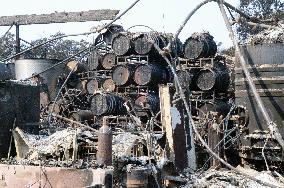
SANTA ROSA, California, Oct. 15 Kyodo - A winery run in Santa Rosa, California, in the 19th century by Kanae Nagasawa, one of the first Japanese immigrants to enter the United States, is destroyed in wildfires that have swept parts of California. Nagasawa arrived in the United States in 1867 after living in Britain for two years where he was sent on a clandestine mission by the Satsuma clan, known for their rebellion against the Japanese shogunate, to learn about Western culture to help prepare Japan for the 20th century.

  •  
Huge signboard of Hokusai exhibition stands in Paris

Huge signboard of Hokusai exhibition stands in Paris

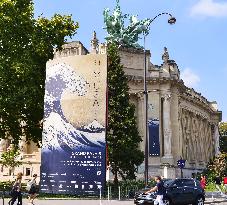
PARIS, France - A huge signboard stands in front of the Grand Palais museum in Paris on Sept. 25, 2014, to promote an exhibition featuring famed Japanese "ukiyo-e" artist Katsushika Hokusai. The exhibition, opening on Oct. 1, will display more than 700 works by the Japanese artist of the Edo period (1603-1867) under the Tokugawa shogunate.

  •  
Record reveals Shinsengumi struggled in summer heat

Record reveals Shinsengumi struggled in summer heat

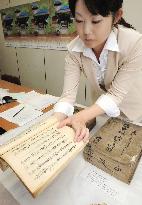
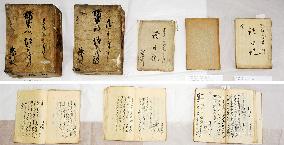
KYOTO, Japan - A woman shows a temple record in Kyoto on Sept. 2, 2014, which revealed that Hijikata Toshizo, deputy commander of the Shinsengumi security force for the Edo shogunate, asked Nishi-Hongwanji, a Buddhist temple where the force was stationed between March 1865 to June 1867 in Kyoto, to provide more space for its members to give them relief from the scorching summer heat.

  •  
Records show exchanges between Hijikata, temple

Records show exchanges between Hijikata, temple

KYOTO, Japan - The Hongwanji research center in Kyoto discloses on Sept. 2, 2014, documents including records of exchanges between Hijikata Toshizo, deputy commander of the Shinsengumi security force for the Edo shogunate, and Nishi-Hongwanji, a Buddhist temple where the force was stationed between March 1865 to June 1867 in Kyoto.

  •  
Dutchman makes replica of clock given to Japan leader in 1611

Dutchman makes replica of clock given to Japan leader in 1611

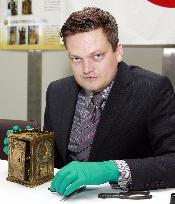
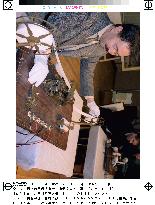
SHIZUOKA, Japan - Johan Ten Hoeve from the Netherlands works to make a replica of a clock presented in 1611 to Tokugawa Ieyasu, founder of the feudal Tokugawa shogunate administration in Japan, by Spanish King Philip III in this file photo taken in Shizuoka, central Japan, on May 17, 2014. The original clock is kept at the Kunouzan Toshogu shrine in the Japanese city.

  •  
Great Buddha of Kamakura

Great Buddha of Kamakura

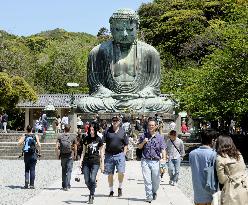
TOKYO, Japan - File photo taken in April 2013 shows the Great Buddha of Kamakura, in Kamakura, Kanagawa Prefecture. An advisory panel to UNESCO rejected Japan's request to add a group of cultural assets in the ancient city of Kamakura to the World Heritage list due to scarce assets directly linked to the medieval shogunate.

  •  
Hakoda Bugyosho restored after around 140 years

Hakoda Bugyosho restored after around 140 years

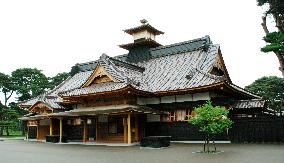
HAKODATE, Japan - The restored building of Hakodate Bugyosho (Magistrate's Office) is unveiled to the media in Hakodate, a port city in southern Hokkaido, on July 16, 2010. The office, built in 1802 at the end of the Edo Period by the Tokugawa shogunate as an outpost to check Russian moves, was destroyed in 1871. Work to restore the office began in June 2006 and cost 2.8 billion yen, and it will open to the public on July 29.

  •  
Empire State Building lit up for Japan mission anniversary

Empire State Building lit up for Japan mission anniversary

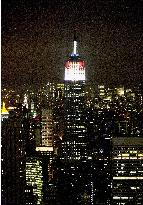
NEW YORK, United States - The Empire State Building in New York City was lit up in red and white on the night of June 16, 2010 to mark the 150th anniversary of the arrival in the city of Japan's first diplomatic mission to the United States. The top part of the 443.2-meter skyscraper was lit up in the colors of the Japanese flag to honor the delegation sent by the Tokugawa shogunate government during the final years of the Edo period.

  •  
Pep rally for Japan national team for World Cup

Pep rally for Japan national team for World Cup

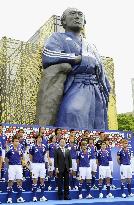
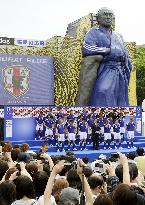
TOKYO, Japan - Coach Takeshi Okada and the 23-member squad of the Japanese national team for soccer's World Cup finals in South Africa attend a pep rally for them at Samurai Blue Park in Tokyo on May 22, 2010. The temporary park, with a large statue of Sakamoto Ryoma, a samurai famous for brokering the alliance between the Satsuma and Choshu clans during the last days of the Tokugawa Shogunate, opened the same day as a venue for the team's supporters with events and public viewing planned.

  •  
Pep rally for Japan national team for World Cup

Pep rally for Japan national team for World Cup

TOKYO, Japan - Coach Takeshi Okada and the 23-member squad of the Japanese national team for soccer's World Cup finals in South Africa attend a pep rally for them at Samurai Blue Park in Tokyo on May 22, 2010. The temporary park, with a large statue of Sakamoto Ryoma, a samurai famous for brokering the alliance between the Satsuma and Choshu clans during the last days of the Tokugawa Shogunate, opened the same day as a venue for the team's supporters with events and public viewing planned.

  •  
150th anniv. of 1st Japanese vessel's arrival in U.S. marked

150th anniv. of 1st Japanese vessel's arrival in U.S. marked

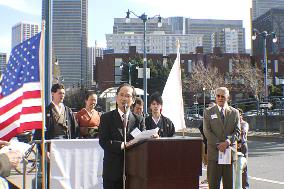
SAN FRANCISCO, United States - Japanese Consul General in San Francisco Yasumasa Nagamine addresses a ceremony at San Francisco port on March 17, 2010, to commemorate the 150th anniversary of the arrival in the United States of a Japanese vessel sent by the Tokugawa shogunate. A bronze commemorative plate carrying the name of the Kanrin Maru was mounted near a road in front of the pier at San Francisco port where the Japanese steamship docked 150 years ago.

  •  
Himeji Castle appears on rice field

Himeji Castle appears on rice field

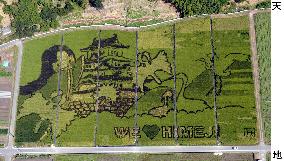
YUMESAKI, Japan - An image of world heritage-designated Himeji Castle, created from the leaves and ears of six different rice varieties in a rice field in Yumesaki, Hyogo Prefecture, is clearly seen on Sept. 13, 2009. The castle, together with Princess Sen (L, top), granddaughter of Edo Shogunate founder Tokugawa Ieyasu, can be observed until the rice is reaped in early October. About 1,500 students and volunteers helped plant rice seedlings in June under a farmer's project in the hope of drawing tourists.

  •  
1000-person procession staged in Nikko

1000-person procession staged in Nikko

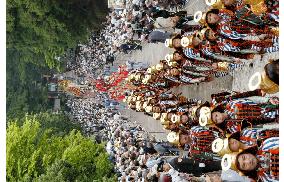
NIKKO, Japan - A 1000-person procession is staged at the Toshogu Shrine in Nikko, Tochigi Prefecture, on May 18, reproducing a procession in 1617 when the ashes of the Tokugawa Shogunate founder, Tokugawa Ieyasu, were transferred to Nikko from Shizuoka Prefecture.

  •  
Pedestrians enjoy watching flower art

Pedestrians enjoy watching flower art

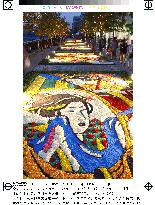
TOKTO, Japan - Pedestrians enjoy watching ''geisha'' and ''samurai'' depicted on the pavement with rose petals at Triton Square in downtown Tokyo on Nov. 1 in an event marking the 400th anniversary of the Edo (Tokyo) Shogunate government.

  •  
(1)Sensoji Temple lit up as symbol of downtown Tokyo

(1)Sensoji Temple lit up as symbol of downtown Tokyo

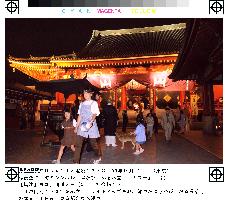
TOKYO, Japan - People visit Sensoji Temple in Tokyo's Asakusa district which was lit up Oct. 1 to serve as a nighttime symbol of downtown Tokyo as the Japanese capital celebrates the 400th anniversary of the start of the Edo shogunate.

  •  
(2)Sensoji Temple lit up as symbol of downtown Tokyo

(2)Sensoji Temple lit up as symbol of downtown Tokyo

TOKYO, Japan - Sensoji Temple in Tokyo's Asakusa district is lit up Oct. 1 to serve as a nighttime symbol of downtown Tokyo as the Japanese capital celebrates the 400th anniversary of the start of the Edo shogunate.

  •  
New lantern installed at Tokyo's Sensoji Temple

New lantern installed at Tokyo's Sensoji Temple

TOKYO, Japan - A new lantern, a symbol of Tokyo's Asakusa district, is displayed at Sensoji Temple in an unveiling ceremony on Aug. 3. The lantern was replaced for the first time in 11 years to commemorate the 400th anniversary of the establishment of the Tokugawa shogunate in Edo, the former name of Tokyo.

  •  
Imperial Palace tours becoming popular

Imperial Palace tours becoming popular

TOKYO, Japan - Visitors cross Niju-bashi, or the Double Bridge, the main gateway to the Imperial Palace in central Tokyo. Tours of the palace are becoming popular this year, the 400th anniversary of the establishment of the Tokugawa shogunate in Edo, the old name for Tokyo. Edo Castle, the seat of the Tokugawa shoguns, stood on the grounds of the palace.

  •  
Dressed Korean students parade in Tokyo

Dressed Korean students parade in Tokyo

TOKYO, Japan - About 150 students from South Korea, dressed as members of a Korean tributary mission sent to Japan during the Edo Period (1600-1868), parade along the Omotesando Avenue in Tokyo on Aug. 25. The envoy or the head of the delegation is seated in the palanquin carried by bearers. Korea sent a total of 12 delegations to Japan during the reign of the Tokugawa Shogunate. The last visit took place in 1811. The students organized the parade as part of events marking the FIFA 2002 World Cup finals co-hoted by Japan and South Korea.

  •  
Emperor, empress see letter issued by Tokugawa Ieyasu

Emperor, empress see letter issued by Tokugawa Ieyasu

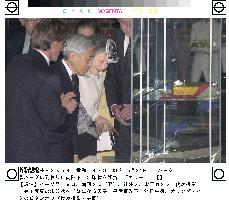
THE HAGUE, Netherlands - Japanese Emperor Akihito (C) and Empress Michiko (R) gaze at a letter bearing a red seal issued by Tokugawa Ieyasu (1542-1616), founder of the Tokugawa shogunate, during their tour of The Hague on May 24. The imperial couple spent the second day of their visit to the Netherlands with a tight schedule, including a trip to the Binnenhof, the seat of the Dutch government housing the prime minister's office and parliament. (Pool photo by Kyodo News)

  •  
145-year-old Morse telegraph terminal tested in Tokyo

145-year-old Morse telegraph terminal tested in Tokyo

TOKYO, Japan - Yoshitomo Tokugawa operates a Morse telegraph terminal station presented to the Japanese government in 1854 by Matthew Perry, the U.S. naval officer who reopened Japan to the Western world, at the Communication Museum in Tokyo on Dec. 8. The machine was tested for the first time in more than 140 years. Yoshitomo, a great-grandson of Tokugawa Yoshinobu (1837-1913), the 15th and last shogun of the Tokugawa shogunate, was invited to the machine testing.

  •  
Toshogu Shrine recommended as World Heritage site

Toshogu Shrine recommended as World Heritage site

TOKYO, Japan - Japan has recommended two shrines and a temple in the city of Nikko, Tochigi Prefecture, north of Tokyo to be added to the World Heritage List. File photo shows one of the shrines -- the Toshogu Shrine dedicated primarily to Tokugawa Ieyasu, the founder of the Tokugawa shogunate. The World Heritage Committee is due to meet in Marrakesh, Morocco, for six days from Nov. 29.

  •  
Women shoot arrows in Coming-of-Age Day ritual

Women shoot arrows in Coming-of-Age Day ritual

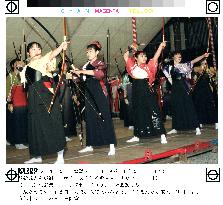
Women who will be turning 20 this year shoot arrows at a target in Sanjusangendo (the main hall of Rengeoin, a small Buddhist temple in Kyoto), on Coming-of-Age Day Jan. 15. This type of archery contest dates back to the times of Iemitsu Tokugawa (1604-1651), the third shogun of the Tokugawa shogunate, who forced his subordinate samurai warriors to compete in such contests.

  •  
Counting compensation money for murder of Mr Richardson

Counting compensation money for murder of Mr Richardson

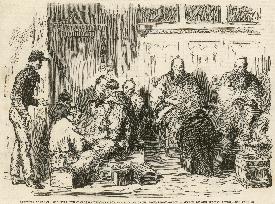
Sketches in Japan: Counting the compensation money for the murder of Mr Richardson. Charles Lennox Richardson was a Yokohama based merchant who was killed by a large armed retinue of Shimazu Hisamitsu, the regent and father of Shimazu Tadayoshi, the daimyo of Satsuma. The Namamugi Incident, (also known sometimes as the Kanagawa Incident, and as the Richardson Affair) was a samurai assault on foreign nationals in Japan on September 14, 1862, which resulted in the August 1863 bombardment of Kagoshima, during the Late Tokugawa shogunate. In Japanese the bombardment is described as a war between the United Kingdom and Satsuma domain, the Anglo-Satsuma War. The picture shows the Japanese paying out compensation in the aftermath of the war. Date: 1863

  •  
Hiroshige - 53 Stations of the Tokaido - Print 48

Hiroshige - 53 Stations of the Tokaido - Print 48

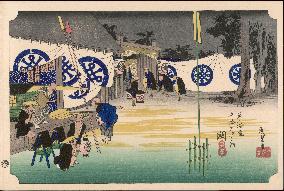
48 Seki - View outside a resthouse in the early morning, where a daimyo is stopping, the retainers preparing, by the aid of lanterns, to proceed on the journey. Each station was required to maintain lodging houses for travellers. The inn shown is one for upper class travellers such as Shogunate officials and feudal lords. Retinue are making preparations for a feudal lord to leave from the lodging house. Utagawa Hiroshige (1797 - 1858). The Fifty-Three Stations of the Tokaido - Hoeido edition (1831-4) Date: 1831 - 1834

  •  
Hiroshige - 53 Stations of the Tokaido - Print 39

Hiroshige - 53 Stations of the Tokaido - Print 39

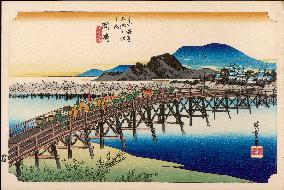
39 Okazaki - A daimyo's cort觥 crossing the bridge over the Yahagi River towards the village and castle on the further bank; in the background a blue hill, printed from colour blocks only. Tokugawa Ieyasu, the founder of the Tokugawa Shogunate, was born in the castle shown in the prints. The bridge over the Yahagi River, flowing west of the castle, was the largest on the entire highway. Utagawa Hiroshige (1797 - 1858). The Fifty-Three Stations of the Tokaido - Hoeido edition (1831-4) Date: 1831 - 1834

  •  
Hiroshige - 53 Stations of the Tokaido - Print 20

Hiroshige - 53 Stations of the Tokaido - Print 20

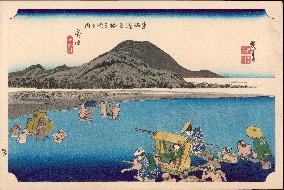
20 Fuchu - A woman in a kago being carried across the Abe River; others fording the stream from the opposite bank; a range of mountains in the background. Tokugawa Ieyasu, the founder of the Tokugawa Shogunate, spent his childhood and retirement years here.The Abe River flows to the west of this station and travellers had to cross in a variety of ways, as depicted in the print. This station has become the present Shizuoka City. Utagawa Hiroshige (1797 - 1858). The Fifty-Three Stations of the Tokaido - Hoeido edition (1831-4) Date: 1831 - 1834

  •  
Nikko Toshogu-2

Nikko Toshogu-2

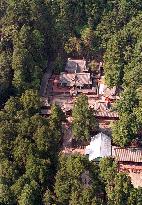
Toshogu - Shinto shrine in the city of Nikko, Tochigi prefecture, dedicated to the founder of the Tokugawa shogunate, Tokygawa Ieyasu. The shrine was established to house Ieyasu's remains. The extant highly ornate shrine buildings and gateways were erected in 1636. (Photo taken on November 24, 1999)

  •  
Festival at Nikko shrine recreates 1617 procession

Festival at Nikko shrine recreates 1617 procession

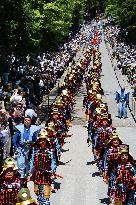
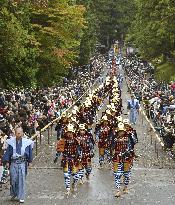
Around 1,200 people dressed as warriors join on May 18, 2016 a biannual procession in the northeastern Japan city of Nikko, which re-enacts the ceremony held in 1617 when the divine spirit of Tokugawa Ieyasu was moved from Mt. Kuno in central Japan to Nikko. The founder of the Tokugawa Shogunate died in 1616. (Kyodo) ==Kyodo

  •  
Top U.S., Japan diplomats meet in Hiroshima

Top U.S., Japan diplomats meet in Hiroshima

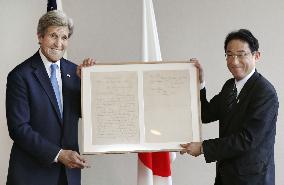
U.S. Secretary of State John Kerry (L) and Japanese Foreign Minister Fumio Kishida pose for a photo with a framed replica of a letter sent by former U.S. President Abraham Lincoln to Tokugawa Iemochi, the 14th shogun of the Tokugawa shogunate of Japan, in Hiroshima, western Japan, on April 11, 2016. Kerry was in the city to attend a Group of Seven foreign ministers meeting. (Pool photo by Kyodo News)(Kyodo) ==Kyodo

  •  
2015 national mascot character contest in Japan

2015 national mascot character contest in Japan

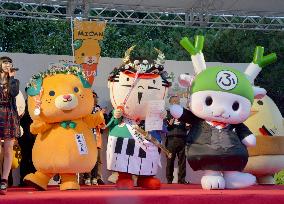
Photo taken in the central Japanese city of Hamamatsu on Nov. 23, 2015, shows the three most popular "yuru-kyara" mascot characters voted in the annual national contest. "Ieyasu-kun"(C), created from Tokugawa Ieyasu, the founder and first shogun of the Tokugawa shogunate, won the contest. (Kyodo) ==Kyodo

  •  
1000 samurai procession in Nikko

1000 samurai procession in Nikko

People in armor march during the biannual Hyakumonozoroe Sennin Musha Gyoretsu (the 1,000 Samurais Procession Festival) at Nikko Toshogu Shrine in Tochigi Prefecture on Oct. 17, 2015. The procession is a revival of the ceremony held in 1617 when the divine spirit of Tokugawa Ieyasu, the founder of the Tokugawa shogunate, was moved from Mt. Kuno in Shizuoka Prefecture to Nikko. (Kyodo) ==Kyodo

  •  
1000 samurai procession in Nikko

1000 samurai procession in Nikko

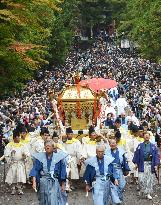
Shinto priests carry a portable shrine during the biannual Hyakumonozoroe Sennin Musha Gyoretsu (the 1,000 Samurais Procession Festival) at Nikko Toshogu Shrine in Tochigi Prefecture on Oct. 17, 2015. The procession is the revival of the ceremony held in 1617 when the divine spirit of Tokugawa Ieyasu, the founder of the Tokugawa shogunate, was moved from Mt. Kuno in Shizuoka Prefecture to Nikko. (Kyodo) ==Kyodo

  •  
Int'l horseback archery event held in Nikko

Int'l horseback archery event held in Nikko

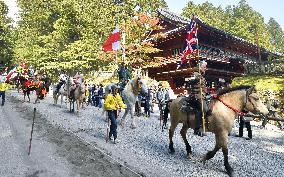
Archers on horse march at Nikko Toshogu shrine in Nikko, Tochigi Prefecture, north of Tokyo, on Oct. 15, 2015, after an international horseback archery event. A total of 22 archers from 13 countries took part in the event to mark 400 years since the death of feudal ruler Tokugawa Ieyasu. The Shinto shrine honors the founder of the Tokugawa shogunate, which ruled Japan between 1603 and 1867. (Kyodo) ==Kyodo

  •  
Int'l horseback archery event held in Nikko

Int'l horseback archery event held in Nikko

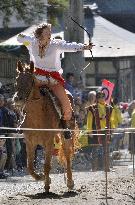
A Polish female archer on a running horse shoots an arrow at a target during an international horseback archery event at Nikko Toshogu shrine in Nikko, Tochigi Prefecture, north of Tokyo, on Oct. 15, 2015. A total of 22 archers from 13 countries took part in the event to mark 400 years since the death of feudal ruler Tokugawa Ieyasu. The Shinto shrine honors the founder of the Tokugawa shogunate, which ruled Japan between 1603 and 1867. (Kyodo) ==Kyodo

  •  
Int'l horseback archery event held in Nikko

Int'l horseback archery event held in Nikko

An archer on a running horse shoots an arrow at a target eight meters above during an international horseback archery event at Nikko Toshogu shrine in Nikko, Tochigi Prefecture, north of Tokyo, on Oct. 15, 2015. A total of 22 archers from 13 countries took part in the event to mark 400 years since the death of feudal ruler Tokugawa Ieyasu. The Shinto shrine honors the founder of the Tokugawa shogunate, which ruled Japan between 1603 and 1867. (Kyodo) ==Kyodo

  • Main
  • Top
  • Editorial
  • Creative
  • About Us
  • About ILG
  • Terms of use
  • Company
  • BEHIND
  • Price List
  • Single Plan
  • Monthly Plan
  • Services
  • Shooting
  • Rights Clearance
  • Support
  • FAQ
  • How To Buy
  • Contact Us
  • Become a Partner

© KYODO NEWS IMAGES INC

All Rights Reserved.

  • Editorial
  • Olympics
  • News
  • Sports
  • Japan
  • Tech
  • Royal
  • Disaster
  • NorthKorea
  • Old Japan
  • SNS
  • Creative
  • Food
  • Japan
  • Landscape
  • Animal
  • Popular
  • #Ukraine
  • #Russia
  • #coronavirus
  • #N. Korea
  • #Thailand
  • #China
  • #Ukraine
  • #Russia
  • #coronavirus
  • #N. Korea
  • #Thailand
  • #China
  • Food
  • Japan
  • Landscape
  • Animal
  • Olympics
  • News
  • Sports
  • Japan
  • Tech
  • Royal
  • Disaster
  • NorthKorea
  • Old Japan
  • SNS