•  
Japanese shrine known for ascetic practices

Japanese shrine known for ascetic practices

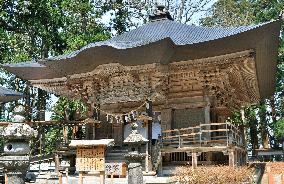
Photo taken on April 17, 2014, shows a hall containing a wooden statue representing Prince Hachiko, a son of Japan's sixth-century Emperor Sushun, at Dewa Sanzan Shrine in Tsuruoka in the northeastern Japan prefecture of Yamagata. The prince is said to have founded the shrine, known as a place of ascetic practices such as fasting and meditation.

  •  
Ancient grave found near World Heritage-listed Japan temple

Ancient grave found near World Heritage-listed Japan temple

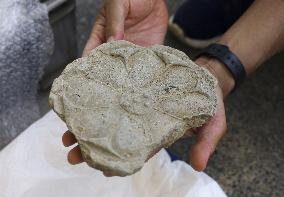
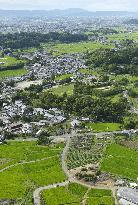
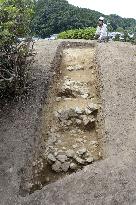
Photo taken Sept. 8, 2023, shows a roof tile discovered in an ancient grave recently found at a parking lot near the World Heritage-listed Horyuji temple in Ikaruga in Nara Prefecture, western Japan. The grave dates back to the late sixth century.

  •  
Ancient grave found near World Heritage-listed Japan temple

Ancient grave found near World Heritage-listed Japan temple

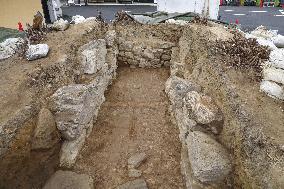
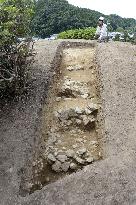
Photo taken Sept. 8, 2023, shows an ancient grave found at a parking lot near the World Heritage-listed Horyuji temple in Ikaruga in Nara Prefecture, western Japan. The grave dates back to the late sixth century.

  •  
TÜRKIYE-ISTANBUL-TOURISM

TÜRKIYE-ISTANBUL-TOURISM

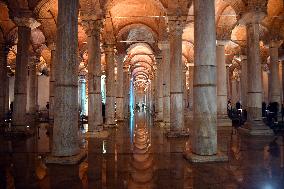
(230328) -- ISTANBUL, March 28, 2023 (Xinhua) -- Tourists visit the Basilica Cistern, also known as the "Sunken Palace", a giant water reservoir built in the sixth century during the reign of the Byzantine Empire, in Istanbul, Türkiye, March 11, 2023. The number of foreigners visiting Türkiye rose to about four million in the first two months of 2023, up by 37.31 percent year on year, according to the Turkish Culture and Tourism Ministry. (Xinhua/Shadati)

  •  
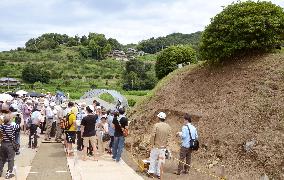
Citizens gather at Miyakozuka Tomb

Citizens gather at Miyakozuka Tomb

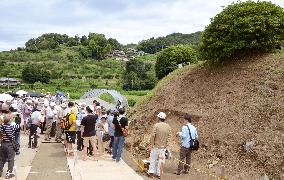
KASHIHARA, Japan - A large number of citizens gather at the village of Asuka in the western Japanese prefecture of Nara on Aug. 16, 2014, to listen to explanations by experts. The Miyakozuka Tomb, built in the late sixth century, is believed to have been shaped like a pyramid.

  •  
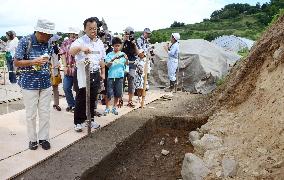
Citizens view Miyakozuka Tomb in Nara Pref.

Citizens view Miyakozuka Tomb in Nara Pref.

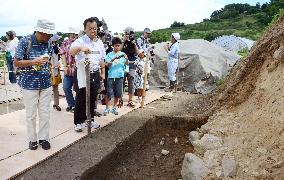
KASHIHARA, Japan - Citizens visit the Miyakozuka Tomb in the village of Asuka in the western Japan prefecture of Nara on Aug. 16, 2014. Built in the late sixth century, the tomb may have been shaped like a pyramid.

  •  
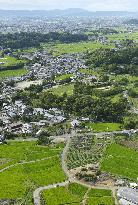
Aerial view of ancient tumuluses in western Japan

Aerial view of ancient tumuluses in western Japan

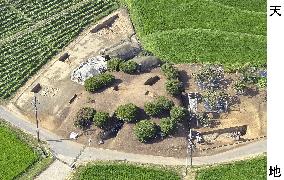
OSAKA, Japan - The Miyakozuka tomb mound in Asuka in the southwestern Japan prefecture of Nara, found to have been shaped like a pyramid and built in the late sixth century, is seen at the bottom of this photo taken on Aug. 5, 2014. The Ishibutai tumulus is located in the middle.

  •  
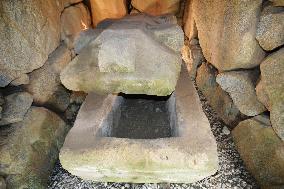
Big stone coffin found in 6th-century tumulus

Big stone coffin found in 6th-century tumulus

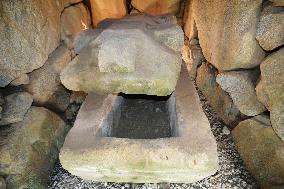
NARA, Japan - A large stone coffin is shown in this photo taken on Aug. 5, 2014, inside the Miyakozuka tomb mound in Asuka in the southwestern Japan prefecture of Nara, which is found to have been shaped like a pyramid. The tumulus was built in the late sixth century.

  •  
Stones found piled up in staircase pattern at tumulus

Stones found piled up in staircase pattern at tumulus

NARA, Japan - Archaeologists find stones piled up in a staircase pattern on the east side of the Miyakozuka tomb mound in Asuka in the southwestern Japan prefecture of Nara, as shown in this photo taken on Aug. 5, 2014. Built in the late sixth century, the tumulus was shaped like a pyramid, according to the archaeologists.

  •  
Aaerial view of ancient tumulus in western Japan

Aaerial view of ancient tumulus in western Japan

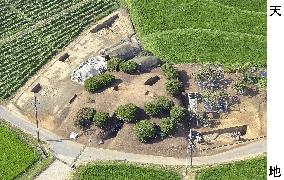
OSAKA, Japan - The Miyakozuka tomb mound in Asuka in the southwestern Japan prefecture of Nara is seen in this aerial photo taken on Aug. 5, 2014. Archaeologists say the sixth-century tumulus was a flat-topped burial mound made by piling up stones in a staircase pattern.

  •  
Excavation of Koguryo tomb in Pyongyang

Excavation of Koguryo tomb in Pyongyang

TOKYO, Japan - Photo taken on Oct. 11, 2011, shows a Chinese character (C) on a wall of a stone chamber in the Kosan-dong No. 1 tomb dating back to the early sixth century, one of the Koguryo tombs in Pyongyang, North Korea.

  •  
Excavation of Koguryo tomb in Pyongyang

Excavation of Koguryo tomb in Pyongyang

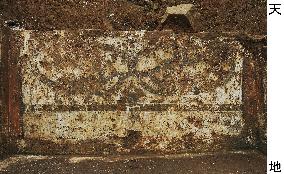
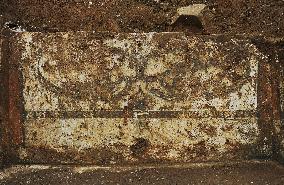
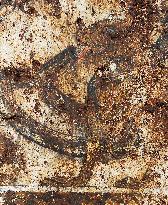
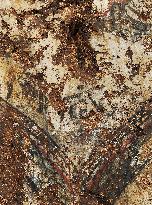
PYONGYANG, North Korea - Photo taken on Oct. 11, 2011, shows a black tortoise, one of the four guardian deities and the guardian of the north, painted on a stone chamber wall at the Kosan-dong No. 1 tomb, one of the Koguryo tombs in Pyongyang, North Korea, dating back to the early sixth century. The tomb was recently excavated by a team of Japanese and North Korean researchers after being first unearthed in 1936.

  •  
Excavation of Koguryo tomb in Pyongyang

Excavation of Koguryo tomb in Pyongyang

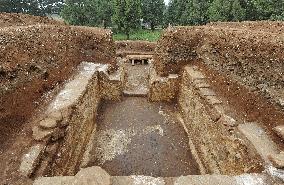
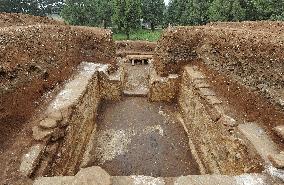
PYONGYANG, North Korea - Photo taken Oct. 10, 2011, shows the Kosan-dong No. 1 tomb, one of the Koguryo tombs, in Pyongyang, North Korea, dating back to the early sixth century during the Koguryo dynasty, which was recently excavated by a team of Japanese and North Korean researchers after being first unearthed in 1936. North Korea may file an application with the U.N. Educational, Scientific and Cultural Organization for the No. 1 and two other tombs to be recognized as World Heritage sites.

  •  
Excavation of Koguryo tomb in Pyongyang

Excavation of Koguryo tomb in Pyongyang

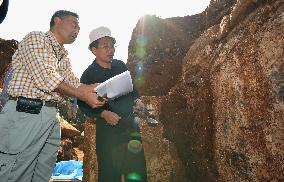
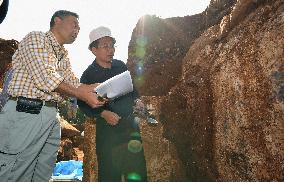
PYONGYANG, North Korea - Son Su Ho (R), director of North Korea's Archaeological Institute, and Masahiro Saotome, a Japanese archaeologist and professor at the University of Tokyo, on Oct. 8, 2011, probe the Kosan-dong No. 1 tomb, one of the Koguryo tombs in Pyongyang, North Korea, dating back to the early sixth century. The tomb was recently excavated by a team of Japanese and North Korean researchers after being first unearthed in 1936.

  •  
Excavation of Koguryo tomb in Pyongyang

Excavation of Koguryo tomb in Pyongyang

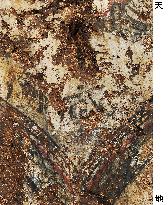
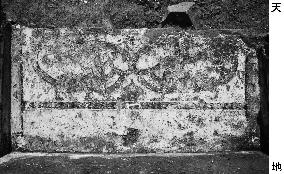
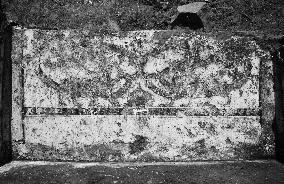
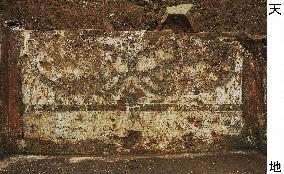
PYONGYANG, North Korea - Infrared photo dated Oct. 9, 2011, shows a wall of a stone chamber at the Kosan-dong No. 1 tomb, one of the Koguryo tombs in Pyongyang, North Korea. The tomb, dating back to the early sixth century during the Koguryo dynasty, was recently excavated by a team of Japanese and North Korean researchers after being first unearthed in 1936.

  •  
Excavation of Koguryo tomb in Pyongyang

Excavation of Koguryo tomb in Pyongyang

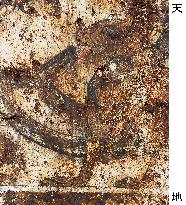
PYONGYANG, North Korea - Photo taken Oct. 9, 2011, shows a pair of black tortoises, one of the four guardian deities and the guardian of the north, painted on a stone chamber wall at the Kosan-dong No. 1 tomb, one of the Koguryo tombs in Pyongyang, North Korea. The tomb, dating back to the early sixth century during the Koguryo dynasty, was recently excavated by a team of Japanese and North Korean researchers after being first unearthed in 1936.

  •  
Experts believe Osaka tomb artifact largest of its kind

Experts believe Osaka tomb artifact largest of its kind

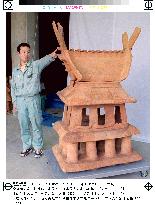
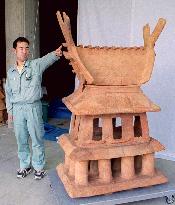
OSAKA, Japan - An official at a cultural assets center in Takatsuki, Osaka Prefecture, on May 23 points to what researchers believe is Japan's largest tomb artifact in the shape of a temple. The artifact was unearthed last September from the ruins of a sixth-century burial mound in northern Osaka.

  •  
CHINA-GANSU-QINGYANG-CULTURAL RELICS-GROTTOES (CN)

CHINA-GANSU-QINGYANG-CULTURAL RELICS-GROTTOES (CN)

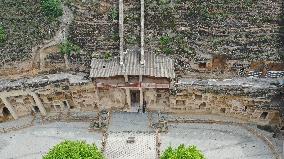
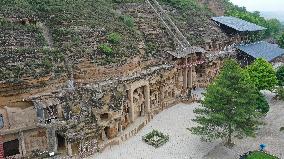
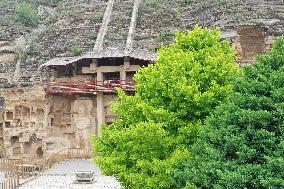
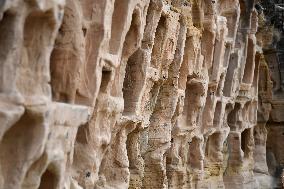
(220528) -- QINGYANG, May 28, 2022 (Xinhua) -- Aerial photo taken on May 26, 2022 shows a view of the North Grotto Temple in Qingyang, northwest China's Gansu Province. The North Grotto Temple in Qingyang consists of 308 ancient Buddhist caves that date back to the early sixth century. Featuring more than 2,000 statues, the site is considered as a vault of art in Chinese Buddhism. (Xinhua/Du Zheyu)

  •  
CHINA-GANSU-QINGYANG-CULTURAL RELICS-GROTTOES (CN)

CHINA-GANSU-QINGYANG-CULTURAL RELICS-GROTTOES (CN)

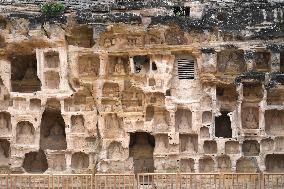
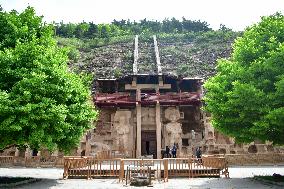
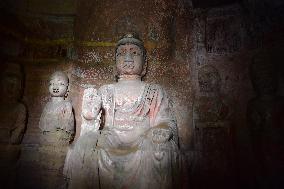
(220528) -- QINGYANG, May 28, 2022 (Xinhua) -- Photo taken on May 26, 2022 shows a view of the North Grotto Temple in Qingyang, northwest China's Gansu Province. The North Grotto Temple in Qingyang consists of 308 ancient Buddhist caves that date back to the early sixth century. Featuring more than 2,000 statues, the site is considered as a vault of art in Chinese Buddhism. (Xinhua/Chen Bin)

  •  
CHINA-GANSU-QINGYANG-CULTURAL RELICS-GROTTOES (CN)

CHINA-GANSU-QINGYANG-CULTURAL RELICS-GROTTOES (CN)

(220528) -- QINGYANG, May 28, 2022 (Xinhua) -- Photo taken on May 26, 2022 shows a view of the North Grotto Temple in Qingyang, northwest China's Gansu Province. The North Grotto Temple in Qingyang consists of 308 ancient Buddhist caves that date back to the early sixth century. Featuring more than 2,000 statues, the site is considered as a vault of art in Chinese Buddhism. (Xinhua/Chen Bin)

  •  
CHINA-GANSU-QINGYANG-CULTURAL RELICS-GROTTOES (CN)

CHINA-GANSU-QINGYANG-CULTURAL RELICS-GROTTOES (CN)

(220528) -- QINGYANG, May 28, 2022 (Xinhua) -- Aerial photo taken on May 26, 2022 shows a view of the North Grotto Temple in Qingyang, northwest China's Gansu Province. The North Grotto Temple in Qingyang consists of 308 ancient Buddhist caves that date back to the early sixth century. Featuring more than 2,000 statues, the site is considered as a vault of art in Chinese Buddhism. (Xinhua/Du Zheyu)

  •  
CHINA-GANSU-QINGYANG-CULTURAL RELICS-GROTTOES (CN)

CHINA-GANSU-QINGYANG-CULTURAL RELICS-GROTTOES (CN)

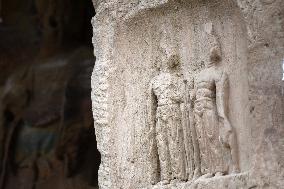
(220528) -- QINGYANG, May 28, 2022 (Xinhua) -- Stone statues are pictured at the North Grotto Temple in Qingyang, northwest China's Gansu Province, May 26, 2022. The North Grotto Temple in Qingyang consists of 308 ancient Buddhist caves that date back to the early sixth century. Featuring more than 2,000 statues, the site is considered as a vault of art in Chinese Buddhism. (Xinhua/Chen Bin)

  •  
CHINA-GANSU-QINGYANG-CULTURAL RELICS-GROTTOES (CN)

CHINA-GANSU-QINGYANG-CULTURAL RELICS-GROTTOES (CN)

(220528) -- QINGYANG, May 28, 2022 (Xinhua) -- Aerial photo taken on May 26, 2022 shows a view of the North Grotto Temple in Qingyang, northwest China's Gansu Province. The North Grotto Temple in Qingyang consists of 308 ancient Buddhist caves that date back to the early sixth century. Featuring more than 2,000 statues, the site is considered as a vault of art in Chinese Buddhism. (Xinhua/Du Zheyu)

  •  
CHINA-GANSU-QINGYANG-CULTURAL RELICS-GROTTOES (CN)

CHINA-GANSU-QINGYANG-CULTURAL RELICS-GROTTOES (CN)

(220528) -- QINGYANG, May 28, 2022 (Xinhua) -- Stone statues are pictured at the North Grotto Temple in Qingyang, northwest China's Gansu Province, May 26, 2022. The North Grotto Temple in Qingyang consists of 308 ancient Buddhist caves that date back to the early sixth century. Featuring more than 2,000 statues, the site is considered as a vault of art in Chinese Buddhism. (Xinhua/Chen Bin)

  •  
CHINA-GANSU-QINGYANG-CULTURAL RELICS-GROTTOES (CN)

CHINA-GANSU-QINGYANG-CULTURAL RELICS-GROTTOES (CN)

(220528) -- QINGYANG, May 28, 2022 (Xinhua) -- Photo taken on May 26, 2022 shows a view of the North Grotto Temple in Qingyang, northwest China's Gansu Province. The North Grotto Temple in Qingyang consists of 308 ancient Buddhist caves that date back to the early sixth century. Featuring more than 2,000 statues, the site is considered as a vault of art in Chinese Buddhism. (Xinhua/Chen Bin)

  •  
2-faced head of 'haniwa' figure found in Wakayama

2-faced head of 'haniwa' figure found in Wakayama

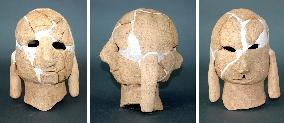
WAKAYAMA, Japan - Photo of the head of a ''haniwa'' figure with two faces, one in front and one in back. The figure has been found in a sixth-century burial mound in the city of Wakayama. The photo was provided by the Wakayama prefectural education board. (Kyodo)

  •  
Citizens gather at Miyakozuka Tomb

Citizens gather at Miyakozuka Tomb

KASHIHARA, Japan - A large number of citizens gather at the village of Asuka in the western Japanese prefecture of Nara on Aug. 16, 2014, to listen to explanations by experts. The Miyakozuka Tomb, built in the late sixth century, is believed to have been shaped like a pyramid. (Kyodo)

  •  
Citizens view Miyakozuka Tomb in Nara Pref.

Citizens view Miyakozuka Tomb in Nara Pref.

KASHIHARA, Japan - Citizens visit the Miyakozuka Tomb in the village of Asuka in the western Japan prefecture of Nara on Aug. 16, 2014. Built in the late sixth century, the tomb may have been shaped like a pyramid. (Kyodo)

  •  
Aerial view of ancient tumuluses in western Japan

Aerial view of ancient tumuluses in western Japan

OSAKA, Japan - The Miyakozuka tomb mound in Asuka in the southwestern Japan prefecture of Nara, found to have been shaped like a pyramid and built in the late sixth century, is seen at the bottom of this photo taken on Aug. 5, 2014. The Ishibutai tumulus is located in the middle. (Kyodo)

  •  
Stones found piled up in staircase pattern at tumulus

Stones found piled up in staircase pattern at tumulus

NARA, Japan - Archaeologists find stones piled up in a staircase pattern on the east side of the Miyakozuka tomb mound in Asuka in the southwestern Japan prefecture of Nara, as shown in this photo taken on Aug. 5, 2014. Built in the late sixth century, the tumulus was shaped like a pyramid, according to the archaeologists. (Kyodo)

  •  
Aaerial view of ancient tumulus in western Japan

Aaerial view of ancient tumulus in western Japan

OSAKA, Japan - The Miyakozuka tomb mound in Asuka in the southwestern Japan prefecture of Nara is seen in this aerial photo taken on Aug. 5, 2014. Archaeologists say the sixth-century tumulus was a flat-topped burial mound made by piling up stones in a staircase pattern. (Kyodo)

  •  
Big stone coffin found in 6th-century tumulus

Big stone coffin found in 6th-century tumulus

NARA, Japan - A large stone coffin is shown in this photo taken on Aug. 5, 2014, inside the Miyakozuka tomb mound in Asuka in the southwestern Japan prefecture of Nara, which is found to have been shaped like a pyramid. The tumulus was built in the late sixth century. (Kyodo)

  •  
Excavation of Koguryo tomb in Pyongyang

Excavation of Koguryo tomb in Pyongyang

PYONGYANG, North Korea - Photo taken Oct. 9, 2011, shows a pair of black tortoises, one of the four guardian deities and the guardian of the north, painted on a stone chamber wall at the Kosan-dong No. 1 tomb, one of the Koguryo tombs in Pyongyang, North Korea. The tomb, dating back to the early sixth century during the Koguryo dynasty, was recently excavated by a team of Japanese and North Korean researchers after being first unearthed in 1936. (Kyodo)

  •  
Excavation of Koguryo tomb in Pyongyang

Excavation of Koguryo tomb in Pyongyang

PYONGYANG, North Korea - Photo taken on Oct. 11, 2011, shows a black tortoise, one of the four guardian deities and the guardian of the north, painted on a stone chamber wall at the Kosan-dong No. 1 tomb, one of the Koguryo tombs in Pyongyang, North Korea, dating back to the early sixth century. The tomb was recently excavated by a team of Japanese and North Korean researchers after being first unearthed in 1936. (Kyodo)

  •  
Excavation of Koguryo tomb in Pyongyang

Excavation of Koguryo tomb in Pyongyang

PYONGYANG, North Korea - Photo taken Oct. 10, 2011, shows the Kosan-dong No. 1 tomb, one of the Koguryo tombs, in Pyongyang, North Korea, dating back to the early sixth century during the Koguryo dynasty, which was recently excavated by a team of Japanese and North Korean researchers after being first unearthed in 1936. North Korea may file an application with the U.N. Educational, Scientific and Cultural Organization for the No. 1 and two other tombs to be recognized as World Heritage sites. (Kyodo)

  •  
Excavation of Koguryo tomb in Pyongyang

Excavation of Koguryo tomb in Pyongyang

TOKYO, Japan - Photo taken on Oct. 11, 2011, shows a Chinese character (C) on a wall of a stone chamber in the Kosan-dong No. 1 tomb dating back to the early sixth century, one of the Koguryo tombs in Pyongyang, North Korea. (Kyodo)

  •  
Excavation of Koguryo tomb in Pyongyang

Excavation of Koguryo tomb in Pyongyang

PYONGYANG, North Korea - Infrared photo dated Oct. 9, 2011, shows a wall of a stone chamber at the Kosan-dong No. 1 tomb, one of the Koguryo tombs in Pyongyang, North Korea. The tomb, dating back to the early sixth century during the Koguryo dynasty, was recently excavated by a team of Japanese and North Korean researchers after being first unearthed in 1936. (Kyodo)

  •  
Excavation of Koguryo tomb in Pyongyang

Excavation of Koguryo tomb in Pyongyang

PYONGYANG, North Korea - Photo taken Oct. 9, 2011, shows a pair of black tortoises, one of the four guardian deities and the guardian of the north, painted on a stone chamber wall at the Kosan-dong No. 1 tomb, one of the Koguryo tombs in Pyongyang, North Korea. The tomb, dating back to the early sixth century during the Koguryo dynasty, was recently excavated by a team of Japanese and North Korean researchers after being first unearthed in 1936. (Kyodo)

  •  
Excavation of Koguryo tomb in Pyongyang

Excavation of Koguryo tomb in Pyongyang

PYONGYANG, North Korea - Son Su Ho (R), director of North Korea's Archaeological Institute, and Masahiro Saotome, a Japanese archaeologist and professor at the University of Tokyo, on Oct. 8, 2011, probe the Kosan-dong No. 1 tomb, one of the Koguryo tombs in Pyongyang, North Korea, dating back to the early sixth century. The tomb was recently excavated by a team of Japanese and North Korean researchers after being first unearthed in 1936. (Kyodo)

  •  
Hagia Sophia in Istanbul

Hagia Sophia in Istanbul

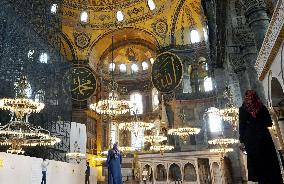
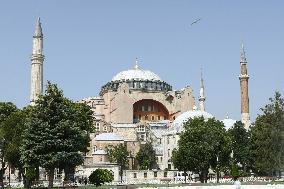
Photo taken June 9, 2020, shows the interior of the World Heritage-listed Hagia Sophia in Istanbul. Built in the sixth century as a Greek Orthodox Christian cathedral, the building was converted by the Ottomans into Ayasofya Mosque in the 15th century and has been a museum since 1935. (Kyodo) ==Kyodo

  •  
Hagia Sophia in Istanbul

Hagia Sophia in Istanbul

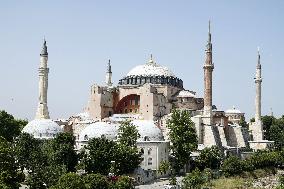
Photo taken June 9, 2020, shows the World Heritage-listed Hagia Sophia in Istanbul. Built in the sixth century as a Greek Orthodox Christian cathedral, the building was converted by the Ottomans into Ayasofya Mosque in the 15th century and has been a museum since 1935. (Kyodo) ==Kyodo

  •  
Hagia Sophia in Istanbul

Hagia Sophia in Istanbul

Photo taken June 9, 2020, shows the World Heritage-listed Hagia Sophia in Istanbul. Built in the sixth century as a Greek Orthodox Christian cathedral, the building was converted by the Ottomans into Ayasofya Mosque in the 15th century and has been a museum since 1935. (Kyodo) ==Kyodo

  •  
Experts believe Osaka tomb artifact largest of its kind

Experts believe Osaka tomb artifact largest of its kind

OSAKA, Japan - An official at a cultural assets center in Takatsuki, Osaka Prefecture, on May 23 points to what researchers believe is Japan's largest tomb artifact in the shape of a temple. The artifact was unearthed last September from the ruins of a sixth-century burial mound in northern Osaka.

  •  
Japanese museum to return Buddha statue to China

Japanese museum to return Buddha statue to China

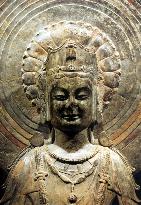
OTSU, Japan - Photo shows an ancient Buddha statue that was reportedly stolen from a garden in China and then kept at a private museum in Japan. The Miho Museum in Shigaraki, Shiga Prefecture, said April 16 it will return the statue to China in 2007. The museum said it bought the statue in 1995 from a London art dealer and only learned four years later that it may be stolen property. The 120-centimeter tall image was made in China in the early sixth century. The photo was provided by the Miho Museum.

  • Main
  • Top
  • Editorial
  • Creative
  • About Us
  • About ILG
  • Terms of use
  • Company
  • BEHIND
  • Price List
  • Single Plan
  • Monthly Plan
  • Services
  • Shooting
  • Rights Clearance
  • Support
  • FAQ
  • How To Buy
  • Contact Us
  • Become a Partner

© KYODO NEWS IMAGES INC

All Rights Reserved.

  • Editorial
  • Olympics
  • News
  • Sports
  • Japan
  • Tech
  • Royal
  • Disaster
  • NorthKorea
  • Old Japan
  • SNS
  • Creative
  • Food
  • Japan
  • Landscape
  • Animal
  • Popular
  • #Ukraine
  • #Russia
  • #coronavirus
  • #N. Korea
  • #Thailand
  • #China
  • #Ukraine
  • #Russia
  • #coronavirus
  • #N. Korea
  • #Thailand
  • #China
  • Food
  • Japan
  • Landscape
  • Animal
  • Olympics
  • News
  • Sports
  • Japan
  • Tech
  • Royal
  • Disaster
  • NorthKorea
  • Old Japan
  • SNS