•  

US: Smoke From Canadian Wildfire Returns, Prompts Air Quality Alert

Smoke from Canadian wildfires returned to the Upper Midwestern and parts of New England of the U.S. on Monday, August 11. An Air Quality Alert was issued for the region. This video shows a hazy sunrise in Cambridge, MA.

  •  

US: Boston Sky Turns Hazy Due to Wildfire Smoke from Canada

Wildfire smoke from Canada has blanketed the Upper Midwestern and Northeastern United States, including New England. The smoke created hazy skies across these regions, but conditions are expected to improve as shifting winds help to disperse the haze.

  •  
Atmospheric phenomenon of frosty weather

Atmospheric phenomenon of frosty weather

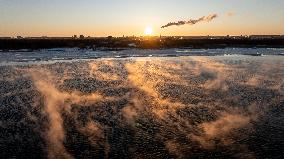
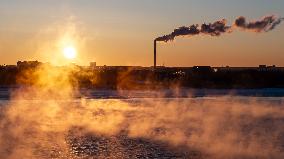
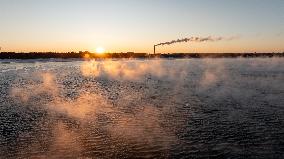
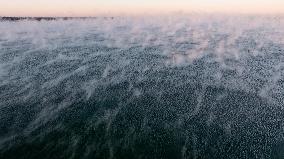
03.01.2024, Tallinn. Sea smoke, frost smoke or steam fog. It forms when a light wind of very cold air mixes with a shallow layer of saturated warm air immediately above the warmer water. The warmer air is cooled beyond the dew point and can no longer hold as much water vapor, so the excess condenses out. Photo: Sander Ilvest, Postimees

  •  
Atmospheric phenomenon of frosty weather

Atmospheric phenomenon of frosty weather

03.01.2024, Tallinn. Sea smoke, frost smoke or steam fog. It forms when a light wind of very cold air mixes with a shallow layer of saturated warm air immediately above the warmer water. The warmer air is cooled beyond the dew point and can no longer hold as much water vapor, so the excess condenses out. Photo: Sander Ilvest, Postimees

  •  
Atmospheric phenomenon of frosty weather

Atmospheric phenomenon of frosty weather

03.01.2024, Tallinn. Sea smoke, frost smoke or steam fog. It forms when a light wind of very cold air mixes with a shallow layer of saturated warm air immediately above the warmer water. The warmer air is cooled beyond the dew point and can no longer hold as much water vapor, so the excess condenses out. Photo: Sander Ilvest, Postimees

  •  
Atmospheric phenomenon of frosty weather

Atmospheric phenomenon of frosty weather

03.01.2024, Tallinn. Sea smoke, frost smoke or steam fog. It forms when a light wind of very cold air mixes with a shallow layer of saturated warm air immediately above the warmer water. The warmer air is cooled beyond the dew point and can no longer hold as much water vapor, so the excess condenses out. Photo: Sander Ilvest, Postimees

  • Main
  • Top
  • Editorial
  • Creative
  • About Us
  • About ILG
  • Terms of use
  • Company
  • BEHIND
  • Price List
  • Single Plan
  • Monthly Plan
  • Services
  • Shooting
  • Rights Clearance
  • Support
  • FAQ
  • How To Buy
  • Contact Us
  • Become a Partner

© KYODO NEWS IMAGES INC

All Rights Reserved.

  • Editorial
  • Olympics
  • News
  • Sports
  • Japan
  • Tech
  • Royal
  • Disaster
  • NorthKorea
  • Old Japan
  • SNS
  • Creative
  • Food
  • Japan
  • Landscape
  • Animal
  • Popular
  • #Ukraine
  • #Russia
  • #coronavirus
  • #N. Korea
  • #Thailand
  • #China
  • #Ukraine
  • #Russia
  • #coronavirus
  • #N. Korea
  • #Thailand
  • #China
  • Food
  • Japan
  • Landscape
  • Animal
  • Olympics
  • News
  • Sports
  • Japan
  • Tech
  • Royal
  • Disaster
  • NorthKorea
  • Old Japan
  • SNS