•  
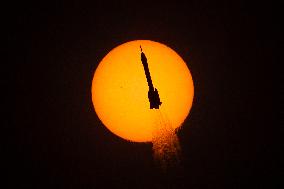
NASA SLS rocket ready for Moon mission

NASA SLS rocket ready for Moon mission

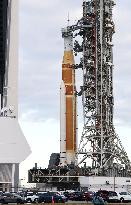
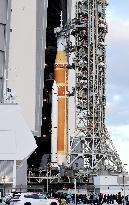
NASA's Space Launch System rocket, with the Orion crew capsule, stands at a launch pad at the Kennedy Space Center in Florida on Jan. 17, 2026, ahead of its Artemis II mission to the Moon possibly in early February.

  •  
NASA SLS rocket ready for Moon mission

NASA SLS rocket ready for Moon mission

NASA's Space Launch System rocket, with the Orion crew capsule, stands at a launch pad at the Kennedy Space Center in Florida on Jan. 17, 2026, ahead of its Artemis II mission to the Moon possibly in early February.

  •  
File French Astronaut Claudie Haignere

File French Astronaut Claudie Haignere

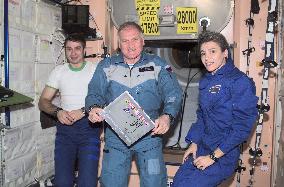
Handout photo shows ISS003-E-7084 (23-31 October 2001) --- The Soyuz Taxi crewmembers, Flight Engineer Konstantin Kozeev (left), Commander Victor Afanasyev and French Flight Engineer Claudie Haignere add their names to the list of the International Space Station (ISS) visitors in the ship’s log in the Unity node. Afanasyev and Kozeev represent Rosaviakosmos, and Haignere represents ESA, carrying out a flight program for CNES, the French Space Agency, under a commercial contract with the Russian Aviation and Space Agency. This image was taken with a digital still camera. Photo by Johnson Space Center/NASA via ABACAPRESS.COM

  •  
File French Astronaut Claudie Haignere

File French Astronaut Claudie Haignere

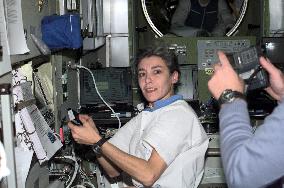
Handout photo shows ISS003-E-6855 (23-31 October 2001) --- French Flight Engineer Claudie Haignere, works in the Zvezda Service Module on the International Space Station (ISS). Haignere represents ESA, carrying out a flight program for CNES, the French Space Agency, under a commercial contract with the Russian Aviation and Space Agency. This image was taken with a digital still camera. Photo by Johnson Space Center/NASA via ABACAPRESS.COM

  •  
File French Astronaut Claudie Haignere

File French Astronaut Claudie Haignere

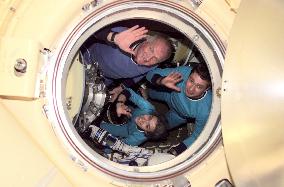
Handout photo shows ISS003-E-7251 (23-31 October 2001) --- The Soyuz Taxi crewmembers wave from a Soyuz spacecraft docked to the International Space Station (ISS). Clockwise from the top are Commander Victor Afanasyev, Flight Engineer Konstantin Kozeev and French Flight Engineer Claudie Haignere. Afanasyev and Kozeev represent Rosaviakosmos, and Haignere represents ESA, carrying out a flight program for CNES, the French Space Agency, under a commercial contract with the Russian Aviation and Space Agency. This image was taken with a digital still camera by one of the Expedition Three crew from the nadir docking port on the station. Photo by Johnson Space Center/NASA via ABACAPRESS.COM

  •  
File French Astronaut Claudie Haignere

File French Astronaut Claudie Haignere

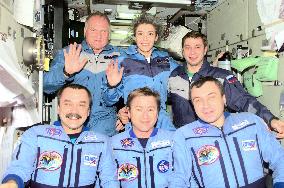
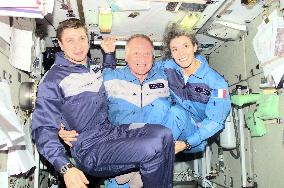
Handout photo shows ISS003-E-7032 (23-31 October 2001) --- The Expedition Three crew (bottom) and the Soyuz Taxi crew assemble for a group photo in the Zvezda Service Module on the International Space Station (ISS). The Expedition Three crewmembers are astronaut Frank L. Culbertson, Jr. (center), mission commander, and cosmonauts Mikhail Tyurin (left) and Vladimir N. Dezhurov, both flight engineers. The Soyuz Taxi crewmembers are Commander Victor Afanasyev (left), French Flight Engineer Claudie Haignere, and Flight Engineer Konstantin Kozeev. Tyurin, Dezhurov, Afanasyev, and Kozeev represent Rosaviakosmos. Haignere represents ESA, carrying out a flight program for CNES, the French Space Agency, under a commercial contract with the Russian Aviation and Space Agency. This image was taken with a digital still camera. Photo by Johnson Space Center/NASA via ABACAPRESS.COM

  •  
File French Astronaut Claudie Haignere

File French Astronaut Claudie Haignere

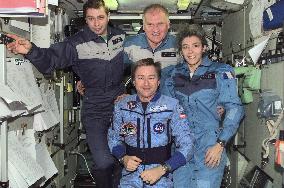
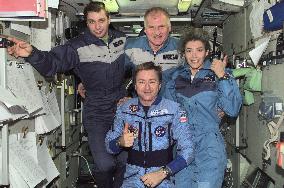
Handout photo shows ISS003-E-7036 (23-31 October 2001) --- Astronaut Frank L. Culbertson, Jr. (foreground), Expedition Three mission commander, and the Soyuz Taxi crewmembers assemble for a group photo in the Zvezda Service Module on the International Space Station (ISS). From the left are Flight Engineer Konstantin Kozeev, Commander Victor Afanasyev, and French Flight Engineer Claudie Haignere. Afanasyev and Kozeev represent Rosaviakosmos, and Haignere represents ESA, carrying out a flight program for CNES, the French Space Agency, under a commercial contract with the Russian Aviation and Space Agency. This image was taken with a digital still camera. Photo by Johnson Space Center/NASA via ABACAPRESS.COM

  •  
File French Astronaut Claudie Haignere

File French Astronaut Claudie Haignere

Handout photo shows ISS003-E-7037 (23-31 October 2001) --- Astronaut Frank L. Culbertson, Jr. (foreground), Expedition Three mission commander, and the Soyuz Taxi crewmembers assemble for a group photo in the Zvezda Service Module on the International Space Station (ISS). From the left are Flight Engineer Konstantin Kozeev, Commander Victor Afanasyev, and French Flight Engineer Claudie Haignere. Afanasyev and Kozeev represent Rosaviakosmos, and Haignere represents ESA, carrying out a flight program for CNES, the French Space Agency, under a commercial contract with the Russian Aviation and Space Agency. This image was taken with a digital still camera. Photo by Johnson Space Center/NASA via ABACAPRESS.COM

  •  
File French Astronaut Claudie Haignere

File French Astronaut Claudie Haignere

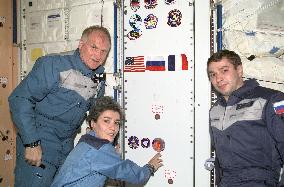
Handout photo shows ISS003-E-7056 (23-31 October 2001) --- The Soyuz Taxi crewmembers, Commander Victor Afanasyev (left), French Flight Engineer Claudie Haignere and Flight Engineer Konstantin Kozeev, add their crew patch to the growing collection, in the Unity node, of insignias representing crews who have worked on the International Space Station (ISS). Afanasyev and Kozeev represent Rosaviakosmos, and Haignere represents ESA, carrying out a flight program for CNES, the French Space Agency, under a commercial contract with the Russian Aviation and Space Agency. This image was taken with a digital still camera. Photo by Johnson Space Center/NASA via ABACAPRESS.COM

  •  
File French Astronaut Claudie Haignere

File French Astronaut Claudie Haignere

Handout photo shows ISS003-E-7033 (23-31 October 2001) --- The Soyuz Taxi crewmembers assemble for a group photo in the Zvezda Service Module on the International Space Station (ISS). From the left are Flight Engineer Konstantin Kozeev, Commander Victor Afanasyev, and French Flight Engineer Claudie Haignere. Afanasyev and Kozeev represent Rosaviakosmos, and Haignere represents ESA, carrying out a flight program for CNES, the French Space Agency, under a commercial contract with the Russian Aviation and Space Agency. This image was taken with a digital still camera. Photo by Johnson Space Center/NASA via ABACAPRESS.COM

  •  
File French Astronaut Claudie Haignere

File French Astronaut Claudie Haignere

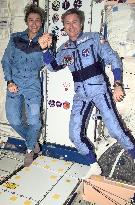
Handout photo shows ISS003-E-7061 (23-31 October 2001) --- Astronaut Frank L. Culbertson, Jr. (right), Expedition Three mission commander, shakes hands with French Flight Engineer Claudie Haignere of the Soyuz Taxi crew, in the Unity node on the International Space Station (ISS). Haignere represents ESA, carrying out a flight program for CNES, the French Space Agency, under a commercial contract with the Russian Aviation and Space Agency. This image was taken with a digital still camera. Photo by Johnson Space Center/NASA via ABACAPRESS.COM

  •  

[Breaking News]Japan H3 rocket mission fails

MINAMITANE, Japan, Dec. 22 Kyodo - Video taken from a Kyodo News helicopter on Dec. 22, 2025, shows a Japanese H3 rocket lifting off from Tanegashima Space Center in Minamitane in Kagoshima Prefecture, southwestern Japan, with a Michibiki No. 5 satellite in its payload. The rocket failed to place the satellite into orbit after its second-stage engine prematurely cut off shortly after liftoff. (Kyodo)

  •  

H3 rocket launch canceled

MINAMITANE, Japan, Dec. 17 Kyodo - Video taken from a Kyodo News helicopter on Dec. 17, 2025, shows a Japanese H3 rocket at the Tanegashima Space Center in Minamitane in Kagoshima Prefecture, southern Japan. The Japan Aerospace Exploration Agency canceled the launch of the No. 8 rocket, loaded with the No. 5 Michibiki satellite for enhanced global positioning, due to an equipment malfunction. (Kyodo)

  •  
Japanese H3 rocket fails to put satellite into orbit

Japanese H3 rocket fails to put satellite into orbit

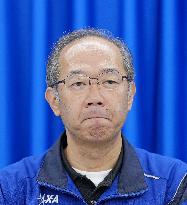
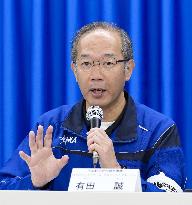
Japan Aerospace Exploration Agency project manager Makoto Arita attends a press conference at the Tanegashima Space Center in Minamitane, Kagoshima Prefecture, southwestern Japan, on Dec. 22, 2025, after a Japanese H3 rocket failed to deliver the Michibiki No. 5 satellite into the target orbit.

  •  
Japanese H3 rocket fails to put satellite into orbit

Japanese H3 rocket fails to put satellite into orbit

Japan Aerospace Exploration Agency project manager Makoto Arita attends a press conference at the Tanegashima Space Center in Minamitane, Kagoshima Prefecture, southwestern Japan, on Dec. 22, 2025, after a Japanese H3 rocket failed to deliver the Michibiki No. 5 satellite into the target orbit.

  •  
Japanese H3 rocket fails to put satellite into orbit

Japanese H3 rocket fails to put satellite into orbit

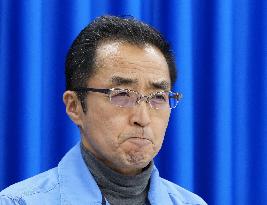
Japan Aerospace Exploration Agency Vice President Masashi Okada attends a press conference at the Tanegashima Space Center in Minamitane, Kagoshima Prefecture, southwestern Japan, on Dec. 22, 2025, after a Japanese H3 rocket failed to deliver the Michibiki No. 5 satellite into the target orbit.

  •  
Japan H3 rocket mission fails

Japan H3 rocket mission fails

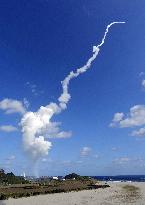
Photo taken on Dec. 22, 2025, shows smoke billowing from the Japanese H3 rocket carrying the Michibiki No. 5 satellite after liftoff from the Tanegashima Space Center in Minamitane in Kagoshima Prefecture, southwestern Japan. The rocket failed to place the satellite into orbit after its second-stage engine prematurely cut off shortly after liftoff.

  •  
Japan H3 rocket mission fails

Japan H3 rocket mission fails

Japan Aerospace Exploration Agency project manager Masashi Okada attends a press conference on Dec. 22, 2025, after an H3 rocket failure the same day at the Tanegashima Space Center in Minamitane in Kagoshima Prefecture, southwestern Japan.

  •  
Japan H3 rocket mission fails

Japan H3 rocket mission fails

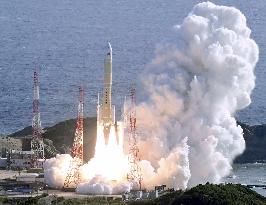
Photo taken from a Kyodo News helicopter on Dec. 22, 2025, shows a Japanese H3 rocket lifting off from Tanegashima Space Center in Minamitane in Kagoshima Prefecture, southwestern Japan, with a Michibiki No. 5 satellite in its payload. The rocket failed to place the satellite into orbit after its second-stage engine prematurely cut off shortly after liftoff.

  •  
H3 rocket launch

H3 rocket launch

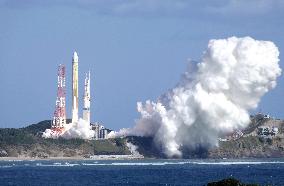
Photo taken from a Kyodo News helicopter on Dec. 22, 2025, shows the liftoff of a Japanese H3 rocket carrying the Michibiki No. 5 satellite from the Tanegashima Space Center in Minamitane in Kagoshima Prefecture, southwestern Japan.

  •  
H3 rocket launch

H3 rocket launch

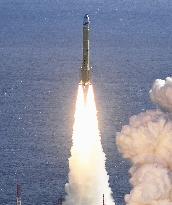
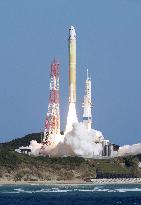
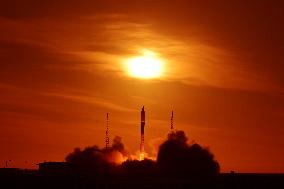
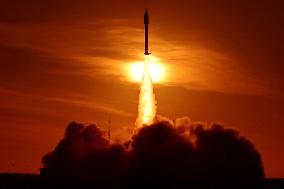
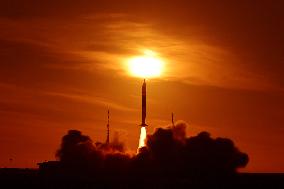
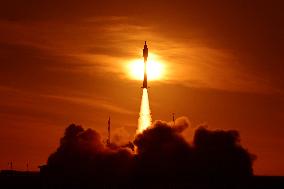
A Japanese H3 rocket carrying the Michibiki No. 5 satellite lifts off from the Tanegashima Space Center in Minamitane in Kagoshima Prefecture, southwestern Japan, on Dec. 22, 2025.

  •  
H3 rocket launch

H3 rocket launch

A Japanese H3 rocket carrying the Michibiki No. 5 satellite lifts off from the Tanegashima Space Center in Minamitane in Kagoshima Prefecture, southwestern Japan, on Dec. 22, 2025.

  •  
H3 rocket launch

H3 rocket launch

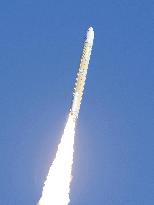
A Japanese H3 rocket carrying the Michibiki No. 5 satellite lifts off from the Tanegashima Space Center in Minamitane in Kagoshima Prefecture, southwestern Japan, on Dec. 22, 2025.

  •  
H3 rocket launch

H3 rocket launch

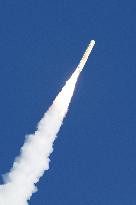
A Japanese H3 rocket carrying the Michibiki No. 5 satellite lifts off from the Tanegashima Space Center in Minamitane in Kagoshima Prefecture, southwestern Japan, on Dec. 22, 2025.

  •  
H3 rocket launch

H3 rocket launch

A Japanese H3 rocket carrying the Michibiki No. 5 satellite lifts off from the Tanegashima Space Center in Minamitane in Kagoshima Prefecture, southwestern Japan, on Dec. 22, 2025.

  •  
H3 rocket launch canceled

H3 rocket launch canceled

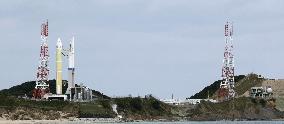
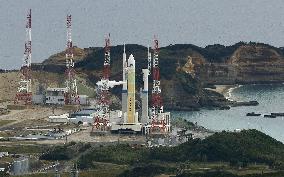
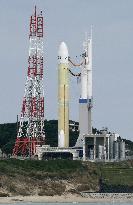
Photo taken from a Kyodo News helicopter on Dec. 17, 2025, shows a Japanese H3 rocket at the Tanegashima Space Center in Minamitane in Kagoshima Prefecture, southern Japan. The Japan Aerospace Exploration Agency canceled the launch of the No. 8 rocket, loaded with the No. 5 Michibiki satellite for enhanced global positioning, due to an equipment malfunction.

  •  
H3 rocket launch canceled

H3 rocket launch canceled

Photo taken from a Kyodo News helicopter on Dec. 17, 2025, shows a Japanese H3 rocket at the Tanegashima Space Center in Minamitane in Kagoshima Prefecture, southern Japan. The Japan Aerospace Exploration Agency canceled the launch of the No. 8 rocket, loaded with the No. 5 Michibiki satellite for enhanced global positioning, due to an equipment malfunction.

  •  
H3 rocket launch canceled

H3 rocket launch canceled

Photo taken from a Kyodo News helicopter on Dec. 17, 2025, shows a Japanese H3 rocket at the Tanegashima Space Center in Minamitane in Kagoshima Prefecture, southern Japan. The Japan Aerospace Exploration Agency canceled the launch of the No. 8 rocket, loaded with the No. 5 Michibiki satellite for enhanced global positioning, due to an equipment malfunction.

  •  
Jiuquan Satellite Launch - China

Jiuquan Satellite Launch - China

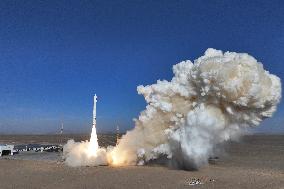
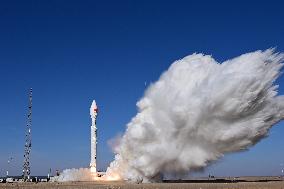
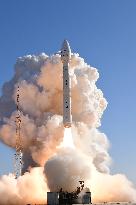
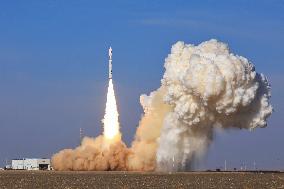
A Kuaizhou-11 Y8 carrier rocket carrying one space experimental spacecraft blasts off from the Jiuquan Satellite Launch Center in northwest China, on December 13, 2025. The rocket blasted off at 9:08 a.m. (Beijing Time). It successfully sent the payloads into the planned orbit. Photo by Wang Jiangbo/Xinhua/ABACAPRESS.COM

  •  
Jiuquan Satellite Launch - China

Jiuquan Satellite Launch - China

A Kuaizhou-11 Y8 carrier rocket carrying one space experimental spacecraft blasts off from the Jiuquan Satellite Launch Center in northwest China, on December 13, 2025. The rocket blasted off at 9:08 a.m. (Beijing Time). It successfully sent the payloads into the planned orbit. Photo by Wang Jiangbo/Xinhua/ABACAPRESS.COM

  •  
Jiuquan Satellite Launch - China

Jiuquan Satellite Launch - China

A Kuaizhou-11 Y8 carrier rocket carrying one space experimental spacecraft blasts off from the Jiuquan Satellite Launch Center in northwest China, on December 13, 2025. The rocket blasted off at 9:08 a.m. (Beijing Time). It successfully sent the payloads into the planned orbit. Photo by Wang Jiangbo/Xinhua/ABACAPRESS.COM

  •  
Jiuquan Satellite Launch - China

Jiuquan Satellite Launch - China

A Kuaizhou-11 Y8 carrier rocket carrying one space experimental spacecraft blasts off from the Jiuquan Satellite Launch Center in northwest China, on December 13, 2025. The rocket blasted off at 9:08 a.m. (Beijing Time). It successfully sent the payloads into the planned orbit. Photo by Wang Jiangbo/Xinhua/ABACAPRESS.COM

  •  
Jiuquan Satellite Launch - China

Jiuquan Satellite Launch - China

A Kuaizhou-11 Y8 carrier rocket carrying one space experimental spacecraft blasts off from the Jiuquan Satellite Launch Center in northwest China, on December 13, 2025. The rocket blasted off at 9:08 a.m. (Beijing Time). It successfully sent the payloads into the planned orbit. Photo by Wang Haixia/Xinhua/ABACAPRESS.COM

  •  
Satellites Launch - China

Satellites Launch - China

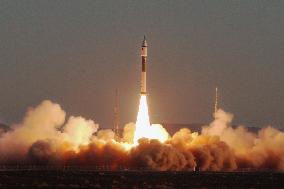
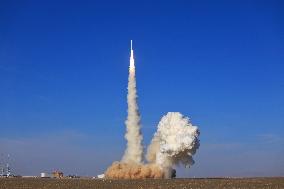
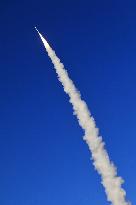
The Lijian-1, also known as Kinetica-1 Y11, carrier rocket carrying 9 satellites, including one from the United Arab Emirates, blasts off from the Dongfeng commercial space innovation pilot zone near the Jiuquan Satellite Launch Center in northwest China, December 10, 2025. The rocket blasted off at 12:03 p.m. (Beijing Time) and successfully sent the satellites into their planned orbits. Photo by Wang Jiangbo/Xinhua/ABACAPRESS.COM

  •  
Satellites Launch - China

Satellites Launch - China

The Lijian-1, also known as Kinetica-1 Y11, carrier rocket carrying 9 satellites, including one from the United Arab Emirates, blasts off from the Dongfeng commercial space innovation pilot zone near the Jiuquan Satellite Launch Center in northwest China, December 10, 2025. The rocket blasted off at 12:03 p.m. (Beijing Time) and successfully sent the satellites into their planned orbits. Photo by Li Yunxi/Xinhua/ABACAPRESS.COM

  •  
Satellites Launch - China

Satellites Launch - China

The Lijian-1, also known as Kinetica-1 Y11, carrier rocket carrying 9 satellites, including one from the United Arab Emirates, blasts off from the Dongfeng commercial space innovation pilot zone near the Jiuquan Satellite Launch Center in northwest China, December 10, 2025. The rocket blasted off at 12:03 p.m. (Beijing Time) and successfully sent the satellites into their planned orbits. Photo by Wang Jiangbo/Xinhua/ABACAPRESS.COM

  •  
Satellites Launch - China

Satellites Launch - China

The Lijian-1, also known as Kinetica-1 Y11, carrier rocket carrying 9 satellites, including one from the United Arab Emirates, blasts off from the Dongfeng commercial space innovation pilot zone near the Jiuquan Satellite Launch Center in northwest China, December 10, 2025. The rocket blasted off at 12:03 p.m. (Beijing Time) and successfully sent the satellites into their planned orbits. Photo by Wang Jiangbo/Xinhua/ABACAPRESS.COM

  •  
Satellites Launch - China

Satellites Launch - China

The Lijian-1, also known as Kinetica-1 Y11, carrier rocket carrying 9 satellites, including one from the United Arab Emirates, blasts off from the Dongfeng commercial space innovation pilot zone near the Jiuquan Satellite Launch Center in northwest China, December 10, 2025. The rocket blasted off at 12:03 p.m. (Beijing Time) and successfully sent the satellites into their planned orbits. Photo by Li Yunxi/Xinhua/ABACAPRESS.COM

  •  
Satellites Launch - China

Satellites Launch - China

The Lijian-1, also known as Kinetica-1 Y11, carrier rocket carrying 9 satellites, including one from the United Arab Emirates, blasts off from the Dongfeng commercial space innovation pilot zone near the Jiuquan Satellite Launch Center in northwest China, December 10, 2025. The rocket blasted off at 12:03 p.m. (Beijing Time) and successfully sent the satellites into their planned orbits. Photo by Li Yunxi/Xinhua/ABACAPRESS.COM

  •  
FOCUS | Shenzhou-21 astronauts complete first series of extravehicular activities

FOCUS | Shenzhou-21 astronauts complete first series of extravehicular activities

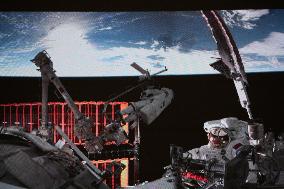
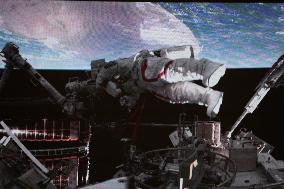
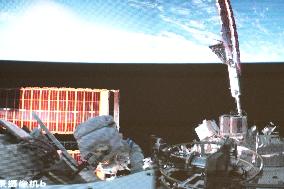
This screen image captured at Beijing Aerospace Control Center on Dec. 9, 2025 shows Shenzhou-21 astronaut Zhang Lu performing extravehicular activities outside China's orbiting space station. The Shenzhou-21 crew aboard China's orbiting space station completed their mission's first series of extravehicular activities on Tuesday, according to the China Manned Space Agency (CMSA). The astronaut trio -- Zhang Lu, Wu Fei and Zhang Hongzhang -- worked for approximately eight hours and completed their tasks at 6:45 p.m. (Beijing Time), assisted by the space station's robotic arm and a team on Earth. Wu Fei is the youngest Chinese astronaut to carry out an extravehicular mission to date. Photo by Liu Yi/Xinhua/ABACAPRESS.COM

  •  
FOCUS | Shenzhou-21 astronauts complete first series of extravehicular activities

FOCUS | Shenzhou-21 astronauts complete first series of extravehicular activities

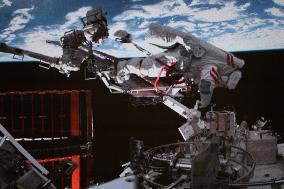
This screen image captured at Beijing Aerospace Control Center on Dec. 9, 2025 shows Shenzhou-21 astronauts Zhang Lu and Wu Fei (R) performing extravehicular activities outside China's orbiting space station. The Shenzhou-21 crew aboard China's orbiting space station completed their mission's first series of extravehicular activities on Tuesday, according to the China Manned Space Agency (CMSA). The astronaut trio -- Zhang Lu, Wu Fei and Zhang Hongzhang -- worked for approximately eight hours and completed their tasks at 6:45 p.m. (Beijing Time), assisted by the space station's robotic arm and a team on Earth. Wu Fei is the youngest Chinese astronaut to carry out an extravehicular mission to date. Photo by Liu Yi/Xinhua/ABACAPRESS.COM

  •  
FOCUS | Shenzhou-21 astronauts complete first series of extravehicular activities

FOCUS | Shenzhou-21 astronauts complete first series of extravehicular activities

This screen image captured at Beijing Aerospace Control Center on Dec. 9, 2025 shows Shenzhou-21 astronaut Wu Fei (above) passing a piece of equipment to Zhang Lu outside China's orbiting space station. The Shenzhou-21 crew aboard China's orbiting space station completed their mission's first series of extravehicular activities on Tuesday, according to the China Manned Space Agency (CMSA). The astronaut trio -- Zhang Lu, Wu Fei and Zhang Hongzhang -- worked for approximately eight hours and completed their tasks at 6:45 p.m. (Beijing Time), assisted by the space station's robotic arm and a team on Earth. Wu Fei is the youngest Chinese astronaut to carry out an extravehicular mission to date. Photo by Liu Yi/Xinhua/ABACAPRESS.COM

  •  
FOCUS | Shenzhou-21 astronauts complete first series of extravehicular activities

FOCUS | Shenzhou-21 astronauts complete first series of extravehicular activities

This screen image captured at Beijing Aerospace Control Center on Dec. 9, 2025 shows Shenzhou-21 astronaut Zhang Lu performing extravehicular activities outside China's orbiting space station. The Shenzhou-21 crew aboard China's orbiting space station completed their mission's first series of extravehicular activities on Tuesday, according to the China Manned Space Agency (CMSA). The astronaut trio -- Zhang Lu, Wu Fei and Zhang Hongzhang -- worked for approximately eight hours and completed their tasks at 6:45 p.m. (Beijing Time), assisted by the space station's robotic arm and a team on Earth. Wu Fei is the youngest Chinese astronaut to carry out an extravehicular mission to date. Photo by Liu Yi/Xinhua/ABACAPRESS.COM

  •  
FOCUS | Shenzhou-21 astronauts complete first series of extravehicular activities

FOCUS | Shenzhou-21 astronauts complete first series of extravehicular activities

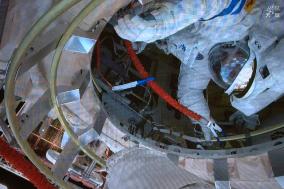
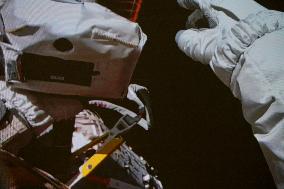
This screen image captured at Beijing Aerospace Control Center on Dec. 9, 2025 shows Shenzhou-21 astronaut Zhang Lu performing the inspection and photography of the Shenzhou-20 return capsule's viewport window outside China's orbiting space station. The Shenzhou-21 crew aboard China's orbiting space station completed their mission's first series of extravehicular activities on Tuesday, according to the China Manned Space Agency (CMSA). The astronaut trio -- Zhang Lu, Wu Fei and Zhang Hongzhang -- worked for approximately eight hours and completed their tasks at 6:45 p.m. (Beijing Time), assisted by the space station's robotic arm and a team on Earth. Wu Fei is the youngest Chinese astronaut to carry out an extravehicular mission to date. Photo by Liu Yi/Xinhua/ABACAPRESS.COM

  •  
FOCUS | Shenzhou-21 astronauts complete first series of extravehicular activities

FOCUS | Shenzhou-21 astronauts complete first series of extravehicular activities

This screen image captured at Beijing Aerospace Control Center on Dec. 9, 2025 shows Shenzhou-21 astronaut Zhang Lu performing the inspection and photography of the Shenzhou-20 return capsule's viewport window outside China's orbiting space station. The Shenzhou-21 crew aboard China's orbiting space station completed their mission's first series of extravehicular activities on Tuesday, according to the China Manned Space Agency (CMSA). The astronaut trio -- Zhang Lu, Wu Fei and Zhang Hongzhang -- worked for approximately eight hours and completed their tasks at 6:45 p.m. (Beijing Time), assisted by the space station's robotic arm and a team on Earth. Wu Fei is the youngest Chinese astronaut to carry out an extravehicular mission to date. Photo by Liu Yi/Xinhua/ABACAPRESS.COM

  •  
FOCUS | Shenzhou-21 astronauts complete first series of extravehicular activities

FOCUS | Shenzhou-21 astronauts complete first series of extravehicular activities

This screen image captured at Beijing Aerospace Control Center on Dec. 9, 2025 shows Shenzhou-21 astronaut Wu Fei performing extravehicular activities outside China's orbiting space station. The Shenzhou-21 crew aboard China's orbiting space station completed their mission's first series of extravehicular activities on Tuesday, according to the China Manned Space Agency (CMSA). The astronaut trio -- Zhang Lu, Wu Fei and Zhang Hongzhang -- worked for approximately eight hours and completed their tasks at 6:45 p.m. (Beijing Time), assisted by the space station's robotic arm and a team on Earth. Wu Fei is the youngest Chinese astronaut to carry out an extravehicular mission to date. Photo by Liu Yi/Xinhua/ABACAPRESS.COM

  •  
FOCUS | Shenzhou-21 astronauts complete first series of extravehicular activities

FOCUS | Shenzhou-21 astronauts complete first series of extravehicular activities

This screen image captured at Beijing Aerospace Control Center on Dec. 9, 2025 shows Shenzhou-21 astronaut Zhang Lu performing extravehicular activities outside China's orbiting space station. The Shenzhou-21 crew aboard China's orbiting space station completed their mission's first series of extravehicular activities on Tuesday, according to the China Manned Space Agency (CMSA). The astronaut trio -- Zhang Lu, Wu Fei and Zhang Hongzhang -- worked for approximately eight hours and completed their tasks at 6:45 p.m. (Beijing Time), assisted by the space station's robotic arm and a team on Earth. Wu Fei is the youngest Chinese astronaut to carry out an extravehicular mission to date. Photo by Liu Yi/Xinhua/ABACAPRESS.COM

  •  
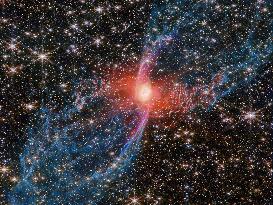
Red Spider Nebula

Red Spider Nebula

Handout photo dated on October 26, 2025 shows Red Spider Nebula. Using its Near-InfraRed Camera (NIRCam), NASA’s James Webb Space Telescope captured never-before-seen details of the Red Spider Nebula, a planetary nebula, in this image released on Oct. 26, 2025. NIRCam is Webb’s primary near-infrared imager, providing high-resolution imaging and spectroscopy for a wide variety of investigations. Webb’s new view of the Red Spider Nebula reveals for the first time the full extent of the nebula’s outstretched lobes, which form the ‘legs’ of the spider. These lobes, shown in blue, are traced by light emitted from H2 molecules, which contain two hydrogen atoms bonded together. Stretching over the entirety of NIRCam’s field of view, these lobes are shown to be closed, bubble-like structures that each extend about 3 light-years. Outflowing gas from the center of the nebula has inflated these massive bubbles over thousands of years. Photo by ESA/Webb, NASA & CSA, J. H. Kastner (Rochester Institute of Technolo via ABAC

  •  
China Sends Shenzhou-22 To Orbit - Jiuquan

China Sends Shenzhou-22 To Orbit - Jiuquan

Technicians monitor the docking of Shenzhou-22 spaceship with the space station combination at the Beijing Aerospace Control Center on November 25, 2025. China's Shenzhou-22 spaceship successfully docked with the space station combination Tuesday, according to the China Manned Space Agency. Photo by Wang Chuntao /Xinhua/ABACAPRESS.COM

  •  
China Sends Shenzhou-22 To Orbit - Jiuquan

China Sends Shenzhou-22 To Orbit - Jiuquan

A Long March-2F Y22 rocket carrying the Shenzhou-22 spaceship blasts off from the Jiuquan Satellite Launch Center in northwest China, November 25, 2025. China launched the Shenzhou-22 spaceship from the Jiuquan Satellite Launch Center in northwest China at 12:11 p.m. (Beijing Time) on Tuesday, successfully accomplishing the first emergency launch mission in the country's manned space program. About 10 minutes after the launch, the spaceship separated from the rocket and entered its designated orbit. The China Manned Space Agency declared the launch mission a complete success. (Photo by Ge Lixin/Xinhua /Xinhua/ABACAPRESS.COM

  • Main
  • Top
  • Editorial
  • Creative
  • About Us
  • About ILG
  • Terms of use
  • Company
  • BEHIND
  • Price List
  • Single Plan
  • Monthly Plan
  • Services
  • Shooting
  • Rights Clearance
  • Support
  • FAQ
  • How To Buy
  • Contact Us
  • Become a Partner

© KYODO NEWS IMAGES INC

All Rights Reserved.

  • Editorial
  • Olympics
  • News
  • Sports
  • Japan
  • Tech
  • Royal
  • Disaster
  • NorthKorea
  • Old Japan
  • SNS
  • Creative
  • Food
  • Japan
  • Landscape
  • Animal
  • Popular
  • #Ukraine
  • #Russia
  • #coronavirus
  • #N. Korea
  • #Thailand
  • #China
  • #Ukraine
  • #Russia
  • #coronavirus
  • #N. Korea
  • #Thailand
  • #China
  • Food
  • Japan
  • Landscape
  • Animal
  • Olympics
  • News
  • Sports
  • Japan
  • Tech
  • Royal
  • Disaster
  • NorthKorea
  • Old Japan
  • SNS