•  
Exposition Park Opens at Northwest A&F University - Shaanxi

Exposition Park Opens at Northwest A&F University - Shaanxi

This photo shows specimens at the Insect Museum at the Northwest A&F University Exposition Park in Yangling, northwest China's Shaanxi Province, Oct. 26, 2025. Photo by Li Yibo/Xinhua/ABACAPRESS.COM

  •  
Tuna Fishing in Barbate - Cadiz

Tuna Fishing in Barbate - Cadiz

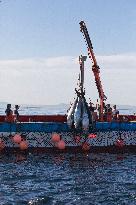
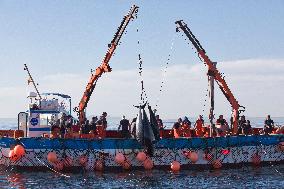
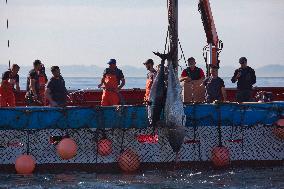
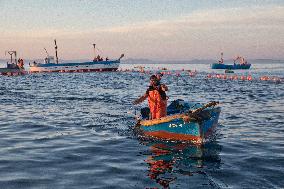
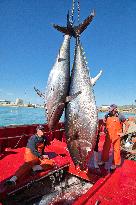
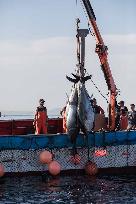
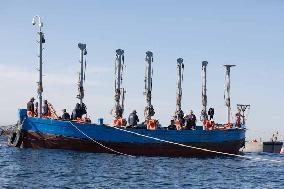
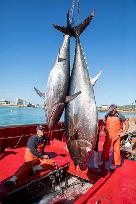
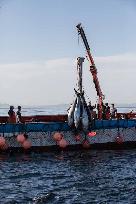
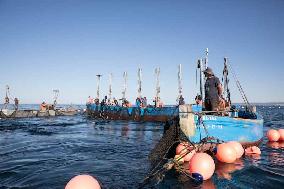
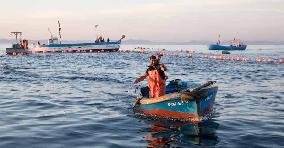
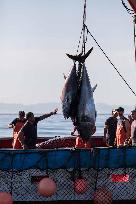
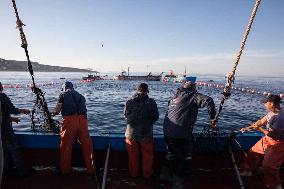
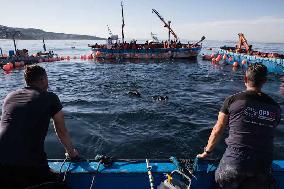
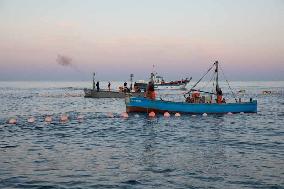
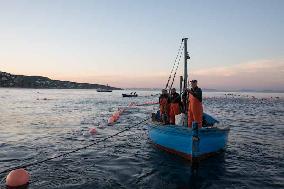
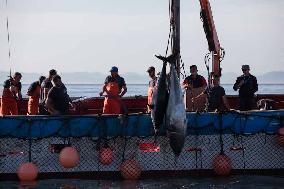
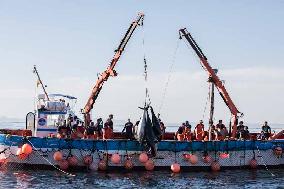
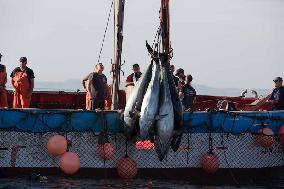
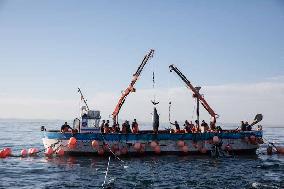
Several fishermen during the 'levantá' of tuna in the vicinity of Barbate, on May 27, 2025, in Barbate, Cadiz, Andalusia (Spain). The 'levantá' of Barbate is the culminating and most spectacular moment of traditional bluefin tuna fishing in the almadraba, an ancient art practiced every spring off the coast of Barbate (Cadiz). It consists of slowly raising the codend net, where the tuna have been trapped during their migration towards the Mediterranean, causing the large fish to emerge to the surface amidst flapping and foam, while the fishermen select and catch the largest specimens. Today, the technique has evolved: the divers sacrifice the tuna one by one with "luparas" (special poles), and the final lifting is done with cranes, although the ritual and collective nature of the process is preserved. Photo by Juanma Jiménez/Europa Press/ABACAPRESS.COM

  •  
Tuna Fishing in Barbate - Cadiz

Tuna Fishing in Barbate - Cadiz

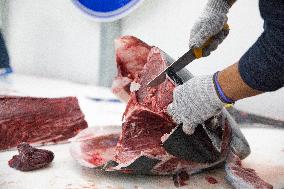
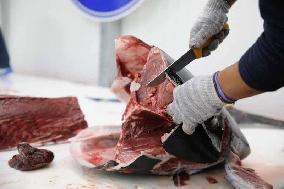
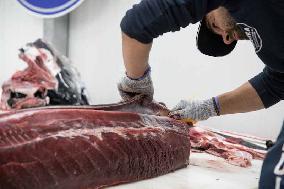
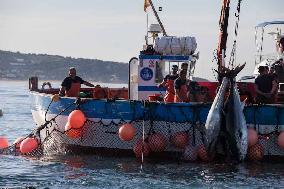
A man cuts up a tuna during the 'levantá' of tuna in the vicinity of Barbate, on May 27, 2025, in Barbate, Cadiz, Andalusia (Spain). The 'levantá' of Barbate is the culminating and most spectacular moment of the traditional fishing of bluefin tuna in the almadraba, an ancient art that is practiced every spring off the coast of Barbate (Cadiz). It consists of slowly raising the codend net, where the tuna have been trapped during their migration towards the Mediterranean, causing the large fish to emerge to the surface amidst flapping and foam, while the fishermen select and catch the largest specimens. Today, the technique has evolved: the divers sacrifice the tuna one by one with "luparas" (special poles), and the final lifting is done with cranes, although the ritual and collective nature of the process is preserved. Photo by Juanma Jiménez/Europa Press/ABACAPRESS.COM

  •  
Tuna Fishing in Barbate - Cadiz

Tuna Fishing in Barbate - Cadiz

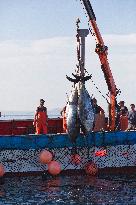
Several fishermen during the 'levantá' of tuna in the vicinity of Barbate, on May 27, 2025, in Barbate, Cadiz, Andalusia (Spain). The 'levantá' of Barbate is the culminating and most spectacular moment of traditional bluefin tuna fishing in the almadraba, an ancient art practiced every spring off the coast of Barbate (Cadiz). It consists of slowly raising the codend net, where the tuna have been trapped during their migration towards the Mediterranean, causing the large fish to emerge to the surface amidst flapping and foam, while the fishermen select and catch the largest specimens. Today, the technique has evolved: the divers sacrifice the tuna one by one with "luparas" (special poles), and the final lifting is done with cranes, although the ritual and collective nature of the process is preserved. Photo by Juanma Jiménez/Europa Press/ABACAPRESS.COM

  •  
Tuna Fishing in Barbate - Cadiz

Tuna Fishing in Barbate - Cadiz

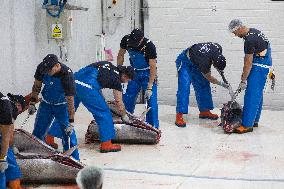
A man cuts up a tuna during the 'levantá' of tuna in the vicinity of Barbate, on May 27, 2025, in Barbate, Cadiz, Andalusia (Spain). The 'levantá' of Barbate is the culminating and most spectacular moment of the traditional fishing of bluefin tuna in the almadraba, an ancient art that is practiced every spring off the coast of Barbate (Cadiz). It consists of slowly raising the codend net, where the tuna have been trapped during their migration towards the Mediterranean, causing the large fish to emerge to the surface amidst flapping and foam, while the fishermen select and catch the largest specimens. Today, the technique has evolved: the divers sacrifice the tuna one by one with "luparas" (special poles), and the final lifting is done with cranes, although the ritual and collective nature of the process is preserved. Photo by Juanma Jiménez/Europa Press/ABACAPRESS.COM

  •  
Tuna Fishing in Barbate - Cadiz

Tuna Fishing in Barbate - Cadiz

Several fishermen during the 'levantá' of tuna in the vicinity of Barbate, on May 27, 2025, in Barbate, Cadiz, Andalusia (Spain). The 'levantá' of Barbate is the culminating and most spectacular moment of traditional bluefin tuna fishing in the almadraba, an ancient art practiced every spring off the coast of Barbate (Cadiz). It consists of slowly raising the codend net, where the tuna have been trapped during their migration towards the Mediterranean, causing the large fish to emerge to the surface amidst flapping and foam, while the fishermen select and catch the largest specimens. Today, the technique has evolved: the divers sacrifice the tuna one by one with "luparas" (special poles), and the final lifting is done with cranes, although the ritual and collective nature of the process is preserved. Photo by Juanma Jiménez/Europa Press/ABACAPRESS.COM

  •  
Tuna Fishing in Barbate - Cadiz

Tuna Fishing in Barbate - Cadiz

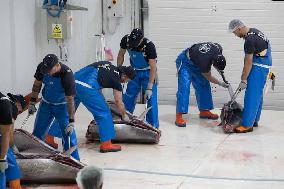
Several fishermen during the 'levantá' of tuna in the vicinity of Barbate, on May 27, 2025, in Barbate, Cadiz, Andalusia (Spain). The 'levantá' of Barbate is the culminating and most spectacular moment of traditional bluefin tuna fishing in the almadraba, an ancient art practiced every spring off the coast of Barbate (Cadiz). It consists of slowly raising the codend net, where the tuna have been trapped during their migration towards the Mediterranean, causing the large fish to emerge to the surface amidst flapping and foam, while the fishermen select and catch the largest specimens. Today, the technique has evolved: the divers sacrifice the tuna one by one with "luparas" (special poles), and the final lifting is done with cranes, although the ritual and collective nature of the process is preserved. Photo by Juanma Jiménez/Europa Press/ABACAPRESS.COM

  •  
Tuna Fishing in Barbate - Cadiz

Tuna Fishing in Barbate - Cadiz

Several fishermen during the 'levantá' of tuna in the vicinity of Barbate, on May 27, 2025, in Barbate, Cadiz, Andalusia (Spain). The 'levantá' of Barbate is the culminating and most spectacular moment of traditional bluefin tuna fishing in the almadraba, an ancient art practiced every spring off the coast of Barbate (Cadiz). It consists of slowly raising the codend net, where the tuna have been trapped during their migration towards the Mediterranean, causing the large fish to emerge to the surface amidst flapping and foam, while the fishermen select and catch the largest specimens. Today, the technique has evolved: the divers sacrifice the tuna one by one with "luparas" (special poles), and the final lifting is done with cranes, although the ritual and collective nature of the process is preserved. Photo by Juanma Jiménez/Europa Press/ABACAPRESS.COM

  •  
Tuna Fishing in Barbate - Cadiz

Tuna Fishing in Barbate - Cadiz

Several fishermen during the 'levantá' of tuna in the vicinity of Barbate, on May 27, 2025, in Barbate, Cadiz, Andalusia (Spain). The 'levantá' of Barbate is the culminating and most spectacular moment of traditional bluefin tuna fishing in the almadraba, an ancient art practiced every spring off the coast of Barbate (Cadiz). It consists of slowly raising the codend net, where the tuna have been trapped during their migration towards the Mediterranean, causing the large fish to emerge to the surface amidst flapping and foam, while the fishermen select and catch the largest specimens. Today, the technique has evolved: the divers sacrifice the tuna one by one with "luparas" (special poles), and the final lifting is done with cranes, although the ritual and collective nature of the process is preserved. Photo by Juanma Jiménez/Europa Press/ABACAPRESS.COM

  •  
A Biodiversity Center To Safeguard Over 13M Specimens - Canberra

A Biodiversity Center To Safeguard Over 13M Specimens - Canberra

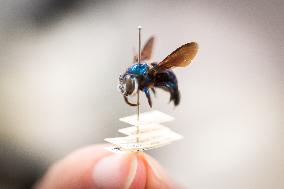
This file photo taken on July 9, 2025 shows an insect specimen as part of the Australian National Insect Collection in Canberra, capital of Australia. Australia's national science agency has opened a biodiversity center to safeguard over 13 million specimens. The new building, named Diversity, in the capital Canberra, unites the Australian National Wildlife Collection and the Australian National Insect Collection under one roof in temperature-controlled, bushfire- and pest-resistant vaults, according to a statement released Thursday by the Commonwealth Scientific and Industrial Research Organization (CSIRO). Photo by CSIRO/Handout via Xinhua/ABACAPRESS.COM

  •  
A Biodiversity Center To Safeguard Over 13M Specimens - Canberra

A Biodiversity Center To Safeguard Over 13M Specimens - Canberra

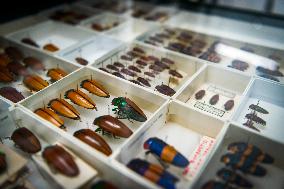
This file photo taken on June 13, 2025 shows a drawer of beetle specimens as part of the Australian National Insect Collection in Canberra, capital of Australia. Australia's national science agency has opened a biodiversity center to safeguard over 13 million specimens. The new building, named Diversity, in the capital Canberra, unites the Australian National Wildlife Collection and the Australian National Insect Collection under one roof in temperature-controlled, bushfire- and pest-resistant vaults, according to a statement released Thursday by the Commonwealth Scientific and Industrial Research Organization (CSIRO). Photo by CSIRO/Handout via Xinhua/ABACAPRESS.COM

  •  
A Biodiversity Center To Safeguard Over 13M Specimens - Canberra

A Biodiversity Center To Safeguard Over 13M Specimens - Canberra

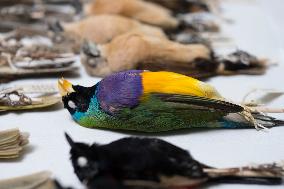
This file photo taken on Aug. 28, 2015 shows bird specimens as part of the Australian National Wildlife Collection in Canberra, capital of Australia. Australia's national science agency has opened a biodiversity center to safeguard over 13 million specimens. The new building, named Diversity, in the capital Canberra, unites the Australian National Wildlife Collection and the Australian National Insect Collection under one roof in temperature-controlled, bushfire- and pest-resistant vaults, according to a statement released Thursday by the Commonwealth Scientific and Industrial Research Organization (CSIRO). Photo by CSIRO/Handout via Xinhua/ABACAPRESS.COM

  •  
A Biodiversity Center To Safeguard Over 13M Specimens - Canberra

A Biodiversity Center To Safeguard Over 13M Specimens - Canberra

This file photo taken on July 9, 2025 shows specimens of bird egg clutches as part of the Australian National Wildlife Collection in Canberra, capital of Australia. Australia's national science agency has opened a biodiversity center to safeguard over 13 million specimens. The new building, named Diversity, in the capital Canberra, unites the Australian National Wildlife Collection and the Australian National Insect Collection under one roof in temperature-controlled, bushfire- and pest-resistant vaults, according to a statement released Thursday by the Commonwealth Scientific and Industrial Research Organization (CSIRO). Photo by CSIRO/Handout via Xinhua/ABACAPRESS.COM

  •  
Illustration - Aerial Rome - Italy

Illustration - Aerial Rome - Italy

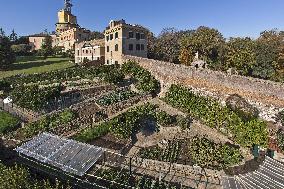
ITALY - ROMA - VATICAN - VATICAN GARDENS : MONASTERY MATER ECCLESIAE OF THE NUNS, WHICH BECAME THE RESIDENCE OF BENEDICT XVI. TO WELCOME THE FORMER POPE, WORK HAS BEEN DONE ON THIS FOUR-STOREY BUILDING, WHICH HAS A CHAPEL, AN ORGANIC GARDEN AND A ROOF TERRACE WITH VIEWS OF ST. PETER'S BASILICA AND THE VATICAN GARDENS, WHERE JOSEPH RATZINGER LIKES TO WALK IN THE AFTERNOON. IN THE FOREGROUND, THE KITCHEN GARDEN OF THE POPE. VEGETABLES ARE GROWN AND FRUITS ARE HARVESTED, ALL OF WHICH ARE 100% NATURAL AND DESTINED FOR THE PAPAL TABLE. THE WATER USED FOR WATERING, LIKE ALL THE WATER USED TO WATER THE 300 PLANT SPECIES AND 6.500 SPECIMENS OF GARDEN PLANTS, COMES DIRECTLY FROM LAKE BRACCIANO. IN THE PAST, THIS PURE WATER PASSED THROUGH THE ANCIENT ROMAN AQUEDUCT OF TRAJAN. ON BACKGROUND LEFT, THE VATICAN RADIO TOWER. Photo by Stephane Compoint/Only World/ABACAPRESS.COM

  •  
Levanta in Barbate - Cadiz

Levanta in Barbate - Cadiz

A person cuts up a tuna after the 'levantá' of tuna in the vicinity of Barbate, on May 27, 2025, in Barbate, Cadiz, Andalusia (Spain). The 'levantá' of Barbate is the culminating and most spectacular moment of the traditional fishing of bluefin tuna in the almadraba, an ancient art that is practiced every spring off the coast of Barbate (Cadiz). It consists of slowly raising the codend net, where the tuna have been trapped during their migration towards the Mediterranean, causing the large fish to emerge to the surface amidst flapping and foam, while the fishermen select and catch the largest specimens. Nowadays, the technique has evolved: the divers sacrifice the tuna one by one with "luparas" (special poles), and the final lifting is done with cranes, although the ritual and collective character of the process is preserved. Photo by Juanma Jimenez/Europa Press/ABACAPRESS.COM

  •  
Levanta in Barbate - Cadiz

Levanta in Barbate - Cadiz

Several fishermen during the 'levantá' of tuna in the vicinity of Barbate, on May 27, 2025, in Barbate, Cadiz, Andalusia (Spain). The 'levantá' of Barbate is the culminating and most spectacular moment of traditional bluefin tuna fishing in the almadraba, an ancient art practiced every spring off the coast of Barbate (Cadiz). It consists of slowly raising the codend net, where the tuna have been trapped during their migration towards the Mediterranean, causing the large fish to emerge to the surface amidst flapping and foam, while the fishermen select and catch the largest specimens. Nowadays, the technique has evolved: the divers sacrifice the tuna one by one with "luparas" (special poles), and the final lifting is done with cranes, although the ritual and collective character of the process is preserved. Photo by Juanma Jimenez/Europa Press/ABACAPRESS.COM

  •  
Levanta in Barbate - Cadiz

Levanta in Barbate - Cadiz

Several people cut up the tuna after the 'levantá' of tuna in the vicinity of Barbate, on May 27, 2025, in Barbate, Cadiz, Andalusia (Spain). The 'levantá' of Barbate is the culminating and most spectacular moment of traditional bluefin tuna fishing in the almadraba, an ancient art practiced every spring off the coast of Barbate (Cadiz). It consists of slowly raising the codend net, where the tuna have been trapped during their migration towards the Mediterranean, causing the large fish to emerge to the surface amidst flapping and foam, while the fishermen select and catch the largest specimens. Nowadays, the technique has evolved: the divers sacrifice the tuna one by one with "luparas" (special poles), and the final lifting is done with cranes, although the ritual and collective character of the process is preserved. Photo by Juanma Jimenez/Europa Press/ABACAPRESS.COM

  •  
Levanta in Barbate - Cadiz

Levanta in Barbate - Cadiz

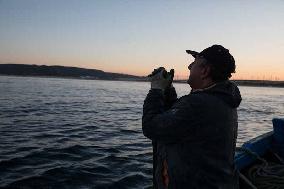
A fisherman during the 'levantá' of tuna in the vicinity of Barbate, on May 27, 2025, in Barbate, Cadiz, Andalusia (Spain). The 'levantá' of Barbate is the culminating and most spectacular moment of the traditional fishing of bluefin tuna in the almadraba, an ancient art that is practiced every spring off the coast of Barbate (Cadiz). It consists of slowly raising the codend net, where the tuna have been trapped during their migration towards the Mediterranean, causing the large fish to emerge to the surface amidst flapping and foam, while the fishermen select and catch the largest specimens. Nowadays, the technique has evolved: the divers sacrifice the tuna one by one with "luparas" (special poles), and the final lifting is done with cranes, although the ritual and collective character of the process is preserved. Photo by Juanma Jimenez/Europa Press/ABACAPRESS.COM

  •  
Levanta in Barbate - Cadiz

Levanta in Barbate - Cadiz

A person cuts up a tuna after the 'levantá' of tuna in the vicinity of Barbate, on May 27, 2025, in Barbate, Cadiz, Andalusia (Spain). The 'levantá' of Barbate is the culminating and most spectacular moment of the traditional fishing of bluefin tuna in the almadraba, an ancient art that is practiced every spring off the coast of Barbate (Cadiz). It consists of slowly raising the codend net, where the tuna have been trapped during their migration towards the Mediterranean, causing the large fish to emerge to the surface amidst flapping and foam, while the fishermen select and catch the largest specimens. Nowadays, the technique has evolved: the divers sacrifice the tuna one by one with "luparas" (special poles), and the final lifting is done with cranes, although the ritual and collective character of the process is preserved. Photo by Juanma Jimenez/Europa Press/ABACAPRESS.COM

  •  
Levanta in Barbate - Cadiz

Levanta in Barbate - Cadiz

Several fishermen during the 'levantá' of tuna in the vicinity of Barbate, on May 27, 2025, in Barbate, Cadiz, Andalusia (Spain). The 'levantá' of Barbate is the culminating and most spectacular moment of traditional bluefin tuna fishing in the almadraba, an ancient art practiced every spring off the coast of Barbate (Cadiz). It consists of slowly raising the codend net, where the tuna have been trapped during their migration towards the Mediterranean, causing the large fish to emerge to the surface amidst flapping and foam, while the fishermen select and catch the largest specimens. Nowadays, the technique has evolved: the divers sacrifice the tuna one by one with "luparas" (special poles), and the final lifting is done with cranes, although the ritual and collective character of the process is preserved. Photo by Juanma Jimenez/Europa Press/ABACAPRESS.COM

  •  
Levanta in Barbate - Cadiz

Levanta in Barbate - Cadiz

Several fishermen during the 'levantá' of tuna in the vicinity of Barbate, on May 27, 2025, in Barbate, Cadiz, Andalusia (Spain). The 'levantá' of Barbate is the culminating and most spectacular moment of traditional bluefin tuna fishing in the almadraba, an ancient art practiced every spring off the coast of Barbate (Cadiz). It consists of slowly raising the codend net, where the tuna have been trapped during their migration towards the Mediterranean, causing the large fish to emerge to the surface amidst flapping and foam, while the fishermen select and catch the largest specimens. Nowadays, the technique has evolved: the divers sacrifice the tuna one by one with "luparas" (special poles), and the final lifting is done with cranes, although the ritual and collective character of the process is preserved. Photo by Juanma Jimenez/Europa Press/ABACAPRESS.COM

  •  
Levanta in Barbate - Cadiz

Levanta in Barbate - Cadiz

Several fishermen during the 'levantá' of tuna in the vicinity of Barbate, on May 27, 2025, in Barbate, Cadiz, Andalusia (Spain). The 'levantá' of Barbate is the culminating and most spectacular moment of traditional bluefin tuna fishing in the almadraba, an ancient art practiced every spring off the coast of Barbate (Cadiz). It consists of slowly raising the codend net, where the tuna have been trapped during their migration towards the Mediterranean, causing the large fish to emerge to the surface amidst flapping and foam, while the fishermen select and catch the largest specimens. Nowadays, the technique has evolved: the divers sacrifice the tuna one by one with "luparas" (special poles), and the final lifting is done with cranes, although the ritual and collective character of the process is preserved. Photo by Juanma Jimenez/Europa Press/ABACAPRESS.COM

  •  
Levanta in Barbate - Cadiz

Levanta in Barbate - Cadiz

Several fishermen during the 'levantá' of tuna in the vicinity of Barbate, on May 27, 2025, in Barbate, Cadiz, Andalusia (Spain). The 'levantá' of Barbate is the culminating and most spectacular moment of traditional bluefin tuna fishing in the almadraba, an ancient art practiced every spring off the coast of Barbate (Cadiz). It consists of slowly raising the codend net, where the tuna have been trapped during their migration towards the Mediterranean, causing the large fish to emerge to the surface amidst flapping and foam, while the fishermen select and catch the largest specimens. Nowadays, the technique has evolved: the divers sacrifice the tuna one by one with "luparas" (special poles), and the final lifting is done with cranes, although the ritual and collective character of the process is preserved. Photo by Juanma Jimenez/Europa Press/ABACAPRESS.COM

  •  
Levanta in Barbate - Cadiz

Levanta in Barbate - Cadiz

Several fishermen during the 'levantá' of tuna in the vicinity of Barbate, on May 27, 2025, in Barbate, Cadiz, Andalusia (Spain). The 'levantá' of Barbate is the culminating and most spectacular moment of traditional bluefin tuna fishing in the almadraba, an ancient art practiced every spring off the coast of Barbate (Cadiz). It consists of slowly raising the codend net, where the tuna have been trapped during their migration towards the Mediterranean, causing the large fish to emerge to the surface amidst flapping and foam, while the fishermen select and catch the largest specimens. Nowadays, the technique has evolved: the divers sacrifice the tuna one by one with "luparas" (special poles), and the final lifting is done with cranes, although the ritual and collective character of the process is preserved. Photo by Juanma Jimenez/Europa Press/ABACAPRESS.COM

  •  
Levanta in Barbate - Cadiz

Levanta in Barbate - Cadiz

Several fishermen during the 'levantá' of tuna in the vicinity of Barbate, on May 27, 2025, in Barbate, Cadiz, Andalusia (Spain). The 'levantá' of Barbate is the culminating and most spectacular moment of traditional bluefin tuna fishing in the almadraba, an ancient art practiced every spring off the coast of Barbate (Cadiz). It consists of slowly raising the codend net, where the tuna have been trapped during their migration towards the Mediterranean, causing the large fish to emerge to the surface amidst flapping and foam, while the fishermen select and catch the largest specimens. Nowadays, the technique has evolved: the divers sacrifice the tuna one by one with "luparas" (special poles), and the final lifting is done with cranes, although the ritual and collective character of the process is preserved. Photo by Juanma Jimenez/Europa Press/ABACAPRESS.COM

  •  
Levanta in Barbate - Cadiz

Levanta in Barbate - Cadiz

Several fishermen during the 'levantá' of tuna in the vicinity of Barbate, on May 27, 2025, in Barbate, Cadiz, Andalusia (Spain). The 'levantá' of Barbate is the culminating and most spectacular moment of traditional bluefin tuna fishing in the almadraba, an ancient art practiced every spring off the coast of Barbate (Cadiz). It consists of slowly raising the codend net, where the tuna have been trapped during their migration towards the Mediterranean, causing the large fish to emerge to the surface amidst flapping and foam, while the fishermen select and catch the largest specimens. Nowadays, the technique has evolved: the divers sacrifice the tuna one by one with "luparas" (special poles), and the final lifting is done with cranes, although the ritual and collective character of the process is preserved. Photo by Juanma Jimenez/Europa Press/ABACAPRESS.COM

  •  
Levanta in Barbate - Cadiz

Levanta in Barbate - Cadiz

Several fishermen during the 'levantá' of tuna in the vicinity of Barbate, on May 27, 2025, in Barbate, Cadiz, Andalusia (Spain). The 'levantá' of Barbate is the culminating and most spectacular moment of traditional bluefin tuna fishing in the almadraba, an ancient art practiced every spring off the coast of Barbate (Cadiz). It consists of slowly raising the codend net, where the tuna have been trapped during their migration towards the Mediterranean, causing the large fish to emerge to the surface amidst flapping and foam, while the fishermen select and catch the largest specimens. Nowadays, the technique has evolved: the divers sacrifice the tuna one by one with "luparas" (special poles), and the final lifting is done with cranes, although the ritual and collective character of the process is preserved. Photo by Juanma Jimenez/Europa Press/ABACAPRESS.COM

  •  
Levanta in Barbate - Cadiz

Levanta in Barbate - Cadiz

Several fishermen during the 'levantá' of tuna in the vicinity of Barbate, on May 27, 2025, in Barbate, Cadiz, Andalusia (Spain). The 'levantá' of Barbate is the culminating and most spectacular moment of traditional bluefin tuna fishing in the almadraba, an ancient art practiced every spring off the coast of Barbate (Cadiz). It consists of slowly raising the codend net, where the tuna have been trapped during their migration towards the Mediterranean, causing the large fish to emerge to the surface amidst flapping and foam, while the fishermen select and catch the largest specimens. Nowadays, the technique has evolved: the divers sacrifice the tuna one by one with "luparas" (special poles), and the final lifting is done with cranes, although the ritual and collective character of the process is preserved. Photo by Juanma Jimenez/Europa Press/ABACAPRESS.COM

  •  
Levanta in Barbate - Cadiz

Levanta in Barbate - Cadiz

Several fishermen during the 'levantá' of tuna in the vicinity of Barbate, on May 27, 2025, in Barbate, Cadiz, Andalusia (Spain). The 'levantá' of Barbate is the culminating and most spectacular moment of traditional bluefin tuna fishing in the almadraba, an ancient art practiced every spring off the coast of Barbate (Cadiz). It consists of slowly raising the codend net, where the tuna have been trapped during their migration towards the Mediterranean, causing the large fish to emerge to the surface amidst flapping and foam, while the fishermen select and catch the largest specimens. Nowadays, the technique has evolved: the divers sacrifice the tuna one by one with "luparas" (special poles), and the final lifting is done with cranes, although the ritual and collective character of the process is preserved. Photo by Juanma Jimenez/Europa Press/ABACAPRESS.COM

  •  
Levanta in Barbate - Cadiz

Levanta in Barbate - Cadiz

Several fishermen during the 'levantá' of tuna in the vicinity of Barbate, on May 27, 2025, in Barbate, Cadiz, Andalusia (Spain). The 'levantá' of Barbate is the culminating and most spectacular moment of traditional bluefin tuna fishing in the almadraba, an ancient art practiced every spring off the coast of Barbate (Cadiz). It consists of slowly raising the codend net, where the tuna have been trapped during their migration towards the Mediterranean, causing the large fish to emerge to the surface amidst flapping and foam, while the fishermen select and catch the largest specimens. Nowadays, the technique has evolved: the divers sacrifice the tuna one by one with "luparas" (special poles), and the final lifting is done with cranes, although the ritual and collective character of the process is preserved. Photo by Juanma Jimenez/Europa Press/ABACAPRESS.COM

  •  
Levanta in Barbate - Cadiz

Levanta in Barbate - Cadiz

Several fishermen during the 'levantá' of tuna in the vicinity of Barbate, on May 27, 2025, in Barbate, Cadiz, Andalusia (Spain). The 'levantá' of Barbate is the culminating and most spectacular moment of traditional bluefin tuna fishing in the almadraba, an ancient art practiced every spring off the coast of Barbate (Cadiz). It consists of slowly raising the codend net, where the tuna have been trapped during their migration towards the Mediterranean, causing the large fish to emerge to the surface amidst flapping and foam, while the fishermen select and catch the largest specimens. Nowadays, the technique has evolved: the divers sacrifice the tuna one by one with "luparas" (special poles), and the final lifting is done with cranes, although the ritual and collective character of the process is preserved. Photo by Juanma Jimenez/Europa Press/ABACAPRESS.COM

  •  
Levanta in Barbate - Cadiz

Levanta in Barbate - Cadiz

Several fishermen during the 'levantá' of tuna in the vicinity of Barbate, on May 27, 2025, in Barbate, Cadiz, Andalusia (Spain). The 'levantá' of Barbate is the culminating and most spectacular moment of traditional bluefin tuna fishing in the almadraba, an ancient art practiced every spring off the coast of Barbate (Cadiz). It consists of slowly raising the codend net, where the tuna have been trapped during their migration towards the Mediterranean, causing the large fish to emerge to the surface amidst flapping and foam, while the fishermen select and catch the largest specimens. Nowadays, the technique has evolved: the divers sacrifice the tuna one by one with "luparas" (special poles), and the final lifting is done with cranes, although the ritual and collective character of the process is preserved. Photo by Juanma Jimenez/Europa Press/ABACAPRESS.COM

  •  
Levanta in Barbate - Cadiz

Levanta in Barbate - Cadiz

Several fishermen during the 'levantá' of tuna in the vicinity of Barbate, on May 27, 2025, in Barbate, Cadiz, Andalusia (Spain). The 'levantá' of Barbate is the culminating and most spectacular moment of traditional bluefin tuna fishing in the almadraba, an ancient art practiced every spring off the coast of Barbate (Cadiz). It consists of slowly raising the codend net, where the tuna have been trapped during their migration towards the Mediterranean, causing the large fish to emerge to the surface amidst flapping and foam, while the fishermen select and catch the largest specimens. Nowadays, the technique has evolved: the divers sacrifice the tuna one by one with "luparas" (special poles), and the final lifting is done with cranes, although the ritual and collective character of the process is preserved. Photo by Juanma Jimenez/Europa Press/ABACAPRESS.COM

  •  
Levanta in Barbate - Cadiz

Levanta in Barbate - Cadiz

Several fishermen during the 'levantá' of tuna in the vicinity of Barbate, on May 27, 2025, in Barbate, Cadiz, Andalusia (Spain). The 'levantá' of Barbate is the culminating and most spectacular moment of traditional bluefin tuna fishing in the almadraba, an ancient art practiced every spring off the coast of Barbate (Cadiz). It consists of slowly raising the codend net, where the tuna have been trapped during their migration towards the Mediterranean, causing the large fish to emerge to the surface amidst flapping and foam, while the fishermen select and catch the largest specimens. Nowadays, the technique has evolved: the divers sacrifice the tuna one by one with "luparas" (special poles), and the final lifting is done with cranes, although the ritual and collective character of the process is preserved. Photo by Juanma Jimenez/Europa Press/ABACAPRESS.COM

  •  
Levanta in Barbate - Cadiz

Levanta in Barbate - Cadiz

Several fishermen during the 'levantá' of tuna in the vicinity of Barbate, on May 27, 2025, in Barbate, Cadiz, Andalusia (Spain). The 'levantá' of Barbate is the culminating and most spectacular moment of traditional bluefin tuna fishing in the almadraba, an ancient art practiced every spring off the coast of Barbate (Cadiz). It consists of slowly raising the codend net, where the tuna have been trapped during their migration towards the Mediterranean, causing the large fish to emerge to the surface amidst flapping and foam, while the fishermen select and catch the largest specimens. Nowadays, the technique has evolved: the divers sacrifice the tuna one by one with "luparas" (special poles), and the final lifting is done with cranes, although the ritual and collective character of the process is preserved. Photo by Juanma Jimenez/Europa Press/ABACAPRESS.COM

  •  
BGI Institute in Qingdao

BGI Institute in Qingdao

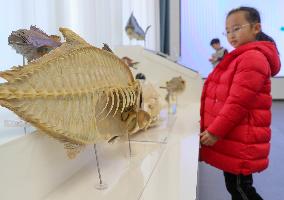
QINGDAO, CHINA - FEBRUARY 10, 2025 - A primary school student is observing fish specimens at the BGI Institute in Qingdao, Shandong Province, China on February 10, 2025.

  •  
Lynx At Andujar Natural Park - Spain

Lynx At Andujar Natural Park - Spain

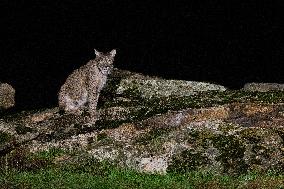
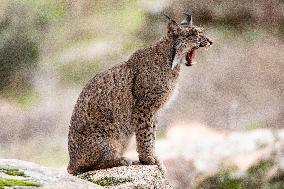
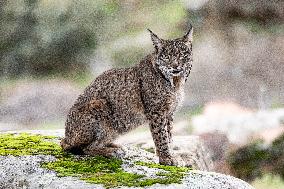
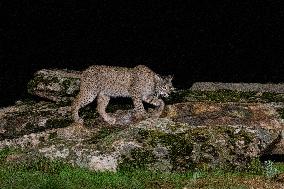
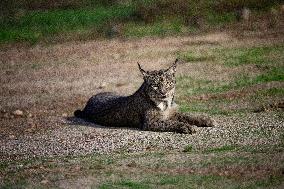
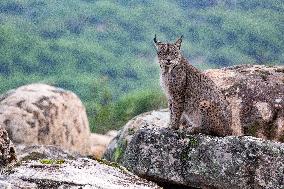
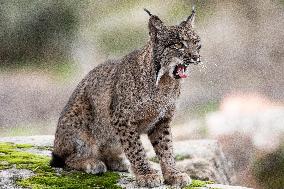
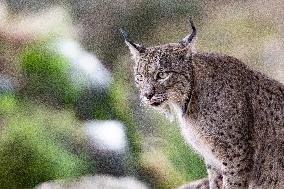
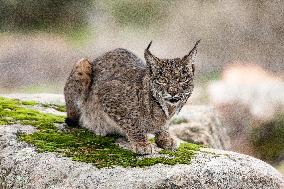
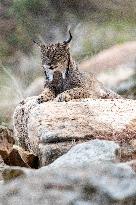
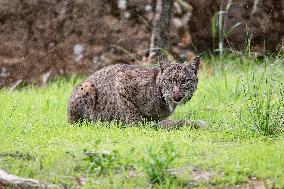
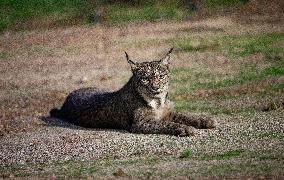
A lynx in Cortijo Gato Clavo, on November 8, 2024, in the Sierra de Andujar Natural Park, Jaen, Andalusia, Spain. In June 2024, the total number of lynx in the Iberian Peninsula exceeded 2000 specimens, thus ceasing to be an "endangered" species and becoming "vulnerable". In any case, this figure is still far from reaching the number of specimens between 3000-5000 to reach a viable population in its entirety and out of danger to be in a favorable conservation status, according to European regulations. Among the threats to the lynx are the decrease in the populations of wild rabbits, which make up 90% of its diet, the increasing number of road killings and poaching. Every year in Spain, 100 lynxes are killed by road kill or killed by hunting, poisons or traps. Photo by Rafael Bastante/Europa Press/ABACAPRESS.COM

  •  
Lynx At Andujar Natural Park - Spain

Lynx At Andujar Natural Park - Spain

A lynx in Cortijo Gato Clavo, on November 8, 2024, in the Sierra de Andujar Natural Park, Jaen, Andalusia, Spain. In June 2024, the total number of lynx in the Iberian Peninsula exceeded 2000 specimens, thus ceasing to be an "endangered" species and becoming "vulnerable". In any case, this figure is still far from reaching the number of specimens between 3000-5000 to reach a viable population in its entirety and out of danger to be in a favorable conservation status, according to European regulations. Among the threats to the lynx are the decrease in the populations of wild rabbits, which make up 90% of its diet, the increasing number of road killings and poaching. Every year in Spain, 100 lynxes are killed by road kill or killed by hunting, poisons or traps. Photo by Rafael Bastante/Europa Press/ABACAPRESS.COM

  •  
Lynx At Andujar Natural Park - Spain

Lynx At Andujar Natural Park - Spain

A lynx in Cortijo Gato Clavo, on November 8, 2024, in the Sierra de Andujar Natural Park, Jaen, Andalusia, Spain. In June 2024, the total number of lynx in the Iberian Peninsula exceeded 2000 specimens, thus ceasing to be an "endangered" species and becoming "vulnerable". In any case, this figure is still far from reaching the number of specimens between 3000-5000 to reach a viable population in its entirety and out of danger to be in a favorable conservation status, according to European regulations. Among the threats to the lynx are the decrease in the populations of wild rabbits, which make up 90% of its diet, the increasing number of road killings and poaching. Every year in Spain, 100 lynxes are killed by road kill or killed by hunting, poisons or traps. Photo by Rafael Bastante/Europa Press/ABACAPRESS.COM

  •  
Lynx At Andujar Natural Park - Spain

Lynx At Andujar Natural Park - Spain

A lynx in Cortijo Gato Clavo, on November 8, 2024, in the Sierra de Andujar Natural Park, Jaen, Andalusia, Spain. In June 2024, the total number of lynx in the Iberian Peninsula exceeded 2000 specimens, thus ceasing to be an "endangered" species and becoming "vulnerable". In any case, this figure is still far from reaching the number of specimens between 3000-5000 to reach a viable population in its entirety and out of danger to be in a favorable conservation status, according to European regulations. Among the threats to the lynx are the decrease in the populations of wild rabbits, which make up 90% of its diet, the increasing number of road killings and poaching. Every year in Spain, 100 lynxes are killed by road kill or killed by hunting, poisons or traps. Photo by Rafael Bastante/Europa Press/ABACAPRESS.COM

  •  
Lynx At Andujar Natural Park - Spain

Lynx At Andujar Natural Park - Spain

A lynx in Cortijo Gato Clavo, on November 8, 2024, in the Sierra de Andujar Natural Park, Jaen, Andalusia, Spain. In June 2024, the total number of lynx in the Iberian Peninsula exceeded 2000 specimens, thus ceasing to be an "endangered" species and becoming "vulnerable". In any case, this figure is still far from reaching the number of specimens between 3000-5000 to reach a viable population in its entirety and out of danger to be in a favorable conservation status, according to European regulations. Among the threats to the lynx are the decrease in the populations of wild rabbits, which make up 90% of its diet, the increasing number of road killings and poaching. Every year in Spain, 100 lynxes are killed by road kill or killed by hunting, poisons or traps. Photo by Rafael Bastante/Europa Press/ABACAPRESS.COM

  •  
Lynx At Andujar Natural Park - Spain

Lynx At Andujar Natural Park - Spain

A lynx in Cortijo Gato Clavo, on November 8, 2024, in the Sierra de Andujar Natural Park, Jaen, Andalusia, Spain. In June 2024, the total number of lynx in the Iberian Peninsula exceeded 2000 specimens, thus ceasing to be an "endangered" species and becoming "vulnerable". In any case, this figure is still far from reaching the number of specimens between 3000-5000 to reach a viable population in its entirety and out of danger to be in a favorable conservation status, according to European regulations. Among the threats to the lynx are the decrease in the populations of wild rabbits, which make up 90% of its diet, the increasing number of road killings and poaching. Every year in Spain, 100 lynxes are killed by road kill or killed by hunting, poisons or traps. Photo by Rafael Bastante/Europa Press/ABACAPRESS.COM

  •  
Lynx At Andujar Natural Park - Spain

Lynx At Andujar Natural Park - Spain

A lynx in Cortijo Gato Clavo, on November 8, 2024, in the Sierra de Andujar Natural Park, Jaen, Andalusia, Spain. In June 2024, the total number of lynx in the Iberian Peninsula exceeded 2000 specimens, thus ceasing to be an "endangered" species and becoming "vulnerable". In any case, this figure is still far from reaching the number of specimens between 3000-5000 to reach a viable population in its entirety and out of danger to be in a favorable conservation status, according to European regulations. Among the threats to the lynx are the decrease in the populations of wild rabbits, which make up 90% of its diet, the increasing number of road killings and poaching. Every year in Spain, 100 lynxes are killed by road kill or killed by hunting, poisons or traps. Photo by Rafael Bastante/Europa Press/ABACAPRESS.COM

  •  
Lynx At Andujar Natural Park - Spain

Lynx At Andujar Natural Park - Spain

A lynx in Cortijo Gato Clavo, on November 8, 2024, in the Sierra de Andujar Natural Park, Jaen, Andalusia, Spain. In June 2024, the total number of lynx in the Iberian Peninsula exceeded 2000 specimens, thus ceasing to be an "endangered" species and becoming "vulnerable". In any case, this figure is still far from reaching the number of specimens between 3000-5000 to reach a viable population in its entirety and out of danger to be in a favorable conservation status, according to European regulations. Among the threats to the lynx are the decrease in the populations of wild rabbits, which make up 90% of its diet, the increasing number of road killings and poaching. Every year in Spain, 100 lynxes are killed by road kill or killed by hunting, poisons or traps. Photo by Rafael Bastante/Europa Press/ABACAPRESS.COM

  •  
Lynx At Andujar Natural Park - Spain

Lynx At Andujar Natural Park - Spain

A lynx in Cortijo Gato Clavo, on November 8, 2024, in the Sierra de Andujar Natural Park, Jaen, Andalusia, Spain. In June 2024, the total number of lynx in the Iberian Peninsula exceeded 2000 specimens, thus ceasing to be an "endangered" species and becoming "vulnerable". In any case, this figure is still far from reaching the number of specimens between 3000-5000 to reach a viable population in its entirety and out of danger to be in a favorable conservation status, according to European regulations. Among the threats to the lynx are the decrease in the populations of wild rabbits, which make up 90% of its diet, the increasing number of road killings and poaching. Every year in Spain, 100 lynxes are killed by road kill or killed by hunting, poisons or traps. Photo by Rafael Bastante/Europa Press/ABACAPRESS.COM

  •  
Lynx At Andujar Natural Park - Spain

Lynx At Andujar Natural Park - Spain

A lynx in Cortijo Gato Clavo, on November 8, 2024, in the Sierra de Andujar Natural Park, Jaen, Andalusia, Spain. In June 2024, the total number of lynx in the Iberian Peninsula exceeded 2000 specimens, thus ceasing to be an "endangered" species and becoming "vulnerable". In any case, this figure is still far from reaching the number of specimens between 3000-5000 to reach a viable population in its entirety and out of danger to be in a favorable conservation status, according to European regulations. Among the threats to the lynx are the decrease in the populations of wild rabbits, which make up 90% of its diet, the increasing number of road killings and poaching. Every year in Spain, 100 lynxes are killed by road kill or killed by hunting, poisons or traps. Photo by Rafael Bastante/Europa Press/ABACAPRESS.COM

  •  
Lynx At Andujar Natural Park - Spain

Lynx At Andujar Natural Park - Spain

A lynx in Cortijo Gato Clavo, on November 8, 2024, in the Sierra de Andujar Natural Park, Jaen, Andalusia, Spain. In June 2024, the total number of lynx in the Iberian Peninsula exceeded 2000 specimens, thus ceasing to be an "endangered" species and becoming "vulnerable". In any case, this figure is still far from reaching the number of specimens between 3000-5000 to reach a viable population in its entirety and out of danger to be in a favorable conservation status, according to European regulations. Among the threats to the lynx are the decrease in the populations of wild rabbits, which make up 90% of its diet, the increasing number of road killings and poaching. Every year in Spain, 100 lynxes are killed by road kill or killed by hunting, poisons or traps. Photo by Rafael Bastante/Europa Press/ABACAPRESS.COM

  •  
Lynx At Andujar Natural Park - Spain

Lynx At Andujar Natural Park - Spain

A lynx in Cortijo Gato Clavo, on November 8, 2024, in the Sierra de Andujar Natural Park, Jaen, Andalusia, Spain. In June 2024, the total number of lynx in the Iberian Peninsula exceeded 2000 specimens, thus ceasing to be an "endangered" species and becoming "vulnerable". In any case, this figure is still far from reaching the number of specimens between 3000-5000 to reach a viable population in its entirety and out of danger to be in a favorable conservation status, according to European regulations. Among the threats to the lynx are the decrease in the populations of wild rabbits, which make up 90% of its diet, the increasing number of road killings and poaching. Every year in Spain, 100 lynxes are killed by road kill or killed by hunting, poisons or traps. Photo by Rafael Bastante/Europa Press/ABACAPRESS.COM

  •  
Popular Science Research

Popular Science Research

TAIZHOU, CHINA - JULY 28, 2024 - Customs staff guide students to observe pine wood nematode specimens under a microscope at the Customs Science Exhibition and Experience Hall in Taizhou, East China's Jiangsu province, July 28, 2024.

  •  
Popular Science Research

Popular Science Research

TAIZHOU, CHINA - JULY 28, 2024 - Students observe 3D specimens of exotic pests through VR devices at the Customs Science Exhibition and Experience Hall in Taizhou, East China's Jiangsu province, July 28, 2024.

  • Main
  • Top
  • Editorial
  • Creative
  • About Us
  • About ILG
  • Terms of use
  • Company
  • BEHIND
  • Price List
  • Single Plan
  • Monthly Plan
  • Services
  • Shooting
  • Rights Clearance
  • Support
  • FAQ
  • How To Buy
  • Contact Us
  • Become a Partner

© KYODO NEWS IMAGES INC

All Rights Reserved.

  • Editorial
  • Olympics
  • News
  • Sports
  • Japan
  • Tech
  • Royal
  • Disaster
  • NorthKorea
  • Old Japan
  • SNS
  • Creative
  • Food
  • Japan
  • Landscape
  • Animal
  • Popular
  • #Ukraine
  • #Thailand
  • #coronavirus
  • #N. Korea
  • #China
  • #Russia
  • #Ukraine
  • #Thailand
  • #coronavirus
  • #N. Korea
  • #China
  • #Russia
  • Food
  • Japan
  • Landscape
  • Animal
  • Olympics
  • News
  • Sports
  • Japan
  • Tech
  • Royal
  • Disaster
  • NorthKorea
  • Old Japan
  • SNS