•  
Manufacturing Cosmetics in Henan - China

Manufacturing Cosmetics in Henan - China

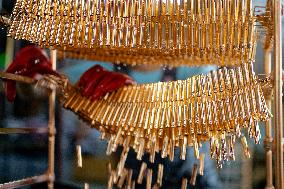
A worker takes down freshly oxidized aluminum ferrules from a rack at a factory of a company in Luyi County, central China's Henan Province, June 17, 2025. Luyi County of Henan Province is home to more than 300 makeup brush manufacturers and over 1,000 supporting businesses. The county has an annual output of 150 million sets of mid-to high-end makeup brushes, generating over 13 billion yuan about 1.8 billion U.S. dollars) in annual sales. Leveraging cross-border e-commerce platforms, these products are now sold in more than 20 countries and regions. As the industry continues to grow, makeup brush companies in the county are steadily expanding up and down the supply chain. Many have moved beyond simple assembly into in-house production of bristles, metal ferrules, brush handles, makeup sponges, and packaging bags, forming a relatively complete industrial chain. Photo by Zhang Xiaoyu/Xinhua/ABACAPRESS.COM

  •  
Manufacturing Cosmetics in Henan - China

Manufacturing Cosmetics in Henan - China

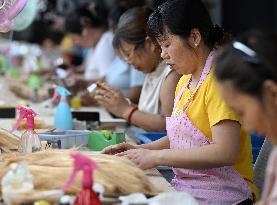
Workers arrange brush bristles at a factory of a company in Luyi County, central China's Henan Province, June 18, 2025. Luyi County of Henan Province is home to more than 300 makeup brush manufacturers and over 1,000 supporting businesses. The county has an annual output of 150 million sets of mid-to high-end makeup brushes, generating over 13 billion yuan about 1.8 billion U.S. dollars) in annual sales. Leveraging cross-border e-commerce platforms, these products are now sold in more than 20 countries and regions. As the industry continues to grow, makeup brush companies in the county are steadily expanding up and down the supply chain. Many have moved beyond simple assembly into in-house production of bristles, metal ferrules, brush handles, makeup sponges, and packaging bags, forming a relatively complete industrial chain. Photo by Li Jianan/Xinhua/ABACAPRESS.COM

  •  
Manufacturing Cosmetics in Henan - China

Manufacturing Cosmetics in Henan - China

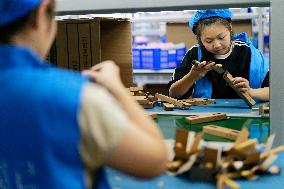
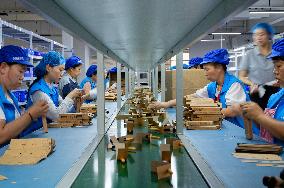
Workers pack finished makeup brushes at a factory of a company in Luyi County, central China's Henan Province, June 18, 2025. Luyi County of Henan Province is home to more than 300 makeup brush manufacturers and over 1,000 supporting businesses. The county has an annual output of 150 million sets of mid-to high-end makeup brushes, generating over 13 billion yuan about 1.8 billion U.S. dollars) in annual sales. Leveraging cross-border e-commerce platforms, these products are now sold in more than 20 countries and regions. As the industry continues to grow, makeup brush companies in the county are steadily expanding up and down the supply chain. Many have moved beyond simple assembly into in-house production of bristles, metal ferrules, brush handles, makeup sponges, and packaging bags, forming a relatively complete industrial chain. Photo by Zhang Xiaoyu/Xinhua/ABACAPRESS.COM

  •  
Manufacturing Cosmetics in Henan - China

Manufacturing Cosmetics in Henan - China

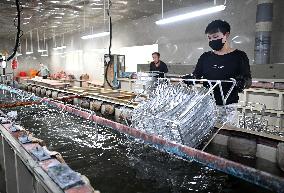
Workers perform anodizing treatment on aluminum ferrules at a factory of a company in Luyi County, central China's Henan Province, June 17, 2025. Luyi County of Henan Province is home to more than 300 makeup brush manufacturers and over 1,000 supporting businesses. The county has an annual output of 150 million sets of mid-to high-end makeup brushes, generating over 13 billion yuan about 1.8 billion U.S. dollars) in annual sales. Leveraging cross-border e-commerce platforms, these products are now sold in more than 20 countries and regions. As the industry continues to grow, makeup brush companies in the county are steadily expanding up and down the supply chain. Many have moved beyond simple assembly into in-house production of bristles, metal ferrules, brush handles, makeup sponges, and packaging bags, forming a relatively complete industrial chain. Photo by Li Jianan/Xinhua/ABACAPRESS.COM

  •  
Manufacturing Cosmetics in Henan - China

Manufacturing Cosmetics in Henan - China

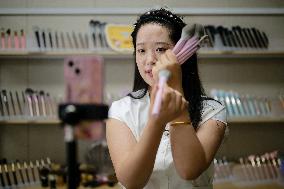
A staff member livestreams in the studio of a company in Luyi County, central China's Henan Province, June 18, 2025. Luyi County of Henan Province is home to more than 300 makeup brush manufacturers and over 1,000 supporting businesses. The county has an annual output of 150 million sets of mid-to high-end makeup brushes, generating over 13 billion yuan about 1.8 billion U.S. dollars) in annual sales. Leveraging cross-border e-commerce platforms, these products are now sold in more than 20 countries and regions. As the industry continues to grow, makeup brush companies in the county are steadily expanding up and down the supply chain. Many have moved beyond simple assembly into in-house production of bristles, metal ferrules, brush handles, makeup sponges, and packaging bags, forming a relatively complete industrial chain. Photo by Zhang Xiaoyu/Xinhua/ABACAPRESS.COM

  •  
Manufacturing Cosmetics in Henan - China

Manufacturing Cosmetics in Henan - China

Workers pack finished makeup brushes at a factory of a company in Luyi County, central China's Henan Province, June 18, 2025. Luyi County of Henan Province is home to more than 300 makeup brush manufacturers and over 1,000 supporting businesses. The county has an annual output of 150 million sets of mid-to high-end makeup brushes, generating over 13 billion yuan about 1.8 billion U.S. dollars) in annual sales. Leveraging cross-border e-commerce platforms, these products are now sold in more than 20 countries and regions. As the industry continues to grow, makeup brush companies in the county are steadily expanding up and down the supply chain. Many have moved beyond simple assembly into in-house production of bristles, metal ferrules, brush handles, makeup sponges, and packaging bags, forming a relatively complete industrial chain. Photo by Zhang Xiaoyu/Xinhua/ABACAPRESS.COM

  •  
Manufacturing Cosmetics in Henan - China

Manufacturing Cosmetics in Henan - China

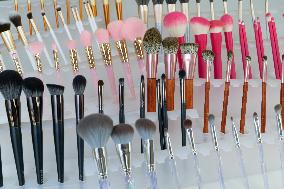
This photo taken on June 18, 2025 shows makeup brushes made by a manufacturing company in Luyi, central China's Henan Province. Luyi County of Henan Province is home to more than 300 makeup brush manufacturers and over 1,000 supporting businesses. The county has an annual output of 150 million sets of mid-to high-end makeup brushes, generating over 13 billion yuan about 1.8 billion U.S. dollars) in annual sales. Leveraging cross-border e-commerce platforms, these products are now sold in more than 20 countries and regions. As the industry continues to grow, makeup brush companies in the county are steadily expanding up and down the supply chain. Many have moved beyond simple assembly into in-house production of bristles, metal ferrules, brush handles, makeup sponges, and packaging bags, forming a relatively complete industrial chain. Photo by Zhang Xiaoyu/Xinhua/ABACAPRESS.COM

  •  
CHINA-SICHUAN-GEOLOGICAL EXPERT-WU XICHUN (CN)

CHINA-SICHUAN-GEOLOGICAL EXPERT-WU XICHUN (CN)

(230320) -- CHENGDU, March 20, 2023 (Xinhua) -- Wu Xichun arranges files with his wife Li Peihua at home in Chengdu, southwest China's Sichuan Province, March 7, 2023. Wu Xichun is a professor at the College of Energy of the Chengdu University of Technology and an expert in geology. In the early 1970s, while conducting a geological mapping survey in the northwestern part of Sichuan Province, Wu unexpectedly discovered a reef group formed by Triassic siliceous hexactinellid sponges. Since then, he has devoted himself to the study on sponge reefs for nearly five decades. In order to study foreign literature, Wu mastered English, Russian, and German, and taught himself Latin, Greek, and Old French. He spent years conducting tens of times of on-site investigations at the discovery area to obtain more accurate research results and brought back dozens of pounds of fossils by himself. To clarify the reproduction and migration of hexactinellid sponges, Wu also brought the fossils abroad for more in-depth compar

  •  
CHINA-SICHUAN-GEOLOGICAL EXPERT-WU XICHUN (CN)

CHINA-SICHUAN-GEOLOGICAL EXPERT-WU XICHUN (CN)

(230320) -- CHENGDU, March 20, 2023 (Xinhua) -- Wu Xichun observes a photo of sponge fossil at home in Chengdu, southwest China's Sichuan Province, March 7, 2023. Wu Xichun is a professor at the College of Energy of the Chengdu University of Technology and an expert in geology. In the early 1970s, while conducting a geological mapping survey in the northwestern part of Sichuan Province, Wu unexpectedly discovered a reef group formed by Triassic siliceous hexactinellid sponges. Since then, he has devoted himself to the study on sponge reefs for nearly five decades. In order to study foreign literature, Wu mastered English, Russian, and German, and taught himself Latin, Greek, and Old French. He spent years conducting tens of times of on-site investigations at the discovery area to obtain more accurate research results and brought back dozens of pounds of fossils by himself. To clarify the reproduction and migration of hexactinellid sponges, Wu also brought the fossils abroad for more in-depth comparison

  •  
CHINA-SICHUAN-GEOLOGICAL EXPERT-WU XICHUN (CN)

CHINA-SICHUAN-GEOLOGICAL EXPERT-WU XICHUN (CN)

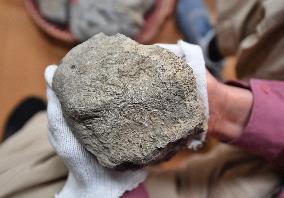
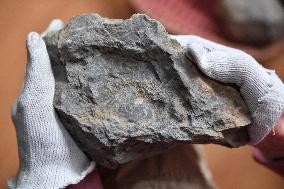
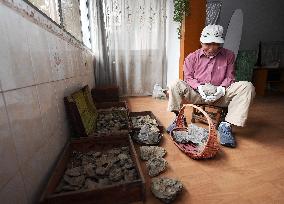
(230320) -- CHENGDU, March 20, 2023 (Xinhua) -- This photo taken on March 7, 2023 shows a fossil of Triassic siliceous sponge collected by Wu Xichun. Wu Xichun is a professor at the College of Energy of the Chengdu University of Technology and an expert in geology. In the early 1970s, while conducting a geological mapping survey in the northwestern part of Sichuan Province, Wu unexpectedly discovered a reef group formed by Triassic siliceous hexactinellid sponges. Since then, he has devoted himself to the study on sponge reefs for nearly five decades. In order to study foreign literature, Wu mastered English, Russian, and German, and taught himself Latin, Greek, and Old French. He spent years conducting tens of times of on-site investigations at the discovery area to obtain more accurate research results and brought back dozens of pounds of fossils by himself. To clarify the reproduction and migration of hexactinellid sponges, Wu also brought the fossils abroad for more in-depth comparison studies. Wu

  •  
CHINA-SICHUAN-GEOLOGICAL EXPERT-WU XICHUN (CN)

CHINA-SICHUAN-GEOLOGICAL EXPERT-WU XICHUN (CN)

(230320) -- CHENGDU, March 20, 2023 (Xinhua) -- This photo taken on March 7, 2023 shows a fossil of Triassic siliceous sponge collected by Wu Xichun. Wu Xichun is a professor at the College of Energy of the Chengdu University of Technology and an expert in geology. In the early 1970s, while conducting a geological mapping survey in the northwestern part of Sichuan Province, Wu unexpectedly discovered a reef group formed by Triassic siliceous hexactinellid sponges. Since then, he has devoted himself to the study on sponge reefs for nearly five decades. In order to study foreign literature, Wu mastered English, Russian, and German, and taught himself Latin, Greek, and Old French. He spent years conducting tens of times of on-site investigations at the discovery area to obtain more accurate research results and brought back dozens of pounds of fossils by himself. To clarify the reproduction and migration of hexactinellid sponges, Wu also brought the fossils abroad for more in-depth comparison studies. Wu

  •  
CHINA-SICHUAN-GEOLOGICAL EXPERT-WU XICHUN (CN)

CHINA-SICHUAN-GEOLOGICAL EXPERT-WU XICHUN (CN)

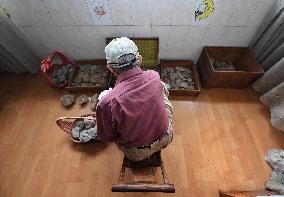
(230320) -- CHENGDU, March 20, 2023 (Xinhua) -- Wu Xichun arranges his fossil collection at home in Chengdu, southwest China's Sichuan Province, March 7, 2023. Wu Xichun is a professor at the College of Energy of the Chengdu University of Technology and an expert in geology. In the early 1970s, while conducting a geological mapping survey in the northwestern part of Sichuan Province, Wu unexpectedly discovered a reef group formed by Triassic siliceous hexactinellid sponges. Since then, he has devoted himself to the study on sponge reefs for nearly five decades. In order to study foreign literature, Wu mastered English, Russian, and German, and taught himself Latin, Greek, and Old French. He spent years conducting tens of times of on-site investigations at the discovery area to obtain more accurate research results and brought back dozens of pounds of fossils by himself. To clarify the reproduction and migration of hexactinellid sponges, Wu also brought the fossils abroad for more in-depth comparison stu

  •  
CHINA-SICHUAN-GEOLOGICAL EXPERT-WU XICHUN (CN)

CHINA-SICHUAN-GEOLOGICAL EXPERT-WU XICHUN (CN)

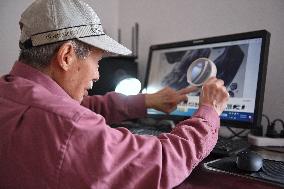
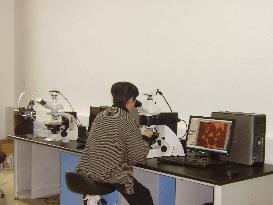
(230320) -- CHENGDU, March 20, 2023 (Xinhua) -- This file photo taken in 2011 shows Wu Xichun observing a slice of a fossil sponge with a microscope at the laboratory. Wu Xichun is a professor at the College of Energy of the Chengdu University of Technology and an expert in geology. In the early 1970s, while conducting a geological mapping survey in the northwestern part of Sichuan Province, Wu unexpectedly discovered a reef group formed by Triassic siliceous hexactinellid sponges. Since then, he has devoted himself to the study on sponge reefs for nearly five decades. In order to study foreign literature, Wu mastered English, Russian, and German, and taught himself Latin, Greek, and Old French. He spent years conducting tens of times of on-site investigations at the discovery area to obtain more accurate research results and brought back dozens of pounds of fossils by himself. To clarify the reproduction and migration of hexactinellid sponges, Wu also brought the fossils abroad for more in-depth compar

  •  
CHINA-SICHUAN-GEOLOGICAL EXPERT-WU XICHUN (CN)

CHINA-SICHUAN-GEOLOGICAL EXPERT-WU XICHUN (CN)

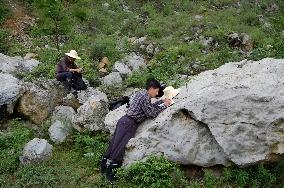
(230320) -- CHENGDU, March 20, 2023 (Xinhua) -- This file photo taken in 2008 shows Wu Xichun (R) conducting field research in the northwestern part of Sichuan Province, southwest China. Wu Xichun is a professor at the College of Energy of the Chengdu University of Technology and an expert in geology. In the early 1970s, while conducting a geological mapping survey in the northwestern part of Sichuan Province, Wu unexpectedly discovered a reef group formed by Triassic siliceous hexactinellid sponges. Since then, he has devoted himself to the study on sponge reefs for nearly five decades. In order to study foreign literature, Wu mastered English, Russian, and German, and taught himself Latin, Greek, and Old French. He spent years conducting tens of times of on-site investigations at the discovery area to obtain more accurate research results and brought back dozens of pounds of fossils by himself. To clarify the reproduction and migration of hexactinellid sponges, Wu also brought the fossils abroad for m

  •  
CHINA-SICHUAN-GEOLOGICAL EXPERT-WU XICHUN (CN)

CHINA-SICHUAN-GEOLOGICAL EXPERT-WU XICHUN (CN)

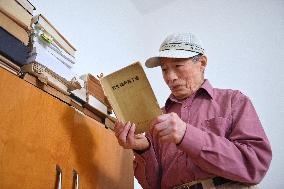
(230320) -- CHENGDU, March 20, 2023 (Xinhua) -- Wu Xichun looks through a book at home in Chengdu, southwest China's Sichuan Province, March 7, 2023. Wu Xichun is a professor at the College of Energy of the Chengdu University of Technology and an expert in geology. In the early 1970s, while conducting a geological mapping survey in the northwestern part of Sichuan Province, Wu unexpectedly discovered a reef group formed by Triassic siliceous hexactinellid sponges. Since then, he has devoted himself to the study on sponge reefs for nearly five decades. In order to study foreign literature, Wu mastered English, Russian, and German, and taught himself Latin, Greek, and Old French. He spent years conducting tens of times of on-site investigations at the discovery area to obtain more accurate research results and brought back dozens of pounds of fossils by himself. To clarify the reproduction and migration of hexactinellid sponges, Wu also brought the fossils abroad for more in-depth comparison studies. Wu

  •  
CHINA-SICHUAN-GEOLOGICAL EXPERT-WU XICHUN (CN)

CHINA-SICHUAN-GEOLOGICAL EXPERT-WU XICHUN (CN)

(230320) -- CHENGDU, March 20, 2023 (Xinhua) -- Wu Xichun arranges files at home in Chengdu, southwest China's Sichuan Province, March 7, 2023. Wu Xichun is a professor at the College of Energy of the Chengdu University of Technology and an expert in geology. In the early 1970s, while conducting a geological mapping survey in the northwestern part of Sichuan Province, Wu unexpectedly discovered a reef group formed by Triassic siliceous hexactinellid sponges. Since then, he has devoted himself to the study on sponge reefs for nearly five decades. In order to study foreign literature, Wu mastered English, Russian, and German, and taught himself Latin, Greek, and Old French. He spent years conducting tens of times of on-site investigations at the discovery area to obtain more accurate research results and brought back dozens of pounds of fossils by himself. To clarify the reproduction and migration of hexactinellid sponges, Wu also brought the fossils abroad for more in-depth comparison studies. Wu's res

  •  
CHINA-SICHUAN-GEOLOGICAL EXPERT-WU XICHUN (CN)

CHINA-SICHUAN-GEOLOGICAL EXPERT-WU XICHUN (CN)

(230320) -- CHENGDU, March 20, 2023 (Xinhua) -- Wu Xichun looks through a book at home in Chengdu, southwest China's Sichuan Province, March 7, 2023. Wu Xichun is a professor at the College of Energy of the Chengdu University of Technology and an expert in geology. In the early 1970s, while conducting a geological mapping survey in the northwestern part of Sichuan Province, Wu unexpectedly discovered a reef group formed by Triassic siliceous hexactinellid sponges. Since then, he has devoted himself to the study on sponge reefs for nearly five decades. In order to study foreign literature, Wu mastered English, Russian, and German, and taught himself Latin, Greek, and Old French. He spent years conducting tens of times of on-site investigations at the discovery area to obtain more accurate research results and brought back dozens of pounds of fossils by himself. To clarify the reproduction and migration of hexactinellid sponges, Wu also brought the fossils abroad for more in-depth comparison studies. Wu

  •  
CHINA-SICHUAN-GEOLOGICAL EXPERT-WU XICHUN (CN)

CHINA-SICHUAN-GEOLOGICAL EXPERT-WU XICHUN (CN)

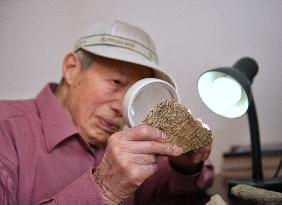
(230320) -- CHENGDU, March 20, 2023 (Xinhua) -- Wu Xichun observes a fossil fragment of Triassic siliceous sponge at home in Chengdu, southwest China's Sichuan Province, March 7, 2023. Wu Xichun is a professor at the College of Energy of the Chengdu University of Technology and an expert in geology. In the early 1970s, while conducting a geological mapping survey in the northwestern part of Sichuan Province, Wu unexpectedly discovered a reef group formed by Triassic siliceous hexactinellid sponges. Since then, he has devoted himself to the study on sponge reefs for nearly five decades. In order to study foreign literature, Wu mastered English, Russian, and German, and taught himself Latin, Greek, and Old French. He spent years conducting tens of times of on-site investigations at the discovery area to obtain more accurate research results and brought back dozens of pounds of fossils by himself. To clarify the reproduction and migration of hexactinellid sponges, Wu also brought the fossils abroad for mor

  •  
CHINA-SICHUAN-GEOLOGICAL EXPERT-WU XICHUN (CN)

CHINA-SICHUAN-GEOLOGICAL EXPERT-WU XICHUN (CN)

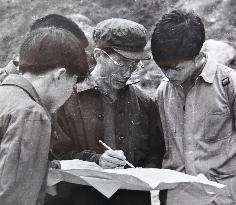
(230320) -- CHENGDU, March 20, 2023 (Xinhua) -- This file photo taken in 1974 shows Wu Xichun (C) conducting field research in the northwestern part of Sichuan Province, southwest China. Wu Xichun is a professor at the College of Energy of the Chengdu University of Technology and an expert in geology. In the early 1970s, while conducting a geological mapping survey in the northwestern part of Sichuan Province, Wu unexpectedly discovered a reef group formed by Triassic siliceous hexactinellid sponges. Since then, he has devoted himself to the study on sponge reefs for nearly five decades. In order to study foreign literature, Wu mastered English, Russian, and German, and taught himself Latin, Greek, and Old French. He spent years conducting tens of times of on-site investigations at the discovery area to obtain more accurate research results and brought back dozens of pounds of fossils by himself. To clarify the reproduction and migration of hexactinellid sponges, Wu also brought the fossils abroad for m

  •  
CHINA-SICHUAN-GEOLOGICAL EXPERT-WU XICHUN (CN)

CHINA-SICHUAN-GEOLOGICAL EXPERT-WU XICHUN (CN)

(230320) -- CHENGDU, March 20, 2023 (Xinhua) -- Wu Xichun observes a fossil slice of siliceous hexactinellid sponge at home in Chengdu, southwest China's Sichuan Province, March 7, 2023. Wu Xichun is a professor at the College of Energy of the Chengdu University of Technology and an expert in geology. In the early 1970s, while conducting a geological mapping survey in the northwestern part of Sichuan Province, Wu unexpectedly discovered a reef group formed by Triassic siliceous hexactinellid sponges. Since then, he has devoted himself to the study on sponge reefs for nearly five decades. In order to study foreign literature, Wu mastered English, Russian, and German, and taught himself Latin, Greek, and Old French. He spent years conducting tens of times of on-site investigations at the discovery area to obtain more accurate research results and brought back dozens of pounds of fossils by himself. To clarify the reproduction and migration of hexactinellid sponges, Wu also brought the fossils abroad for m

  •  
CHINA-SICHUAN-GEOLOGICAL EXPERT-WU XICHUN (CN)

CHINA-SICHUAN-GEOLOGICAL EXPERT-WU XICHUN (CN)

(230320) -- CHENGDU, March 20, 2023 (Xinhua) -- Wu Xichun arranges his fossil collection at home in Chengdu, southwest China's Sichuan Province, March 7, 2023. Wu Xichun is a professor at the College of Energy of the Chengdu University of Technology and an expert in geology. In the early 1970s, while conducting a geological mapping survey in the northwestern part of Sichuan Province, Wu unexpectedly discovered a reef group formed by Triassic siliceous hexactinellid sponges. Since then, he has devoted himself to the study on sponge reefs for nearly five decades. In order to study foreign literature, Wu mastered English, Russian, and German, and taught himself Latin, Greek, and Old French. He spent years conducting tens of times of on-site investigations at the discovery area to obtain more accurate research results and brought back dozens of pounds of fossils by himself. To clarify the reproduction and migration of hexactinellid sponges, Wu also brought the fossils abroad for more in-depth comparison stu

  •  
CHINA-SICHUAN-GEOLOGICAL EXPERT-WU XICHUN (CN)

CHINA-SICHUAN-GEOLOGICAL EXPERT-WU XICHUN (CN)

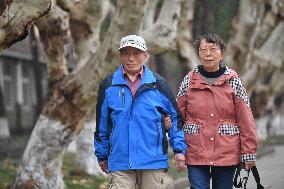
(230320) -- CHENGDU, March 20, 2023 (Xinhua) -- Wu Xichun (L) and his wife Li Peihua walks in the campus of Chengdu University of Technology in Chengdu, southwest China's Sichuan Province, Feb. 27, 2023. Wu Xichun is a professor at the College of Energy of the Chengdu University of Technology and an expert in geology. In the early 1970s, while conducting a geological mapping survey in the northwestern part of Sichuan Province, Wu unexpectedly discovered a reef group formed by Triassic siliceous hexactinellid sponges. Since then, he has devoted himself to the study on sponge reefs for nearly five decades. In order to study foreign literature, Wu mastered English, Russian, and German, and taught himself Latin, Greek, and Old French. He spent years conducting tens of times of on-site investigations at the discovery area to obtain more accurate research results and brought back dozens of pounds of fossils by himself. To clarify the reproduction and migration of hexactinellid sponges, Wu also brought the fos

  •  
CHINA-SICHUAN-GEOLOGICAL EXPERT-WU XICHUN (CN)

CHINA-SICHUAN-GEOLOGICAL EXPERT-WU XICHUN (CN)

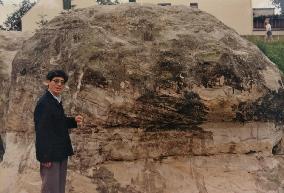
(230320) -- CHENGDU, March 20, 2023 (Xinhua) -- This file photo taken in 1987 shows Wu Xichun investigating a Jurassic siliceous sponge reef group in Germany. Wu Xichun is a professor at the College of Energy of the Chengdu University of Technology and an expert in geology. In the early 1970s, while conducting a geological mapping survey in the northwestern part of Sichuan Province, Wu unexpectedly discovered a reef group formed by Triassic siliceous hexactinellid sponges. Since then, he has devoted himself to the study on sponge reefs for nearly five decades. In order to study foreign literature, Wu mastered English, Russian, and German, and taught himself Latin, Greek, and Old French. He spent years conducting tens of times of on-site investigations at the discovery area to obtain more accurate research results and brought back dozens of pounds of fossils by himself. To clarify the reproduction and migration of hexactinellid sponges, Wu also brought the fossils abroad for more in-depth comparison stud

  •  
New aquarium recruits start by cleaning fish tank from inside

New aquarium recruits start by cleaning fish tank from inside

TSU, Japan - Two male recruits, Asuka Imagawa (L), 20, and Ryosuke Okita, 23, at Toba Aquarium in Toba, Mie Prefecture, western Japan, clean the inside wall of a fish tank using sponges during an underwater initiation ceremony on March 31, 2014, as fish and turtles swim around.

  •  
CHINA-GUIZHOU-FRESHWATER SPONGES-DISCOVERY (CN)

CHINA-GUIZHOU-FRESHWATER SPONGES-DISCOVERY (CN)

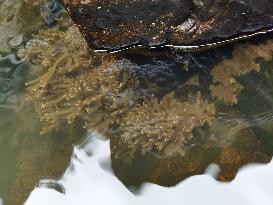
(221208) -- GUIYANG, Dec. 8, 2022 (Xinhua) -- This photo taken on Dec. 1, 2022 shows freshwater sponges found in the Xishui national nature reserve of southwest China's Guizhou Province. TO GO WITH "Primitive freshwater sponges found in SW China's nature reserve" (Xinhua)

  •  

Freshwater sponges found in nature reserve in China's Guizhou

STORY: Freshwater sponges found in nature reserve in China's Guizhou DATELINE: Dec. 6, 2022 LENGTH: 00:01:01 LOCATION: GUIYANG, China CATEGORY: ENVIRONMENT SHOTLIST: 1. various of the nature reserve 2. SOUNDBITE 1 (Chinese): LUO KANG, Staff member, Xishui National Nature Reserve 3. various of the freshwater sponges 4. SOUNDBITE 2 (Chinese): LUO KANG, Staff member, Xishui National Nature Reserve STORYLINE: Scientific researchers recently found a large number of freshwater sponges in the Xishui National Nature Reserve in southwest China's Guizhou Province. This is the first time the ancient species has been found in the nature reserve. SOUNDBITE 1 (Chinese): LUO KANG, Staff member, Xishui National Nature Reserve "Freshwater sponges are the simplest multicellular animals in the world. The ones we found here have quite simple structures. They grow on the moss. The sponges have no obvious tissue differentiation. They have no organs or systems." Freshwater sponges are often found in streams, ponds and lakes.

  •  
Toba Aquarium's initiation ceremony for new recruits

Toba Aquarium's initiation ceremony for new recruits

Three recruits at Toba Aquarium in Toba, Mie Prefecture, western Japan, clean the inside wall of a fish tank using sponges during an underwater initiation ceremony on March 31, 2014, with fish and turtles swimming around them. (Kyodo) ==Kyodo

  • Main
  • Top
  • Editorial
  • Creative
  • About Us
  • About ILG
  • Terms of use
  • Company
  • BEHIND
  • Price List
  • Single Plan
  • Monthly Plan
  • Services
  • Shooting
  • Rights Clearance
  • Support
  • FAQ
  • How To Buy
  • Contact Us
  • Become a Partner

© KYODO NEWS IMAGES INC

All Rights Reserved.

  • Editorial
  • Olympics
  • News
  • Sports
  • Japan
  • Tech
  • Royal
  • Disaster
  • NorthKorea
  • Old Japan
  • SNS
  • Creative
  • Food
  • Japan
  • Landscape
  • Animal
  • Popular
  • #Ukraine
  • #China
  • #coronavirus
  • #N. Korea
  • #Russia
  • #Thailand
  • #Ukraine
  • #China
  • #coronavirus
  • #N. Korea
  • #Russia
  • #Thailand
  • Food
  • Japan
  • Landscape
  • Animal
  • Olympics
  • News
  • Sports
  • Japan
  • Tech
  • Royal
  • Disaster
  • NorthKorea
  • Old Japan
  • SNS