•  
Winter Cherry Blossom in Yunnan - China

Winter Cherry Blossom in Yunnan - China

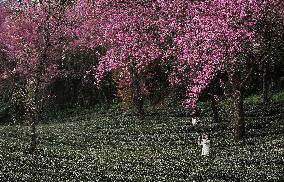
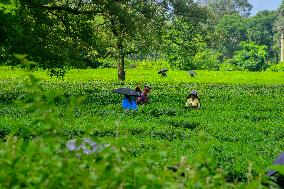
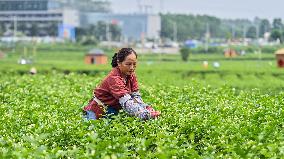
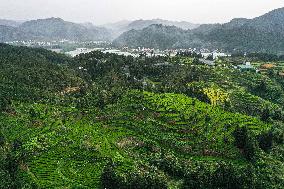
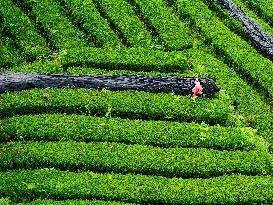
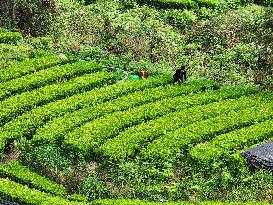
A woman visits a tea garden at Wuliang Mountain in Nanjian Yi Autonomous County, southwest China's Yunnan Province, December 24, 2025. Photo by Du Xiaoyi/Xinhua/ABACAPRESS.COM

  •  
Women Pluck Tea Leaves in Siliguri - India

Women Pluck Tea Leaves in Siliguri - India

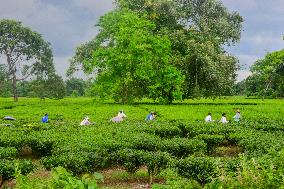
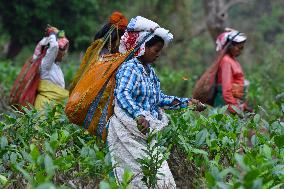
Female tea garden workers pluck tea leaves at Dagapur Tea Garden near Siliguri, India, on July 4, 2025. Dressed in traditional clothing and carrying baskets, they work under the morning sun amid lush plantations. The Siliguri region, in the Himalayan foothills, is known for tea production that supports local livelihoods and India’s export economy. Despite their crucial role, tea workers often face low wages and tough conditions, highlighting ongoing calls for labor reform. Photo by Diptendu Dutta/Middle East Images/ABACAPRESS.COM

  •  
Women Pluck Tea Leaves in Siliguri - India

Women Pluck Tea Leaves in Siliguri - India

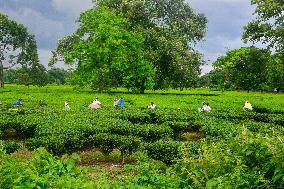
Female tea garden workers pluck tea leaves at Dagapur Tea Garden near Siliguri, India, on July 4, 2025. Dressed in traditional clothing and carrying baskets, they work under the morning sun amid lush plantations. The Siliguri region, in the Himalayan foothills, is known for tea production that supports local livelihoods and India’s export economy. Despite their crucial role, tea workers often face low wages and tough conditions, highlighting ongoing calls for labor reform. Photo by Diptendu Dutta/Middle East Images/ABACAPRESS.COM

  •  
Women Pluck Tea Leaves in Siliguri - India

Women Pluck Tea Leaves in Siliguri - India

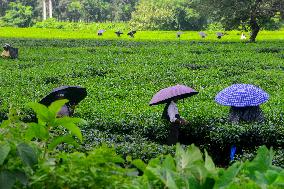
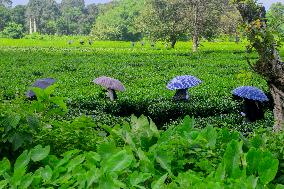
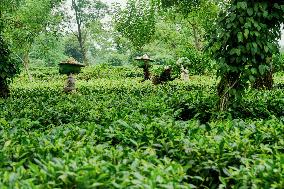
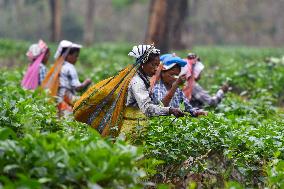
Several female tea workers hold umbrellas while plucking leaves at Dagapur Tea Garden near Siliguri, India, on July 4, 2025. They work under the sun in lush green fields, blending tradition with the demanding daily routine of tea harvesting. Photo by Diptendu Dutta/Middle East Images/ABACAPRESS.COM

  •  
Women Pluck Tea Leaves in Siliguri - India

Women Pluck Tea Leaves in Siliguri - India

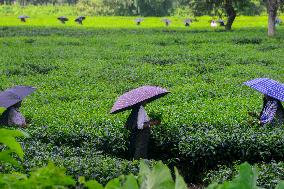
Several female tea workers hold umbrellas while plucking leaves at Dagapur Tea Garden near Siliguri, India, on July 4, 2025. They work under the sun in lush green fields, blending tradition with the demanding daily routine of tea harvesting. Photo by Diptendu Dutta/Middle East Images/ABACAPRESS.COM

  •  
Women Pluck Tea Leaves in Siliguri - India

Women Pluck Tea Leaves in Siliguri - India

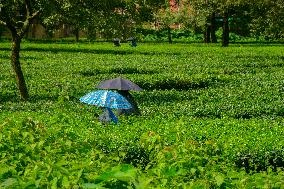
Several female tea workers hold umbrellas while plucking leaves at Dagapur Tea Garden near Siliguri, India, on July 4, 2025. They work under the sun in lush green fields, blending tradition with the demanding daily routine of tea harvesting. Photo by Diptendu Dutta/Middle East Images/ABACAPRESS.COM

  •  
Women Pluck Tea Leaves in Siliguri - India

Women Pluck Tea Leaves in Siliguri - India

Several female tea workers hold umbrellas while plucking leaves at Dagapur Tea Garden near Siliguri, India, on July 4, 2025. They work under the sun in lush green fields, blending tradition with the demanding daily routine of tea harvesting. Photo by Diptendu Dutta/Middle East Images/ABACAPRESS.COM

  •  
Women Pluck Tea Leaves in Siliguri - India

Women Pluck Tea Leaves in Siliguri - India

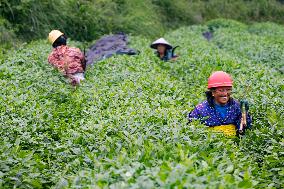
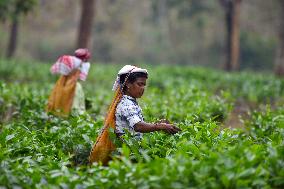
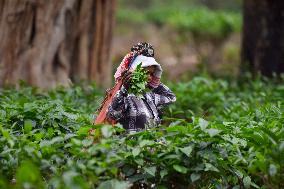
Two female workers pluck tea leaves at Dagapur Tea Garden near Siliguri, India, on July 4, 2025. Dressed in traditional attire, they work under the morning sun in the lush plantations. The region is known for its tea production, though workers often face low wages and tough conditions. Photo by Diptendu Dutta/Middle East Images/ABACAPRESS.COM

  •  
Tea Garden Workers - India

Tea Garden Workers - India

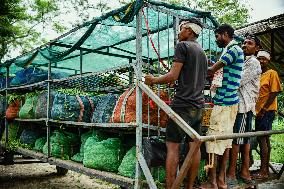
Workers on a truck loaded with green sacks of freshly plucked tea leaves in Golaghat, Assam, India on August 9, 2025. Assam’s tea gardens, employing nearly a million workers across 850 estates, produce more than half of India’s total tea output in an industry that is over 170 years old, with most workers coming from tribal communities. Photo by Hafiz Ahmed/Middle East images/ABACAPRESS.COM

  •  
Tea Garden Workers - India

Tea Garden Workers - India

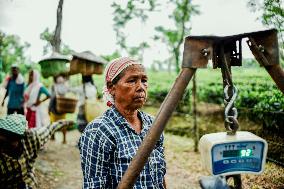
A tea worker stands near a weighing scale at a garden in Golaghat, Assam, India on August 9, 2025. Assam’s tea gardens, employing nearly a million workers across 850 estates, produce more than half of India’s total tea output in an industry that is over 170 years old, with most workers coming from tribal communities. Photo by Hafiz Ahmed/Middle East images/ABACAPRESS.COM

  •  
Tea Garden Workers - India

Tea Garden Workers - India

A tea worker stands near a weighing scale at a garden in Golaghat, Assam, India on August 9, 2025. Assam’s tea gardens, employing nearly a million workers across 850 estates, produce more than half of India’s total tea output in an industry that is over 170 years old, with most workers coming from tribal communities. Photo by Hafiz Ahmed/Middle East images/ABACAPRESS.COM

  •  
Tea Garden Workers - India

Tea Garden Workers - India

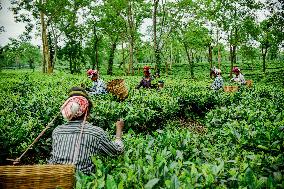
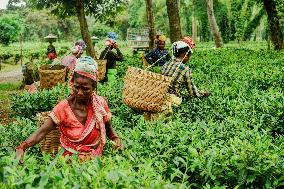
Tea garden workers carry baskets while plucking tea leaves at a plantation in Golaghat, Assam, India on August 9, 2025. Assam’s tea gardens, employing nearly a million workers across 850 estates, produce more than half of India’s total tea output in an industry that is over 170 years old, with most workers coming from tribal communities. Photo by Hafiz Ahmed/Middle East images/ABACAPRESS.COM

  •  
Tea Garden Workers - India

Tea Garden Workers - India

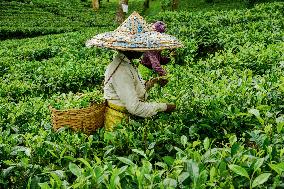
A tea garden worker plucks tea leaves at a plantation in Golaghat, Assam, India on August 9, 2025. Assam’s tea gardens employ nearly a million workers, mostly from tribal communities, across 850 estates, producing more than half of India’s total tea output in an industry that is 172 years old. Photo by Hafiz Ahmed/Middle East images/ABACAPRESS.COM

  •  
Tea Garden Workers - India

Tea Garden Workers - India

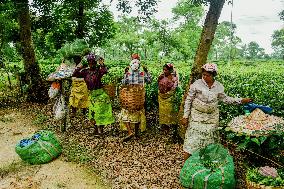
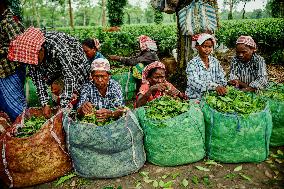
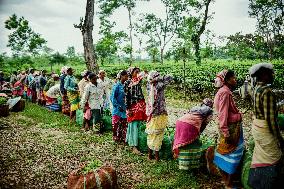
Tea garden workers gather around filled sacks of tea leaves at a collection point in Golaghat, Assam, India on August 9, 2025. Assam’s tea gardens, employing nearly a million workers across 850 estates, produce more than half of India’s total tea output in an industry that is over 170 years old, with most workers coming from tribal communities. Photo by Hafiz Ahmed/Middle East images/ABACAPRESS.COM

  •  
Tea Garden Workers - India

Tea Garden Workers - India

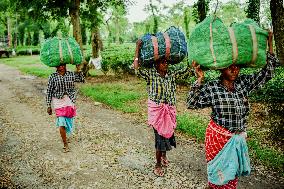
Tea garden workers carry large sacks of freshly plucked leaves on their heads in Golaghat, Assam, India on August 9, 2025. Assam’s tea gardens, employing nearly a million workers across 850 estates, produce more than half of India’s total tea output in an industry that is over 170 years old, with most workers coming from tribal communities. Photo by Hafiz Ahmed/Middle East images/ABACAPRESS.COM

  •  
Tea Garden Workers - India

Tea Garden Workers - India

A tea worker stands near a weighing scale at a garden in Golaghat, Assam, India on August 9, 2025. Assam’s tea gardens, employing nearly a million workers across 850 estates, produce more than half of India’s total tea output in an industry that is over 170 years old, with most workers coming from tribal communities. Photo by Hafiz Ahmed/Middle East images/ABACAPRESS.COM

  •  
Tea Garden Workers - India

Tea Garden Workers - India

A tea garden worker plucks tea leaves at a plantation in Golaghat, Assam, India on August 9, 2025. Assam’s tea gardens employ nearly a million workers, mostly from tribal communities, across 850 estates, producing more than half of India’s total tea output in an industry that is 172 years old. Photo by Hafiz Ahmed/Middle East images/ABACAPRESS.COM

  •  
Tea Garden Workers - India

Tea Garden Workers - India

A tea garden worker plucks tea leaves at a plantation in Golaghat, Assam, India on August 9, 2025. Assam’s tea gardens employ nearly a million workers, mostly from tribal communities, across 850 estates, producing more than half of India’s total tea output in an industry that is 172 years old. Photo by Hafiz Ahmed/Middle East images/ABACAPRESS.COM

  •  
Tea Garden Workers - India

Tea Garden Workers - India

A tea garden worker plucks tea leaves at a plantation in Golaghat, Assam, India on August 9, 2025. Assam’s tea gardens employ nearly a million workers, mostly from tribal communities, across 850 estates, producing more than half of India’s total tea output in an industry that is 172 years old. Photo by Hafiz Ahmed/Middle East images/ABACAPRESS.COM

  •  
Tea Garden Workers - India

Tea Garden Workers - India

Women sort tea leaves into large sacks at a collection point in Golaghat, Assam, India on August 9, 2025. Assam’s tea gardens, employing nearly a million workers across 850 estates, produce more than half of India’s total tea output in an industry that is over 170 years old, with most workers coming from tribal communities. Photo by Hafiz Ahmed/Middle East images/ABACAPRESS.COM

  •  
Tea Garden Workers - India

Tea Garden Workers - India

Tea garden workers carry baskets while plucking tea leaves at a plantation in Golaghat, Assam, India on August 9, 2025. Assam’s tea gardens, employing nearly a million workers across 850 estates, produce more than half of India’s total tea output in an industry that is over 170 years old, with most workers coming from tribal communities. Photo by Hafiz Ahmed/Middle East images/ABACAPRESS.COM

  •  
Tea Garden Workers - India

Tea Garden Workers - India

Women sort tea leaves into large sacks at a collection point in Golaghat, Assam, India on August 9, 2025. Assam’s tea gardens, employing nearly a million workers across 850 estates, produce more than half of India’s total tea output in an industry that is over 170 years old, with most workers coming from tribal communities. Photo by Hafiz Ahmed/Middle East images/ABACAPRESS.COM

  •  
Tea Garden Workers - India

Tea Garden Workers - India

A worker places a sack of tea leaves onto a weighing scale in Golaghat, Assam, India on August 9, 2025. Assam’s tea gardens, employing nearly a million workers across 850 estates, produce more than half of India’s total tea output in an industry that is over 170 years old, with most workers coming from tribal communities. Photo by Hafiz Ahmed/Middle East images/ABACAPRESS.COM

  •  
Tea Garden Workers - India

Tea Garden Workers - India

A tea worker stands near a weighing scale at a garden in Golaghat, Assam, India on August 9, 2025. Assam’s tea gardens, employing nearly a million workers across 850 estates, produce more than half of India’s total tea output in an industry that is over 170 years old, with most workers coming from tribal communities. Photo by Hafiz Ahmed/Middle East images/ABACAPRESS.COM

  •  
Tea Garden Workers - India

Tea Garden Workers - India

Tea garden workers pluck tea leaves at a plantation in Golaghat, Assam, India on August 9, 2025. Assam’s tea gardens, employing nearly a million workers across 850 estates, produce more than half of India’s total tea output in an industry that is over 170 years old, with most workers coming from tribal communities. Photo by Hafiz Ahmed/Middle East images/ABACAPRESS.COM

  •  
Tea Garden Workers - India

Tea Garden Workers - India

Tea garden workers gather around filled sacks of tea leaves at a collection point in Golaghat, Assam, India on August 9, 2025. Assam’s tea gardens, employing nearly a million workers across 850 estates, produce more than half of India’s total tea output in an industry that is over 170 years old, with most workers coming from tribal communities. Photo by Hafiz Ahmed/Middle East images/ABACAPRESS.COM

  •  
Tea Garden Workers - India

Tea Garden Workers - India

Tea garden workers carry baskets while plucking tea leaves at a plantation in Golaghat, Assam, India on August 9, 2025. Assam’s tea gardens, employing nearly a million workers across 850 estates, produce more than half of India’s total tea output in an industry that is over 170 years old, with most workers coming from tribal communities. Photo by Hafiz Ahmed/Middle East images/ABACAPRESS.COM

  •  
Tea Garden Workers - India

Tea Garden Workers - India

Tea garden workers carry baskets while plucking tea leaves at a plantation in Golaghat, Assam, India on August 9, 2025. Assam’s tea gardens, employing nearly a million workers across 850 estates, produce more than half of India’s total tea output in an industry that is over 170 years old, with most workers coming from tribal communities. Photo by Hafiz Ahmed/Middle East images/ABACAPRESS.COM

  •  
Tea Garden Workers - India

Tea Garden Workers - India

Tea garden workers carry large sacks of freshly plucked leaves on their heads in Golaghat, Assam, India on August 9, 2025. Assam’s tea gardens, employing nearly a million workers across 850 estates, produce more than half of India’s total tea output in an industry that is over 170 years old, with most workers coming from tribal communities. Photo by Hafiz Ahmed/Middle East images/ABACAPRESS.COM

  •  
Tea Garden Workers - India

Tea Garden Workers - India

Tea garden workers carry baskets while plucking tea leaves at a plantation in Golaghat, Assam, India on August 9, 2025. Assam’s tea gardens, employing nearly a million workers across 850 estates, produce more than half of India’s total tea output in an industry that is over 170 years old, with most workers coming from tribal communities. Photo by Hafiz Ahmed/Middle East images/ABACAPRESS.COM

  •  
Tea Garden Workers - India

Tea Garden Workers - India

A worker places a sack of tea leaves onto a weighing scale in Golaghat, Assam, India on August 9, 2025. Assam’s tea gardens, employing nearly a million workers across 850 estates, produce more than half of India’s total tea output in an industry that is over 170 years old, with most workers coming from tribal communities. Photo by Hafiz Ahmed/Middle East images/ABACAPRESS.COM

  •  
Tea Garden Workers - India

Tea Garden Workers - India

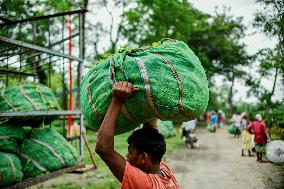
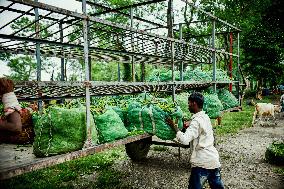
A worker loads green sacks of tea leaves onto a truck in Golaghat, Assam, India on August 9, 2025. Assam’s tea gardens, employing nearly a million workers across 850 estates, produce more than half of India’s total tea output in an industry that is over 170 years old, with most workers coming from tribal communities. Photo by Hafiz Ahmed/Middle East images/ABACAPRESS.COM

  •  
Jasmine Flower Industry in Guangxi - China

Jasmine Flower Industry in Guangxi - China

A tea farmer picks jasmine flowers at a jasmine garden in Hengzhou City, south China's Guangxi Zhuang Autonomous Region, on July 31, 2025. Hengzhou, dubbed the "hometown of jasmine in China," is home to some 340,000 jasmine flower farmers and over 180,000 mu (12,000 hectares) of jasmine fields. In recent years, the city has promoted the development of a whole industrial chain covering jasmine planting, processing and cultural tourism. Photo by Huang Xiaobang/Xinhua/ABACAPRESS.COM

  •  
Jasmine Flower Industry in Guangxi - China

Jasmine Flower Industry in Guangxi - China

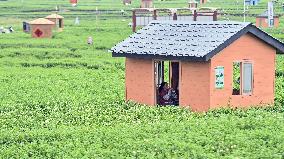
A tea farmer rests at a jasmine garden in Hengzhou City, south China's Guangxi Zhuang Autonomous Region, on July 31, 2025. Hengzhou, dubbed the "hometown of jasmine in China," is home to some 340,000 jasmine flower farmers and over 180,000 mu (12,000 hectares) of jasmine fields. In recent years, the city has promoted the development of a whole industrial chain covering jasmine planting, processing and cultural tourism. Photo by Huang Xiaobang/Xinhua/ABACAPRESS.COM

  •  

US: Flash Flood Hits Durham, NC Days After Tropical Depression Chantal

Several parts of North Carolina experienced severe flash flooding on Wednesday, July 9, as a strong line of thunderstorms moved into the region, just days after Tropical Depression Chantal brought intense flooding to Chapel Hill. The Durham Fire Department responded to multiple calls as a result of flooding across the city and surrounding areas, including rescue operation.

  •  
Promoting Matcha Tea In Guizhou - China

Promoting Matcha Tea In Guizhou - China

Tea farmers work at a tea garden in Jiangkou County, southwest China's Guizhou Province, China, on May 15, 2025. Located at the foot of Mount Fanjing, a UNESCO World Heritage Site, Jiangkou County is a powerhouse in the world's matcha industry. As a native of Jiangkou and a specialist of tea industry, Wei Yong works at the research and development department of Guizhou Gui Tea Group Co. Wei, who originally majored in chemical engineering, never imagined that his technical experience in product testing could contribute to the research and development of matcha industry in his hometown. He not only offers professional suggestions in various processes of matcha production, but also conducts tests and provides feedback on matcha products. Wei believes that matcha has brought not only technological breakthroughs but also reshaped the industrial structure of the tea industry in Guizhou. Matcha helps tea farmers increase their income while promoting the healthy and rapid development of the tea industry in Guizhou. "

  •  
Mount Fanjing Matcha Industry - China

Mount Fanjing Matcha Industry - China

A drone photo shows a farmer weeding at a tea garden in Jiangkou County of Tongren, southwest China's Guizhou Province, on April 16, 2025. Located at the foot of Mount Fanjing, a UNESCO World Heritage Site, Jiangkou County is a powerhouse in the world's matcha industry. The county boasts over 10,000 hectares of tea plantations, nearly a fifth of which are dedicated to matcha production. In 2024, Jiangkou County produced more than 1,200 tonnes of matcha with a total output value of 350 million yuan (about 48.02 million U.S. dollars). The local matcha products have been exported to more than 40 overseas markets. Experts and agronomists believe that Guizhou, located on a plateau, possesses geographical and climatic advantages such as high altitude, low latitude, abundant fog and limited sunlight ideal for growing tea. Therefore, tea produced in this area is green, ecological and organic. Photo by Ou Dongqu/Xinhua/ABACAPRESS.COM

  •  
Mount Fanjing Matcha Industry - China

Mount Fanjing Matcha Industry - China

An aerial drone photo shows a tea garden in Jiangkou County of Tongren, southwest China's Guizhou Province, on April 16, 2025. Located at the foot of Mount Fanjing, a UNESCO World Heritage Site, Jiangkou County is a powerhouse in the world's matcha industry. The county boasts over 10,000 hectares of tea plantations, nearly a fifth of which are dedicated to matcha production. In 2024, Jiangkou County produced more than 1,200 tonnes of matcha with a total output value of 350 million yuan (about 48.02 million U.S. dollars). The local matcha products have been exported to more than 40 overseas markets. Experts and agronomists believe that Guizhou, located on a plateau, possesses geographical and climatic advantages such as high altitude, low latitude, abundant fog and limited sunlight ideal for growing tea. Therefore, tea produced in this area is green, ecological and organic. Photo by Yang Wenbin/Xinhua/ABACAPRESS.COM

  •  
Mount Fanjing Matcha Industry - China

Mount Fanjing Matcha Industry - China

An aerial drone photo shows a farmer applying shading nets at a tea garden in Jiangkou County of Tongren, southwest China's Guizhou Province, on April 16, 2025. Located at the foot of Mount Fanjing, a UNESCO World Heritage Site, Jiangkou County is a powerhouse in the world's matcha industry. The county boasts over 10,000 hectares of tea plantations, nearly a fifth of which are dedicated to matcha production. In 2024, Jiangkou County produced more than 1,200 tonnes of matcha with a total output value of 350 million yuan (about 48.02 million U.S. dollars). The local matcha products have been exported to more than 40 overseas markets. Experts and agronomists believe that Guizhou, located on a plateau, possesses geographical and climatic advantages such as high altitude, low latitude, abundant fog and limited sunlight ideal for growing tea. Therefore, tea produced in this area is green, ecological and organic. Photo by Ou Dongqu/Xinhua/ABACAPRESS.COM

  •  
Mount Fanjing Matcha Industry - China

Mount Fanjing Matcha Industry - China

An aerial drone photo shows a tea garden in Jiangkou County of Tongren, southwest China's Guizhou Province, on April 16, 2025. Located at the foot of Mount Fanjing, a UNESCO World Heritage Site, Jiangkou County is a powerhouse in the world's matcha industry. The county boasts over 10,000 hectares of tea plantations, nearly a fifth of which are dedicated to matcha production. In 2024, Jiangkou County produced more than 1,200 tonnes of matcha with a total output value of 350 million yuan (about 48.02 million U.S. dollars). The local matcha products have been exported to more than 40 overseas markets. Experts and agronomists believe that Guizhou, located on a plateau, possesses geographical and climatic advantages such as high altitude, low latitude, abundant fog and limited sunlight ideal for growing tea. Therefore, tea produced in this area is green, ecological and organic. Photo by Ou Dongqu/Xinhua/ABACAPRESS.COM

  •  
Women Workers Of Tea Garden - India

Women Workers Of Tea Garden - India

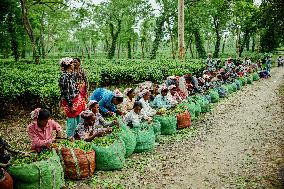
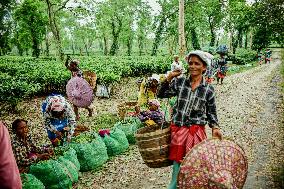
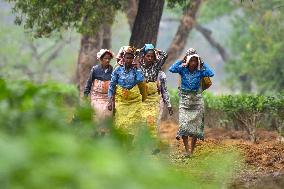
Tea garden workers walk through rows of bushes with baskets on their backs in Nagaon, India on April 9, 2025. Photo by Anuwar Hazarika/Middle East Images/ABACAPRESS.COM

  •  
Women Workers Of Tea Garden - India

Women Workers Of Tea Garden - India

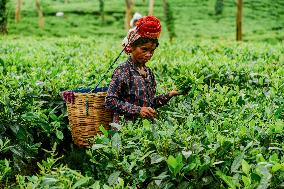
A child sleeps inside a red cloth hammock tied between two trees in a tea garden in Nagaon, India on April 9, 2025. The scarf is used to collect tea leaves and now serves as a makeshift cradle for a plantation worker’s child. Photo by Anuwar Hazarika/Middle East Images/ABACAPRESS.COM

  •  
Women Workers Of Tea Garden - India

Women Workers Of Tea Garden - India

A woman sits next to a red cloth hammock holding a child in Nagaon, India on April 9, 2025. Photo by Anuwar Hazarika/Middle East Images/ABACAPRESS.COM

  •  
Women Workers Of Tea Garden - India

Women Workers Of Tea Garden - India

Tea garden workers walk through rows of bushes with baskets on their backs in Nagaon, India on April 9, 2025. Photo by Anuwar Hazarika/Middle East Images/ABACAPRESS.COM

  •  
Women Workers Of Tea Garden - India

Women Workers Of Tea Garden - India

Indian female tea garden labourer drinks water at a tea garden in Nagaon, in the northeastern state of Assam, India, on April 9, 2025. Photo by Anuwar Hazarika/Middle East Images/ABACAPRESS.COM

  •  
Women Workers Of Tea Garden - India

Women Workers Of Tea Garden - India

Tea garden workers walk through rows of bushes with baskets on their backs in Nagaon, India on April 9, 2025. Photo by Anuwar Hazarika/Middle East Images/ABACAPRESS.COM

  •  
Women Workers Of Tea Garden - India

Women Workers Of Tea Garden - India

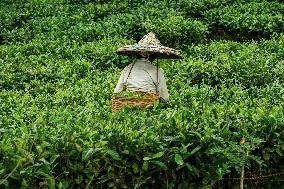
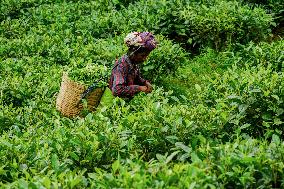
A woman plucks leaves among the bushes in a tea garden in Nagaon, India on April 9, 2025. Photo by Anuwar Hazarika/Middle East Images/ABACAPRESS.COM

  •  
Women Workers Of Tea Garden - India

Women Workers Of Tea Garden - India

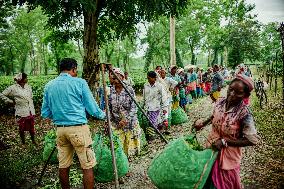
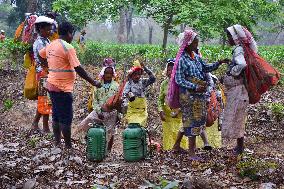
Women gather near water containers under trees in Nagaon, India on April 9, 2025. Photo by Anuwar Hazarika/Middle East Images/ABACAPRESS.COM

  •  
Women Workers Of Tea Garden - India

Women Workers Of Tea Garden - India

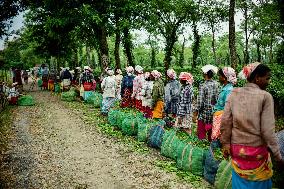
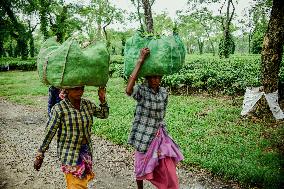
Tea garden workers walk along a narrow path carrying sacks on their heads in Nagaon, India on April 9, 2025. Photo by Anuwar Hazarika/Middle East Images/ABACAPRESS.COM

  •  
Women Workers Of Tea Garden - India

Women Workers Of Tea Garden - India

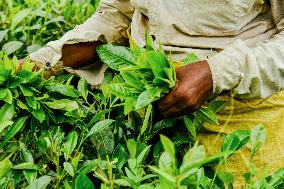
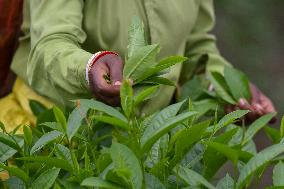
A worker’s hand reaches through the leaves to pluck tea in Nagaon, India on April 9, 2025. Photo by Anuwar Hazarika/Middle East Images/ABACAPRESS.COM

  • Main
  • Top
  • Editorial
  • Creative
  • About Us
  • About ILG
  • Terms of use
  • Company
  • BEHIND
  • Price List
  • Single Plan
  • Monthly Plan
  • Services
  • Shooting
  • Rights Clearance
  • Support
  • FAQ
  • How To Buy
  • Contact Us
  • Become a Partner

© KYODO NEWS IMAGES INC

All Rights Reserved.

  • Editorial
  • Olympics
  • News
  • Sports
  • Japan
  • Tech
  • Royal
  • Disaster
  • NorthKorea
  • Old Japan
  • SNS
  • Creative
  • Food
  • Japan
  • Landscape
  • Animal
  • Popular
  • #Ukraine
  • #Russia
  • #coronavirus
  • #N. Korea
  • #Thailand
  • #China
  • #Ukraine
  • #Russia
  • #coronavirus
  • #N. Korea
  • #Thailand
  • #China
  • Food
  • Japan
  • Landscape
  • Animal
  • Olympics
  • News
  • Sports
  • Japan
  • Tech
  • Royal
  • Disaster
  • NorthKorea
  • Old Japan
  • SNS