•  
CHINA-UNESCO-DOCUMENTARY HERITAGE-THREE ITEMS-INSCRIBED (CN)

CHINA-UNESCO-DOCUMENTARY HERITAGE-THREE ITEMS-INSCRIBED (CN)

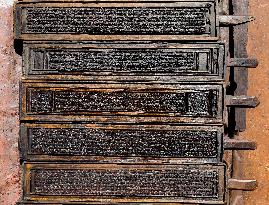
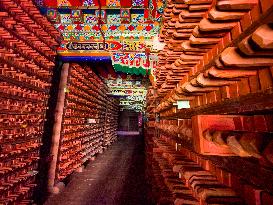
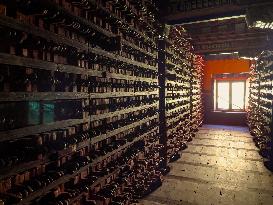
(240509) -- BEIJING, May 9, 2024 (Xinhua) -- This photo taken on Oct. 3, 2021 shows woodcut printing plates at the Dege Sutra Printing House in Dege County of Ganzi Tibetan Autonomous Prefecture, southwest China's Sichuan Province. Three items from China have been listed as documentary heritage on the Asia Pacific regional register of UNESCO's Memory of the World (MOW) Programme, the National Archives Administration of China said Thursday. The listed items include archives relating to traditional teahouses in Chengdu, capital of southwest China's Sichuan Province, genealogical records of the communities of Huizhou in east China's Anhui Province, and printing blocks housed at the Dege Sutra Printing House in Sichuan. The decision was approved at the 10th General Meeting of the Memory of the World Committee for Asia and the Pacific, convened from Tuesday to Wednesday in Ulaanbaatar, Mongolia. (Xinhua/Shen Bohan)

  •  
CHINA-UNESCO-DOCUMENTARY HERITAGE-THREE ITEMS-INSCRIBED (CN)

CHINA-UNESCO-DOCUMENTARY HERITAGE-THREE ITEMS-INSCRIBED (CN)

(240509) -- BEIJING, May 9, 2024 (Xinhua) -- This photo taken on Oct. 3, 2021 shows woodcut printing plates at the Dege Sutra Printing House in Dege County of Ganzi Tibetan Autonomous Prefecture, southwest China's Sichuan Province. Three items from China have been listed as documentary heritage on the Asia Pacific regional register of UNESCO's Memory of the World (MOW) Programme, the National Archives Administration of China said Thursday. The listed items include archives relating to traditional teahouses in Chengdu, capital of southwest China's Sichuan Province, genealogical records of the communities of Huizhou in east China's Anhui Province, and printing blocks housed at the Dege Sutra Printing House in Sichuan. The decision was approved at the 10th General Meeting of the Memory of the World Committee for Asia and the Pacific, convened from Tuesday to Wednesday in Ulaanbaatar, Mongolia. (Xinhua/Shen Bohan)

  •  
CHINA-UNESCO-DOCUMENTARY HERITAGE-THREE ITEMS-INSCRIBED (CN)

CHINA-UNESCO-DOCUMENTARY HERITAGE-THREE ITEMS-INSCRIBED (CN)

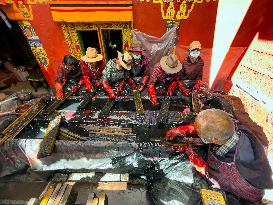
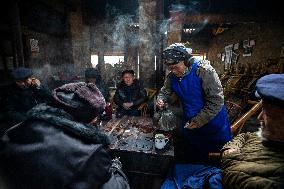
(240509) -- BEIJING, May 9, 2024 (Xinhua) -- This photo taken on Oct. 3, 2021 shows workers cleaning woodcut printing plates at the Dege Sutra Printing House in Dege County of Ganzi Tibetan Autonomous Prefecture, southwest China's Sichuan Province. Three items from China have been listed as documentary heritage on the Asia Pacific regional register of UNESCO's Memory of the World (MOW) Programme, the National Archives Administration of China said Thursday. The listed items include archives relating to traditional teahouses in Chengdu, capital of southwest China's Sichuan Province, genealogical records of the communities of Huizhou in east China's Anhui Province, and printing blocks housed at the Dege Sutra Printing House in Sichuan. The decision was approved at the 10th General Meeting of the Memory of the World Committee for Asia and the Pacific, convened from Tuesday to Wednesday in Ulaanbaatar, Mongolia. (Xinhua/Shen Bohan)

  •  
CHINA-UNESCO-DOCUMENTARY HERITAGE-THREE ITEMS-INSCRIBED (CN)

CHINA-UNESCO-DOCUMENTARY HERITAGE-THREE ITEMS-INSCRIBED (CN)

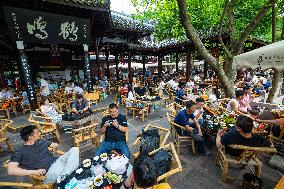
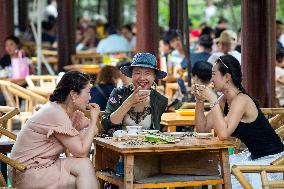
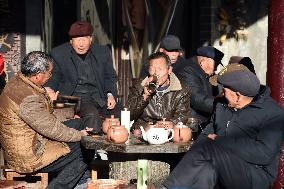
(240509) -- BEIJING, May 9, 2024 (Xinhua) -- This photo taken on June 7, 2023 shows people drinking tea at a teahouse in Chengdu, capital of southwest China's Sichuan Province. Three items from China have been listed as documentary heritage on the Asia Pacific regional register of UNESCO's Memory of the World (MOW) Programme, the National Archives Administration of China said Thursday. The listed items include archives relating to traditional teahouses in Chengdu, capital of southwest China's Sichuan Province, genealogical records of the communities of Huizhou in east China's Anhui Province, and printing blocks housed at the Dege Sutra Printing House in Sichuan. The decision was approved at the 10th General Meeting of the Memory of the World Committee for Asia and the Pacific, convened from Tuesday to Wednesday in Ulaanbaatar, Mongolia. (Xinhua/Shen Bohan)

  •  
CHINA-UNESCO-DOCUMENTARY HERITAGE-THREE ITEMS-INSCRIBED (CN)

CHINA-UNESCO-DOCUMENTARY HERITAGE-THREE ITEMS-INSCRIBED (CN)

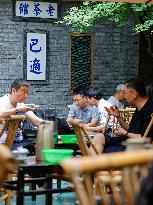
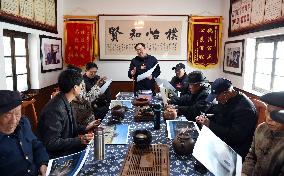
(240509) -- BEIJING, May 9, 2024 (Xinhua) -- This photo taken on June 30, 2021 shows people drinking tea at Heming teahouse in Chengdu, capital of southwest China's Sichuan Province. Three items from China have been listed as documentary heritage on the Asia Pacific regional register of UNESCO's Memory of the World (MOW) Programme, the National Archives Administration of China said Thursday. The listed items include archives relating to traditional teahouses in Chengdu, capital of southwest China's Sichuan Province, genealogical records of the communities of Huizhou in east China's Anhui Province, and printing blocks housed at the Dege Sutra Printing House in Sichuan. The decision was approved at the 10th General Meeting of the Memory of the World Committee for Asia and the Pacific, convened from Tuesday to Wednesday in Ulaanbaatar, Mongolia. (Xinhua/Shen Bohan)

  •  
CHINA-UNESCO-DOCUMENTARY HERITAGE-THREE ITEMS-INSCRIBED (CN)

CHINA-UNESCO-DOCUMENTARY HERITAGE-THREE ITEMS-INSCRIBED (CN)

(240509) -- BEIJING, May 9, 2024 (Xinhua) -- This photo taken on Oct. 3, 2021 shows woodcut printing plates at the Dege Sutra Printing House in Dege County of Ganzi Tibetan Autonomous Prefecture, southwest China's Sichuan Province. Three items from China have been listed as documentary heritage on the Asia Pacific regional register of UNESCO's Memory of the World (MOW) Programme, the National Archives Administration of China said Thursday. The listed items include archives relating to traditional teahouses in Chengdu, capital of southwest China's Sichuan Province, genealogical records of the communities of Huizhou in east China's Anhui Province, and printing blocks housed at the Dege Sutra Printing House in Sichuan. The decision was approved at the 10th General Meeting of the Memory of the World Committee for Asia and the Pacific, convened from Tuesday to Wednesday in Ulaanbaatar, Mongolia. (Xinhua/Shen Bohan)

  •  
CHINA-UNESCO-DOCUMENTARY HERITAGE-THREE ITEMS-INSCRIBED (CN)

CHINA-UNESCO-DOCUMENTARY HERITAGE-THREE ITEMS-INSCRIBED (CN)

(240509) -- BEIJING, May 9, 2024 (Xinhua) -- This photo taken on June 30, 2021 shows people drinking tea at Heming teahouse in Chengdu, capital of southwest China's Sichuan Province. Three items from China have been listed as documentary heritage on the Asia Pacific regional register of UNESCO's Memory of the World (MOW) Programme, the National Archives Administration of China said Thursday. The listed items include archives relating to traditional teahouses in Chengdu, capital of southwest China's Sichuan Province, genealogical records of the communities of Huizhou in east China's Anhui Province, and printing blocks housed at the Dege Sutra Printing House in Sichuan. The decision was approved at the 10th General Meeting of the Memory of the World Committee for Asia and the Pacific, convened from Tuesday to Wednesday in Ulaanbaatar, Mongolia. (Xinhua/Shen Bohan)

  •  
CHINA-UNESCO-DOCUMENTARY HERITAGE-THREE ITEMS-INSCRIBED (CN)

CHINA-UNESCO-DOCUMENTARY HERITAGE-THREE ITEMS-INSCRIBED (CN)

(240509) -- BEIJING, May 9, 2024 (Xinhua) -- This photo taken on Nov. 23, 2021 shows Li Qiang (2nd R), owner of a teahouse, serving customers in Shuangliu District of Chengdu, capital of southwest China's Sichuan Province. Three items from China have been listed as documentary heritage on the Asia Pacific regional register of UNESCO's Memory of the World (MOW) Programme, the National Archives Administration of China said Thursday. The listed items include archives relating to traditional teahouses in Chengdu, capital of southwest China's Sichuan Province, genealogical records of the communities of Huizhou in east China's Anhui Province, and printing blocks housed at the Dege Sutra Printing House in Sichuan. The decision was approved at the 10th General Meeting of the Memory of the World Committee for Asia and the Pacific, convened from Tuesday to Wednesday in Ulaanbaatar, Mongolia. (Xinhua/Shen Bohan)

  •  
Snow-covered geisha district in central Japan

Snow-covered geisha district in central Japan

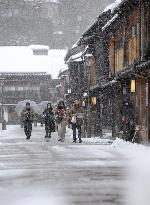
People walk on a snow-covered street lined with traditional teahouses in the Higashi Chaya geisha district in Kanazawa, central Japan, on Dec. 22, 2023.

  •  
Snow-covered geisha district in central Japan

Snow-covered geisha district in central Japan

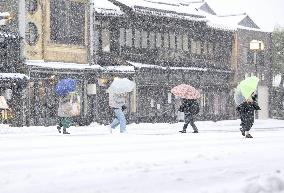
People walk on a snow-covered street lined with traditional teahouses in the Higashi Chaya geisha district in Kanazawa, central Japan, on Dec. 22, 2023.

  •  
Snow-covered geisha district in central Japan

Snow-covered geisha district in central Japan

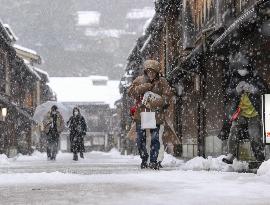
People walk on a snow-covered street lined with traditional teahouses in the Higashi Chaya geisha district in Kanazawa, central Japan, on Dec. 22, 2023.

  •  

Tea time around stove: new lifestyle to celebrate Chinese New Year

STORY: Tea time around stove: new lifestyle to celebrate Chinese New Year DATELINE: Jan. 26, 2023 LENGTH: 00:00:52 LOCATION: CHONGQING, China CATEGORY: CULTURE SHOTLIST: 1. various of tea party in Chongqing 2. SOUNDBITE 1 (Chinese): TOURIST 3. SOUNDBITE 2 (Chinese): SHU RONG, Teahouse owner STORYLINE: Enjoying tea time around a stove has become a trending lifestyle in southwest China's Sichuan Province and Chongqing Municipality during this Spring Festival. In Mountain City Lane, a historical and cultural site in Chongqing, many teahouses have provided stove-boiled tea and traditional performances to entertain tourists. SOUNDBITE 1 (Chinese): Tourist "I think it's very romantic. The atmosphere is great." Teahouses have also provided tea with red dates, cranberries and other fruits to make it sweeter and tastier. SOUNDBITE 2 (Chinese): SHU RONG, Teahouse owner "Boiling tea on the stove is becoming more and more popular. People love to have tea and watch performances here as a way to relax. They put dow

  •  
Kyoto teahouses open riverside seats for summer

Kyoto teahouses open riverside seats for summer

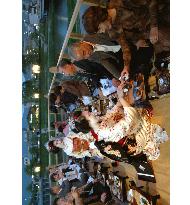
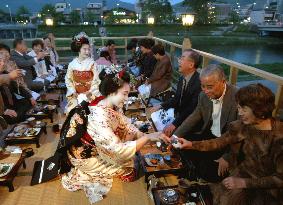
KYOTO, Japan - ''Maiko,'' or apprentice geisha, fill cups with sake for guests as traditional summer seats at teahouses opened by the Kamogawa River in Kyoto May 1.

  •  
Teahouses in Yoshiwara

Teahouses in Yoshiwara

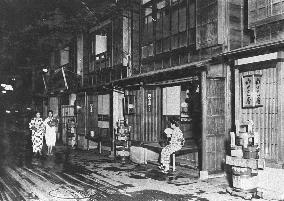
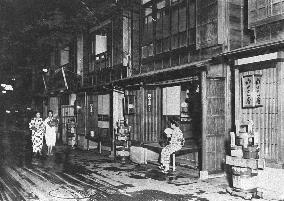
TOKYO, Japan - The file photo shows teahouses in Yoshiwara, which was Japan's largest licensed red-light district until prostitution was banned in 1957, located in Tokyo. The undated photo was taken in the early Showa era (1926-1989).

  •  
CHINA-HUNAN-CHANGSHA-TEAHOUSE (CN)

CHINA-HUNAN-CHANGSHA-TEAHOUSE (CN)

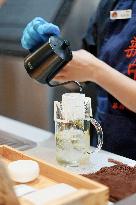
(220708) -- CHANGSHA, July 8, 2022 (Xinhua) -- A staff member of Modern China Tea Shop makes tea for consumers in Changsha, central China's Hunan Province, June 25, 2022. TO GO WITH "Across China: Past meets present at blossoming teahouses" (Xinhua/Zhang Ge)

  •  
CHINA-HUNAN-CHANGSHA-TEAHOUSE (CN)

CHINA-HUNAN-CHANGSHA-TEAHOUSE (CN)

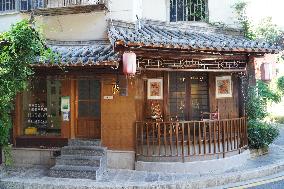
(220708) -- CHANGSHA, July 8, 2022 (Xinhua) -- Photo taken on June 25, 2022 shows a Chinese-style teahouse hidden down an alleyway in Changsha, central China's Hunan Province. TO GO WITH "Across China: Past meets present at blossoming teahouses" (Xinhua/Zhang Ge)

  •  
Xinhua Headlines: From teahouses to Great Hall: How democracy works in China

Xinhua Headlines: From teahouses to Great Hall: How democracy works in China

(220308) -- BEIJING, March 8, 2022 (Xinhua) -- He Weijun (C), a deputy to the Suixi County people's congress, talk with voters at a deputy studio inside a teahouse in Linhuan Town of Huaibei, east China's Anhui Province, Dec. 1, 2021. (Xinhua/Zhou Mu)

  •  
Xinhua Headlines: From teahouses to Great Hall: How democracy works in China

Xinhua Headlines: From teahouses to Great Hall: How democracy works in China

(220308) -- BEIJING, March 8, 2022 (Xinhua) -- Residents enjoy tea at a teahouse in Linhuan Town of Huaibei, east China's Anhui Province, Dec. 1, 2021. (Xinhua/Zhou Mu)

  •  
Xinhua Headlines: From teahouses to Great Hall: How democracy works in China

Xinhua Headlines: From teahouses to Great Hall: How democracy works in China

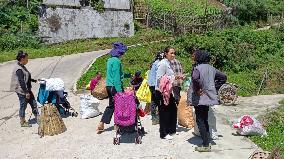
(220308) -- BEIJING, March 8, 2022 (Xinhua) -- Mao Zhenfang (2nd R, front), a deputy to the National People's Congress, distributes spring onion seeds to villagers in Yuangen Village of Liziping Town in Ya'an, southwest China's Sichuan Province, Sept. 6, 2021. (Xinhua)

  •  
Xinhua Headlines: From teahouses to Great Hall: How democracy works in China

Xinhua Headlines: From teahouses to Great Hall: How democracy works in China

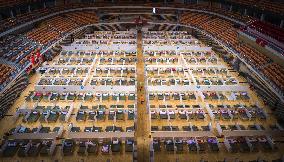
(220308) -- BEIJING, March 8, 2022 (Xinhua) -- Photo taken on Feb. 12, 2020 shows the interior view of a temporary hospital converted from Wuhan Sports Center in Wuhan, central China's Hubei Province. (Xinhua/Xiao Yijiu)

  •  
Xinhua Headlines: From teahouses to Great Hall: How democracy works in China

Xinhua Headlines: From teahouses to Great Hall: How democracy works in China

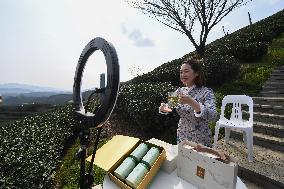
(220308) -- BEIJING, March 8, 2022 (Xinhua) -- A volunteer promotes spring tea products via on-line live streaming at a tea farm at Bashan Village, Fuyang District, Hangzhou of east China's Zhejiang Province, on March 15, 2021. (Xinhua/Xu Yu)

  •  
Xinhua Headlines: From teahouses to Great Hall: How democracy works in China

Xinhua Headlines: From teahouses to Great Hall: How democracy works in China

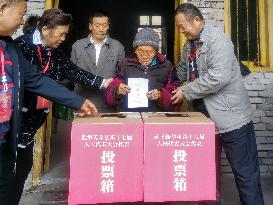
(220308) -- BEIJING, March 8, 2022 (Xinhua) -- Li Chaolan, 106, casts her ballot in Xinhua Township of Tianquan County, Ya'an, southwest China's Sichuan Province, Oct. 15, 2021. (Xinhua)

  •  
Xinhua Headlines: From teahouses to Great Hall: How democracy works in China

Xinhua Headlines: From teahouses to Great Hall: How democracy works in China

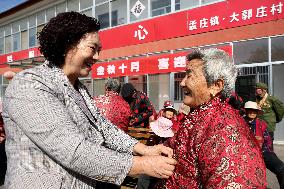
(220308) -- BEIJING, March 8, 2022 (Xinhua) -- An elderly woman (R) tries on new clothes in Daguozhuang Village of Zaozhuang, east China's Shandong Province, Oct. 12, 2021. (Photo by Sun Zhongzhe/Xinhua)

  •  
Xinhua Headlines: From teahouses to Great Hall: How democracy works in China

Xinhua Headlines: From teahouses to Great Hall: How democracy works in China

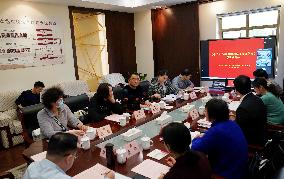
(220308) -- BEIJING, March 8, 2022 (Xinhua) -- Photo taken on Nov. 26, 2021 shows a meeting held at a grassroots contact station set up by the Legislative Affairs Commission of the National People's Congress Standing Committee in Hongqiao subdistrict of Shanghai, east China. (Xinhua/Liu Ying)

  •  
Kyoto teahouses open riverside seats for summer

Kyoto teahouses open riverside seats for summer

KYOTO, Japan - ''Maiko,'' or apprentice geisha, fill cups with sake for guests as traditional summer seats at teahouses opened by the Kamogawa River in Kyoto May 1. (Kyodo)

  •  
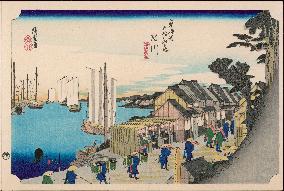
Hiroshige - 53 Stations of the Tokaido - Print 2

Hiroshige - 53 Stations of the Tokaido - Print 2

2 Shinagawa - A street of houses backing on to the seashore, and the tail-end of a daimyo's procession passing along it; behind the houses ships moored in the bay. Being the first station on the highway, Shinagawa was thronged with travellers coming and going. The road was lined with many teahouses, restaurants and entertainment quarters. The bay, seen in Hiroshige's picture, has been reclaimed and now forms a part of Tokyo. Utagawa Hiroshige (1797 - 1858). The Fifty-Three Stations of the Tokaido - Hoeido edition (1831-4) Date: 1831 - 1834

  •  
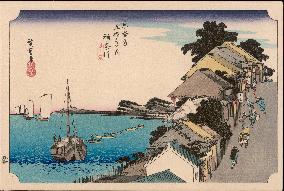
Hiroshige - 53 Stations of the Tokaido - Print 4

Hiroshige - 53 Stations of the Tokaido - Print 4

4 Kanagawa - View of a street along the top of a cliff overlooking Yedo Bay, and female touts trying to drag travellers into the resthouses. This station was on a cliff overlooking a magnificent seascape of Edo Bay. One side of the highway was lined with two storied teahouses which commanded views of the beautiful bay.The land has been reclaimed from the bay seen in the picture and now forms a part of Yokohama City. Utagawa Hiroshige (1797 - 1858). The Fifty-Three Stations of the Tokaido - Hoeido edition (1831-4) Date: 1831 - 1834

  •  
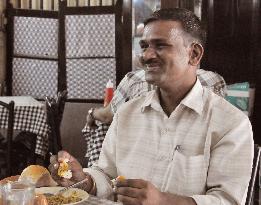
Time-honored Irani cafes disappearing in Mumbai

Time-honored Irani cafes disappearing in Mumbai

A local man enjoys his breakfast at Kyani & Co., a 111-year-old Irani cafe in Mumbai on July 15, 2015. Such Persian-style teahouses, opened mainly in the 19th century by Zoroastrian Iranian immigrants who fled the persecution of the Islamic dynasty, flourished into popular local eateries but are now disappearing due to city redevelopment and a lack of successors. (Kyodo) ==Kyodo

  •  
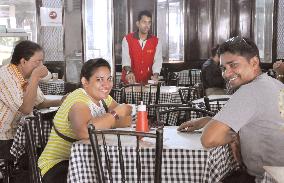
Time-honored Irani cafes disappearing in Mumbai

Time-honored Irani cafes disappearing in Mumbai

Locals enjoy tea at Kyani & Co., a 111-year-old Irani cafe in Mumbai, on July 15, 2015. Such Persian-style teahouses, opened mainly in the 19th century by Irani Zoroastrian immigrants who fled the persecution of the Islamic dynasty, flourished into popular local eateries but are now disappearing due to city redevelopment and a lack of successors. (Kyodo) ==Kyodo

  •  
Time-honored Irani cafes disappearing in Mumbai

Time-honored Irani cafes disappearing in Mumbai

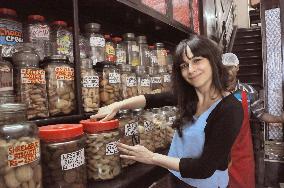
A 31-year-old researcher at Oxford University on Iranian immigrants in India, picks one of many jars of biscuits and other snacks at an Irani cafe in Mumbai on July 28, 2015. Originally opened mainly in the 19th century by Zoroastrian Iranian immigrants who fled the persecution of the Islamic dynasty, these Persian-style teahouses flourished into popular local eateries but are now disappearing due to city redevelopment and a lack of successors. (Kyodo) ==Kyodo

  •  
Woman operates 2 'Bird Cafe' teahouses in Tokyo

Woman operates 2 'Bird Cafe' teahouses in Tokyo

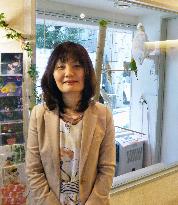
Shiho Kawabe poses at one of her two "Bird Cafe" teahouses in Tokyo on Jan. 27, 2015. Teahouse customers can enjoy watching birds kept inside such as parakeets and canaries while drinking beverages. (Kyodo) ==Kyodo

  •  
Teahouses in Yoshiwara

Teahouses in Yoshiwara

TOKYO, Japan - The file photo shows teahouses in Yoshiwara, which was Japan's largest licensed red-light district until prostitution was banned in 1957, located in Tokyo. The undated photo was taken in the early Showa era (1926-1989). (Kyodo)

  •  
Teahouses at Ueno Park

Teahouses at Ueno Park

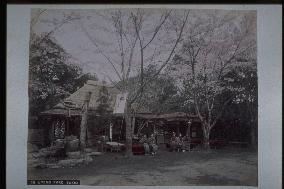
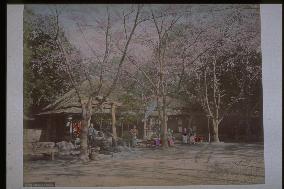
The location of the photograph is the same as that in #4198. But the pulley of the well is slung over a branch of the overhanging tree, whereas in #4198, it is slung on a stick crossing poles on either side of the well. The people sitting on the bench seem to be workers at the teahouse.==Date:unknown, Place:Tokyo, Photo:unknown, (Credit:Nagasaki University Library/Kyodo News Images) [Cabinet Number93‐8‐0]

  •  
Kanazawa Hakkei

Kanazawa Hakkei

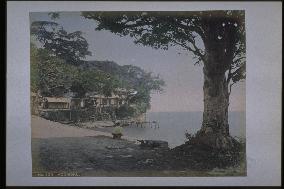
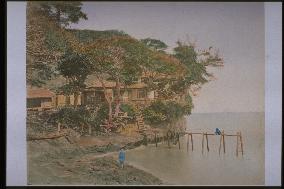
Hiragata Bay as seen from Kyurantei. Biwajima Benten is visible in the centre, with Seto Shinto Shrine at the tip of the peninsula. The teahouses on the right of the shrine are (from the left) Chiyomoto-ro and Ogiya, and Azumaya is in the rear. Suzaki Village is on the other side of Seto Bridge from Ogiya.==Date:unknown, Place:Yokohama, Photo:unknown, (Credit:Nagasaki University Library/Kyodo News Images) [Cabinet Number90‐3‐0]

  •  
The theatre district in Isezaki-cho

The theatre district in Isezaki-cho

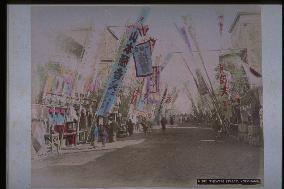
The area between Isezaki-cho and Nigiwai-cho, which prospered from the second decade of the Meiji Period, had many theatres, teahouses and restaurants. This photograph captures the lively atmosphere of the street before the fire of 1899. This is probably Nigiwai-za or Ryogoku-za in Nigiwai-cho (present-day Isezaki-cho 3-chome).==Date:unknown, Place:Yokohama, Photo:unknown, (Credit:Nagasaki University Library/Kyodo News Images) [Cabinet Number88‐38‐0]

  •  
The three teahouses at Arashiyama

The three teahouses at Arashiyama

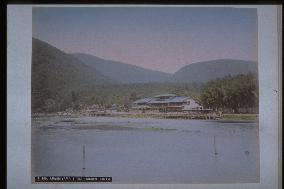
The building in the centre is the Sangenjaya Hata-tei teahouse located at the north end of Togetsu Bridge in Arashiyama. The building consisted of a three-story central portion and two-story wings to the east and west. Roofed terraces were built on both sides to provide scenic views of Arashiyama from the bank of Hozu River.==Date:unknown, Place:Kyoto, Photo:unknown, (Credit:Nagasaki University Library/Kyodo News Images) [Cabinet Number88‐9‐0]

  •  
A teahouse and a leisure boat,Shimogamo,Kyoto

A teahouse and a leisure boat,Shimogamo,Kyoto

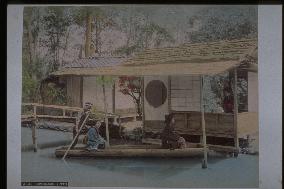
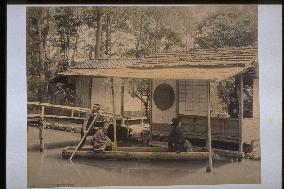
A teahouse by the Mitarashi River at Tadasunomori in Shimogamo is depicted. A small boat carrying two women arrives at this simple sukiya style teahouse. The Mitarashi River originates from a spring at Shimogamo Shinto Shrine. Fires were lit here in mid-July and visitors enjoyed Mitarashi Dango (dumplings) on the cool terraces of the teahouses.==Date:unknown, Place:Kyoto, Photo:unknown, (Credit:Nagasaki University Library/Kyodo News Images) [Cabinet Number85‐43‐0]

  •  
Women in Okano Garden

Women in Okano Garden

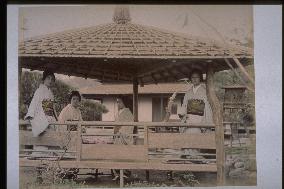
The triangular wooden roof of the arbor is secured with latticed bamboo. Buildings with this type of roof are commonly used as teahouses. There are various buildings in Okano Garden, and the facility appears to have been quite large. It is strange that so little information is available about it.==Date:unknown, Place:Tokyo, Photo:unknown, (Credit:Nagasaki University Library/Kyodo News Images) [Cabinet Number85‐36‐0]

  •  
A teahouse and a leisure boat,Shimogamo,Kyoto

A teahouse and a leisure boat,Shimogamo,Kyoto

A teahouse by the Mitarashi River at Tadasunomori in Shimogamo is depicted. A small boat carrying two women arrives at this simple sukiya style teahouse. The Mitarashi River originates from a spring at Shimogamo Shinto Shrine. Fires were lit here in mid-July and visitors enjoyed Mitarashi Dango (dumplings) on the cool terraces of the teahouses.==Date:unknown, Place:Kyoto, Photo:A. Farsari, (Credit:Nagasaki University Library/Kyodo News Images) [Cabinet Number81‐42‐0]

  •  
Cherry trees at Ueno Park

Cherry trees at Ueno Park

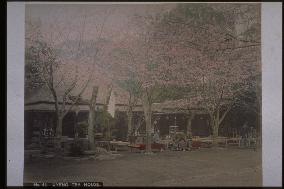
This is a teahouse on the east bank of Shinobazu Pond. Most of the customers were people coming to see the cherry blossoms, and many writers and artists also frequented the teahouses. A rickshaw is parked at the right side of the photograph and next to it stands an electric lamp, giving a sense of the period. The man drawing water from the well may be the owner of the teahouse.==Date:unknown, Place:Tokyo, Photo:A. Farsari, (Credit:Nagasaki University Library/Kyodo News Images) [Cabinet Number81‐16‐0]

  •  
Isezaki-cho Dori Avenue

Isezaki-cho Dori Avenue

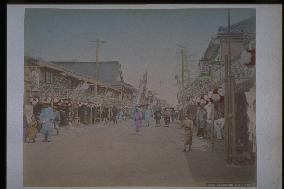
The area between Isezaki-cho and Nigiwai-cho, which prospered from the second decade of the Meiji Period, had many theatres, teahouses and restaurants. This photograph captures the lively atmosphere of the street before the fire of 1899. The building on the left may be Isami-za in Matsugae-cho (present-day Isezaki-cho 2-chome).==Date:Middle Meiji, Place:Yokohama, Photo:A. Farsari, (Credit:Nagasaki University Library/Kyodo News Images) [Cabinet Number81‐5‐0]

  •  
Teahouses at Ueno Park

Teahouses at Ueno Park

Shinobugaoka, a hill at Ueno, is viewed from the racetrack at Shinobazu Pond. The Western-style building on the right is Ueno Seiyoken Restaurant, which opened in 1876 as a branch of Kyobashi Seiyoken. It was a hotel and a restaurant frequented daily by many people.==Date:unknown, Place:Ueno, Photo:Tamamura Kozaburo, (Credit:Nagasaki University Library/Kyodo News Images) [Cabinet Number80‐24‐0]

  •  
Hama detached palace

Hama detached palace

This is Tsubame-no-Chaya (Swallow Teahouse) constructed on the north shore of Shioiri Pond during the reign of 11th Shogun Tokugawa Ienari. The name is said to be derived from the fact that the nail coverings were shaped like a swallow. During Ienari's reign, the Hamarikyu Garden underwent extensive changes, and teahouses such as Matsu-no-Chaya and Taka-no-Chaya were built in addition to this one.==Date:unknown, Place:Tokyo, Photo:R. Stillfried, (Credit:Nagasaki University Library/Kyodo News Images) [Cabinet Number78‐31‐0]

  •  
A row of pine trees and teahouses along the Tokaido Road

A row of pine trees and teahouses along the Tokaido Road

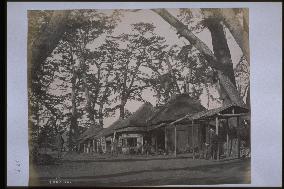
This is a Felice Beato photograph taken somewhere between Hodogaya and Fujisawa, possibly near the post town of Totsuka famous for its pine trees. The shop signs read Issen-meshi (One Sen Food) and Ochazuke (Rice with Green Tea). This was probably made from one of the original plates that Raimund von Stillfried received from Beato and then later sold.==Date:unknown, Place:Fujisawa, Photo:F. Beato, (Credit:Nagasaki University Library/Kyodo News Images) [Cabinet Number78‐9‐0]

  •  
A teahouse at Honmoku Juniten

A teahouse at Honmoku Juniten

A road to Honmoku and Negishi was built for foreigners in 1864. Horse carriages were able to pass the following year, and many visitors came along the foot of the hill to enjoy the scenic beauty of Honmoku Juniten Shinto Shrine. Teahouses were built along the road, and people enjoyed bathing and gathering shellfish.==Date:unknown, Place:Yokohama, Photo:Tamamura Kozaburo, (Credit:Nagasaki University Library/Kyodo News Images) [Cabinet Number68‐3‐2]

  •  
Teahouses along the Koshu Road

Teahouses along the Koshu Road

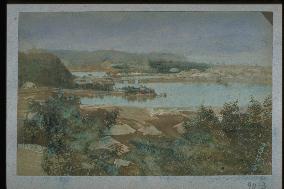
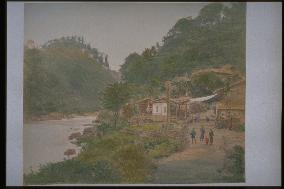
The bank of Katsura River, which separated the feudal domains of Sagami and Kai along the old Koshu Highway (present-day Uenohara-machi in southeastern Yamanashi Prefecture), seen from the east side (Sagami side) of the river. The buildings are teahouses standing along the highway, the existence of which is reported in travel journals as early as the Tenpo Period (1830-44). The mountain station Suwa-no-Sekisho (Kuchidome Bansho) is up the slope on the right. Mt. Gongen of Nakura is visible on the other side of Katsura River.==Date:unknown, Place:Yamanashi, Photo:Usui Shuzaburo?, (Credit:Nagasaki University Library/Kyodo News Images) [Cabinet Number65‐10‐0]

  •  
A teahouse in Negishi

A teahouse in Negishi

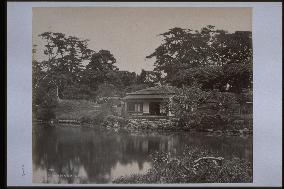
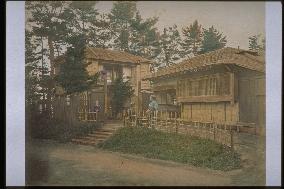
In late 1864, responding to the Namamugi Incident, the Tokugawa Shogunate opened a new road from Negishi to Honmoku southeast of Yokohama to keep foreigners away from the Tokaido Highway. There were teahouses for foreigners along the road. This appears to be one of the teahouses in Negishi, but the exact location is unknown.==Date:unknown, Place:Yokohama, Photo:unknown, (Credit:Nagasaki University Library/Kyodo News Images) [Cabinet Number64‐43‐0]

  •  
A teahouse at Honmoku Juniten

A teahouse at Honmoku Juniten

A road to Honmoku and Negishi was built for foreigners in 1864. Horse carriages were able to pass the following year, and many visitors came along the foot of the hill to enjoy the scenic beauty of Honmoku Juniten Shinto Shrine. Teahouses were built along the road, and people enjoyed bathing and gathering shellfish.==Date:unknown, Place:Yokohama, Photo:unknown, (Credit:Nagasaki University Library/Kyodo News Images) [Cabinet Number64‐28‐0]

  •  
Nishi Otani (Otani Honbyo Mausoleum of Honganji Temple)

Nishi Otani (Otani Honbyo Mausoleum of Honganji Temple)

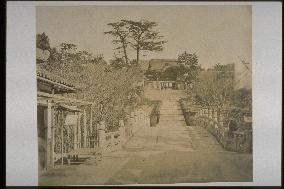
The approach to Nishi-Otani Temple is viewed from the western edge of Entsu Bridge, facing east. There are two giant pine trees by the sanmon gate in the back. This stone bridge was built in 1865. It was referred to as a spectacles bridge because of its shape. It was famous for its red and white lotus flowers in the mid-19th century. There are teahouses with benches on the northwestern edge of the bridge. Taken by F. Beato.==Date:unknown, Place:Kyoto, Photo:F. Beato, (Credit:Nagasaki University Library/Kyodo News Images) [Cabinet Number62‐19‐0]

  •  
Lake Ashi seen from Hakone Shrine

Lake Ashi seen from Hakone Shrine

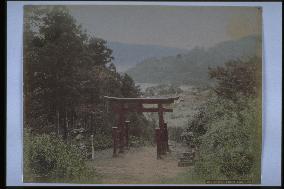
This is a byobu torii gate located at a crossing at present-day National route 1 after going down Gongen Slope after going up the Old Hakone Highway from the post town of Hata. This is a scenic point where Lake Ashinoko and the village of Moto-Hakone can be seen as well as the traffic hub. There seemed to have been teahouses and there are many photos taken at this location. One of the reasons for that is because the photography equipment was quite heavy those days and many photos were taken at the resting spots.==Date:unknown, Place:Hakone, Photo:unknown, (Credit:Nagasaki University Library/Kyodo News Images) [Cabinet Number59‐64‐0]

  • Main
  • Top
  • Editorial
  • Creative
  • About Us
  • About ILG
  • Terms of use
  • Company
  • BEHIND
  • Price List
  • Single Plan
  • Monthly Plan
  • Services
  • Shooting
  • Rights Clearance
  • Support
  • FAQ
  • How To Buy
  • Contact Us
  • Become a Partner

© KYODO NEWS IMAGES INC

All Rights Reserved.

  • Editorial
  • Olympics
  • News
  • Sports
  • Japan
  • Tech
  • Royal
  • Disaster
  • NorthKorea
  • Old Japan
  • SNS
  • Creative
  • Food
  • Japan
  • Landscape
  • Animal
  • Popular
  • #Ukraine
  • #China
  • #coronavirus
  • #N. Korea
  • #Russia
  • #Thailand
  • #Ukraine
  • #China
  • #coronavirus
  • #N. Korea
  • #Russia
  • #Thailand
  • Food
  • Japan
  • Landscape
  • Animal
  • Olympics
  • News
  • Sports
  • Japan
  • Tech
  • Royal
  • Disaster
  • NorthKorea
  • Old Japan
  • SNS