•  
Efforts Underway to Contain Jarilla Fire Stretching 48 km - Spain

Efforts Underway to Contain Jarilla Fire Stretching 48 km - Spain

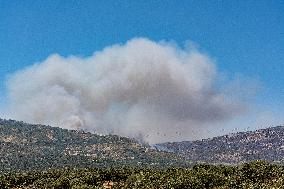
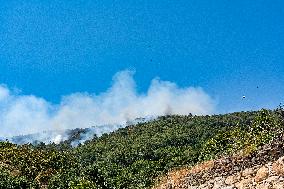
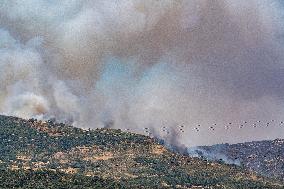
View of the fire on August 14, 2025, in Cáceres, Extremadura (Spain). The fire that originated in Jarilla continues to advance without control after three days, after having devastated 4,600 hectares in a perimeter that already reaches 48 kilometers. The objective of those responsible for the extinguishing work is to close the perimeter by concentrating in the area an operation made up of 321 troops and twelve aerial means. Photo by Carlos Criado/Europa Press/ABACAPRESS.COM

  •  
Efforts Underway to Contain Jarilla Fire Stretching 48 km - Spain

Efforts Underway to Contain Jarilla Fire Stretching 48 km - Spain

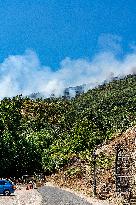
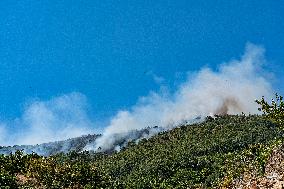
View of the fire on August 14, 2025, in Cáceres, Extremadura (Spain). The fire that originated in Jarilla continues to advance without control after three days, after having devastated 4,600 hectares in a perimeter that already reaches 48 kilometers. The objective of those responsible for the extinguishing work is to close the perimeter by concentrating in the area an operation made up of 321 troops and twelve aerial means. Photo by Carlos Criado/Europa Press/ABACAPRESS.COM

  •  
Efforts Underway to Contain Jarilla Fire Stretching 48 km - Spain

Efforts Underway to Contain Jarilla Fire Stretching 48 km - Spain

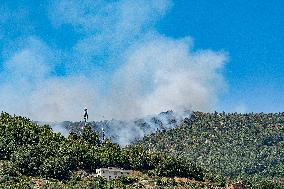
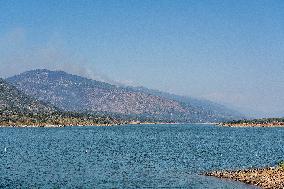
View of the fire on August 14, 2025, in Cáceres, Extremadura (Spain). The fire that originated in Jarilla continues to advance without control after three days, after having devastated 4,600 hectares in a perimeter that already reaches 48 kilometers. The objective of those responsible for the extinguishing work is to close the perimeter by concentrating in the area an operation made up of 321 troops and twelve aerial means. Photo by Carlos Criado/Europa Press/ABACAPRESS.COM

  •  
Efforts Underway to Contain Jarilla Fire Stretching 48 km - Spain

Efforts Underway to Contain Jarilla Fire Stretching 48 km - Spain

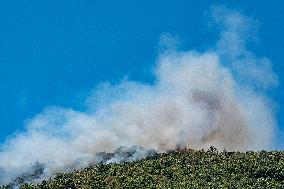
View of the fire on August 14, 2025, in Cáceres, Extremadura (Spain). The fire that originated in Jarilla continues to advance without control after three days, after having devastated 4,600 hectares in a perimeter that already reaches 48 kilometers. The objective of those responsible for the extinguishing work is to close the perimeter by concentrating in the area an operation made up of 321 troops and twelve aerial means. Photo by Carlos Criado/Europa Press/ABACAPRESS.COM

  •  
Efforts Underway to Contain Jarilla Fire Stretching 48 km - Spain

Efforts Underway to Contain Jarilla Fire Stretching 48 km - Spain

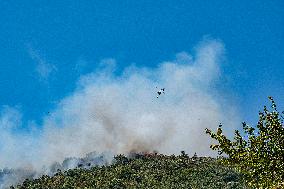
A helicopter helps to extinguish the fire on August 14, 2025, in Cáceres, Extremadura (Spain). The fire that originated in Jarilla continues to advance without control after three days, after having devastated 4,600 hectares in a perimeter that already reaches 48 kilometers. The objective of those responsible for the extinguishing work is to close the perimeter by concentrating in the area an operation made up of 321 troops and twelve aerial means. Photo by Carlos Criado/Europa Press/ABACAPRESS.COM

  •  
Efforts Underway to Contain Jarilla Fire Stretching 48 km - Spain

Efforts Underway to Contain Jarilla Fire Stretching 48 km - Spain

View of the fire on August 14, 2025, in Cáceres, Extremadura (Spain). The fire that originated in Jarilla continues to advance without control after three days, after having devastated 4,600 hectares in a perimeter that already reaches 48 kilometers. The objective of those responsible for the extinguishing work is to close the perimeter by concentrating in the area an operation made up of 321 troops and twelve aerial means. Photo by Carlos Criado/Europa Press/ABACAPRESS.COM

  •  
Efforts Underway to Contain Jarilla Fire Stretching 48 km - Spain

Efforts Underway to Contain Jarilla Fire Stretching 48 km - Spain

A helicopter helps to extinguish the fire on August 14, 2025, in Cáceres, Extremadura (Spain). The fire that originated in Jarilla continues to advance without control after three days, after having devastated 4,600 hectares in a perimeter that already reaches 48 kilometers. The objective of those responsible for the extinguishing work is to close the perimeter by concentrating in the area an operation made up of 321 troops and twelve aerial means. Photo by Carlos Criado/Europa Press/ABACAPRESS.COM

  •  
Efforts Underway to Contain Jarilla Fire Stretching 48 km - Spain

Efforts Underway to Contain Jarilla Fire Stretching 48 km - Spain

View of the fire on August 14, 2025, in Cáceres, Extremadura (Spain). The fire that originated in Jarilla continues to advance without control after three days, after having devastated 4,600 hectares in a perimeter that already reaches 48 kilometers. The objective of those responsible for the extinguishing work is to close the perimeter by concentrating in the area an operation made up of 321 troops and twelve aerial means. Photo by Carlos Criado/Europa Press/ABACAPRESS.COM

  •  
Efforts Underway to Contain Jarilla Fire Stretching 48 km - Spain

Efforts Underway to Contain Jarilla Fire Stretching 48 km - Spain

View of the fire on August 14, 2025, in Cáceres, Extremadura (Spain). The fire that originated in Jarilla continues to advance without control after three days, after having devastated 4,600 hectares in a perimeter that already reaches 48 kilometers. The objective of those responsible for the extinguishing work is to close the perimeter by concentrating in the area an operation made up of 321 troops and twelve aerial means. Photo by Carlos Criado/Europa Press/ABACAPRESS.COM

  •  
Chamonix

Chamonix

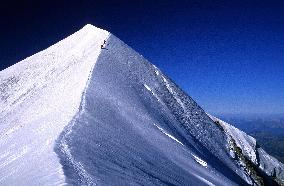
FRANCE. HAUTE-SAVOIE (74) MONT-BLANC MASSIF. THE ARETE DES DOMES DE MIAGE, CONSIDERED TO BE ONE OF THE MOST BEAUTIFUL RIDGE RACES IN THE MASSIF (OVER THREE KILOMETERS AND SIX SUMMITS). THE AIGUILLE DE TRE-LA-TETE (SOMETIMES CALLED THE AIGUILLE DE TRE-LA-TETE IN THE PLURAL) RISES TO 3 920 M SOUTH OF THE MASSIF

  •  

Indonesia: Mount Marapi Erupts, Ash Plume Reaches 1.6 Kilometers 5

Mount Marapi in West Sumatra erupted on Wednesday morning, July 23, sending an ash plume 1.6 kilometers into the sky. The alert level remains at II, with residents advised to avoid areas within a three-kilometer radius of the crater.

  •  

Indonesia: Mount Marapi Erupts, Ash Plume Reaches 1.6 Kilometers 3

Mount Marapi in West Sumatra erupted on Wednesday morning, July 23, sending an ash plume 1.6 kilometers into the sky. The alert level remains at II, with residents advised to avoid areas within a three-kilometer radius of the crater.

  •  

Indonesia: Mount Marapi Erupts, Ash Plume Reaches 1.6 Kilometers 4

Mount Marapi in West Sumatra erupted on Wednesday morning, July 23, sending an ash plume 1.6 kilometers into the sky. The alert level remains at II, with residents advised to avoid areas within a three-kilometer radius of the crater.

  •  

Indonesia: Mount Marapi Erupts, Ash Plume Reaches 1.6 Kilometers

Mount Marapi in West Sumatra erupted on Wednesday morning, July 23, sending an ash plume 1.6 kilometers into the sky. The alert level remains at II, with residents advised to avoid areas within a three-kilometer radius of the crater.

  •  

Indonesia: Mount Marapi Erupts, Ash Plume Reaches 1.6 Kilometers 2

Mount Marapi in West Sumatra erupted on Wednesday morning, July 23, sending an ash plume 1.6 kilometers into the sky. The alert level remains at II, with residents advised to avoid areas within a three-kilometer radius of the crater.

  •  
Mushroom cloud (A few minutes after detonation)

Mushroom cloud (A few minutes after detonation)

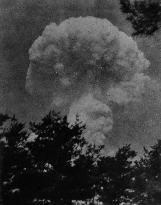
Mushroom cloud captured a few minutes after the detonation of the atomic bomb; taken about 6.5 kilometers northeast of the hypocenter. According to records held by the United States Armed Forces, the cloud billowed to 9,000 meters in the sky within three minutes of the blast. The photograph was taken by Seiso Yamada, then 17, who was walking to visit Mikumari Gorge in Fuchu-cho, Aki County in Hiroshima Prefecture, with his friends. They were watching a B-29 and a parachute in the sky from the entrance to the gorge when a flash, a rumbling of the ground, and a roar suddenly hit them. Trees in the pine forest around them shook violently from the blast, and a huge mushroom cloud rose rapidly, which he photographed with a Japan-made camera he had brought with him. (The parachute Mr. Yamada saw is believed to have been the blast measurement instrumentation dropped by one of the planes accompanying the Enola Gay.) **Editorial use only, Commercial use not possible**, Credit: Seiso Yamada/Chugoku Shimbun/Kyodo News Images

  •  
Nomadic Life in Inner Mongolia's Horqin Grassland - China

Nomadic Life in Inner Mongolia's Horqin Grassland - China

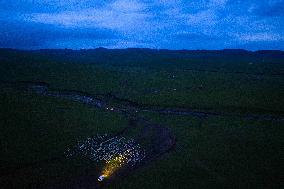
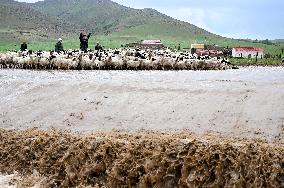
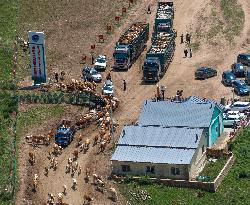
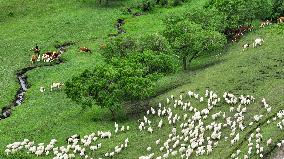
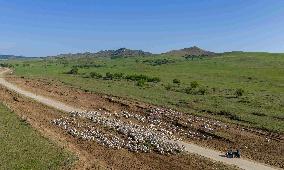
An aerial drone photo taken on June 14, 2025 shows herdsmen driving the livestock at night on the way to the summer campsite on Ar Horqin Grassland, Chifeng City of north China's Inner Mongolia Autonomous Region. Saintsogt, 55, a herdsman in Bayin-undur of Ar Horqin Banner, north China's Inner Mongolia Autonomous Region, is busy with the annual summer migration covering a distance of about 100 kilometers. For the past four decades, he has completed the migration every year. Saintsogt's pasture is a part of the Ar Horqin Grassland Nomadic System, which was listed as one of the Globally Important Agricultural Heritage Systems (GIAHS) sites by the United Nations Food and Agriculture Organization (FAO) on May 20, 2022. Herders here still keep the traditional nomadic customs today. "The travel time has been shortened to three days from eight," Saintsogt said. "The rain makes pasture grow better, and the livestock have enough forage." This year, herders from more than 1,200 households and 128,000 livestock in Bayin

  •  
Nomadic Life in Inner Mongolia's Horqin Grassland - China

Nomadic Life in Inner Mongolia's Horqin Grassland - China

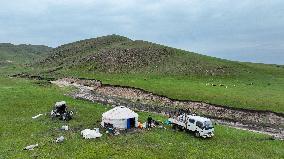
An aerial drone photo taken on June 15, 2025 shows a Mongolian yurt of Saintsogt at his summer campsite on Ar Horqin Grassland, Chifeng City of north China's Inner Mongolia Autonomous Region. Saintsogt, 55, a herdsman in Bayin-undur of Ar Horqin Banner, north China's Inner Mongolia Autonomous Region, is busy with the annual summer migration covering a distance of about 100 kilometers. For the past four decades, he has completed the migration every year. Saintsogt's pasture is a part of the Ar Horqin Grassland Nomadic System, which was listed as one of the Globally Important Agricultural Heritage Systems (GIAHS) sites by the United Nations Food and Agriculture Organization (FAO) on May 20, 2022. Herders here still keep the traditional nomadic customs today. "The travel time has been shortened to three days from eight," Saintsogt said. "The rain makes pasture grow better, and the livestock have enough forage." This year, herders from more than 1,200 households and 128,000 livestock in Bayin-undur joined the mig

  •  
Nomadic Life in Inner Mongolia's Horqin Grassland - China

Nomadic Life in Inner Mongolia's Horqin Grassland - China

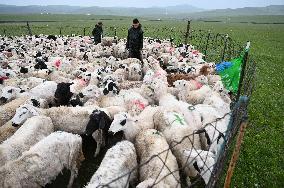
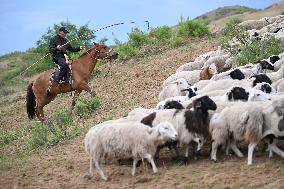
Saintsogt's son (2nd R) drives sheep in rain on his way to the summer campsite on Ar Horqin Grassland, Chifeng City of north China's Inner Mongolia Autonomous Region, June 13, 2025. Saintsogt, 55, a herdsman in Bayin-undur of Ar Horqin Banner, north China's Inner Mongolia Autonomous Region, is busy with the annual summer migration covering a distance of about 100 kilometers. For the past four decades, he has completed the migration every year. Saintsogt's pasture is a part of the Ar Horqin Grassland Nomadic System, which was listed as one of the Globally Important Agricultural Heritage Systems (GIAHS) sites by the United Nations Food and Agriculture Organization (FAO) on May 20, 2022. Herders here still keep the traditional nomadic customs today. "The travel time has been shortened to three days from eight," Saintsogt said. "The rain makes pasture grow better, and the livestock have enough forage." This year, herders from more than 1,200 households and 128,000 livestock in Bayin-undur joined the migration. Ph

  •  
Nomadic Life in Inner Mongolia's Horqin Grassland - China

Nomadic Life in Inner Mongolia's Horqin Grassland - China

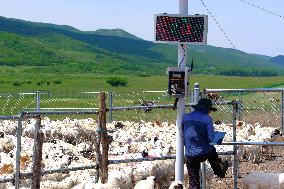
A staff member of Gogodtai Han Ul national nature reserve counts the livestock entering the nature reserve in north China's Inner Mongolia Autonomous Region, June 14, 2025. Saintsogt, 55, a herdsman in Bayin-undur of Ar Horqin Banner, north China's Inner Mongolia Autonomous Region, is busy with the annual summer migration covering a distance of about 100 kilometers. For the past four decades, he has completed the migration every year. Saintsogt's pasture is a part of the Ar Horqin Grassland Nomadic System, which was listed as one of the Globally Important Agricultural Heritage Systems (GIAHS) sites by the United Nations Food and Agriculture Organization (FAO) on May 20, 2022. Herders here still keep the traditional nomadic customs today. "The travel time has been shortened to three days from eight," Saintsogt said. "The rain makes pasture grow better, and the livestock have enough forage." This year, herders from more than 1,200 households and 128,000 livestock in Bayin-undur joined the migration. Photo by Ma

  •  
Nomadic Life in Inner Mongolia's Horqin Grassland - China

Nomadic Life in Inner Mongolia's Horqin Grassland - China

Saintsogt's son seeks for a sick sheep after arriving at the summer campsite on Ar Horqin Grassland, Chifeng City of north China's Inner Mongolia Autonomous Region, June 15, 2025. Saintsogt, 55, a herdsman in Bayin-undur of Ar Horqin Banner, north China's Inner Mongolia Autonomous Region, is busy with the annual summer migration covering a distance of about 100 kilometers. For the past four decades, he has completed the migration every year. Saintsogt's pasture is a part of the Ar Horqin Grassland Nomadic System, which was listed as one of the Globally Important Agricultural Heritage Systems (GIAHS) sites by the United Nations Food and Agriculture Organization (FAO) on May 20, 2022. Herders here still keep the traditional nomadic customs today. "The travel time has been shortened to three days from eight," Saintsogt said. "The rain makes pasture grow better, and the livestock have enough forage." This year, herders from more than 1,200 households and 128,000 livestock in Bayin-undur joined the migration. Phot

  •  
Nomadic Life in Inner Mongolia's Horqin Grassland - China

Nomadic Life in Inner Mongolia's Horqin Grassland - China

Saintsogt's wife arranges bedding at home before departing for the summer campsite on Ar Horqin Grassland, Chifeng City of north China's Inner Mongolia Autonomous Region, June 13, 2025. Saintsogt, 55, a herdsman in Bayin-undur of Ar Horqin Banner, north China's Inner Mongolia Autonomous Region, is busy with the annual summer migration covering a distance of about 100 kilometers. For the past four decades, he has completed the migration every year. Saintsogt's pasture is a part of the Ar Horqin Grassland Nomadic System, which was listed as one of the Globally Important Agricultural Heritage Systems (GIAHS) sites by the United Nations Food and Agriculture Organization (FAO) on May 20, 2022. Herders here still keep the traditional nomadic customs today. "The travel time has been shortened to three days from eight," Saintsogt said. "The rain makes pasture grow better, and the livestock have enough forage." This year, herders from more than 1,200 households and 128,000 livestock in Bayin-undur joined the migration

  •  
Nomadic Life in Inner Mongolia's Horqin Grassland - China

Nomadic Life in Inner Mongolia's Horqin Grassland - China

An aerial drone photo taken on June 14, 2025 shows herders waiting for entering the Gogodtai Han Ul national nature reserve in north China's Inner Mongolia Autonomous Region. Saintsogt, 55, a herdsman in Bayin-undur of Ar Horqin Banner, north China's Inner Mongolia Autonomous Region, is busy with the annual summer migration covering a distance of about 100 kilometers. For the past four decades, he has completed the migration every year. Saintsogt's pasture is a part of the Ar Horqin Grassland Nomadic System, which was listed as one of the Globally Important Agricultural Heritage Systems (GIAHS) sites by the United Nations Food and Agriculture Organization (FAO) on May 20, 2022. Herders here still keep the traditional nomadic customs today. "The travel time has been shortened to three days from eight," Saintsogt said. "The rain makes pasture grow better, and the livestock have enough forage." This year, herders from more than 1,200 households and 128,000 livestock in Bayin-undur joined the migration. Photo by

  •  
Nomadic Life in Inner Mongolia's Horqin Grassland - China

Nomadic Life in Inner Mongolia's Horqin Grassland - China

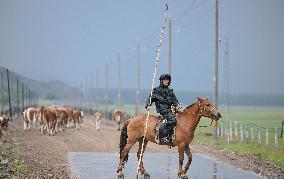
Saintsogt gathers the livestock at the winter campsite before departing for the summer campsite on Ar Horqin Grassland, Chifeng City of north China's Inner Mongolia Autonomous Region, June 13, 2025. Saintsogt, 55, a herdsman in Bayin-undur of Ar Horqin Banner, north China's Inner Mongolia Autonomous Region, is busy with the annual summer migration covering a distance of about 100 kilometers. For the past four decades, he has completed the migration every year. Saintsogt's pasture is a part of the Ar Horqin Grassland Nomadic System, which was listed as one of the Globally Important Agricultural Heritage Systems (GIAHS) sites by the United Nations Food and Agriculture Organization (FAO) on May 20, 2022. Herders here still keep the traditional nomadic customs today. "The travel time has been shortened to three days from eight," Saintsogt said. "The rain makes pasture grow better, and the livestock have enough forage." This year, herders from more than 1,200 households and 128,000 livestock in Bayin-undur joined

  •  
Nomadic Life in Inner Mongolia's Horqin Grassland - China

Nomadic Life in Inner Mongolia's Horqin Grassland - China

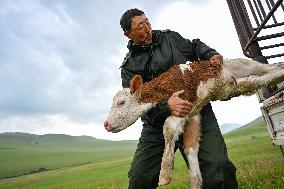
Saintsogt takes a newly born calf off the truck after arriving at the summer campsite on Ar Horqin Grassland, Chifeng City of north China's Inner Mongolia Autonomous Region, June 15, 2025. Saintsogt, 55, a herdsman in Bayin-undur of Ar Horqin Banner, north China's Inner Mongolia Autonomous Region, is busy with the annual summer migration covering a distance of about 100 kilometers. For the past four decades, he has completed the migration every year. Saintsogt's pasture is a part of the Ar Horqin Grassland Nomadic System, which was listed as one of the Globally Important Agricultural Heritage Systems (GIAHS) sites by the United Nations Food and Agriculture Organization (FAO) on May 20, 2022. Herders here still keep the traditional nomadic customs today. "The travel time has been shortened to three days from eight," Saintsogt said. "The rain makes pasture grow better, and the livestock have enough forage." This year, herders from more than 1,200 households and 128,000 livestock in Bayin-undur joined the migrat

  •  
Nomadic Life in Inner Mongolia's Horqin Grassland - China

Nomadic Life in Inner Mongolia's Horqin Grassland - China

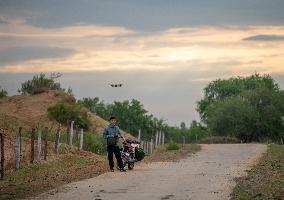
Saintsogt's son operates a drone to check the number of the livestock on Ar Horqin Grassland, Chifeng City of north China's Inner Mongolia Autonomous Region, June 13, 2025. Saintsogt, 55, a herdsman in Bayin-undur of Ar Horqin Banner, north China's Inner Mongolia Autonomous Region, is busy with the annual summer migration covering a distance of about 100 kilometers. For the past four decades, he has completed the migration every year. Saintsogt's pasture is a part of the Ar Horqin Grassland Nomadic System, which was listed as one of the Globally Important Agricultural Heritage Systems (GIAHS) sites by the United Nations Food and Agriculture Organization (FAO) on May 20, 2022. Herders here still keep the traditional nomadic customs today. "The travel time has been shortened to three days from eight," Saintsogt said. "The rain makes pasture grow better, and the livestock have enough forage." This year, herders from more than 1,200 households and 128,000 livestock in Bayin-undur joined the migration. Photo by Ma

  •  
Nomadic Life in Inner Mongolia's Horqin Grassland - China

Nomadic Life in Inner Mongolia's Horqin Grassland - China

An aerial drone photo taken on June 14, 2025 shows Saintsogt driving the livestock on his way to the summer campsite on Ar Horqin Grassland, Chifeng City of north China's Inner Mongolia Autonomous Region. Saintsogt, 55, a herdsman in Bayin-undur of Ar Horqin Banner, north China's Inner Mongolia Autonomous Region, is busy with the annual summer migration covering a distance of about 100 kilometers. For the past four decades, he has completed the migration every year. Saintsogt's pasture is a part of the Ar Horqin Grassland Nomadic System, which was listed as one of the Globally Important Agricultural Heritage Systems (GIAHS) sites by the United Nations Food and Agriculture Organization (FAO) on May 20, 2022. Herders here still keep the traditional nomadic customs today. "The travel time has been shortened to three days from eight," Saintsogt said. "The rain makes pasture grow better, and the livestock have enough forage." This year, herders from more than 1,200 households and 128,000 livestock in Bayin-undur j

  •  
Nomadic Life in Inner Mongolia's Horqin Grassland - China

Nomadic Life in Inner Mongolia's Horqin Grassland - China

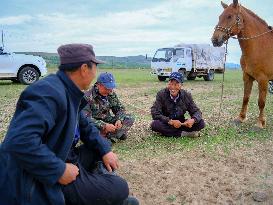
Saintsogt (R) talks with other herdsmen on their way to the summer campsite on Ar Horqin Grassland, Chifeng City of north China's Inner Mongolia Autonomous Region, June 13, 2025. Saintsogt, 55, a herdsman in Bayin-undur of Ar Horqin Banner, north China's Inner Mongolia Autonomous Region, is busy with the annual summer migration covering a distance of about 100 kilometers. For the past four decades, he has completed the migration every year. Saintsogt's pasture is a part of the Ar Horqin Grassland Nomadic System, which was listed as one of the Globally Important Agricultural Heritage Systems (GIAHS) sites by the United Nations Food and Agriculture Organization (FAO) on May 20, 2022. Herders here still keep the traditional nomadic customs today. "The travel time has been shortened to three days from eight," Saintsogt said. "The rain makes pasture grow better, and the livestock have enough forage." This year, herders from more than 1,200 households and 128,000 livestock in Bayin-undur joined the migration. Photo

  •  
Nomadic Life in Inner Mongolia's Horqin Grassland - China

Nomadic Life in Inner Mongolia's Horqin Grassland - China

Saintsogt gathers the livestock at their winter campsite before departing for the summer campsite on Ar Horqin Grassland, Chifeng City of north China's Inner Mongolia Autonomous Region, June 13, 2025. Saintsogt, 55, a herdsman in Bayin-undur of Ar Horqin Banner, north China's Inner Mongolia Autonomous Region, is busy with the annual summer migration covering a distance of about 100 kilometers. For the past four decades, he has completed the migration every year. Saintsogt's pasture is a part of the Ar Horqin Grassland Nomadic System, which was listed as one of the Globally Important Agricultural Heritage Systems (GIAHS) sites by the United Nations Food and Agriculture Organization (FAO) on May 20, 2022. Herders here still keep the traditional nomadic customs today. "The travel time has been shortened to three days from eight," Saintsogt said. "The rain makes pasture grow better, and the livestock have enough forage." This year, herders from more than 1,200 households and 128,000 livestock in Bayin-undur joine

  •  
Nomadic Life in Inner Mongolia's Horqin Grassland - China

Nomadic Life in Inner Mongolia's Horqin Grassland - China

An aerial drone photo shows Saintsogt's son (L) riding a motorcycle to drive the livestock on his way to the summer campsite on Ar Horqin Grassland, Chifeng City of north China's Inner Mongolia Autonomous Region, June 14, 2025. Saintsogt, 55, a herdsman in Bayin-undur of Ar Horqin Banner, north China's Inner Mongolia Autonomous Region, is busy with the annual summer migration covering a distance of about 100 kilometers. For the past four decades, he has completed the migration every year. Saintsogt's pasture is a part of the Ar Horqin Grassland Nomadic System, which was listed as one of the Globally Important Agricultural Heritage Systems (GIAHS) sites by the United Nations Food and Agriculture Organization (FAO) on May 20, 2022. Herders here still keep the traditional nomadic customs today. "The travel time has been shortened to three days from eight," Saintsogt said. "The rain makes pasture grow better, and the livestock have enough forage." This year, herders from more than 1,200 households and 128,000 liv

  •  
Nomadic Life in Inner Mongolia's Horqin Grassland - China

Nomadic Life in Inner Mongolia's Horqin Grassland - China

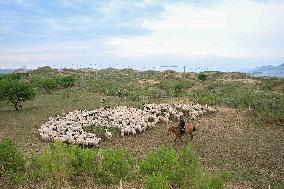
Saintsogt drives cattle in the rain on his way to the summer campsite on Ar Horqin Grassland, Chifeng City of north China's Inner Mongolia Autonomous Region, June 13, 2025. Saintsogt, 55, a herdsman in Bayin-undur of Ar Horqin Banner, north China's Inner Mongolia Autonomous Region, is busy with the annual summer migration covering a distance of about 100 kilometers. For the past four decades, he has completed the migration every year. Saintsogt's pasture is a part of the Ar Horqin Grassland Nomadic System, which was listed as one of the Globally Important Agricultural Heritage Systems (GIAHS) sites by the United Nations Food and Agriculture Organization (FAO) on May 20, 2022. Herders here still keep the traditional nomadic customs today. "The travel time has been shortened to three days from eight," Saintsogt said. "The rain makes pasture grow better, and the livestock have enough forage." This year, herders from more than 1,200 households and 128,000 livestock in Bayin-undur joined the migration. Photo by Be

  •  
Nomadic Life in Inner Mongolia's Horqin Grassland - China

Nomadic Life in Inner Mongolia's Horqin Grassland - China

Saintsogt hugs a newly born calf on his way to the summer campsite on Ar Horqin Grassland, Chifeng City of north China's Inner Mongolia Autonomous Region, June 14, 2025. Saintsogt, 55, a herdsman in Bayin-undur of Ar Horqin Banner, north China's Inner Mongolia Autonomous Region, is busy with the annual summer migration covering a distance of about 100 kilometers. For the past four decades, he has completed the migration every year. Saintsogt's pasture is a part of the Ar Horqin Grassland Nomadic System, which was listed as one of the Globally Important Agricultural Heritage Systems (GIAHS) sites by the United Nations Food and Agriculture Organization (FAO) on May 20, 2022. Herders here still keep the traditional nomadic customs today. "The travel time has been shortened to three days from eight," Saintsogt said. "The rain makes pasture grow better, and the livestock have enough forage." This year, herders from more than 1,200 households and 128,000 livestock in Bayin-undur joined the migration. Photo by Bei H

  •  
Nomadic Life in Inner Mongolia's Horqin Grassland - China

Nomadic Life in Inner Mongolia's Horqin Grassland - China

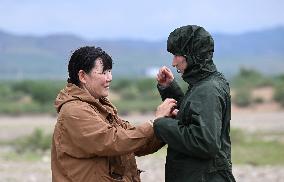
Saintsogt's wife (L) helps her son to wear a raincoat on their way to the summer campsite on Ar Horqin Grassland, Chifeng City of north China's Inner Mongolia Autonomous Region, June 13, 2025. Saintsogt, 55, a herdsman in Bayin-undur of Ar Horqin Banner, north China's Inner Mongolia Autonomous Region, is busy with the annual summer migration covering a distance of about 100 kilometers. For the past four decades, he has completed the migration every year. Saintsogt's pasture is a part of the Ar Horqin Grassland Nomadic System, which was listed as one of the Globally Important Agricultural Heritage Systems (GIAHS) sites by the United Nations Food and Agriculture Organization (FAO) on May 20, 2022. Herders here still keep the traditional nomadic customs today. "The travel time has been shortened to three days from eight," Saintsogt said. "The rain makes pasture grow better, and the livestock have enough forage." This year, herders from more than 1,200 households and 128,000 livestock in Bayin-undur joined the mi

  •  
Nomadic Life in Inner Mongolia's Horqin Grassland - China

Nomadic Life in Inner Mongolia's Horqin Grassland - China

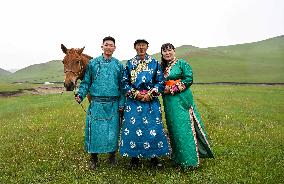
Saintsogt (C), his wife (R) and son pose for a group photo at their summer campsite on Ar Horqin Grassland, Chifeng City of north China's Inner Mongolia Autonomous Region, June 15, 2025. Saintsogt, 55, a herdsman in Bayin-undur of Ar Horqin Banner, north China's Inner Mongolia Autonomous Region, is busy with the annual summer migration covering a distance of about 100 kilometers. For the past four decades, he has completed the migration every year. Saintsogt's pasture is a part of the Ar Horqin Grassland Nomadic System, which was listed as one of the Globally Important Agricultural Heritage Systems (GIAHS) sites by the United Nations Food and Agriculture Organization (FAO) on May 20, 2022. Herders here still keep the traditional nomadic customs today. "The travel time has been shortened to three days from eight," Saintsogt said. "The rain makes pasture grow better, and the livestock have enough forage." This year, herders from more than 1,200 households and 128,000 livestock in Bayin-undur joined the migratio

  •  
Taklimakan Desert Control Afforestation - China

Taklimakan Desert Control Afforestation - China

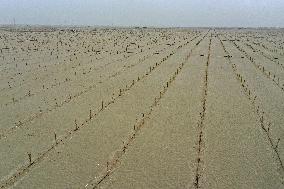
An aerial drone photo taken on April 8, 2025 shows people planting coix at a sand industry experimental base in Yutian County of Hotan Prefecture, northwest China's Xinjiang Uygur Autonomous Region. The Taklimakan Desert in northwest China's Xinjiang Uygur Autonomous Region covers 337,600 square kilometers and its circumference measures 3,046 kilometers, making it the largest desert in China and the second-largest drifting desert in the world. Thanks to decades-long sand prevention and control efforts, the Taklimakan Desert was completely encircled with a sand-blocking green belt on Nov. 28, 2024. In 2025, Xinjiang aims to afforest a land area of about 796,000 hectares, including 562,666 hectares for frontline control in the Taklimakan Desert. These afforestations form a part of the Three-North Shelterbelt Forest Program, the world's largest afforestation program, which tackles desertification in northwest, north and northeast China. Meanwhile, Xinjiang will further widen the sand-blocking green belt and enha

  •  
Taklimakan Desert Control Afforestation - China

Taklimakan Desert Control Afforestation - China

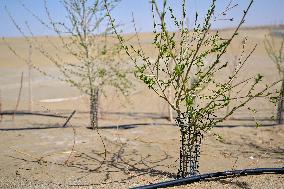
An aerial drone photo taken on April 7, 2025 shows oleaster saplings in Hotan County of Hotan Prefecture, northwest China's Xinjiang Uygur Autonomous Region. The Taklimakan Desert in northwest China's Xinjiang Uygur Autonomous Region covers 337,600 square kilometers and its circumference measures 3,046 kilometers, making it the largest desert in China and the second-largest drifting desert in the world. Thanks to decades-long sand prevention and control efforts, the Taklimakan Desert was completely encircled with a sand-blocking green belt on Nov. 28, 2024. In 2025, Xinjiang aims to afforest a land area of about 796,000 hectares, including 562,666 hectares for frontline control in the Taklimakan Desert. These afforestations form a part of the Three-North Shelterbelt Forest Program, the world's largest afforestation program, which tackles desertification in northwest, north and northeast China. Meanwhile, Xinjiang will further widen the sand-blocking green belt and enhance desert-locking efforts to achieve sus

  •  
Taklimakan Desert Control Afforestation - China

Taklimakan Desert Control Afforestation - China

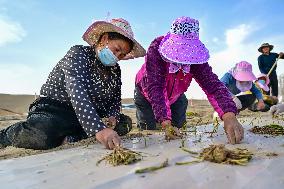
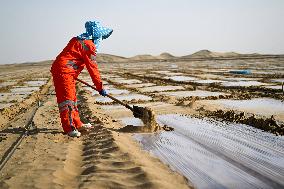
Staff members plant onions in sandy land at a sand-control experimental station in Minfeng County of Hotan Prefecture, northwest China's Xinjiang Uygur Autonomous Region on April 8, 2025. The Taklimakan Desert in northwest China's Xinjiang Uygur Autonomous Region covers 337,600 square kilometers and its circumference measures 3,046 kilometers, making it the largest desert in China and the second-largest drifting desert in the world. Thanks to decades-long sand prevention and control efforts, the Taklimakan Desert was completely encircled with a sand-blocking green belt on Nov. 28, 2024. In 2025, Xinjiang aims to afforest a land area of about 796,000 hectares, including 562,666 hectares for frontline control in the Taklimakan Desert. These afforestations form a part of the Three-North Shelterbelt Forest Program, the world's largest afforestation program, which tackles desertification in northwest, north and northeast China. Meanwhile, Xinjiang will further widen the sand-blocking green belt and enhance desert-

  •  
Taklimakan Desert Control Afforestation - China

Taklimakan Desert Control Afforestation - China

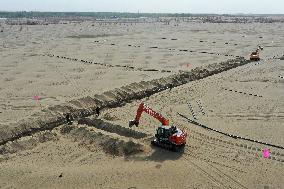
An aerial drone photo taken on April 8, 2025 shows staff members embedding water pipelines in Minfeng County of Hotan Prefecture, northwest China's Xinjiang Uygur Autonomous Region. The Taklimakan Desert in northwest China's Xinjiang Uygur Autonomous Region covers 337,600 square kilometers and its circumference measures 3,046 kilometers, making it the largest desert in China and the second-largest drifting desert in the world. Thanks to decades-long sand prevention and control efforts, the Taklimakan Desert was completely encircled with a sand-blocking green belt on Nov. 28, 2024. In 2025, Xinjiang aims to afforest a land area of about 796,000 hectares, including 562,666 hectares for frontline control in the Taklimakan Desert. These afforestations form a part of the Three-North Shelterbelt Forest Program, the world's largest afforestation program, which tackles desertification in northwest, north and northeast China. Meanwhile, Xinjiang will further widen the sand-blocking green belt and enhance desert-lockin

  •  
Taklimakan Desert Control Afforestation - China

Taklimakan Desert Control Afforestation - China

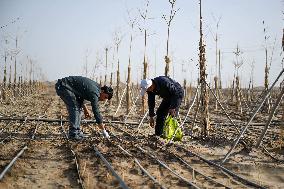
An aerial drone photo taken on April 9, 2025 shows staff members planting seedlings at a sand-control base in Qiemo County, the Mongolian Autonomous Prefecture of Bayingolin, northwest China's Xinjiang Uygur Autonomous Region. The Taklimakan Desert in northwest China's Xinjiang Uygur Autonomous Region covers 337,600 square kilometers and its circumference measures 3,046 kilometers, making it the largest desert in China and the second-largest drifting desert in the world. Thanks to decades-long sand prevention and control efforts, the Taklimakan Desert was completely encircled with a sand-blocking green belt on Nov. 28, 2024. In 2025, Xinjiang aims to afforest a land area of about 796,000 hectares, including 562,666 hectares for frontline control in the Taklimakan Desert. These afforestations form a part of the Three-North Shelterbelt Forest Program, the world's largest afforestation program, which tackles desertification in northwest, north and northeast China. Meanwhile, Xinjiang will further widen the sand-

  •  
Taklimakan Desert Control Afforestation - China

Taklimakan Desert Control Afforestation - China

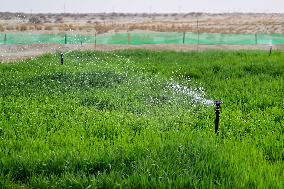
This photo taken on April 13, 2025 shows a wheat field irrigated by desalinated water in Xayar County, Aksu Prefecture, northwest China's Xinjiang Uygur Autonomous Region. The Taklimakan Desert in northwest China's Xinjiang Uygur Autonomous Region covers 337,600 square kilometers and its circumference measures 3,046 kilometers, making it the largest desert in China and the second-largest drifting desert in the world. Thanks to decades-long sand prevention and control efforts, the Taklimakan Desert was completely encircled with a sand-blocking green belt on Nov. 28, 2024. In 2025, Xinjiang aims to afforest a land area of about 796,000 hectares, including 562,666 hectares for frontline control in the Taklimakan Desert. These afforestations form a part of the Three-North Shelterbelt Forest Program, the world's largest afforestation program, which tackles desertification in northwest, north and northeast China. Meanwhile, Xinjiang will further widen the sand-blocking green belt and enhance desert-locking efforts

  •  
Taklimakan Desert Control Afforestation - China

Taklimakan Desert Control Afforestation - China

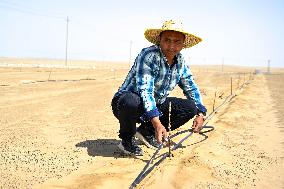
A villager arranges a drip irrigation pipe at a desert-control model zone in Yutian County of Hotan Prefecture, northwest China's Xinjiang Uygur Autonomous Region, April 8, 2025. The Taklimakan Desert in northwest China's Xinjiang Uygur Autonomous Region covers 337,600 square kilometers and its circumference measures 3,046 kilometers, making it the largest desert in China and the second-largest drifting desert in the world. Thanks to decades-long sand prevention and control efforts, the Taklimakan Desert was completely encircled with a sand-blocking green belt on Nov. 28, 2024. In 2025, Xinjiang aims to afforest a land area of about 796,000 hectares, including 562,666 hectares for frontline control in the Taklimakan Desert. These afforestations form a part of the Three-North Shelterbelt Forest Program, the world's largest afforestation program, which tackles desertification in northwest, north and northeast China. Meanwhile, Xinjiang will further widen the sand-blocking green belt and enhance desert-locking e

  •  
Taklimakan Desert Control Afforestation - China

Taklimakan Desert Control Afforestation - China

A villager plants coix at a sand industry experimental base in Yutian County of Hotan Prefecture, northwest China's Xinjiang Uygur Autonomous Region on April 8, 2025. The Taklimakan Desert in northwest China's Xinjiang Uygur Autonomous Region covers 337,600 square kilometers and its circumference measures 3,046 kilometers, making it the largest desert in China and the second-largest drifting desert in the world. Thanks to decades-long sand prevention and control efforts, the Taklimakan Desert was completely encircled with a sand-blocking green belt on Nov. 28, 2024. In 2025, Xinjiang aims to afforest a land area of about 796,000 hectares, including 562,666 hectares for frontline control in the Taklimakan Desert. These afforestations form a part of the Three-North Shelterbelt Forest Program, the world's largest afforestation program, which tackles desertification in northwest, north and northeast China. Meanwhile, Xinjiang will further widen the sand-blocking green belt and enhance desert-locking efforts to ac

  •  
Taklimakan Desert Control Afforestation - China

Taklimakan Desert Control Afforestation - China

Protective nets are attached to seedlings to prevent animals from eating them at a sand-control base in Qiemo County, the Mongolian Autonomous Prefecture of Bayingolin, northwest China's Xinjiang Uygur Autonomous Region, April 9, 2025. The Taklimakan Desert in northwest China's Xinjiang Uygur Autonomous Region covers 337,600 square kilometers and its circumference measures 3,046 kilometers, making it the largest desert in China and the second-largest drifting desert in the world. Thanks to decades-long sand prevention and control efforts, the Taklimakan Desert was completely encircled with a sand-blocking green belt on Nov. 28, 2024. In 2025, Xinjiang aims to afforest a land area of about 796,000 hectares, including 562,666 hectares for frontline control in the Taklimakan Desert. These afforestations form a part of the Three-North Shelterbelt Forest Program, the world's largest afforestation program, which tackles desertification in northwest, north and northeast China. Meanwhile, Xinjiang will further widen

  •  
Taklimakan Desert Control Afforestation - China

Taklimakan Desert Control Afforestation - China

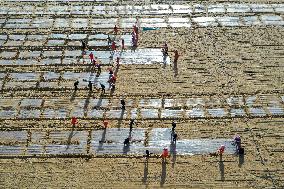
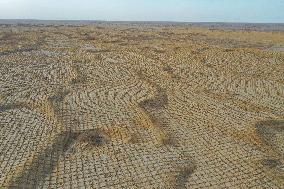
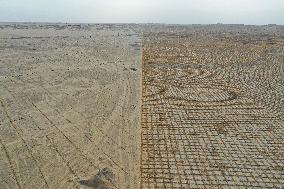
An aerial drone photo taken on April 8, 2025 shows checkerboard sand barriers in Minfeng County of Hotan Prefecture, northwest China's Xinjiang Uygur Autonomous Region. The Taklimakan Desert in northwest China's Xinjiang Uygur Autonomous Region covers 337,600 square kilometers and its circumference measures 3,046 kilometers, making it the largest desert in China and the second-largest drifting desert in the world. Thanks to decades-long sand prevention and control efforts, the Taklimakan Desert was completely encircled with a sand-blocking green belt on Nov. 28, 2024. In 2025, Xinjiang aims to afforest a land area of about 796,000 hectares, including 562,666 hectares for frontline control in the Taklimakan Desert. These afforestations form a part of the Three-North Shelterbelt Forest Program, the world's largest afforestation program, which tackles desertification in northwest, north and northeast China. Meanwhile, Xinjiang will further widen the sand-blocking green belt and enhance desert-locking efforts to

  •  
Taklimakan Desert Control Afforestation - China

Taklimakan Desert Control Afforestation - China

People arrange drip irrigation pipes at a sand-control experimental base in Yutian County of Hotan Prefecture, northwest China's Xinjiang Uygur Autonomous Region, April 8, 2025. The Taklimakan Desert in northwest China's Xinjiang Uygur Autonomous Region covers 337,600 square kilometers and its circumference measures 3,046 kilometers, making it the largest desert in China and the second-largest drifting desert in the world. Thanks to decades-long sand prevention and control efforts, the Taklimakan Desert was completely encircled with a sand-blocking green belt on Nov. 28, 2024. In 2025, Xinjiang aims to afforest a land area of about 796,000 hectares, including 562,666 hectares for frontline control in the Taklimakan Desert. These afforestations form a part of the Three-North Shelterbelt Forest Program, the world's largest afforestation program, which tackles desertification in northwest, north and northeast China. Meanwhile, Xinjiang will further widen the sand-blocking green belt and enhance desert-locking ef

  •  
Taklimakan Desert Control Afforestation - China

Taklimakan Desert Control Afforestation - China

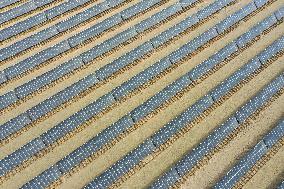
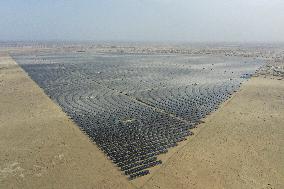
An aerial drone photo taken on April 13, 2025 shows a photovoltaic power project in Xayar County, Aksu Prefecture, northwest China's Xinjiang Uygur Autonomous Region. The Taklimakan Desert in northwest China's Xinjiang Uygur Autonomous Region covers 337,600 square kilometers and its circumference measures 3,046 kilometers, making it the largest desert in China and the second-largest drifting desert in the world. Thanks to decades-long sand prevention and control efforts, the Taklimakan Desert was completely encircled with a sand-blocking green belt on Nov. 28, 2024. In 2025, Xinjiang aims to afforest a land area of about 796,000 hectares, including 562,666 hectares for frontline control in the Taklimakan Desert. These afforestations form a part of the Three-North Shelterbelt Forest Program, the world's largest afforestation program, which tackles desertification in northwest, north and northeast China. Meanwhile, Xinjiang will further widen the sand-blocking green belt and enhance desert-locking efforts to ac

  •  
Taklimakan Desert Control Afforestation - China

Taklimakan Desert Control Afforestation - China

An aerial drone photo taken on April 8, 2025 shows checkerboard sand barriers at a sand-control zone in Minfeng County of Hotan Prefecture, northwest China's Xinjiang Uygur Autonomous Region. The Taklimakan Desert in northwest China's Xinjiang Uygur Autonomous Region covers 337,600 square kilometers and its circumference measures 3,046 kilometers, making it the largest desert in China and the second-largest drifting desert in the world. Thanks to decades-long sand prevention and control efforts, the Taklimakan Desert was completely encircled with a sand-blocking green belt on Nov. 28, 2024. In 2025, Xinjiang aims to afforest a land area of about 796,000 hectares, including 562,666 hectares for frontline control in the Taklimakan Desert. These afforestations form a part of the Three-North Shelterbelt Forest Program, the world's largest afforestation program, which tackles desertification in northwest, north and northeast China. Meanwhile, Xinjiang will further widen the sand-blocking green belt and enhance des

  •  
Taklimakan Desert Control Afforestation - China

Taklimakan Desert Control Afforestation - China

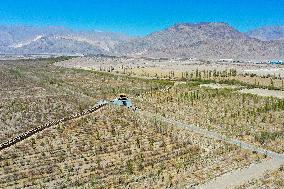
An aerial drone photo taken on April 11, 2025 shows a forest park in Hejing County, the Mongolian Autonomous Prefecture of Bayingolin, northwest China's Xinjiang Uygur Autonomous Region. The Taklimakan Desert in northwest China's Xinjiang Uygur Autonomous Region covers 337,600 square kilometers and its circumference measures 3,046 kilometers, making it the largest desert in China and the second-largest drifting desert in the world. Thanks to decades-long sand prevention and control efforts, the Taklimakan Desert was completely encircled with a sand-blocking green belt on Nov. 28, 2024. In 2025, Xinjiang aims to afforest a land area of about 796,000 hectares, including 562,666 hectares for frontline control in the Taklimakan Desert. These afforestations form a part of the Three-North Shelterbelt Forest Program, the world's largest afforestation program, which tackles desertification in northwest, north and northeast China. Meanwhile, Xinjiang will further widen the sand-blocking green belt and enhance desert-l

  •  
Taklimakan Desert Control Afforestation - China

Taklimakan Desert Control Afforestation - China

An aerial drone photo taken on April 13, 2025 shows a photovoltaic power project in Xayar County, Aksu Prefecture, northwest China's Xinjiang Uygur Autonomous Region. The Taklimakan Desert in northwest China's Xinjiang Uygur Autonomous Region covers 337,600 square kilometers and its circumference measures 3,046 kilometers, making it the largest desert in China and the second-largest drifting desert in the world. Thanks to decades-long sand prevention and control efforts, the Taklimakan Desert was completely encircled with a sand-blocking green belt on Nov. 28, 2024. In 2025, Xinjiang aims to afforest a land area of about 796,000 hectares, including 562,666 hectares for frontline control in the Taklimakan Desert. These afforestations form a part of the Three-North Shelterbelt Forest Program, the world's largest afforestation program, which tackles desertification in northwest, north and northeast China. Meanwhile, Xinjiang will further widen the sand-blocking green belt and enhance desert-locking efforts to ac

  •  
Taklimakan Desert Control Afforestation - China

Taklimakan Desert Control Afforestation - China

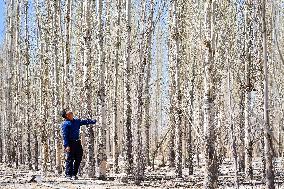
Fu Guoxi checks the trees at a green belt built by his father Fu Zhizhou in Hejing County, the Mongolian Autonomous Prefecture of Bayingolin, northwest China's Xinjiang Uygur Autonomous Region, April 11, 2025. Over the past four decades, Fu Zhizhou had planted more than 800,000 trees and his son Fu Guoxi took over the cause after his father passed away in 2024. The Taklimakan Desert in northwest China's Xinjiang Uygur Autonomous Region covers 337,600 square kilometers and its circumference measures 3,046 kilometers, making it the largest desert in China and the second-largest drifting desert in the world. Thanks to decades-long sand prevention and control efforts, the Taklimakan Desert was completely encircled with a sand-blocking green belt on Nov. 28, 2024. In 2025, Xinjiang aims to afforest a land area of about 796,000 hectares, including 562,666 hectares for frontline control in the Taklimakan Desert. These afforestations form a part of the Three-North Shelterbelt Forest Program, the world's largest affor

  • Main
  • Top
  • Editorial
  • Creative
  • About Us
  • About ILG
  • Terms of use
  • Company
  • BEHIND
  • Price List
  • Single Plan
  • Monthly Plan
  • Services
  • Shooting
  • Rights Clearance
  • Support
  • FAQ
  • How To Buy
  • Contact Us
  • Become a Partner

© KYODO NEWS IMAGES INC

All Rights Reserved.

  • Editorial
  • Olympics
  • News
  • Sports
  • Japan
  • Tech
  • Royal
  • Disaster
  • NorthKorea
  • Old Japan
  • SNS
  • Creative
  • Food
  • Japan
  • Landscape
  • Animal
  • Popular
  • #Ukraine
  • #Russia
  • #coronavirus
  • #N. Korea
  • #Thailand
  • #China
  • #Ukraine
  • #Russia
  • #coronavirus
  • #N. Korea
  • #Thailand
  • #China
  • Food
  • Japan
  • Landscape
  • Animal
  • Olympics
  • News
  • Sports
  • Japan
  • Tech
  • Royal
  • Disaster
  • NorthKorea
  • Old Japan
  • SNS