•  
Settlement Growth in the Nile Delta - Egypt

Settlement Growth in the Nile Delta - Egypt

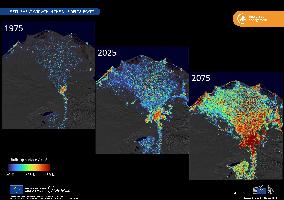
Handout Photomontage shows Settlement Growth in the Nile Delta. The United Nations’ World Urbanisation Prospects 2025 was published on 17 November 2025. Drawing on data from the Joint Research Centre’s Global Human Settlement Layer (GHSL), developed under the Copernicus Emergency Management Service (CEMS), the report tracks changes in population distribution across more than 12,000 urban settlements. It highlights a global shift in settlement patterns, with the majority of the world’s population now living in urban areas. This image, created with GHSL data, focuses on the Nile Delta in Egypt, one of the world’s most densely populated regions. By comparing estimates of built-up surface at three points in time, it shows how the extent of urban development has changed between 1975 and 2025, along with projections for 2075. Using satellite data and national census inputs, GHSL provides a broad range of data on human settlements worldwide, including estimates of built-up surfaces per square kilometre and, at even

  •  
Sudanese Refugee Relocation - Chad

Sudanese Refugee Relocation - Chad

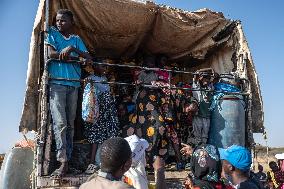
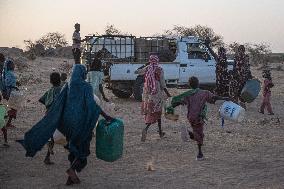
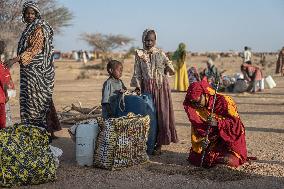
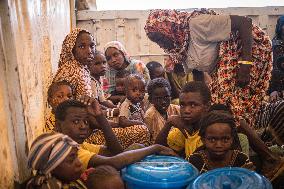
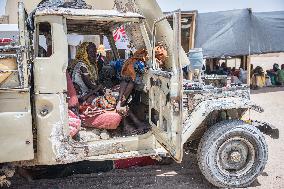
Sudanese refugees relocated from the eastern Chadian city of Tine prepare to get off a vehicle in Iridimi, Chad, June 25, 2025. According to the United Nations, one in three Sudanese have been displaced. Of those, 3.8 million have crossed into neighboring countries, primarily Egypt, Chad, Ethiopia, Eritrea, and South Sudan. Sudan has been locked in a brutal war between the Sudanese Armed Forces and the paramilitary Rapid Support Forces since April 2023. The conflict has killed tens of thousands and forced millions to flee their homes. Photo by Xinhua/Wang Guansen/ABACAPRESS.COM

  •  
Sudanese Refugee Relocation - Chad

Sudanese Refugee Relocation - Chad

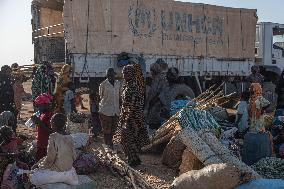
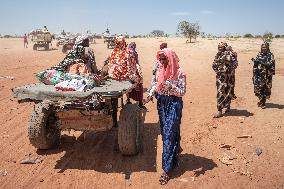
Sudanese refugees relocated from the eastern Chadian city of Tine carry their luggage in Iridimi, Chad, June 25, 2025. According to the United Nations, one in three Sudanese have been displaced. Of those, 3.8 million have crossed into neighboring countries, primarily Egypt, Chad, Ethiopia, Eritrea, and South Sudan. Sudan has been locked in a brutal war between the Sudanese Armed Forces and the paramilitary Rapid Support Forces since April 2023. The conflict has killed tens of thousands and forced millions to flee their homes. Photo by Xinhua/Wang Guansen/ABACAPRESS.COM

  •  
Sudanese Refugee Relocation - Chad

Sudanese Refugee Relocation - Chad

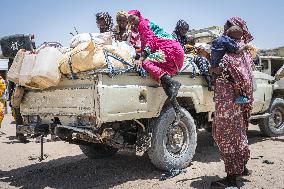
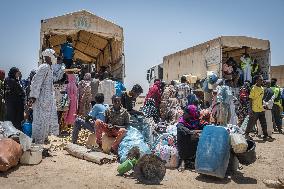
This photo taken on June 26, 2025 shows newly arrived Sudanese refugees at the border in the eastern Chadian city of Tine. According to the United Nations, one in three Sudanese have been displaced. Of those, 3.8 million have crossed into neighboring countries, primarily Egypt, Chad, Ethiopia, Eritrea, and South Sudan. Sudan has been locked in a brutal war between the Sudanese Armed Forces and the paramilitary Rapid Support Forces since April 2023. The conflict has killed tens of thousands and forced millions to flee their homes. Photo by Xinhua/Wang Guansen/ABACAPRESS.COM

  •  
Sudanese Refugee Relocation - Chad

Sudanese Refugee Relocation - Chad

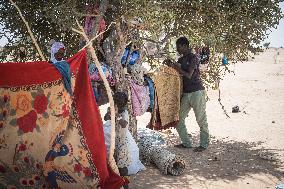
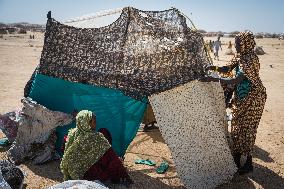
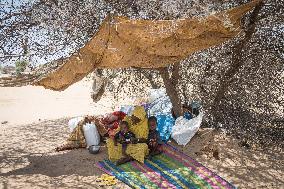
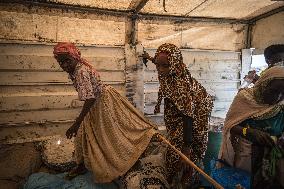
Sudanese refugees relocated from the eastern Chadian city of Tine, set up a makeshift tent in Iridimi, Chad, June 25, 2025. According to the United Nations, one in three Sudanese have been displaced. Of those, 3.8 million have crossed into neighboring countries, primarily Egypt, Chad, Ethiopia, Eritrea, and South Sudan. Sudan has been locked in a brutal war between the Sudanese Armed Forces and the paramilitary Rapid Support Forces since April 2023. The conflict has killed tens of thousands and forced millions to flee their homes. Photo by Xinhua/Wang Guansen/ABACAPRESS.COM

  •  
Sudanese Refugee Relocation - Chad

Sudanese Refugee Relocation - Chad

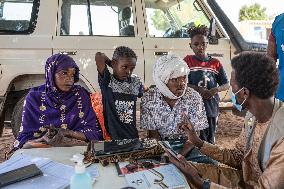
A family of refugees from Khartoum of Sudan register for refugee identities in the Adre refugee camp in eastern Chad, June 24, 2025. According to the United Nations, one in three Sudanese have been displaced. Of those, 3.8 million have crossed into neighboring countries, primarily Egypt, Chad, Ethiopia, Eritrea, and South Sudan. Sudan has been locked in a brutal war between the Sudanese Armed Forces and the paramilitary Rapid Support Forces since April 2023. The conflict has killed tens of thousands and forced millions to flee their homes. Photo by Xinhua/Wang Guansen/ABACAPRESS.COM

  •  
Sudanese Refugee Relocation - Chad

Sudanese Refugee Relocation - Chad

Sudanese refugees arrange their luggage after entering the eastern Chadian city of Tine in Chad, June 26, 2025. According to the United Nations, one in three Sudanese have been displaced. Of those, 3.8 million have crossed into neighboring countries, primarily Egypt, Chad, Ethiopia, Eritrea, and South Sudan. Sudan has been locked in a brutal war between the Sudanese Armed Forces and the paramilitary Rapid Support Forces since April 2023. The conflict has killed tens of thousands and forced millions to flee their homes. Photo by Xinhua/Wang Guansen/ABACAPRESS.COM

  •  
Sudanese Refugee Relocation - Chad

Sudanese Refugee Relocation - Chad

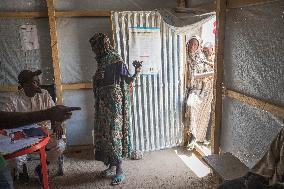
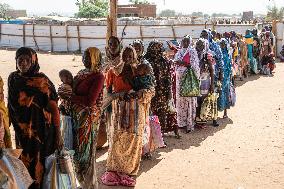
Sudanese refugees wait for registration at the register site after entering the eastern Chadian city of Tine in Chad, June 26, 2025. According to the United Nations, one in three Sudanese have been displaced. Of those, 3.8 million have crossed into neighboring countries, primarily Egypt, Chad, Ethiopia, Eritrea, and South Sudan. Sudan has been locked in a brutal war between the Sudanese Armed Forces and the paramilitary Rapid Support Forces since April 2023. The conflict has killed tens of thousands and forced millions to flee their homes. Photo by Xinhua/Wang Guansen/ABACAPRESS.COM

  •  
Sudanese Refugee Relocation - Chad

Sudanese Refugee Relocation - Chad

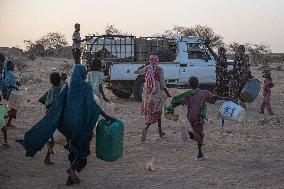
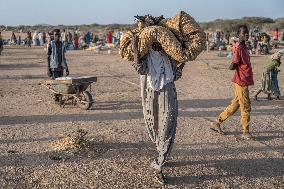
Sudanese refugees relocated from the eastern Chadian city of Tine collect water in Iridimi, Chad, June 25, 2025. According to the United Nations, one in three Sudanese have been displaced. Of those, 3.8 million have crossed into neighboring countries, primarily Egypt, Chad, Ethiopia, Eritrea, and South Sudan. Sudan has been locked in a brutal war between the Sudanese Armed Forces and the paramilitary Rapid Support Forces since April 2023. The conflict has killed tens of thousands and forced millions to flee their homes. Photo by Xinhua/Wang Guansen/ABACAPRESS.COM

  •  
Sudanese Refugee Relocation - Chad

Sudanese Refugee Relocation - Chad

Sudanese refugees enter Chad via Adre crossing in Adre, Chad, June 24, 2025. According to the United Nations, one in three Sudanese have been displaced. Of those, 3.8 million have crossed into neighboring countries, primarily Egypt, Chad, Ethiopia, Eritrea, and South Sudan. Sudan has been locked in a brutal war between the Sudanese Armed Forces and the paramilitary Rapid Support Forces since April 2023. The conflict has killed tens of thousands and forced millions to flee their homes. Photo by Xinhua/Wang Guansen/ABACAPRESS.COM

  •  
Sudanese Refugee Relocation - Chad

Sudanese Refugee Relocation - Chad

Sudanese refugees wait in line for supply distribution at a register station in Adre, Chad, June 25, 2025. According to the United Nations, one in three Sudanese have been displaced. Of those, 3.8 million have crossed into neighboring countries, primarily Egypt, Chad, Ethiopia, Eritrea, and South Sudan. Sudan has been locked in a brutal war between the Sudanese Armed Forces and the paramilitary Rapid Support Forces since April 2023. The conflict has killed tens of thousands and forced millions to flee their homes. Photo by Xinhua/Wang Guansen/ABACAPRESS.COM

  •  
Sudanese Refugee Relocation - Chad

Sudanese Refugee Relocation - Chad

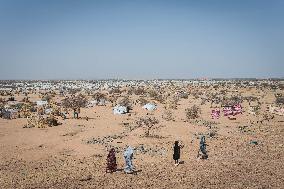
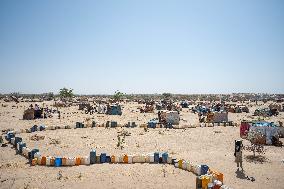
This photo taken on June 27, 2025 shows the view of a relocation site of Sudanese refugees in the eastern Chadian city of Iridimi. According to the United Nations, one in three Sudanese have been displaced. Of those, 3.8 million have crossed into neighboring countries, primarily Egypt, Chad, Ethiopia, Eritrea, and South Sudan. Sudan has been locked in a brutal war between the Sudanese Armed Forces and the paramilitary Rapid Support Forces since April 2023. The conflict has killed tens of thousands and forced millions to flee their homes. Photo by Xinhua/Wang Guansen/ABACAPRESS.COM

  •  
Sudanese Refugee Relocation - Chad

Sudanese Refugee Relocation - Chad

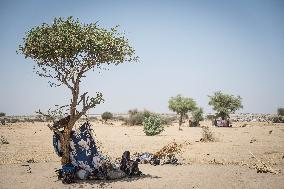
A Sudanese refugee rests in front of a makeshift tent on the outskirts of the city after entering the eastern Chadian city of Tine from North Darfur, Sudan, on June 26, 2025. According to the United Nations, one in three Sudanese have been displaced. Of those, 3.8 million have crossed into neighboring countries, primarily Egypt, Chad, Ethiopia, Eritrea, and South Sudan. Sudan has been locked in a brutal war between the Sudanese Armed Forces and the paramilitary Rapid Support Forces since April 2023. The conflict has killed tens of thousands and forced millions to flee their homes. Photo by Wang Guansen/Xinhua/ABACAPRESS.COM

  •  
Sudanese Refugee Relocation - Chad

Sudanese Refugee Relocation - Chad

Relocated Sudanese refugees set up a makeshift tent in the eastern Chadian city of Iridimi, on June 27, 2025. According to the United Nations, one in three Sudanese have been displaced. Of those, 3.8 million have crossed into neighboring countries, primarily Egypt, Chad, Ethiopia, Eritrea, and South Sudan. Sudan has been locked in a brutal war between the Sudanese Armed Forces and the paramilitary Rapid Support Forces since April 2023. The conflict has killed tens of thousands and forced millions to flee their homes. Photo by Wang Guansen/Xinhua/ABACAPRESS.COM

  •  
Sudanese Refugee Relocation - Chad

Sudanese Refugee Relocation - Chad

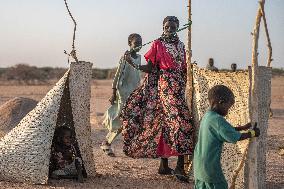
Sudanese refugees relocated from the eastern Chadian city of Tine, set up a makeshift tent in Iridimi, Chad, June 25, 2025. According to the United Nations, one in three Sudanese have been displaced. Of those, 3.8 million have crossed into neighboring countries, primarily Egypt, Chad, Ethiopia, Eritrea, and South Sudan. Sudan has been locked in a brutal war between the Sudanese Armed Forces and the paramilitary Rapid Support Forces since April 2023. The conflict has killed tens of thousands and forced millions to flee their homes. Photo by Wang Guansen/Xinhua/ABACAPRESS.COM

  •  
Sudanese Refugee Relocation - Chad

Sudanese Refugee Relocation - Chad

This photo taken on June 27, 2025 shows the view of a relocation site of Sudanese refugees in the eastern Chadian city of Iridimi. According to the United Nations, one in three Sudanese have been displaced. Of those, 3.8 million have crossed into neighboring countries, primarily Egypt, Chad, Ethiopia, Eritrea, and South Sudan. Sudan has been locked in a brutal war between the Sudanese Armed Forces and the paramilitary Rapid Support Forces since April 2023. The conflict has killed tens of thousands and forced millions to flee their homes. Photo by Wang Guansen/Xinhua/ABACAPRESS.COM

  •  
Sudanese Refugee Relocation - Chad

Sudanese Refugee Relocation - Chad

Sudanese refugees relocated from the eastern Chadian city of Tine, set up a makeshift tent in Iridimi, Chad, June 25, 2025. According to the United Nations, one in three Sudanese have been displaced. Of those, 3.8 million have crossed into neighboring countries, primarily Egypt, Chad, Ethiopia, Eritrea, and South Sudan. Sudan has been locked in a brutal war between the Sudanese Armed Forces and the paramilitary Rapid Support Forces since April 2023. The conflict has killed tens of thousands and forced millions to flee their homes. Photo by Wang Guansen/Xinhua/ABACAPRESS.COM

  •  
Sudanese Refugee Relocation - Chad

Sudanese Refugee Relocation - Chad

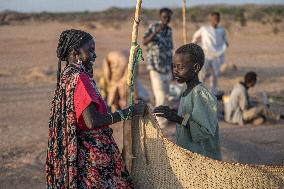
Sudanese refugees relocated from the eastern Chadian city of Tine, scramble to collect water in Iridimi, Chad, June 25, 2025. According to the United Nations, one in three Sudanese have been displaced. Of those, 3.8 million have crossed into neighboring countries, primarily Egypt, Chad, Ethiopia, Eritrea, and South Sudan. Sudan has been locked in a brutal war between the Sudanese Armed Forces and the paramilitary Rapid Support Forces since April 2023. The conflict has killed tens of thousands and forced millions to flee their homes. Photo by Wang Guansen/Xinhua/ABACAPRESS.COM

  •  
Sudanese Refugee Relocation - Chad

Sudanese Refugee Relocation - Chad

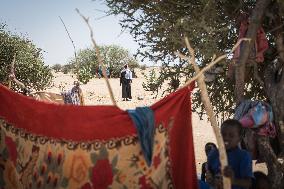
Sudanese refugees rest under a makeshift tent on the outskirts of the city after entering the eastern Chadian city of Tine from North Darfur, Sudan, on June 26, 2025. According to the United Nations, one in three Sudanese have been displaced. Of those, 3.8 million have crossed into neighboring countries, primarily Egypt, Chad, Ethiopia, Eritrea, and South Sudan. Sudan has been locked in a brutal war between the Sudanese Armed Forces and the paramilitary Rapid Support Forces since April 2023. The conflict has killed tens of thousands and forced millions to flee their homes. Photo by Wang Guansen/Xinhua/ABACAPRESS.COM

  •  
Sudanese Refugee Relocation - Chad

Sudanese Refugee Relocation - Chad

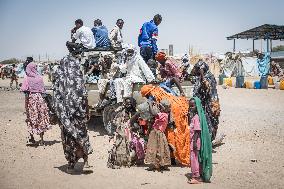
Sudanese refugees wait to board a relocation truck commuting from the eastern Chadian city of Tine to Iridimi, on June 26, 2025. According to the United Nations, one in three Sudanese have been displaced. Of those, 3.8 million have crossed into neighboring countries, primarily Egypt, Chad, Ethiopia, Eritrea, and South Sudan. Sudan has been locked in a brutal war between the Sudanese Armed Forces and the paramilitary Rapid Support Forces since April 2023. The conflict has killed tens of thousands and forced millions to flee their homes. Photo by Wang Guansen/Xinhua/ABACAPRESS.COM

  •  
Sudanese Refugee Relocation - Chad

Sudanese Refugee Relocation - Chad

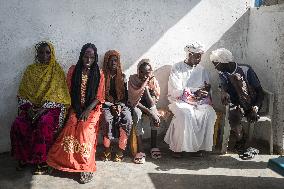
Sudanese refugees wait for registration at the UNHCR register site after entering the eastern Chadian city of Tine from North Darfur, Sudan, on June 26, 2025. According to the United Nations, one in three Sudanese have been displaced. Of those, 3.8 million have crossed into neighboring countries, primarily Egypt, Chad, Ethiopia, Eritrea, and South Sudan. Sudan has been locked in a brutal war between the Sudanese Armed Forces and the paramilitary Rapid Support Forces since April 2023. The conflict has killed tens of thousands and forced millions to flee their homes. Photo by Wang Guansen/Xinhua/ABACAPRESS.COM

  •  
Sudanese Refugee Relocation - Chad

Sudanese Refugee Relocation - Chad

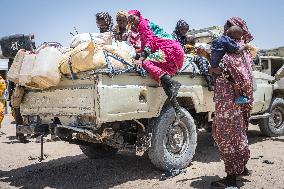
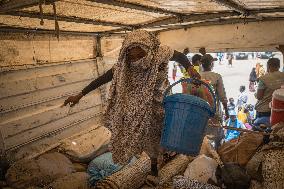
Sudanese refugees board a relocation truck commuting from the eastern Chadian city of Tine to Iridimi, on Juen 26, 2025. According to the United Nations, one in three Sudanese have been displaced. Of those, 3.8 million have crossed into neighboring countries, primarily Egypt, Chad, Ethiopia, Eritrea, and South Sudan. Sudan has been locked in a brutal war between the Sudanese Armed Forces and the paramilitary Rapid Support Forces since April 2023. The conflict has killed tens of thousands and forced millions to flee their homes. Photo by Wang Guansen/Xinhua/ABACAPRESS.COM

  •  
Sudanese Refugee Relocation - Chad

Sudanese Refugee Relocation - Chad

This photo taken on June 26, 2025 shows newly arrived Sudanese refugees at the border in the eastern Chadian city of Tine. According to the United Nations, one in three Sudanese have been displaced. Of those, 3.8 million have crossed into neighboring countries, primarily Egypt, Chad, Ethiopia, Eritrea, and South Sudan. Sudan has been locked in a brutal war between the Sudanese Armed Forces and the paramilitary Rapid Support Forces since April 2023. The conflict has killed tens of thousands and forced millions to flee their homes. Photo by Wang Guansen/Xinhua/ABACAPRESS.COM

  •  
Sudanese Refugee Relocation - Chad

Sudanese Refugee Relocation - Chad

Sudanese refugees arrive at a registration site after entering the eastern Chadian city of Tine from North Darfur, Sudan, on June 26, 2025. According to the United Nations, one in three Sudanese have been displaced. Of those, 3.8 million have crossed into neighboring countries, primarily Egypt, Chad, Ethiopia, Eritrea, and South Sudan. Sudan has been locked in a brutal war between the Sudanese Armed Forces and the paramilitary Rapid Support Forces since April 2023. The conflict has killed tens of thousands and forced millions to flee their homes. Photo by Wang Guansen/Xinhua/ABACAPRESS.COM

  •  
Sudanese Refugee Relocation - Chad

Sudanese Refugee Relocation - Chad

A Sudanese refugee relocated from the eastern Chadian city of Tine, carries the luggage in Iridimi, Chad, June 25, 2025. According to the United Nations, one in three Sudanese have been displaced. Of those, 3.8 million have crossed into neighboring countries, primarily Egypt, Chad, Ethiopia, Eritrea, and South Sudan. Sudan has been locked in a brutal war between the Sudanese Armed Forces and the paramilitary Rapid Support Forces since April 2023. The conflict has killed tens of thousands and forced millions to flee their homes. Photo by Wang Guansen/Xinhua/ABACAPRESS.COM

  •  
Sudanese Refugee Relocation - Chad

Sudanese Refugee Relocation - Chad

A Sudanese refugee boards a relocation truck commuting from the eastern Chadian city of Tine to Iridimi, on June 26, 2025. According to the United Nations, one in three Sudanese have been displaced. Of those, 3.8 million have crossed into neighboring countries, primarily Egypt, Chad, Ethiopia, Eritrea, and South Sudan. Sudan has been locked in a brutal war between the Sudanese Armed Forces and the paramilitary Rapid Support Forces since April 2023. The conflict has killed tens of thousands and forced millions to flee their homes. Photo by Wang Guansen/Xinhua/ABACAPRESS.COM

  •  
Sudanese Refugee Relocation - Chad

Sudanese Refugee Relocation - Chad

Sudanese refugees set up makeshift tents on the outskirts of the city after entering the eastern Chadian city of Tine from North Darfur, Sudan, on June 26, 2025. According to the United Nations, one in three Sudanese have been displaced. Of those, 3.8 million have crossed into neighboring countries, primarily Egypt, Chad, Ethiopia, Eritrea, and South Sudan. Sudan has been locked in a brutal war between the Sudanese Armed Forces and the paramilitary Rapid Support Forces since April 2023. The conflict has killed tens of thousands and forced millions to flee their homes. Photo by Wang Guansen/Xinhua/ABACAPRESS.COM

  •  
Sudanese Refugee Relocation - Chad

Sudanese Refugee Relocation - Chad

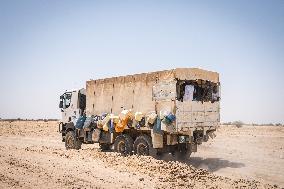
This photo taken on June 26, 2025 shows the relocation truck for Sudanese refugees commuting from the eastern Chadian city of Tine to Iridimi. According to the United Nations, one in three Sudanese have been displaced. Of those, 3.8 million have crossed into neighboring countries, primarily Egypt, Chad, Ethiopia, Eritrea, and South Sudan. Sudan has been locked in a brutal war between the Sudanese Armed Forces and the paramilitary Rapid Support Forces since April 2023. The conflict has killed tens of thousands and forced millions to flee their homes. Photo by Wang Guansen/Xinhua/ABACAPRESS.COM

  •  
Sudanese Refugee Relocation - Chad

Sudanese Refugee Relocation - Chad

Sudanese refugees wait for departure inside a relocation truck commuting from the eastern Chadian city of Tine to Iridimi, on June 26, 2025. According to the United Nations, one in three Sudanese have been displaced. Of those, 3.8 million have crossed into neighboring countries, primarily Egypt, Chad, Ethiopia, Eritrea, and South Sudan. Sudan has been locked in a brutal war between the Sudanese Armed Forces and the paramilitary Rapid Support Forces since April 2023. The conflict has killed tens of thousands and forced millions to flee their homes. Photo by Wang Guansen/Xinhua/ABACAPRESS.COM

  •  
Sudanese Refugee Relocation - Chad

Sudanese Refugee Relocation - Chad

This photo taken on June 26, 2025 shows newly arrived Sudanese refugees at the border in the eastern Chadian city of Tine. According to the United Nations, one in three Sudanese have been displaced. Of those, 3.8 million have crossed into neighboring countries, primarily Egypt, Chad, Ethiopia, Eritrea, and South Sudan. Sudan has been locked in a brutal war between the Sudanese Armed Forces and the paramilitary Rapid Support Forces since April 2023. The conflict has killed tens of thousands and forced millions to flee their homes. Photo by Wang Guansen/Xinhua/ABACAPRESS.COM

  •  
Nomadic Life in Inner Mongolia's Horqin Grassland - China

Nomadic Life in Inner Mongolia's Horqin Grassland - China

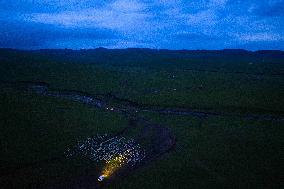
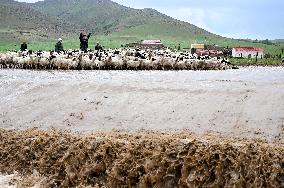
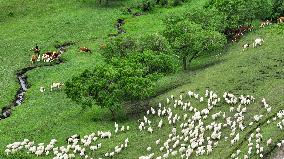
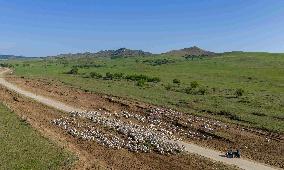
An aerial drone photo taken on June 14, 2025 shows herdsmen driving the livestock at night on the way to the summer campsite on Ar Horqin Grassland, Chifeng City of north China's Inner Mongolia Autonomous Region. Saintsogt, 55, a herdsman in Bayin-undur of Ar Horqin Banner, north China's Inner Mongolia Autonomous Region, is busy with the annual summer migration covering a distance of about 100 kilometers. For the past four decades, he has completed the migration every year. Saintsogt's pasture is a part of the Ar Horqin Grassland Nomadic System, which was listed as one of the Globally Important Agricultural Heritage Systems (GIAHS) sites by the United Nations Food and Agriculture Organization (FAO) on May 20, 2022. Herders here still keep the traditional nomadic customs today. "The travel time has been shortened to three days from eight," Saintsogt said. "The rain makes pasture grow better, and the livestock have enough forage." This year, herders from more than 1,200 households and 128,000 livestock in Bayin

  •  
Nomadic Life in Inner Mongolia's Horqin Grassland - China

Nomadic Life in Inner Mongolia's Horqin Grassland - China

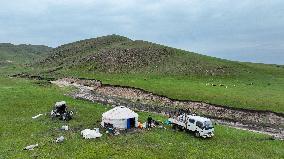
An aerial drone photo taken on June 15, 2025 shows a Mongolian yurt of Saintsogt at his summer campsite on Ar Horqin Grassland, Chifeng City of north China's Inner Mongolia Autonomous Region. Saintsogt, 55, a herdsman in Bayin-undur of Ar Horqin Banner, north China's Inner Mongolia Autonomous Region, is busy with the annual summer migration covering a distance of about 100 kilometers. For the past four decades, he has completed the migration every year. Saintsogt's pasture is a part of the Ar Horqin Grassland Nomadic System, which was listed as one of the Globally Important Agricultural Heritage Systems (GIAHS) sites by the United Nations Food and Agriculture Organization (FAO) on May 20, 2022. Herders here still keep the traditional nomadic customs today. "The travel time has been shortened to three days from eight," Saintsogt said. "The rain makes pasture grow better, and the livestock have enough forage." This year, herders from more than 1,200 households and 128,000 livestock in Bayin-undur joined the mig

  •  
Nomadic Life in Inner Mongolia's Horqin Grassland - China

Nomadic Life in Inner Mongolia's Horqin Grassland - China

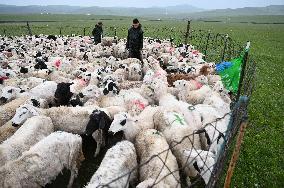
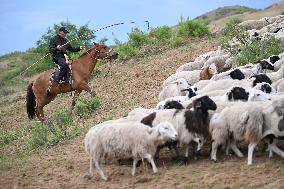
Saintsogt's son (2nd R) drives sheep in rain on his way to the summer campsite on Ar Horqin Grassland, Chifeng City of north China's Inner Mongolia Autonomous Region, June 13, 2025. Saintsogt, 55, a herdsman in Bayin-undur of Ar Horqin Banner, north China's Inner Mongolia Autonomous Region, is busy with the annual summer migration covering a distance of about 100 kilometers. For the past four decades, he has completed the migration every year. Saintsogt's pasture is a part of the Ar Horqin Grassland Nomadic System, which was listed as one of the Globally Important Agricultural Heritage Systems (GIAHS) sites by the United Nations Food and Agriculture Organization (FAO) on May 20, 2022. Herders here still keep the traditional nomadic customs today. "The travel time has been shortened to three days from eight," Saintsogt said. "The rain makes pasture grow better, and the livestock have enough forage." This year, herders from more than 1,200 households and 128,000 livestock in Bayin-undur joined the migration. Ph

  •  
Nomadic Life in Inner Mongolia's Horqin Grassland - China

Nomadic Life in Inner Mongolia's Horqin Grassland - China

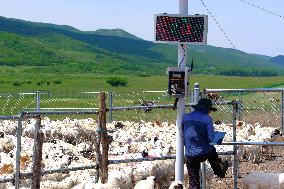
A staff member of Gogodtai Han Ul national nature reserve counts the livestock entering the nature reserve in north China's Inner Mongolia Autonomous Region, June 14, 2025. Saintsogt, 55, a herdsman in Bayin-undur of Ar Horqin Banner, north China's Inner Mongolia Autonomous Region, is busy with the annual summer migration covering a distance of about 100 kilometers. For the past four decades, he has completed the migration every year. Saintsogt's pasture is a part of the Ar Horqin Grassland Nomadic System, which was listed as one of the Globally Important Agricultural Heritage Systems (GIAHS) sites by the United Nations Food and Agriculture Organization (FAO) on May 20, 2022. Herders here still keep the traditional nomadic customs today. "The travel time has been shortened to three days from eight," Saintsogt said. "The rain makes pasture grow better, and the livestock have enough forage." This year, herders from more than 1,200 households and 128,000 livestock in Bayin-undur joined the migration. Photo by Ma

  •  
Nomadic Life in Inner Mongolia's Horqin Grassland - China

Nomadic Life in Inner Mongolia's Horqin Grassland - China

Saintsogt's son seeks for a sick sheep after arriving at the summer campsite on Ar Horqin Grassland, Chifeng City of north China's Inner Mongolia Autonomous Region, June 15, 2025. Saintsogt, 55, a herdsman in Bayin-undur of Ar Horqin Banner, north China's Inner Mongolia Autonomous Region, is busy with the annual summer migration covering a distance of about 100 kilometers. For the past four decades, he has completed the migration every year. Saintsogt's pasture is a part of the Ar Horqin Grassland Nomadic System, which was listed as one of the Globally Important Agricultural Heritage Systems (GIAHS) sites by the United Nations Food and Agriculture Organization (FAO) on May 20, 2022. Herders here still keep the traditional nomadic customs today. "The travel time has been shortened to three days from eight," Saintsogt said. "The rain makes pasture grow better, and the livestock have enough forage." This year, herders from more than 1,200 households and 128,000 livestock in Bayin-undur joined the migration. Phot

  •  
Nomadic Life in Inner Mongolia's Horqin Grassland - China

Nomadic Life in Inner Mongolia's Horqin Grassland - China

Saintsogt's wife arranges bedding at home before departing for the summer campsite on Ar Horqin Grassland, Chifeng City of north China's Inner Mongolia Autonomous Region, June 13, 2025. Saintsogt, 55, a herdsman in Bayin-undur of Ar Horqin Banner, north China's Inner Mongolia Autonomous Region, is busy with the annual summer migration covering a distance of about 100 kilometers. For the past four decades, he has completed the migration every year. Saintsogt's pasture is a part of the Ar Horqin Grassland Nomadic System, which was listed as one of the Globally Important Agricultural Heritage Systems (GIAHS) sites by the United Nations Food and Agriculture Organization (FAO) on May 20, 2022. Herders here still keep the traditional nomadic customs today. "The travel time has been shortened to three days from eight," Saintsogt said. "The rain makes pasture grow better, and the livestock have enough forage." This year, herders from more than 1,200 households and 128,000 livestock in Bayin-undur joined the migration

  •  
Nomadic Life in Inner Mongolia's Horqin Grassland - China

Nomadic Life in Inner Mongolia's Horqin Grassland - China

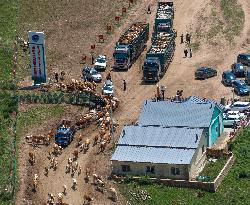
An aerial drone photo taken on June 14, 2025 shows herders waiting for entering the Gogodtai Han Ul national nature reserve in north China's Inner Mongolia Autonomous Region. Saintsogt, 55, a herdsman in Bayin-undur of Ar Horqin Banner, north China's Inner Mongolia Autonomous Region, is busy with the annual summer migration covering a distance of about 100 kilometers. For the past four decades, he has completed the migration every year. Saintsogt's pasture is a part of the Ar Horqin Grassland Nomadic System, which was listed as one of the Globally Important Agricultural Heritage Systems (GIAHS) sites by the United Nations Food and Agriculture Organization (FAO) on May 20, 2022. Herders here still keep the traditional nomadic customs today. "The travel time has been shortened to three days from eight," Saintsogt said. "The rain makes pasture grow better, and the livestock have enough forage." This year, herders from more than 1,200 households and 128,000 livestock in Bayin-undur joined the migration. Photo by

  •  
Nomadic Life in Inner Mongolia's Horqin Grassland - China

Nomadic Life in Inner Mongolia's Horqin Grassland - China

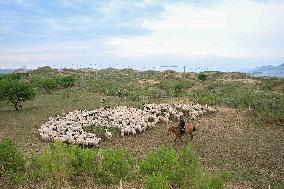
Saintsogt gathers the livestock at the winter campsite before departing for the summer campsite on Ar Horqin Grassland, Chifeng City of north China's Inner Mongolia Autonomous Region, June 13, 2025. Saintsogt, 55, a herdsman in Bayin-undur of Ar Horqin Banner, north China's Inner Mongolia Autonomous Region, is busy with the annual summer migration covering a distance of about 100 kilometers. For the past four decades, he has completed the migration every year. Saintsogt's pasture is a part of the Ar Horqin Grassland Nomadic System, which was listed as one of the Globally Important Agricultural Heritage Systems (GIAHS) sites by the United Nations Food and Agriculture Organization (FAO) on May 20, 2022. Herders here still keep the traditional nomadic customs today. "The travel time has been shortened to three days from eight," Saintsogt said. "The rain makes pasture grow better, and the livestock have enough forage." This year, herders from more than 1,200 households and 128,000 livestock in Bayin-undur joined

  •  
Nomadic Life in Inner Mongolia's Horqin Grassland - China

Nomadic Life in Inner Mongolia's Horqin Grassland - China

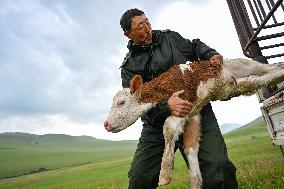
Saintsogt takes a newly born calf off the truck after arriving at the summer campsite on Ar Horqin Grassland, Chifeng City of north China's Inner Mongolia Autonomous Region, June 15, 2025. Saintsogt, 55, a herdsman in Bayin-undur of Ar Horqin Banner, north China's Inner Mongolia Autonomous Region, is busy with the annual summer migration covering a distance of about 100 kilometers. For the past four decades, he has completed the migration every year. Saintsogt's pasture is a part of the Ar Horqin Grassland Nomadic System, which was listed as one of the Globally Important Agricultural Heritage Systems (GIAHS) sites by the United Nations Food and Agriculture Organization (FAO) on May 20, 2022. Herders here still keep the traditional nomadic customs today. "The travel time has been shortened to three days from eight," Saintsogt said. "The rain makes pasture grow better, and the livestock have enough forage." This year, herders from more than 1,200 households and 128,000 livestock in Bayin-undur joined the migrat

  •  
Nomadic Life in Inner Mongolia's Horqin Grassland - China

Nomadic Life in Inner Mongolia's Horqin Grassland - China

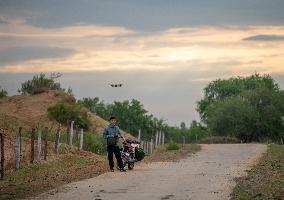
Saintsogt's son operates a drone to check the number of the livestock on Ar Horqin Grassland, Chifeng City of north China's Inner Mongolia Autonomous Region, June 13, 2025. Saintsogt, 55, a herdsman in Bayin-undur of Ar Horqin Banner, north China's Inner Mongolia Autonomous Region, is busy with the annual summer migration covering a distance of about 100 kilometers. For the past four decades, he has completed the migration every year. Saintsogt's pasture is a part of the Ar Horqin Grassland Nomadic System, which was listed as one of the Globally Important Agricultural Heritage Systems (GIAHS) sites by the United Nations Food and Agriculture Organization (FAO) on May 20, 2022. Herders here still keep the traditional nomadic customs today. "The travel time has been shortened to three days from eight," Saintsogt said. "The rain makes pasture grow better, and the livestock have enough forage." This year, herders from more than 1,200 households and 128,000 livestock in Bayin-undur joined the migration. Photo by Ma

  •  
Nomadic Life in Inner Mongolia's Horqin Grassland - China

Nomadic Life in Inner Mongolia's Horqin Grassland - China

An aerial drone photo taken on June 14, 2025 shows Saintsogt driving the livestock on his way to the summer campsite on Ar Horqin Grassland, Chifeng City of north China's Inner Mongolia Autonomous Region. Saintsogt, 55, a herdsman in Bayin-undur of Ar Horqin Banner, north China's Inner Mongolia Autonomous Region, is busy with the annual summer migration covering a distance of about 100 kilometers. For the past four decades, he has completed the migration every year. Saintsogt's pasture is a part of the Ar Horqin Grassland Nomadic System, which was listed as one of the Globally Important Agricultural Heritage Systems (GIAHS) sites by the United Nations Food and Agriculture Organization (FAO) on May 20, 2022. Herders here still keep the traditional nomadic customs today. "The travel time has been shortened to three days from eight," Saintsogt said. "The rain makes pasture grow better, and the livestock have enough forage." This year, herders from more than 1,200 households and 128,000 livestock in Bayin-undur j

  •  
Nomadic Life in Inner Mongolia's Horqin Grassland - China

Nomadic Life in Inner Mongolia's Horqin Grassland - China

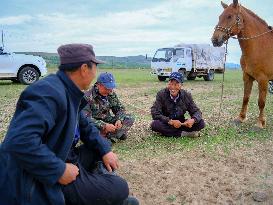
Saintsogt (R) talks with other herdsmen on their way to the summer campsite on Ar Horqin Grassland, Chifeng City of north China's Inner Mongolia Autonomous Region, June 13, 2025. Saintsogt, 55, a herdsman in Bayin-undur of Ar Horqin Banner, north China's Inner Mongolia Autonomous Region, is busy with the annual summer migration covering a distance of about 100 kilometers. For the past four decades, he has completed the migration every year. Saintsogt's pasture is a part of the Ar Horqin Grassland Nomadic System, which was listed as one of the Globally Important Agricultural Heritage Systems (GIAHS) sites by the United Nations Food and Agriculture Organization (FAO) on May 20, 2022. Herders here still keep the traditional nomadic customs today. "The travel time has been shortened to three days from eight," Saintsogt said. "The rain makes pasture grow better, and the livestock have enough forage." This year, herders from more than 1,200 households and 128,000 livestock in Bayin-undur joined the migration. Photo

  •  
Nomadic Life in Inner Mongolia's Horqin Grassland - China

Nomadic Life in Inner Mongolia's Horqin Grassland - China

Saintsogt gathers the livestock at their winter campsite before departing for the summer campsite on Ar Horqin Grassland, Chifeng City of north China's Inner Mongolia Autonomous Region, June 13, 2025. Saintsogt, 55, a herdsman in Bayin-undur of Ar Horqin Banner, north China's Inner Mongolia Autonomous Region, is busy with the annual summer migration covering a distance of about 100 kilometers. For the past four decades, he has completed the migration every year. Saintsogt's pasture is a part of the Ar Horqin Grassland Nomadic System, which was listed as one of the Globally Important Agricultural Heritage Systems (GIAHS) sites by the United Nations Food and Agriculture Organization (FAO) on May 20, 2022. Herders here still keep the traditional nomadic customs today. "The travel time has been shortened to three days from eight," Saintsogt said. "The rain makes pasture grow better, and the livestock have enough forage." This year, herders from more than 1,200 households and 128,000 livestock in Bayin-undur joine

  •  
Nomadic Life in Inner Mongolia's Horqin Grassland - China

Nomadic Life in Inner Mongolia's Horqin Grassland - China

An aerial drone photo shows Saintsogt's son (L) riding a motorcycle to drive the livestock on his way to the summer campsite on Ar Horqin Grassland, Chifeng City of north China's Inner Mongolia Autonomous Region, June 14, 2025. Saintsogt, 55, a herdsman in Bayin-undur of Ar Horqin Banner, north China's Inner Mongolia Autonomous Region, is busy with the annual summer migration covering a distance of about 100 kilometers. For the past four decades, he has completed the migration every year. Saintsogt's pasture is a part of the Ar Horqin Grassland Nomadic System, which was listed as one of the Globally Important Agricultural Heritage Systems (GIAHS) sites by the United Nations Food and Agriculture Organization (FAO) on May 20, 2022. Herders here still keep the traditional nomadic customs today. "The travel time has been shortened to three days from eight," Saintsogt said. "The rain makes pasture grow better, and the livestock have enough forage." This year, herders from more than 1,200 households and 128,000 liv

  •  
Nomadic Life in Inner Mongolia's Horqin Grassland - China

Nomadic Life in Inner Mongolia's Horqin Grassland - China

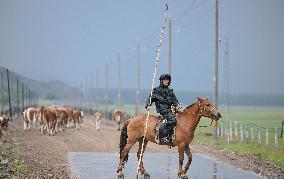
Saintsogt drives cattle in the rain on his way to the summer campsite on Ar Horqin Grassland, Chifeng City of north China's Inner Mongolia Autonomous Region, June 13, 2025. Saintsogt, 55, a herdsman in Bayin-undur of Ar Horqin Banner, north China's Inner Mongolia Autonomous Region, is busy with the annual summer migration covering a distance of about 100 kilometers. For the past four decades, he has completed the migration every year. Saintsogt's pasture is a part of the Ar Horqin Grassland Nomadic System, which was listed as one of the Globally Important Agricultural Heritage Systems (GIAHS) sites by the United Nations Food and Agriculture Organization (FAO) on May 20, 2022. Herders here still keep the traditional nomadic customs today. "The travel time has been shortened to three days from eight," Saintsogt said. "The rain makes pasture grow better, and the livestock have enough forage." This year, herders from more than 1,200 households and 128,000 livestock in Bayin-undur joined the migration. Photo by Be

  •  
Nomadic Life in Inner Mongolia's Horqin Grassland - China

Nomadic Life in Inner Mongolia's Horqin Grassland - China

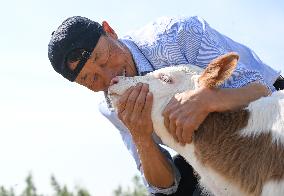
Saintsogt hugs a newly born calf on his way to the summer campsite on Ar Horqin Grassland, Chifeng City of north China's Inner Mongolia Autonomous Region, June 14, 2025. Saintsogt, 55, a herdsman in Bayin-undur of Ar Horqin Banner, north China's Inner Mongolia Autonomous Region, is busy with the annual summer migration covering a distance of about 100 kilometers. For the past four decades, he has completed the migration every year. Saintsogt's pasture is a part of the Ar Horqin Grassland Nomadic System, which was listed as one of the Globally Important Agricultural Heritage Systems (GIAHS) sites by the United Nations Food and Agriculture Organization (FAO) on May 20, 2022. Herders here still keep the traditional nomadic customs today. "The travel time has been shortened to three days from eight," Saintsogt said. "The rain makes pasture grow better, and the livestock have enough forage." This year, herders from more than 1,200 households and 128,000 livestock in Bayin-undur joined the migration. Photo by Bei H

  •  
Nomadic Life in Inner Mongolia's Horqin Grassland - China

Nomadic Life in Inner Mongolia's Horqin Grassland - China

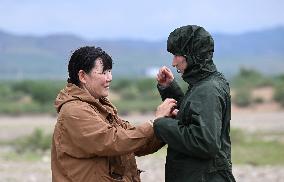
Saintsogt's wife (L) helps her son to wear a raincoat on their way to the summer campsite on Ar Horqin Grassland, Chifeng City of north China's Inner Mongolia Autonomous Region, June 13, 2025. Saintsogt, 55, a herdsman in Bayin-undur of Ar Horqin Banner, north China's Inner Mongolia Autonomous Region, is busy with the annual summer migration covering a distance of about 100 kilometers. For the past four decades, he has completed the migration every year. Saintsogt's pasture is a part of the Ar Horqin Grassland Nomadic System, which was listed as one of the Globally Important Agricultural Heritage Systems (GIAHS) sites by the United Nations Food and Agriculture Organization (FAO) on May 20, 2022. Herders here still keep the traditional nomadic customs today. "The travel time has been shortened to three days from eight," Saintsogt said. "The rain makes pasture grow better, and the livestock have enough forage." This year, herders from more than 1,200 households and 128,000 livestock in Bayin-undur joined the mi

  •  
Nomadic Life in Inner Mongolia's Horqin Grassland - China

Nomadic Life in Inner Mongolia's Horqin Grassland - China

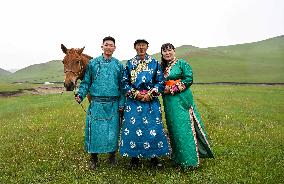
Saintsogt (C), his wife (R) and son pose for a group photo at their summer campsite on Ar Horqin Grassland, Chifeng City of north China's Inner Mongolia Autonomous Region, June 15, 2025. Saintsogt, 55, a herdsman in Bayin-undur of Ar Horqin Banner, north China's Inner Mongolia Autonomous Region, is busy with the annual summer migration covering a distance of about 100 kilometers. For the past four decades, he has completed the migration every year. Saintsogt's pasture is a part of the Ar Horqin Grassland Nomadic System, which was listed as one of the Globally Important Agricultural Heritage Systems (GIAHS) sites by the United Nations Food and Agriculture Organization (FAO) on May 20, 2022. Herders here still keep the traditional nomadic customs today. "The travel time has been shortened to three days from eight," Saintsogt said. "The rain makes pasture grow better, and the livestock have enough forage." This year, herders from more than 1,200 households and 128,000 livestock in Bayin-undur joined the migratio

  •  
Illustration - Loire Valley

Illustration - Loire Valley

FRANCE - LOIRE VALLEY - INDRE ET LOIRE (37) - CASTLE OF VILLANDRY : ROOM OF MOATS. HOUSED IN THE 18TH CENTURY BY JOACHIM CARVALLO (GREAT RESTAURATEUR OF VILLANDRY AND CREATOR OF THE GARDENS), THIS ROOM WAS THAT OF ANN COLEMAN, HIS WIFE. THE TABLES REPRESENT THREE OF THE SIX CHILDREN OF THE COUPLE. Photo by Stephane Compoint/Only France/ABACAPRESS.COM

  •  
Taiwan leader Lai's 1st overseas trip

Taiwan leader Lai's 1st overseas trip

Taiwan President Lai Ching-te (L) speaks to reporters at Taoyuan International Airport in northern Taiwan on Nov. 30, 2024, before leaving for three Pacific island nations on his first overseas trip since taking office in May.

  • Main
  • Top
  • Editorial
  • Creative
  • About Us
  • About ILG
  • Terms of use
  • Company
  • BEHIND
  • Price List
  • Single Plan
  • Monthly Plan
  • Services
  • Shooting
  • Rights Clearance
  • Support
  • FAQ
  • How To Buy
  • Contact Us
  • Become a Partner

© KYODO NEWS IMAGES INC

All Rights Reserved.

  • Editorial
  • Olympics
  • News
  • Sports
  • Japan
  • Tech
  • Royal
  • Disaster
  • NorthKorea
  • Old Japan
  • SNS
  • Creative
  • Food
  • Japan
  • Landscape
  • Animal
  • Popular
  • #Ukraine
  • #Russia
  • #coronavirus
  • #N. Korea
  • #China
  • #Thailand
  • #Ukraine
  • #Russia
  • #coronavirus
  • #N. Korea
  • #China
  • #Thailand
  • Food
  • Japan
  • Landscape
  • Animal
  • Olympics
  • News
  • Sports
  • Japan
  • Tech
  • Royal
  • Disaster
  • NorthKorea
  • Old Japan
  • SNS