•  
Medical Equipment Exhibition Area at 8TH CIIE in Shanghai

Medical Equipment Exhibition Area at 8TH CIIE in Shanghai

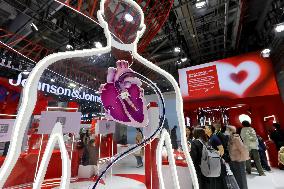
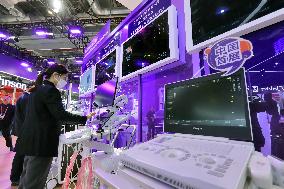
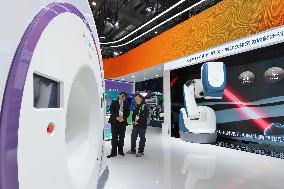
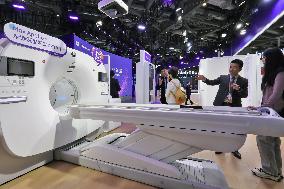
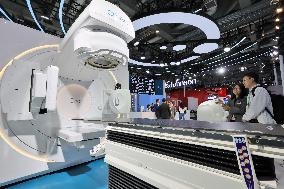
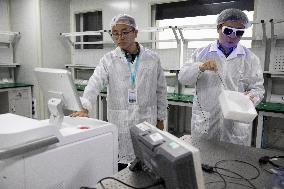
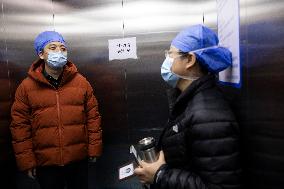
SHANGHAI, CHINA - NOVEMBER 8, 2025 - The audience learned about the Spiral Tomography Radiotherapy System in the Medical Equipment Exhibition Area of the 8th CIIE in Shanghai, China, on November 8, 2025.

  •  
Medical Equipment Exhibition Area at 8TH CIIE in Shanghai

Medical Equipment Exhibition Area at 8TH CIIE in Shanghai

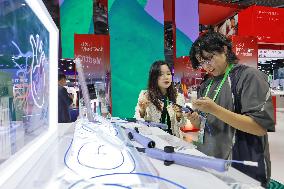
SHANGHAI, CHINA - NOVEMBER 8, 2025 - The audience learned about the Spiral Tomography Radiotherapy System in the Medical Equipment Exhibition Area of the 8th CIIE in Shanghai, China, on November 8, 2025.

  •  
Medical Equipment Exhibition Area at 8TH CIIE in Shanghai

Medical Equipment Exhibition Area at 8TH CIIE in Shanghai

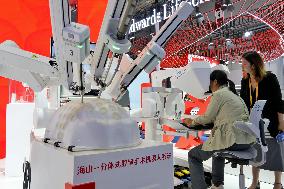
SHANGHAI, CHINA - NOVEMBER 8, 2025 - The audience learned about the Spiral Tomography Radiotherapy System in the Medical Equipment Exhibition Area of the 8th CIIE in Shanghai, China, on November 8, 2025.

  •  
Medical Equipment Exhibition Area at 8TH CIIE in Shanghai

Medical Equipment Exhibition Area at 8TH CIIE in Shanghai

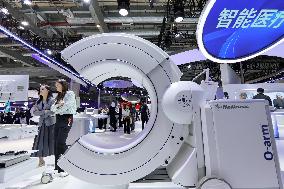
SHANGHAI, CHINA - NOVEMBER 8, 2025 - The audience learned about the Spiral Tomography Radiotherapy System in the Medical Equipment Exhibition Area of the 8th CIIE in Shanghai, China, on November 8, 2025.

  •  
Medical Equipment Exhibition Area at 8TH CIIE in Shanghai

Medical Equipment Exhibition Area at 8TH CIIE in Shanghai

SHANGHAI, CHINA - NOVEMBER 8, 2025 - The audience learned about the Spiral Tomography Radiotherapy System in the Medical Equipment Exhibition Area of the 8th CIIE in Shanghai, China, on November 8, 2025.

  •  
Medical Equipment Exhibition Area at 8TH CIIE in Shanghai

Medical Equipment Exhibition Area at 8TH CIIE in Shanghai

SHANGHAI, CHINA - NOVEMBER 8, 2025 - The audience learned about the Spiral Tomography Radiotherapy System in the Medical Equipment Exhibition Area of the 8th CIIE in Shanghai, China, on November 8, 2025.

  •  
Medical Equipment Exhibition Area at 8TH CIIE in Shanghai

Medical Equipment Exhibition Area at 8TH CIIE in Shanghai

SHANGHAI, CHINA - NOVEMBER 8, 2025 - The audience learned about the Spiral Tomography Radiotherapy System in the Medical Equipment Exhibition Area of the 8th CIIE in Shanghai, China, on November 8, 2025.

  •  
Medical Equipment Exhibition Area at 8TH CIIE in Shanghai

Medical Equipment Exhibition Area at 8TH CIIE in Shanghai

SHANGHAI, CHINA - NOVEMBER 8, 2025 - The audience learned about the Spiral Tomography Radiotherapy System in the Medical Equipment Exhibition Area of the 8th CIIE in Shanghai, China, on November 8, 2025.

  •  
CHINA-BEIJING-OCT TECHNOLOGY-ENTREPRENEURSHIP (CN)

CHINA-BEIJING-OCT TECHNOLOGY-ENTREPRENEURSHIP (CN)

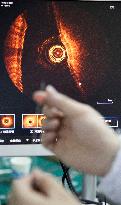
(240220) -- BEIJING, Feb. 20, 2024 (Xinhua) -- Zhu Rui (R) tests a new generation of OCT equipment at a laboratory of a branch office of Vivolight in Xi'an, northwest China's Shaanxi Province, Jan. 18, 2024. On Feb. 18, the first working day after China's Spring Festival holiday, Zhu Rui, founder of medical device company Vivolight, came to the catheter operating room of Beijing Anzhen Hospital to learn about the use of OCT equipment produced by his company. OCT, or optical coherence tomography technology, allows doctors to examine patients and display real-time three-dimensional images where the catheter passes, providing guide for surgery. Since graduating from Tsinghua University in 2006, Zhu has been engaged in OCT related research and product development. His role has changed from a student, a researcher to an entrepreneur. While studying in Beijing, Zhu built an OCT system for ophthalmology. While studying for his PhD in Hong Kong, he realized the potential value of OCT technology in cardiovascu

  •  
CHINA-BEIJING-OCT TECHNOLOGY-ENTREPRENEURSHIP (CN)

CHINA-BEIJING-OCT TECHNOLOGY-ENTREPRENEURSHIP (CN)

(240220) -- BEIJING, Feb. 20, 2024 (Xinhua) -- Zhu Rui attends a video conference on his way to a branch office of Vivolight in Xi'an, northwest China's Shaanxi Province, Jan. 18, 2024. On Feb. 18, the first working day after China's Spring Festival holiday, Zhu Rui, founder of medical device company Vivolight, came to the catheter operating room of Beijing Anzhen Hospital to learn about the use of OCT equipment produced by his company. OCT, or optical coherence tomography technology, allows doctors to examine patients and display real-time three-dimensional images where the catheter passes, providing guide for surgery. Since graduating from Tsinghua University in 2006, Zhu has been engaged in OCT related research and product development. His role has changed from a student, a researcher to an entrepreneur. While studying in Beijing, Zhu built an OCT system for ophthalmology. While studying for his PhD in Hong Kong, he realized the potential value of OCT technology in cardiovascular surgery. In 2012,

  •  
CHINA-BEIJING-OCT TECHNOLOGY-ENTREPRENEURSHIP (CN)

CHINA-BEIJING-OCT TECHNOLOGY-ENTREPRENEURSHIP (CN)

(240220) -- BEIJING, Feb. 20, 2024 (Xinhua) -- Zhu Rui (R) talks with his colleague at a branch office of Vivolight in Xi'an, northwest China's Shaanxi Province, Jan. 19, 2024. On Feb. 18, the first working day after China's Spring Festival holiday, Zhu Rui, founder of medical device company Vivolight, came to the catheter operating room of Beijing Anzhen Hospital to learn about the use of OCT equipment produced by his company. OCT, or optical coherence tomography technology, allows doctors to examine patients and display real-time three-dimensional images where the catheter passes, providing guide for surgery. Since graduating from Tsinghua University in 2006, Zhu has been engaged in OCT related research and product development. His role has changed from a student, a researcher to an entrepreneur. While studying in Beijing, Zhu built an OCT system for ophthalmology. While studying for his PhD in Hong Kong, he realized the potential value of OCT technology in cardiovascular surgery. In 2012, he gave u

  •  
CHINA-BEIJING-OCT TECHNOLOGY-ENTREPRENEURSHIP (CN)

CHINA-BEIJING-OCT TECHNOLOGY-ENTREPRENEURSHIP (CN)

(240220) -- BEIJING, Feb. 20, 2024 (Xinhua) -- Zhu Rui (R) learns about the use of OCT equipment at Beijing Anzhen Hospital in Beijing, capital of China, Feb. 18, 2024. On Feb. 18, the first working day after China's Spring Festival holiday, Zhu Rui, founder of medical device company Vivolight, came to the catheter operating room of Beijing Anzhen Hospital to learn about the use of OCT equipment produced by his company. OCT, or optical coherence tomography technology, allows doctors to examine patients and display real-time three-dimensional images where the catheter passes, providing guide for surgery. Since graduating from Tsinghua University in 2006, Zhu has been engaged in OCT related research and product development. His role has changed from a student, a researcher to an entrepreneur. While studying in Beijing, Zhu built an OCT system for ophthalmology. While studying for his PhD in Hong Kong, he realized the potential value of OCT technology in cardiovascular surgery. In 2012, he gave up his do

  •  
CHINA-BEIJING-OCT TECHNOLOGY-ENTREPRENEURSHIP (CN)

CHINA-BEIJING-OCT TECHNOLOGY-ENTREPRENEURSHIP (CN)

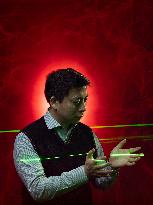
(240220) -- BEIJING, Feb. 20, 2024 (Xinhua) -- Zhu Rui adjusts equipment at a laboratory of Institute of Physics of the Chinese Academy of Sciences in Beijing, capital of China, Jan. 12, 2024. On Feb. 18, the first working day after China's Spring Festival holiday, Zhu Rui, founder of medical device company Vivolight, came to the catheter operating room of Beijing Anzhen Hospital to learn about the use of OCT equipment produced by his company. OCT, or optical coherence tomography technology, allows doctors to examine patients and display real-time three-dimensional images where the catheter passes, providing guide for surgery. Since graduating from Tsinghua University in 2006, Zhu has been engaged in OCT related research and product development. His role has changed from a student, a researcher to an entrepreneur. While studying in Beijing, Zhu built an OCT system for ophthalmology. While studying for his PhD in Hong Kong, he realized the potential value of OCT technology in cardiovascular surgery. In

  •  
CHINA-BEIJING-OCT TECHNOLOGY-ENTREPRENEURSHIP (CN)

CHINA-BEIJING-OCT TECHNOLOGY-ENTREPRENEURSHIP (CN)

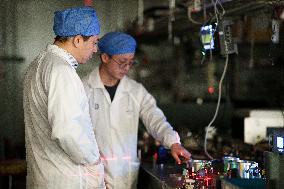
(240220) -- BEIJING, Feb. 20, 2024 (Xinhua) -- Zhu Rui (L) talks with a researcher at a laboratory of Institute of Physics of the Chinese Academy of Sciences in Beijing, capital of China, Jan. 12, 2024. On Feb. 18, the first working day after China's Spring Festival holiday, Zhu Rui, founder of medical device company Vivolight, came to the catheter operating room of Beijing Anzhen Hospital to learn about the use of OCT equipment produced by his company. OCT, or optical coherence tomography technology, allows doctors to examine patients and display real-time three-dimensional images where the catheter passes, providing guide for surgery. Since graduating from Tsinghua University in 2006, Zhu has been engaged in OCT related research and product development. His role has changed from a student, a researcher to an entrepreneur. While studying in Beijing, Zhu built an OCT system for ophthalmology. While studying for his PhD in Hong Kong, he realized the potential value of OCT technology in cardiovascular s

  •  
CHINA-BEIJING-OCT TECHNOLOGY-ENTREPRENEURSHIP (CN)

CHINA-BEIJING-OCT TECHNOLOGY-ENTREPRENEURSHIP (CN)

(240220) -- BEIJING, Feb. 20, 2024 (Xinhua) -- Zhu Rui (L) talks with a doctor about the use of OCT equipment at Beijing Anzhen Hospital in Beijing, capital of China, Feb. 18, 2024. On Feb. 18, the first working day after China's Spring Festival holiday, Zhu Rui, founder of medical device company Vivolight, came to the catheter operating room of Beijing Anzhen Hospital to learn about the use of OCT equipment produced by his company. OCT, or optical coherence tomography technology, allows doctors to examine patients and display real-time three-dimensional images where the catheter passes, providing guide for surgery. Since graduating from Tsinghua University in 2006, Zhu has been engaged in OCT related research and product development. His role has changed from a student, a researcher to an entrepreneur. While studying in Beijing, Zhu built an OCT system for ophthalmology. While studying for his PhD in Hong Kong, he realized the potential value of OCT technology in cardiovascular surgery. In 2012, he g

  •  
CHINA-BEIJING-OCT TECHNOLOGY-ENTREPRENEURSHIP (CN)

CHINA-BEIJING-OCT TECHNOLOGY-ENTREPRENEURSHIP (CN)

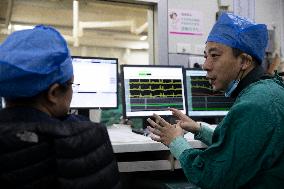
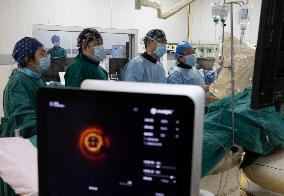
(240220) -- BEIJING, Feb. 20, 2024 (Xinhua) -- Zhu Rui (back) observes doctors using OCT equipment at Beijing Anzhen Hospital in Beijing, capital of China, Feb. 18, 2024. On Feb. 18, the first working day after China's Spring Festival holiday, Zhu Rui, founder of medical device company Vivolight, came to the catheter operating room of Beijing Anzhen Hospital to learn about the use of OCT equipment produced by his company. OCT, or optical coherence tomography technology, allows doctors to examine patients and display real-time three-dimensional images where the catheter passes, providing guide for surgery. Since graduating from Tsinghua University in 2006, Zhu has been engaged in OCT related research and product development. His role has changed from a student, a researcher to an entrepreneur. While studying in Beijing, Zhu built an OCT system for ophthalmology. While studying for his PhD in Hong Kong, he realized the potential value of OCT technology in cardiovascular surgery. In 2012, he gave up his

  •  
CHINA-BEIJING-OCT TECHNOLOGY-ENTREPRENEURSHIP (CN)

CHINA-BEIJING-OCT TECHNOLOGY-ENTREPRENEURSHIP (CN)

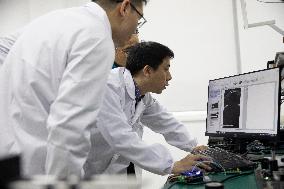
(240220) -- BEIJING, Feb. 20, 2024 (Xinhua) -- Zhu Rui and his colleagues discuss the research progress of OCT technology at a laboratory of a branch office of Vivolight in Xi'an, northwest China's Shaanxi Province, Jan. 18, 2024. On Feb. 18, the first working day after China's Spring Festival holiday, Zhu Rui, founder of medical device company Vivolight, came to the catheter operating room of Beijing Anzhen Hospital to learn about the use of OCT equipment produced by his company. OCT, or optical coherence tomography technology, allows doctors to examine patients and display real-time three-dimensional images where the catheter passes, providing guide for surgery. Since graduating from Tsinghua University in 2006, Zhu has been engaged in OCT related research and product development. His role has changed from a student, a researcher to an entrepreneur. While studying in Beijing, Zhu built an OCT system for ophthalmology. While studying for his PhD in Hong Kong, he realized the potential value of OCT te

  •  
CHINA-BEIJING-OCT TECHNOLOGY-ENTREPRENEURSHIP (CN)

CHINA-BEIJING-OCT TECHNOLOGY-ENTREPRENEURSHIP (CN)

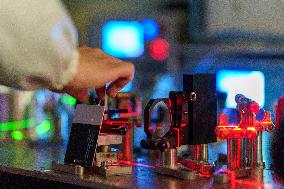
(240220) -- BEIJING, Feb. 20, 2024 (Xinhua) -- Zhu Rui adjusts OCT equipment at a laboratory of a branch office of Vivolight in Xi'an, northwest China's Shaanxi Province, Jan. 18, 2024. On Feb. 18, the first working day after China's Spring Festival holiday, Zhu Rui, founder of medical device company Vivolight, came to the catheter operating room of Beijing Anzhen Hospital to learn about the use of OCT equipment produced by his company. OCT, or optical coherence tomography technology, allows doctors to examine patients and display real-time three-dimensional images where the catheter passes, providing guide for surgery. Since graduating from Tsinghua University in 2006, Zhu has been engaged in OCT related research and product development. His role has changed from a student, a researcher to an entrepreneur. While studying in Beijing, Zhu built an OCT system for ophthalmology. While studying for his PhD in Hong Kong, he realized the potential value of OCT technology in cardiovascular surgery. In 2012,

  •  
CHINA-BEIJING-OCT TECHNOLOGY-ENTREPRENEURSHIP (CN)

CHINA-BEIJING-OCT TECHNOLOGY-ENTREPRENEURSHIP (CN)

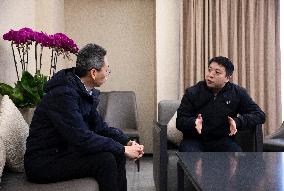
(240220) -- BEIJING, Feb. 20, 2024 (Xinhua) -- Zhu Rui (R) talks with his partner Dr. Mi Lei in Xi'an, northwest China's Shaanxi Province, Jan. 19, 2024. On Feb. 18, the first working day after China's Spring Festival holiday, Zhu Rui, founder of medical device company Vivolight, came to the catheter operating room of Beijing Anzhen Hospital to learn about the use of OCT equipment produced by his company. OCT, or optical coherence tomography technology, allows doctors to examine patients and display real-time three-dimensional images where the catheter passes, providing guide for surgery. Since graduating from Tsinghua University in 2006, Zhu has been engaged in OCT related research and product development. His role has changed from a student, a researcher to an entrepreneur. While studying in Beijing, Zhu built an OCT system for ophthalmology. While studying for his PhD in Hong Kong, he realized the potential value of OCT technology in cardiovascular surgery. In 2012, he gave up his doctoral studies

  •  
CHINA-BEIJING-OCT TECHNOLOGY-ENTREPRENEURSHIP (CN)

CHINA-BEIJING-OCT TECHNOLOGY-ENTREPRENEURSHIP (CN)

(240220) -- BEIJING, Feb. 20, 2024 (Xinhua) -- Zhu Rui attends a video conference with experts at a branch office of Vivolight in Xi'an, northwest China's Shaanxi Province, Jan. 19, 2024. On Feb. 18, the first working day after China's Spring Festival holiday, Zhu Rui, founder of medical device company Vivolight, came to the catheter operating room of Beijing Anzhen Hospital to learn about the use of OCT equipment produced by his company. OCT, or optical coherence tomography technology, allows doctors to examine patients and display real-time three-dimensional images where the catheter passes, providing guide for surgery. Since graduating from Tsinghua University in 2006, Zhu has been engaged in OCT related research and product development. His role has changed from a student, a researcher to an entrepreneur. While studying in Beijing, Zhu built an OCT system for ophthalmology. While studying for his PhD in Hong Kong, he realized the potential value of OCT technology in cardiovascular surgery. In 2012

  •  
CHINA-BEIJING-OCT TECHNOLOGY-ENTREPRENEURSHIP (CN)

CHINA-BEIJING-OCT TECHNOLOGY-ENTREPRENEURSHIP (CN)

(240220) -- BEIJING, Feb. 20, 2024 (Xinhua) -- This photo taken on Jan. 12, 2024 shows a portrait of Zhu Rui. On Feb. 18, the first working day after China's Spring Festival holiday, Zhu Rui, founder of medical device company Vivolight, came to the catheter operating room of Beijing Anzhen Hospital to learn about the use of OCT equipment produced by his company. OCT, or optical coherence tomography technology, allows doctors to examine patients and display real-time three-dimensional images where the catheter passes, providing guide for surgery. Since graduating from Tsinghua University in 2006, Zhu has been engaged in OCT related research and product development. His role has changed from a student, a researcher to an entrepreneur. While studying in Beijing, Zhu built an OCT system for ophthalmology. While studying for his PhD in Hong Kong, he realized the potential value of OCT technology in cardiovascular surgery. In 2012, he gave up his doctoral studies and tried to transform the achievements in h

  •  
CHINA-SHANGHAI-COVID-19-COMMUNITY-TREATMENT (CN)

CHINA-SHANGHAI-COVID-19-COMMUNITY-TREATMENT (CN)

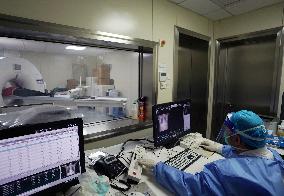
(230104) -- SHANGHAI, Jan. 4, 2023 (Xinhua) -- A medical worker conducts a computed tomography (CT) scan for a patient in the fever clinic of a community healthcare institution in Jiuting Town of Songjiang District, east China's Shanghai, Jan. 4, 2023. Community healthcare institutions in Shanghai have done their best to add beds and ventilators, and better allocate medical resources to ensure that every patient could receive timely treatment and the risk of severe illness can be early detected. (Xinhua/Liu Ying)

  •  
Cloud-based service for medical practitioners

Cloud-based service for medical practitioners

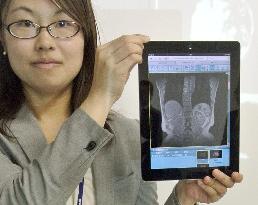
OSAKA, Japan - Nippon Telegraph and Telephone West Corp. shows in Osaka, western Japan, on April 9, 2014, an image of a cloud-based service for medical practitioners in which computed tomography images can be shown on tablet computers and other devices. The company and its partners started offering the service from April 10.

  •  
Fujifilm HD Chairman Komori emphasizes the significance of the acquisition.

Fujifilm HD Chairman Komori emphasizes the significance of the acquisition.

FUJIFILM Holdings Corporation (HD), which will acquire Hitachi, Ltd.'s diagnostic imaging systems such as computed tomography (CT) and magnetic resonance tomography (MRI), as well as electronic medical record (EMR) related services, held a press conference in Tokyo on April 18, and Chairman Shigetaka Komori emphasized the significance of the acquisition, saying, "The healthcare domain is a market with high growth potential. In particular, the company has positioned the "Diagnostics" business, including diagnostic imaging systems and medical IT, as its core business. Kenji Sukeno, President and CEO, said, "This acquisition is a combination of products with little overlap and highly complementary technologies. In September, the company acquired Yokogawa Medical Solutions, a maker of medical information systems. (Photo taken on December 18, 2019, credit: Nikkan Kogyo Shimbun / Kyodo News Images)

  •  
Piezo Sonic's PSM60N-ET ultrasonic motor. Motor (front) and driver (back)

Piezo Sonic's PSM60N-ET ultrasonic motor. Motor (front) and driver (back)

Piezo Sonic (Setagaya-ku, Tokyo) has released a high-torque ultrasonic motor, the PSM60N. The ultrasonic motor rotates by minute vibrations and frictional force. Since it does not use coils and magnets, it can be used in high magnetic field environments such as magnetic resonance tomography (MRI) systems.The company's ultrasonic motor uses a piezoelectric element to vibrate a ring with a comb-shaped slit. When the rotor (rotating body) is brought into contact with the ring, the vibration of the teeth is transmitted to the rotor, which rotates. The comb tooth structure amplifies the vibration. We chose a material with high friction to increase the torque. The maximum torque is 1.2 Newton meters, which is 5 to 10 times higher than a DC motor of the same size. The motor is also equipped with an optical encoder. (Photo taken on December 4, 2019, credit: Nikkan Kogyo Shimbun / Kyodo News Images)

  •  
Kyoto Univ. Hospital official operates mobile CT system

Kyoto Univ. Hospital official operates mobile CT system

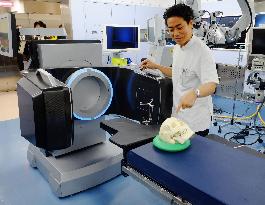
A Kyoto University Hospital official checks on April 6, 2015, a new mobile computer-aided tomography system developed for the first time in Japan. The system makes it possible to scan a patient in an operating room, enabling doctors to look simultaneously at images of disease-affected and surrounding areas in a patient during an operation. (Kyodo) ==Kyodo

  •  
Kyoto Univ. Hospital introduces mobile CT system

Kyoto Univ. Hospital introduces mobile CT system

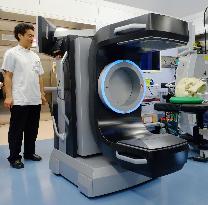
An official at Kyoto University Hospital looks on April 6, 2015, at a new mobile computer tomography system that is expected to improve the precision of tumor removal and other surgery, ahead of the start of its operation on April 8. (Kyodo) ==Kyodo

  •  
Misdiagnoses at Japan hospital

Misdiagnoses at Japan hospital

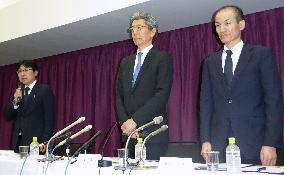
Shuichi Yamamoto (C), head of Chiba University Hospital, holds a press conference in Tokyo on June 8, 2018, concerning two patients who died from cancer that was not diagnosed through computerized tomography examinations. (Kyodo) ==Kyodo

  •  
Misdiagnoses at Japan hospital

Misdiagnoses at Japan hospital

Shuichi Yamamoto, head of Chiba University Hospital, answers a question from a reporter during a press conference in Tokyo on June 8, 2018, concerning two patients who died from cancer that was not diagnosed through computerized tomography examinations. (Kyodo) ==Kyodo

  •  
New baggage scanning system at Haneda airport

New baggage scanning system at Haneda airport

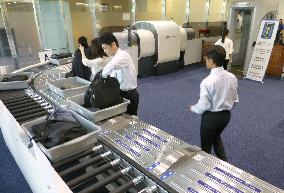
Travelers have their baggage go through a new screening system introduced at Tokyo's Haneda airport on April 19, 2018, which X-rays the baggage from all directions using computed tomography scanners. (Kyodo) ==Kyodo

  •  
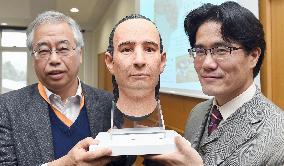
Reproduction of 18th century Italian missionary's face

Reproduction of 18th century Italian missionary's face

National Museum of Nature and Science officials hold a reproduction of the face of Italian missionary Giovanni Battista Sidotti, who died in 1714 in what is now Tokyo, at the museum in the Japanese capital on Nov. 8, 2016. Using computer tomography, a 3D printer, resins and Sidotti's skull that was unearthed in 2014 from the remains of a prison for Christians in Tokyo's Bunkyo Ward, the museum reproduced Sidotti's face. The team also used historical documents to deduct that the Italian had black hair and eyes. (Kyodo) ==Kyodo

  •  
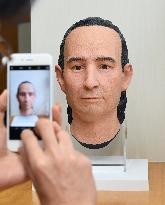
Reproduction of 18th century Italian missionary's face

Reproduction of 18th century Italian missionary's face

A facial reproduction of Italian missionary Giovanni Battista Sidotti, who died in 1714 in what is now Tokyo, is prepared to be photographed at the National Museum of Nature and Science in the Japanese capital on Nov. 8, 2016. Using computer tomography, a 3D printer, resins and Sidotti's skull that was unearthed in 2014 from the remains of a prison for Christians in Tokyo's Bunkyo Ward, the museum reproduced Sidotti's face. The team also used historical documents to deduct that the Italian had black hair and eyes. (Kyodo) ==Kyodo

  • Main
  • Top
  • Editorial
  • Creative
  • About Us
  • About ILG
  • Terms of use
  • Company
  • BEHIND
  • Price List
  • Single Plan
  • Monthly Plan
  • Services
  • Shooting
  • Rights Clearance
  • Support
  • FAQ
  • How To Buy
  • Contact Us
  • Become a Partner

© KYODO NEWS IMAGES INC

All Rights Reserved.

  • Editorial
  • Olympics
  • News
  • Sports
  • Japan
  • Tech
  • Royal
  • Disaster
  • NorthKorea
  • Old Japan
  • SNS
  • Creative
  • Food
  • Japan
  • Landscape
  • Animal
  • Popular
  • #Ukraine
  • #China
  • #coronavirus
  • #N. Korea
  • #Russia
  • #Thailand
  • #Ukraine
  • #China
  • #coronavirus
  • #N. Korea
  • #Russia
  • #Thailand
  • Food
  • Japan
  • Landscape
  • Animal
  • Olympics
  • News
  • Sports
  • Japan
  • Tech
  • Royal
  • Disaster
  • NorthKorea
  • Old Japan
  • SNS