•  
XINHUA PHOTOS OF THE DAY

XINHUA PHOTOS OF THE DAY

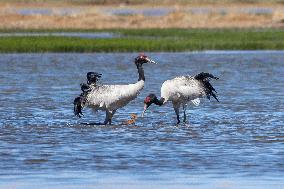
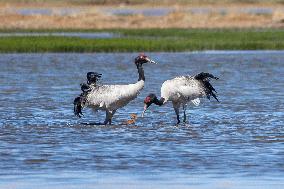
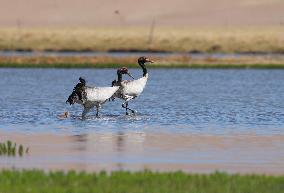
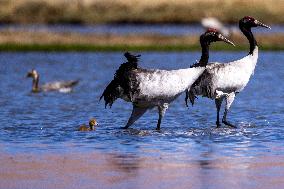
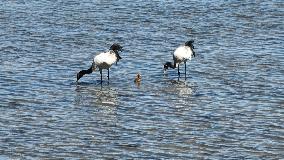
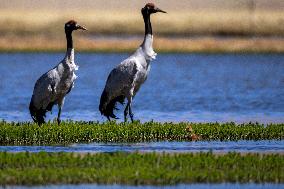
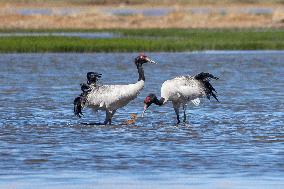
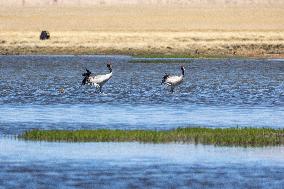
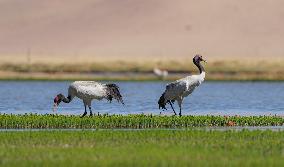
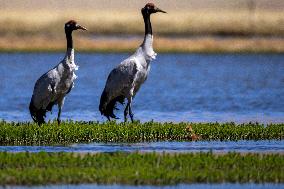
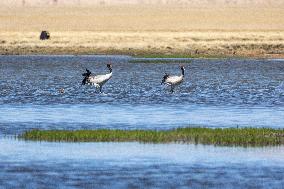
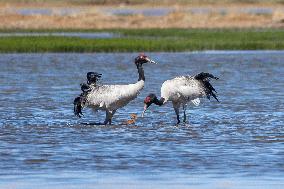
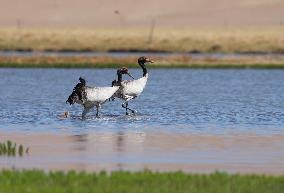
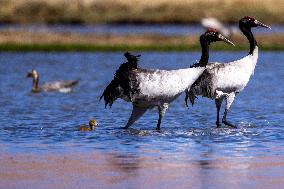
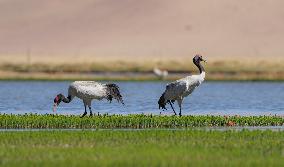
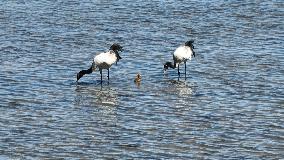
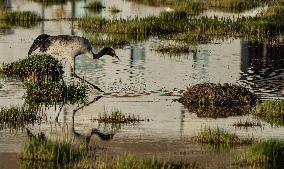
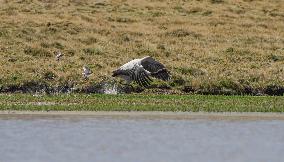
(240611) -- BEIJING, June 11, 2024 Photo by Xinhua/ABACAPRESS.COM) -- Two black-necked cranes and their baby are seen at a wetland in Xainza County of Nagqu City, southwest China's Xizang Autonomous Region, June 9, 2024. Black-necked crane couples are breeding babies in wetlands at an altitude of about 4,700 meters in Xainza County. Every year around the time of June, pairs of black-necked cranes migrate to Xainza County to hatch eggs on grass piers surrounded by water. The black-necked crane, a species under first-class state protection in China, mainly inhabits plateau meadows and marshes at an altitude of 2,500 to 5,000 meters. Photo by Xinhua/ABACAPRESS.COM/Tenzing Nima Qadhup)

  •  
XINHUA PHOTOS OF THE DAY

XINHUA PHOTOS OF THE DAY

(240611) -- BEIJING, June 11, 2024 (Xinhua) -- Two black-necked cranes and their baby are seen at a wetland in Xainza County of Nagqu City, southwest China's Xizang Autonomous Region, June 9, 2024. Black-necked crane couples are breeding babies in wetlands at an altitude of about 4,700 meters in Xainza County. Every year around the time of June, pairs of black-necked cranes migrate to Xainza County to hatch eggs on grass piers surrounded by water. The black-necked crane, a species under first-class state protection in China, mainly inhabits plateau meadows and marshes at an altitude of 2,500 to 5,000 meters. (Xinhua/Tenzing Nima Qadhup)

  •  
(InXizang)CHINA-XIZANG-XAINZA-BLACK-NECKED CRANE BABY (CN)

(InXizang)CHINA-XIZANG-XAINZA-BLACK-NECKED CRANE BABY (CN)

(240610) -- LHASA, June 10, 2024 Photo by Xinhua/ABACAPRESS.COM) -- Two black-necked cranes and their baby are seen at a wetland in Xainza County of Nagqu City, southwest China's Xizang Autonomous Region, June 9, 2024. Black-necked crane couples are breeding babies in wetlands at an altitude of about 4,700 meters in Xainza County. Every year around the time of June, pairs of black-necked cranes migrate to Xainza County to hatch eggs on grass piers surrounded by water. The black-necked crane, a species under first-class state protection in China, mainly inhabits plateau meadows and marshes at an altitude of 2,500 to 5,000 meters. Photo by Xinhua/ABACAPRESS.COM/Jigme Dorje)

  •  
(InXizang)CHINA-XIZANG-XAINZA-BLACK-NECKED CRANE BABY (CN)

(InXizang)CHINA-XIZANG-XAINZA-BLACK-NECKED CRANE BABY (CN)

(240610) -- LHASA, June 10, 2024 Photo by Xinhua/ABACAPRESS.COM) -- Two black-necked cranes and their baby are seen at a wetland in Xainza County of Nagqu City, southwest China's Xizang Autonomous Region, June 9, 2024. Black-necked crane couples are breeding babies in wetlands at an altitude of about 4,700 meters in Xainza County. Every year around the time of June, pairs of black-necked cranes migrate to Xainza County to hatch eggs on grass piers surrounded by water. The black-necked crane, a species under first-class state protection in China, mainly inhabits plateau meadows and marshes at an altitude of 2,500 to 5,000 meters. Photo by Xinhua/ABACAPRESS.COM/Jiang Fan)

  •  
(InXizang)CHINA-XIZANG-XAINZA-BLACK-NECKED CRANE BABY (CN)

(InXizang)CHINA-XIZANG-XAINZA-BLACK-NECKED CRANE BABY (CN)

(240610) -- LHASA, June 10, 2024 Photo by Xinhua/ABACAPRESS.COM) -- Two black-necked cranes and their baby are seen at a wetland in Xainza County of Nagqu City, southwest China's Xizang Autonomous Region, June 9, 2024. Black-necked crane couples are breeding babies in wetlands at an altitude of about 4,700 meters in Xainza County. Every year around the time of June, pairs of black-necked cranes migrate to Xainza County to hatch eggs on grass piers surrounded by water. The black-necked crane, a species under first-class state protection in China, mainly inhabits plateau meadows and marshes at an altitude of 2,500 to 5,000 meters. Photo by Xinhua/ABACAPRESS.COM/Jigme Dorje)

  •  
(InXizang)CHINA-XIZANG-XAINZA-BLACK-NECKED CRANE BABY (CN)

(InXizang)CHINA-XIZANG-XAINZA-BLACK-NECKED CRANE BABY (CN)

(240610) -- LHASA, June 10, 2024 Photo by Xinhua/ABACAPRESS.COM) -- Two black-necked cranes and their baby are seen at a wetland in Xainza County of Nagqu City, southwest China's Xizang Autonomous Region, June 9, 2024. Black-necked crane couples are breeding babies in wetlands at an altitude of about 4,700 meters in Xainza County. Every year around the time of June, pairs of black-necked cranes migrate to Xainza County to hatch eggs on grass piers surrounded by water. The black-necked crane, a species under first-class state protection in China, mainly inhabits plateau meadows and marshes at an altitude of 2,500 to 5,000 meters. Photo by Xinhua/ABACAPRESS.COM/Jiang Fan)

  •  
(InXizang)CHINA-XIZANG-XAINZA-BLACK-NECKED CRANE BABY (CN)

(InXizang)CHINA-XIZANG-XAINZA-BLACK-NECKED CRANE BABY (CN)

(240610) -- LHASA, June 10, 2024 Photo by Xinhua/ABACAPRESS.COM) -- Two black-necked cranes and their baby are seen at a wetland in Xainza County of Nagqu City, southwest China's Xizang Autonomous Region, June 9, 2024. Black-necked crane couples are breeding babies in wetlands at an altitude of about 4,700 meters in Xainza County. Every year around the time of June, pairs of black-necked cranes migrate to Xainza County to hatch eggs on grass piers surrounded by water. The black-necked crane, a species under first-class state protection in China, mainly inhabits plateau meadows and marshes at an altitude of 2,500 to 5,000 meters. Photo by Xinhua/ABACAPRESS.COM/Tenzing Nima Qadhup)

  •  
(InXizang)CHINA-XIZANG-XAINZA-BLACK-NECKED CRANE BABY (CN)

(InXizang)CHINA-XIZANG-XAINZA-BLACK-NECKED CRANE BABY (CN)

(240610) -- LHASA, June 10, 2024 Photo by Xinhua/ABACAPRESS.COM) -- Two black-necked cranes and their baby are seen at a wetland in Xainza County of Nagqu City, southwest China's Xizang Autonomous Region, June 9, 2024. Black-necked crane couples are breeding babies in wetlands at an altitude of about 4,700 meters in Xainza County. Every year around the time of June, pairs of black-necked cranes migrate to Xainza County to hatch eggs on grass piers surrounded by water. The black-necked crane, a species under first-class state protection in China, mainly inhabits plateau meadows and marshes at an altitude of 2,500 to 5,000 meters. Photo by Xinhua/ABACAPRESS.COM/Tenzing Nima Qadhup)

  •  
(InXizang)CHINA-XIZANG-XAINZA-BLACK-NECKED CRANE BABY (CN)

(InXizang)CHINA-XIZANG-XAINZA-BLACK-NECKED CRANE BABY (CN)

(240610) -- LHASA, June 10, 2024 Photo by Xinhua/ABACAPRESS.COM) -- Two black-necked cranes and their baby are seen at a wetland in Xainza County of Nagqu City, southwest China's Xizang Autonomous Region, June 9, 2024. Black-necked crane couples are breeding babies in wetlands at an altitude of about 4,700 meters in Xainza County. Every year around the time of June, pairs of black-necked cranes migrate to Xainza County to hatch eggs on grass piers surrounded by water. The black-necked crane, a species under first-class state protection in China, mainly inhabits plateau meadows and marshes at an altitude of 2,500 to 5,000 meters. Photo by Xinhua/ABACAPRESS.COM/Jigme Dorje)

  •  
(InXizang)CHINA-XIZANG-XAINZA-BLACK-NECKED CRANE BABY (CN)

(InXizang)CHINA-XIZANG-XAINZA-BLACK-NECKED CRANE BABY (CN)

(240610) -- LHASA, June 10, 2024 (Xinhua) -- Two black-necked cranes and their baby are seen at a wetland in Xainza County of Nagqu City, southwest China's Xizang Autonomous Region, June 9, 2024. Black-necked crane couples are breeding babies in wetlands at an altitude of about 4,700 meters in Xainza County. Every year around the time of June, pairs of black-necked cranes migrate to Xainza County to hatch eggs on grass piers surrounded by water. The black-necked crane, a species under first-class state protection in China, mainly inhabits plateau meadows and marshes at an altitude of 2,500 to 5,000 meters. (Xinhua/Jiang Fan)

  •  
(InXizang)CHINA-XIZANG-XAINZA-BLACK-NECKED CRANE BABY (CN)

(InXizang)CHINA-XIZANG-XAINZA-BLACK-NECKED CRANE BABY (CN)

(240610) -- LHASA, June 10, 2024 (Xinhua) -- Two black-necked cranes and their baby are seen at a wetland in Xainza County of Nagqu City, southwest China's Xizang Autonomous Region, June 9, 2024. Black-necked crane couples are breeding babies in wetlands at an altitude of about 4,700 meters in Xainza County. Every year around the time of June, pairs of black-necked cranes migrate to Xainza County to hatch eggs on grass piers surrounded by water. The black-necked crane, a species under first-class state protection in China, mainly inhabits plateau meadows and marshes at an altitude of 2,500 to 5,000 meters. (Xinhua/Tenzing Nima Qadhup)

  •  
(InXizang)CHINA-XIZANG-XAINZA-BLACK-NECKED CRANE BABY (CN)

(InXizang)CHINA-XIZANG-XAINZA-BLACK-NECKED CRANE BABY (CN)

(240610) -- LHASA, June 10, 2024 (Xinhua) -- Two black-necked cranes and their baby are seen at a wetland in Xainza County of Nagqu City, southwest China's Xizang Autonomous Region, June 9, 2024. Black-necked crane couples are breeding babies in wetlands at an altitude of about 4,700 meters in Xainza County. Every year around the time of June, pairs of black-necked cranes migrate to Xainza County to hatch eggs on grass piers surrounded by water. The black-necked crane, a species under first-class state protection in China, mainly inhabits plateau meadows and marshes at an altitude of 2,500 to 5,000 meters. (Xinhua/Tenzing Nima Qadhup)

  •  
(InXizang)CHINA-XIZANG-XAINZA-BLACK-NECKED CRANE BABY (CN)

(InXizang)CHINA-XIZANG-XAINZA-BLACK-NECKED CRANE BABY (CN)

(240610) -- LHASA, June 10, 2024 (Xinhua) -- Two black-necked cranes and their baby are seen at a wetland in Xainza County of Nagqu City, southwest China's Xizang Autonomous Region, June 9, 2024. Black-necked crane couples are breeding babies in wetlands at an altitude of about 4,700 meters in Xainza County. Every year around the time of June, pairs of black-necked cranes migrate to Xainza County to hatch eggs on grass piers surrounded by water. The black-necked crane, a species under first-class state protection in China, mainly inhabits plateau meadows and marshes at an altitude of 2,500 to 5,000 meters. (Xinhua/Jigme Dorje)

  •  
(InXizang)CHINA-XIZANG-XAINZA-BLACK-NECKED CRANE BABY (CN)

(InXizang)CHINA-XIZANG-XAINZA-BLACK-NECKED CRANE BABY (CN)

(240610) -- LHASA, June 10, 2024 (Xinhua) -- Two black-necked cranes and their baby are seen at a wetland in Xainza County of Nagqu City, southwest China's Xizang Autonomous Region, June 9, 2024. Black-necked crane couples are breeding babies in wetlands at an altitude of about 4,700 meters in Xainza County. Every year around the time of June, pairs of black-necked cranes migrate to Xainza County to hatch eggs on grass piers surrounded by water. The black-necked crane, a species under first-class state protection in China, mainly inhabits plateau meadows and marshes at an altitude of 2,500 to 5,000 meters. (Xinhua/Jiang Fan)

  •  
(InXizang)CHINA-XIZANG-XAINZA-BLACK-NECKED CRANE BABY (CN)

(InXizang)CHINA-XIZANG-XAINZA-BLACK-NECKED CRANE BABY (CN)

(240610) -- LHASA, June 10, 2024 (Xinhua) -- Two black-necked cranes and their baby are seen at a wetland in Xainza County of Nagqu City, southwest China's Xizang Autonomous Region, June 9, 2024. Black-necked crane couples are breeding babies in wetlands at an altitude of about 4,700 meters in Xainza County. Every year around the time of June, pairs of black-necked cranes migrate to Xainza County to hatch eggs on grass piers surrounded by water. The black-necked crane, a species under first-class state protection in China, mainly inhabits plateau meadows and marshes at an altitude of 2,500 to 5,000 meters. (Xinhua/Jigme Dorje)

  •  
(InXizang)CHINA-XIZANG-XAINZA-BLACK-NECKED CRANE BABY (CN)

(InXizang)CHINA-XIZANG-XAINZA-BLACK-NECKED CRANE BABY (CN)

(240610) -- LHASA, June 10, 2024 (Xinhua) -- Two black-necked cranes and their baby are seen at a wetland in Xainza County of Nagqu City, southwest China's Xizang Autonomous Region, June 9, 2024. Black-necked crane couples are breeding babies in wetlands at an altitude of about 4,700 meters in Xainza County. Every year around the time of June, pairs of black-necked cranes migrate to Xainza County to hatch eggs on grass piers surrounded by water. The black-necked crane, a species under first-class state protection in China, mainly inhabits plateau meadows and marshes at an altitude of 2,500 to 5,000 meters. (Xinhua/Jigme Dorje)

  •  
XINHUA PHOTOS OF THE DAY

XINHUA PHOTOS OF THE DAY

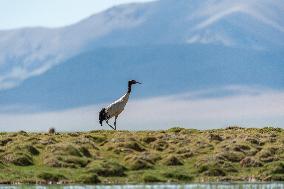
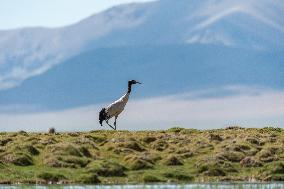
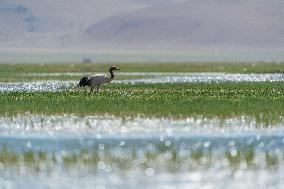
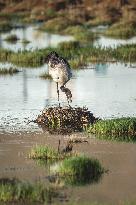
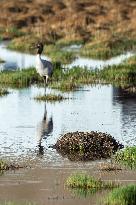
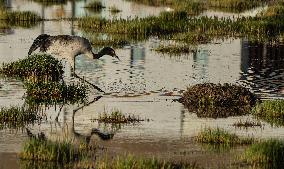
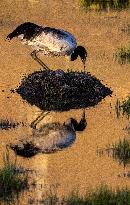
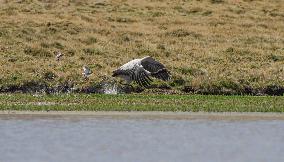
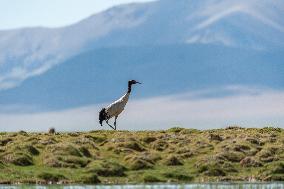
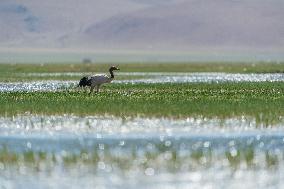
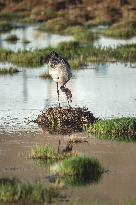
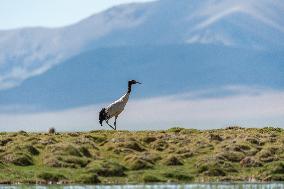
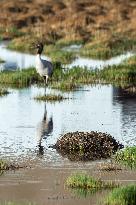
(240610) -- BEIJING, June 10, 2024 Photo by Xinhua/ABACAPRESS.COM) -- A black-necked crane is seen at a wetland in Xainza County of Nagqu City, southwest China's Xizang Autonomous Region, June 8, 2024. The black-necked crane, a species under first-class state protection in China, mainly inhabits plateau meadows and marshes at an altitude of 2,500 to 5,000 meters. Every year around the time of June, pairs of black-necked cranes migrate to Xainza County to build nests and hatch eggs on grass piers surrounded by water. Black-necked cranes usually lay one or two eggs in every nest, and the incubation period is about 30 days. In recent years, Xizang has continuously strengthened the protection of the habitat of black-necked cranes, and their living environment has been effectively improved. The dotted wetlands in Xainza County have attracted a large number of black-necked cranes to breed their offspring. Photo by Xinhua/ABACAPRESS.COM/Tenzing Nima Qadhup)

  •  
XINHUA PHOTOS OF THE DAY

XINHUA PHOTOS OF THE DAY

(240610) -- BEIJING, June 10, 2024 (Xinhua) -- A black-necked crane is seen at a wetland in Xainza County of Nagqu City, southwest China's Xizang Autonomous Region, June 8, 2024. The black-necked crane, a species under first-class state protection in China, mainly inhabits plateau meadows and marshes at an altitude of 2,500 to 5,000 meters. Every year around the time of June, pairs of black-necked cranes migrate to Xainza County to build nests and hatch eggs on grass piers surrounded by water. Black-necked cranes usually lay one or two eggs in every nest, and the incubation period is about 30 days. In recent years, Xizang has continuously strengthened the protection of the habitat of black-necked cranes, and their living environment has been effectively improved. The dotted wetlands in Xainza County have attracted a large number of black-necked cranes to breed their offspring. (Xinhua/Tenzing Nima Qadhup)

  •  
(InXizang)CHINA-XIZANG-XAINZA-BLACK-NECKED CRANES (CN)

(InXizang)CHINA-XIZANG-XAINZA-BLACK-NECKED CRANES (CN)

(240609) -- LHASA, June 9, 2024 Photo by Xinhua/ABACAPRESS.COM) -- A black-necked crane is seen at a wetland in Xainza County of Nagqu City, southwest China's Xizang Autonomous Region, June 8, 2024. The black-necked crane, a species under first-class state protection in China, mainly inhabits plateau meadows and marshes at an altitude of 2,500 to 5,000 meters. Every year around the time of June, pairs of black-necked cranes migrate to Xainza County to build nests and hatch eggs on grass piers surrounded by water. Black-necked cranes usually lay one or two eggs in every nest, and the incubation period is about 30 days. In recent years, Xizang has continuously strengthened the protection of the habitat of black-necked cranes, and their living environment has been effectively improved. The dotted wetlands in Xainza County have attracted a large number of black-necked cranes to breed their offspring. Photo by Xinhua/ABACAPRESS.COM/Tenzing Nima Qadhup)

  •  
(InXizang)CHINA-XIZANG-XAINZA-BLACK-NECKED CRANES (CN)

(InXizang)CHINA-XIZANG-XAINZA-BLACK-NECKED CRANES (CN)

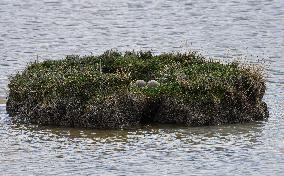
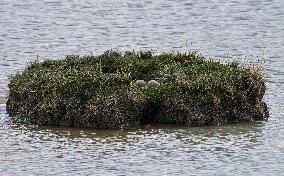
(240609) -- LHASA, June 9, 2024 Photo by Xinhua/ABACAPRESS.COM) -- Eggs of black-necked crane are seen at a wetland in Xainza County of Nagqu City, southwest China's Xizang Autonomous Region, June 7, 2024. The black-necked crane, a species under first-class state protection in China, mainly inhabits plateau meadows and marshes at an altitude of 2,500 to 5,000 meters. Every year around the time of June, pairs of black-necked cranes migrate to Xainza County to build nests and hatch eggs on grass piers surrounded by water. Black-necked cranes usually lay one or two eggs in every nest, and the incubation period is about 30 days. In recent years, Xizang has continuously strengthened the protection of the habitat of black-necked cranes, and their living environment has been effectively improved. The dotted wetlands in Xainza County have attracted a large number of black-necked cranes to breed their offspring. Photo by Xinhua/ABACAPRESS.COM/Jigme Dorje)

  •  
(InXizang)CHINA-XIZANG-XAINZA-BLACK-NECKED CRANES (CN)

(InXizang)CHINA-XIZANG-XAINZA-BLACK-NECKED CRANES (CN)

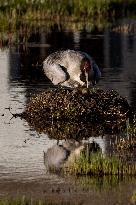
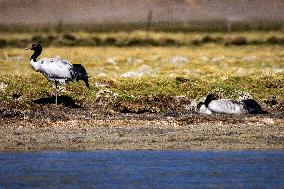
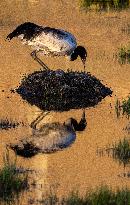
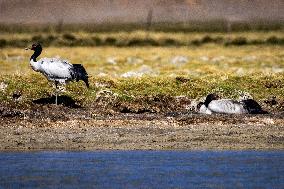
(240609) -- LHASA, June 9, 2024 Photo by Xinhua/ABACAPRESS.COM) -- A black-necked crane watches over the eggs at a wetland in Xainza County of Nagqu City, southwest China's Xizang Autonomous Region, June 7, 2024. The black-necked crane, a species under first-class state protection in China, mainly inhabits plateau meadows and marshes at an altitude of 2,500 to 5,000 meters. Every year around the time of June, pairs of black-necked cranes migrate to Xainza County to build nests and hatch eggs on grass piers surrounded by water. Black-necked cranes usually lay one or two eggs in every nest, and the incubation period is about 30 days. In recent years, Xizang has continuously strengthened the protection of the habitat of black-necked cranes, and their living environment has been effectively improved. The dotted wetlands in Xainza County have attracted a large number of black-necked cranes to breed their offspring. Photo by Xinhua/ABACAPRESS.COM/Tenzing Nima Qadhup)

  •  
(InXizang)CHINA-XIZANG-XAINZA-BLACK-NECKED CRANES (CN)

(InXizang)CHINA-XIZANG-XAINZA-BLACK-NECKED CRANES (CN)

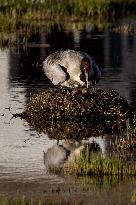
(240609) -- LHASA, June 9, 2024 Photo by Xinhua/ABACAPRESS.COM) -- A black-necked crane hatches eggs at a wetland in Xainza County of Nagqu City, southwest China's Xizang Autonomous Region, June 7, 2024. The black-necked crane, a species under first-class state protection in China, mainly inhabits plateau meadows and marshes at an altitude of 2,500 to 5,000 meters. Every year around the time of June, pairs of black-necked cranes migrate to Xainza County to build nests and hatch eggs on grass piers surrounded by water. Black-necked cranes usually lay one or two eggs in every nest, and the incubation period is about 30 days. In recent years, Xizang has continuously strengthened the protection of the habitat of black-necked cranes, and their living environment has been effectively improved. The dotted wetlands in Xainza County have attracted a large number of black-necked cranes to breed their offspring. Photo by Xinhua/ABACAPRESS.COM/Jiang Fan)

  •  
(InXizang)CHINA-XIZANG-XAINZA-BLACK-NECKED CRANES (CN)

(InXizang)CHINA-XIZANG-XAINZA-BLACK-NECKED CRANES (CN)

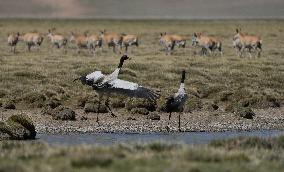
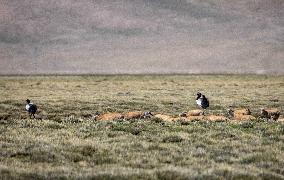
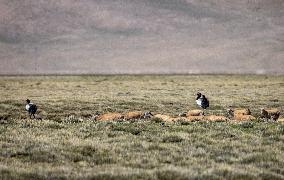
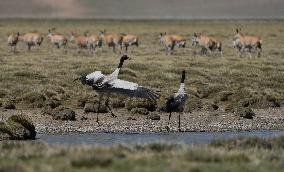
(240609) -- LHASA, June 9, 2024 Photo by Xinhua/ABACAPRESS.COM) -- Black-necked cranes search for food with Tibetan antelopes at a wetland in Xainza County of Nagqu City, southwest China's Xizang Autonomous Region, June 8, 2024. The black-necked crane, a species under first-class state protection in China, mainly inhabits plateau meadows and marshes at an altitude of 2,500 to 5,000 meters. Every year around the time of June, pairs of black-necked cranes migrate to Xainza County to build nests and hatch eggs on grass piers surrounded by water. Black-necked cranes usually lay one or two eggs in every nest, and the incubation period is about 30 days. In recent years, Xizang has continuously strengthened the protection of the habitat of black-necked cranes, and their living environment has been effectively improved. The dotted wetlands in Xainza County have attracted a large number of black-necked cranes to breed their offspring. Photo by Xinhua/ABACAPRESS.COM/Jigme Dorje)

  •  
(InXizang)CHINA-XIZANG-XAINZA-BLACK-NECKED CRANES (CN)

(InXizang)CHINA-XIZANG-XAINZA-BLACK-NECKED CRANES (CN)

(240609) -- LHASA, June 9, 2024 Photo by Xinhua/ABACAPRESS.COM) -- A black-necked crane watches over the eggs at a wetland in Xainza County of Nagqu City, southwest China's Xizang Autonomous Region, June 7, 2024. The black-necked crane, a species under first-class state protection in China, mainly inhabits plateau meadows and marshes at an altitude of 2,500 to 5,000 meters. Every year around the time of June, pairs of black-necked cranes migrate to Xainza County to build nests and hatch eggs on grass piers surrounded by water. Black-necked cranes usually lay one or two eggs in every nest, and the incubation period is about 30 days. In recent years, Xizang has continuously strengthened the protection of the habitat of black-necked cranes, and their living environment has been effectively improved. The dotted wetlands in Xainza County have attracted a large number of black-necked cranes to breed their offspring. Photo by Xinhua/ABACAPRESS.COM/Tenzing Nima Qadhup)

  •  
(InXizang)CHINA-XIZANG-XAINZA-BLACK-NECKED CRANES (CN)

(InXizang)CHINA-XIZANG-XAINZA-BLACK-NECKED CRANES (CN)

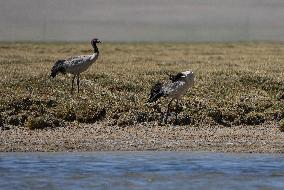
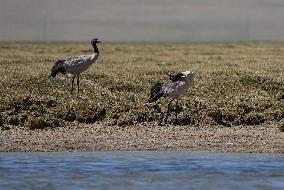
(240609) -- LHASA, June 9, 2024 Photo by Xinhua/ABACAPRESS.COM) -- Black-necked cranes are seen at a wetland in Xainza County of Nagqu City, southwest China's Xizang Autonomous Region, June 7, 2024. The black-necked crane, a species under first-class state protection in China, mainly inhabits plateau meadows and marshes at an altitude of 2,500 to 5,000 meters. Every year around the time of June, pairs of black-necked cranes migrate to Xainza County to build nests and hatch eggs on grass piers surrounded by water. Black-necked cranes usually lay one or two eggs in every nest, and the incubation period is about 30 days. In recent years, Xizang has continuously strengthened the protection of the habitat of black-necked cranes, and their living environment has been effectively improved. The dotted wetlands in Xainza County have attracted a large number of black-necked cranes to breed their offspring. Photo by Xinhua/ABACAPRESS.COM/Jiang Fan)

  •  
(InXizang)CHINA-XIZANG-XAINZA-BLACK-NECKED CRANES (CN)

(InXizang)CHINA-XIZANG-XAINZA-BLACK-NECKED CRANES (CN)

(240609) -- LHASA, June 9, 2024 Photo by Xinhua/ABACAPRESS.COM) -- Black-necked cranes search for food with Tibetan antelopes at a wetland in Xainza County of Nagqu City, southwest China's Xizang Autonomous Region, June 8, 2024. The black-necked crane, a species under first-class state protection in China, mainly inhabits plateau meadows and marshes at an altitude of 2,500 to 5,000 meters. Every year around the time of June, pairs of black-necked cranes migrate to Xainza County to build nests and hatch eggs on grass piers surrounded by water. Black-necked cranes usually lay one or two eggs in every nest, and the incubation period is about 30 days. In recent years, Xizang has continuously strengthened the protection of the habitat of black-necked cranes, and their living environment has been effectively improved. The dotted wetlands in Xainza County have attracted a large number of black-necked cranes to breed their offspring. Photo by Xinhua/ABACAPRESS.COM/Jiang Fan)

  •  
(InXizang)CHINA-XIZANG-XAINZA-BLACK-NECKED CRANES (CN)

(InXizang)CHINA-XIZANG-XAINZA-BLACK-NECKED CRANES (CN)

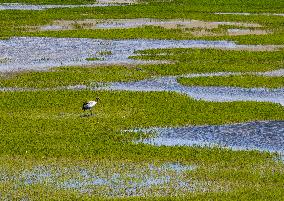
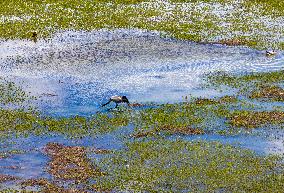
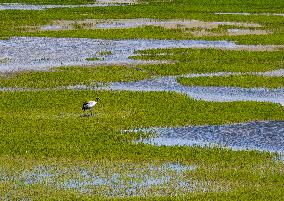
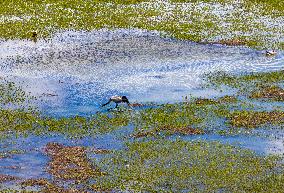
(240609) -- LHASA, June 9, 2024 Photo by Xinhua/ABACAPRESS.COM) -- A drone photo taken on June 8, 2024 shows a black-necked crane searching for food at a wetland in Xainza County of Nagqu City, southwest China's Xizang Autonomous Region. The black-necked crane, a species under first-class state protection in China, mainly inhabits plateau meadows and marshes at an altitude of 2,500 to 5,000 meters. Every year around the time of June, pairs of black-necked cranes migrate to Xainza County to build nests and hatch eggs on grass piers surrounded by water. Black-necked cranes usually lay one or two eggs in every nest, and the incubation period is about 30 days. In recent years, Xizang has continuously strengthened the protection of the habitat of black-necked cranes, and their living environment has been effectively improved. The dotted wetlands in Xainza County have attracted a large number of black-necked cranes to breed their offspring. Photo by Xinhua/ABACAPRESS.COM/Jiang Fan)

  •  
(InXizang)CHINA-XIZANG-XAINZA-BLACK-NECKED CRANES (CN)

(InXizang)CHINA-XIZANG-XAINZA-BLACK-NECKED CRANES (CN)

(240609) -- LHASA, June 9, 2024 Photo by Xinhua/ABACAPRESS.COM) -- A black-necked crane watches over the eggs at a wetland in Xainza County of Nagqu City, southwest China's Xizang Autonomous Region, June 7, 2024. The black-necked crane, a species under first-class state protection in China, mainly inhabits plateau meadows and marshes at an altitude of 2,500 to 5,000 meters. Every year around the time of June, pairs of black-necked cranes migrate to Xainza County to build nests and hatch eggs on grass piers surrounded by water. Black-necked cranes usually lay one or two eggs in every nest, and the incubation period is about 30 days. In recent years, Xizang has continuously strengthened the protection of the habitat of black-necked cranes, and their living environment has been effectively improved. The dotted wetlands in Xainza County have attracted a large number of black-necked cranes to breed their offspring. Photo by Xinhua/ABACAPRESS.COM/Jigme Dorje)

  •  
(InXizang)CHINA-XIZANG-XAINZA-BLACK-NECKED CRANES (CN)

(InXizang)CHINA-XIZANG-XAINZA-BLACK-NECKED CRANES (CN)

(240609) -- LHASA, June 9, 2024 Photo by Xinhua/ABACAPRESS.COM) -- A black-necked crane hatches eggs at a wetland in Xainza County of Nagqu City, southwest China's Xizang Autonomous Region, June 7, 2024. The black-necked crane, a species under first-class state protection in China, mainly inhabits plateau meadows and marshes at an altitude of 2,500 to 5,000 meters. Every year around the time of June, pairs of black-necked cranes migrate to Xainza County to build nests and hatch eggs on grass piers surrounded by water. Black-necked cranes usually lay one or two eggs in every nest, and the incubation period is about 30 days. In recent years, Xizang has continuously strengthened the protection of the habitat of black-necked cranes, and their living environment has been effectively improved. The dotted wetlands in Xainza County have attracted a large number of black-necked cranes to breed their offspring. Photo by Xinhua/ABACAPRESS.COM/Jiang Fan)

  •  
(InXizang)CHINA-XIZANG-XAINZA-BLACK-NECKED CRANES (CN)

(InXizang)CHINA-XIZANG-XAINZA-BLACK-NECKED CRANES (CN)

(240609) -- LHASA, June 9, 2024 Photo by Xinhua/ABACAPRESS.COM) -- A black-necked crane searches for food at a wetland in Xainza County of Nagqu City, southwest China's Xizang Autonomous Region, June 7, 2024. The black-necked crane, a species under first-class state protection in China, mainly inhabits plateau meadows and marshes at an altitude of 2,500 to 5,000 meters. Every year around the time of June, pairs of black-necked cranes migrate to Xainza County to build nests and hatch eggs on grass piers surrounded by water. Black-necked cranes usually lay one or two eggs in every nest, and the incubation period is about 30 days. In recent years, Xizang has continuously strengthened the protection of the habitat of black-necked cranes, and their living environment has been effectively improved. The dotted wetlands in Xainza County have attracted a large number of black-necked cranes to breed their offspring. Photo by Xinhua/ABACAPRESS.COM/Jigme Dorje)

  •  
(InXizang)CHINA-XIZANG-XAINZA-BLACK-NECKED CRANES (CN)

(InXizang)CHINA-XIZANG-XAINZA-BLACK-NECKED CRANES (CN)

(240609) -- LHASA, June 9, 2024 Photo by Xinhua/ABACAPRESS.COM) -- Black-necked cranes are seen at a wetland in Xainza County of Nagqu City, southwest China's Xizang Autonomous Region, June 8, 2024. The black-necked crane, a species under first-class state protection in China, mainly inhabits plateau meadows and marshes at an altitude of 2,500 to 5,000 meters. Every year around the time of June, pairs of black-necked cranes migrate to Xainza County to build nests and hatch eggs on grass piers surrounded by water. Black-necked cranes usually lay one or two eggs in every nest, and the incubation period is about 30 days. In recent years, Xizang has continuously strengthened the protection of the habitat of black-necked cranes, and their living environment has been effectively improved. The dotted wetlands in Xainza County have attracted a large number of black-necked cranes to breed their offspring. Photo by Xinhua/ABACAPRESS.COM/Jigme Dorje)

  •  
(InXizang)CHINA-XIZANG-XAINZA-BLACK-NECKED CRANES (CN)

(InXizang)CHINA-XIZANG-XAINZA-BLACK-NECKED CRANES (CN)

(240609) -- LHASA, June 9, 2024 Photo by Xinhua/ABACAPRESS.COM) -- A drone photo taken on June 8, 2024 shows a black-necked crane searching for food at a wetland in Xainza County of Nagqu City, southwest China's Xizang Autonomous Region. The black-necked crane, a species under first-class state protection in China, mainly inhabits plateau meadows and marshes at an altitude of 2,500 to 5,000 meters. Every year around the time of June, pairs of black-necked cranes migrate to Xainza County to build nests and hatch eggs on grass piers surrounded by water. Black-necked cranes usually lay one or two eggs in every nest, and the incubation period is about 30 days. In recent years, Xizang has continuously strengthened the protection of the habitat of black-necked cranes, and their living environment has been effectively improved. The dotted wetlands in Xainza County have attracted a large number of black-necked cranes to breed their offspring. Photo by Xinhua/ABACAPRESS.COM/Jiang Fan)

  •  
(InXizang)CHINA-XIZANG-XAINZA-BLACK-NECKED CRANES (CN)

(InXizang)CHINA-XIZANG-XAINZA-BLACK-NECKED CRANES (CN)

(240609) -- LHASA, June 9, 2024 Photo by Xinhua/ABACAPRESS.COM) -- A black-necked crane is seen at a wetland in Xainza County of Nagqu City, southwest China's Xizang Autonomous Region, June 8, 2024. The black-necked crane, a species under first-class state protection in China, mainly inhabits plateau meadows and marshes at an altitude of 2,500 to 5,000 meters. Every year around the time of June, pairs of black-necked cranes migrate to Xainza County to build nests and hatch eggs on grass piers surrounded by water. Black-necked cranes usually lay one or two eggs in every nest, and the incubation period is about 30 days. In recent years, Xizang has continuously strengthened the protection of the habitat of black-necked cranes, and their living environment has been effectively improved. The dotted wetlands in Xainza County have attracted a large number of black-necked cranes to breed their offspring. Photo by Xinhua/ABACAPRESS.COM/Tenzing Nima Qadhup)

  •  
(InXizang)CHINA-XIZANG-XAINZA-BLACK-NECKED CRANES (CN)

(InXizang)CHINA-XIZANG-XAINZA-BLACK-NECKED CRANES (CN)

(240609) -- LHASA, June 9, 2024 (Xinhua) -- Black-necked cranes search for food with Tibetan antelopes at a wetland in Xainza County of Nagqu City, southwest China's Xizang Autonomous Region, June 8, 2024. The black-necked crane, a species under first-class state protection in China, mainly inhabits plateau meadows and marshes at an altitude of 2,500 to 5,000 meters. Every year around the time of June, pairs of black-necked cranes migrate to Xainza County to build nests and hatch eggs on grass piers surrounded by water. Black-necked cranes usually lay one or two eggs in every nest, and the incubation period is about 30 days. In recent years, Xizang has continuously strengthened the protection of the habitat of black-necked cranes, and their living environment has been effectively improved. The dotted wetlands in Xainza County have attracted a large number of black-necked cranes to breed their offspring. (Xinhua/Jiang Fan)

  •  
(InXizang)CHINA-XIZANG-XAINZA-BLACK-NECKED CRANES (CN)

(InXizang)CHINA-XIZANG-XAINZA-BLACK-NECKED CRANES (CN)

(240609) -- LHASA, June 9, 2024 (Xinhua) -- Black-necked cranes are seen at a wetland in Xainza County of Nagqu City, southwest China's Xizang Autonomous Region, June 8, 2024. The black-necked crane, a species under first-class state protection in China, mainly inhabits plateau meadows and marshes at an altitude of 2,500 to 5,000 meters. Every year around the time of June, pairs of black-necked cranes migrate to Xainza County to build nests and hatch eggs on grass piers surrounded by water. Black-necked cranes usually lay one or two eggs in every nest, and the incubation period is about 30 days. In recent years, Xizang has continuously strengthened the protection of the habitat of black-necked cranes, and their living environment has been effectively improved. The dotted wetlands in Xainza County have attracted a large number of black-necked cranes to breed their offspring. (Xinhua/Jigme Dorje)

  •  
(InXizang)CHINA-XIZANG-XAINZA-BLACK-NECKED CRANES (CN)

(InXizang)CHINA-XIZANG-XAINZA-BLACK-NECKED CRANES (CN)

(240609) -- LHASA, June 9, 2024 (Xinhua) -- A drone photo taken on June 8, 2024 shows a black-necked crane searching for food at a wetland in Xainza County of Nagqu City, southwest China's Xizang Autonomous Region. The black-necked crane, a species under first-class state protection in China, mainly inhabits plateau meadows and marshes at an altitude of 2,500 to 5,000 meters. Every year around the time of June, pairs of black-necked cranes migrate to Xainza County to build nests and hatch eggs on grass piers surrounded by water. Black-necked cranes usually lay one or two eggs in every nest, and the incubation period is about 30 days. In recent years, Xizang has continuously strengthened the protection of the habitat of black-necked cranes, and their living environment has been effectively improved. The dotted wetlands in Xainza County have attracted a large number of black-necked cranes to breed their offspring. (Xinhua/Jiang Fan)

  •  
(InXizang)CHINA-XIZANG-XAINZA-BLACK-NECKED CRANES (CN)

(InXizang)CHINA-XIZANG-XAINZA-BLACK-NECKED CRANES (CN)

(240609) -- LHASA, June 9, 2024 (Xinhua) -- A black-necked crane is seen at a wetland in Xainza County of Nagqu City, southwest China's Xizang Autonomous Region, June 8, 2024. The black-necked crane, a species under first-class state protection in China, mainly inhabits plateau meadows and marshes at an altitude of 2,500 to 5,000 meters. Every year around the time of June, pairs of black-necked cranes migrate to Xainza County to build nests and hatch eggs on grass piers surrounded by water. Black-necked cranes usually lay one or two eggs in every nest, and the incubation period is about 30 days. In recent years, Xizang has continuously strengthened the protection of the habitat of black-necked cranes, and their living environment has been effectively improved. The dotted wetlands in Xainza County have attracted a large number of black-necked cranes to breed their offspring. (Xinhua/Tenzing Nima Qadhup)

  •  
(InXizang)CHINA-XIZANG-XAINZA-BLACK-NECKED CRANES (CN)

(InXizang)CHINA-XIZANG-XAINZA-BLACK-NECKED CRANES (CN)

(240609) -- LHASA, June 9, 2024 (Xinhua) -- A drone photo taken on June 8, 2024 shows a black-necked crane searching for food at a wetland in Xainza County of Nagqu City, southwest China's Xizang Autonomous Region. The black-necked crane, a species under first-class state protection in China, mainly inhabits plateau meadows and marshes at an altitude of 2,500 to 5,000 meters. Every year around the time of June, pairs of black-necked cranes migrate to Xainza County to build nests and hatch eggs on grass piers surrounded by water. Black-necked cranes usually lay one or two eggs in every nest, and the incubation period is about 30 days. In recent years, Xizang has continuously strengthened the protection of the habitat of black-necked cranes, and their living environment has been effectively improved. The dotted wetlands in Xainza County have attracted a large number of black-necked cranes to breed their offspring. (Xinhua/Jiang Fan)

  •  
(InXizang)CHINA-XIZANG-XAINZA-BLACK-NECKED CRANES (CN)

(InXizang)CHINA-XIZANG-XAINZA-BLACK-NECKED CRANES (CN)

(240609) -- LHASA, June 9, 2024 (Xinhua) -- A black-necked crane hatches eggs at a wetland in Xainza County of Nagqu City, southwest China's Xizang Autonomous Region, June 7, 2024. The black-necked crane, a species under first-class state protection in China, mainly inhabits plateau meadows and marshes at an altitude of 2,500 to 5,000 meters. Every year around the time of June, pairs of black-necked cranes migrate to Xainza County to build nests and hatch eggs on grass piers surrounded by water. Black-necked cranes usually lay one or two eggs in every nest, and the incubation period is about 30 days. In recent years, Xizang has continuously strengthened the protection of the habitat of black-necked cranes, and their living environment has been effectively improved. The dotted wetlands in Xainza County have attracted a large number of black-necked cranes to breed their offspring. (Xinhua/Jiang Fan)

  •  
(InXizang)CHINA-XIZANG-XAINZA-BLACK-NECKED CRANES (CN)

(InXizang)CHINA-XIZANG-XAINZA-BLACK-NECKED CRANES (CN)

(240609) -- LHASA, June 9, 2024 (Xinhua) -- A black-necked crane hatches eggs at a wetland in Xainza County of Nagqu City, southwest China's Xizang Autonomous Region, June 7, 2024. The black-necked crane, a species under first-class state protection in China, mainly inhabits plateau meadows and marshes at an altitude of 2,500 to 5,000 meters. Every year around the time of June, pairs of black-necked cranes migrate to Xainza County to build nests and hatch eggs on grass piers surrounded by water. Black-necked cranes usually lay one or two eggs in every nest, and the incubation period is about 30 days. In recent years, Xizang has continuously strengthened the protection of the habitat of black-necked cranes, and their living environment has been effectively improved. The dotted wetlands in Xainza County have attracted a large number of black-necked cranes to breed their offspring. (Xinhua/Jiang Fan)

  •  
(InXizang)CHINA-XIZANG-XAINZA-BLACK-NECKED CRANES (CN)

(InXizang)CHINA-XIZANG-XAINZA-BLACK-NECKED CRANES (CN)

(240609) -- LHASA, June 9, 2024 (Xinhua) -- A black-necked crane watches over the eggs at a wetland in Xainza County of Nagqu City, southwest China's Xizang Autonomous Region, June 7, 2024. The black-necked crane, a species under first-class state protection in China, mainly inhabits plateau meadows and marshes at an altitude of 2,500 to 5,000 meters. Every year around the time of June, pairs of black-necked cranes migrate to Xainza County to build nests and hatch eggs on grass piers surrounded by water. Black-necked cranes usually lay one or two eggs in every nest, and the incubation period is about 30 days. In recent years, Xizang has continuously strengthened the protection of the habitat of black-necked cranes, and their living environment has been effectively improved. The dotted wetlands in Xainza County have attracted a large number of black-necked cranes to breed their offspring. (Xinhua/Tenzing Nima Qadhup)

  •  
(InXizang)CHINA-XIZANG-XAINZA-BLACK-NECKED CRANES (CN)

(InXizang)CHINA-XIZANG-XAINZA-BLACK-NECKED CRANES (CN)

(240609) -- LHASA, June 9, 2024 (Xinhua) -- A black-necked crane watches over the eggs at a wetland in Xainza County of Nagqu City, southwest China's Xizang Autonomous Region, June 7, 2024. The black-necked crane, a species under first-class state protection in China, mainly inhabits plateau meadows and marshes at an altitude of 2,500 to 5,000 meters. Every year around the time of June, pairs of black-necked cranes migrate to Xainza County to build nests and hatch eggs on grass piers surrounded by water. Black-necked cranes usually lay one or two eggs in every nest, and the incubation period is about 30 days. In recent years, Xizang has continuously strengthened the protection of the habitat of black-necked cranes, and their living environment has been effectively improved. The dotted wetlands in Xainza County have attracted a large number of black-necked cranes to breed their offspring. (Xinhua/Jigme Dorje)

  •  
(InXizang)CHINA-XIZANG-XAINZA-BLACK-NECKED CRANES (CN)

(InXizang)CHINA-XIZANG-XAINZA-BLACK-NECKED CRANES (CN)

(240609) -- LHASA, June 9, 2024 (Xinhua) -- Black-necked cranes are seen at a wetland in Xainza County of Nagqu City, southwest China's Xizang Autonomous Region, June 7, 2024. The black-necked crane, a species under first-class state protection in China, mainly inhabits plateau meadows and marshes at an altitude of 2,500 to 5,000 meters. Every year around the time of June, pairs of black-necked cranes migrate to Xainza County to build nests and hatch eggs on grass piers surrounded by water. Black-necked cranes usually lay one or two eggs in every nest, and the incubation period is about 30 days. In recent years, Xizang has continuously strengthened the protection of the habitat of black-necked cranes, and their living environment has been effectively improved. The dotted wetlands in Xainza County have attracted a large number of black-necked cranes to breed their offspring. (Xinhua/Jiang Fan)

  •  
(InXizang)CHINA-XIZANG-XAINZA-BLACK-NECKED CRANES (CN)

(InXizang)CHINA-XIZANG-XAINZA-BLACK-NECKED CRANES (CN)

(240609) -- LHASA, June 9, 2024 (Xinhua) -- A black-necked crane is seen at a wetland in Xainza County of Nagqu City, southwest China's Xizang Autonomous Region, June 8, 2024. The black-necked crane, a species under first-class state protection in China, mainly inhabits plateau meadows and marshes at an altitude of 2,500 to 5,000 meters. Every year around the time of June, pairs of black-necked cranes migrate to Xainza County to build nests and hatch eggs on grass piers surrounded by water. Black-necked cranes usually lay one or two eggs in every nest, and the incubation period is about 30 days. In recent years, Xizang has continuously strengthened the protection of the habitat of black-necked cranes, and their living environment has been effectively improved. The dotted wetlands in Xainza County have attracted a large number of black-necked cranes to breed their offspring. (Xinhua/Tenzing Nima Qadhup)

  •  
(InXizang)CHINA-XIZANG-XAINZA-BLACK-NECKED CRANES (CN)

(InXizang)CHINA-XIZANG-XAINZA-BLACK-NECKED CRANES (CN)

(240609) -- LHASA, June 9, 2024 (Xinhua) -- A black-necked crane searches for food at a wetland in Xainza County of Nagqu City, southwest China's Xizang Autonomous Region, June 7, 2024. The black-necked crane, a species under first-class state protection in China, mainly inhabits plateau meadows and marshes at an altitude of 2,500 to 5,000 meters. Every year around the time of June, pairs of black-necked cranes migrate to Xainza County to build nests and hatch eggs on grass piers surrounded by water. Black-necked cranes usually lay one or two eggs in every nest, and the incubation period is about 30 days. In recent years, Xizang has continuously strengthened the protection of the habitat of black-necked cranes, and their living environment has been effectively improved. The dotted wetlands in Xainza County have attracted a large number of black-necked cranes to breed their offspring. (Xinhua/Jigme Dorje)

  •  
(InXizang)CHINA-XIZANG-XAINZA-BLACK-NECKED CRANES (CN)

(InXizang)CHINA-XIZANG-XAINZA-BLACK-NECKED CRANES (CN)

(240609) -- LHASA, June 9, 2024 (Xinhua) -- Eggs of black-necked crane are seen at a wetland in Xainza County of Nagqu City, southwest China's Xizang Autonomous Region, June 7, 2024. The black-necked crane, a species under first-class state protection in China, mainly inhabits plateau meadows and marshes at an altitude of 2,500 to 5,000 meters. Every year around the time of June, pairs of black-necked cranes migrate to Xainza County to build nests and hatch eggs on grass piers surrounded by water. Black-necked cranes usually lay one or two eggs in every nest, and the incubation period is about 30 days. In recent years, Xizang has continuously strengthened the protection of the habitat of black-necked cranes, and their living environment has been effectively improved. The dotted wetlands in Xainza County have attracted a large number of black-necked cranes to breed their offspring. (Xinhua/Jigme Dorje)

  •  
(InXizang)CHINA-XIZANG-XAINZA-BLACK-NECKED CRANES (CN)

(InXizang)CHINA-XIZANG-XAINZA-BLACK-NECKED CRANES (CN)

(240609) -- LHASA, June 9, 2024 (Xinhua) -- Black-necked cranes search for food with Tibetan antelopes at a wetland in Xainza County of Nagqu City, southwest China's Xizang Autonomous Region, June 8, 2024. The black-necked crane, a species under first-class state protection in China, mainly inhabits plateau meadows and marshes at an altitude of 2,500 to 5,000 meters. Every year around the time of June, pairs of black-necked cranes migrate to Xainza County to build nests and hatch eggs on grass piers surrounded by water. Black-necked cranes usually lay one or two eggs in every nest, and the incubation period is about 30 days. In recent years, Xizang has continuously strengthened the protection of the habitat of black-necked cranes, and their living environment has been effectively improved. The dotted wetlands in Xainza County have attracted a large number of black-necked cranes to breed their offspring. (Xinhua/Jigme Dorje)

  •  
(InXizang)CHINA-XIZANG-XAINZA-BLACK-NECKED CRANES (CN)

(InXizang)CHINA-XIZANG-XAINZA-BLACK-NECKED CRANES (CN)

(240609) -- LHASA, June 9, 2024 (Xinhua) -- A black-necked crane watches over the eggs at a wetland in Xainza County of Nagqu City, southwest China's Xizang Autonomous Region, June 7, 2024. The black-necked crane, a species under first-class state protection in China, mainly inhabits plateau meadows and marshes at an altitude of 2,500 to 5,000 meters. Every year around the time of June, pairs of black-necked cranes migrate to Xainza County to build nests and hatch eggs on grass piers surrounded by water. Black-necked cranes usually lay one or two eggs in every nest, and the incubation period is about 30 days. In recent years, Xizang has continuously strengthened the protection of the habitat of black-necked cranes, and their living environment has been effectively improved. The dotted wetlands in Xainza County have attracted a large number of black-necked cranes to breed their offspring. (Xinhua/Tenzing Nima Qadhup)

  •  

Spain: 14 Injured After Bus Falls Into Construction Site In Esplugues De Llobregat, Barcelona

A bus fell into a construction site in Espregues de Llobregat, Barcelona, on Monday, March 11, leaving 14 people injured, including one in critical condition. This video shows two cranes removing the damaged bus.

  •  
Changtai Yangtze River Bridge Construction

Changtai Yangtze River Bridge Construction

TAIZHOU, CHINA - SEPTEMBER 2, 2023 - Builders erect a steel girder cantilever at the construction site on the Taizhou side of the main channel bridge of the Changtai Yangtze River Bridge in Taizhou, Jiangsu province, China, Sept 2, 2023. The first pair of steel stringing beams of this suspension hoisting, with a single section length of 28 meters and weight of about 1546 tons, should be lifted synchronically by two bridge floor cranes to 60 meters above the river surface to complete matching and connection with the installed beam segment in the tower area. By setting a quick matching and connection device on the upper chords, high-precision and fast docking of the steel stringing beams of large sections can be realized.

  • Main
  • Top
  • Editorial
  • Creative
  • About Us
  • About ILG
  • Terms of use
  • Company
  • BEHIND
  • Price List
  • Single Plan
  • Monthly Plan
  • Services
  • Shooting
  • Rights Clearance
  • Support
  • FAQ
  • How To Buy
  • Contact Us
  • Become a Partner

© KYODO NEWS IMAGES INC

All Rights Reserved.

  • Editorial
  • Olympics
  • News
  • Sports
  • Japan
  • Tech
  • Royal
  • Disaster
  • NorthKorea
  • Old Japan
  • SNS
  • Creative
  • Food
  • Japan
  • Landscape
  • Animal
  • Popular
  • #Ukraine
  • #China
  • #coronavirus
  • #N. Korea
  • #Russia
  • #Thailand
  • #Ukraine
  • #China
  • #coronavirus
  • #N. Korea
  • #Russia
  • #Thailand
  • Food
  • Japan
  • Landscape
  • Animal
  • Olympics
  • News
  • Sports
  • Japan
  • Tech
  • Royal
  • Disaster
  • NorthKorea
  • Old Japan
  • SNS