•  
Venomous Lionfish Are Invading The Mediterranean Sea

Venomous Lionfish Are Invading The Mediterranean Sea

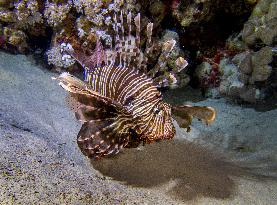
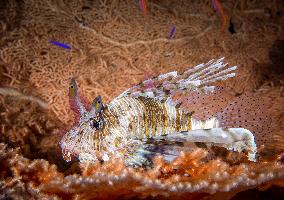
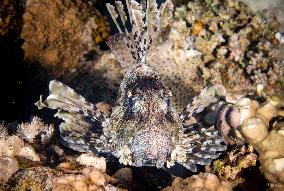
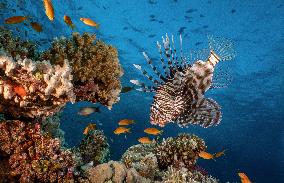
Illustration of a Lion Fish ( Poisson Lion, Pterois antennata) in the Red Sea, Egypt in June 2023. Venomous lionfish are invading the Mediterranean Sea. The lionfish, which originate from the Red Sea, probably entered the Mediterranean through the Suez Canal. Lionfish have no natural predators and reproduce on a massive scale. Photo by Christophe Geyres/ABACAPRESS.COM

  •  
Venomous Lionfish Are Invading The Mediterranean Sea

Venomous Lionfish Are Invading The Mediterranean Sea

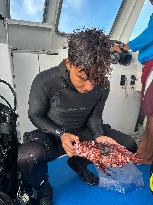
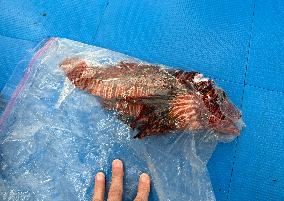
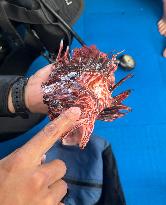
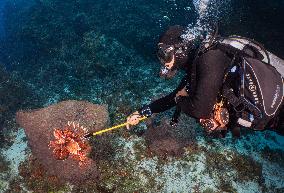
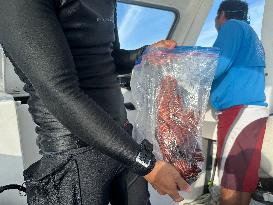
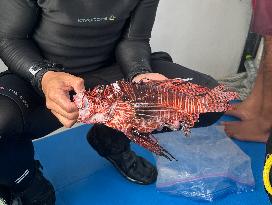
In Cozumel, Mexico, the Lion Fish ( Poisson Lion, Pterois volitans) is also considered invasive; Local dive masters are allowed to kill them. Feb 15 2024. Venomous lionfish are invading the Mediterranean Sea. The lionfish, which originate from the Red Sea, probably entered the Mediterranean through the Suez Canal. Lionfish have no natural predators and reproduce on a massive scale. Photo by Christophe Geyres/ABACAPRESS.COM

  •  
Venomous Lionfish Are Invading The Mediterranean Sea

Venomous Lionfish Are Invading The Mediterranean Sea

In Cozumel, Mexico, the Lion Fish ( Poisson Lion, Pterois volitans) is also considered invasive; Local dive masters are allowed to kill them. Feb 15 2024. Venomous lionfish are invading the Mediterranean Sea. The lionfish, which originate from the Red Sea, probably entered the Mediterranean through the Suez Canal. Lionfish have no natural predators and reproduce on a massive scale. Photo by Christophe Geyres/ABACAPRESS.COM

  •  
Venomous Lionfish Are Invading The Mediterranean Sea

Venomous Lionfish Are Invading The Mediterranean Sea

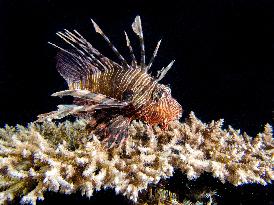
Illustration of a Lion Fish ( Poisson Lion, Pterois miles ) in the Red Sea, Egypt in October 2019. Venomous lionfish are invading the Mediterranean Sea. The lionfish, which originate from the Red Sea, probably entered the Mediterranean through the Suez Canal. Lionfish have no natural predators and reproduce on a massive scale. Photo by Christophe Geyres/ABACAPRESS.COM

  •  
Venomous Lionfish Are Invading The Mediterranean Sea

Venomous Lionfish Are Invading The Mediterranean Sea

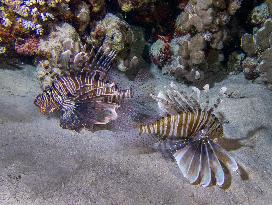
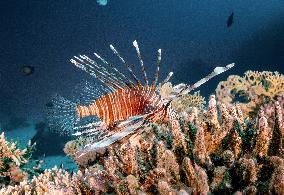
Illustration of a Lion Fish ( Poisson Lion, Pterois volitans) in the Red Sea, Egypt in May 2022. Venomous lionfish are invading the Mediterranean Sea. The lionfish, which originate from the Red Sea, probably entered the Mediterranean through the Suez Canal. Lionfish have no natural predators and reproduce on a massive scale. Photo by Christophe Geyres/ABACAPRESS.COM

  •  
Venomous Lionfish Are Invading The Mediterranean Sea

Venomous Lionfish Are Invading The Mediterranean Sea

In Cozumel, Mexico, the Lion Fish ( Poisson Lion, Pterois volitans) is also considered invasive; Local dive masters are allowed to kill them. Feb 15 2024. Venomous lionfish are invading the Mediterranean Sea. The lionfish, which originate from the Red Sea, probably entered the Mediterranean through the Suez Canal. Lionfish have no natural predators and reproduce on a massive scale. Photo by Christophe Geyres/ABACAPRESS.COM

  •  
Venomous Lionfish Are Invading The Mediterranean Sea

Venomous Lionfish Are Invading The Mediterranean Sea

In Cozumel, Mexico, the Lion Fish ( Poisson Lion, Pterois volitans) is also considered invasive; Local dive masters are allowed to kill them. Feb 15 2024. Venomous lionfish are invading the Mediterranean Sea. The lionfish, which originate from the Red Sea, probably entered the Mediterranean through the Suez Canal. Lionfish have no natural predators and reproduce on a massive scale. Photo by Christophe Geyres/ABACAPRESS.COM

  •  
Venomous Lionfish Are Invading The Mediterranean Sea

Venomous Lionfish Are Invading The Mediterranean Sea

Illustration of a Lion Fish ( Poisson Lion, Pterois volitans) in the Red Sea, Egypt in October 2021. Venomous lionfish are invading the Mediterranean Sea. The lionfish, which originate from the Red Sea, probably entered the Mediterranean through the Suez Canal. Lionfish have no natural predators and reproduce on a massive scale. Photo by Christophe Geyres/ABACAPRESS.COM

  •  
Venomous Lionfish Are Invading The Mediterranean Sea

Venomous Lionfish Are Invading The Mediterranean Sea

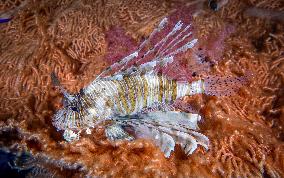
Illustration of a Lion Fish ( Poisson Lion, Pterois miles ) in the Red Sea, Egypt in June 2023. Venomous lionfish are invading the Mediterranean Sea. The lionfish, which originate from the Red Sea, probably entered the Mediterranean through the Suez Canal. Lionfish have no natural predators and reproduce on a massive scale. Photo by Christophe Geyres/ABACAPRESS.COM

  •  
Venomous Lionfish Are Invading The Mediterranean Sea

Venomous Lionfish Are Invading The Mediterranean Sea

Illustration of a Lion Fish ( Poisson Lion, Pterois miles ) in the Red Sea, Egypt in October 2019. Venomous lionfish are invading the Mediterranean Sea. The lionfish, which originate from the Red Sea, probably entered the Mediterranean through the Suez Canal. Lionfish have no natural predators and reproduce on a massive scale. Photo by Christophe Geyres/ABACAPRESS.COM

  •  
Venomous Lionfish Are Invading The Mediterranean Sea

Venomous Lionfish Are Invading The Mediterranean Sea

Illustration of a Lion Fish ( Poisson Lion, Pterois miles ) in the Red Sea, Egypt in June 2023. Venomous lionfish are invading the Mediterranean Sea. The lionfish, which originate from the Red Sea, probably entered the Mediterranean through the Suez Canal. Lionfish have no natural predators and reproduce on a massive scale. Photo by Christophe Geyres/ABACAPRESS.COM

  •  
Venomous Lionfish Are Invading The Mediterranean Sea

Venomous Lionfish Are Invading The Mediterranean Sea

Illustration of a Lion Fish ( Poisson Lion, Pterois miles ) in the Red Sea, Egypt in June 2023. Venomous lionfish are invading the Mediterranean Sea. The lionfish, which originate from the Red Sea, probably entered the Mediterranean through the Suez Canal. Lionfish have no natural predators and reproduce on a massive scale. Photo by Christophe Geyres/ABACAPRESS.COM

  •  
Venomous Lionfish Are Invading The Mediterranean Sea

Venomous Lionfish Are Invading The Mediterranean Sea

In Cozumel, Mexico, the Lion Fish ( Poisson Lion, Pterois volitans) is also considered invasive; Local dive masters are allowed to kill them. Feb 15 2024. Venomous lionfish are invading the Mediterranean Sea. The lionfish, which originate from the Red Sea, probably entered the Mediterranean through the Suez Canal. Lionfish have no natural predators and reproduce on a massive scale. Photo by Christophe Geyres/ABACAPRESS.COM

  •  
Venomous Lionfish Are Invading The Mediterranean Sea

Venomous Lionfish Are Invading The Mediterranean Sea

Illustration of a Lion Fish ( Poisson Lion, Pterois volitans) in the Red Sea, Egypt in October 2020. Venomous lionfish are invading the Mediterranean Sea. The lionfish, which originate from the Red Sea, probably entered the Mediterranean through the Suez Canal. Lionfish have no natural predators and reproduce on a massive scale. Photo by Christophe Geyres/ABACAPRESS.COM

  •  
Venomous Lionfish Are Invading The Mediterranean Sea

Venomous Lionfish Are Invading The Mediterranean Sea

Illustration of a Lion Fish ( Poisson Lion, Pterois volitans) in the Red Sea, Egypt in October 2020. Venomous lionfish are invading the Mediterranean Sea. The lionfish, which originate from the Red Sea, probably entered the Mediterranean through the Suez Canal. Lionfish have no natural predators and reproduce on a massive scale. Photo by Christophe Geyres/ABACAPRESS.COM

  •  
Venomous Lionfish Are Invading The Mediterranean Sea

Venomous Lionfish Are Invading The Mediterranean Sea

Illustration of a Lion Fish ( Poisson Lion, Pterois volitans) in the Red Sea, Egypt in October 2021. Venomous lionfish are invading the Mediterranean Sea. The lionfish, which originate from the Red Sea, probably entered the Mediterranean through the Suez Canal. Lionfish have no natural predators and reproduce on a massive scale. Photo by Christophe Geyres/ABACAPRESS.COM

  •  
Venomous Lionfish Are Invading The Mediterranean Sea

Venomous Lionfish Are Invading The Mediterranean Sea

In Cozumel, Mexico, the Lion Fish ( Poisson Lion, Pterois volitans) is also considered invasive; Local dive masters are allowed to kill them. Feb 15 2024. Venomous lionfish are invading the Mediterranean Sea. The lionfish, which originate from the Red Sea, probably entered the Mediterranean through the Suez Canal. Lionfish have no natural predators and reproduce on a massive scale. Photo by Christophe Geyres/ABACAPRESS.COM

  •  
Venomous Lionfish Are Invading The Mediterranean Sea

Venomous Lionfish Are Invading The Mediterranean Sea

Illustration of a Lion Fish ( Poisson Lion, Pterois volitans) in the Red Sea, Egypt in June 2023. Venomous lionfish are invading the Mediterranean Sea. The lionfish, which originate from the Red Sea, probably entered the Mediterranean through the Suez Canal. Lionfish have no natural predators and reproduce on a massive scale. Photo by Christophe Geyres/ABACAPRESS.COM

  •  

Injuries from animals hospitalized 23,000 Australians in 12 months: report

STORY: Injuries from animals hospitalized 23,000 Australians in 12 months: report SHOOTING TIME: March 13, 2024 DATELINE: March 15, 2024 LENGTH: 00:02:22 LOCATION: Canberra CATEGORY: HEALTH SHOTLIST: 1. various of venomous animals: snakes 2. various of dog attacking people 3. various of livestock: sheep, cows, hens STORYLINE: Over 20,000 Australians were hospitalized with injuries caused by animals in 2021-22 according to government data. A report published by the Australian Institute of Health and Welfare (AIHW) on Wednesday revealed that there were 23,380 injury hospitalizations related to animals in Australia in the 12 months to the end of June 2022. Of the total hospitalizations, the report said that cats and dogs were responsible for 53 percent, livestock for 22 percent, wildlife and venomous animals for 21 percent and marine animals for 2.2 percent. Out of every 100,000 people in Australia, 90.5 were hospitalized due to injuries caused by contact with animals in 2021-22 -- up from 66.5 per 1

  •  

Quantum computing, spider venom researchers awarded top Australian science prizes

STORY: Quantum computing, spider venom researchers awarded top Australian science prizes DATELINE: Oct. 18, 2023 LENGTH: 0:01:37 LOCATION: Canberra CATEGORY: SCIENCE SHOTLIST: 1. various of Glenn King and scenes related to venom research of spiders 2. the awarding ceremony 3. various of Michelle Simmons and technology-related scenes related to atomic electronics 4. the awarding ceremony STORYLINE: A leading quantum physicist and an expert in venomous animals have been awarded Australia's most prestigious science awards. Australian Prime Minister Anthony Albanese and the Minister for Science and Industry Ed Husic on Monday night announced Michelle Simmons and Glenn King as the respective recipients of the 2023 Prime Minister's Prize for Science and Prize for Innovation at an event at Parliament House in Canberra. The Director of the Centre of Excellence for Quantum Computation and Communication Technology at the University of New South Wales (UNSW) Simmons received the 250,000 Australian dollars (

  •  

Firefighters remove 3-meter-long king cobra in China's Yunnan

STORY: Firefighters remove 3-meter-long king cobra in China's Yunnan DATELINE: July 16, 2023 LENGTH: 00:00:25 LOCATION: KUNMING, China CATEGORY: ENVIRONMENT SHOTLIST: 1. various of firefighters pulling the king cobra out of an agricultural machine STORYLINE: A 3-meter-long king cobra was found hiding in an agricultural machine in a residential house in Huaning County, southwest China's Yunnan Province. Firefighters helped remove the snake and released it into the wild. King cobra (Ophigus Hannah) is the world's largest and most venomous snake species. Xinhua News Agency correspondents reporting from Kunming, China. (XHTV)

  •  
World's longest habu poisonous snake

World's longest habu poisonous snake

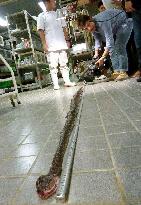
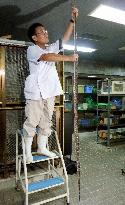
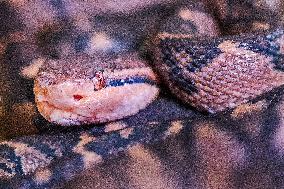
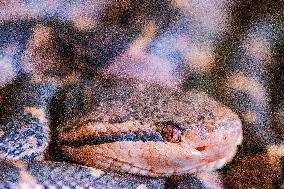
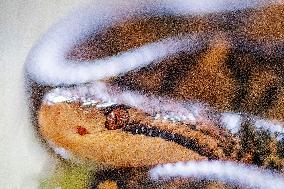
NAHA, Japan - Koki Terada, a researcher at the Okinawa Prefectural Institute of Health and Environment, on Oct. 31, 2011, in the institute in Nanjo in the prefecture, holds a dead habu snake, which was found and killed on Oct. 12 in the village of Onna on the prefecture's main island. The 2.42-meter-long indigenous venomous snake is the world's longest habu, according to the institute.

  •  
World's longest habu poisonous snake

World's longest habu poisonous snake

NAHA, Japan - A dead habu snake, which was found and killed on Oct. 12, 2011, in the village of Onna on Okinawa Prefecture's main island, is measured Oct. 31 at the Okinawa Prefectural Institute of Health and Environment in the city of Nanjo in the prefecture. The 2.42-meter-long indigenous venomous snake is the world's longest habu, according to the institute.

  •  
IRAQ-BAGHDAD-REPTILE FAIR

IRAQ-BAGHDAD-REPTILE FAIR

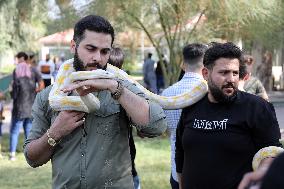
(221112) -- BAGHDAD, Nov. 12, 2022 (Xinhua) -- Reptile lovers display non-venomous snakes at a reptile fair in Baghdad, Iraq, Nov. 11, 2022. (Xinhua/Khalil Dawood)

  •  
IRAQ-BAGHDAD-REPTILE FAIR

IRAQ-BAGHDAD-REPTILE FAIR

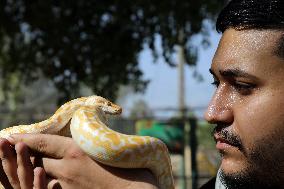
(221112) -- BAGHDAD, Nov. 12, 2022 (Xinhua) -- A reptile lover displays a non-venomous snake at a reptile fair in Baghdad, Iraq, Nov. 11, 2022. (Xinhua/Khalil Dawood)

  •  

Reptile festival held in Baghdad

STORY: Reptile festival held in Baghdad DATELINE: Nov. 12, 2022 LENGTH: 00:03:01 LOCATION: Baghdad CATEGORY: CULTURE SHOTLIST: 1. various of the reptile festival 2. SOUNDBITE 1 (Arabic): ALI ABDUL HUSSEIN, Reptile breeder 3. various of the reptile festival 4. SOUNDBITE 2 (Arabic): MUSTAFA AL-TAMIMI, Reptile breeder 5. various of the reptile festival STORYLINE: A team of reptile lovers named Reptile IQ organized a festival for non-venomous reptiles on Friday at the al-Zawra Zoo in central Baghdad, the capital of Iraq. The festival aims to change the prevailing social view that all reptiles are harmful and should be eliminated. The team members believe that approaching and touching reptiles reassure and urge people not to harm them. SOUNDBITE 1 (Arabic): ALI ABDUL HUSSEIN, Reptile breeder "In general, these reptiles are cute animals that can be kept as pets, but most people are afraid of these reptiles. So we try to make people see for themselves that these animals are not evil and not harmful creatures.

  •  
THE CROCODILE HUNTER: COLLISION COURSE STEVE IRWIN and a Fie

THE CROCODILE HUNTER: COLLISION COURSE STEVE IRWIN and a Fie

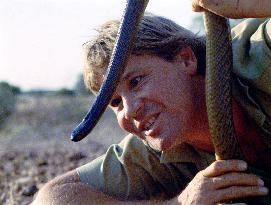
THE CROCODILE HUNTER: COLLISION COURSE STEVE IRWIN and a Fierce Snake - the worlds most venomous - in Metro-Goldwyn-Mayer Pictures adventure comedy

  •  
New police officers learn about fanged snake in southwest Japan

New police officers learn about fanged snake in southwest Japan

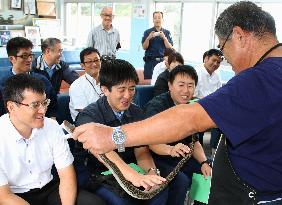
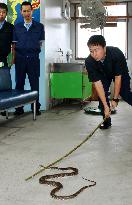
New officers at the Kagoshima prefectural police force's Amami station in southwestern Japan touch a "habu," a species of poisonous snake living mainly on Amami and Okinawa islands, during a workshop organized on Sept. 7, 2015, for those who were transferred this summer to Amami-Oshima Island. The station receives frequent calls from residents to get rid of the venomous snake. (Kyodo) ==Kyodo

  •  
Police officers learn to tackle venomous snake in southwest Japan

Police officers learn to tackle venomous snake in southwest Japan

Officers newly assigned to the Amami police station in Kagoshima Prefecture, southwestern Japan, learn how to deal with a "habu" poisonous snake on Sept. 7, 2015. Police on the remote island of Amami-Oshima are often asked to get rid of the wild snake. (Kyodo) ==Kyodo

  •  
World's longest habu poisonous snake

World's longest habu poisonous snake

NAHA, Japan - A dead habu snake, which was found and killed on Oct. 12, 2011, in the village of Onna on Okinawa Prefecture's main island, is measured Oct. 31 at the Okinawa Prefectural Institute of Health and Environment in the city of Nanjo in the prefecture. The 2.42-meter-long indigenous venomous snake is the world's longest habu, according to the institute. (Kyodo)

  •  
World's longest habu poisonous snake

World's longest habu poisonous snake

NAHA, Japan - Koki Terada, a researcher at the Okinawa Prefectural Institute of Health and Environment, on Oct. 31, 2011, in the institute in Nanjo in the prefecture, holds a dead habu snake, which was found and killed on Oct. 12 in the village of Onna on the prefecture's main island. The 2.42-meter-long indigenous venomous snake is the world's longest habu, according to the institute. (Kyodo)

  •  
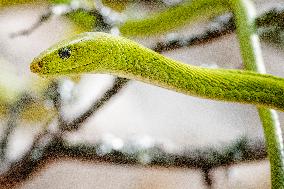
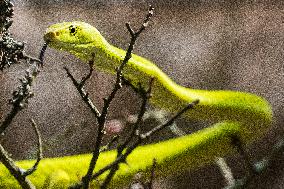
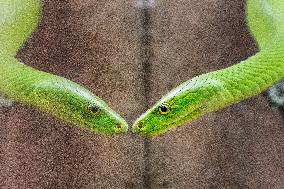
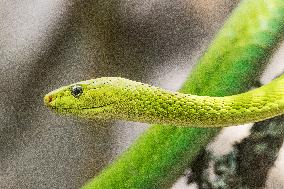
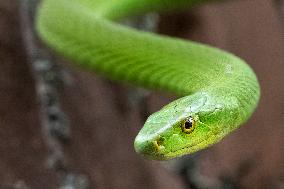
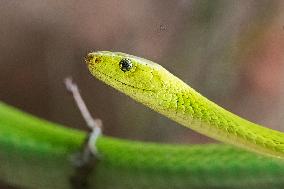
Western green mamba (DENDROASPIS VIRIDIS)

Western green mamba (DENDROASPIS VIRIDIS)

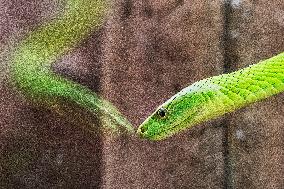
Western green mamba (DENDROASPIS VIRIDIS) is one of the world。s most venomous snakes. Western green mamba in ZOO Plzen, Czech Republic, May 23, 2019. (CTK Photo/Miroslav Chaloupka)

  •  
Western green mamba (DENDROASPIS VIRIDIS)

Western green mamba (DENDROASPIS VIRIDIS)

Western green mamba (DENDROASPIS VIRIDIS) is one of the world。s most venomous snakes. Western green mamba in ZOO Plzen, Czech Republic, May 23, 2019. (CTK Photo/Miroslav Chaloupka)

  •  
Western green mamba (DENDROASPIS VIRIDIS)

Western green mamba (DENDROASPIS VIRIDIS)

Western green mamba (DENDROASPIS VIRIDIS) is one of the world。s most venomous snakes. Western green mamba in ZOO Plzen, Czech Republic, May 23, 2019. (CTK Photo/Miroslav Chaloupka)

  •  
Western green mamba (DENDROASPIS VIRIDIS)

Western green mamba (DENDROASPIS VIRIDIS)

Western green mamba (DENDROASPIS VIRIDIS) is one of the world。s most venomous snakes. Western green mamba in ZOO Plzen, Czech Republic, May 23, 2019. (CTK Photo/Miroslav Chaloupka)

  •  
Western green mamba (DENDROASPIS VIRIDIS)

Western green mamba (DENDROASPIS VIRIDIS)

Western green mamba (DENDROASPIS VIRIDIS) is one of the world。s most venomous snakes. Western green mamba in ZOO Plzen, Czech Republic, May 23, 2019. (CTK Photo/Miroslav Chaloupka)

  •  
Western green mamba (DENDROASPIS VIRIDIS)

Western green mamba (DENDROASPIS VIRIDIS)

Western green mamba (DENDROASPIS VIRIDIS) is one of the world。s most venomous snakes. Western green mamba in ZOO Plzen, Czech Republic, May 23, 2019. (CTK Photo/Miroslav Chaloupka)

  •  
Western green mamba (DENDROASPIS VIRIDIS)

Western green mamba (DENDROASPIS VIRIDIS)

Western green mamba (DENDROASPIS VIRIDIS) is one of the world。s most venomous snakes. Western green mamba in ZOO Plzen, Czech Republic, May 23, 2019. (CTK Photo/Miroslav Chaloupka)

  •  
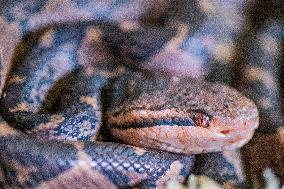
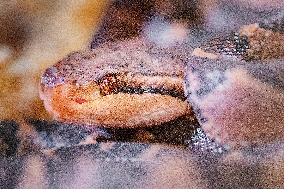
Bushmaster, Lachesis muta, venomous snake

Bushmaster, Lachesis muta, venomous snake

Bushmaster (Lachesis muta) snakelets are presented in an exposition of the most venomous snakes named Kingdom of poison in the Pilsen Zoo, Czech Republic, on Thursday, August 15, 2019. (CTK Photo/Miroslav Chaloupka)

  •  
Bushmaster, Lachesis muta, venomous snake

Bushmaster, Lachesis muta, venomous snake

Bushmaster (Lachesis muta) snakelets are presented in an exposition of the most venomous snakes named Kingdom of poison in the Pilsen Zoo, Czech Republic, on Thursday, August 15, 2019. (CTK Photo/Miroslav Chaloupka)

  •  
Bushmaster, Lachesis muta, venomous snake

Bushmaster, Lachesis muta, venomous snake

Bushmaster (Lachesis muta) snakelets are presented in an exposition of the most venomous snakes named Kingdom of poison in the Pilsen Zoo, Czech Republic, on Thursday, August 15, 2019. (CTK Photo/Miroslav Chaloupka)

  •  
Bushmaster, Lachesis muta, venomous snake

Bushmaster, Lachesis muta, venomous snake

Bushmaster (Lachesis muta) snakelets are presented in an exposition of the most venomous snakes named Kingdom of poison in the Pilsen Zoo, Czech Republic, on Thursday, August 15, 2019. (CTK Photo/Miroslav Chaloupka)

  •  
Bushmaster, Lachesis muta, venomous snake

Bushmaster, Lachesis muta, venomous snake

Bushmaster (Lachesis muta) snakelets are presented in an exposition of the most venomous snakes named Kingdom of poison in the Pilsen Zoo, Czech Republic, on Thursday, August 15, 2019. (CTK Photo/Miroslav Chaloupka)

  •  
Bushmaster, Lachesis muta, venomous snake

Bushmaster, Lachesis muta, venomous snake

Bushmaster (Lachesis muta) snakelets are presented in an exposition of the most venomous snakes named Kingdom of poison in the Pilsen Zoo, Czech Republic, on Thursday, August 15, 2019. (CTK Photo/Miroslav Chaloupka)

  •  
Japan's Environment Ministry begins enhanced fire ant probes

Japan's Environment Ministry begins enhanced fire ant probes

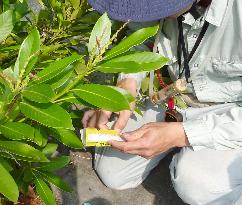
A worker sets a trap to ensnare ants on Port Island, an artificial island in western Japan's Kobe, on July 31, 2017, during a probe aimed at preventing the spread of fire ants. The Environment Ministry stepped up its investigations to better detect the venomous insects, which were found for the first time in Japan in late May. (Kyodo) ==Kyodo

  •  
Japan's Environment Ministry begins enhanced fire ant probes

Japan's Environment Ministry begins enhanced fire ant probes

A worker takes samples on Port Island, an artificial island in western Japan's Kobe, on July 31, 2017, during a probe aimed at preventing the spread of fire ants. The Environment Ministry stepped up its investigations to better detect the venomous insects, which were found for the first time in Japan in late May. (Kyodo) ==Kyodo

  • Main
  • Top
  • Editorial
  • Creative
  • About Us
  • About ILG
  • Terms of use
  • Company
  • BEHIND
  • Price List
  • Single Plan
  • Monthly Plan
  • Services
  • Shooting
  • Rights Clearance
  • Support
  • FAQ
  • How To Buy
  • Contact Us
  • Become a Partner

© KYODO NEWS IMAGES INC

All Rights Reserved.

  • Editorial
  • Olympics
  • News
  • Sports
  • Japan
  • Tech
  • Royal
  • Disaster
  • NorthKorea
  • Old Japan
  • SNS
  • Creative
  • Food
  • Japan
  • Landscape
  • Animal
  • Popular
  • #Ukraine
  • #China
  • #coronavirus
  • #N. Korea
  • #Thailand
  • #Russia
  • #Ukraine
  • #China
  • #coronavirus
  • #N. Korea
  • #Thailand
  • #Russia
  • Food
  • Japan
  • Landscape
  • Animal
  • Olympics
  • News
  • Sports
  • Japan
  • Tech
  • Royal
  • Disaster
  • NorthKorea
  • Old Japan
  • SNS