•  
Water Crisis Impacts Aquaculture In Taq Taq - Iraq

Water Crisis Impacts Aquaculture In Taq Taq - Iraq

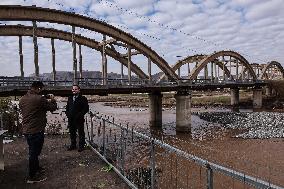
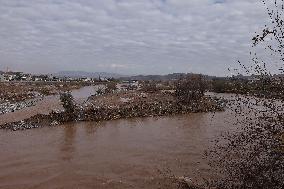
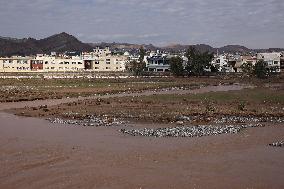
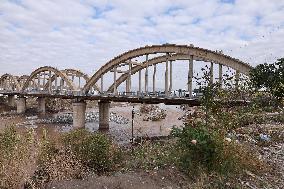
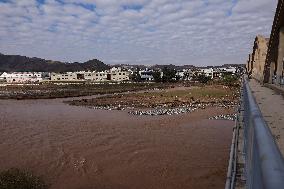
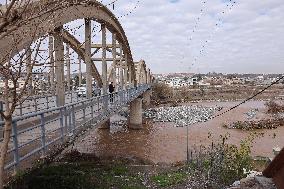
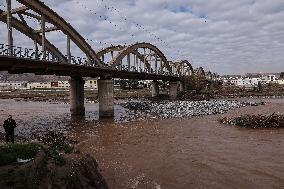
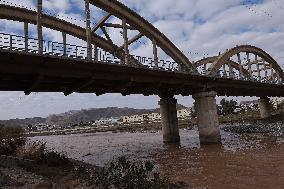
TAQ TAQ, Kurdistan Region The escalating water crisis in the Kurdistan Region has transcended the threat to potable water, now systematically dismantling one of the region’s most vital economic pillars: the aquaculture and fish farming sector. In Taq Taq district, a cornerstone of the region's fish production, the plummeting water levels of the Lesser Zab River have triggered a catastrophic die-off of millions of fish, inflicting millions of dollars in losses on investors. An Economic and Environmental Catastrophe The upstream damming of the Lesser Zab’s headwaters by Iran, compounded by the severe impacts of climate change, has caused oxygen levels in Kurdistan’s aquaculture projects to drop to lethal levels. Consequently, farm owners are not only losing their livestock but are also witnessing the erosion of thousands of jobs that rely on this sector. Erosion of Food Security Economic analysts warn that the collapse of fish farming in Taq Taq and its surroundings will have immediate repercussions on the broa

  •  
Water Crisis Impacts Aquaculture In Taq Taq - Iraq

Water Crisis Impacts Aquaculture In Taq Taq - Iraq

TAQ TAQ, Kurdistan Region The escalating water crisis in the Kurdistan Region has transcended the threat to potable water, now systematically dismantling one of the region’s most vital economic pillars: the aquaculture and fish farming sector. In Taq Taq district, a cornerstone of the region's fish production, the plummeting water levels of the Lesser Zab River have triggered a catastrophic die-off of millions of fish, inflicting millions of dollars in losses on investors. An Economic and Environmental Catastrophe The upstream damming of the Lesser Zab’s headwaters by Iran, compounded by the severe impacts of climate change, has caused oxygen levels in Kurdistan’s aquaculture projects to drop to lethal levels. Consequently, farm owners are not only losing their livestock but are also witnessing the erosion of thousands of jobs that rely on this sector. Erosion of Food Security Economic analysts warn that the collapse of fish farming in Taq Taq and its surroundings will have immediate repercussions on the broa

  •  
Water Crisis Impacts Aquaculture In Taq Taq - Iraq

Water Crisis Impacts Aquaculture In Taq Taq - Iraq

TAQ TAQ, Kurdistan Region The escalating water crisis in the Kurdistan Region has transcended the threat to potable water, now systematically dismantling one of the region’s most vital economic pillars: the aquaculture and fish farming sector. In Taq Taq district, a cornerstone of the region's fish production, the plummeting water levels of the Lesser Zab River have triggered a catastrophic die-off of millions of fish, inflicting millions of dollars in losses on investors. An Economic and Environmental Catastrophe The upstream damming of the Lesser Zab’s headwaters by Iran, compounded by the severe impacts of climate change, has caused oxygen levels in Kurdistan’s aquaculture projects to drop to lethal levels. Consequently, farm owners are not only losing their livestock but are also witnessing the erosion of thousands of jobs that rely on this sector. Erosion of Food Security Economic analysts warn that the collapse of fish farming in Taq Taq and its surroundings will have immediate repercussions on the broa

  •  
Water Crisis Impacts Aquaculture In Taq Taq - Iraq

Water Crisis Impacts Aquaculture In Taq Taq - Iraq

TAQ TAQ, Kurdistan Region The escalating water crisis in the Kurdistan Region has transcended the threat to potable water, now systematically dismantling one of the region’s most vital economic pillars: the aquaculture and fish farming sector. In Taq Taq district, a cornerstone of the region's fish production, the plummeting water levels of the Lesser Zab River have triggered a catastrophic die-off of millions of fish, inflicting millions of dollars in losses on investors. An Economic and Environmental Catastrophe The upstream damming of the Lesser Zab’s headwaters by Iran, compounded by the severe impacts of climate change, has caused oxygen levels in Kurdistan’s aquaculture projects to drop to lethal levels. Consequently, farm owners are not only losing their livestock but are also witnessing the erosion of thousands of jobs that rely on this sector. Erosion of Food Security Economic analysts warn that the collapse of fish farming in Taq Taq and its surroundings will have immediate repercussions on the broa

  •  
Water Crisis Impacts Aquaculture In Taq Taq - Iraq

Water Crisis Impacts Aquaculture In Taq Taq - Iraq

TAQ TAQ, Kurdistan Region The escalating water crisis in the Kurdistan Region has transcended the threat to potable water, now systematically dismantling one of the region’s most vital economic pillars: the aquaculture and fish farming sector. In Taq Taq district, a cornerstone of the region's fish production, the plummeting water levels of the Lesser Zab River have triggered a catastrophic die-off of millions of fish, inflicting millions of dollars in losses on investors. An Economic and Environmental Catastrophe The upstream damming of the Lesser Zab’s headwaters by Iran, compounded by the severe impacts of climate change, has caused oxygen levels in Kurdistan’s aquaculture projects to drop to lethal levels. Consequently, farm owners are not only losing their livestock but are also witnessing the erosion of thousands of jobs that rely on this sector. Erosion of Food Security Economic analysts warn that the collapse of fish farming in Taq Taq and its surroundings will have immediate repercussions on the broa

  •  
Water Crisis Impacts Aquaculture In Taq Taq - Iraq

Water Crisis Impacts Aquaculture In Taq Taq - Iraq

TAQ TAQ, Kurdistan Region The escalating water crisis in the Kurdistan Region has transcended the threat to potable water, now systematically dismantling one of the region’s most vital economic pillars: the aquaculture and fish farming sector. In Taq Taq district, a cornerstone of the region's fish production, the plummeting water levels of the Lesser Zab River have triggered a catastrophic die-off of millions of fish, inflicting millions of dollars in losses on investors. An Economic and Environmental Catastrophe The upstream damming of the Lesser Zab’s headwaters by Iran, compounded by the severe impacts of climate change, has caused oxygen levels in Kurdistan’s aquaculture projects to drop to lethal levels. Consequently, farm owners are not only losing their livestock but are also witnessing the erosion of thousands of jobs that rely on this sector. Erosion of Food Security Economic analysts warn that the collapse of fish farming in Taq Taq and its surroundings will have immediate repercussions on the broa

  •  
Water Crisis Impacts Aquaculture In Taq Taq - Iraq

Water Crisis Impacts Aquaculture In Taq Taq - Iraq

TAQ TAQ, Kurdistan Region The escalating water crisis in the Kurdistan Region has transcended the threat to potable water, now systematically dismantling one of the region’s most vital economic pillars: the aquaculture and fish farming sector. In Taq Taq district, a cornerstone of the region's fish production, the plummeting water levels of the Lesser Zab River have triggered a catastrophic die-off of millions of fish, inflicting millions of dollars in losses on investors. An Economic and Environmental Catastrophe The upstream damming of the Lesser Zab’s headwaters by Iran, compounded by the severe impacts of climate change, has caused oxygen levels in Kurdistan’s aquaculture projects to drop to lethal levels. Consequently, farm owners are not only losing their livestock but are also witnessing the erosion of thousands of jobs that rely on this sector. Erosion of Food Security Economic analysts warn that the collapse of fish farming in Taq Taq and its surroundings will have immediate repercussions on the broa

  •  
Water Crisis Impacts Aquaculture In Taq Taq - Iraq

Water Crisis Impacts Aquaculture In Taq Taq - Iraq

TAQ TAQ, Kurdistan Region The escalating water crisis in the Kurdistan Region has transcended the threat to potable water, now systematically dismantling one of the region’s most vital economic pillars: the aquaculture and fish farming sector. In Taq Taq district, a cornerstone of the region's fish production, the plummeting water levels of the Lesser Zab River have triggered a catastrophic die-off of millions of fish, inflicting millions of dollars in losses on investors. An Economic and Environmental Catastrophe The upstream damming of the Lesser Zab’s headwaters by Iran, compounded by the severe impacts of climate change, has caused oxygen levels in Kurdistan’s aquaculture projects to drop to lethal levels. Consequently, farm owners are not only losing their livestock but are also witnessing the erosion of thousands of jobs that rely on this sector. Erosion of Food Security Economic analysts warn that the collapse of fish farming in Taq Taq and its surroundings will have immediate repercussions on the broa

  •  
Lake Urmia Environmental Disaster - Iran

Lake Urmia Environmental Disaster - Iran

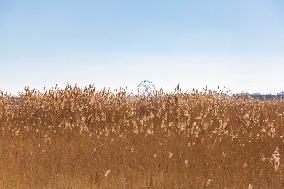
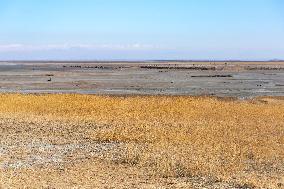
A view shows dry reeds on the dry bed of Lake Urmia in northwestern Iran on December 20, 2025. Lake Urmia, once the largest lake in the Middle East, has dramatically shrunk due to prolonged drought, the damming of rivers feeding the lake, and extensive groundwater extraction in the surrounding area. Although increased rainfall and water diversion briefly helped restore water levels in 2019, renewed drought and administrative mismanagement in the early 2020s reversed the trend, and satellite imagery shows the lake has almost entirely dried up by September 2025. Photo by Morteza Aminoroayayi/Middle East Images/ABACAPRESS.COM

  •  
Lake Urmia Environmental Disaster - Iran

Lake Urmia Environmental Disaster - Iran

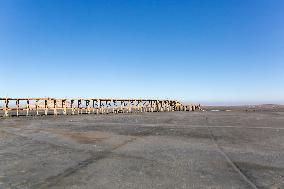
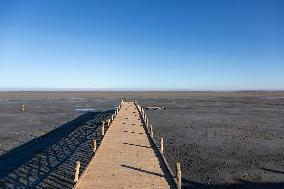
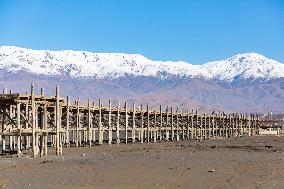
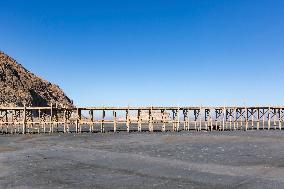
A view shows a wooden pier on the dry bed of Lake Urmia in northwestern Iran on December 20, 2025. Lake Urmia, once the largest lake in the Middle East, has dramatically shrunk due to prolonged drought, the damming of rivers feeding the lake, and extensive groundwater extraction in the surrounding area. Although increased rainfall and water diversion briefly helped restore water levels in 2019, renewed drought and administrative mismanagement in the early 2020s reversed the trend, and satellite imagery shows the lake has almost entirely dried up by September 2025. Photo by Morteza Aminoroayayi/Middle East Images/ABACAPRESS.COM

  •  
Lake Urmia Environmental Disaster - Iran

Lake Urmia Environmental Disaster - Iran

A view shows a wooden pier on the dry bed of Lake Urmia in northwestern Iran on December 20, 2025. Lake Urmia, once the largest lake in the Middle East, has dramatically shrunk due to prolonged drought, the damming of rivers feeding the lake, and extensive groundwater extraction in the surrounding area. Although increased rainfall and water diversion briefly helped restore water levels in 2019, renewed drought and administrative mismanagement in the early 2020s reversed the trend, and satellite imagery shows the lake has almost entirely dried up by September 2025. Photo by Morteza Aminoroayayi/Middle East Images/ABACAPRESS.COM

  •  
Lake Urmia Environmental Disaster - Iran

Lake Urmia Environmental Disaster - Iran

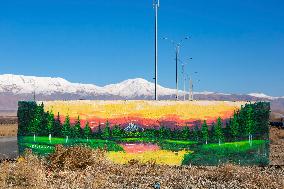
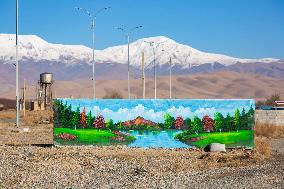
A view shows a mural depicting a landscape painted on a concrete wall near Sharafkhaneh port at Lake Urmia in northwestern Iran on December 19, 2025. Lake Urmia, once the largest lake in the Middle East, has dramatically shrunk due to prolonged drought, the damming of rivers feeding the lake, and extensive groundwater extraction in the surrounding area. Although increased rainfall and water diversion briefly helped restore water levels in 2019, renewed drought and administrative mismanagement in the early 2020s reversed the trend, and satellite imagery shows the lake has almost entirely dried up by September 2025. Photo by Morteza Aminoroayayi/Middle East Images/ABACAPRESS.COM

  •  
Lake Urmia Environmental Disaster - Iran

Lake Urmia Environmental Disaster - Iran

A view shows dry grass and the dry bed of Lake Urmia in northwestern Iran on December 20, 2025. Lake Urmia, once the largest lake in the Middle East, has dramatically shrunk due to prolonged drought, the damming of rivers feeding the lake, and extensive groundwater extraction in the surrounding area. Although increased rainfall and water diversion briefly helped restore water levels in 2019, renewed drought and administrative mismanagement in the early 2020s reversed the trend, and satellite imagery shows the lake has almost entirely dried up by September 2025. Photo by Morteza Aminoroayayi/Middle East Images/ABACAPRESS.COM

  •  
Lake Urmia Environmental Disaster - Iran

Lake Urmia Environmental Disaster - Iran

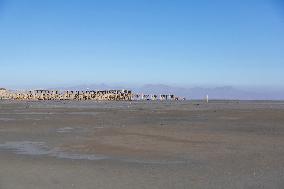
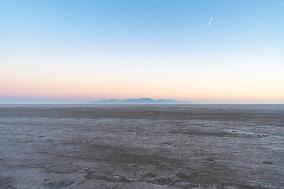
A view shows the dry bed of Lake Urmia in northwestern Iran on December 19, 2025. Lake Urmia, once the largest lake in the Middle East, has dramatically shrunk due to prolonged drought, the damming of rivers feeding the lake, and extensive groundwater extraction in the surrounding area. Although increased rainfall and water diversion briefly helped restore water levels in 2019, renewed drought and administrative mismanagement in the early 2020s reversed the trend, and satellite imagery shows the lake has almost entirely dried up by September 2025. Photo by Morteza Aminoroayayi/Middle East Images/ABACAPRESS.COM

  •  
Lake Urmia Environmental Disaster - Iran

Lake Urmia Environmental Disaster - Iran

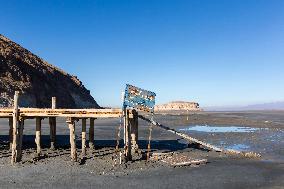
A view shows a rusty sign next to a wooden pier on the dry bed of Lake Urmia in northwestern Iran on December 20, 2025. Lake Urmia, once the largest lake in the Middle East, has dramatically shrunk due to prolonged drought, the damming of rivers feeding the lake, and extensive groundwater extraction in the surrounding area. Although increased rainfall and water diversion briefly helped restore water levels in 2019, renewed drought and administrative mismanagement in the early 2020s reversed the trend, and satellite imagery shows the lake has almost entirely dried up by September 2025. Photo by Morteza Aminoroayayi/Middle East Images/ABACAPRESS.COM

  •  
Lake Urmia Environmental Disaster - Iran

Lake Urmia Environmental Disaster - Iran

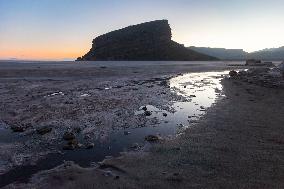
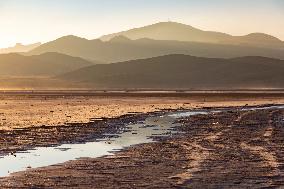
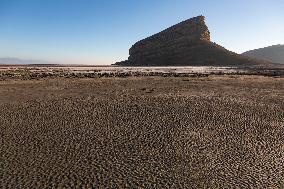
A view shows a shallow stream near a rocky cliff on the bed of Lake Urmia in northwestern Iran on December 19, 2025. Lake Urmia, once the largest lake in the Middle East, has dramatically shrunk due to prolonged drought, the damming of rivers feeding the lake, and extensive groundwater extraction in the surrounding area. Although increased rainfall and water diversion briefly helped restore water levels in 2019, renewed drought and administrative mismanagement in the early 2020s reversed the trend, and satellite imagery shows the lake has almost entirely dried up by September 2025. Photo by Morteza Aminoroayayi/Middle East Images/ABACAPRESS.COM

  •  
Lake Urmia Environmental Disaster - Iran

Lake Urmia Environmental Disaster - Iran

A view shows a wooden pier on the dry bed of Lake Urmia in northwestern Iran on December 20, 2025. Lake Urmia, once the largest lake in the Middle East, has dramatically shrunk due to prolonged drought, the damming of rivers feeding the lake, and extensive groundwater extraction in the surrounding area. Although increased rainfall and water diversion briefly helped restore water levels in 2019, renewed drought and administrative mismanagement in the early 2020s reversed the trend, and satellite imagery shows the lake has almost entirely dried up by September 2025. Photo by Morteza Aminoroayayi/Middle East Images/ABACAPRESS.COM

  •  
Lake Urmia Environmental Disaster - Iran

Lake Urmia Environmental Disaster - Iran

A view shows tire tracks running alongside a shallow stream on the bed of Lake Urmia in northwestern Iran on December 19, 2025. Lake Urmia, once the largest lake in the Middle East, has dramatically shrunk due to prolonged drought, the damming of rivers feeding the lake, and extensive groundwater extraction in the surrounding area. Although increased rainfall and water diversion briefly helped restore water levels in 2019, renewed drought and administrative mismanagement in the early 2020s reversed the trend, and satellite imagery shows the lake has almost entirely dried up by September 2025. Photo by Morteza Aminoroayayi/Middle East Images/ABACAPRESS.COM

  •  
Lake Urmia Environmental Disaster - Iran

Lake Urmia Environmental Disaster - Iran

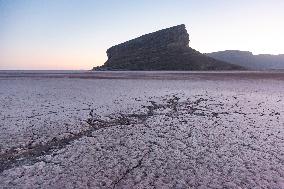
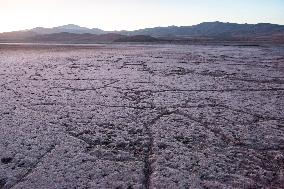
Salt formations cover the cracked surface of the dried bed of Lake Urmia in northwestern Iran on December 19, 2025. Lake Urmia, once the largest lake in the Middle East, has dramatically shrunk due to prolonged drought, the damming of rivers feeding the lake and extensive groundwater extraction in the surrounding area. Although increased rainfall and water diversion briefly helped restore water levels in 2019, renewed drought and administrative mismanagement in the early 2020s reversed the trend, and satellite imagery shows the lake has almost entirely dried up by September 2025. Photo by Morteza Aminoroayayi/Middle East Images/ABACAPRESS.COM

  •  
Lake Urmia Environmental Disaster - Iran

Lake Urmia Environmental Disaster - Iran

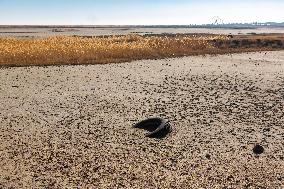
A discarded tire sits near dry reeds on the dry bed of Lake Urmia in northwestern Iran on December 20, 2025. Lake Urmia, once the largest lake in the Middle East, has dramatically shrunk due to prolonged drought, the damming of rivers feeding the lake, and extensive groundwater extraction in the surrounding area. Although increased rainfall and water diversion briefly helped restore water levels in 2019, renewed drought and administrative mismanagement in the early 2020s reversed the trend, and satellite imagery shows the lake has almost entirely dried up by September 2025. Photo by Morteza Aminoroayayi/Middle East Images/ABACAPRESS.COM

  •  
Lake Urmia Environmental Disaster - Iran

Lake Urmia Environmental Disaster - Iran

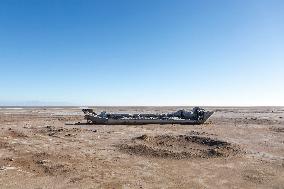
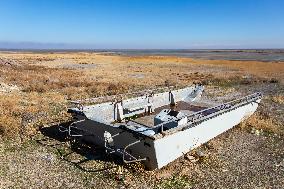
Remnants of a boat sit on the dry bed of Lake Urmia in northwestern Iran on December 19, 2025. Lake Urmia, once the largest lake in the Middle East, has dramatically shrunk due to prolonged drought, the damming of rivers feeding the lake, and extensive groundwater extraction in the surrounding area. Although increased rainfall and water diversion briefly helped restore water levels in 2019, renewed drought and administrative mismanagement in the early 2020s reversed the trend, and satellite imagery shows the lake has almost entirely dried up by September 2025. Photo by Morteza Aminoroayayi/Middle East Images/ABACAPRESS.COM

  •  
Lake Urmia Environmental Disaster - Iran

Lake Urmia Environmental Disaster - Iran

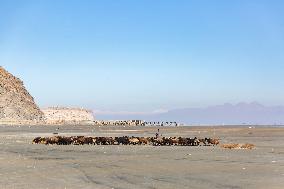
A shepherd guides a flock of sheep on the dry bed of Lake Urmia in northwestern Iran on December 20, 2025. Lake Urmia, once the largest lake in the Middle East, has dramatically shrunk due to prolonged drought, the damming of rivers feeding the lake, and extensive groundwater extraction in the surrounding area. Although increased rainfall and water diversion briefly helped restore water levels in 2019, renewed drought and administrative mismanagement in the early 2020s reversed the trend, and satellite imagery shows the lake has almost entirely dried up by September 2025. Photo by Morteza Aminoroayayi/Middle East Images/ABACAPRESS.COM

  •  
Lake Urmia Environmental Disaster - Iran

Lake Urmia Environmental Disaster - Iran

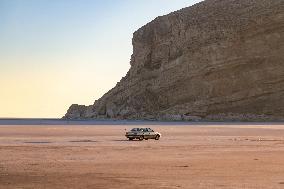
A car drives near a rocky cliff on the dry bed of Lake Urmia in northwestern Iran on December 19, 2025. Lake Urmia, once the largest lake in the Middle East, has dramatically shrunk due to prolonged drought, the damming of rivers feeding the lake, and extensive groundwater extraction in the surrounding area. Although increased rainfall and water diversion briefly helped restore water levels in 2019, renewed drought and administrative mismanagement in the early 2020s reversed the trend, and satellite imagery shows the lake has almost entirely dried up by September 2025. Photo by Morteza Aminoroayayi/Middle East Images/ABACAPRESS.COM

  •  
Lake Urmia Environmental Disaster - Iran

Lake Urmia Environmental Disaster - Iran

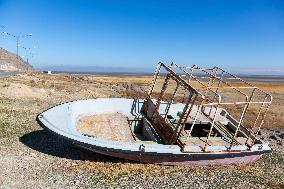
A rusty boat sits next to a road near Lake Urmia in northwestern Iran on December 20, 2025. Lake Urmia, once the largest lake in the Middle East, has dramatically shrunk due to prolonged drought, the damming of rivers feeding the lake, and extensive groundwater extraction in the surrounding area. Although increased rainfall and water diversion briefly helped restore water levels in 2019, renewed drought and administrative mismanagement in the early 2020s reversed the trend, and satellite imagery shows the lake has almost entirely dried up by September 2025. Photo by Morteza Aminoroayayi/Middle East Images/ABACAPRESS.COM

  •  
Lake Urmia Environmental Disaster - Iran

Lake Urmia Environmental Disaster - Iran

A view shows a wooden pier on the dry bed of Lake Urmia in northwestern Iran on December 19, 2025. Lake Urmia, once the largest lake in the Middle East, has dramatically shrunk due to prolonged drought, the damming of rivers feeding the lake, and extensive groundwater extraction in the surrounding area. Although increased rainfall and water diversion briefly helped restore water levels in 2019, renewed drought and administrative mismanagement in the early 2020s reversed the trend, and satellite imagery shows the lake has almost entirely dried up by September 2025. Photo by Morteza Aminoroayayi/Middle East Images/ABACAPRESS.COM

  •  
Lake Urmia Environmental Disaster - Iran

Lake Urmia Environmental Disaster - Iran

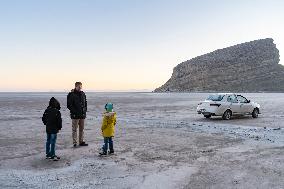
A man and two children stand near a car and a rocky cliff on the dry bed of Lake Urmia in northwestern Iran on December 19, 2025. Lake Urmia, once the largest lake in the Middle East, has dramatically shrunk due to prolonged drought, the damming of rivers feeding the lake, and extensive groundwater extraction in the surrounding area. Although increased rainfall and water diversion briefly helped restore water levels in 2019, renewed drought and administrative mismanagement in the early 2020s reversed the trend, and satellite imagery shows the lake has almost entirely dried up by September 2025. Photo by Morteza Aminoroayayi/Middle East Images/ABACAPRESS.COM

  •  
Lake Urmia Environmental Disaster - Iran

Lake Urmia Environmental Disaster - Iran

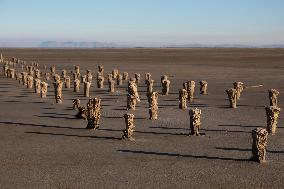
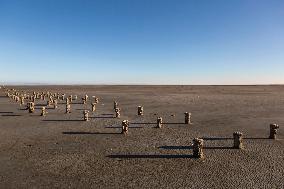
A view shows rows of wooden posts protruding from the dry bed of Lake Urmia in northwestern Iran on December 20, 2025. Lake Urmia, once the largest lake in the Middle East, has dramatically shrunk due to prolonged drought, the damming of rivers feeding the lake, and extensive groundwater extraction in the surrounding area. Although increased rainfall and water diversion briefly helped restore water levels in 2019, renewed drought and administrative mismanagement in the early 2020s reversed the trend, and satellite imagery shows the lake has almost entirely dried up by September 2025. Photo by Morteza Aminoroayayi/Middle East Images/ABACAPRESS.COM

  •  
Lake Urmia Environmental Disaster - Iran

Lake Urmia Environmental Disaster - Iran

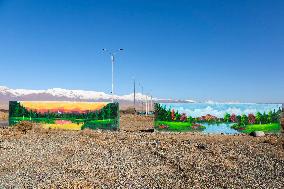
A view shows murals depicting nature scenes painted on concrete walls near Sharafkhaneh port at Lake Urmia in northwestern Iran on December 19, 2025. Lake Urmia, once the largest lake in the Middle East, has dramatically shrunk due to prolonged drought, the damming of rivers feeding the lake, and extensive groundwater extraction in the surrounding area. Although increased rainfall and water diversion briefly helped restore water levels in 2019, renewed drought and administrative mismanagement in the early 2020s reversed the trend, and satellite imagery shows the lake has almost entirely dried up by September 2025. Photo by Morteza Aminoroayayi/Middle East Images/ABACAPRESS.COM

  •  
Lake Urmia Environmental Disaster - Iran

Lake Urmia Environmental Disaster - Iran

A view shows the dry bed of Lake Urmia in northwestern Iran on December 19, 2025. Lake Urmia, once the largest lake in the Middle East, has dramatically shrunk due to prolonged drought, the damming of rivers feeding the lake, and extensive groundwater extraction in the surrounding area. Although increased rainfall and water diversion briefly helped restore water levels in 2019, renewed drought and administrative mismanagement in the early 2020s reversed the trend, and satellite imagery shows the lake has almost entirely dried up by September 2025. Photo by Morteza Aminoroayayi/Middle East Images/ABACAPRESS.COM

  •  
Lake Urmia Environmental Disaster - Iran

Lake Urmia Environmental Disaster - Iran

A view shows a wooden pier on the dry bed of Lake Urmia in northwestern Iran on December 20, 2025. Lake Urmia, once the largest lake in the Middle East, has dramatically shrunk due to prolonged drought, the damming of rivers feeding the lake, and extensive groundwater extraction in the surrounding area. Although increased rainfall and water diversion briefly helped restore water levels in 2019, renewed drought and administrative mismanagement in the early 2020s reversed the trend, and satellite imagery shows the lake has almost entirely dried up by September 2025. Photo by Morteza Aminoroayayi/Middle East Images/ABACAPRESS.COM

  •  
Lake Urmia Environmental Disaster - Iran

Lake Urmia Environmental Disaster - Iran

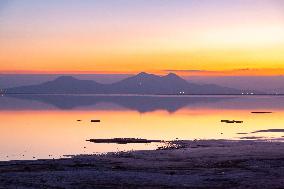
A view shows reflections on the surface of Lake Urmia in northwestern Iran on December 18, 2025. Lake Urmia, once the largest lake in the Middle East, has dramatically shrunk due to prolonged drought, the damming of rivers feeding the lake, and extensive groundwater extraction in the surrounding area. Although increased rainfall and water diversion briefly helped restore water levels in 2019, renewed drought and administrative mismanagement in the early 2020s reversed the trend, and satellite imagery shows the lake has almost entirely dried up by September 2025. Photo by Morteza Aminoroayayi/Middle East Images/ABACAPRESS.COM

  •  
Lake Urmia Environmental Disaster - Iran

Lake Urmia Environmental Disaster - Iran

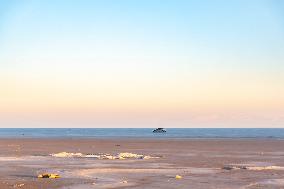
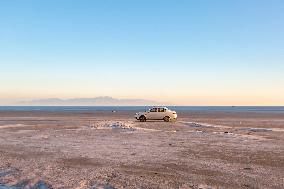
A car drives on the dry bed of Lake Urmia in northwestern Iran on December 19, 2025. Lake Urmia, once the largest lake in the Middle East, has dramatically shrunk due to prolonged drought, the damming of rivers feeding the lake, and extensive groundwater extraction in the surrounding area. Although increased rainfall and water diversion briefly helped restore water levels in 2019, renewed drought and administrative mismanagement in the early 2020s reversed the trend, and satellite imagery shows the lake has almost entirely dried up by September 2025. Photo by Morteza Aminoroayayi/Middle East Images/ABACAPRESS.COM

  •  
Lake Urmia Environmental Disaster - Iran

Lake Urmia Environmental Disaster - Iran

A view shows a mural depicting a landscape painted on a concrete wall near Sharafkhaneh port at Lake Urmia in northwestern Iran on December 19, 2025. Lake Urmia, once the largest lake in the Middle East, has dramatically shrunk due to prolonged drought, the damming of rivers feeding the lake, and extensive groundwater extraction in the surrounding area. Although increased rainfall and water diversion briefly helped restore water levels in 2019, renewed drought and administrative mismanagement in the early 2020s reversed the trend, and satellite imagery shows the lake has almost entirely dried up by September 2025. Photo by Morteza Aminoroayayi/Middle East Images/ABACAPRESS.COM

  •  
Lake Urmia Environmental Disaster - Iran

Lake Urmia Environmental Disaster - Iran

A view shows rows of wooden posts protruding from the dry bed of Lake Urmia in northwestern Iran on December 20, 2025. Lake Urmia, once the largest lake in the Middle East, has dramatically shrunk due to prolonged drought, the damming of rivers feeding the lake, and extensive groundwater extraction in the surrounding area. Although increased rainfall and water diversion briefly helped restore water levels in 2019, renewed drought and administrative mismanagement in the early 2020s reversed the trend, and satellite imagery shows the lake has almost entirely dried up by September 2025. Photo by Morteza Aminoroayayi/Middle East Images/ABACAPRESS.COM

  •  
Lake Urmia Environmental Disaster - Iran

Lake Urmia Environmental Disaster - Iran

Salt formations cover the cracked surface of the dried bed of Lake Urmia in northwestern Iran on December 19, 2025. Lake Urmia, once the largest lake in the Middle East, has dramatically shrunk due to prolonged drought, the damming of rivers feeding the lake and extensive groundwater extraction in the surrounding area. Although increased rainfall and water diversion briefly helped restore water levels in 2019, renewed drought and administrative mismanagement in the early 2020s reversed the trend, and satellite imagery shows the lake has almost entirely dried up by September 2025. Photo by Morteza Aminoroayayi/Middle East Images/ABACAPRESS.COM

  •  
Lake Urmia Environmental Disaster - Iran

Lake Urmia Environmental Disaster - Iran

Remains of a boat sits near the dry bed of Lake Urmia in northwestern Iran on December 20, 2025. Lake Urmia, once the largest lake in the Middle East, has dramatically shrunk due to prolonged drought, the damming of rivers feeding the lake, and extensive groundwater extraction in the surrounding area. Although increased rainfall and water diversion briefly helped restore water levels in 2019, renewed drought and administrative mismanagement in the early 2020s reversed the trend, and satellite imagery shows the lake has almost entirely dried up by September 2025. Photo by Morteza Aminoroayayi/Middle East Images/ABACAPRESS.COM

  •  
Lake Urmia Environmental Disaster - Iran

Lake Urmia Environmental Disaster - Iran

A car drives on the dry bed of Lake Urmia in northwestern Iran on December 19, 2025. Lake Urmia, once the largest lake in the Middle East, has dramatically shrunk due to prolonged drought, the damming of rivers feeding the lake, and extensive groundwater extraction in the surrounding area. Although increased rainfall and water diversion briefly helped restore water levels in 2019, renewed drought and administrative mismanagement in the early 2020s reversed the trend, and satellite imagery shows the lake has almost entirely dried up by September 2025. Photo by Morteza Aminoroayayi/Middle East Images/ABACAPRESS.COM

  •  
Lake Urmia Environmental Disaster - Iran

Lake Urmia Environmental Disaster - Iran

A view shows the dry bed of Lake Urmia in northwestern Iran on December 19, 2025. Lake Urmia, once the largest lake in the Middle East, has dramatically shrunk due to prolonged drought, the damming of rivers feeding the lake, and extensive groundwater extraction in the surrounding area. Although increased rainfall and water diversion briefly helped restore water levels in 2019, renewed drought and administrative mismanagement in the early 2020s reversed the trend, and satellite imagery shows the lake has almost entirely dried up by September 2025. Photo by Morteza Aminoroayayi/Middle East Images/ABACAPRESS.COM

  •  
Lake Urmia Environmental Disaster - Iran

Lake Urmia Environmental Disaster - Iran

A view shows scattered rocks and shallow water in parts of Lake Urmia in northwestern Iran on December 18, 2025. Lake Urmia, once the largest lake in the Middle East, has dramatically shrunk due to prolonged drought, the damming of rivers feeding the lake, and extensive groundwater extraction in the surrounding area. Although increased rainfall and water diversion briefly helped restore water levels in 2019, renewed drought and administrative mismanagement in the early 2020s reversed the trend, and satellite imagery shows the lake has almost entirely dried up by September 2025. Photo by Morteza Aminoroayayi/Middle East Images/ABACAPRESS.COM

  •  

Spain: Torrential Rains Trigger Severe Flooding in Cártama, Málaga

In Cártama, in Málaga’s Guadalhorce Valley, torrential rain caused flooding on Saturday evening, December 27. The rapidly rising Guadalhorce River flooded streets and homes in the Aljaima, Doña Ana and Estación de Cártama districts, forcing residents to stay on alert overnight and take measures to protect their properties. Some residents were relocated after their homes were inundated. The river reached a record level overnight, peaking at 5.7 meters with a flow of more than 1,000 cubic meters per second, triggering a red alert. Water levels fell by more than 60 percent by Sunday morning, easing conditions locally, although yellow alerts remain in place upstream. Several other rivers in the province also saw rising levels but have since moved out of danger thresholds as emergency services and residents work to return to normal.

  •  

France: Hérault Under Red Alert After Days of Intense Rainfall 5

Rare and severe flooding hit southern France on Monday, December 22, placing the Hérault department under red alert after torrential rain pushed river levels near Agde to a record 3.57 meters. Montpellier was inundated with around 300 millimeters of rain in three days, flooding streets, disrupting transportation, forcing evacuations, and leaving up to 3,000 households without power. On Tuesday, authorities said water levels were stabilizing and rainfall was easing, though Hérault remained under red alert. No casualties were reported.

  •  

US: Heavy Rain Triggers Deadly Flooding in Redding, California 4

Severe flooding triggered by heavy rain killed one person in Redding, California on Sunday, December 21, as repeated atmospheric rivers inundated Northern California. Flooded roads stranded vehicles, caused power outages, and prompted water rescues, while officials urged residents to avoid travel amid rapidly rising water levels and flood watches affecting millions statewide.

  •  

US: Heavy Rain Triggers Deadly Flooding in Redding, California 3

Severe flooding triggered by heavy rain killed one person in Redding, California on Sunday, December 21, as repeated atmospheric rivers inundated Northern California. Flooded roads stranded vehicles, caused power outages, and prompted water rescues, while officials urged residents to avoid travel amid rapidly rising water levels and flood watches affecting millions statewide.

  •  

France: Hérault Under Red Alert After Days of Intense Rainfall 3

Rare and severe flooding hit southern France on Monday, December 22, placing the Hérault department under red alert after torrential rain pushed river levels near Agde to a record 3.57 meters. Montpellier was inundated with around 300 millimeters of rain in three days, flooding streets, disrupting transportation, forcing evacuations, and leaving up to 3,000 households without power. On Tuesday, authorities said water levels were stabilizing and rainfall was easing, though Hérault remained under red alert. No casualties were reported.

  •  

France: Hérault Under Red Alert After Days of Intense Rainfall 4

Rare and severe flooding hit southern France on Monday, December 22, placing the Hérault department under red alert after torrential rain pushed river levels near Agde to a record 3.57 meters. Montpellier was inundated with around 300 millimeters of rain in three days, flooding streets, disrupting transportation, forcing evacuations, and leaving up to 3,000 households without power. On Tuesday, authorities said water levels were stabilizing and rainfall was easing, though Hérault remained under red alert. No casualties were reported.

  •  

France: Hérault Under Red Alert After Days of Intense Rainfall

Rare and severe flooding hit southern France on Monday, December 22, placing the Hérault department under red alert after torrential rain pushed river levels near Agde to a record 3.57 meters. Montpellier was inundated with around 300 millimeters of rain in three days, flooding streets, disrupting transportation, forcing evacuations, and leaving up to 3,000 households without power. On Tuesday, authorities said water levels were stabilizing and rainfall was easing, though Hérault remained under red alert. No casualties were reported.

  •  

France: Hérault Under Red Alert After Days of Intense Rainfall 2

Rare and severe flooding hit southern France on Monday, December 22, placing the Hérault department under red alert after torrential rain pushed river levels near Agde to a record 3.57 meters. Montpellier was inundated with around 300 millimeters of rain in three days, flooding streets, disrupting transportation, forcing evacuations, and leaving up to 3,000 households without power. On Tuesday, authorities said water levels were stabilizing and rainfall was easing, though Hérault remained under red alert. No casualties were reported.

  •  

US: Heavy Rain Triggers Deadly Flooding in Redding, California 2

Severe flooding triggered by heavy rain killed one person in Redding, California on Sunday, December 21, as repeated atmospheric rivers inundated Northern California. Flooded roads stranded vehicles, caused power outages, and prompted water rescues, while officials urged residents to avoid travel amid rapidly rising water levels and flood watches affecting millions statewide.

  •  

US: Heavy Rain from Winter Storm Triggers Flooding in Willits, California

The National Weather Service issued a flood warning for Willits on Sunday morning, December 21, amid rising water levels. The area is forecast to receive between 1 and 3 inches of rain through Monday, December 22, with higher totals possible at higher elevations. The National Weather Service warns motorists never to attempt to cross flooded roadways. From Arcata to Shelter Cove, heavy rain inundated valleys and caused creeks to overflow their banks, and turned roads into rivers of fast-moving muddy water.

  •  

US: Heavy Rain Triggers Deadly Flooding in Redding, California

Severe flooding triggered by heavy rain killed one person in Redding, California on Sunday, December 21, as repeated atmospheric rivers inundated Northern California. Flooded roads stranded vehicles, caused power outages, and prompted water rescues, while officials urged residents to avoid travel amid rapidly rising water levels and flood watches affecting millions statewide.

  • Main
  • Top
  • Editorial
  • Creative
  • About Us
  • About ILG
  • Terms of use
  • Company
  • BEHIND
  • Price List
  • Single Plan
  • Monthly Plan
  • Services
  • Shooting
  • Rights Clearance
  • Support
  • FAQ
  • How To Buy
  • Contact Us
  • Become a Partner

© KYODO NEWS IMAGES INC

All Rights Reserved.

  • Editorial
  • Olympics
  • News
  • Sports
  • Japan
  • Tech
  • Royal
  • Disaster
  • NorthKorea
  • Old Japan
  • SNS
  • Creative
  • Food
  • Japan
  • Landscape
  • Animal
  • Popular
  • #Ukraine
  • #Russia
  • #coronavirus
  • #N. Korea
  • #China
  • #Thailand
  • #Ukraine
  • #Russia
  • #coronavirus
  • #N. Korea
  • #China
  • #Thailand
  • Food
  • Japan
  • Landscape
  • Animal
  • Olympics
  • News
  • Sports
  • Japan
  • Tech
  • Royal
  • Disaster
  • NorthKorea
  • Old Japan
  • SNS