•  
Saturn Captured By James Webb Space Telescope

Saturn Captured By James Webb Space Telescope

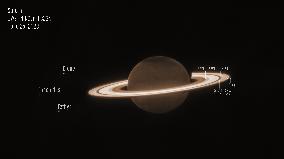
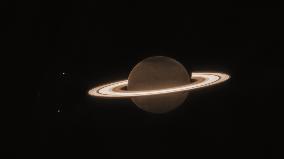
This image shows Saturn and some of its moons, captured by the James Webb Space Telescope’s (JWST) NIRCam instrument on June 25, 2023. In this monochrome image, NIRCam filter F323N (3.23 microns) was color mapped with an orange hue. JWST turned to the ringed world Saturn in June 2023 to conduct a deep search for new ring structure and faint moons. Saturn itself appears to extremely dark at the infrared wavelengths sensed by JWST’s Near-Infrared Camera (NIRCam), as methane gas absorbs almost all of the sunlight falling on the atmosphere. However, the icy rings stay relatively bright, leading to the unusual appearance of Saturn in the JWST image. Several very deep Saturn exposures taken together with this image were designed to test JWST’s capacity to detect faint moons around the planet and its bright rings. Any newly discovered moons would be important dynamical tracers of the current Saturn system as well as its past history. This context image clearly shows details within the ring system, along with many of

  •  
Saturn Captured By James Webb Space Telescope

Saturn Captured By James Webb Space Telescope

This image shows Saturn and some of its moons, captured by the James Webb Space Telescope’s (JWST) NIRCam instrument on June 25, 2023. In this monochrome image, NIRCam filter F323N (3.23 microns) was color mapped with an orange hue. JWST turned to the ringed world Saturn in June 2023 to conduct a deep search for new ring structure and faint moons. Saturn itself appears to extremely dark at the infrared wavelengths sensed by JWST’s Near-Infrared Camera (NIRCam), as methane gas absorbs almost all of the sunlight falling on the atmosphere. However, the icy rings stay relatively bright, leading to the unusual appearance of Saturn in the JWST image. Several very deep Saturn exposures taken together with this image were designed to test JWST’s capacity to detect faint moons around the planet and its bright rings. Any newly discovered moons would be important dynamical tracers of the current Saturn system as well as its past history. This context image clearly shows details within the ring system, along with many of

  •  
NASA's MAVEN Spacecraft Acquired Stunning Views Of Mars

NASA's MAVEN Spacecraft Acquired Stunning Views Of Mars

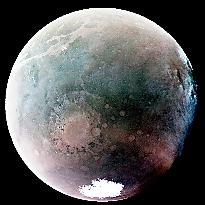
Handout photo - The first image was taken in July 2022 during the southern hemisphere’s summer season, which occurs when Mars passes closet to the Sun. The summer season is caused by the tilt of the planet’s rotational axis, similar to seasons on Earth. Argyre Basin, one of Mars’ deepest craters, appears at bottom left filled with atmospheric haze (depicted here as pale pink). Scientists have shown off the Red Planet in a new light with the unveiling of two incredible images of Mars. NASA’s MAVEN (Mars Atmosphere and Volatile EvolutioN) mission acquired "stunning views" of Mars in two ultraviolet images taken at different points along our neighbouring planet’s orbit around the Sun. By viewing the planet in ultraviolet wavelengths, scientists say they can gain insight into the Martian atmosphere and view surface features in remarkable ways. MAVEN’s Imaging Ultraviolet Spectrograph (IUVS) instrument obtained these global views of Mars in 2022 and 2023 when the planet was near opposite ends of its elliptical orb

  •  
NASA's MAVEN Spacecraft Acquired Stunning Views Of Mars

NASA's MAVEN Spacecraft Acquired Stunning Views Of Mars

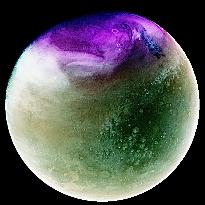
Handout photo - The second image is of Mars’ northern hemisphere and was taken in January 2023 after Mars had passed the farthest point in its orbit from the Sun. The rapidly changing seasons in the north polar region cause an abundance of white clouds. The deep canyons of Valles Marineris can be seen in tan at lower left, along with many craters. Scientists have shown off the Red Planet in a new light with the unveiling of two incredible images of Mars. NASA’s MAVEN (Mars Atmosphere and Volatile EvolutioN) mission acquired "stunning views" of Mars in two ultraviolet images taken at different points along our neighbouring planet’s orbit around the Sun. By viewing the planet in ultraviolet wavelengths, scientists say they can gain insight into the Martian atmosphere and view surface features in remarkable ways. MAVEN’s Imaging Ultraviolet Spectrograph (IUVS) instrument obtained these global views of Mars in 2022 and 2023 when the planet was near opposite ends of its elliptical orbit. Photo by NASA/LASP/CU Boul

  •  
Sandstorm Hits Beijing

Sandstorm Hits Beijing

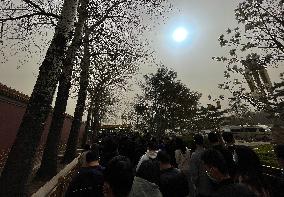
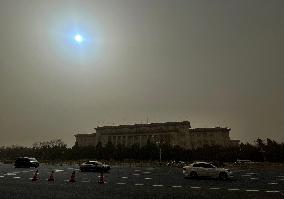
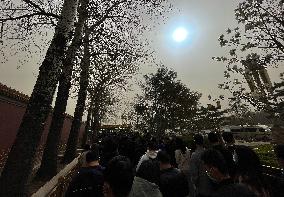
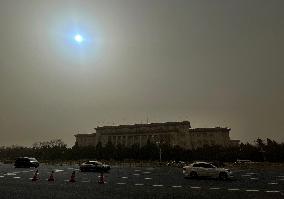
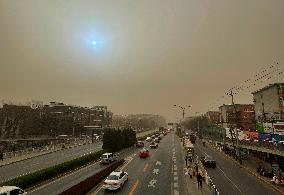
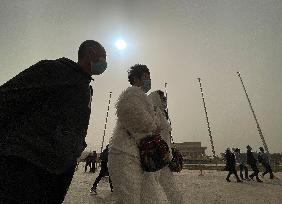
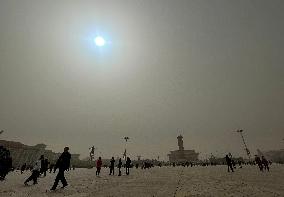
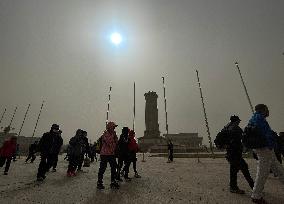
Photo taken on March 28, 2021 shows the Blue Sun in Beijing, capital of China. This is because the particles in the dust scatter and absorb longer wavelengths of red light, reducing the red light and making the sun appear blue.

  •  
Sandstorm Hits Beijing

Sandstorm Hits Beijing

Photo taken on March 28, 2021 shows the Blue Sun in Beijing, capital of China. This is because the particles in the dust scatter and absorb longer wavelengths of red light, reducing the red light and making the sun appear blue.

  •  
Sandstorm Hits Beijing

Sandstorm Hits Beijing

Photo taken on March 28, 2021 shows the Blue Sun in Beijing, capital of China. This is because the particles in the dust scatter and absorb longer wavelengths of red light, reducing the red light and making the sun appear blue.

  •  
Sandstorm Hits Beijing

Sandstorm Hits Beijing

Photo taken on March 28, 2021 shows the Blue Sun in Beijing, capital of China. This is because the particles in the dust scatter and absorb longer wavelengths of red light, reducing the red light and making the sun appear blue.

  •  
Sandstorm Hits Beijing

Sandstorm Hits Beijing

Photo taken on March 28, 2021 shows the Blue Sun at Yuanming Yuan West Road in Haidian District, Beijing, capital of China. This is because the particles in the dust scatter and absorb longer wavelengths of red light, reducing the red light and making the sun appear blue.

  •  
Sandstorm Hits Beijing

Sandstorm Hits Beijing

Photo taken on March 28, 2021 shows the Blue Sun in Beijing, capital of China. This is because the particles in the dust scatter and absorb longer wavelengths of red light, reducing the red light and making the sun appear blue.

  •  
Sandstorm Hits Beijing

Sandstorm Hits Beijing

Photo taken on March 28, 2021 shows the Blue Sun in Beijing, capital of China. This is because the particles in the dust scatter and absorb longer wavelengths of red light, reducing the red light and making the sun appear blue.

  •  
Sandstorm Hits Beijing

Sandstorm Hits Beijing

Photo taken on March 28, 2021 shows the Blue Sun in Beijing, capital of China. This is because the particles in the dust scatter and absorb longer wavelengths of red light, reducing the red light and making the sun appear blue.

  • Main
  • Top
  • Editorial
  • Creative
  • About Us
  • About ILG
  • Terms of use
  • Company
  • BEHIND
  • Price List
  • Single Plan
  • Monthly Plan
  • Services
  • Shooting
  • Rights Clearance
  • Support
  • FAQ
  • How To Buy
  • Contact Us
  • Become a Partner

© KYODO NEWS IMAGES INC

All Rights Reserved.

  • Editorial
  • Olympics
  • News
  • Sports
  • Japan
  • Tech
  • Royal
  • Disaster
  • NorthKorea
  • Old Japan
  • SNS
  • Creative
  • Food
  • Japan
  • Landscape
  • Animal
  • Popular
  • #Ukraine
  • #Russia
  • #coronavirus
  • #N. Korea
  • #China
  • #Thailand
  • #Ukraine
  • #Russia
  • #coronavirus
  • #N. Korea
  • #China
  • #Thailand
  • Food
  • Japan
  • Landscape
  • Animal
  • Olympics
  • News
  • Sports
  • Japan
  • Tech
  • Royal
  • Disaster
  • NorthKorea
  • Old Japan
  • SNS