•  
Gators Are Sensitive To Environmental Changes - Everglades

Gators Are Sensitive To Environmental Changes - Everglades

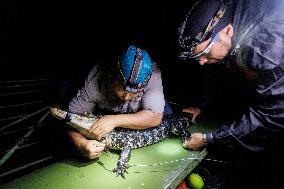
Kevin Olejniczak, wildlife technician, left, holds an American alligator while Sergio Balaguera-Reina, research scientist studying conservation biology, collects data during a research survey with the University of Florida Croc Docs team Thursday, November 7, 2024, in Everglades National Park, FL, USA. Alligators like to hunt in the dark but tonight they’re the creatures being stalked, not for sport but for science by two University of Florida wildlife biologists, Sergio Balaguera-Reina and Kevin Olejiczak. Alligators, along with their cousins and co-residents crocodiles, are sensitive to environmental changes in the Everglades. That makes them what scientists call a good “indicator species” for assessing progress in the on-going multibillion-dollar effort to restore the natural water flow to the sprawling River of Grass. Gators are a bit like Goldilocks. Too much water, and they use too much energy trying to catching fish and other prey. Not enough, and they struggle to move or mate. They need the water just

  •  
Gators Are Sensitive To Environmental Changes - Everglades

Gators Are Sensitive To Environmental Changes - Everglades

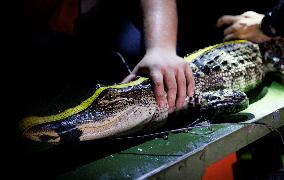
Kevin Olejniczak, wildlife technician, left, holds an American alligator while Sergio Balaguera-Reina, research scientist studying conservation biology, collects data during a research survey with the University of Florida Croc Docs team Thursday, November 7, 2024, in Everglades National Park. The alligators health is a good indicator of the health of the Everglades. Alligators like to hunt in the dark but tonight they’re the creatures being stalked, not for sport but for science by two University of Florida wildlife biologists, Sergio Balaguera-Reina and Kevin Olejiczak. Alligators, along with their cousins and co-residents crocodiles, are sensitive to environmental changes in the Everglades. That makes them what scientists call a good “indicator species” for assessing progress in the on-going multibillion-dollar effort to restore the natural water flow to the sprawling River of Grass. Gators are a bit like Goldilocks. Too much water, and they use too much energy trying to catching fish and other prey. Not e

  •  
A Quokka At Featherdale Wildlife Park - Sydney

A Quokka At Featherdale Wildlife Park - Sydney

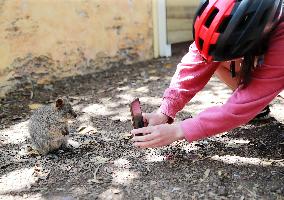
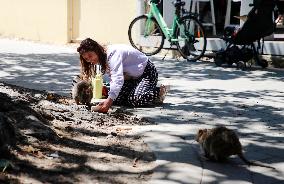
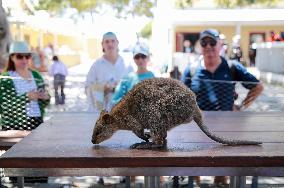
Visitors take photos of a quokka and her baby on the Rottnest Island in Australia, Oct. 25, 2024. Often called "the happiest animal in the world", Quokkas are a small marsupial related to Kangaroos. They have grey-brown fur and small, rounded ears, feeding on fresh, young grasses, leaves and succulents, as well as plant roots. The quokka's range is a small area of southwestern Australia. They inhabit some smaller islands off the coast of Western Australia, particularly Rottnest Island just off Perth. Quokkas there have become very accustomed to humans. The species is listed as vulnerable on the IUCN (The International Union for Conservation of Nature) Red List of threatened species due to habitat loss, climatic factors and predation by feral animals (cats and foxes). Photo by Ma Ping/Xinhua/ABACAPRESS.COM

  •  
A Quokka At Featherdale Wildlife Park - Sydney

A Quokka At Featherdale Wildlife Park - Sydney

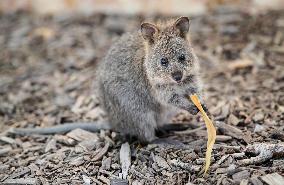
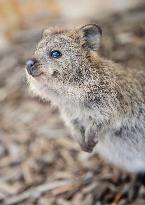
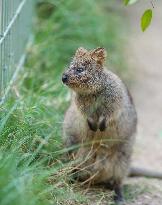
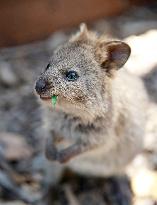
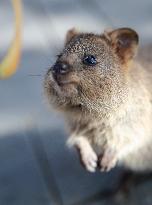
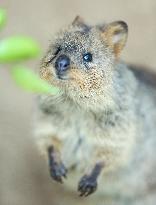
A quokka is seen on the Rottnest Island in Australia, Oct. 25, 2024. Often called "the happiest animal in the world", Quokkas are a small marsupial related to Kangaroos. They have grey-brown fur and small, rounded ears, feeding on fresh, young grasses, leaves and succulents, as well as plant roots. The quokka's range is a small area of southwestern Australia. They inhabit some smaller islands off the coast of Western Australia, particularly Rottnest Island just off Perth. Quokkas there have become very accustomed to humans. The species is listed as vulnerable on the IUCN (The International Union for Conservation of Nature) Red List of threatened species due to habitat loss, climatic factors and predation by feral animals (cats and foxes). Photo by Ma Ping/Xinhua/ABACAPRESS.COM

  •  
A Quokka At Featherdale Wildlife Park - Sydney

A Quokka At Featherdale Wildlife Park - Sydney

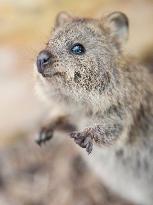
A quokka is seen on the Rottnest Island in Australia, Oct. 25, 2024. Often called "the happiest animal in the world", Quokkas are a small marsupial related to Kangaroos. They have grey-brown fur and small, rounded ears, feeding on fresh, young grasses, leaves and succulents, as well as plant roots. The quokka's range is a small area of southwestern Australia. They inhabit some smaller islands off the coast of Western Australia, particularly Rottnest Island just off Perth. Quokkas there have become very accustomed to humans. The species is listed as vulnerable on the IUCN (The International Union for Conservation of Nature) Red List of threatened species due to habitat loss, climatic factors and predation by feral animals (cats and foxes). Photo by Ma Ping/Xinhua/ABACAPRESS.COM

  •  
A Quokka At Featherdale Wildlife Park - Sydney

A Quokka At Featherdale Wildlife Park - Sydney

A visitor takes photo of a quokka on the Rottnest Island in Australia, Oct. 25, 2024. Often called "the happiest animal in the world", Quokkas are a small marsupial related to Kangaroos. They have grey-brown fur and small, rounded ears, feeding on fresh, young grasses, leaves and succulents, as well as plant roots. The quokka's range is a small area of southwestern Australia. They inhabit some smaller islands off the coast of Western Australia, particularly Rottnest Island just off Perth. Quokkas there have become very accustomed to humans. The species is listed as vulnerable on the IUCN (The International Union for Conservation of Nature) Red List of threatened species due to habitat loss, climatic factors and predation by feral animals (cats and foxes). Photo by Ma Ping/Xinhua/ABACAPRESS.COM

  •  
A Quokka At Featherdale Wildlife Park - Sydney

A Quokka At Featherdale Wildlife Park - Sydney

A visitor poses for a selfie with a quokka on the Rottnest Island in Australia, Oct. 25, 2024. Often called "the happiest animal in the world", Quokkas are a small marsupial related to Kangaroos. They have grey-brown fur and small, rounded ears, feeding on fresh, young grasses, leaves and succulents, as well as plant roots. The quokka's range is a small area of southwestern Australia. They inhabit some smaller islands off the coast of Western Australia, particularly Rottnest Island just off Perth. Quokkas there have become very accustomed to humans. The species is listed as vulnerable on the IUCN (The International Union for Conservation of Nature) Red List of threatened species due to habitat loss, climatic factors and predation by feral animals (cats and foxes). Photo by Ma Ping/Xinhua/ABACAPRESS.COM

  •  
A Quokka At Featherdale Wildlife Park - Sydney

A Quokka At Featherdale Wildlife Park - Sydney

A quokka is seen on the Rottnest Island in Australia, Oct. 25, 2024. Often called "the happiest animal in the world", Quokkas are a small marsupial related to Kangaroos. They have grey-brown fur and small, rounded ears, feeding on fresh, young grasses, leaves and succulents, as well as plant roots. The quokka's range is a small area of southwestern Australia. They inhabit some smaller islands off the coast of Western Australia, particularly Rottnest Island just off Perth. Quokkas there have become very accustomed to humans. The species is listed as vulnerable on the IUCN (The International Union for Conservation of Nature) Red List of threatened species due to habitat loss, climatic factors and predation by feral animals (cats and foxes). Photo by Ma Ping/Xinhua/ABACAPRESS.COM

  •  
A Quokka At Featherdale Wildlife Park - Sydney

A Quokka At Featherdale Wildlife Park - Sydney

A quokka is seen in the Featherdale Sydney Wildlife Park in Sydney, Australia, Oct. 4, 2024. Often called "the happiest animal in the world", Quokkas are a small marsupial related to Kangaroos. They have grey-brown fur and small, rounded ears, feeding on fresh, young grasses, leaves and succulents, as well as plant roots. The quokka's range is a small area of southwestern Australia. They inhabit some smaller islands off the coast of Western Australia, particularly Rottnest Island just off Perth. Quokkas there have become very accustomed to humans. The species is listed as vulnerable on the IUCN (The International Union for Conservation of Nature) Red List of threatened species due to habitat loss, climatic factors and predation by feral animals (cats and foxes). Photo by Ma Ping/Xinhua/ABACAPRESS.COM

  •  
A Quokka At Featherdale Wildlife Park - Sydney

A Quokka At Featherdale Wildlife Park - Sydney

A quokka is seen on the Rottnest Island in Australia, Oct. 25, 2024. Often called "the happiest animal in the world", Quokkas are a small marsupial related to Kangaroos. They have grey-brown fur and small, rounded ears, feeding on fresh, young grasses, leaves and succulents, as well as plant roots. The quokka's range is a small area of southwestern Australia. They inhabit some smaller islands off the coast of Western Australia, particularly Rottnest Island just off Perth. Quokkas there have become very accustomed to humans. The species is listed as vulnerable on the IUCN (The International Union for Conservation of Nature) Red List of threatened species due to habitat loss, climatic factors and predation by feral animals (cats and foxes). Photo by Ma Ping/Xinhua/ABACAPRESS.COM

  •  
A Quokka At Featherdale Wildlife Park - Sydney

A Quokka At Featherdale Wildlife Park - Sydney

A quokka is seen on the Rottnest Island in Australia, Oct. 25, 2024. Often called "the happiest animal in the world", Quokkas are a small marsupial related to Kangaroos. They have grey-brown fur and small, rounded ears, feeding on fresh, young grasses, leaves and succulents, as well as plant roots. The quokka's range is a small area of southwestern Australia. They inhabit some smaller islands off the coast of Western Australia, particularly Rottnest Island just off Perth. Quokkas there have become very accustomed to humans. The species is listed as vulnerable on the IUCN (The International Union for Conservation of Nature) Red List of threatened species due to habitat loss, climatic factors and predation by feral animals (cats and foxes). Photo by Ma Ping/Xinhua/ABACAPRESS.COM

  •  
A Quokka At Featherdale Wildlife Park - Sydney

A Quokka At Featherdale Wildlife Park - Sydney

A quokka is seen on the Rottnest Island in Australia, Oct. 25, 2024. Often called "the happiest animal in the world", Quokkas are a small marsupial related to Kangaroos. They have grey-brown fur and small, rounded ears, feeding on fresh, young grasses, leaves and succulents, as well as plant roots. The quokka's range is a small area of southwestern Australia. They inhabit some smaller islands off the coast of Western Australia, particularly Rottnest Island just off Perth. Quokkas there have become very accustomed to humans. The species is listed as vulnerable on the IUCN (The International Union for Conservation of Nature) Red List of threatened species due to habitat loss, climatic factors and predation by feral animals (cats and foxes). Photo by Ma Ping/Xinhua/ABACAPRESS.COM

  •  
A Quokka At Featherdale Wildlife Park - Sydney

A Quokka At Featherdale Wildlife Park - Sydney

A quokka is seen in the Featherdale Sydney Wildlife Park in Sydney, Australia, Oct. 4, 2024. Often called "the happiest animal in the world", Quokkas are a small marsupial related to Kangaroos. They have grey-brown fur and small, rounded ears, feeding on fresh, young grasses, leaves and succulents, as well as plant roots. The quokka's range is a small area of southwestern Australia. They inhabit some smaller islands off the coast of Western Australia, particularly Rottnest Island just off Perth. Quokkas there have become very accustomed to humans. The species is listed as vulnerable on the IUCN (The International Union for Conservation of Nature) Red List of threatened species due to habitat loss, climatic factors and predation by feral animals (cats and foxes). Photo by Ma Ping/Xinhua/ABACAPRESS.COM

  •  
Aftermath Of Hurricanes Helene And Milton - US

Aftermath Of Hurricanes Helene And Milton - US

NO FILM, NO VIDEO, NO TV, NO DOCUMENTARY - Florida Fish and Wildlife Conservation Commission officers ride on a flats boat through the flooded N 12th St in North Tampa, on Thursday, Oct. 10, 2024, a day after Hurricane Milton crossed Florida’s Gulf Coast. Residents of senior facilities are still experiencing lack of electricity and water in the aftermath of the storm. Photo by Pedro Portal/Miami Herald/TNS/ABACAPRESS.COM

  •  
SRI LANKA-WILD ELEPHANT CENSUS

SRI LANKA-WILD ELEPHANT CENSUS

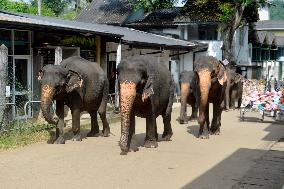
(240810) -- COLOMBO, Aug. 10, 2024 Photo by Xinhua/ABACAPRESS.COM) -- This photo taken on Aug. 10, 2024 shows elephants after daily bathing at the Pinnawala Elephant Orphanage in Sri Lanka. Sri Lanka's Department of Wildlife Conservation will conduct a countrywide census on wild elephants on Aug. 17, 18 and 19, state media reported on Saturday quoting an official. (Photo by Gayan Sameera/Xinhua/ABACAPRESS.COM

  •  
SRI LANKA-WILD ELEPHANT CENSUS

SRI LANKA-WILD ELEPHANT CENSUS

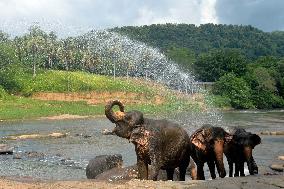
(240810) -- COLOMBO, Aug. 10, 2024 Photo by Xinhua/ABACAPRESS.COM) -- Elephants bathe in a river at the Pinnawala Elephant Orphanage in Sri Lanka, Aug. 10, 2024. Sri Lanka's Department of Wildlife Conservation will conduct a countrywide census on wild elephants on Aug. 17, 18 and 19, state media reported on Saturday quoting an official. (Photo by Gayan Sameera/Xinhua/ABACAPRESS.COM

  •  
Colombian Pacific Drone Shots

Colombian Pacific Drone Shots

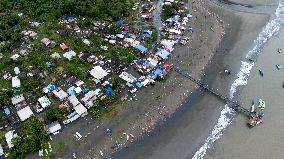
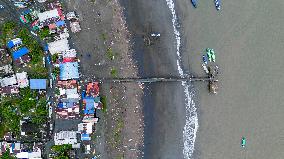
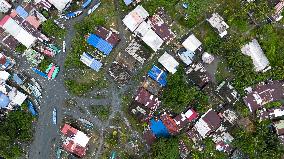
Homes and islands close to the Buenaventura, Colombia are seen in aerial shots on august, 5, 2024. Photo by: Sebastian Marmolejo/Long Visual Press/ABACAPRESS.COM

  •  
Colombian Pacific Drone Shots

Colombian Pacific Drone Shots

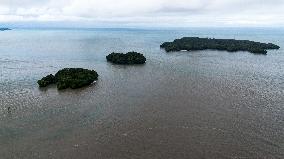
Homes and islands close to the Buenaventura, Colombia are seen in aerial shots on august, 5, 2024. Photo by: Sebastian Marmolejo/Long Visual Press/ABACAPRESS.COM

  •  
Colombian Pacific Drone Shots

Colombian Pacific Drone Shots

Homes and islands close to the Buenaventura, Colombia are seen in aerial shots on august, 5, 2024. Photo by: Sebastian Marmolejo/Long Visual Press/ABACAPRESS.COM

  •  
Colombian Pacific Drone Shots

Colombian Pacific Drone Shots

Homes and islands close to the Buenaventura, Colombia are seen in aerial shots on august, 5, 2024. Photo by: Sebastian Marmolejo/Long Visual Press/ABACAPRESS.COM

  •  
Colombian Pacific Drone Shots

Colombian Pacific Drone Shots

Homes and islands close to the Buenaventura, Colombia are seen in aerial shots on august, 5, 2024. Photo by: Sebastian Marmolejo/Long Visual Press/ABACAPRESS.COM

  •  
Colombian Pacific Drone Shots

Colombian Pacific Drone Shots

Homes and islands close to the Buenaventura, Colombia are seen in aerial shots on august, 5, 2024. Photo by: Sebastian Marmolejo/Long Visual Press/ABACAPRESS.COM

  •  
Colombian Pacific Drone Shots

Colombian Pacific Drone Shots

Homes and islands close to the Buenaventura, Colombia are seen in aerial shots on august, 5, 2024. Photo by: Sebastian Marmolejo/Long Visual Press/ABACAPRESS.COM

  •  
CHINA-HEILONGJIANG-HARBIN-FORUM-TIGER AND LEOPARD (CN)

CHINA-HEILONGJIANG-HARBIN-FORUM-TIGER AND LEOPARD (CN)

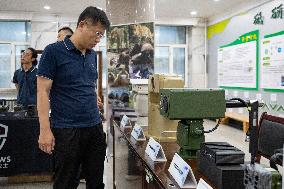
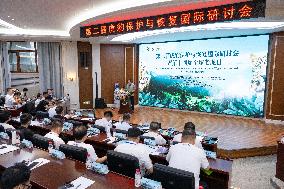
(240729) -- HARBIN, July 29, 2024 Photo by Xinhua/ABACAPRESS.COM) -- A participant views wildlife monitoring equipment displayed during the 2nd International Forum on Conservation and Recovery of Tiger and Leopard in Harbin, northeast China's Heilongjiang Province, July 29, 2024. The 2-day forum opened here on Monday, which marks the 14th International Tiger Day. Participants will discuss topics like human-animal conflict, global tiger and leopard population and habitat management. Photo by Xinhua/ABACAPRESS.COM/Xie Jianfei)

  •  
CHINA-HEILONGJIANG-HARBIN-FORUM-TIGER AND LEOPARD (CN)

CHINA-HEILONGJIANG-HARBIN-FORUM-TIGER AND LEOPARD (CN)

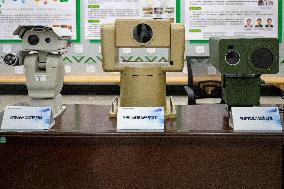
(240729) -- HARBIN, July 29, 2024 Photo by Xinhua/ABACAPRESS.COM) -- This photo taken on July 29, 2024 shows wildlife monitoring equipment displayed during the 2nd International Forum on Conservation and Recovery of Tiger and Leopard in Harbin, northeast China's Heilongjiang Province. The 2-day forum opened here on Monday, which marks the 14th International Tiger Day. Participants will discuss topics like human-animal conflict, global tiger and leopard population and habitat management. Photo by Xinhua/ABACAPRESS.COM/Xie Jianfei)

  •  
CHINA-HEILONGJIANG-HARBIN-FORUM-TIGER AND LEOPARD (CN)

CHINA-HEILONGJIANG-HARBIN-FORUM-TIGER AND LEOPARD (CN)

(240729) -- HARBIN, July 29, 2024 Photo by Xinhua/ABACAPRESS.COM) -- Meng Xianlin from China Wildlife Conservation Association speaks during the 2nd International Forum on Conservation and Recovery of Tiger and Leopard in Harbin, northeast China's Heilongjiang Province, July 29, 2024. The 2-day forum opened here on Monday, which marks the 14th International Tiger Day. Participants will discuss topics like human-animal conflict, global tiger and leopard population and habitat management. Photo by Xinhua/ABACAPRESS.COM/Xie Jianfei)

  •  
CHINA-HEILONGJIANG-HARBIN-FORUM-TIGER AND LEOPARD (CN)

CHINA-HEILONGJIANG-HARBIN-FORUM-TIGER AND LEOPARD (CN)

(240729) -- HARBIN, July 29, 2024 Photo by Xinhua/ABACAPRESS.COM) -- A participant views a wildlife satellite tracker displayed during the 2nd International Forum on Conservation and Recovery of Tiger and Leopard in Harbin, northeast China's Heilongjiang Province, July 29, 2024. The 2-day forum opened here on Monday, which marks the 14th International Tiger Day. Participants will discuss topics like human-animal conflict, global tiger and leopard population and habitat management. Photo by Xinhua/ABACAPRESS.COM/Xie Jianfei)

  •  
XINHUA PHOTOS OF THE DAY

XINHUA PHOTOS OF THE DAY

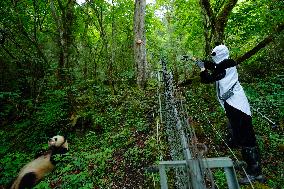
(240630) -- BEIJING, June 30, 2024 Photo by Xinhua/ABACAPRESS.COM) -- Staff member Mu Shijie, dressed up in a panda costume, feeds giant panda Xian Xian at the second-phase giant panda wild training fields of Tiantai Mountain in Wolong National Nature Reserve in southwest China's Sichuan Province, June 24, 2024. In recent years, China has made significant progress in panda conservation through a series of measures, including forest and wildlife protection as well as the construction of giant panda national parks. The wild giant panda population in China has grown from about 1,100 in the 1980s to nearly 1,900. Photo by Xinhua/ABACAPRESS.COM/Shen Bohan)

  •  
Giant Panda Reintroduction - China

Giant Panda Reintroduction - China

WOLONG, June 29, 2024 -- This file photo taken on Sept. 16, 2014 shows giant panda cub Hua Jiao (L), the world's first giant panda cub with both captive and wild parents, and her mother Cao Cao in the wild training fields. In recent years, China has made significant progress in panda conservation through a series of measures, including forest and wildlife protection as well as the construction of giant panda national parks. The wild giant panda population in China has grown from about 1,100 in the 1980s to nearly 1,900. Giant panda reintroduction refers to releasing captive-bred giant pandas to their historical distribution areas to live and reproduce after acclimatization training so as to rebuild the wild population of the species. China Conservation and Research Center for the Giant Panda (CCRCGP) started a reintroduction program in 2003. It has reintroduced eleven pandas into the wild, nine of which survived. In the future, the center will continue to train more individual panda cubs using the mother-cub

  •  
Giant Panda Reintroduction - China

Giant Panda Reintroduction - China

WOLONG, June 29, 2024 -- This file photo taken on Nov. 20, 2010 shows staff members dressed up in giant panda costumes holding a giant panda cub into a bamboo basket at the second-phase giant panda wild training fields of Hetaoping panda base in Wolong, southwest China's Sichuan Province. In recent years, China has made significant progress in panda conservation through a series of measures, including forest and wildlife protection as well as the construction of giant panda national parks. The wild giant panda population in China has grown from about 1,100 in the 1980s to nearly 1,900. Giant panda reintroduction refers to releasing captive-bred giant pandas to their historical distribution areas to live and reproduce after acclimatization training so as to rebuild the wild population of the species. China Conservation and Research Center for the Giant Panda (CCRCGP) started a reintroduction program in 2003. It has reintroduced eleven pandas into the wild, nine of which survived. In the future, the center will

  •  
Giant Panda Reintroduction - China

Giant Panda Reintroduction - China

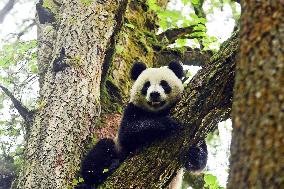
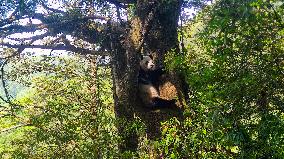
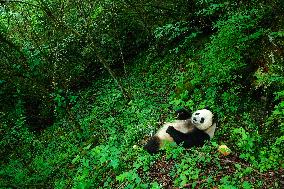
WOLONG, June 29, 2024 -- This file photo taken on June 4, 2020 shows a giant panda resting on a tree during wild training at Tiantai Mountain in Wolong National Nature Reserve in southwest China's Sichuan Province. In recent years, China has made significant progress in panda conservation through a series of measures, including forest and wildlife protection as well as the construction of giant panda national parks. The wild giant panda population in China has grown from about 1,100 in the 1980s to nearly 1,900. Giant panda reintroduction refers to releasing captive-bred giant pandas to their historical distribution areas to live and reproduce after acclimatization training so as to rebuild the wild population of the species. China Conservation and Research Center for the Giant Panda (CCRCGP) started a reintroduction program in 2003. It has reintroduced eleven pandas into the wild, nine of which survived. In the future, the center will continue to train more individual panda cubs using the mother-cub process

  •  
Giant Panda Reintroduction - China

Giant Panda Reintroduction - China

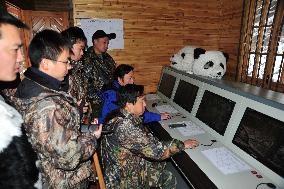
WOLONG, June 29, 2024 -- This file photo taken on Nov. 20, 2010 shows staff members monitoring the giant panda wild training fields of Hetaoping panda base in Wolong, southwest China's Sichuan Province. In recent years, China has made significant progress in panda conservation through a series of measures, including forest and wildlife protection as well as the construction of giant panda national parks. The wild giant panda population in China has grown from about 1,100 in the 1980s to nearly 1,900. Giant panda reintroduction refers to releasing captive-bred giant pandas to their historical distribution areas to live and reproduce after acclimatization training so as to rebuild the wild population of the species. China Conservation and Research Center for the Giant Panda (CCRCGP) started a reintroduction program in 2003. It has reintroduced eleven pandas into the wild, nine of which survived. In the future, the center will continue to train more individual panda cubs using the mother-cub process before relea

  •  
Giant Panda Reintroduction - China

Giant Panda Reintroduction - China

WOLONG, June 29, 2024 -- Staff member Mu Shijie prepares to patrol the giant panda wild training fields of Tiantai Mountain in Wolong National Nature Reserve in southwest China's Sichuan Province, June 24, 2024. In recent years, China has made significant progress in panda conservation through a series of measures, including forest and wildlife protection as well as the construction of giant panda national parks. The wild giant panda population in China has grown from about 1,100 in the 1980s to nearly 1,900. Giant panda reintroduction refers to releasing captive-bred giant pandas to their historical distribution areas to live and reproduce after acclimatization training so as to rebuild the wild population of the species. China Conservation and Research Center for the Giant Panda (CCRCGP) started a reintroduction program in 2003. It has reintroduced eleven pandas into the wild, nine of which survived. In the future, the center will continue to train more individual panda cubs using the mother-cub process bef

  •  
Giant Panda Reintroduction - China

Giant Panda Reintroduction - China

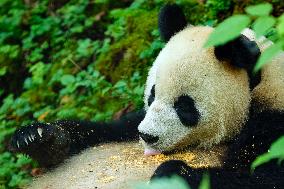
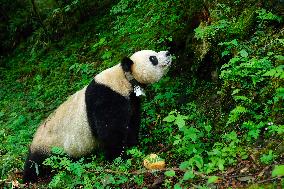
WOLONG, June 29, 2024 -- Giant panda Xian Xian has food at the second-phase giant panda wild training fields of Tiantai Mountain in Wolong National Nature Reserve in southwest China's Sichuan Province, June 24, 2024. In recent years, China has made significant progress in panda conservation through a series of measures, including forest and wildlife protection as well as the construction of giant panda national parks. The wild giant panda population in China has grown from about 1,100 in the 1980s to nearly 1,900. Giant panda reintroduction refers to releasing captive-bred giant pandas to their historical distribution areas to live and reproduce after acclimatization training so as to rebuild the wild population of the species. China Conservation and Research Center for the Giant Panda (CCRCGP) started a reintroduction program in 2003. It has reintroduced eleven pandas into the wild, nine of which survived. In the future, the center will continue to train more individual panda cubs using the mother-cub proces

  •  
Giant Panda Reintroduction - China

Giant Panda Reintroduction - China

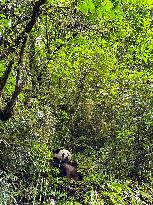
WOLONG, June 29, 2024 -- Giant panda Hui Hui is seen on a tree at the second-phase giant panda wild training fields of Tiantai Mountain in Wolong National Nature Reserve in southwest China's Sichuan Province, May 22, 2024. In recent years, China has made significant progress in panda conservation through a series of measures, including forest and wildlife protection as well as the construction of giant panda national parks. The wild giant panda population in China has grown from about 1,100 in the 1980s to nearly 1,900. Giant panda reintroduction refers to releasing captive-bred giant pandas to their historical distribution areas to live and reproduce after acclimatization training so as to rebuild the wild population of the species. China Conservation and Research Center for the Giant Panda (CCRCGP) started a reintroduction program in 2003. It has reintroduced eleven pandas into the wild, nine of which survived. In the future, the center will continue to train more individual panda cubs using the mother-cub

  •  
Giant Panda Reintroduction - China

Giant Panda Reintroduction - China

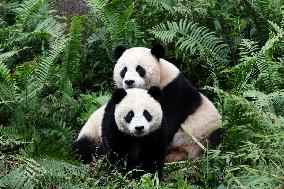
WOLONG, June 29, 2024 -- Giant panda Hui Hui and her cub are seen at the wild training fields of Tiantai Mountain in Wolong National Nature Reserve in southwest China's Sichuan Province, June 1, 2024. In recent years, China has made significant progress in panda conservation through a series of measures, including forest and wildlife protection as well as the construction of giant panda national parks. The wild giant panda population in China has grown from about 1,100 in the 1980s to nearly 1,900. Giant panda reintroduction refers to releasing captive-bred giant pandas to their historical distribution areas to live and reproduce after acclimatization training so as to rebuild the wild population of the species. China Conservation and Research Center for the Giant Panda (CCRCGP) started a reintroduction program in 2003. It has reintroduced eleven pandas into the wild, nine of which survived. In the future, the center will continue to train more individual panda cubs using the mother-cub process before releasi

  •  
Giant Panda Reintroduction - China

Giant Panda Reintroduction - China

WOLONG, June 29, 2024 -- Giant panda Tian Tian has carrots at the second-phase giant panda wild training fields of Tiantai Mountain in Wolong National Nature Reserve in southwest China's Sichuan Province, May 29, 2024. In recent years, China has made significant progress in panda conservation through a series of measures, including forest and wildlife protection as well as the construction of giant panda national parks. The wild giant panda population in China has grown from about 1,100 in the 1980s to nearly 1,900. Giant panda reintroduction refers to releasing captive-bred giant pandas to their historical distribution areas to live and reproduce after acclimatization training so as to rebuild the wild population of the species. China Conservation and Research Center for the Giant Panda (CCRCGP) started a reintroduction program in 2003. It has reintroduced eleven pandas into the wild, nine of which survived. In the future, the center will continue to train more individual panda cubs using the mother-cub proc

  •  
Giant Panda Reintroduction - China

Giant Panda Reintroduction - China

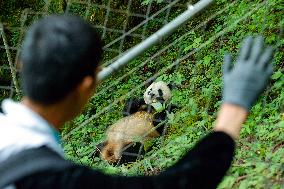
WOLONG, June 29, 2024 -- Giant panda Xian Xian has food at the second-phase giant panda wild training fields of Tiantai Mountain in Wolong National Nature Reserve in southwest China's Sichuan Province, June 24, 2024. In recent years, China has made significant progress in panda conservation through a series of measures, including forest and wildlife protection as well as the construction of giant panda national parks. The wild giant panda population in China has grown from about 1,100 in the 1980s to nearly 1,900. Giant panda reintroduction refers to releasing captive-bred giant pandas to their historical distribution areas to live and reproduce after acclimatization training so as to rebuild the wild population of the species. China Conservation and Research Center for the Giant Panda (CCRCGP) started a reintroduction program in 2003. It has reintroduced eleven pandas into the wild, nine of which survived. In the future, the center will continue to train more individual panda cubs using the mother-cub proces

  •  
Giant Panda Reintroduction - China

Giant Panda Reintroduction - China

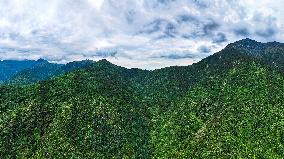
WOLONG, June 29, 2024 -- An aerial drone photo taken on June 24, 2024 shows a view of giant panda wild training fields of Tiantai Mountain in Wolong National Nature Reserve in southwest China's Sichuan Province, June 24, 2024. In recent years, China has made significant progress in panda conservation through a series of measures, including forest and wildlife protection as well as the construction of giant panda national parks. The wild giant panda population in China has grown from about 1,100 in the 1980s to nearly 1,900. Giant panda reintroduction refers to releasing captive-bred giant pandas to their historical distribution areas to live and reproduce after acclimatization training so as to rebuild the wild population of the species. China Conservation and Research Center for the Giant Panda (CCRCGP) started a reintroduction program in 2003. It has reintroduced eleven pandas into the wild, nine of which survived. In the future, the center will continue to train more individual panda cubs using the mother-

  •  
Giant Panda Reintroduction - China

Giant Panda Reintroduction - China

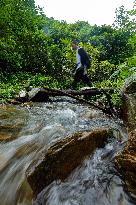
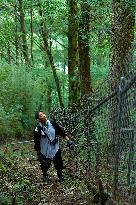
WOLONG, June 29, 2024 -- Staff member Mu Shijie is pictured on the way to the second-phase giant panda wild training fields of Tiantai Mountain in Wolong National Nature Reserve in southwest China's Sichuan Province, June 24, 2024. In recent years, China has made significant progress in panda conservation through a series of measures, including forest and wildlife protection as well as the construction of giant panda national parks. The wild giant panda population in China has grown from about 1,100 in the 1980s to nearly 1,900. Giant panda reintroduction refers to releasing captive-bred giant pandas to their historical distribution areas to live and reproduce after acclimatization training so as to rebuild the wild population of the species. China Conservation and Research Center for the Giant Panda (CCRCGP) started a reintroduction program in 2003. It has reintroduced eleven pandas into the wild, nine of which survived. In the future, the center will continue to train more individual panda cubs using the mo

  •  
Giant Panda Reintroduction - China

Giant Panda Reintroduction - China

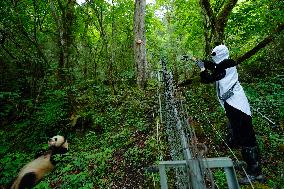
WOLONG, June 29, 2024 -- Staff member Mu Shijie looks for giant panda cubs while patrolling the second-phase giant panda wild training fields of Tiantai Mountain in Wolong National Nature Reserve in southwest China's Sichuan Province, June 24, 2024. In recent years, China has made significant progress in panda conservation through a series of measures, including forest and wildlife protection as well as the construction of giant panda national parks. The wild giant panda population in China has grown from about 1,100 in the 1980s to nearly 1,900. Giant panda reintroduction refers to releasing captive-bred giant pandas to their historical distribution areas to live and reproduce after acclimatization training so as to rebuild the wild population of the species. China Conservation and Research Center for the Giant Panda (CCRCGP) started a reintroduction program in 2003. It has reintroduced eleven pandas into the wild, nine of which survived. In the future, the center will continue to train more individual panda

  •  
Giant Panda Reintroduction - China

Giant Panda Reintroduction - China

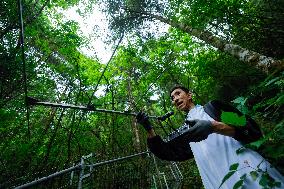
WOLONG, June 29, 2024 -- Staff member Mu Shijie uses a radio positioning device to trace giant panda Xian Xian while calling out her name at Tiantai Mountain in Wolong National Nature Reserve in southwest China's Sichuan Province, June 24, 2024. In recent years, China has made significant progress in panda conservation through a series of measures, including forest and wildlife protection as well as the construction of giant panda national parks. The wild giant panda population in China has grown from about 1,100 in the 1980s to nearly 1,900. Giant panda reintroduction refers to releasing captive-bred giant pandas to their historical distribution areas to live and reproduce after acclimatization training so as to rebuild the wild population of the species. China Conservation and Research Center for the Giant Panda (CCRCGP) started a reintroduction program in 2003. It has reintroduced eleven pandas into the wild, nine of which survived. In the future, the center will continue to train more individual panda cub

  •  
Giant Panda Reintroduction - China

Giant Panda Reintroduction - China

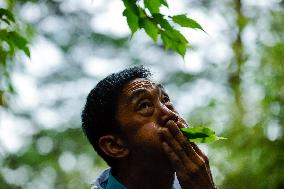
WOLONG, June 29, 2024 -- Staff member Mu Shijie uses a DIY bamboo leaf whislte to call giant panda Hui Hui out for foraging at the second-phase giant panda wild training fields of Tiantai Mountain in Wolong National Nature Reserve in southwest China's Sichuan Province, June 24, 2024. In recent years, China has made significant progress in panda conservation through a series of measures, including forest and wildlife protection as well as the construction of giant panda national parks. The wild giant panda population in China has grown from about 1,100 in the 1980s to nearly 1,900. Giant panda reintroduction refers to releasing captive-bred giant pandas to their historical distribution areas to live and reproduce after acclimatization training so as to rebuild the wild population of the species. China Conservation and Research Center for the Giant Panda (CCRCGP) started a reintroduction program in 2003. It has reintroduced eleven pandas into the wild, nine of which survived. In the future, the center will cont

  •  
Giant Panda Reintroduction - China

Giant Panda Reintroduction - China

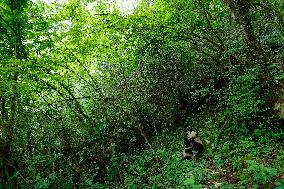
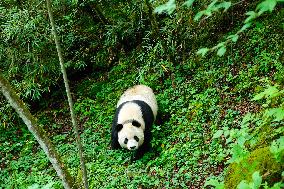
WOLONG, June 29, 2024 -- Giant panda Xian Xian is pictured at the second-phase giant panda wild training fields of Tiantai Mountain in Wolong National Nature Reserve in southwest China's Sichuan Province, June 24, 2024. In recent years, China has made significant progress in panda conservation through a series of measures, including forest and wildlife protection as well as the construction of giant panda national parks. The wild giant panda population in China has grown from about 1,100 in the 1980s to nearly 1,900. Giant panda reintroduction refers to releasing captive-bred giant pandas to their historical distribution areas to live and reproduce after acclimatization training so as to rebuild the wild population of the species. China Conservation and Research Center for the Giant Panda (CCRCGP) started a reintroduction program in 2003. It has reintroduced eleven pandas into the wild, nine of which survived. In the future, the center will continue to train more individual panda cubs using the mother-cub pro

  •  
Giant Panda Reintroduction - China

Giant Panda Reintroduction - China

WOLONG, June 29, 2024 -- Staff member Mu Shijie, dressed up in a panda costume, feeds giant panda Xian Xian at the second-phase giant panda wild training fields of Tiantai Mountain in Wolong National Nature Reserve in southwest China's Sichuan Province, June 24, 2024. In recent years, China has made significant progress in panda conservation through a series of measures, including forest and wildlife protection as well as the construction of giant panda national parks. The wild giant panda population in China has grown from about 1,100 in the 1980s to nearly 1,900. Giant panda reintroduction refers to releasing captive-bred giant pandas to their historical distribution areas to live and reproduce after acclimatization training so as to rebuild the wild population of the species. China Conservation and Research Center for the Giant Panda (CCRCGP) started a reintroduction program in 2003. It has reintroduced eleven pandas into the wild, nine of which survived. In the future, the center will continue to train mo

  •  
Giant Panda Reintroduction - China

Giant Panda Reintroduction - China

WOLONG, June 29, 2024 -- Giant panda Xian Xian has food at the second-phase giant panda wild training fields of Tiantai Mountain in Wolong National Nature Reserve in southwest China's Sichuan Province, June 24, 2024. In recent years, China has made significant progress in panda conservation through a series of measures, including forest and wildlife protection as well as the construction of giant panda national parks. The wild giant panda population in China has grown from about 1,100 in the 1980s to nearly 1,900. Giant panda reintroduction refers to releasing captive-bred giant pandas to their historical distribution areas to live and reproduce after acclimatization training so as to rebuild the wild population of the species. China Conservation and Research Center for the Giant Panda (CCRCGP) started a reintroduction program in 2003. It has reintroduced eleven pandas into the wild, nine of which survived. In the future, the center will continue to train more individual panda cubs using the mother-cub proces

  •  
Giant Panda Reintroduction - China

Giant Panda Reintroduction - China

WOLONG, June 29, 2024 -- Giant panda Xian Xian comes out of the bamboo forest upon hearing the foraging call made by staff member Mu Shijie at the second-phase giant panda wild training fields of Tiantai Mountain in Wolong National Nature Reserve in southwest China's Sichuan Province, June 24, 2024. In recent years, China has made significant progress in panda conservation through a series of measures, including forest and wildlife protection as well as the construction of giant panda national parks. The wild giant panda population in China has grown from about 1,100 in the 1980s to nearly 1,900. Giant panda reintroduction refers to releasing captive-bred giant pandas to their historical distribution areas to live and reproduce after acclimatization training so as to rebuild the wild population of the species. China Conservation and Research Center for the Giant Panda (CCRCGP) started a reintroduction program in 2003. It has reintroduced eleven pandas into the wild, nine of which survived. In the future, the

  •  
Giant Panda Reintroduction - China

Giant Panda Reintroduction - China

WOLONG, June 29, 2024 -- Staff member Mu Shijie records videos of giant panda Xian Xian outside the second-phase giant panda wild training fields of Tiantai Mountain in Wolong National Nature Reserve in southwest China's Sichuan Province, June 24, 2024. In recent years, China has made significant progress in panda conservation through a series of measures, including forest and wildlife protection as well as the construction of giant panda national parks. The wild giant panda population in China has grown from about 1,100 in the 1980s to nearly 1,900. Giant panda reintroduction refers to releasing captive-bred giant pandas to their historical distribution areas to live and reproduce after acclimatization training so as to rebuild the wild population of the species. China Conservation and Research Center for the Giant Panda (CCRCGP) started a reintroduction program in 2003. It has reintroduced eleven pandas into the wild, nine of which survived. In the future, the center will continue to train more individual p

  •  
Giant Panda Reintroduction - China

Giant Panda Reintroduction - China

WOLONG, June 29, 2024 -- Staff member Mu Shijie waves goodbye to giant panda Xian Xian after feeding her at the second-phase giant panda wild training fields of Tiantai Mountain in Wolong National Nature Reserve in southwest China's Sichuan Province, June 24, 2024. In recent years, China has made significant progress in panda conservation through a series of measures, including forest and wildlife protection as well as the construction of giant panda national parks. The wild giant panda population in China has grown from about 1,100 in the 1980s to nearly 1,900. Giant panda reintroduction refers to releasing captive-bred giant pandas to their historical distribution areas to live and reproduce after acclimatization training so as to rebuild the wild population of the species. China Conservation and Research Center for the Giant Panda (CCRCGP) started a reintroduction program in 2003. It has reintroduced eleven pandas into the wild, nine of which survived. In the future, the center will continue to train more

  •  
(FOCUS)CHINA-SICHUAN-GIANT PANDA-REINTRODUCTION (CN)

(FOCUS)CHINA-SICHUAN-GIANT PANDA-REINTRODUCTION (CN)

(240629) -- WOLONG, June 29, 2024 Photo by Xinhua/ABACAPRESS.COM) -- Staff member Mu Shijie looks for giant panda cubs while patrolling the second-phase giant panda wild training fields of Tiantai Mountain in Wolong National Nature Reserve in southwest China's Sichuan Province, June 24, 2024. In recent years, China has made significant progress in panda conservation through a series of measures, including forest and wildlife protection as well as the construction of giant panda national parks. The wild giant panda population in China has grown from about 1,100 in the 1980s to nearly 1,900. Giant panda reintroduction refers to releasing captive-bred giant pandas to their historical distribution areas to live and reproduce after acclimatization training so as to rebuild the wild population of the species. China Conservation and Research Center for the Giant Panda (CCRCGP) started a reintroduction program in 2003. It has reintroduced eleven pandas into the wild, nine of which survived. In the future, the center

  • Main
  • Top
  • Editorial
  • Creative
  • About Us
  • About ILG
  • Terms of use
  • Company
  • BEHIND
  • Price List
  • Single Plan
  • Monthly Plan
  • Services
  • Shooting
  • Rights Clearance
  • Support
  • FAQ
  • How To Buy
  • Contact Us
  • Become a Partner

© KYODO NEWS IMAGES INC

All Rights Reserved.

  • Editorial
  • Olympics
  • News
  • Sports
  • Japan
  • Tech
  • Royal
  • Disaster
  • NorthKorea
  • Old Japan
  • SNS
  • Creative
  • Food
  • Japan
  • Landscape
  • Animal
  • Popular
  • #Ukraine
  • #Russia
  • #coronavirus
  • #N. Korea
  • #Thailand
  • #China
  • #Ukraine
  • #Russia
  • #coronavirus
  • #N. Korea
  • #Thailand
  • #China
  • Food
  • Japan
  • Landscape
  • Animal
  • Olympics
  • News
  • Sports
  • Japan
  • Tech
  • Royal
  • Disaster
  • NorthKorea
  • Old Japan
  • SNS