•  
Illustration - Senat - Paris

Illustration - Senat - Paris

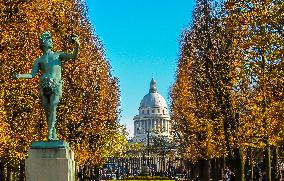
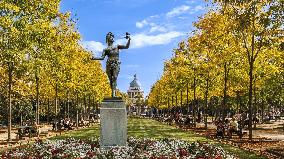
FRANCE. PARIS (75) 6TH DISTRICT. STATUE OF THE GREEK ACTOR BY BARON CHARLES-ARTHUR BOURGEOIS (1868) IN THE GARDEN OF LUXEMBOURG. IN THE BACKGROUND, THE PANTHEON Photo by Michel Renaudeau/Only Paris/ABACAPRESS.COM

  •  
Illustration - Senat - Paris

Illustration - Senat - Paris

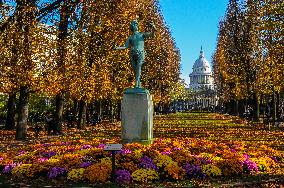
FRANCE. PARIS (75) 6TH DISTRICT. STATUE OF THE GREEK ACTOR BY BARON CHARLES-ARTHUR BOURGEOIS (1868) IN THE GARDEN OF LUXEMBOURG. IN THE BACKGROUND, THE PANTHEON Photo by Michel Renaudeau/Only Paris/ABACAPRESS.COM

  •  
Illustration - Paris

Illustration - Paris

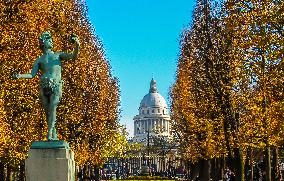
FRANCE. PARIS (75) 6TH DISTRICT. STATUE OF THE GREEK ACTOR BY BARON CHARLES-ARTHUR BOURGEOIS (1868) IN THE GARDEN OF LUXEMBOURG. IN THE BACKGROUND, THE PANTHEON Photo by Michel Renaudeau/Only Paris/ABACAPRESS.COM

  •  
La Merce Festival - Barcelona

La Merce Festival - Barcelona

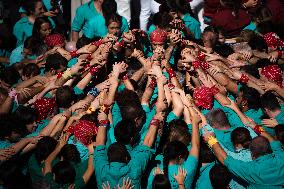
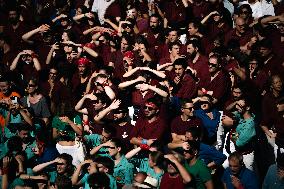
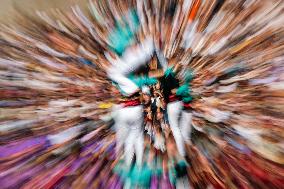
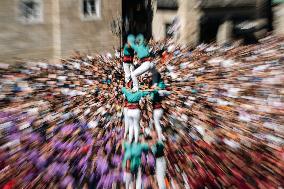
Performance of the 'colles de castellers' of the city, during the festival of La Mercè, on September 24, 2025, in Barcelona, Catalonia (Spain). This festival pays homage to La Mercè, patron saint of the city of Barcelona, and has been celebrated since 1868, when religious and popular festivities in honor of the Virgin of La Mercè began to be held. Photo by Lorena Sopena/Europa Press/ABACAPRESS.COM

  •  
La Merce Festival - Barcelona

La Merce Festival - Barcelona

Performance of the 'colles de castellers' of the city, during the festival of La Mercè, on September 24, 2025, in Barcelona, Catalonia (Spain). This festival pays homage to La Mercè, patron saint of the city of Barcelona, and has been celebrated since 1868, when religious and popular festivities in honor of the Virgin of La Mercè began to be held. Photo by Lorena Sopena/Europa Press/ABACAPRESS.COM

  •  
La Merce Festival - Barcelona

La Merce Festival - Barcelona

Performance of the 'colles de castellers' of the city, during the festival of La Mercè, on September 24, 2025, in Barcelona, Catalonia (Spain). This festival pays homage to La Mercè, patron saint of the city of Barcelona, and has been celebrated since 1868, when religious and popular festivities in honor of the Virgin of La Mercè began to be held. Photo by Lorena Sopena/Europa Press/ABACAPRESS.COM

  •  
La Merce Festival - Barcelona

La Merce Festival - Barcelona

Performance of the 'colles de castellers' of the city, during the festival of La Mercè, on September 24, 2025, in Barcelona, Catalonia (Spain). This festival pays homage to La Mercè, patron saint of the city of Barcelona, and has been celebrated since 1868, when religious and popular festivities in honor of the Virgin of La Mercè began to be held. Photo by Lorena Sopena/Europa Press/ABACAPRESS.COM

  •  
La Merce Festival - Barcelona

La Merce Festival - Barcelona

Performance of the 'colles de castellers' of the city, during the festival of La Mercè, on September 24, 2025, in Barcelona, Catalonia (Spain). This festival pays homage to La Mercè, patron saint of the city of Barcelona, and has been celebrated since 1868, when religious and popular festivities in honor of the Virgin of La Mercè began to be held. Photo by Lorena Sopena/Europa Press/ABACAPRESS.COM

  •  
Historical Village of Hokkaido

Historical Village of Hokkaido

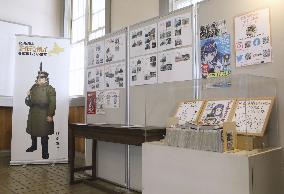
Photo taken on Dec. 10, 2022, shows a booth introducing the popular Japanese manga series "Golden Kamuy" at the Historical Village of Hokkaido, an open-air museum featuring relocated and restored buildings from 1868 to 1920, in Sapporo, Hokkaido, in northern Japan. Many of the buildings at the museum are featured in the manga written and illustrated by Satoru Noda as the story is set in Hokkaido in the aftermath of the Russo-Japanese War (1904-1905).

  •  
Illustration - Paris

Illustration - Paris

FRANCE. PARIS (75) 6TH DISTRICT. STATUE OF THE GREEK ACTOR BY BARON CHARLES-ARTHUR BOURGEOIS (1868) IN THE GARDEN OF LUXEMBOURG. IN THE BACKGROUND, THE PANTHEON Photo by Bruno de Hogues/Only Paris/ABACAPRESS.COM

  •  
Old French Orphanage Turned Into a Cafe - Istanbul

Old French Orphanage Turned Into a Cafe - Istanbul

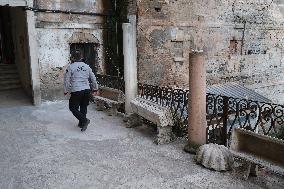
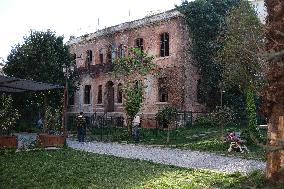
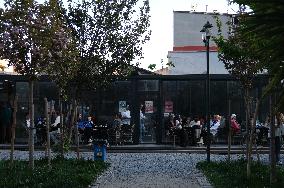
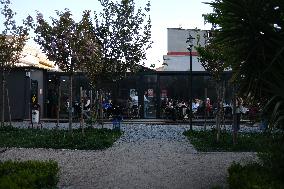
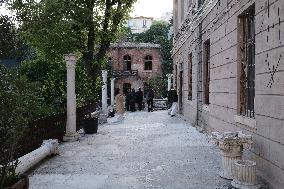
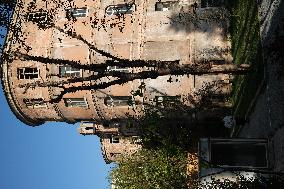
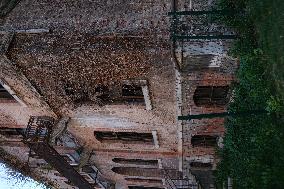
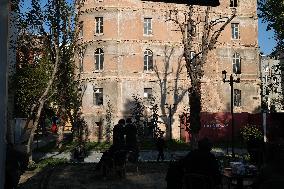
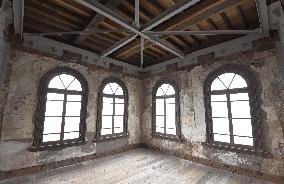
Palais Saint-Eugène was built in 1868 as an orphanage and was named as Saint-Joseph House. In the 20th century, it became Garabet Cezayirliyan's plasterboard workshop. Later, Kemal Cinbiz took over the workshop. The building also housed the world's only known plasterboard museum. In the plasterboard museum, there were pieces of plasterboard from buildings such as Dolmabahçe Palace, the Pera Museum, Sultan Adile's Palace and Sait Halim Pasha's mansion. The building, whose papier-mache museum on the upper floor was closed in 2020, also hosted the 2022 Istanbul Biennial. Today, the building is empty. Now, in its garden, there's a cafe called Tophane Mekan, which belongs to the municipality of Beyoglu, on April 2025 in Istanbul Turkey. Photo by Ilker Eray/ABACAPRESS.COM

  •  
Old French Orphanage Turned Into a Cafe - Istanbul

Old French Orphanage Turned Into a Cafe - Istanbul

Palais Saint-Eugène was built in 1868 as an orphanage and was named as Saint-Joseph House. In the 20th century, it became Garabet Cezayirliyan's plasterboard workshop. Later, Kemal Cinbiz took over the workshop. The building also housed the world's only known plasterboard museum. In the plasterboard museum, there were pieces of plasterboard from buildings such as Dolmabahçe Palace, the Pera Museum, Sultan Adile's Palace and Sait Halim Pasha's mansion. The building, whose papier-mache museum on the upper floor was closed in 2020, also hosted the 2022 Istanbul Biennial. Today, the building is empty. Now, in its garden, there's a cafe called Tophane Mekan, which belongs to the municipality of Beyoglu, on April 2025 in Istanbul Turkey. Photo by Ilker Eray/ABACAPRESS.COM

  •  
Old French Orphanage Turned Into a Cafe - Istanbul

Old French Orphanage Turned Into a Cafe - Istanbul

Palais Saint-Eugène was built in 1868 as an orphanage and was named as Saint-Joseph House. In the 20th century, it became Garabet Cezayirliyan's plasterboard workshop. Later, Kemal Cinbiz took over the workshop. The building also housed the world's only known plasterboard museum. In the plasterboard museum, there were pieces of plasterboard from buildings such as Dolmabahçe Palace, the Pera Museum, Sultan Adile's Palace and Sait Halim Pasha's mansion. The building, whose papier-mache museum on the upper floor was closed in 2020, also hosted the 2022 Istanbul Biennial. Today, the building is empty. Now, in its garden, there's a cafe called Tophane Mekan, which belongs to the municipality of Beyoglu, on April 2025 in Istanbul Turkey. Photo by Ilker Eray/ABACAPRESS.COM

  •  
Old French Orphanage Turned Into a Cafe - Istanbul

Old French Orphanage Turned Into a Cafe - Istanbul

Palais Saint-Eugène was built in 1868 as an orphanage and was named as Saint-Joseph House. In the 20th century, it became Garabet Cezayirliyan's plasterboard workshop. Later, Kemal Cinbiz took over the workshop. The building also housed the world's only known plasterboard museum. In the plasterboard museum, there were pieces of plasterboard from buildings such as Dolmabahçe Palace, the Pera Museum, Sultan Adile's Palace and Sait Halim Pasha's mansion. The building, whose papier-mache museum on the upper floor was closed in 2020, also hosted the 2022 Istanbul Biennial. Today, the building is empty. Now, in its garden, there's a cafe called Tophane Mekan, which belongs to the municipality of Beyoglu, on April 2025 in Istanbul Turkey. Photo by Ilker Eray/ABACAPRESS.COM

  •  
Old French Orphanage Turned Into a Cafe - Istanbul

Old French Orphanage Turned Into a Cafe - Istanbul

Palais Saint-Eugène was built in 1868 as an orphanage and was named as Saint-Joseph House. In the 20th century, it became Garabet Cezayirliyan's plasterboard workshop. Later, Kemal Cinbiz took over the workshop. The building also housed the world's only known plasterboard museum. In the plasterboard museum, there were pieces of plasterboard from buildings such as Dolmabahçe Palace, the Pera Museum, Sultan Adile's Palace and Sait Halim Pasha's mansion. The building, whose papier-mache museum on the upper floor was closed in 2020, also hosted the 2022 Istanbul Biennial. Today, the building is empty. Now, in its garden, there's a cafe called Tophane Mekan, which belongs to the municipality of Beyoglu, on April 2025 in Istanbul Turkey. Photo by Ilker Eray/ABACAPRESS.COM

  •  
Old French Orphanage Turned Into a Cafe - Istanbul

Old French Orphanage Turned Into a Cafe - Istanbul

Palais Saint-Eugène was built in 1868 as an orphanage and was named as Saint-Joseph House. In the 20th century, it became Garabet Cezayirliyan's plasterboard workshop. Later, Kemal Cinbiz took over the workshop. The building also housed the world's only known plasterboard museum. In the plasterboard museum, there were pieces of plasterboard from buildings such as Dolmabahçe Palace, the Pera Museum, Sultan Adile's Palace and Sait Halim Pasha's mansion. The building, whose papier-mache museum on the upper floor was closed in 2020, also hosted the 2022 Istanbul Biennial. Today, the building is empty. Now, in its garden, there's a cafe called Tophane Mekan, which belongs to the municipality of Beyoglu, on April 2025 in Istanbul Turkey. Photo by Ilker Eray/ABACAPRESS.COM

  •  
Old French Orphanage Turned Into a Cafe - Istanbul

Old French Orphanage Turned Into a Cafe - Istanbul

Palais Saint-Eugène was built in 1868 as an orphanage and was named as Saint-Joseph House. In the 20th century, it became Garabet Cezayirliyan's plasterboard workshop. Later, Kemal Cinbiz took over the workshop. The building also housed the world's only known plasterboard museum. In the plasterboard museum, there were pieces of plasterboard from buildings such as Dolmabahçe Palace, the Pera Museum, Sultan Adile's Palace and Sait Halim Pasha's mansion. The building, whose papier-mache museum on the upper floor was closed in 2020, also hosted the 2022 Istanbul Biennial. Today, the building is empty. Now, in its garden, there's a cafe called Tophane Mekan, which belongs to the municipality of Beyoglu, on April 2025 in Istanbul Turkey. Photo by Ilker Eray/ABACAPRESS.COM

  •  
Old French Orphanage Turned Into a Cafe - Istanbul

Old French Orphanage Turned Into a Cafe - Istanbul

Palais Saint-Eugène was built in 1868 as an orphanage and was named as Saint-Joseph House. In the 20th century, it became Garabet Cezayirliyan's plasterboard workshop. Later, Kemal Cinbiz took over the workshop. The building also housed the world's only known plasterboard museum. In the plasterboard museum, there were pieces of plasterboard from buildings such as Dolmabahçe Palace, the Pera Museum, Sultan Adile's Palace and Sait Halim Pasha's mansion. The building, whose papier-mache museum on the upper floor was closed in 2020, also hosted the 2022 Istanbul Biennial. Today, the building is empty. Now, in its garden, there's a cafe called Tophane Mekan, which belongs to the municipality of Beyoglu, on April 2025 in Istanbul Turkey. Photo by Ilker Eray/ABACAPRESS.COM

  •  
Old French Orphanage Turned Into a Cafe - Istanbul

Old French Orphanage Turned Into a Cafe - Istanbul

Palais Saint-Eugène was built in 1868 as an orphanage and was named as Saint-Joseph House. In the 20th century, it became Garabet Cezayirliyan's plasterboard workshop. Later, Kemal Cinbiz took over the workshop. The building also housed the world's only known plasterboard museum. In the plasterboard museum, there were pieces of plasterboard from buildings such as Dolmabahçe Palace, the Pera Museum, Sultan Adile's Palace and Sait Halim Pasha's mansion. The building, whose papier-mache museum on the upper floor was closed in 2020, also hosted the 2022 Istanbul Biennial. Today, the building is empty. Now, in its garden, there's a cafe called Tophane Mekan, which belongs to the municipality of Beyoglu, on April 2025 in Istanbul Turkey. Photo by Ilker Eray/ABACAPRESS.COM

  •  
Ex-administrator's room in Yawata Steek Works' former head office unveiled

Ex-administrator's room in Yawata Steek Works' former head office unveiled

KITAKYUSHU, Japan, June 19 Kyodo - What used to be the administrator's room in the old head office of the former state-run Yawata Steel Works in Kitakyushu, Fukuoka Prefecture, southwestern Japan, is displayed to the press on June 15, 2015. The office constitutes one of the sites of Japan's industrial revolution in the Meiji era (1868-1911) recommended for registration on the UNESCO World Heritage list.

  •  
Tourists visit Kyoto Imperial Palace

Tourists visit Kyoto Imperial Palace

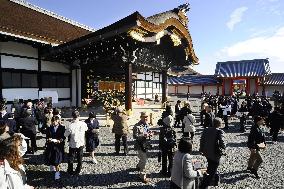
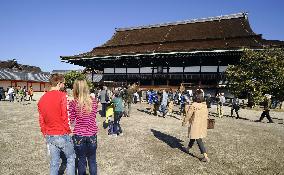
KYOTO, Japan - Tourists visit the Kyoto Imperial Palace in Kyoto on Oct. 30, 2014, as the palace is open to the public through Nov. 5. The palace used to be the resident of the Imperial family until 1868, when the emperor and the capital moved from Kyoto to Tokyo.

  •  
Tourists visit Kyoto Imperial Palace

Tourists visit Kyoto Imperial Palace

KYOTO, Japan - Tourists visit the Kyoto Imperial Palace in Kyoto on Oct. 30, 2014, as the palace is open to the public through Nov. 5. The palace used to be the resident of the Imperial family until 1868, when the emperor and the capital moved from Kyoto to Tokyo.

  •  
Documents on Korean envoys to Japan eyed for UNESCO list

Documents on Korean envoys to Japan eyed for UNESCO list

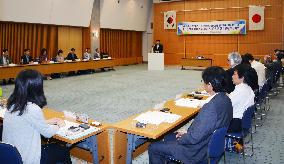
KITAKYUSHU, Japan - Officials of Japanese and South Korean local governments and private organizations meet in Shimonoseki, western Japan, on Aug. 25, 2014, to discuss plans to seek the listing on UNESCO's Memory of the World Register of documents on Korean dynasty envoys dispatched to Japan mainly during the Edo period (1603-1868). They agreed to apply for registration in 2016.

  •  
Event to reenact Korean envoy procession to Japan

Event to reenact Korean envoy procession to Japan

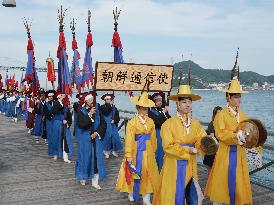
SHIMONOSEKI, Japan - A colorful event to reenact a procession of Korean envoys to Japan dispatched by the Joseon Dynasty during the Edo period (1603-1868) to deepen the bilateral ties takes place in Shimonoseki, Yamaguchi Prefecture, with some 240 people, including those from South Korea's Busan, walking along the western Japanese city's waterfront on Aug. 23, 2014.

  •  
140-year-old bookstore to be reopened in Kumamoto

140-year-old bookstore to be reopened in Kumamoto

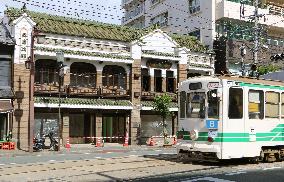
KUMAMOTO, Japan - Retro-looking Nagasaki Jiro Bookstore in Kumamoto, southwestern Japan, shown in this photo taken on July 16, 2014, will be reopened on July 31 for the first time in 15 months. Renowned Meiji era (1868-19120) Japanese novelists Mori Ogai and Natsume Soseki used to visit the store, which first opened in 1874.

  •  
Japanese Christians appreciate returned painting of Virgin Mary

Japanese Christians appreciate returned painting of Virgin Mary

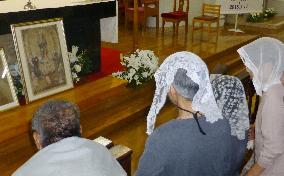
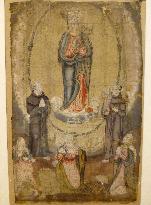
NAGASAKI, Japan - Christians gather before a painting of Virgin Mary, brought to France from Nagasaki, southwestern Japan, early in the Meiji period (1868-1912) and returned to its original place on May 29, 2014, after a hiatus of 145 years.

  •  
Painting of Virgin Mary returns to Nagasaki from France

Painting of Virgin Mary returns to Nagasaki from France

NAGASAKI, Japan - A painting of Virgin Mary, brought to France from Nagasaki, southwestern Japan, early in the Meiji period (1868-1912), returns to its original place at a church in the Nagasaki Archdiocese on May 29, 2014, after a hiatus of 145 years.

  •  
Museum featuring Sun Yat-sen, Japanese supporter opens in Nagasaki

Museum featuring Sun Yat-sen, Japanese supporter opens in Nagasaki

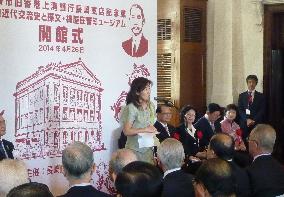
NAGASAKI, Japan - Ayano Kosaka, a great granddaughter of Shokichi Umeya who supported the 1911 Chinese Revolution's spiritual leader Sun Yat-sen, speaks at a ceremony to open a museum exhibiting items related to the friendship between the two men, in the Japanese southwestern city of Nagasaki on April 26, 2014. The museum showcases exchanges between Shokichi Umeya (1868-1934), a Nagasaki businessman, and Sun (1866-1925) as well as historical background.

  •  
Tohoku students trying to become art restorers

Tohoku students trying to become art restorers

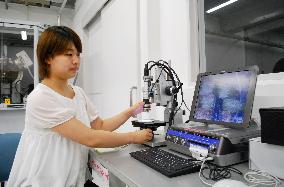
TOKYO, Japan - Chie Takano, a fourth-year student at the Tohoku University of Art and Design, analyzes fibers used in a "hina" doll produced during the Edo period (1603-1868) with a microscope at a university laboratory in Yamagata, Yamagata Prefecture on July 18, 2013.

  •  
Museum of 'Ogura hyakunin isshu'

Museum of 'Ogura hyakunin isshu'

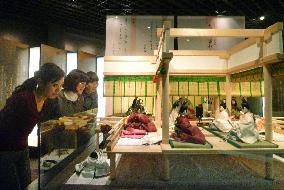
KYOTO, Japan - A diorama forms part of the displays at Shigureden, a Kyoto museum devoted to ''Ogura hyakunin isshu'' (100 poems by 100 poets). The museum was shown to the media on March 14, 2012, prior to its scheduled reopening on March 17 following a yearlong renovation. Hyakunin isshu karuta (playing cards) of the Edo period (1603-1868) and dolls representing the poets are among the exhibits and visitors can try on Heian period (794-1185) costumes.

  •  
Photo exhibition on Japan in Switzerland

Photo exhibition on Japan in Switzerland

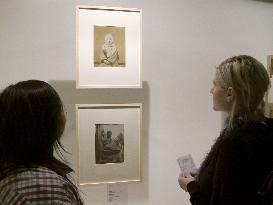
LUGANO, Switzerland - Visitors look at photos capturing life in Japan around the end of the Edo period (1603-1867) and the early Meiji period (1868-1912) at an exhibition in Lugano, southern Switzerland, on Feb. 1, 2011. Some 200 photos at the exhibition, which runs through Feb. 27, include those taken by well-known photographers Felice Beato, Kimbe Kusakabe and others. The photos, which were originally black and white, were later hand-colored.

  •  
Photo exhibition on Japan in Switzerland

Photo exhibition on Japan in Switzerland

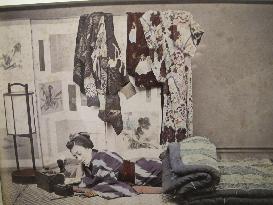
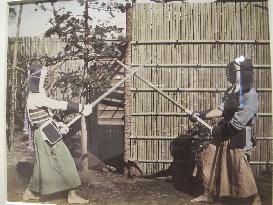
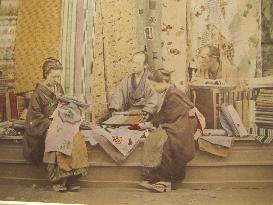
LUGANO, Switzerland - Photo showing life in Japan around the end of the Edo period (1603-1867) and the beginning of the Meiji period (1868-1912) is one of some 200 photos, many on public display for the first time, at an exhibition in Lugano, southern Switzerland, on Feb. 1, 2011. Photos at the exhibition, which runs through Feb. 27, include those taken by well-known photographers Felice Beato, Kimbe Kusakabe and others. The photos, which were originally black and white, were later hand-colored.

  •  
Photo exhibition on Japan in Switzerland

Photo exhibition on Japan in Switzerland

LUGANO, Switzerland - Photo showing life in Japan around the end of the Edo period (1603-1867) and the beginning of the Meiji period (1868-1912) is one of some 200 photos, many on public display for the first time, at an exhibition in Lugano, southern Switzerland, on Feb. 1, 2011. Photos at the exhibition, which runs through Feb. 27, include those taken by well-known photographers Felice Beato, Kimbe Kusakabe and others. The photos, which were originally black and white, were later hand-colored.

  •  
Photo exhibition on Japan in Switzerland

Photo exhibition on Japan in Switzerland

LUGANO, Switzerland - Photo showing life in Japan around the end of the Edo period (1603-1867) and the beginning of the Meiji period (1868-1912) is one of some 200 photos, many on public display for the first time, at an exhibition in Lugano, southern Switzerland, on Feb. 1, 2011. Photos at the exhibition, which runs through Feb. 27, include those taken by well-known photographers Felice Beato, Kimbe Kusakabe and others. The photos, which were originally black and white, were later hand-colored.

  •  
Fire brigades demonstrate traditional ladder-top stunts

Fire brigades demonstrate traditional ladder-top stunts

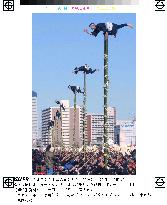
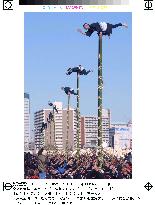
TOKYO, Japan - Members of a group preserving Japanese traditional firefighting techniques celebrate the New Year by demonstrating ladder-top stunts dating back to the Edo period (1600-1868) during the annual New Year parade of fire brigades organized by the Tokyo Fire Department at Ariake district in Tokyo's Koto Ward on Jan. 6, 2010.

  •  
Corporate manager arrested for stealing Buddhist statue

Corporate manager arrested for stealing Buddhist statue

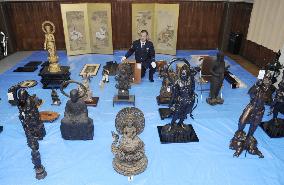
KYOTO, Japan - This photo shows more than 20 Buddhist statues confiscated by police from the house of corporate manager Itsuo Abe, 59, of Yokkaichi, Mie Prefecture. The Kyoto prefectural police arrested Abe on suspicion of stealing a wooden statue of a multiheaded deity, which was created in the early Edo period (1603-1868), from a Kyoto temple in January.

  •  
Japan's Crown Prince visits Vietnamese ancient town of Hoi An

Japan's Crown Prince visits Vietnamese ancient town of Hoi An

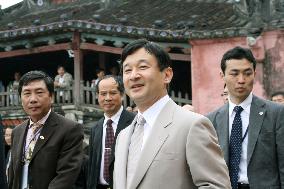
HOI AN, Vietnam - Japanese Crown Prince Naruhito (C) views ''the Japanese Bridge'' (back) which is said to have been constructed by Japanese in Hoi An, Vietnam's ancient capital on the south central coast, on Feb. 11. Many Japanese had visited the town, which was declared a World Heritage site in 1999, on a trading ship during the Edo period (1603-1868). Naruhito is on his first trip to Vietnam from Feb. 9 through 15.

  •  
National Diet Library working on digitization of books

National Diet Library working on digitization of books

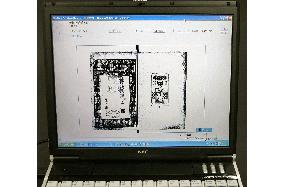
TOKYO, Japan - Digitized pages of prominent Meiji era (1868-1912) novelist Soseki Natsume's ''Wagahai-wa Neko-de-ru (I Am A Cat)'' displayed on a screen at The National Diet Library neighboring the National Diet building in Tokyo.

  •  
New notes to be issued in Nov.

New notes to be issued in Nov.

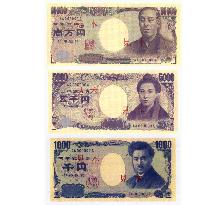
TOKYO, Japan - The Japanese Finance Ministry plans to issue three kinds of new notes in November using forgery prevention technology. The 10,000 yen note (top) features Yukichi Fukuzawa (1835-1901), educator, writer and propagator of Western knowledge in the Meiji period (1868-1912), the 5,000 yen note (middle) Ichiyo Higuchi (1872-1896), female writer of the Meiji period, and the 1,000 yen note (below) Hideyo Noguchi (1876-1928), bacteriologist.

  •  
15,000 dolls on display in 'Big Doll Festival'.

15,000 dolls on display in 'Big Doll Festival'.

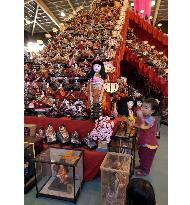
KATSUURA, Japan - A girl sucks her thumb besides some 15,000 dolls put on display for the annual ''Big Hina Matsuri (Doll Festival)'' that began in the town of Katsuura, Tokushima Prefecture, on Feb. 22. The doll festival is celebrated across Japan on March 3. The practice of displaying dolls dates to early in the Edo era (1600-1868). Parents present their daughter with a set of hina dolls and the daughter takes them when she marries.

  •  
Memorial held to remember Meiji gov't-backed Ainu assimilation

Memorial held to remember Meiji gov't-backed Ainu assimilation

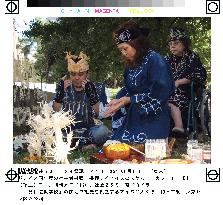
TOKYO, Japan - Three Ainu people offer their prayers at a vacant lot in Tokyo on Aug. 10 in the first memorial for indigenous Ainu people who were forced to leave their homes in Hokkaido and study in the capital during the early Meiji Period (1868-1912). The memorial was held at the former site of a school, Kaitakushi Kari Gakko, and styled after a traditional Ainu ceremony dedicated to their ancestors.

  •  
Fire burns famous inn in Shuzenji, Shizuoka Pref.

Fire burns famous inn in Shuzenji, Shizuoka Pref.

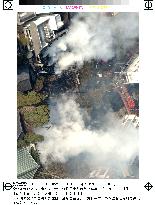
SHIZUOKA, Japan - Smoke rises from the Togetsusou Kinryu Inn in the spa resort town of Shuzenji, Shizuoka Prefecture, on March 31. The predawn fire completely destroyed the wooden inn, which began business in 1868 in the center of the Shuzenji spa district studded with Japanese-style inns, and injured nine people.

  •  
Year's first day of business for firefighters

Year's first day of business for firefighters

TOKYO, Japan - Firemen display their ladder climbing technique in a traditional ceremony marking the year's first day of business held by the Metropolitan Fire Defense Agency in Tokyo's Ariake district on Jan. 2. The skill dates back to the Edo period (1600-1868).

  •  
Dressed Korean students parade in Tokyo

Dressed Korean students parade in Tokyo

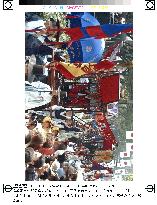
TOKYO, Japan - About 150 students from South Korea, dressed as members of a Korean tributary mission sent to Japan during the Edo Period (1600-1868), parade along the Omotesando Avenue in Tokyo on Aug. 25. The envoy or the head of the delegation is seated in the palanquin carried by bearers. Korea sent a total of 12 delegations to Japan during the reign of the Tokugawa Shogunate. The last visit took place in 1811. The students organized the parade as part of events marking the FIFA 2002 World Cup finals co-hoted by Japan and South Korea.

  •  
Fire brigades demonstrate traditional ladder-top stunts

Fire brigades demonstrate traditional ladder-top stunts

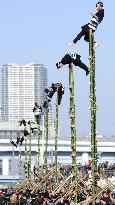
TOKYO, Japan - Hikeshi or fire fighters demonstrate their traditional ladder-top stunts dating back to the Edo period (1600-1868) during the annual New Year parade of fire brigades organized by the Tokyo Fire Department at Tokyo's Ariake on Jan. 6. Edo (now Tokyo) had 48 hikeshi units, each comprising a commander, assistants, standard bearers, ladder carriers and plain firemen, who were mobilized especially when wrecking buildings to create fire-breaks.

  •  
Data on Japanese emigrants to Hawaii to be available online

Data on Japanese emigrants to Hawaii to be available online

YAMAGUCHI, Japan - The Museum of Japanese Emigration to Hawaii, located in Oshima, Yamaguchi Prefecture, western Japan, will next month launch a research service to allow the emigrants' descendants to obtain information on their ancestors who sailed to the Pacific islands in the late 19th century. The museum will post information online on about 29,000 Japanese who emigrated to Hawaii to work in the sugar industry between 1885 and 1894, under a government-led program during the Meiji Period (1868-1912).

  •  
Miyazaki gives English names to local streets

Miyazaki gives English names to local streets

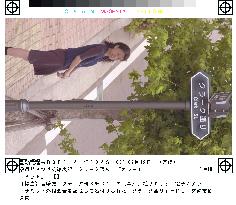
MIYAZAKI, Japan - A woman in downtown Miyazaki on July 11 stands near a street sign indicating ''Clark Street,'' one of 132 of the city's previously unnamed streets given English names in a gesture of internationalization. The move was in advance of the two-day meeting of the foreign ministers of Group of Eight (G-8) nations that began in the city July 12. Clark Street is named after a missionary who lived in the city during the Meiji era (1868-1912).

  •  
Emperor, empress visit Kyoto temple

Emperor, empress visit Kyoto temple

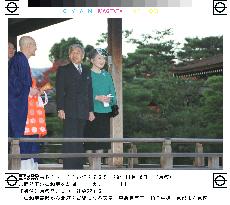
KYOTO, Japan - Emperor Akihito and Empress Michiko view the famous North Garden during a visit to Ninnaji Temple in Kyoto on Nov. 18. The temple, completed in the late 9th century under Emperor Uda, has had a deep relationship with the imperial family. It had an imperial prince as its superior up until the Meiji Restoration of 1868. The visit is in commemoration of the 10th anniversary of the emperor's accession to the throne and the imperial couple's 40th wedding anniversary.

  •  
S. Korean premier Kim enjoys Kyoto stroll

S. Korean premier Kim enjoys Kyoto stroll

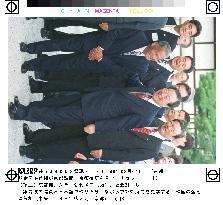
KYOTO, Japan - Visiting South Korean Prime Minister Kim Jong Pil enjoys a stroll in the Kyoto Imperial Palace on Sept. 4. Kim, currently on a five-day visit to Japan, spent about an hour strolling the garden and talked with palace officials in Japanese about the 1868 Meiji Restoration and the differences in lifestyle between South Koreans and Japanese.

  •  
Morihiro Hosokawa

Morihiro Hosokawa

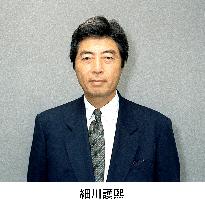
Born in January 1938, Hosokawa is a descendant of the Hosokawa daimyos, or feudal lords, who ruled Kumamoto, southern Japan, from 1632 to 1868. His grandfather Prince Fumimaro Konoe was prime minister from 1937 to 1939 and again from 1940 to 1941. Only one year and three months after launching his conservative Japan New Party with the aim of reorganizing Japan's political scene, Hosokawa became prime minister on Aug. 9, 1933, leading Japan's first coalition government in more than four decades. After serving as prime minister until April 28, 1994, he retired from politics in 1998.

  • Main
  • Top
  • Editorial
  • Creative
  • About Us
  • About ILG
  • Terms of use
  • Company
  • BEHIND
  • Price List
  • Single Plan
  • Monthly Plan
  • Services
  • Shooting
  • Rights Clearance
  • Support
  • FAQ
  • How To Buy
  • Contact Us
  • Become a Partner

© KYODO NEWS IMAGES INC

All Rights Reserved.

  • Editorial
  • Olympics
  • News
  • Sports
  • Japan
  • Tech
  • Royal
  • Disaster
  • NorthKorea
  • Old Japan
  • SNS
  • Creative
  • Food
  • Japan
  • Landscape
  • Animal
  • Popular
  • #Ukraine
  • #Russia
  • #coronavirus
  • #N. Korea
  • #China
  • #Thailand
  • #Ukraine
  • #Russia
  • #coronavirus
  • #N. Korea
  • #China
  • #Thailand
  • Food
  • Japan
  • Landscape
  • Animal
  • Olympics
  • News
  • Sports
  • Japan
  • Tech
  • Royal
  • Disaster
  • NorthKorea
  • Old Japan
  • SNS