•  
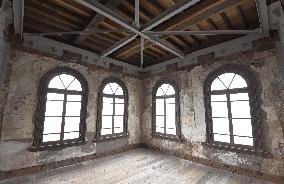
Ex-administrator's room in Yawata Steek Works' former head office unveiled

Ex-administrator's room in Yawata Steek Works' former head office unveiled

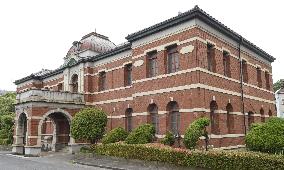
KITAKYUSHU, Japan, June 19 Kyodo - What used to be the administrator's room in the old head office of the former state-run Yawata Steel Works in Kitakyushu, Fukuoka Prefecture, southwestern Japan, is displayed to the press on June 15, 2015. The office constitutes one of the sites of Japan's industrial revolution in the Meiji era (1868-1911) recommended for registration on the UNESCO World Heritage list.

  •  
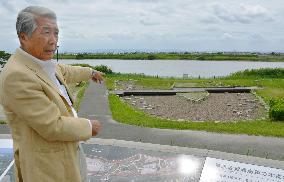
Expert points to historical importance of naval dock in southern Japan

Expert points to historical importance of naval dock in southern Japan

Toshitsugu Haji, head of a civilian group studying cultural heritage in Saga Prefecture, southwestern Japan, talks about the historical importance of the Mietsu Naval Dock, built by the Saga feudal domain near the end of the Edo period (1603-1867), in the prefectural capital on June 20, 2015. The facility is one of the candidate sites of the Meiji-era (1868-1911) industrial revolution Japan is seeking to have registered on the UNESCO World Heritage list. (Kyodo) ==Kyodo

  •  
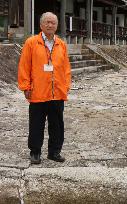
Century-old stone quay stays intact, awaits UNESCO heritage listing

Century-old stone quay stays intact, awaits UNESCO heritage listing

Manpo Saito, a farmer in Uki, Kumamoto Prefecture, southwestern Japan, volunteers as a local guide for tourists at Misuminishi port, as seen on June 20, 2015. The century-old stone quay at the port, which thrived for only about a decade after opening in 1887 for the export of coal from the now defunct Miike mine, is Japan's only pier from the Meiji era (1868-1911) that still stands intact in its entirety. The quay is one of the sites of the Meiji era industrial revolution that Japan seeks to have registered on the UNESCO World Heritage list. (Kyodo) ==Kyodo

  •  
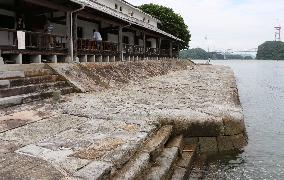
Century-old stone quay still intact, awaits UNESCO heritage listing

Century-old stone quay still intact, awaits UNESCO heritage listing

The century-old stone quay at Misuminihi port in Uki, Kumamoto Prefecture, southwestern Japan, as seen on June 20, 2015, is the country's only pier from the Meiji era (1868-1911) that still stands intact in its entirety. The port opened in 1887 for the export of coal from the now defunct Miike mine, but thrived only for only about a decade before losing out to railway transport. (Kyodo) ==Kyodo

  •  
Japanese coal mine pit intended for UNESCO World Heritage list

Japanese coal mine pit intended for UNESCO World Heritage list

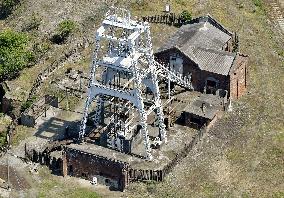
The Miyanohara pit of the defunct Miike coal mine complex in Omuta, Fukuoka Prefecture, southwestern Japan, is photographed from a Kyodo News helicopter on April 25, 2015. The complex, which played a vital role in Japan's postwar reconstruction, is one of the candidate sites of the country's Meiji era (1868-1911) industrial revolution for registration on the UNESCO World Heritage list. (Kyodo) ==Kyodo

  •  
Facility of Miike coal mine, possible World Heritage site

Facility of Miike coal mine, possible World Heritage site

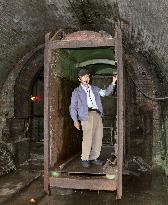
Toshihiko Horiuchi, a former worker at the defunct Miike coal mine complex, explains about a facility in Arao, Kumamoto prefecture, southwestern Japan, on June 9, 2015. The complex, which played a vital role in Japan's postwar reconstruction, is one of the candidate sites of the country's Meiji era (1868-1911) industrial revolution for registration on the UNESCO World Heritage list. (Kyodo) ==Kyodo

  •  
"Battleship Island" off Nagasaki, candidate for World Heritage site

"Battleship Island" off Nagasaki, candidate for World Heritage site

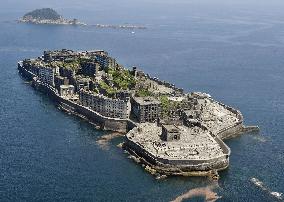
Hashima Island off Nagasaki, southwestern Japan, known for its underground coal mining during the industrialization of Japan, is commonly called "Battleship Island" because of its shape as seen in this photo taken on April 25, 2015. It is one of the candidate sites for registration on a UNESCO World Heritage list as remnants of Japan's Meiji era (1868-1911) industrial revolution. (Kyodo) ==Kyodo

  •  
Man talks about childhood spent on 'Battleship Island' off Nagasaki

Man talks about childhood spent on 'Battleship Island' off Nagasaki

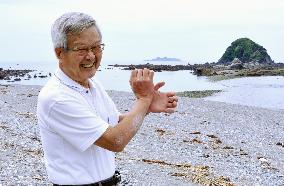
Azuma Ishikawa talks about his childhood spent on Hashima Island off Nagasaki, southwestern Japan, on June 7, 2015. The island, commonly called "Battleship Island" because of its shape, is seen far in the distance at the center of this photo. It is one of the candidate sites for registration on a UNESCO World Heritage list as remnants of Japan's Meiji era (1868-1911) industrial revolution. (Kyodo) ==Kyodo

  •  
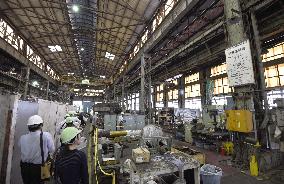
Work continues at Japan's oldest steel-frame factory

Work continues at Japan's oldest steel-frame factory

Photo taken on June 15, 2015, shows work under way at a repair factory in Kitakyushu, Fukuoka Prefecture, southwestern Japan, which is considered Japan's oldest steel-frame building. The factory, part of the former state-run Yawata Steel Works, constitutes one of the sites of Japan's industrial revolution in the Meiji era (1868-1911) recommended for registration on the UNESCO World Heritage list. (Kyodo) ==Kyodo

  •  
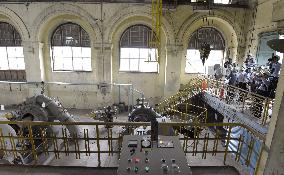
Old pump house of Yawata Steel Works displayed to press

Old pump house of Yawata Steel Works displayed to press

The Onga River Pump House of the former state-run Yawata Steel Works in Nakama, Fukuoka Prefecture, southwestern Japan, is displayed to the press on June 15, 2015. The time-honored facility, still in use today, constitutes one of the sites of Japan's industrial revolution in the Meiji era (1868-1911) recommended for registration on the UNESCO World Heritage list. (Kyodo) ==Kyodo

  •  
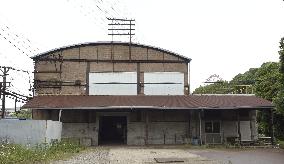
Forging factory of Yawata Steel Works displayed to press

Forging factory of Yawata Steel Works displayed to press

An old forging factory of the former state-run Yawata Steel Works in Kitakyushu, Fukuoka Prefecture, southwestern Japan, is displayed to the press on June 15, 2015. The factory is now used as a reference room for the Yahata Iron Mill, one of Nippon Steel and Sumitomo Metal Corp.'s steel plants. The facility constitutes one of the sites of Japan's industrial revolution in the Meiji era (1868-1911) recommended for registration on the UNESCO World Heritage list. (Kyodo) ==Kyodo

  •  
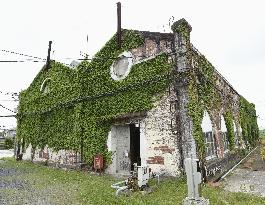
Old pump house of Yawata Steel Works covered with ivy

Old pump house of Yawata Steel Works covered with ivy

The Onga River Pump House of the former state-run Yawata Steel Works in Nakama, Fukuoka Prefecture, southwestern Japan, is seen covered with ivy as shown to the press on June 15, 2015. The time-honored facility, still in use today, constitutes one of the sites of Japan's industrial revolution in the Meiji era (1868-1911) recommended for registration on the UNESCO World Heritage list. (Kyodo) ==Kyodo

  •  
Yawata Steek Works' old head office displayed to press

Yawata Steek Works' old head office displayed to press

The old head office of the former state-run Yawata Steel Works in Kitakyushu, Fukuoka Prefecture, southwestern Japan, is displayed to the press on June 15, 2015. The office constitutes one of the sites of Japan's industrial revolution in the Meiji era (1868-1911) recommended for registration on the UNESCO World Heritage list. (Kyodo) ==Kyodo

  •  
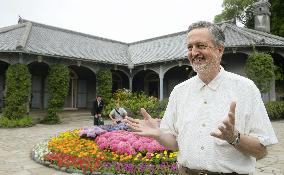
Honorary head of Glover Garden talks about tourist site in Nagasaki

Honorary head of Glover Garden talks about tourist site in Nagasaki

Brian Burke-Gaffney, honorary director of the Glover Garden in Nagasaki, speaks at the popular tourist site in the southwestern Japanese city on June 2, 2015. Seen behind him is the former residence of Thomas Glover, a Scottish merchant who contributed to the modernization of Japan. The house constitutes one of the sites of Japan's industrial revolution in the Meiji era (1868-1911) recommended for registration on the UNESCO World Heritage list. (Kyodo) ==Kyodo

  •  
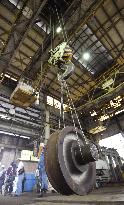
Crane at Japan's oldest steel-frame building still in use

Crane at Japan's oldest steel-frame building still in use

Photo taken on June 15, 2015, shows a gantry crane still in use at a repair factory in Kitakyushu, Fukuoka Prefecture, southwestern Japan, which is considered the country's oldest steel-frame building. The factory, part of the former state-run Yawata Steel Works, constitutes one of the sites of Japan's industrial revolution in the Meiji era (1868-1911) recommended for registration on the UNESCO World Heritage list. (Kyodo) ==Kyodo

  •  
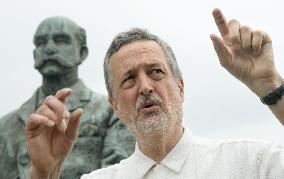
Honorary head of Glove Garden speaks before statue of Glover

Honorary head of Glove Garden speaks before statue of Glover

Brian Burke-Gaffney, honorary director of the Glover Garden in Nagasaki, talks about the popular tourist site in the southwestern Japanese city on June 2, 2015. Seen behind him is the statue of Thomas Glover, a Scottish merchant who contributed to the modernization of Japan. Glover's former residence in Nagasaki constitutes one of the sites of Japan's industrial revolution in the Meiji era (1868-1911) recommended for registration on the UNESCO World Heritage list. (Kyodo) ==Kyodo

  • Main
  • Top
  • Editorial
  • Creative
  • About Us
  • About ILG
  • Terms of use
  • Company
  • BEHIND
  • Price List
  • Single Plan
  • Monthly Plan
  • Services
  • Shooting
  • Rights Clearance
  • Support
  • FAQ
  • How To Buy
  • Contact Us
  • Become a Partner

© KYODO NEWS IMAGES INC

All Rights Reserved.

  • Editorial
  • Olympics
  • News
  • Sports
  • Japan
  • Tech
  • Royal
  • Disaster
  • NorthKorea
  • Old Japan
  • SNS
  • Creative
  • Food
  • Japan
  • Landscape
  • Animal
  • Popular
  • #Ukraine
  • #Thailand
  • #coronavirus
  • #N. Korea
  • #China
  • #Russia
  • #Ukraine
  • #Thailand
  • #coronavirus
  • #N. Korea
  • #China
  • #Russia
  • Food
  • Japan
  • Landscape
  • Animal
  • Olympics
  • News
  • Sports
  • Japan
  • Tech
  • Royal
  • Disaster
  • NorthKorea
  • Old Japan
  • SNS