•  

US: Fast-Moving Springs Fire Breaks Out in Riverside County, Prompting Evacuations 3

The Springs Fire broke out east of Moreno Valley in Riverside County on Friday, April 3, quickly spreading to more than 4,000 acres and prompting evacuation orders for nearby residents, including the campus of Moreno Valley College. The fire was nearly completely contained by Sunday morning.

  •  

US: Fast-Moving Springs Fire Breaks Out in Riverside County, Prompting Evacuations 2

The Springs Fire broke out east of Moreno Valley in Riverside County on Friday, April 3, quickly spreading to more than 4,000 acres and prompting evacuation orders for nearby residents, including the campus of Moreno Valley College. The fire was driven by strong winds with no injuries reported.

  •  

US: Fast-Moving Springs Fire Breaks Out in Riverside County, Prompting Evacuations

The Springs Fire broke out east of Moreno Valley in Riverside County on Friday, April 3, quickly spreading to more than 4,000 acres and prompting evacuation orders for nearby residents, including the campus of Moreno Valley College. The fire was driven by strong winds with no injuries reported.

  •  
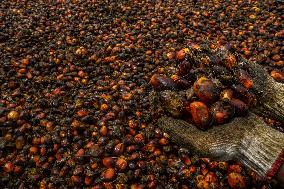
Hunt for Leftover Oil Palm Fruit - Aceh Tamiang

Hunt for Leftover Oil Palm Fruit - Aceh Tamiang

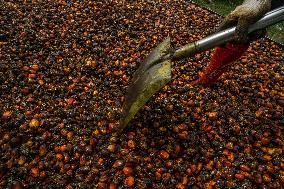
In the midst of the difficult post-flood period, residents in Aceh Tamiang utilised the remaining harvest from their oil palm plantations to survive on December 30, 2025. By collecting loose palm fruit (loose fruit), residents were able to sell it for IDR 4,000 per kilogram. This activity became an alternative economic source for flash flood or ecological disaster victims whose agricultural land or livelihoods were crippled by the floodwaters. Photo by Aditya Sutanta/ABACAPRESS.COM

  •  
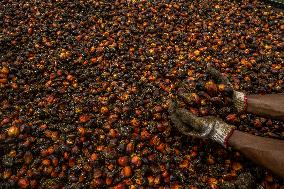
Hunt for Leftover Oil Palm Fruit - Aceh Tamiang

Hunt for Leftover Oil Palm Fruit - Aceh Tamiang

In the midst of the difficult post-flood period, residents in Aceh Tamiang utilised the remaining harvest from their oil palm plantations to survive on December 30, 2025. By collecting loose palm fruit (loose fruit), residents were able to sell it for IDR 4,000 per kilogram. This activity became an alternative economic source for flash flood or ecological disaster victims whose agricultural land or livelihoods were crippled by the floodwaters. Photo by Aditya Sutanta/ABACAPRESS.COM

  •  
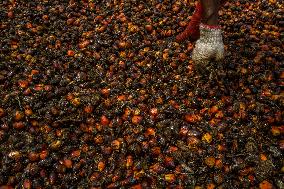
Hunt for Leftover Oil Palm Fruit - Aceh Tamiang

Hunt for Leftover Oil Palm Fruit - Aceh Tamiang

In the midst of the difficult post-flood period, residents in Aceh Tamiang utilised the remaining harvest from their oil palm plantations to survive on December 30, 2025. By collecting loose palm fruit (loose fruit), residents were able to sell it for IDR 4,000 per kilogram. This activity became an alternative economic source for flash flood or ecological disaster victims whose agricultural land or livelihoods were crippled by the floodwaters. Photo by Aditya Sutanta/ABACAPRESS.COM

  •  
Hunt for Leftover Oil Palm Fruit - Aceh Tamiang

Hunt for Leftover Oil Palm Fruit - Aceh Tamiang

In the midst of the difficult post-flood period, residents in Aceh Tamiang utilised the remaining harvest from their oil palm plantations to survive on December 30, 2025. By collecting loose palm fruit (loose fruit), residents were able to sell it for IDR 4,000 per kilogram. This activity became an alternative economic source for flash flood or ecological disaster victims whose agricultural land or livelihoods were crippled by the floodwaters. Photo by Aditya Sutanta/ABACAPRESS.COM

  •  
Hunt for Leftover Oil Palm Fruit - Aceh Tamiang

Hunt for Leftover Oil Palm Fruit - Aceh Tamiang

In the midst of the difficult post-flood period, residents in Aceh Tamiang utilised the remaining harvest from their oil palm plantations to survive on December 30, 2025. By collecting loose palm fruit (loose fruit), residents were able to sell it for IDR 4,000 per kilogram. This activity became an alternative economic source for flash flood or ecological disaster victims whose agricultural land or livelihoods were crippled by the floodwaters. Photo by Aditya Sutanta/ABACAPRESS.COM

  •  
A 6-Ton Tiltrotor UAV Developed By China - Deyang

A 6-Ton Tiltrotor UAV Developed By China - Deyang

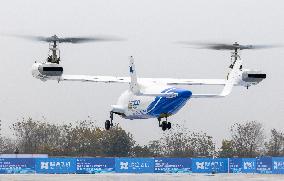
A Lanying R6000 tiltrotor unmanned aerial vehicle UAV) takes off in Deyang City, southwest China's Sichuan Province, on December 28, , 2025. The Lanying R6000, a 6-ton tiltrotor UAV developed by China's United Aircraft, completed its maiden flight here on Sunday, marking a new step in the country's ambitions in advanced vertical-lift aviation. The UAV has a payload capacity of up to 2,000 kg, with a maximum cruising speed of 550 km per hour and a range of about 4,000 km at altitudes up to 7,620 m. Photo by Yin Gang /Xinhua/ABACAPRESS.COM

  •  
A 6-Ton Tiltrotor UAV Developed By China - Deyang

A 6-Ton Tiltrotor UAV Developed By China - Deyang

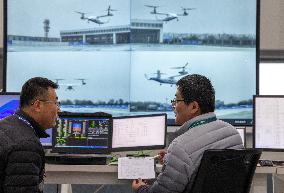
Technicians monitor the flight of a Lanying R6000 tiltrotor unmanned aerial vehicle UAV) in Deyang City, southwest China's Sichuan Province, on December 28, , 2025. The Lanying R6000, a 6-ton tiltrotor UAV developed by China's United Aircraft, completed its maiden flight here on Sunday, marking a new step in the country's ambitions in advanced vertical-lift aviation. The UAV has a payload capacity of up to 2,000 kg, with a maximum cruising speed of 550 km per hour and a range of about 4,000 km at altitudes up to 7,620 m. Photo by Yin Gang /Xinhua/ABACAPRESS.COM

  •  
A 6-Ton Tiltrotor UAV Developed By China - Deyang

A 6-Ton Tiltrotor UAV Developed By China - Deyang

A Lanying R6000 tiltrotor unmanned aerial vehicle UAV) is about to take off in Deyang City, southwest China's Sichuan Province, on December 28, , 2025. The Lanying R6000, a 6-ton tiltrotor UAV developed by China's United Aircraft, completed its maiden flight here on Sunday, marking a new step in the country's ambitions in advanced vertical-lift aviation. The UAV has a payload capacity of up to 2,000 kg, with a maximum cruising speed of 550 km per hour and a range of about 4,000 km at altitudes up to 7,620 m. Photo by Yin Gang /Xinhua/ABACAPRESS.COM

  •  
A 6-Ton Tiltrotor UAV Developed By China - Deyang

A 6-Ton Tiltrotor UAV Developed By China - Deyang

A Lanying R6000 tiltrotor unmanned aerial vehicle UAV) takes off in Deyang City, southwest China's Sichuan Province, on December 28, , 2025. The Lanying R6000, a 6-ton tiltrotor UAV developed by China's United Aircraft, completed its maiden flight here on Sunday, marking a new step in the country's ambitions in advanced vertical-lift aviation. The UAV has a payload capacity of up to 2,000 kg, with a maximum cruising speed of 550 km per hour and a range of about 4,000 km at altitudes up to 7,620 m. Photo by Yin Gang /Xinhua/ABACAPRESS.COM

  •  
A 6-Ton Tiltrotor UAV Developed By China - Deyang

A 6-Ton Tiltrotor UAV Developed By China - Deyang

A Lanying R6000 tiltrotor unmanned aerial vehicle UAV) takes off in Deyang City, southwest China's Sichuan Province, on December 28, , 2025. The Lanying R6000, a 6-ton tiltrotor UAV developed by China's United Aircraft, completed its maiden flight here on Sunday, marking a new step in the country's ambitions in advanced vertical-lift aviation. The UAV has a payload capacity of up to 2,000 kg, with a maximum cruising speed of 550 km per hour and a range of about 4,000 km at altitudes up to 7,620 m. Photo by Yin Gang /Xinhua/ABACAPRESS.COM

  •  
A 6-Ton Tiltrotor UAV Developed By China - Deyang

A 6-Ton Tiltrotor UAV Developed By China - Deyang

A Lanying R6000 tiltrotor unmanned aerial vehicle UAV) is pictured during its maiden flight in Deyang City, southwest China's Sichuan Province, on December 28, , 2025. The Lanying R6000, a 6-ton tiltrotor UAV developed by China's United Aircraft, completed its maiden flight here on Sunday, marking a new step in the country's ambitions in advanced vertical-lift aviation. The UAV has a payload capacity of up to 2,000 kg, with a maximum cruising speed of 550 km per hour and a range of about 4,000 km at altitudes up to 7,620 m. Photo by Yin Gang /Xinhua/ABACAPRESS.COM

  •  
Cyclone Ditwah Aftermath - Sri Lanka

Cyclone Ditwah Aftermath - Sri Lanka

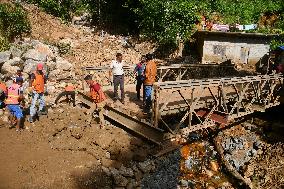
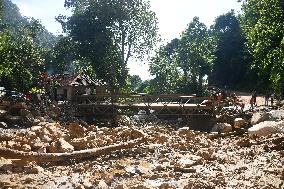
People repair a collapsed bridge affected by Cyclone Ditwah in Badulla District, Sri Lanka, Dec. 13, 2025. According to Sri Lanka's Disaster Management Center, the country recently suffered severe damage due to the extreme weather triggered by Cyclone Ditwah, which left more than 600 people dead, affected more than 2 million people, destroyed more than 4,000 houses and partially damaged more than 60,000 houses nationwide. Photo by Ajith Perera /Xinhua/ABACAPRESS.COM

  •  
Cyclone Ditwah Aftermath - Sri Lanka

Cyclone Ditwah Aftermath - Sri Lanka

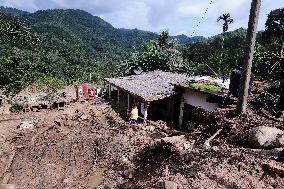
This photo taken on Dec. 12, 2025 shows a damaged house affected by Cyclone Ditwah in Badulla District, Sri Lanka. According to Sri Lanka's Disaster Management Center, the country recently suffered severe damage due to the extreme weather triggered by Cyclone Ditwah, which left more than 600 people dead, affected more than 2 million people, destroyed more than 4,000 houses and partially damaged more than 60,000 houses nationwide. Photo by Ajith Perera /Xinhua/ABACAPRESS.COM

  •  
Cyclone Ditwah Aftermath - Sri Lanka

Cyclone Ditwah Aftermath - Sri Lanka

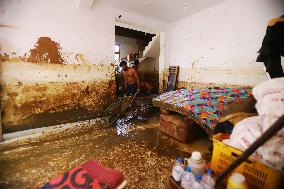
Residents clean mud from a damaged house affected by Cyclone Ditwah in Badulla District, Sri Lanka, Dec. 12, 2025. According to Sri Lanka's Disaster Management Center, the country recently suffered severe damage due to the extreme weather triggered by Cyclone Ditwah, which left more than 600 people dead, affected more than 2 million people, destroyed more than 4,000 houses and partially damaged more than 60,000 houses nationwide. Photo by Ajith Perera /Xinhua/ABACAPRESS.COM

  •  
Cyclone Ditwah Aftermath - Sri Lanka

Cyclone Ditwah Aftermath - Sri Lanka

People repair a collapsed bridge affected by Cyclone Ditwah in Badulla District, Sri Lanka, Dec. 13, 2025. According to Sri Lanka's Disaster Management Center, the country recently suffered severe damage due to the extreme weather triggered by Cyclone Ditwah, which left more than 600 people dead, affected more than 2 million people, destroyed more than 4,000 houses and partially damaged more than 60,000 houses nationwide. Photo by Ajith Perera /Xinhua/ABACAPRESS.COM

  •  
Cyclone Ditwah Aftermath - Sri Lanka

Cyclone Ditwah Aftermath - Sri Lanka

This photo taken on Dec. 12, 2025 shows damaged houses affected by Cyclone Ditwah in Badulla District, Sri Lanka. According to Sri Lanka's Disaster Management Center, the country recently suffered severe damage due to the extreme weather triggered by Cyclone Ditwah, which left more than 600 people dead, affected more than 2 million people, destroyed more than 4,000 houses and partially damaged more than 60,000 houses nationwide. Photo by Ajith Perera /Xinhua/ABACAPRESS.COM

  •  
Tie-Dye Technique Of Bai Ethnic Group - Chin

Tie-Dye Technique Of Bai Ethnic Group - Chin

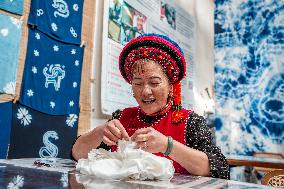
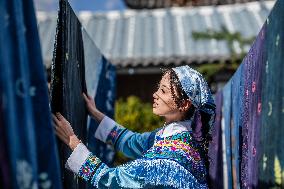
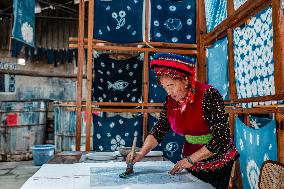
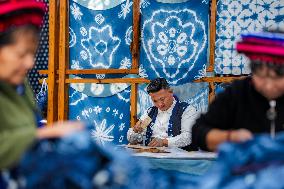
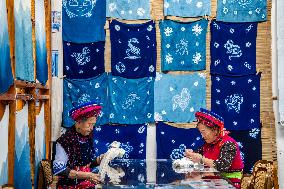
Duan Yuan, an inheritor of the tie-dye technique of Bai ethnic group, makes tie-dye designs in a dyehouse in Zhoucheng Village of Dali Bai Autonomous Prefecture, southwest China's Yunnan Province, November 21, 2025. Known as the hometown of the tie-dye technique of Bai ethnic group, Zhoucheng Village hosts over 200 households engaging in tie-dye businesses, with the number of employees exceeding 4,000. As a traditional folk technique of the Bai ethnic group, tie-dye boasts a history spanning over a thousand years and was included in the first batch of China's national intangible cultural heritage list in 2006. Tying and dyeing are the core steps in the process of making indigo tie-dye products. Artisans use needles and threads to create various patterns on the fabric, which are then dyed with plant-based dyes, resulting in blue backgrounds adorned with vivid white patterns. Photo by Hu Chao/Xinhua/ABACAPRESS.COM

  •  
Tie-Dye Technique Of Bai Ethnic Group - Chin

Tie-Dye Technique Of Bai Ethnic Group - Chin

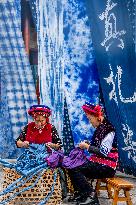
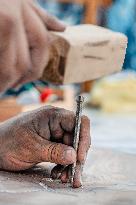
Duan Yinmei, an inheritor of the tie-dye technique of Bai ethnic group, creates knots on fabrics in a dyehouse in Zhoucheng Village of Dali Bai Autonomous Prefecture, southwest China's Yunnan Province, November 21, 2025. Known as the hometown of the tie-dye technique of Bai ethnic group, Zhoucheng Village hosts over 200 households engaging in tie-dye businesses, with the number of employees exceeding 4,000. As a traditional folk technique of the Bai ethnic group, tie-dye boasts a history spanning over a thousand years and was included in the first batch of China's national intangible cultural heritage list in 2006. Tying and dyeing are the core steps in the process of making indigo tie-dye products. Artisans use needles and threads to create various patterns on the fabric, which are then dyed with plant-based dyes, resulting in blue backgrounds adorned with vivid white patterns. Photo by Hu Chao/Xinhua/ABACAPRESS.COM

  •  
Tie-Dye Technique Of Bai Ethnic Group - Chin

Tie-Dye Technique Of Bai Ethnic Group - Chin

A woman experiences the tie-dye technique of Bai ethnic group in a dyehouse in Zhoucheng Village of Dali Bai Autonomous Prefecture, southwest China's Yunnan Province, November 21, 2025. Known as the hometown of the tie-dye technique of Bai ethnic group, Zhoucheng Village hosts over 200 households engaging in tie-dye businesses, with the number of employees exceeding 4,000. As a traditional folk technique of the Bai ethnic group, tie-dye boasts a history spanning over a thousand years and was included in the first batch of China's national intangible cultural heritage list in 2006. Tying and dyeing are the core steps in the process of making indigo tie-dye products. Artisans use needles and threads to create various patterns on the fabric, which are then dyed with plant-based dyes, resulting in blue backgrounds adorned with vivid white patterns. Photo by Hu Chao/Xinhua/ABACAPRESS.COM

  •  
Tie-Dye Technique Of Bai Ethnic Group - Chin

Tie-Dye Technique Of Bai Ethnic Group - Chin

Duan Yinmei, an inheritor of the tie-dye technique of Bai ethnic group, dyes patterns on fabrics in a dyehouse in Zhoucheng Village of Dali Bai Autonomous Prefecture, southwest China's Yunnan Province, November 21, 2025. Known as the hometown of the tie-dye technique of Bai ethnic group, Zhoucheng Village hosts over 200 households engaging in tie-dye businesses, with the number of employees exceeding 4,000. As a traditional folk technique of the Bai ethnic group, tie-dye boasts a history spanning over a thousand years and was included in the first batch of China's national intangible cultural heritage list in 2006. Tying and dyeing are the core steps in the process of making indigo tie-dye products. Artisans use needles and threads to create various patterns on the fabric, which are then dyed with plant-based dyes, resulting in blue backgrounds adorned with vivid white patterns. Photo by Hu Chao/Xinhua/ABACAPRESS.COM

  •  
Tie-Dye Technique Of Bai Ethnic Group - Chin

Tie-Dye Technique Of Bai Ethnic Group - Chin

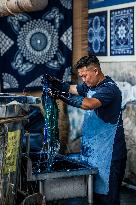
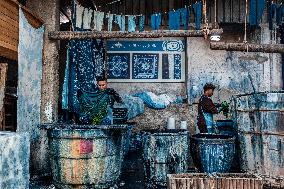
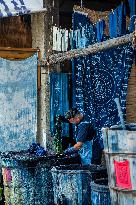
Duan Yuan, an inheritor of the tie-dye technique of Bai ethnic group, rinses dyed fabrics in a dyehouse in Zhoucheng Village of Dali Bai Autonomous Prefecture, southwest China's Yunnan Province, November 21, 2025. Known as the hometown of the tie-dye technique of Bai ethnic group, Zhoucheng Village hosts over 200 households engaging in tie-dye businesses, with the number of employees exceeding 4,000. As a traditional folk technique of the Bai ethnic group, tie-dye boasts a history spanning over a thousand years and was included in the first batch of China's national intangible cultural heritage list in 2006. Tying and dyeing are the core steps in the process of making indigo tie-dye products. Artisans use needles and threads to create various patterns on the fabric, which are then dyed with plant-based dyes, resulting in blue backgrounds adorned with vivid white patterns. Photo by Hu Chao/Xinhua/ABACAPRESS.COM

  •  
Tie-Dye Technique Of Bai Ethnic Group - Chin

Tie-Dye Technique Of Bai Ethnic Group - Chin

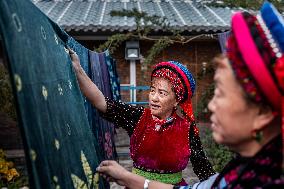
Duan Yinmei (L), an inheritor of the tie-dye technique of Bai ethnic group, and handicraftsman Duan Lilan dry tie-dye fabrics in a dyehouse in Zhoucheng Village of Dali Bai Autonomous Prefecture, southwest China's Yunnan Province, November 21, 2025. Known as the hometown of the tie-dye technique of Bai ethnic group, Zhoucheng Village hosts over 200 households engaging in tie-dye businesses, with the number of employees exceeding 4,000. As a traditional folk technique of the Bai ethnic group, tie-dye boasts a history spanning over a thousand years and was included in the first batch of China's national intangible cultural heritage list in 2006. Tying and dyeing are the core steps in the process of making indigo tie-dye products. Artisans use needles and threads to create various patterns on the fabric, which are then dyed with plant-based dyes, resulting in blue backgrounds adorned with vivid white patterns. Photo by Hu Chao/Xinhua/ABACAPRESS.COM

  •  
Tie-Dye Technique Of Bai Ethnic Group - Chin

Tie-Dye Technique Of Bai Ethnic Group - Chin

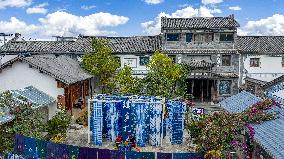
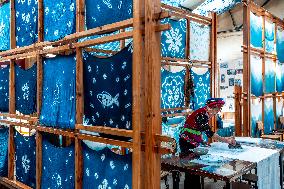
An aerial drone photo shows a scene at a dyehouse in Zhoucheng Village of Dali Bai Autonomous Prefecture, southwest China's Yunnan Province, November 21, 2025. Known as the hometown of the tie-dye technique of Bai ethnic group, Zhoucheng Village hosts over 200 households engaging in tie-dye businesses, with the number of employees exceeding 4,000. As a traditional folk technique of the Bai ethnic group, tie-dye boasts a history spanning over a thousand years and was included in the first batch of China's national intangible cultural heritage list in 2006. Tying and dyeing are the core steps in the process of making indigo tie-dye products. Artisans use needles and threads to create various patterns on the fabric, which are then dyed with plant-based dyes, resulting in blue backgrounds adorned with vivid white patterns. Photo by Hu Chao/Xinhua/ABACAPRESS.COM

  •  
Tie-Dye Technique Of Bai Ethnic Group - Chin

Tie-Dye Technique Of Bai Ethnic Group - Chin

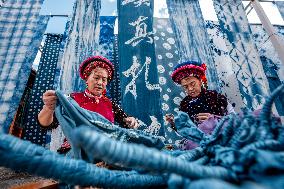
Duan Yinmei (L), an inheritor of the tie-dye technique of Bai ethnic group, and handicraftsman Duan Lilan untie knots on fabrics in a dyehouse in Zhoucheng Village of Dali Bai Autonomous Prefecture, southwest China's Yunnan Province, November 21, 2025. Known as the hometown of the tie-dye technique of Bai ethnic group, Zhoucheng Village hosts over 200 households engaging in tie-dye businesses, with the number of employees exceeding 4,000. As a traditional folk technique of the Bai ethnic group, tie-dye boasts a history spanning over a thousand years and was included in the first batch of China's national intangible cultural heritage list in 2006. Tying and dyeing are the core steps in the process of making indigo tie-dye products. Artisans use needles and threads to create various patterns on the fabric, which are then dyed with plant-based dyes, resulting in blue backgrounds adorned with vivid white patterns. Photo by Hu Chao/Xinhua/ABACAPRESS.COM

  •  
Tie-Dye Technique Of Bai Ethnic Group - Chin

Tie-Dye Technique Of Bai Ethnic Group - Chin

Duan Yinmei (L), an inheritor of the tie-dye technique of Bai ethnic group, and handicraftsman Duan Lilan untie knots on fabrics in a dyehouse in Zhoucheng Village of Dali Bai Autonomous Prefecture, southwest China's Yunnan Province, November 21, 2025. Known as the hometown of the tie-dye technique of Bai ethnic group, Zhoucheng Village hosts over 200 households engaging in tie-dye businesses, with the number of employees exceeding 4,000. As a traditional folk technique of the Bai ethnic group, tie-dye boasts a history spanning over a thousand years and was included in the first batch of China's national intangible cultural heritage list in 2006. Tying and dyeing are the core steps in the process of making indigo tie-dye products. Artisans use needles and threads to create various patterns on the fabric, which are then dyed with plant-based dyes, resulting in blue backgrounds adorned with vivid white patterns. Photo by Hu Chao/Xinhua/ABACAPRESS.COM

  •  
Tie-Dye Technique Of Bai Ethnic Group - Chin

Tie-Dye Technique Of Bai Ethnic Group - Chin

Duan Yuan (L), an inheritor of the tie-dye technique of Bai ethnic group, dyes fabrics in a dyehouse in Zhoucheng Village of Dali Bai Autonomous Prefecture, southwest China's Yunnan Province, November 21, 2025. Known as the hometown of the tie-dye technique of Bai ethnic group, Zhoucheng Village hosts over 200 households engaging in tie-dye businesses, with the number of employees exceeding 4,000. As a traditional folk technique of the Bai ethnic group, tie-dye boasts a history spanning over a thousand years and was included in the first batch of China's national intangible cultural heritage list in 2006. Tying and dyeing are the core steps in the process of making indigo tie-dye products. Artisans use needles and threads to create various patterns on the fabric, which are then dyed with plant-based dyes, resulting in blue backgrounds adorned with vivid white patterns. Photo by Hu Chao/Xinhua/ABACAPRESS.COM

  •  
Tie-Dye Technique Of Bai Ethnic Group - Chin

Tie-Dye Technique Of Bai Ethnic Group - Chin

Duan Yuan, an inheritor of the tie-dye technique of Bai ethnic group, makes tie-dye designs in a dyehouse in Zhoucheng Village of Dali Bai Autonomous Prefecture, southwest China's Yunnan Province, November 21, 2025. Known as the hometown of the tie-dye technique of Bai ethnic group, Zhoucheng Village hosts over 200 households engaging in tie-dye businesses, with the number of employees exceeding 4,000. As a traditional folk technique of the Bai ethnic group, tie-dye boasts a history spanning over a thousand years and was included in the first batch of China's national intangible cultural heritage list in 2006. Tying and dyeing are the core steps in the process of making indigo tie-dye products. Artisans use needles and threads to create various patterns on the fabric, which are then dyed with plant-based dyes, resulting in blue backgrounds adorned with vivid white patterns. Photo by Hu Chao/Xinhua/ABACAPRESS.COM

  •  
Tie-Dye Technique Of Bai Ethnic Group - Chin

Tie-Dye Technique Of Bai Ethnic Group - Chin

Duan Yuan, an inheritor of the tie-dye technique of Bai ethnic group, dyes fabrics in a dyehouse in Zhoucheng Village of Dali Bai Autonomous Prefecture, southwest China's Yunnan Province, November 21, 2025. Known as the hometown of the tie-dye technique of Bai ethnic group, Zhoucheng Village hosts over 200 households engaging in tie-dye businesses, with the number of employees exceeding 4,000. As a traditional folk technique of the Bai ethnic group, tie-dye boasts a history spanning over a thousand years and was included in the first batch of China's national intangible cultural heritage list in 2006. Tying and dyeing are the core steps in the process of making indigo tie-dye products. Artisans use needles and threads to create various patterns on the fabric, which are then dyed with plant-based dyes, resulting in blue backgrounds adorned with vivid white patterns. Photo by Hu Chao/Xinhua/ABACAPRESS.COM

  •  
Tie-Dye Technique Of Bai Ethnic Group - Chin

Tie-Dye Technique Of Bai Ethnic Group - Chin

Duan Yuan, an inheritor of the tie-dye technique of Bai ethnic group, dyes fabrics in a dyehouse in Zhoucheng Village of Dali Bai Autonomous Prefecture, southwest China's Yunnan Province, November 21, 2025. Known as the hometown of the tie-dye technique of Bai ethnic group, Zhoucheng Village hosts over 200 households engaging in tie-dye businesses, with the number of employees exceeding 4,000. As a traditional folk technique of the Bai ethnic group, tie-dye boasts a history spanning over a thousand years and was included in the first batch of China's national intangible cultural heritage list in 2006. Tying and dyeing are the core steps in the process of making indigo tie-dye products. Artisans use needles and threads to create various patterns on the fabric, which are then dyed with plant-based dyes, resulting in blue backgrounds adorned with vivid white patterns. Photo by Hu Chao/Xinhua/ABACAPRESS.COM

  •  
Tie-Dye Technique Of Bai Ethnic Group - Chin

Tie-Dye Technique Of Bai Ethnic Group - Chin

Duan Yuan, an inheritor of the tie-dye technique of Bai ethnic group, makes tie-dye designs in a dyehouse in Zhoucheng Village of Dali Bai Autonomous Prefecture, southwest China's Yunnan Province, November 21, 2025. Known as the hometown of the tie-dye technique of Bai ethnic group, Zhoucheng Village hosts over 200 households engaging in tie-dye businesses, with the number of employees exceeding 4,000. As a traditional folk technique of the Bai ethnic group, tie-dye boasts a history spanning over a thousand years and was included in the first batch of China's national intangible cultural heritage list in 2006. Tying and dyeing are the core steps in the process of making indigo tie-dye products. Artisans use needles and threads to create various patterns on the fabric, which are then dyed with plant-based dyes, resulting in blue backgrounds adorned with vivid white patterns. Photo by Hu Chao/Xinhua/ABACAPRESS.COM

  •  
Tie-Dye Technique Of Bai Ethnic Group - Chin

Tie-Dye Technique Of Bai Ethnic Group - Chin

Duan Yinmei, an inheritor of the tie-dye technique of Bai ethnic group, unties knots on fabrics in a dyehouse in Zhoucheng Village of Dali Bai Autonomous Prefecture, southwest China's Yunnan Province, November 21, 2025. Known as the hometown of the tie-dye technique of Bai ethnic group, Zhoucheng Village hosts over 200 households engaging in tie-dye businesses, with the number of employees exceeding 4,000. As a traditional folk technique of the Bai ethnic group, tie-dye boasts a history spanning over a thousand years and was included in the first batch of China's national intangible cultural heritage list in 2006. Tying and dyeing are the core steps in the process of making indigo tie-dye products. Artisans use needles and threads to create various patterns on the fabric, which are then dyed with plant-based dyes, resulting in blue backgrounds adorned with vivid white patterns. Photo by Hu Chao/Xinhua/ABACAPRESS.COM

  •  
Tie-Dye Technique Of Bai Ethnic Group - Chin

Tie-Dye Technique Of Bai Ethnic Group - Chin

Duan Yinmei, an inheritor of the tie-dye technique of Bai ethnic group, dyes patterns on fabrics in a dyehouse in Zhoucheng Village of Dali Bai Autonomous Prefecture, southwest China's Yunnan Province, November 21, 2025. Known as the hometown of the tie-dye technique of Bai ethnic group, Zhoucheng Village hosts over 200 households engaging in tie-dye businesses, with the number of employees exceeding 4,000. As a traditional folk technique of the Bai ethnic group, tie-dye boasts a history spanning over a thousand years and was included in the first batch of China's national intangible cultural heritage list in 2006. Tying and dyeing are the core steps in the process of making indigo tie-dye products. Artisans use needles and threads to create various patterns on the fabric, which are then dyed with plant-based dyes, resulting in blue backgrounds adorned with vivid white patterns. Photo by Hu Chao/Xinhua/ABACAPRESS.COM

  •  
Tie-Dye Technique Of Bai Ethnic Group - Chin

Tie-Dye Technique Of Bai Ethnic Group - Chin

Duan Yinmei (R), an inheritor of the tie-dye technique of Bai ethnic group, and handicraftsman Duan Lilan create knots on fabrics in a dyehouse in Zhoucheng Village of Dali Bai Autonomous Prefecture, southwest China's Yunnan Province, November 21, 2025. Known as the hometown of the tie-dye technique of Bai ethnic group, Zhoucheng Village hosts over 200 households engaging in tie-dye businesses, with the number of employees exceeding 4,000. As a traditional folk technique of the Bai ethnic group, tie-dye boasts a history spanning over a thousand years and was included in the first batch of China's national intangible cultural heritage list in 2006. Tying and dyeing are the core steps in the process of making indigo tie-dye products. Artisans use needles and threads to create various patterns on the fabric, which are then dyed with plant-based dyes, resulting in blue backgrounds adorned with vivid white patterns. Photo by Hu Chao/Xinhua/ABACAPRESS.COM

  •  
Israeli Concrete Wall - Lebanon

Israeli Concrete Wall - Lebanon

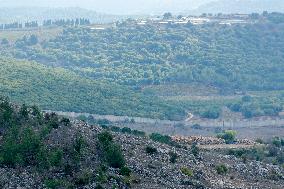
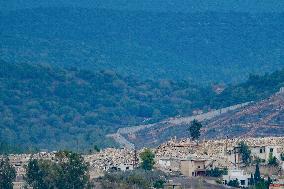
A view of a concrete wall built by Israel near the Blue Line in southwest Yaroun, Lebanon, on November 13, 2025. The wall has allegedly crossed the Blue Line, preventing local people from accessing more than 4,000 square meters (almost an acre) of Lebanese territory. Photo by Courtney Bonneau/Middle East Images/ABACAPRESS.COM

  •  
Israeli Concrete Wall - Lebanon

Israeli Concrete Wall - Lebanon

A view of a concrete wall built by Israel near the Blue Line in southwest Yaroun, Lebanon, on November 13, 2025. The wall has allegedly crossed the Blue Line, preventing local people from accessing more than 4,000 square meters (almost an acre) of Lebanese territory. Photo by Courtney Bonneau/Middle East Images/ABACAPRESS.COM

  •  
Israeli Concrete Wall - Lebanon

Israeli Concrete Wall - Lebanon

A view of a concrete wall built by Israel near the Blue Line in southwest Yaroun, Lebanon, on November 13, 2025. The wall has allegedly crossed the Blue Line, preventing local people from accessing more than 4,000 square meters (almost an acre) of Lebanese territory. Photo by Courtney Bonneau/Middle East Images/ABACAPRESS.COM

  •  
Israeli Concrete Wall - Lebanon

Israeli Concrete Wall - Lebanon

A view of a concrete wall built by Israel near the Blue Line in southwest Yaroun, Lebanon, on November 13, 2025. The wall has allegedly crossed the Blue Line, preventing local people from accessing more than 4,000 square meters (almost an acre) of Lebanese territory. Photo by Courtney Bonneau/Middle East Images/ABACAPRESS.COM

  •  
Israeli Concrete Wall - Lebanon

Israeli Concrete Wall - Lebanon

A view of a concrete wall built by Israel near the Blue Line in southwest Yaroun, Lebanon, on November 13, 2025. The wall has allegedly crossed the Blue Line, preventing local people from accessing more than 4,000 square meters (almost an acre) of Lebanese territory. Photo by Courtney Bonneau/Middle East Images/ABACAPRESS.COM

  •  
Israeli Concrete Wall - Lebanon

Israeli Concrete Wall - Lebanon

A view of a concrete wall built by Israel near the Blue Line in southwest Yaroun, Lebanon, on November 13, 2025. The wall has allegedly crossed the Blue Line, preventing local people from accessing more than 4,000 square meters (almost an acre) of Lebanese territory. Photo by Courtney Bonneau/Middle East Images/ABACAPRESS.COM

  •  
Israeli Concrete Wall - Lebanon

Israeli Concrete Wall - Lebanon

A view of a concrete wall built by Israel near the Blue Line in southwest Yaroun, Lebanon, on November 13, 2025. The wall has allegedly crossed the Blue Line, preventing local people from accessing more than 4,000 square meters (almost an acre) of Lebanese territory. Photo by Courtney Bonneau/Middle East Images/ABACAPRESS.COM

  •  
Israeli Concrete Wall - Lebanon

Israeli Concrete Wall - Lebanon

A view of a concrete wall built by Israel near the Blue Line in southwest Yaroun, Lebanon, on November 13, 2025. The wall has allegedly crossed the Blue Line, preventing local people from accessing more than 4,000 square meters (almost an acre) of Lebanese territory. Photo by Courtney Bonneau/Middle East Images/ABACAPRESS.COM

  •  
Israeli Concrete Wall - Lebanon

Israeli Concrete Wall - Lebanon

A view of a concrete wall built by Israel near the Blue Line in southwest Yaroun, Lebanon, on November 13, 2025. The wall has allegedly crossed the Blue Line, preventing local people from accessing more than 4,000 square meters (almost an acre) of Lebanese territory. Photo by Courtney Bonneau/Middle East Images/ABACAPRESS.COM

  •  
Israeli Concrete Wall - Lebanon

Israeli Concrete Wall - Lebanon

A view of a concrete wall built by Israel near the Blue Line in southwest Yaroun, Lebanon, on November 13, 2025. The wall has allegedly crossed the Blue Line, preventing local people from accessing more than 4,000 square meters (almost an acre) of Lebanese territory. Photo by Courtney Bonneau/Middle East Images/ABACAPRESS.COM

  •  
Israeli Concrete Wall - Lebanon

Israeli Concrete Wall - Lebanon

A view of a concrete wall built by Israel near the Blue Line in southwest Yaroun, Lebanon, on November 13, 2025. The wall has allegedly crossed the Blue Line, preventing local people from accessing more than 4,000 square meters (almost an acre) of Lebanese territory. Photo by Courtney Bonneau/Middle East Images/ABACAPRESS.COM

  •  
Israeli Concrete Wall - Lebanon

Israeli Concrete Wall - Lebanon

A view of a concrete wall built by Israel near the Blue Line in southwest Yaroun, Lebanon, on November 13, 2025. The wall has allegedly crossed the Blue Line, preventing local people from accessing more than 4,000 square meters (almost an acre) of Lebanese territory. Photo by Courtney Bonneau/Middle East Images/ABACAPRESS.COM

  •  
Demonstation in Porta Susa Railway Station - Turin

Demonstation in Porta Susa Railway Station - Turin

Protesters lined the tracks at Porta Susa in Turin, with the station blocked, after a demonstration in solidarity with the Global Sumud Flotilla and Gaza turned into a march. The number of participants has increased significantly, with an estimated 4,000 people. Activists are currently on the tracks with two banners and have blocked a regional train . Turin, Italy on September 24, 2025. Photo by Marco Alpozzi/LaPresse/ABACAPRESS.COM

  •  
Demonstation in Porta Susa Railway Station - Turin

Demonstation in Porta Susa Railway Station - Turin

Protesters lined the tracks at Porta Susa in Turin, with the station blocked, after a demonstration in solidarity with the Global Sumud Flotilla and Gaza turned into a march. The number of participants has increased significantly, with an estimated 4,000 people. Activists are currently on the tracks with two banners and have blocked a regional train . Turin, Italy on September 24, 2025. Photo by Marco Alpozzi/LaPresse/ABACAPRESS.COM

  • Main
  • Top
  • Editorial
  • Creative
  • About Us
  • About ILG
  • Terms of use
  • Company
  • BEHIND
  • Price List
  • Single Plan
  • Monthly Plan
  • Services
  • Shooting
  • Rights Clearance
  • Support
  • FAQ
  • How To Buy
  • Contact Us
  • Become a Partner

© KYODO NEWS IMAGES INC

All Rights Reserved.

  • Editorial
  • Olympics
  • News
  • Sports
  • Japan
  • Tech
  • Royal
  • Disaster
  • NorthKorea
  • Old Japan
  • SNS
  • Creative
  • Food
  • Japan
  • Landscape
  • Animal
  • Popular
  • #Ukraine
  • #Russia
  • #coronavirus
  • #N. Korea
  • #Thailand
  • #China
  • #Ukraine
  • #Russia
  • #coronavirus
  • #N. Korea
  • #Thailand
  • #China
  • Food
  • Japan
  • Landscape
  • Animal
  • Olympics
  • News
  • Sports
  • Japan
  • Tech
  • Royal
  • Disaster
  • NorthKorea
  • Old Japan
  • SNS