•  
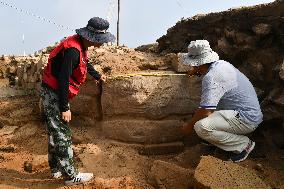
T?RKIYE-ISTANBUL-ARCHEOLOGICAL PARK-EXCAVATION

T?RKIYE-ISTANBUL-ARCHEOLOGICAL PARK-EXCAVATION

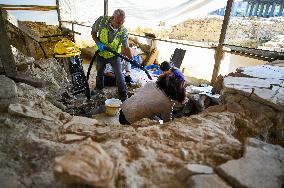
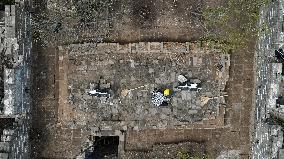
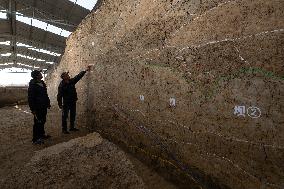
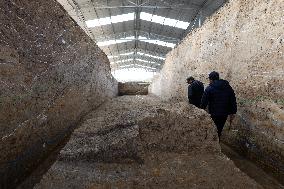
(240802) -- ISTANBUL, Aug. 2, 2024 Photo by Xinhua/ABACAPRESS.COM) -- Archeologists work at relic site near the Haydarpasa Train Station in Istanbul, T

  •  
Archeologists And Workers Restore Great Wall - China

Archeologists And Workers Restore Great Wall - China

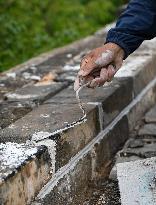
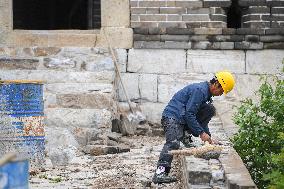
A repairer works at the Jiankou section of the Great Wall in Beijing, capital of China, July 1, 2024. Forty years ago, a campaign to protect the Great Wall with the help of social funds was launched in Beijing. Today, social forces still play a crucial role in the Great Wall protection and restoration. An ongoing restoration project of the Jiankou section of the Great Wall adopts a "simultaneous archaeology and restoration" approach, where archaeological work is completed on a section before restoration begins. The restoration project, with the participation of research institutions, universities and social organizations engaged in non-profit activities, is scheduled to be completed in 2026. Photo by Chen Zhonghao/Xinhua/ABACAPRESS.COM

  •  
Archeologists And Workers Restore Great Wall - China

Archeologists And Workers Restore Great Wall - China

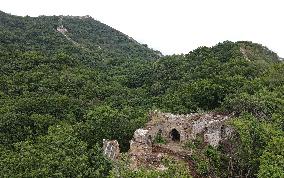
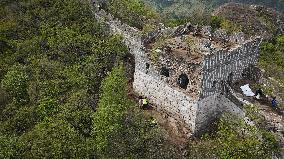
An aerial drone photo taken on July 1, 2024 shows a watch tower of the Jiankou section of the Great Wall in Beijing, capital of China. Forty years ago, a campaign to protect the Great Wall with the help of social funds was launched in Beijing. Today, social forces still play a crucial role in the Great Wall protection and restoration. An ongoing restoration project of the Jiankou section of the Great Wall adopts a "simultaneous archaeology and restoration" approach, where archaeological work is completed on a section before restoration begins. The restoration project, with the participation of research institutions, universities and social organizations engaged in non-profit activities, is scheduled to be completed in 2026. Photo by Chen Zhonghao/Xinhua/ABACAPRESS.COM

  •  
Archeologists And Workers Restore Great Wall - China

Archeologists And Workers Restore Great Wall - China

Workers cover the newly laid bricks with woven bags to shelter from the rain at the Jiankou section of the Great Wall in Beijing, capital of China, July 2, 2024. Forty years ago, a campaign to protect the Great Wall with the help of social funds was launched in Beijing. Today, social forces still play a crucial role in the Great Wall protection and restoration. An ongoing restoration project of the Jiankou section of the Great Wall adopts a "simultaneous archaeology and restoration" approach, where archaeological work is completed on a section before restoration begins. The restoration project, with the participation of research institutions, universities and social organizations engaged in non-profit activities, is scheduled to be completed in 2026. Photo by Chen Zhonghao/Xinhua/ABACAPRESS.COM

  •  
Archeologists And Workers Restore Great Wall - China

Archeologists And Workers Restore Great Wall - China

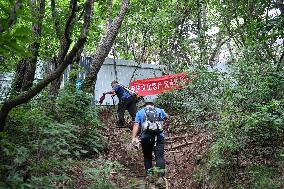
Workers walk on the Jiankou section of the Great Wall in Beijing, capital of China, July 2, 2024. Forty years ago, a campaign to protect the Great Wall with the help of social funds was launched in Beijing. Today, social forces still play a crucial role in the Great Wall protection and restoration. An ongoing restoration project of the Jiankou section of the Great Wall adopts a "simultaneous archaeology and restoration" approach, where archaeological work is completed on a section before restoration begins. The restoration project, with the participation of research institutions, universities and social organizations engaged in non-profit activities, is scheduled to be completed in 2026. Photo by Chen Zhonghao/Xinhua/ABACAPRESS.COM

  •  
Archeologists And Workers Restore Great Wall - China

Archeologists And Workers Restore Great Wall - China

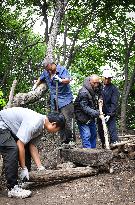
Workers transport an excavated stone at an archaelogical site at the Jiankou section of the Great Wall in Beijing, capital of China, July 2, 2024. Forty years ago, a campaign to protect the Great Wall with the help of social funds was launched in Beijing. Today, social forces still play a crucial role in the Great Wall protection and restoration. An ongoing restoration project of the Jiankou section of the Great Wall adopts a "simultaneous archaeology and restoration" approach, where archaeological work is completed on a section before restoration begins. The restoration project, with the participation of research institutions, universities and social organizations engaged in non-profit activities, is scheduled to be completed in 2026. Photo by Chen Zhonghao/Xinhua/ABACAPRESS.COM

  •  
Archeologists And Workers Restore Great Wall - China

Archeologists And Workers Restore Great Wall - China

Archaeologists arrive at an archaelogical site at the Jiankou section of the Great Wall in Beijing, capital of China, July 2, 2024. Forty years ago, a campaign to protect the Great Wall with the help of social funds was launched in Beijing. Today, social forces still play a crucial role in the Great Wall protection and restoration. An ongoing restoration project of the Jiankou section of the Great Wall adopts a "simultaneous archaeology and restoration" approach, where archaeological work is completed on a section before restoration begins. The restoration project, with the participation of research institutions, universities and social organizations engaged in non-profit activities, is scheduled to be completed in 2026. Photo by Chen Zhonghao/Xinhua/ABACAPRESS.COM

  •  
Archeologists And Workers Restore Great Wall - China

Archeologists And Workers Restore Great Wall - China

An aerial drone photo taken on April 30, 2024 shows workers working at an archaelogical site of a watch tower of the Jiankou section of the Great Wall in Beijing, capital of China. Forty years ago, a campaign to protect the Great Wall with the help of social funds was launched in Beijing. Today, social forces still play a crucial role in the Great Wall protection and restoration. An ongoing restoration project of the Jiankou section of the Great Wall adopts a "simultaneous archaeology and restoration" approach, where archaeological work is completed on a section before restoration begins. The restoration project, with the participation of research institutions, universities and social organizations engaged in non-profit activities, is scheduled to be completed in 2026. Photo by Chen Zhonghao/Xinhua/ABACAPRESS.COM

  •  
Archeologists And Workers Restore Great Wall - China

Archeologists And Workers Restore Great Wall - China

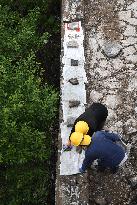
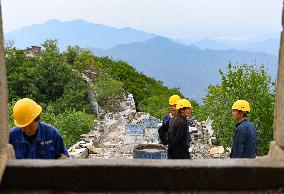
Repairers work at the Jiankou section of the Great Wall in Beijing, capital of China, July 2, 2024. Forty years ago, a campaign to protect the Great Wall with the help of social funds was launched in Beijing. Today, social forces still play a crucial role in the Great Wall protection and restoration. An ongoing restoration project of the Jiankou section of the Great Wall adopts a "simultaneous archaeology and restoration" approach, where archaeological work is completed on a section before restoration begins. The restoration project, with the participation of research institutions, universities and social organizations engaged in non-profit activities, is scheduled to be completed in 2026. Photo by Chen Zhonghao/Xinhua/ABACAPRESS.COM

  •  
Archeologists And Workers Restore Great Wall - China

Archeologists And Workers Restore Great Wall - China

An aerial drone photo taken on July 1, 2024 shows the Jiankou section of the Great Wall in Beijing, capital of China. Forty years ago, a campaign to protect the Great Wall with the help of social funds was launched in Beijing. Today, social forces still play a crucial role in the Great Wall protection and restoration. An ongoing restoration project of the Jiankou section of the Great Wall adopts a "simultaneous archaeology and restoration" approach, where archaeological work is completed on a section before restoration begins. The restoration project, with the participation of research institutions, universities and social organizations engaged in non-profit activities, is scheduled to be completed in 2026. Photo by Chen Zhonghao/Xinhua/ABACAPRESS.COM

  •  
Archeologists And Workers Restore Great Wall - China

Archeologists And Workers Restore Great Wall - China

An aerial drone photo taken on April 30, 2024 shows a worker doing archaelogical work on a watch tower of the Jiankou section of the Great Wall in Beijing, capital of China. Forty years ago, a campaign to protect the Great Wall with the help of social funds was launched in Beijing. Today, social forces still play a crucial role in the Great Wall protection and restoration. An ongoing restoration project of the Jiankou section of the Great Wall adopts a "simultaneous archaeology and restoration" approach, where archaeological work is completed on a section before restoration begins. The restoration project, with the participation of research institutions, universities and social organizations engaged in non-profit activities, is scheduled to be completed in 2026. Photo by Chen Zhonghao/Xinhua/ABACAPRESS.COM

  •  
Archeologists And Workers Restore Great Wall - China

Archeologists And Workers Restore Great Wall - China

A repairer works at the Jiankou section of the Great Wall in Beijing, capital of China, July 2, 2024. Forty years ago, a campaign to protect the Great Wall with the help of social funds was launched in Beijing. Today, social forces still play a crucial role in the Great Wall protection and restoration. An ongoing restoration project of the Jiankou section of the Great Wall adopts a "simultaneous archaeology and restoration" approach, where archaeological work is completed on a section before restoration begins. The restoration project, with the participation of research institutions, universities and social organizations engaged in non-profit activities, is scheduled to be completed in 2026. Photo by Chen Zhonghao/Xinhua/ABACAPRESS.COM

  •  
CHINA-ANYANG-AMERICAN CURATORS-YINXU-VISIT

CHINA-ANYANG-AMERICAN CURATORS-YINXU-VISIT

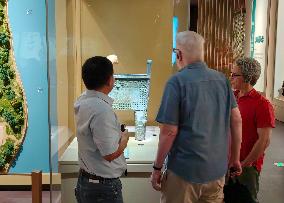
(240519) -- ANYANG, May 19, 2024 (Xinhua) -- Tang Jigen, one of China's most senior archeologists on Shang Dynasty (1600 B.C.-1046 B.C.), introduces Simuxin Ding, an ancient bronze vessel, to Chase Robinson, the director of the National Museum of Asian Art in the United States, at the Yinxu Museum in Anyang, central China's Henan Province, May 17, 2024. TO GO WITH "Feature: Senior American curators visit Yinxu for inter-museum collaboration" (Xinhua/Zhai Xiang)

  •  

Loulan demystified -- A rare glimpse of Xinjiang history

STORY: Loulan demystified -- A rare glimpse of Xinjiang history SHOOTING TIME: Earlier footage DATELINE: April 9, 2024 LENGTH: 00:01:07 LOCATION: URUMQI, China CATEGORY: CULTURE SHOTLIST: 1. various of the Loulan Ruins STORYLINE: The Loulan Ruins in northwest China's Xinjiang Uygur Autonomous Region are among the greatest historical mysteries in the world, captivating archeologists and historians worldwide. The ruins were discovered by Swedish explorer Sven Hedin in the Taklimakan Desert in the early 20th century, sparking a global craze for related studies. Once a flourishing oasis state during the Han Dynasty (202 BC-220 AD), Loulan thrived for centuries before fading out in history. Known as the "Oriental Pompeii," Loulan city, believed to be the capital of the Loulan Kingdom, flourished at the crossroads of the ancient Silk Road routes, earning acclaim as the "dawn of civilization in the Middle Ages." Now the once flourishing city has become a heap of ruins. Seen from above, the large settlement c

  •  
EGYPT-GIZA-MENKAURE PYRAMID-CLADDING PROJECT-DEBATE

EGYPT-GIZA-MENKAURE PYRAMID-CLADDING PROJECT-DEBATE

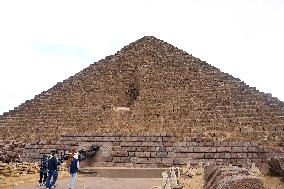
(240201) -- GIZA, Feb. 1, 2024 (Xinhua) -- This photo taken on Jan. 31, 2024 shows the Pyramid of Menkaure in Giza, Egypt. The plan of Egypt's Supreme Council of Antiquities (SCA) to clad the Pyramid of Menkaure, one of the famed three pyramids of Giza, with granite blocks raised debate in the country as some archeologists are concerned it would ruin the originality of the 4,500-year-old monument. (Xinhua/Ahmed Gomaa)

  •  
EGYPT-GIZA-MENKAURE PYRAMID-CLADDING PROJECT-DEBATE

EGYPT-GIZA-MENKAURE PYRAMID-CLADDING PROJECT-DEBATE

(240201) -- GIZA, Feb. 1, 2024 (Xinhua) -- Tourists visit the Pyramid of Menkaure in Giza, Egypt, Jan. 31, 2024. The plan of Egypt's Supreme Council of Antiquities (SCA) to clad the Pyramid of Menkaure, one of the famed three pyramids of Giza, with granite blocks raised debate in the country as some archeologists are concerned it would ruin the originality of the 4,500-year-old monument. (Xinhua/Ahmed Gomaa)

  •  
EGYPT-GIZA-MENKAURE PYRAMID-CLADDING PROJECT-DEBATE

EGYPT-GIZA-MENKAURE PYRAMID-CLADDING PROJECT-DEBATE

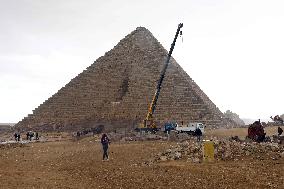
(240201) -- GIZA, Feb. 1, 2024 (Xinhua) -- A crane works in front of the Pyramid of Menkaure in Giza, Egypt, Jan. 31, 2024. The plan of Egypt's Supreme Council of Antiquities (SCA) to clad the Pyramid of Menkaure, one of the famed three pyramids of Giza, with granite blocks raised debate in the country as some archeologists are concerned it would ruin the originality of the 4,500-year-old monument. (Xinhua/Ahmed Gomaa)

  •  
EGYPT-GIZA-MENKAURE PYRAMID-CLADDING PROJECT-DEBATE

EGYPT-GIZA-MENKAURE PYRAMID-CLADDING PROJECT-DEBATE

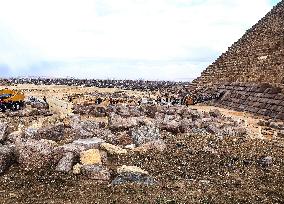
(240201) -- GIZA, Feb. 1, 2024 (Xinhua) -- Collapsed stones are seen in front of the Pyramid of Menkaure in Giza, Egypt, Jan. 31, 2024. The plan of Egypt's Supreme Council of Antiquities (SCA) to clad the Pyramid of Menkaure, one of the famed three pyramids of Giza, with granite blocks raised debate in the country as some archeologists are concerned it would ruin the originality of the 4,500-year-old monument. (Xinhua/Ahmed Gomaa)

  •  
XINHUA PHOTOS OF THE DAY

XINHUA PHOTOS OF THE DAY

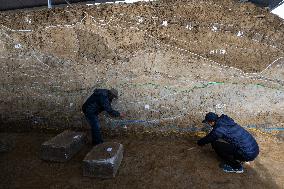
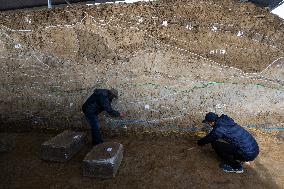
(231206) -- BEIJING, Dec. 6, 2023 (Xinhua) -- Archeologists work at the relics site of the Xiongjialing Dam in Jingmen, central China's Hubei Province, Dec. 4, 2023. The Xiongjialing Dam, which was initially built around 5,100 years ago, is part of the Qujialing relics site in the city of Jingmen, central China's Hubei Province. The dam, complete with a reservoir and spillway, has been identified as China's earliest known water conservancy project. The design of the dam suggests that ancient people in the area had learned to harness water based on the landform rather than simply implementing measures to defend themselves against floods, said He Nu, a researcher with the Institute of Archaeology, Chinese Academy of Social Sciences. (Xinhua/Xiao Yijiu)

  •  
CHINA-HUBEI-JINGMEN-QUJIALING RELICS SITE-ANCIENT DAM (CN)

CHINA-HUBEI-JINGMEN-QUJIALING RELICS SITE-ANCIENT DAM (CN)

(231205) -- JINGMEN, Dec. 5, 2023 (Xinhua) -- Archeologists work at the relics site of the Xiongjialing Dam in Jingmen, central China's Hubei Province, Dec. 4, 2023. The Xiongjialing Dam, which was initially built around 5,100 years ago, is part of the Qujialing relics site in the city of Jingmen, central China's Hubei Province. The dam, complete with a reservoir and spillway, has been identified as China's earliest known water conservancy project. The design of the dam suggests that ancient people in the area had learned to harness water based on the landform rather than simply implementing measures to defend themselves against floods, said He Nu, a researcher with the Institute of Archaeology, Chinese Academy of Social Sciences. (Xinhua/Xiao Yijiu)

  •  
CHINA-HUBEI-JINGMEN-QUJIALING RELICS SITE-ANCIENT DAM (CN)

CHINA-HUBEI-JINGMEN-QUJIALING RELICS SITE-ANCIENT DAM (CN)

(231205) -- JINGMEN, Dec. 5, 2023 (Xinhua) -- Archeologists work at the relics site of the Xiongjialing Dam in Jingmen, central China's Hubei Province, Dec. 4, 2023. The Xiongjialing Dam, which was initially built around 5,100 years ago, is part of the Qujialing relics site in the city of Jingmen, central China's Hubei Province. The dam, complete with a reservoir and spillway, has been identified as China's earliest known water conservancy project. The design of the dam suggests that ancient people in the area had learned to harness water based on the landform rather than simply implementing measures to defend themselves against floods, said He Nu, a researcher with the Institute of Archaeology, Chinese Academy of Social Sciences. (Xinhua/Xiao Yijiu)

  •  
CHINA-HUBEI-JINGMEN-QUJIALING RELICS SITE-ANCIENT DAM (CN)

CHINA-HUBEI-JINGMEN-QUJIALING RELICS SITE-ANCIENT DAM (CN)

(231205) -- JINGMEN, Dec. 5, 2023 (Xinhua) -- Archeologists work at the relics site of the Xiongjialing Dam in Jingmen, central China's Hubei Province, Dec. 4, 2023. The Xiongjialing Dam, which was initially built around 5,100 years ago, is part of the Qujialing relics site in the city of Jingmen, central China's Hubei Province. The dam, complete with a reservoir and spillway, has been identified as China's earliest known water conservancy project. The design of the dam suggests that ancient people in the area had learned to harness water based on the landform rather than simply implementing measures to defend themselves against floods, said He Nu, a researcher with the Institute of Archaeology, Chinese Academy of Social Sciences. (Xinhua/Xiao Yijiu)

  •  

580 pieces of relics retrieved from ancient shipwrecks

STORY: 580 pieces of relics retrieved from ancient shipwrecks DATELINE: Oct. 19, 2023 LENGTH: 00:01:59 LOCATION: HAIKOU, China CATEGORY: CULTURE SHOTLIST: 1. various of the unearthed relics 2. various of archeologists conducting the mission STORYLINE: Nearly 580 pieces (sets) of cultural relics have been unearthed from two ancient shipwrecks discovered in the South China Sea, according to the National Cultural Heritage Administration on Thursday. The relics, which include porcelain, pottery, and timber, provide concrete evidence that the Chinese ancestors explored, utilized, and traded in the South China Sea, said the administration at a press conference. The two shipwrecks from the Ming Dynasty (1368-1644) were found about 1,500 meters below sea level, it said, adding that they are an important witness of trade and cultural exchanges along the ancient Maritime Silk Road. Xinhua News Agency correspondents reporting from Haikou, China. (XHTV)

  •  
Fossils of new elephant species found in Mie Pref.

Fossils of new elephant species found in Mie Pref.

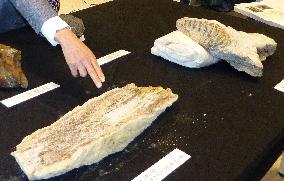
TSU, Japan - The Mie prefectural government shows on Jan. 20, 2014, a fossilized tusk base (left) and tooth of what is believed to be a newly discovered species of elephant that has been found in Suzuka in the central Japan prefecture. Archeologists say the elephant existed about 2.4 million years ago.

  •  
Remains found to be of Richard III

Remains found to be of Richard III

LEICESTER, Britain - People line up in front of Leicester Cathedral in Leicester, England, on Feb. 15, 2013, to view an exhibition on Richard III (1452-1485) in a neighboring building. Archeologists from the University of Leicester said on Feb. 4, 2013, that remains unearthed in Leicester in September 2012 are of the England monarch.

  •  
Remains found to be of Richard III

Remains found to be of Richard III

LEICESTER, Britain - A Feb. 15, 2013, photo shows the car park where a set of human remains were found in Leicester, England, in September 2012. Archeologists from the University of Leicester said on Feb. 4, 2013, the remains are of Richard III (1452-1485).

  •  
Stone tools found in Shimane thought to date back 120,000 years

Stone tools found in Shimane thought to date back 120,000 years

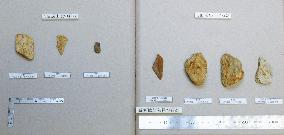
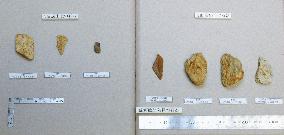
MATSUE, Japan - Photo shows stone tools believed to be the oldest in Japan. A team of Japanese archeologists and researchers said Sept. 29, 2009, they believe they have unearthed the oldest stone tools in Japan -- 20 artifacts dating back some 120,000 years -- in Izumo, Shimane Prefecture, suggesting humans existed in Japan long before 40,000 years ago as currently thought by researchers.

  •  
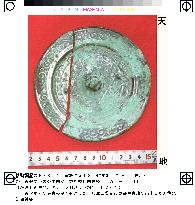
Mirror from Hyogo tomb mound identified as Chinese

Mirror from Hyogo tomb mound identified as Chinese

KOBE, Japan - This mirror, unearthed from a tomb mound in Toyooka, Hyogo Prefecture in 1917, was made in China some 2,000 years ago and is the oldest mirror discovered in the northern Kinki region, western Japan, archeologists said Feb. 20. The mirror discovered at the Morio mound was determined by experts to have been made during China's Wang Mang period (A.D. 8-23) based on its form and inscriptions.

  •  
Dating of wood in Horyuji pagoda challenges rebuilding theory

Dating of wood in Horyuji pagoda challenges rebuilding theory

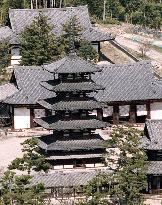
NARA, Japan - Archeologists said Feb. 20 that wood used for a central pillar of the five-story pagoda (front) at Horyuji Temple in Nara Prefecture was felled in 594, a finding that challenges the prevailing theory that the temple was rebuilt after a fire in 670. The Nara National Cultural Properties Research Institute said its discovery lends support to the hypothesis that the original compound of the world's oldest wooden building remains intact to this day.

  •  
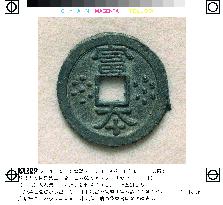
Coins from late 7th century judged to be Japan's oldest

Coins from late 7th century judged to be Japan's oldest

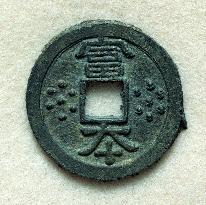
Archeologists say Jan. 19 ''fuhonsen'' copper coins unearthed in Nara Prefecture that were long believed to be amulets actually date from the late 7th century, surpassing in age the oldest known currency minted in Japan in the early 8th century.

  •  

Exploring 700-year-old shipwreck underwater with archeologists

STORY: Exploring 700-year-old shipwreck underwater with archeologists DATELINE: Oct. 14, 2022 LENGTH: 00:01:54 LOCATION: FUZHOU, China CATEGORY: SOCIETY/CULTURE SHOTLIST: 1. various of Zhangzhou City 2. various of the Shengbeiyu shipwreck research team working 3. STANDUP (English): ZHAO XUETONG, Xinhua correspondent 4. SOUNDBITE 1 (Chinese): CHEN HAO, Archaeologist of Fujian Museum 5. SOUNDBITE 2 (Chinese): RUAN YONGHAO, Researcher of Zhangzhou Cultural Heritage Center 6. SOUNDBITE 3 (Chinese) LIANG GUOQING, Head of Shengbeiyu shipwreck research team STORYLINE: STANDUP (English): ZHAO XUETONG, Xinhua correspondent "Some 700 years ago, a ship full of porcelain sank in the sea near where I am in Zhangzhou City, east China's Fujian Province. With the ongoing excavation, a better story of the Maritime Silk Road is decoding. Diving, filming, and collecting. How do archaeologists work underwater? Let's find it out." SOUNDBITE 1 (Chinese): CHEN HAO, Archaeologist of Fujian Museum "Here are some fittings of the t

  •  

4th century "rare" Roman mosaic floor unearthed in Syria's Homs

STORY: 4th century "rare" Roman mosaic floor unearthed in Syria's Homs DATELINE: Oct. 13, 2022 LENGTH: 0:01:58 LOCATION: HOMS, Syria CATEGORY: CULTURE SHOTLIST: 1. various of discovered site of mosaic pieces 2. SOUNDBITE 1 (ARABIC): HUMMAM SAAD, Director of the excavation and archaeological studies at the Directorate General for Antiquities and Museums 3. various of the site 4. SOUNDBITE 2 (ARABIC): HUSSAM HAMISH, Director of Homs' archeology department 5. various of the workers STORYLINE: A well-preserved Roman-era mosaic panel was discovered in a residential suburb in the Syrian central province of Homs, local antiquities authorities announced on Wednesday. The relic, which dates back to the fourth century, is inlaid with thousands of colored mosaic pieces made of small grains and glass in a pattern unique among existing excavations, Syrian archeologists told Xinhua in the city of al-Rastan, where it was discovered. Twenty meters long and six meters wide, the flooring panel belongs to a building

  •  
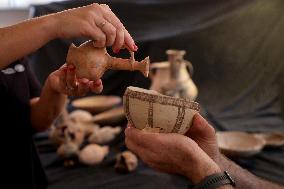
MIDEAST-JERUSALEM-ARCHEOLOGY-OPIUM REMAINS

MIDEAST-JERUSALEM-ARCHEOLOGY-OPIUM REMAINS

(220920) -- JERUSALEM, Sept. 20, 2022 (Xinhua) -- Archeologists show pottery vessels in which opium remains were found, in Jerusalem, on Sept. 20, 2022. TO GO WITH "Israel finds 'world's earliest' record of opium use" (Photo by Gil Cohen Magen/Xinhua)

  •  
CHINA-SHAANXI-SHIMAO RUINS (CN)

CHINA-SHAANXI-SHIMAO RUINS (CN)

(220806) -- SHENMU, Aug. 6, 2022 (Xinhua) -- Archeologists measure a recently-excavated stone carvings at the Shimao ruins, an important prehistoric site in Shenmu City, northwest China's Shaanxi Province, Aug. 6, 2022. Shimao ruins, located in Shenmu of northwest China's Shaanxi Province, were a neolithic city built about 4,300 years ago and abandoned roughly 300 years later during the Xia Dynasty (2070-1600 B.C.), the first dynasty in China described in historical chronicles. Over the past 10 years, excavators have uncovered a stone city with immense fortifications and sophisticated infrastructure, thousands of luxurious artifacts and a 230-foot-high stepped pyramid. "The site's early date and peripheral location were surprising since Chinese civilization was thought to have first developed in the Central Plains around 500 years after Shimao's founding," read an article in the Archaeology journal. (Xinhua/Zhang Bowen)

  •  

"Unprecedented" Phoenician cemetery comes to light in southern Spain

STORY: "Unprecedented" Phoenician cemetery comes to light in southern Spain DATELINE: April 30, 2022 LENGTH: 00:01:43 LOCATION: SEVILLE, Spain CATEGORY: CULTURE SHOTLIST: 1. various of Phoenician-Punic cemetery dating back some 2,500 years discovered in the village of Osuna, near Seville, Spain, in the known area of the Roman city of Urso 2. various of the mayor of Osuna, Rosario Andujar, with archaeologists and municipal authorities in the area of the discovery 3. various of the details of the set of graves in the cemetery 4. Pictures are courtesy of Osuna City Council, Province of Sevilla (Spain) STORYLINE: An "unprecedented" and "unique" Phoenician-Punic cemetery dating back some 2,500 years has been discovered in an inland area of the Andalusia region in southern Spain. Workers upgrading water pipes in the town of Osuna, near Seville, came across the remains of the 5th century BC burial site that archeologists say are in an "unprecedented" state of conservation. In a press note, the culture and herit

  •  
Monograph on Troy research on exhibit at university in west Japan

Monograph on Troy research on exhibit at university in west Japan

A copy of "Troja und Ilion," a monograph on excavations of the ancient city of Troy published in 1904 by German archaeologist Wilhelm Dorpfeld and passed on among generations of key archeologists and researchers, is exhibited at a Tenri University library in Tenri, Nara Prefecture, western Japan, on May 1, 2015. (Kyodo) ==Kyodo

  •  
Japan-Mongolia team finds Genghis Khan military outpost

Japan-Mongolia team finds Genghis Khan military outpost

Koichi Matsuda (R), professor emeritus at Osaka International University and leader of a group of Japanese and Mongolian archeologists, announces in Hirakata, Osaka Prefecture, western Japan, on Feb. 26, 2015, that the remains of a fortress discovered in southwestern Mongolia is most likely a military outpost of Genghis Khan, who founded the Mongol Empire in the 13th century, based on carbon dating of artifacts unearthed at the site. (Kyodo) ==Kyodo

  •  
Stone tools found in Shimane thought to date back 120,000 years

Stone tools found in Shimane thought to date back 120,000 years

MATSUE, Japan - Photo shows stone tools believed to be the oldest in Japan. A team of Japanese archeologists and researchers said Sept. 29, 2009, they believe they have unearthed the oldest stone tools in Japan -- 20 artifacts dating back some 120,000 years -- in Izumo, Shimane Prefecture, suggesting humans existed in Japan long before 40,000 years ago as currently thought by researchers. (Kyodo)

  •  
Mirror from Hyogo tomb mound identified as Chinese

Mirror from Hyogo tomb mound identified as Chinese

KOBE, Japan - This mirror, unearthed from a tomb mound in Toyooka, Hyogo Prefecture in 1917, was made in China some 2,000 years ago and is the oldest mirror discovered in the northern Kinki region, western Japan, archeologists said Feb. 20. The mirror discovered at the Morio mound was determined by experts to have been made during China's Wang Mang period (A.D. 8-23) based on its form and inscriptions.

  •  
Dating of wood in Horyuji pagoda challenges rebuilding theory

Dating of wood in Horyuji pagoda challenges rebuilding theory

NARA, Japan - Archeologists said Feb. 20 that wood used for a central pillar of the five-story pagoda (front) at Horyuji Temple in Nara Prefecture was felled in 594, a finding that challenges the prevailing theory that the temple was rebuilt after a fire in 670. The Nara National Cultural Properties Research Institute said its discovery lends support to the hypothesis that the original compound of the world's oldest wooden building remains intact to this day.

  •  
Traces of 8th century parliament building unearthed

Traces of 8th century parliament building unearthed

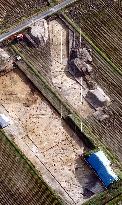
OTSU, Japan - Archeologists say Nov. 22 holes excavated in the town of Shigaraki in Shiga Prefecture, western Japan, indicate the existence of an eighth century parliament building -- about 92 meters long and 12 meters wide, inside what is believed to have been a palace complex of Emperor Shomu.

  •  
Coins from late 7th century judged to be Japan's oldest

Coins from late 7th century judged to be Japan's oldest

Archeologists say Jan. 19 ''fuhonsen'' copper coins unearthed in Nara Prefecture that were long believed to be amulets actually date from the late 7th century, surpassing in age the oldest known currency minted in Japan in the early 8th century. ==Kyodo

  • Main
  • Top
  • Editorial
  • Creative
  • About Us
  • About ILG
  • Terms of use
  • Company
  • BEHIND
  • Price List
  • Single Plan
  • Monthly Plan
  • Services
  • Shooting
  • Rights Clearance
  • Support
  • FAQ
  • How To Buy
  • Contact Us
  • Become a Partner

© KYODO NEWS IMAGES INC

All Rights Reserved.

  • Editorial
  • Olympics
  • News
  • Sports
  • Japan
  • Tech
  • Royal
  • Disaster
  • NorthKorea
  • Old Japan
  • SNS
  • Creative
  • Food
  • Japan
  • Landscape
  • Animal
  • Popular
  • #Ukraine
  • #China
  • #coronavirus
  • #N. Korea
  • #Russia
  • #Thailand
  • #Ukraine
  • #China
  • #coronavirus
  • #N. Korea
  • #Russia
  • #Thailand
  • Food
  • Japan
  • Landscape
  • Animal
  • Olympics
  • News
  • Sports
  • Japan
  • Tech
  • Royal
  • Disaster
  • NorthKorea
  • Old Japan
  • SNS