•  
Photo exhibition on Japan in Switzerland

Photo exhibition on Japan in Switzerland

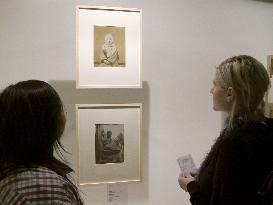
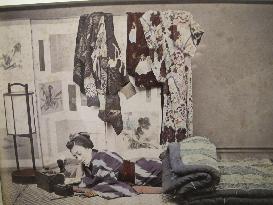
LUGANO, Switzerland - Visitors look at photos capturing life in Japan around the end of the Edo period (1603-1867) and the early Meiji period (1868-1912) at an exhibition in Lugano, southern Switzerland, on Feb. 1, 2011. Some 200 photos at the exhibition, which runs through Feb. 27, include those taken by well-known photographers Felice Beato, Kimbe Kusakabe and others. The photos, which were originally black and white, were later hand-colored.

  •  
Photo exhibition on Japan in Switzerland

Photo exhibition on Japan in Switzerland

LUGANO, Switzerland - Photo showing life in Japan around the end of the Edo period (1603-1867) and the beginning of the Meiji period (1868-1912) is one of some 200 photos, many on public display for the first time, at an exhibition in Lugano, southern Switzerland, on Feb. 1, 2011. Photos at the exhibition, which runs through Feb. 27, include those taken by well-known photographers Felice Beato, Kimbe Kusakabe and others. The photos, which were originally black and white, were later hand-colored.

  •  
Photo exhibition on Japan in Switzerland

Photo exhibition on Japan in Switzerland

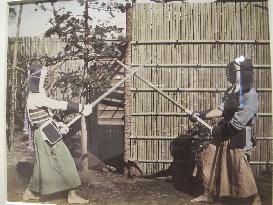
LUGANO, Switzerland - Photo showing life in Japan around the end of the Edo period (1603-1867) and the beginning of the Meiji period (1868-1912) is one of some 200 photos, many on public display for the first time, at an exhibition in Lugano, southern Switzerland, on Feb. 1, 2011. Photos at the exhibition, which runs through Feb. 27, include those taken by well-known photographers Felice Beato, Kimbe Kusakabe and others. The photos, which were originally black and white, were later hand-colored.

  •  
Photo exhibition on Japan in Switzerland

Photo exhibition on Japan in Switzerland

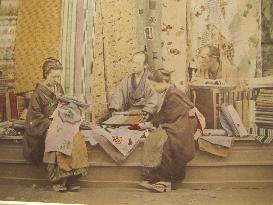
LUGANO, Switzerland - Photo showing life in Japan around the end of the Edo period (1603-1867) and the beginning of the Meiji period (1868-1912) is one of some 200 photos, many on public display for the first time, at an exhibition in Lugano, southern Switzerland, on Feb. 1, 2011. Photos at the exhibition, which runs through Feb. 27, include those taken by well-known photographers Felice Beato, Kimbe Kusakabe and others. The photos, which were originally black and white, were later hand-colored.

  •  
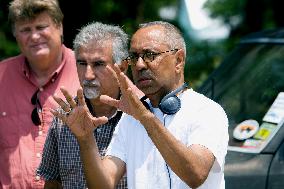
Nights In Rodanthe (2008)

Nights In Rodanthe (2008)

Affonso Beato & George C. Wolfe Film: Nights In Rodanthe (2008) Director: George C. Wolfe 27 June 2008 Date: 27 June 2008

  •  
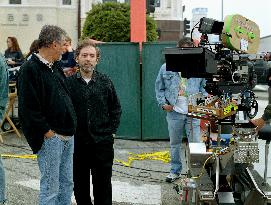
Ghost World (2001)

Ghost World (2001)

Affonso Beato & Terry Zwigoff Film: Ghost World (USA/UK/DE 2001) / Literaturverfilmung, Comicverfilmung (Based On The Comic Book By Daniel Clowes) Director: Terry Zwigoff 16 June 2001 Date: 16 June 2001

  •  
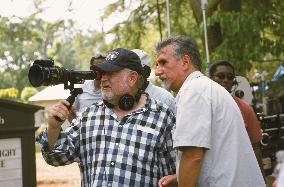
THE FIGHTING TEMPTATIONS

THE FIGHTING TEMPTATIONS

THE FIGHTING TEMPTATIONS Director JONATHAN LYNN, Cinematographer AFFONSO BEATO THE FIGHTING TEMPTATIONS Date: 2003

  •  
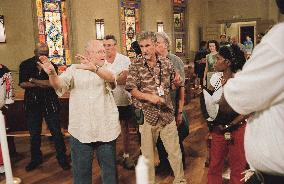
THE FIGHTING TEMPTATIONS

THE FIGHTING TEMPTATIONS

THE FIGHTING TEMPTATIONS Director JONATHAN LYNN, Cinematographer AFFONSO BEATO THE FIGHTING TEMPTATIONS Date: 2003

  •  
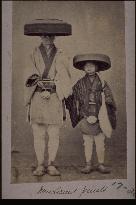
Father and a son on a pilgrimage

Father and a son on a pilgrimage

Taken by Beato. Entitled Pilgrims . These people are pilgrim beggars called Hachitataki . They chanted from the scriptures in front of houses in priestly vestments and begged while ringing bells hanging in front of their stomachs. From the floor, this may have been taken at Ueno Hikoma's studio.==Date:unknown, Place:unknown, Photo:F. Beato, (Credit:Nagasaki University Library/Kyodo News Images) [Cabinet Number17‐26‐0]

  •  
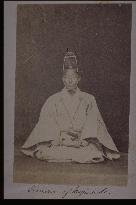
NAGASAKI MAGISTRATE

NAGASAKI MAGISTRATE

Taken by Beato. Written The Bugyo (magistrate) of Nagasaki . This official arrived in Nagasaki in May 1863 and became Nagasaki Bugyo from Metsuke and Konando Todori. He is Hattori Nagatonokami (Tsunesumi, Saemonsa) who left Nagasaki in January 1866.==Date:1864-6, Place:Nagasaki, Photo:F. Beato, (Credit:Nagasaki University Library/Kyodo News Images) [Cabinet Number17‐30‐0]

  •  
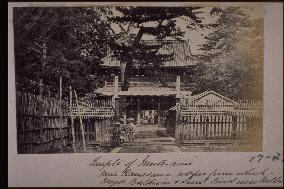
Takanawa tozenji temple

Takanawa tozenji temple

Taken by Beato. Written The temple in Matsuami near Kanazawa road where Major Bordwan and Lieutenant Bird were killed . This is the gate of Tozenji in Takanawa where the British Consulate was temporally established.==Date:unknown, Place:Tokyo, Photo:F. Beato, (Credit:Nagasaki University Library/Kyodo News Images) [Cabinet Number17‐21‐0]

  •  
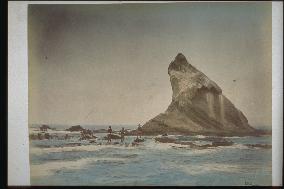
Eboshiiwa, at Enoshima

Eboshiiwa, at Enoshima

A small island in Sagami Bay, Enoshima was a place of faith from the ancient days, but after the Edo era, pilgrimage to the island also became popular among the common people. Felix Beato, who left many photos of Japan at the end of the Tokugawa era, introduced this island as the island of pictures (E no shima) , and strongly recommended people to visit the site by writing that it is worth a visit .==Date:unknown, Place:Enoshima, Photo:Ogawa Kazumasa, (Credit:Nagasaki University Library/Kyodo News Images) [Cabinet Number7‐16‐0]

  •  
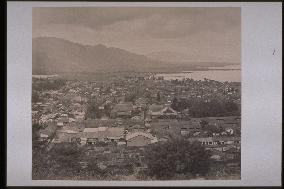
Streets,Houses of Otsu

Streets,Houses of Otsu

View from the east of Takakannon (official name: Chikamatsudera) looking northwest. Along with the Kannondo of Enjoji, this temple was a popular place to view Lake Biwa. The army barracks where the ninth infantry regiment was stationed in 1875 are visible, but the Lake Biwa Waterway (completed in 1886) has not yet been constructed, indicating that this photograph was taken between those two dates.==Date:unknown, Place:Otsu, Photo:F. Beato, (Credit:Nagasaki University Library/Kyodo News Images) [Cabinet Number96‐74‐0]

  •  
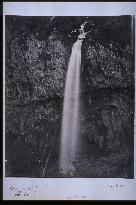
The Kegon Falls

The Kegon Falls

Kegon Falls is one of the three major waterfalls of Japan, along with Nachi Falls (Wakayama Prefecture) and Fukuroda Falls (Ibaragi Prefecture). It is roughly 97m high. Local resident Hoshino Gorobei built the road along the basin of the falls in 1900 and opened a teahouse. The elevator currently in service started operation in in 1930. Fujimura Misao committed suicide here in 1903.==Date:about 1877, Place:Nikko, Photo:F. Beato/R. Stillfried, (Credit:Nagasaki University Library/Kyodo News Images) [Cabinet Number96‐76‐0]

  •  
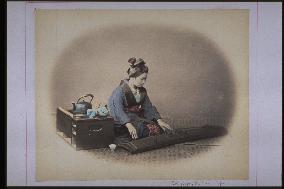
A woman playing the koto,and a box brazier

A woman playing the koto,and a box brazier

The koto is a traditional stringed instrument. It has 13 strings. The bridges place on the body under the strings determine the pitch. Fine tuning is done by adjusting the bridges. Performers wear picks on the thumb, index finger and middle finger of the right hand.==Date:unknown, Place:unknown, Photo:F. Beato, (Credit:Nagasaki University Library/Kyodo News Images) [Cabinet Number96‐73‐0]

  •  
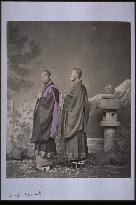
Priests

Priests

This Yokohama photograph is entitled (in pen), Priests- Buddhists and shows two young priests. The studio backdrop suggests that it was taken by Stillfried in the early Meiji Period.==Date:about 1870, Place:unknown, Photo:F. Beato, (Credit:Nagasaki University Library/Kyodo News Images) [Cabinet Number96‐72‐0]

  •  
A mother carrying her child on her back

A mother carrying her child on her back

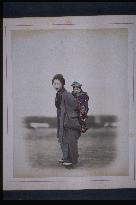
The woman carrying a child is wearing a haori jacket. The fact that the child is wearing a kimono with a family crest indicates that it was some auspicious occasion.==Date:unknown, Place:unknown, Photo:F. Beato, (Credit:Nagasaki University Library/Kyodo News Images) [Cabinet Number96‐71‐0]

  •  
A soldier and Mt. Fuji

A soldier and Mt. Fuji

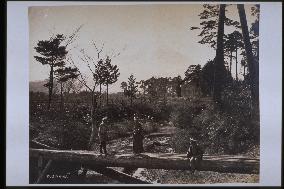
Research conducted by the Yokohama Archives of History indicates that this photograph is a view of Mt. Fuji from Fuji-Yoshida in Yamanashi Prefecture. From ancient times, the path to the summit of Mt. Fuji started in Fuji-Yoshida, and this seems to have been taken somewhere along the path. A samurai and two men are on the log bridge over the stream. Taken by Felix Beato.==Date:about 1870, Place:Yamanashi, Photo:F. Beato, (Credit:Nagasaki University Library/Kyodo News Images) [Cabinet Number96‐62‐0]

  •  
Women holding umbrellas

Women holding umbrellas

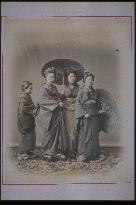
The small umbrellas held by the women, called bangasa, were popular during the Edo Period. The collar of the kimono worn by the woman second from left is very colorful. The two women on the right are wearing plain kimono.==Date:about 1870, Place:unknown, Photo:F. Beato, (Credit:Nagasaki University Library/Kyodo News Images) [Cabinet Number96‐59‐0]

  •  
Awase-kagami (a double-reflecting method)

Awase-kagami (a double-reflecting method)

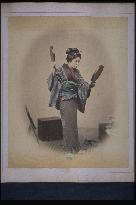
This is the same as photograph #4054. The circumference has been trimmed.==Date:unknown, Place:unknown, Photo:F. Beato, (Credit:Nagasaki University Library/Kyodo News Images) [Cabinet Number96‐55‐0]

  •  
Nagasaki Habour seen from Mt. Hoshitori

Nagasaki Habour seen from Mt. Hoshitori

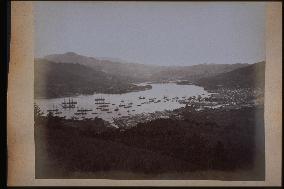
Nagasaki Port viewed from Mt. Hoshitori (Mt. Ohira at the time of the photo) overlooking the Oura foreign settlement. The promenade by Dejima built in 1867 and a corral for horses can be seen. Shinchi is to its right and the British Consulate is behind the foreign settlement. At the mouth of Urakami River in the back of the bay lies Urakami-Shinden (present-day Mori-machi). Since Dejima-Shinbashi Bridge built in 1869 is not visible, this photo must have been taken around 1868.==Date:about 1868, Place:Nagasaki, Photo: F. Beato, (Credit:Nagasaki University Library/Kyodo News Images)

  •  
A farmer in a straw raincoat,with a straw cap on

A farmer in a straw raincoat,with a straw cap on

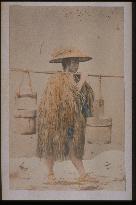
A man is carrying water pails with a balancing pole. He is wearing a bamboo hat and a straw raincoat. The unusually short ropes and short length of the pole suggest that it was being used for some special purpose, perhaps drawing seawater to make salt.==Date:unknown, Place:unknown, Photo:F. Beato, (Credit:Nagasaki University Library/Kyodo News Images) [Cabinet Number96‐11‐0]

  •  
Girls dancing to the shamisen

Girls dancing to the shamisen

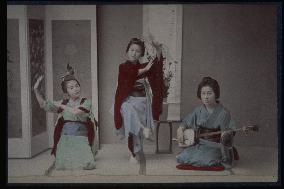
A full moon over a eulalia field is painted on a three panel byobu screen. The season is autumn. When a dancer pulls up the sleeves with a cord or doffs the upper half of the kimono, the music is probably a lively melody such as haiya or kappore. The dancers are posing.==Date:unknown, Place:unknown, Photo:F. Beato, (Credit:Nagasaki University Library/Kyodo News Images) [Cabinet Number96‐12‐0]

  •  
A teahouse at Oji

A teahouse at Oji

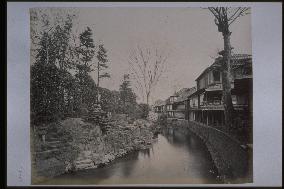
The garden of Ogiya Restaurant is on the left. The water is flowing through grooves in the rocks apparently made by long exposure. Felice Beato took a similar photograph of the garden at the beginning of the Meiji Period and added the caption: Stream with a rushing waterfall. Also, a similar photograph was published in an 1872 issue of The Far East entitled, Waterfall at O-jee from the Tea-House Garden. Taken between 1877 and 1887 (second decade of the Meiji Period).==Date:unknown, Place:Tokyo, Photo:R. Stillfried, (Credit:Nagasaki University Library/Kyodo News Images) [Cabinet Number78‐34‐0]

  •  
Subashiri

Subashiri

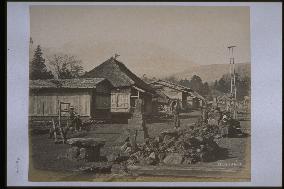
Distant view of Mt. Fuji from Subashiri in Oyama-machi. The town of Subashiri flourished as the entranceway to Mt. Fuji. It was also on the route over Kagozaka Pass on the Koshu Highway from Gotenba to Yamanashi. Houses and tombstones are visible along the road, as well as a fire bell on the left. Research by the Yokohama Archives of History and the inscription style indicate that this is the work of Felix Beato.==Date:unknown, Place:Shizuoka, Photo:F. Beato, (Credit:Nagasaki University Library/Kyodo News Images) [Cabinet Number78‐18‐0]

  •  
The hundred-step Otokozaka slope at Mt. Atago

The hundred-step Otokozaka slope at Mt. Atago

The stone stairs leading to Atago Shinto Shrine at the top of Mt. Atago. The steps in the centre, Otoko-zaka (Man Slope), are mentioned in old stories and songs as the place where Magaki Heikuro ascended and descended on horseback. The inclination of about 40 degrees seems too steep for a horse. The gently-sloping staircase on the right is Onna-zaka (Woman Slope). There was a third slope called Shin-zaka (New Slope) at the other side of the mountain. One of the photographs in the album sold by Baron Raimund von Stillfried Rathenitz, this may have been taken by Felix Beato in the early years of the Meiji Period.==Date:unknown, Place:Tokyo, Photo:R. Stillfried, (Credit:Nagasaki University Library/Kyodo News Images) [Cabinet Number78‐24‐0]

  •  
The city of Shinagawa facing the sea

The city of Shinagawa facing the sea

View of Tokyo from the northern edge of the Shinagawa Shuku (post town), where inns and rest stops for horses were located. The hill on the left indicates that this photograph was taken from around present-day Yatsuyama Bridge. The street in the foreground is probably the Tokaido Highway. This was taken by Felix Beato before train tracks were laid along the sea following land reclamation. Although Shinagawa Station was originally planned near Shinagawa Shuku, the local people were against the plan and eventually the station was built further north than originally planned. Photographs taken much later from the same angle indicate that the station was built behind the tree in the centre.==Date:unknown, Place:Tokyo, Photo:F. Beato, (Credit:Nagasaki University Library/Kyodo News Images) [Cabinet Number78‐20‐0]

  •  
An inn in Oyama

An inn in Oyama

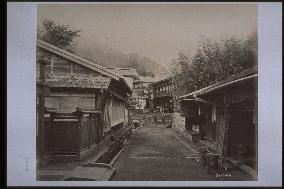
Oyamashuku was a post town located on the northeastern edge of Shizuoka Prefecture at the northern foot of Ashigara Pass. The pass was an important transportation link on Yagurazawa Okan Road. The house in the centre with the sign Itsuya may be an inn, and a teahouse is visible on the right. A house with a kabuki gate is also visible. This may be the Takenoshita district, where there were many inns. The inscription style suggests that this is the work of Felix Beato.==Date:unknown, Place:Shizuoka, Photo:F. Beato, (Credit:Nagasaki University Library/Kyodo News Images) [Cabinet Number78‐19‐0]

  •  
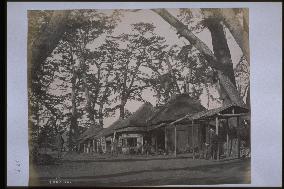
A row of pine trees and teahouses along the Tokaido Road

A row of pine trees and teahouses along the Tokaido Road

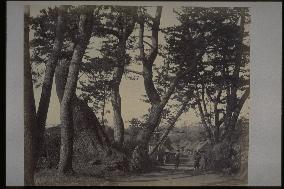
This is a Felice Beato photograph taken somewhere between Hodogaya and Fujisawa, possibly near the post town of Totsuka famous for its pine trees. The shop signs read Issen-meshi (One Sen Food) and Ochazuke (Rice with Green Tea). This was probably made from one of the original plates that Raimund von Stillfried received from Beato and then later sold.==Date:unknown, Place:Fujisawa, Photo:F. Beato, (Credit:Nagasaki University Library/Kyodo News Images) [Cabinet Number78‐9‐0]

  •  
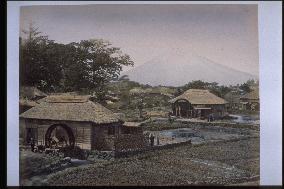
A water mill in Mishima and Mt. Fuji

A water mill in Mishima and Mt. Fuji

Mt. Fuji viewed from Fuji Yoshida City in Yamanashi Prefecture, facing south (?). The location cannot be Mishima City, Shizuoka Prefecture as written at the bottom of the photograph because neither Mt. Hoei nor Mt. Ashitaka are visible. The families living here used watermills to harness the plentiful spring water in the area. The handwritten number and location indicate that this is the work of Felix Beato.==Date:unknown, Place:Shizuoka, Photo:R. Stillfried, (Credit:Nagasaki University Library/Kyodo News Images) [Cabinet Number77‐18‐0]

  •  
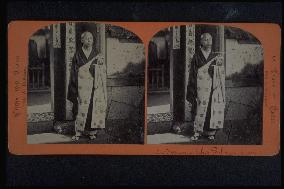
A priest

A priest

A priest standing in front of a temple gate. He is holding a long fan and wearing a priest's robe and long kesa. This is a stereograph taken in Nagasaki by Wilhelm Burger. A photograph depicting the same scene was taken by F. Beato. Probably taken in the mid-Meiji Period.==Date:unknown, Place:Nagasaki, Photo:Wilhelm Burger, (Credit:Nagasaki University Library/Kyodo News Images) [Cabinet Number70‐27‐0]

  •  
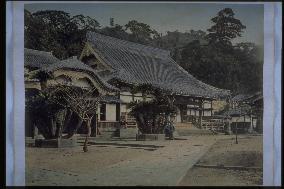
The hondo (inner sanctuary), Daikoji Temple, Nagasaki

The hondo (inner sanctuary), Daikoji Temple, Nagasaki

Daikoji Temple and a man, taken by Uchida Kuichi. There is a photograph in which Ueno Hikoma poses just like the man in this photograph, taken by F. Beato at the end of the Edo Period (Cabinet No:66-27). It is assumed that Kuichi used the same composition in this photograph taken when he visited Nagasaki in 1872. There are the same photos of colored (Cabinet No:15-28, 66-2) and not-colored (Cabinet No:66-3) in collection too.==Date:about 1872, Place:Nagasaki, Photo:Uchida Kuichi, (Credit:Nagasaki University Library/Kyodo News Images) [Cabinet Number66‐31‐0]

  •  
The bell tower at Kofukuji Temple

The bell tower at Kofukuji Temple

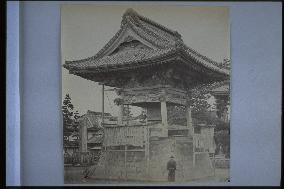
The bell tower at Kofukuji Temple==Date:about 1865, Place:Nagasaki, Photo:F. Beato, (Credit:Nagasaki University Library/Kyodo News Images)

  •  
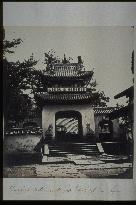
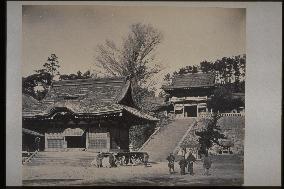
The Sanmon Gate,Sofukuji Temple

The Sanmon Gate,Sofukuji Temple

The Sanmon (Romon) Gate at Sofukuji Temple. Date unknown. The gate was rebuilt in dragon palace gate style in 1849. A famous tourist attraction in Nagasaki, it remains to this day as a nationally designated Important Cultural Asset.==Date:about 1865, Place:Nagasaki, Photo:F. Beato, (Credit:Nagasaki University Library/Kyodo News Images) [Cabinet Number66‐28‐0]

  •  
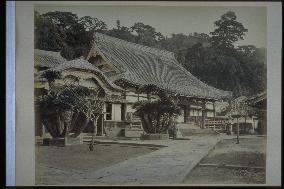
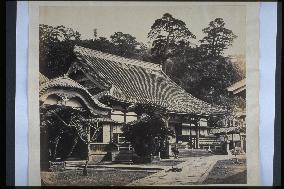
The hondo (inner sanctuary),Daikoji Temple,Nagasaki

The hondo (inner sanctuary),Daikoji Temple,Nagasaki

This is a photograph by Felice Beato of Daikoji Temple. The man standing in front of the lantern on the left is Hikoma Ueno. Seven years later, Kuichi Ikeda would take a photo from exactly the same angle. Interestingly, he, also, had a man standing in the center (refer to Catalog No. 688, 3220, 3222, 3251). He appears to have done so in reference to this photo by Beato.==Date:about 1865, Place:Nagasaki, Photo:F. Beato, (Credit:Nagasaki University Library/Kyodo News Images) [Cabinet Number66‐27‐0]

  •  
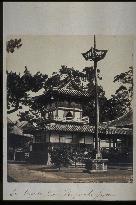
Daionji Temple

Daionji Temple

Daionji Temple==Date:about 1865, Place:Nagasaki, Photo:F. Beato, (Credit:Nagasaki University Library/Kyodo News Images)

  •  
The hondo (inner sanctuary), Daikoji Temple, Nagasaki

The hondo (inner sanctuary), Daikoji Temple, Nagasaki

Daikoji Temple and a man, taken by Uchida Kuichi. There is a photograph in which Ueno Hikoma poses just like the man in this photograph, taken by F. Beato at the end of the Edo Period (Cabinet No:66-27). It is assumed that Kuichi used the same composition in this photograph taken when he visited Nagasaki in 1872. There are the same photos of colored (Cabinet No:15-28, 66-2) and not-colored (Cabinet No:66-3) in collection too.==Date:about 1872, Place:Nagasaki, Photo:Uchida Kuichi, (Credit:Nagasaki University Library/Kyodo News Images) [Cabinet Number66‐2‐0]

  •  
The hondo (inner sanctuary), Daikoji Temple, Nagasaki

The hondo (inner sanctuary), Daikoji Temple, Nagasaki

Daikoji Temple and a man, taken by Uchida Kuichi. There is a photograph in which Ueno Hikoma poses just like the man in this photograph, taken by F. Beato at the end of the Edo Period (Cabinet No:66-27). It is assumed that Kuichi used the same composition in this photograph taken when he visited Nagasaki in 1872. There are the same photos of colored (Cabinet No:15-28, 66-2) and not-colored (Cabinet No:66-3) in collection too.==Date:about 1872, Place:Nagasaki, Photo:Uchida Kuichi, (Credit:Nagasaki University Library/Kyodo News Images) [Cabinet Number66‐3‐0]

  •  
The Yodo River

The Yodo River

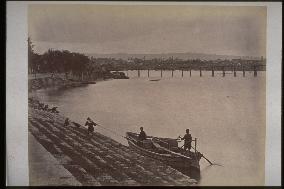
The Yodo River==Date:unknown, Place:Osaka, Photo:F. Beato, (Credit:Nagasaki University Library/Kyodo News Images)

  •  
A distant view of Kanazawa Hakkei

A distant view of Kanazawa Hakkei

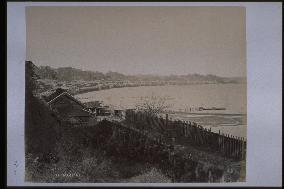
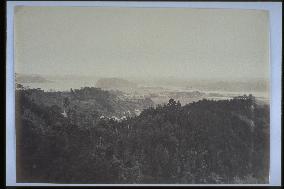
Distant view of the Kanazawa Hakkei ( Eight Scenic Places of Kanazawa ), possibly from Nokendo. Muronoki is on the right, Suzaki Village is on the other side of Hiragata Bay, Machiya Village is on the left, and Nojima is visible on the far left. Nokendo was known for its excellent view of the eight scenes. However, it was destroyed by fire in 1871 and never rebuilt.==Date:unknown, Place:Yokohama, Photo:F. Beato, (Credit:Nagasaki University Library/Kyodo News Images) [Cabinet Number62‐33‐0]

  •  
A railroad bridge over the river

A railroad bridge over the river

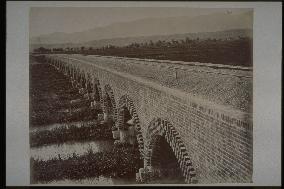
A railroad bridge over the river==Date:unknown, Place:unknown, Photo:F. Beato, (Credit:Nagasaki University Library/Kyodo News Images)

  •  
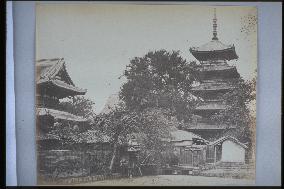
Sensoji Temple

Sensoji Temple

The five-story pagoda and Niomon (gate) seen from Benten Pond. Taken by Felix Beato, this is one of the oldest existing photographs of Sensoji Temple. Benten Shinto Shrine dedicated to the deity Benzaiten is simpler and looks slightly different from the one portrayed in photographs #2414 and 4440. The one in this photograph is older. Legend has it that the huge gingko tree in the centre grew from a pair of chopsticks left behind by Minamoto Yoritomo. The tree unfortunately perished in the air raids of 1945.==Date:unknown, Place:Tokyo, Photo:F. Beato, (Credit:Nagasaki University Library/Kyodo News Images) [Cabinet Number62‐34‐0]

  •  
The Kaguraden and honden (inner sanctuary),Tsurugaoka Hachimangu Shrine

The Kaguraden and honden (inner sanctuary),Tsurugaoka Hachimangu Shrine

The building on the left seems to the Rinzo (sutra repository), which was later demolished. Since there is no tablet visible on the Romon gate and the square foundation stones are placed next to the Kaguraden, this photograph is thought to have been taken around 1870 when the temple buildings were demolished. Taken by Felix Beato.==Date:unknown, Place:Kamakura, Photo:F. Beato, (Credit:Nagasaki University Library/Kyodo News Images) [Cabinet Number62‐32‐0]

  •  
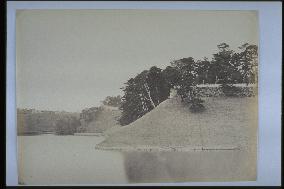
The inner moat of the Imperial Palace

The inner moat of the Imperial Palace

View of Koji-machi and Hanzo-mon from the west side of Soto Sakurada-mon. The area where the Imperial Palace (former Edo Castle) faces the inner moat (Sakurada Moat) is called Hachimaki Doi. The stone wall was constructed only on the upper portion, and the rest was a gently curving earthen embankment. Old pines still remain inside the stone walls, and this is one of the most beautiful spots in Tokyo. The Watari watchtower of Hanzo-mon, which was removed in 1871, is visible, indicating that this photograph was taken at the beginning of the Meiji Period. The photographer is Felix Beato.==Date:unknown, Place:Tokyo, Photo:F. Beato, (Credit:Nagasaki University Library/Kyodo News Images) [Cabinet Number62‐35‐0]

  •  
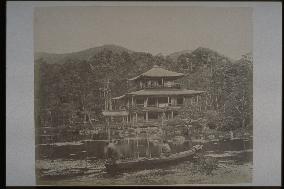
Kinkakuji Temple

Kinkakuji Temple

The Golden Pavilion at Rokuon-ji Temple seen from the western edge of Kyoko Pond, facing north-northeast. The shrubbery on the right is Ashihara Island. The temple was built in 1398. Unlike the building of today, the original roof was supported by many columns at each level. A man enjoys a boat ride on the pond. Pine forest surrounds the pond, and Mt. Daimonji and Takamine are visible in the background. Taken by Felix Beato.==Date:unknown, Place:Kyoto, Photo:F. Beato, (Credit:Nagasaki University Library/Kyodo News Images) [Cabinet Number62‐25‐0]

  •  
A village along the Tokaido Road

A village along the Tokaido Road

A village along the Tokaido Road==Date:unknown, Place:unknown, Photo:F. Beato, (Credit:Nagasaki University Library/Kyodo News Images)

  •  
The Great Bell Tower,Kawasaki Daishi Temple

The Great Bell Tower,Kawasaki Daishi Temple

Heikenji, head temple of the Chizan School of the Buddhist Shingon Sect, is commonly referred to as Kawasaki Daishi. Under the old treaties, the areas where foreigners could walk freely without passport were limited, and in Yokohama, Rokugo River was the eastern limit. Located near the eastern boundary, Kawasaki Daishi was a popular sightseeing spot among foreigners.==Date:unknown, Place:Yokohama, Photo:F. Beato, (Credit:Nagasaki University Library/Kyodo News Images) [Cabinet Number62‐31‐0]

  •  
Kiyomizudera Temple,Kyoto

Kiyomizudera Temple,Kyoto

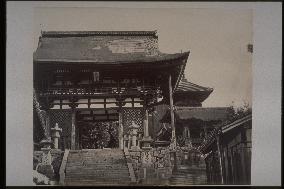
The Nio Gate of Kiyomizu Temple. There are stone lanterns on both the north and the south sides of the stone stairway in front of the gate. The west gate and the three-story pagoda are visible on the far right. Built during the Muromachi Era (1392-1573), the Nio Gate had three rooms and one door with a hiwadabuki (bark-covered) roof. The statue of Kongo Rikishi is situated in the area surrounded by a kongo fence (a fence made of vertical stakes with decoratively shaped finials resembling the ritual object called kongosho used in esoteric Buddhist rites) with lattice work above it. Today, statues of guardian dogs stand in front of the stone lanterns bearing the inscription Kiyomizu Temple. Taken by Felix Beato.==Date:unknown, Place:Kyoto, Photo:F. Beato, (Credit:Nagasaki University Library/Kyodo News Images) [Cabinet Number62‐29‐0]

  •  
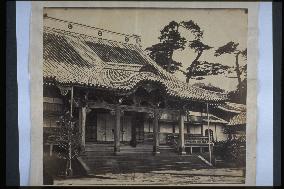
The Sanmon Gate of Nishi Otani Temple

The Sanmon Gate of Nishi Otani Temple

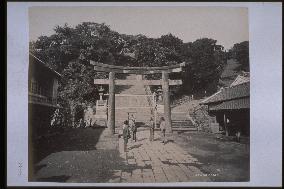
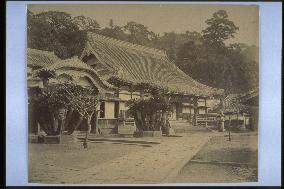
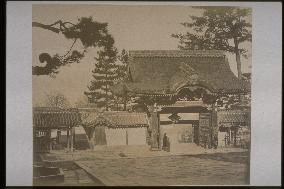
Main gate of the Otani Honbyo (Mausoleum) of Nishi Otani Temple, looking from the east side of the water fountain facing west-northwest. The irimoya style gate has a hiwada (Japanese hinoki tree bark) roof. Pine trees are growing in the back. The stone pavement in the foreground leads to the Otani honbyo (Mausoleum). Taken by Felix Beato.==Date:unknown, Place:Kyoto, Photo:F. Beato, (Credit:Nagasaki University Library/Kyodo News Images) [Cabinet Number62‐27‐0]

  •  
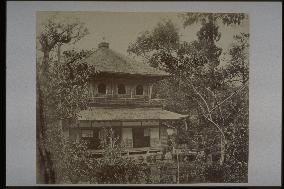
Ginkakuji Temple

Ginkakuji Temple

The Silver Pavilion at Jionji Temple seen from the western edge of Kikyo Pond, facing west. Also called Kannon-do, the pavilion was built in 1489 by order of Ashikaga Yoshimasa and restored in 1639. The building is in two-story houkei style with a kokera (thin long plank) roof. The greenery on the left is Sen'nin-shu. Yamanaseki (rock) is visible under the right bush with Bunkai Bridge behind it.==Date:unknown, Place:Kyoto, Photo:F. Beato, (Credit:Nagasaki University Library/Kyodo News Images) [Cabinet Number62‐24‐0]

  • Main
  • Top
  • Editorial
  • Creative
  • About Us
  • About ILG
  • Terms of use
  • Company
  • BEHIND
  • Price List
  • Single Plan
  • Monthly Plan
  • Services
  • Shooting
  • Rights Clearance
  • Support
  • FAQ
  • How To Buy
  • Contact Us
  • Become a Partner

© KYODO NEWS IMAGES INC

All Rights Reserved.

  • Editorial
  • Olympics
  • News
  • Sports
  • Japan
  • Tech
  • Royal
  • Disaster
  • NorthKorea
  • Old Japan
  • SNS
  • Creative
  • Food
  • Japan
  • Landscape
  • Animal
  • Popular
  • #Ukraine
  • #Russia
  • #coronavirus
  • #N. Korea
  • #China
  • #Thailand
  • #Ukraine
  • #Russia
  • #coronavirus
  • #N. Korea
  • #China
  • #Thailand
  • Food
  • Japan
  • Landscape
  • Animal
  • Olympics
  • News
  • Sports
  • Japan
  • Tech
  • Royal
  • Disaster
  • NorthKorea
  • Old Japan
  • SNS