•  
Kanazawa's travel map illustrates castle town attractions

Kanazawa's travel map illustrates castle town attractions

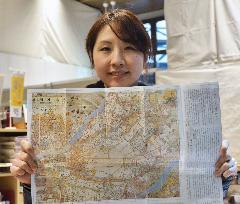
KANAZAWA, Japan - A woman holds a map of Kanazawa which was created based on a map from the late Edo period in the central Japanese city in Ishikawa Prefecture on Dec. 3, 2014. Kanazawa is expecting more visitors due to bullet train service on the Hokuriku Shinkansen Line starting in March 2015 (Nagano-Kanazawa) to link Tokyo with Kanazawa.

  •  
Himeji Castle appears on rice field

Himeji Castle appears on rice field

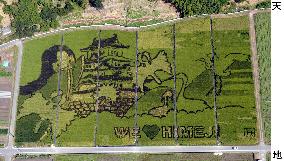
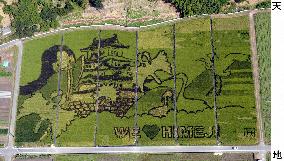
YUMESAKI, Japan - An image of world heritage-designated Himeji Castle, created from the leaves and ears of six different rice varieties in a rice field in Yumesaki, Hyogo Prefecture, is clearly seen on Sept. 13, 2009. The castle, together with Princess Sen (L, top), granddaughter of Edo Shogunate founder Tokugawa Ieyasu, can be observed until the rice is reaped in early October. About 1,500 students and volunteers helped plant rice seedlings in June under a farmer's project in the hope of drawing tourists.

  •  
Imperial Palace tours becoming popular

Imperial Palace tours becoming popular

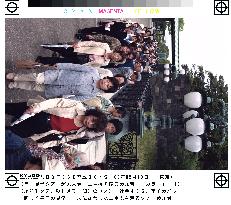
TOKYO, Japan - Visitors cross Niju-bashi, or the Double Bridge, the main gateway to the Imperial Palace in central Tokyo. Tours of the palace are becoming popular this year, the 400th anniversary of the establishment of the Tokugawa shogunate in Edo, the old name for Tokyo. Edo Castle, the seat of the Tokugawa shoguns, stood on the grounds of the palace.

  •  
Plans to restore Kumamoto Castle remain up in the air

Plans to restore Kumamoto Castle remain up in the air

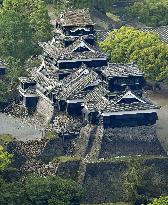
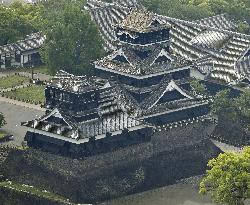
The roof tiles and stonewalls of Kumamoto Castle have been badly damaged by a series of quakes in the southwestern Japanese city of Kumamoto, as seen in this photo taken from a Kyodo News helicopter on April 26, 2016. Specific plans to restore the castle remain up in the air, with experts estimating it would take at least 10 years for completion, as it requires adequate financial resources and highly specialized techniques to rebuild the Edo-era stonewalls. (Kyodo) ==Kyodo

  •  
Plans to restore Kumamoto Castle remain up in the air

Plans to restore Kumamoto Castle remain up in the air

The roof tiles and stonewalls of Kumamoto Castle have been badly damaged by a series of quakes in the southwestern Japanese city of Kumamoto, as seen in this photo taken from a Kyodo News helicopter on April 26, 2016. Specific plans to restore the castle remain up in the air, with experts estimating it would take at least 10 years for completion, as it requires adequate financial resources and highly specialized techniques to rebuild the Edo-era stonewalls. (Kyodo) ==Kyodo

  •  
Miniature castle built with bill fragments worth 500 mil. yen

Miniature castle built with bill fragments worth 500 mil. yen

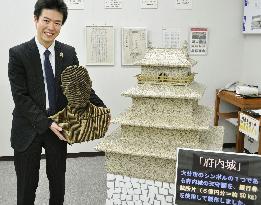
An employee at the Bank of Japan's Oita branch in the southwestern Japan city holds a cardboard bust of Fukuzawa Yukichi, whose portrait is used on the 10,000 yen note, beside a miniature of Funai Castle in the city that was lost to fire during the Edo period (1603-1867). The miniature castle, which was created by using fragments of old banknotes worth some 500 million yen ($4.46 million) will be exhibited to mark the resumption of public visits to the branch following a one-year hiatus due to disaster-preparation building works. (Kyodo) ==Kyodo

  •  
Kanazawa firefighters perform at New Year ceremony

Kanazawa firefighters perform at New Year ceremony

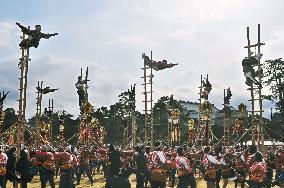
Firefighters perform "Kaga Tobi" acrobatic stunts dating from the Edo period (1603-1867) on 6-meter-high ladders during an annual New Year ceremony in Kanazawa Castle Park in Kanazawa, Ishikawa Prefecture, on Jan. 10, 2016. The role of firefighters in the Edo period was to destroy adjoining houses in order to prevent the spread of fires. (Kyodo) ==Kyodo

  •  
Himeji Castle appears on rice field

Himeji Castle appears on rice field

YUMESAKI, Japan - An image of world heritage-designated Himeji Castle, created from the leaves and ears of six different rice varieties in a rice field in Yumesaki, Hyogo Prefecture, is clearly seen on Sept. 13, 2009. The castle, together with Princess Sen (L, top), granddaughter of Edo Shogunate founder Tokugawa Ieyasu, can be observed until the rice is reaped in early October. About 1,500 students and volunteers helped plant rice seedlings in June under a farmer's project in the hope of drawing tourists. (Kyodo)

  •  
Daimyo street near west gate of imperial palace

Daimyo street near west gate of imperial palace

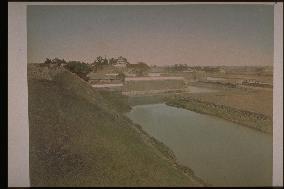
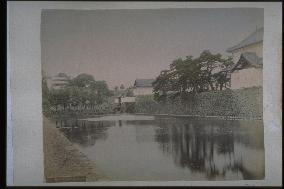
A residence of a daimyo (lord) can be seen across the moat. There were three kinds of residences for daimyo in Edo: the Kami Yashiki, Naka Yashiki and Shimo Yashiki. The residence adjoining Edo castle is a Kami Yashiki.==Date:unknown, Place:Tokyo, Photo:Kusakabe Kinbei, (Credit:Nagasaki University Library/Kyodo News Images) [Cabinet Number4‐8‐0]

  •  
The lotus moat of the Imperial Palace

The lotus moat of the Imperial Palace

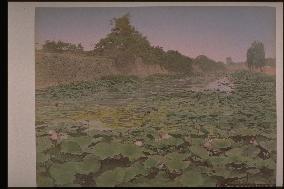
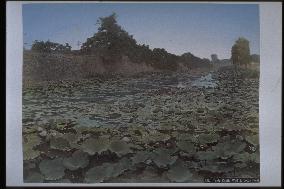
The lotus lake moat which separates the main building and Mt.Momiji. Lotus leaves cover the water surface almost completely hiding the water. Some pink flowers are seen here and there.==Date:unknown, Place:Tokyo, Photo:Kusakabe Kinbei, (Credit:Nagasaki University Library/Kyodo News Images) [Cabinet Number4‐5‐0]

  •  
The gate of the Imperial Palace

The gate of the Imperial Palace

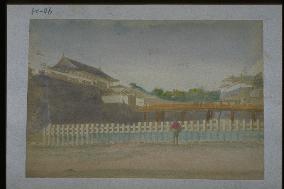
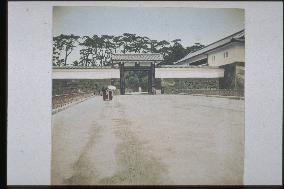
Honmaru (Dungeon) Otemon was the main gate of Edo Castle during the Edo Period, but Nishinomaru Otemon (the gate on the left) became the main gate of the Imperial Palace in the Meiji Period. Koraimon is visible at the edge of Nishinomaru Otemon in the foreground. However, the gate was removed during construction of Meiji Palace in 1888. In December of the same year, the bridge was rebuilt in stone. Taken in 1868.==Date:unknown, Place:Tokyo, Photo:unknown, (Credit:Nagasaki University Library/Kyodo News Images) [Cabinet Number90‐21‐0]

  •  
Niju-bashi Bridge,the Imperial Palace

Niju-bashi Bridge,the Imperial Palace

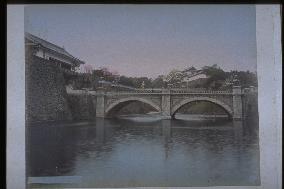
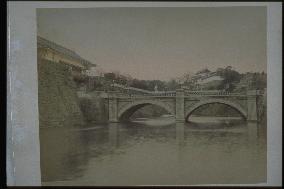
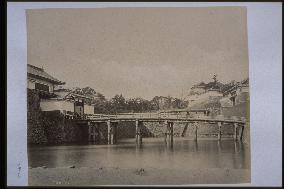
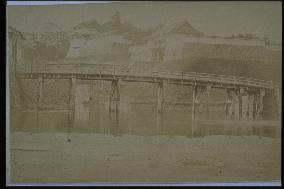
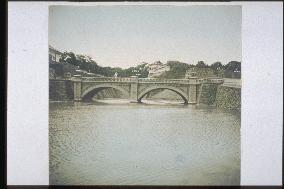
Kakumon Bridge spanning the inner moat (Nijubashi Moat) is said to have been built during the Kansei Period (1789-1801). During the Edo and Meiji Periods, the bridge in the foreground was called Nishinomaru Ote-bashi and the one behind it Nishinomaru Shimojo-bashi. The names currently used by the Imperial House Agency are Imperial Palace Main Gate Stone Bridge and Imperial Palace Main Gate Iron Bridge, respectively. Since 1948, commoners have been allowed to cross these bridges on January 2 and on the Emperor's birthday. Mid-Meiji Period.==Date:unknown, Place:Tokyo, Photo:unknown, (Credit:Nagasaki University Library/Kyodo News Images) [Cabinet Number88‐36‐0]

  •  
Niju-bashi Bridge,the Imperial Palace

Niju-bashi Bridge,the Imperial Palace

Kakumon Bridge spanning the inner moat (Nijubashi Moat) is said to have been built during the Kansei Period (1789-1801). During the Edo and Meiji Periods, the bridge in the foreground was called Nishinomaru Ote-bashi and the one behind it Nishinomaru Shimojo-bashi. The names currently used by the Imperial House Agency are Imperial Palace Main Gate Stone Bridge and Imperial Palace Main Gate Iron Bridge, respectively. Since 1948, commoners have been allowed to cross these bridges on January 2 and on the Emperor's birthday. Mid-Meiji Period.==Date:unknown, Place:Tokyo, Photo:unknown, (Credit:Nagasaki University Library/Kyodo News Images) [Cabinet Number87‐1‐0]

  •  
The Fujimi Watchtower and the moat,the Imperial Palace

The Fujimi Watchtower and the moat,the Imperial Palace

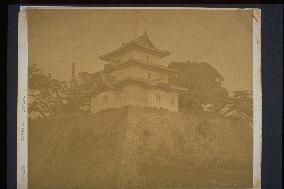
Today, the first thing to greet the eyes of people heading to the Imperial Palace from Tokyo Station is the two-story watchtower. The one on the right is named Sakurada Tatsumi Yagura. The gate in the centre is Kikyo-mon. The three-story watchtower on the left is Fujimi Sanju Yagura. The moat is Kikyo-bori. The last vestiges of Edo Castle remain here, and this spot is used frequently on TV history programs. The buildings were destroyed by the Great Kanto Earthquake of 1923 and rebuilt around 1927. Mid-Meiji Period.==Date:unknown, Place:Tokyo, Photo:unknown, (Credit:Nagasaki University Library/Kyodo News Images) [Cabinet Number87‐2‐0]

  •  
Motomiya Garden,Hikone

Motomiya Garden,Hikone

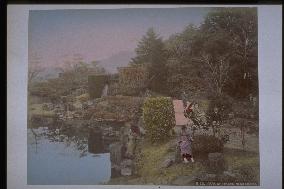
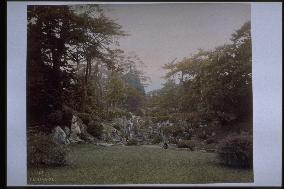
Genkyu-en is the garden at the former second residence of the Ii family in the San-no-maru section of Hikone Castle. It was completed by the 4th feudal lord of the Oumi Domain, Ii Naooki, in 1679. A garden of the chisenkaiyu style, it incorporates features of the Chinese Eight Scenes of Xiaoxiang and the Eight Scenes of Oumi and to this day provides an excellent example of early Edo Period landscaping. The name is derived from the villa of Chinese Emperor Xuanzong (685-763) of the Tang Dynasty.==Date:unknown, Place:Shiga, Photo:A. Farsari, (Credit:Nagasaki University Library/Kyodo News Images) [Cabinet Number81‐27‐0]

  •  
Niju-bashi Bridge,the Imperial Palace

Niju-bashi Bridge,the Imperial Palace

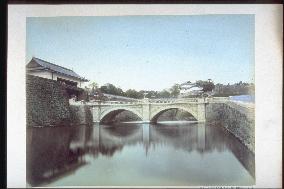
The gate on the left, called Nishinomaru Ote-mon during the Edo Period, became the main gate of the Imperial Palace in 1889 after the construction of the new palace the previous year. The first gate, Korai-mon, in front of the main gate was later removed and only the Watari Yagura-mon exists today. Mid-Meiji Period.==Date:unknown, Place:Tokyo, Photo:A. Farsari, (Credit:Nagasaki University Library/Kyodo News Images) [Cabinet Number81‐17‐0]

  •  
Motomiya Garden,Hikone

Motomiya Garden,Hikone

Genkyu-en is the garden at the former second residence of the Ii family in the San-no-maru section of Hikone Castle. It was completed by the 4th feudal lord of the Oumi Domain, Ii Naooki, in 1679. A garden of the chisenkaiyu style, it incorporates features of the Chinese Eight Scenes of Xiaoxiang and the Eight Scenes of Oumi and to this day provides an excellent example of early Edo Period landscaping. The name is derived from the villa of Chinese Emperor Xuanzong (685-763) of the Tang Dynasty.==Date:unknown, Place:Shiga, Photo:A. Farsari, (Credit:Nagasaki University Library/Kyodo News Images) [Cabinet Number81‐26‐0]

  •  
The Tatsumi Three-story Watchtower at Honmaru (main dungeon),Edo Castle

The Tatsumi Three-story Watchtower at Honmaru (main dungeon),Edo Castle

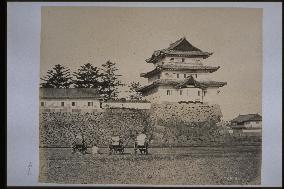
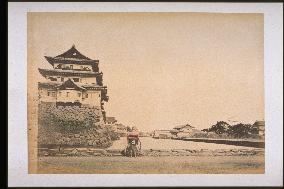
The three-story Hasuike Tatsumi watchtower with Tansu Tamon, the longest castle wall-cum-armory at Edo Castle, on the left. This photograph must have been taken before October 7, 1870, when these buildings were probably destroyed as a result of a fire in a explosives warehouse. The low camera angle makes it difficult to tell, but the Hamaguri Moat is located beyond the rickshaws. Uchi Sakurada Gate, standing since the construction of Edo Castle by Ota Dokan, is visible on the far right. The Japanese bellflower crest of the Ota family remained on the gate when the first Shogun Tokugawa Ieyasu entered the castle. As a result, the gate is also called Kikyo-mon (Bellflower Gate).==Date:unknown, Place:Tokyo, Photo:R. Stillfried, (Credit:Nagasaki University Library/Kyodo News Images) [Cabinet Number78‐33‐0]

  •  
Niju-bashi Bridge,Edo Castle

Niju-bashi Bridge,Edo Castle

Niju-bashi Bridge,Edo Castle==Date:unknown, Place:Tokyo, Photo:R. Stillfried, (Credit:Nagasaki University Library/Kyodo News Images)

  •  
Odawara Castle

Odawara Castle

This is the Minami-Kuruwa area of Odawara Castle, site of present-day Odawara City Museum. This photograph was taken from the front gate of Sannomaru Primary School (the old Honcho Primary School). Since the main castle's donjon is not visible, it must have been taken after November 1871 when the tower was disassembled and sold. The bridge in the foreground is Ochatsubo-bashi (the official name is Komine-bashi). It received this name (which means tea jar bridge ) because the tea brought to the shogun during the Edo period had to come across this bridge.==Date:unknown, Place:Odawara, Photo:R. Stillfried, (Credit:Nagasaki University Library/Kyodo News Images) [Cabinet Number78‐14‐0]

  •  
Fukiage Park,the Imperial Palace

Fukiage Park,the Imperial Palace

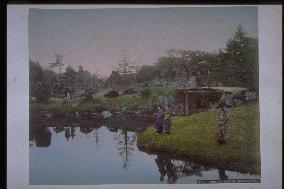
The residences of feudal lords were formerly located here as protection on the west side of Edo Castle. However, the area was converted to a garden after the great fire of the Meireki Period in 1657. The garden was designed in exact detail, right down to the location of each stone and tree. There were apparently two waterfalls in the garden, one at the southern edge of Oike (Great Pond) in the centre of the garden and the other near Takimi Teahouse. Since there is foliage, this photograph probably depicts the waterfall near the teahouse. Probably taken between 1877 and 1887 (second decade of Meiji Period).==Date:unknown, Place:Tokyo, Photo:R. Stillfried, (Credit:Nagasaki University Library/Kyodo News Images) [Cabinet Number77‐12‐0]

  •  
The Imperial Palace

The Imperial Palace

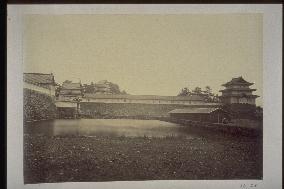
Nishinomaru Ote Bridge and Nishinomaru Shimojo Bridge seen from Nishinomaru Shita (present-day Imperial Palace Outer Garden). Nishinomaru Shimojo Bridge featured rare two-stage girders because of a deep moat. Thus, it was called Niju-bashi (double level bridge). The gate on the left is Nishinomaru Ote-mon. The gate on the right is Nishinomaru Shoinmae-mon. Next to it are Jurokken Tamon and Fushimi watchtower. Taken at the beginning of the Meiji Period.==Date:unknown, Place:Tokyo, Photo:unknown, (Credit:Nagasaki University Library/Kyodo News Images) [Cabinet Number69‐74‐2]

  •  
Bigo Tomotsu

Bigo Tomotsu

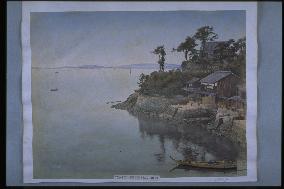
This is a view of Taiga Island, east of Tomo Port at Fukuyama, looking from Higashihama. Taigashima Castle was the headquarters of the Southern Court during the Southern and Northern Court Period (1336-92). During the Edo period, Enpukuji Temple was founded and a watch station was built to monitor boats coming in and out of Tomo Port. This photograph captures the boat docks with stairs behind the shop. Due to land reclamation these no longer exist.==Date:unknown, Place:Hiroshima, Photo:Uchida Kuichi, (Credit:Nagasaki University Library/Kyodo News Images) [Cabinet Number66‐2‐2]

  •  
The inner moat of the Imperial Palace

The inner moat of the Imperial Palace

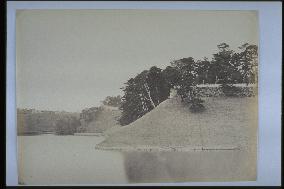
View of Koji-machi and Hanzo-mon from the west side of Soto Sakurada-mon. The area where the Imperial Palace (former Edo Castle) faces the inner moat (Sakurada Moat) is called Hachimaki Doi. The stone wall was constructed only on the upper portion, and the rest was a gently curving earthen embankment. Old pines still remain inside the stone walls, and this is one of the most beautiful spots in Tokyo. The Watari watchtower of Hanzo-mon, which was removed in 1871, is visible, indicating that this photograph was taken at the beginning of the Meiji Period. The photographer is Felix Beato.==Date:unknown, Place:Tokyo, Photo:F. Beato, (Credit:Nagasaki University Library/Kyodo News Images) [Cabinet Number62‐35‐0]

  •  
The outer moat of the Imperial Palace

The outer moat of the Imperial Palace

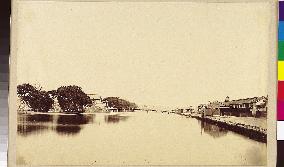
Southern view from the riverbank in Honmachi, near Tokiwa Bridge. Two waterways intersect here and, although not visible, a stone bridge called Ikkokubashi was located on the left spanning the canal which eventually becomes Nihonbashi River. The gap in the wall on the right is Dosan Moat, which originates from Ryunokuchi where the excess water from the inside moats is released. The moat was filled in around 1909. The outer moats beyond Nihonbashi River were filled in after World War II. Consequently, the waterway intersection can no longer be seen. Taken in the mid-Meiji Period. Same as photograph #2199.==Date:unknown, Place:Tokyo, Photo:unknown, (Credit:Nagasaki University Library/Kyodo News Images) [Cabinet Number59‐77‐0]

  •  
The lotus moat of the Imperial Palace

The lotus moat of the Imperial Palace

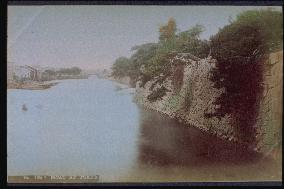
Hasuike (Lotus Pond) Moat between Honmaru and Koyozan. The height of the stone wall on the left indicates that the Honmaru Palace is on that side and therefore that this is a view of Hasuike-mon looking southeast from Shita-mon at Koyozan. Taken by Kusakabe Kinbei, probably between 1877 and 1887 (second decade of the Meiji Period).==Date:unknown, Place:Tokyo, Photo:unknown, (Credit:Nagasaki University Library/Kyodo News Images) [Cabinet Number59‐14‐0]

  •  
Niju-bashi Bridge,the Imperial Palace

Niju-bashi Bridge,the Imperial Palace

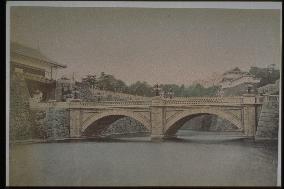
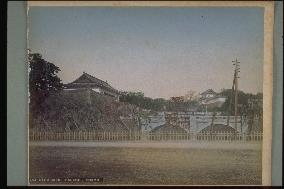
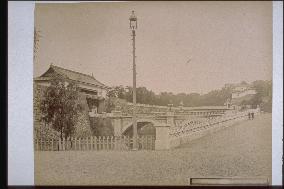
Ote Bridge of Nishinomaru (foreground) was replaced with an arched stone bridge in 1887. Although it is hidden behind the stone bridge, Nishinomaru Shimojo-bashi was replaced with an iron bridge in October 1888 at the time of the construction of new palace buildings. Ornamental lamps were installed for the first time here. (One of these is preserved at the Meiji Village theme park). The present-day Nishinomaru Shimojo-bashi Bridge was rebuilt in a similar design in 1964. The watchtower on the right was transferred from Fushimi Castle in Kyoto and re-named Fushimi Yagura. Mid-Meiji Period.==Date:unknown, Place:Tokyo, Photo:unknown, (Credit:Nagasaki University Library/Kyodo News Images) [Cabinet Number53‐41‐0]

  •  
Cherry trees at Ueno Park

Cherry trees at Ueno Park

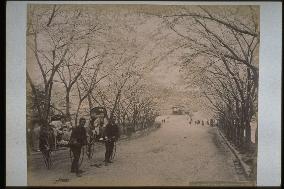
Akasaka Mitsuke was one of the watchtowers at Edo Castle and had an outer gate. The gate, Akasaka Gomon, was destroyed in 1872, leaving only the stone wall. This photograph was taken from the site of the former gate (present-day Akasaka Mitsuke intersection). On the right is Benkei Moat and on the left Tameike (pond). The cherry trees were apparently planted in 1881. Since the photograph does not show Benkei Bridge, constructed in 1889, this photograph was probably taken around 1887.==Date:unknown, Place:Tokyo, Photo:unknown, (Credit:Nagasaki University Library/Kyodo News Images) [Cabinet Number53‐45‐2]

  •  
Watchtower at Edo Castle

Watchtower at Edo Castle

This is the three-story Fujimi watchtower, located at the eastern edge of the Hasuike (Lotus Pond) Moat. This watchtower appears the same from all directions. Destroyed by the Great Kanto Earthquake in 1923, it was rebuilt in concrete around 1927. This photograph was probably taken around 1870 (like photograph #4015) by Felix Beato.==Date:unknown, Place:Tokyo, Photo:unknown, (Credit:Nagasaki University Library/Kyodo News Images) [Cabinet Number51‐66‐2]

  •  
Osu Kannon Temple and the five-story pagoda

Osu Kannon Temple and the five-story pagoda

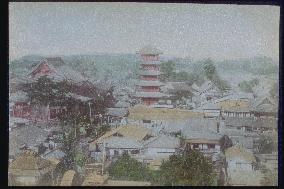
Honmachi Dori, which connects Nagoya Castle and Atsuta, was the main street in Nagoya during the Edo Period. Osu Kannon is located on the west side of Honmachi Dori. This photograph was taken from south of Osu Kannon. The buildings are (from the left) the main hall, five-story pagoda, and study. The kuri (priests' quarters) is in the background to the right. The theatre is in the right foreground. The Nio Gate is on the far right. Nagoya Castle is visible in the distance to the north between the main hall and the pagoda. A picture postcard using a similar photograph is entitled, View of Osu Kannon taken on May 12, 1880 and published by Zentokuji Temple. This photograph was probably taken around the same time. It is the same photograph #4145.==Date:unknown, Place:Nagoya, Photo:Tamamura Kozaburo, (Credit:Nagasaki University Library/Kyodo News Images) [Cabinet Number48‐121‐0]

  •  
Stonewalls along the moat

Stonewalls along the moat

View of the outer moat of Edo Castle looking south from the eastern edge of Tokiwa Bridge, with Gofuku Bridge in the distance to the south. The Gofuku-bashi Gomon Gate was removed in 1873, and the wooden bridge was replaced with a stone bridge in 1880. This photograph was therefore taken after 1880. The break in the middle of the stone wall on the right is the junction of the Dosan Moat and the outer moat. Zenikame Bridge is to the right.==Date:unknown, Place:Tokyo, Photo:Tamamura Kozaburo, (Credit:Nagasaki University Library/Kyodo News Images) [Cabinet Number48‐52‐0]

  •  
Soto-Sakurada Gate,the Imperial Palace

Soto-Sakurada Gate,the Imperial Palace

Soto-Sakurada Gate,the Imperial Palace==Date:unknown, Place:Tokyo, Photo:unknown, (Credit:Nagasaki University Library/Kyodo News Images)

  •  
Niju-bashi Bridge,the Imperial Palace

Niju-bashi Bridge,the Imperial Palace

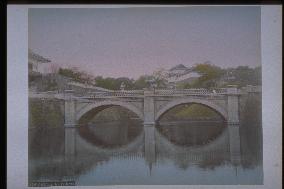
The double arch stone bridge at the front gate of the Imperial Palace, popularly known as the spectacles Megane bridge. Fushimi turret can be seen over the bridge. The so-called double arched bridge is not this stone bridge but the steel bridge of the front gate located at the Fushimi turret.==Date:unknown, Place:Tokyo, Photo:unknown, (Credit:Nagasaki University Library/Kyodo News Images) [Cabinet Number46‐147‐0]

  •  
Cherry trees at Kudanzaka slope

Cherry trees at Kudanzaka slope

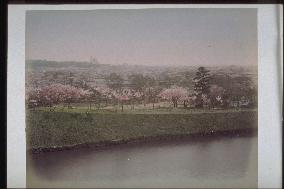
Kudanzaka is a long slope going down to the direction of Kanda from the side of Yasukuni Shrine from Ichigaya. A beautiful cherry boulevard continues. The moat to the fore is the Chidorigafuchi.==Date:unknown, Place:Tokyo, Photo:unknown, (Credit:Nagasaki University Library/Kyodo News Images) [Cabinet Number42‐40‐0]

  •  
Niju-bashi Bridge,the Imperial Palace

Niju-bashi Bridge,the Imperial Palace

The double arched bridge of the front gate of the Imperial Palace, popularly known as the Megane bridge (bridge shaped in spectacles). Over the bridge is seen the Fushimi turret. The so-called Niju bridge is not this bridge, but the steel bridge over the Fushimi turret at the front entrance.==Date:unknown, Place:Tokyo, Photo:Kusakabe Kinbei, (Credit:Nagasaki University Library/Kyodo News Images) [Cabinet Number40‐3‐0]

  •  
Nagoya Castle

Nagoya Castle

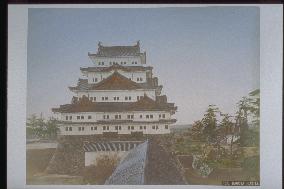
Nagoya castle with its Golden Dolphin-like fish. It is said Kato Kiyomasa built the castle, but in fact he was in charge of building the stone fence only. During the Edo era, at one time the Han's finances were so poor that the Golden Dolphin-like fish was changed into an inferior type casting.==Date:unknown, Place:Nagoya, Photo:Kusakabe Kinbei, (Credit:Nagasaki University Library/Kyodo News Images) [Cabinet Number38‐2‐0]

  •  
Sakashitamon gate of the imperial palace and threefold turret in southeast of main building

Sakashitamon gate of the imperial palace and threefold turret in southeast of main building

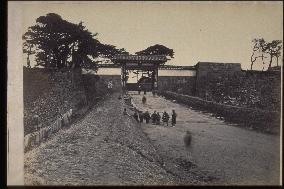
The Sakashita Gate of Edo Castle can be seen to the left over the moat, and to the right is the three-tiered Tatsumi turret in the castle tower. The moat with many gates and the turret were lost in an explosion of gunpowder storage in 1870, one year after this photo was taken.==Date:unknown, Place:Tokyo, Photo:F. Beato, (Credit:Nagasaki University Library/Kyodo News Images) [Cabinet Number36‐23‐0]

  •  
The inner moat of the Imperial Palace

The inner moat of the Imperial Palace

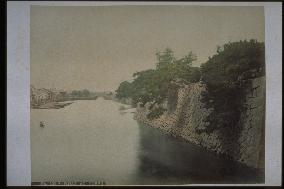
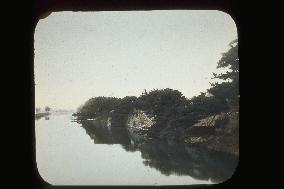
Deep green trees cast a shadow on the moat. The location of the place in the photo is unknown.==Date:unknown, Place:Tokyo, Photo:unknown, (Credit:Nagasaki University Library/Kyodo News Images) [Cabinet Number31‐63‐0]

  •  
Niju-bashi Bridge,the Imperial Palace

Niju-bashi Bridge,the Imperial Palace

The stone bridge of the Imperial Palace popularly called Meganebashi (spectacles bridge ). Over the bridge can be seen the Fushimi turret. The so-called Nijubashi is not this bridge but the steel bridge at the front gate where the Fushimi turret stands. The water surface of the moat is hidden by the fenced grounds to the fore.==Date:unknown, Place:Tokyo, Photo:Ogawa Kazumasa, (Credit:Nagasaki University Library/Kyodo News Images) [Cabinet Number25‐50‐0]

  •  
The south-east,three-story turret at The second corner of The imperial palace

The south-east,three-story turret at The second corner of The imperial palace

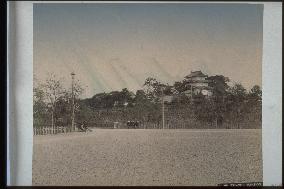
A gas lamp and rickshaw men resting beneath it.==Date:unknown, Place:Tokyo, Photo:unknown, (Credit:Nagasaki University Library/Kyodo News Images) [Cabinet Number24‐8‐0]

  •  
The inner moat of the Imperial Palace

The inner moat of the Imperial Palace

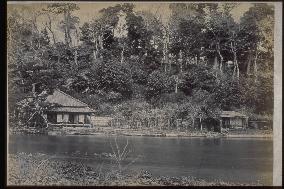
The shore on the other side of the turret with water quails swimming. A building(a study?) can be seen to the left and another to the right (tea house?). High trees stand in the background. The exact location is unknown.==Date:unknown, Place:Tokyo, Photo:unknown, (Credit:Nagasaki University Library/Kyodo News Images) [Cabinet Number22‐13‐0]

  •  
Akasakamon gate

Akasakamon gate

One of the castle gates and approach to Edo Castle. Kuroda built the square shape in 1636, and the gate was restored by Kato and Ogawa in 1639. The description in Edo Meisho says: This gate has a good view of the Big Dipper, so it is an excellent strategic point within Edo Castle. A very similar photo can be seen on page 53 of the Kadokawa Nihon Chimei Daijiten (The Kadokawa Dictionary of Japanese Geographic Names), saying it is a photo taken by the Englishman Black in 1872.==Date:unknown, Place:Tokyo, Photo:unknown, (Credit:Nagasaki University Library/Kyodo News Images) [Cabinet Number22‐11‐0]

  •  
The Imperial Palace

The Imperial Palace

To the left is seen the three-tier turret of Fujimi Yagura, the only one remaining in the castle tower. After the castle tower burned down in the fire of 1657, this turret was used as the castle tower.==Date:unknown, Place:Tokyo, Photo:unknown, (Credit:Nagasaki University Library/Kyodo News Images) [Cabinet Number13‐25‐0]

  •  
Lotus pond

Lotus pond

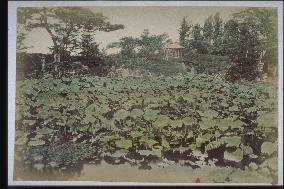
There are photographs of the lotus pond in the outer moat of Edo castle in this collection, numbered 59-14. In this photo, a small cottage and stone lantern can be seen in the distance, and the subject is clearly a lotus pond in a garden. The location is unknown. The red colour of the lotus flowers is impressive.==Date:unknown, Place:unknown, Photo:unknown, (Credit:Nagasaki University Library/Kyodo News Images) [Cabinet Number12‐14‐0]

  •  
The south-east,three-story turret at The second corner of The imperial palace

The south-east,three-story turret at The second corner of The imperial palace

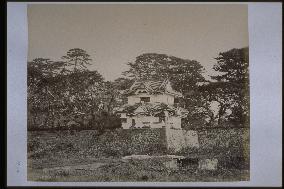
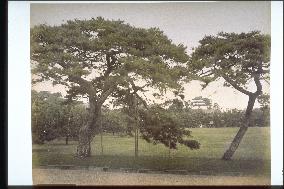
The Son three-tier turret is located in the Honmaru and Ninomaru, and the photo is that of Ninomaru. The three-tier turret seen through the pine branches has an indescribable beauty.==Date:unknown, Place:Tokyo, Photo:Ogawa Kazumasa, (Credit:Nagasaki University Library/Kyodo News Images) [Cabinet Number8‐29‐0]

  •  
Niju-bashi Bridge,the Imperial Palace

Niju-bashi Bridge,the Imperial Palace

This stone bridge was built after the imperial palace was built. The former bridge was built in the 1614 and was called Nijubashi because the bridge girders were doubled.==Date:unknown, Place:Tokyo, Photo:Ogawa Kazumasa, (Credit:Nagasaki University Library/Kyodo News Images) [Cabinet Number8‐16‐0]

  •  
Sixth turret at the outside moat of osakajo castle

Sixth turret at the outside moat of osakajo castle

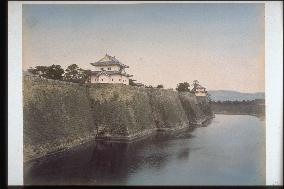
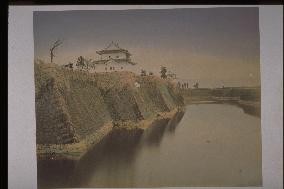
The inner moat and sixth turret facing the outer moat of Osaka castle. The present remains of Osaka castle including the motif of this photo are all from the Edo period, nothing remains from the days of Toyotomi Hideyoshi.==Date:unknown, Place:Osaka, Photo:Ogawa Kazumasa, (Credit:Nagasaki University Library/Kyodo News Images) [Cabinet Number7‐34‐0]

  •  
Sixth turret at the outside moat of osakajo castle

Sixth turret at the outside moat of osakajo castle

The inner castle walls and sixth turret facing the outer moat of Osaka Castle, seen from the direction of the present Kamimachi Suji (southwest corner of the outer moat). The new technique used to build the slope in the high stone walls by standardizing the stones is a feature of castle construction which started in the middle of the Edo Period.==Date:1872, Place:Osaka, Photo:Uchida Kuichi, (Credit:Nagasaki University Library/Kyodo News Images) [Cabinet Number3‐50‐0]

  •  
The moat around Edo Castle

The moat around Edo Castle

View of Babasaki Gate from the vicinity of Hibiya-gomon Gate. The building on the right is the former main residence of the Ikeda family of Inaba Tottori Clan. It was acquired for military purposes in 1869 and became the Army Ministry three years later. This area is now Marunouchi 3-chome, site of the Teikoku Theatre and Tokyo Kaikan Hall. The street by the moat is now Hibiya Dori. The masugata (square plot of land in between the first and second castle gates) of Babasaki Gate and the Babasaki Gate Bridge were removed in 1906 as part of the construction of Gaisen Doro. Taken in 1868.==Date:unknown, Place:Tokyo, Photo:F. Beato, (Credit:Nagasaki University Library/Kyodo News Images) [Cabinet Number104‐8‐0]

  •  
Replica of Edo Castle at Imperial Palace

Replica of Edo Castle at Imperial Palace

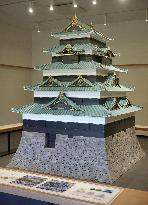
Photo taken Sept. 28, 2020, shows a replica of Edo Castle tower in the East Gardens of the Imperial Palace in Tokyo, which will be open to the public from Sept. 29.

  • Main
  • Top
  • Editorial
  • Creative
  • About Us
  • About ILG
  • Terms of use
  • Company
  • BEHIND
  • Price List
  • Single Plan
  • Monthly Plan
  • Services
  • Shooting
  • Rights Clearance
  • Support
  • FAQ
  • How To Buy
  • Contact Us
  • Become a Partner

© KYODO NEWS IMAGES INC

All Rights Reserved.

  • Editorial
  • Olympics
  • News
  • Sports
  • Japan
  • Tech
  • Royal
  • Disaster
  • NorthKorea
  • Old Japan
  • SNS
  • Creative
  • Food
  • Japan
  • Landscape
  • Animal
  • Popular
  • #Ukraine
  • #Thailand
  • #coronavirus
  • #N. Korea
  • #China
  • #Russia
  • #Ukraine
  • #Thailand
  • #coronavirus
  • #N. Korea
  • #China
  • #Russia
  • Food
  • Japan
  • Landscape
  • Animal
  • Olympics
  • News
  • Sports
  • Japan
  • Tech
  • Royal
  • Disaster
  • NorthKorea
  • Old Japan
  • SNS