•  
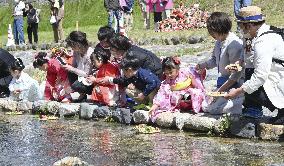
"Hina" dolls float on river

"Hina" dolls float on river

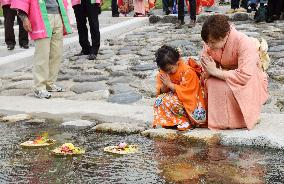
Children release "hina" paper dolls in a river in Tottori, western Japan, on April 22, 2023. The traditional event dating back to Edo Period is to wish children's good health.

  •  
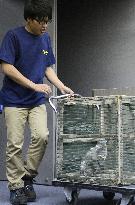
Escaped penguin recaptured

Escaped penguin recaptured

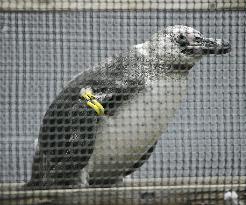
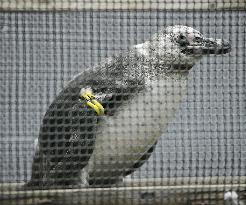
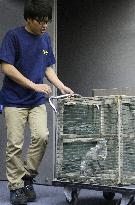
TOKYO, Japan - Photo shows a Humboldt penguin at Tokyo Sea Life Park in the capital's Kasai area on May 24, 2012. The penguin was recaptured on the banks of the Edo River earlier in the day by an employee of the aquarium after escaping from the facility in March, according to the Tokyo metropolitan government.

  •  
Escaped penguin recaptured

Escaped penguin recaptured

TOKYO, Japan - Photo shows a Humboldt penguin at Tokyo Sea Life Park in the capital's Kasai area on May 24, 2012. The penguin was recaptured on the banks of the Edo River earlier in the day by an employee of the aquarium after escaping from the facility in March, according to the Tokyo metropolitan government.

  •  
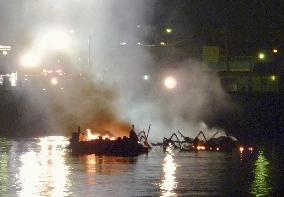
Tokyo excursion boat gutted by fire

Tokyo excursion boat gutted by fire

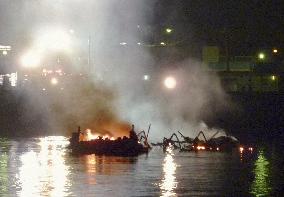
TOKYO, Japan - Smoke pours from the charred remains of a 20-meter-long excursion boat, owned by Funayado Amitei Co., after it caught fire next to a pier on the Edo River in Tokyo on Dec. 3, 2009. No one was aboard the vessel at the time and police are looking into the possibility that the predawn blaze originated in or near the boat's galley.

  •  
Blackout hits Tokyo, vicinity as power lines hit by crane

Blackout hits Tokyo, vicinity as power lines hit by crane

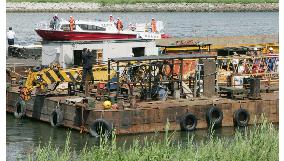
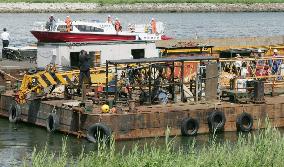
TOKYO, Japan - The crane that hit Tokyo Electric Power Co.'s power lines spanning River Edo between Tokyo and Chiba prefectures stays folded on a ship on Aug. 14. A blackout hit many parts of Tokyo and nearby Chiba and Kanagawa prefectures earlier in the day. Some commuter train services operated by East Japan Railway Co. and other rail companies, as well as Tokyo's subway services, were temporarily suspended because of the outage.

  •  
Blackout hits Tokyo, vicinity as power lines hit by crane

Blackout hits Tokyo, vicinity as power lines hit by crane

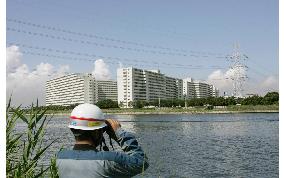
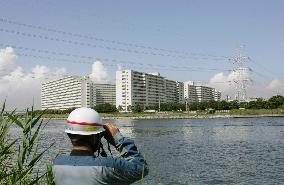
TOKYO, Japan - Using a pair of binoculars, a Tokyo Electric Power Co. worker watches the power lines spanning River Edo between Tokyo and Chiba prefectures on Aug. 14. A blackout hit many parts of Tokyo and nearby Chiba and Kanagawa prefectures earlier in the day after power lines were damaged by a crane on a ship. Power was restored to most of the affected areas about one and a half hours later.

  •  
Blackout hits Tokyo, vicinity as power lines hit by crane

Blackout hits Tokyo, vicinity as power lines hit by crane

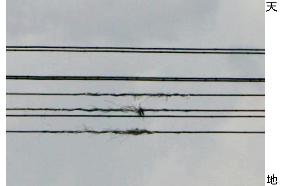
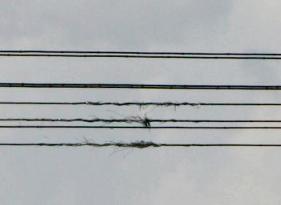
TOKYO, Japan - Photo shows the damaged parts of the power lines spanning River Edo between Tokyo and Chiba prefectures on Aug. 14. A blackout hit many parts of Tokyo and nearby Chiba and Kanagawa prefectures earlier in the day.

  •  
Tokyo police conducts rescue drill

Tokyo police conducts rescue drill

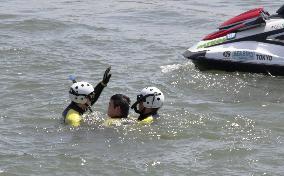
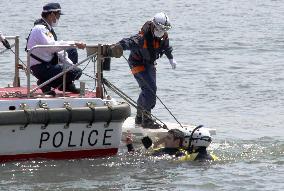
The Metropolitan Police Department conducts a rescue drill in the Edo River on the border between Tokyo and Chiba Prefecture on April 25, 2022, in preparation for possible disasters such as earthquakes and floods.

  •  
Tokyo police conducts rescue drill

Tokyo police conducts rescue drill

The Metropolitan Police Department conducts a rescue drill in the Edo River on the border between Tokyo and Chiba Prefecture on April 25, 2022, in preparation for possible disasters such as earthquakes and floods.

  •  
Ryogoku Hanabi - Fireworks at Ryogoku bridge, Yedo

Ryogoku Hanabi - Fireworks at Ryogoku bridge, Yedo

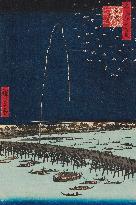
Utagawa Hiroshige print of Ryogoku Hanabi- Fireworks at Ryogoku bridge, Yedo from the 'One-Hundred Famous Views of Edo' series.

  •  
Konodai Tonegawa fukei - View of Konodai and the Tone River

Konodai Tonegawa fukei - View of Konodai and the Tone River

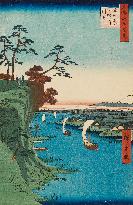
Utagawa Hiroshige print of Konodai Tonegawa fukei. View of Konodai and the Tone River from the 'One Hundred Famous Views of Edo' series.

  •  
Hiroshige - 53 Stations of the Tokaido - Print 55

Hiroshige - 53 Stations of the Tokaido - Print 55

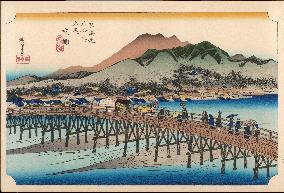
55 Kyoto - In the foreground the "long" bridge over the Kamo River, and people crossing over, with the town beyond, behind which rise hills overlooking it, the most distant printed from graded colourblock only. While decending to Kyoto, travellers could enjoy a panoramic view of the elegant imperial capital from the mountain pass and undoubtedly felt joy and relief at seeing the final destination of their journey from Edo. In those days it was the wish of every Japanese to see Kyoto once in his life.Utagawa Hiroshige (1797 - 1858). The Fifty-Three Stations of the Tokaido - Hoeido edition (1831-4) Date: 1831 - 1834

  •  
Hiroshige - 53 Stations of the Tokaido - Print 29

Hiroshige - 53 Stations of the Tokaido - Print 29

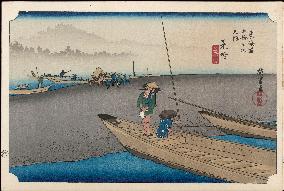
29 Mitsuke - A large sand-bank in the centre of the "Heaven-dragon" River, and people crossing the further arm in boats; two other boats in foreground, moored to the sand-bank, and the distant shore enveloped in mist. The name of this station was derived from the fact that people travelling from Kyoto to Edo were able to get their first glimpse of Mount Fuji from here. The rapidly flowing river "Tenryu" flowed west of the station and travellers had to cross the river by ferryboat. Utagawa Hiroshige (1797 - 1858). The Fifty-Three Stations of the Tokaido - Hoeido edition (1831-4) Date: 1831 - 1834

  •  
Hiroshige - 53 Stations of the Tokaido - Print 3

Hiroshige - 53 Stations of the Tokaido - Print 3

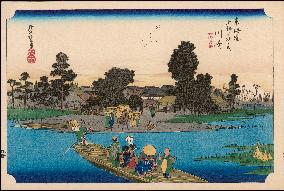
3 Kawasaki - A ferry-boat crossing the river, and passengers waiting on the further bank in front of a cluster of houses; Fuji in the distance. Close to the further bank is a man on a raft. Travellers crossing the river here by ferryboat may have felt they were being carried towards a different world. However, those returning to Edo looked forward to reentering the familiar homeland. This desolate area along the seashore is now an important industrial district of Japan. Utagawa Hiroshige (1797 - 1858). The Fifty-Three Stations of the Tokaido - Hoeido edition (1831-4) Date: 1831 - 1834

  •  
Visitors enjoy cuisine on riverside terrace in Kyoto

Visitors enjoy cuisine on riverside terrace in Kyoto

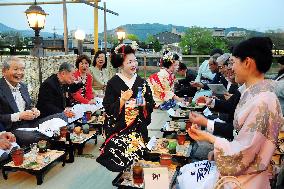
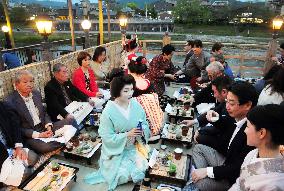
Visitors enjoy traditional Kyoto cuisine with geisha girls and maiko apprentice entertainers at a restaurant on a raised wooden terrace by the Kamo River, at the start of the annual "noryo yuka" (cool floor) season in Kyoto, western Japan, on May 1, 2016. A custom that dates back to the Edo period, the terraces allow people to enjoy dinner in the cool evening breeze during the summer months. (Kyodo) ==Kyodo

  •  
Visitors enjoy cuisine on riverside terrace in Kyoto

Visitors enjoy cuisine on riverside terrace in Kyoto

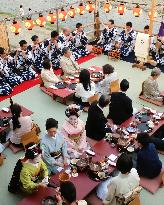
Visitors enjoy a traditional musical performance at a restaurant on a raised wooden terrace by the Kamo River, at the start of the annual "noryo yuka" (cool floor) season in Kyoto, western Japan, on May 1, 2016. A custom that dates back to the Edo period, the terraces allow people to enjoy dinner in the cool evening breeze during the summer months. (Kyodo) ==Kyodo

  •  
Visitors enjoy cuisine on riverside terrace in Kyoto

Visitors enjoy cuisine on riverside terrace in Kyoto

Visitors enjoy traditional Kyoto cuisine with geisha girls and maiko apprentice entertainers at a restaurant on a raised wooden terrace by the Kamo River, at the start of the annual "noryo yuka" (cool floor) season in Kyoto, western Japan, on May 1, 2016. A custom that dates back to the Edo period, the terraces allow people to enjoy dinner in the cool evening breeze during the summer months. (Kyodo) ==Kyodo

  •  
Paper-made "hina" dolls floated on river

Paper-made "hina" dolls floated on river

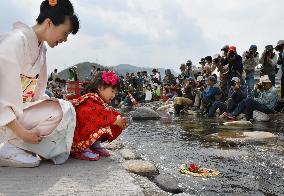
A girl floats paper-made "hina" dolls on a river in the western Japan city of Tottori on April 9, 2016, Girls' Day in the old calendar. The seasonal tradition is said to have started in the Edo era to pray for the health of daughters. (Kyodo) ==Kyodo

  •  
Paper-made "hina" dolls floated on river

Paper-made "hina" dolls floated on river

A girl floats paper-made "hina" dolls on a river in the western Japan city of Tottori on April 9, 2016, Girls' Day in the old calendar. The seasonal tradition is said to have started in the Edo era to pray for the health of one's daughters. (Kyodo) ==Kyodo

  •  
Blackout hits Tokyo, vicinity as power lines hit by crane

Blackout hits Tokyo, vicinity as power lines hit by crane

TOKYO, Japan - Photo shows the damaged parts of the power lines spanning River Edo between Tokyo and Chiba prefectures on Aug. 14. A blackout hit many parts of Tokyo and nearby Chiba and Kanagawa prefectures earlier in the day. (Kyodo)

  •  
Blackout hits Tokyo, vicinity as power lines hit by crane

Blackout hits Tokyo, vicinity as power lines hit by crane

TOKYO, Japan - Using a pair of binoculars, a Tokyo Electric Power Co. worker watches the power lines spanning River Edo between Tokyo and Chiba prefectures on Aug. 14. A blackout hit many parts of Tokyo and nearby Chiba and Kanagawa prefectures earlier in the day after power lines were damaged by a crane on a ship. Power was restored to most of the affected areas about one and a half hours later. (Kyodo)

  •  
Blackout hits Tokyo, vicinity as power lines hit by crane

Blackout hits Tokyo, vicinity as power lines hit by crane

TOKYO, Japan - The crane that hit Tokyo Electric Power Co.'s power lines spanning River Edo between Tokyo and Chiba prefectures stays folded on a ship on Aug. 14. A blackout hit many parts of Tokyo and nearby Chiba and Kanagawa prefectures earlier in the day. Some commuter train services operated by East Japan Railway Co. and other rail companies, as well as Tokyo's subway services, were temporarily suspended because of the outage. (Kyodo)

  •  
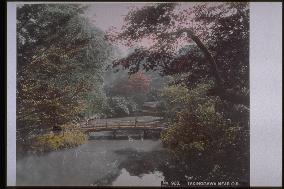
Autumn tints of Takinogawa, Oji

Autumn tints of Takinogawa, Oji

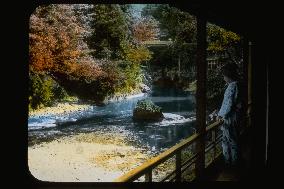
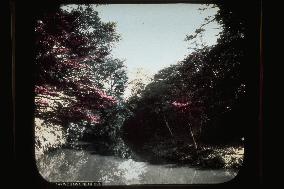
A woman looking at Otonashi River (Shakujii River) from a restaurant in Oji. The river was so clear during the Edo Period that tea made from river water was praised for its high quality. The hillside along the Otonashi River was also suited for tea growing, and the tea grown here was valued on a par with the famous tea from Uji. People were probably able to enjoy this tea here. Taken from a magic lantern made around 1897, this photograph shows that the river was still clean in the Meiji Period.==Date:unknown, Place:Tokyo, Photo:unknown, (Credit:Nagasaki University Library/Kyodo News Images) [Cabinet Number98‐50‐0]

  •  
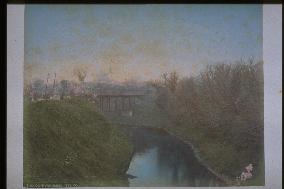
Cherry trees by the Edo River

Cherry trees by the Edo River

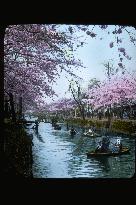
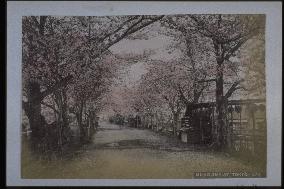
The Kanda Josui (waterway) stretching from around Sekiguchidai in Koishikawa and Iida Bridge was called Edo River (different from the tributary of Tonegawa). It is said that cherry trees were planted here in 1884, but despite its shallow history, the area became a famous cherry blossom viewing site called the new Koganei by the end of Meiji Period. Several boat houses provided lodgings and rented out small boats of this kind. It was a refined pleasure to view the cherry blossoms from the boat. This is a magic lantern slide made around 1897.==Date:unknown, Place:Tokyo, Photo:unknown, (Credit:Nagasaki University Library/Kyodo News Images) [Cabinet Number98‐35‐0]

  •  
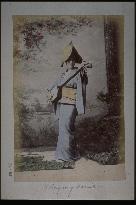
A female street singer playing the shamisen

A female street singer playing the shamisen

At New Year during the Edo Period, women singers in new costumes strolled around the city singing songs at the entrance to houses for a small offering. The scene of a river has been painted on a prop.==Date:unknown, Place:unknown, Photo:unknown, (Credit:Nagasaki University Library/Kyodo News Images) [Cabinet Number92‐33‐0]

  •  
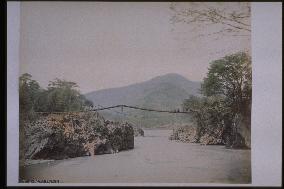
The Kamaguchi-bashi,a suspension bridge over the Fuji River

The Kamaguchi-bashi,a suspension bridge over the Fuji River

View, facing south, of the suspension bridge over Kamaguchi Gorge (a rugged section of Fuji River) between Naganuki in Shibakawa-cho and Setojima. The rapid flow of Fuji River makes bridges difficult to maintain. During the Edo Period, this was the only bridge over the river. Both banks are cliffs, and the width of the river is at its narrowest here. Several people are on the bridge, which is made of wisteria vines and planks. There is also a suspension bridge made only of vines.==Date:unknown, Place:Shizuoka, Photo:A. Farsari, (Credit:Nagasaki University Library/Kyodo News Images) [Cabinet Number82‐51‐0]

  •  
Ochanomizu and Hijiri-bashi Bridge

Ochanomizu and Hijiri-bashi Bridge

Ochanomizu Bridge and Nikolai-do, both built in 1891, viewed from Juntendo Hospital. On the left (north) and right side of the artificial Kanda River are Yushima-dai and Suruga-dai, respectively. Ochanomizu Bridge was the first bridge constructed to provide access to the elevated land, which had been built for the protection of Edo. Even though the river was artificial, this area was renowned for its scenic beauty, and visitors enjoyed fireflies and Japanese cuckoos. Taken between 1892 and 1897.==Date:unknown, Place:Tokyo, Photo:A. Farsari, (Credit:Nagasaki University Library/Kyodo News Images) [Cabinet Number81‐14‐0]

  •  
Autumn tints of Takinogawa, Oji

Autumn tints of Takinogawa, Oji

The 8th Shogun, Tokugawa Yoshimune, visited this area in 1720-21 and was pleased to find that the Oji Gongen Shrine and the name of the Otonashi River originated in his home province, Kishu. As a result he ordered the planting of Yoshino cherry trees at Mt. Asuka and maple trees along Takinogawa to provide autumn colours. Consequently, the Oji area became a popular tourist spot for people from Edo. Taken in the mid-Meiji Period.==Date:unknown, Place:Tokyo, Photo:unknown, (Credit:Nagasaki University Library/Kyodo News Images) [Cabinet Number80‐34‐0]

  •  
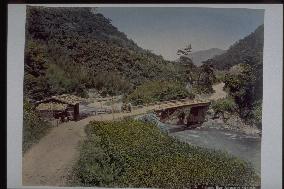
Atsugi

Atsugi

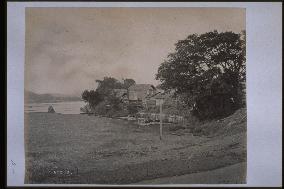
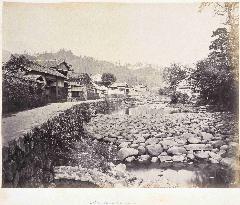
This is probably the bank of Sagami River. Atsugi prospered as a post town on the old Yagurazawa Road, a branch of the Tokaido Highway for pilgrims to Taisan, and an important port on the river for the transport of goods from the Tokai region to Edo. This road also connected with Hachioji Highway to Fujisawa and Hiratsuka.==Date:unknown, Place:Atsugi, Photo:R. Stillfried, (Credit:Nagasaki University Library/Kyodo News Images) [Cabinet Number78‐11‐0]

  •  
The Kamaguchi-bashi,a suspension bridge over the Fuji River

The Kamaguchi-bashi,a suspension bridge over the Fuji River

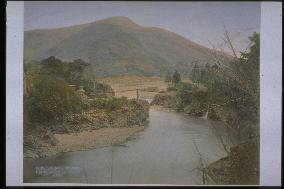
View, facing south, of the suspension bridge over Kamaguchi Gorge (a rugged section of Fuji River) between Naganuki in Shibakawa-cho and Setojima. The rapid flow of Fuji River makes bridges difficult to maintain. During the Edo Period, this was the only bridge over the river. Both banks are cliffs, and the width of the river is at its narrowest here. Several people are on the bridge, which is made of wisteria vines and planks. The village of Ozaki and Mt. Shiratori are visible in the background.==Date:unknown, Place:Shizuoka, Photo:unknown, (Credit:Nagasaki University Library/Kyodo News Images) [Cabinet Number64‐16‐0]

  •  
Cherry trees at Mukojima

Cherry trees at Mukojima

The area across Sumida River from Asakusa is Mukojima. There is no official boundary, but area from Mokuboji Temple to Makura Bridge is referred to as Mukojima. The banks of Sumida River at Mukojima are called Sumida-tei or Boku-tei. Cherry trees were planted here during the Kyoho Period (1716-36) by the 8th Shogun Tokugawa Yoshimune, and saplings were planted from time to time thereafter. This area thus became the most popular place to enjoy cherry blossoms in Edo. Taken around 1898.==Date:unknown, Place:Tokyo, Photo:unknown, (Credit:Nagasaki University Library/Kyodo News Images) [Cabinet Number53‐40‐0]

  •  
A teahouse at Oji

A teahouse at Oji

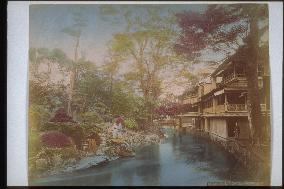
Oji was a considerable distance from Edo, but Mt. Asuka and the Takinogawa River gained fame for their cherry blossoms and autumn colours, respectively, and Oji Inari Shrine attracted more and more worshippers. Consequently, many teahouses and restaurants were built along the 450 m approach to the shrine at the foot of Mt. Asuka. Ogiya, with a garden on the other side of the river, and Ebiya were particularly well-known.==Date:unknown, Place:Tokyo, Photo:unknown, (Credit:Nagasaki University Library/Kyodo News Images) [Cabinet Number51‐35‐0]

  •  
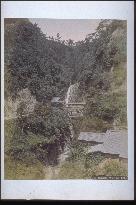
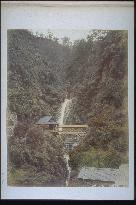
Nunobiki Falls

Nunobiki Falls

Upper stream of the Ikuta River. Since this was near the foreign settlement, many foreigners visited the site. Many photos were taken of Nunopiki falls from the end of Edo era. The photo is that of the Medaki of Nunopiki falls, to the fore of the falls is a bridge for watching the falls.==Date:unknown, Place:Kobe, Photo:unknown, (Credit:Nagasaki University Library/Kyodo News Images) [Cabinet Number42‐5‐0]

  •  
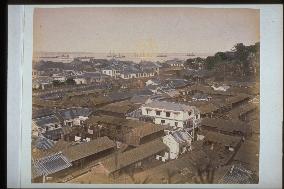
The Kannai foreign settlement seen from the hundred steps of Motomachi,Yokohama

The Kannai foreign settlement seen from the hundred steps of Motomachi,Yokohama

A panorama photo of the Hyakudanue in Motomachi was taken of the Yokohama settlement at the end of the Edo era and the early Meiji era. The fore is Motomachi, and the foreign settlement can be seen over the Hori River.==Date:unknown, Place:Yokohama, Photo:Suzuki Shin-ichi, (Credit:Nagasaki University Library/Kyodo News Images) [Cabinet Number41‐17‐0]

  •  
Nunobiki Falls

Nunobiki Falls

Located upper stream from the Ikuta River. Many foreigners visited the spot due to its close location to the foreign settlement. Many photos were taken of the Nunopiki falls from the end of the Edo era. The photo is that of Medaki, and to the fore of the falls, there is a corridor to watch the falls.==Date:unknown, Place:Kobe, Photo:Kusakabe Kinbei, (Credit:Nagasaki University Library/Kyodo News Images) [Cabinet Number40‐26‐0]

  •  
Autumn tints of Takinogawa, Oji

Autumn tints of Takinogawa, Oji

The red leaves of the Takino River was famous since the Edo era, and many novelists and calligraphers visited the site. The name Takino River originates from the alias of the Shakujii River, and that is the river running in the center.==Date:unknown, Place:Tokyo, Photo:Kusakabe Kinbei, (Credit:Nagasaki University Library/Kyodo News Images) [Cabinet Number40‐7‐0]

  •  
Bridge at Nakasendo Sakurasawa

Bridge at Nakasendo Sakurasawa

A scene from Sakurazawa (presently Nakano City of Nagano prefecture, formerly Nobetoku village) of the former Nakasendo. To the left, the flow of the Kiso River can be seen. Many of the paddy field were in the low marshes of off Nobetoku, so after the mid-Edo era, people were suffered from numerous floods when the cultivating new paddy fields reached a limit.==Date:unknown, Place:Nagano, Photo:Kusakabe Kinbei, (Credit:Nagasaki University Library/Kyodo News Images) [Cabinet Number38‐29‐0]

  •  
Autumn tints of Takinogawa, Oji

Autumn tints of Takinogawa, Oji

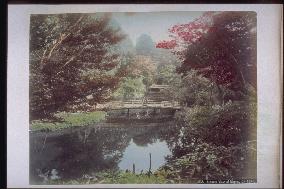
The Takino River of Oji was a pleasure spot from the Edo Era, but as the photo shows, the Japanese garden has been rediscovered in a natural setting, reflecting an eye for natural beauty.==Date:unknown, Place:Tokyo, Photo:unknown, (Credit:Nagasaki University Library/Kyodo News Images) [Cabinet Number31‐11‐0]

  •  
Valley in akunoura

Valley in akunoura

When Beato visited Akunoura around 1864, he took a picture of the stone bridge over the Dainichi River and people. It is a rare photo of the suburbs of Nagasaki at the end of the Edo Era. The man by the river may be fishing.==Date:1864, Place:Nagasaki, Photo:F. Beato, (Credit:Nagasaki University Library/Kyodo News Images) [Cabinet Number28‐17‐0]

  •  
A teahouse at Oji

A teahouse at Oji

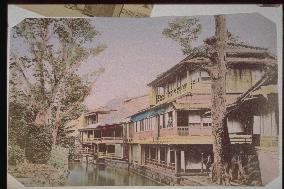
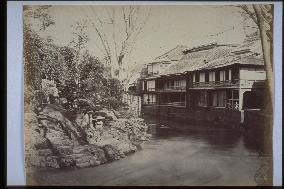
The restaurant Ogiya in Oji during the early Meiji era. Opened during the Kanei years of 1789-1801, it stands at the shore of the Otonashi River (Shaukujii River) and is the head of the Kanto Inari. It was a popular restaurant among people visiting Oji Inari, a famous spot during the Edo Era known in the Rakugo Fox of Oji story. The building to the fore does not have a third floor, so this picture must have been taken before the reconstruction.==Date:unknown, Place:Tokyo, Photo:F. Beato, (Credit:Nagasaki University Library/Kyodo News Images) [Cabinet Number28‐5‐0]

  •  
A teahouse at Oji

A teahouse at Oji

The restaurant Ogiya in Oji, in the early years of the Meiji era. It was opened during the Kansei era (1789-1801), and stands at the shore of Otonashi River (Shakujii River). It is the head of Kanto Inari. It is a famous restaurant for worshippers of the Inari in Oji, which was one of the famous spots in Edo. It is known for its appearance in the rakugo story Oji no Kitsune (Fox of Oji).==Date:unknown, Place:Tokyo, Photo:unknown, (Credit:Nagasaki University Library/Kyodo News Images) [Cabinet Number24‐47‐0]

  •  
Mt. Fuji seen from the Fuji River

Mt. Fuji seen from the Fuji River

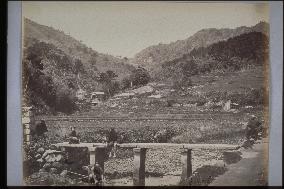
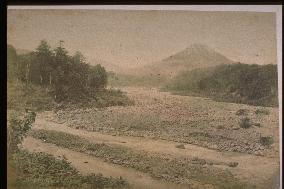
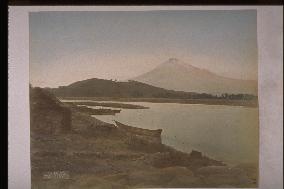
During the Edo era, the lack of sophisticated civil engineering techniques made the construction of bridges impossible over many rivers. Fuji River was one. There were no bridges, and travelers had a hard time crossing the river. From the Meiji era, abundant water made this location a base for the paper industry.==Date:unknown, Place:Shizuoka, Photo:unknown, (Credit:Nagasaki University Library/Kyodo News Images) [Cabinet Number14‐3‐0]

  •  
Wisteria and girls

Wisteria and girls

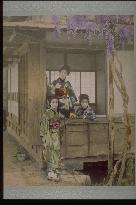
This collection includes the Wisteria of Kameido, Tokyo (53-4). This photo was probably taken at the same location. The photographer's attention is focused on the style of the three women. The atmosphere of Edo remains in the Hori River and the building, which looks like a teahouse.==Date:unknown, Place:Tokyo, Photo:Ogawa Kazumasa, (Credit:Nagasaki University Library/Kyodo News Images) [Cabinet Number10‐50‐0]

  •  
Mt. Fuji seen from the Fuji River

Mt. Fuji seen from the Fuji River

Fuji River, which at present runs through Shizuoka, Nagano and Yamanashi prefectures is known to be one of the three fastest rivers in Japan and a difficult route for transport since olden times. Maritime transport on the Fuji River, which thrived during the Edo Period, connected Iwabuchi near the mouth of the river with the banks of Akisawa in Kai, Aoyagi and Kurosawa.==Date:unknown, Place:Shizuoka, Photo:Kusakabe Kinbei, (Credit:Nagasaki University Library/Kyodo News Images) [Cabinet Number3‐44‐0]

  •  
Escaped penguin recaptured

Escaped penguin recaptured

TOKYO, Japan - Photo shows a Humboldt penguin at Tokyo Sea Life Park in the capital's Kasai area on May 24, 2012. The penguin was recaptured on the banks of the Edo River earlier in the day by an employee of the aquarium after escaping from the facility in March, according to the Tokyo metropolitan government. (Kyodo)

  •  
Escaped penguin recaptured

Escaped penguin recaptured

TOKYO, Japan - Photo shows a Humboldt penguin at Tokyo Sea Life Park in the capital's Kasai area on May 24, 2012. The penguin was recaptured on the banks of the Edo River earlier in the day by an employee of the aquarium after escaping from the facility in March, according to the Tokyo metropolitan government. (Kyodo)

  •  
The main gate of Nakashima Confucian Shrine and the residence of Ueno Hikoma

The main gate of Nakashima Confucian Shrine and the residence of Ueno Hikoma

The white walled house in the center is where Ueno Hikoma lived and had his photo studio. The new two-storied photo studio Ueno Hikoma built in 1872 can be seen. The big gate on the left is the main gate of Nagasaki Seido, along with Yushima in Tokyo and Taku in Saga, one of the three foremost academic centers of Confucianism in Japan at that time. The foliage across the river is Mizu-jinja Shrine of Irabayashi close to the water source for the Kurata-Suihi waterworks during the Edo period.==Date:about 1874, Place:Nagasaki, Photo:Ueno Hikoma?, (Credit:Nagasaki University Library/Kyodo News Images)

  •  
Tokyo excursion boat gutted by fire

Tokyo excursion boat gutted by fire

TOKYO, Japan - Smoke pours from the charred remains of a 20-meter-long excursion boat, owned by Funayado Amitei Co., after it caught fire next to a pier on the Edo River in Tokyo on Dec. 3, 2009. No one was aboard the vessel at the time and police are looking into the possibility that the predawn blaze originated in or near the boat's galley. (Kyodo)

  • Main
  • Top
  • Editorial
  • Creative
  • About Us
  • About ILG
  • Terms of use
  • Company
  • BEHIND
  • Price List
  • Single Plan
  • Monthly Plan
  • Services
  • Shooting
  • Rights Clearance
  • Support
  • FAQ
  • How To Buy
  • Contact Us
  • Become a Partner

© KYODO NEWS IMAGES INC

All Rights Reserved.

  • Editorial
  • Olympics
  • News
  • Sports
  • Japan
  • Tech
  • Royal
  • Disaster
  • NorthKorea
  • Old Japan
  • SNS
  • Creative
  • Food
  • Japan
  • Landscape
  • Animal
  • Popular
  • #Ukraine
  • #China
  • #coronavirus
  • #N. Korea
  • #Thailand
  • #Russia
  • #Ukraine
  • #China
  • #coronavirus
  • #N. Korea
  • #Thailand
  • #Russia
  • Food
  • Japan
  • Landscape
  • Animal
  • Olympics
  • News
  • Sports
  • Japan
  • Tech
  • Royal
  • Disaster
  • NorthKorea
  • Old Japan
  • SNS