•  
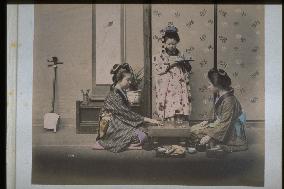
Women and a girl playing go

Women and a girl playing go

Two women are playing a game of go near a tokonoma (alcove) with a hanging scroll. Another woman is watching the game, holding tea cups on a tray. Sweets and a tobacco tray are placed in the foreground.==Date:unknown, Place:unknown, Photo:A. Farsari, (Credit:Nagasaki University Library/Kyodo News Images) [Cabinet Number95‐21‐0]

  •  
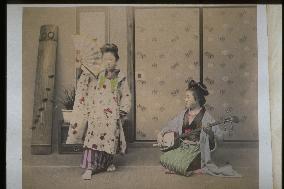
A girl dancing to the shamisen

A girl dancing to the shamisen

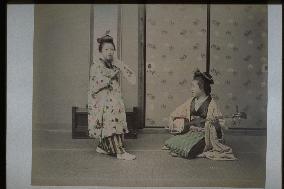
A dance performed to the accompaniment of a shamisen lute. There are Hanayanagi, Fujima and other schools of traditional Japanese dance. The women seem to be sisters. The younger is wearing a coat for outings. The older sister is wearing an apron for household activities. A koto harp is placed against the wall.==Date:unknown, Place:unknown, Photo:A. Farsari, (Credit:Nagasaki University Library/Kyodo News Images) [Cabinet Number95‐24‐0]

  •  
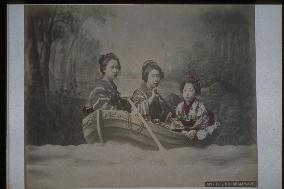
Rowing women

Rowing women

People enjoy a boat ride. The two women on the left are wearing kimono of different colors with splashed patterns. The woman on the right has her hair in Shimada style with a red cloth in the bangs. This is a hairstyle called yakko shimada that was popular among young women aged 13 to 17. The size of the boat and setting suggest that this photograph was taken in a studio.==Date:unknown, Place:unknown, Photo:A. Farsari, (Credit:Nagasaki University Library/Kyodo News Images) [Cabinet Number95‐17‐0]

  •  
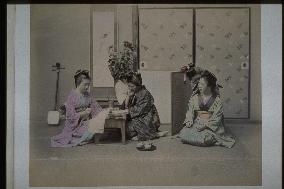
A woman writing a letter,and whispering girls

A woman writing a letter,and whispering girls

The woman on the left is writing a letter, and the woman in the centre is reading either a letter or a book. A girl is whispering something into the ear of the woman sitting on the right. A shamisen lute is placed against the alcove. Chrysanthemums are arranged in the big vase.==Date:unknown, Place:unknown, Photo:A. Farsari, (Credit:Nagasaki University Library/Kyodo News Images) [Cabinet Number95‐23‐0]

  •  
Women in Okano Garden

Women in Okano Garden

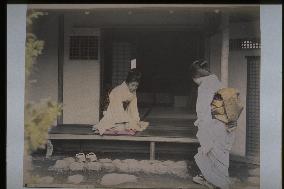
A woman lifts her kimono to go up to the tea room, and another woman welcomes her by placing her hands together in front of her knees. This may be tea service practice for geishas. A light can be seen in the window in the dark room behind. This is the kind of Japanese scene loved by foreigners.==Date:unknown, Place:Tokyo, Photo:A. Farsari, (Credit:Nagasaki University Library/Kyodo News Images) [Cabinet Number95‐18‐0]

  •  
A girl dancing to the shamisen

A girl dancing to the shamisen

Same as #4825, but the koto harp is missing.==Date:unknown, Place:unknown, Photo:A. Farsari, (Credit:Nagasaki University Library/Kyodo News Images) [Cabinet Number95‐22‐0]

  •  
Women on jinrikishas

Women on jinrikishas

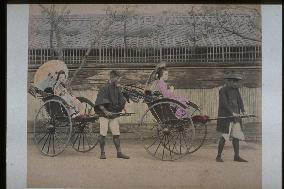
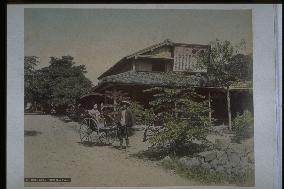
Kimono-clad women hold umbrellas on jinrikisha (rickshaws). The rickshaw man in front wears a straw hat, hanten coat, a stomach warmer, long underwear, and heavy cloth socks. The short-haired rickshaw man in the rear is similarly dressed. This was taken near the wooden fence of a large residence.==Date:unknown, Place:unknown, Photo:A. Farsari, (Credit:Nagasaki University Library/Kyodo News Images) [Cabinet Number95‐20‐0]

  •  
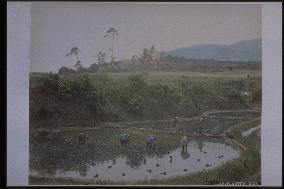
Weeding in a paddy field

Weeding in a paddy field

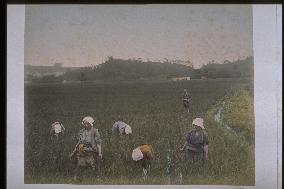
Weeding in a paddy field==Date:unknown, Place:unknown, Photo:A. Farsari, (Credit:Nagasaki University Library/Kyodo News Images)

  •  
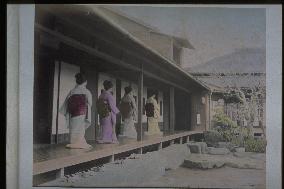
Women in Okano Garden

Women in Okano Garden

Four women are quietly going to the back of the house, dragging their kimono bottoms and looking at the garden. This photograph has a good perspective. A sharp eye will notice that there are five pairs of geta clogs on the step but only four women. Where is the other person? The old tree in the garden may be a plum tree.==Date:unknown, Place:Tokyo, Photo:A. Farsari, (Credit:Nagasaki University Library/Kyodo News Images) [Cabinet Number95‐19‐0]

  •  
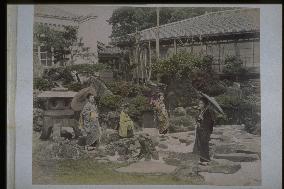
A garden and geikos

A garden and geikos

Four geiko entertainers are posing for the camera in an atmosphere of relaxation in a karesansui or dry garden. Three of them are holding parasols. The karesansui is a Japanese garden that expresses the beauty of a flowing river with stones and sand.==Date:unknown, Place:unknown, Photo:A. Farsari, (Credit:Nagasaki University Library/Kyodo News Images) [Cabinet Number95‐15‐0]

  •  
Portrait of a girl

Portrait of a girl

Portrait of a girl==Date:unknown, Place:unknown, Photo:A. Farsari, (Credit:Nagasaki University Library/Kyodo News Images)

  •  
Firemen

Firemen

Firemen==Date:unknown, Place:unknown, Photo:A. Farsari, (Credit:Nagasaki University Library/Kyodo News Images)

  •  
The Mogi Road

The Mogi Road

The Mogi Road==Date:unknown, Place:Nagasaki, Photo:A. Farsari, (Credit:Nagasaki University Library/Kyodo News Images)

  •  
The centre of the city seen from the precincts of Suwa Shrine

The centre of the city seen from the precincts of Suwa Shrine

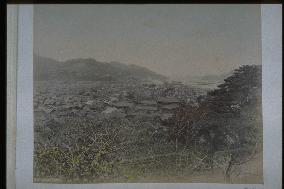
The centre of the city seen from the precincts of Suwa Shrine==Date:unknown, Place:Nagasaki, Photo:A. Farsari, (Credit:Nagasaki University Library/Kyodo News Images)

  •  
Rokkaku-do,Suwa Park

Rokkaku-do,Suwa Park

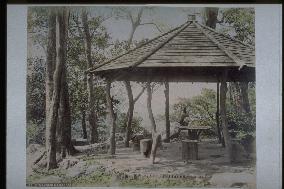
Rokkaku-do,Suwa Park==Date:unknown, Place:Nagasaki, Photo:A. Farsari, (Credit:Nagasaki University Library/Kyodo News Images)

  •  
Nagasaki Station (present-day Urakami Station)

Nagasaki Station (present-day Urakami Station)

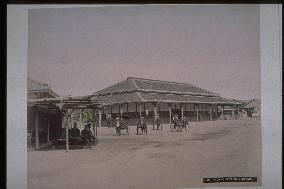
Nagasaki Station (present-day Urakami Station)==Date:unknown, Place:Nagasaki, Photo:A. Farsari, (Credit:Nagasaki University Library/Kyodo News Images)

  •  
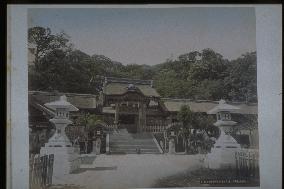
The former Chumon Gate,Suwa Shrine

The former Chumon Gate,Suwa Shrine

This is a hand-tinted photograph showing the Middle Gate at Suwa Shinto Shrine around 1887. This is the main shrine in Nagasaki, and it is famous for its autumn Kunchi Festival.==Date:unknown, Place:Nagasaki, Photo:A. Farsari, (Credit:Nagasaki University Library/Kyodo News Images) [Cabinet Number95‐9‐0]

  •  
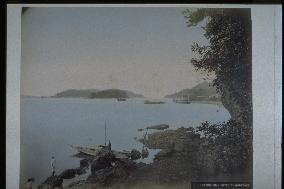
Nezumijima Island seen from Kozakibana

Nezumijima Island seen from Kozakibana

Nezumijima Island seen from Kozakibana==Date:unknown, Place:Nagasaki, Photo:A. Farsari, (Credit:Nagasaki University Library/Kyodo News Images)

  •  
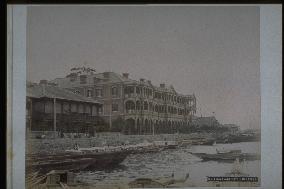
Nagasaki Hotel

Nagasaki Hotel

Nagasaki Hotel==Date:unknown, Place:Nagasaki, Photo:A. Farsari, (Credit:Nagasaki University Library/Kyodo News Images)

  •  
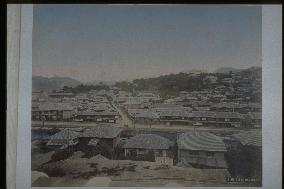
The Oura foreign settlement seen from Minamiyamate

The Oura foreign settlement seen from Minamiyamate

This is Oura and Higashiyamate from Minamiyamate. The newly built Confucius Shrine is in the middle. The street with the western-style buildings in the foreground used to be where foreigners used to go out to drink. Three buildings behind Confucius Shrine to the right have been recently restored ‘Seven Western Houses of Higashiyamate.’ The pink western style building in the upper right is Higashiyama Gakuin (the former British Consulate), the white building above it is Kaisei School. The roof of Russel Hall is visible center back. Around 1899.==Date:unknown, Place:Nagasaki, Photo:A. Farsari, (Credit:Nagasaki University Library/Kyodo News Images)

  •  
A bronze horse at Suwa Shrine

A bronze horse at Suwa Shrine

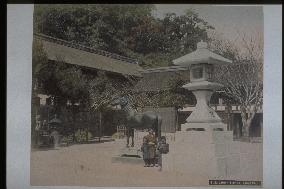
The 1.8m bronze horse was donated to Suwa Shinto Shrine in 1870 to commemorate the establishment of the Nagasaki Iron Foundry, predecessor of Mitsubishi Nagasaki Shipyard. Transferred to the entrance of Nagasaki Park (Suwa Park) in October 1928, it was removed as part of metal collections during World War II.==Date:unknown, Place:Nagasaki, Photo:A. Farsari, (Credit:Nagasaki University Library/Kyodo News Images) [Cabinet Number95‐4‐0]

  •  
Momotani-bashi Bridge over Nakashima River

Momotani-bashi Bridge over Nakashima River

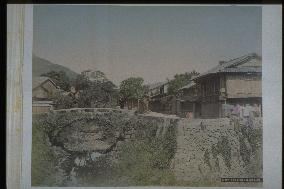
Momotani-bashi Bridge over Nakashima River==Date:unknown, Place:Nagasaki, Photo:A. Farsari, (Credit:Nagasaki University Library/Kyodo News Images)

  •  
Torii,Suwa Shrine

Torii,Suwa Shrine

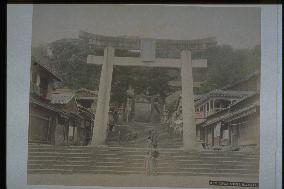
Torii,Suwa Shrine==Date:unknown, Place:Nagasaki, Photo:A. Farsari, (Credit:Nagasaki University Library/Kyodo News Images)

  •  
Nakashima River and Yorozu-bashi Bridge

Nakashima River and Yorozu-bashi Bridge

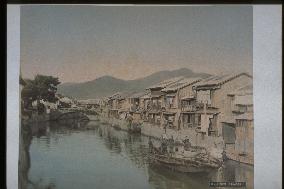
Nakashima River and Yorozu-bashi Bridge==Date:unknown, Place:Nagasaki, Photo:A. Farsari, (Credit:Nagasaki University Library/Kyodo News Images)

  •  
Children baby-sitting

Children baby-sitting

The girls are supporting children on their backs with onbuhimo (baby carrying strings). Children charged to look after the young were either older siblings or children from poor rural families sent out to work.==Date:unknown, Place:unknown, Photo:A. Farsari, (Credit:Nagasaki University Library/Kyodo News Images) [Cabinet Number82‐62‐0]

  •  
Women on jinrikishas

Women on jinrikishas

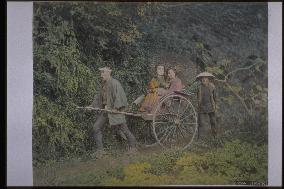
Two kimono-clad women are holding an umbrella on a jinrikisha (rickshaw). The rickshaw man in front has a shaved head and wears a head towel, sacerdotal robe and long underwear. The rickshaw man pushing from behind is wearing a bamboo hat, sacerdotal robe, stomach warmer, long underwear and straw sandals. This seems to have been taken in the mountains.==Date:unknown, Place:unknown, Photo:A. Farsari, (Credit:Nagasaki University Library/Kyodo News Images) [Cabinet Number82‐58‐0]

  •  
A samurai warrior wearing hakama trousers

A samurai warrior wearing hakama trousers

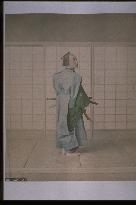
This is a photograph from an album by Farsari & Co. Entitled SAMURAI, it was staged with a man wearing a kamishimo vest and hakama trousers. He carries a samurai's big and small swords and holds a fan in his hand. The scene is altogether artificial.==Date:unknown, Place:unknown, Photo:A. Farsari, (Credit:Nagasaki University Library/Kyodo News Images) [Cabinet Number82‐60‐0]

  •  
Portrait of a woman

Portrait of a woman

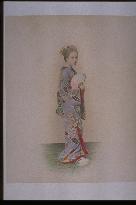
Portrait of a woman==Date:unknown, Place:unknown, Photo:A. Farsari, (Credit:Nagasaki University Library/Kyodo News Images)

  •  
Rice planting

Rice planting

Rice planting==Date:unknown, Place:unknown, Photo:A. Farsari, (Credit:Nagasaki University Library/Kyodo News Images)

  •  
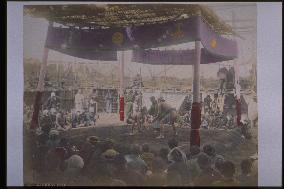
Sumo wrestlers on tour

Sumo wrestlers on tour

Sumo wrestlers on tour==Date:unknown, Place:unknown, Photo:A. Farsari, (Credit:Nagasaki University Library/Kyodo News Images)

  •  
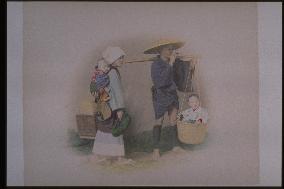
A couple baby-sitting their children

A couple baby-sitting their children

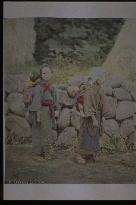
A family is going somewhere with a child in the front basket and baggage in the back. The father is wearing gaiters and a sedge hat for protection from the sun. The mother has a hand towel on her head, and she is holding up the bottom part of her kimono.==Date:unknown, Place:unknown, Photo:A. Farsari, (Credit:Nagasaki University Library/Kyodo News Images) [Cabinet Number82‐59‐0]

  •  
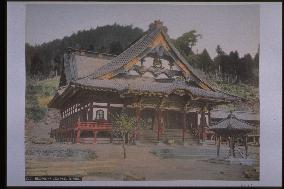
Kuonji Temple,Mt. Minobu

Kuonji Temple,Mt. Minobu

Kuonji Temple,Mt. Minobu==Date:unknown, Place:Yamanashi, Photo:A. Farsari, (Credit:Nagasaki University Library/Kyodo News Images)

  •  
Girls having a meal

Girls having a meal

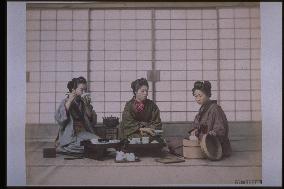
Two young women are having a meal in front of the low meal table in a room with shoji screens. The woman in the middle is handing an empty rice bowl to the woman on the right, who will then put cooked rice into the bowl with a wooden spatula. A porcelain charcoal brazier is visible behind them. ==Date:unknown, Place:unknown, Photo:A. Farsari, (Credit:Nagasaki University Library/Kyodo News Images) [Cabinet Number82‐54‐0]

  •  
The Kamaguchi-bashi,a suspension bridge over the Fuji River

The Kamaguchi-bashi,a suspension bridge over the Fuji River

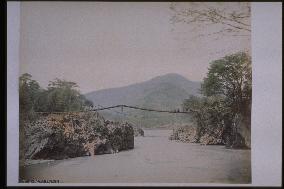
View, facing south, of the suspension bridge over Kamaguchi Gorge (a rugged section of Fuji River) between Naganuki in Shibakawa-cho and Setojima. The rapid flow of Fuji River makes bridges difficult to maintain. During the Edo Period, this was the only bridge over the river. Both banks are cliffs, and the width of the river is at its narrowest here. Several people are on the bridge, which is made of wisteria vines and planks. There is also a suspension bridge made only of vines.==Date:unknown, Place:Shizuoka, Photo:A. Farsari, (Credit:Nagasaki University Library/Kyodo News Images) [Cabinet Number82‐51‐0]

  •  
The interior of a traditional room

The interior of a traditional room

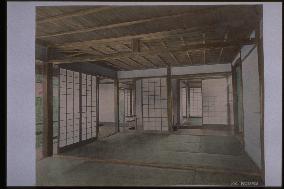
The interior of a traditional room==Date:unknown, Place:unknown, Photo:A. Farsari, (Credit:Nagasaki University Library/Kyodo News Images)

  •  
The Hondo (inner sanctuary) of Kuonji Temple,Mt. Minobu

The Hondo (inner sanctuary) of Kuonji Temple,Mt. Minobu

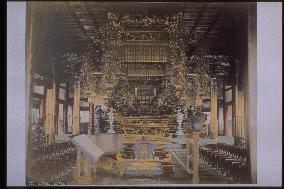
This photograph depicts the interior of the Soshido Seishinkaku at Minobusan Kuonji Temple, headquarters of the Nichiren Sect of Japanese Buddhism located in Minobu-machi, Minamikoma-gun, Yamanashi Prefecture. Seishinkaku is the place where a statue of Nichiren, the founder of the sect, is enshrined. This is an important photograph because it shows the interior of the building after its reconstruction in 1881.==Date:unknown, Place:Yamanashi, Photo:A. Farsari, (Credit:Nagasaki University Library/Kyodo News Images) [Cabinet Number82‐53‐0]

  •  
A water mill

A water mill

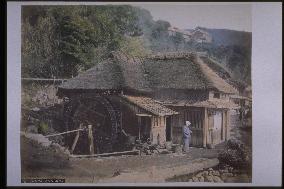
A water mill==Date:unknown, Place:unknown, Photo:A. Farsari, (Credit:Nagasaki University Library/Kyodo News Images)

  •  
Mt. Fuji seen from Omiya

Mt. Fuji seen from Omiya

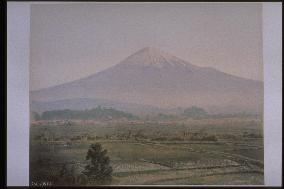
Northeastern view of Mt. Fuji from the hillside of Nonaka in Fujinomiya City. The top of the mountain is covered with snow, and Mt. Hoei is visible on the right. The foliage in the centre left is part of Mt. Fuji Hongu Sengentaisha Shrine. The temple town of Fujinomiya (Omiya) can be seen in front. The Uruigawa riverbank crosses horizontally at the edge of the rice paddies.==Date:unknown, Place:Shizuoka, Photo:A. Farsari, (Credit:Nagasaki University Library/Kyodo News Images) [Cabinet Number82‐49‐0]

  •  
Shiraito Falls

Shiraito Falls

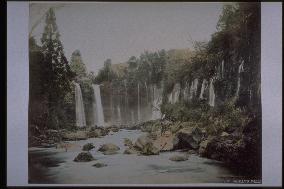
Distant view of Shiraito Falls. Water wells up from the 20 meter-high lava bed which stretches for two hundred meters, and spills over as hundreds of white threads into the basin below. The water creates Shiba River and flows into Fuji River. These falls were designated as a National Scenic Spot in 1936.==Date:unknown, Place:Shizuoka, Photo:A. Farsari, (Credit:Nagasaki University Library/Kyodo News Images) [Cabinet Number82‐50‐0]

  •  
Saruhashi

Saruhashi

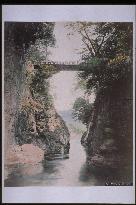
Sarubashi (Monkey Bridge) spans Katsura River in Sarubashi-cho, Otsuki City, Yamanashi Prefecture. This bridge is considered one of the three most unusual bridges in Japan, together with Kiso-no-Kakehashi (Gifu Prefecture) and Kintai-kyo of Suo (Yamaguchi Prefecture). It was designated a National Place of Scenic Beauty in 1932. Sarubashi is designed in hijikiketa style, which is characterized by a lack of vertical supports. This is a view of the bridge from upstream. Many people are on the bridge. The date is unknown.==Date:unknown, Place:Yamanashi, Photo:A. Farsari, (Credit:Nagasaki University Library/Kyodo News Images) [Cabinet Number82‐47‐0]

  •  
The Kegon Falls

The Kegon Falls

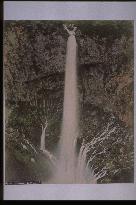
Kegon Falls is one of the three major waterfalls of Japan, along with Nachi Falls (Wakayama Prefecture) and Fukuroda Falls (Ibaragi Prefecture). It is roughly 97m high. Local resident Hoshino Gorobei built the road along the basin of the falls in 1900 and opened a teahouse. The elevator currently in service started operation in in 1930.==Date:unknown, Place:Nikko, Photo:A. Farsari, (Credit:Nagasaki University Library/Kyodo News Images) [Cabinet Number82‐45‐0]

  •  
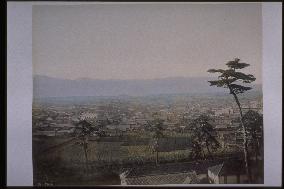
The city of Kofu

The city of Kofu

The city of Kofu, Yamanashi Prefecture, seen from Kofu Castle, facing south. The Western-style buildings in the foreground are part of a winery constructed in 1876 in the metal-casting foundry, part of an industrial complex established in Kofu Castle by then-governor Fujimura Shiro. Consequently, the date of the photograph is assumed to be the early Meiji Period. Visible in the background are Sone Hill and Mt. Misaka, located at the southern edge of the Kofu Basin. Mt. Fuji is also visible on the far left.==Date:unknown, Place:Kofu, Photo:A. Farsari, (Credit:Nagasaki University Library/Kyodo News Images) [Cabinet Number82‐46‐0]

  •  
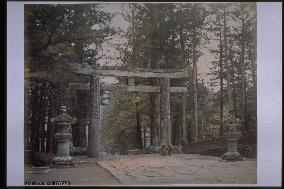
The torii,Taiyuin Shrine,Nikko

The torii,Taiyuin Shrine,Nikko

This is a view of the stone torii gate and Omote-sando approach to Toshogu Shinto Shrine. The torii was donated by Kuroda Echizennokami Nagamasa in 1618. Nine meters high, it is the largest stone torii gate built during the Edo Period. Two men, apparently samurai, stand in front of the gate, and the sky is visible through the cedar trees.==Date:unknown, Place:Nikko, Photo:A. Farsari, (Credit:Nagasaki University Library/Kyodo News Images) [Cabinet Number82‐34‐0]

  •  
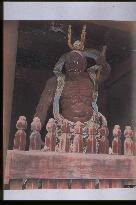
Niomon Gate,Taiyuin Shrine,Nikko

Niomon Gate,Taiyuin Shrine,Nikko

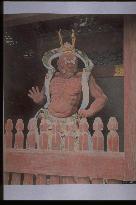
The Niomon stands at the entrance to Taiyuin, the mausoleum of third shogun Tokugawa Iemitsu. Taiyuin is the posthumous name bequeathed by Emperor Gokomyo after Iemitsu's death. The gate is 3.2m high and is protected by the two Nio statues Mitsushaku Kongo and Naraen Kongo, the latter being visible here.==Date:unknown, Place:Nikko, Photo:A. Farsari, (Credit:Nagasaki University Library/Kyodo News Images) [Cabinet Number82‐43‐0]

  •  
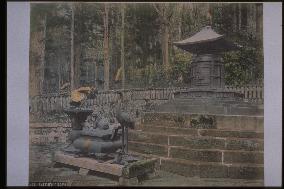
The treasure tower at the Okusha,Toshogu Shrine,Nikko

The treasure tower at the Okusha,Toshogu Shrine,Nikko

The tomb of first shogun Tokugawa Ieyasu was placed in the inner shrine at Nikko Toshogu. When the stone pagoda, which had replaced an early wooden structure, was destroyed by an earthquake in 1683, the fifth shogun Tsunayoshi rebuilt it in Chinese-style bronze. The crane-shaped candlestick, censer, and vase were gifts from the king of Korean.==Date:unknown, Place:Nikko, Photo:A. Farsari, (Credit:Nagasaki University Library/Kyodo News Images) [Cabinet Number82‐41‐0]

  •  
The teahouse of wisdom,Nara-zaka Slope

The teahouse of wisdom,Nara-zaka Slope

The teahouse of wisdom,Nara-zaka Slope==Date:unknown, Place:unknown, Photo:A. Farsari, (Credit:Nagasaki University Library/Kyodo News Images)

  •  
The Karamon Gate,Toshogu Shrine,Nikko

The Karamon Gate,Toshogu Shrine,Nikko

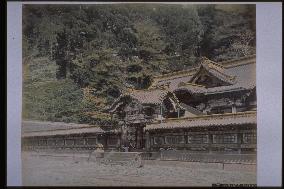
This is the main gate at Toshogu Shinto Shrine. Only high ranking government officials and feudal lords, who were allowed to meet the shogun directly, could use this gate during the Edo Period. The inscription on the upper portion reads Shuntei Choken-no-gi (Emperor Shun's Morning Greetings). On both sides of the gate, surrounding the main shrine, is a 160m-long carved sukibei (transparent wall).==Date:unknown, Place:Nikko, Photo:A. Farsari, (Credit:Nagasaki University Library/Kyodo News Images) [Cabinet Number82‐38‐0]

  •  
Niomon Gate,Taiyuin Shrine,Nikko

Niomon Gate,Taiyuin Shrine,Nikko

The Niomon stands at the entrance to Taiyuin, the mausoleum of third shogun Tokugawa Iemitsu. Taiyuin is the posthumous name bequeathed by Emperor Gokomyo after Iemitsu's death. The gate is 3.2m high and is protected by the two Nio statues Mitsushaku Kongo and Naraen Kongo, the latter being visible here.==Date:unknown, Place:Nikko, Photo:A. Farsari, (Credit:Nagasaki University Library/Kyodo News Images) [Cabinet Number82‐42‐0]

  •  
The Yomeimon Gate,Toshogu Shrine,Nikko (seen from behind)

The Yomeimon Gate,Toshogu Shrine,Nikko (seen from behind)

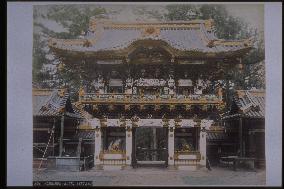
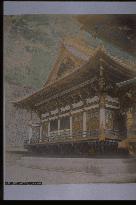
This is the rear of Yomeimon. The symbol of Nikko Toshogu, this gate displays craftsmanship and decorative techniques representative of the early Edo Period. The carvings on the gate total 508 in number and include people, animals (real and imaginary), flowers, birds, and patterns. It is also called Higurashimon (Evening Falling Gate) because visitors can stand looking at it all day long and still not tire of its beauty.==Date:unknown, Place:Nikko, Photo:A. Farsari, (Credit:Nagasaki University Library/Kyodo News Images) [Cabinet Number82‐37‐0]

  •  
The honden (inner sanctuary),Toshogu Shrine,Nikko

The honden (inner sanctuary),Toshogu Shrine,Nikko

The main shrine of Nikko Toshogu is viewed from the west. The inner sanctuary is in the centre. The section one level lower is called Ishinoma. The inner shrine containing the tomb of first shogun Tokugawa Ieyasu is located in the forest above the stone embankment. Carvings of tapirs can be seen on the upper part of the shrine doors.==Date:unknown, Place:Nikko, Photo:A. Farsari, (Credit:Nagasaki University Library/Kyodo News Images) [Cabinet Number82‐40‐0]

  • Main
  • Top
  • Editorial
  • Creative
  • About Us
  • About ILG
  • Terms of use
  • Company
  • BEHIND
  • Price List
  • Single Plan
  • Monthly Plan
  • Services
  • Shooting
  • Rights Clearance
  • Support
  • FAQ
  • How To Buy
  • Contact Us
  • Become a Partner

© KYODO NEWS IMAGES INC

All Rights Reserved.

  • Editorial
  • Olympics
  • News
  • Sports
  • Japan
  • Tech
  • Royal
  • Disaster
  • NorthKorea
  • Old Japan
  • SNS
  • Creative
  • Food
  • Japan
  • Landscape
  • Animal
  • Popular
  • #Ukraine
  • #Russia
  • #coronavirus
  • #N. Korea
  • #Thailand
  • #China
  • #Ukraine
  • #Russia
  • #coronavirus
  • #N. Korea
  • #Thailand
  • #China
  • Food
  • Japan
  • Landscape
  • Animal
  • Olympics
  • News
  • Sports
  • Japan
  • Tech
  • Royal
  • Disaster
  • NorthKorea
  • Old Japan
  • SNS