•  
Fushimi Inari Shrine

Fushimi Inari Shrine

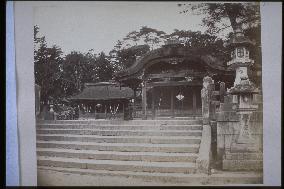
Fushimi Inari Shrine==Date:c. 1880, Place:Kyoto, Photo:unknown ,Credit:Nagasaki University Library/Kyodo News Images [Institution Catalog Number:6889]

  •  
Money counting at Fushimi Inari Taisha in Kyoto

Money counting at Fushimi Inari Taisha in Kyoto

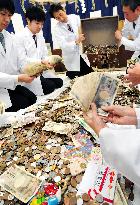
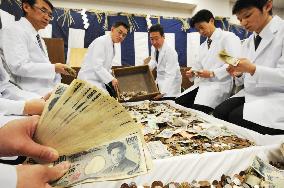
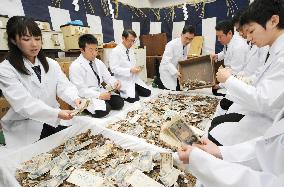
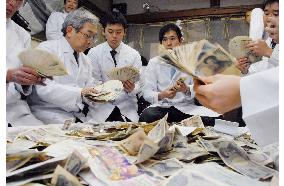
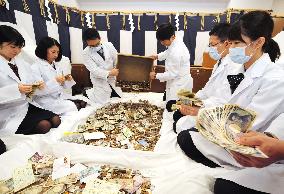
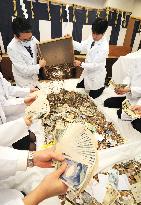
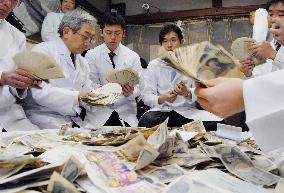
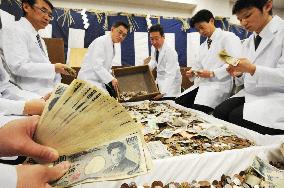
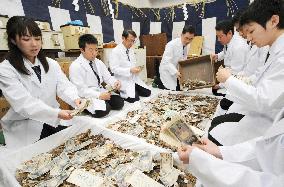
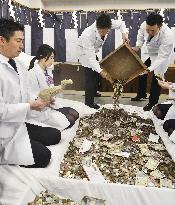
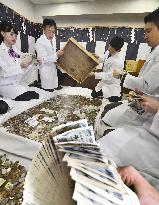
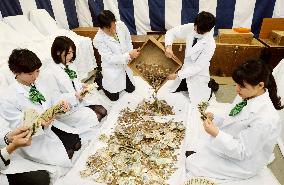
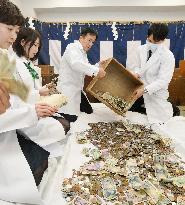
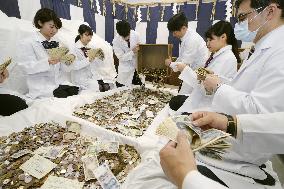
KYOTO, Japan - Bank employees count money thrown into offertory boxes by well-wishers during the first three days of the new year on Jan. 4, 2015, at Fushimi Inari Taisha, a Shinto shrine in Kyoto, western Japan. Eight staff will tally the money over five days.

  •  
Money counting at Fushimi Inari Taisha in Kyoto

Money counting at Fushimi Inari Taisha in Kyoto

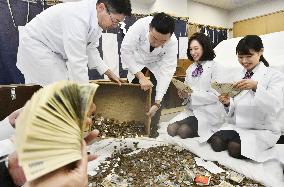
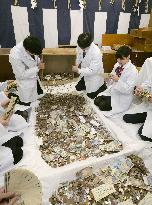
KYOTO, Japan - Bank employees count money thrown into offertory boxes by well-wishers during the first three days of the new year on Jan. 4, 2015, at Fushimi Inari Taisha, a Shinto shrine in Kyoto, western Japan. Eight staff will tally the money over five days.

  •  
Money counting at Fushimi Inari Taisha in Kyoto

Money counting at Fushimi Inari Taisha in Kyoto

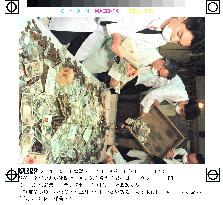
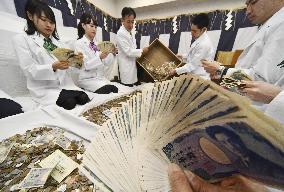
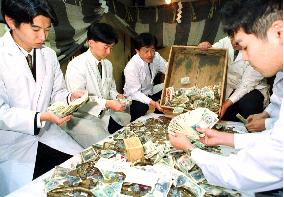
KYOTO, Japan - Bank employees count money thrown into offertory boxes by well-wishers during the first three days of the new year on Jan. 4, 2014, at Fushimi Inari Taisha, a Shinto shrine in Kyoto. It will take four or five days to tally the money.

  •  
Money counting at Fushimi Inari Taisha in Kyoto

Money counting at Fushimi Inari Taisha in Kyoto

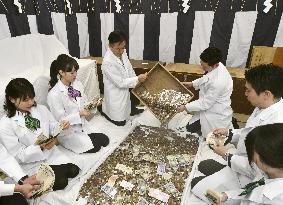
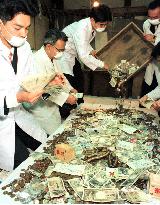
KYOTO, Japan - Bank employees count money thrown into offertory boxes by well-wishers during the first three days of the new year on Jan. 4, 2014, at Fushimi Inari Taisha, a Shinto shrine in Kyoto. It will take four or five days to tally the money.

  •  
New Year offerings at Kyoto shrine

New Year offerings at Kyoto shrine

KYOTO, Japan - Bank employees count the amount of offerings collected during the three-day New Year holidays at Fushimi Inari Taisha, a Shinto shrine in Kyoto, on Jan. 4, 2013.

  •  
New Year offering at Kyoto shrine

New Year offering at Kyoto shrine

KYOTO, Japan - Bank employees count the amount of offerings collected during the three-day New Year holidays at Fushimi Inari Taisha, a Shinto shrine in Kyoto on Jan. 4, 2011. The number of visitors at the shrine during the holidays reached 2.76 million, up 30,000 from the previous year.

  •  
New Year offering at Kyoto shrine

New Year offering at Kyoto shrine

KYOTO, Japan - Bank employees count the amount of offerings collected during the three-day New Year holidays at Fushimi Inari Taisha, a Shinto shrine in Kyoto on Jan. 4, 2011. The number of visitors at the shrine during the holidays reached 2.76 million, up 30,000 from the previous year.

  •  
Bankers collect money offered at Kyoto shrine

Bankers collect money offered at Kyoto shrine

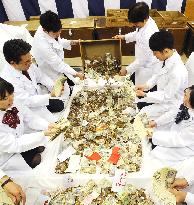
KYOTO, Japan - Bankers count on Jan. 4 money offered at Kyoto's Fushimi Inari Shrine during the three-day New Year's holiday.

  •  
Bankers collect offerings at Kyoto shrine

Bankers collect offerings at Kyoto shrine

Bankers count offerings Jan. 4 at Fushimi Inari Shrine in Kyoto, western Japan, made by visitors during the New Year holidays. Some 2.8 million people, 90,000 more over a year before, visited the shrine Jan. 1-3. The shrine deity is regarded as a guardian of business prosperity.

  •  
Bankers count money offered to Kyoto shrine

Bankers count money offered to Kyoto shrine

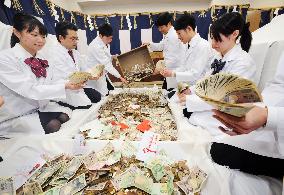
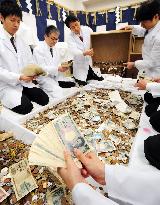
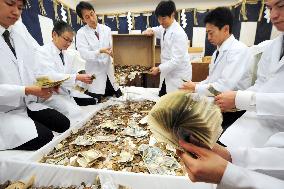
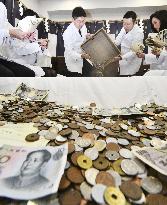
Bankers count money offered during the first three days of 2016 at the Fushimi Inari Taisha shrine in Japan's ancient city of Kyoto on Jan. 4. It is a custom at the start of a new year in the country to make an offering at a Shinto shrine. (Kyodo) ==Kyodo

  •  
Bankers count money offered to Kyoto shrine

Bankers count money offered to Kyoto shrine

Bankers count money offered during the first three days of 2016 at the Fushimi Inari Taisha shrine in Japan's ancient city of Kyoto on Jan. 4. It is a custom at the start of a new year in the country to make an offering at a Shinto shrine. (Kyodo) ==Kyodo

  •  
Fire at bamboo forest of Fushimi Inari shrine

Fire at bamboo forest of Fushimi Inari shrine

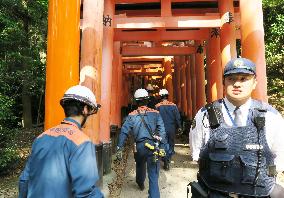
Firefighters proceed under the vermilion "torii" gates of Fushimi Inari Taisha shrine in Kyoto on April 30, 2015, after receiving an emergency call from a tourist reporting a fire in a bamboo forest of the famous shrine. The fire burned 200 square meters of the forest, but no one was hurt and there was no property damage. (Kyodo) ==Kyodo

  •  
U.S. first lady Michelle Obama leaves Japan for Cambodia

U.S. first lady Michelle Obama leaves Japan for Cambodia

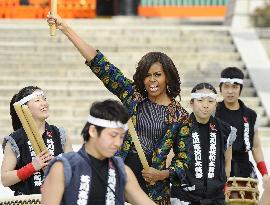
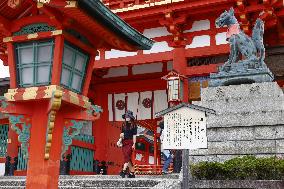
Michelle Obama (C) plays the Japanese "wadaiko" drum at Fushimi Inari Taisha, a Shinto shrine in Kyoto, western Japan, on March 20, 2015. She left for Cambodia later in the day after completing her first trip to Japan as U.S. first lady. (Kyodo) ==Kyodo

  •  
U.S. first lady Michelle Obama leaves Japan for Cambodia

U.S. first lady Michelle Obama leaves Japan for Cambodia

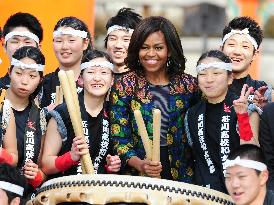
Michelle Obama (C) poses for a photo with high school students who gave a traditional Japanese drum performance during her visit to Fushimi Inari Taisha, a Shinto shrine in Kyoto, western Japan, on March 20, 2015. She left for Cambodia later in the day after completing her first trip to Japan as U.S. first lady. (Kyodo) ==Kyodo

  •  
U.S. first lady Michelle Obama leaves Japan for Cambodia

U.S. first lady Michelle Obama leaves Japan for Cambodia

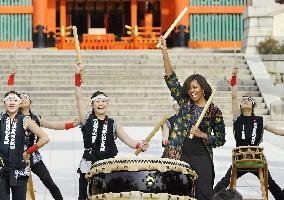
Michelle Obama (R in front row) plays the Japanese "wadaiko" drum at Fushimi Inari Taisha, a Shinto shrine in Kyoto, western Japan, on March 20, 2015. She left for Cambodia later in the day after completing her first trip to Japan as U.S. first lady. (Kyodo) ==Kyodo

  •  
Wealthy Westerners flocking to No. 1 city Kyoto

Wealthy Westerners flocking to No. 1 city Kyoto

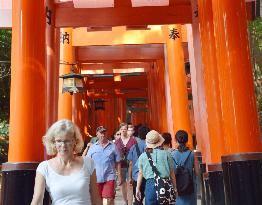
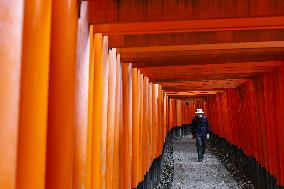
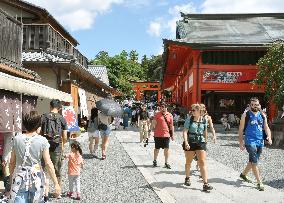
Foreign visitors walk under the "torii" gates of Fushimi Inari Taisha shrine in Kyoto in August 2015. Voted the world's best city to visit by readers of Travel+Leisure magazine in 2015 for the second year in a row, wealthy travelers are flocking there in record numbers. (Kyodo) ==Kyodo

  •  
Bankers collect money offered at Kyoto shrine

Bankers collect money offered at Kyoto shrine

KYOTO, Japan - Bankers count on Jan. 4 money offered at Kyoto's Fushimi Inari Shrine during the three-day New Year's holiday. (Kyodo)

  •  
Torii gates at Fushimi Shrine

Torii gates at Fushimi Shrine

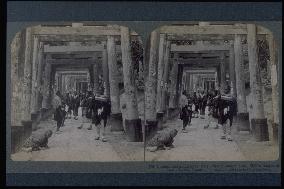
The red Senbon Torii (one thousand gates) along the eastern approach to Fushimi Inari Taisha are viewed looking southeast. The approach starts at Kamigoden Hall on the east side of the shrine precincts and stretches in a southeasterly direction to the foot of Mt. Inari, Myobusha. There are many visitors. The man on the lower left may be a beggar. The marks on the torii gate indicate that this photograph was taken after February 1889, probably by British photographer H. G. Ponting.==Date:1904, Place:Kyoto, Photo:Underwood, (Credit:Nagasaki University Library/Kyodo News Images) [Cabinet Number97‐36‐0]

  •  
A procession of Shinto carrying the sacrement

A procession of Shinto carrying the sacrement

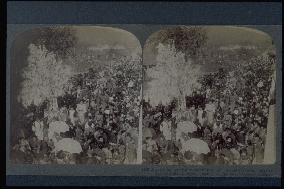
Stereograph depicting the annual festival at Fushimi Inari Shrine. A procession carrying a sacred image is crossing Kamogawa River at Shichijo Ohashi Bridge. The bridge is busy with people coming and going. The Kyoto Imperial Museum, built in 1895, is visible on the east side of Kamogawa River, but streetcar tracks laid on the bridge in 1913 are not visible. Taken in 1904.==Date:1904, Place:Kyoto, Photo:Underwood, (Credit:Nagasaki University Library/Kyodo News Images) [Cabinet Number97‐34‐0]

  •  
A fortuneteller

A fortuneteller

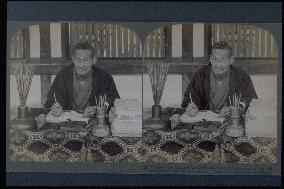
A fortune teller plies his trade in the Fushimi Inari Shrine precincts. Books are piled on the table along with a few pens and a bamboo cylinder containing sticks for fortune telling. The fortune teller appears to be writing something. This was taken by the British photographer H. G. Ponting in 1904. According to Ponting, the fortune teller charged a small fee to predict romance, marriage, illness, business, and travel simply by looking at the palms and face.==Date:1904, Place:Kyoto, Photo:Underwood, (Credit:Nagasaki University Library/Kyodo News Images) [Cabinet Number97‐35‐0]

  •  
Fushimi Shrine

Fushimi Shrine

The main hall of Fushimi Inari Shrine is viewed from the bottom of the stairs on the east side of the offertory shrine. A nocturnal stone lantern is visible on the right. The main hall was built in 1494 and repaired by Toyotomi Hideyoshi in 1589. The karahafu-style building in the centre was added in 1694. The shrine is of gokensharyu construction with cedar-tiled roof. The Gonden is visible in the background to the left.==Date:unknown, Place:Kyoto, Photo:R. Stillfried, (Credit:Nagasaki University Library/Kyodo News Images) [Cabinet Number63‐5‐0]

  •  
Torii gates at Fushimi Shrine

Torii gates at Fushimi Shrine

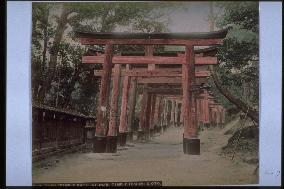
The red Senbon Torii (one thousand gates) along the eastern approach to Fushimi Inari Taisha are viewed looking southeast. The approach starts at Kamigoden Hall on the east side of the shrine precincts and stretches in a southeasterly direction to the foot of Mt. Inari, Myobusha. The marks on the torii gate indicate that this photograph was taken after February 1889.==Date:unknown, Place:Kyoto, Photo:unknown, (Credit:Nagasaki University Library/Kyodo News Images) [Cabinet Number53‐22‐0]

  •  
Torii gates at Fushimi Shrine

Torii gates at Fushimi Shrine

The red Senbon Torii (one thousand gates) along the eastern approach to Fushimi Inari Taisha are viewed looking southeast. The approach starts at Kamigoden Hall on the east side of the shrine precincts and stretches in a southeasterly direction to the foot of Mt. Inari, Myobusha. The marks on the torii gate indicate that this photograph was taken after February 1889.==Date:unknown, Place:Kyoto, Photo:unknown, (Credit:Nagasaki University Library/Kyodo News Images) [Cabinet Number52‐7‐0]

  •  
New Year offering at Kyoto shrine

New Year offering at Kyoto shrine

KYOTO, Japan - Bank employees count the amount of offerings collected during the three-day New Year holidays at Fushimi Inari Taisha, a Shinto shrine in Kyoto on Jan. 4, 2011. The number of visitors at the shrine during the holidays reached 2.76 million, up 30,000 from the previous year. (Kyodo)

  •  
New Year offering at Kyoto shrine

New Year offering at Kyoto shrine

KYOTO, Japan - Bank employees count the amount of offerings collected during the three-day New Year holidays at Fushimi Inari Taisha, a Shinto shrine in Kyoto on Jan. 4, 2011. The number of visitors at the shrine during the holidays reached 2.76 million, up 30,000 from the previous year. (Kyodo)

  •  
Fushimi Inari Shrine

Fushimi Inari Shrine

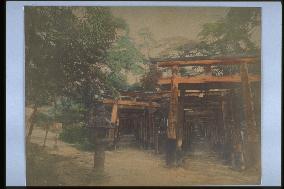
Fushimi Inari Shrine==Date:Early Meiji, Place:kyoto, Photo:unknown, (Credit:Nagasaki University Library/Kyodo News Images)

  •  
New coronavirus

New coronavirus

Fushimi Inari Taisha shrine in Kyoto is deserted on May 22, 2020, amid continuing worries over the new coronavirus outbreak. (Kyodo) ==Kyodo

  •  
New coronavirus

New coronavirus

Fushimi Inari Taisha shrine in Kyoto is deserted on May 22, 2020, amid continuing worries over the new coronavirus outbreak. (Kyodo) ==Kyodo

  •  
New Year offerings at Kyoto shrine

New Year offerings at Kyoto shrine

Bank employees count money offerings made during the first three days of 2020 at the Fushimi Inari Taisha shrine in Kyoto on Jan. 4, 2020. It is a Japanese custom to make an offering at the start of a new year. (Kyodo) ==Kyodo

  •  
New Year offerings at Kyoto shrine

New Year offerings at Kyoto shrine

Bank employees count money offerings made during the first three days of 2020 at the Fushimi Inari Taisha shrine in Kyoto on Jan. 4, 2020. It is a Japanese custom to make an offering at the start of a new year. (Kyodo) ==Kyodo

  •  
New Year offerings at Kyoto shrine

New Year offerings at Kyoto shrine

Bank employees count money offerings made during the first three days of 2020 at the Fushimi Inari Taisha shrine in Kyoto on Jan. 4, 2020. It is a Japanese custom to make an offering at the start of a new year. (Kyodo) ==Kyodo

  •  
New Year offerings at Kyoto shrine

New Year offerings at Kyoto shrine

Bank employees count money offered during the first three days of 2019 at Fushimi Inari Taisha, a Shinto shrine in Kyoto, on Jan. 4, 2019. It is a Japanese custom at the start of a new year to visit a shrine and make an offering. (Kyodo) ==Kyodo

  •  
New Year offerings at Kyoto shrine

New Year offerings at Kyoto shrine

Bank employees count money offered during the first three days of 2019 at Fushimi Inari Taisha, a Shinto shrine in Kyoto, on Jan. 4, 2019. It is a Japanese custom at the start of a new year to visit a shrine and make an offering. (Kyodo) ==Kyodo

  •  
New Year offerings at Kyoto shrine

New Year offerings at Kyoto shrine

Bank employees count money offered during the first three days of 2019 at Fushimi Inari Taisha, a Shinto shrine in Kyoto, on Jan. 4, 2019. It is a Japanese custom at the start of a new year to visit a shrine and make an offering. (Kyodo) ==Kyodo

  •  
New Year offering at Kyoto shrine

New Year offering at Kyoto shrine

Bank employees count money offerings made during the first three days of 2018 at the Fushimi Inari Taisha, a famous shrine in Kyoto, on Jan. 4, 2018. It is a Japanese custom at the start of a new year to visit a shrine and make an offering. (Kyodo) ==Kyodo

  •  
New Year offering at Kyoto shrine

New Year offering at Kyoto shrine

Bank employees count money offerings made during the first three days of 2018 at the Fushimi Inari Taisha, a famous shrine in Kyoto, on Jan. 4, 2018. It is a Japanese custom at the start of a new year to visit a shrine and make an offering. (Kyodo) ==Kyodo

  •  
Fushimi Inari shrine in Kyoto

Fushimi Inari shrine in Kyoto

A number of foreign tourists visit Fushimi Inari Taisha, a Shinto shrine, in Kyoto in this file photo taken September 2017. (Kyodo) ==Kyodo

  •  
Kyoto shrine counts New Year monetary offerings

Kyoto shrine counts New Year monetary offerings

Bank employees count offerings made to Fushimi Inari Taisha, a famous shrine in Kyoto, by worshipers during the first three days of the year, on Jan. 4, 2017. The shrine said it has some 50 boxes on its premises to receive offerings and the counting will take a few days. The shrine keeps the total numbers of worshipers or their offerings for the New Year period under wraps. (Kyodo) ==Kyodo

  •  
Kyoto shrine counts New Year monetary offerings

Kyoto shrine counts New Year monetary offerings

Bank employees count offerings made to Fushimi Inari Taisha, a famous shrine in Kyoto, by worshipers during the first three days of the year, on Jan. 4, 2017. The shrine said it has some 50 boxes on its premises to receive offerings and the counting will take a few days. The shrine keeps the total numbers of worshipers or their offerings for the New Year period under wraps. (Kyodo) ==Kyodo

  •  
Bank employees collect offerings at Kyoto shrine

Bank employees collect offerings at Kyoto shrine

KYOTO, Japan - Employees of a commercial bank count offerings Jan. 4 at the Fushimi Inari Shrine in Kyoto, western Japan, made by visitors during the New Year holidays. Some 2.79 million people, 30,000 fewer than from a year before, visited the shrine on Jan. 1-3.

  •  
Bankers collect offerings at Kyoto shrine

Bankers collect offerings at Kyoto shrine

Bankers count offerings Jan. 4 at Fushimi Inari Shrine in Kyoto, western Japan, made by visitors during the New Year holidays. Some 2.8 million people, 90,000 more over a year before, visited the shrine Jan. 1-3. The shrine deity is regarded as a guardian of business prosperity.

  • Main
  • Top
  • Editorial
  • Creative
  • About Us
  • About ILG
  • Terms of use
  • Company
  • BEHIND
  • Price List
  • Single Plan
  • Monthly Plan
  • Services
  • Shooting
  • Rights Clearance
  • Support
  • FAQ
  • How To Buy
  • Contact Us
  • Become a Partner

© KYODO NEWS IMAGES INC

All Rights Reserved.

  • Editorial
  • Olympics
  • News
  • Sports
  • Japan
  • Tech
  • Royal
  • Disaster
  • NorthKorea
  • Old Japan
  • SNS
  • Creative
  • Food
  • Japan
  • Landscape
  • Animal
  • Popular
  • #Ukraine
  • #Thailand
  • #coronavirus
  • #N. Korea
  • #Russia
  • #China
  • #Ukraine
  • #Thailand
  • #coronavirus
  • #N. Korea
  • #Russia
  • #China
  • Food
  • Japan
  • Landscape
  • Animal
  • Olympics
  • News
  • Sports
  • Japan
  • Tech
  • Royal
  • Disaster
  • NorthKorea
  • Old Japan
  • SNS