•  
Foreign man

Foreign man

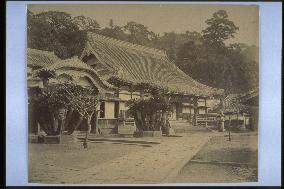
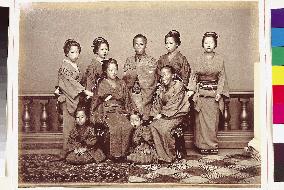
Foreign man==Date:unknown, Place:Nagasaki, Photo:Ueno Hikoma ,Credit:Nagasaki University Library/Kyodo News Images [Institution Catalog Number:7095]

  •  
Foreign man

Foreign man

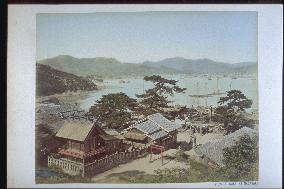
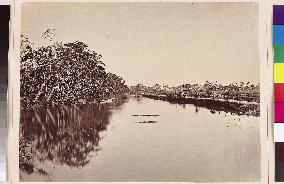
Foreign man==Date:1875, Place:Nagasaki, Photo:Ueno Hikoma ,Credit:Nagasaki University Library/Kyodo News Images [Institution Catalog Number:7096]

  •  
Foreign man

Foreign man

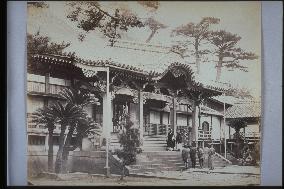
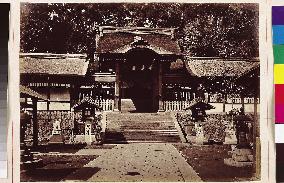
Foreign man==Date:1873, Place:Nagasaki, Photo:Ueno Hikoma ,Credit:Nagasaki University Library/Kyodo News Images [Institution Catalog Number:7093]

  •  
Foreign man

Foreign man

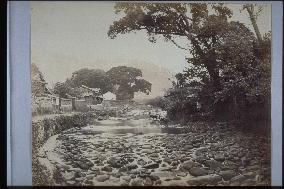
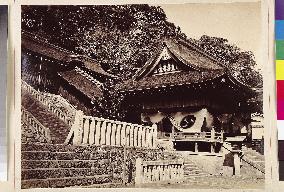
Foreign man==Date:unknown, Place:Nagasaki, Photo:Ueno Hikoma ,Credit:Nagasaki University Library/Kyodo News Images [Institution Catalog Number:7094]

  •  
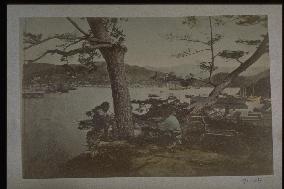
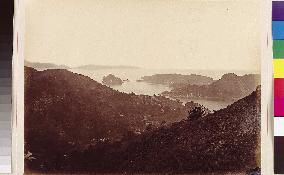
Nagasaki Harbour seen from Akunoura

Nagasaki Harbour seen from Akunoura

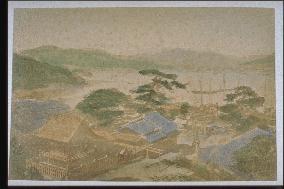
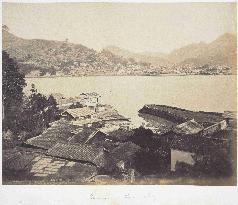
This is one of a set of four photographs of Nagasaki taken by Uchida Kuichi, who accompanied Emperor Meiji on his journey around the country in 1872. The Emperor's flagship is visible in the harbour. Although believed to be the work of Ueno Hikoma, this same photograph was found among Uchida's photographs of the 1872 trip in the Kasumi-kai collection and thus was confirmed to be Uchida's work.==Date:1872, Place:Nagasaki, Photo:Uchida Kuichi, (Credit:Nagasaki University Library/Kyodo News Images) [Cabinet Number91‐24‐0]
  •  
Nakashima River and the residence of Ueno Hikoma

Nakashima River and the residence of Ueno Hikoma

Nakashima River and the residence of Ueno Hikoma==Date:unknown, Place:Nagasaki, Photo:unknown, (Credit:Nagasaki University Library/Kyodo News Images)

  •  
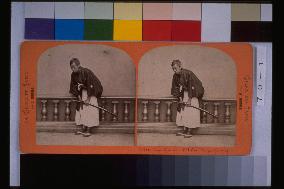
Samurai warriors greeting each other

Samurai warriors greeting each other

The scene of samurai exchanging greetings is recreated, with the two bowing deeply in the official attire of haori coat with family crest and hakama trousers. The Western-style handrail in the back was a fixture of the Ueno Hikoma studio in Nagasaki, where this stereograph seems to have been taken by Wilhelm Burger.==Date:Middle Meiji (1883-1897), Place:Nagasaki, Photo:Wilhelm Burger, (Credit:Nagasaki University Library/Kyodo News Images) [Cabinet Number70‐1‐0]

  •  
Suwa Shrine

Suwa Shrine

The photo mount has ‘Taken by Ueno in Nagasaki, Japan’ printed on it.==Date:unknown, Place:Nagasaki, Photo:Ueno Hikoma, (Credit:Nagasaki University Library/Kyodo News Images) [Cabinet Number66‐33‐0]

  •  
Nakashima River and the residence of Ueno Hikoma

Nakashima River and the residence of Ueno Hikoma

Nakashima River and the residence of Ueno Hikoma==Date:Middle Meiji (1883-1897), Place:Nagasaki, Photo:unknown, (Credit:Nagasaki University Library/Kyodo News Images)

  •  
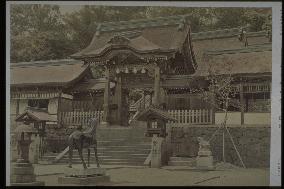
The hondo (inner sanctuary), Daikoji Temple, Nagasaki

The hondo (inner sanctuary), Daikoji Temple, Nagasaki

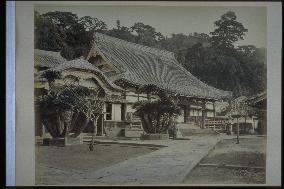
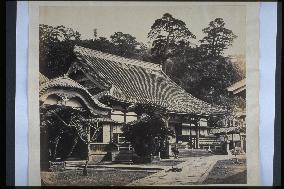
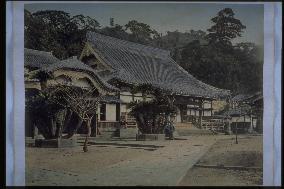
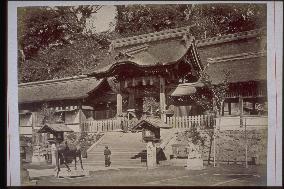
Daikoji Temple and a man, taken by Uchida Kuichi. There is a photograph in which Ueno Hikoma poses just like the man in this photograph, taken by F. Beato at the end of the Edo Period (Cabinet No:66-27). It is assumed that Kuichi used the same composition in this photograph taken when he visited Nagasaki in 1872. There are the same photos of colored (Cabinet No:15-28, 66-2) and not-colored (Cabinet No:66-3) in collection too.==Date:about 1872, Place:Nagasaki, Photo:Uchida Kuichi, (Credit:Nagasaki University Library/Kyodo News Images) [Cabinet Number66‐31‐0]

  •  
The hondo (inner sanctuary),Daikoji Temple,Nagasaki

The hondo (inner sanctuary),Daikoji Temple,Nagasaki

This is a photograph by Felice Beato of Daikoji Temple. The man standing in front of the lantern on the left is Hikoma Ueno. Seven years later, Kuichi Ikeda would take a photo from exactly the same angle. Interestingly, he, also, had a man standing in the center (refer to Catalog No. 688, 3220, 3222, 3251). He appears to have done so in reference to this photo by Beato.==Date:about 1865, Place:Nagasaki, Photo:F. Beato, (Credit:Nagasaki University Library/Kyodo News Images) [Cabinet Number66‐27‐0]

  •  
The hondo (inner sanctuary), Daikoji Temple, Nagasaki

The hondo (inner sanctuary), Daikoji Temple, Nagasaki

Daikoji Temple and a man, taken by Uchida Kuichi. There is a photograph in which Ueno Hikoma poses just like the man in this photograph, taken by F. Beato at the end of the Edo Period (Cabinet No:66-27). It is assumed that Kuichi used the same composition in this photograph taken when he visited Nagasaki in 1872. There are the same photos of colored (Cabinet No:15-28, 66-2) and not-colored (Cabinet No:66-3) in collection too.==Date:about 1872, Place:Nagasaki, Photo:Uchida Kuichi, (Credit:Nagasaki University Library/Kyodo News Images) [Cabinet Number66‐2‐0]

  •  
The hondo (inner sanctuary), Daikoji Temple, Nagasaki

The hondo (inner sanctuary), Daikoji Temple, Nagasaki

Daikoji Temple and a man, taken by Uchida Kuichi. There is a photograph in which Ueno Hikoma poses just like the man in this photograph, taken by F. Beato at the end of the Edo Period (Cabinet No:66-27). It is assumed that Kuichi used the same composition in this photograph taken when he visited Nagasaki in 1872. There are the same photos of colored (Cabinet No:15-28, 66-2) and not-colored (Cabinet No:66-3) in collection too.==Date:about 1872, Place:Nagasaki, Photo:Uchida Kuichi, (Credit:Nagasaki University Library/Kyodo News Images) [Cabinet Number66‐3‐0]

  •  
Ebisu Shrine, Akunoura

Ebisu Shrine, Akunoura

The photo is entitled Nagasaki, view of Inasa. A distant view of Nagasaki harbour over the compounds of Akunoura Shrine (Ebisu Shrine). The same photo is in the album of Ueno Hikoma. It was probably photographed in the first year of Meiji (1867).==Date:unknown, Place:Nagasaki, Photo:Uchida Kuichi, (Credit:Nagasaki University Library/Kyodo News Images) [Cabinet Number40‐28‐0]

  •  
The main hall at Daionji Temple

The main hall at Daionji Temple

A 1864 photo by Beato of the main building of Daionji Temple in Teramachi. The priests, warriors and servants posed for the photo after the bell tower in picture number 28-21 was taken. Beato took a photo of Ueno Hikoma within this temple.==Date:1864, Place:Nagasaki, Photo:F. Beato, (Credit:Nagasaki University Library/Kyodo News Images) [Cabinet Number28‐26‐0]

  •  
Nakashima River and the residence of Ueno Hikoma

Nakashima River and the residence of Ueno Hikoma

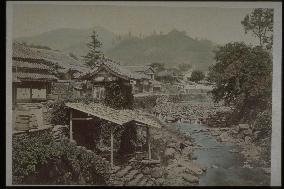
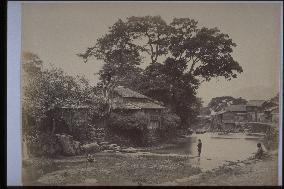
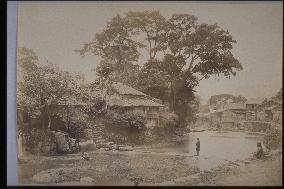
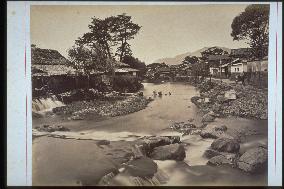
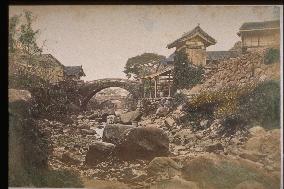
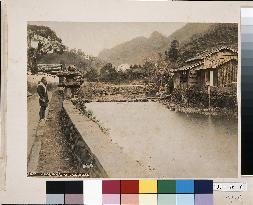
The quiet flow of Nakashima River and the Hikoma residence photographed by Beato around 1864. This is the opposite shore from the picture numbered 28-32. This is only two years after Hikoma opened his photography studio here, and the building is still very simple.==Date:1864, Place:Nagasaki, Photo:F. Beato, (Credit:Nagasaki University Library/Kyodo News Images) [Cabinet Number28‐33‐0]

  •  
A view of Nakashima River

A view of Nakashima River

The view of Nakashima River taken by Beato around 1864. This is a picture of the opposite bank of the river taken near the front of the Ueno Hikoma residence. Beato is thought to have stayed at Hikoma's residence at that time. The man to the right is fishing. The same photo as the picture numbered 28-31.==Date:unknown, Place:Nagasaki, Photo:F. Beato, (Credit:Nagasaki University Library/Kyodo News Images) [Cabinet Number28‐32‐0]

  •  
View near yahatamachi koraibashi bridge of nakashimagawa river

View near yahatamachi koraibashi bridge of nakashimagawa river

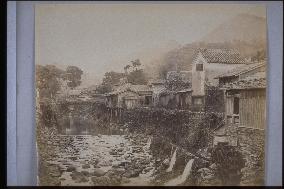
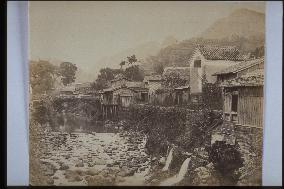
The Korai Bridge and Yahata Bridge photographed by Beato around 1864. To the left upstream is the residence of Ueno Hikoma. The white warehouse is the residence of the painter Kinoshita Itsuun. Itsuun was the guarantor of Hikoma when he became a student of Hirose Tanso in Hita.==Date:1864, Place:Nagasaki, Photo:F. Beato, (Credit:Nagasaki University Library/Kyodo News Images) [Cabinet Number28‐29‐0]

  •  
A view of Nakashima River

A view of Nakashima River

The view of Nakashima River taken by Beato around 1864. This is a picture of the opposite bank of the river taken near the front of the Ueno Hikoma residence. Beato is thought to have stayed at Hikoma's residence at that time. The man to the right is fishing.==Date:1864, Place:Nagasaki, Photo:F. Beato, (Credit:Nagasaki University Library/Kyodo News Images) [Cabinet Number28‐31‐0]

  •  
View near yahatamachi koraibashi bridge of nakashimagawa river

View near yahatamachi koraibashi bridge of nakashimagawa river

The Korai Bridge and Yahata Bridge photographed by Beato around 1864. To the left upstream is the residence of Ueno Hikoma. The white warehouse is the residence of the painter Kinoshita Itsuun. Itsuun was the guarantor of Hikoma when he became a student of Hirose Tanso in Hita. The same photograph as number 28-29.==Date:unknown, Place:Nagasaki, Photo:F. Beato, (Credit:Nagasaki University Library/Kyodo News Images) [Cabinet Number28‐30‐0]

  •  
Geisha

Geisha

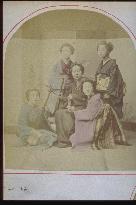
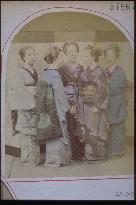
Included in the album of Ueno Hikoma along with the photos numbered 21-23 and 24, this is a rare photo by Hikoma because it is colored and framed in red. Two of the young geisha hold shamisen, and all are photographed with gentle expressions.==Date:unknown, Place:unknown, Photo:unknown, (Credit:Nagasaki University Library/Kyodo News Images) [Cabinet Number21‐22‐0]

  •  
Geisha

Geisha

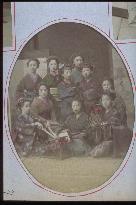
Included in the album of Ueno Hikoma along with the photos numbered 21-23 and 24. This is a rare photo by Hikoma because it is colored and framed in red. In the front are girls who look like waitresses, and behind them young geisha trainees.==Date:unknown, Place:unknown, Photo:unknown, (Credit:Nagasaki University Library/Kyodo News Images) [Cabinet Number21‐23‐0]

  •  
The former Chumon Gate,Suwa Shrine

The former Chumon Gate,Suwa Shrine

Entitled Entrance of temple in English, but this is the old middle gate of Suwa Shinto Shrine in Nagasaki. It is a photo from the album of Ueno Hikoma. It was taken between 1877 and 1887, as the Imari porcelain lantern is still not installed by the gate.==Date:unknown, Place:Nagasaki, Photo:unknown, (Credit:Nagasaki University Library/Kyodo News Images) [Cabinet Number21‐15‐0]

  •  
Nakashima River and the residence of Ueno Hikoma

Nakashima River and the residence of Ueno Hikoma

The Nakashima River near the residence of Ueno Hikoma, looking upstream. Beato took a photo from the same angle (photo No. 28-33). The white walled house to the left is the Ueno residence.==Date:Middle Meiji, Place:Nagasaki, Photo:Ueno Hikoma, (Credit:Nagasaki University Library/Kyodo News Images) [Cabinet Number21‐8‐0]

  •  
The central district of Nagasaki

The central district of Nagasaki

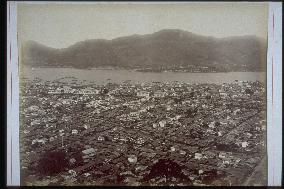
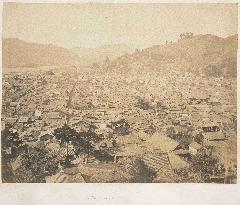
The old city and harbour of Nagasaki. The opposite bank is Inasa. Nakashima River fiows through the centre of the city. The stone bridges spanning the river can also be seen. The colours in this picture have changed to brownish tones, but it is probably the same picture as No. 21-4 and the original.==Date:Middle Meiji, Place:Nagasaki, Photo:Ueno Hikoma, (Credit:Nagasaki University Library/Kyodo News Images) [Cabinet Number21‐6‐0]

  •  
Nakashima River and the residence of Ueno Hikoma

Nakashima River and the residence of Ueno Hikoma

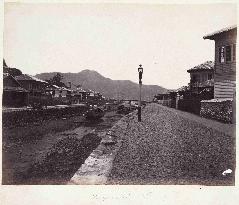
The scene in photo No. 21-8 taken in the opposite direction,looling downstream. On the right is the Ueno residence. In front of the house is a street lamp. A rickshaw is parked in front of the house.==Date:unknown, Place:Nagasaki, Photo:unknown, (Credit:Nagasaki University Library/Kyodo News Images) [Cabinet Number21‐9‐0]

  •  
Dejima and Nagasaki harbour seen from Don-no-Yama

Dejima and Nagasaki harbour seen from Don-no-Yama

In the centre is Dejima, and to the fore are the Shinchi warehouses and the settlements of Umegasaki. The shore line of Dejima can be seen clearly. A wooden bridge (Umegasaki Bridge) can be seen connecting Shinchi and the settlements.==Date:unknown, Place:Nagasaki, Photo:Ueno Hikoma, (Credit:Nagasaki University Library/Kyodo News Images) [Cabinet Number21‐2‐0]

  •  
Akunoura factory of NAGASAKI iron foundry

Akunoura factory of NAGASAKI iron foundry

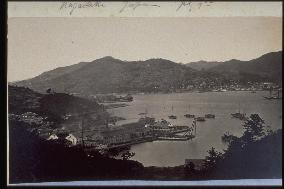
The Nagasaki Iron Foundry, established in 1861, was sold and became the Mitsubishi Nagasaki Shipyard Akunoura Machinery Factory in 1884. The buildings of the factory and facilities including a 50-ton crane can be seen. On the opposite bank is the vicinity of Nishizaka and Daikoku-machi.==Date:About 1879, Place:Nagasaki, Photo:Ueno Hikoma, (Credit:Nagasaki University Library/Kyodo News Images) [Cabinet Number21‐3‐0]

  •  
Japanese merchants and a child

Japanese merchants and a child

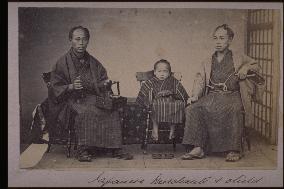
Taken by Beato. Written Japanese merchants and a child . From the shape of the chairs and design of the carpet and floor, this was apparently taken in Ueno Hikoma's studio. These people must be related to Hikoma.==Date:1864-6, Place:unknown, Photo:F. Beato, (Credit:Nagasaki University Library/Kyodo News Images) [Cabinet Number17‐31‐0]

  •  
Women relaxing with tea and tobacco

Women relaxing with tea and tobacco

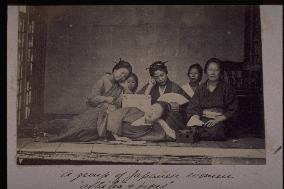
Taken by Beato. Entitled A Group of Japanese Women After Tea and Tobacco . This photo was taken at Ueno Hikoma's studio. The women may be related to Hikoma.==Date:1864-6, Place:unknown, Photo:F. Beato, (Credit:Nagasaki University Library/Kyodo News Images) [Cabinet Number17‐27‐0]

  •  
A chair and a woman

A chair and a woman

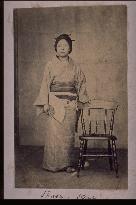
Taken by Beato. Written Kasasan . This was taken in the photo studio owned by Ueno Hikoma. This is apparent from the shape of the chair and floor. The young woman touches the chair lightly with her left hand, and touches a fan in her right hand.==Date:1865, Place:unknown, Photo:F. Beato, (Credit:Nagasaki University Library/Kyodo News Images) [Cabinet Number17‐18‐0]

  •  
The hondo (inner sanctuary),Daikoji Temple,Nagasaki

The hondo (inner sanctuary),Daikoji Temple,Nagasaki

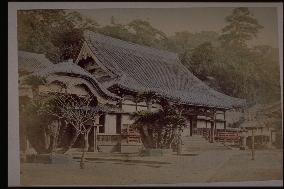
The main hall of Daikoji, a temple of the Jodoshin Sect located in Kajiya-machi, Nagasaki City. It was donated by Totsuji Yosouemon. In the cemetery is the tomb of Motoki Shozo, pioneer of modern printing in Japan. There is a photograph in which Ueno Hikoma poses just like the man in this photograph, taken by F. Beato at the end of the Edo Period (Cabinet No:66-27). It is assumed that Kuichi used the same composition in this photograph taken when he visited Nagasaki in 1872. There are the same photos of colored (Cabinet No:15-28, 66-2) and not-colored (Cabinet No:66-3) in collection too.==Date:unknown, Place:Nagasaki, Photo:Uchida Kuichi, (Credit:Nagasaki University Library/Kyodo News Images) [Cabinet Number15‐28‐0]

  •  
Amidabashi bridge and koraibashi bridge in nakashimagawa river

Amidabashi bridge and koraibashi bridge in nakashimagawa river

Amida Bridge and behind it Korai Bridge. The picture is taken looking downstream. Nearby was the residence of Ueno Hikoma.==Date:unknown, Place:Nagasaki, Photo:unknown, (Credit:Nagasaki University Library/Kyodo News Images) [Cabinet Number14‐42‐0]

  •  
Ebisu Shrine,Akunoura

Ebisu Shrine,Akunoura

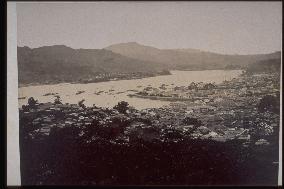
Part of the panorama photograph of Nagasaki harbour by Ueno Hikoma. Taken from Inasa Akunoura, the original consisted of 4 quarter photos. This is the photo to the far left, a view of Nagasaki Harbour from the back of the shrine.==Date:unknown, Place:Nagasaki, Photo:Uchida Kuichi, (Credit:Nagasaki University Library/Kyodo News Images) [Cabinet Number12‐16‐0]

  •  
Geisha

Geisha

Included in the album of Hikoma Ueno along with the photos numbered 21-23 and 24. This is a rare photo by Hikoma because it is colored and framed in red. These are probably geisha trainees of about 15 or 16 years of age. This could be the kaomise (all-star performance ) of New Year's.==Date:unknown, Place:unknown, Photo:unknown, (Credit:Nagasaki University Library/Kyodo News Images) [Cabinet Number21‐24‐0]

  •  
A.J.Bauduin and colleagues of Netherlands Trading Society

A.J.Bauduin and colleagues of Netherlands Trading Society

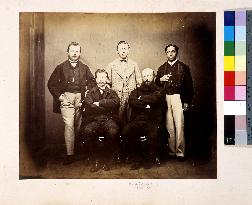
It was taken at Hikoma Ueno studio, A.J.Bauduin(right seat in front), his friend Kroes(left seat in front) and colleagues of Netherlands Trading Society in the back.==Date:about 1867, Place:Nagasaki, Photo:Ueno Hikoma, (Credit:Nagasaki University Library/Kyodo News Images) [Cabinet Number121‐52‐0]

  •  
Bird’s Eye View of Nagasaki City from Mt. Kazagashira (Tateyama Direction)

Bird’s Eye View of Nagasaki City from Mt. Kazagashira (Tateyama Direction)

Bird’s Eye View of Nagasaki City from Mt. Kazagashira (Tateyama Direction)==Date:about 1874, Place:Nagasaki, Photo:Ueno Hikoma?, (Credit:Nagasaki University Library/Kyodo News Images)

  •  
Pier at The Russian Settlement at Inasa

Pier at The Russian Settlement at Inasa

Shiga was the village headman of Fuchi in Urakami Village, and the area leading onto present-day Asahi-Ohashi Bridge in Asahi-machi was called ‘Shiga-no-hato.’ The building on the tip of the land on the left is Restaurant Volga run by Morooka Matsu. The two-storied building in front of it is the villa of the Fukudas and housed the Russian officers’ club where Michinaga Ei, known as Inasa Oei, would work later. The building with the big roof in the foreground belonged to Fukuda, the sanshi (assistant officer). The house on the right belonged to Shiga.==Date:about 1874, Place:Nagasaki, Photo:Ueno Hikoma?, (Credit:Nagasaki University Library/Kyodo News Images)

  •  
Downstream area of Oura River

Downstream area of Oura River

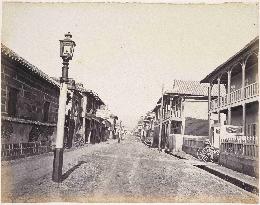
This photo is taken halfway up the Oura River looking downstream. The street light was particular to the foreign settlement. The bridge downstream is Benten Bridge and the mountain on the other side of Nagasaki Port is Mt. Inasa. A boat called ‘sanpan’, used to fetch goods from the ships offshore, is moored. The area, ‘Sagarimatsu’, was named after the pine tree on the left. The roof of Myogyoji Temple is barely discernable. The Sagarimatsu area was the foreign settlement’s town center with a bar for foreigners, a restaurant, an inexpensive international hotel, and a shop selling goods for foreigners and until around 1900, the place for locals to socialize.==Date:about 1874, Place:Nagasaki, Photo:Ueno Hikoma?, (Credit:Nagasaki University Library/Kyodo News Images)

  •  
Bird’s Eye View of Nagasaki City from Mt. Kazagashira (Prefecture Office Direction)

Bird’s Eye View of Nagasaki City from Mt. Kazagashira (Prefecture Office Direction)

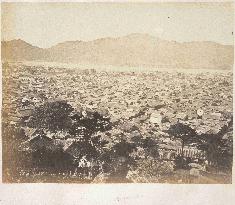
Bird’s Eye View of Nagasaki City from Mt. Kazagashira (Prefecture Office Direction)==Date:about 1874, Place:Nagasaki, Photo:Ueno Hikoma?, (Credit:Nagasaki University Library/Kyodo News Images)

  •  
Street of Oura foreign settlement

Street of Oura foreign settlement

This is a view from around Tokiwa-machi 2-chome, one street in from the Oura bund looking towards Umagasaki with Benten Bridge in the back. The buildings on the left are Oura No. 7 and No. 8. The shop sign on the left reads, ‘WING CHEUHG TAP ARS CLOTHIERS FROM HONG KONG’, probably owned by someone from Hong Kong. The buildings on the right are around Oura No. 19 and No. 20. The far left side of the street is a paved rickshaw lane. The street lamps’ structure can be clearly discerned.==Date:about 1874, Place:Nagasaki, Photo:Ueno Hikoma?, (Credit:Nagasaki University Library/Kyodo News Images)

  •  
The main gate of Shihan school

The main gate of Shihan school

This is the front gate of National Nagasaki Normal School that had just been established in 1874. The former Nagasaki Bugyosho building on the left going through the gate and the newly built building on the right (the former governor’s residence) were the school buildings. In 1872 Tokyo Public Teachers College was established and thereafter teachers colleges were established across Japan. Later all those colleges except for Tokyo Public Teachers College and Tokyo Women’s Teachers College would be placed under prefectural control.==Date:about 1874, Place:Nagasaki, Photo:Ueno Hikoma?, (Credit:Nagasaki University Library/Kyodo News Images)

  •  
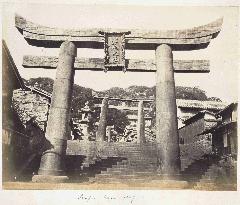
The Great Torii,Suwa Shrine

The Great Torii,Suwa Shrine

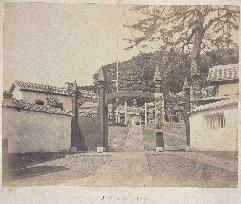
This is the big torii gate at the entrance to Suwa Shrine at Kami-Nishiyama-machi in Nagasaki City. Originally bronze, it was built in 1831. The plaque on the gate reads ‘Chinzei Taisha.’ The gate was destroyed by a typhoon on August 20, 1874 and rebuilt in 1892 cast by the Mitsubishi Shipyard. The torii gate in the back is stone. The buildings around the gates are representative of the era. There is another photo taken from the same angle by Uchida Kuichi in 1873.==Date:about 1874, Place:Nagasaki, Photo:Ueno Hikoma?, (Credit:Nagasaki University Library/Kyodo News Images)

  •  
Naminohira and Nagasaki port

Naminohira and Nagasaki port

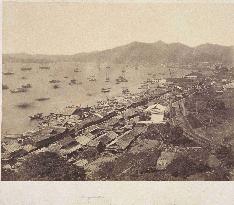
This is Nagasaki City viewed over Naminohira from Kotohira Shrine on the hill at the end of the Minamiyamate foreign settlement. Chintei Elementary School built in July 1887 at the border of the settlement in the open lot on the right didn’t exist yet. Small to medium sized shipyards are visible along the coast of Furukawa-machi and Naminohira-machi on the left. The factory area top right later becomes Mitsubishi Coal Company in Kozone-machi.==Date:about 1874, Place:Nagasaki, Photo:Ueno Hikoma?, (Credit:Nagasaki University Library/Kyodo News Images)

  •  
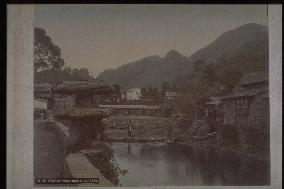
Nakashima River and the residence of Ueno Hikoma

Nakashima River and the residence of Ueno Hikoma

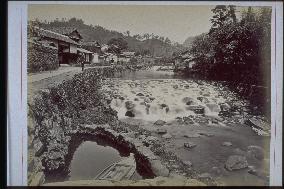
This is Zeniya River, upstream from Nakashima River. The residence of photographer Ueno Hikoma is the house with the white wall by the side of the large tree. To the left of the stone lantern (washed away by the great flood of 1982) is Nakashima Confucian Shrine. A sluice probably to control water flow is seen on the riverbed in front of the Ueno residence. The person on the left is standing on the road paved with stones for rickshaws. The protruding area of the mountain in the background is Buzenbo peak and the range continuing to Mt. Hiko.==Date:unknown, Place:Nagasaki, Photo:unknown, (Credit:Nagasaki University Library/Kyodo News Images) [Cabinet Number109‐26‐0]

  •  
Ueno Hikoma and his family

Ueno Hikoma and his family

This is a family portrait, taken in 1870 or 1871, of Ueno Hikoma, his mother Iso, his wife Mura, his four sisters (Kono, Chie, Nusa, Niwa), his niece Naka, and his nephew Genjiro.==Date:ca. 1870, Place:Nagasaki, Photo:Ueno Hikoma, (Credit:Nagasaki University Library/Kyodo News Images) [Cabinet Number102‐41‐0]

  •  
Yanagawa

Yanagawa

Taken in the early Meiji Period, this photograph shows the Urakami River just downstream from present-day Nagasaki. Urakami-Yamazato Village lay at the mouth of the river, and the downstream area was called Yanagawa at the time. The camera is looking upstream. Urakami Shinden (new fields) is on the right, and the Takenokubo area on the left. The scenery of the Urakami River area is captured before its reclamation from the harbour in 1897.==Date:unknown, Place:Nagasaki, Photo:Ueno Hikoma, (Credit:Nagasaki University Library/Kyodo News Images) [Cabinet Number102‐30‐0]

  •  
The former Chumon Gate,Suwa Shrine

The former Chumon Gate,Suwa Shrine

Taken around 1887, this photograph shows the Middle Gate at Suwa Shinto Shrine. This is the main shrine in Nagasaki and it is famous for its autumn Kunchi Festival.==Date:unknown, Place:Nagasaki, Photo:Ueno Hikoma, (Credit:Nagasaki University Library/Kyodo News Images) [Cabinet Number102‐28‐0]

  •  
The Honden (inner sanctuary) and the Okumon Gate (ithe nmost gate),Suwa Shrine

The Honden (inner sanctuary) and the Okumon Gate (ithe nmost gate),Suwa Shrine

This photograph was taken around 1887. The offertory hall, the Norito Hall, and main hall are viewed from the side. Suwa Shinto Shrine, famous for the autumn Kunchi Festival, is the main shrine in Nagasaki.==Date:unknown, Place:Nagasaki, Photo:Ueno Hikoma, (Credit:Nagasaki University Library/Kyodo News Images) [Cabinet Number102‐29‐0]

  •  
Takahoko Island

Takahoko Island

This is a view of Nagasaki Harbour from the hillside behind Tomachi. The island in the centre is Takahoko, the tip of the peninsula on the right is Kanzakibana, and Kaminoshima is behind it. Also known as Pappenberg, Takahoko was famous abroad as the site of Christian martyrdoms in the 17th century.==Date:unknown, Place:Nagasaki, Photo:Ueno Hikoma, (Credit:Nagasaki University Library/Kyodo News Images) [Cabinet Number102‐26‐0]

  • Main
  • Top
  • Editorial
  • Creative
  • About Us
  • About ILG
  • Terms of use
  • Company
  • BEHIND
  • Price List
  • Single Plan
  • Monthly Plan
  • Services
  • Shooting
  • Rights Clearance
  • Support
  • FAQ
  • How To Buy
  • Contact Us
  • Become a Partner

© KYODO NEWS IMAGES INC

All Rights Reserved.

  • Editorial
  • Olympics
  • News
  • Sports
  • Japan
  • Tech
  • Royal
  • Disaster
  • NorthKorea
  • Old Japan
  • SNS
  • Creative
  • Food
  • Japan
  • Landscape
  • Animal
  • Popular
  • #Ukraine
  • #Russia
  • #coronavirus
  • #N. Korea
  • #Thailand
  • #China
  • #Ukraine
  • #Russia
  • #coronavirus
  • #N. Korea
  • #Thailand
  • #China
  • Food
  • Japan
  • Landscape
  • Animal
  • Olympics
  • News
  • Sports
  • Japan
  • Tech
  • Royal
  • Disaster
  • NorthKorea
  • Old Japan
  • SNS