•  
Blues singer inspired by ancient tomb mounds

Blues singer inspired by ancient tomb mounds

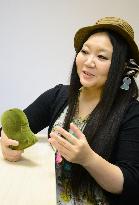
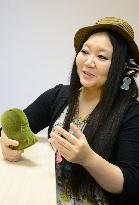
TOKYO, Japan - Photo taken May 11, 2014 shows blues singer "Marikofun," who sings about ancient tomb mounds, called "kofun" in Japanese. In the previous month, the musician, whose real name and age remain undisclosed, released her first album titled "Kofun de Kofun!" using two senses of "kofun," which means both "ancient tomb mound" and "excited."

  •  
Remains of ancient Korean settlement found

Remains of ancient Korean settlement found

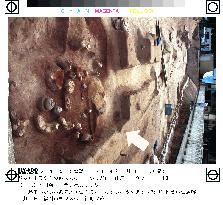
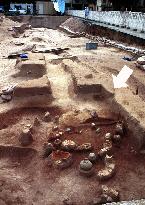
The remains of an ancient site believed to have been used by early settlers in Japan from the Korean Peninsula during the early Kofun period have been found in Fukuoka Prefecture, Kyushu. The site, found in the Nishijin Machi Ruins on the grounds of a high school, is believed to have been built between the early 3rd century and the late 4th century. The arrow indicates a kitchen oven that Tadashi Nishitani, a professor of archeology at Kyushu University, says might have been very common in the Korean Peninsula, but not in Japan.

  •  
Remains of ancient Korean settlement found

Remains of ancient Korean settlement found

The remains of an ancient site believed to have been used by early settlers in Japan from the Korean Peninsula during the early Kofun period have been found in Fukuoka Prefecture, Kyushu. The site, found in the Nishijin Machi Ruins on the grounds of a high school, is believed to have been built between the early 3rd century and the late 4th century. The arrow indicates a kitchen oven that Tadashi Nishitani, a professor of archeology at Kyushu University, says might have been very common in the Korean Peninsula, but not in Japan. ==Kyodo

  •  
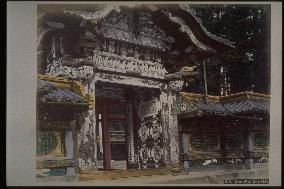
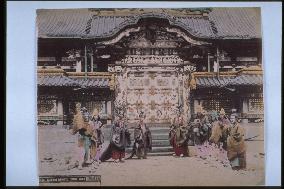
The Karamon Gate,Toshogu Shrine,Nikko

The Karamon Gate,Toshogu Shrine,Nikko

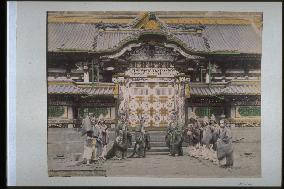
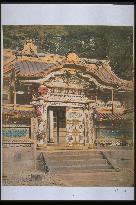
Karamon is the main gate of Toshogu Shinto Shrine. Only high ranking government officials and feudal lords, who were allowed to meet the shogun directly, could use this gate during the Edo Period. The gate was painted white with kofun and embellished with carvings of dragons. The inscription on the upper portion reads Shuntei Choken-no-gi (Emperor Shun's Morning Greetings) and consists of 27 figures carved from one zelkova tree in four rows. The people in front of the gate are wearing the costumes of the Toshogu Festival.==Date:unknown, Place:Nikko, Photo:unknown, (Credit:Nagasaki University Library/Kyodo News Images) [Cabinet Number87‐20‐0]

  •  
The Karamon Gate,Toshogu Shrine,Nikko

The Karamon Gate,Toshogu Shrine,Nikko

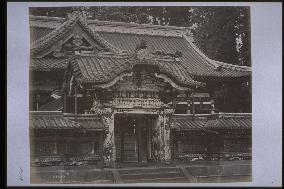
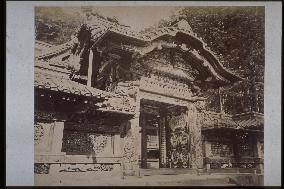
This is the main gate at Toshogu Shinto Shrine. Only high ranking government officials and feudal lords, who were allowed to meet the shogun directly, could use this gate during the Edo Period. The gate was painted white with kofun and embellished with parquetry, rosewood, and ebony carvings of dragons. The inscription on the upper portion reads Shuntei Choken-no-gi (Emperor Shun's Morning Greetings) and consists of 27 figures carved from one zelkova tree in four rows.==Date:unknown, Place:Nikko, Photo:R. Stillfried, (Credit:Nagasaki University Library/Kyodo News Images) [Cabinet Number78‐38‐0]

  •  
The Karamon Gate,Toshogu Shrine,Nikko

The Karamon Gate,Toshogu Shrine,Nikko

This is the main gate at Toshogu Shinto Shrine. Only high ranking government officials and feudal lords, who were allowed to meet the shogun directly, could use this gate during the Edo Period. The gate was painted white with kofun and embellished with parquetry, rosewood, and ebony carvings of dragons. The inscription on the upper portion reads Shuntei Choken-no-gi (Emperor Shun's Morning Greetings) and consists of 27 figures carved from one zelkova tree in four rows.==Date:unknown, Place:Nikko, Photo:Usui Shuzaburo?, (Credit:Nagasaki University Library/Kyodo News Images) [Cabinet Number65‐28‐0]

  •  
The Karamon Gate,Toshogu Shrine,Nikko

The Karamon Gate,Toshogu Shrine,Nikko

This is the main gate at Toshogu Shinto Shrine. Only high ranking government officials and feudal lords, who were allowed to meet the shogun directly, could use this gate during the Edo Period. The gate was painted white with kofun and embellished with parquetry, rosewood, and ebony carvings of dragons. The inscription on the upper portion reads Shuntei Choken-no-gi (Emperor Shun's Morning Greetings) and consists of 27 figures carved from one zelkova tree in four rows.==Date:unknown, Place:Nikko, Photo:unknown, (Credit:Nagasaki University Library/Kyodo News Images) [Cabinet Number54‐45‐0]

  •  
The Karamon Gate,Toshogu Shrine,Nikko

The Karamon Gate,Toshogu Shrine,Nikko

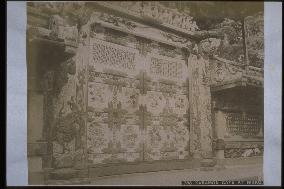
Karamon, the main gate at Toshogu, was used only by high-ranking government officials and feudal lords granted permission to meet the shogun directly. The gate was covered in white kofun paint, and its pillars were embellished with engravings of dragons. The upper portion of the gate has an inscription reading Shuntei Choken-no-gi (Emperor Shun's Morning Greetings) and features 27 figures in four rows carved from one zelkova tree.==Date:unknown, Place:Nikko, Photo:unknown, (Credit:Nagasaki University Library/Kyodo News Images) [Cabinet Number54‐31‐0]

  •  
The Karamon Gate,Toshogu Shrine,Nikko

The Karamon Gate,Toshogu Shrine,Nikko

This is the main gate at Toshogu Shinto Shrine. Only high ranking government officials and feudal lords, who were allowed to meet the shogun directly, could use this gate during the Edo Period. The gate was painted white with kofun and embellished with parquetry, rosewood, and ebony carvings of dragons. The inscription on the upper portion reads Shuntei Choken-no-gi (Emperor Shun's Morning Greetings) and consists of 27 figures carved from one zelkova tree in four rows.==Date:unknown, Place:Nikko, Photo:unknown, (Credit:Nagasaki University Library/Kyodo News Images) [Cabinet Number54‐23‐0]

  •  
The Karamon Gate,Toshogu Shrine,Nikko

The Karamon Gate,Toshogu Shrine,Nikko

Karamon is the main gate of Toshogu Shinto Shrine. Only high ranking government officials and feudal lords, who were allowed to meet the shogun directly, could use this gate during the Edo Period. The gate was painted white with kofun and embellished with carvings of dragons. The inscription on the upper portion reads Shuntei Choken-no-gi (Emperor Shun's Morning Greetings) and consists of 27 figures carved from one zelkova tree in four rows. The people in front of the gate are wearing the costumes of the Toshogu Festival.==Date:unknown, Place:Nikko, Photo:unknown, (Credit:Nagasaki University Library/Kyodo News Images) [Cabinet Number54‐2‐0]

  •  
Blues singer inspired by ancient tomb mounds

Blues singer inspired by ancient tomb mounds

TOKYO, Japan - Photo taken May 11, 2014 shows blues singer "Marikofun," who sings about ancient tomb mounds, called "kofun" in Japanese. In the previous month, the musician, whose real name and age remain undisclosed, released her first album titled "Kofun de Kofun!" using two senses of "kofun," which means both "ancient tomb mound" and "excited." (Kyodo)

  •  
Japan's ancient tombs to become world heritage site

Japan's ancient tombs to become world heritage site

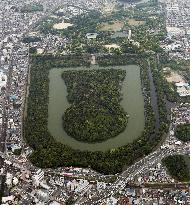
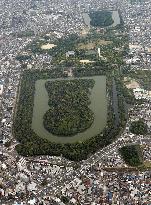
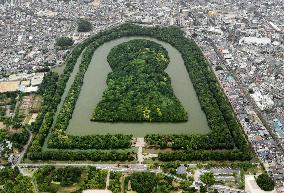
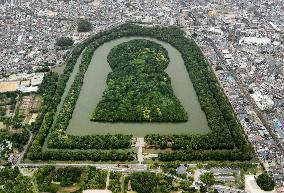
Photo taken April 17, 2019, shows the Emperor Nintoku mausoleum (back), Japan's largest ancient mound, officially called Daisen Kofun, one of the sites collectively called the Mozu-Furuichi tumulus clusters in Osaka Prefecture. UNESCO decided on July 6, 2019, to add the tumulus clusters to the World Heritage list. (Kyodo) ==Kyodo

  •  
Ancient Japanese tombs added to UNESCO World Heritage list

Ancient Japanese tombs added to UNESCO World Heritage list

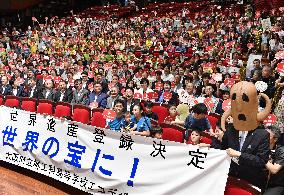
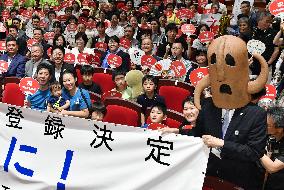
A Sakai city official (C) wearing a "haniwa" -- a clay figure produced during Japan's Kofun period in the 3rd to 6th centuries to decorate tombs for ritual use -- celebrates in the western Japan city on July 6, 2019, after UNESCO decided earlier in the day to add two local tumulus clusters to the World Heritage list, including the country's largest keyhole-shaped mound named after Emperor Nintoku. (Kyodo) ==Kyodo

  •  
Ancient Japanese tombs added to UNESCO World Heritage list

Ancient Japanese tombs added to UNESCO World Heritage list

A Sakai city official wearing a "haniwa" -- a clay figure produced during Japan's Kofun period in the 3rd to 6th centuries to decorate tombs for ritual use -- and people in the western Japan city celebrate on July 6, 2019, after UNESCO decided earlier in the day to add two local tumulus clusters to the World Heritage list, including the country's largest keyhole-shaped mound named after Emperor Nintoku. (Kyodo) ==Kyodo

  •  
Ancient Japanese tombs added to UNESCO World Heritage list

Ancient Japanese tombs added to UNESCO World Heritage list

A Sakai city official wearing a "haniwa" -- a clay figure produced during Japan's Kofun period in the 3rd to 6th centuries to decorate tombs for ritual use -- and people in the western Japan city celebrate on July 6, 2019, after UNESCO decided earlier in the day to add two local tumulus clusters to the World Heritage list, including the country's largest keyhole-shaped mound named after Emperor Nintoku. (Kyodo) ==Kyodo

  •  
Ancient burial mound in Osaka

Ancient burial mound in Osaka

File photo taken May 14, 2019, shows what is said to be Emperor Nintoku's mausoleum in Sakai, Osaka Prefecture, western Japan. A UNESCO advisory panel recommended the previous day adding two clusters of ancient burial mounds in the prefecture, including the grave pictured that is officially called Daisen Kofun, to the World Culture Heritage list, as one of the Mozu-Furuichi tumulus clusters. (Kyodo) ==Kyodo

  •  
Japan's ancient tombs eyed to become world heritage site

Japan's ancient tombs eyed to become world heritage site

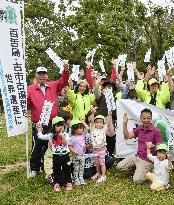
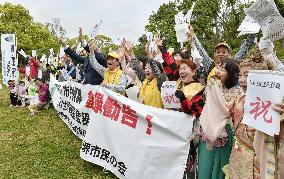
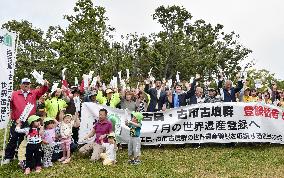
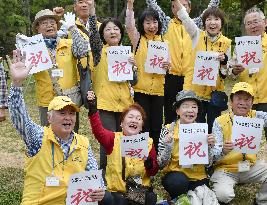
People celebrate in Sakai, Osaka Prefecture, on May 14, 2019, after an advisory panel of the U.N. Educational, Scientific and Cultural Organization recommended adding the prefecture's Mozu-Furuichi tumulus clusters, including Sakai's Daisen Kofun, to the World Cultural Heritage list. (Kyodo) ==Kyodo

  •  
Japan's ancient tombs eyed to become world heritage site

Japan's ancient tombs eyed to become world heritage site

People celebrate in Sakai, Osaka Prefecture, on May 14, 2019, after an advisory panel of the U.N. Educational, Scientific and Cultural Organization recommended adding the prefecture's Mozu-Furuichi tumulus clusters, including Sakai's Daisen Kofun, to the World Cultural Heritage list. (Kyodo) ==Kyodo

  •  
Japan's ancient tombs eyed to become world heritage site

Japan's ancient tombs eyed to become world heritage site

People celebrate in Sakai, Osaka Prefecture, on May 14, 2019, after an advisory panel of the U.N. Educational, Scientific and Cultural Organization recommended adding the prefecture's Mozu-Furuichi tumulus clusters, including Sakai's Daisen Kofun, to the World Cultural Heritage list. (Kyodo) ==Kyodo

  •  
Japan's ancient tombs eyed to become world heritage site

Japan's ancient tombs eyed to become world heritage site

People celebrate in Sakai, Osaka Prefecture, on May 14, 2019, after an advisory panel of the U.N. Educational, Scientific and Cultural Organization recommended adding the prefecture's Mozu-Furuichi tumulus clusters, including Sakai's Daisen Kofun, to the World Cultural Heritage list. (Kyodo) ==Kyodo

  •  
Japan's ancient tombs eyed to become world heritage site

Japan's ancient tombs eyed to become world heritage site

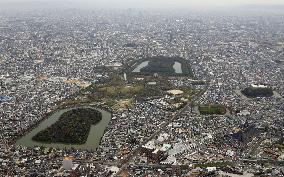
Photo taken May 14, 2019, from a Kyodo News helicopter shows the Emperor Nintoku mausoleum, Japan's largest ancient mound, officially called Daisen Kofun, one of the sites collectively called the Mozu-Furuichi tumulus clusters in Osaka Prefecture. Japan's Cultural Affairs Agency said the same day that the tumulus clusters have been recommended for addition to the World Cultural Heritage list by an advisory panel of the U.N. Educational, Scientific and Cultural Organization. (Kyodo) ==Kyodo

  •  
Japan's ancient tombs eyed to become world heritage site

Japan's ancient tombs eyed to become world heritage site

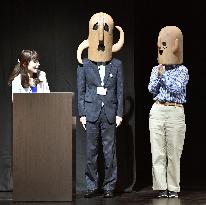
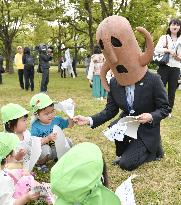
A Sakai city official wearing a "haniwa" -- a clay figure produced during Japan's Kofun period in the 3rd to 6th centuries to decorate tombs for ritual use -- attends an event in the western Japan city on May 14, 2019. Osaka Prefecture's Mozu-Furuichi tumulus clusters, including Sakai's Daisen Kofun, have been recommended for addition to the World Cultural Heritage list by an advisory panel of the U.N. Educational, Scientific and Cultural Organization. (Kyodo) ==Kyodo

  •  
Japan's ancient tombs eyed to become world heritage site

Japan's ancient tombs eyed to become world heritage site

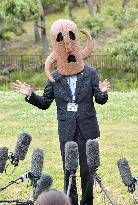
A Sakai city official wearing a "haniwa" -- a clay figure produced during Japan's Kofun period in the 3rd to 6th centuries to decorate tombs for ritual use -- speaks to reporters in the western Japan city on May 14, 2019. Osaka Prefecture's Mozu-Furuichi tumulus clusters, including Sakai's Daisen Kofun, have been recommended for addition to the World Cultural Heritage list by an advisory panel of the U.N. Educational, Scientific and Cultural Organization. (Kyodo) ==Kyodo

  •  
Japan's ancient tombs eyed to become world heritage site

Japan's ancient tombs eyed to become world heritage site

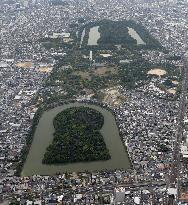
Photo taken May 14, 2019, from a Kyodo News helicopter shows the Emperor Nintoku mausoleum (back), Japan's largest ancient mound, officially called Daisen Kofun, one of the sites collectively called the Mozu-Furuichi tumulus clusters in Osaka Prefecture. Japan's Cultural Affairs Agency said the same day that the tumulus clusters, including Emperor Richu's mausoleum (front), have been recommended for addition to the World Cultural Heritage list by an advisory panel of the U.N. Educational, Scientific and Cultural Organization. (Kyodo) ==Kyodo

  •  
Japan's ancient tombs eyed to become world heritage site

Japan's ancient tombs eyed to become world heritage site

Photo taken May 14, 2019, from a Kyodo News helicopter shows the Emperor Nintoku mausoleum (C), Japan's largest ancient mound, officially called Daisen Kofun, one of the sites collectively called the Mozu-Furuichi tumulus clusters in Osaka Prefecture. Japan's Cultural Affairs Agency said the same day that the tumulus clusters have been recommended for addition to the World Cultural Heritage list by an advisory panel of the U.N. Educational, Scientific and Cultural Organization. (Kyodo) ==Kyodo

  •  
Ancient Japanese mounded tomb

Ancient Japanese mounded tomb

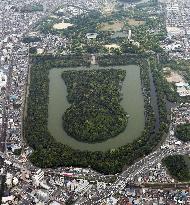
Photo taken in June 2017 shows Daisen Kofun, Japan's largest ancient mounded tomb, built in the fifth century, in Sakai, Osaka Prefecture. It is officially designated as the tomb of Emperor Nintoku. (Kyodo) ==Kyodo

  •  
Japan's largest tomb mound

Japan's largest tomb mound

Photo taken in June 2017 shows Daisen Kofun, Japan's largest ancient mound, in Sakai in Osaka Prefecture, western Japan. The tomb, officially designated as that of Emperor Nintoku and one of the three largest in the world, together with the Mausoleum of the First Qin Emperor in China and the Great Pyramid of Giza in Egypt, was at least 40 meters larger when it was first constructed in the fifth century, the Imperial Household Agency said on April 12, 2018. (Kyodo) ==Kyodo

  •  
Museum opens in Nara to display Kitora tomb murals

Museum opens in Nara to display Kitora tomb murals

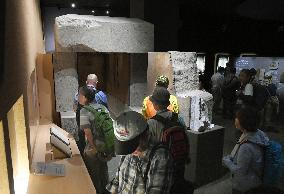
Photo shows a museum that opened Sept. 24, 2016, in the western Japan village of Asuka to display murals from the ancient Kitora tomb. About 400 archeology fans selected by lot were the first visitors allowed into the "Kitora Kofun Hekiga Taikenkan Shishin no Yakata" museum opened near the tomb to preserve and exhibit the paintings. (Kyodo) ==Kyodo

  •  
Museum opens in Nara to display Kitora tomb murals

Museum opens in Nara to display Kitora tomb murals

Photo shows a museum that opened Sept. 24, 2016, in the western Japan village of Asuka to display murals from the ancient Kitora tomb. About 400 archeology fans selected by lot were the first visitors allowed into the "Kitora Kofun Hekiga Taikenkan Shishin no Yakata" museum opened near the tomb to preserve and exhibit the paintings. (Kyodo) ==Kyodo

  • Main
  • Top
  • Editorial
  • Creative
  • About Us
  • About ILG
  • Terms of use
  • Company
  • BEHIND
  • Price List
  • Single Plan
  • Monthly Plan
  • Services
  • Shooting
  • Rights Clearance
  • Support
  • FAQ
  • How To Buy
  • Contact Us
  • Become a Partner

© KYODO NEWS IMAGES INC

All Rights Reserved.

  • Editorial
  • Olympics
  • News
  • Sports
  • Japan
  • Tech
  • Royal
  • Disaster
  • NorthKorea
  • Old Japan
  • SNS
  • Creative
  • Food
  • Japan
  • Landscape
  • Animal
  • Popular
  • #Ukraine
  • #China
  • #coronavirus
  • #N. Korea
  • #Thailand
  • #Russia
  • #Ukraine
  • #China
  • #coronavirus
  • #N. Korea
  • #Thailand
  • #Russia
  • Food
  • Japan
  • Landscape
  • Animal
  • Olympics
  • News
  • Sports
  • Japan
  • Tech
  • Royal
  • Disaster
  • NorthKorea
  • Old Japan
  • SNS