•  
New Year's greeting cards

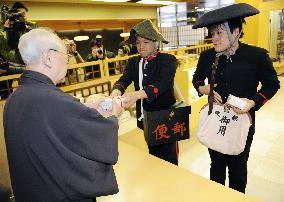
New Year's greeting cards

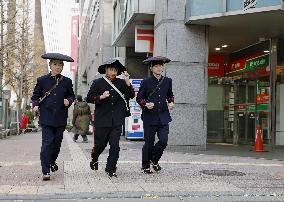
Postal workers in a uniform worn by Meiji-era mailmen depart Tokyo's Shinjuku post office on Jan. 1, 2026, to deliver New Year's greeting cards.

  •  

New Year's greeting cards

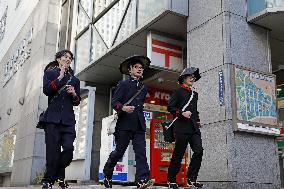
TOKYO, Japan, Jan. 1 Kyodo - Postal workers depart Tokyo's Shinjuku post office on Jan. 1, 2025, to deliver New Year's greeting cards. (Kyodo)

  •  
New Year's greeting cards

New Year's greeting cards

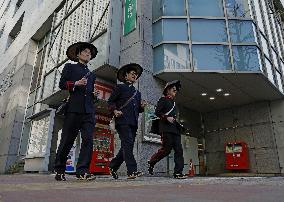
Postal workers in a uniform worn by Meiji-era mailmen depart Tokyo's Shinjuku post office on Jan. 1, 2025, to deliver New Year's greeting cards.

  •  
New Year's greeting cards

New Year's greeting cards

Postal workers in a uniform worn by Meiji-era mailmen depart Tokyo's Shinjuku post office on Jan. 1, 2025, to deliver New Year's greeting cards.

  •  
New Year's greeting cards

New Year's greeting cards

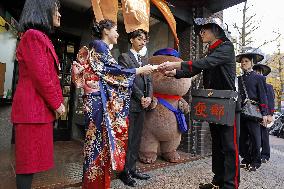
A postal worker in a uniform worn by Meiji-era mailmen delivers New Year's greeting cards in Tokyo on Jan. 1, 2025.

  •  
Japanese Crown Princess Kiko

Japanese Crown Princess Kiko

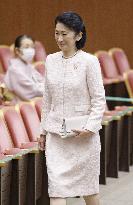
Japanese Crown Princess Kiko attends a symposium on court dress of the Meiji Era in Tokyo on April 6, 2024.

  •  
Japanese Crown Princess Kiko

Japanese Crown Princess Kiko

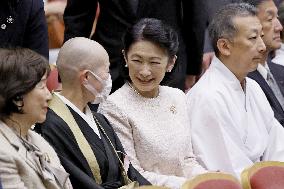
Japanese Crown Princess Kiko (3rd from L) attends a symposium on court dress of the Meiji Era in Tokyo on April 6, 2024.

  •  
New Year's greeting cards

New Year's greeting cards

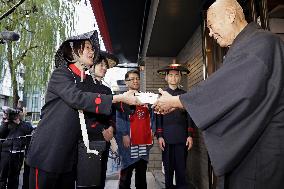
A postal worker (L) in a uniform worn by Meiji-era mailmen delivers New Year's greeting cards in Tokyo on Jan. 1, 2024.

  •  
New Year's greeting cards

New Year's greeting cards

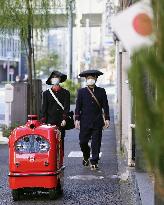
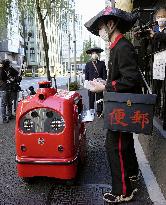
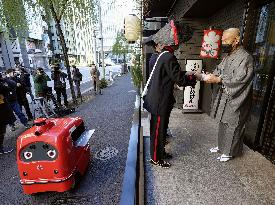
Postal workers in a uniform worn by Meiji-era mailmen walk with a self-driving delivery robot in Tokyo to deliver New Year's greeting cards on Jan. 1, 2023.

  •  
New Year's greeting cards

New Year's greeting cards

A postal worker in a uniform worn by Meiji-era mailmen delivers New Year's greeting cards together with a self-driving delivery robot in Tokyo on Jan. 1, 2023.

  •  
New Year's greeting cards

New Year's greeting cards

A postal worker (L) in a uniform worn by Meiji-era mailmen delivers New Year's greeting cards together with a self-driving delivery robot in Tokyo on Jan. 1, 2023.

  •  
Ex-administrator's room in Yawata Steek Works' former head office unveiled

Ex-administrator's room in Yawata Steek Works' former head office unveiled

KITAKYUSHU, Japan, June 19 Kyodo - What used to be the administrator's room in the old head office of the former state-run Yawata Steel Works in Kitakyushu, Fukuoka Prefecture, southwestern Japan, is displayed to the press on June 15, 2015. The office constitutes one of the sites of Japan's industrial revolution in the Meiji era (1868-1911) recommended for registration on the UNESCO World Heritage list.

  •  
Kyoto's ex-assembly chamber restored to old state

Kyoto's ex-assembly chamber restored to old state

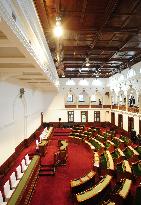
KYOTO, Japan - The former chamber of the Kyoto prefectural assembly, a national important cultural property, is shown to the press on Nov. 13, 2014, upon restoration to its original Renaissance-style structure built 110 years ago during the Meiji Era.

  •  
140-year-old bookstore to be reopened in Kumamoto

140-year-old bookstore to be reopened in Kumamoto

KUMAMOTO, Japan - Retro-looking Nagasaki Jiro Bookstore in Kumamoto, southwestern Japan, shown in this photo taken on July 16, 2014, will be reopened on July 31 for the first time in 15 months. Renowned Meiji era (1868-19120) Japanese novelists Mori Ogai and Natsume Soseki used to visit the store, which first opened in 1874.

  •  
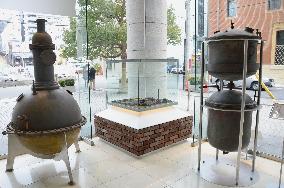
Dainippon Sumitomo Pharma displays Meiji era equipment

Dainippon Sumitomo Pharma displays Meiji era equipment

OSAKA, Japan - Dainippon Sumitomo Pharma Co. begins displaying equipment for manufacturing medicine and other purposes from the Meiji period at its head office in Osaka on March 25, 2014.

  •  
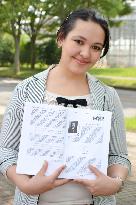
Uzbek translates novel to keep friends with Japan

Uzbek translates novel to keep friends with Japan

TSUKUBA, Japan - Photo taken Aug. 13, 2013 shows Aminova Nodira, an Uzbek who studied in Japan, holding a monthly Uzbek magazine carrying her translation of "Kokoro," a Japanese novel by Meiji era novelist Natsume Soseki, at the University of Tsukuba campus in Tsukuba, Ibaraki Prefecture.

  •  
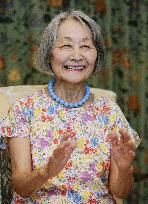
Granddaughter raising funds for Natsume Soseki memorial

Granddaughter raising funds for Natsume Soseki memorial

TOKYO, Japan - Mariko Hando, a granddaughter of Meiji Era novelist Natsume Soseki, is interviewed by Kyodo News on July 31, 2013 in Tokyo. She is backing a donation drive to build a memorial dedicated to the author, whose major works include "I Am a Cat" and "Botchan."

  •  
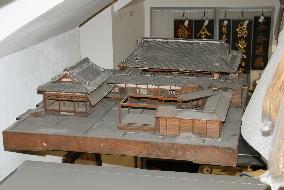
19th-century daimyo mansion model found in Vienna

19th-century daimyo mansion model found in Vienna

VIENNA, Austria - Photo shows a 19th-century scale model of the mansion of a Japanese daimyo feudal lord at the Museum of Ethnology in Vienna on Feb. 11, 2013. At center in the front is a ''noh'' performance stage. The wooden model, which was sent by the government of Meiji era Japan for the fifth world exposition held in Vienna in 1873 and found at the museum's depot in 1995, will be repaired as a major exhibit at the museum from around 2016.

  •  
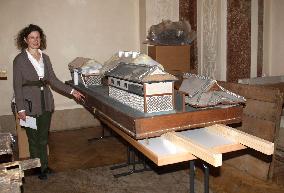
19th-century daimyo mansion model found in Vienna

19th-century daimyo mansion model found in Vienna

VIENNA, Austria - Bettina Zorn, head of the East Asian Collections at the Museum of Ethnology in Vienna, explains a 19th-century scale model of the mansion of a Japanese daimyo feudal lord at the museum on Feb. 11, 2013. The wooden model, which was sent by the government of Meiji era Japan for the fifth world exposition held in Vienna in 1873 and found at the museum's depot in 1995 by Zorn, will be repaired as a major exhibit at the museum from around 2016.

  •  
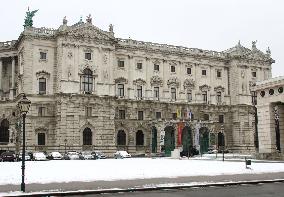
19th-century daimyo mansion model found in Vienna

19th-century daimyo mansion model found in Vienna

VIENNA, Austria - Photo shows the Museum of Ethnology in Vienna on Feb. 11, 2013. A 19th-century scale model of the mansion of a Japanese daimyo feudal lord, which was sent by the government of Meiji era Japan for the fifth world exposition held in Vienna in 1873, was found at the museum's depot in 1995. The wooden model will be repaired as a major exhibit at the museum from around 2016.

  •  
New Year's greeting card delivery

New Year's greeting card delivery

TOKYO, Japan - Postmen dressed in old uniforms from the Meiji Era deliver New Year's greeting cards in Tokyo's Nihombashi district Jan. 1, 2011.

  •  
Missing sacred swords of Todaiji found after 1,250 yrs

Missing sacred swords of Todaiji found after 1,250 yrs

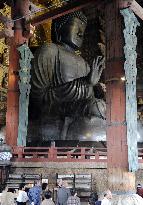
NARA, Japan - Photo taken Oct. 25, 2010, shows the Great Buddha of Todaiji temple in Nara, western Japan. The temple said the same day that two swords found under the Buddha in the Meiji era have been identified as sacred swords that had been missing for some 1,250 years since around 760 after Empress Komyo, the wife of Emperor Shomu who built the Buddha, dedicated them along with other items to the temple.

  •  
Missing sacred swords of Todaiji found after 1,250 yrs

Missing sacred swords of Todaiji found after 1,250 yrs

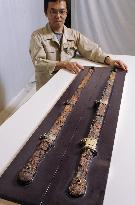
NARA, Japan - Photo taken Oct. 25, 2010, shows two swords found under the Great Buddha of Todaiji temple in Nara, western Japan, exhibited at a cultural assets research center in Nara. The temple said the same day that two swords found under the Buddha in the Meiji era have been identified as sacred swords that had been missing for some 1,250 years since around 760 after Empress Komyo, the wife of Emperor Shomu who built the Buddha, dedicated them along with other items to the temple.

  •  
Dance party held to mark 150th anniversary of Yokohama Port

Dance party held to mark 150th anniversary of Yokohama Port

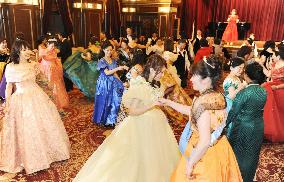
YOKOHAMA, Japan - Men and women wearing outfits in the style of late 19th century Japan, symbolizing the country's westernization during the Meiji era, dance at Hotel New Grand in Yokohama on Feb. 25 at a party to commemorate the 150th anniversary of Yokohama Port. The dances were reminiscent of those at the famous Rokumeikan Hall built in 1883, where Japanese and foreign dignitaries held evening and dance parties.

  •  
Fukui prefectural gov't acquires drafts of Meiji-era documents

Fukui prefectural gov't acquires drafts of Meiji-era documents

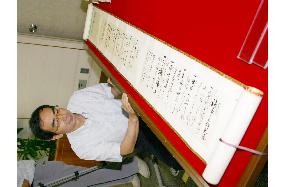
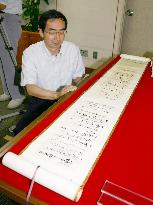
FUKUI, Japan - Fukui Gov. Issei Nishikawa looks at the draft of the ''Five Articles of the Charter Oath'' proclaimed by Emperor Meiji to outline the direction of modern Japan, which his government has successfully acquired in a public tender on July 12. It plans to display the documents at the prefectural library in the city of Fukui as part of its collection of historical materials, prefectural officials said.

  •  
National Diet Library working on digitization of books

National Diet Library working on digitization of books

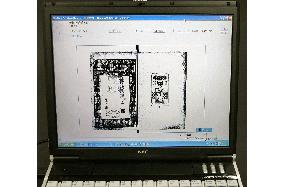
TOKYO, Japan - Digitized pages of prominent Meiji era (1868-1912) novelist Soseki Natsume's ''Wagahai-wa Neko-de-ru (I Am A Cat)'' displayed on a screen at The National Diet Library neighboring the National Diet building in Tokyo.

  •  
Japan to issue 3 new bank notes in FY 2004

Japan to issue 3 new bank notes in FY 2004

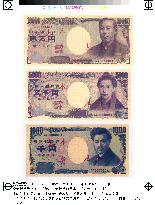
TOKYO, Japan - The Japanese government will introduce in fiscal 2004 new 10,000 yen, 5,000 yen and 1,000 yen bills with sophisticated anticounterfeit features, replacing the current notes which are almost 18 years old. The new 5,000 yen bill will carry the portrait of Ichiyo Higuchi (1872-1896), a Meiji-era novelist and poet, while the new 1,000 yen bill will feature Japanese microbiologist Hideyo Noguchi (1876-1928). Yukichi Fukuzawa, a Meiji-era educator who founded Keio University, will remain on the new 10,000 yen bill.

  •  
Miyazaki gives English names to local streets

Miyazaki gives English names to local streets

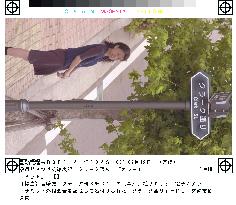
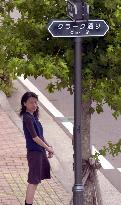
MIYAZAKI, Japan - A woman in downtown Miyazaki on July 11 stands near a street sign indicating ''Clark Street,'' one of 132 of the city's previously unnamed streets given English names in a gesture of internationalization. The move was in advance of the two-day meeting of the foreign ministers of Group of Eight (G-8) nations that began in the city July 12. Clark Street is named after a missionary who lived in the city during the Meiji era (1868-1912).

  •  
Statue of General Saigo - Ueno Park, Tokyo, Japan

Statue of General Saigo - Ueno Park, Tokyo, Japan

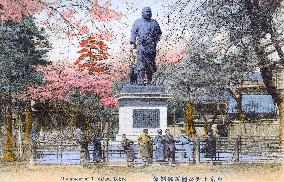
Statue of General Saigo Takamori (Takanaga) (1828-1877). Saigo was one of the most influential samurai in Japanese history, living during the late Edo Period and early Meiji Era. He has been dubbed the 'last true samurai'. The famous bronze statue shown here (of Saigo in hunting attire with his dog) stands in Ueno Park, Tokyo, Japan. Made by Takamura Koun, it was unveiled on 18 December 1898. Date: circa 1910s

  •  
Fukui prefectural gov't acquires drafts of Meiji-era documents

Fukui prefectural gov't acquires drafts of Meiji-era documents

FUKUI, Japan - Fukui Gov. Issei Nishikawa looks at the draft of the ''Five Articles of the Charter Oath'' proclaimed by Emperor Meiji to outline the direction of modern Japan, which his government has successfully acquired in a public tender on July 12. It plans to display the documents at the prefectural library in the city of Fukui as part of its collection of historical materials, prefectural officials said. (Kyodo)

  •  
Miyazaki gives English names to local streets

Miyazaki gives English names to local streets

MIYAZAKI, Japan - A woman in downtown Miyazaki on July 11 stands near a street sign indicating ''Clark Street,'' one of 132 of the city's previously unnamed streets given English names in a gesture of internationalization. The move was in advance of the two-day meeting of the foreign ministers of Group of Eight (G-8) nations that began in the city July 12. Clark Street is named after a missionary who lived in the city during the Meiji era (1868-1912).

  •  
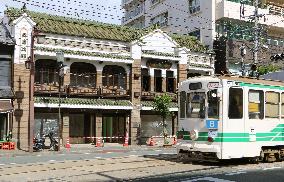
Meiji-Era building Kounkaku in Matsue refurbished

Meiji-Era building Kounkaku in Matsue refurbished

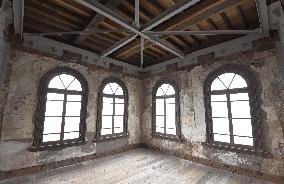
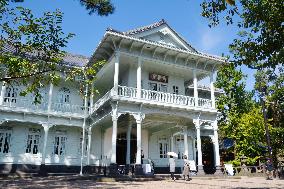
People enter the refurbished Meiji-Era building Kounkaku, constructed in 1903, on Oct. 3, 2015, in Matsue as the western Japanese city opened the facility to the public the same day upon completion of preservation and repair work. (Kyodo) ==Kyodo

  •  
Inside of refurbished Meiji-Era building Kounkaku in Matsue

Inside of refurbished Meiji-Era building Kounkaku in Matsue

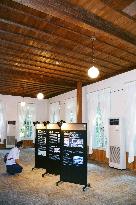
The refurbished Meiji-Era building Kounkaku, constructed in 1903, opens to the public on Oct. 3, 2015, in Matsue in western Japan upon completion of preservation and repair work. (Kyodo) ==Kyodo

  •  
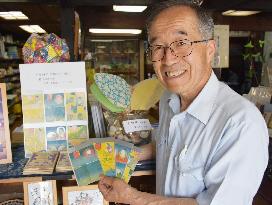
Stationery store owner shows Meiji era postcards

Stationery store owner shows Meiji era postcards

Kazuto Kakegawa, the owner of a time-honored stationery store in Komoro, Nagano Prefecture, holds picture postcards of the Meiji era over a century ago on July 13, 2015. They were found at the store's warehouse around three years ago and started to be sold in April. (Kyodo) ==Kyodo

  •  
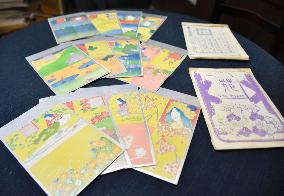
Many picture postcards of Meiji era found

Many picture postcards of Meiji era found

Some 500 sets of picture postcards of the Meiji era over a century ago, found at a stationery store in Komoro, Nagano Prefecture, around three years ago, are shown. The postcards, printed and issued in 1906, according to the writing on the wrapping paper, went on sale in April 2015. (Kyodo) ==Kyodo

  •  
Ex-site of reverberatory furnace in Kagoshima built in 19th century

Ex-site of reverberatory furnace in Kagoshima built in 19th century

Shozo Tamura, chief of the Shoko Shuseikan Museum in Kagoshima, southwestern Japan, explains the site of the former Meiji era reverberatory furnace in what once was an industrial complex built in the 19th century on June 12, 2015. The site is one of the "Sites of the Meiji Industrial Revolution" which Japan aims to register as a World Heritage site. (Kyodo) ==Kyodo

  •  
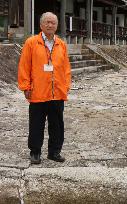
Expert points to historical importance of naval dock in southern Japan

Expert points to historical importance of naval dock in southern Japan

Toshitsugu Haji, head of a civilian group studying cultural heritage in Saga Prefecture, southwestern Japan, talks about the historical importance of the Mietsu Naval Dock, built by the Saga feudal domain near the end of the Edo period (1603-1867), in the prefectural capital on June 20, 2015. The facility is one of the candidate sites of the Meiji-era (1868-1911) industrial revolution Japan is seeking to have registered on the UNESCO World Heritage list. (Kyodo) ==Kyodo

  •  
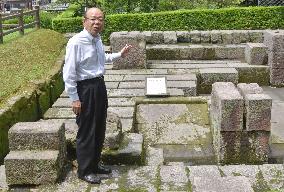
Century-old stone quay stays intact, awaits UNESCO heritage listing

Century-old stone quay stays intact, awaits UNESCO heritage listing

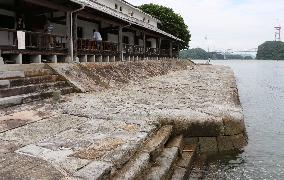
Manpo Saito, a farmer in Uki, Kumamoto Prefecture, southwestern Japan, volunteers as a local guide for tourists at Misuminishi port, as seen on June 20, 2015. The century-old stone quay at the port, which thrived for only about a decade after opening in 1887 for the export of coal from the now defunct Miike mine, is Japan's only pier from the Meiji era (1868-1911) that still stands intact in its entirety. The quay is one of the sites of the Meiji era industrial revolution that Japan seeks to have registered on the UNESCO World Heritage list. (Kyodo) ==Kyodo

  •  
Newspaper museum holds exhibition on Meiji-era daily founded in 1889

Newspaper museum holds exhibition on Meiji-era daily founded in 1889

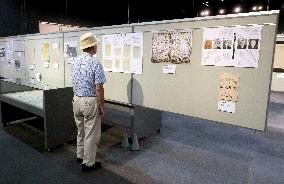
A visitor views panels on display at a special exhibition on "Nippon," a newspaper founded in 1889 by Meiji-era journalist Katsunan Kuga, at the Japan Newspaper Museum in Yokohama southwest of Tokyo on June 20, 2015. The daily was often targeted by government censors at the time for its criticism of the administration. (Kyodo) ==Kyodo

  •  
Newspaper museum holds exhibition on Meiji-era daily founded in 1889

Newspaper museum holds exhibition on Meiji-era daily founded in 1889

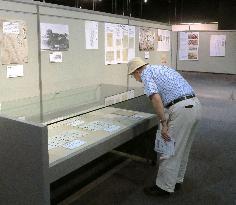
A visitor views items on display at a special exhibition on "Nippon," a newspaper founded in 1889 by Meiji-era journalist Katsunan Kuga, at the Japan Newspaper Museum in Yokohama southwest of Tokyo on June 20, 2015. The daily was often targeted by government censors at the time for its criticism of the administration. (Kyodo) ==Kyodo

  •  
Century-old stone quay still intact, awaits UNESCO heritage listing

Century-old stone quay still intact, awaits UNESCO heritage listing

The century-old stone quay at Misuminihi port in Uki, Kumamoto Prefecture, southwestern Japan, as seen on June 20, 2015, is the country's only pier from the Meiji era (1868-1911) that still stands intact in its entirety. The port opened in 1887 for the export of coal from the now defunct Miike mine, but thrived only for only about a decade before losing out to railway transport. (Kyodo) ==Kyodo

  •  
Japanese coal mine pit intended for UNESCO World Heritage list

Japanese coal mine pit intended for UNESCO World Heritage list

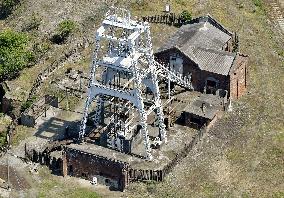
The Miyanohara pit of the defunct Miike coal mine complex in Omuta, Fukuoka Prefecture, southwestern Japan, is photographed from a Kyodo News helicopter on April 25, 2015. The complex, which played a vital role in Japan's postwar reconstruction, is one of the candidate sites of the country's Meiji era (1868-1911) industrial revolution for registration on the UNESCO World Heritage list. (Kyodo) ==Kyodo

  •  
Facility of Miike coal mine, possible World Heritage site

Facility of Miike coal mine, possible World Heritage site

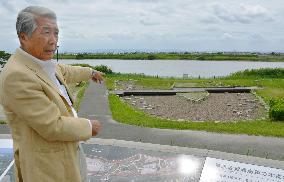
Toshihiko Horiuchi, a former worker at the defunct Miike coal mine complex, explains about a facility in Arao, Kumamoto prefecture, southwestern Japan, on June 9, 2015. The complex, which played a vital role in Japan's postwar reconstruction, is one of the candidate sites of the country's Meiji era (1868-1911) industrial revolution for registration on the UNESCO World Heritage list. (Kyodo) ==Kyodo

  •  
"Battleship Island" off Nagasaki, candidate for World Heritage site

"Battleship Island" off Nagasaki, candidate for World Heritage site

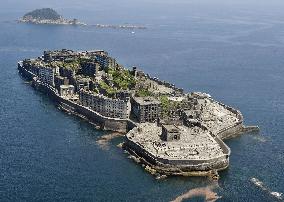
Hashima Island off Nagasaki, southwestern Japan, known for its underground coal mining during the industrialization of Japan, is commonly called "Battleship Island" because of its shape as seen in this photo taken on April 25, 2015. It is one of the candidate sites for registration on a UNESCO World Heritage list as remnants of Japan's Meiji era (1868-1911) industrial revolution. (Kyodo) ==Kyodo

  •  
Man talks about childhood spent on 'Battleship Island' off Nagasaki

Man talks about childhood spent on 'Battleship Island' off Nagasaki

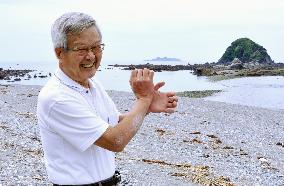
Azuma Ishikawa talks about his childhood spent on Hashima Island off Nagasaki, southwestern Japan, on June 7, 2015. The island, commonly called "Battleship Island" because of its shape, is seen far in the distance at the center of this photo. It is one of the candidate sites for registration on a UNESCO World Heritage list as remnants of Japan's Meiji era (1868-1911) industrial revolution. (Kyodo) ==Kyodo

  •  
Work continues at Japan's oldest steel-frame factory

Work continues at Japan's oldest steel-frame factory

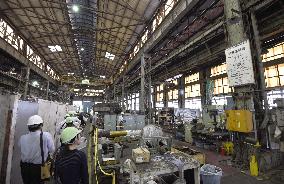
Photo taken on June 15, 2015, shows work under way at a repair factory in Kitakyushu, Fukuoka Prefecture, southwestern Japan, which is considered Japan's oldest steel-frame building. The factory, part of the former state-run Yawata Steel Works, constitutes one of the sites of Japan's industrial revolution in the Meiji era (1868-1911) recommended for registration on the UNESCO World Heritage list. (Kyodo) ==Kyodo

  •  
Old pump house of Yawata Steel Works displayed to press

Old pump house of Yawata Steel Works displayed to press

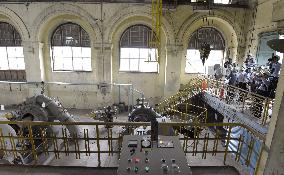
The Onga River Pump House of the former state-run Yawata Steel Works in Nakama, Fukuoka Prefecture, southwestern Japan, is displayed to the press on June 15, 2015. The time-honored facility, still in use today, constitutes one of the sites of Japan's industrial revolution in the Meiji era (1868-1911) recommended for registration on the UNESCO World Heritage list. (Kyodo) ==Kyodo

  •  
Forging factory of Yawata Steel Works displayed to press

Forging factory of Yawata Steel Works displayed to press

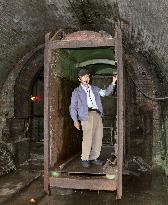
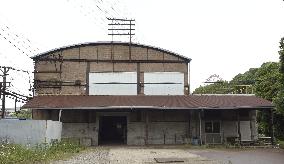
An old forging factory of the former state-run Yawata Steel Works in Kitakyushu, Fukuoka Prefecture, southwestern Japan, is displayed to the press on June 15, 2015. The factory is now used as a reference room for the Yahata Iron Mill, one of Nippon Steel and Sumitomo Metal Corp.'s steel plants. The facility constitutes one of the sites of Japan's industrial revolution in the Meiji era (1868-1911) recommended for registration on the UNESCO World Heritage list. (Kyodo) ==Kyodo

  •  
Old pump house of Yawata Steel Works covered with ivy

Old pump house of Yawata Steel Works covered with ivy

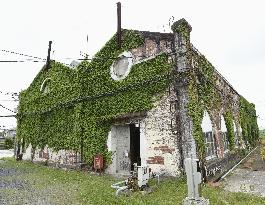
The Onga River Pump House of the former state-run Yawata Steel Works in Nakama, Fukuoka Prefecture, southwestern Japan, is seen covered with ivy as shown to the press on June 15, 2015. The time-honored facility, still in use today, constitutes one of the sites of Japan's industrial revolution in the Meiji era (1868-1911) recommended for registration on the UNESCO World Heritage list. (Kyodo) ==Kyodo

  •  
Yawata Steek Works' old head office displayed to press

Yawata Steek Works' old head office displayed to press

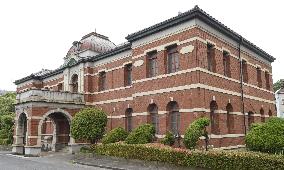
The old head office of the former state-run Yawata Steel Works in Kitakyushu, Fukuoka Prefecture, southwestern Japan, is displayed to the press on June 15, 2015. The office constitutes one of the sites of Japan's industrial revolution in the Meiji era (1868-1911) recommended for registration on the UNESCO World Heritage list. (Kyodo) ==Kyodo

  • Main
  • Top
  • Editorial
  • Creative
  • About Us
  • About ILG
  • Terms of use
  • Company
  • BEHIND
  • Price List
  • Single Plan
  • Monthly Plan
  • Services
  • Shooting
  • Rights Clearance
  • Support
  • FAQ
  • How To Buy
  • Contact Us
  • Become a Partner

© KYODO NEWS IMAGES INC

All Rights Reserved.

  • Editorial
  • Olympics
  • News
  • Sports
  • Japan
  • Tech
  • Royal
  • Disaster
  • NorthKorea
  • Old Japan
  • SNS
  • Creative
  • Food
  • Japan
  • Landscape
  • Animal
  • Popular
  • #Ukraine
  • #Thailand
  • #coronavirus
  • #N. Korea
  • #Russia
  • #China
  • #Ukraine
  • #Thailand
  • #coronavirus
  • #N. Korea
  • #Russia
  • #China
  • Food
  • Japan
  • Landscape
  • Animal
  • Olympics
  • News
  • Sports
  • Japan
  • Tech
  • Royal
  • Disaster
  • NorthKorea
  • Old Japan
  • SNS