•  
Buddhist priest recalls tragedy of WWII ship sunk by U.S.

Buddhist priest recalls tragedy of WWII ship sunk by U.S.

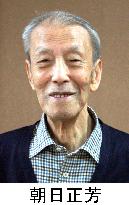
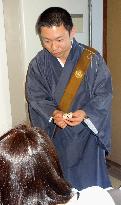
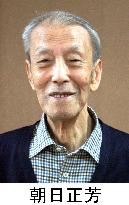
SAPPORO, Japan - Masayoshi Asahi, a Buddhist priest in Akkeshi, eastern Hokkaido, shown in this file photo taken on June 26, 2014, remembers chanting sutras for some 2,800 victims of the Imperial Japanese Army's freighter Nichiren Maru, sunk by a U.S. submarine attack off the town in March 1944 during World War II.

  •  
Cape looking out Pacific site of WWII ship sunk by U.S.

Cape looking out Pacific site of WWII ship sunk by U.S.

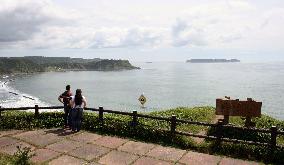
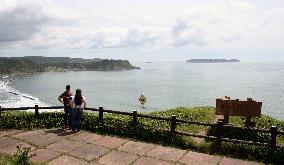
SAPPORO, Japan - A young couple stands on a lookout platform on Aug. 9, 2014, at Cape Aikappu in Akkeshi, eastern Hokkaido, overlooking the Pacific Ocean where the Imperial Japanese Army's freighter Nichiren Maru was sunk by a U.S. submarine attack in March 1944 during World War II, killing some 2,800 people aboard.

  •  
Priests of different faiths forming groups across Japan

Priests of different faiths forming groups across Japan

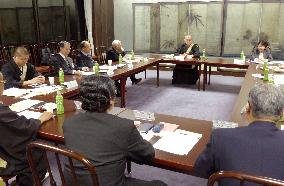
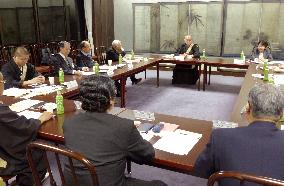
TOKYO, Japan - Photo taken April 22, 2014, shows priests of Buddhism, Shinto, Christianity and other religions gathering for a regular meeting of their group at Ikegami Honmonji, a Buddhism temple of the Nichiren sect, in Tokyo's Ota Ward.

  •  
Buddhist temples joining matchmaking boom

Buddhist temples joining matchmaking boom

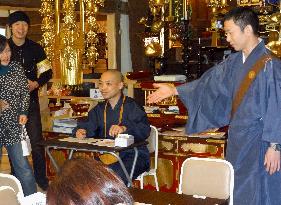
WAKAYAMA, Japan - Shunko Yoshino (R), chief priest of Anrakuji, a Buddhist temple of the Nichiren sect in the city of Wakayama, and Ryushin Yasutake (C), chief priest of Dorakuji, a Buddhist temple of the Kuze Kannon sect in the town of Katsuragi, Wakayama Prefecture, accept participants in a spouse-finding hunting event in front of an altar in the main hall of Anrakuji on Feb. 11, 2013.

  •  
Buddhist temples joining matchmaking boom

Buddhist temples joining matchmaking boom

WAKAYAMA, Japan - Shunko Yoshino, chief priest of Anrakuji, a Buddhist temple of the Nichiren sect in the city of Wakayama, explains rules of a spouse-finding event at the temple to a female participant on Feb. 11, 2013.

  •  
Buddhist temples joining matchmaking boom

Buddhist temples joining matchmaking boom

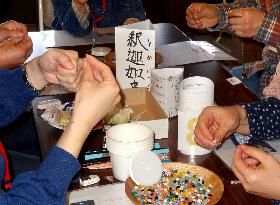
WAKAYAMA, Japan - Participants in a spouse-finding event on Feb. 11, 2013 at Anrakuji, a Buddhist temple of the Nichiren sect in the city of Wakayama, make colorful beadrolls together.

  •  
Nichiren temple monk accused of evading tax

Nichiren temple monk accused of evading tax

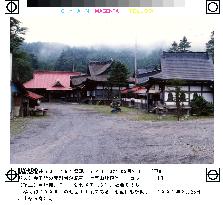
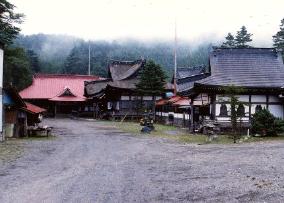
KOFU, Japan - File photo shows Shichimenzan Keishinin, an affiliate of the Nichiren sect's head temple Minobusan Kuonji, in the town of Minobu. The Tokyo Regional Taxation Bureau on March 28 filed a complaint against Yuko Nakazato, a former chief monk of the Buddhist temple, accusing him of concealing 330 million yen in income and evading 120 million yen in taxes over a three-year period up to March 2001.

  •  
Letters at Kanazawa temple were written by Nichiren

Letters at Kanazawa temple were written by Nichiren

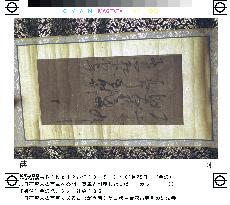
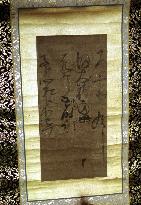
KANAZAWA, Japan - A scroll containing fragments from two letters written by Nichiren, the 13th century founder of a Buddhist sect bearing his name. The scroll was found at the Myoho Temple in Kanazawa, Ishikawa Prefecture, and has been authenticated by a scholar of Buddhist history. The temple plans to display the scroll May 26-27.

  •  
Nichiren temple monk accused of evading tax

Nichiren temple monk accused of evading tax

KOFU, Japan - File photo shows Shichimenzan Keishinin, an affiliate of the Nichiren sect's head temple Minobusan Kuonji, in the town of Minobu. The Tokyo Regional Taxation Bureau on March 28 filed a complaint against Yuko Nakazato, a former chief monk of the Buddhist temple, accusing him of concealing 330 million yen in income and evading 120 million yen in taxes over a three-year period up to March 2001.

  •  
Letters at Kanazawa temple were written by Nichiren

Letters at Kanazawa temple were written by Nichiren

KANAZAWA, Japan - A scroll containing fragments from two letters written by Nichiren, the 13th century founder of a Buddhist sect bearing his name. The scroll was found at the Myoho Temple in Kanazawa, Ishikawa Prefecture, and has been authenticated by a scholar of Buddhist history. The temple plans to display the scroll May 26-27.

  •  
Tokyo scene: "Robe-hanging pine" by Senzoku Pond

Tokyo scene: "Robe-hanging pine" by Senzoku Pond

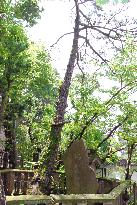
A "robe-hanging pine" stands imposingly at Myofukuji temple by the Senzoku Pond in Tokyo's Ota district on July 10, 2015. Edo-era Buddhist monk Nichiren Shonin, founder of the Nichiren school of Buddhism, is said to have washed his feet at the pond after hanging his robe on the pine before visiting Ikegami Honmonji temple, the citadel of the school. (Kyodo) ==Kyodo

  •  
View in front of the gate of katase ryukoji temple

View in front of the gate of katase ryukoji temple

Jyakukozan Ryukoji Temple. Nichiren was arrested in Ankokuronji at Nagoe for interrogation by the regent Hojo Tokimune. He came to Ryunokuchi and prayed facing south at midnight, and is said to have been saved from beheading by miracles. This is the so-called Honan of Ryunokuchi , and Ryukoji Temple was built there after the death of Nichiren.==Date:unknown, Place:Fujisawa, Photo:unknown, (Credit:Nagasaki University Library/Kyodo News Images) [Cabinet Number19‐44‐0]

  •  
Ikegami Honmonji Temple

Ikegami Honmonji Temple

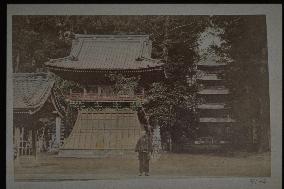
Honmonji Temple is the main temple of the Nichiren Sect of Japanese Buddhism, built on the site of Nichiren's death in 1288. The five-story pagoda visible in the back was constructed by the 2nd Shogun Tokugawa Hidetada in 1607. Today, it is the only pagoda in Japan conveying the Japanese-Chinese building style of the Momoyama Period and the oldest five-story pagoda in Tokyo. The building in the foreground is the Kodo (Drum Hall).==Date:unknown, Place:Tokyo, Photo:unknown, (Credit:Nagasaki University Library/Kyodo News Images) [Cabinet Number91‐2‐0]

  •  
Tatsuno-dera Temple,Katase

Tatsuno-dera Temple,Katase

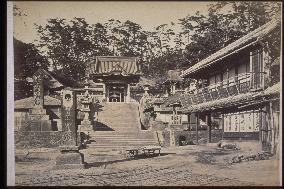
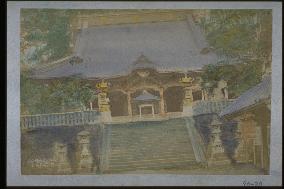
This is the Ryukoji main hall completed in 1832, a wooden building roughly 22 metres wide and 27 metres deep. The official name of the temple is Jakkozan Ryukoji. According to temple records, Nippo, an apprentice of Nichiren, built the temple in 1337, but this was just a small hut at first. The temple buildings were constructed in 1601. Both the lanterns at the bottom of the stairs and the washing place on the right exist today.==Date:unknown, Place:Fujisawa, Photo:unknown, (Credit:Nagasaki University Library/Kyodo News Images) [Cabinet Number90‐30‐0]

  •  
The Hondo (inner sanctuary) of Kuonji Temple,Mt. Minobu

The Hondo (inner sanctuary) of Kuonji Temple,Mt. Minobu

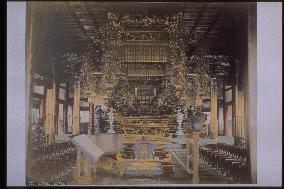
This photograph depicts the interior of the Soshido Seishinkaku at Minobusan Kuonji Temple, headquarters of the Nichiren Sect of Japanese Buddhism located in Minobu-machi, Minamikoma-gun, Yamanashi Prefecture. Seishinkaku is the place where a statue of Nichiren, the founder of the sect, is enshrined. This is an important photograph because it shows the interior of the building after its reconstruction in 1881.==Date:unknown, Place:Yamanashi, Photo:A. Farsari, (Credit:Nagasaki University Library/Kyodo News Images) [Cabinet Number82‐53‐0]

  •  
The Hondo (inner sanctuary) of Kuonji Temple,Mt. Minobu

The Hondo (inner sanctuary) of Kuonji Temple,Mt. Minobu

Soshido Seishinkaku at Minobusan Kuonji Temple, headquarters of the Nichiren Sect of Japanese Buddhism. This temple is located in Minobu-machi, Minamikoma-gun, Yamanashi Prefecture. Seishinkaku is the place where a famous statue of Nichiren, the founder of the sect, is located. However, the building erected in the Edo Period was destroyed by fire in 1875. This photograph depicts the new building erected in 1881. The state of the surroundings suggests that it was taken soon after construction.==Date:unknown, Place:Yamanashi, Photo:Usui Shuzaburo?, (Credit:Nagasaki University Library/Kyodo News Images) [Cabinet Number65‐33‐0]

  •  
Stone steps on the approach to Mt. Minobu

Stone steps on the approach to Mt. Minobu

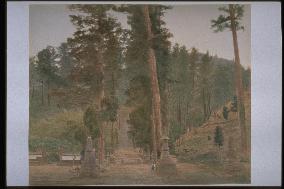
Bodaitei flanked by cedar trees at Minobusan Kuonji Temple, headquarters of the Nichiren Sect of Japanese Buddhism in Minobu-machi, Minamikoma-gun, Yamanashi Prefecture. Bodaitei was a flight of 287 steps leading through the temple gate (Sangedatsumon, or Gate of the Three Liberations) to Soshido Seishinkaku. There are few trees on the hillside to the right of Bodaitei, probably due to the fire of 1875.==Date:unknown, Place:Yamanashi, Photo:Usui Shuzaburo?, (Credit:Nagasaki University Library/Kyodo News Images) [Cabinet Number65‐34‐0]

  •  
Katase

Katase

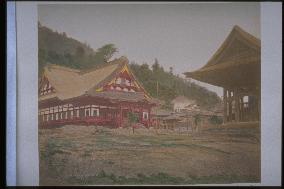
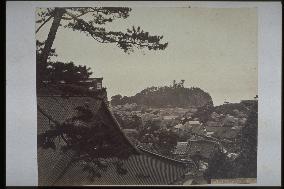
This photograph was taken from Shichimendo in the precincts of Ryukoji Temple. The roof of the main hall is visible to the lower right and the Sanmon (main gate) to the lower right. This was the location of an execution site called Tatsunokuchi during the Kamakura Period. Ryukoji Temple was built here because the site was considered sacred by Nichiren Sect followers, the reason being that Nichiren was almost executed here for criticizing government policies.==Date:unknown, Place:Fujisawa, Photo:unknown, (Credit:Nagasaki University Library/Kyodo News Images) [Cabinet Number58‐28‐0]

  •  
The precincts of Ikegami Honmonji Temple

The precincts of Ikegami Honmonji Temple

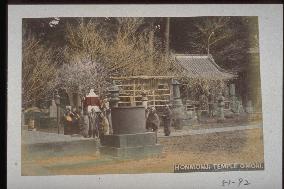
Daikoku-do viewed from Soshi-do. Nichiren, the founder of the Nichiren Sect of Buddhism, died in the year 1282 at the residence of Ikegami Munenaka Ikegami on his way to Hitachi from Mt. Minobu for spa treatment. Munenaka donated units of land equivalent to the number of ideographs in the Saddharmapundarika-sutra (about 70,000 tsubo or 231,420 square meters) and this became Ikegami Honmonji Temple. The Soshi-do, dedicated to Soshi, the founder of the Isshu Sect, is to the left just outside the picture. It was rebuilt in 1723 but burned to the ground during World War II. There are many worshippers beyond the basin.==Date:unknown, Place:Tokyo, Photo:unknown, (Credit:Nagasaki University Library/Kyodo News Images) [Cabinet Number51‐92‐0]

  •  
View in front of ikegami honmonji temple

View in front of ikegami honmonji temple

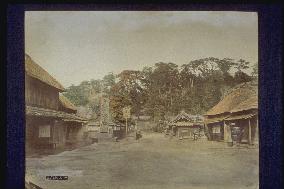
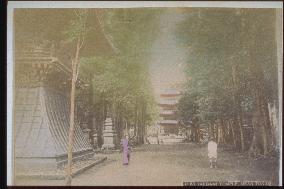
Ikegami Honmonji is called Choeisan Daikokuin, and it is one of the head temples of the Nichiren sect located in the hills of Ikegami. Nichiren established the temple in 1274, giving it the present name. The compounds stretch into the foliage growing to the rear.==Date:unknown, Place:Tokyo, Photo:unknown, (Credit:Nagasaki University Library/Kyodo News Images) [Cabinet Number37‐5‐0]

  •  
Ikegami Honmonji Temple

Ikegami Honmonji Temple

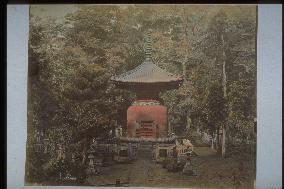
The Hoto of Ikegami Honmonji Temple which is one of the four head temples of the Nichiren Sect. One of the disciples established this temple at the location where Nichiren died. This tower dates back to the 14th century.==Date:unknown, Place:Tokyo, Photo:unknown, (Credit:Nagasaki University Library/Kyodo News Images) [Cabinet Number26‐29‐0]

  •  
Ikegami Honmonji Temple

Ikegami Honmonji Temple

The Ikegami family of Musashi were high-ranking officials in the Kamakura Bakufu. The family invited Nichiren just before he passed away. Their residence stands in the present Ikenoue of Otaku, the origins of the Honmonji of Ikenoue. To the left of the picture is part of the five-story tower, and its great magnitude can be seen from a comparison with the person below.==Date:unknown, Place:Tokyo, Photo:Ogawa Kazumasa, (Credit:Nagasaki University Library/Kyodo News Images) [Cabinet Number25‐75‐0]

  •  
View in front of the gate of katase ryukoji temple

View in front of the gate of katase ryukoji temple

The left side of the photo numbered 19-44. The founder of Ryukoji and the main object of worship is Nichiren. In the hall is a stone cushion. Legend has it that when Nichiren was about to be executed, he worshipped the south sitting on this stone, a miracle occurred and he escaped peril.==Date:unknown, Place:Fujisawa, Photo:unknown, (Credit:Nagasaki University Library/Kyodo News Images) [Cabinet Number14‐43‐0]

  •  
Cycad trees at sakai myokokuji temple

Cycad trees at sakai myokokuji temple

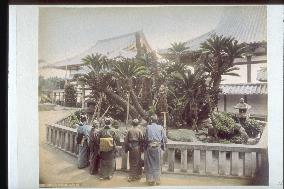
Myokokuji belongs to the Nichiren sect, and the sango of the temple is Koshinzan. The popular name Sotetsudera (Japanese sago palm temple) is derived from the gigantic Japanese sago palm trees in the temple said to be brought from ancient Korea. Legend has it that when Oda Nobunaga moved these trees to Azuchi Castle, they made eerie cries every evening, so he sent them back to the temple.==Date:unknown, Place:Sakai, Photo:Ogawa Kazumasa, (Credit:Nagasaki University Library/Kyodo News Images) [Cabinet Number9‐35‐0]

  •  
Honmyoji temple

Honmyoji temple

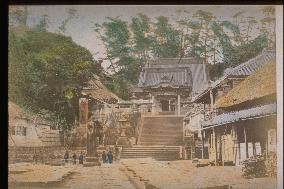
Honmyoji is a Nichiren temple in Kumamoto City. It is the family temple of feudal lord Kato Kiyomasa. There is a Jochiro dedicated to Kiyomasa. Pilgrims to this temple increased with the spread of interest in Kiyomasa, and tea houses began to open along both sides of the stone steps as in this picture. The shakyo (copying of sutras) sessions called Tonsha kai conducted at Honmyoji Temple are famous.==Date:unknown, Place:Kumamoto, Photo:Ogawa Kazumasa, (Credit:Nagasaki University Library/Kyodo News Images) [Cabinet Number6‐28‐0]

  •  
Cape looking out Pacific site of WWII ship sunk by U.S.

Cape looking out Pacific site of WWII ship sunk by U.S.

SAPPORO, Japan - A young couple stands on a lookout platform on Aug. 9, 2014, at Cape Aikappu in Akkeshi, eastern Hokkaido, overlooking the Pacific Ocean where the Imperial Japanese Army's freighter Nichiren Maru was sunk by a U.S. submarine attack in March 1944 during World War II, killing some 2,800 people aboard. (Kyodo)

  •  
Buddhist priest recalls tragedy of WWII ship sunk by U.S.

Buddhist priest recalls tragedy of WWII ship sunk by U.S.

SAPPORO, Japan - Masayoshi Asahi, a Buddhist priest in Akkeshi, eastern Hokkaido, shown in this file photo taken on June 26, 2014, remembers chanting sutras for some 2,800 victims of the Imperial Japanese Army's freighter Nichiren Maru, sunk by a U.S. submarine attack off the town in March 1944 during World War II. (Kyodo)

  •  
Priests of different faiths forming groups across Japan

Priests of different faiths forming groups across Japan

TOKYO, Japan - Photo taken April 22, 2014, shows priests of Buddhism, Shinto, Christianity and other religions gathering for a regular meeting of their group at Ikegami Honmonji, a Buddhism temple of the Nichiren sect, in Tokyo's Ota Ward. (Kyodo)

  •  
Suwa-machi  Street

Suwa-machi Street

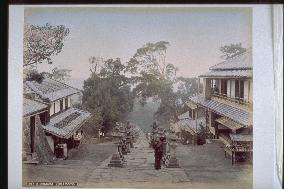
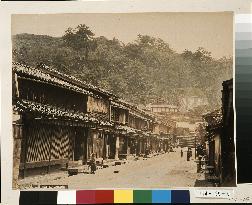
This photograph captures the view of Suwano-machi looking southeast. Koeizan Choshoji Temple (Nichiren Sect, 18 Tera-machi, Nagasaki City) is visible at the top of the stone stairs. Mt. Kazagashira is in the background. The street is flanked by stone side ditches, and there is a water outlet on the right. A oil lamp is standing beyond it. The date is between 1887 and 1892.==Date:unknown, Place:Nagasaki, Photo:unknown, (Credit:Nagasaki University Library/Kyodo News Images) [Cabinet Number114‐29‐0]

  • Main
  • Top
  • Editorial
  • Creative
  • About Us
  • About ILG
  • Terms of use
  • Company
  • BEHIND
  • Price List
  • Single Plan
  • Monthly Plan
  • Services
  • Shooting
  • Rights Clearance
  • Support
  • FAQ
  • How To Buy
  • Contact Us
  • Become a Partner

© KYODO NEWS IMAGES INC

All Rights Reserved.

  • Editorial
  • Olympics
  • News
  • Sports
  • Japan
  • Tech
  • Royal
  • Disaster
  • NorthKorea
  • Old Japan
  • SNS
  • Creative
  • Food
  • Japan
  • Landscape
  • Animal
  • Popular
  • #Ukraine
  • #Thailand
  • #coronavirus
  • #N. Korea
  • #China
  • #Russia
  • #Ukraine
  • #Thailand
  • #coronavirus
  • #N. Korea
  • #China
  • #Russia
  • Food
  • Japan
  • Landscape
  • Animal
  • Olympics
  • News
  • Sports
  • Japan
  • Tech
  • Royal
  • Disaster
  • NorthKorea
  • Old Japan
  • SNS