•  
Whaling tradition in Japan communities

Whaling tradition in Japan communities

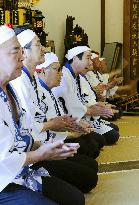
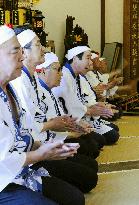
TOKYO, Japan - Men sing a song to console the souls of whales during a Buddhist service for whales at Kogan Temple on Oumi Island in Nagato, Yamaguchi Prefecture, on May 1, 2010. The local area previously lived on coastal whaling.

  •  
Japan restarts refueling mission for antiterrorism operations

Japan restarts refueling mission for antiterrorism operations

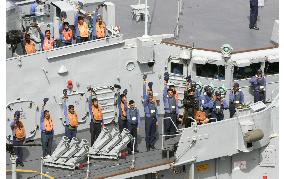
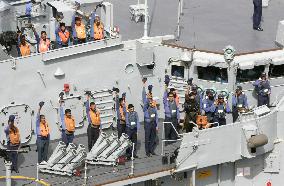
ABOARD THE OUMI, Arabian Sea - Crew members of a Pakistani destroyer wave to the Japanese Maritime Self-Defense Force fleet support ship Oumi in the Indian Ocean on Feb. 21 after the Japanese vessel provided fuel to it. Japan resumed its refueling mission in support of U.S.-led antiterrorism operations following a nearly four-month hiatus.

  •  
Japan restarts refueling mission for antiterrorism operations

Japan restarts refueling mission for antiterrorism operations

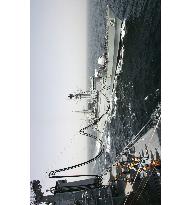
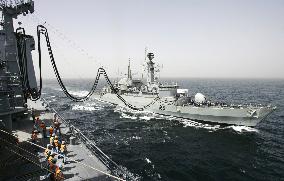
ABOARD THE OUMI, Arabian Sea - The Japanese Maritime Self-Defense Force fleet support ship Oumi (front) provides fuel to a Pakistani destroyer in the Indian Ocean on Feb. 21 as Japan resumed its refueling mission there in support of U.S.-led antiterrorism operations following a nearly four-month hiatus.

  •  
Support ship leaves Japan to join refueling mission

Support ship leaves Japan to join refueling mission

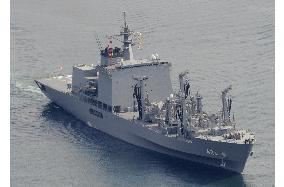
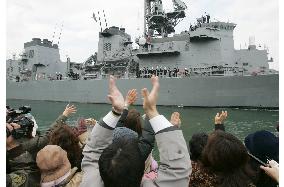
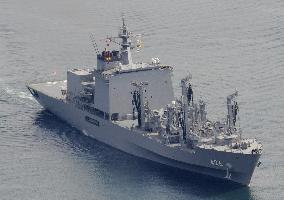
NAGASAKI, Japan - The 13,500-ton Oumi, a Maritime Self-Defense Force support ship, sails off Sasebo, Nagasaki Prefecture, on Jan. 25 after leaving a base in Sasebo to join the Murasame, a destroyer that departed from a different port the previous day for antiterrorism refueling operations in the Indian Ocean.

  •  
MSDF ship leaves Japan to resume refueling mission

MSDF ship leaves Japan to resume refueling mission

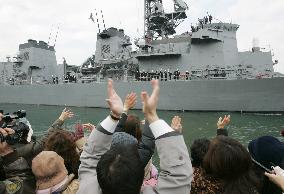
YOKOSUKA, Japan - The 4,550-ton Murasame, a Japanese Maritime Self-Defense Force destroyer, leaves its Yokosuka base, south of Tokyo, on Jan. 24 for the Indian Ocean to resume the antiterrorism refueling mission, as relatives of its crew members see them off. The ship will restart the mission together with the support ship Oumi next month after a three-month hiatus.

  •  
MSDF ships to leave Japan on Jan. 24-25 for refueling mission

MSDF ships to leave Japan on Jan. 24-25 for refueling mission

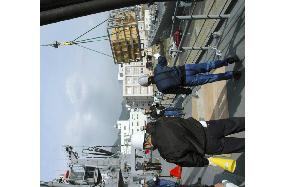
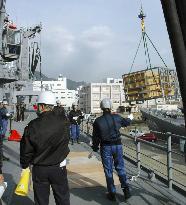
SASEBO, Japan - Workers prepare Jan. 18 in Sasebo, Nagasaki Prefecture, for the departure Jan. 25 of the Japanese fleet support ship Oumi for the Indian Ocean to resume Japan's antiterrorism refueling mission in mid-February. The Oumi will join another ship, the destroyer Murasame, on its way to the region.

  •  
Japan women join antiterror mission in Indian Ocean for 1st time

Japan women join antiterror mission in Indian Ocean for 1st time

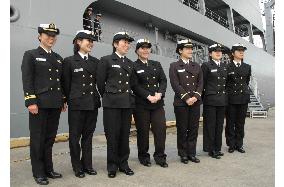
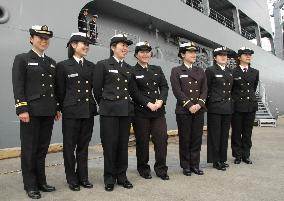
SASEBO, Japan - Female crew members of Japan's Maritime Self-Defense Force's fleet support ship Oumi line up for photos before the 13,55-ton ship leaves the MSDF Sasebo base in Nagasaki Prefecture on March 14 for the Indian Ocean. A total of 16 women were deployed in the area for the first time in an operation that began in 2001 based on a special law against terrorism.

  •  
Japan MSDF vessel

Japan MSDF vessel

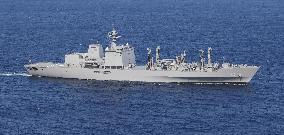
Photo taken by a Kyodo News reporter on board a Japan Maritime Self-Defense Force helicopter shows the MSDF replenishment ship Oumi taking part in an international fleet review in Sagami Bay off Kanagawa Prefecture near Tokyo on Nov. 6, 2022.

  •  
MSDF ships to leave Japan on Jan. 24-25 for refueling mission

MSDF ships to leave Japan on Jan. 24-25 for refueling mission

SASEBO, Japan - Workers prepare Jan. 18 in Sasebo, Nagasaki Prefecture, for the departure Jan. 25 of the Japanese fleet support ship Oumi for the Indian Ocean to resume Japan's antiterrorism refueling mission in mid-February. The Oumi will join another ship, the destroyer Murasame, on its way to the region. (Kyodo)

  •  
MSDF ship leaves Japan to resume refueling mission

MSDF ship leaves Japan to resume refueling mission

YOKOSUKA, Japan - The 4,550-ton Murasame, a Japanese Maritime Self-Defense Force destroyer, leaves its Yokosuka base, south of Tokyo, on Jan. 24 for the Indian Ocean to resume the antiterrorism refueling mission, as relatives of its crew members see them off. The ship will restart the mission together with the support ship Oumi next month after a three-month hiatus. (Kyodo)

  •  
Support ship leaves Japan to join refueling mission

Support ship leaves Japan to join refueling mission

NAGASAKI, Japan - The 13,500-ton Oumi, a Maritime Self-Defense Force support ship, sails off Sasebo, Nagasaki Prefecture, on Jan. 25 after leaving a base in Sasebo to join the Murasame, a destroyer that departed from a different port the previous day for antiterrorism refueling operations in the Indian Ocean. (Kyodo)

  •  
Japan restarts refueling mission for antiterrorism operations

Japan restarts refueling mission for antiterrorism operations

ABOARD THE OUMI, Arabian Sea - The Japanese Maritime Self-Defense Force fleet support ship Oumi (front) provides fuel to a Pakistani destroyer in the Indian Ocean on Feb. 21 as Japan resumed its refueling mission there in support of U.S.-led antiterrorism operations following a nearly four-month hiatus. (Kyodo)

  •  
Japan restarts refueling mission for antiterrorism operations

Japan restarts refueling mission for antiterrorism operations

ABOARD THE OUMI, Arabian Sea - Crew members of a Pakistani destroyer wave to the Japanese Maritime Self-Defense Force fleet support ship Oumi in the Indian Ocean on Feb. 21 after the Japanese vessel provided fuel to it. Japan resumed its refueling mission in support of U.S.-led antiterrorism operations following a nearly four-month hiatus. (Kyodo)

  •  
Japan women join antiterror mission in Indian Ocean for 1st time

Japan women join antiterror mission in Indian Ocean for 1st time

SASEBO, Japan - Female crew members of Japan's Maritime Self-Defense Force's fleet support ship Oumi line up for photos before the 13,55-ton ship leaves the MSDF Sasebo base in Nagasaki Prefecture on March 14 for the Indian Ocean. A total of 16 women were deployed in the area for the first time in an operation that began in 2001 based on a special law against terrorism. (Kyodo)

  •  
Whaling tradition in Japan communities

Whaling tradition in Japan communities

TOKYO, Japan - Men sing a song to console the souls of whales during a Buddhist service for whales at Kogan Temple on Oumi Island in Nagato, Yamaguchi Prefecture, on May 1, 2010. The local area previously lived on coastal whaling. (Kyodo)

  •  
Pine trees at Karasaki,Lake Biwa

Pine trees at Karasaki,Lake Biwa

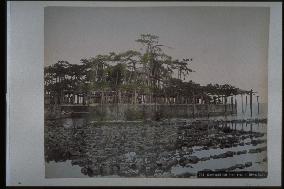
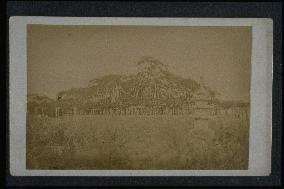
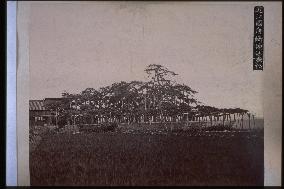
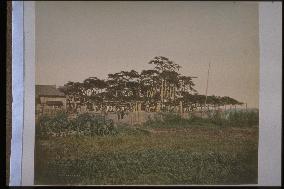
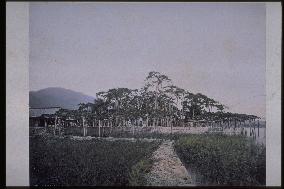
Karasaki-no-Matsu, the pine tree of Karasaki, famous for its portrayal in the ukiyoe print Karasaki-no-Yau (Night Rain of Karasaki), one of the Eight Scenes of Oumi. The tree in the photograph is the second-generation pine with an east-west width of 72 meters, a north-south width of 86 meters and a height of 10 meters. A number of splints and stone walls support the branches stretching out to the lake. This second-generation pine died in 1921, but the third-generation pine is thriving today at the same site.==Date:unknown, Place:Shiga, Photo:unknown, (Credit:Nagasaki University Library/Kyodo News Images) [Cabinet Number87‐34‐0]

  •  
A sunset and a sailboat,Lake Biwa

A sunset and a sailboat,Lake Biwa

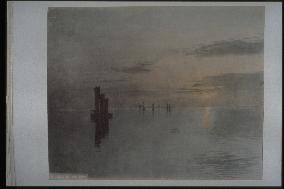
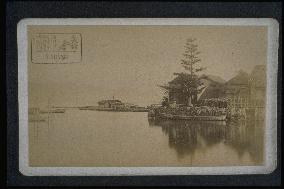
Maruko boats on Lake Biwa. This photograph seems to imitate the image Yabase-no-Kihan, one of Utagawa Hiroshige's Eight Scenes of Oumi and a representative ukiyoe print. Yabase-no-Kihan captures the scene of the boats used to ferry passengers between Otsu and Yabase (present-day Kusatsu City), returning to port. This was a shortcut on the Tokaido Highway.==Date:unknown, Place:Shiga, Photo:unknown, (Credit:Nagasaki University Library/Kyodo News Images) [Cabinet Number87‐35‐0]

  •  
Motomiya Garden,Hikone

Motomiya Garden,Hikone

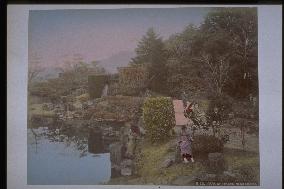
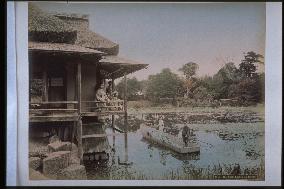
Genkyu-en is the garden at the former second residence of the Ii family in the San-no-maru section of Hikone Castle. It was completed by the 4th feudal lord of the Oumi Domain, Ii Naooki, in 1679. The name is derived from the villa of Chinese Emperor Xuanzong (685-763) of the Tang Dynasty. The Rinchi-kaku and other buildings are carefully positioned around the pond with trees and unusual stones. The building in the photograph was used as an inn and restaurant from the Meiji Period.==Date:unknown, Place:Shiga, Photo:A. Farsari, (Credit:Nagasaki University Library/Kyodo News Images) [Cabinet Number81‐44‐0]

  •  
Motomiya Garden,Hikone

Motomiya Garden,Hikone

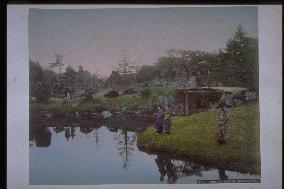
Genkyu-en is the garden at the former second residence of the Ii family in the San-no-maru section of Hikone Castle. It was completed by the 4th feudal lord of the Oumi Domain, Ii Naooki, in 1679. A garden of the chisenkaiyu style, it incorporates features of the Chinese Eight Scenes of Xiaoxiang and the Eight Scenes of Oumi and to this day provides an excellent example of early Edo Period landscaping. The name is derived from the villa of Chinese Emperor Xuanzong (685-763) of the Tang Dynasty.==Date:unknown, Place:Shiga, Photo:A. Farsari, (Credit:Nagasaki University Library/Kyodo News Images) [Cabinet Number81‐27‐0]

  •  
Motomiya Garden,Hikone

Motomiya Garden,Hikone

Genkyu-en is the garden at the former second residence of the Ii family in the San-no-maru section of Hikone Castle. It was completed by the 4th feudal lord of the Oumi Domain, Ii Naooki, in 1679. A garden of the chisenkaiyu style, it incorporates features of the Chinese Eight Scenes of Xiaoxiang and the Eight Scenes of Oumi and to this day provides an excellent example of early Edo Period landscaping. The name is derived from the villa of Chinese Emperor Xuanzong (685-763) of the Tang Dynasty.==Date:unknown, Place:Shiga, Photo:A. Farsari, (Credit:Nagasaki University Library/Kyodo News Images) [Cabinet Number81‐26‐0]

  •  
Pine trees at Karasaki,Lake Biwa

Pine trees at Karasaki,Lake Biwa

Karasaki-no-Matsu, the pine tree of Karasaki, famous for its portrayal in the ukiyoe print Karasaki-no-Yau (Night Rain of Karasaki), one of the Eight Scenes of Oumi. The tree in the photograph is the second-generation pine with an east-west width of 72 meters, a north-south width of 86 meters and a height of 10 meters. A number of splints and stone walls support the branches stretching out to the lake. This second-generation pine died in 1921, but the third-generation pine is thriving today at the same site.==Date:unknown, Place:Shiga, Photo:unknown, (Credit:Nagasaki University Library/Kyodo News Images) [Cabinet Number71‐24‐0]

  •  
Yahashi Harbour

Yahashi Harbour

The ferry port of Yabase, famous for its portrayal in the ukiyoe print Yabase-no-Kihan, one of Utagawa Hiroshige's Eight Scenes of Oumi. The site is located in present-day Kusatsu City, Shiga Prefecture. The port prospered as a shortcut from the Tokaido Highway to Otsu. After the Meiji Period, the water of Lake Biwa receded and the area was gradually converted into farmland.==Date:unknown, Place:Shiga, Photo:unknown, (Credit:Nagasaki University Library/Kyodo News Images) [Cabinet Number71‐5‐0]

  •  
Motomiya Garden,Hikone

Motomiya Garden,Hikone

Genkyu-en is the garden at the former second residence of the Ii family in the San-no-maru section of Hikone Castle. It was completed by the 4th feudal lord of the Oumi Domain, Ii Naooki, in 1679. The name is derived from the villa of Chinese Emperor Xuanzong (685-763) of the Tang Dynasty. The Rinchi-kaku and other buildings are carefully positioned around the pond with trees and unusual stones. The building in the photograph was used as an inn and restaurant from the Meiji Period.==Date:unknown, Place:Shiga, Photo:unknown, (Credit:Nagasaki University Library/Kyodo News Images) [Cabinet Number59‐60‐0]

  •  
A view of Lake Biwa from Ishiyamadera Temple

A view of Lake Biwa from Ishiyamadera Temple

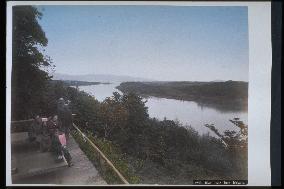
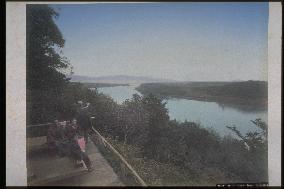
View of Seta River from Tsukimi-tei at Ishiyamadera Temple. During the Heian Period, aristocratic women worshipped at the temple, and in later years it attracted many commoners as the 13th temple in the circuit of 33 Holy Kannon Temples of Western Japan. One of the Eight Scenes of Oumi, it was referred to as Ishiyama-no-Shugetsu (Autumn Moon at Ishiyama Temple). This image appears on postcards and in various photographs.==Date:unknown, Place:Shiga, Photo:unknown, (Credit:Nagasaki University Library/Kyodo News Images) [Cabinet Number59‐23‐0]

  •  
Pine trees at Karasaki,Lake Biwa

Pine trees at Karasaki,Lake Biwa

Karasaki-no-Matsu, the pine tree of Karasaki, famous for its portrayal in the ukiyoe print Karasaki-no-Yau (Night Rain of Karasaki), one of the Eight Scenes of Oumi. The tree in the photograph is the second-generation pine with an east-west width of 72 meters, a north-south width of 86 meters and a height of 10 meters. A number of splints and stone walls support the branches stretching out to the lake. This second-generation pine died in 1921, but the third-generation pine is thriving today at the same site.==Date:unknown, Place:Shiga, Photo:unknown, (Credit:Nagasaki University Library/Kyodo News Images) [Cabinet Number52‐36‐0]

  •  
Pine trees at Karasaki,Lake Biwa

Pine trees at Karasaki,Lake Biwa

Karasaki-no-Matsu, the pine tree of Karasaki, famous for its portrayal in the ukiyoe print Karasaki-no-Yau (Night Rain of Karasaki), one of the Eight Scenes of Oumi. It is the holy tree of Karasaki Shinto Shrine. The tree in the photograph is the second-generation pine with an east-west width of 72 meters, a north-south width of 86 meters and a height of 10 meters. The branches stretch out to the lake. This second-generation pine died in 1921, but the third-generation pine is thriving today at the same site.==Date:unknown, Place:Shiga, Photo:unknown, (Credit:Nagasaki University Library/Kyodo News Images) [Cabinet Number52‐26‐0]

  •  
A view of Lake Biwa from Ishiyamadera Temple

A view of Lake Biwa from Ishiyamadera Temple

View of Seta River from Tsukimi-tei at Ishiyamadera Temple. During the Heian Period, aristocratic women worshipped at the temple, and in later years it attracted many commoners as the 13th temple in the circuit of 33 Holy Kannon Temples of Western Japan. One of the Eight Scenes of Oumi, it was referred to as Ishiyama-no-Shugetsu (Autumn Moon at Ishiyama Temple). This image appears on postcards and in various photographs.==Date:unknown, Place:Shiga, Photo:unknown, (Credit:Nagasaki University Library/Kyodo News Images) [Cabinet Number52‐18‐0]

  •  
Pine trees at Karasaki,Lake Biwa

Pine trees at Karasaki,Lake Biwa

Karasaki-no-Matsu, the pine tree of Karasaki, famous for its portrayal in the ukiyoe print Karasaki-no-Yau (Night Rain of Karasaki), one of the Eight Scenes of Oumi. The tree in the photograph is the second-generation pine with an east-west width of 72 meters, a north-south width of 86 meters and a height of 10 meters. A number of splints and stone walls support the branches stretching out to the lake. This second-generation pine died in 1921, but the third-generation pine is thriving today at the same site.==Date:unknown, Place:Shiga, Photo:unknown, (Credit:Nagasaki University Library/Kyodo News Images) [Cabinet Number52‐19‐0]

  •  
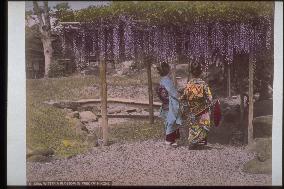
Motomiya Garden,Hikone

Motomiya Garden,Hikone

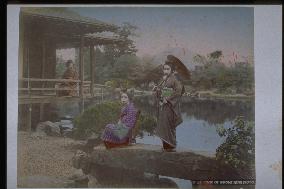
Two women admire wisteria blossoms. The title Hikone suggests that this was taken in Genkyu-en, the garden of the former second residence of the Ii family in the north San-no-maru section of Hikone Castle. The chisenkaiyu-style garden (with a path meandering through the garden around a central pond) was completed in 1679 by the 4th feudal lord of the Oumi domain, Ii Naooki.==Date:unknown, Place:Shiga, Photo:unknown, (Credit:Nagasaki University Library/Kyodo News Images) [Cabinet Number51‐165‐0]

  •  
Awazu, Oumi

Awazu, Oumi

Awazu, Oumi==Date:Early Meiji, Place:Shiga, Photo:unknown, (Credit:Nagasaki University Library/Kyodo News Images)

  • Main
  • Top
  • Editorial
  • Creative
  • About Us
  • About ILG
  • Terms of use
  • Company
  • BEHIND
  • Price List
  • Single Plan
  • Monthly Plan
  • Services
  • Shooting
  • Rights Clearance
  • Support
  • FAQ
  • How To Buy
  • Contact Us
  • Become a Partner

© KYODO NEWS IMAGES INC

All Rights Reserved.

  • Editorial
  • Olympics
  • News
  • Sports
  • Japan
  • Tech
  • Royal
  • Disaster
  • NorthKorea
  • Old Japan
  • SNS
  • Creative
  • Food
  • Japan
  • Landscape
  • Animal
  • Popular
  • #Ukraine
  • #China
  • #coronavirus
  • #N. Korea
  • #Thailand
  • #Russia
  • #Ukraine
  • #China
  • #coronavirus
  • #N. Korea
  • #Thailand
  • #Russia
  • Food
  • Japan
  • Landscape
  • Animal
  • Olympics
  • News
  • Sports
  • Japan
  • Tech
  • Royal
  • Disaster
  • NorthKorea
  • Old Japan
  • SNS