•  
(Chengdu Universiade)CHINA-SICHUAN-CHENGDU-WORLD UNIVERSITY GAMES-RHYTHMIC GYMNASTICS (CN)

(Chengdu Universiade)CHINA-SICHUAN-CHENGDU-WORLD UNIVERSITY GAMES-RHYTHMIC GYMNASTICS (CN)

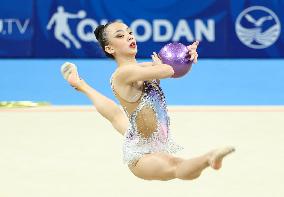
(230729) -- CHENGDU, July 29, 2023 (Xinhua) -- Angeline Qihong Lin of Singapore competes during the Group A Rotation 1 of Individual All-Around Final of Rhythmic Gymnastics at the 31st FISU Summer World University Games in Chengdu, southwest China's Sichuan Province, July 29, 2023. (Xinhua/Wang Jingqiang)

  •  
(MASTER OF CRAFTS)CHINA-ANHUI-QIMEN-KEEMUN BLACK TEA-INHERITOR (CN)

(MASTER OF CRAFTS)CHINA-ANHUI-QIMEN-KEEMUN BLACK TEA-INHERITOR (CN)

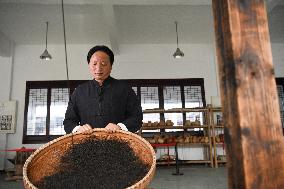
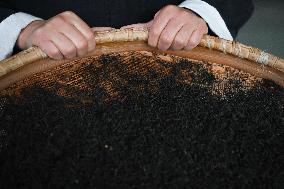
(221130) -- QIMEN, Nov. 30, 2022 (Xinhua) -- Wang Chang does the blending processing of Keemun black tea at his tea company in Qimen County, east China's Anhui Province, Nov. 26, 2022. Keemun black tea, one of the most famous Chinese tea with intensive aroma, has a history of more than 100 years. The tea, also called "Qihong" in Chinese, plays an important role in cultural exchanges between the west and the east. In 2008, the making of Keemun black tea was listed as China's national-level intangible cultural heritage, and nowadays the tea has become a symbol for Anhui Province or even China. The primary processing of Keemun black tea includes four steps, namely natural withering, rolling, fermenting and drying, lasting from before the Qingming festival (April) to June. After that, the refining of the tea is much more complicated, which mainly includes procedures such as screening, winnowing, compressing, re-drying, blending, piling and packing. Of all the refining steps, blending is the key, which decides th

  •  
(MASTER OF CRAFTS)CHINA-ANHUI-QIMEN-KEEMUN BLACK TEA-INHERITOR (CN)

(MASTER OF CRAFTS)CHINA-ANHUI-QIMEN-KEEMUN BLACK TEA-INHERITOR (CN)

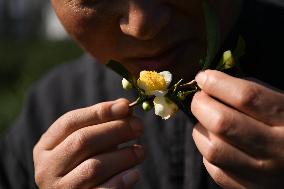
(221130) -- QIMEN, Nov. 30, 2022 (Xinhua) -- Wang Chang smells the scent of tea flowers at a tea garden in Qimen County, east China's Anhui Province, Nov. 26, 2022. Keemun black tea, one of the most famous Chinese tea with intensive aroma, has a history of more than 100 years. The tea, also called "Qihong" in Chinese, plays an important role in cultural exchanges between the west and the east. In 2008, the making of Keemun black tea was listed as China's national-level intangible cultural heritage, and nowadays the tea has become a symbol for Anhui Province or even China. The primary processing of Keemun black tea includes four steps, namely natural withering, rolling, fermenting and drying, lasting from before the Qingming festival (April) to June. After that, the refining of the tea is much more complicated, which mainly includes procedures such as screening, winnowing, compressing, re-drying, blending, piling and packing. Of all the refining steps, blending is the key, which decides the shape, scent, and

  •  
(MASTER OF CRAFTS)CHINA-ANHUI-QIMEN-KEEMUN BLACK TEA-INHERITOR (CN)

(MASTER OF CRAFTS)CHINA-ANHUI-QIMEN-KEEMUN BLACK TEA-INHERITOR (CN)

(221130) -- QIMEN, Nov. 30, 2022 (Xinhua) -- This aerial photo taken on Nov. 26, 2022 shows Wang Chang walking at a tea garden in Qimen County, east China's Anhui Province. Keemun black tea, one of the most famous Chinese tea with intensive aroma, has a history of more than 100 years. The tea, also called "Qihong" in Chinese, plays an important role in cultural exchanges between the west and the east. In 2008, the making of Keemun black tea was listed as China's national-level intangible cultural heritage, and nowadays the tea has become a symbol for Anhui Province or even China. The primary processing of Keemun black tea includes four steps, namely natural withering, rolling, fermenting and drying, lasting from before the Qingming festival (April) to June. After that, the refining of the tea is much more complicated, which mainly includes procedures such as screening, winnowing, compressing, re-drying, blending, piling and packing. Of all the refining steps, blending is the key, which decides the shape, sce

  •  
(MASTER OF CRAFTS)CHINA-ANHUI-QIMEN-KEEMUN BLACK TEA-INHERITOR (CN)

(MASTER OF CRAFTS)CHINA-ANHUI-QIMEN-KEEMUN BLACK TEA-INHERITOR (CN)

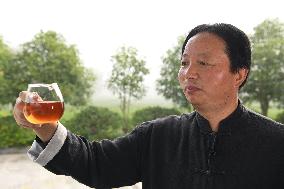
(221130) -- QIMEN, Nov. 30, 2022 (Xinhua) -- Wang Chang tastes a cup of Keemun black tea at a tea garden in Qimen County, east China's Anhui Province, Nov. 26, 2022. Keemun black tea, one of the most famous Chinese tea with intensive aroma, has a history of more than 100 years. The tea, also called "Qihong" in Chinese, plays an important role in cultural exchanges between the west and the east. In 2008, the making of Keemun black tea was listed as China's national-level intangible cultural heritage, and nowadays the tea has become a symbol for Anhui Province or even China. The primary processing of Keemun black tea includes four steps, namely natural withering, rolling, fermenting and drying, lasting from before the Qingming festival (April) to June. After that, the refining of the tea is much more complicated, which mainly includes procedures such as screening, winnowing, compressing, re-drying, blending, piling and packing. Of all the refining steps, blending is the key, which decides the shape, scent, and

  •  
(MASTER OF CRAFTS)CHINA-ANHUI-QIMEN-KEEMUN BLACK TEA-INHERITOR (CN)

(MASTER OF CRAFTS)CHINA-ANHUI-QIMEN-KEEMUN BLACK TEA-INHERITOR (CN)

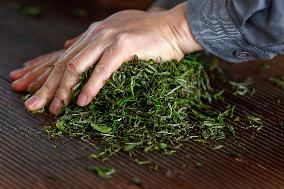
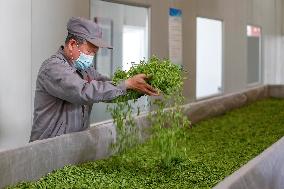
(221130) -- QIMEN, Nov. 30, 2022 (Xinhua) -- A worker rolls tea leaves after withering at Wang Chang's tea company in Qimen County, east China's Anhui Province, March 28, 2022. Keemun black tea, one of the most famous Chinese tea with intensive aroma, has a history of more than 100 years. The tea, also called "Qihong" in Chinese, plays an important role in cultural exchanges between the west and the east. In 2008, the making of Keemun black tea was listed as China's national-level intangible cultural heritage, and nowadays the tea has become a symbol for Anhui Province or even China. The primary processing of Keemun black tea includes four steps, namely natural withering, rolling, fermenting and drying, lasting from before the Qingming festival (April) to June. After that, the refining of the tea is much more complicated, which mainly includes procedures such as screening, winnowing, compressing, re-drying, blending, piling and packing. Of all the refining steps, blending is the key, which decides the shape,

  •  
(MASTER OF CRAFTS)CHINA-ANHUI-QIMEN-KEEMUN BLACK TEA-INHERITOR (CN)

(MASTER OF CRAFTS)CHINA-ANHUI-QIMEN-KEEMUN BLACK TEA-INHERITOR (CN)

(221130) -- QIMEN, Nov. 30, 2022 (Xinhua) -- Fan Wenhan, apprentice of Wang Chang, evaluates a Keemun black tea product at a tea garden in Qimen County, east China's Anhui Province, Nov. 26, 2022. Keemun black tea, one of the most famous Chinese tea with intensive aroma, has a history of more than 100 years. The tea, also called "Qihong" in Chinese, plays an important role in cultural exchanges between the west and the east. In 2008, the making of Keemun black tea was listed as China's national-level intangible cultural heritage, and nowadays the tea has become a symbol for Anhui Province or even China. The primary processing of Keemun black tea includes four steps, namely natural withering, rolling, fermenting and drying, lasting from before the Qingming festival (April) to June. After that, the refining of the tea is much more complicated, which mainly includes procedures such as screening, winnowing, compressing, re-drying, blending, piling and packing. Of all the refining steps, blending is the key, whic

  •  
(MASTER OF CRAFTS)CHINA-ANHUI-QIMEN-KEEMUN BLACK TEA-INHERITOR (CN)

(MASTER OF CRAFTS)CHINA-ANHUI-QIMEN-KEEMUN BLACK TEA-INHERITOR (CN)

(221130) -- QIMEN, Nov. 30, 2022 (Xinhua) -- Wang Chang does the sieving processing of keemun black tea at a tea garden in Qimen County, east China's Anhui Province, Nov. 26, 2022. Keemun black tea, one of the most famous Chinese tea with intensive aroma, has a history of more than 100 years. The tea, also called "Qihong" in Chinese, plays an important role in cultural exchanges between the west and the east. In 2008, the making of Keemun black tea was listed as China's national-level intangible cultural heritage, and nowadays the tea has become a symbol for Anhui Province or even China. The primary processing of Keemun black tea includes four steps, namely natural withering, rolling, fermenting and drying, lasting from before the Qingming festival (April) to June. After that, the refining of the tea is much more complicated, which mainly includes procedures such as screening, winnowing, compressing, re-drying, blending, piling and packing. Of all the refining steps, blending is the key, which decides the sh

  •  
(MASTER OF CRAFTS)CHINA-ANHUI-QIMEN-KEEMUN BLACK TEA-INHERITOR (CN)

(MASTER OF CRAFTS)CHINA-ANHUI-QIMEN-KEEMUN BLACK TEA-INHERITOR (CN)

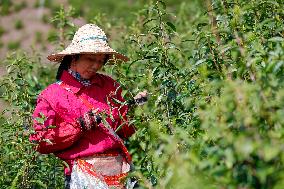
(221130) -- QIMEN, Nov. 30, 2022 (Xinhua) -- A farmer picks tea leaves at a tea garden in Qimen County, east China's Anhui Province, March 28, 2022. Keemun black tea, one of the most famous Chinese tea with intensive aroma, has a history of more than 100 years. The tea, also called "Qihong" in Chinese, plays an important role in cultural exchanges between the west and the east. In 2008, the making of Keemun black tea was listed as China's national-level intangible cultural heritage, and nowadays the tea has become a symbol for Anhui Province or even China. The primary processing of Keemun black tea includes four steps, namely natural withering, rolling, fermenting and drying, lasting from before the Qingming festival (April) to June. After that, the refining of the tea is much more complicated, which mainly includes procedures such as screening, winnowing, compressing, re-drying, blending, piling and packing. Of all the refining steps, blending is the key, which decides the shape, scent, and color of the fin

  •  
(MASTER OF CRAFTS)CHINA-ANHUI-QIMEN-KEEMUN BLACK TEA-INHERITOR (CN)

(MASTER OF CRAFTS)CHINA-ANHUI-QIMEN-KEEMUN BLACK TEA-INHERITOR (CN)

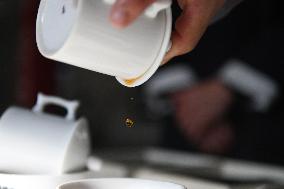
(221130) -- QIMEN, Nov. 30, 2022 (Xinhua) -- Wang Chang pours a cup of keemun black tea at a tea garden in Qimen County, east China's Anhui Province, Nov. 26, 2022. Keemun black tea, one of the most famous Chinese tea with intensive aroma, has a history of more than 100 years. The tea, also called "Qihong" in Chinese, plays an important role in cultural exchanges between the west and the east. In 2008, the making of Keemun black tea was listed as China's national-level intangible cultural heritage, and nowadays the tea has become a symbol for Anhui Province or even China. The primary processing of Keemun black tea includes four steps, namely natural withering, rolling, fermenting and drying, lasting from before the Qingming festival (April) to June. After that, the refining of the tea is much more complicated, which mainly includes procedures such as screening, winnowing, compressing, re-drying, blending, piling and packing. Of all the refining steps, blending is the key, which decides the shape, scent, and

  •  
(MASTER OF CRAFTS)CHINA-ANHUI-QIMEN-KEEMUN BLACK TEA-INHERITOR (CN)

(MASTER OF CRAFTS)CHINA-ANHUI-QIMEN-KEEMUN BLACK TEA-INHERITOR (CN)

(221130) -- QIMEN, Nov. 30, 2022 (Xinhua) -- Wang Chang does the sieving processing of keemun black tea at a tea garden in Qimen County, east China's Anhui Province, Nov. 26, 2022. Keemun black tea, one of the most famous Chinese tea with intensive aroma, has a history of more than 100 years. The tea, also called "Qihong" in Chinese, plays an important role in cultural exchanges between the west and the east. In 2008, the making of Keemun black tea was listed as China's national-level intangible cultural heritage, and nowadays the tea has become a symbol for Anhui Province or even China. The primary processing of Keemun black tea includes four steps, namely natural withering, rolling, fermenting and drying, lasting from before the Qingming festival (April) to June. After that, the refining of the tea is much more complicated, which mainly includes procedures such as screening, winnowing, compressing, re-drying, blending, piling and packing. Of all the refining steps, blending is the key, which decides the sh

  •  
(MASTER OF CRAFTS)CHINA-ANHUI-QIMEN-KEEMUN BLACK TEA-INHERITOR (CN)

(MASTER OF CRAFTS)CHINA-ANHUI-QIMEN-KEEMUN BLACK TEA-INHERITOR (CN)

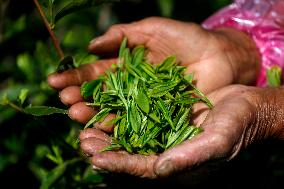
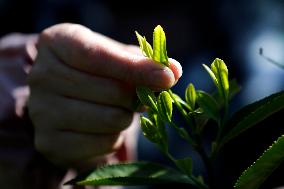
(221130) -- QIMEN, Nov. 30, 2022 (Xinhua) -- A farmer shows newly-picked tea leaves at a tea garden in Qimen County, east China's Anhui Province, March 28, 2022. Keemun black tea, one of the most famous Chinese tea with intensive aroma, has a history of more than 100 years. The tea, also called "Qihong" in Chinese, plays an important role in cultural exchanges between the west and the east. In 2008, the making of Keemun black tea was listed as China's national-level intangible cultural heritage, and nowadays the tea has become a symbol for Anhui Province or even China. The primary processing of Keemun black tea includes four steps, namely natural withering, rolling, fermenting and drying, lasting from before the Qingming festival (April) to June. After that, the refining of the tea is much more complicated, which mainly includes procedures such as screening, winnowing, compressing, re-drying, blending, piling and packing. Of all the refining steps, blending is the key, which decides the shape, scent, and col

  •  
(MASTER OF CRAFTS)CHINA-ANHUI-QIMEN-KEEMUN BLACK TEA-INHERITOR (CN)

(MASTER OF CRAFTS)CHINA-ANHUI-QIMEN-KEEMUN BLACK TEA-INHERITOR (CN)

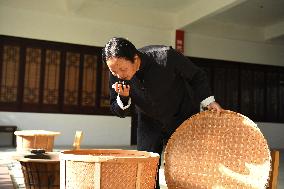
(221130) -- QIMEN, Nov. 30, 2022 (Xinhua) -- Wang Chang smells the scent of Keemun black tea at a tea garden in Qimen County, east China's Anhui Province, Nov. 26, 2022. Keemun black tea, one of the most famous Chinese tea with intensive aroma, has a history of more than 100 years. The tea, also called "Qihong" in Chinese, plays an important role in cultural exchanges between the west and the east. In 2008, the making of Keemun black tea was listed as China's national-level intangible cultural heritage, and nowadays the tea has become a symbol for Anhui Province or even China. The primary processing of Keemun black tea includes four steps, namely natural withering, rolling, fermenting and drying, lasting from before the Qingming festival (April) to June. After that, the refining of the tea is much more complicated, which mainly includes procedures such as screening, winnowing, compressing, re-drying, blending, piling and packing. Of all the refining steps, blending is the key, which decides the shape, scent,

  •  
(MASTER OF CRAFTS)CHINA-ANHUI-QIMEN-KEEMUN BLACK TEA-INHERITOR (CN)

(MASTER OF CRAFTS)CHINA-ANHUI-QIMEN-KEEMUN BLACK TEA-INHERITOR (CN)

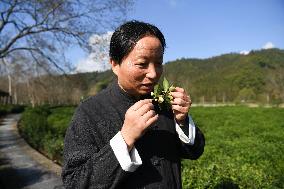
(221130) -- QIMEN, Nov. 30, 2022 (Xinhua) -- Wang Chang smells the scent of tea flowers at a tea garden in Qimen County, east China's Anhui Province, Nov. 26, 2022. Keemun black tea, one of the most famous Chinese tea with intensive aroma, has a history of more than 100 years. The tea, also called "Qihong" in Chinese, plays an important role in cultural exchanges between the west and the east. In 2008, the making of Keemun black tea was listed as China's national-level intangible cultural heritage, and nowadays the tea has become a symbol for Anhui Province or even China. The primary processing of Keemun black tea includes four steps, namely natural withering, rolling, fermenting and drying, lasting from before the Qingming festival (April) to June. After that, the refining of the tea is much more complicated, which mainly includes procedures such as screening, winnowing, compressing, re-drying, blending, piling and packing. Of all the refining steps, blending is the key, which decides the shape, scent, and

  •  
(MASTER OF CRAFTS)CHINA-ANHUI-QIMEN-KEEMUN BLACK TEA-INHERITOR (CN)

(MASTER OF CRAFTS)CHINA-ANHUI-QIMEN-KEEMUN BLACK TEA-INHERITOR (CN)

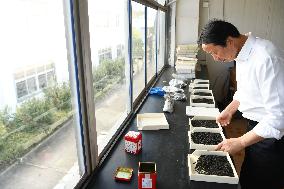
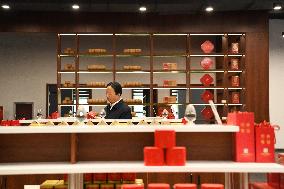
(221130) -- QIMEN, Nov. 30, 2022 (Xinhua) -- Wang Chang checks Keemun black tea products at his tea company in Qimen County, east China's Anhui Province, Nov. 26, 2022. Keemun black tea, one of the most famous Chinese tea with intensive aroma, has a history of more than 100 years. The tea, also called "Qihong" in Chinese, plays an important role in cultural exchanges between the west and the east. In 2008, the making of Keemun black tea was listed as China's national-level intangible cultural heritage, and nowadays the tea has become a symbol for Anhui Province or even China. The primary processing of Keemun black tea includes four steps, namely natural withering, rolling, fermenting and drying, lasting from before the Qingming festival (April) to June. After that, the refining of the tea is much more complicated, which mainly includes procedures such as screening, winnowing, compressing, re-drying, blending, piling and packing. Of all the refining steps, blending is the key, which decides the shape, scent,

  •  
(MASTER OF CRAFTS)CHINA-ANHUI-QIMEN-KEEMUN BLACK TEA-INHERITOR (CN)

(MASTER OF CRAFTS)CHINA-ANHUI-QIMEN-KEEMUN BLACK TEA-INHERITOR (CN)

(221130) -- QIMEN, Nov. 30, 2022 (Xinhua) -- Fan Wenhan, apprentice of Wang Chang, evaluates the processing of Keemun black tea at a tea garden in Qimen County, east China's Anhui Province, Nov. 26, 2022. Keemun black tea, one of the most famous Chinese tea with intensive aroma, has a history of more than 100 years. The tea, also called "Qihong" in Chinese, plays an important role in cultural exchanges between the west and the east. In 2008, the making of Keemun black tea was listed as China's national-level intangible cultural heritage, and nowadays the tea has become a symbol for Anhui Province or even China. The primary processing of Keemun black tea includes four steps, namely natural withering, rolling, fermenting and drying, lasting from before the Qingming festival (April) to June. After that, the refining of the tea is much more complicated, which mainly includes procedures such as screening, winnowing, compressing, re-drying, blending, piling and packing. Of all the refining steps, blending is the k

  •  
(MASTER OF CRAFTS)CHINA-ANHUI-QIMEN-KEEMUN BLACK TEA-INHERITOR (CN)

(MASTER OF CRAFTS)CHINA-ANHUI-QIMEN-KEEMUN BLACK TEA-INHERITOR (CN)

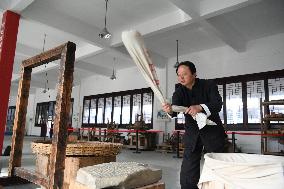
(221130) -- QIMEN, Nov. 30, 2022 (Xinhua) -- Wang Chang does the bagging and beating processing of Keemun black tea at a tea garden in Qimen County, east China's Anhui Province, Nov. 26, 2022. Keemun black tea, one of the most famous Chinese tea with intensive aroma, has a history of more than 100 years. The tea, also called "Qihong" in Chinese, plays an important role in cultural exchanges between the west and the east. In 2008, the making of Keemun black tea was listed as China's national-level intangible cultural heritage, and nowadays the tea has become a symbol for Anhui Province or even China. The primary processing of Keemun black tea includes four steps, namely natural withering, rolling, fermenting and drying, lasting from before the Qingming festival (April) to June. After that, the refining of the tea is much more complicated, which mainly includes procedures such as screening, winnowing, compressing, re-drying, blending, piling and packing. Of all the refining steps, blending is the key, which de

  •  
(MASTER OF CRAFTS)CHINA-ANHUI-QIMEN-KEEMUN BLACK TEA-INHERITOR (CN)

(MASTER OF CRAFTS)CHINA-ANHUI-QIMEN-KEEMUN BLACK TEA-INHERITOR (CN)

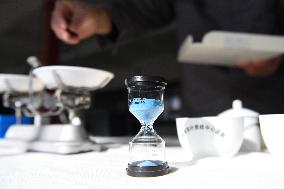
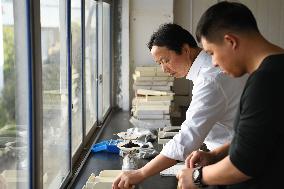
(221130) -- QIMEN, Nov. 30, 2022 (Xinhua) -- Wang Chang (L) and his apprentice Fan Wenhan do the blending processing of Keemun black tea at his tea company in Qimen County, east China's Anhui Province, Nov. 26, 2022. Keemun black tea, one of the most famous Chinese tea with intensive aroma, has a history of more than 100 years. The tea, also called "Qihong" in Chinese, plays an important role in cultural exchanges between the west and the east. In 2008, the making of Keemun black tea was listed as China's national-level intangible cultural heritage, and nowadays the tea has become a symbol for Anhui Province or even China. The primary processing of Keemun black tea includes four steps, namely natural withering, rolling, fermenting and drying, lasting from before the Qingming festival (April) to June. After that, the refining of the tea is much more complicated, which mainly includes procedures such as screening, winnowing, compressing, re-drying, blending, piling and packing. Of all the refining steps, blend

  •  
(MASTER OF CRAFTS)CHINA-ANHUI-QIMEN-KEEMUN BLACK TEA-INHERITOR (CN)

(MASTER OF CRAFTS)CHINA-ANHUI-QIMEN-KEEMUN BLACK TEA-INHERITOR (CN)

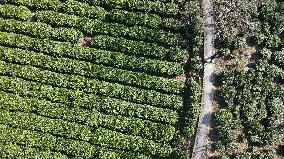
(221130) -- QIMEN, Nov. 30, 2022 (Xinhua) -- This aerial photo taken on Nov. 26, 2022 shows a tea garden in Qimen County, east China's Anhui Province. Keemun black tea, one of the most famous Chinese tea with intensive aroma, has a history of more than 100 years. The tea, also called "Qihong" in Chinese, plays an important role in cultural exchanges between the west and the east. In 2008, the making of Keemun black tea was listed as China's national-level intangible cultural heritage, and nowadays the tea has become a symbol for Anhui Province or even China. The primary processing of Keemun black tea includes four steps, namely natural withering, rolling, fermenting and drying, lasting from before the Qingming festival (April) to June. After that, the refining of the tea is much more complicated, which mainly includes procedures such as screening, winnowing, compressing, re-drying, blending, piling and packing. Of all the refining steps, blending is the key, which decides the shape, scent, and color of the f

  •  
(MASTER OF CRAFTS)CHINA-ANHUI-QIMEN-KEEMUN BLACK TEA-INHERITOR (CN)

(MASTER OF CRAFTS)CHINA-ANHUI-QIMEN-KEEMUN BLACK TEA-INHERITOR (CN)

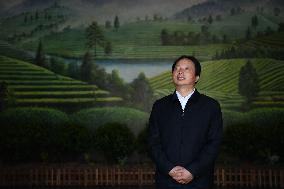
(221130) -- QIMEN, Nov. 30, 2022 (Xinhua) -- Wang Chang poses for a photo at his tea company in Qimen County, east China's Anhui Province, Nov. 26, 2022. Keemun black tea, one of the most famous Chinese tea with intensive aroma, has a history of more than 100 years. The tea, also called "Qihong" in Chinese, plays an important role in cultural exchanges between the west and the east. In 2008, the making of Keemun black tea was listed as China's national-level intangible cultural heritage, and nowadays the tea has become a symbol for Anhui Province or even China. The primary processing of Keemun black tea includes four steps, namely natural withering, rolling, fermenting and drying, lasting from before the Qingming festival (April) to June. After that, the refining of the tea is much more complicated, which mainly includes procedures such as screening, winnowing, compressing, re-drying, blending, piling and packing. Of all the refining steps, blending is the key, which decides the shape, scent, and color of th

  •  
(MASTER OF CRAFTS)CHINA-ANHUI-QIMEN-KEEMUN BLACK TEA-INHERITOR (CN)

(MASTER OF CRAFTS)CHINA-ANHUI-QIMEN-KEEMUN BLACK TEA-INHERITOR (CN)

(221130) -- QIMEN, Nov. 30, 2022 (Xinhua) -- A farmer picks tea leaves at a tea garden in Qimen County, east China's Anhui Province, March 28, 2022. Keemun black tea, one of the most famous Chinese tea with intensive aroma, has a history of more than 100 years. The tea, also called "Qihong" in Chinese, plays an important role in cultural exchanges between the west and the east. In 2008, the making of Keemun black tea was listed as China's national-level intangible cultural heritage, and nowadays the tea has become a symbol for Anhui Province or even China. The primary processing of Keemun black tea includes four steps, namely natural withering, rolling, fermenting and drying, lasting from before the Qingming festival (April) to June. After that, the refining of the tea is much more complicated, which mainly includes procedures such as screening, winnowing, compressing, re-drying, blending, piling and packing. Of all the refining steps, blending is the key, which decides the shape, scent, and color of the fin

  •  
(MASTER OF CRAFTS)CHINA-ANHUI-QIMEN-KEEMUN BLACK TEA-INHERITOR (CN)

(MASTER OF CRAFTS)CHINA-ANHUI-QIMEN-KEEMUN BLACK TEA-INHERITOR (CN)

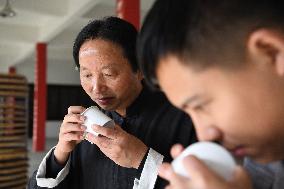
(221130) -- QIMEN, Nov. 30, 2022 (Xinhua) -- Wang Chang (L) and his apprentice Fan Wenhan evalutate a Keemun black tea product at a tea garden in Qimen County, east China's Anhui Province, Nov. 26, 2022. Keemun black tea, one of the most famous Chinese tea with intensive aroma, has a history of more than 100 years. The tea, also called "Qihong" in Chinese, plays an important role in cultural exchanges between the west and the east. In 2008, the making of Keemun black tea was listed as China's national-level intangible cultural heritage, and nowadays the tea has become a symbol for Anhui Province or even China. The primary processing of Keemun black tea includes four steps, namely natural withering, rolling, fermenting and drying, lasting from before the Qingming festival (April) to June. After that, the refining of the tea is much more complicated, which mainly includes procedures such as screening, winnowing, compressing, re-drying, blending, piling and packing. Of all the refining steps, blending is the ke

  •  
(MASTER OF CRAFTS)CHINA-ANHUI-QIMEN-KEEMUN BLACK TEA-INHERITOR (CN)

(MASTER OF CRAFTS)CHINA-ANHUI-QIMEN-KEEMUN BLACK TEA-INHERITOR (CN)

(221130) -- QIMEN, Nov. 30, 2022 (Xinhua) -- Wang Chang makes a cup of Keemun black tea in Qimen County, east China's Anhui Province, Nov. 26, 2022. Keemun black tea, one of the most famous Chinese tea with intensive aroma, has a history of more than 100 years. The tea, also called "Qihong" in Chinese, plays an important role in cultural exchanges between the west and the east. In 2008, the making of Keemun black tea was listed as China's national-level intangible cultural heritage, and nowadays the tea has become a symbol for Anhui Province or even China. The primary processing of Keemun black tea includes four steps, namely natural withering, rolling, fermenting and drying, lasting from before the Qingming festival (April) to June. After that, the refining of the tea is much more complicated, which mainly includes procedures such as screening, winnowing, compressing, re-drying, blending, piling and packing. Of all the refining steps, blending is the key, which decides the shape, scent, and color of the fin

  •  
(MASTER OF CRAFTS)CHINA-ANHUI-QIMEN-KEEMUN BLACK TEA-INHERITOR (CN)

(MASTER OF CRAFTS)CHINA-ANHUI-QIMEN-KEEMUN BLACK TEA-INHERITOR (CN)

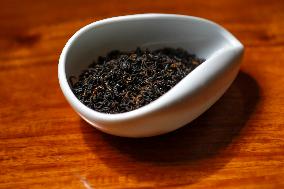
(221130) -- QIMEN, Nov. 30, 2022 (Xinhua) -- This photo taken on March 28, 2022 shows a Keemun black tea product of Wang Chang's tea company in Qimen County, east China's Anhui Province. Keemun black tea, one of the most famous Chinese tea with intensive aroma, has a history of more than 100 years. The tea, also called "Qihong" in Chinese, plays an important role in cultural exchanges between the west and the east. In 2008, the making of Keemun black tea was listed as China's national-level intangible cultural heritage, and nowadays the tea has become a symbol for Anhui Province or even China. The primary processing of Keemun black tea includes four steps, namely natural withering, rolling, fermenting and drying, lasting from before the Qingming festival (April) to June. After that, the refining of the tea is much more complicated, which mainly includes procedures such as screening, winnowing, compressing, re-drying, blending, piling and packing. Of all the refining steps, blending is the key, which decides

  •  
(MASTER OF CRAFTS)CHINA-ANHUI-QIMEN-KEEMUN BLACK TEA-INHERITOR (CN)

(MASTER OF CRAFTS)CHINA-ANHUI-QIMEN-KEEMUN BLACK TEA-INHERITOR (CN)

(221130) -- QIMEN, Nov. 30, 2022 (Xinhua) -- A worker puts fresh tea leaves into a withering machine at Wang Chang's tea company in Qimen County, east China's Anhui Province, March 28, 2022. Keemun black tea, one of the most famous Chinese tea with intensive aroma, has a history of more than 100 years. The tea, also called "Qihong" in Chinese, plays an important role in cultural exchanges between the west and the east. In 2008, the making of Keemun black tea was listed as China's national-level intangible cultural heritage, and nowadays the tea has become a symbol for Anhui Province or even China. The primary processing of Keemun black tea includes four steps, namely natural withering, rolling, fermenting and drying, lasting from before the Qingming festival (April) to June. After that, the refining of the tea is much more complicated, which mainly includes procedures such as screening, winnowing, compressing, re-drying, blending, piling and packing. Of all the refining steps, blending is the key, which deci

  •  
CHINA-BEIJING PEOPLE'S ART THEATER-70TH ANNIVERSARY (CN)

CHINA-BEIJING PEOPLE'S ART THEATER-70TH ANNIVERSARY (CN)

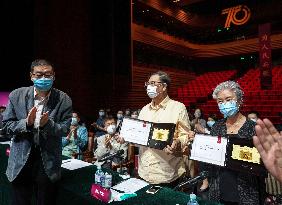
(220612) -- BEIJING, June 12, 2022 (Xinhua) -- Senior artists Guo Qihong (C) and Lyu Zhong (R) are awarded during a symposium marking the 70th anniversary of the founding of the Beijing People's Art Theater in Beijing, capital of China, June 12, 2022. (Xinhua/Chen Zhonghao)

  •  
CHINA-BEIJING PEOPLE'S ART THEATER-70TH ANNIVERSARY (CN)

CHINA-BEIJING PEOPLE'S ART THEATER-70TH ANNIVERSARY (CN)

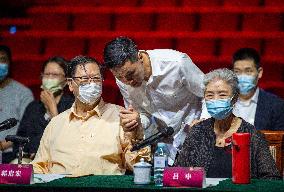
(220612) -- BEIJING, June 12, 2022 (Xinhua) -- Feng Yuanzheng (C), vice president of the Beijing People's Art Theater, talks with senior artists Guo Qihong (front L) and Lyu Zhong (front R) before a symposium marking the 70th anniversary of the founding of the theater in Beijing, capital of China, June 12, 2022. (Xinhua/Chen Zhonghao)

  •  

Drones help deliver medicine, anti-virus supplies to Shanghai residents

STORY: Drones help deliver medicine, anti-virus supplies to Shanghai residents DATELINE: April 18, 2022 LENGTH: 00:01:29 LOCATION: SHANGHAI, China CATEGORY: HEALTH/TECHNOLOGY SHOTLIST: various of dronesSOUNDBITE 1 (Chinese): XU QIHONG, Medical worker in Anting Townvarious of dronesSOUNDBITE 2 (Chinese): FANG YUAN, Head of SF Express drone special action group STORYLINE: China's delivery giant SF Express uses drones to deliver medicine and anti-virus supplies to residents under closed-off management in the eastern metropolis of Shanghai. A drone can carry up to 10 kilograms of supplies, and fly at 14 meters per second for 30 to 40 minutes. SOUNDBITE 1(Chinese): XU QIHONG, Medical worker in Anting Town "I think this method is quite good, because it can greatly reduce our labor cost and time cost. Next, we want to make full use of drones to deliver medicine to those residents who need less medicine and live far away." Now seven drones are working in Anting Town, Shanghai's Jiading District. SOUNDBITE 2(Ch

  • Main
  • Top
  • Editorial
  • Creative
  • About Us
  • About ILG
  • Terms of use
  • Company
  • BEHIND
  • Price List
  • Single Plan
  • Monthly Plan
  • Services
  • Shooting
  • Rights Clearance
  • Support
  • FAQ
  • How To Buy
  • Contact Us
  • Become a Partner

© KYODO NEWS IMAGES INC

All Rights Reserved.

  • Editorial
  • Olympics
  • News
  • Sports
  • Japan
  • Tech
  • Royal
  • Disaster
  • NorthKorea
  • Old Japan
  • SNS
  • Creative
  • Food
  • Japan
  • Landscape
  • Animal
  • Popular
  • #Ukraine
  • #Thailand
  • #coronavirus
  • #N. Korea
  • #Russia
  • #China
  • #Ukraine
  • #Thailand
  • #coronavirus
  • #N. Korea
  • #Russia
  • #China
  • Food
  • Japan
  • Landscape
  • Animal
  • Olympics
  • News
  • Sports
  • Japan
  • Tech
  • Royal
  • Disaster
  • NorthKorea
  • Old Japan
  • SNS