•  
Hokkaido in 1st map of Japan made by famed surveyor

Hokkaido in 1st map of Japan made by famed surveyor

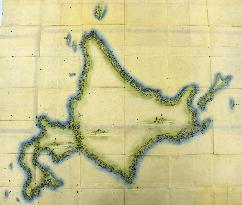
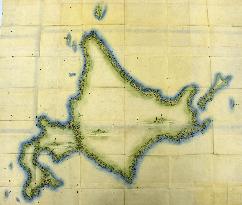
TOKYO, Japan - Japan's northernmost main island of Hokkaido in the first map of the Japanese archipelago completed by surveyor Ino Tadataka in the early 19th century is seen in this file photo taken on Aug. 15, 2014. Researchers say the Hokkaido portion of the map was based on data collected by Ino's student and explorer Mamiya Rinzo rather than by Ino alone as previously thought.

  •  
Japan names new envoys to Angola, Guinea

Japan names new envoys to Angola, Guinea

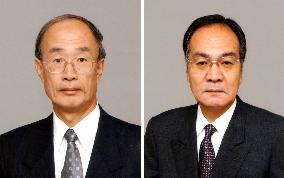
TOKYO, Japan - Japan appointed Susumu Shibata (file photo), who was consul general in the Brazilian city of Recife, as ambassador to Angola, and veteran diplomat Rinzo Kataoka (file photo) as ambassador to Guinea on May 17. (Kyodo)

  •  
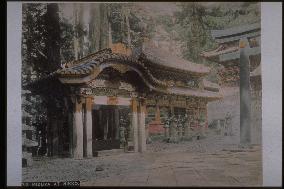
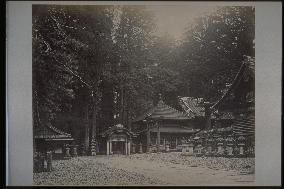
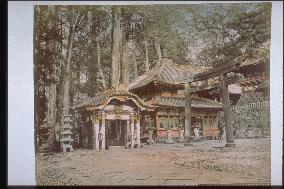
The Suibansha (sacred fountain),Toshogu Shrine,Nikko

The Suibansha (sacred fountain),Toshogu Shrine,Nikko

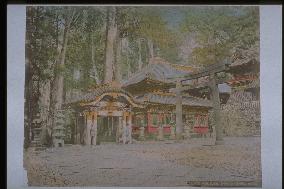
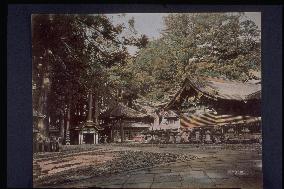
The white building in the centre is the Omizuya, which has a granite water basin donated by the Nabeshima Clan in 1618. To the right is the Rinzo (Kyozo) where sutras are stored. The Chinese-style bronze gate, Karagane Torii, which was built by Tokugawa Iemitsu, stands in the right foreground. This is the first bronze gate in Japan. Visitors pass through the gate, ascend the stone steps and arrive in front of Yomeimon.==Date:unknown, Place:Nikko, Photo:unknown, (Credit:Nagasaki University Library/Kyodo News Images) [Cabinet Number88‐10‐0]

  •  
The Yomeimon Gate seen from the second gate,Toshogu Shrine,Nikko

The Yomeimon Gate seen from the second gate,Toshogu Shrine,Nikko

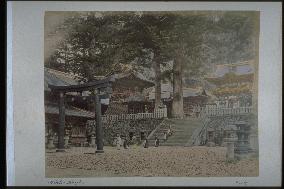
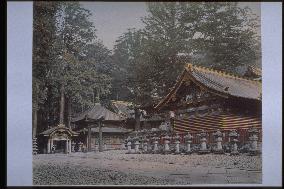
Karagane Torii is on the left. The Rinzo, a building to store Buddhist sutras, stands to the left behind the gate. The building to the right is the Drum Tower. The small structure to the right was used to store hanging lanterns. The building on the far right is the most famous structure at Nikko Toshogu, the Yomei Gate. The main shrine is behind the gate. Shinto priests are depicted going up the stairs.==Date:unknown, Place:Nikko, Photo:unknown, (Credit:Nagasaki University Library/Kyodo News Images) [Cabinet Number87‐18‐0]

  •  
The Suibansha (sacred fountain),Toshogu Shrine,Nikko

The Suibansha (sacred fountain),Toshogu Shrine,Nikko

The white building in the centre is the Omizuya, with a granite water basin donated by the Nabeshima Clan in 1618. This is said to be the first structure in a shrine washing place using a water basin rather than a naturally occurring stream or spring for cleansing hands. The Rinzo (Kyozo), where the sutras are stored, is to the right.==Date:unknown, Place:Nikko, Photo:Tamamura Kozaburo, (Credit:Nagasaki University Library/Kyodo News Images) [Cabinet Number80‐38‐0]

  •  
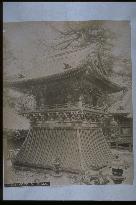
The bell tower,Toshogu Shrine,Nikko

The bell tower,Toshogu Shrine,Nikko

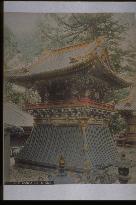
The Koro (Drum Tower), located to the left of Yomei Gate at Nikko Toshogu, is decorated with 38 carvings including depictions of tortoises, dragons and clouds. Honji-do (Yakushi-do), famous for its meiryu (crying dragon) ceiling painting is visible on the right. The dragon was painted by Kano Eishin Yasunobu, but the entire building was later destroyed by fire and rebuilt. The roof visible on the left is the Rinzo (Kyozo).==Date:unknown, Place:Nikko, Photo:unknown, (Credit:Nagasaki University Library/Kyodo News Images) [Cabinet Number80‐40‐0]

  •  
The Sanjinko (three sacred stonehouses) and Nino-torii Gate,Toshogu Shrine,Nikko

The Sanjinko (three sacred stonehouses) and Nino-torii Gate,Toshogu Shrine,Nikko

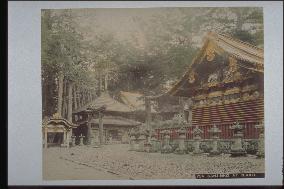
Kamijinko, built in azekurazukuri (wedge-log) style and visible on the right, stores the costumes and other accessories used in the 1,000 Samurai Procession Festival. The building on the left is the Omizuya (washing place) donated by the Nabeshima Clan. To the right of it stands the Karagane Torii, the first bronze gate in Japan built by the third shogun Tokugawa Iemitsu. The double-roofed building behind it is the Rinzo used to store sutras.==Date:unknown, Place:Nikko, Photo:R. Stillfried, (Credit:Nagasaki University Library/Kyodo News Images) [Cabinet Number77‐10‐0]

  •  
The Kaguraden and honden (inner sanctuary),Tsurugaoka Hachimangu Shrine

The Kaguraden and honden (inner sanctuary),Tsurugaoka Hachimangu Shrine

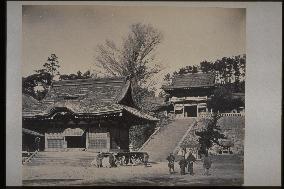
The building on the left seems to the Rinzo (sutra repository), which was later demolished. Since there is no tablet visible on the Romon gate and the square foundation stones are placed next to the Kaguraden, this photograph is thought to have been taken around 1870 when the temple buildings were demolished. Taken by Felix Beato.==Date:unknown, Place:Kamakura, Photo:F. Beato, (Credit:Nagasaki University Library/Kyodo News Images) [Cabinet Number62‐32‐0]

  •  
The Sanjinko (three sacred stonehouses) and Nino-torii Gate,Toshogu Shrine,Nikko

The Sanjinko (three sacred stonehouses) and Nino-torii Gate,Toshogu Shrine,Nikko

Kamijinko, built in azekurazukuri (wedge-log) style and visible on the right, stores the costumes and other accessories used in the 1,000 Samurai Procession Festival. The building on the left is the Omizuya (washing place) donated by the Nabeshima Clan. To the right of it stands the Karagane Torii, the first bronze gate in Japan built by the third shogun Tokugawa Iemitsu. The double-roofed building behind it is the Rinzo used to store sutras.==Date:unknown, Place:Nikko, Photo:F. Beato, (Credit:Nagasaki University Library/Kyodo News Images) [Cabinet Number62‐6‐0]

  •  
The bell tower,Toshogu Shrine,Nikko

The bell tower,Toshogu Shrine,Nikko

The Koro (Drum Tower), located to the left of Yomei Gate at Nikko Toshogu, is decorated with 38 carvings including depictions of tortoises, dragons and clouds. Honji-do (Yakushi-do), famous for its meiryu (crying dragon) ceiling painting is visible on the right. The dragon was painted by Kano Eishin Yasunobu, but the entire building was later destroyed by fire and rebuilt. The roof visible on the left is the Rinzo (Kyozo).==Date:unknown, Place:Nikko, Photo:unknown, (Credit:Nagasaki University Library/Kyodo News Images) [Cabinet Number54‐7‐0]

  •  
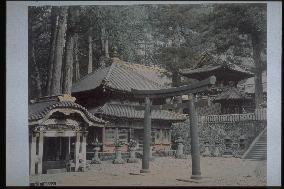
Near the Nino-torii (the second gate),Toshogu Shrine,Nikko

Near the Nino-torii (the second gate),Toshogu Shrine,Nikko

The structure on the left is the Omizuya, with a granite basin donated by the Nabeshima Clan in 1619. The building to the right is the Rinzo, where Buddhist sutras are stored. The first bronze torii built in Japan, Karagane Torii (centre foreground) was built by third shogun Tokugawa Iemitsu. The building on the right back is the Drum Tower. A hanging lantern is visible to the right.==Date:unknown, Place:Nikko, Photo:unknown, (Credit:Nagasaki University Library/Kyodo News Images) [Cabinet Number54‐6‐2]

  •  
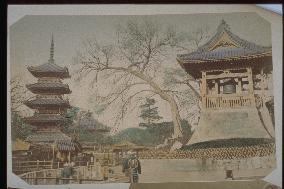
The hour bell and the five-story pagoda,Sensoji Temple

The hour bell and the five-story pagoda,Sensoji Temple

A simple shrine dedicated to Benten is shown in the foreground of the five-story pagoda. Behind it is a restaurant. The roof visible to the right of the pagoda is the sutra depository). It was called rindo (round hall) or rinzo (round storehouse) because worshippers rotated it while praying. The bell tower was destroyed in a 1945 air raid, but the bell was fortunately saved. A new bell tower using the same bell was completed on December 18, 1946. This photograph was taken before 1886, because Benten Pond is still visible.==Date:unknown, Place:Tokyo, Photo:unknown, (Credit:Nagasaki University Library/Kyodo News Images) [Cabinet Number51‐36‐0]

  •  
The Kamijinko (sacred storehouse) and second gate,Toshogu Shrine,Nikko

The Kamijinko (sacred storehouse) and second gate,Toshogu Shrine,Nikko

From the Front Gate if Nikko Toshogu, from left, the Wash basin, Bronze Torii, Rinzo and Kamijinko. The Kamijinko to the right corner is built Azekura style, and it has carvings of two white and black elephants with a rough draft drawn by Kano Tanyu. Many lanterns donated by warlords line up in front.==Date:unknown, Place:Nikko, Photo:unknown, (Credit:Nagasaki University Library/Kyodo News Images) [Cabinet Number37‐57‐0]

  •  
Omizusha,a basin,at nikko toshogu shrine

Omizusha,a basin,at nikko toshogu shrine

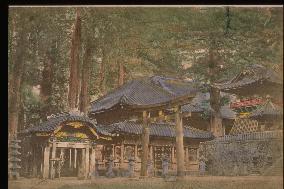
From the left are Omizusha, Rinzo and the bronze torii. The water basin of the Omizusha and twelve square pillars are made of granite, and the Chinese-style barge board has carvings of cod and flying dragons. Issaikyo (complete collection of the Buddhist Scriptures) and statues of the Fudaishi father and son are stored in the Rinzo. The bronze torii was constructed by private donations from Tokugawa Hidetada. There is a bell tower to the upper right.==Date:unknown, Place:Nikko, Photo:unknown, (Credit:Nagasaki University Library/Kyodo News Images) [Cabinet Number14‐15‐0]

  •  
A block of a temple

A block of a temple

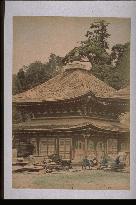
This may be the Rinzo of Tsurugaoka Hachimangu which was removed as a result of the separation of Shintoism and Buddhism. The Rinzo was located to the left of the Kagura hall, and scriptures were stored there. The dismantling has begun, and lumber is piled up nearby.==Date:unknown, Place:unknown, Photo:unknown, (Credit:Nagasaki University Library/Kyodo News Images) [Cabinet Number13‐28‐0]

  •  
The Kamijinko (sacred storehouse),Toshogu Shrine,Nikko

The Kamijinko (sacred storehouse),Toshogu Shrine,Nikko

The left corner is the Gyosuisha, and next to it is the bronze torii, Rinzo ( storage for scriptures), and the Kami Jinko (warehouse). The Kami Jinko is done in Azekura style, and the end has a statue of two elephants, one white and the other black, their rough drafts drawn by Kano Tanyu.Costumes of a procession of a thousand warriors in the spring and autumn are stored in the three Jinko (Kami, Naka and Shimo). In the Rinzo, a complete collection of the Buddhist scriptures is stored, along with statues of Fudaishi (inventor of Rinzo ) and his son.==Date:unknown, Place:Nikko, Photo:Tamamura Kozaburo, (Credit:Nagasaki University Library/Kyodo News Images) [Cabinet Number11‐10‐0]

  •  
Omizusha,a basin,at nikko toshogu shrine

Omizusha,a basin,at nikko toshogu shrine

From left to right are the Gyosuisha, Rinzo (turning storage box for scriptures) and bronze torii. The water basin and 12-angled pillar are made of granite, and a carving of cod and flying dragons is carved on the bargeboard. In the Rinzo are placed a set of scriptures and a father and son statue of Fudaishi (founder of the Rinzo system of storing scriptures ). The torii made of Chinese bronze was built by donations from the private allowance of Tokugawa Hidetada. A drum tower stands at the upper right corner.==Date:unknown, Place:Nikko, Photo:Ogawa Kazumasa, (Credit:Nagasaki University Library/Kyodo News Images) [Cabinet Number8‐27‐0]

  •  
Hokkaido in 1st map of Japan made by famed surveyor

Hokkaido in 1st map of Japan made by famed surveyor

TOKYO, Japan - Japan's northernmost main island of Hokkaido in the first map of the Japanese archipelago completed by surveyor Ino Tadataka in the early 19th century is seen in this file photo taken on Aug. 15, 2014. Researchers say the Hokkaido portion of the map was based on data collected by Ino's student and explorer Mamiya Rinzo rather than by Ino alone as previously thought. (Kyodo)

  • Main
  • Top
  • Editorial
  • Creative
  • About Us
  • About ILG
  • Terms of use
  • Company
  • BEHIND
  • Price List
  • Single Plan
  • Monthly Plan
  • Services
  • Shooting
  • Rights Clearance
  • Support
  • FAQ
  • How To Buy
  • Contact Us
  • Become a Partner

© KYODO NEWS IMAGES INC

All Rights Reserved.

  • Editorial
  • Olympics
  • News
  • Sports
  • Japan
  • Tech
  • Royal
  • Disaster
  • NorthKorea
  • Old Japan
  • SNS
  • Creative
  • Food
  • Japan
  • Landscape
  • Animal
  • Popular
  • #Ukraine
  • #Thailand
  • #coronavirus
  • #N. Korea
  • #China
  • #Russia
  • #Ukraine
  • #Thailand
  • #coronavirus
  • #N. Korea
  • #China
  • #Russia
  • Food
  • Japan
  • Landscape
  • Animal
  • Olympics
  • News
  • Sports
  • Japan
  • Tech
  • Royal
  • Disaster
  • NorthKorea
  • Old Japan
  • SNS